
Tag: bipolar disorder

  • The Oddities, Charm, and Suffering of Bipolar Disorder

    The Oddities, Charm, and Suffering of Bipolar Disorder

    Suffering of bipolar disorder can include indiscretions in dating and dancing.

    “Though I am often in the depth of misery, there is still calmness, pure harmony, and music inside me.”  —Vincent Van Gogh

    May is Mental Health Awareness Month, and I’ve been thinking about how to disrupt the stigma of “mental illness.” It’s a term I don’t like – but it’s still used throughout the world, unfortunately. To me, “mental illness” is an archaic and stigma-ridden phrase. Because it can isolate people who experience these illnesses in their own dark corner of misery, and surrounds their condition with mystery and skepticism. Yet cardiovascular, pulmonary, or liver disease are all discussed in the light of day and with credibility. There should be no difference. So, let’s talk about the ins and outs of one “brain” illness: the oddities, charm, and suffering of bipolar disorder.

    My patients encounter stigma every day. Family members and friends who are furious with them, and just worn out by it all. Critical. Disgusted. Steeped in stigma.

    And many of my patients are steeped in shame. It’s for them — and their families — that I’m writing today… and for you.

    So let’s talk about what a person can be like who endures the suffering of bipolar disorder. Because the symptoms of a disorder like this one can seem to be intertwined with the person’s personality … for better or for worse. 

    In fact, neuroscience researchers have discovered a genetic connection that influences the personality development of a person with bipolar disorder. We’ll be talking more about the scientific side of bipolar disorder in a future post.

    Emma was diagnosed with bipolar I when she was 15.  She’d stolen her parents’ credit card, and had charged $4700 in a weekend taking friends to nice restaurants, shopping for clothes, and attending concerts. She felt like a million bucks…and tried to spend a million, too.

    Her parents got alarmed, and she got admitted to a mental health crisis unit where she could be evaluated for 72 hours. It was here that she received her diagnosis of bipolar I disorder. The doctors there started medications to help stabilize her mood, and discharged her within a week.

    Shock and awe. Not enough time to see how the medications really worked, or to wade through her questions and fears about this new diagnosis. This wasn’t how it was supposed to go.

    She left confused, a bit shell-shocked, and with no small amount of anxiety as to what life would be like now. The shame she felt gripped her. How could she face anyone? She believed she’d never be able to show her face again anywhere… and the new pills she was taking made her feel weird.

    Bipolar disorder patients seek risky behavior, like this rave party.

    Emma’s next few years were tumultuous, as the medicines didn’t help her stabilize, but even seemed to make her more unstable. Add to that the hormonal changes of adolescence and their affect on symptoms, and the instability…better said, the roller coaster… of her emotions was almost impossible to endure.

    Everywhere she looked, she saw disapproval. Despite regular and frequent visits with her psychiatrist, she felt miserable and her symptoms seemed to get worse and worse.

    Emma and her parents participated in therapy, to become educated about this illness. They also learned how to support structure in her life, as well as methods of helping her decompress when the need arose. 

    Oddities, Charm, Suffering of Bipolar Disorder… So Many Facets

    But her ability to participate with them in counseling got sporadic as her symptoms worsened. During depression she couldn’t get out of bed, and anxiety made leaving the house seem insurmountable.

    But there were also transient periods when she felt a bit more like herself. Her sense of humor had always been spectacular, and often kept her family in stitches. Those light-hearted fun times reminded them of the history they shared, and endeared her to them all the more.

    But…her bedroom floor. Trashed! It was the place clothes and food wrappers went to die. And personal hygiene? …Let’s just say that was a work in progress. She didn’t bother to shower unless she was badgered. But she was feeling better, and creating magnificent, enchanting poetry, so no one wanted to argue with her about hygiene. They had all learned to choose their battles.

    Still, there were also the times when she came home drunk or high.  She told her parents she was sorry, but they feared for her…and wondered what to do.

    She craved the calm, a break from the suffering of bipolar disorder.

    The irony was that when her friends were high, they acted crazy. However, at the same time, when she was high it made her mind feel clear and grounded. She didn’t crave the substance, she craved the clarity. But her parents knew the dangers of addiction.

    She was an odd bird, and she knew it. She figured she’d always feel like the odd one out.

    But, for real, she had to give her parents credit. She could see they were really trying to understand. But it wasn’t a walk in the park.

    At times she felt anxious and angry, and couldn’t tell why. But her parents would react in ways that seemed to her more like an attack. So she responded in kind.

    So Complicated!!

     Through therapy they learned that “pulling rank” and trying to force her to comply only served to escalate her reactions and agitate her when she was manic. They learned to listen patiently when she verbally shot words like bullets in a long tirade. They learned this was a symptom.

    And they learned it was important to treat her with respect, in spite of her outbursts. After all, she wasn’t a spoiled child, she was ill. And… they learned that during times of peace, her talents, empathy, and growing wisdom had a richness they’d never seen in anyone before.

    They had to admit this was new territory, and they couldn’t fall back on their old parenting patterns without making matters worse.

    She was still their Emma, but there were times they didn’t recognize her. The counselor helped them see that all of these behaviors together were part of “their daughter with bipolar disorder.” Good times, bad times, times she amazed, and times she broke hearts.

    Happy young woman having fun in better times.

    Though Emma came home from the crisis center filled with shame, through counseling and the love and acceptance of her parents, along with time, she found she was slowly healing. She and her parents learned together that the mood swings – which were sometimes violent – were not a sign of her contempt for them, but rather a shift in her brain cell function that was involuntary.

    So her parents learned to show her they were standing with her when she found herself in mixed states, exploding with manic energy, rage, and heartbreak.

    Emma had made a friend at the crisis center, and was saddened for her and the awful scenes she described with her parents. Her friend felt so alone and hopeless because her parents viewed her behaviors as threats to their authority, rather than symptoms, and tried to shame her into compliance. Before long, her friend ran away from home.

    Emma knew she was really lucky to have parents who tried so hard to support her and stand with her in this illness.

    At times, she felt upbeat, pleasant, and enjoyed time with her parents, as well as a friend. In those same times, Emma often waxed poetic, writing pages of melodious rhyme, describing her magical wonder of the world as she saw it. Her words carried wisdom far beyond her years, and her creativity resulted in thoughtful and meaningful gifts for those she cared about.

    But as the wonder bubbled up…the bubbles came faster and faster until she felt as though she was all bubbles, like helium…and she was floating, exhilarated, and able to do anything.

    The Suffering of Bipolar Disorder Can Appear To Be Something Else

    People with bipolar disorder seek risky behaviors like climbing this water tower to paint graffiti on it.

    She’d climb a water tower and paint graffiti at the top, or she’d have sex with three different guys in the same night, or shoplift something from Macy’s.  Why?  Because she could do anything. (or at least she thought she could.)

    Was she rebellious? Not intentionally. But she was manic at those times, and her perceptions were distorted, as well as her judgment. And impulsive. Oh myintensely impulsive. Could that be fixed by her parents’ discipline? Ummm…not likely. Impulsivity and distorted perceptions are symptoms of bipolar disorder.

    Unfortunately, there were times the police brought her home, or the store security officer called her parents, or… once…she found out she was pregnant.

    Sadly, she miscarried 6 weeks later. It was all so terribly painful. The grief so suffocating. She really wanted that baby. It didn’t matter that she struggled to care for just herself…she wanted that baby more than she wanted air.

    The grief continues to this day. On bad days, the pain of it rises up fresh and in waves. It’s almost more than she can bear. And the pain never lessens, or heals, but is always fresh and suffocating…because of the disorder in her brain. And the pain she feels when the waves return often push her into another mixed state episode.

    But eventually, with sleep, healthy meals, and medication, she begins to recover each time.

    Then, just about the time she feels a little stable, here come the bubbles again. And she forgets to go home by curfew because of the adventure she’s on. Then the crash… and eventually, the recovery.

    The Suffering of Bipolar Disorder Untreated Leads to Worsening Symptoms
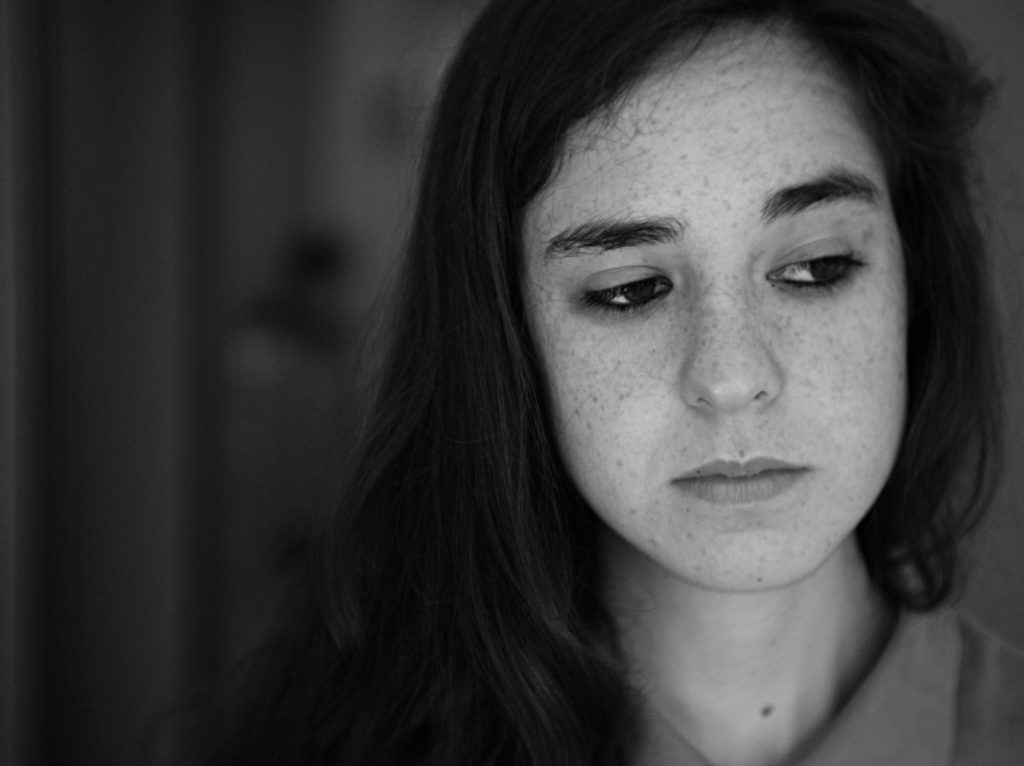
    Sad woman with suicidal thoughts because of suffering of bipolar disorder.

    Years later…?  Emma was 22, and the periods of depression became too frightening. The pressure within her gave way to visions of her death. The pain, then the end. The determination to end the pain rose higher and stronger. The risk of an impulsive act that would remove her hope permanently led her parents to deeply research the options that might be available to help her. 

    They learned about IV ketamine treatment and how it can end suicidal thinking in a few hours. They discussed it with her psychiatrist and made arrangements to see a psychiatrist who offered this treatment and would consult with Emma’s doctor to coordinate her care. 

    All three of them made the trip together, planning to stay for a couple weeks and make it a sort of vacation. They hoped the break and new scenery would do her good. And they believed that saving their daughter was the best investment they could make.

    They’d read of people who had experienced help from bipolar depression with IV ketamine treatment, but their greatest concern was to help her continue to live. 

    They’d also read that people with bipolar disorder have an average life span of 25 years less than those who don’t have this illness. They could see the risk and felt they had to take measures to protect her.

    After the couple of infusions, she didn’t appear to be so deeply and dangerously depressed. Her mom mentioned the suicidal thoughts, asking if there was any change.

    Emma blinked. Oh yeah. As a matter of fact, she realized she hadn’t had any thoughts like that in 2 days. With all that was going on…she forgot that was why she was here. Her parents exchanged a hopeful glance.

    With another infusion, her mom noticed she was picking up after herself. And she got in the shower and shampooed her hairthen blew it dry!  Now this was a moment both parents noticed…but tried to not make an issue of it.

    By the end of the series of treatments,  Emma’s mom saw a light in her eyes that had been gone for months. And Emma suggested a shopping trip and lunch, which never happened when she was depressed.

    Once they arrived back home, Emma was upbeat, and disappeared into her room to organize it and clean. This was no small chore, mind you. She asked her dad to carry out the 3 huge trash bags of trash she picked up from the floor. He jumped at the chance.

    This young woman is happy since ketamine lifted her depression.
    Emma, herself, was surprised about her own motivation and initiative. And she found she enjoyed the sun filtering through the trees…the ducks paddling around the pond at the park, and the aroma of someone’s barbecue cooking outside.

    There was no question about it. She was feeling better. In fact, she felt better every week. She slept better at night, and had more energy for living during the day. A few weeks later, she realized she had a song playing in her head. So she hummed along. Her mom flashed a grin at her. It was so good to see her feeling so much better.

    Emma has had some rough days and weekends since her IV ketamine treatment. Times when she felt exhilarated and knew she might make a bad decision. But she’d learned to call her doctor, report the subtle symptoms, go in and do what she needed to do to avoid sliding into hypomania.

    Overall, her life improved dramatically after ketamine. Every month she sent a note to her ketamine doctor to let her know how she was doing. She missed fewer appointments with her local psychiatrist and her therapist. And somehow she seemed better able to manage herself now.

    While Emma still has challenges, her life is happier and easier to manage. She’s more productive and was able to go to college and actually do the work. What traditional medications couldn’t do for her, IV ketamine treatment could.

    At Innovative Psychiatry, we see patients who suffer from bipolar disorder often. Patients who experience significant improvement through IV ketamine treatment. If the suffering of bipolar disorder, especially bipolar depression, begins to return at some point, we’ll quickly arrange an appointment so you can receive a new infusion to refresh your well being. 

    If you suffer from bipolar disorder or another mood disorder, and you’ve not been helped by the medicines your doctor prescribes up till now, please call us.  We will schedule a consult to determine if you’re a candidate for IV ketamine treatment. And if you are, you can begin your treatments right away.

    Be the best version of yourself with ketamine treatment for the suffering of bipolar disorder.

    We’ll help you connect with the version of the best you that has become hidden, and help you feel and function better, so you can enjoy a rewarding and fulfilling life.

    We’re here to disrupt stigma.

    And innovate— not just with fresh new effective treatments like ketamine, but innovate with understanding

    We don’t just infuse ketamine—we infuse compassion, and we infuse hope We live for that.

    With respect and appreciation for the beauty of your best self,

    Lori Calabrese, MD offers innovative psychiatric treatment like IV Ketamine

    This image has an empty alt attribute; its file name is Angled-dark-blue-Lori-Calabrese-MD.png

    Lori Calabrese, MD

  • Holidays with Depressed Family…How’s It Going for You?

    Holidays with Depressed Family…How’s It Going for You?

    This baby sleeping in a box at Christmas is peaceful. But holidays with depressed family can be hard on everyone.Holidays with Depressed Family … Not Easy

    Are you enjoying this holiday season…? This time of shopping, music, winter hats and gloves… hot chocolate and marshmallows. Sounds like a Christmas carol, doesn’t it…?

    On the other hand, there’s another side to the holidays, isn’t there?

    Is setting up the tree, and unwrapping all your ornaments, something you make time for, and do with quiet joy…?

    Or is it something you cram into the 45 minutes between work and the holiday chorus concert while the kids scarf down McDonald’s and fight over who gets the last cookie…?

    The traffic to go anywhere is jammed in gridlock…so driving home from work… well there’s no way you’ll ever get This Norman Rockwell picture is heartwarming, but holidays with depressed family can be hard.home.

    That “Christmas Card” Family Holiday

    Wouldn’t we all love to have that dreamy kind of holiday…?

    Yes, maybe.

    But I’d like to suggest that a “perfect Christmas card holiday” wouldn’t be as perfect as it sounds. And here’s why.

    Because it isn’t reeeeally sitting inside a Norman Rockwall painting on the wall that scratches that itch we all have for meaning in life.

    And because it really isn’t silent perfection that fills our hearts — no matter how pretty the picture.

    But isn’t it the people…?

    Isn’t it being with Aunt Sue who talks a lot, and Grandma Jansen and her raucous humor, and the wild and wooly cousins we grew up with…the crazies and the noise….?

    Life is messy. It’s not a pretty little picture, and we aren’t images on a holiday card. And you could even have a fault or two yourself … right?

    Holidays with Depressed Family Members Can Be Messy

    But you love them.  And they love you. You have history together. You’re family.

    If you have some people in your family who are a bit out there, eccentric and even occasionally annoying, that’s part of the patchwork quilt that makes you who you are and gives your family uniqueness.

    And…If you have family members or friends who have the challenge of managing bipolar disorder, depression, anxiety, PTSD … this may be a particularly taxing time for you and for them.

    You know those stresses that turn your holiday moment into a chaotic nightmare…? As much as you feel the stress, This warm scene of Christmas tree and presents doesn't reveal that holidays with depressed family can be taxing and hard.they are possibly more distressed than you are. When you have all you can handle, and someone in the room makes a scene…or explodes into an outburst… or leaves and no one knows where he is…you want to pull your hair out.

    Nothing wrong with that. You’re human.

    In Family Gatherings, Stronger Ones Carry the Load

    But, as you know, it’s also true that you may be a little more predictable. Your emotions may be a little more reliable. And you may be a little more skilled at managing them. These loved ones of yours probably do the very best they can. And they want meaning and love just like you do.

    Of course, this isn’t news to you. You know all about all this, because these are your family members. You’ve been there…and done that. Still, it doesn’t hurt to get a little encouragement from others who also understand your situation. Sharing the holidays with depressed family members can be challenging at best…and sometimes downright traumatic for everyone.

    Holidays Can Breed Crisis

    Caleb was a young man in his twenties, who had been diagnosed with bipolar disorder when he was a young teenager. He’d had bouts in psych hospitals. He’d also had bouts in jail. And bouts in rehabs. By this point in time, his confidence in himself was pretty much shot.

    He had such a gifted personality… you couldn’t sit in the room with him and not laugh your head off at his incredible humor. When he was good, he was your favorite person in the world.

    But far too often, he was sick. Nosediving into depression and crippling anxiety. You could tell when his fun self was transitioning to his tormented self. And that could happen at any time. Sometimes there was a trigger that set him off. Other times it just happened with no warning.

    Holidays were tough for him. His hopes were high and his anxiety that he’d fall apart were higher. You probably This young man sits alone in an isolated woody area because holidays with depressed family is so hard.already can guess that the anxiety can lead to a panic attack.

    So it was Thanksgiving, and the memories and interactions got to be too much and he left. Just walked out. He walked to a bridge in his community. He sat on the bridge and watched the traffic underneath, contemplating what he was going to do.

    Thankfully, his family drove up soon enough. They’d been looking. And they held him…reassured him…and he agreed to get in the car and go home.

    That Thanksgiving wasn’t a flawless Christmas card experience for the family…but isn’t it all about the people you love anyway? The family’s memory of that Thanksgiving was about safely returning home with him.

    Depressed People Have So Much to Bear

    Cherri was 16. She had been depressed so long she couldn’t remember what “happy” was like. She looked mad and sullen to those around her. But it wasn’t that. She was so numb. So silent. So hopeless. So paralyzed.

    She thought about death. About relief. She had self-medicated with various substances in the past then spent 18 months in rehab. After she came home, she was white knuckling sobriety, but was still miserable.

    Then her grandmother died a week before Christmas. She’d been so close to her. At times it seemed Grandma was the only one who understood her. At least it felt that way. Cherri couldn’t bear the pain.

    The day of the funeral she ran away. She just couldn’t face everyone. She needed to be alone with her memories of Grandma as she knew her.

    When the family arrived at the funeral home, they mumbled among themselves about Cherri’s selfishness to turn all Depressed teenage girl finds a quiet place to calm herself. Holidays with depressed family are hard.the attention to herself. In their own pain and loss, they didn’t really realize it wasn’t about Cherri being selfish.

    It was that she was so sensitive, and she could feel the feelings of the people around her. And she wanted to protect her private feelings about her grandma.

    When the family returned home after the funeral, Cherri was alone in her room…looking at pictures of Grandma with the family.

    People with Depression, Anxiety, Bipolar Disorder, and PTSD Need Extra Support This Time of Year

    Holidays are complicated. The next few Christmases for Cherri may be tumultuous, too. That’s the way it goes. Everyone grieves in their own way.

    For those of us who love vulnerable hearts who themselves suffer from anxiety, depression, bipolar disorder.PTSD… may we be patient with our families, and with ourselves.

    And accept life at this time of year as it happens.

    Because it’s all about love … after all.

    If you have a family member who is suffering, where treatment hasn’t  helped, please call us.  We’d love to help you and help your family. That’s what we do. We offer advanced treatment options, like IV ketamine treatment and TMS. We offer hope.

    May your holidays be warm and heartfelt, and may you feel loved by those around you …

    To the emerging of your best self,

    Lori Calabrese, M.D.

    Lori Calabrese, MD offers innovative psychiatric treatment like IV Ketamine

  • Breaking News: Another Way IV Ketamine SMASHES Depression

    Breaking News: Another Way IV Ketamine SMASHES Depression

    Another way IV ketamine smashes depression is by moving g proteins off lipid rafts in cell membrane.Another way IV Ketamine SMASHES depression

    Sometimes news is so hot it sizzles.

    It lures you away from whatever you’re into.  It captivates you.  And then — just face it — you think to yourself, with admiration, OMG.  You say to yourself … whoever came up with that is brilliant. They nailed it.

    Well, Mark Rasenik and his group from the University of Illinois Chicago College of Medicine nailed it.  They presented absolutely breathtaking work in May at the SBP meeting — the Society of Biological Psychiatry.  It’s the meeting where research is presented that is just so brilliantly conceived and executed that it’s mind-blowing.

    Rasenik’s work is like that.

    He and his group came in from left field with their brilliant discovery of a new way ketamine works which just might explain how and why it can begin to lift depressive symptoms in minutes.

    Understand ketamine’s talents, then get creative

    The goal was to learn what happens on a molecular level that causes IV ketamine’s fast depression relief.  Because, of course, someone wants to design a drug just as effective as ketamine but without its side effects. This is the ever-loving quest for new drugs that wannabe like ketamine.  

    Now, we’ve talked before about how IV ketamine acts on synapses to stimulate them to grow, branch out, and flourish — multiplying the numbers of connections between neurons that send signals deep into the brain. We’ve also talked about neuroplasticity, and how it’s key to this process that causes the brain to change.

    As new synaptic connections are built, and greater communication between brain cells develops, the brain gains the ability to see things in a different perspective, and your outlook becomes brighter and healthier. IV ketamine can jump start that process. Wait. No. It can turbo-charge it.

    How to Get Those G’s Back to Work

    So Rasenik and his team found that “g proteins” were packed on “lipid rafts” in the cell membrane with people G proteins on lipid rafts are moved off the raft shows another way IV ketamine smashes depression.who are depressed. In addition, their brain cell signaling is stifled, which may be the cause of that numbness depressed people experience.


    If this is you, listen up.  Numbness is no joke.

    They’ve demonstrated that when SSRI antidepressants are used, they move g proteins from lipid rafts (I love that visual…like the G’s are languidly floating on a raft in the pool…taking time off being lazy) very gradually, and back into WORK mode. Which is how SSRI’s help some people who are depressed — but it takes weeks or months for relief.

    You see, G proteins produce cyclic AMP, which is vital for the nerve cells to properly send their signals.

    And, Rasenick and his team noted that the movement of the G proteins under the influence of SSRI antidepressants, was gradual … over a period of several days.

    So, let’s take a breath here.

    The Many Talents of IV Ketamine

    We’ve talked about how IV ketamine stimulates neurons to flourish, grow branches, and become prolific with healthy connections for sending signals throughout the brain, especially into the deep brain structures like the hippocampus.

    Now, Dr. Rasenick and his team have discovered that IV ketamine also gathers up the tools the nerve cells need so they actually can send signals throughout this new and bountiful network of connections, or synapses.

    Those unemployed g proteins that were hanging out on the rafts, are pulled off the rafts and put to work to equip the brain cells to do their job.

    And they work fast.

    Remember how it takes several days for the g proteins to move off the rafts with an SSRI? Well, with IV ketamine, it happens in 15 minutes!!

    So … do you see why ketamine acts so fast to remove suicidal thinking and depression?Young man is relaxed as he benefits from yet another way IV ketamine smashes depression.

    I’m telling you, the more we know about IV ketamine, the more hope explodes with all of its potential.

    Letting Go of OLD Ideas

    There’s been a belief for years that ketamine’s one action was to block NMDA receptors.  (Boy, does that seem like the dark ages now!) But ketamine is the only drug that blocks NMDA receptors AND moves g proteins off lipid rafts. It’s a double whammy, a one-two punch!

    Once again, ketamine shows its highly targeted prowess in its assault on depression and its potential for assault on other psychiatric disorders.

    In addition, ketamine and other compounds like it, improve glutamate levels, which SSRIs really don’t touch. When the processing of glutamate doesn’t function properly, that also contributes to depression.

    So…wait a minute…that’s three actions ketamine uses to turn depression on its ear!

    Oh, and the fourth:  it turns on mRNA … to turn on DNA … to make more BDNF (Brain Derived Neurotrophic Factor) so that neurons grow new branches.

    The Four Ways.  Four different ways that ketamine smashes depression.  This has brought a level of excitement into psychiatry like nothing else.

    Someone should write a book.

    A full 80% of those who are treated with IV ketamine infusions in our Relieved and relaxed lady shows another way IV ketamine smashes depression.office respond, and many of those achieve complete remission of their symptoms. But, I’ve said before that it isn’t for everyone.  If it’s not for you, we have other treatments like TMS to help you get better.

    If you have symptoms of depression (chronic, recurrent, bipolar, postpartum),  PTSD, and treatment-resistant OCD and have not been helped by anti-depressants, call or email us to arrange an appointment for a consultation. We’ll thoroughly check you out, and analyze what we learn, to determine the treatment most likely to truly help you feel better. I don’t mean to reduce your current symptoms, but to actually get well.

    We’re Innovative Psychiatry.  (Um, you’d have to be to translate lipid rafts and g proteins into treatment that works in your office … )  And we’ll work with you to find the best steps that will help you get well and live the life you want to live.

    To the discovery of your best self,

    Lori Calabrese, M.D.

    Lori Calabrese, MD offers innovative psychiatric treatment like IV Ketamine

  • IV Ketamine + Neuroplasticity = Relief, Relaxation, and Relishing Life

    IV Ketamine + Neuroplasticity = Relief, Relaxation, and Relishing Life

    Woman relishes a spring day after IV ketamine for her treatment resistant depression.I could use some of that.  We hear that all the time. Relief, relaxation and relishing your life can sound so far away … but it doesn’t have to be. As word gets out about IV ketamine treatment for depression and other psychiatric mood disorders, more and more studies are emerging.

    New information is surfacing about the effectiveness of this medication. And it’s inspiring more discussion, more research, and deeper understanding of the causes of depression.

    And there’s more.

    As evidence grows through research and clinical data, it seems clear that depression interferes with the neuroplasticity in the brain. Including diminished neurogenesis in the hippocampus and diminished synaptogenesis in the prefrontal cortex. In other words, depression messes with the growing neurons or brain cells and the synapses or connections that allow the neurons to communicate with each other.

    A big factor in this is that stress reduces an important growth factor called BDNF, or Brain Derived Neurotrophic Factor. Sort of a “compost” for neurons. Without BDNF, your neurons become tattered and sparse.

    They diminish in size and number … and thin out.

    When you’re depressed, these measly neurons with their poor synaptic connections just have a much tougher time communicating with each other … so there is less creative thought, if any. Well-being tanks. And your world becomes darker, less hopeful, and without future. It’s a bad place to be in.

    A brain that is well-connected is a brain that experiences creative thought and well-being. A brain in the dark is a depressed brain.

    IV Ketamine + Neuroplasticity

    Here’s where neuroplasticity comes in.  (Don’t let the word shut you down.)

    In this context, plasticity refers to the brain’s ability to change at any age … whether for better or for worse. So the term “neuroplasticity” refers to the ability of your neurons to adapt and remodel themselves. In the past 10 years or so, neuroscientists have come to understand that your brain is constantly remodeling itself throughout your life.  And when it remodels itself, it remodels its networks,  And because of that, it remodels how it works.

    So, to put it briefly, when you think dark and despairing thoughts, or angry and vindictive thoughts, day after day after month after year, this thinking actually reshapes and remodels your brain. It’s kind of shocking, really.

    The brain remodels itself.  Your brain remodels itself.

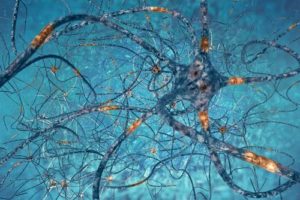
    This spectacular image of a neuron shows the rich prolific regeneration of neurons and synapses with IV ketamine + neuroplasticity.

    Dark, negative and hopeless thoughts have a detrimental impact on your brain’s structure and on how it functions. Your brain changes to fit your thought processes … to respond to your stressors.  By the same token, if you read inspiring and creative books, spend time with joyful people, and create joyful experiences, your brain can change over time for the better.

    The very structure of your neurons can change — in a lush way. Richly. For the better.  For your good.

    Wow.  

    This is where people say, “I want some of that.”

    Well, this is an oversimplification, of course.  It doesn’t account for all of the different factors, illnesses, and environmental influences that shape the way your neurons look and act — grow and function — but it IS an illustration of one way the brain can change. At any rate, It appears that one reason IV ketamine treatment is so effective for so many different psychiatric symptoms is because of the way it enhances neuroplasticity in the brain.

    Growing Your Brain Structure Garden

    For example, when you take the time to learn a new language as an adult, you’re putting parts of your brain to work that respond by growing to accommodate.

    A study of taxi drivers in London revealed that through the process of memorizing the streets of London to pass certification, that a specific structure in the brain enlarges to manage that information. The hippocampus is the memory center in the brain, and this study revealed that drivers who’d been driving taxis for decades had the largest hippocampi of the group.

    Just an example to show how the brain changes with the right type of stimulation.

    By the same token, the amygdala is the fear center in the brain, and it’s been studied extensively in childhood trauma, and in adult anxiety, depression, and bipolar disorder.  The newest research shows that the size of the amygdala can change rapidly in response to recent stressors — even in people who’ve never had any of the these conditions. The left amygdala was smaller in people who’d had a recent stressor — it didn’t even have to be longstanding or chronic. And the shrinkage was enough to be seen on an MRI.

    depressed man needs the relief from treatment with IV ketamine + neuroplasticity

    So here’s the point.

    Ketamine’s Rapid Action

    Ketamine acts rapidly in numerous ways, and its fast action is changing lives, as well as saving them. It stimulates changes in the brain that affect its structure and its function.

    One example is that it quickly matures new neurons so they’re functionally mature and doing their job within 2 hours. Traditional antidepressants just can’t do this.  As more neurons proliferate, mature, and migrate from the hippocampus into far-reaching brain regions, ketamine also stimulates the formation of more synapses, especially in the prefrontal cortex. The greater the communication throughout the brain, the better functioning the brain, and the greater the well-being of the individual.  You.

    The more synapses that are generated, the more neuroplasticity, or ability to change and grow, the brain will enjoy. And a growing, adapting brain provides a higher level of living and learning for you to experience. Plus a greater sense of joy and well-being.

    Let the Sunshine In

    It’s as if the proliferation of neurons – and the synaptic connections that empower them to communicate – opens doors and windows in the brain to let the light and fresh air in. This wonderful circulation of signaling gives the brain new thoughts, new hope, new relief.

    Basically, IV ketamine + neuroplasticity = relief, relaxation, and relishing your life.

    If you’d like to know more about innovative treatments for your psychiatric symptoms, please call for an appointment so we can evaluate what’s going on.

    Innovative Psychiatry is committed to help you find and develop your best self. Let’s work together.

    Joining forces with you to discover your best self,

    Lori Calabrese, M.D.

    Lori Calabrese, MD offers innovative psychiatric treatment like IV Ketamine

  • Ketamine Wannabe Drugs … of the Future

    Ketamine Wannabe Drugs … of the Future

    Ketamine mimicking drug brings peace to psychiatric mood disorder.Ever have somebody copy you?  You know, try to be like you? Imitate what you do, where you go?  try to get what you have? They wannabe like you. Well, maybe not just exactly like you — kind of like you and better than you all at the same time.

    It’s happening with ketamine.  

    We’ve been talking for awhile now about the breakthrough of low dose IV ketamine. In fact, everybody’s been talking about ketamine for treatment-resistant mood disorders. We’ve expounded on its effectiveness in relieving suicidal thinking, treatment-resistant depression, and other psychiatric disorders. Did you catch the discussion about which route is most effective and why we use it? Check it out here.

    You should know about all the ways it’s changing the horizon for psychiatric treatment. Like how it stops suicidal thinking within hours, rather than weeks. And how people who have lived with depression and despondency for years — no matter what medication they were taking — can feel depression just lift within hours. Maybe you’ve been there yourself, or you know someone who has. 

    But there’s more to talk about.

    The discovery of ketamine’s therapeutic effects on depression has opened doors to more revelations of the chemical sort.  Mechanisms of action.  Delivery systems. Ways of leveraging the funding of pharmaceutical companies to develop more versions of ketamine, maybe with the same or similar benefits, but without any side effects …

    Think of it like this:

    Ketamine wannabes want to “be like” ketamine and wannado like ketamine — except better, without side effects, for longer.

    But it turns out that’s easier said than done.

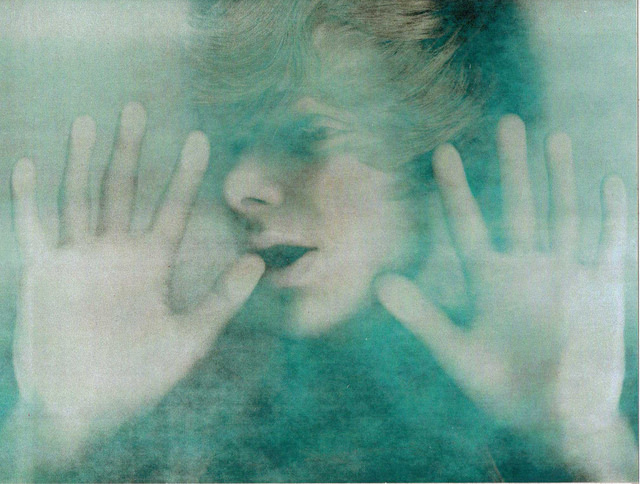
    Since ketamine is no longer under patent, it’s unlikely that a pharmaceutical company would be interested in investing the necessary funds to Heartbroken lady writes "help" on fogged glass and needs ketamine wannabe drug treatment.conduct extensive trials and research about its effectiveness to treat mood disorders at this stage … at least on ketamine specifically.  

    Or that a company would shell out time and money to study long-term response and remission rates, or long-term safety, for a well-known generic like ketamine — even if it is being used in a new way in new settings to treat new conditions. There just wouldn’t be the return on investment in the long term.

    However, by making changes in the molecules and targets that provide the therapeutic results for ketamine, new versions of the drug in the form of ketamine wannabe compounds that specifically target mood disorders are being designed and developed, and are in the race for FDA approval.

    Ketamine Wannabe Drugs

    So grab your chemistry lab goggles, and let’s explore some of these molecular discoveries among ketamine-wannabe molecules.

    Ketamine is a racemic compound — it has two parts that are mirror images of each other joined together like Siamese twins.  If we split it right down the middle where the mirror images join — presto! — we have two “new” drugs.  One faces right and the other faces left.  We call the left-facing one “S” or in the world of pharmaceuticals, “es–”  as in esketamine.  So it turns out in this case that changing the structure of ketamine slightly could give us the same benefit, hopefully fewer side effects, and easier use. In other cases, molecules like ketamine are coming down the pike that act on similar targets or in similar ways to help with depression without some of the potential side effects of ketamine.

    They both wannabe and don’t wannabe like ketamine.  They wannado better.

    Esketamine

    Esketamine has been approved in Europe for a decade and a half – specifically for anesthesia – and Janssen Pharmaceuticals has acquired a patent to utilize it in the US as an intranasal spray for treatment-resistant depression.

    Teenage depressed girl needs ketamine wannabe drug treatment for treatment resistant depression.The Food and Drug Administration has awarded “breakthrough” status to esketamine to zoom its advancement through to approval with less interference from various obstacles and the usual red tape that slows everything down.

    They plan to specify it for use it in a clinical setting (as opposed to at home) for the sake of controlling the dosage, as well as to prevent sale on the street.

    Rapastinel

    Another pharmaceutical company – Allergan in Dublin, Ireland – has designed a peptide in this same “ketamine-like” category. You may know that a peptide is a chain of amino acids bonded together in a specific way, and this one looks pretty effective as an adjunctive treatment in depression. It has characteristics like being fast-acting and long-lasting and it’s given as an IV infusion, like ketamine.

    Ketamine’s action with NMDA receptors is to block ion channel activity.  Here’s where rapastinel is different. It binds to the glycine site on the receptor and regulates or modulates it by changing the shape of that site.  Pretty cool.  The result is that rapastinel reportedly has a minimum of dissociative or out-of-body side effects that are sometimes experienced with IV ketamine infusions.

    Rapastinel is in Phase III trials in the US as an adjunctive treatment for major depressive disorder, and more trials are expected in Europe and Japan.  Soon, it’ll be ready for FDA approval for use in the clinical setting to treat depression.

    AV-101

    Still another pharmaceutical company in San Francisco is working to create a small molecule drug that possesses all the good traits of ketamine without its potential dissociative side effects: VistaGen Therapeutics.Young couple enjoys a picnic in the country after ketamine wannabe drug treatment for treatment resistant mood disorders.

    This molecule is one that’s back on the scene from over 30 years ago. At that time, it couldn’t cross the blood-brain barrier to do its work. And consequently, couldn’t impact the depressive symptoms a person was experiencing.

    But now, the molecule (which is considered to be a “pro-drug”) has been revamped and this current version does cross the blood brain barrier, And when it does, it’s metabolized from a pro-drug into an active drug that modulates a certain glycine binding site at the NMDA receptor — unlike ketamine and different from rapastinel.

    So while ketamine completely blocks certain NMDA receptor ion channels, AV-101 just sort of regulates the receptor gently…which seems to result in gentler side effects.

    A New Frontier – Ketamine and Ketamine Wannabe Drugs

    There are plenty more versions of modified “ketamine wannabe” molecules in the wings, developing to hopefully even replace ketamine at some point. Hoping to improve on ketamine’s action. Aspiring to lesser side effects. Working towards easier administration. We’ll just have to see how that goes.

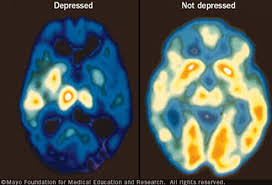
    Image shows the dramatic brightness of a brain lit up by ketamine wannabe drug treatment, and the darkness in the depressed brain without it.And one day this miraculous breakthrough medication – ketamine – may become obsolete like so many cornerstone discoveries of the past.

    But right now, boy are these exciting times!  We’re on the threshold of a brave new world in psychiatry. A world where people who’ve suffered without relief for years, even decades, can finally experience relief and build a fulfilling life.

    One last thought…

    All of the companies working with these small molecule drugs are investing in priceless research that’s opening more doors and windows of understanding –. which will, in turn, only increase the benefits for people who just haven’t responded to or tolerated anything else.

    For example, we know that ketamine, rapastinel, and AV-101 all work at the NMDA receptor site. So it’s been assumed that that action is the key to their effectiveness. However, when researchers blocked the AMPA  receptor, none of these drugs worked. I’ll say it again.  None.

    Which revealed that the AMPA receptor needs to be activated for the drugs to deliver their fast antidepressant, anti-suicidal results.

    And this revelation may lead to more breakthroughs for more who suffer … through ketamine wannabe drugs.

    We’re on this.  We stay up at night.  We watch closely to glean all we can from the research that’s exploding, so we can continue to provide the most up-to-date, cutting edge, Elderly couple enjoying life after ketamine wannabe drug treatment.fresh discoveries that neuroscience offers.  

    And…we’ll be here to help you find your best self.

    So call us, and let’s find the right innovative solution for you.

    To the emerging of your best self,

    Lori Calabrese, M.D.

    Lori Calabrese, MD offers innovative psychiatric treatment like IV Ketamine

  • IV Ketamine and Treatment-Resistant Mood Disorders

    IV Ketamine and Treatment-Resistant Mood Disorders

    This man feels good after treatment for PTSD because of IV ketamine and treatment-resistant mood disorders.

    IV Ketamine and Treatment-Resistant Mood Disorders

    After reading today about a beautiful young man – let’s call him Tom – whose life ended tragically at the crossroads of despair, I started thinking.

    Like many of my own patients, he had a wondrously warm and giving heart — and a compassionate heart the size of Montana for homeless animals.

    His talent for music generated moving, exquisite collections of melody and lyrics that stunned listeners with its charm.  

    Such sensitivity, such beauty for the world to enjoy.

    But his life ended far too soon, because he could find no relief for his illness.

    Bipolar disorder.

    Tragedy Without IV Ketamine

    I’ve treated many people with similar stories in my office.  I’ve offered the best that we had–medications, combinations, the latest research, the newest adjunctive treatment, supplements, recommendations for lifestyle changes, collaboration with the the best therapists in the area, resources, articles, support–everything I had.  I never stop trying.  But until a few years ago, we had little to offer those who didn’t respond to traditional treatment.  Or who were just sick of it.

    And that’s tragic. Really, really tragic. But more common than we can bear to think.

    It’s not just about bipolar disorder or treatment-resistant depression. We’re talking about postpartum depression, PTSD, and other psychiatric mood disorders.

    Listless depressed mother is not responding to crying baby because of postpartum depression. Needs treatment with IV Ketamine and Treatment-Resistant Mood Disorders

    I thought about Jacie. Jacie wasn’t expecting to get pregnant when she did, but she was happy about it, and enjoyed the feelings of wonder about this tiny new person growing inside her.

    But around the time her second trimester began, she noticed her initial lilting emotions weren’t lilting anymore. In fact, she felt gray…dull…and couldn’t seem to relate to the idea of a baby.

    Once the baby was born, everything was a struggle. She felt angry, frustrated, and exhausted beyond belief. And guilty that she wasn’t enjoying this innocent baby girl. In desperation, she talked to her doctor honestly about how she had been feeling. And her fear she might do something to hurt herself or her child.

    He referred her to a psychiatrist he trusted, and she began seeing her. Her depression had gone on a long time — untreated.

    IV Ketamine and Treatment-Resistant Mood Disorders

    When depression comes during pregnancy, it can be so much worse than postpartum depression that begins after the baby is born … and so hard to treat. In Jacie’s case, her depression didn’t budge, and the persistence of it affected her relationship with her baby, and her marriage.

    She was surrounded with people who loved her. She was fortunate in that sense. But nothing seemed to ease the agitation and misery she endured. Or her self-hatred and guilt that she resented her baby and didn’t know how to change it, or feel better. To be the kind of mom her baby needed.

    Traditional antidepressants and psychotherapy just aren’t effective for some people.  If you’re one of them, or you know one of them, you know what I mean. Since depression is caused by a complexity of changes in the brain, there’s no simple solution.

    And in my musings, another man came to mind — Dan. He’d suffered with PTSD for over 15 years. War time trauma, loss of friends in combat and the powerlessness he felt to save or protect them; it all tormented him.

    He’d been told he should be “getting over this” by his friends and his family. Oh, they meant well. But they had no idea what they were saying. And suggestions like those didn’t help. Not at all. 

    He struggled just to get through the day … to have a relationship with his wife … to work at a job, to pay the bills.

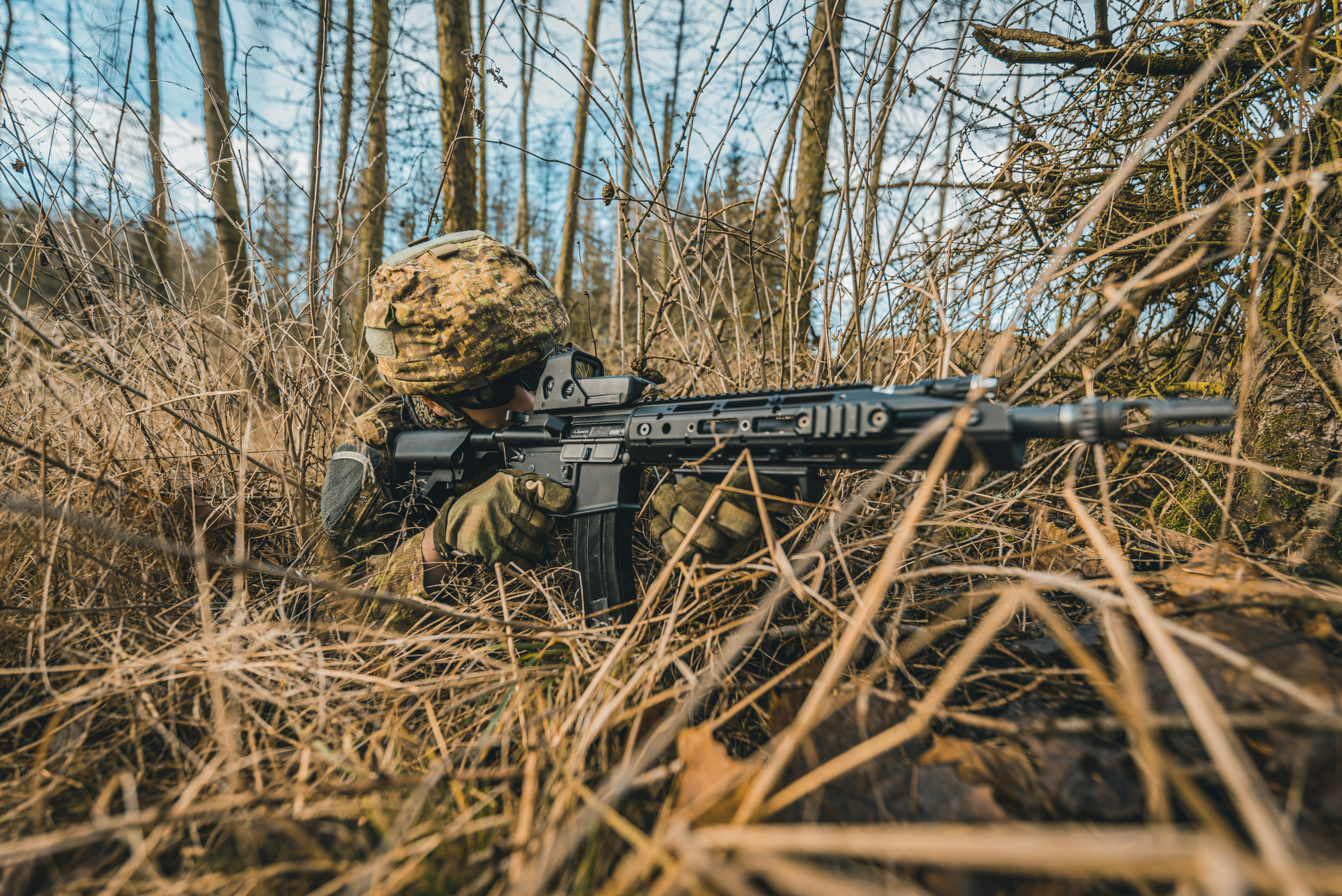
    The trauma of active combat can result in mood disorders. But IV ketamine can help.

    He wanted to be productive, but every time he had a few good days or weeks, it didn’t last because of the dreams, the night terrors…the reactions to noises or touch. Then he’d lose his confidence, walk off the job, and withdraw again.

    The loss of life, of peace, of relationships, of fulfillment, for people like these has been unavoidable till now.

    For those who couldn’t benefit from the traditional treatments for mood disorders, there just weren’t any solutions. IV ketamine and treatment-resistant mood disorders went to war. 

    Your treatment-resistant mood disorder won’t win over IV ketamine.

    These stories are just examples, but they represent multitudes of individuals whose lives have been interrupted, oppressed, tormented, or in some cases cut short, by symptoms of disorders that remained unaffected by traditional treatment.

    And that’s why I thought of all of these people.

    Because the ineptness of so many antidepressants left me feeling powerless to help; too many of my patients were crippled by their disorders, but desperately wanted the same chance at building happiness and fulfillment as anyone else.

    Too many.

    And that’s why I’m excited now and so full of hope.

    That’s why I talk so often and so enthusiastically about this emerging frontier of new therapeutic uses for that  anesthetic-turned-antidepressant, IV ketamine.

    Mom with postpartum depression can now show daughter affection because IV ketamine and treatment-resistant mood disorders.

    Because for all all the Toms, Jacies, and Dans who found no help at all from previous treatments, 80% now experience relief, restoration, and often total remission after IV ketamine treatment.

    We’re still working to find solutions for that other 20%, and we won’t stop. But we’re helping 80% of those for whom we had nothing, nada, zip…zero… that would help.

    All my training didn’t prepare me for the heartbreak of those who are so desperate for relief and can’t find it. But hope is growing, and ideas are flourishing for ways to use this new knowledge to spawn more solutions.

    Relief and Solutions are RISING

    So after my musings about those who weren’t helped, and the sadness I feel that we didn’t find solutions soon enough, it’s exhilarating to know there’s an entire frontier opening. A new world of treatment for those who weren’t helped before, through the discoveries surrounding ketamine for depression and other new solutions that will spring from it.

    IV ketamine and treatment-resistant mood disorders … it’s a fight to the finish, and ketamine is winning.

    Are you wondering if you’ll ever be able to have a life…?  If you’ll ever get to feel stable — emotionally, financially, socially?

    You really aren’t alone. Sometimes you just can’t see there’s support at your fingertips… help just beyond your line of sight. 

    Reach out and let’s talk about the things in your life and feelings that interfere with the power to live life the way you want to.

    Power to find your best self, and share it with those around you.

    Power to enjoy.

    To the power for finding your best self,

    Lori Calabrese, M.D.

    Lori Calabrese, MD offers innovative psychiatric treatment like IV Ketamine

  • Why Some People Get PTSD…and Others Don’t

    Why Some People Get PTSD…and Others Don’t

    In the throes of PTSD, this man feels lost and terrorized. Why do some people get PTSD, and others don't?Ever notice how some people seem to collapse under an onslaught of traumatic experiences, and others almost seem to rise above them? Almost as if demonstrating their resilience? Why some people get PTSD and others don’t..that’s the question.


    People tend to say the latter type is “strong”…  and the former type is weak…unable to withstand or overcome much. More stigma that we have to fight.  But is that what’s going on..?

    Strong or Weak…?  Really…??

    What is it that increases the risk that trauma can traumatize you?  We’re talking about big T Traumas and little t traumas.  Is it about how much or how little?  About how much stress you’ve had.  How many put downs.  Or how much yelling you’ve endured.  And how much fear.  Too much neglect.  Or too little attention.  About too little protection… and too few resources.  How little money.

     How much struggle.

    Traumatic experiences can etch themselves into you–into your memories, into your emotions, and into your biology.  And what we’ve learned is that what puts us at risk for that–besides the horrible events themselves–is something that is already etched into us.  A gene.

     A gene?

    Genetic Widget

    There’s a serotonin transporter gene called SLC6A4. This little genetic widget has two arms–and in the best of all possible worlds, the arms are both long arms.  But if you were born with one or two short arms instead of two long ones, you are more likely to develop major depression or PTSD in response to a traumatic life event.PTSD triggered by fireworks explosions is relieved by IV ketamine, which is why some people get PTSD and others don't

    It’s almost as if those little short “arms” can’t carry quite the emotional load as the longer arms of the corresponding gene in those who aren’t so impacted.

    Or…maybe the longer arms shield their owner from the emotional pain that accompanies heartbreak or trauma in some way.

    Of course this is all  just a way to bring science to life, but the fact is, having a short arm on that gene increases the risk that you will suffer deeply and longer from life events such as verbal or physical attacks, traumatic events, and long term debilitating difficulty.

    And there’s more.

    Genetic Test Predicts Outcomes

    There’s also a genetic test we can use to determine if you might be someone who would respond well to ketamine treatment.

    What?

    For decades, psychiatric medicine has relied on trial and error from one medication to another to find the one that is most effective for a given patient.

    But now…there is actually a test to help predict your outcome in advance and whether you’re likely to respond quickly and robustly to a treatment for severe depression and PTSD that is as innovative as a ketamine infusion.

    Neuroscience is advancing quickly, and treatment options for people who suffer with major depression, bipolar disorder, PTSD, and other psychiatric disorders are becoming more reliable and predictable. These discoveries were unheard of less than 10 years ago…even five.

    More on the Horizon

    And there’s yet another breakthrough on the horizon. And that’s the possibility that we might be able to use science to potentially prevent psychiatric disorders from developing–for example, to protect first responders and military from the risks of trauma before they enter a crisis situation.

    First responders can be protected from potential trauma by ketamine treatment in advance, an example of why some people get PTSD and some don't.So imagine… if firefighters, paramedics, SWAT team members, and military personnel facing potentially traumatic experiences could feasibly be treated with IV ketamine to prevent the event from becoming a debilitating traumatic experience. Or—think about this—imagine if someone who is genetically vulnerable to developing depression or PTSD in response to a traumatic life event could be buffered from the risk of developing it.


    One of the exceedingly bright researchers studying ketamine, and interested in “repurposing it,”  talks about the exceptional potential of this drug for potentially preventing psychiatric disorders. Working with lab animals, her work with ketamine has opened up a treasure chest of new possibilities.

    If you haven’t seen it before, it’s worth your time to watch the TED talk about this by Rebecca Brachman.

    She expounds on the sparkling new hope surrounding psychiatric use of ketamine treatment. It has already offered healing to so many who suffer, and in the future, may potentially protect others from the risk of such suffering.

    Don’t put psychiatry in a box.

    Don’t put people who suffer with psychiatric disorders in a box.

    The possibilities are endless.

    Rapid and effective treatments are emerging.

    And hope for your life to be the best it can be is billowing.

    Please call for an appointment if you’re concerned about the emotions and reactions you’re experiencing in response to what life has thrown at you. Let’s work together to find the right innovative solution for you.

    To your best self,

    Lori Calabrese, MD

    Lori Calabrese, MD offers innovative psychiatric treatment like IV Ketamine

  • Bipolar Disorder: Why Are You Acting That Way?

    Bipolar Disorder: Why Are You Acting That Way?

    Woman with bipolar disorder appears to be under a veil because she feels veiled from her real self...and that no one can see who she really is.

    “I hope I don’t have bipolar disorder.” 

    “It’s not bipolar, right?” 

    “How do I know if it’s his bipolar disorder or if he’s just being a brat?”

     “Everyone just throws that term around like it’s the menu of the day—bipolar disorder is so overdiagnosed, it’s not funny.” 

    The words are tough to hear.  The phrases can feel ugly.

    And the diagnosis often carries fear and even shame for a lot of people who feel judged, scrutinized, and stigmatized by it.

    But the fact is, bipolar disorder is caused by changes and variations in your brain and how it works …with all its sparks and fire, and all its awful, slow sludge. Changes you couldn’t possibly have prevented. You aren’t to blame. And we’re here to offer you the support and treatment you need.

    So, let’s chat a bit about what those physical causes are. We know that bipolar disorder causes extreme changes in mood, behaviors, and thinking. Your mood changes can happen over a period of months, or weeks, or even hours.

    You may feel happy and energetic. Or you might feel extremely stimulated with feelings of creativity, power, and superiority for a few months. Or…intensely irritable, volatile, and impatient.  It can change on a dime.

    This can last for hours, or days on end, or for months.

    Then your feelings can change…slowly or more abruptly… to a dark melancholy or despairing depression for just as long. Or maybe shorter. Or maybe longer…Yikes.

    Not Easy. But Also Amazing…

    Bipolar disorder is not fun. It’s tough, it’s exhausting, and it can dig you into a hole fast.  Still, there are aspects of this disorder that can actually be amazing. Things like a perception of beauty, and heightened creativity, and exquisite sensitivity that can give you a much more delicious taste of life than the average guy on the street.

    People who find their mood is dark and melancholy for months, then finally begins to brighten for awhile, experience the most common form of bipolar disorder.

    But you know what? Just as the changes may happen over a long period of time, they also may swing over a period of weeks, days, or hours, with happy or agitated periods of energy, then crashing to a pit of despair, then back again… even in the same day.

    The frequency, the intensity, the breadth of the symptoms – and the rate of switching – vary widely across the spectrum of the disorder.

    Meanwhile, it’s important if you have these mood swings over either a short time frame, or a much longer period, that you take the step to get a thorough evaluation.  If your moods and your behaviors change in a way that makes you feel out of control of your life, or like you’re sort of trapped in your emotions, then that’s your signal to reach out for an evaluation.  You don’t have to figure it out all alone.

    Because we’ve been working on figuring it out for centuries.

    Circular Insanity

    Sounds pretty awful. You may know that a generation ago it was known as manic depression. And before that, in 1851, it was called circular insanity. The condition we now call bipolar disorder reaches back to the earliest observations of despair and melancholy in 400 BC.  It’s not new.  It goes way back. Misery has always been easy to spot.

    But early psychiatrists, who were attentive and meticulous observers, recognized that in some people, despair had another face in bipolar disorder.  A person could  suffer from one illness that had two extremes, rather than two separate conditions.  And…the two extreme symptoms were related to each other.

    Medicine has researched bipolar disorder deeply since that time, and it is the most fascinating and possibly the most broadly researched and investigated brain-based health condition.Girl with bipolar disorder feels disheartened and discouraged by her illness.

    That’s right. Bipolar is not just bad behavior, or uncontrollable anger, or a flaw in someone who doesn’t control himself. It’s a brain-based condition that needs treatment.

    The National Institutes of Health says that 2 percent of Americans suffer from this disorder. But of that 2 percent, they say 83 percent are particularly severe.

    Other surveys put the numbers much higher when you take a broader perspective and include more subtle forms of depression and mania—at anywhere from 3 to 10 percent.

    So Many Without Treatment Struggle … And Feel Misunderstood

    Here’s the tragedy, though. Because of the stigma sometimes associated with this diagnosis, as well as misidentification of the symptoms, misunderstandings about the treatments, and financial constraints, not even 40 percent are treated with even minimally adequate treatment.

    That means there’s a huge number of people struggling every day in their work, their relationships, and their homes, unable to understand why everything is so hard. Why they feel so alone and misunderstood.

    Sometimes a person with bipolar disorder feels like he or she’s actually got two different sides: the “wild” one who stirs up problems …. and the “nice” one who has to live with the fallout.

    And that’s what treatment is about — to create stability, to help the “wild” one blend into the nice one so life, work, and relationships are manageable again.

    But What About You?

    What does this mean for you and your family?

    One thing we know is that there’s a tendency to inherit this disorder. So if you see these symptoms in yourself or your child, someone else nearby in the family tree very likely has it, whether they’ve been diagnosed or not.

    If you aren’t the one in your family with bipolar disorder, you may wonder what your role is and how to cope with the ups and downs. Keep reading … we’re going to address relationships with a person who has bipolar disorder in future posts.

    Hopefully, this post will help you gain some understanding of what your loved one goes through, and why.

    Bipolar disorder, like other brain-based disorders, is not a sign of weakness or bad behavior in the person who has it, but rather is a result of changes in the structure and function of certain anatomic elements of the brain.

    The Amygdala in Bipolar Disorder

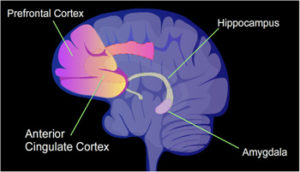
    One key area that’s a source of symptoms for this disorder is the amygdala, which is located in the temporal portion of the brain. This little lima bean-shaped duo organ is located on each side of the brain, in the temporal lobes. The amygdala alerts us to fear, it responds to things that are rewarding, and is also the seat of aggression. It identifies for us those things in our environment that are emotionally important to us.

    If a fire is ignited near us, we see danger. In a bipolar person that alarm is multiplied. If we see something rewarding, like a bar of chocolate, or a fragrant flower, or the sweet smile of a baby, the amygdala lights up, and we feel a flush of pleasure.

    But if you have bipolar disorder, the response of the amygdala is exaggerated and you may feel that reward with far more intensity.

    Basically, the amygdala activates far more emotion in persons with bipolar disorder than it does in the rest of us.

    So you feel those emotional reactions with more intensity. 

    And understandably, you’re likely to express those emotions with more intensity, too.

    There’s also evidence that the amygdala itself is smaller in children with bipolar disorder, and is assumed to be too small; but it’s been reported as both smaller than it should be… or larger in adults with this disorder. There’s still so much to learn.

    Let’s look, though, at more of the brain structures that explain still more about bipolar disorder.

    Illustration shows the location of amygdala in the brain which is intergral to bipolar disorder.The Prefrontal Cortex – Dorsolateral and Ventral

    Another key area in the brain that’s significant for you if you have bipolar disorder is the prefrontal cortex. It helps us consider facts and choose our behavior in response. This area helps with mood regulation, and helps us inhibit behaviors we may feel like doing, but know are not socially advantageous to display.

    There are two key players in the prefrontal cortex for people with this bipolar disorder. They’re the dorsolateral prefrontal cortex, and the ventral prefrontal cortex.

    The ventral prefrontal cortex is securely connected to the amygdala. Like the amygdala, it also responds to what’s rewarding or not rewarding. In people with bipolar disorder, it responds with more intensity than it does in those who don’t have this disorder.

    The dorsolateral prefrontal cortex is the more rational part, and tends to moderate emotional reactions. In people with bipolar disorder, it’s far too inactive.

    Which means that the emotional networks of the brain in bipolar disorder are exceptionally active, and the networks that moderate those emotions are less active or ineffective.

    The result? Highly active emotions in a person who doesn’t have the equipment to regulate them. Plus highly stimulated aggression, again without the inhibitions to control it. This is a brain that just can’t do its job.

    Bipolar Disorder is a Biologic Illness

    All of this is to say that bipolar disorder isn’t an excuse for misbehavior–as sometimes cruel, uninformed individuals might think. It’s the result of altered areas of the brain that heighten emotion when that brain is also lacking the equipment it needs to manage emotional responses.

    For this reason, if you live with bipolar disorder, you can know this is a condition just as real as diabetes or heart disease and just as debilitating.

    And just like other illnesses, if you have bipolar disorder or other mood disorders, you need support and help through treatment.

    We’ll talk more soon about how this disorder affects your life, your work, and your social connections. But for now, let’s just understand that your illness is caused by things in your body that aren’t working properly. Those things need to be treated.

    Some people experience a stable and rewarding life with the right medicine, good therapy, and good structure in their lives. But some need an alternative treatment to enjoy a fulfilling life.

    Experience Improvement

    The only way to determine what might be most helpful for you as an individual requires a thorough evaluation with diagnostic tests.

    That’s why we’re here. We have the expertise it takes to tease apart complex symptoms from the complex life stories that embed them, to rule out other conditions that mimic or masquerade as mood disorders, and to offer sophisticated solutions to get your mood, thinking, and behavior back on track. 

    And we offer an array of treatment options to help you find your best self — including effective ways to stimulate the firing of large neural networks with TMS, and ground-breaking opportunities to stimulate your own neuronal rearborization with IV ketamine

    There have never been more exciting opportunities to get well and stay well.

    Call for an appointment so we can do a full evaluation, and create a plan for you.

    You can experience a more fulfilling and rewarding life, even with a diagnosis like bipolar disorder. You just can’t do it alone.

    Contact me and let’s get started.

    In support of your best self,

    Lori Calabrese, M.D.

    Lori Calabrese, MD offers innovative psychiatric treatment

error: Content is protected !!