
Tag: Fighting Meanness

  • Why is Depression in Teen Girls Increasing So Fast??

    Why is Depression in Teen Girls Increasing So Fast??

    Depression in teen girls might be reduced by less social media and more involvement pets.

    Juliette stopped in her tracks.

    She could see from halfway down the hall that her locker had been trashed. Covered with photos, markings, and fake blood, it looked like a crime scene. As she got closer, she could see printed photos someone had taken of her while she was dressing in P.E. She ran to the locker and yanked off and crumpled the photos as fast as she could. (With friends like this, it’s no wonder there’s a rise in depression in teen girls.)

    As she stood staring at her locker frozen, her face burning with humiliation, she couldn’t think… Then, in one sweeping motion, she pulled all the trash off her locker door and wadded it up. 

    Only then did she look up and see the bystanders, the sidelong glances, and hear the snickering muffled giggles of her “friends” gathered around watching.

    She grabbed her books, slammed her locker door and shot off to class.

    Juliette sank into her seat, head down, heart-broken, and wondered why??  Who did this and why?  

    She felt betrayed, angry, heartsick. And abandoned.

    She didn’t say a word for the rest of the day, just kept her head down and shot out the front door when the bell rang to go home.

    Her mom was waiting outside, and Juliette jumped in the car, put her face on her lap and said, “Drive!”

    “What’s the matter, Jules?”  Her mom was alarmed.  She’d never seen her 13 year-old like this. 

    “Just drive.”  

    So her mom put the car in gear and did.

    Teen Trauma Triggered by Ridicule and Humiliation

    Once home, Juliette flew upstairs, slammed her door, and locked it. She dug her phone out of her purse for the first time since she saw the locker. Two hundred and thirteen messages. She wondered if there might be apologies… so she opened one …then another.

    NO apologies. Total strangers making jokes, rows of laughing faces, some even calling her crude names. The photos she saw on her locker had gone viral. All over Instagram, Pinterest, facebook…

    Her friends were silent.

    She thought she would die. How could she ever show her face in that school again? She could never leave her room again. She covered her head and sobbed.

    “Jules..?  Honey, are you OK?  Did something happen?”

    “Mom, I just want to be alone.”

    This isn’t something my parents can help with. I’m alone with this nightmare, she thought.

    So a traumatic experience begins to fester…

    Scenes like this aren’t uncommon if you have kids. You got her into ballet at 3, then gymnastics at 5, then soccer at 7. Always hoping to help her gain confidence in herself, to help make the transitions of childhood to adolescence, and adolescence to adulthood advance more smoothly. To help her develop an anchor within herself that would see her though the storms, and the things that others did.

    And your happy, socially-balanced child does great with her activities, her friends, slumber parties, and sports events.

    Until the day she’s publicly humiliated.

    The humiliation can happen on Snapchat, Facebook, Instagram, and other social media sites. It can happen in text messaging. Or it can happen at school and at slumber parties.

    And, while the cruel embarrassments and humiliations children and teens impose on each other are terrible — and seem almost insurmountable for some students– it’s what follows if they can’t get past it that can be life-threatening. 

    Believe it.

    Depression in Teen Girls Can Be Deadly

    Sometimes, what we parents see is a child, preteen, or adolescent, who is acting differently.  Who won’t talk to us. Since we don’t know what they’ve faced at school, we may be clueless about the trauma they’re experiencing. We may think they’re just being moody teenagers.

    Sadly, the trauma may cause such a deep pain that they can’t find words to “get it off their chest…” So they may isolate, huddle, and try to figure out how to cope on their own.

    An experience like Juliette endured isn’t usually a single event. There’s the aftermath. Someone in her shoes may skip school for a few days until she can muster the courage to step out and go again. But even when they do go, there are whispers, snickers, more text messages. 

    And sometimes even more incidents that go from bad to worse. 

    The stress continues, long after we parents think it should be over.

    Or we may never know it happened in the first place.

    And as we often talk about, prolonged severe stress can result in that pruning of the dendrites and dendritic spines that destroys synaptic connections between brain cells. And depending on how severe the pruning is, and how long it continues… the outcome is often depression.

    “But she’s a kid…” you may think. “She doesn’t have severe stress. How could she?”

    It’s an unfortunate miscalculation to think that a child can’t experience severe stress. Her world is her reality. And she’s been building that world since she can remember. If everything that makes her world a warm and inviting place of support, caring, and acceptance is disassembled and left in shambles, then her world is shattered. 

    And as her parents, you can’t fix it. 

    That’s not to say you can’t be a comfort and a support. But no one can fix her world for her but herself.  A pretty daunting task for a devastated 13 year-old.

    It turns out that teen depression rates have been increasing for years, but the rate of depression in girls is rising faster than it is in boys.

    Teen Depression is Threatening Our Children

    Girls and boys. But is there difference in how much and how often it strikes? Why are teen girls becoming depressed more often than boys?

    For one thing, by the age of 15, girls are actually twice as likely to become depressed as boys. It’s surprising, isn’t it?  …but there are reasons. 

    The smart phone, for instance. By the mid 90’s, both boys and girls were using them. And those babies born by then were the first generation to live out their entire lives in the age of smart phones. Those babies are 25 this year. 

    Let’s hear from those young women, shall we?

    A team of researchers analyzed 3 surveys that included 200,000 females in the US and the UK.  And…they learned some things.

    For example:

    Fill a classroom with 25 teens, and give them the freedom to use their smart phones. Then, walk up and down the aisles and glance at their screens. You know what you’ll see, first thing?

    They’re not doing the same things.
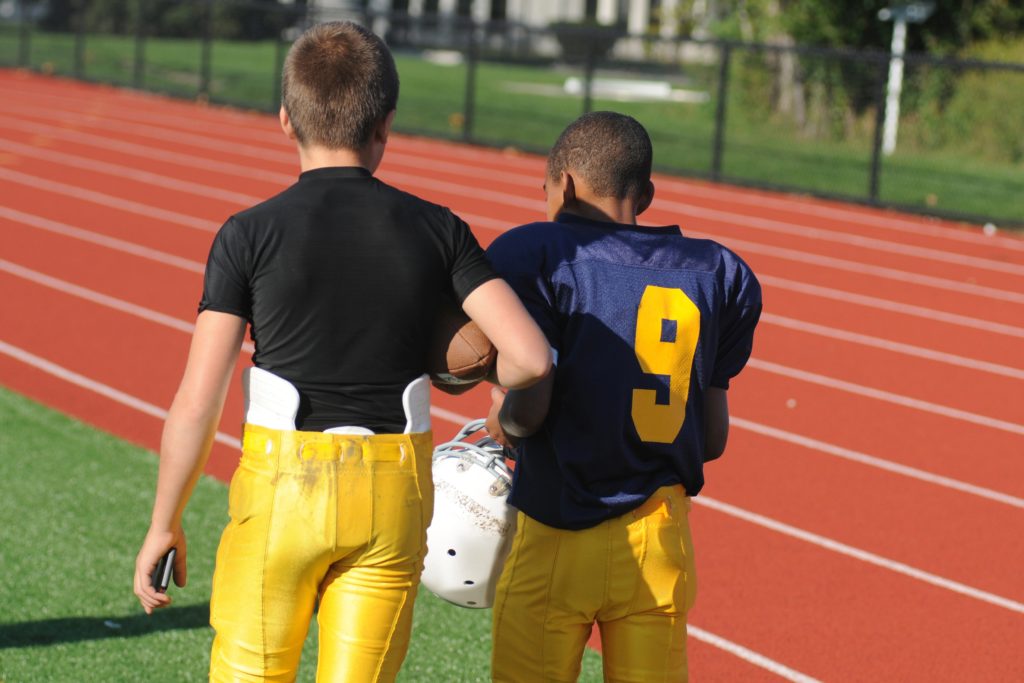
    The boys are playing games… on their smart phones, or talking about sports, and texting each other about the games.

    The girls?  They’re texting, and on social media.  What are they texting about ?  Their appearance, their clothes, their hair…and someone else’s appearance, clothes, and hair. 

    And when one sends off a text, she’s reassured that she’s accepted when she receives a response right back. No pauses.

    If there’s a pause before she receives a response…because maybe the other girl is in the restroom, or is carrying too much in her arms to text easily,  the first girl begins to feel dismissed.

    Anxiety rises.

    And that knee-jerk reaction happens over and over and over, day and night, month after month…year after year.

    Hurt Feelings, Misunderstandings, Feeling Left Out

    Now, add to that the pecking order on social media platforms. The girl with 8 likes is shamed when compared to the girls with 500 likes and shares. And don’t kid yourself. Those comparisons are made. Ruthlessly. 

    Images that create a fantasy of one girl’s life lead to others feeling ashamed of their “plain” homes, clothes, and activities. None of this is grounded in the real world. But then smart phones and social media have little to do with the real world.

    The pressure is intense enough that one study found that girls who compare themselves to other girls on social media were more likely to be depressed.  

    And get this: in 2017, a full one-fifth of teen girls said they’re suffering from major depression. One Fifth!

    Then, there are the cruel “jokes” some girls play on others, where messages, videos taken without permission, and compromising  photos are sent out and go viral.  And young girls become convinced there is no remedy to restore their lives after such exposure, and at the tender age of 10, or 12, or 14… they end their lives.

    So is it all social media?  No.

    Don’t boys use social media? Yes, they do.

    But these researchers also found that social media and the interactions there have a stronger effect on girls than boys. 

    They found that 15% of girls who were on social media only 30 minutes a day, due to other activities, family rules, etc, were unhappy. But 26% of girls who were on social media 6 hours a day were unhappy.

    Now let’s look at the boys. Only 11% of the boys who were on social media 30 minutes a day were unhappy.  And those boys who were on social media 6 hours a day? Only 18% of them were unhappy.  

    So what is it about girls that more of them seem to succumb to depression from social media? 

    Researchers found it was that being popular, and having positive interactions with others is tied to their sense of satisfaction, happiness, and confidence.

    Social media can either build up the social ties a teen girl enjoys, or it can destroy them through bullying, shame, and conflict.

    And we can’t forget that pressures about image and appearance continue to increase at this age…

    Now… what can parents do?

    One obvious step might be to postpone your child’s access to social media. That message is being disseminated by experts on adolescent mental health far and wide.  

    While it’s illegal for a child to have a social media profile before the age of 13, parents might consider extending a moratorium on social media use longer than that. 

    The social pressure among teens to excel on social media is not aimed at their growth, self-confidence, or character, but is actually designed to pull them into an addictive activity.

    We all know Mark Zuckerberg as co-founder of facebook. But do you know Sean Parker? He joined Zuckerberg 5 months after Facebook was launched as a student directory, and Zuckerberg credits him with the phenomenal growth it enjoyed. Which made him a billionaire.

    Referring to facebook, Parker said,“It’s a social-validation feedback loop … exactly the kind of thing that a hacker like myself would come up with, because you’re exploiting a vulnerability in human psychology.”

    He went on to say that social media like Facebook “…literally changes your relationship with society, with each other. It probably interferes with productivity in weird ways. God only knows what it’s doing to our children’s brains,” he said.

    Children aren’t equipped with the life experience or brain development to see these sites for what they are. Rather, they’re swept up in the tidal wave that is adolescence and the need for social acceptance at probably the most vulnerable time of their lives.

    As parents, they need us to be proactive, to give them time to develop the life skills to keep such activities in their place. 

    They need time to just grow, physically, mentally, emotionally, and socially. To develop healthy relationships with their peers, and to survive their preteens, teens, and early adulthood so they can go on to become the best they can be. 

    Depression in Teen Girls Needs to Slow Down. Let’s Do Something.

    Would this approach prevent depression in girls?

    No, no, of course not. But it just might protect your daughter from depression. And maybe her friends. And maybe some of their friends.

    By finding opportunities to get your daughters talking with their friends about the dangers and risks of social media, and using text messaging less… and in more responsible ways… perhaps we can open their eyes. And a lot of others.

    Maybe that could go viral.

    Maybe a new culture could emerge where our daughters lived well, and survived their own adolescence… and could go on to have daughters of their own.

    After all, that’s what we want for them, right?

    Ketamine For Treatment Resistant Disorders

    If your daughter — or son — has developed depression, and medicines aren’t helping, call us. Let’s talk about IV ketamine treatment — which shows a much higher response rate than antidepressants.
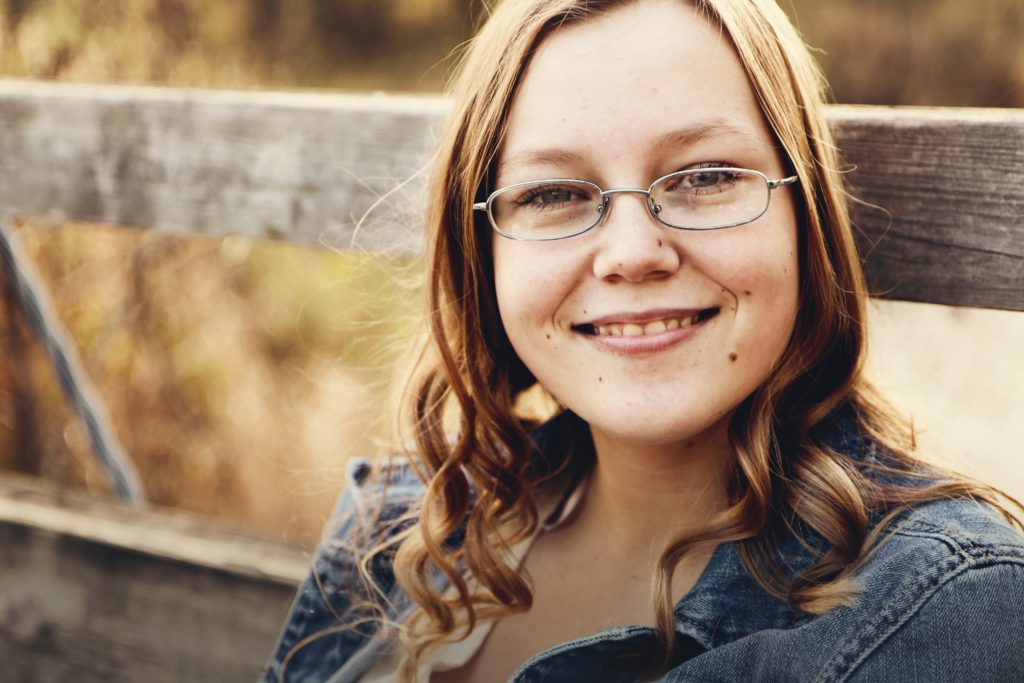
    The sooner your teen’s disorder is treated and relieved, the sooner her resilience is restored, the better equipped she (or he) will be to tackle the life issues she faces as she grows to adulthood.

    Depression in teen girls is increasing, but we’re not powerless to fight it. Let’s work together to turn the tide on disorders that result from things like the intense stress of social media.

    And if your teen is struggling without relief, learn about IV ketamine treatment. It’s saving lives.

    To the restoration of your best self…and your teen’s,
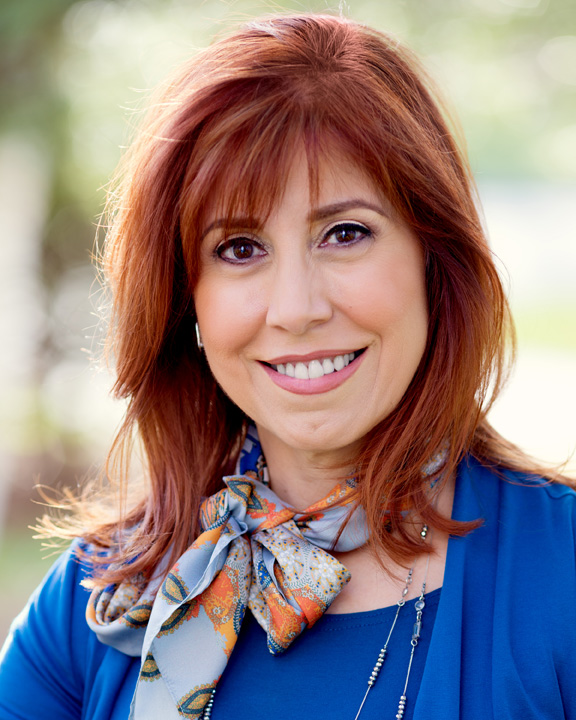
    Lori Calabrese, M.D. is on the front end of the race to stop PTSD in its tracks using IV ketamine treatment.

    To the restoration of your best self,
  • Can Use of Opioids Lead to PTSD? And If So, What Can You Do?

    Can Use of Opioids Lead to PTSD? And If So, What Can You Do?

    You know how a disorder – like bipolar disorder or PTSD – can make you so miserable…even make you want to self-medicate?  

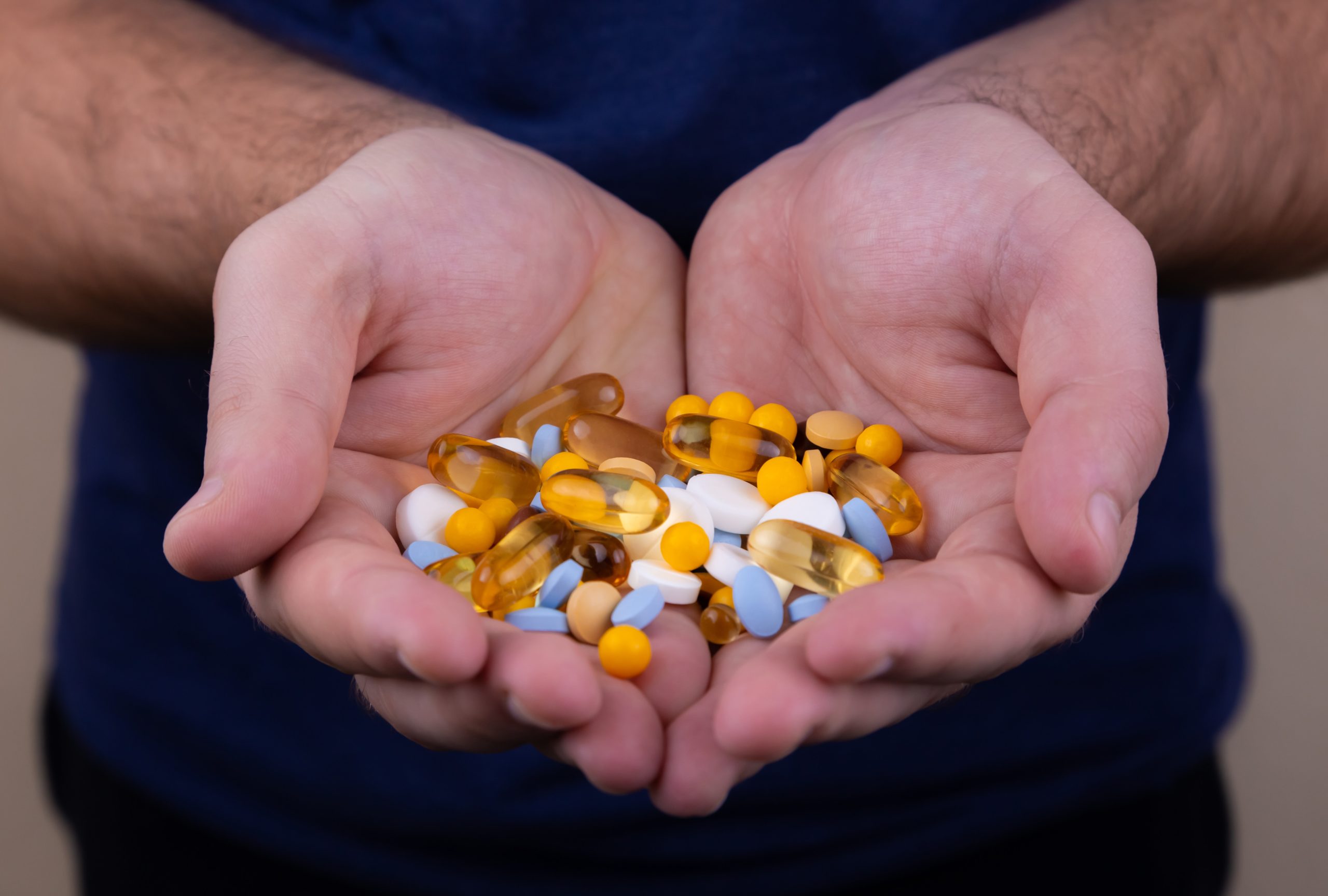
    Doing so is rarely a good idea, though it may seem at the time that it helps.  But that’s for another post. Anyway, you know how self-medicating often accompanies these disorders, and we’ve assumed that the self-medicating is driven by the symptoms of the disorder: the ups, the downs, the agitation and rage, the misery… If the symptoms were to go away, there would be no need for self-medicating. Right? Doesn’t that seem logical? Well, a recent study says no…in fact, self-medicating with opioids… or even using prescribed opioids may lead to PTSD!

    Mood Swings in Bipolar Disorder Make You Want to Self-Medicate

    Take bipolar disorder, for example. You feel yourself swinging up, up, up until you’re confident, then agitated, shooting words like a machine gun, and feeling more energy than you can manage… you just want to feel normal, you know?  So you start drinking beers as fast as you can to slow down… and…well, it’s not an exact science.

    You end up drinking way too many until you’re frankly drunk…but there’s still energy you have to manage, somehow. You may want to jump in a car and head down the freeway… but thankfully, you can’t find your keys.

    OR… your mood starts plunging and plunging.  Way too fast… and before too long you want to scream and cry. You feel so hopeless, and disgust and self hatred take over your mind… and it feels like you have fire ants on your brain. 

    You need something to help you feel better. So you reach for something that helps you feel like you’re at a party. Then, after awhile, you’re a mixed up ball of horrific and frustrating feelings…and you decide to go for something different that will help you chill.

    This is a dangerous and destructive path, but it’s tragically common. This is self-medicating.

    And, unfortunately, you may not even realize that use of opioids may lead to PTSD.

    =============

    Meet Zach. He served two tours in Afghanistan. He wanted to go back for a third, but his family needed him at home. (At least that’s what he told himself.)

    Zach never talked about it, but he’d gotten high with friends off and on in high school. He had joined the Marines for the hard work and discipline, to get himself back on track.

    Now this.

    Anyway, he had rehab. Who was he kidding? There was no way he could go back. He figured he was nervous about going home after all that happened…

    The truth is, Zach got through the first tour fine. Then, on the second tour, he and some fellow marines were helping some children carry water to their homes.

    He and Rex were heading in the same direction when a little girl approached them with eyes as big as saucers. Rex naturally reached for the child and at that moment she detonated. The child had been wrapped in home-made explosives under her clothing.

    Rex blew apart, as did both children. Zach lost his right arm and his ear. Such an inhuman thing to do. The scene was tattooed in Zach’s memory and he couldn’t escape from it. Children’s body parts, his friend and marine brother’s hands, leg, organs, everywhere.

    Rage Begins… and Panic

    Rage burned within him that anyone would stoop to the evil of murdering children that way just to get rid of a marine or two.

    When he got home, he wasn’t the help to his family he wanted to be. He had trouble holding a job… any sudden startle stirred up the fight in him and sent him into a cold sweat at the same time. Like the wait staff dropping a dish. The clatter sounded like that explosion inside his head. His only thought in moments like that was to tear apart the reprobate who did this to these little kids. And stole his friend.

    Zach was seething all the time. Going through surgeries for his arm stump and ear reconstruction. Jumpy, easily provoked, irritable…and at times terrified. His marriage was deteriorating. His children afraid of him.

    He talked to a buddy about getting his hands on something to calm him down… he hated being like this.

    Something had to give…then his wife learned about a “new” treatment for PTSD…

    ============

    Researchers Asked, Can Use of Opioids Lead to PTSD?

    So…  it turns out this self-medicating road goes both ways. A new study released in December 2019 demonstrated that heavy opioid use over time before a traumatic event influences us to be traumatized by the event… basically it alerts us to be so fearful of that experience that we can develop PTSD as a result.

    We’re talking about Post Traumatic Stress Disorder, or PTSD. And like bipolar disorder, PTSD has an established reputation as a disorder that is quite often co-morbid (meaning you have more than one illness at the same time) with substance use disorder.

    In fact, 40% of people diagnosed with PTSD also struggle with substance use disorder (SUD) …meaning they may have addictions, or they may regularly use a substance that masks or combats the way they feel…until it doesn’t. 

    Now get this: almost 35% of people who struggle with an opioid use disorder also suffer from PTSD. Sound familiar?  

    PTSD <=> SUD

      40% <=> 35%

    A bit of a coincidence you think..? Maybe, but more likely this two way street of comorbidity with PTSD and substance use disorder does cause us to stop and think….can opioid use play a role in the development of PTSD?

    Laboratory Animals Develop PTSD after Opioid Use

    This study I mentioned was just published in Neuropsychopharmacology last month, by a team at UCLA led by Zachary T. Pennington. Their carefully planned study involved laboratory animals and demonstrated how the use of opioids during a time that preceded a trauma increased fear learning.  Or, to be more clear… use of opioids may lead to PTSD.  

    Interestingly, in cases where the opioid use occurred after the traumatic experience, there was no lasting fear or PTSD reaction.

    The team used an upsetting/frightening stimulus to create a traumatic experience for the animals and noted their reaction to it. Then after creating the condition of “withdrawal” from opioids using morphine and naltrexone (a medicine used to block the effects of opioids) they placed the animals in an environment where only a mild stimulus was used, and saw that the animals reacted strongly in fear — basically they froze in place — as though it was the original severe experience.

    Sounds a lot like PTSD, doesn’t it?

    Remember Zach? The guy who is a combat veteran with PTSD freezes when someone pats him cheerfully on the back to greet him. It’s all he can do to avoid turning and fighting that person to the ground. Why? Because it feels like he’s being assaulted, and all those horrific memories flood him as if they’re happening right now.

    Researchers also gave control animals (the ones who don’t receive opioids so they can be compared to the ones who do) saline injections instead of morphine, and then followed with the traumatic experience. Those animals experienced far less fear and anxiety reactions compared to the ones who had been given morphine prior to the traumatic experience.

    Stress Enhanced Fear Learning (SEFL)

    They call this approach “stress-enhanced-fear-learning” (SEFL) and it’s a model for us of PTSD and how it ca develop. 

    And this demonstration shows us that people who’ve used opioids, whether they were prescribed — or obtained illegally — could be vulnerable to PTSD from traumatic experiences in the future. The resilience necessary to quickly recover from trauma seems to be drastically reduced in those who are exposed to opioids.

    The media is full of the dangers of the opioid crisis, but this is one we didn’t see coming. Use of opioids at a particularly vulnerable time can lead to PTSD …or at least that’s what this study seems to tell us.

    Still, the researchers emphasize that there’s a difference between fear learning and fear expression. Fear learning is the process we go through where we’re frightened by something unpleasant that we don’t want to experience again…and by it we learn to be cautious and recognize danger.  (This is a good thing.) The amygdala is the primary place in the brain where fear is processed and stored. Some types of fears are then sent to the hippocampus for further storing.  But that’s not the point.

    Fear expression is what we do and how we look when we feel fear. Fighting or running are expressions of fear. Freezing can be an expression of fear, too.

    Fear expression is our response to the fear we feel.

    The way we express fear has nothing to do with the learning process we go through to establish a fearful memory. But the process we go through to learn the fear has a lot to do with whether we quickly recover from it, or whether it turns into a fearful memory that becomes traumatic every time we think of it…and that’s the story of PTSD.

    What we didn’t know before this study, is that using opioids may make you really vulnerable to PTSD, so avoiding them if you can is better for your overall wellbeing going forward. 

    Because use of opioids may lead to PTSD…

    Of course, since this is the first study that has identified the role opioids may play in the development of PTSD, there are lots more studies needed. We’d like to see studies that test the development of PTSD if the opioids were used 6 months ago, a year ago, 2 years ago…?  

    In this laboratory setting, with lab animals — not human beings — it had only been a week.

    And because this study focused on the reactions of lab animals, we don’t yet know how the results would look in human subjects. In addition, we can’t know without more research, what this means for people who already take opiates for pain.

    It’s certainly true that none of us knows when we might experience something traumatic. It can happen to anyone… at any time. An assault, a vehicle collision, a catastrophic illness, a vicious divorce.

    The study demonstrated this phenomenon only in cases where the animal had previously had the opioid before experiencing the trauma. When the opioid was administered after the trauma there was no PTSD reaction.

    So… of course we’d like to avoid opioids as much as possible for unexpected surgeries, accidents, and injuries just in case of trauma in the future…? At the same time, we don’t know enough yet to be alarmed.

    This is how it works with new discoveries. Tiny pieces of information eek out…one bit at a time. And so we look forward to what else can be learned about this PTSD – Opioid connection.

    Still, we’re excited about an effective treatment for PTSD if it does develop, and for certain substance use disorders, as well.

    IV ketamine treatment has demonstrated what it can do for both of those, both in studies and in real world practice.

    At Innovative Psychiatry, we use novel and advanced treatments for disorders that haven’t responded to traditional medicines and treatments. IV ketamine treatment reigns proudly at the top of that list. 

    And we’re always thrilled and amazed to see how effective ketamine can be in reversing a cluster of disorders all at once. By treating PTSD and depression with IV ketamine, we often see phobias disappear, too. By treating suicidal thoughts with ketamine, which can be utterly life-saving…we often see depression lift, and PTSD with it.

    There’s nothing magical about ketamine. It’s just a man-made molecule that happens to work in a surprising number of ways. But when you’ve been tormented by the traumatic flashbacks of PTSD, disrupting your life and your family, and then those terrifying visuals and experiences subside with ketamine infusions, it sure can seem like it’s magic. And it thrills your family just as much as it does you…when they see your new-found peace and resilience.
    If use of opioids leads to PTSD for you, IV ketamine treatment can help you achieve remission like this relaxed guy on the beach.

    If you suffer from fear and the fearful memories that disrupt you life, your career, and your relationships — or if you’ve been diagnosed with PTSD but treatments haven’t helped, you owe it to yourself and the people you love to reach out for the freedom you can enjoy after IV ketamine treatment.

    Your life can change through the extraordinary effects of IV ketamine treatment. 

    Expect around 6 -8 infusions or so… and be patient if you don’t immediately feel better after the first one. Give it a little time and a few more infusions…

    On average, it’s common for people to experience ketamine’s benefits after the 3rd infusion. But that’s an average and individual experiences vary.

    You do your part, we’ll do our part…and we’ll also eagerly embrace collaboration with the healthcare team who knows you well.

    You can have a better life. You really can. Find out how you can enjoy the resilience to snap back after something goes wrong. Reach out for help to get better with IV ketamine treatment. We’re here to walk you through it, and to help it go smoothly. You’ll be in a quiet, comfortable room, with lights turned low for your infusions. And you can bring soft music to play, if you like. A blanket to keep you warm and secure.

    This is your chance to emerge better, balanced, and joyful. This is your opportunity to restore hope.

    We look forward to talking with you. Call us.

    Lori Calabrese, M.D. is on the front end of the race to stop PTSD in its tracks using IV ketamine treatment.

    To the restoration of your best self,
  • Reach Out for Ketamine… to Get Better… and Make 2020 Your Best Year Yet

    Reach Out for Ketamine… to Get Better… and Make 2020 Your Best Year Yet

    This is the first Monday of the New Year…so how do you start a new year?

    With resolutions? A diet?  Maybe more exercise? Lots of people do. But what about you? What if you don’t have an appetite…?  Might be hard to stick to a diet more than a couple days… and what if you haven’t slept in days…and you’re exhausted… who cares about the new year and any good intentions? When you feel crummy, the beginning of the year seems like just more of the same ol’ misery. Maybe you wonder, why try? You’ve been so depressed, with so much anxiety, and have felt so alone, so vacant, for so looong, it seems futile to try something new…  BUT. What if there really IS an answer that could sweep away your misery and you could finally feel like the best you you’ve ever been…?  I know, you probably think that sounds impossible. But wait a sec…this is the 21st century, my friend. Treatments have improved. Or a better way to put it, there’s now a treatment that’s a game changer. But it won’t come to you.  You’ll have to reach out for ketamine so you can get better now. You’ll have to do something…because this treatment won’t magically show up in your living room. So why not do it now?

    IV Ketamine Treatment – The Game Changer for Psychiatric Disorders

    Of course, I’m talking about the treatment that came out of the woodwork the last decade. The one that started as a trusted anesthesia medicine listed on the World Health Organization (WHO) List of Essential Medicines. The one that’s been so safe for 50 years that it’s been used in surgical settings for people of all ages across the globe, and also in surgical settings for pets of all sizes. 

    Like most exceptional medicines that are designed for sedation and/or pain relief, it’s been abused by people on the street and in the club scene for its dissociative side effects. As a result, it’s sometimes been misunderstood as a result.

    But under psychiatric supervision, it’s nothing less than extraordinary in its effect on people whose disorder has not responded to traditional medications. Which is one of its many endearing charms.

    Why wait any longer? Why not reach out for ketamine now and start this new decade on far better footing..? Stick your neck out and make the call for treatment now because you deserve the chance to live a fulfilling life, free of symptoms that keep your life shackled.

    Ketamine Treatment Relieves a Broad Variety of Disorder Symptoms

    It happened last week, and it shocked me. Someone asked me about the best treatments for depression, anxiety, and PTSD. As I began to talk about treatments, I saw a blank look on his face when I mentioned ketamine infusions. He’d never heard about them…! And I realized that though this medicine is always in my radar, there are countless people who know nothing about what it can do.

    Someone who suffers from unrelenting and severe depression, bipolar depression, PTSD, OCD, social anxiety, substance use disorder, alcohol use disorders – and sometimes eating disorders like Anorexia Nervosa – can achieve remission with IV ketamine treatment.

    IV ketamine treatment can be a bit tepid in relieving symptoms for those with milder cases. But, let me quickly say that when you feel bad, it doesn’t feel mild. And that’s why we have criteria to help us measure the severity of each case.

    Just knowing how severe it is – or not – can guide us in how to treat it. When we see someone who has suffered with symptoms for years in spite of multiple medication trials, in spite of other treatments, who has also been hospitalized for symptoms, and may have attempted suicide multiple times, we realize this patient has suffered severely for a very long time. And patients like this usually experience a dramatic remission after IV ketamine treatment.

    Not always. But usually…

    IV ketamine treatment doesn’t work like this for everyone… sadly, not even for everyone who’s severely ill. But it has a remarkably fast and vigorously thorough effect on a very high percentage of patients… higher than any other office treatment for these disorders.

    And that’s not all.

    Freedom from the Doldrums

    You know how it is with depression that hangs over you…month after month and year after year… even if you have a few days that are a bit better…and you can actually smile some…as soon as someone says something that hits a nerve – you plunge again…back into the pits. It’s like you have nothing to fight with, like a tightrope performer with no net. So even a lighter feeling for a few days is temporary and you know it. You can feel how fragile it is.

    But with IV ketamine treatment, that fragile-ness seems to evaporate. You get offended by the guy at the party who ALWAYS has his foot in his mouth, and it burns you up. But the nosedive you expect floats away, as you think through that guy’s words and realize your peace is too important to jeopardize… and ::::poof!:::: you move on. And it’s forgotten.

    One reason may be the resilience ketamine builds. You’re able to adapt and quickly recover from the offenses that happen and you have the power to just snap back and be ok. It’s amazing…in fact, it’s priceless.

    So, reaching out may require that you talk to yourself. Maybe you’ll need to “psych yourself up,” but when you do whatever you need to do, and reach out for ketamine treatment, you’ll find yourself surprised at all that happens for you.

    Neuroplasticity + Psychotherapy = Peace & Joy in life

    Then, to point out yet another talent of this treatment, researchers and therapists have learned that because of the neuroplasticity ketamine creates in your brain circuitry, psychotherapy can be much more effective about 24 hours after an infusion.

    At Innovative Psychiatry, we love working with your psychiatrist and therapist to help make that benefit available to you with scheduled infusions coordinated with your therapy appointment 24 hours later.

    But, the fact is, that none of this can be available to you unless you reach out. It requires that you call us. Let us coordinate with your healthcare team.

    You’re probably thinking, How Can I Do THAT?  I Can’t Seem to Get Out of Bed??!!

    And there’s the rub.

    There is more help available for your tormentous symptoms than has ever been seen by your parents or grandparents or great grandparents… 

    But the biggest obstacle between you and having a healthy, balanced, rewarding life is actually a characteristic of your illness. To get to that rewarding life (you may have all but given up on,) you have to do something you may not think you can do. And here it is…

    PUSH through.

    …and make the call.

    And you know how you can do that..? 

    By grabbing on to HOPE. 

    The drowning man has to take hold of the rope. If he’s passive and tries nothing, he’ll drown.

    The mountain climber who loses his footing and careens over the cliff has to reach out and GRAB – something. A rock…a rope…a bush…?

    Once you reach out, it gets easier. We step in. You’ll still have to show up, but each time it will probably get easier and easier. And as ketamine goes to work in your brain cells – the systems and circuits and structures – surging hope and strength and resilience will billow from within you.  

    It doesn’t happen all at once the very first minute…

    Maybe it just trickles at first, but then the trickles become waves, and the joy and initiative surges, and you find you’re CAPABLE of doing things you want to do, that you’d all but forgotten about.

    For some it’s during the first infusion…for some it’s after the second one. For others it’s after the third… and in some cases it’s even after the fourth.

    Your family may notice the changes in you before you do. You may show unexpected initiative before you FEEL all that much better. (Miranda, are you actually folding clothes? Unbelievable!)

    Reach Out for Ketamine!

    More than likely, you’ve heard of ketamine treatment. Maybe you dismissed it, because you’ve heard of it as “Special K” or thought it was just a horse tranquilizer. You think it all sounds bizarre, or the creepy kind of experimental treatment that happens in somebody’s garage.

    If so, maybe it’s time you do your own homework? The National Institute of Health funds extensive research about ketamine treatment because it’s so extraordinary.

    Esteemed neuroscience researchers around the world submit their research to peer-reviewed medical journals. Conferences of psychiatrists, neurologists, neuroscientists, and physicians in other fields are hosted in major cities like Oxford (UK), NYC, Austin, San Francisco, and more. And this has been going on for years.

    IV ketamine treatment is the most effective medicine for psychiatric disorders we’ve ever seen. It’s not FDA approved because no one wants to pay for FDA trials if they can’t make a profit off a patent. And..ketamine is too old…there’s no patent to be had.

    So, we lobby for it to be covered by insurance companies, anyway. And until then, you have to pay for this treatment out-of-pocket. However, there is medical financing available everywhere. And your resurrected life, your ability to pursue your dreams, build strong, healthy relationships, and enjoy your hobbies on your terms…isn’t all that worth a small loan?  To be able to live again?

    Reach Out for Ketamine and Get Better for 2020

    This is a new year, and a new decade. Right now, this week, is the perfect time to turn the tables on misery, take hold of your hope, and reach out to get better.

    Tell yourself that it’s your turn to get better. And that you’re not going to give in to excuses. That you want to live better, healthier, and more balanced. That you want your life to BE better. Give Hope the benefit of the doubt.

    This step can turn your entire life around for the better. But you’re the one who has to take it.

    Because it’s not right for everyone. We need to be sure you’re a candidate. And we’ll evaluate that first. 

    So…you may say, What if it doesn’t work for me?

    This young woman chose to reach out for ketamine and it changed everything about her life.

    Well…we say, What if it does??

    The likelihood it will transform your life is much stronger than the likelihood it won’t work for you.  Much stronger.

    Do you really want another decade to crawl by while you’re trapped in the misery and despair of this disorder?

    Reach out for Hope and for a better life in 2020 and beyond. 

    We’ll walk you through the process, answer your questions, and make it as easy for you as we possibly can. We’re here waiting for you to call us because we want to see you enjoying a full life.

    Reach out for ketamine and grab onto HOPE.

    Lori Calabrese, M.D. is on the front end of the race to stop PTSD in its tracks using IV ketamine treatment.

    To the restoration of your best self,
  • Ketamine and Other Breakthroughs in Psychiatry for 2019

    Ketamine and Other Breakthroughs in Psychiatry for 2019

    Man on a cell phone demonstrates one of the breakthroughs in Psychiatry of 2019.

    Tomorrow is the last day of 2019…and the day before a new year – and a new decade – begins.

    Let’s jump in and look back. Let’s celebrate our progress over the last year and consider the impact of new breakthroughs this year. Some of these breakthroughs in psychiatry for 2019 may surprise you.

    The World Health Organization says that depression is the leading cause of disability worldwide. (This is not a breakthrough–it’s one of the sad facts of our time.) And for at least 1/3 of those who suffer with it, traditional brand name and generic antidepressants on the market don’t work.

    In the early 2000’s, researchers discovered that IV ketamine caused a rapid and  robust response in people with major depression.

    Now, 10 years later, a ketamine derivative is one of our biggest breakthroughs this year. So let’s talk about that, and other breakthroughs in psychiatry for 2019, as well.

    Breakthroughs in Psychiatry for 2019

    1. Esketamine (Spravato)

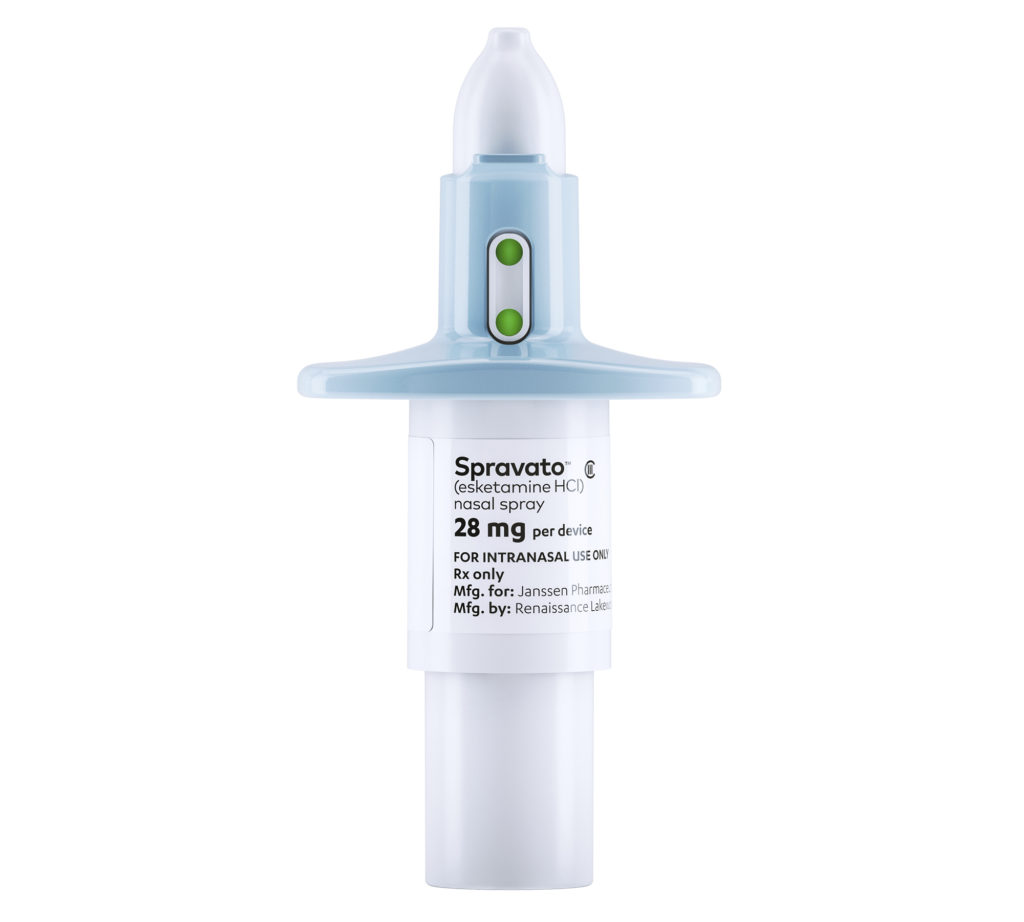
    Spravato is one of the breakthroughs in psychiatry for 2019, because it won FDA approval this year.

    In March of this year, the FDA approved a derivative of ketamine, the left enantiomer of the molecule, in a specially designed nasal spray for treatment resistant depression under medical supervision in approved clinics. However, the FDA approved this to be used only in conjunction with another andtidepressant at the same tije.Use of esketamine requires the initiation of a new antidepressant at the same time. 

    After years of promising outcomes with IV and IM ketamine in treating depression and other disorders as an off-label treatment, FDA approval of esketamine presented a milestone — it’s a novel form of treatment as a nasal spray and it uses a derivative of a medication that we’ve been using successfully and safely for years. PTSD, cocaine use disorder, alcohol use disorder, bipolar depression, social anxiety, and suicidal thinking can all respond to IV ketamine.

    While esketamine hasn’t been studied for most of these conditions, it can create a robust add-on response to an antidepressant in some patients who benefit from low doses. And the beauty of it is that because of its FDA approval, esketamine as a medication is covered by many insurance programs.

    Although there are tons of hoops to jump through, red tape, paperwork, REMS monitoring (the risk mitigation program that the FDA requires that all doctors and patients participate in).

    So… FDA approval marked a new breakthrough in psychiatry for 2019, and a milestone in ketamine’s journey. The quest for wider acceptance as a remarkable treatment for people who’ve remained depressed in spite of traditional medicines.

    This 21st century novel and advanced treatment for psychiatric disorders is changing the face of disability.

    Growing numbers of people are experiencing not only improvement, but remission from their symptoms, and are recovering to build fulfilling and rewarding lives, relationships, and futures.

    Here at Innovative Psychiatry, we offer both IV ketamine treatment and esketamine nasal spray for those patients who are candidates for these treatments.

    2. Telemental Health Support

    Healthcare services provided by online video or telephone has been growing for a number of years. It has improved medical care for shut-ins  and the elderly who have difficulty accessing it in the office. Psychiatric patients in remote areas have received better psychiatric coverage through this means of communication.

    By combining technology with new policies, telemental health has advanced in its effectiveness again. Sometimes using a method of treatment reveals new opportunities for improvement as challenges reveal themselves.  

    So, The National Center for Performance Health in Florida recently established ecare4kids. This tele-counseling program serves public school children in Florida with online tele-counseling. All 50 states provide some amount of tele-health services through Medicaid.

    Then in February 2019, Congress introduced the Mental Health Telemedicine Expansion Act. The Ways and Means Committe approved it in June of this year to ensure more psychiatric health care in remote areas throughout the US.

    3. Gene-guided medicine

    The Human Genome Project completed mapping the genome in 2003.

    So what’s a genome? 

    Good question. It’s the complete set of DNA, or the genetic material, found in a microorganism or the cell of any living thing. In this case, we’re specifically talking about human DNA.

    To clarify, DNA is made of a pair of twisting or spiraling strands that consist of four chemical units which we call nucleotide bases. And the bases are made of adenine (A), thymine (T), guanine (G), and cytosine (C). These bases are paired in specific patterns, i.e., an A is paired with a T, and a G is paired with a C.

    This woman is bursting with excitement from the treatment she's gotten listed in psychiatry breakthrougs for 2019.
    Now imagine this: there are 3 billion of these base pairs in your DNA, which are held within 23 pairs of chromosomes…in the nucleus of every cell of your body.

    You can see how ambitious it was for this team to take on the project of mapping all this out.

    Well, now that we have that mapping, the obvious next step follows the reduction in price of mapping your own individual genome. The initial mapping project was estimated to cost 30 million dollars. 

    But the more they use this process, the more the process reduces in cost. The next steps can feasibly include things like getting your own map so your medical and health needs, and even the medicines you take, can be so specifically customized to your genetic profile as well as your environment and lifestyle, that the effectiveness of treatments you need can soar.

    Which brings us to the point that the disorders we talk about and treat are, in most cases, inherited to some degree. So you see multiple family members suffering from psychiatric illnesses at the same time…and all too often — severe illnesses.

    Imagine if we could better fit a medication or treatment specifically to your DNA profile. And the same for your family members. So much suffering from side effects could be eliminated.

    We have important information already available to us about the cytochrome P450 enzyme system (the enzyme system in the liver responsible for the oxidative metabolism of many of our medications) …and at Innovative Psychiatry we use evidence-based genetic information as we have available to help explain your responses and guide your treatment.

    4. Genetic Editing

    You feel like dancing like these friends from the psychiatry breakthroughs of 2019.

     …Say what?? It hasn’t been that long since we figured out what the genome looks like.  Now we’re talking about editing it? Like editing a paper?  

    Well, sort of.

    It turns out that this year genetic scientists broke through in a major way with a possible method for potentially removing genetic links to disorders and diseases like Alzheimer’s, ADHD, and autism, and replacing those links in the individual’s DNA with healthy links.

    So…scientists at Harvard and MIT took the wraps off a new approach to what they coined, “prime editing.” The chemist/biologist who led the unveiling described its usefulness as a metaphor of Word processing.

    A total WOW.

    He said these little prime editors search for certain DNA sequences and precisely remove them, then replace them with sequences that don’t produce disease. He says that 89% of disease-causing defects can be resolved by this method…eventually.

    Such astounding breakthroughs in psychiatry for 2019 – what can they imagine next?

    The potential here goes without saying. What would happen if we would eventually do a little primed editing and edit out suffering? Like the kind associated with severe depression? With bipolar disorder? With alcohol dependence? With anxiety? We get breathless just thinking about it!

    5. Psychiatric Healthcare with Cell Phones

    Man on a cell phone demonstrates one of the breakthroughs in Psychiatry of 2019.

    A technical/data science/healthcare company (Mindstrong) has secured a handful of patents to develop an innovative method of providing mental healthcare services over cellphones.

    By partnering with your health insurance company, services can be provided to you free of charge, including evaluations, psychotherapy, psychiatrist visits, medication evaluations, and support when things unexpectedly come up between doctor visits. Their psychiatrist will work with yours to provide smoother and continuing care. And because it’s designed to be free (for you), more people can receive care for their disorders.

    Using a mobile app, text therapy can be provided as Cognitive Behavioral Therapy (CBT), Coping and Emotion Regulation, Psycho-education, Crisis Management, Reflective Listening, and Empathy.  

    Since 75% of Americans own a cell phone, finding a way to reach a broader audience with mental healthcare is evolving to naturally involve mobile phones. Hmmmm…..

    Digital phenotyping collects data from the smartphone to provide measures of cognition and emotion. They say that the way you use your cell phone tells them a lot about your mood and state of mind. They can’t see you but they collect data. 

    They’re not covering every cellphone in the US yet, but they’re growing…and it won’t be long. 

    What do you think about this idea? I’d love to hear your comments below.

    With all these psychiatry breakthroughs in 2019, it’s easy to get caught up in the sci-fi talk and forget what we have NOW.

    We’re living in a new world, and IV ketamine treatment IS sci-fi. 

    We could not have imagined in the past century that a medicine originally designed for anesthesia would come out of the woodwork and actually provide a solution to major depression, alcohol overconsumption, opiate dependency, anxiety disorders, PTSD, OCD, bipolar depression, and suicidal inclinations. Ever.

    Let’s not miss what’s right in front of us. 

    IV ketamine treatment can resolve depression symptoms. 

    This is the jarring news we take with us into the new decade. 

    Depression, PTSD, OCD, social anxiety, bipolar depression, substance use disorders, and suicidal thoughts no longer have to be a final sentence. You can get better. Your life can transform to a new, meaningful, rewarding source of joy…and hope.

    If you wonder whether IV ketamine treatment could work for you, call us to schedule an appointment and come in. We invite contact from your health team, and we’d love to collaborate with them to help your life transform.

    We look forward to the opportunities to meet you and discuss options in the new year.

    Have a Happy and Healthy New Year in 2020 – full of  hope, purpose, and joy.

    Lori Calabrese, M.D. is on the front end of the race to stop PTSD in its tracks using IV ketamine treatment.

    To the restoration of your best self,
  • Your Generosity’s Impact on Depression

    Your Generosity’s Impact on Depression

    Your generosity's impact on depression is remarkable.

    This is a time of year when we do lots of giving, don’t we? 

    And for the most part, we receive the giving of others, too. While it’s fun to receive and get stuff, receiving doesn’t have the impact on our brain, our outlook, our health and immunity, as well as our sense of well-being, that giving does. In fact, when we really give of ourselves, give a piece of ourselves, hoping it will truly help or benefit the person we give to, something wonderful begins to happen. I guess most of us feel a certain amount of obligation this time of year to make sure we have a gift for each person in our world… family, co-workers, neighbors, friends and those in all our other circles. But there’s an important distinction between obligated giving and true generosity from the heart. So let’s talk about one of the most important results: your generosity’s impact on depression.

    It turns out that when you give out of obligation, it doesn’t really trigger any magical benefits in your brain. You still feel bad and you suffer a smaller balance in your checkbook. Plus you know…you still don’t know how to make things better.  

    Giving the Best of Yourself

    But when you give of yourself – from your heart – something amazing happens. It can be a check you write from the money you’ve worked hard for. It can be giving your time and support to someone who needs something you specifically can provide.  

    No matter what you give, when you really want that person to deeply benefit from it, that’s when it helps you, too. Well, at that point things start clicking in your brain in a way that turns up the heat in your immunity protection. It also turns up the connections in the signals moving in your brain, and – no small thing – it turns your attention from yourself and how bad you feel to someone else and how you helped them feel great. You may have even given them hope.

    Generosity is so Good for Your Depression

    So why is giving so valuable, and your generosity’s impact on depression so life changing?

    Good question!!

    Generosity's Impact on depression helps to release joy during the holidays.

    It starts in the mesolimbic pathway in the brain. Weird word, I know. But this strange phrase refers to a circuit in the brain that takes advantage of the neurotransmitter dopamine to link your behavior with a feeling of pleasure. You may have heard it called the “reward pathway.” 

    (It probably won’t surprise you to know that because of that, this area is studied by researchers seeking understanding and solutions for addiction.)

    So, when you’re a giver, a series of events takes place triggered by a special set of chemicals like dopamine and its mesolimbic activity, endorphins that give you almost a sense of euphoria, and oxytocin.

    Oxytocin is associated with tranquility and inner peace, as well as a sense of belonging, cuddliness, and connection. It’s the same hormone secreted when a mother nurses her baby….it causes the bonding between mother and child.

    Stress is a Destroyer

    Now when you’re spread too thin, or disasters are happening around you, both natural and figurative, that stress prunes and breaks down the synaptic connections in your brain. 

    Stress tells your body to prepare to fight or take flight. When your body keeps going into this state, believing you’re facing life or death, it wears it down. It depletes neurotransmitters, prunes the synapse structures and connections that allow for signals to be delivered, and increases cortisol. And when cortisol increases, these neurotransmitters stop producing.

    But, it turns out, that even if you do experience a lot of stress, something as simple as giving of yourself, volunteering, and helping and supporting others can combat the destructive effects of stress… and prolong your life.

    Generosity’s Impact on Depression and Mortality

    A study led by Michael Poulin published in the American Journal of Public Health, 2013, found that a stressful life did not predict the mortality rate in those who provided help to others. However, in those who did not provide help to others, stress did predict their mortality.

    Generosity's impact on depression is increased by the mutual support and fresh air and exercise of these volunteers as they give of themselves.

    A study published in the Journal of Health Psychology that focused on volunteering found that volunteering reduced mortality rates in a group of 2000 people more than exercising 4 times a week and regularly attending church. 

    Get this: it found that of the 2000, those who volunteered for 2 or more causes enjoyed a 63% reduction in mortality in contrast to those who didn’t volunteer at all.

    Volunteering is a Category All Its Own

    One thing about volunteering is that you have to really give of yourself. Your time, your energy, your comfort zone.  And you probably believe in the cause and truly want to help the recipients. So with volunteering, you’re probably meeting the criteria for health benefits. And yet…that’s not why you do it, is it?  

    You do it because you really do want to help, to make a difference.

    And it’s that heartfelt commitment to make a difference for someone and that deep desire to help, that triggers this cascade of neurotransmitter reward. Someone called it the “giver’s glow.” 

    It’s your generosity’s impact on depression in your life. It can help you go from shutdown…to glowing…!

    What it does do is to reduce the effects of stress in your life and improve your immunity, while flooding you with a warm sense of connection, and belonging, and soul satisfaction.

    These studies found that when someone is helpful regularly for a prolonged period of time, the benefits to their health and outlook compound, and carry on for a prolonged period of time.

    Which is why it’s not only better for the organization to know they can rely on you every Tuesday for a year, but it’s much better for your wellbeing and longevity.

    May Your Giving Season Be Your New Beginning of a Generosity Approach to Life

    And, so here we are. It’s the Giving Season. We’ve had Giving Tuesday which helped to organize donations all around, and… which helps you with a tax write-off. But let that be only the start. Because if you donated for the tax write-off, that’s your benefit. 

    Still, if you make this the beginning of a new year of reading to the elderly, or teaching English as a second language, or literacy support, or anything that can help make another life or many lives better, healthier, and with more hope, then you may very well be on your way to a ripe and healthy old age.

    Giving from the heart…giving unselfishly, giving of yourself in your own creative way, and giving your hard earned money to make life better for someone… can improve your outlook, your energy, and your sense of purpose. It can increase the neurotransmitters that move signals around in your brain, and improve your immunity.

    This man offers another a helping hand because generosity's impact on depression is unmistakeable when you help someone outside yourself.

    What a truckload of benefits for you from giving of yourself.

    And, if we at Innovative Psychiatry can help you with symptoms you can’t resolve yourself, please call us. IV ketamine treatment can give you the transformative restoration so you really can give your best self to others.

    We want to help you find the power to live, and give, and bloom. To be satisfied and fulfilled with your life, your work, your relationships…all of it.

    Have a Wonderful and Fulfilling Holiday Season!

    Lori Calabrese, M.D. is on the front end of the race to stop PTSD in its tracks using IV ketamine treatment.

    To the restoration of your best self,
  • IV Ketamine Can Create Resilience For You This Season

    IV Ketamine Can Create Resilience For You This Season

    Even during the holidays you can find yourself alone when everyone else is having a  good time, but ketamine can help you enjoy being with people again.

    This time of year conjures up visions of sugarplums, elves, and Christmas trees guarding piles of gifts.

    There are carolers singing on the corner, and menorahs and dreidels and flickering candle light. Families come together, and friends are invited to share in the celebrations. A manger with a Baby surrounded by angels, shepherds, and wise men. Oh the wonders of this time of year. And oh the suffering for those who find it difficult to cope. But, IV ketamine can create resilience for you… Some suffer because of painful losses and deaths brought to mind again by both treasured or painful memories. Others suffer because of disorders that make it difficult for them to blend at family gatherings, whose symptoms impose so much pain and heartache, even chaos, they’re unable to enjoy any of it. 

    It’s for these loved ones we write today. The ones who’ve suffered for years – even decades – because their symptoms of depression, anxiety, phobias, addiction, eating disorders, PTSD, OCD, and the suicidal thoughts that eventually often show up and threaten have not been helped by the medicines prescribed for them.

    Dreading a gathering can disappear because ketamine can create resilience.

    Dreading the family gathering, or finding something else to do so they can justify missing it, they’re often ostrasized for “creating a scene and making the holiday about them.” Cruel judgments and short-sighted disapproval abound. But few realize how very much these dear ones wish they could seamlessly fit in.  

    Their “scenes” may very likely be due to untreated symptoms. 

    This is the time when IV ketamine treatment can make all the difference. And it’s not just for this holiday season. It’s for all the holiday seasons that will come in the future.  For all the school days, business days, birthdays, and everydays that lie ahead. Ketamine can create resilience for facing whatever life brings…

    And let’s be clear about something.

    IV Ketamine Treatment is NOT Esketamine Nasal Spray

    The ketamine molecule is racemic, which means it is made up of two sides, or enantiomers, which are mirror images of each other. This has caused some confusion. Because they’re NOT identical. Each one possesses its own traits, it’s own strengths and weaknesses. It’s own benefits. 

    Esketamine nasal spray is the left mirror image. We call each side an enantiomer. Esketamine is the left enantiomer. It has strengths and weaknesses, but it’s not the complete ketamine molecule. This is often misunderstood. It’s also a great deal more expensive than ketamine.

    However, esketamine nasal spray is “covered” by some insurances, at least partly. (It’s very expensive and eats up most of your high deductible very quickly.) But having the medication pad for may be a benefit that may make it worth trying for you. The office visits required for administration are another fee–and they are very poorly covered by insurance companies.

    Ketamine infusions on the other hand, are not usually covered.

    We’re joining with others in psychiatry promoting the idea that IV ketamine treatment should be covered by insurance. It should be. Ketamine is the complete compound with all the benefits. When it’s administered properly, it can be — and often IS — transformative.

    IV ketamine treatment can liberate you from the symptoms that make the holidays so painful. Those things that make it nearly impossible for you to enjoy family gatherings. 

    IV ketamine helps build something to make life so much easier, even holiday gatherings.

    Ketamine Can Create Resilience: And It Empowers You to Enjoy

    It’s resilience. Depression, alcohol use disorder, anxiety, PTSD, OCD, opioid use disorder, social anxiety, bipolar depression…all of these conditions have symptoms that are sometimes hard to treat. You might say “treatment resistant.” And when the symptoms go on and on, they wear down circuitry in your brain in certain regions. 

    Enjoy the giving season - ketamine can create resilience for you.

    When the circuits are worn down, the dendrites and synaptic connections between neurons are pruned back and the signals are hard pressed to make much progress getting from one area to another. So you feel vacant…numb…dull…and dark.

    But ketamine treatment restores those circuits. It stimulates mRNA to turn on DNA to turbo boost your brain-derived-neurotrophic-factor. When that happens it’s as if a rich compost infuses fast prolific growth into those dendrites, and dendritic spines…and your synapses multiply like gangbusters. Suddenly, your brain comes alive with a wealth of signals darting at the speed of light to help you think, create, plan, accomplish…and to bring you joy…and hope.

    Then, there are those G proteins floating along on their lipid rafts. Ketamine shoves them off those rafts and puts them back to work, which gets signals moving really fast, too.

    That’s where the resilience comes from. Your active brain communication transforms your outlook and cognitive function. And if something comes along to knock you down, you finally have the resilience to think it through, get back up, and snap back. You have energy to face difficulty, energy to be around difficult people. Energy to contribute, and to rebuild strong, healthy relationships.

    Ketamine does that. Ketamine can create resilience by working in so many parts of the brain and it works fast.

    Think about it like you’ve rebuilt your car’s engine and you have the capacity now to take on difficult terrain, climb mountains, pull trailers, and get the job done. (I sound like a truck commercial but you see what I mean.)

    Restoration for the Holidays – Is There a Better Gift?

    If you enjoy this time of year, that’s wonderful. It’s supposed to be a wonderful time of year.  Enjoy it. Savor every moment.

    But if you don’t …if you can’t… call us. Let us help you find the resilience you wish you had. The resilience to rise above the struggles, and the ability to actually enjoy people you care about. 

    See how relaxed and joyful this woman is because ketamine creates resilience?

    IV Ketamine treatment may seem expensive at first blush, but when you consider how it can transform your life, and give you hope and resilience for the future, it’s worth finding a way. There are opportunities for financing your treatment through medical financing services. We also see families helping financially to get their loved one a chance to recover.

    Feeling better changes everything.  Everything.

    When you’ve felt like this so, so long, it’s hard to imagine what feeling good would be like. No worries. You’ll definitely know it when you see it. And your family may detect the changes in you before you even notice them yourself. 

    Reach for brighter days, healthier relationships, better performance in your career. Reach out for resilience.

    Lori Calabrese, M.D. is on the front end of the race to stop PTSD in its tracks using IV ketamine treatment.

    To the restoration of your best self,
  • Even One Dose of IV Ketamine Can Dramatically Reduce Heavy Drinking

    Even One Dose of IV Ketamine Can Dramatically Reduce Heavy Drinking

    Alcoholic drinks at a holiday party are abundant and a strong temptation if you're trying to stay sober.

    It’s the holiday season again and there are parties every weekend, with work, with friends, with family – they crop up everywhere.

    Festive gift bags provided at liquor stores make it easy to present a gift of alcohol in the busy bustle of the season. For some, holiday drinking is light and rare. For others, whose habit of drinking so excessively that it’s harmful to their health and to others, it’s almost continuous. In fact, it can be addictive. But it turns out, there is hope for those who would like to drink less, or stop drinking altogether. There’s a way, beyond sheer will, to dramatically reduce heavy drinking, and avoid the shame that goes with relapse.

    Take Jerry, for instance. His wife had suffered from breast cancer for 6 years, and every time they thought she had beat it, new tumors cropped up again. He watched her suffer in pain, with vomiting, severe weight loss, worsening weakness, until she just didn’t have anything to fight with anymore. 

    She had been in remission for a year, finally, and they were planning a trip to Europe, when suddenly she collapsed one day and tests showed an aggressive form of cancer had spread everywhere. In a matter of weeks, she was deteriorating fast. She died less than a month from the time of her collapse. 

    Just when they thought they had a future to enjoy together, she was gone. Jerry was devastated. He felt lost, without purpose, disillusioned. And so terribly alone.

    The Subtle Slide… 

    At first, he would drink a couple beers to relax after work in his empty, echoing house. The memories of her reverberated from every corner. After the first swallow of the ice cold beer, a relaxed feeling would wash over him. It felt like relief. Relief from the pain, the sorrow…the stress.  

    It wasn’t long before 2 beers turned into 3 or 4…then a 6 pack.  After that, he graduated to bourbon — or adding vodka to his soft drinks. By the time his wife had been gone a year, he was drunk all weekend every weekend…. and most nights after work.

    Friends invited him on outings, to dinner, camping and fishing… but he usually turned them down.  He just didn’t feel like socializing…

    This man drank whiskey till he passed out, but ketamine can dramatically reduce heavy drinking.

    Five years went by, and Although he managed to keep his job, his performance had dropped off. He hated his annoying itchy skin, and had some pain in his belly off and on… but not too bad. He just ignored it.

    One night after he had been to the cemetery to visit her, it started raining. Suddenly, an SUV made a sudden turn in front of him. As Jerry slammed on his brakes his car started spinning. When he realized he had finally stopped, he crawled out of his pickup. His head was bleeding onto his shirt… but the SUV was on its side. He could hear the cries of someone laying about 5 yards down the hill in the dark… then he saw flashing lights. Help was coming…

    It all began as grief, but spiraled until he committed a crime, and could have been responsible for someone’s death. Thankfully, no one died. But still…

    Jerry was in pain, grief-stricken, and depressed. His heavy drinking was his direct response to his terrible experience with his wife’s cancer and death. And the depression that had taken over left him with no reason he could find to take care of himself, or preserve his life.

    The other driver had caused the accident. Still, his blood alcohol was above the legal limit. So, he had to face charges for driving under the influence.

    Too Much Drinking Hurts You – and People Near You, Too

    While awaiting trial, he went to the doctor to find out about the pain he’d been having. The doctor told him he’d have to cut way back on his drinking. In fact, he urged him to quit altogether, if he wanted to live past the next few years.

    It was a wake-up call. 

    He really didn’t want to die. But could he stop drinking..? He’d tried before… and it always went by the wayside. He needed more help than just trying to use sheer will. He needed something that would help him dramatically reduce heavy drinking. And fast.

    So, he started with the internet. 

    He learned about a variety of 12 step programs. And about residential programs to help you not only stop and get the alcohol out of your system, but to also train you to respond to temptation so you could stay sober.

    And he read about promising studies with a medicine called ketamine — something he’d never heard of before.

    Jerry got the help he needed with IV ketamine treatment, and got stronger and healthier. He also started seeing a therapist. And he’s finding joy in living again…

    But now there are new findings that can help someone like Jerry even more. So you can dramatically reduce heavy drinking.

    A recent study — just published a couple weeks ago — has demonstrated that even a single dose of IV ketamine can dramatically reduce harmful drinking. As in, drinking so much that it harms your health and can cause harm to others around you, too.

    Ketamine Can Reduce Harmful Drinking By Rewriting Drinking Memories

    This is so cool.

    A group of researchers in London and Amsterdam conducted a study using ketamine applied to maladaptive reward memories, (MRMs) to see if ketamine can help rewrite those memories and thereby dramatically reduce heavy drinking. R. Das, G. Gale, and their team selected a group of 90 beer drinkers who had hazardous drinking patterns, but had not been diagnosed with alcohol use disorder. Also, no one in this group was seeking treatment for their alcohol consumption lifestyle. 

    A single dose of IV ketamine can dramatically reduce heavy drinking.

    The first day of the experiment, researchers showed all the participants photos of alcoholic drinks that included beer and stronger drinks. Then they asked the participants to rate how strong their desire to drink was.  Immediately after this, they gave each participant a cold beer to drink.

    On the second day, researchers divided the group into three sub-groups, but didn’t offer beer to anyone.

    Here’s where it gets interesting.

    With the first group, researchers showed them more photos of drinks to stimulate their memories about the pleasures of drinking. Then they gave them a dose of ketamine.

    In the second group. the research team showed them the photos of the drinks, then gave them a placebo drug.

    And finally, with the the third group, they showed them no pictures at all. They just gave them a dose of ketamine.

    Fast forward 10 days. 

    The people in Group #1, whose memory was stimulated by pictures, followed by ketamine, reported their consumption of alcohol had dramatically dropped. Then 9 months later, a follow-up revealed their alcohol consumption had dropped to half what it had been before the experiment.

    Group #3, who received ketamine without photos to trigger drinking memories, reported a smaller reduction in drinking, but still significantly less alcohol consumption. This was the case at both the 10 day mark and the 9 month follow-up.
    Group #2, the placebo group, reported a small decrease in drinking.

    So what happened here…?

    Ketamine Blocks Memory Restabilization

    Young man relaxing as he stares across the water, relieved.

    Das and his colleagues explained that maladaptive reward memories (MRMs) play an important role in “acquired overconsumption disorders” such as hazardous drug and alcohol use. Basically, the reward Jerry feels in terms of relaxation and relief from his grief when he drinks forms a memory, and when he thinks of it, he wants to drink again, even though that may not be good for his health or social, economic, and productive life.

    There’s a process that happens in a small time window each time Jerry thinks about having a drink to help him feel better. During that window, his recall of the memory of his relief when he drinks becomes rather fluid and changeable. If something can interfere with that association before he drinks, it can “rewrite” that memory so his desire to drink becomes a desire to do something different.

    Das and his colleagues explained that they believe ketamine can block specific receptors in the brain (such as the NMDA receptor) that help to RE-stabilize a memory. That blocking causes the memory to weaken. In this case, it’s the memory of the pleasure of drinking. In Jerry’s case, it might be the relief he feels from his grief when he drinks. 

    If someone wants to stop drinking, this change to that appealing memory of pleasure gives them the chance to rethink what they believe about alcohol, and what they believe about their health. 
    It gives them time to make a decision without that alluring maladaptive memory.

    Das encourages further study using ketamine to rewrite these MRMs. Because ketamine has demonstrated safety at high doses in anesthesia, they encourage studies using doses that can to saturate NMDA receptors to interfere with these MRMs.

    Addiction Relief with IV Ketamine 

    At Innovative Psychiatry, we’re thrilled every time a patient reports relief from addiction to alcohol or other substances. We get to see patients who’ve suffered from severe depression walk into our office smiling, happy, and full of hope. These people never take their new found wellbeing for granted. Their relief, surprise, and joy are palpable.

    IV ketamine treatment works in the brain in ways other medicines haven’t before, and it’s restoring and transforming lives like yours. 

    Don’t hesitate to call us if you’re plodding through a sorrowful, empty, hopeless existence because other medications and treatments you’ve tried haven’t helped. You still can find relief of depression symptoms and dramatically reduce heavy drinking.

    So much we’ve learned. So much more work to do.

    No matter how hard her life was, ketamine could dramatically reduce heavy drinking.

    Ketamine works on newer and better systems in your brain. It doesn’t help everyone, but it helps so many that we just keep studying to learn how many more it can help. Even so, chances are pretty good that it will reverse your depression, your PTSD, you substance use disorder, and transform your life to one of hope, courage, initiative, and joy.

    So think about it a bit. And then give yourself the chance to live a rewarding life. 

    To the recovery of your very best self, 

    Lori Calabrese, M.D. is on the front end of the race to stop PTSD in its tracks using IV ketamine treatment.

    To the restoration of your best self,

  • Each 4-Hours of Exercise Reduces Future Depression

    Each 4-Hours of Exercise Reduces Future Depression

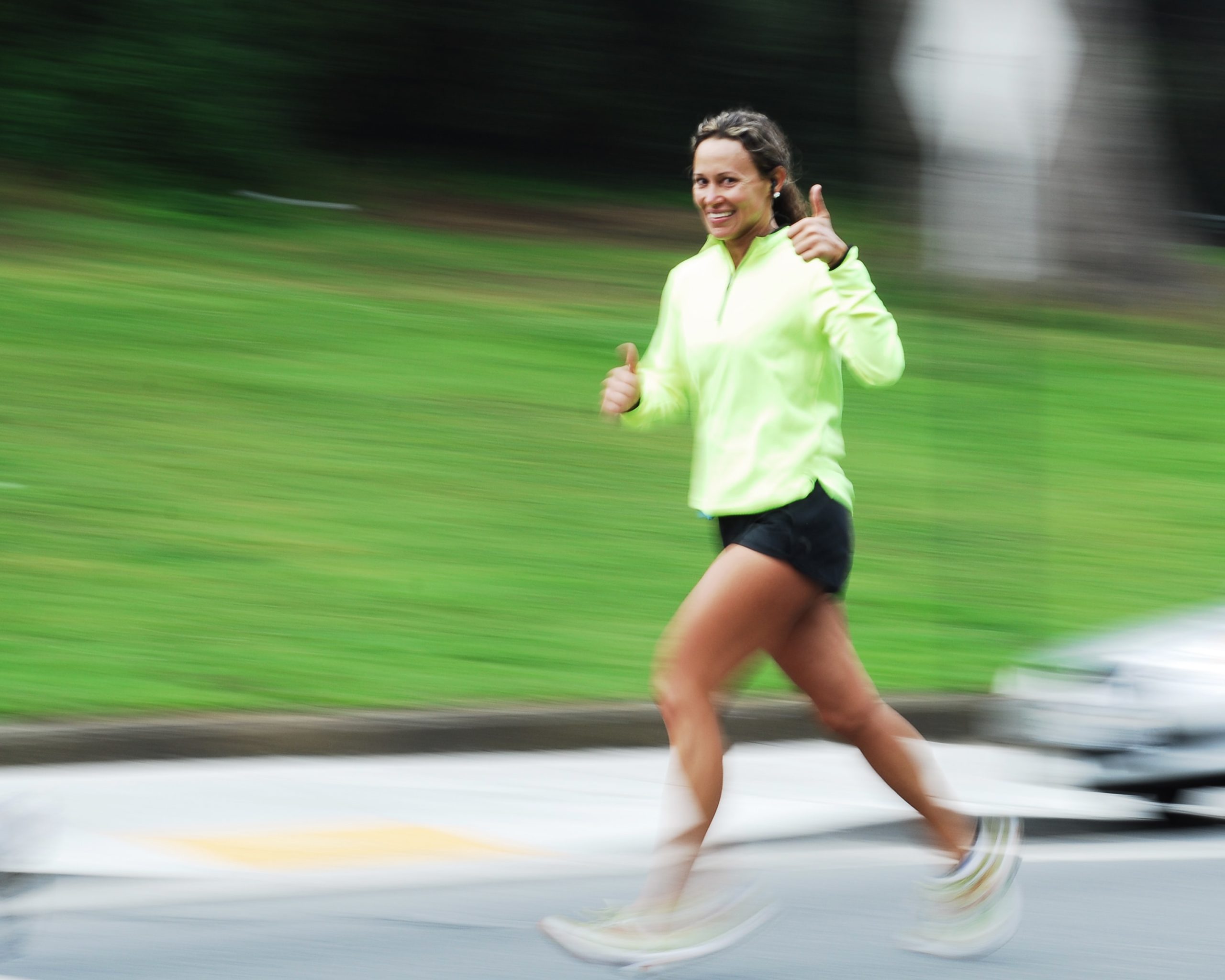
    This lady is jogging and knows that exercise reduces future depression.

    Can you believe it’s already December? 

    We’re smack in the middle of the holidays!  The last month of 2019 has begun. If this December is anything like the past, it will zoom by like a rocket. I hope your Thanksgiving was a joyful time for you. Going forward, it’s part of the tradition at this time of year to overindulge …then let diet and exercise obligations pelt us like hail at the start of the New Year. But I have another suggestion, and it’s related to exercise now. Beginning today, increasing your exercise can reduce your risk of depression going forward. In fact, exercise reduces future depression even in the holidays ahead. Wouldn’t that be nice?

    As you know, depression can run in families, and when you’ve experienced recurring bouts of depression all your life, it can seem like an albatross. Something that’s part of your life that robs you of resilience and the energy to face the demands of a busy time of year like this.

    If you have other family members who also struggle, you can start to think this is just how life is. And that there is just nothing you can do about it. 

    Trudging as if in mud, a dark cloud hanging over you…feeling listless and overwhelmed, and just wanting to go to bed.

    But it doesn’t necessarily have to be that way.

    Inherited Depression Isn’t a Life Sentence

    There really are things you can do. Things like eating foods that support a brighter outlook by strengthening the microbiome, and by strengthening circuitry through omega-3 fatty acids. 

    Another way is to spend at least 30 minutes a day in the sunshine, and in good weather, more than that. Good for your spirit, good for your body as it makes Vitamin D. It’s essential for nearly every chemical reaction that occurs in your body, and especially those that impact your emotions and frame of mind.

    And here’s another big one: the E word.   

    The E word?

    That word we dread hearing from our doctorS, and when they ask about it, we look at the floor and mumble.

    EXERCISE!!

    Now don’t tune me out.  Stay with me…

    Many of us are on a guilt trip about working out, about not exercising enough on a regular basis. There are those inspiring icons who are at the gym every day, running, lifting weights, building muscle, stretching… the SLEEK ones. You can pick them out anywhere. The mall, the grocery store, your favorite restaurant.  

    But, my friend, believe it or not, those people are not the mainstream. And you are NOT shameful that your exercise schedule doesn’t match theirs. 

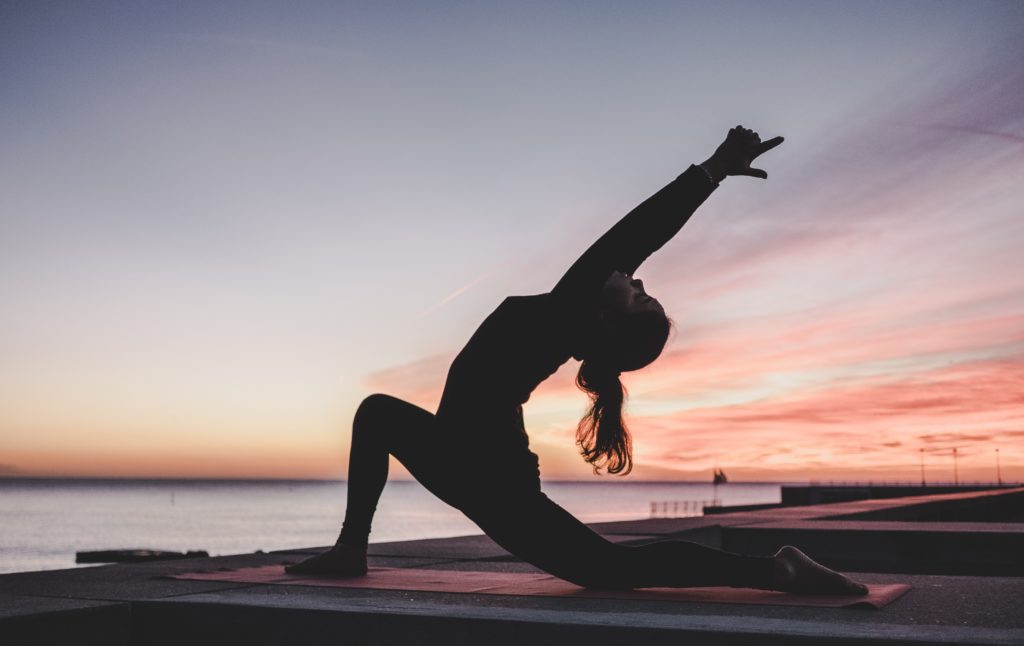
    Exercise reduces future depression, even if it's just stretching.

    The truth is, exercise is for YOU. It’s for your enjoyment (no I’m not kidding), for your own release of tension, it’s for your health to keep your arteries clean and clear and your heart strong…and to ward off diabetes and other diseases.  

    But that’s not all.

    Exercise Reduces Future Depression

    Did you know that?  

    You’ve probably heard it will help you combat depression now…but who feels like getting out and moving anyway?  When you feel crummy, exercising is the last thing you feel like doing.

    Except that getting outside, breathing in fresh air, and moving your  body, your joints, your muscles… can be a lifeline of hope if you let it.

    In fact, a biobank cohort study published in Depression & Anxiety, showed that when you’re active it can help prevent depression in the future regardless of your genetic predisposition.

    Using a data base of 8000 people of European ancestry, Karmel Choi, Ph.D. and her colleagues determined that an increase in physical activity was associated with decreased likelihood of depression episodes in the future. And this wasn’t just in cases of people with a background of heavy daily workouts or participations in sports. 

    Whether the activity was intense, like aerobic exercise or the use of exercise machines, or lower-intensity movement like yoga and stretching, each time they added a 4-hour block of activity in per week it was linked to a 17% reduction in the likelihood of a new episode of depression going forward. According to these findings, exercise reduces future depression. It’s worth pushing through.

    Exercise – At Least As Important in Fighting Depression As What You Eat

    Recognizing this can help your psychiatrist prescribe more movement and activity to reduce depression for you going forward.

    When you’re depressed, it goes without saying that you just don’t feel like getting out, being active, pushing through the fog and inertia to initiate exercise, but doing so anyway can open the door to better days ahead.

    Jogging like this lady can lift your outlook with fresh air and beauty and exercise reduces future depression episodes.

    And even if your doctor tells you to be active 4 hours each week, it doesn’t mean that you will.  It can really seem futile, when your outlook is dark. But it’s worth the commitment and the effort.

    And if you find you can hardly get out of bed…if at all… and you really do need some sort of a leg up just to start the exercise, you may be a candidate for IV ketamine treatment.

    IV Ketamine Treatment Gives You a Head Start

    At Innovative Psychiatry, our patients often find they’re so much more able to participate in their own recovery after IV ketamine treatment. By restoring synaptic connections and signaling pathways in key brain regions, returning the lateral habenula to optimal function, your energy can improve dramatically — for getting exercise, building relationships, enjoying your family, doing things with friends, pursuing hobbies, and performing at work.

    The G proteins can slide off their lipid rafts to enhance neurotransmitters to do their jobs, and you can enjoy motivation and initiative you’ve lacked for so long…to do things like exercise for the sake of your future health.

    It’s true that IV ketamine treatment isn’t for everyone… Some people just don’t benefit like we want them to. But those are the exception rather than the rule. Sometimes when a patient doesn’t respond at first, several weeks later they’ll experience restoration as a sort of delayed response. It can seem to bubble up on its own.

    In fact, there has never before been a medicine for depression that has been so quickly and so widely effective. Never.

    You Can Enjoy Energy, Initiative, and Hope

    As this man carries his exhausted dog, he enjoys the glow of sunset.

    If you’ve tried antidepressants without improvement, you owe it to yourself to let IV ketamine treatment show you what it can do. We have financing options to help you access this extraordinary treatment, and we can schedule you within a few days in most cases.

    Whether you suffer from depression, bipolar depression, PTSD, opioid use disorder, alcohol use disorder, and/or suicidal thinking, IV ketamine treatment can transform your life. You really don’t have to just endure. You really can have the life you’ve wished for as long as you can remember. 

    If you want to be proactive toward your recovery with better diet and more exercise… and to invest yourself in the lives of people you love… but you just can’t find the initiative or energy to do it, call us.

    IV ketamine treatment offers the most robust, remarkable antidepressant benefits to more people with treatment resistant mood disorders than any treatment we’ve seen in psychiatry to date.

    This is YOUR time. 2020 can be your best year yet.

    Lori Calabrese, M.D. is on the front end of the race to stop PTSD in its tracks using IV ketamine treatment.

    To the restoration of your best self,

  • What Does Loneliness Do To Your Health and Your Relationships?

    What Does Loneliness Do To Your Health and Your Relationships?

    What does loneliness do to you at Thanksgiving?  Does the crowd of family help? Or hurt?

    Thursday is Thanksgiving, and most of us realize what a toll the holidays take on some people. But we may not understand why.

    Many of us have at least one loved one who is not comfortable in a family gathering at this time of year. They may be in pain, or mourning a loss, or just otherwise uncomfortable in a crowded room. Maybe you wonder what does loneliness do to someone who is isolated. Sometimes it could be age related: If they’re over the age of 65, they may feel like it’s hard to connect with the younger generation, and if they’re young they may feel like fish out of water.

    Or they may suffer from a psychiatric disorder that makes them miserable whether they’re alone or with family and friends. Bottom line, the holidays are a joyous time for many, but we need to stop and consider those who struggle at this time of year.

    Loneliness has been getting more attention lately, because it’s becoming more and more widespread.  It’s not just the elderly anymore, although the elderly who live alone or in certain settings still often ache so severely from loneliness that depression takes over and makes it worse. 

    What loneliness can do is to separate you from those you love and depend on, just as these lions depend on each other.

    You know that feeling when you’re lonely in a room full of people?  Loneliness doesn’t just attack when you’re by yourself.  If you’re mourning the loss of a companion because of death or divorce or breakup, the loneliness is so deep. Being surrounded with people, even people you know well and love, just may not soothe that deep corrosive ache you feel.

    But it’s not always about loss. 

    Tom is 69, has been single for decades, and has Narcissistic Personality Disorder. Tom has always been lonely. Because of his disorder, he doesn’t grasp that he does anything inappropriate, or that he offends others…especially his ex-wife or a girlfriend. His first marriage lasted over 20 years, but the older he got the more inflexible he got.

    What does loneliness do to you?

    And because of his disorder, he assumes that every conflict is because his mate doesn’t appreciate how good he is to her. He just can’t see that he causes the misery he does. All he knows is that he’s desperately lonely. So he is constantly on dating sights hoping to find the person who will fill that yawning void he feels. 

    Aging Sometimes Makes Isolation Worse

    Now at 69, he’s in a wheelchair and still looking for romance, but he’s run out of candidates…

    One day, he told his sister with incredulously…  “I figured out why my wives have all left me… they just didn’t appreciate how good I was to them.”  

    Tom just couldn’t see what was needed from him for a relationship to be fulfilling to both people.

    He couldn’t imagine he had room for improvement.  But that can go with Narcissistic Personality Disorder. And as much as he abused the people he loved, and drove them all away from himself, he couldn’t imagine there was anything he could do about their “lack of gratitude.”  And so he was desperately, heartbreakingly lonely.  And talked about it often.  

    But maybe that’s not so surprising really, for someone with that particular disorder.  

    Still, there are other scenarios.

    Some Think They’re Flawless, Others Believe Their Flaws Are Irreparable

    Either Way What Does Loneliness Do To Your Health, Your Relationships, and Your Self – Image?

    However, there are multitudes who struggle on the other end of the spectrum. Those who are unable to accurately assess their own worth to those who love them. They may be overwhelmed with shame and worthlessness. So many people who suffer from depression, bipolar disorder, PTSD, panic disorder….  

    What does loneliness do to someone covered in shame?

    So many feel inadequate, and struggle with feelings of such abject worthlessness, they struggle to receive love and support. When they join their family for a holiday gathering, they feel like they stand out like a sore thumb as the “loser,” the one who has amounted to nothing, the black sheep…They rehearse these self-defeating opinions about themselves in their own minds until it’s all they can imagine. 

    And they know without question this is the view held by everyone who knows them. (whether it’s true or not) These people are their own worst enemies. So they arrive at a gathering of people they love on the defensive, unable to absorb the love around them because they’ve convinced themselves they don’t deserve it.  And they’re even lonelier with their family than they are at home.

    It happens that sometimes lonely people are forgotten people. Sometimes they’re displaced people. Sometimes they’re people who have driven others away.

    But they’re all hurting.

    An editorial by Nicholas Kristof in the New York Times recently focused on the rampant, widespread impact of loneliness as a health crisis. He compared loneliness and social isolation with the health risks of smoking 15 cigarettes a day, or of obesity. He made the point that since obesity is associated with 300,00 to 600,000 deaths a year, loneliness must be a serious killer.

    Loneliness does what to you? It increases inflammation which leads to a host of diseases.

    What we do know is that loneliness increases inflammation, heart disease, depression, and suicidal thoughts… among a multitude of miseries. Inflammation alone can lead to cancer, a plethora of chronic and debilitating illnesses, and death. We’re social creatures, and fundamentally, we each need to be loved by someone, and to love in return.

    We need to contribute, and we need someone to give back. 

    In a survey taken in the US and Britain, more than half of respondents said they are often, if not always, lonely. With the rising numbers of single adults who never marry, and those who find themselves single again and stay that way, social isolation has become a growing cloud… The connectedness of multiple generations in a household is a thing of the past. 

    In Great Britain, an effort to counteract this disconnectedness, this isolation, led to the formation of the Ministry of Loneliness, complete with the Baroness of Loneliness to lead it. Baroness Barron’s direction instigated initiatives to bring people together. Things like benches for conversations. Clubs to draw people together who have similar interests. Public invitations to connect, share hobbies and activities.

    The Baroness stresses that everyone experiences loneliness at some point in their lives…some more than others. But because of the shifts in our western society away from extended family units, more and more people live alone. They don’t have the built-in structures that keep them connected. And their health suffers.

    So she encourages building ways to connect around people’s strengths… like their talents and hobbies. And to avoid focusing on their weaknesses, such as their isolation and lack of friends.

    What does loneliness do to you when you're facing hardship by yourself?

    So what is it, actually, that happens in your brain when you’re lonely, and you feel isolated?

    Social Neuroscience

    A study led by Livia Tomova and her team published in the Journal of Social Neuroscience considered the work of John Cacioppo.  Cacioppo was a social neuroscientist who defined this field… what happens in the brain in relation to our connections with others.  What if those connections are missing?

    He was the first to study the effects of loneliness in the brain. He said that the brain is the organ that creates, monitors, nurtures, and maintains social connections, and that everyone needs them. However, if you have some and don’t feel you have enough, then you’re likely to feel lonely, anyway. Because it’s how you feel about your connections with others that determines whether you feel fulfilled, or lonely.

    Loneliness is like hunger and thirst in that it makes you want to take action to feel better.

    He compares loneliness to hunger and thirst because it signals you to do something to to help yourself feel better.

    We Crave Connection

    And it isn’t just knowing people. It’s having someone or a few someones whom you trust, and you can give to, and who gives back to you in a way you can receive. A single trusted friend or a few is far better than a crowd of acquaintances who don’t meet that need.

    So in the study, Tomova and her team focused on the dopamine reward system, trying to integrate their experiences with animal and human responses. Their results showed that in lab animals, social isolation typically increased social motivation, which was managed by the brain’s mesolimbic dopamine system. 

    However, in humans, social isolation or “alone-ness,” can lead to either increases or decreases in social motivation.  Put another way, humans may withdraw… or reach out feverishly… in response to a painful rejection. This takes place in a part of the brain called the insular cortex.

    But chronic loneliness leads to decreased social motivation., due to changes in the dopaminergic responses in the striatum.

    What Does Loneliness Do in YOUR Life?

    All of this is to say that loneliness, or that feeling that comes from having unmet social needs, can come from a variety of life circumstances, but it occurs in the brain. And in the brain, we respond. 

    You’re built to love and be loved.  To trust and to be trusted. To be interested in someone else’s life…and for someone to be interested in yours.

    When you love someone who loves you back, loneliness has no power over you.

    There is no medicine that will heal loneliness. But there is help for those things in your life that may contribute to it. 

    By the same token, as you join with family and friends this Thanksgiving, you can keep your ear to the ground for others in your company who may not be socially motivated…and help them to break through obstacles that prevent connections. 

    On the other hand, if you feel isolated and alone, and want to withdraw, consider a baby step or two and reach out to someone…anyone…in your world who seems to be withdrawn, too. 

    Your helping hand just may help both of you. 

    Happy Thanksgiving

    Lori Calabrese, M.D. is on the front end of the race to stop PTSD in its tracks using IV ketamine treatment.

    To the restoration of your best self,
  • How What You’re Eating Affects Your Depression

    How What You’re Eating Affects Your Depression

    This guy is laughing because he knows your eating affects depression.

    We’ve talked before about how your diet affects your microbiome, and how your microbiome affects your mood.

    We’ve also talked about how eating foods rich in fatty acids helps your brain function. Since we know that your eating affects your depression—we know that… and you know that—let’s talk today about how other foods impact your mood, to either fight depression or invite it.

    While we all know that sugar isn’t that healthy for you, do you know why?  Do you know what it does to your frame of mind and emotions?

    Inflammation 

    We’ve talked about inflammation before, and how it contributes to depression, and even suicidal thinking. Sounds like a dull subject? Well, look at it this way. Self indulgences like desserts, soft drinks…even the unsweetened ones…and blueberry muffins with your coffee, are making you more depressed.

    This stressed lady needs to eat healthier because eating affects your depression.

    Is that close enough to home?

    Did you know that sugar contributes to inflammation? And if you think you’re avoiding inflammation by reaching for a diet drink, think again. Artificial sweeteners also contribute to inflammation. 

    Sugar and Sugar Substitutes Increase Risk of Depression

    A meta-analysis by Xiaoming Bian, et al., published in Frontiers in Physiology in July 2017, showed that long term use of sucralose, which is the most widely used artificial sweetener, alters the bacteria in the microbiome. For the microbiome to function in support of your mental health, the “good” bacteria needs to be strong enough to hold the “bad bacteria” in balance.

    Your eating affects your depression. And when you use Splenda, you’re actually fueling the mechanism that makes you depressed, or makes your depression worse.

    And there’s more.

    Sugar and sugar substitutes also increase your likelihood of developing schizophrenia. In 2004, the well-known British psychiatric researcher Malcolm Peet discovered two mechanisms where refined sugar can potentially have a toxic impact on mental health.

    Sugar Interferes with Production of BDNF

    To begin with, sugar stifles the activity of an extremely important growth factor in the brain, the brain-derived-neurotrophic-factor (BDNF). Now we know from our discussions of ketamine treatment that BDNF stimulates the growth of synaptic connections in the brain, which improves communication signals. And the more connections there are, the sharper your mind, the richer your associations, the brighter your mood.

    However, if you’re eating a lot of sugar, the production of BDNF is reduced, which in turn reduces the growth of synapse connections, dendrites, and dendritic spines, which causes the information highway in your brain to grow darker and darker…then the signaling slows down…and your mood tanks.

    We know that in depression and in schizophrenia, the BDNF level is very low. When the BDNF level remains low for an extended period of time, important brain regions begin to shrink. So it’s not too hard to connect the dots and see how you can eat a lot of sugar as a habit, and find yourself more and more depressed.

    There’s a vicious cycle there. It may be tempting when you’re feeling low to eat chocolate, or cookies, or cake to cheer yourself up. But after the initial jolt of increased blood sugar, you find yourself feeling worse and worse emotionally. At which point you may be inclined to repeat the sweet treats.

    Then add to that the effect of crackers and bread. These are simple starches, which saliva breaks down to sugar. And you experience the same deteriorating mood you did with all that sugar, because it’s just more of the same.

    Your Eating Affects Your Depression: Sugar Consumption Stimulates a Chemical Domino Effect

    Cookies can worsen depression because what your eating affects your depression.

    In addition, when you eat lots of sugar..and in the western world the majority of us do…a domino effect of chemical reactions is instigated that leads to chronic inflammation.  And that brings us full circle to the destructive force of chronic inflammation in our bodies and our minds. 

    If you have a history of depression or anxiety, it can be remarkably helpful to keep your microbiome balanced and strong, and to keep inflammation under control. Because you know that once symptoms emerge and increase, it can be so difficult to find the energy and initiative to take the necessary steps to get these components under control again.

    And this includes processed meats. Because they’re also packed with sugar and chemicals that trigger inflammation. The safest food for strengthening your microbiome and holding inflammation at bay is to eat whole food as it’s grown naturally.

    Ideally?  No More Sugar Than 25 Grams/Day.

    Sounds crazy?  It’s so doable. 

    But Rome wasn’t built in a day. Baby steps. Every week, you could reduce your daily sugar intake by 1 teaspoon. Little by little. But try to be consistent.  You may be flabbergasted six months from now by the difference you’ve made in the way you feel.

    A study in London led by Anika Knuppel focused on 5000 men over five years who consumed over 67 gm/day of sugar. They found that these men were 1/5th more likely to develop anxiety and depression than their counterparts who consumed less than 39.5 gm/day.

    So even though we all know that consuming too much sugar increases our risk for obesity, Type 2 diabetes, and cancer, it also increases our risk for psychiatric disorders, too.

    More than you know, your eating affects your depression and overall wellbeing.

    Nutrient Deficiencies Can Lead to Depression, Too

    Things like omega 3 fatty acids, B vitamins, magnesium, and Vitamin D are all needed to maintain well being. Certainly, there are multiple factors that contribute to symptoms of disorders, including genetics, environmental factors, stress, and more. So there is not much you can do to completely prevent depression and other disorders. 

    But there are foods you can eat to improve your chances of staying healthier, reducing symptoms, or possibly avoiding them altogether.

    This man is happy because he learned that your eating affects your depression.

    The Bees

    Well, ok, not the bees, or the bees knees.  But rather the vitamin Bs, like B1, B2, B3, B6, B9, and B12. When your diet is low in folate (which is a B vitamin), it can increase your risk of depression and other disorders by a whopping 304%! 

    In 2017, a study was conducted in suicidal teens, and it happened that most of them were deficient in cerebral folate. And listen to this: all of them improved when they were treated with folinic acid.

    You brain needs B vitamins. So make them part of your daily regimen to improve your mood and outlook. Because your eating affects your depression and other disorders. It just does.

    Omega-3 Fatty Acids

    When you eat salmon, you feel better emotionally because strategic eating affects your depression.

    Another thing you brain needs is omega-3s. Get it from eating wild caught Alaskan salmon,  sardines, herring, mackerel, and anchovies. If you can, request an omega-3 index test to find out where you stand. In general terms, you’d like that to show 8% or higher.

    Magnesium

    To keep your thinking clear, your memory sharp, and your outlook bright, include a magnesium supplement that crosses the blood brain barrier. Magnesium is good for your whole body. So eating walnuts, avocados, legumes, dark chocolate, tofu, and seeds can help keep your whole body in better working order. But symptoms of depression need magnesium L-threonate. Some neuroscientists at MIT and Stanford developed that one, and it’s far more effective for your brain than nuts and chocolate.

    Vitamin D 

    Walking in the sunshine improves your absorption of vitamin D.

    This one is needed for most chemical reactions throughout your body. In fact, vitamin D3 is especially in demand. And while you can take supplements for it, your best source for vitamin D is regular, sensible exposure to sunshine. Thirty minutes a day during mid-morning can be an effective way to build your vitamin D stores.

    A double-blind randomized trial published in Y 2008 stated in conclusion that supplementing with high doses of vitamin D seems to “ameliorate symptoms indicating a causal relationship.” 

    It’s wise to request a vitamin D test twice a year to make sure you’re vitamin D level is 60-80 ng/ml. Tell your doctor that you know your eating affects your depression and you want to stay on top of the details.

    For decades, our western society has dismissed the vital role nutrients play in our physical and mental wellbeing. At the same time, processed foods have played a larger and larger role in our overall diet primary for the sake of convenience. 

    But it hasn’t been without a high price. Depression has sky-rocketed in prevalence. Obesity and diabetes have almost become the norm. Only you can recover your dietary fuel by eating whole foods and paying close attention to including foods we’ve listed here, and avoiding processed foods, sugar, sugar substitutes, and fatty meats.

    A Thought…

    Think about this:  What if treatment resistance is related to diet?  Just think how much better you might feel by fueling your brain with what it needs!

    At Innovative Psychiatry, we encourage our patients to give their brain the best possible opportunities to improve. With nutrients, rest, exercise, relationships, and doing things they enjoy. 

    eating affects your depression

    And if medicines aren’t helping, if nutrients and exercise don’t help enough, we consider whether a patient is a candidate for IV ketamine treatment. Ketamine treatment isn’t for everyone, but it is effective for the majority of patients who need it. And it’s so remarkable, it can reverse their suicidal thoughts in a few hours, restore their energy for relationships, for investing in their jobs, and enjoying their hobbies. It can replace despair with hope in a big way.

    If you feel like you’ve done all you know to do, including a couple or more antidepressant prescriptions for at least 3-4 months each, then call us. You just might be a candidate for ketamine infusions. And if you are, chances are that this treatment can turn your life around and set you on a path of joy. 

    IV ketamine treatment isn’t magic, but it can restore you to the best you remember ever being.

    That’s why we’re here. Because seeing people like you get better is the whole point.

    Lori Calabrese, M.D. is on the front end of the race to stop PTSD in its tracks using IV ketamine treatment.

    To the restoration of your best self,

error: Content is protected !!