Tag: IV Ketamine and Ketogenic diet for Anorexia Nervosa

  • Smashing Anorexia with a Therapeutic Ketogenic Diet Plus IV Ketamine

    Smashing Anorexia with a Therapeutic Ketogenic Diet Plus IV Ketamine

    Halley put on her makeup and looked in the mirror. She abhorred her round face and the fat on her chest and arms. She quietly resolved that she’d swim more laps tomorrow, because the 30 laps she swam daily just wasn’t improving her appearance. It was hard, so hard, to go out in public because she knew in her gut that she would be secretly criticized for her excess weight. She saw an article about treating anorexia with a ketogenic diet plus IV ketamine, but she didn’t read it. She tossed it aside. Halley didn’t believe in anyone’s solution. She wanted nothing to do with it.

    Maybe it was denial. Or maybe it was some sort of cosmic nagging and shaming. She didn’t know. But she didn’t want to hear it. She fought guilt and shame every day.

    Halley had been avoiding family meals for a year or more, because she just  couldn’t load up on all that heavy food. It was easier to go to the gym during dinner time, and privately eat 4 peanuts, drink powerade, and chew a stick of gum. When she ate with the family, it always seemed to descend into a conflict over what she ate. Too exhausting.

    One day, Halley’s mom walked into her room and found her crying in front of the mirror.  

    “What is it, honey?” She put her arm around her painfully thin daughter and gently squeezed her. 

    Halley’s tears rolled down her cheeks.

    “I’m so fat! I try and try to diet and exercise but I stay so heavy. I hate myself.”

    Her mom embraced her. “Halley, you’re not fat! You’re really thin…”.  Then, her mom realized they might slip into a conflict, so she added, “Honey, you’re beautiful, inside and out.”

    Halley rushed out of the room. She felt like a total failure. 

    As her weight dropped more, her mom became more and more worried. Halley’s face went from slender to gaunt, and her arms lost shape, as her muscle mass diminished. 

    But Halley kept working out, running now and swimming laps, eating little to nothing. And feeling like she was heavily overweight. She felt appalled at her appearance, but it was a distorted perception. To observers, she looked rail thin, but when she looked in the mirror she thought she looked massive.

    At some point, Halley realized she hadn’t had a period in months. She’d been so busy with working out she hadn’t noticed. This scared her because she thought she wanted to have children some day. Her hair was brittle and falling out. It collected on her brush like a haystack.

    Finally, her mom convinced her to get a check up so the doctor could evaluate why her hair was falling out and her periods had stopped. 

    The doctor spent time evaluating her, asking questions, doing lab work, and listening. Then diagnosed anorexia nervosa. Her doctor referred her to a dietitian and a psychiatrist.

    But there was a problem.

    Even though the doctor recommended group therapy for Halley, the inner drive to restrict her eating and push through excessive exercise continued. There was a voice in her head that drove her. It shamed her for eating, it shamed her when she looked in the mirror, it degraded her and made her feel deeply unworthy.

    So she tired of the group therapy eventually. The reason? That anorexic voice still drove her.

    She was angry about the anorexia diagnosis. Didn’t believe anything was wrong with her. Not really.

    But she felt bad… sad…pretty hopeless. And empty. She felt ashamed to be around friends, and just didn’t feel very connected anymore. To anyone.

    Halley also felt light-headed more and more often. Sometimes dizzy, and somewhat weak.

    One day she collapsed.

    Her mom ran to her room when she heard the crash and found Halley on the floor unconscious. Mom dialed 911 and paramedics arrived in 7 minutes. They told her mom her blood pressure was low, and her pale color could be anemia. They transported Halley to the hospital and admitted her to ICU.

    Halley remained semiconscious for 3 days, while she received IVs of electrolytes, TPN (total parenteral nutrition), fluids, and iron. Lab work revealed her electrolytes were out of balance, and her liver and kidney function were out of whack, too. And she was very anemic. Thankfully, her heart wasn’t damaged — but it could have been.

    As her body’s electrolytes, fluids, and glucose balanced, Halley did a lot of thinking. She had to face that something was very wrong with her life … and potentially damaging. Even though she was glad she had survived this, she knew she needed to do something. She decided she needed to open herself to help, treatment, and changes in her life.

    The day before she was discharged from the hospital, a nurse came to talk to her. She told her that her own daughter had suffered from anorexia for years and but had recently turned it around using a special program developed by a team of specialists. Medical doctors, a registered dietitian specializing in medical ketogenic nutrition, peer counselling, and a psychiatrist.

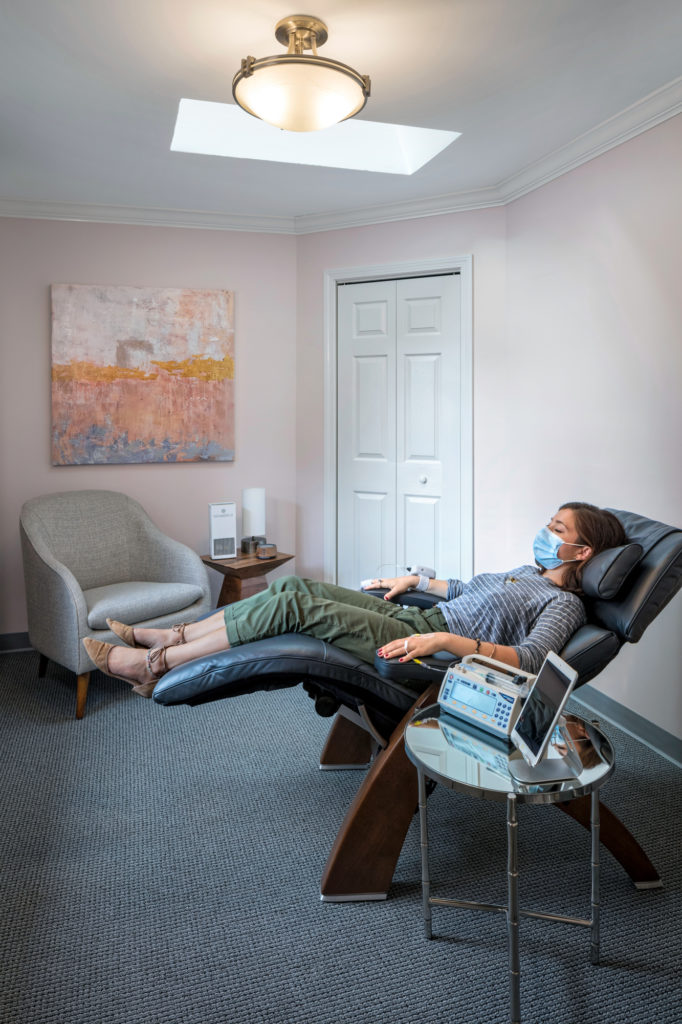
    The approach included education, peer support counselling, a specially designed therapeutic ketogenic diet plus IV ketamine treatment.

    And it is new. We first wrote about it here 2 years ago, in a blog about Caroline, the first patient we treated with this sequence. And then published a case report about her remission from chronic anorexia.

    Another Study To Replicate Results

    Recently we conducted a pilot study with 5 women who had struggled with chronic anorexia for at least 10 years. This was our next step to replicate our outcomes from the first case study. We’ve just recently published that data in Eating and Weight Disorders: Studies on Anorexia, Bulimia and Obesity.

    Our team included an internist, a registered dietitian specializing in medical ketogenic nutrition, a psychiatrist, peer support counselling.

    Similar to the initial case study with Caroline in 2020, the subjects in our pilot study were thin—but partially weight restored—and medically stable enough to participate. (This was key.) But they were still plagued by the shaming anorexia inner voice, distorted perceptions of their shape and weight, and seriously low self esteem.

    They began a specially designed therapeutic ketogenic diet — aimed at nurtritional ketosis, not weight loss — and maintained it for several weeks.

    There is no psychiatric medication that targets specific residual symptoms of the compulsions, self-starvation, and the anorexic voice — and so they often continue even after weight has been restored to normal. And all too often, relapse occurs. Because the anorexic voice just hangs on and torments.

    To effectively treat anorexia, the compulsions and that shaming voice must be targeted and quieted.

    This is what this two-part protocol was aimed to address and where IV ketamine infusions come in.

    After at least 4 weeks of maintaining the therapeutic ketogenic diet, each participant received a series of IV ketamine infusions (modeled after the success of the first patient we treated with this approach.)

    And the voice quieted. In fact, it disappeared.

    We followed the participants closely, presented our preliminary results in Oxford, UK and published our results at six months follow-up. Four women showed significant improvements across the measures we used to assess recovery and remission; one relapsed and was admitted to a residential program.

    This approach of using a therapeutic ketogenic diet (an approach that induces safe, nourishing nutritional ketosis — not weight loss or starvation ketosis) may seem counterintuitive, but it’s based on science, and evidence supports it.

    This isn’t keto from YouTube.

    Our approach offers a potentially life-altering and lifesaving two-part treatment for a deadly disorder.

    More research is needed to understand the mechanisms in the brain that result in quieting these compulsions and the anorexic voice, and in studying this treatment sequence in anorexia. A lot more research. But we’re excited to discover and report something truly new and hopeful for so many who have suffered so long: a very careful therapeutic ketogenic nutritional approach followed by IV ketamine.

    If you’ve struggled with symptoms of chronic anorexia for a long time … if you think you might want to work with us … if you’re interested in the program we’re developing, please contact us.

    Tell us a little about yourself and your story.

    Let’s talk. Let’s start something new.

    Lori Calabrese, M.D. is on the front end of the race to stop PTSD in its tracks using IV ketamine treatment.

    To the restoration of your best self,
  • Every Body Deserves a Seat at the Table: Let’s Ensure They Have It

    Every Body Deserves a Seat at the Table: Let’s Ensure They Have It

    This is National Eating Disorder Awareness Week — NEDAwareness Week

    Every body deserves a seat at the table, every race, every color, every sexual orientation, and every new idea.

    People come in a wide variety, don’t they? No one more deserving than another. Whether there are differences in skin color, differences in gender, differences in sexual orientation, differences in religion…or differences in IDEAS. And no matter the differences, no matter the variety, every body deserves a seat at the table. We may speak of the table as a place to eat, or we may speak of the table as a place to exchange ideas. It happens that this week we’re talking about both. Because we want to think about how NEW ideas and NEW approaches can bring NEW FREEDOM to people with eating disorders.

    An eating disorder causes you to see food and yourself in a distorted way. A way that affects you both physically and mentally. That distortion creates distorted eating patterns. And those eating patterns can cause damage to your body and your mind… as well as your life expectancy. And of all the eating disorders, anorexia nervosa is the most dangerous. With its poor response to treatment, such persistence, such rigidity. It takes over. It’s exhausting. We need more effective treatment for anorexia.

    Eating disorders affect 32 million Americans. Twice as many women as men. Whether it’s bulimia, binge eating, anorexia nervosa, avoidant/restrictive eating disorder, or others, the need to raise awareness for support, education, and especially effective treatment, is paramount.

    And although we hate bad news, there’s more bad news. The death rate in women with anorexia is 10 times greater than in other women. One major reason is that the metabolic and medical problems caused by self-starvation can be critical, even fatal. And also because the desperation triggered by anorexia can lead to suicide… and often does.

    So let’s talk about what an eating disorder is…and what it isn’t.

    In general, a variety of biological, psychological, and sociocultural factors tangle together and lead to a disorder of this type. 

    The idea that eating disorders are a “girl’s disease” a disorder where a girl seeks her parents’ approval is false.  Archaic. Fiction. Can you say Old Wives’ Tale?? Similar to some other diseases, there is a biological basis for anorexia — and genetic studies identifying the first 8 genetic loci! — that is exacerbated by sociocultural and psychological/psychiatric components.

    And, by the way, let’s square off against the idea that eating disorders aren’t serious. They can, and often do, wreak havoc on you and the people who love you. They can interfere with your relationships, your livelihood, and your own sense of peace and self-respect. And they can tear down your health.

    We need to up our game if we want to erase this hold they have on us, and erase the shame and stigma they carry. We need to up our game if we want to make headway in treating the most deadly of these disorders — anorexia nervosa.

    Anorexia has the highest mortality rate of any psychiatric illness. (Or it did, until the opioid crisis recently claimed the lives of so many.) That mortality is caused by the medical consequences of binge eating, purging, starvation, over-exercising. And these consequences include heart attack, kidney failure, osteoporosis, electrolyte imbalance… and suicide.

    Because of the stigma attached to eating disorders, early diagnosis can be hard to achieve. And early diagnosis is important for effective treatment. Because these disorders can begin at any age. And last for years

    …and let’s get One Thing Straight Now:

    Eating disorders are NOT a matter of choice. They’re diseases governed by physiology and biology, with genetic, social, cultural, and psychological factors. Help remove the stigma associated with eating disorders, to make the world a safer place for everyone… because every body deserves a seat at the table.

    Stigma comes from ignorance. It’s the inclination to pour shame on anything not understood. And that shame can be crippling. It can force someone who suffers into hiding…isolation… when it’s light, enlightenment, and help that is so deeply needed.

    When you’ve been isolated in the throes of shame, (and you know you haven’t done anything to deserve it!) it’s hard…really hard...to come out. Sometimes it’s hard just coming outdoors, for Pete’s sake! But sometimes, it’s coming out with truth about yourself. About your sexual orientation, about your habits, or about the way you think…or eat. It makes you feel vulnerable… and like you’re making yourself a target for hatred, stigma, and judgment.

    Sometimes eating disorders live silently inside— and sometimes they can’t help but show themselves, and then the anguish, the anger, the frustration, and the way they take over your life becomes…unbearable. And stigma or not, you realize you just have to find help.

    And especially, if you suffer from Anorexia Nervosa.

    There is plenty of stigma about anorexia… and you may hear people toss the term around disrespectfully, because they don’t grasp the critical nature of the disease. If they suffered from it themselves, they would not speak hateful words in ignorance, because they, too, would be informed. But that’s the nature of the beast of stigma, isn’t it?

    The death rate in women with anorexia is 10 times the death rate in those who don’t suffer from it. But every body deserves a seat at the table, a chance to live well… and not die from the critical medical conditions caused by self-starvation.

    And again, remember that this self-starvation is not by choice, but is associated with genetic factors, and fueled by changes in the brain that happen in some women and men when they start to lose weight, get energized, and begin to exercise compulsively. And we recognize that there are a host of other factors that can contribute to a slow spiral, a continuous weight lose, the emergence of anxiety, fear, and rigid rules.

    Every body deserves a seat at the table.
    But sadly, the most distinctive and cruel of the symptoms of anorexia is the “anorexia voice.” A voice talking to you, controlling you, commanding you, every minute of every day, telling you what to eat, what not to eat, when to exercise, when to feel guilty, and on and on and on it goes.

    Treatment is effective only when “the voice” can be silenced, and you are free to make choices you want to make. About food, about love, about activity… about hope. 

    So what can be done?

    Sometimes if you have a new idea, it takes courage to offer it up — like Conflict Zone: A Play on Eating Disorder Recovery, a live-streamed one woman show with a compelling storyline about the lived experience of recovering from an eating disorder kicking off NEDAwareness Week — but it could be brilliant.  It could deeply resonate.  It could breed a whole new movement fueled by hope.

    And while it may draw stigma and resistance from those who don’t understand the idea, those who need what the idea could provide grab onto that thread of hope.

    We’ve had the opportunity to work with a few other researchers to write up and publish a case report that incorporated a specially designed modified ketogenic diet combined with ketamine infusions that resulted in complete remission of severe and enduring anorexia in a 29-year old woman who had been ill for 15 years. Striking. Striking that her remission is complete and sustained and has persisted now for over a year. (See our blog about Caroline)

    The case report has taken off, generated a lot of interest (and a lot of controversy — as you might guess when we put a ketogenic diet and ketamine on the table). It’s nice to see the metrics climb, the interest rise, to see the hope bud in people with anorexia who’ve lost hope of ever beating it… and to see the sparks fly in the imagination of the scientists, doctors, therapists and dietitians who try to help them. Our case report was recommended by Drs. Miletta and Horvath in Faculty Opinions as a New Finding, Interesting Hypothesis and Technical Advance, and written up in a lovely Faculty Opinions blog.

    So… we’re now following up with a small clinical trial involving more subjects which is registered on ClinicalTrials.gov. Because we need an N greater than 1. We need to see if what worked will work for more people with chronic anorexia. This next step will give us more information about the effectiveness of our new sequenced approach in the treatment of anorexia.

    As you can imagine, we’re cautiously excited to see what we can learn. And we’re hoping to see more and more studies to support novel treatments for anorexia.  

    Every body deserves a seat at the table for ketogenic diet and IV ketamine for remission.

    At Innovative Psychiatry, we’re so pleased to see people with severe treatment resistant depression, bipolar depression, social anxiety, PTSD, and suicidal thoughts achieve remission with serial titrated ketamine infusions. 

    When you consider that the first paper published using ketamine for the treatment of a psychiatric disorder was using ketamine infusions for the treatment of anorexia — unbelievable but true!– more than 20 years ago, it’s WAY past time for people with anorexia to have truly effective treatment options to help them achieve remission.  Every body deserves a seat at the table.

    As our clinical trial launches, we remain right here, in the office, with boots on the ground, and continue to treat all of our patients for the symptoms that interfere with their lives.

    If you suffer from depression symptoms, PTSD, social anxiety, or suicidal thinking, and medications haven’t helped, call us. You are welcome at our table.

    We work to help you get the treatment that will help you with your symptoms and give you the freedom to live a rewarding life. In addition, we also work with our colleagues over the phone, email, and at conferences to learn all we can to better help you find remission. And, we pursue research opportunities to increase the medical knowledge available to all of us. For you.

    Because every body deserves a seat at the table, including you!

    We want to see you build a fulfilling life. That’s our heart in all we do.

    So please call and let’s work together.

    Lori Calabrese, M.D. is on the front end of the race to stop PTSD in its tracks using IV ketamine treatment.

    To the restoration of your best self,

error: Content is protected !!