
Tag: IV KETAMINE FOR ANXIETY AND PHOBIAS

  • Get Your PUFAs Straight and Watch Your Mood Lift

    Get Your PUFAs Straight and Watch Your Mood Lift

    Neuroscience research yields breakthroughs for this young man whose depression is in remission.

    We’re smack in the middle of a couple weeks focused on the quest for improved treatments for depression and anxiety. 

    This past Thursday was World Mental Health Day, dedicated to raising awareness for mental health …and this year’s efforts were focused on “40 seconds of action” to help reduce the risk of suicide. Because every 40 seconds, worldwide, we lose someone to suicide. And right on the heels of #WorldMentalHealthDay, we’re jumping into #OCDAwarenessWeek, which is promoted internationally each year by the International OCD Foundation during the second week of October. It’s an opportunity to LEARN about Obsessive-Compulsive Disorder and find ways to support those who live with it every day. And every discovery that researchers find lays the groundwork for improved wellbeing and fact-based treatment regimens. Like polyunsaturated fatty acids (PUFAs) in your brain. Let’s talk about how you can get your PUFAs straight and reduce the symptoms of depression.

    BBRF Researchers Help You Get Your PUFAs Straight

    The Brain and Behavior Research Foundation (BBRF) just released information about a new study that may explain why some people have more severe depression than others.

    Led by M. Elizabeth Sublette, M.D., Ph.D., and J. John Mann, M.D., and published in the Journal of Affective Disorders, the study identified a relationship between polyunsaturated fatty acids (PUFAs), specialized proteins that transport serotonin (SERTs), and the severity of, as well as vulnerability to, depression.

    This is a short excursion into only ONE aspect of the complexities of major depression and bipolar depression. But it’s important, and may give us something that we can do — actively, ourselves … every day — by modifying our diet. It’s back again–the importance of what we feed our brain. Not just diversifying our microbiome, ensuring we take in micronutrients, but choosing the best lipids to feed our brain health. Getting our fatty acids right.

    See what you think of this…

    BBRF Researchers Find New Discovery About Reducing Your Vulnerability to Depression

    For this despondent woman, neuroscience research yields breakthroughs that can restore her joy and purpose.

    Using PET scans, researchers have found an intriguing relationship between certain types of polyunsaturated fatty acids (PUFAs) and the specialized protein transporters that move serotonin (SERT) to where it needs to be to do its job to reduce anxiety and improve your mood. 

    These are both ordinary, commonly seen components in the brain, but together, they seem to play a role in either causing depression… or at least causing you to be more vulnerable to it.

    This study discovered a significant relationship tied to a certain PUFA known as arachidonic acid (AA). They identified a relationship between PUFAs and levels of that serotonin transporter, SERT, in the 6 most important areas of the brain. Plus, it showed how these two factors may influence the severity of depression.

    The relationship is U-shaped, and inverted. It’s nonlinear. And that’s important.

    Sounds complicated, I know. But here’s how they discovered this connection.

    Study Subjects Stopped Their Medications for At Least 2 Weeks

    The research team invited 21 adults, who were each in a full episode of major depression, to participate in the study.  Each of these participants had refrained from any medication that affects serotonin levels or the biochemical system that produces arachidonic acid for at least 2 weeks.

    A number of weeks before the PET scans, the team evaluated plasma levels of each participant for three specific PUFAs. DHA and EPA are both omega-3 fatty acids, and AA is an omega-6 fatty acid.

    Measuring these three levels in six specific and key regions of the brain demonstrated their significance in depression.

    Now get this:

    Neuroscience research yields breakthroughs to restore your function to the healthy function of an innocent joyous child like this boy.
    In a healthy brain, SERTs are widely available in abundance throughout the brain so they can remove and recirculate those serotonin molecules from spaces where they can’t function.

    For example, when they get stuck in spaces between the sending and receiving neurons after a signal has been sent. This is what happens: The SERTs take up the serotonin and return it to the sending cell. So it’s ready for the next message that needs to go out. Easy.

    Now that’s what happens in a healthy brain.

    However, a number of peer-reviewed studies have found that there’s a low availability of SERT in the brain of someone suffering from depression…or bipolar depression. The most commonly prescribed antidepressants, (SRIs), block the SERTs so the SERTs can’t move the serotonin out of those spaces where they’re stuck. This keeps serotonin available in the synapses between the neuron cells which promotes more signaling.

    But In A Depressed Brain…Well, You Need to Get Your PUFAs Straight

    However, this team of researchers discovered something about those three PUFA levels they analyzed before the scans. Only AA actually affected the availability of SERTs across those six brain regions they viewed with PET scans.

    Neuroscience research yields breakthroughs for you just like the joy this woman has.
    In fact, they found that the lower the AA level a person had when evaluated before the scans, the greater that person’s SERT transporter level they saw in the PET scan.

    Reduced AA level = More Transporters; and Therefore Improved Mood…?

    This is so revealing. We need to get our PUFAs straight.

    Because depression and bipolar depression are complex and are each affected by so many factors.  We’ve learned so much about depression through observing ketamine’s actions in the brain. And while we no longer believe the key to depression treatment is as simple as increasing level of serotonin (or any other neurotransmitter), we do know that serotonin binding plays a strong role in freedom from depression or conversely, a vulnerability to it.

    Of course, our BBRF research team called for more studies to verify these findings. They asked that other researchers carry them a few steps farther. We need more information about the science behind polyunsaturated fatty acid supplements in depression. How do we work with complex, inverted, U-shaped relationships?

    Hopefully, we’ll be hearing more about the effect AA has on depression and vulnerability to it.

    This may sound like a little thing …a small finding from a ton of research. But it’s a breakthrough. And when you add up all the individual breakthroughs, together they can result in your changed and improved life.

    Get Your PUFAs Straight and Bring Depression To Its Knees

    This couple's IV ketamine treatment has helped them restore their

    At Innovative Psychiatry we rejoice with our patients whose symptoms lift after IV ketamine treatment. These patients didn’t responded to traditional medications. We continue to use a myriad of medicines, treatments, and regimens to relieve symptoms. And we bring the latest research findings to our practice. But for most patients, nothing compares to IV ketamine’s restoration of resilience, creativity, and initiative. The results bring fresh perspective, fresh hope, and renewed relationships as people rebuild their lives with enthusiasm and clarity.

    Let’s keep spreading the word that remission of symptoms can happen. It’s no longer a pipe dream.

    If you… or maybe someone you love… aches for relief from trauma or depressive symptoms, call us.

    We know others who suffered from the same kind of pain, vacant-ness, and despondency you do. We can help.

    Lori Calabrese, MD offers innovative psychiatric treatment like IV Ketamine

    To the restoration of your best self,

    Lori Calabrese, M.D.

  • Can You Overcome Phobias?  Apply IV Ketamine to Your Backstory

    Can You Overcome Phobias? Apply IV Ketamine to Your Backstory

    Can overcome phobias IV ketamine Let’s talk about anxiety…and phobias.

    I guess we all have something that gives us the creeps, or we’d just like to avoid, like snakes or spiders, or pet poop.

    But for some people, there’s a strong persistent reaction to that thing or situation to the point  that it’s amplified far beyond the actual potential danger or threat of the “thing” in question.

    Most of us feel uneasy about something from time to time. Getting up to speak to a large group for the first time, for instance. You might feel a little shaky or have a tremor in your voice, sweaty palms, and the worst…? Blushing while you try to collect yourself to begin your talk! This level of anxiety is uncomfortable, but not all bad. It can help you focus on your goal…motivate you to work hard to prepare.

    The Crippling Burden of Phobias

    However, for some, the blushing can billow out of control, sending tremors through your body, along with trembling hands, incapacitating sweating, and a paralyzing halt to functioning.. When your mind is blitzed with fear, and you can’t move, it’s safe to say you may be trapped in the rigors of an anxiety disorder. And that thing or situation that triggered all this may be a phobia.

    And you know what? All of this started somewhere. Something probably happened, something traumatic, or heartbreaking, or terrifying. At some point there was probably a shocking experience that initiated this response of heightened anxiety, dread, and fear. Whatever that was..it’s your backstory. Your history. The reason you now suffer this way.

    There are as many phobias as there are people who suffer from them. Phobias tighten their grip on anxious people regarding anything from fear of embarrassment in front of other people to fear of spiders, or of a tree, or the color yellow. 

    It’s easy to make light of these fears if you’re not a sufferer, but for those who are, the fears are crippling.

    So, an anxiety disorder is not to be ignored. Anxiety demands your attention. In fact, it takes over and dominates your mind until you do something to find relief and reassurance.

    The throes of anxiety can lead to phobias, to depression, to obsessive compulsive disorder. It’s no laughing matter, and in some ways, it’s the flour in the recipe for psychiatric mood disorders.

    Phobias Leave the Sufferer Powerless

    Once you’ve experienced a gripping, fear-fueled shut-down, you’ll probably find yourself avoiding another opportunity for a similar incident.

    If you’ve been there, you know you can’t just “buck up” using mind over matter, and “get over it” as friends or co-workers might suggest. You can’t wish this reaction away. And time doesn’t automatically heal it. It’s embarrassing to be incapacitated by anything. People don’t usually understand.

    Typically, phobias are divided into 3 categories.

    • Simple phobias, like fear of a snake or dental work or air travel
    • Social phobias are fears of embarrassment or humiliation in front of others, and play on feelings of insecurity
    • Agoraphobia, the fear of being in a situation it would be hard to escape from… whether it’s fear of embarrassment or fear of harm

    And it gets complicated. In any of these situations, if you suffered a panic attack, that panic attack can become the thing you’re afraid will happen again.  So you avoid the situation for fear of suffering another attack. 

    Painfully Common

    Anxiety can lead to one phobia or another, because when a persistent dread plagues you to the point that you This boy with social anxiety needs to hear can you overcome phobias IV ketamine.arrange your life around a thing or event with the focus to avoid it, a phobia begins to form.

    Around 3.3 million Americans at some point in their lifetime suffer from an anxiety disorder. Roughly 19.2 million Americans wrestle with phobias.

    And anxiety often comes before depression.

    We’ve known this for years.  A very large study of thousands of female twins with major depression who all had various phobias — agoraphobia, social phobia, situational phobias, animal phobias — found that the most common phobia associated with major depression was agoraphobia.

    Another conclusion was that a “modest proportion” of the genetic vulnerability (remember these are twins) to major depression is shared with a genetic vulnerability to phobias. What’s more, the non-genetic factors — like  environmental experiences — that can predispose someone to depression, significantly makes a person more vulnerable to agoraphobia, specifically.

    Risk of Agoraphobia Highest After Trauma

    This means, if you’ve experienced something excessively painful, traumatic, and overwhelming in your life, your risk for agoraphobia is high. And the trouble with agoraphobia is that it isolates its victim…which makes the depression worse.

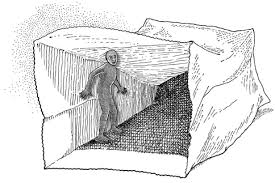
    So, you can see the link between anxiety, depression, and phobias. And you can also see that treating the anxiety can This man in trapped in paper bag needs to hear, Can overcome phobias IV ketamine.even prevent the depression as well as phobias.  But how?

    There are some medications that will relieve anxiety, as well as depression, in some people. But, as we’ve discussed so often, those antidepressants and anxiolytics don’t end the anxiety, they just reduce it…for some people.

    To the frustration of countless sufferers, the effectiveness of these medications for anxiety and/or depression is patchy… and it takes weeks or months for any given person to find out if she’s going to experience relief.

    Those weeks and months can be a dangerous waiting period for those whose misery is leading to thoughts of suicide.  And unfortunately, so many of these medications seem to stir up those very self-destructive thoughts.

    Can You Overcome Phobias…?

    Here’s good news. IV ketamine in low doses has shown consistent results in 80% of those who suffer with anxiety and depression where nothing else was effective. Nothing else brought relief.

    So, that’s how IV ketamine works on your backstory… it restores your brain to its optimum function by targeting the structures and systems in your brain that lead to anxiety…and depression. IV ketamine treatments focus their effects on those changes in your brain that happened when you were hurt, traumatized, shocked… and began experiencing feelings you want to avoid. When the phobias began. 

    And within minutes or hours of the infusion, suicidal thinking can disappear, and those thoughts are forgotten. In their place is relief, like a ton of weight has been lifted off the sufferer’s shoulders. The previously sullen, nervous, fidgety feelings dissipate during the course of treatment, and the power to enjoy life blooms.

    Three treatments a week for two weeks. That’s a typical treatment course. And your outlook becomes lighter throughout the two weeks of infusions. Lighter as the dread lifts. And lighter as the fear melts. Even lighter when the depression dissipates. Free of suicidal thoughts.

    A recent study published in the Frontiers in Cellular Neuroscience Journal demonstrated that long-term ketamine dosing can help erase fear memory … (which is what leads to phobias) … through DNA methylation of brain-derived neurotrophic factor.

    Another thing… You may have read about the “problem” that ketamine isn’t lasting.  But that’s the reason for the 6 session treatment protocol. Once you’ve had those 6 or so infusions, you’ll realize how much you really feel like the you Anxiety has lifted from this relaxed man. He says can you overcome phobias IV ketamine.that had been submerged all these years.

    Hope.

    Real hope.  And relief from the albatross that’s weighed you down.

    Fear. Dread. Nervousness.

    No more. Can you imagine??

    In some cases, we find it helpful to continue a monthly maintenance infusion. And that’s all it takes to give the freedom, energy, insights, and power to rebuild your life again.  The power to confront your fears . . . with confidence.

    Now, if you can’t remember when you were really yourself, without the sullenness, depression, listlessness, agoraphobia and more…  then you’re in for a treat. 

    Many patients say they’d lost sight of who they really were, of what it was like to be at ease. 

    It’s almost miraculous.

    If you’ve suffered from an anxiety disorder that doesn’t get better, or phobias that rob you of your freedom, call us or arrange an appointment. It’s our privilege to thoroughly evaluate you, your DNA, your history, to determine the best outcome for you.

    We live to see you well.  Let’s do this together.

    To the rediscovery of your best self,

    Lori Calabrese, M.D.

    Lori Calabrese, MD offers innovative psychiatric treatment like IV Ketamine

error: Content is protected !!