Tag: IV Ketamine for Anxiety

  • RESILIENCE! It’s the New Buzzword Among People with Mood and Anxiety Disorders

    RESILIENCE! It’s the New Buzzword Among People with Mood and Anxiety Disorders

    Reslience! it's the buzzword that people with psychiatric disorders are talking about.

    Too much screen time? Let yourself have 2 more minutes of it right now: because if you’ve been tooling around reading anything related to mood disorders or anxiety disorders, IV ketamine, and other advanced treatments, you’ve probably noticed that there’s buzz about resilience.

    Because of the world that has opened up since IV ketamine began treating depressed patients with its ability to create new branches and connections, the expectations of these patients have soared.

    No longer are patients satisfied to have a little relief from their depression. They’ve learned they can feel good. Feel “normal.” Enjoy participating in life the way others do.

    So now the question you hear on the internet isn’t this: “Will any medicine help me feel at least a little bit better…?”  No.. now it’s this: “Will this medicine help me feel resilient again?” Or “What can I do during this treatment to help it work… improve my chances of remission… develop more resilience?”

    Now before we go on, I want to clarify that no doctor can promise or guarantee remission of symptoms from disorders like depression, bipolar disorder, PTSD, addiction,social anxiety, or to promise or guarantee that suicidal thinking will go away. There just isn’t any medicine in psychiatry that helps 100% of people get well.

    Resilience! It's the Buzzword.
    But, even so, there are many people who’ve suffered for years, even decades, with these disorders who are now living lives they never dreamed possible. They’re painting, excelling at work, meeting the loves of their lives, enjoying their families, and contributing to their important relationships. They’re investing in hobbies, socializing with friends and family, and feeling good about themselves and their accomplishments.

    This doesn’t happen overnight, but resilience has freed them to invest in their lives, and provides the energy for things they could never do before.

    Resilience Protects You From Falling in the Ditch

    And when hard times come along, they have the resilience to grieve a bit, then brush themselves off and keep moving forward. This may be the most remarkable change of all.

    Resilience is the ability to adapt when a crisis comes along… to adapt to whatever the situation may be. To bounce back, recover, and move forward after an onslaught of difficulty.

    Since psychiatric mood and anxiety disorders often develop as a response to some degree, to something environmental or an upsetting/traumatic event, if you can adapt to that event or force in your environment, you can remove that response from your psyche.

    Adaptation is the way organisms throughout your world survive. When there’s a strong wind, if trees don’t bend under the wind they’ll be splintered and destroyed. But their ability to bend is their means of survival and the way they develop resilience.

    The same is true of you.

    If you have a continuous source of stress in your world, one that assaults your senses, emotions, or body, you can eventually be beaten down and weakened or destroyed by those assaults.

    But if you can find a way to bend like a tree does, to adjust yourself to accommodate those assaults, hurts, and winds of fury without being damaged, it will help you avoid being traumatized. And that’s how you’ll develop resilience.

    This brings up the story of a friend of mine. 

    Resilience! It's the new buzzword with patients who have been depressed.

    Jillian grew up in a small town in the midwest, and was a faithful member of a tiny congregation there. The pastor had served in her church for 40 years, and unwittingly preached a serious sermon every Sunday that reflected the smallness of his own tiny world in that tiny town.

    Jillian, like the rest of the church members, worked hard to live up to the expectations her pastor laid out in his sermons. Her town was small, her world was small, and those expectations left her view of life small, too.

    Culture Shock – From Small Town to Big City

    As she approached her thirtieth birthday, her husband broke the news to her. He’d been transferred to Chicago. 

    So they packed up their belongings, and moved into a pretty little apartment in that big, new city.  Her birthday was anything but a celebration. The traffic overwhelmed her … the variety of people she saw at the grocery store, the post office, and everywhere else were just so different than any she’d ever seen before.

    Hairstyles, clothing styles, and the way people just talked made her feel more like she was on another planet than just in a different city. She felt afraid to meet people or make friends. She was afraid she looked like a fool and she couldn’t imagine how you could trust anyone.

    This sad woman lacks resilience to bounce back after hardship.

    The more time she spent alone, the more isolated she felt. And the sadder she became. She was lonely. She missed the comfort of her home town.

    Her husband asked her often if she was making any friends. But she just told him that the people she ran into on the street weren’t “her kind of people” — and she felt safer alone.

    One day he arrived home from work and announced they’d been invited to dinner by one of his co-workers. She was excited to meet this co-worker and his wife. Surely they’d be a good match socially, too.

    The following Friday, Jillian and her husband drove to the address her husband pulled from his pocket. The front yard was alive with a variety of blooms that reminded her of English gardens she’d seen in books at the library. It was just beautiful.

    Jillian Adapts and Learns Resilience

    They knocked on the door — and it was opened by the strangest-lookingpeople she’d ever seen. She immediately wanted to go home, but her husband held her hand firmly as he warmly greeted the couple.

    Her husband’s co-worker had jet black hair that was shaved on the sides with a narrow path of hair from his forehead to his crown, pulled into a ponytail.  His wife had bright pink hair with spikes on top enhanced by a shag that softly fell on the left side of her head; the right side was shaved from her temple to her ear.

    Jillian’s alarm choked her. Then Cass, the pink-haired woman, spoke up and told her how glad she was to meet her. That most of her co-workers were middle- aged or nearing retirement, and she ached for friends her own age.

    When she spoke, Jillian began to relax. What a warm and genuine person, she thought. 

    “May I help you in the kitchen?”

    “Yes, I’d love the help!”

    So the two of them disappeared into the kitchen to finish up with dinner, and their husbands settled in to talk shop and about their hobbies outside of work.

    Jillian and Cass had so much more in common than she could have dreamed — and by the time they called the guys to sit down and eat, she had forgotten about the “strange” hairstyles.  She realized that her perspective of the world in her small town had apparently been pretty sheltered. And she was thankful she had found someone who could be a true friend.

    Resilience is Adapting to Your Situation, Which Helps You Bounce Back After Surprises, Disappointments, and Hardships

    The point is, that Jillian adapted. She was experiencing a stressful situation, and it was affecting her emotionally. Sadness was growing as well as isolation and loneliness. If she’d remained unwilling to bend, she might have eventually plunged into depression.

    Resilience gives this woman peace in the face of difficulty.
    But, after exposure to a stressor that felt threatening to her, she was instead willing to look beyond her distaste, and read the heart of a person who was ready and able to offer her real friendship. And many great adventures lay ahead as a result.

    Resilience! It’s the new buzzword for a reason. Beyond reduced depression symptoms, resilience protects your life from being interrupted by a trauma or disappointment.

    While this is an oversimplified example, it shows you how important it is to bend, rather than break. To change the way you think in a stressful situation so you can bounce back from disillusionment, disappointment, or betrayal.

    Resilience! It’s the New Buzzword for Adapting and Growing Stronger

    But, here’s the thing. Sometimes you face stressors that feel threatening to you when you don’t feel equipped to respond with resilience. In fact, sometimes you may not feel resilient at all.

    Sound familiar?

    Times when you’re drowning in depression or terrorized with PTSD. When you don’t have the energy to get out of bed, much less “bend with the wind.” What do you do then?

    Ketamine Treatment Enhances Resilience

    Well, that’s when you may need treatment. You need to get the help of your psychiatrist to get those symptoms under control. To empower resilience. And if the medications that have been prescribed for you haven’t helped, then you may need something more targeted, more potent.

    One medicine we use at Innovative Psychiatry for exactly this is IV ketamine treatment. We’re experts in ketamine treatment and we’ve offered it for years–way before most doctors–and most people–ever even heard about it.
    Resilience. It's the new buzzword among people who were depressed and now live in joy.

    You may need something like that to help you enjoy resilience and to make it stronger. Because from its vantage point, ketamine has a list of actions that can help you develop the resilience that will see you through stressors and losses that may come along in the future.

    Neuroplasticity Helps You Build Resilience

    Ketamine stimulates neuroplasticity, which is the ability of the cells in the brain to change and adapt. That neuroplasticity can enhance your psychotherapy, especially when your therapy is 24 hours after your infusion.

    It can also help you change your perspective of life and people. In doing that, it can help you learn how to “bend with the wind,” or whatever crosses your path. You can create and build up a level of resilience that empowers you to roll with the punches in life.

    Numerous studies have shown that the more often you adapt to small stressors in your life, the stronger you’ll be at adapting to big calamities. And the more you change your thinking to adapt to difficulty, the stronger your resilience can be.

    So, you can do things to strengthen your resilience…by choosing adaptive behaviors in smaller crises day by day.

    For example, you don’t have to succumb to the same old habits when something frustrates you, or makes you angry. With the help of ketamine stimulating your neuroplasticity, you can choose to think a different thought. Then practice it.

    I’m never going to get out of this job or this company. I’m doomed to a future of misery and mediocrity…

    You have the choice to accept that thought…or to grab the wheel and change its direction, like so:

    I’m not going to succumb to that thinking. I WILL excel at this job because I’m working hard to perform well. And I will be rewarded with promotions that will give me the resume that will promote me when I apply to new jobs. Bottom line, I’m not giving up..!

    You have choices when thoughts come to you, and when your choice is empowered by the neuroplasticity of IV ketamine treatment, you CAN overcome.

    Resilience helps you build a stronger remission of your symptoms... In fact, resilience is the reason so many people can undergo tremendous stressors, and bounce back.

    Resilience gives this woman peace in the face of difficulty.

    People like you, and those you love. Because resilience isn’t something you’re born with or NOT born with. Resilience is something you can develop with practice, determination, and persistence.

    That’s so important that I want to say it again: resilience is something that can be developed. You can develop it. And we can help you.

    We want you to live as the best YOU, you can be. And you can with the ability to adapt, and to apply resilience.

    Ketamine KRIYA Conference 2018
  • International Conference on Ketamine for Psychiatric Disorders 2018

    International Conference on Ketamine for Psychiatric Disorders 2018

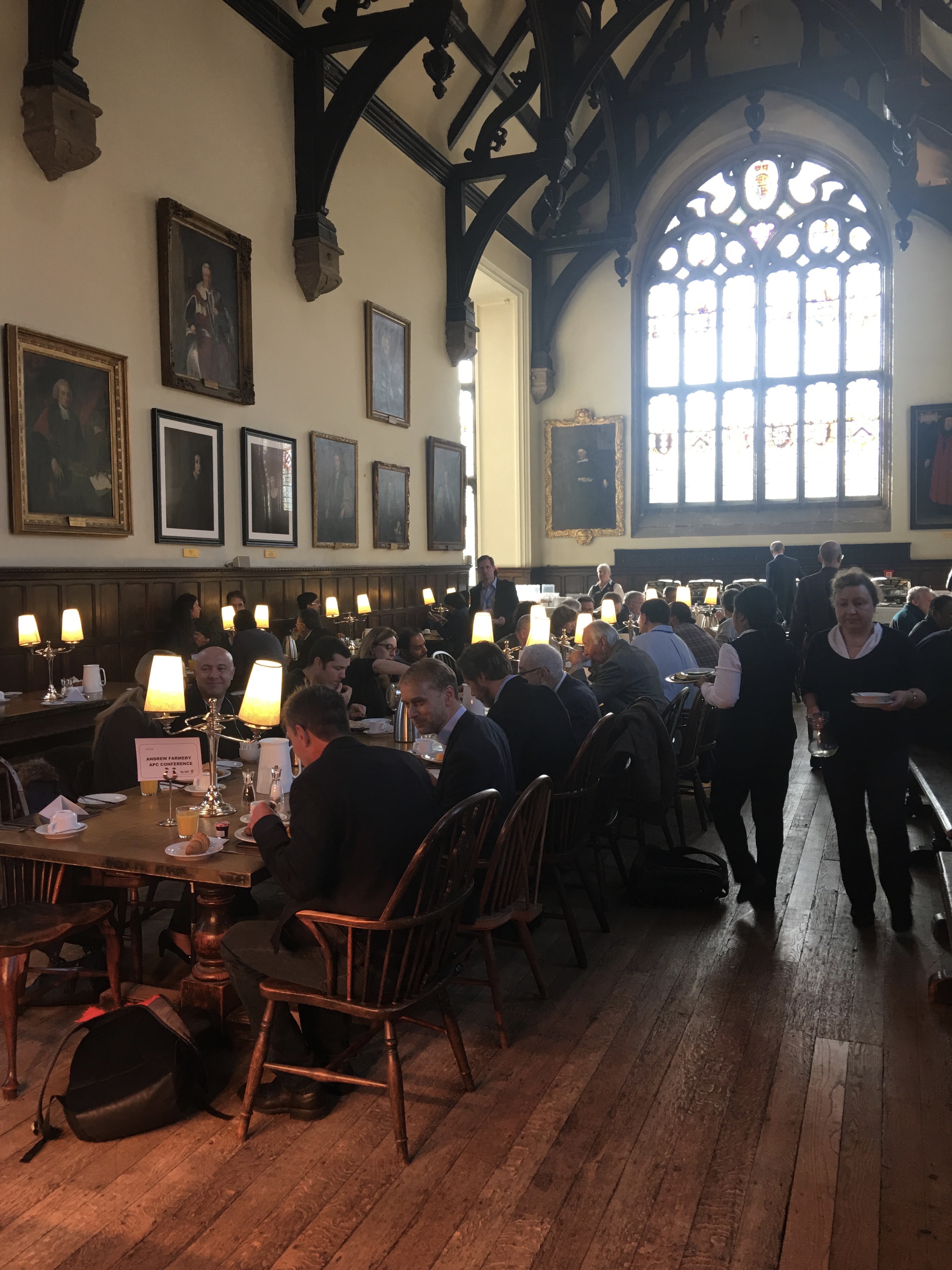
    Ketamine for Psychiatric Disorders breakfast.Can you say PHENOMENAL???

    Let’s hear it for Ketamine Treatment and Oxford!!

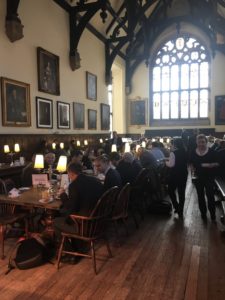
    I just returned from a history-making global conference focused on research and clinical evidence for ketamine for psychiatric disorders. Experts from nearly every continent spoke of their own data and evidence from this emerging field of the the science behind ketamine and the extraordinary help ketamine treatment provides. The entire room was held spellbound for three days, from the first word spoken until the final applause Friday afternoon. It was an unforgettable event in the most beautiful and historic venue at Wadham College, Oxford, UK.  

    A 400-Year-Old Chandelier in a 400-Year-Old Room

    In the 1650’s, a group of individuals including such celebrated thought leaders as Robert Hooke, Robert Boyle, Christopher Wren, and Thomas Willis began an “Experimental Philosophy” club where the fundamental premise required that orthodox thought was rejected and the world was viewed through the “broadened lens of experimental scrutiny.”

    Well, this club became the Royal Society when members of the family of King Charles II got Ketamine for Psychiatric Disorders International Conference 2018involved. When that happened, the revolutionary became the norm.
    It seems only fitting that this international conference on the revolutionary breakthroughs for treating psychiatric disorders should be held in this same building, and on these same grounds.

    Rupert McShane chaired this ground-breaking event. Hats off to him for beginning what we hope will become an annual international conference.

    Luminaries in the Ketamine Adventure

    Gerard Sanacora, a frontline researcher for ketamine treatment in psychiatry, spoke first. He previously served as the lead researcher of the American Psychiatric Association Counsel of Research Taskforce for Novel Biomarkers and Treatments which published a consensus statement about ketamine for this purpose in mid-2017.

    Dr. Sanacora kicked off the conference with an overview of the literature and key studies that have explored ketamine’s mechanism of action in treating psychiatric disorders. It was brilliant!

    We’ve been keeping you informed about some of those in recent times … but there was so much more that was discussed.

    Luminaries all around!  We were graced with Peter Somogyi and David Lodge whose seminal work on NMDA and axoaxonic cells paved the way. Many of the top ketamine researchers and clinicians in the world presented their findings: Colleen Loo, Jennifer Southgate, Nuri Farber, Steve Levine, David Feifel, Declan McLoughlin, Haggai Sharon, Alison McInnes, Samuel Wilkinson, Michael Grunebaum, Elias Dakwar, Rupert McShane, Raquel Bennett, Karen Lascelles, Jeffrey Becker, Ian Anderson, Gordon Fernie, James Stone, Meng Lei, and Dan Iosifescu. Jose Miyar covered regulatory issues. Jonn Donello and Suresh Durgam discussed new breakthrough findings for the mechanism of action of Rapastine, and Jaz Singh presented new data about the safety and efficacy of esketamine.

    And of course, the extraordinary international collaborative teams involved in all of this work … the freshness of perspective emerging across the field — from doe-eyed young researchers to seasoned principal investigators … the breadth and energy of molecular, cellular, neuroimaging, and clinical work represented in the posters.

    Breathtaking doesn’t do it justice.

    We talked about everything ketamine from mice to men … and from chandelier cells (just as gorgeous as the chandeliers King George IV gifted to Wadham College for the Holywell Music Room) to psychotherapy.

    How fitting that we heard about paradigm shifts in the very room where Handel and Haydn first played! Raquel Bennet, Founder of KRIYA Institute, explored the importance of the dissociative experience as transformative, and the many ways ketamine has been used in clinical practice.

    Biologically to induce neuronal plasticity (we talked about this before), as a sort of lubricant  to enhance psychotherapy, and to deliberately induce dissociation … which can be transformative for the patient.

    Jeffrey Becker offered us an elegant unifying hypothesis for ketamine in clinical practice, exploring the GABAergic interneurons and Jungian archetypes in treating people with depression. 

    The depth and breadth of this conference was amazing. The sheer richness of talents in the room, the knowledge and experience gathered into this one place from all over the world. Everyone talked about how much more we need to learn, and the questions that still need to be answered.

    Ketamine for Psychiatric Disorders – Global Conference! Stunning.

    These were basic scientists, principle investigators, neurimaging experts, clinical researchers, psychiatrists, anesthesiologists, Ketamine for Psychiatric Disorders International Conference illuminated ketamine's many therapies.psychologists … it’s astonishing to realize the scope of interest and exploration there is in perfecting this most remarkable treatment to help you get better.

    When you feel depressed, deeply and severely … or when your vigilance and terror from PTSD is tearing apart your family … or when bipolar disorder rips you apart … It can feel like you’re all alone and no one out there cares. You know you don’t know the solutions. So you feel like you’re relying on scientists to figure out the solutions … but … is anyone really trying to help you?

    This is why I tell you about this conference.  This sharing of data, preliminary findings, hypotheses, results… just to show you there are people all around the world who explore the solutions to your pain, and work on solutions for you … and others like you … as feverishly as they can. They care. And they’re dedicated to learning more and more. All to help you.

    As for me, I presented data from my clinical practice. It demonstrates that ketamine can be used to stop suicidal thoughts. And it happens often in a real-world outpatient clinical practice. What’s more, it provides an alternative to hospitalization.

    Someone recently mentioned to me that he predicts the excitement over ketamine will fade away.

    Of course, he’d probably read negative media accounts and had probably missed the science … and all the studies. But I have to say, I wish he and others who share that “doom and gloom” outlook could have been present to hear all the extraordinary work going on with ketamine and related compounds.

    It seems pretty clear to me: ketamine treatment is going to be with us a good while.

    Ketamine Can Make Antidepressants Work Better for Hospitalized Patients

    Declan McLoughlin spoke of his study in Dublin using ketamine to try to prolong remission after ECT. He also explained his work using ketamine as an additional treatment combined with antidepressants for hospitalized patients in Dublin.

    These are just examples. But they don’t even scratch the surface of all the topics covered these three days last week.

    There’s no question that ketamine treatment has a long way to go to reach “mainstream status.” Everyone in the upper echelons of research and practice seems to agree we need to know so much more. The more we learn the more questions arise that we need answers to. But we know so much more than we did even two years ago.

    This is the breakthrough we’ve wished for … depressed and anxious people, suicidal people, Ketamine for Psychiatric Disorders international Conference 2018people wracked with PTSD, or torn by bipolar disorder, trapped by OCD. This is what you’ve yearned for. So have I. Many say this is the greatest breakthrough in fifty years in psychiatry. But we can go further than that.

    This is the best, life-changing breakthrough for people who suffer with psychiatric mood disorders EVER.

    There is so much more to learn…so much! Ketamine is the new frontier in psychiatry and the treatment of psychiatric mood disorders and more.

    Ketamine for Psychiatric Disorders like Substance Use Disorders

    One more story I have to tell you about. Elias Dakwar (we’ve talked about his work) discussed his research with ketamine in treating substance use disorders. You might remember our post on crack cocaine use in February.

    We talked about how Dakwar and his team studied responses of crack cocaine users. Those who were currently using and had no intention of stopping.  When they had been given ketamine infusions the day before being offered either crack or money, they had the motivation to turn and choose money, and their craving was so diminished that they also had the power to turn down crack.

    That brings up something we’ve talked about here: that ketamine restores initiative and motivation.

    All in all, this conference gathering of great scientific minds, young researchers, and brilliant clinicians was a huge step forward for the needs of depressed and anxious people. A huge step forward for the use of ketamine in the treatment of psychiatric disorders.

    Research is ongoing to test ketamine’s use with psychotherapy, ECT, TMS, and traditional antidepressants. Plus, its effectiveness intravenously, intramuscularly, subcutaneously, orally, and intranasally.

    Now we’ve all gone back to our home offices, and our work will continue. And this time next year I hope we’ll see that ketamine’s advantages have taken another big step forward.

    Meanwhile, at Innovative Psychiatry, we’re still here providing IV ketamine treatment. And we see life-changing results with it for people with treatment-resistant depression, bipolar depressionsocial anxiety, bipolar disorderPTSD, OCD, and suicidal thoughts. 

    If you’re suffering from a mood or anxiety disorder, treatment hasn’t helped, I’m sure you’re far more concerned about your desire to feel better and function again, than about a conference. And that’s why we’re here and want to help. We try to offer you the best that the world has to offer. This time from the first International Conference for Ketamine and Related Compounds.

    Call us or schedule an appointment here to be evaluated.

    There is hope. You can feel truly better. 

    So don’t judge your next treatment by the ones you’ve had before. This time, chances are, you’ll see a difference. And you’ll remember how to live again.

    Lori Calabrese, MD offers innovative psychiatric treatment like IV Ketamine

    To your life and the emerging of your best self,

    Lori Calabrese, MD

  • 4 Subtypes of Depression Target More Effective Treatment for You

    4 Subtypes of Depression Target More Effective Treatment for You

    4 subtypes of depression show us that half are focused on low energy, and weight gain, and some are focused on anxiety and agitation.Depression’s the Worst!

    It drains your energy, robs you of enjoyment of ANYTHING, isolates you and makes you feel like no one in the entire world cares. Makes you feel like you’re a burden on the people you know. Makes you feel achey and lethargic.

    Shuts down your brain so you can’t think. You can’t do your job. Can’t take care of responsibilities. Can’t function. You just can’t do. Or care.

    What you do feel is worthless, hopeless, burdensome, guilty. It can even make you want to stop existing. To disappear. To die.

    If all this sounds like you, you’re not alone. Not by a long shot.

    Disability Plagues Depressed People

    Did you know depression is the #1 cause of disability in this country? Ahead of arthritis, stroke, substance abuse, and COPD.  4 Subtypes of depression make it easier to find effective treatment.Does that surprise you?

    It should.

    Because treatment hasn’t been as effective as we wish. But more about that later.

    This is why so much you hear from psychiatrists, drug companies … and why social media refers to the epidemic of depression.

    Well, in the interest of learning more about depression to find more effective treatment, a team of researchers set out on a quest.

    Their idea was to find out how to “define” depression. To tease it into types based on the connections between various brain cell (neuron) clusters and how they behaved. Up till now, psychiatrists, psychologists, and neuroscientists have used the DSM V criteria to diagnose various subtypes of depression.

    While this has been a great help, it doesn’t address brain changes and characteristics for various psychiatric disorders. But, neuroscientists need specific physiologic details that can be measured by machines rather than by subjective symptom reports and observation.

    Brain Circuit Study about Depression

    The study, funded by Brain and Behavior Research Foundation and the National Institute of Mental Health, used brain scans to study connections in the brain in a variety of both depressed and healthy subjects. 

    The study, led by Connor Liston, MD, PhD, included neuroscience research teams from five prominent universities.

    To rethink the general approach to diagnosis and treatment, they set out to identify new subtypes of depression. These were based on 4 subtypes of depression will help determine best medications.dysfunction in mood-related brain circuits. If they could understand more about the neuronal connections in the brain during various types of depression, maybe they could learn more about what type of treatment would be successful in each type.

    This could potentially eliminate the “trial and error” approach that has plagued psychiatric treatment the last fifty years. Patients wouldn’t have to take a medication for 8-12 weeks to find out if it helps.

    They made use of brain scans of these subjects periodically, and studied the differences in their scans. They also interviewed them each to correlate the symptoms of a given patient with that patient’s brain scan.

    What they discovered in simple terms, is that these brain scan images fell into four different categories. With four different clusters of symptoms… and of those four there were two primary differences.

    Anhedonia vs. Anxiety

    Two of the four were dominated by severe anxiety, and the other two were dominated by anhedonia, or loss of interest or pleasure in things they previously enjoyed.

    Those in the severe anxiety segment also tended to lose weight, and reported difficulty sleeping.  While those two in the anhedonia 4 subtypes of depression can help improve treatment.segment tended to gain weight and crave carbohydrates, as well as slept long hours, such as 19 hours at a time.

    You can see that though all four groups were diagnosed with depression, that the two groups of subtypes had almost opposite symptoms.

    Two subtypes

    To be certain they’d derived these four groupings correctly, they did the same scans and interviews with another set of people in a different city with different scanners, and different interviewers.

    The results verified their findings. 4 groups. 2 main categories: one dominated by anxiety and the other by anhedonia.

    If any of this is sounding familiar to you, there’s good reason.

    4 Subtypes of Depression

    Even the DSM V defines depression as a patient reporting 5 out of 9 symptoms that include extreme opposites. Such as 4 subtypes of depression will help with effective treatment.weight gain or weight loss.  Insomnia or hypersomnia (excessive sleepiness or sleeping). Psychomotor agitation or psychomotor retardation (restlessness or slowed movement).

    You may have a little anhedonia, but are plagued by severe anxiety in many situations. You may feel restless and agitated. Along with that, you likely find it impossible to get much sleep at night, if any. And you worry and worry. In addition, you may notice you’re dropping weight.

    On the other hand, if that doesn’t describe your symptoms, you may have minimal anxiety but have no feelings of pleasure, or enjoyment. And you may just want to go to bed and stay there. In fact, once you do, it may feel impossible to get out of bed again the next day. Plus, your waist is ballooning causing you to wear larger clothes.

    We call it all depression. But the symptoms aren’t the same.

    Liston and his team identified areas of the brain affected that led to this disparity in symptoms and named them Subtype 1, 2, 3, and 4.

    Depression Subtypes Treated with TMS

    The last significant step in the study required identifying which subtypes were improved by Transcranial Magnetic Stimulation 4 subtypes of depression can lead to more effective treatment.(TMS) and which weren’t. Learn more about TMS here.

    In their tests, they placed the magnetic coil over the dorsomedial portion of the brain, as opposed to the often-used left dorsolateral prefrontal cortex.

    They discovered the most receptive subtypes of depression to TMS treatment were subtype 1 and subtype 3. Most dramatically, subtype 1.

    They also learned that use of the clinical subtypes and connectivity symptoms as criteria for TMS treatment was 96% effective. But choosing TMS treatment based on symptoms alone was only 63% effective. And connectivity alone is only78% effective.

    The use of clinical symptoms combined with subtype diagnosis yields a dramatic improvement in predicting the best treatment for each subtype of depression.

    The Future in Diagnosing Depression by Subtype

    So … clearly, the first diagnosis is the one that determines you’re depressed and need treatment. But this approach to diagnosis will advance from the laboratory to the psychiatrist’s office. This ability to determine what type of depression you have will empower psychiatrists to get you better, more effective treatment, faster.

    There is lots more research needed, such as trying the same study with antidepressants, anxiolytics, and IV ketamine using this 4 subtypes of depression can help future treatment.same model.

    And of course, software will be developed to help us use these tools.

    The good news is that treatment for psychiatric mood disorders is advancing fast on many levels. The hopelessness that pervaded no less than a third of all depressed patients, when no medication seemed to help, is dissipating.

    At Innovative Psychiatry, in South Windsor, CT, we offer TMS. TMS has demonstrated improvement for most who have anxiety related disorders. 75% of patients in our office who are treated with TMS experience dramatic relief and improvement.

    We also provide IV ketamine treatment, and consistently see 80% of of our patients dramatically respond to treatment — even when everything else has failed them. A small percentage return for a follow-u or booster infusion periodically — if they need it or if a huge stressor occurs in their lives and sets off the first subtle signs of depression again.

    And of the 20% that don’t immediately respond to ketamine in our practice, another 7% reach remission a few months later.

    What’s more, IV ketamine treatment can erase suicidal thoughts in minutes or an afternoon. Ketamine can be life-saving

    If you have endured depression symptoms for a long time, and other treatments haven’t helped, call us. We’ve been working to find new ways to relieve treatment-resistant mood disorders for many years. We want to help you get your life back.  Or …maybe build it for the first time. Schedule an appointment here, or just call. Your life can be so much better, in fact, you can be the best you ever.

    To the emergence of your best self ever,

    Lori Calabrese, M.D.

    Lori Calabrese, MD offers innovative psychiatric treatment like IV Ketamine


    signature of Lori Calabrese, M.D.

  • IV Ketamine Treatment Can Prevent a Medical Leave of Absence from College

    IV Ketamine Treatment Can Prevent a Medical Leave of Absence from College

     Ketamine treatment can prevent medical leave of absence from college for you.Are You a Depressed College Student?

    Who sometimes just can’t go to class?  … or do your work? Sometimes you can’t bring yourself to write the paper … or even do the reading. If last semester was awful, you hope this one will be better.

    That you’ll get up. Get cleaned up. Eat some decent food.

    It’s so hard to do when you don’t feel like doing anything. When you’re trying to pretend everything’s OK. When you don’t want anyone to know how bad it is, or how bad you feel.

    College is supposed to be the best time of your life, right? And it feels like you’re screwing it all up. Maybe you’re wondering if you can even do it.

    Should you withdraw? Take a medical leave …?

    If you’re a parent, you may have agonized over what to do if you think your college student is depressed. Encourage them to stay? See a doctor on campus? Bring them home?

    Too often … too late … the college or university decides what happens when you can’t function: they send you home on a medical leave of absence.

    College Student Depression

    Sometimes a young person graduates from high school and makes plans for college. Sometimes he’s excited about it. And that’s great!

    But, sometimes he makes those plans because it’s expected. And he’s not up for the challenge. Depression or anxiety may have taken over his brain, and he’s just not functioning very well. Does that sound anything like you?

    You may even pack up in Fall and move into the dorm. Your parents hope you’ll snap out of the subdued condition you’ve been in, and so do you. Your lack of energy, your sullenness, your tendency to stay by yourself all the time. And you just don’t feel like being around people, much less smiling.  …How long has it been?  I mean, since you smiled, or better yet, belly laughed?

    Maybe you’ve been depressed for years…maybe you struggled in high school with anxiety or panic…It’s also possible you’ve seen a psychiatrist but the medication just hasn’t helped … like, at all.

    Or … maybe you were fine until you got to the university and the heavy course load, the adjustment to roommates, dorm life and extracurricular Ketamine treatment can prevent medical leave of absence from college for you.activities, the overwhelming work… drove you into a corner that just got darker and darker…

    If you’re depressed, or you’ve developed significant anxiety about school, social activities, grades, expectations, or maybe just trying to get caught up…you may have a tough time getting on your feet and moving forward without treatment.

    Maybe, like some kids and teens, your symptoms started in childhood and you’ve had depression or bipolar disorder, or social anxiety, PTSD, OCD, and suicidal thinking from early in your childhood. Maybe you’ve tried not to wish you were dead, tried hard to push away suicidal thoughts without letting anyone really know. And maybe traditional treatments haven’t helped.

    You may have been like this so long, your parents don’t understand and don’t know how to help.  On the other hand, sometimes parents do all they can find to do but still… nothing helps or changes.

    One thing is sure: depression and anxiety undermine your success in college. Without effective treatment, you’re set up to fail, to establish doomed academic habits, and even to cope in self-destructive ways.

    William’s Story

    A friend of mine, Bob Pollack, M.D. in Florida, recently published the story of a young college student who was the son of a Yale classmate back in his school days. This young man, named William, remembers loneliness and despair filling his childhood, rather than fun activities, friends, and sports.

    He was reprimanded by teachers for being “out of control,” isolated from making friends, felt misunderstood by students, and generally alone.

    He moved from school to school, because of a family move, or because the environment didn’t foster his best performance.

    William was always alone when his depression was the worst.  And lonely. He wasn’t one to speak to anyone.

    Eventually, his dad contacted Dr. Pollack about IV ketamine treatment for William. Father and son flew to Florida for the series of infusions. The first day he felt woozy…until he ate some dinner, then felt better. Not a lot of change.  But by the third infusion, he walked in, shook Dr. Pollack’s hand, and said, “Good morning.”

    That’s when Dr. Pollack saw the treatment was taking hold.

    Two weeks after the first treatment, William says he was “far less harsh” on himself and far less miserable. And it just got better from there.

    William is back in college, and close to completing his degree. And so grateful for the treatment that gave him his life back. He now Ketamine treatment can prevent medical leave of absence from college for you.says with conviction that brighter days are ahead for those in darkness. He now knows there is hope for the future.

    At Innovative Psychiatry, we have lots of Williams. Lots of Susans. Lots of Caseys. We hope you won’t hesitate to reach out to us.  We really get what you’re going through.

    What Do You Do When You’re a Depressed College Student?

    You need to get better. Fast. You need something to work.

    Before you lose more time, lose credit, miss out on an internship, or put off taking the LSAT or the GRE.

    Because not doing well heaps guilt on you, intensifies hopelessness, and tears down your confidence on top of depression. If treatment hasn’t worked or if what you’re doing now isn’t working, reach out for help.

    IV Ketamine Treatment  treats depression, anxiety, bipolar depression, social anxiety PTSD, and OCD — and it’s extraordinarily effective even when nothing else has worked. It can stop your suicidal thinking in an afternoon. If you’re depressed, you’ve got an 80% chance that it will work — and there are genetic and clinical factors that can boost that chance even higher. Eighty percent.

    Better odds than anything else we’ve got.

    We’ve never had anything like this in your lifetime.

    Ketamine Treatment Can Prevent Medical Leave of Absence from College 

    Ketamine was developed in the late ’60’s as an anesthesia medicine used in surgery, emergency rooms, and war zones. It’s been used safely for more than 50 years among  all ages, from the very young to the very old. But is it a safe treatment to offer to college students? Because of course, people know it — and have abused it in massive doses — as “Special K” on the street.

    When we use IV ketamine treatment for IV ketamine treatment can prevent medical leave of absence from college.depression, a much tinier dose is used than is ever required for anesthesia. We administer it with a state-of-the-art infusion pump to ensure precision delivery to the delicate brain systems involved in mood regulation.

    Very quickly, the synapses and dendrites in the connections of your brain cells begin to grow, flourish, branch, and become healthy and abundant. When that happens, signals begin traveling through your brain in higher numbers and at faster rates.  

    And that brings your brain to life. You can concentrate. (Which means you can go to class, read, study for exams.) You feel optimistic, motivated, hopeful, with new initiative and resilience. Creativity blooms again. Your ability to enjoy your relationships, your studies, and your life grows like a blue ribbon garden.

    Ketamine treatment can prevent you from having to take a medical leave of absence from college — or help you come back from a medical leave — if you suffer from treatment-resistant depression, anxiety, bipolar disorder, PTSD, OCD, and suicidal thinking. It can help you restore and have the resilience to continue toward your goals. Because it works fast. A special task force of the American Psychiatry Association called it rapid and robust.

    If you’re a college student who’s suffering from suicidal thoughts, or worse … if you’re making a deadly plan no one knows about … IV ketamine treatment can stop those thoughts in minutes or hours. And you’ll feel relieved. Hopeful.

    Traditional antidepressants take weeks or months. Time is precious when you’re desperate.

    We’re dedicated to treating the sickest of the sick, those suffering the most from psychiatric mood disorders like severe depression, crippling anxiety, the worst cases of bipolar disorder, disabling PTSD, shackle-laden OCD, and critical life-threatening suicidal thinking. We provide IV ketamine treatment, TMS, nutritional guidance using curcumin and microbiome support, among others.

    Please understand that IV ketamine treatment isn’t for everyone. We will evaluate you carefully to determine if you’re a candidate for ketamine treatment or another advanced treatment option — and if you are, we won’t waste time.
    We have a special place in our hearts for college students.

    And we’ll work with your doctor and therapist so that when you’re done with treatment, you can launch your life.

    You can experience relief, restoration, remission.Ketamine treatment can prevent medical leave of absence from college for you and improve social and academic performance.

    When getting well matters, and you don’t have time… or a semester… to lose … if you’re struggling with depression, anxiety, bipolar disorder, PTSD, OCD, or suicidal thinking, and you haven’t been helped by traditional antidepressant treatments, call us.

    At Innovative Psychiatry, we’re here to help you with expertly administered, advanced treatment options by a seasoned psychiatrist with deep expertise from Wellesley, Hopkins, Harvard, and Yale.  We get college. We know how important it is. 

    And we’re here to help you flourish there. 

    Lori Calabrese, MD offers innovative psychiatric treatment like IV KetamineTo the restoration of your best self,

    Lori Calabrese, MD

error: Content is protected !!