
Tag: IV Ketamine for Opioid Use Disorder

  • Your Generosity’s Impact on Depression

    Your Generosity’s Impact on Depression

    Your generosity's impact on depression is remarkable.

    This is a time of year when we do lots of giving, don’t we? 

    And for the most part, we receive the giving of others, too. While it’s fun to receive and get stuff, receiving doesn’t have the impact on our brain, our outlook, our health and immunity, as well as our sense of well-being, that giving does. In fact, when we really give of ourselves, give a piece of ourselves, hoping it will truly help or benefit the person we give to, something wonderful begins to happen. I guess most of us feel a certain amount of obligation this time of year to make sure we have a gift for each person in our world… family, co-workers, neighbors, friends and those in all our other circles. But there’s an important distinction between obligated giving and true generosity from the heart. So let’s talk about one of the most important results: your generosity’s impact on depression.

    It turns out that when you give out of obligation, it doesn’t really trigger any magical benefits in your brain. You still feel bad and you suffer a smaller balance in your checkbook. Plus you know…you still don’t know how to make things better.  

    Giving the Best of Yourself

    But when you give of yourself – from your heart – something amazing happens. It can be a check you write from the money you’ve worked hard for. It can be giving your time and support to someone who needs something you specifically can provide.  

    No matter what you give, when you really want that person to deeply benefit from it, that’s when it helps you, too. Well, at that point things start clicking in your brain in a way that turns up the heat in your immunity protection. It also turns up the connections in the signals moving in your brain, and – no small thing – it turns your attention from yourself and how bad you feel to someone else and how you helped them feel great. You may have even given them hope.

    Generosity is so Good for Your Depression

    So why is giving so valuable, and your generosity’s impact on depression so life changing?

    Good question!!

    Generosity's Impact on depression helps to release joy during the holidays.

    It starts in the mesolimbic pathway in the brain. Weird word, I know. But this strange phrase refers to a circuit in the brain that takes advantage of the neurotransmitter dopamine to link your behavior with a feeling of pleasure. You may have heard it called the “reward pathway.” 

    (It probably won’t surprise you to know that because of that, this area is studied by researchers seeking understanding and solutions for addiction.)

    So, when you’re a giver, a series of events takes place triggered by a special set of chemicals like dopamine and its mesolimbic activity, endorphins that give you almost a sense of euphoria, and oxytocin.

    Oxytocin is associated with tranquility and inner peace, as well as a sense of belonging, cuddliness, and connection. It’s the same hormone secreted when a mother nurses her baby….it causes the bonding between mother and child.

    Stress is a Destroyer

    Now when you’re spread too thin, or disasters are happening around you, both natural and figurative, that stress prunes and breaks down the synaptic connections in your brain. 

    Stress tells your body to prepare to fight or take flight. When your body keeps going into this state, believing you’re facing life or death, it wears it down. It depletes neurotransmitters, prunes the synapse structures and connections that allow for signals to be delivered, and increases cortisol. And when cortisol increases, these neurotransmitters stop producing.

    But, it turns out, that even if you do experience a lot of stress, something as simple as giving of yourself, volunteering, and helping and supporting others can combat the destructive effects of stress… and prolong your life.

    Generosity’s Impact on Depression and Mortality

    A study led by Michael Poulin published in the American Journal of Public Health, 2013, found that a stressful life did not predict the mortality rate in those who provided help to others. However, in those who did not provide help to others, stress did predict their mortality.

    Generosity's impact on depression is increased by the mutual support and fresh air and exercise of these volunteers as they give of themselves.

    A study published in the Journal of Health Psychology that focused on volunteering found that volunteering reduced mortality rates in a group of 2000 people more than exercising 4 times a week and regularly attending church. 

    Get this: it found that of the 2000, those who volunteered for 2 or more causes enjoyed a 63% reduction in mortality in contrast to those who didn’t volunteer at all.

    Volunteering is a Category All Its Own

    One thing about volunteering is that you have to really give of yourself. Your time, your energy, your comfort zone.  And you probably believe in the cause and truly want to help the recipients. So with volunteering, you’re probably meeting the criteria for health benefits. And yet…that’s not why you do it, is it?  

    You do it because you really do want to help, to make a difference.

    And it’s that heartfelt commitment to make a difference for someone and that deep desire to help, that triggers this cascade of neurotransmitter reward. Someone called it the “giver’s glow.” 

    It’s your generosity’s impact on depression in your life. It can help you go from shutdown…to glowing…!

    What it does do is to reduce the effects of stress in your life and improve your immunity, while flooding you with a warm sense of connection, and belonging, and soul satisfaction.

    These studies found that when someone is helpful regularly for a prolonged period of time, the benefits to their health and outlook compound, and carry on for a prolonged period of time.

    Which is why it’s not only better for the organization to know they can rely on you every Tuesday for a year, but it’s much better for your wellbeing and longevity.

    May Your Giving Season Be Your New Beginning of a Generosity Approach to Life

    And, so here we are. It’s the Giving Season. We’ve had Giving Tuesday which helped to organize donations all around, and… which helps you with a tax write-off. But let that be only the start. Because if you donated for the tax write-off, that’s your benefit. 

    Still, if you make this the beginning of a new year of reading to the elderly, or teaching English as a second language, or literacy support, or anything that can help make another life or many lives better, healthier, and with more hope, then you may very well be on your way to a ripe and healthy old age.

    Giving from the heart…giving unselfishly, giving of yourself in your own creative way, and giving your hard earned money to make life better for someone… can improve your outlook, your energy, and your sense of purpose. It can increase the neurotransmitters that move signals around in your brain, and improve your immunity.

    This man offers another a helping hand because generosity's impact on depression is unmistakeable when you help someone outside yourself.

    What a truckload of benefits for you from giving of yourself.

    And, if we at Innovative Psychiatry can help you with symptoms you can’t resolve yourself, please call us. IV ketamine treatment can give you the transformative restoration so you really can give your best self to others.

    We want to help you find the power to live, and give, and bloom. To be satisfied and fulfilled with your life, your work, your relationships…all of it.

    Have a Wonderful and Fulfilling Holiday Season!

    Lori Calabrese, M.D. is on the front end of the race to stop PTSD in its tracks using IV ketamine treatment.

    To the restoration of your best self,
  • Even One Dose of IV Ketamine Can Dramatically Reduce Heavy Drinking

    Even One Dose of IV Ketamine Can Dramatically Reduce Heavy Drinking

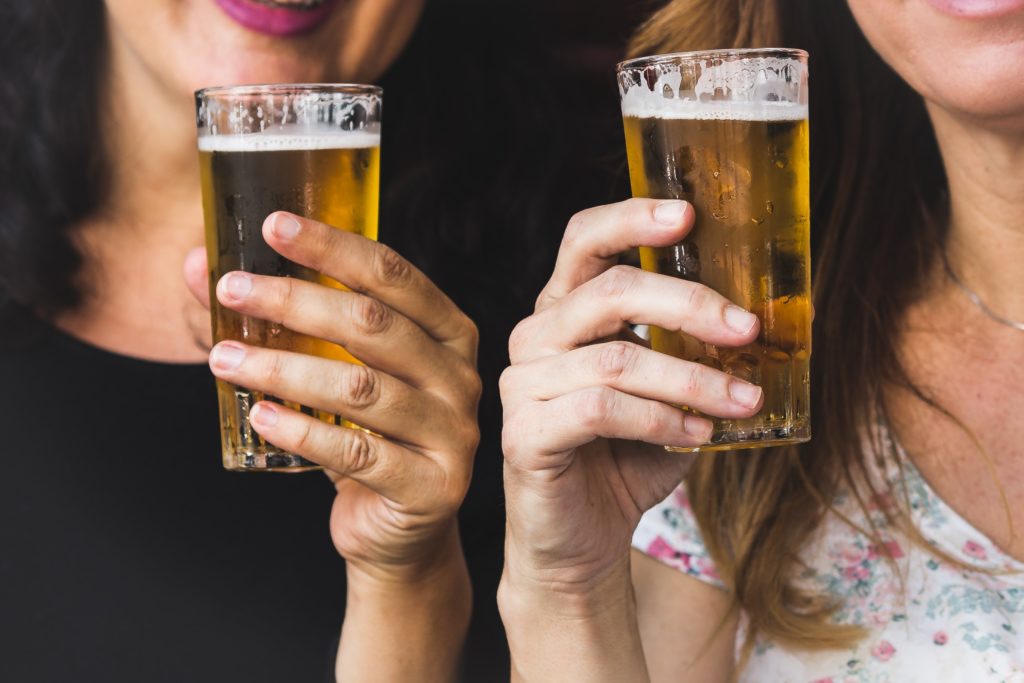
    Alcoholic drinks at a holiday party are abundant and a strong temptation if you're trying to stay sober.

    It’s the holiday season again and there are parties every weekend, with work, with friends, with family – they crop up everywhere.

    Festive gift bags provided at liquor stores make it easy to present a gift of alcohol in the busy bustle of the season. For some, holiday drinking is light and rare. For others, whose habit of drinking so excessively that it’s harmful to their health and to others, it’s almost continuous. In fact, it can be addictive. But it turns out, there is hope for those who would like to drink less, or stop drinking altogether. There’s a way, beyond sheer will, to dramatically reduce heavy drinking, and avoid the shame that goes with relapse.

    Take Jerry, for instance. His wife had suffered from breast cancer for 6 years, and every time they thought she had beat it, new tumors cropped up again. He watched her suffer in pain, with vomiting, severe weight loss, worsening weakness, until she just didn’t have anything to fight with anymore. 

    She had been in remission for a year, finally, and they were planning a trip to Europe, when suddenly she collapsed one day and tests showed an aggressive form of cancer had spread everywhere. In a matter of weeks, she was deteriorating fast. She died less than a month from the time of her collapse. 

    Just when they thought they had a future to enjoy together, she was gone. Jerry was devastated. He felt lost, without purpose, disillusioned. And so terribly alone.

    The Subtle Slide… 

    At first, he would drink a couple beers to relax after work in his empty, echoing house. The memories of her reverberated from every corner. After the first swallow of the ice cold beer, a relaxed feeling would wash over him. It felt like relief. Relief from the pain, the sorrow…the stress.  

    It wasn’t long before 2 beers turned into 3 or 4…then a 6 pack.  After that, he graduated to bourbon — or adding vodka to his soft drinks. By the time his wife had been gone a year, he was drunk all weekend every weekend…. and most nights after work.

    Friends invited him on outings, to dinner, camping and fishing… but he usually turned them down.  He just didn’t feel like socializing…

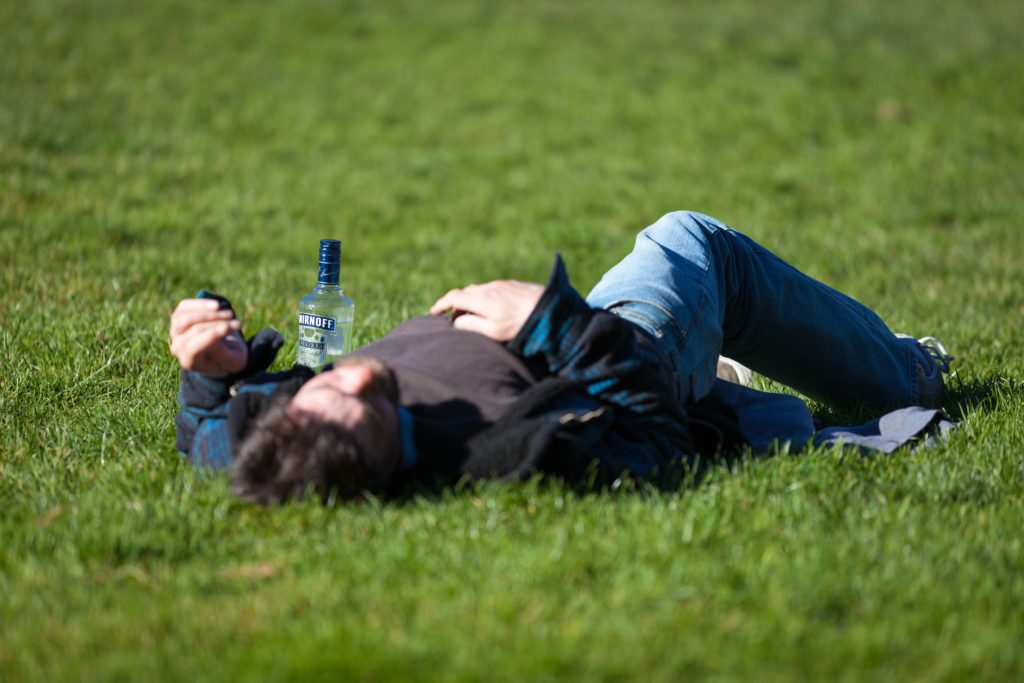
    This man drank whiskey till he passed out, but ketamine can dramatically reduce heavy drinking.

    Five years went by, and Although he managed to keep his job, his performance had dropped off. He hated his annoying itchy skin, and had some pain in his belly off and on… but not too bad. He just ignored it.

    One night after he had been to the cemetery to visit her, it started raining. Suddenly, an SUV made a sudden turn in front of him. As Jerry slammed on his brakes his car started spinning. When he realized he had finally stopped, he crawled out of his pickup. His head was bleeding onto his shirt… but the SUV was on its side. He could hear the cries of someone laying about 5 yards down the hill in the dark… then he saw flashing lights. Help was coming…

    It all began as grief, but spiraled until he committed a crime, and could have been responsible for someone’s death. Thankfully, no one died. But still…

    Jerry was in pain, grief-stricken, and depressed. His heavy drinking was his direct response to his terrible experience with his wife’s cancer and death. And the depression that had taken over left him with no reason he could find to take care of himself, or preserve his life.

    The other driver had caused the accident. Still, his blood alcohol was above the legal limit. So, he had to face charges for driving under the influence.

    Too Much Drinking Hurts You – and People Near You, Too

    While awaiting trial, he went to the doctor to find out about the pain he’d been having. The doctor told him he’d have to cut way back on his drinking. In fact, he urged him to quit altogether, if he wanted to live past the next few years.

    It was a wake-up call. 

    He really didn’t want to die. But could he stop drinking..? He’d tried before… and it always went by the wayside. He needed more help than just trying to use sheer will. He needed something that would help him dramatically reduce heavy drinking. And fast.

    So, he started with the internet. 

    He learned about a variety of 12 step programs. And about residential programs to help you not only stop and get the alcohol out of your system, but to also train you to respond to temptation so you could stay sober.

    And he read about promising studies with a medicine called ketamine — something he’d never heard of before.

    Jerry got the help he needed with IV ketamine treatment, and got stronger and healthier. He also started seeing a therapist. And he’s finding joy in living again…

    But now there are new findings that can help someone like Jerry even more. So you can dramatically reduce heavy drinking.

    A recent study — just published a couple weeks ago — has demonstrated that even a single dose of IV ketamine can dramatically reduce harmful drinking. As in, drinking so much that it harms your health and can cause harm to others around you, too.

    Ketamine Can Reduce Harmful Drinking By Rewriting Drinking Memories

    This is so cool.

    A group of researchers in London and Amsterdam conducted a study using ketamine applied to maladaptive reward memories, (MRMs) to see if ketamine can help rewrite those memories and thereby dramatically reduce heavy drinking. R. Das, G. Gale, and their team selected a group of 90 beer drinkers who had hazardous drinking patterns, but had not been diagnosed with alcohol use disorder. Also, no one in this group was seeking treatment for their alcohol consumption lifestyle. 

    A single dose of IV ketamine can dramatically reduce heavy drinking.

    The first day of the experiment, researchers showed all the participants photos of alcoholic drinks that included beer and stronger drinks. Then they asked the participants to rate how strong their desire to drink was.  Immediately after this, they gave each participant a cold beer to drink.

    On the second day, researchers divided the group into three sub-groups, but didn’t offer beer to anyone.

    Here’s where it gets interesting.

    With the first group, researchers showed them more photos of drinks to stimulate their memories about the pleasures of drinking. Then they gave them a dose of ketamine.

    In the second group. the research team showed them the photos of the drinks, then gave them a placebo drug.

    And finally, with the the third group, they showed them no pictures at all. They just gave them a dose of ketamine.

    Fast forward 10 days. 

    The people in Group #1, whose memory was stimulated by pictures, followed by ketamine, reported their consumption of alcohol had dramatically dropped. Then 9 months later, a follow-up revealed their alcohol consumption had dropped to half what it had been before the experiment.

    Group #3, who received ketamine without photos to trigger drinking memories, reported a smaller reduction in drinking, but still significantly less alcohol consumption. This was the case at both the 10 day mark and the 9 month follow-up.
    Group #2, the placebo group, reported a small decrease in drinking.

    So what happened here…?

    Ketamine Blocks Memory Restabilization

    Young man relaxing as he stares across the water, relieved.

    Das and his colleagues explained that maladaptive reward memories (MRMs) play an important role in “acquired overconsumption disorders” such as hazardous drug and alcohol use. Basically, the reward Jerry feels in terms of relaxation and relief from his grief when he drinks forms a memory, and when he thinks of it, he wants to drink again, even though that may not be good for his health or social, economic, and productive life.

    There’s a process that happens in a small time window each time Jerry thinks about having a drink to help him feel better. During that window, his recall of the memory of his relief when he drinks becomes rather fluid and changeable. If something can interfere with that association before he drinks, it can “rewrite” that memory so his desire to drink becomes a desire to do something different.

    Das and his colleagues explained that they believe ketamine can block specific receptors in the brain (such as the NMDA receptor) that help to RE-stabilize a memory. That blocking causes the memory to weaken. In this case, it’s the memory of the pleasure of drinking. In Jerry’s case, it might be the relief he feels from his grief when he drinks. 

    If someone wants to stop drinking, this change to that appealing memory of pleasure gives them the chance to rethink what they believe about alcohol, and what they believe about their health. 
    It gives them time to make a decision without that alluring maladaptive memory.

    Das encourages further study using ketamine to rewrite these MRMs. Because ketamine has demonstrated safety at high doses in anesthesia, they encourage studies using doses that can to saturate NMDA receptors to interfere with these MRMs.

    Addiction Relief with IV Ketamine 

    At Innovative Psychiatry, we’re thrilled every time a patient reports relief from addiction to alcohol or other substances. We get to see patients who’ve suffered from severe depression walk into our office smiling, happy, and full of hope. These people never take their new found wellbeing for granted. Their relief, surprise, and joy are palpable.

    IV ketamine treatment works in the brain in ways other medicines haven’t before, and it’s restoring and transforming lives like yours. 

    Don’t hesitate to call us if you’re plodding through a sorrowful, empty, hopeless existence because other medications and treatments you’ve tried haven’t helped. You still can find relief of depression symptoms and dramatically reduce heavy drinking.

    So much we’ve learned. So much more work to do.

    No matter how hard her life was, ketamine could dramatically reduce heavy drinking.

    Ketamine works on newer and better systems in your brain. It doesn’t help everyone, but it helps so many that we just keep studying to learn how many more it can help. Even so, chances are pretty good that it will reverse your depression, your PTSD, you substance use disorder, and transform your life to one of hope, courage, initiative, and joy.

    So think about it a bit. And then give yourself the chance to live a rewarding life. 

    To the recovery of your very best self, 

    Lori Calabrese, M.D. is on the front end of the race to stop PTSD in its tracks using IV ketamine treatment.

    To the restoration of your best self,

error: Content is protected !!