
Tag: IV Ketamine for Suicidal Thinking

  • Depression in Pregnant Mom Can Affect Baby Before and After Birth

    Depression in Pregnant Mom Can Affect Baby Before and After Birth

    Depression in pregnant mom can affect her baby's brain development.

    Sarah Driscoll had looked forward to her first pregnancy for years.

    She had to complete her graduate degree first, so she could relax and enjoy every moment. Now she was pregnant, and it was going well. Every visit to the doctor revealed more growth in her baby. It was an exciting time. But as her delivery date approached, something seemed off. She’d heard of depression in pregnant moms but she had no reason to be depressed!

    Still, rather than feeling excited about her baby’s birth, she found herself with mixed feelings. The idea of the work ahead, the sleepless nights, the exhaustion… began to weigh on her. Each day she felt more nervous about it than the day before.

    She mentioned her fears to her husband who reassured her that it would probably all fall into place once she saw her beautiful baby’s face. She secretly hoped so, but was skeptical.

    One day she asked her mom if she felt the same way before her first baby, and her mom told her no, she was so excited about having the baby in her arms, she didn’t care what it required of her.

    That just made her feel more selfish and guilty.

    Her best friend chimed in with a similar perspective, except admitted she was worried whether she would be able to handle everything after her third baby was born. But she reassured Sarah that it turned out to not be a problem. Caring for her 3 children was not so hard to take in stride.

    Sarah’s anxiety rose higher and higher, and by the time she began having labor contractions, she felt exhausted about the whole thing.

    After 9 hours of labor, her baby boy was born healthy, looking around the room with big bright eyes. And he quickly began to nurse when the doctor placed him on her chest.

    Postpartum isn’t always a fairy tale

    Sarah felt she should feel happier. Pangs of guilt shot through her that she felt so little for this beautiful baby boy. Her lack of emotion seemed to confirm she just wasn’t fit to be a mother.  And now this poor child was stuck with her.  What should she do?

    The first 2 weeks after he was born seemed like a test of endurance. How long can you live without sleep, she wondered. She went through the motions of changing diapers, feeding, and holding this baby. But she felt like a robot. And she was consumed with guilt.

    Help Arrived: Her Sister Came to Visit

    When her sister came to visit, Sarah tried to be a hostess in her exhausted, bedraggled state. Her sister sensed she wasn’t doing well and finally asked. 

    “How are you feeling emotionally..?”

    Sarah’s chin quivered. “I feel like a terrible mom. I love my baby but I don’t feel it. I’m so tired. I thought this would be a happy time….”

    Her sister arrives to help new mom with depression.

    Her sister wrapped her arms around her. 

    “Sarah. You’re NOT a terrible mom. But you do need some rest and a chance to see the doctor.  Tell you what.  Go to bed.  Let me take over with Jake.  I’ll love every minute of it and you need rest. Then we can talk more.”

    No surprise, the nap helped Sarah feel revived, but it didn’t help the empty, blank, nervous feeling go away. So she Said that to her sister… who told her she had a friend who was diagnosed with postpartum depression and had described feelings kind of like Sarah did.

    She suggested they make an appointment to see the doctor, who then referred Sarah to his trusted psychiatrist friend. That psychiatrist explained that depression in pregnant moms happens sometimes. She recommended a special treatment that could give Sarah rejuvenation in her emotions, her bond with little Jake, and hope for the future.

    She called it IV ketamine treatment.  Sarah had never heard of it, and her only concern was whether it would hurt her baby through her breastmilk.

    The doctor explained how it worked, how quickly it’s eliminated, and how infusions are usually scheduled, but if she liked she could pump her breast milk for the next 2-3 weeks then resume breastfeeding afterwards. Sarah was fine with that, and frankly was game to try anything at that point…

    We don’t talk about depression in pregnant moms very often, do we? 

    In fact, at this point it’s been nearly 2 years since the last time. But treating depression is important. And when it comes to bringing a child into the world, that depression may have a reach beyond just you.  It may impact your baby as well.

    A study published in the American Journal of Psychiatry this past September authored by Zou, Tiemeier, et al, showed that maternal depressive symptoms during the time before and after childbirth actually can affect the development of the baby’s brain. 

    For the study, researchers collected data from 3469 mothers and their babies related to whether the mother experienced depression symptoms during pregnancy and afterward, through the baby’s childhood up to age 10. They measured behavioral and emotional problems in these children, at the end when the children were ten years old. 

    Children were assessed at age 2 months, 3 years, and 10 years. The timing of the mother’s depressive symptoms were charted as they pertained to these age points.

    What they found out was that at the age of 2 months, babies whose mothers had been depressed had less gray matter — meaning the volume of their brain was smaller. They also had less white matter, which is the areas of the brain where brain cell connections happen. The color is the result of the myelin that covers and protects these circuits. 

    This was not the case in older children, but was significant at the 2 month mark after birth.

    However, those children who had these changes at two months were more likely to have attention deficit problems at 10 years. Depression in pregnant moms can have a lasting effect in their children.

    Preparing for Your Child’s Best Future
    Seems pretty important, doesn’t it?

    Especially as you plan and prepare for conception. If you’ve been depressed, and medicines haven’t helped, consider IV ketamine treatment before you get pregnant. 

    On the other hand, we all know that not all pregnancies are carefully planned. So what happens if you find out you’re pregnant and you’re also depressed?

    The FDA classifies ketamine as a Category B drug, meaning it is believed to be relatively safe during pregnancy, but it really hasn’t been adequately studied during pregnancy yet.

    You Have Options

    The good news is that you can wait until the baby is born, then receive ketamine treatment to hopefully relieve the depression symptoms right after your baby is born. 

    As always, remember that ketamine isn’t for everyone. But those who’ve been severely depressed and not helped by traditional medications are usually dramatically improved with IV ketamine treatment, even to achieving remission.

    With that said, the best hope for you to have the well-being to bond with your baby, and to enjoy your life and motherhood, may lie in ketamine treatment.

    And just as important as your wellbeing, is your baby’s brain health and development during infancy and childhood. If your wellbeing could protect your baby from attention deficit problems later.. well, that’s a no-brainer. Right??

    We think about prenatal vitamins, exercise, and childbirth classes. But the idea of IV ketamine treatment before pregnancy hasn’t really been on the list, you know? 

    That’s because we didn’t have the info we have now about the effect of depression in pregnant moms on the developing baby.

    The more we learn, the more we can do to give our babies the best possible start in life. And the beauty of it is, taking care of baby this way will help you enjoy life, too.

    Moms, Dads, and Babies All Live Better

    At Innovative Psychiatry, we like to see moms come in for IV ketamine treatment because they deserve to feel good, to have the joy, energy, and initiative to give their families what they need, while enjoying their lives themselves. 

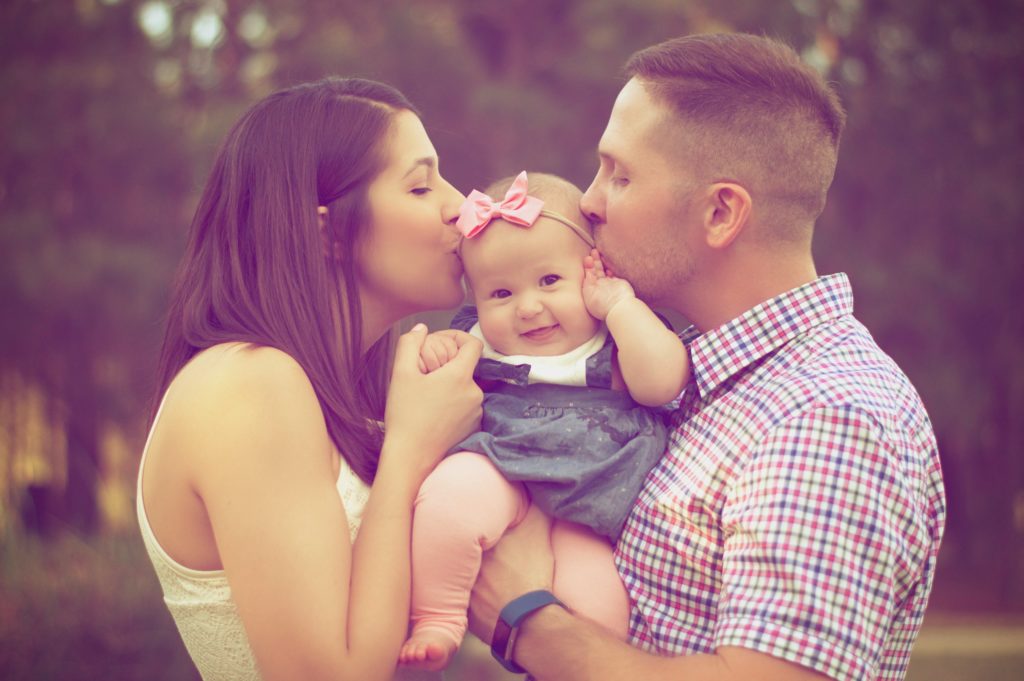
    This mom's depression is in remission and she's enjoying her baby and her life.

    But we’re especially happy for women who’d like to achieve remission from their life-long depression before they start their family.

    What a wonderful beginning. But you know what?  It’s not just about moms, either.  It’s also about dads.

    And when a dad realizes he wants a child but is depressed, this may be the ideal time to reach out for treatment and the potential of remission. Because if he hasn’t benefitted from other medicines, he may be a great candidate for IV ketamine treatment. It can help him be the best dad he can be…and enjoy his life and family to the fullest.

    Wouldn’t you love to have the zest for life to enjoy your children, camping with the family, coaching your kids’ soccer team …dancing with your spouse? IV ketamine treatment can give you your life back, and give you the freedom and stamina to do things you love to do, the initiative to invest in your career and hobbies, and to build strong, lasting relationships. 

    If you’ve suffered from symptoms of disorders that hold you back from moving forward in your life, call us.

    We want to help you plug in to a life that really matters to you.  

    Lori Calabrese, M.D. is on the front end of the race to stop PTSD in its tracks using IV ketamine treatment.

    To the restoration of your best self,
  • Even One Dose of IV Ketamine Can Dramatically Reduce Heavy Drinking

    Even One Dose of IV Ketamine Can Dramatically Reduce Heavy Drinking

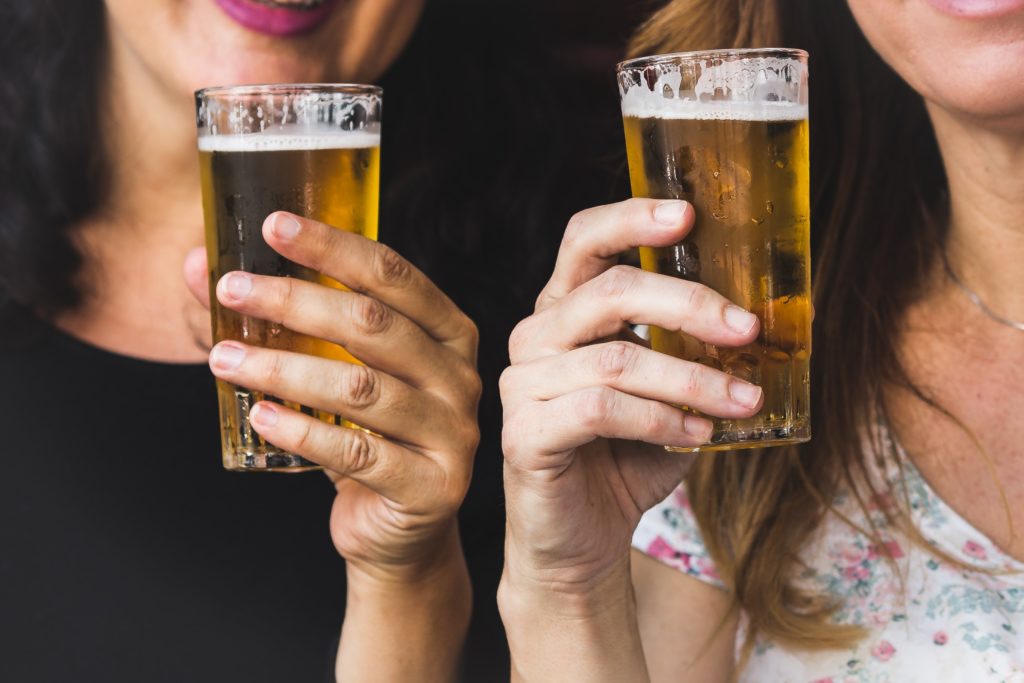
    Alcoholic drinks at a holiday party are abundant and a strong temptation if you're trying to stay sober.

    It’s the holiday season again and there are parties every weekend, with work, with friends, with family – they crop up everywhere.

    Festive gift bags provided at liquor stores make it easy to present a gift of alcohol in the busy bustle of the season. For some, holiday drinking is light and rare. For others, whose habit of drinking so excessively that it’s harmful to their health and to others, it’s almost continuous. In fact, it can be addictive. But it turns out, there is hope for those who would like to drink less, or stop drinking altogether. There’s a way, beyond sheer will, to dramatically reduce heavy drinking, and avoid the shame that goes with relapse.

    Take Jerry, for instance. His wife had suffered from breast cancer for 6 years, and every time they thought she had beat it, new tumors cropped up again. He watched her suffer in pain, with vomiting, severe weight loss, worsening weakness, until she just didn’t have anything to fight with anymore. 

    She had been in remission for a year, finally, and they were planning a trip to Europe, when suddenly she collapsed one day and tests showed an aggressive form of cancer had spread everywhere. In a matter of weeks, she was deteriorating fast. She died less than a month from the time of her collapse. 

    Just when they thought they had a future to enjoy together, she was gone. Jerry was devastated. He felt lost, without purpose, disillusioned. And so terribly alone.

    The Subtle Slide… 

    At first, he would drink a couple beers to relax after work in his empty, echoing house. The memories of her reverberated from every corner. After the first swallow of the ice cold beer, a relaxed feeling would wash over him. It felt like relief. Relief from the pain, the sorrow…the stress.  

    It wasn’t long before 2 beers turned into 3 or 4…then a 6 pack.  After that, he graduated to bourbon — or adding vodka to his soft drinks. By the time his wife had been gone a year, he was drunk all weekend every weekend…. and most nights after work.

    Friends invited him on outings, to dinner, camping and fishing… but he usually turned them down.  He just didn’t feel like socializing…

    This man drank whiskey till he passed out, but ketamine can dramatically reduce heavy drinking.

    Five years went by, and Although he managed to keep his job, his performance had dropped off. He hated his annoying itchy skin, and had some pain in his belly off and on… but not too bad. He just ignored it.

    One night after he had been to the cemetery to visit her, it started raining. Suddenly, an SUV made a sudden turn in front of him. As Jerry slammed on his brakes his car started spinning. When he realized he had finally stopped, he crawled out of his pickup. His head was bleeding onto his shirt… but the SUV was on its side. He could hear the cries of someone laying about 5 yards down the hill in the dark… then he saw flashing lights. Help was coming…

    It all began as grief, but spiraled until he committed a crime, and could have been responsible for someone’s death. Thankfully, no one died. But still…

    Jerry was in pain, grief-stricken, and depressed. His heavy drinking was his direct response to his terrible experience with his wife’s cancer and death. And the depression that had taken over left him with no reason he could find to take care of himself, or preserve his life.

    The other driver had caused the accident. Still, his blood alcohol was above the legal limit. So, he had to face charges for driving under the influence.

    Too Much Drinking Hurts You – and People Near You, Too

    While awaiting trial, he went to the doctor to find out about the pain he’d been having. The doctor told him he’d have to cut way back on his drinking. In fact, he urged him to quit altogether, if he wanted to live past the next few years.

    It was a wake-up call. 

    He really didn’t want to die. But could he stop drinking..? He’d tried before… and it always went by the wayside. He needed more help than just trying to use sheer will. He needed something that would help him dramatically reduce heavy drinking. And fast.

    So, he started with the internet. 

    He learned about a variety of 12 step programs. And about residential programs to help you not only stop and get the alcohol out of your system, but to also train you to respond to temptation so you could stay sober.

    And he read about promising studies with a medicine called ketamine — something he’d never heard of before.

    Jerry got the help he needed with IV ketamine treatment, and got stronger and healthier. He also started seeing a therapist. And he’s finding joy in living again…

    But now there are new findings that can help someone like Jerry even more. So you can dramatically reduce heavy drinking.

    A recent study — just published a couple weeks ago — has demonstrated that even a single dose of IV ketamine can dramatically reduce harmful drinking. As in, drinking so much that it harms your health and can cause harm to others around you, too.

    Ketamine Can Reduce Harmful Drinking By Rewriting Drinking Memories

    This is so cool.

    A group of researchers in London and Amsterdam conducted a study using ketamine applied to maladaptive reward memories, (MRMs) to see if ketamine can help rewrite those memories and thereby dramatically reduce heavy drinking. R. Das, G. Gale, and their team selected a group of 90 beer drinkers who had hazardous drinking patterns, but had not been diagnosed with alcohol use disorder. Also, no one in this group was seeking treatment for their alcohol consumption lifestyle. 

    A single dose of IV ketamine can dramatically reduce heavy drinking.

    The first day of the experiment, researchers showed all the participants photos of alcoholic drinks that included beer and stronger drinks. Then they asked the participants to rate how strong their desire to drink was.  Immediately after this, they gave each participant a cold beer to drink.

    On the second day, researchers divided the group into three sub-groups, but didn’t offer beer to anyone.

    Here’s where it gets interesting.

    With the first group, researchers showed them more photos of drinks to stimulate their memories about the pleasures of drinking. Then they gave them a dose of ketamine.

    In the second group. the research team showed them the photos of the drinks, then gave them a placebo drug.

    And finally, with the the third group, they showed them no pictures at all. They just gave them a dose of ketamine.

    Fast forward 10 days. 

    The people in Group #1, whose memory was stimulated by pictures, followed by ketamine, reported their consumption of alcohol had dramatically dropped. Then 9 months later, a follow-up revealed their alcohol consumption had dropped to half what it had been before the experiment.

    Group #3, who received ketamine without photos to trigger drinking memories, reported a smaller reduction in drinking, but still significantly less alcohol consumption. This was the case at both the 10 day mark and the 9 month follow-up.
    Group #2, the placebo group, reported a small decrease in drinking.

    So what happened here…?

    Ketamine Blocks Memory Restabilization

    Young man relaxing as he stares across the water, relieved.

    Das and his colleagues explained that maladaptive reward memories (MRMs) play an important role in “acquired overconsumption disorders” such as hazardous drug and alcohol use. Basically, the reward Jerry feels in terms of relaxation and relief from his grief when he drinks forms a memory, and when he thinks of it, he wants to drink again, even though that may not be good for his health or social, economic, and productive life.

    There’s a process that happens in a small time window each time Jerry thinks about having a drink to help him feel better. During that window, his recall of the memory of his relief when he drinks becomes rather fluid and changeable. If something can interfere with that association before he drinks, it can “rewrite” that memory so his desire to drink becomes a desire to do something different.

    Das and his colleagues explained that they believe ketamine can block specific receptors in the brain (such as the NMDA receptor) that help to RE-stabilize a memory. That blocking causes the memory to weaken. In this case, it’s the memory of the pleasure of drinking. In Jerry’s case, it might be the relief he feels from his grief when he drinks. 

    If someone wants to stop drinking, this change to that appealing memory of pleasure gives them the chance to rethink what they believe about alcohol, and what they believe about their health. 
    It gives them time to make a decision without that alluring maladaptive memory.

    Das encourages further study using ketamine to rewrite these MRMs. Because ketamine has demonstrated safety at high doses in anesthesia, they encourage studies using doses that can to saturate NMDA receptors to interfere with these MRMs.

    Addiction Relief with IV Ketamine 

    At Innovative Psychiatry, we’re thrilled every time a patient reports relief from addiction to alcohol or other substances. We get to see patients who’ve suffered from severe depression walk into our office smiling, happy, and full of hope. These people never take their new found wellbeing for granted. Their relief, surprise, and joy are palpable.

    IV ketamine treatment works in the brain in ways other medicines haven’t before, and it’s restoring and transforming lives like yours. 

    Don’t hesitate to call us if you’re plodding through a sorrowful, empty, hopeless existence because other medications and treatments you’ve tried haven’t helped. You still can find relief of depression symptoms and dramatically reduce heavy drinking.

    So much we’ve learned. So much more work to do.

    No matter how hard her life was, ketamine could dramatically reduce heavy drinking.

    Ketamine works on newer and better systems in your brain. It doesn’t help everyone, but it helps so many that we just keep studying to learn how many more it can help. Even so, chances are pretty good that it will reverse your depression, your PTSD, you substance use disorder, and transform your life to one of hope, courage, initiative, and joy.

    So think about it a bit. And then give yourself the chance to live a rewarding life. 

    To the recovery of your very best self, 

    Lori Calabrese, M.D. is on the front end of the race to stop PTSD in its tracks using IV ketamine treatment.

    To the restoration of your best self,

error: Content is protected !!