Tag: IV Ketamine Treatment for Addiction

  • KRIYA Conference 2019: The Flexibility of Ketamine

    KRIYA Conference 2019: The Flexibility of Ketamine

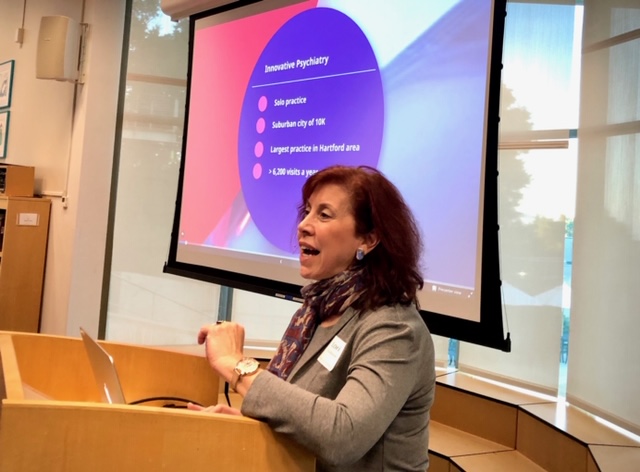
    Dr. Lori Calabrese speaks at KRIYA and applies the flexibility of ketamine.

    We’ve come so far in ketamine treatment for depression, and we still have so far to go.

    KRIYA held the first conference on ketamine treatment for depression in 2015. Now, 5 years later, there are several medical conferences that support the exchange of information in this field. Raquel Bennett, the founder of KRIYA – The Ketamine Research Institute –  says that ketamine is a flexible tool and should be used with freedom and skill. She urges clinicians to make the most of the flexibility of ketamine.

    This is the last conference by KRIYA that will be held in this format, according to Dr. Bennett. She plans to possibly shift to an online format next year to accommodate the huge numbers of clinicians who wish to be included.

    What’s more, KRIYA has supported, from the beginning, the use of ketamine by different routes and for varied conditions, and encourages participation from providers across the gamut of ketamine applications. So we’re a wonderfully diverse crew who come together for these conferences. As for me, I know that I’ve learned so many things and forged new friendships and collaborations from KRIYA conferences. 

    And…my own contributions have been so warmly received. As far as the educational gathering, there are psychiatrists, psychologists, therapists, ER physicians, pharmacists, anesthesiologists, neuroscientists, nurses, and experts in consciousness medicine. 

    Raquel Bennet, Psy.D. Stepped Up as a Leader in the Field of Ketamine for Depression

    Dr. Bennett reminds us she has created a “tasting menu,” if you will… from
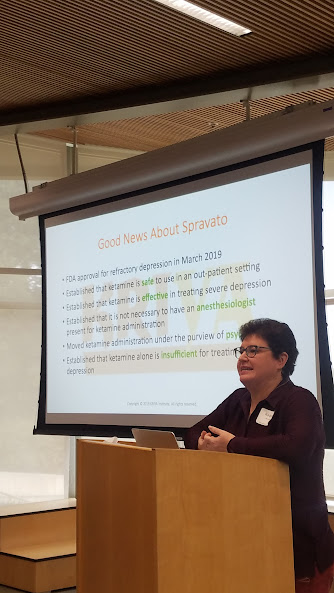
    all corners of the field. At this conference, she opted for breadth vs depth to make us privy to all that’s happening in the field of working with ketamine. And she emphasizes that speakers are working from different paradigms. So, she urges us to listen for the paradigm they report from….and learn.

    And she’s right when she says that ketamine is a flexible tool that contributes to a variety of needs.  When a patient is too depressed to talk, ketamine lightens depression so they can participate in talk therapy. To help manage severe pain and the depression that goes with it. It can help the patient go deeper into therapy, and explore their traumatic experiences gently. It can treat acute suicidal thoughts and prevent hospitalization. And she says, it can induce mystical visions for existential exploration.

    Raquel had much, much more to say, but I want to mention some of the other speakers.

    Brent Turnipseed, MD and Lindsey Slater, LPC, from Austin, TX talked about their use of EMDR in ketamine-assisted therapy.

    Brent Turnipseed speaks about the flexibility of ketamine.

    In PTSD, the body’s own reaction to a patient’s traumatic memories activates adrenaline , which prevents their ability to process their trauma. Ketamine can calm the body enough that they can process the trauma without the distraction of adrenaline. As a result, it can help relieve their fears. 

    EMDR works by helping the patient desensitize by brief exposures to the trauma, then by redirecting the patient’s attention, EMDR induces a relaxed neurological state similar to rapid eye movement (REM).

    Elias Dakwar, M.D., psychiatrist and the addiction researcher we’ve often talked about before, gave a wonderful presentation. 

    He presented a thought -provoking talk on meditation and mindfulness as it relates to ketamine in treating addiction.

    The field of ketamine for psychiatric disorders, including  addiction treatment, continues to wrangle with how to take ketamine into psychiatry but that’s because our paradigms are problematic. Mainstream psychiatry has tried to cut ketamine down to size instead of using this extraordinary medicine as a DISRUPTOR.

    Dr. Dakwar entered addiction research after a long time practice of meditation and with great compassion for the patients he sees.

    He described his previous and current work in detail–look for it in the journals.

    Ian Mitchell, M.D., Emergency Medicine in British Columbia,

    spoke about the uses for ketamine in the emergency department. He spoke about its use for sedation during an emergency procedure, such as setting bones, repairing wounds, or the removal of foreign bodies, pediatric sedation for the same types of procedures, sub-dissociative dosing for pain management, especially for neuropathic pain, to prepare a patient for intubation, sedation for the out of control, prehospital pain relief, and to manage an overstimulated patient.

    In British Columbia, ambulances are equipped with intranasal ketamine for prehospital pain management as a result of the PAIN-K trial. More of ketamine’s flexibility.

    Wesley Ryan, M.D., psychiatrist from Marina del Ray, CA,  Parria Zarrinnegar, M.D., psychiatrist in Portland, OR, and Daniel Barton, M.D., psychiatrist from Nashville, TN all presented riveting case reports.
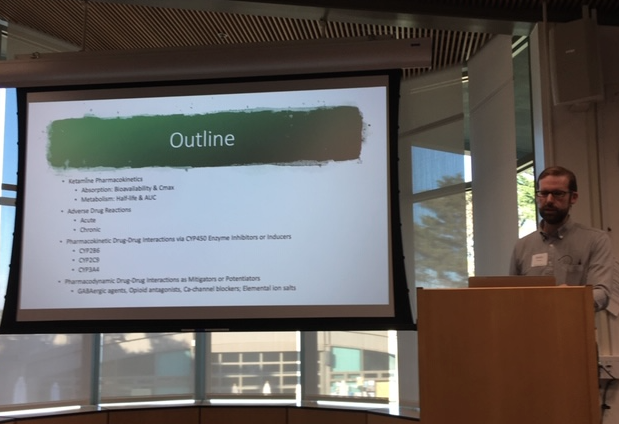
    Kelan Thomas, Pharm.D,

    spoke about adverse reactions and drug-to-drug interactions that have been documented with ketamine. So important and so well-done.

    Annie Oak, a journalist from the Bay area, spoke on the use of ketamine outside the medical setting.

    Gita Vaid, M.D., psychiatrist and psychoanalyst, spoke on using ketamine in psychoanalytic psychotherapy in very long session. She talked about how she has witnessed ketamine help patients relax and defenses soften so they can have freedom to talk. The psychotherapist builds relationship with the patient and it can be transformational.

    Jason Wallach, Ph.D., is a pharmacologist and neuroscience researcher whose energy and depth of knowledge captivates us every time he speaks. He spoke about the neuroscience and  pharmacology of ketamine. Gave an update on some of the other dissociative drugs he’s tested. (I think he’s tested them all!) He made the point that ketamine has been called a dirty drug because of the receptors it hits ex-vivo and in animal models — but that’s not true. It’s really one of the more selective drugs of this class at the doses used in people.

    Jessica Katzman, Ph.D., and Harvey Schwartz, Ph.D., spoke about bumps in the road they’ve discovered with ketamine assisted psychotherapy and in the integration work that follows treatment… What is integration? It comes from a latin word that means “to make whole” or “to begin again.” Bring your clinical compass, but don’t forget your humanity. A beautiful duo talk with lots of clinical examples.

    Eli Kolp, M.D., a pioneer in ketamine treatment, gave a beautiful talk on the phenomenology of ketamine-induced dissociative states.

    There were so many other speakers and so much to absorb–my computer battery kept dying down, so between Surface notes, handwritten notes, and photos, I can’t do justice to the breadth of expertise in the room, and the excitement.

    Greg Wells, Ph.D.  Sylver Quevedo, M.D., Veronika Gold, M.F.T.Eric Sienknecht, Psy.D. presented as a panel on their model of coordination of care between prescriber and psychotherapist. Peter Koshland, Pharm.D. talked about how to work with a compounding pharmacy for varied compounded preparations of racemic ketamine. Nate Schmidt, A.R.N.P spoke about scheduling and billing logistics.

    Sunday was a treasure with a very special presentation by Francoise Bourzat on the Use of Sacred Medicines in the Age of Technology and Medicalization. It was a delight to meet her. She captivated the audience, and her new book, Consciousness Medicine, is a wonderful synthesis of her life’s work.

    Kelley O’Donnell, M.D. and Christian Yavorsky, Ph.D. are doing yeoman’s work with KRIYA and presented an excellent (and not dry!) talk on Measuring Clinical Outcomes: Scales and Assessment Tools. And in addition to the training for Ketamine Assisted Psychotherapy that Raquel Bennett presented and discussed earlier in the conference, Jennifer Dore, MD presented a model of training for Ketamine Assisted Psychotherapy developed by Phil Wolfson, MD and Julane Andrews, that they have used around the country.

    IV Ketamine can STOP suicidal thoughts fast…Now that’s flexibility of ketamine!

    On the last day, and as the next to the last speaker, I took the podium to share my data in working with patients in my own practice, and showing how IV ketamine infusions can stop suicidal thinking, and save patients from having to go to the ER or be hospitalized.  
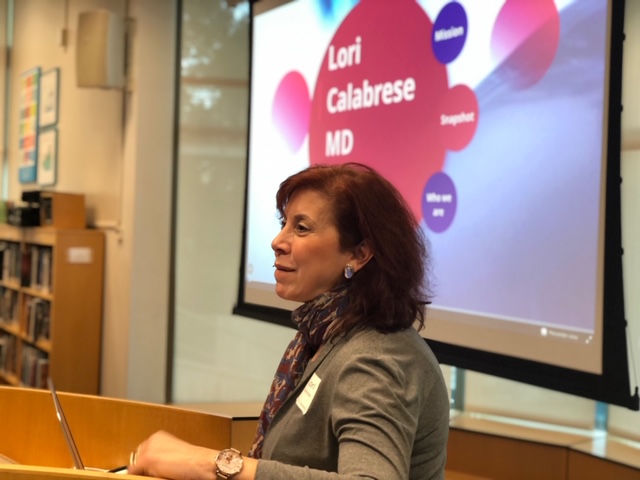
    Lori Calabrese. MD understands the flexibility of ketamine.

    With heartfelt gratitude. These are my people–the clinicians and many of the greats in the field (who were in the audience) who launched my interest, encouraged my work, supported my writing–and showed me how to apply for an IRB. It’s amazing how much can happen in a year. So I saved the newest data and my newest results (using a new protocol and a new rating scale) for my colleagues and my friends here at KRIYA. I wanted them to hear it first.

    I wanted to give back to those who have sparked my imagination, nurtured my interests, given wind to my sails.

    It gives me such joy to share how this remarkable medicine that can do so much, can also save a life in a short time. And to see clinicians in practice eager to take this information home.

    And that’s the beauty of meeting together at KRIYA and swapping stories and describing outcomes and victories that have restored the lives of people we work with.

    Looking Back…and Reaching Forward – Preserving the Flexibility of Ketamine

    It’s been such a busy fall with travel and speaking engagements each month… along with treating patients. (I’m sure my colleagues are as tired as I am. We need a vacation. Seriously.) But it’s gratifying to look back and know all this information that’s been shared will improve the lives of people we each cross paths with after KRIYA and all the other conferences.

    I know these reports “from the front” can seem science-y and vague, but I want you to see how hard clinicians, neuroscientists, and practitioners of all types are constantly working to learn the breadth and depth of what ketamine can do to help people live better, improved lives. That’s really what it’s about. Ketamine’s flexibility allows for treatment that can turn your life around.

    And if you’ve been reading along, and wondering if there is help for you, call us. In spite of all the travel and bustle, we’re still in all this to help you get better, live better, and have the ability to build a truly fulfilling life.

    You owe it to yourself to try, if you’ve not found a medicine that works for you. It’s not that ketamine is a cure-all for everyone, but it works in so many areas of your brain, that it can restore areas damaged by stress and trauma in most people who are treated with it.

    As the holidays approach, give yourself the best chance you can to enjoy the time ahead and the new year that follows.
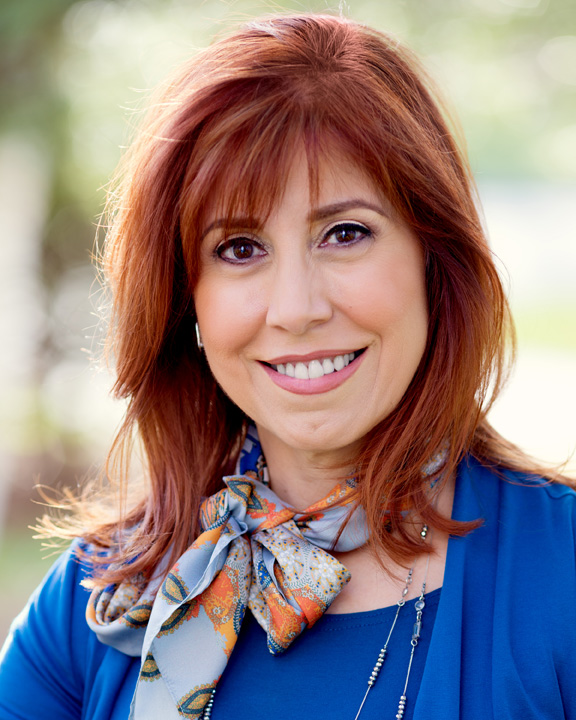
    Lori Calabrese, M.D. is on the front end of the race to stop PTSD in its tracks using IV ketamine treatment.

    To the restoration of your best self,
  • Suicide Prevention: #Bethe1to Save a Life

    Suicide Prevention: #Bethe1to Save a Life

    Suicide prevention: #Bethe1to ask how they're doing, to connect with them and listen.

    Today marks the beginning of National Suicide Prevention Week 2019, and tomorrow, September 10, is World Suicide Prevention Day.

    More than just observing a day or week like this, let’s use the opportunity to learn what we can actually do to make a real difference in the life of someone who suffers from suicidal thoughts. The National Suicide Prevention Lifeline has created the hashtag #BeThe1To to pull together people interested in learning what you can do to help.

    Suicide Prevention: #Bethe1to Intervene

    Approximately 1 million people die by suicide each year, according to the World Health Organization. That’s about 3000 people per day, or one death by suicide every 40 seconds. In the US, over 47 thousand people died by suicide in 2017. As such, suicide is the 10th leading cause of death in the US alone. But those are the ones who died.  1.4 million attempted suicide. 

    When someone experiences suicidal thoughts, it doesn’t mean they’ll necessarily make an attempt to end their life. So if there were 1.4 million people who attempted to die, can you imagine how many suffer in silence from the torment of suicidal thoughts?

    And here’s the thing…

    You don’t really know whether a particular person who’s experiencing suicidal thoughts will try to stop living, even if you do know they’re having suicidal thoughts. 

    And that’s why it’s so important to know what you can do, and learn how to get comfortable doing it.

    Suicide Prevention: #Bethe1to Make the Effort

    Suicide prevention: #bethe1to reach out and ask how she's doing.

    So let’s talk today about how YOU can intervene and help protect people in your circle from making an irreversible decision. National organizations dedicated to suicide prevention, like Suicide Prevention Lifeline and the American Foundation for Suicide Research cannot ferret out everyone at risk. To reach all of those suffering requires your help, engagement, and willingness to reach out.

    Most people do care about the number of people dying by suicide, but the majority of those who care, don’t really know what they can do to make a difference. And that’s why these organizations exist. 

    #Bethe1to highlights what you CAN do. YOU CAN be the one to listen. To reach out. There’s an abundance of myths and misunderstandings surrounding suicide, and more importantly, suicidal thinking.  When someone is having suicidal thoughts, those thoughts often begin as an intrusion into their mind in most cases, rather than a decision. In most cases, the thoughts are a symptom of an underlying condition.

    Think there’s nothing you can do? That’s a myth.

    Just be genuine. Sincere. Caring.

    The longer the thoughts go on, the more they can torment. And possibly influence the person experiencing them. So you can #Bethe1to interrupt the cycle, distract this friend or loved one from the influence of the thoughts, and counteract the thought’s impact.

    So WHAT CAN YOU DO?

    #Bethe1to  ASK

    Suicide prevention: #bethe1to be there for him.

    Start with developing a new habit, a new aspect to your interactions. Check on the people around you at work, at school, and at home. Ask questions. Inquire about their wellbeing. Show them that they matter to you. 

    “Are you Okay?”  

    Simply asking the people who are in your world if they’re okay can give you a more accurate idea about their wellbeing. Your question doesn’t need to be intrusive, but rather just a simple way of showing that you care about how they’re feeling, rather than just focusing on what they can do for you, your business, or your family. 

    “How are you feeling these days..?”

    The more you ask, the more comfortable you’ll get with asking the questions, and with the conversations that ensue. At the same time, it can set your friend at ease if you talk about your own mental health and experiences so he knows you can relate to his struggles. But avoid dominating the conversation by focusing on yourself. The goal is to get him talking.

    “You know, you have seemed kind of quiet lately, and I don’t notice you hanging out with the people you usually do. I just wondered how everything’s going for you..?”

    It’s true that much of the time, that person will say something like, “Sure, I’m great! How are you?” To which you can respond that you’re great, too, and smile and move on. But when someone is suicidal, they tend to isolate themselves… or may have been isolated from others. That aloneness leaves them without connections to others … and without feedback or support.

    The more isolated a suicidal person is, and continues to be, the more likely they may be at risk of imminent death. 

    So let them know you’re here… to listen. Resist the temptation to tell them why they shouldn’t hurt themselves…or how hurt people who love them would be.

    That isn’t productive. Ask them reasons why they want to die, and accept what they say without judgment. Then ask them reasons they might want to live. Focus on their reasons for living or dying…not your own.

    Studies show that by replacing their isolation with interaction, caring, support, and connections, you can help them move away from the risk of suicide and see value and purpose in their life again.

    Once they tell you they’ve thought about how much easier it would be if they died, you know they’re having suicidal thoughts. And you can say that the fact that they’re having these thoughts is likely an indication that something’s going on with them…

    #Bethe1to  Keep Them Safe

    Suicide prevention: #Bethe1to ask questions and listen, and show them you take them seriously to keep them safe.

    The next step is to keep them safe. If someone tells you they’ve been thinking about dying, or that their loved ones would be better off without them, they’ve admitted to you that they’re having suicidal thoughts.

    Begin your response with reassurance that they’ve taken a good step by talking about it. People can be overwhelmed by feeling vulnerable after revealing something so intensely personal. They may withdraw from fear of judgment.

    Your reassurance is invaluable at this point.

    To keep them safe, ask more questions and stay connected. Ask them if they’ve ever tried to hurt themselves, to see how concrete these thoughts are to them.  Ask them if they’ve thought about how they might do it…?  If they have a plan and if they’ve taken any steps toward that plan. It’s also important to find out if they’ve considered the timing yet… when do they plan to do this?

    While it may sound uncomfortable to talk about these details, this is where life-saving begins. Further, many people are reluctant to discuss these details because of the fear that they’re planting the idea of suicide in this person’s mind. And maybe they fear they’d feel responsible if the suffering person took action. But this is not the case. 

    Suicide Prevention: #Bethe1to Reach Out and Reverse Their Isolation

    Studies have shown that engaging this person in conversation and connecting with her about her plans, helps her air these thoughts…consider the realities and consequences. Most importantly, discussions like this promote connection, and dispel isolation. The very conversation itself establishes human connection and communicates the value of her life. Or of his life.

    In addition, the information you gather through this discussion helps you evaluate whether you need to take action. The more details they have thought through, the greater the risk and more imminent the danger they’ll complete their plan.

    Plus, if the method they plan to use is a method that’s likely to cause a final irreversible result, such as a firearm, and if they have access to that method readily available, then you may realize you need to do something to protect them.

    Perhaps drive them to the hospital, or call for help, if necessary, to protect them.

    Research has revealed that if you can put time and space between this person and his suicidal plan, he is likely to rethink the plan.

    How often have you heard, “If they’re determined to die, you can take the weapon away from them and they’ll just find something else…”  

    This is not actually true. In most cases, removing the method and keeping them safe for awhile gives them time to rethink their plan.  With support, they’re more likely to see value in their life and relationships and they tend to move away from the imminent threat.

    #Bethe1to  Be There for Them

    Suicide prevention: #Bethe1to listen, and care.

    Do the best you can to be there physically, if at all possible. At the very least, be on the phone with them. Talk with them about others in their life they trust and would like to have nearby. It’s important that you not commit to be there with them if you know you won’t follow through. Remember, protecting them from isolation is life-saving. Keep them connected to you and to others who will help them remember the good in their lives. 

    Someone with suicidal thoughts is likely isolated, and feels they don’t belong. Ask them about the people in their lives they like or trust and would like to have nearby.

    #Bethe1to  Help Them Connect

    Suicide prevention: #bethe1to listen, really listen, and show someone who feels isolated that you care.

    At this point, help them reconnect with those they’d like to have nearby. Help them connect to other resources where they can build more connections with people who understand and will listen. Online organizations or local organizations in the community will give them more to plug into. And a place to reach out.

    Ask them if they’ve considered a therapist, if they have insurance to help with that…what their feelings might be about it.

    This can give them the safety net of a place and people to turn to if there is a future crisis like this one.

    An excellent resource is to contact the Suicide Prevention Lifeline: 800-273-8255 for talking, more resources, and advice.

    There is also a MY3 app they can put on their phone for safety, crisis, and other resources. Through the app they can make connections for support, too.

    A study conducted by Gould et al. on the impact of Applied Suicide Intervention Skills Training (A.S.I.S.T.) used on the Suicide Prevention Lifeline showed that calling the Lifeline reduces the likelihood of death, and individuals were found to be less depressed, less overwhelmed, less suicidal, after talking with the trained counselors trained by Applied Suicide Intervention Skills Training.

    In other words, persons who call this crisis hotline actually feel better after the call because of the degree of insightful and targeted training the volunteers have had.

    #Bethe1to  Follow Up

    Suicide prevention; #bethe1to make them feel they belong.

    Once they’ve been released from the hospital or crisis center, give them a call, send text messages, drop them a post card – or all of the above – over time.

    This helps to remind them they’re valuable, that their life is valuable, and that they do belong. Combined with psychiatric care and community mental health support, your effort to maintain connectedness can help protect them from falling back into the “suicidal thinking” frame of mind.

    Supportive ongoing contact can help them move forward on a path toward restoration.

    When you talk with them, listen. What they say is far more important than all the things you may want to say. You’ll learn about where they are in terms of life-threatening decisions. And, since they’ve been so isolated, being heard and feeling cared about are vital tools for restoring their desire to live.

    And… don’t tell them “everything is going to be alright.” It can sound to them like you haven’t listened at all. Listen to how they’d like their life to be. Support their own view of the future. Their own reason to live. Not your own. 

    And one more thing: talking over a meal can also raise their blood sugar, and improve their mood. Deeply depressed individuals sometimes don’t eat well. The simple experience of eating nutritious food can boost their outlook in small increments, while combining the food with friendship can have a significant effect on their hope… at least temporarily.

    At Innovative Psychiatry we use innovative treatments to arrest suicidal thoughts:

    IV Ketamine Treatment Can Stop Suicidal Thinking in an Afternoon

    Suicide prevention: #bethe1to help them belong.

    Once you’ve helped your friend or loved one put some time and distance between them and their method and plan, they can consider IV ketamine treatment for suicidal thoughts. IV ketamine has proven to be remarkably effective for removing suicidal thoughts in most cases.

    That’s in addition to severe depression, bipolar depression, social anxiety, PTSD, addiction, panic disorder, and OCD. With a different mechanism used to relieve other symptoms, ketamine can erase those thoughts and images of death and suicide within just a few hours.

    By doing this, it can erase the tormenting images and thoughts, so you can feel better, sooner. And at the same time, you can turn your focus to building a better outlook to maintain remission through all of the things that help keep you well.

    IV ketamine treatment can lift the burden of suicidal thoughts and images, and can also transform your life with new initiative, motivation, fresh perspective…and hope. It can give you the energy to rebuild your relationships and your career.

    You can be free of suicidal thoughts, despair, and that awful feeling that you don’t belong or fit in.

    You can live a full and rewarding life, and IV ketamine treatment can help.

    Lori Calabrese, MD offers innovative psychiatric treatment like IV Ketamine

    To the restoration of your best self,

    Lori Calabrese, M.D.

  • How the Biology of Suicide  Illuminates Prevention

    How the Biology of Suicide Illuminates Prevention

    The biology of suicide shows us to prevent suicide with ketamine treatment.

    When someone commits suicide, you’ll sometimes hear people say, “It makes no sense! She had everything to live for…” Or, “What a selfish thing to do. What about all the people who loved him? What about his kids…his wife..?” But this sort of tragedy isn’t about selfishness. To grasp what happens with your suicidal loved one, we are beginning to understand that there is a biology of suicide, and it can play into whether or not someone takes her life. It also helps to know what can be done. Read one young woman’s story to see what I mean…

    …Casey climbed the stairs and disappeared into the darkness of her room without flicking on the light. Somehow the darkness was more comfortable. More familiar. She dropped her keys on the hall tree and her purse and coat on the floor, then flopped onto the sofa.

    Settling back, her neck resting on the back cushion, she stared blankly at the ceiling. Another day was behind her. 

    It was always a feat to survive another day of work. Miserable. Now that she had, her mind wandered to nothingness. The billowing relief that would come if she could just get off this ride…this miserable journey day in and day out… Casey lost herself in reverie thinking about what a relief that would be.

    She couldn’t do it anymore. She just couldn’t. And…she wouldn’t.

    No one in Casey’s life had any idea what she goes through. She seemed astute, responsible, reliable to those around her. Quiet. Sometimes a little short-tempered… But pretty self-sufficient.

    The darkness wrapped itself around her, and she hung her head in exhaustion.

    Random thoughts drifted through her mind. The summer she was 3. She had climbed a tree and went too high.  As she looked down she felt a little lightheaded and swayed in the branch as the wind blew. She had thought that if she just jumped, she would go to heaven. 

    “Good grief,” she thought. “I was only 3 then. Was there ever a day in my life I didn’t think about dying? Wish I could die? Figure out how to die…??”

    She closed her eyes. “Thirty one years. I guess it will go on as long as I live…”  Then, she thought, but why? What’s the purpose of my life beyond dreading, thinking about dying, seeing only futility..?”

    “Why put it off any longer..?”

    And then, something happened.

    She opened the drawer in her nightstand, reached to the back, and pulled out a tin of pills she’d been saving for years. The prescription said TWO pills.  And she’d taken one and stashed one. There was another bottle she’d squirreled away in her closet, so she felt around till she found it and tossed it on the sofa. 

    After a bit she dragged herself into the kitchen, and pulled the Kentucky Honey Whiskey from the cupboard a friend had left at her house 6 months ago. As she reached up for it, she saw the Tylenol and grabbed it.

    She knew that too much Tylenol would damage the liver, so slipped that into her pocket. The whiskey bottle was three-quarters full. That will help, she told herself. Then she grabbed a glass and took the bottle to the coffee table. 

    With all she would need in place…she lay down and drifted off to sleep…

    Honking from the street below. HONK HONK HONK!! Wondering about the time, she looked at her watch. 11:49.  Just a few minutes before midnight.  

    Methodically, she poured Kentucky Honey into her glass and chased the first few pills. Then poured another glass, and swallowed 4 or 5 more. 

    Pain pills and sleeping pills… hmmmmmm…    It seems to me I should feel a little different by now.  She was glad for the late hour. Unlikely anyone would find her too soon. No one ever knocks or stops by.

    She popped more pills into her mouth.

    The Kentucky Honey was becoming harder and harder to swallow. Her head was spinning from the glasses of it she’d had so far.

    All she could think about was the relief she would feel when this was over…

    This lady sank as she wondered about her worth and her purpose in life.

    No one had any idea…she had always held her feelings and frame of mind close to the vest. Impossible to get her to talk, really…

    We do so much research about what drives someone to suicide. But what actually happens– biologically?

    Why Now? Why Tonight ?

    Some people think about suicide every day of their lives and never act on it. What’s behind the moment someone actually takes the step to end his life? And what role does biology — the biology of suicide — play?

    Two prominent researchers are known for their insightful hypothesis about this way back in the 1990’s. Their contemporaries swore by the prevailing belief that depression was caused by low levels of the neurotransmitter serotonin. (You remember those days?) These two were burning the midnight oil trying to figure out HOW that was true.

    Their names were Charney and Krystal. Dennis Charney is now the Dean of Icahn School of Medicine at Mount Sinai in New York. He was focused on depression. John Krystal was exploring schizophrenia to better understand and treat it. 

    In both cases, their work at Yale at the time led them to glutamate, the most prolific neurotransmitter in the human body. As an excitatory neurotransmitter, glutamate helps brain cells communicate, so it’s critical in learning, memory development, mood and …. the list goes on.

    So they went to work together to learn what they could.

    Now, you need to understand that at that time, even though ketamine was a solid and relied-upon anesthesia medicine, its dark reputation as an abused substance in the club scene — and on the street — kept it from getting much attention in research.

    Glutamate Paves the Way to Ketamine

    Ketamine causes specific behaviors in people who use it on the street, usually within 2 hours after taking it. But the amount they ingest is around 100 times greater than the doses used in anesthesia, or the even smaller dose these researchers gave their subjects. 

    This is where some people get the wrong idea about ketamine. If they’ve heard about it or seen it on the street, they tend to be terrified of its use therapeutically because of severe side effects they’ve seen.

    But when ketamine is used in tiny doses therapeutically, it’s a completely different “animal.”

    Even so, Charney and Krystal didn’t want to miss anything that might show up later so, in an abundance of caution, they decided to monitor their research subjects for a full 72 hours after their ketamine infusion. They chose 9 subjects to try the ketamine infusion, but 2 of them dropped out. So they followed 7 depressed subjects for 72 hours. This was a turning pointKeep reading…

    This joyful guy benefitted from the biology of suicide when his doctor gave him ketamine to erase suicidal thoughts.

    Four hours after the ketamine was administered, they checked on the patients. These patients declared they felt better.  In fact, they felt a great deal better! Our researchers were shocked beyond belief. Everyone knew that antidepressants take weeks or months to produce an antidepressant effect, and this medicine produced dramatic results within 4 hours.

    They didn’t expect anyone to believe them, and kept these results under the radar for years. When they finally did publish their results in 2000, they got …. not much attention. 

    Low Serotonin Severely Alters the Brain – Which Plays into the Biology of Suicide

    But during the same time another research team, John Mann and Victoria Arango, set out to study the brains of suicide victims. Over time, they discovered that certain areas of the brain showed alterations in serotonin. A significant kind of alteration.

    In fact, this situation reminded them of the well-known story of Phineas Gage, back in 1848. Gage was a railroad worker, and had been impaled by a 43-inch cylindrical iron tamping bar right through his skull.

    Amazingly, he survived the accident, but his personality completely changed. His doctor later wrote that Gage’s “character” was altered by the damage and his “animal propensities” emerged, as he put it. He wrote that Gage was fitful and irreverent. He called him capricious and vacillating, and complained that he used the “grossest profanity.” Now Gage had been a foreman: a responsible, circumspect, hardworking man before the accident. So you see, the change was dramatic.

    It wasn’t until more modern times that research revealed the area of the brain destroyed by the iron tamping bar is the area that controls inhibitions, and in Gage’s case, his social inhibitions.

    And that’s one of the same areas affected by “low levels of serotonin transporter binding.”

    So, with low levels of serotonin, the inhibition disappears. In the cases of these suicidal victims, the researchers think the inhibition that kept them from committing suicide was lifted, and they surged forward and ended their lives.

    But again, this may have happened as a number of other social, economic, and interpersonal factors were unravelling. There are so many contributing factors to suicide. And even when we can study and pinpoint biological correlates, we know that low levels of serotonin in the cerebrospinal fluid, and probably low levels of serotonin transporter binding don’t always result in suicide.

    Of course they don’t.

    Moreover, even if the doctors of these patients had known the exact biological areas and brain processes involved in suicide, and had a way to modulate the activity there, it still might have taken weeks or months to reach a therapeutic effect — and it might not even have worked …as it may have been too late.

    Ketamine Takes Its Cue From the Biology of Suicide in YOUR Brain

    So this is a HUGE key to why ketamine treatment can be so vital to erasing suicidal thinking.  Because it can erase those thoughts in an afternoon, in the psychiatrist’s office. No need to wait weeks or months and risk suicide while you wait for it to take effect. 

    Compassion for Suicidal Loved Ones

    People who succeed in, or even attempt, suicide, aren’t thinking about the feelings of others. (There’s some truth to that…but not necessarily what the criticizers think.) Quite honestly, in that condition they can’t. They may have been induced by their disordered brain to think about suicide for a very long time, or maybe just so intensely, whether they wanted to or not. Then, if the biology of suicide kicks in and they have little or nothing to help them hold back, they may act impulsively and without recourse or consideration of consequences.

    For those of us who love them, unless we’re tormented by the same suicidal thoughts, we can’t imagine what it’s like to want to die, or to feel compelled to die.

    This isn’t selfishness…it’s sickness. It’s also not selfish when a Type 1 diabetic’s blood sugar drops so low he convulses. It’s a consequence of his serious illness.

    And it’s for this reason that it’s important to never dismiss or ignore talk of suicide.

    Thankfully, IV ketamine treatment can provide the safety stop to put on the brakes and end the suicidal thoughts.

    It can give your loved one time to heal and move forward with their lives.

    Biology of Suicide at Innovative Psychiatry

    At Innovative Psychiatry, we’ve seen so many who fought the torment of suicidal thoughts and inclinations, walk out free of those thoughts after IV ketamine treatment.

    This young man is working with a rope to end his life because of the biology of suicide.

    Many times they’ve reached the point of emergency late in the day and needed immediate treatment. Then, after ketamine treatment, found immediate relief. The biology of suicide – in those cases — is side-stepped and overcome by the most rapid and effective treatment for suicidal thinking of our time.

    We’re also flooded with relief for them as the suicidal thoughts subside, the light comes to their eyes, and they leave relaxed and eager to continue restorative treatment for their depression symptoms. 

    ***If you have suicidal thoughts a few times a week, or 20 times a day: please know that there is hope. Those thoughts can stop. Reach out immediately for support by calling the National Suicide Prevention Lifeline at 800-273-8255. OR text HOME 741741. Someone is available to listen 24 hours every day. ***

    And consider IV ketamine treatment. It can help you experience freedom from those tormenting thoughts and find hope and purpose in your life again through relief from depressive and anxious symptoms. Fast.

    This joyful woman has been transformed from suicidal thinking since ketamine treatment.

    The first step happens when your life is no longer at risk. 

    Your life really can be fulfilling, rewarding, and productive as you experience what ketamine treatment can do for you. While it’s not a one-size-fits-all treatment, IV ketamine treatment can restore your motivation and initiative, your creativity and energy, so you can invest in your relationships, your career, and your hobbies with enthusiasm and joy.

    Can we stop suicide? Yes, with a series of IV ketamine infusions.
  • Cerebral Folate Deficiency and Its Impact on Treatment-Resistance

    Cerebral Folate Deficiency and Its Impact on Treatment-Resistance

    Man thinks alone on cold silent shore may have cerebral folate deficiency.

    “If I see far, it’s that I stand on the shoulders of giants.”

    If you find yourself feeling alone and forgotten in your symptoms, feeling that there’s no one who really cares, please let me emphasize that there are hundreds, even thousands, of neuroscience researchers, medical doctors with PhDs, biochemists, psychopharmacologists, and psychiatrists who have been painstakingly searching for the answers you need for your suffering for generations, and millennia. You can feel alone, but there’s a host of people who have your back.

    After eons of exploration, and hundreds of generations have suffered without remedy, we are living in an amazing time when solutions are emerging. 

    Treating cerebral folate deficiency empowers you to enjoy the people you love.

    We’ve learned that the mild-mannered anesthesia medicine, ketamine hydrochloride, has been hiding in plain sight for nearly five decades, all along carrying within it the power to potentially transform your crippling depression, PTSD, and social anxiety into resilience, remission, fulfillment…and a rewarding life.

    It was right under our noses, but we were missing it…

    What else is lurking in plain sight that may hold the secret to relief for millions of people?

    More to Learn to Relieve Psychiatric Disorders

    While the vast majority of severely ill patients has been enjoying a life they’d not been capable of enjoying until they were treated with IV ketamine,  there were still those who seemed to be unaffected and un-helped by it. We haven’t known why.

    And even some of those who seemed unaffected and un-helped by ketamine treatment, began to improve in a slowly spreading glow until they too achieved remission months later.

    And we learned about genetic alleles for BDNF that may indicate an individual’s responsiveness to treatment, and clinical indicators associated with treatment response.

    Now we’ve been learning even more.  About deficiencies of nutrients that can cause depression and other disorders. One of these deficiencies has been exposed as a key factor in autism. And when the deficiency was treated with high doses, the symptoms of autism diminished!

    Who knew?

    Right under our noses.  Sometimes it takes generations of exploration passed down through generations of researchers to find the answers we’re looking for … which were lurking in plain sight.

    We’ve talked about how a deficiency in testosterone can be a culprit blocking remission from depression. 

    Another BIG player is cerebral folate. 

    Cerebral Folate Deficiency

    Cerebral folate deficiency is the cause of treatment-resistant depression in many people, and is easily treated.

    Folate is vitamin B-9, and provides important services throughout the body. In the brain, it plays an important role in neurotransmitter production. So when it’s deficient, the neurotransmitters tend to be produced more slowly.

    You can read the label on your breakfast cereal box and see that it contains folic acid.  But folic acid can’t cross the blood-brain barrier, which is there to protect the the brain from fluctuations that can interfere with its function.

    Only in the form of folinic acid or methylfolate can folate reach the brain. And to do that it has to have a transport, called the folate receptor alpha, to take it there.

    So to get B-9 into your brain to do its part in the neurotransmitter factory, it has to be in a certain form that can get through the security gate of the brain, known as the blood-brain barrier. Plus, it has to hitch a ride on a specific type of truck, and that truck has to be a specific model – the “low affinity folate transporter.”

    It’s not hard to picture that a brain can get low on this stuff. So many hoops to jump through! 

    How Cerebral Folate Deficiency Can Affect You

    And interestingly, most of the research  about this has involved infants and children. In fact, the story of folate in the brain has a gripping history. It involves autistic children and infants with severe neurological disorders..but as those discoveries made their way into adult psychiatry.

    Well, we’re talking about it now because it turns out that adults have deficiencies too…and this is a deficiency that may contribute to why your depression seems treatment-resistant — but the problem is not that hard to treat. Which is good news…really good news.

    Cerebral folate deficiency may cause this man treatment-resistant depression.

    In fact, if we find you’re treatment- resistant because of folate deficiency, we can prescribe folinic acid or l-methylfolate to treat the deficiency. Then, you may find you’re not treatment-resistant any more. Sound like a plan?

    This is BIG news.

    What this means is that some people who don’t get better with ketamine treatment, may just need their folate deficiency restored so their neurotransmitter factory can crank up again and turn out those much needed neurotransmitters.

    Then, ketamine has what it needs on hand to help you get dramatically better. 

    Isn’t that amazing??

    Researchers Paved the Way

    In 2005, Dr. VT Ramaeker defined cerebral folate deficiency as “any neuropsychiatric disorder involving problems getting enough folate into the brain.” He was referring to the infants he treated. They had severe neurological illness, and happily, many of them responded to high doses of folinic acid.

    Then, in 2013, Dr. Richard Frye studied 93 pediatric patients with autism and found that 75.3% had cerebral folate deficiency. He also found that those patients who had a cerebral folate deficiency also had antibodies to the folate receptor alpha — that specialized transport truck that takes the folate into the brain.

    Treating cerebral folate deficiency can transform depression to joy.

    The following year, we’re back to Dr. Ramaeker, who measured cerebral folate in 18 patients with treatment-resistant schizophrenia…and you guessed it! 15 of them had cerebral folate deficiency. He treated 8 of them with high doses of folinic acid and 7of them got better.

    Now, I should explain that finding the level of folic acid in the brain is a bit more involved than lab work. It requires a lumbar puncture so the folic acid in the cerebrospinal fluid can be measured. The measure of folic acid found in the cerebrospinal fluid is then multiplied by 1.5 to find the level in the brain.

    Then, in 2017, Dr. Lisa Pan measured folic acid in 33 patients with treatment-resistant unipolar depression. 12 of these had cerebral folate deficiency and 10 out of those 12 responded after high doses of folinic acid.

    Google’s Take on Folate and Cerebral Folate

    When you google “folate,” you get all sorts of links about how folate is needed in your body. It helps make red and white blood cells in the bone marrow, convert carbohydrates into energy, and manufacture RNA and DNA.

    (Hmmmm, makes you stop and think about BDNF. How it turns on mRNA to switch on DNA so the synapses proliferate and rebuild circuitry in the brain…  interesting…)

    But when you google “cerebral folate,” you find yourself reading about autism, and about treating it with folinic acid.

    Cerebral Folate Deficiency Causes Tragedies

    Cerebral folate is so important in the brain, that the lack of it causes all sorts of tragic results…. in infants, neural tube defects, spina bifida, cleft palate…

    To think that autism, schizophrenia, and depression show links to cerebral folate deficiency — in at least some people — pushes us and the psychiatric and neuroscience research community to learn more about the central role that l-methylfolate and folinic acid play in the the central nervous system and in the genesis of psychiatric disorders.

    These early important studies should prompt more extensive clinical studies. And they should prompt more interest in testing our patients with treatment-resistant disorders for this deficiency so that we can treat it sooner rather than later, don’t you think?

    Unfortunately, that’s not as easy as it sounds. But it’s a start for us to realize this B vitamin is essential to our health and wellbeing. And just might be the key to your treatment-resistant disorder.

    Treating Deficiencies in Vital Nutrients Helps You Thrive

    At Innovative Psychiatry we test for cerebral folate deficiency when we suspect it could be a cause of treatment-resistance. We prescribe treatment for it to help improve your response to your treatment, including ketamine, and in turn, potentially improve your resilience and remission.

    Remission gives the power to enjoy, which you can experience after treating cerebral folate deficiency.

    If you suffer from treatment-resistant depression, and think you might be a candidate for ketamine treatment, call us. We’ll do an evaluation to learn more about you and your illness. We can also order testing to help ensure your best outcome with IV ketamine treatment.

    With so many who have gone before us, shining the light brighter so we can better see the obstacles to your joy, we’re here to help you find the life you ache to live.

    Ketamine KRIYA Conference 2018
error: Content is protected !!