Tag: IV ketamine

  • JAMA: A Consensus Statement on the Use of Ketamine in the Treatment of Mood Disorders

    JAMA: A Consensus Statement on the Use of Ketamine in the Treatment of Mood Disorders

    Importance  Several studies now provide evidence of ketamine hydrochloride’s ability to produce rapid and robust antidepressant effects in patients with mood and anxiety disorders that were previously resistant to treatment. Despite the relatively small sample sizes, lack of longer-term data on efficacy, and limited data on safety provided by these studies, they have led to increased use of ketamine as an off-label treatment for mood and other psychiatric disorders.

    Observations  This review and consensus statement provides a general overview of the data on the use of ketamine for the treatment of mood disorders and highlights the limitations of the existing knowledge. While ketamine may be beneficial to some patients with mood disorders, it is important to consider the limitations of the available data and the potential risk associated with the drug when considering the treatment option.

    Conclusions and Relevance  The suggestions provided are intended to facilitate clinical decision making and encourage an evidence-based approach to using ketamine in the treatment of psychiatric disorders considering the limited information that is currently available. This article provides information on potentially important issues related to the off-label treatment approach that should be considered to help ensure patient safety.

    [Read the Full Research Article Here]

  • Who Should Provide IV Ketamine as Treatment for Depression?

    Who Should Provide IV Ketamine as Treatment for Depression?

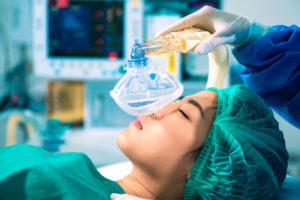
    Should anesthesiologists give IV ketamine as treatment for depression.If This is What You Picture When You Imagine IV Ketamine Treatment for Depression, Think AGAIN!!

    And nix that image. Because we’re going to talk about who should provide IV ketamine as treatment for depression.

    Ketamine treatment is getting more and more attention in the press as a paradigm shifter for effective treatment for psychiatric mood disorders. And more and more medical professionals are opening offices to offer ketamine treatment for depression, and for pain management. Of course, more availability of ketamine treatment means more relief for more sufferers.

    Which is a good thing … right?

    Well, yes, but it raises some serious questions.

    Ketamine Isn’t for Everyone

    Like, for instance, is ketamine treatment for everyone?  And the answer to that is “No.” Not everyone will respond to it when it’s used for psychiatric mood disorders.

    But there are clinical factors and genetic tests that doctors can use to predict more accurately whether you’re likely to respond to ketamine treatment for depression.

    And another question: Is providing ketamine treatment for depression similar to providing ketamine treatment for pain? Is this something any medical doctor can easily do?  After all, it’s just a simple medication like any other, right?

    The answer to that isn’t exactly straight forward. First of all, the question includes an assumption that any medical doctor can easily prescribe any medication … even for specialized needs.

    Legally, this is true. Ethically and practically, it’s not.

    And while he may be able to prescribe a drug legally as a medical doctor…is he deeply versed enough in the nuances of the patient’s response to the drug and the drug’s potential side effects…as well as the patient’s potential reaction to those side effects and what to do about them….? 

    Is it really the best decision for a doctor to treat a condition he/she isn’t fully knowledgable about?

    Should an internist treat your periodontal disease? 

    An internist is expected to recognize and treat pretty much anything going on with your body…after all, he’s well-versed in inflammation and infections, and knows all about antibiotics. But his wide scope prevents him from having a specialist’s focused knowledge and deep experience with specialized aspects of your body, like your gums, for instance. So, you go to a dentist, and your dentist may send you to a periodontist for your gums…if you need it…a specialist’s specialist.

    Do All Psychiatrists Treat All Psychiatric Conditions?

    Well, let’s consider the nuances of psychiatry. There is a wide range of psychiatric disorders, including behavior disorders, mood disorders, personality disorders, cognitive disorders, developmental disorders, addictive disorders, and more — including all kinds of treatment modalities and several different kinds of psychotherapies we use — and most psychiatrists are not experts at everything.

    Of course not.

    Most of us gravitate naturally to our interests, and the best of us align our work with our own best selves — we choose the age range, the population, the conditions that fascinate us and tug at our hearts…the modalities that align with the way our own brains work and the way we interact. Some of us are researchers. Some of us are in the trenches. We play to our strengths. 

    We all should.

    Now, back to IV ketamine treatment.

    Anesthesiologists Use Ketamine in Surgery

    It’s understandable that anesthesiologists would be pretty comfortable treating patients with IV ketamine Who should provide and monitor IV ketamine Treatment for depression.since they’ve been using ketamine in surgery and emergency settings throughout their career.

    They’re also at ease sitting and monitoring a patient throughout the infusion treatment, because that’s what they do.

    Some medical doctors might get a bit antsy during that whole process, but it’s just second nature to an anesthesiologist.

    And, it’s true there are certainly plenty of anesthesiologists offering IV ketamine treatment for psychiatric mood disorders. They’re highly skilled in starting IVs, familiar with ketamine, and excellent in handling emergencies in the ER and in the OR.

    An anesthesiologist’s education and training is all about life support during critical moments in surgery. And these specialists know physiology like nobody’s business.

    But…

    Who Should Provide IV Ketamine as Treatment for Depression?

    When it comes to evaluating a psychiatric patient as a candidate for off-label use of IV ketamine treatment for treatment-resistant depression or other mood or anxiety disorders, there’s a great deal to manage. The role of ketamine used as an adjunct with complex medications and psychotherapy, for instance.

    Plus, the patients’ response to the drug and how to treat therm in their specific state of mind, whatever it is,  that emerges during treatment… All within the context of their baseline psychiatric symptoms and vulnerabilities.

    Anesthesiologists just aren’t trained for that.

    The same is true of nurses, even those in advanced practice.

    It’s my belief that the use of ketamine in the treatment of psychiatric disorders is something that is best done by psychiatrists who are thoroughly familiar with IV ketamine treatment.
    And here’s why.

    Because the things that this treatment requires — assessment of the patient and of the psychiatric response (not just the physiologic response), dose adjustment, management of fear, management of expectations… this is all psychiatric expertise. In addition, the family and their overall involvement (or lack of involvement) in the patient’s suffering… It requires we curate the experience, integrate it with psychotherapy, coordinate it within the context of the patient’s medical problems and with the professionals treating them. All these things are without a doubt what WE do and what our entire specialty is about.

    We deal with suicidal patients all day long and every night and weekend–anesthesiologists don’t and, understandably, don’t want to. But many, if not most, patients who receive IV ketamine treatment are not only no strangers to suicide, but in fact are so plagued by such thoughts their lives sometimes hang in the balance. Even to survive till the end of the infusion.

    Those tormenting thoughts just seem to creep in even when you’re not looking for them, and bring a presence to the ketamine room that stuns everyone involved.  That is, until  ketamine stops the suicidal thinking independently… and even if the depression doesn’t stop immediately… but lifts more slowly. A well-informed psychiatrist needs to be present to walk each patient through every scenario, especially when the outcome is a surprise.

    So, again, who should provide IV ketamine as treatment for depression? Definitely, not just anybody. Preferably a psychiatrist deeply experienced and educated in the nuances of ketamine treatment in psychiatric patients.

    Just as internists are not specialists in all areas of illness, not all psychiatrists are versed in the use of ketamine for psychiatric mood disorders.

    So What Kind of Psychiatrist Steps Out to Offer IV Ketamine Treatment?

    The ones who are really comfortable with medicine, and adjusting, adapting, and combining it for therapeutic outcomes. The ones who also have a strong identity as a physician first, and who are already experts in psychopharmacology.

    These psychiatrists are accustomed to a model of consultation and collaboration. And they like to work collaboratively with other psychiatrists, therapists, PCP’s, and families.

    This is no place for lone riders.

    These are the ones who know what it’s like when you’re the most suicidal of the suicidal, and who will stand with you and not be afraid. Those who understand that something transformative happens during an infusion. And that the specific experience of the infusion itself matters if there’s to be healing.

    We are grateful to the anesthesiologists who brought ketamine out of the OR and into the office.  

    But the psychiatric care of our most fragile, desperate, and ill patients — with multiple tangled psychiatric disorders, complex histories of polypharmacy and treatment failures, excruciating trauma, and concurrent medical problems — demands the finest life-saving that we have to offer, by psychiatrists. Nothing less.

    We continue forward to learn all we can from our patients and the dedicated neuroscientists who Who should provide Iv ketamine as treatment for depression in someone like this man?continue to explore the actions of this remarkable drug. As they explore, we continue to see our treatment-resistant patients enjoy extraordinary responses in 80% of cases.

    If you’ve suffered from treatment-resistant mood disorders and have tried multiple treatments without success, we get it. Innovative Psychiatry is a practice that specializes in helping people who have not found help before. People who have been to other psychiatrists and were failed by traditional treatments. People who are running low on hope.

    Innovative Psychiatry is into hope renewal. Through groundbreaking use of medications and treatments, we’re helping people like you live again. Enjoy life again. Please call us to schedule an appointment. We’ll evaluate whether you’re a likely candidate. There really is hope.

    To the release of your very best self,

    Lori Calabrese, M.D.

    Lori Calabrese, MD offers innovative psychiatric treatment like IV Ketamine

  • The Email Message That Changed Her Life – with IV Ketamine

    The Email Message That Changed Her Life – with IV Ketamine

    Woman set free from trauma and PTSD now lives changed life IV ketamine.

    Life-Changing Email

    Wonder what it’s like to have a changed life from IV ketamine treatment…?

    Imagine opening an email that could change your life.

    Let’s say you’re an IT architect, or a chef, a kindergarten teacher, or a construction worker. And let’s say something happened … something terrible, terrifying, and painful. You might have caught your arm in equipment or you might have found out your wife’s leaving you … maybe you were assaulted and suffered injuries to your back and neck. 

    At any rate, let’s say you’ve been profoundly traumatized –by either big T’s or little t’s — and are living with sustained damage that is keeping you from the life you used to have. You feel disabled physically and psychologically.

    Honestly, you’ve tried to “get over it” but you seem to become more withdrawn with each passing week, month after month.

    You jump at every noise, every touch.

    And leaving the house becomes impossible. Fear grips your throat at even the thought of walking out the door. And finally, you wonder how you could end this futile life.

    Hope Reaches Out Its Hand…

    Then, you get an email from a friend.

    And, though you don’t know it yet, it’s an email that’s destined to restore your life.

    “Hey, just reaching out ….” it says. “I know you’ve been going through a terrible time…”  . And after some An email with a link to a changed life IV ketamine.words of compassion and empathy, you see a link. A link about ketamine …?  you think to yourself.  What’s this?

    Ketamine Off-Label = New Hope

    She says this link really might help.  So you click on it.

    And you learn about IV ketamine and how it’s reversing depression, PTSD, and all sorts of other psychiatric mood disorders by switching on the lights in people’s brains.

    Your energy is so low, listlessness so high, and resistance to interference so strong, that at first you’re highly skeptical. But something makes you continue to read. And the more you read the more you notice hope pinging in tiny pings inside you.

    After reading the article a few more times…you push through the apathy and call the author of the article…who’s a psychiatrist.

    And the Miracle Begins…

    Here’s the important part.

    After going to your first appointment for the ketamine infusion, then the second, you begin to notice something changing.

    Let’s talk about that.

    How do you know if you’re getting better…? 

    Are there scientific ways to measure it…? Like say in your blood stream…?  Or maybe ways to measure the way you feel… from one day to the next even…?

    And what about measuring the things you do…?   Since you’ve been in such a bad place, you haven’t felt like doing much of anything.  So isn’t it remarkable that you actually feel like seeing friends again?  Working in the garden…?  Going shopping…?

    I’m happy to tell you the answer is a resounding yes! There are ways to measure, ways to compare from week to week and month to month.  We psychiatrists use them all the time. 

    What’s In It for You…?  EVERYTHING.

    But when it’s YOU who’s suffering, who was shattered by that tragic accident or violent assault or loss of your precious child, you want to know what YOU can expect. In what way will I feel better…?  What will it look like…?  What should I watch for…?

    Everyone’s experience varies a bit as to whether they experienced relief with the first treatment, the She hides in the dark from fear with PTSD, but when she's treated she has a changed life iv ketamine.second, or even the third… and in which ways the relief and recovery showed itself.

    Here’s one patient’s story, as an example:

    Jeanine was a brilliant IT architect at the top of her game who suffered a violent assault that left her badly injured and deeply traumatized. No matter how hard she tried, she couldn’t seem to recover from the injuries or the trauma.

    The event left her unable to work, unable to function, and even afraid to leave the house. This went on for months.  Depression set in and she couldn’t shake it.  She did everything they said.  And it didn’t  work.

    Then she received an email from a trusted friend who gave her a link to an article about how IV ketamine is restoring people with depression, PTSD, anxiety, and other mood disorders. By the thousands.

    She Took the First Step…She Called.

    Jeanine read enough to know it was worth the effort to call and see if this might help her.

    And the tools we used to measure her level of depression and anxiety showed dramatic improvement as she had 6 infusions over the next couple of weeks.

    But what really mattered to Jeanine, beyond the numbers, was the change in her life.

    A Changed Life with IV Ketamine

    Jeanine is real. So are her words, and so is her permission to share them.  Here’s excerpt from her note to me after the second infusion:Woman feels alive again after IV ketamine relieves PTSD and pain.. her changed life iv ketamine.

    “…In addition to completing some dreaded paperwork I’d been avoiding for 8 months, I’ve also had a productive day in other ways. I also:

    1. ENJOYED (!!) my 2 mile walk by the river.

    2. Painted the kitchen shelves, a task I started about 7 weeks ago and simply lacked the executive ability to complete until today.

    3. Got to the pharmacy and back without too much difficulty or hesitation.

    4. Went to the store and bought personal items.

    5. Dead-headed my roses.

    6. Did laundry.

    7. And treated myself to a solo lunch at a slow-food restaurant and enjoyed (!!) my food.

    Given the difficulty I have had just getting out of my house by myself for 3 years, I call this a huge success.

    I look forward to my next treatment tomorrow.

    During last night’s treatment, the only pleasant part was the ‘sparkles’ I felt in my brain, but clearly it worked very well. I did not have any morbid or suicidal thoughts whatsoever today, which is extraordinary.”

    What Will You Experience…?  How Will You Know… ?

    Read what Jeanine says… and others.  Unique stories, personal victories, consistent relief… Outstanding function.

    Here are some more of her thoughts after a couple more infusions…

    “John and I walked 2+ miles along the river today, which I really ENJOYED. I’m frustrated by back pain today, which is keeping me from doing any but the very lightest of garden chores. I am so eager to get out there and dig!”

    Then a few days later:

    “I reminisced about someone I knew years ago who desperately needed my help with a project. His project was in the toilet and his job depended on its success. I took a weekend and went shoulder to shoulder with him to resolve the bugs in the program and he was rewarded for its design soon after. As I thought back I felt 1. I was proud of myself for helping him and proud for him at his success. 2. I was sad to no longer be in touch with him…to have lost not only his friendship, but the valuable work I did. Here’s the point: 3 weeks ago I could have acknowledged the quality of the work, but only felt the sadness of the loss. Now I can feel both.”

    The day after her last infusion:

    “Thank you for helping me get my brain back. Delighted to say I took a lovely hike through the woods today. I enjoyed it so thoroughly and found myself so enthralled with the sites, smells, and beauty. The beauty was actually so distracting, I didn’t notice two bears in my vicinity! 

    I would say I am back to normal. My depression and anxiety symptoms seem to be gone. I’m breathing in life and Woman walks in the woods and enjoys it deeply because of changed life iv ketamine.my family again like I did when I was young.

    Thank you from the depths of my heart for helping me find myself again.

    A few days later, she had a bunch of friends and family over for dinner–the first time in a few years that she’s had people over for a party–which she just loved.

    The Face of Psychiatry has Changed.

    So many people who were listless and without hope are living new, joy-filled, changed lives with IV ketamine treatment. If you’re one of the millions of people who have sought effective treatment for a psychiatric mood disorder without relief, call me or make an appointment.

    There is so much hope for you to live the life you thought was beyond your reach. Let us work with you to determine the best approach for your recovery.

    To the restoration of your best self,

    Lori Calabrese, M.D.

    Lori Calabrese, MD offers innovative psychiatric treatment like IV Ketamine

  • There’s More Proof That Ketamine Works for Depression

    There’s More Proof That Ketamine Works for Depression

    Ketamine Makes Time Magazine!

    Jun 21, 2017
    TIME Health
    For more, visit TIME Health.

    For decades, scientists have searched for a new type of antidepressant, one that works differently from the 20-plus drugs already on the market. Finding a new option is crucial, since a third of people don’t respond to available depression treatments.

    They haven’t had much luck — except for the discovery that IV infusions of ketamine hydrochloride, an FDA-approved anesthetic, can cause rapid antidepressant effects in many people with stubborn depression.

    Figuring out exactly how ketamine has these effects has been a researcher’s dream, since ketamine is too problematic a drug to currently be considered a mainstream depression treatment. It’s illicitly used — and abused — as a psychedelic club drug and can cause hallucinations. Ketamine can also have negative side effects when used off-label to treat depression, including unexpected changes in heart functioning, cognition and respiration. Its antidepressant effects fade, so it typically has to be given over and over again, and it’s not yet clear how safe or effective it is when taken long-term. Developing a drug that works like ketamine, but without all the baggage, is the holy grail — but scientists haven’t known quite what to target.

    [Read the Full Article Here]

  • Joie de Vivre with IV Ketamine Can Replace Last Resort Treatments

    Joie de Vivre with IV Ketamine Can Replace Last Resort Treatments

    Listless woman can't make herself function needs to know that IV ketamine can replace last resort treatments.When Depression Doesn’t Get Better

    When you’re sick of one more trial. One more dose increase. A new augmentation agent. Another cross taper…reducing dosage on one drug while increasing it with another… When you’re sick of just feeling so sick and tired and miserable. When you can’t stand the thought of gaining more weight. What then?  

    With the rising use of IV ketamine infusions for treatment-resistant mood disorders, more and more people who are sick of their symptoms are seriously stopping and thinking about their best course of action. Since oral antidepressants can take weeks – if not months – for their full benefits, people are looking at brain-targeted treatments that have faster results.

    Life Threatening Symptoms

    One reason is that the suicidal thinking that can occur with depression can be life-threatening. If you have thoughts that it would be a relief to be dead, or thoughts of killing yourself, waiting 2-3 months for oral medication to kick in and relieve these thoughts can be dangerous.

    Another reason is that once you reach the point that you’re looking for alternatives to oral antidepressants, you’ve probably been depressed for months or years. And the longer it goes on, the more life-robbing it becomes.

    Then, there are studies that show the longer someone suffers from a psychiatric mood disorder, the harder it is to get better. And the more Woman needs to learn that IV ketamine can replace last resort treatments.medications you try . . . the less likely that another SSRI (selective serotonin reuptake inhibitor) or SNRI (serotonin-norepinephrine reuptake inhibitor) is going to help.
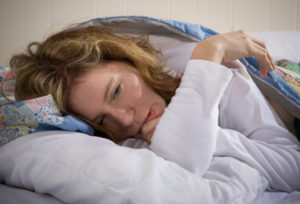
    So you try a different class.  You take one of the medications on reserve that we pull out when other things don’t work.

    . . . And your symptoms slowly become “treatment-resistant” — even though you take what you’re supposed to take, do what you’re supposed to do. You keep every appointment, try to exercise, meditate in the morning.  Sometimes nothing seems to make a difference. It’s exhausting even thinking about it.

    These are all reasons to shift to a different treatment … an innovative one that can go above and beyond oral antidepressants.

    Now wait just a minute… oral antidepressants help lots of people…!

    Yes. They do. Millions.

    Actually, 350 million people in the world are depressed.

    16 million in the US.

    4% of kids between ages 8-15 are, too.

    Anxiety disorders are the most common mood disorder in the US — and 18% of adults suffer from anxiety disorders … almost 57,000,000 people.

    Shocking, isn’t it? 

    Anxiety is the most widespread of all…

    Every single one of these millions of people struggles and the struggle is real.  Sometimes it’s just to get out of bed in the morning, sometimes it’s being paralyzed by a vague fear, sometimes it’s just to follow through and do what they know they should do — make the phone call, finish cleaning up the yard, deal with the paperwork. They can be pretty disabled by malfunctions in specific portions of their brain. Is it any wonder that so many take antidepressants hoping for relief that will allow them to function?  

    Most just want to be able to get back in the game.

    Over 10% of Americans take antidepressants for depression and anxiety.

    And we know that they’re really helpful for some people.

    Just not all…not by a long shot.

    Only HALF the Time

    Jennifer Payne, M.D. is director of the Women’s Mood Disorders Center at The Johns Hopkins University School of Medicine — my alma mater.  She says, “Even our best antidepressants work only about half the time.”  And she goes on to say that the chance of success drops if the patient doesn’t respond to the first drug they try. In fact, the hope of recovery diminishes with each new antidepressant regimen that fails.

    Their mood disorder slowly becomes “treatment-resistant,” even if they’re not.  It’s for those who still suffer that we’re discussing options today.

    Like IV ketamine, TMS, and ECT.

    ECT – Its Troubling Side Effect

    Woman thinking of suicide needs to know IV ketamine can replace last resort treatments.Until recently, after all the failed med trials, the gold standard for treatment-resistant depression was ECT, or Electroconvulsive Therapy. (The snazzier new term for it is Electrocortical Therapy.  They took out the “convulsive” part.) 

    ECT has been in use in psychiatry for over 80 years, and it’s still available at hospitals for inpatient and outpatient treatment.  Although it gets a bad rap in the popular press and in the media, it can be a lifesaving, effective treatment for severe depression and particularly for depression when psychotic symptoms are present — like hearing voices, or having delusional beliefs.

    With ECT, you’re given general anesthesia and an electric current is passed through your brain to create a generalized seizure that lasts 30-45 seconds under very controlled circumstances, with muscle relaxers. The seizure is “seen” on an EEG monitor but your body doesn’t shake or convulse — just a toe wiggles.  Treatment begins in a hospital center after you’ve been admitted as an inpatient and continues three times a week until the depression lifts–sometimes after 4 or 6 or 12 treatments.   

    ECT may be continued on an outpatient basis and stretched out and administered on a maintenance schedule (sometimes as infrequently as once a quarter) to help preserve remission.

    Sometimes, ECT is offered on an outpatient basis to patients who can safely remain at home with family support — but they usually can’t work or go to school or drive during the weeks of treatment.

    Clinical studies show this treatment to be 50-80% effective in reducing depression symptoms, and in those cases the patient feels much better. Because of this, ECT has been the “go-to” treatment for those with treatment-resistant mood disorders for whom no antidepressant regimen was successful for many, many years.

    But there’s a problem with ECT.

    Despite all of the modern advances in the administration of this treatment, ECT can inhibit the ability to lay down new memories around the time period of the treatment, and it can cause irreversible memory loss in a “piece-y” kind of way.

    Bits and pieces of memories are lost. Certain things or certain periods seem fuzzy. It’s frightening because it can involve both recent and remote memory.

    Well, when you’re at the end of your rope, when it feels like there is no choice, maybe a little bit of fuzzy thinking or poor recall around the time of ECT doesn’t seem like such a big deal . . .

    But if you want to go to a wedding, recall a client’s name or the details of a contract, have an important discussion with your wife (or your accountant), drive to your cousin’s summer place without having to use a GPS … then fuzzy thinking, poor recall, or no memory of it at all are incredibly BIG things.  It’s to be able to engage in and savor the moments that you’re getting treatment in the first place.

    Remember, ECT was the “go-to” alternative treatment for treatment-resistant mood disorders because there was no real alternative.

    Until now.

    Now, there are more options, like TMS and IV ketamine infusions.

    TMS Offers A Strong Success Rate And It’s Non-Invasive

    TMS, or Transcranial Magnetic Stimulation, is a non-invasive treatment option that’s become more and more Treatment-resistant depression is erased because IV ketamine can replace last resort treatments.prominent in recent years. It’s more expensive than meds, but it’s effective for treatment-resistant depression as well other mood disorders and other maladies.

    It’s Non-invasive. Nothing enters your body. 

    In this case, you’re is seated in a comfortable reclining chair – fully awake – because there’s no need for sedation. A magnetic coil is placed over your left temporal lobe just over the dorsolateral prefrontal cortex … and it sends pulses through your scalp into brain centers just below the surface. The pulses stimulate brain cells to send signals deep into the brain to activate, restore, and bring balance to the areas of the brain that control mood and anxiety.

    TMS can be effective in 55-75% of people with treatment-resistant depression and other mood disorders. Because it’s non-invasive, there is nothing that lingers in the body to create lasting side effects between treatments or in the long-term. The effect that’s sometimes reported is a headache in the area where the tap tap tapping is heard when the impulses are released. This subsides in a little while.

    No memory loss.

    Great success in reversing depression.

    No need for hospitalization… no need to suspend driving… no need for a leave of absence from work or from school like with ECT — even outpatient ECT.

    For so many reasons, and for so many people, TMS is a much better alternative than ECT, which has become a last resort.

    But there’s more… and I’ve probably saved the best for last.

    TMS is effective, comfortable, and safe.

    But there’s another option that’s even more effective.

    That’s IV ketamine treatment for depression and other mood disorders.

    IV Ketamine Can Replace Last Resort Treatments

    Ketamine infusions are best given IV to ensure safety and to guarantee bioavailability — so that 100% of your precise dose (down to a tenth of a milligram) quickly reaches the areas of the brain and can get right to work. Like ECT and TMS, it’s recommended for those who have first tried an oral antidepressant without improvement.

    You’re seated in a comfortable reclining chair (or maybe stretched out on a leather sofa!) in relaxing surroundings during the infusion. This treatment Man shows relief after IV ketamine can replace last resort treatments.is so fast and effective, many patients are feeling better by the time the infusion is over.
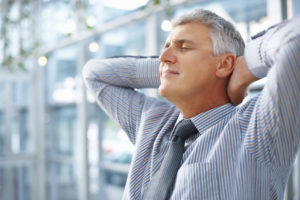
    Ketamine also treats suicidal thinking, basically erasing suicidal thoughts within 4 hours. This life-saving feature makes it a most desired choice for those who are are suicidal.  

    It’s a breath of fresh air.  For some people, it feels like their first breath.

    IV ketamine is typically given in the office as a series of six 40 minute infusions over about 2-3 weeks. And then you walk out … and go to dinner, get some sleep, and drive yourself to work the next morning or scoot off to class. There’s no hospitalization, no lost time. At Innovative Psychiatry, we schedule ketamine infusions in the evenings, so you don’t have to miss work or school.  No one needs to know.

    Like TMS, there are no side effects between infusions.  There’s no memory loss. Period. That’s HUGE. During an infusion, you might experience mild nausea, so we just plan to avoid that altogether for you. There’s also a floaty, dissociative effect during an infusion — you should expect this.  Most people find it very pleasant , not frightening, and it’s actually predictive of a good response to treatment.  

    Of course, there are other rare side effects of ketamine when it’s used in high doses in anesthesia. But we just don’t see them in our practice.

    The effectiveness rate of IV ketamine infusions in our practice is 80%. That means that 80% of people who come in with treatment-resistant depression can get WELL. Depression symptoms disappear. For some people, maintenance infusions are used to maintain this wonderful, balanced, quality of life.

    Joie de Vivre – the Joy of life.

    If you’ve struggled to break out of the hollow, dismal, dark place of depression, consider this thrilling treatment. It can fill you with HOPE, then transform that hope to real, here-and-now, life-joy.

    Man sighs with relief after IV ketamine replaces last resort treatments.

    For us, it’s exciting to see people who have been so terribly ill come to life again. Live again. Love again.

    The old days of suffering…without hope… are behind us.

    There is hope for you, even if you haven’t been helped by antidepressants before.

    Let’s meet and discuss new options.

    To the recovery of your best self,

    Lori Calabrese, M.D.

    Lori Calabrese, MD offers innovative psychiatric treatment like IV Ketamine

  • Breaking News: Another Way IV Ketamine SMASHES Depression

    Breaking News: Another Way IV Ketamine SMASHES Depression

    Another way IV ketamine smashes depression is by moving g proteins off lipid rafts in cell membrane.Another way IV Ketamine SMASHES depression

    Sometimes news is so hot it sizzles.

    It lures you away from whatever you’re into.  It captivates you.  And then — just face it — you think to yourself, with admiration, OMG.  You say to yourself … whoever came up with that is brilliant. They nailed it.

    Well, Mark Rasenik and his group from the University of Illinois Chicago College of Medicine nailed it.  They presented absolutely breathtaking work in May at the SBP meeting — the Society of Biological Psychiatry.  It’s the meeting where research is presented that is just so brilliantly conceived and executed that it’s mind-blowing.

    Rasenik’s work is like that.

    He and his group came in from left field with their brilliant discovery of a new way ketamine works which just might explain how and why it can begin to lift depressive symptoms in minutes.

    Understand ketamine’s talents, then get creative

    The goal was to learn what happens on a molecular level that causes IV ketamine’s fast depression relief.  Because, of course, someone wants to design a drug just as effective as ketamine but without its side effects. This is the ever-loving quest for new drugs that wannabe like ketamine.  

    Now, we’ve talked before about how IV ketamine acts on synapses to stimulate them to grow, branch out, and flourish — multiplying the numbers of connections between neurons that send signals deep into the brain. We’ve also talked about neuroplasticity, and how it’s key to this process that causes the brain to change.

    As new synaptic connections are built, and greater communication between brain cells develops, the brain gains the ability to see things in a different perspective, and your outlook becomes brighter and healthier. IV ketamine can jump start that process. Wait. No. It can turbo-charge it.

    How to Get Those G’s Back to Work

    So Rasenik and his team found that “g proteins” were packed on “lipid rafts” in the cell membrane with people G proteins on lipid rafts are moved off the raft shows another way IV ketamine smashes depression.who are depressed. In addition, their brain cell signaling is stifled, which may be the cause of that numbness depressed people experience.

    If this is you, listen up.  Numbness is no joke.

    They’ve demonstrated that when SSRI antidepressants are used, they move g proteins from lipid rafts (I love that visual…like the G’s are languidly floating on a raft in the pool…taking time off being lazy) very gradually, and back into WORK mode. Which is how SSRI’s help some people who are depressed — but it takes weeks or months for relief.

    You see, G proteins produce cyclic AMP, which is vital for the nerve cells to properly send their signals.

    And, Rasenick and his team noted that the movement of the G proteins under the influence of SSRI antidepressants, was gradual … over a period of several days.

    So, let’s take a breath here.

    The Many Talents of IV Ketamine

    We’ve talked about how IV ketamine stimulates neurons to flourish, grow branches, and become prolific with healthy connections for sending signals throughout the brain, especially into the deep brain structures like the hippocampus.

    Now, Dr. Rasenick and his team have discovered that IV ketamine also gathers up the tools the nerve cells need so they actually can send signals throughout this new and bountiful network of connections, or synapses.

    Those unemployed g proteins that were hanging out on the rafts, are pulled off the rafts and put to work to equip the brain cells to do their job.

    And they work fast.

    Remember how it takes several days for the g proteins to move off the rafts with an SSRI? Well, with IV ketamine, it happens in 15 minutes!!

    So … do you see why ketamine acts so fast to remove suicidal thinking and depression?Young man is relaxed as he benefits from yet another way IV ketamine smashes depression.

    I’m telling you, the more we know about IV ketamine, the more hope explodes with all of its potential.

    Letting Go of OLD Ideas

    There’s been a belief for years that ketamine’s one action was to block NMDA receptors.  (Boy, does that seem like the dark ages now!) But ketamine is the only drug that blocks NMDA receptors AND moves g proteins off lipid rafts. It’s a double whammy, a one-two punch!

    Once again, ketamine shows its highly targeted prowess in its assault on depression and its potential for assault on other psychiatric disorders.

    In addition, ketamine and other compounds like it, improve glutamate levels, which SSRIs really don’t touch. When the processing of glutamate doesn’t function properly, that also contributes to depression.

    So…wait a minute…that’s three actions ketamine uses to turn depression on its ear!

    Oh, and the fourth:  it turns on mRNA … to turn on DNA … to make more BDNF (Brain Derived Neurotrophic Factor) so that neurons grow new branches.

    The Four Ways.  Four different ways that ketamine smashes depression.  This has brought a level of excitement into psychiatry like nothing else.

    Someone should write a book.

    A full 80% of those who are treated with IV ketamine infusions in our Relieved and relaxed lady shows another way IV ketamine smashes depression.office respond, and many of those achieve complete remission of their symptoms. But, I’ve said before that it isn’t for everyone.  If it’s not for you, we have other treatments like TMS to help you get better.

    If you have symptoms of depression (chronic, recurrent, bipolar, postpartum),  PTSD, and treatment-resistant OCD and have not been helped by anti-depressants, call or email us to arrange an appointment for a consultation. We’ll thoroughly check you out, and analyze what we learn, to determine the treatment most likely to truly help you feel better. I don’t mean to reduce your current symptoms, but to actually get well.

    We’re Innovative Psychiatry.  (Um, you’d have to be to translate lipid rafts and g proteins into treatment that works in your office … )  And we’ll work with you to find the best steps that will help you get well and live the life you want to live.

    To the discovery of your best self,

    Lori Calabrese, M.D.

    Lori Calabrese, MD offers innovative psychiatric treatment like IV Ketamine

  • Obsessive Compulsive Disorder Treatments Change the Game

    Obsessive Compulsive Disorder Treatments Change the Game

    Obsessive Compulsive Disorder treatments change the game.

    Just because it feels natural…doesn’t mean it’s good for you

    Macie is a 32 year-old administrative assistant who feels growing tension when she leaves the house. She opens and closes the door, locks it then unlocks it, and opens and closes it again to be sure it’s latched. Then locks it… and unlocks it. It doesn’t feel secure yet.  So she repeats this ritual five times. For some reason, after the fifth cycle, she can finally leave. So she does.

    She gets in the car, puts her key in the ignition, and starts it up. Then she turns it off, takes her key out, then reinserts it, and starts it up again. After three cycles, she’s ready to back her car out of the driveway.

    These behavior patterns of repetitious cycles follow her through her day. For instance, when she goes to the restroom at work, she washes her hands, rinses them, and examines them. But they don’t feel very clean and the idea of the germs that are probably still there makes her shudder… so she sticks her hands back under the water, soaps them up, rubs them together and wrings them, rinses them, and turns off the water. 

    Nope…not there yet.  It takes at least 3 more cycles like this before she can dry her hands and leave the restroom.  She uses a paper towel to turn the doorknob.

    People can be cruel.

    Macie didn’t think much about these rituals until someone commented…someone else laughed… then became impatient waiting for all this to be completed. The comments of others began to wear on her…and she started to realize that maybe she was different than the others around her. And she felt ashamed.

    She isn’t the fastest worker in her office, because of all these cycles that slow her down. But she has an eye for detail…and is great with spreadsheets. Meticulous, careful, accurate.Obsessive Compulsive Disorder Treatments Change the game for a pea sorter like this one.

    Her husband, Josh, learned long ago to be patient and tolerant. It didn’t take long for him to realize that pushing her, pressuring her to hurry up and get moving, only resulted in her anxiety shooting up, her tension doubling, and then . . . instead of 5 cycles to lock the door, she needed 12, and instead of 3 hand washings, she needed 9.

    In short, heightened anxiety just made everything harder … and worse.

    Why do some people act this way…?

    Macie has Obsessive Compulsive Disorder, and only recently she realized it’s affecting her job, and her friendships.

    Obsessive Compulsive Disorder is a combination of recurring, intrusive, unwanted or disturbing thoughts or ideas that cause a person to feel unsettled and distressed. Then, to relieve the misery they feel, they’re driven to perform a repetitive action. Behaviors like these — such as Macie’s hand washing or checking the door locks — tend to interfere with their daily functioning to a dramatic degree.

    Now we’re not talking about someone who locks the door twice and goes on his way. The rituals referred to here are so numerous and compelling that people like Macie have a difficult time maintaining a job, or maintaining relationships, because of them. The pressure to keep going through the cycle until it feels right is so great that if the cycle is disrupted, it causes terrible stress and consternation.

    You know that feeling you have when you’re on a road trip and the second day you can’t remember if you left food and water for the cat…?  You don’t want to go back and start your trip over, but you also don’t want your cat to starve.  It’s so troubling, and anxiety builds until you resolve the situation.

    Well, multiply that distress by about 50, and  you’ll have a glimpse of the distress Macie feels about failing to lock that door.  Then imagine this happening all day long.

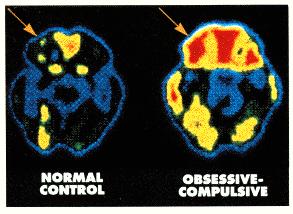
    OCD is like having a huge nasty bully in your headPET scan shows hyperactivity in OCD but Obsessive Compulsive Disorder Treatments change the game.

    …that no one else can see

    In Macie’s case, she knows in the back of her mind that the fears she has aren’t real…but logically knowing it doesn’t ease her distress. Because this is not a logical problem. It’s rooted in anxiety that doesn’t go away. Anxiety she doesn’t understand, and can’t explain away. So she continues with her routines as if they’re just part of everyday life.  Every day. 

    For her…they actually are.

    In many cases, someone with OCD doesn’t seek treatment until they’re fired from their job or lose a relationship with someone who ran out of patience. When sorrow mounts that’s caused by their OCD behaviors, they get ready to seek help.

    Obsessively ordered bottles on shelf so he should know that Obsessive Compulsive Disorder Treatments Change the Game.

    Is OCD common?

    About 1.2% of adults suffers from OCD, which can begin in childhood, adolescence, or adulthood. If you have parents or close family members with OCD, the risk of developing it is higher for you. 

    Also, if you have another psychiatric disorder, that also may increase your risk of developing this one, too.

    And then there’s trauma. When a terrifying or profoundly distressing experience presents itself, it draws a reaction from you. Your reaction may be fear of it happening again, or disgust at the thought of it, or some other disturbing feeling. For some people after an experience like this, a pattern of coping goes into play. To keep the thought of it out of your mind, you do something that’s reassuring or distracting. The disturbing thought is often connected to the repetitive action.

    • Fear of sickness from germs or chemicals => may result in feeling driven to clean incessantly,  repetitively washing and washing your hands…even being afraid to touch people or objects others have touched.
    • Fear of an intruder => may result in repetitive cycles of door locking and re-locking
    • Fear of hitting someone with the car => may trigger the need to back up at stop signs, or pull off the road to check, or call the local hospitals 

    The point is that these distressing thoughts can compel the person who’s suffering to perform certain rituals, and those rituals can interfere with normal functioning in a productive life. In fact, they can be debilitating.

    Is there treatment? 

    Yes, there are medications that bring relief in some cases. But of the patients who take medications, 40-60% receive partial relief or none at all. There are therapies like CBT and exposure therapy that sometimes help to ease the disturbing and intrusive thoughts, as well as the compulsions. But these treatments leave only about 10% of people with OCD successfully treated.

    Which calls for innovative treatments.

    Obsessive Compulsive Disorder Treatments

    For this reason, we offer other options, like Transcranial Magnetic Stimulation, for patients who haven’t experienced relief from Obsessive Compulsive Disorder through medication and therapy. TMS is not systemic, so there are none of the side effects like you may experience with antidepressants.

    IV Ketamine also shows great promise and success in treating OCD. Like TMS, IV Ketamine is a treatment that targets brain structures to bring relief to OCD symptoms.

    Obsessive Compulsive Disorder treatments change the game.

    We can learn more about what you need to feel better… LIVE better….through a thorough psychiatric evaluation. If Woman lounges in pool free of OCD after obsessive compulsive disorder treatments change the game for her.you’ve suffered with the harrowing symptoms of OCD and have not experienced relief from the medications you’re taking, let us help match you to the solution best suited to you.


    Helping you to find the life you ache to live is our highest, never-ending goal. Let’s join forces to find your solutions.

    To the emerging of your best self,

    Lori Calabrese, M.D.

    Lori Calabrese, MD offers innovative psychiatric treatment like IV Ketamine

  • Does Your Teen Exhibit Signs of Bipolar Disorder?

    Does Your Teen Exhibit Signs of Bipolar Disorder?

    Teen playing in surf after treatment because teen exhibit signs of bipolar disorder.Can You See It?

    Teenagers can be so unbelievably moody.  Well … a far more palatable word for it is reactive. 

    Overreactive (like yelling that brings the house down), intensely reactive (meltdowns that go on for hours, leave a hole in the drywall, or tear the room apart), egregiously reactive (with threats to jump off the roof, open a vein, down some pills), and . . . insufferably nonplussed. Apathetic. Unmotivated. Just downright bored.  

    Is this what kids are like now? Is this what your kid is like?  (or Is this what you were like?)  Is this what everybody else’s kid is like?

    How do you know if what you’re seeing at home falls within the norm . . . or points to something bigger?  

    Like bipolar disorder.  Does your teen exhibit signs of bipolar disorder? Signs that should point you in the direction of help.  How can you tell the difference between adolescent drama and an agitated mania or mixed episode?

    If you’ve never seen it before, how will you know?

    Bipolar disorder isn’t diagnosed on the basis of a single symptom.  Or a single episode of rage.  Or an impulsive (regretful) moment.

    Not ever.

    But if you wonder about the changes you’ve seen in your teen’s behavior and state of mind — and what parent doesn’t wonder what’s normal anymore? — then sit up straight, because this is probably the most important reading you will ever do.  It could save her life. 

    At first, it isn’t that easy to differentiate between a teen who’s reacting to frustration and a teen experiencing a bipolar manic episode.

    This distraught teen exhibits signs of bipolar disorder.

    Both are intense.

    But are unpleasant.

    And helping a teen grow up through the volatile reactions of adolescence, the moments of intimidation from challenging responsibilities, the sorrow of a spurned young love … can seem to mimic parenting a teen through bipolar disorder.

    However, they bear no resemblance, as surprising at that sounds.

    But if you’re the parent, how do you know?

    Does Your Teen Exhibit Signs of Bipolar Disorder?

    There are specific symptoms of bipolar disorder that go beyond your teen’s angry outburst. Symptoms that together paint a picture of an overall debilitating condition.

    To make it easier to put this picture together… to see if there are symptoms compelling enough for your child to be evaluated by a psychiatrist … there are some helpful and well-known mnemonics that can help you know what to look for. (A mnemonic is just a way to remember something that’s really important.) 

    First, the manic symptoms to watch for… DIG FAST.

    There’s just about nothing else that can dig you into a hole faster than being a little, or a lot, manic. That means having intensely happy, angry or wildly swinging moods with several of the following at the same time:

    Distractibility —

    jumping from one thing to another to another, without getting anything done, and just leaving a mess

    Injudiciousness —

    poor judgement with reckless behavior

    Grandiosity —

    that can start with feeling that you are just surrounded by idiots, that nobody really gets you or your vision, and it gets worse from there

    Fast thoughts —

    thoughts that fly through your head so fast it’s dizzying, sometimes with speech so fast it’s hard to interrupt

    Appetite for risk —

    fun, food, alcohol, gambling, drugs, sex, spending — it seems like whatever you do, you want more of, and risks you might never take are now opportunities you can’t wait to jump right into

    Sleep needs diminish —

    you can get by with very little sleep over days or weeks

    Thoughts become increasingly disorganized —

    and you can become hard to follow

    Next, the depression symptoms that emerge in very low and incredibly empty states…SIG:E CAPS

    Sleep changes:

    with difficulty falling asleep or staying asleep, waking up too early, or wanting to sleep all day — or a mix of these

    Interest loss:

    loss of interest in things that used to interest you

    Guilt /worthlessness:

    brooding about all the mistakes you’ve made, how you’ve messed up, feeling ashamed of yourself, feeling worthless

    Energy loss:

    lack of energy, fatigue, listlessness

    Cognition / Concentration:

    poor concentration, cloudy thinking, inability to make decisions, forgetfulness
    Teen exhibits signs of bipolar disorder.

    Appetite loss:

    a loss of appetite for life, pleasure, food, and the things you used to enjoy

    Psychomotor changes:

    variable agitation when anxiety is high, or just dragging when lethargy is pervasive

    Suicidal/death preoccupation

    passive thoughts of death as a relief, intrusive thoughts of killing yourself, deliberate planning for suicide, impulsive suicide attempts

    If you’re wondering what SIG:E CAPS means, it comes from the prescription pad your doctor uses. The term SIG: is printed on the pad and that’s where he writes the directions for taking the prescription.

    It stands for a Latin word, signetur, which means “write on the label.” Since lethargy, or loss of energy, is such a strong symptom in the diagnosis of depression, E stands for energy, or the need to write a prescription for Energy in the form of an antidepressant. And CAPS refers to those capsules that will help the patient feel better.  We used to think that antidepressants could be energy capsules — or should be energy capsules — and although we’re more sophisticated in our thinking of what antidepressants do and how they act, SIG: E CAPS sticks.

    Sort of silly, isn’t it?  But like all mnemonics, using relevant letters like this helps us, and the patient, remember the most prominent symptoms of depression and the depression in bipolar disorder.

    So, does your teen exhibit signs that could indicate bipolar disorder? These tools, DIG FAST and SIG:E CAPS will give you a starting place to examine your teen’s frame of mind and behavior. And the earlier this potentially devastating illness is diagnosed, the earlier treatment can begin, and the more likely your son or daughter can feel better, function better, and live a more rewarding life.

    Of course, psychiatric diagnosis and formulation is much more complex than simple observation, tallying checklists or counting up checkboxes. There’s a host of other symptoms, syndromes, disorders, developmental issues, and character traits that make teasing this apart an art as well as a science. That’s where we come in.

    The Danger of Untreated Bipolar Disorder

    Here’s something else to consider. When an adult over 30 is diagnosed with depression, they often have a frame of reference as to what life can be like. They have a compass, so to speak, from their memories of happier, healthier times.

    On the other hand, when young teens are diagnosed, they quickly lose sight of happier times, of what it’s like to feel good. To be fully functional. That shortened perspective can be so dangerous as it feeds their despondency, and suffocates their hope when asking themselves, “why live?”

    The pressure to find rapid and effective treatments for depression in teenagers continues to rise. Pressure to reduce the negative changes in their brains that will impact who they become as they mature. And also, the pressure to find treatments to ease the hopelessness during the years when impulsivity is strong, and most dangerous.

    IV Ketamine for Teen Depression

    One study at the University of Minnesota is currently accepting candidates to test the effectiveness of ketamine in adolescents who’ve suffered from treatment-resistant depression. The 3-year study began in 2014, and takes a look at the neurobiological mechanisms that make ketamine work — at an age where getting well can change the whole trajectory of your life for the better.

    This is extraordinary.

    They’re studying teens and how low doses of ketamine affect their depression. Change the course of their lives.  Save their lives.Teen girl can enjoy the beauty and quiet peace of a quiet evening because of IV ketamine

    So it’s exciting to think that IV ketamine for unipolar and bipolar depression doesn’t have to be reserved just for adults.

    The study will be completed this year, so conclusions are pending. But we’re hoping the conclusions will reveal ketamine is an effective drug that provides fast, safe relief for treatment-resistant depression and bipolar disorder, as well as other mood disorders in teenagers, too.

    This is critically important because for many people who suffer with unipolar and bipolar depression, their symptoms began during adolescence … somewhere between the ages of 12 and 20.

    Suicide-Driven Thinking

    What’s more, during the teen years, the outcomes of serious major depressive disorder or bipolar depression can be devastating … even deadly. Suicidal ideation is sometimes the only trigger needed for a teen to make an irreversible decision.

    And here’s why.

    During the years before the prefrontal cortex has completed its development – usually in the mid-twenties – the risk of impulsive Manic girl fights with friend so this teen exhibits signs of bipolar disorder.reactions to emotional pain are very high.


    So to find a way to stop the suicidal drive that causes so many lives to be cut short is simply but profoundly life-saving.

    And IV ketamine’s specialty is to erase suicidal thinking and hopelessness … fast. We’re talking in less than 4 hours.

    There’s more to be learned about treating adolescents with IV ketamine.

    But consider this. With everything that teens face in terms of the risk of life-long depression or bipolar disorder, as well as their elevated risk of acting on suicidal impulses, the sooner we aggressively study and support widespread adolescent treatment, the better.

    Ok, that was a mouthful. I’m just saying that we need dramatically improved treatments for depressed teens and those with bipolar disorder. Their developing brains make rash decisions at times. Their susceptibility to treatment is at its peak when they’re young. And their risk of suicide makes this a terribly urgent need.

    Meanwhile, we continue to seek every possible  treatment to achieve the greatest possible relief for our adolescent and adult patients at Innovative Psychiatry. We evaluate each patient with a proverbial “fine tooth comb” to design the most effective and customized treatment possible.

    Contact us for an appointment so we can learn more about you and provide the help so you, or your teen, can be restored to your very best self.

    When you’re at ease, balanced, and resilient, you can perform at your best, love at your best, and achieve at your best. In short, you can enjoy your life and look forward to your future. What a beautiful thing.

    To the restoration of your best self,

    Lori Calabrese, M.D.

    Lori Calabrese, MD offers innovative psychiatric treatment like IV Ketamine

  • IV Ketamine + Neuroplasticity = Relief, Relaxation, and Relishing Life

    IV Ketamine + Neuroplasticity = Relief, Relaxation, and Relishing Life

    Woman relishes a spring day after IV ketamine for her treatment resistant depression.I could use some of that.  We hear that all the time. Relief, relaxation and relishing your life can sound so far away … but it doesn’t have to be. As word gets out about IV ketamine treatment for depression and other psychiatric mood disorders, more and more studies are emerging.

    New information is surfacing about the effectiveness of this medication. And it’s inspiring more discussion, more research, and deeper understanding of the causes of depression.

    And there’s more.

    As evidence grows through research and clinical data, it seems clear that depression interferes with the neuroplasticity in the brain. Including diminished neurogenesis in the hippocampus and diminished synaptogenesis in the prefrontal cortex. In other words, depression messes with the growing neurons or brain cells and the synapses or connections that allow the neurons to communicate with each other.

    A big factor in this is that stress reduces an important growth factor called BDNF, or Brain Derived Neurotrophic Factor. Sort of a “compost” for neurons. Without BDNF, your neurons become tattered and sparse.

    They diminish in size and number … and thin out.

    When you’re depressed, these measly neurons with their poor synaptic connections just have a much tougher time communicating with each other … so there is less creative thought, if any. Well-being tanks. And your world becomes darker, less hopeful, and without future. It’s a bad place to be in.

    A brain that is well-connected is a brain that experiences creative thought and well-being. A brain in the dark is a depressed brain.

    IV Ketamine + Neuroplasticity

    Here’s where neuroplasticity comes in.  (Don’t let the word shut you down.)

    In this context, plasticity refers to the brain’s ability to change at any age … whether for better or for worse. So the term “neuroplasticity” refers to the ability of your neurons to adapt and remodel themselves. In the past 10 years or so, neuroscientists have come to understand that your brain is constantly remodeling itself throughout your life.  And when it remodels itself, it remodels its networks,  And because of that, it remodels how it works.

    So, to put it briefly, when you think dark and despairing thoughts, or angry and vindictive thoughts, day after day after month after year, this thinking actually reshapes and remodels your brain. It’s kind of shocking, really.

    The brain remodels itself.  Your brain remodels itself.

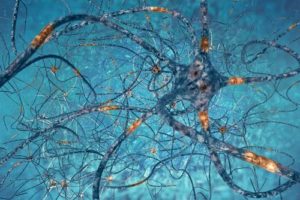
    This spectacular image of a neuron shows the rich prolific regeneration of neurons and synapses with IV ketamine + neuroplasticity.

    Dark, negative and hopeless thoughts have a detrimental impact on your brain’s structure and on how it functions. Your brain changes to fit your thought processes … to respond to your stressors.  By the same token, if you read inspiring and creative books, spend time with joyful people, and create joyful experiences, your brain can change over time for the better.

    The very structure of your neurons can change — in a lush way. Richly. For the better.  For your good.

    Wow.  

    This is where people say, “I want some of that.”

    Well, this is an oversimplification, of course.  It doesn’t account for all of the different factors, illnesses, and environmental influences that shape the way your neurons look and act — grow and function — but it IS an illustration of one way the brain can change. At any rate, It appears that one reason IV ketamine treatment is so effective for so many different psychiatric symptoms is because of the way it enhances neuroplasticity in the brain.

    Growing Your Brain Structure Garden

    For example, when you take the time to learn a new language as an adult, you’re putting parts of your brain to work that respond by growing to accommodate.

    A study of taxi drivers in London revealed that through the process of memorizing the streets of London to pass certification, that a specific structure in the brain enlarges to manage that information. The hippocampus is the memory center in the brain, and this study revealed that drivers who’d been driving taxis for decades had the largest hippocampi of the group.

    Just an example to show how the brain changes with the right type of stimulation.

    By the same token, the amygdala is the fear center in the brain, and it’s been studied extensively in childhood trauma, and in adult anxiety, depression, and bipolar disorder.  The newest research shows that the size of the amygdala can change rapidly in response to recent stressors — even in people who’ve never had any of the these conditions. The left amygdala was smaller in people who’d had a recent stressor — it didn’t even have to be longstanding or chronic. And the shrinkage was enough to be seen on an MRI.

    depressed man needs the relief from treatment with IV ketamine + neuroplasticity

    So here’s the point.

    Ketamine’s Rapid Action

    Ketamine acts rapidly in numerous ways, and its fast action is changing lives, as well as saving them. It stimulates changes in the brain that affect its structure and its function.

    One example is that it quickly matures new neurons so they’re functionally mature and doing their job within 2 hours. Traditional antidepressants just can’t do this.  As more neurons proliferate, mature, and migrate from the hippocampus into far-reaching brain regions, ketamine also stimulates the formation of more synapses, especially in the prefrontal cortex. The greater the communication throughout the brain, the better functioning the brain, and the greater the well-being of the individual.  You.

    The more synapses that are generated, the more neuroplasticity, or ability to change and grow, the brain will enjoy. And a growing, adapting brain provides a higher level of living and learning for you to experience. Plus a greater sense of joy and well-being.

    Let the Sunshine In

    It’s as if the proliferation of neurons – and the synaptic connections that empower them to communicate – opens doors and windows in the brain to let the light and fresh air in. This wonderful circulation of signaling gives the brain new thoughts, new hope, new relief.

    Basically, IV ketamine + neuroplasticity = relief, relaxation, and relishing your life.

    If you’d like to know more about innovative treatments for your psychiatric symptoms, please call for an appointment so we can evaluate what’s going on.

    Innovative Psychiatry is committed to help you find and develop your best self. Let’s work together.

    Joining forces with you to discover your best self,

    Lori Calabrese, M.D.

    Lori Calabrese, MD offers innovative psychiatric treatment like IV Ketamine

  • Ketamine Wannabe Drugs … of the Future

    Ketamine Wannabe Drugs … of the Future

    Ketamine mimicking drug brings peace to psychiatric mood disorder.Ever have somebody copy you?  You know, try to be like you? Imitate what you do, where you go?  try to get what you have? They wannabe like you. Well, maybe not just exactly like you — kind of like you and better than you all at the same time.

    It’s happening with ketamine.  

    We’ve been talking for awhile now about the breakthrough of low dose IV ketamine. In fact, everybody’s been talking about ketamine for treatment-resistant mood disorders. We’ve expounded on its effectiveness in relieving suicidal thinking, treatment-resistant depression, and other psychiatric disorders. Did you catch the discussion about which route is most effective and why we use it? Check it out here.

    You should know about all the ways it’s changing the horizon for psychiatric treatment. Like how it stops suicidal thinking within hours, rather than weeks. And how people who have lived with depression and despondency for years — no matter what medication they were taking — can feel depression just lift within hours. Maybe you’ve been there yourself, or you know someone who has. 

    But there’s more to talk about.

    The discovery of ketamine’s therapeutic effects on depression has opened doors to more revelations of the chemical sort.  Mechanisms of action.  Delivery systems. Ways of leveraging the funding of pharmaceutical companies to develop more versions of ketamine, maybe with the same or similar benefits, but without any side effects …

    Think of it like this:

    Ketamine wannabes want to “be like” ketamine and wannado like ketamine — except better, without side effects, for longer.

    But it turns out that’s easier said than done.

    Since ketamine is no longer under patent, it’s unlikely that a pharmaceutical company would be interested in investing the necessary funds to Heartbroken lady writes "help" on fogged glass and needs ketamine wannabe drug treatment.conduct extensive trials and research about its effectiveness to treat mood disorders at this stage … at least on ketamine specifically.  

    Or that a company would shell out time and money to study long-term response and remission rates, or long-term safety, for a well-known generic like ketamine — even if it is being used in a new way in new settings to treat new conditions. There just wouldn’t be the return on investment in the long term.

    However, by making changes in the molecules and targets that provide the therapeutic results for ketamine, new versions of the drug in the form of ketamine wannabe compounds that specifically target mood disorders are being designed and developed, and are in the race for FDA approval.

    Ketamine Wannabe Drugs

    So grab your chemistry lab goggles, and let’s explore some of these molecular discoveries among ketamine-wannabe molecules.

    Ketamine is a racemic compound — it has two parts that are mirror images of each other joined together like Siamese twins.  If we split it right down the middle where the mirror images join — presto! — we have two “new” drugs.  One faces right and the other faces left.  We call the left-facing one “S” or in the world of pharmaceuticals, “es–”  as in esketamine.  So it turns out in this case that changing the structure of ketamine slightly could give us the same benefit, hopefully fewer side effects, and easier use. In other cases, molecules like ketamine are coming down the pike that act on similar targets or in similar ways to help with depression without some of the potential side effects of ketamine.

    They both wannabe and don’t wannabe like ketamine.  They wannado better.

    Esketamine

    Esketamine has been approved in Europe for a decade and a half – specifically for anesthesia – and Janssen Pharmaceuticals has acquired a patent to utilize it in the US as an intranasal spray for treatment-resistant depression.

    Teenage depressed girl needs ketamine wannabe drug treatment for treatment resistant depression.The Food and Drug Administration has awarded “breakthrough” status to esketamine to zoom its advancement through to approval with less interference from various obstacles and the usual red tape that slows everything down.

    They plan to specify it for use it in a clinical setting (as opposed to at home) for the sake of controlling the dosage, as well as to prevent sale on the street.

    Rapastinel

    Another pharmaceutical company – Allergan in Dublin, Ireland – has designed a peptide in this same “ketamine-like” category. You may know that a peptide is a chain of amino acids bonded together in a specific way, and this one looks pretty effective as an adjunctive treatment in depression. It has characteristics like being fast-acting and long-lasting and it’s given as an IV infusion, like ketamine.

    Ketamine’s action with NMDA receptors is to block ion channel activity.  Here’s where rapastinel is different. It binds to the glycine site on the receptor and regulates or modulates it by changing the shape of that site.  Pretty cool.  The result is that rapastinel reportedly has a minimum of dissociative or out-of-body side effects that are sometimes experienced with IV ketamine infusions.

    Rapastinel is in Phase III trials in the US as an adjunctive treatment for major depressive disorder, and more trials are expected in Europe and Japan.  Soon, it’ll be ready for FDA approval for use in the clinical setting to treat depression.

    AV-101

    Still another pharmaceutical company in San Francisco is working to create a small molecule drug that possesses all the good traits of ketamine without its potential dissociative side effects: VistaGen Therapeutics.Young couple enjoys a picnic in the country after ketamine wannabe drug treatment for treatment resistant mood disorders.

    This molecule is one that’s back on the scene from over 30 years ago. At that time, it couldn’t cross the blood-brain barrier to do its work. And consequently, couldn’t impact the depressive symptoms a person was experiencing.

    But now, the molecule (which is considered to be a “pro-drug”) has been revamped and this current version does cross the blood brain barrier, And when it does, it’s metabolized from a pro-drug into an active drug that modulates a certain glycine binding site at the NMDA receptor — unlike ketamine and different from rapastinel.

    So while ketamine completely blocks certain NMDA receptor ion channels, AV-101 just sort of regulates the receptor gently…which seems to result in gentler side effects.

    A New Frontier – Ketamine and Ketamine Wannabe Drugs

    There are plenty more versions of modified “ketamine wannabe” molecules in the wings, developing to hopefully even replace ketamine at some point. Hoping to improve on ketamine’s action. Aspiring to lesser side effects. Working towards easier administration. We’ll just have to see how that goes.

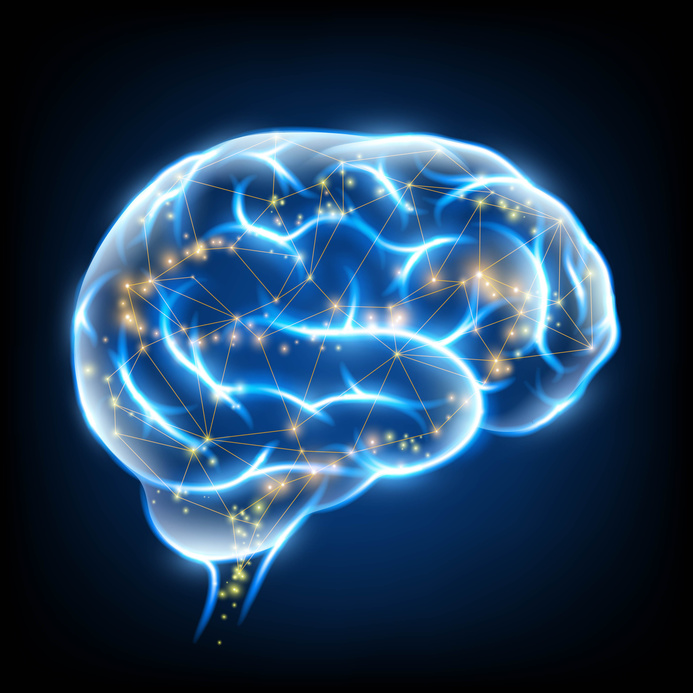
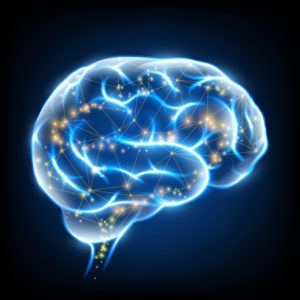
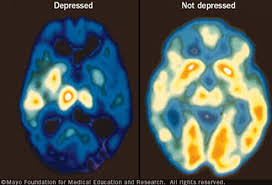
    Image shows the dramatic brightness of a brain lit up by ketamine wannabe drug treatment, and the darkness in the depressed brain without it.And one day this miraculous breakthrough medication – ketamine – may become obsolete like so many cornerstone discoveries of the past.

    But right now, boy are these exciting times!  We’re on the threshold of a brave new world in psychiatry. A world where people who’ve suffered without relief for years, even decades, can finally experience relief and build a fulfilling life.

    One last thought…

    All of the companies working with these small molecule drugs are investing in priceless research that’s opening more doors and windows of understanding –. which will, in turn, only increase the benefits for people who just haven’t responded to or tolerated anything else.

    For example, we know that ketamine, rapastinel, and AV-101 all work at the NMDA receptor site. So it’s been assumed that that action is the key to their effectiveness. However, when researchers blocked the AMPA  receptor, none of these drugs worked. I’ll say it again.  None.

    Which revealed that the AMPA receptor needs to be activated for the drugs to deliver their fast antidepressant, anti-suicidal results.

    And this revelation may lead to more breakthroughs for more who suffer … through ketamine wannabe drugs.

    We’re on this.  We stay up at night.  We watch closely to glean all we can from the research that’s exploding, so we can continue to provide the most up-to-date, cutting edge, Elderly couple enjoying life after ketamine wannabe drug treatment.fresh discoveries that neuroscience offers.  

    And…we’ll be here to help you find your best self.

    So call us, and let’s find the right innovative solution for you.

    To the emerging of your best self,

    Lori Calabrese, M.D.

    Lori Calabrese, MD offers innovative psychiatric treatment like IV Ketamine

error: Content is protected !!