
Tag: Ketamine for Anxiety and Phobias

  • Outrageous Behavior: Mood or Personality??

    Outrageous Behavior: Mood or Personality??

    Outrageous behavior mood or personality? Ketamine can heal mood disorders.Outrageous Behavior: Mood or Personality Disorder?

    You met her at your friend’s house, and you’ve been dating a few months… Then you notice a blouse in her purse with price tags… no receipt.  What???

    Did she steal this stuff? You really like her, but ….  theft?  What the heck is going on…?

    When you ask her about it, she tells you she borrowed the top from a friend for your date on Friday.

    Hmmmm…

    A week later you notice the blouse is hanging in her closet.  Is she going to return it?

    She’s been a little on edge lately… could it be guilt?  But you hate to rock the boat because the nights are so HOT lately…

    Then, another shock. She borrows your credit card to put gas in her car…(which seems off)…and you discover she spent nearly a thousand dollars on dinner with “friends!”

    Outrageous Behavior: Mood or Personality…?

    Confrontation time. Is this amazing and beautiful woman a scammer? A con artist? Is there any other explanation?

    Her response is to lash out, scream expletives, and take off in her car. She returns in a couple hours and she’s been crying. She tells you she doesn’t know what got into her, or why she did any of it. That she really likes you and wants you to respect her – and trust her.  That sometimes she loses her perspective and just does things she can’t explain.

    After a long and tearful discussion, you learn that she did shoplift the blouse. She won’t take it Outrageous behavior: mood or personality?back to the store, or pay for it— too risky. She could get arrested. But she’s got a better idea, she says: she’ll give it away. Donate it. And the next thing you wonder is… if you’re in over your head…

    Scammer? …or maybe bipolar disorder..?

    So is she messed up?  Is she just someone who gets off breaking the law? or is there another explanation?

    To find out, she needs to put her trust in a skilled and experienced psychiatrist.

    good one, who will tease apart her symptoms, their causes, and work to bring her disordered mind to order and peace.

    It could possibly be that she’s fundamentally a rule-breaker. Someone who doesn’t think they apply to her–and doesn’t think what she’s done is a big deal. On the other hand, since she seems to care a great deal, you should pause. Ans she should be evaluated.

    Untreated bipolar disorder can cause all kinds of outrageous behaviors along with the sorrow and remorse

    Is She Hysterical or Just Seeking Attention…?.

    Sometimes, outrageous behavior can be a source of embarrassment to those who love you.

    Take Jason, the manager of the cell phone shop in town. You have no idea what he deals with until one day a glamorous woman walks into the shop crying, “Jasie, Jasie…pleeease I need your help!!  There’s a spider in the car!!”

    You can see Jason is embarrassed.  He tells her he’ll be able to break away in a minute after he rings up this customer.

    “But Jasie!”  She’s all a-flutter, breathless, in a panic.  She takes off her beautiful shoe and Outrageous Behavior: Mood or Personality?holds her tan, pedicured little foot up to show him. “See that dot?  I think it bit me!!” And she sobs and sobs big tears that splash on her cheeks… 

    You can see Jason has his hands full. So, you gesture for him to go ahead and tend to her…it’s ok…you don’t mind waiting. He takes her to the back and her sobs get louder. “I was at home, all alooone…. So I got in the car to go see Celia, and suddenly I saw that spider!!  I was terrified Jasie!  I didn’t know what to do!!!”

    Unbelievable.

    Jason tells her under his breath that her foot looks like it will be fine, and promises to take her to dinner after work.  She goes out the door smiling ear to ear and tells him to call her at Celia’s.  Her bracelets jingle as she waves.

    You Can Love Them… But Do Get Them Help

    You really feel for Jason. He was clearly embarrassed for his customers to get this glimpse into his private life. You wonder how on earth he stays with such a drama queen. You know you couldn’t take it.

    He smiles half-heartedly and rings up your purchase. Then apologizes for the scene. He quietly explains she’s had some serious blows lately and she’s been upset a lot by a series of little things.  “I guess she’s just having a bad day…” he quipped.

    So what on earth is the story with this lady? Is she like this all the time? Is this anxiety or drama? How can you tell the difference?Outrageous Behavior: Mood or Personality?

    Once again, her story needs to be teased apart, and a deeper history collected. It’s possible that the “blows” Jason referred to were multiple deaths in the family, betrayal by her best friend, combined with a lost pet, or some other major crisis.

    People do sometimes reach the “end of their rope” and find it hard to cope with the most minor thing.

    When that happens they may exhibit signs of depression or anxiety, which can be treated … to help them get their footing again.

    But it’s important to know the full picture. Was she always a drama queen? Or did she have a history of coping well until just recently…?  Enduring traits can suggest an underlying personality structure that just seems to get more and more fixed and unyielding as a person gets older.

    Outrageous Behavior – Mood or Personality?

    Meanwhile, your boss’s secretary is silently miserable. She’s married to a guy who acts superior to everyone. He boasts all the time and makes degrading comments to waiters at restaurants or when he’s buying something in a store. 

    Then word gets out that he’s having an affair with her next-door neighbor. Another affair.Outrageous Behavior: Mood or Personality? After all the I’m sorry’s and all the lies. After all the promises. She’s devastated.

    What is the matter with someone like him? Is he just a total jerk?

    Maybe he is. I know you may wish you could give him a swift kick, but there’s likely more to the story.

    On the one hand, he could be a narcissist. But to find out would require some in-depth information gathering to figure that out. Still, there are other possibilities, too.

    Has he suffered a job loss? Maybe he feels betrayed by a layoff right in the middle of his career. He may be depressed if something like that is the case. It’s still not an excuse for making his family miserable.

    Nor is it an excuse for infidelity. But, sometimes people take that road when they’re down on themselves. In fact, sometimes people do all sorts of destructive things when they feel bad, rather than seek help.

    Still, sometimes depression shows up in men by their anger, irritability, and short temper. If it’s depression, it can be treated. And getting the depression successfully treated may help him set things right again in his life.

    Miss Jekyll or Mrs. Hyde…

    The romance you’d always dreamed of. Finally, you’d met the most interesting and charming woman. She was everything you’d hoped to find: beautiful, fun, a hilarious sense of humor, always with a twinkle in her eye… and a wildcat in bed.

    She was so natural in a crowd and loved to entertain. She seemed like the ideal companion, Outrageous Behavior mood or personality?lover, and partner. You felt so lucky.

    Oh, there were little moments while you were dating that caught you by surprise, sure, where she seemed to react to a small thing you did or said. Moments that seemed to come out of nowhere… but the next time you talked, all was forgotten.

    Her charm was addictive…and made you feel like a million bucks.

    But several months later, everything seemed to change. She wasn’t so pleasant when you were alone. Sometimes you felt like she drank too much. And when she did, she wanted to do more and more risky things. She said you just didn’t know how to have fun.

    The next day she stormed into her job and slammed her keys on her boss’s desk, shouting, “I QUIT!!”

    When she got home and told you the story… well, you didn’t say a word. You didn’t dare.

    Then, one night, she stormed out of the house. Again. You got in the car to find her… and when you spotted her she was walking in the dark…and agreed to get in the car. But, as soon as you asked what was going on, she screamed she was going to kill herself and threw open the car door as you were flying down the highway.

    You were so relieved to park in the driveway. So much drama.

    The next week she tells you she’s having an affair with her optometrist. That you just weren’t spending enough time with her.

    What happened…?

    You’re friends tell you she’s crazy and you should pack your stuff and leave no forwarding address. You think there’s more to it. You see her when she’s sweet, thoughtful, caring, nurturing… she can be a wonderful person.

    But this is scary.

    What do you do??

    Once again, there can be a handful of explanations. Some are more hopeful than others.

    This is a good time to get an insightful psychiatrist involved. Because she may just be a brat who never learned to be accountable for her behavior. However, that’s probably not the most likely explanation.

    People with bipolar disorder sometimes have these outrageous behaviors, but when they’re nooutrageoust manic, they can be deep thinking, insightful, considerate people.

    People with borderline personality disorder can sometimes appear like this.

    Even people with substance abuse disorders can show these symptoms.

    You’re right to not make a snap judgment. As to what you should do, that’s another matter. If she has a psychiatric mood disorder, she can be treated and go on to live a fulfilling life.  But you may want to see a counselor you trust, to help you navigate this relationship.

    With counseling, you can learn how to be a therapeutic presence in her life, while taking good care of yourself. With counseling, you may also determine this relationship is not the best for you or for her. But follow your instincts and get support for both of you in the interim.

    You’re not alone.

    So many, many stories. So many lives in disarray. Outrageous behavior rings the gong.  It makes everything stop–or it should make everything stop. Because so often it damages the lives of everyone it touches. Sometimes it’s personality, plain and simple and enduring. (Which is really hard to take.)

    But so often, outrageous behavior is the bellwether of damaged or disordered brain functioning. Sometimes, the ones with outrageous behaviors are likely damaged (by genetic factors, environment, concussions, illnesses, substances–you name it) and unable to function in a normal, healthy way. So they behave in ways that cause damage to others and to their own overall lives.

    In cases like these, the first step is to withhold judgment, as tempting as it is to judge and label. How often have you heard that you don’t know someone’s story until you walk a mile in their shoes?

    When you see behaviors like these, you may be seeing symptoms of a disorder, rather than someone who’s deliberately choosing to be a brat. Deep down, it’s the desire of most of us to enjoy the respect of those around us. Most of us restrain our reactions to maintain that respect. But there are those who just can’t.

    Rule of thumb: If it looks like bad behavior, check it out.

    Ask an expert. Not your friends. Not a Facebook group. Because you might be mistaking a terrible mood or anxiety disorder as someone’s personality — or personality disorder. And that same person just might behave “respectably” and with constraint if their disorder were effectively treated. This is where shame lives. This is where stigma comes in.

    Let’s take a breath before we judge. Let’s stop the stigma.

    If you’ve experienced some of these behaviors and you secretly carry your shame and wonder what’s wrong, or if youOutrageous Behavior Mood or Personality? see outrageous behaviors in someone you love, reach out. Innovative Psychiatry offers novel and advanced treatment for psychiatric mood disorders, including IV ketamine infusions — one of the most extraordinarily effective treatments in psychiatry. It can give you your life back.

    We want to see you well and are eager to work with you to determine what will give you the best results.

    Call or schedule an appointment. You can have control over your impulses, and build strong relationships in your home and your work.

    Lori Calabrese, MD offers innovative psychiatric treatment like IV KetamineTo the release of your best self,

    Lori Calabrese, M.D.

     

  • How Stress Takes Down the Best People…and What To Do About It

    How Stress Takes Down the Best People…and What To Do About It

    Stress takes down the best people, but ketamine treatment restores them.Heather was 38, and had had a series of extreme stressors over a period of several years. She was a giver at heart, always looking for ways to help — always trying to make the lives of people she knew easier or more fun.

    But then her husband left her. It was the same old, tired story — an affair with her closest and dearest friend.  But still … she was left with two enormous losses, and a crippling sense of betrayal about both of them.

    She tried to function for the sake her of two children, Katie and Noah. One foot in front of the other. One day at a time.

    Another Devastating Crisis

    Three years later, Noah was hit by a school bus and rushed to the hospital. He had a Stress takes down the best people, but ketamine treatment puts them back in working order.concussion and his pelvis and femur were broken in so many places they gave her minimal hope he’d walk again.  Weeks in the hospital, then months of rehab. Asking neighbors and family members to pick her daughter up at school, get her to piano lessons, grab dinner.

    She was exhausted. And Noah was beginning to walk with a walker and just starting back to school when she got a phone call from her mother.

    Another Overwhelming Tragedy

    Her dad had died when she was 25 and her mom lived alone. Mom just found out she had an aggressive form of breast cancer. She’d been told to expect a year minimum of treatment then re-evaluation. But when her mom got so tired she couldn’t drive back and forth to chemo, there was nothing to do but have her mom stay with her. She’d probably be there through radiation, too. Heather asked her mom’s neighbors to look in on her house.

    So a household of three greatly stressed people became a household of four extremely stressed people. Heather just held her chin up and set out to get through this, too.  The idea of losing her mom when she was so young was terrifying.

    She cooked, cleaned, ran the kids around. Made dinner. Went to work. Drove her mom to chemo. Did everything.

    Stress Takes Down the Best People

    Finally, 6 months later, her mom had to be admitted to the hospital. Her next door neighbor Stress takes down the best people, but they can restore with ketamine treatment.offered to take care of Katie and Noah for a few days. Thank goodness.  But then … Heather didn’t get out of bed or out of her pj’s for three days … and she felt less and less like getting out of bed after that. She went through the motions of getting her kids to school and back home again … and feeding them when they were hungry.  But she was numb. She was barely functioning.

    Finally, darkness wrapped around her like a cold box, and she felt hollow. Numb. Adrift.

    Someone from the church came to see her. When they saw how she looked, they could see she’d been through too much for too long. They went to work to take over the care of her mom, and took her to the hospital. Heather was admitted with severe Major Depressive Disorder.

    Heather’s a giving, kind, and generous person. But chronic and repeating stress can take down the best people, and Heather was no exception. It brought her to her knees.

    How Stress Brings Someone Like Heather to Her Knees

    We’ve talked and talked about what stress does to your brain, and how it contributes to depression.

    But let’s talk about why that happens.

    Thanks to recent studies sponsored by Brain and Behavior Research Foundation, we’ve learned some things lately.

    And I’m excited to share them with you.

    It all makes so much sense when you get a peek inside the brain to see what happens.

    MIcroglia Unwittingly Launch a Destructive Attack

    There are immune cells in the brain, called microglia, that are responsible for defending against infection, among other things. One of the other things they do is help build and change the construction of neural connections in the brain.

    Huge. And hugely important.

    In this study, the research team, led by Ronald S. Duman, periodically caused laboratory mice to undergo stress-inducing conditions over a period of weeks. Then they evaluated the effects of this chronic stress on their brains.

    It’s not surprising that the mice displayed symptoms of depression and anxiety. The team demonstrated that the neurons in the prefrontal cortex — which control your abilities to make decisions and function socially — react to the stressors.

    Specifically, these brain cells signal the microglia to begin “remodeling” pyramidal neuronal circuits … which basically WEAKENS them. The outcome is that the synaptic connections between the neurons in the prefrontal cortex begin to break down. And too many of them are lost.

    Sounds like Heather. Broken down.  Lost.

    Maybe that sounds like you.

    How to Stop the Damage?

    Then the team carried it another step.

    When they blocked the neurons from signaling the Stress takes down the best people, but ketamine treatment can put them back on their feet again.microglia, the chronic stress the mice were subjected to did not affect their synapses in their prefrontal cortex so they did not become depressed.

    The research team concluded that finding a way to block the neurons from signaling the microglia could be a way to treat anxiety and depression. 

    (It seems to me this could be a fantastic way to prevent anxiety and depression in those subjected to long term chronic stress, such as first responders, those with chronic illnesses, and more.)

    You can imagine that if you undergo extreme stress over an extended period of time, that more and more of these connections will be lost due to microglia activity. And depression and its accompanying anxiety become more and more severe.

    So what can be done about this deconstruction… these massive losses of synapses?

    Restoration through an Extraordinary Medicine

    Enter IV ketamine treatment, which has been shown to rapidly rebuild and proliferate these synapse connections that have been broken down by depression and anxiety … which are caused by stress and which create more stress of their own.

    Remember that tiny doses of ketamine, administered properly, turns on mRNA to switch on Stress takes down the best people, but ketamine restores synapses and restores peace.DNA which turbo charges the brain-derived-neurotrophic-factors (BDNF) so the synapses grow, branch out, and proliferate creating a dense forestation of neuron connections.

    And when all these neurons in the prefrontal cortex are tied together with a dense network of synapses, you come alive. Joy returns. Creativity blooms. Initiative and motivation billow.

    This is what we can do about those lost synaptic connections.

    Innovative Psychiatry Offers Expertly Administered Ketamine Infusions

    We know that stress takes down the best people. You probably know someone like Heather who tries to help everyone, but eventually she’s the one who breaks down and needs help.

    At Innovative Psychiatry, we see extraordinary, positive outcomes in treatment-resistant depression and bipolar depression, as well as in PTSD, OCD, social anxiety and suicidal thinking. That means that very ill people can get really, truly better. As in happy, upbeat, full of energy, initiative, and hope for the future.

    You can feel like yourself again. With the energy to embrace each day, the hope to look forward to the future. You can enjoy an afternoon breeze, a beautiful ocean view, or the fragrance of a summer rose.

    When was the last time that happened?

    If you suffer from depression, anxiety, bipolar disorder, PTSD, OCD, social anxiety or suicidal thoughts, and medications haven’t helped, call us. We can help you leave psychiatric disorders behind, and live a fulfilling life.

    Live as the best you you can be.

    Lori Calabrese, MD offers innovative psychiatric treatment like IV KetamineTo the emerging of your very best self,

    Lori Calabrese, M.D.

  • Considering Ketamine for Depression? Here’s How to Screen a Ketamine Clinic

    Considering Ketamine for Depression? Here’s How to Screen a Ketamine Clinic

    Screen a ketamine clinic before receiving treatment. Your brain is complex with delicate systems.

    Maybe you’ve heard the buzz.

    Ketamine for depression is in the headlines, the journals, and the chatter at Starbucks. If you or someone you love wrestles with the exhausting symptoms of depression, you’ve likely heard about it.

    Or maybe you haven’t.

    Either way, it’s the biggest news in psychiatry these days, and seems to be high on the list for some entrepreneurs looking to make a profit. The result is clinics that have popped up all over the country — almost overnight– run by businessmen, anesthesiologists, psychiatrists, ER docs, ICU docs, and nurses.

    If you’re considering ketamine for depression, maybe you’ve looked for someone in your area who offers ketamine treatment?

    There may be more places to get treatment than you think. Or there may be fewer than you wish. Either way, your health, your brain, and your mind ought to be treated with care, caution, and best practices, for best outcomes as well as safety.

    Let’s talk about the ins and outs of these clinics and practices, so that you can be your own advocate. Scrutinize … and screen a ketamine clinic before you agree to treatment.

    Psychiatric Treatment as a Business..?

    Healthcare should not incorporate high pressure sales techniques. But there has been an explosion of ketamine clinics … pop-up clinics … and non-MD CEO-types setting up ketamine clinic franchises and making a nice profit from them. They work with anesthesiologists, emergency department physicians, family medicine docs, and other non-psychiatrists to run these clinics, and pocket a lot of the money.

    They operate as call centers or use centralized calling services to funnel and schedule appointments, collect your money … and bend over backwards to get you in the door. Some of the call centers or clinics are pretty aggressive in encouraging you to schedule followups for maintenance dosing or buy clinic “memberships”  so that you can get maintenance ketamine on a regular schedule.  Even though the whole question of maintenance hasn’t been well-studied. 

    This is a business model. Not a wellness model.

    And in our experience, most patients don’t need maintenance ketamine on a regular schedule.  (We need much more research to determine that.) 

    One Size Never Fits All in Psychiatric Treatment

    Just like the degree of response, the need for maintenance doses of ketamine is purely individual, and should be handled on a case by case basis. In short, ketamine treatment for mood and anxiety disorders should be given by psychiatrists who can evaluate each patient for their response to treatment, its effectiveness, and durability.

    So … if ketamine infusions are $500-800 each, you can see the business model in that — and the profits — in making sure everyone comes in once every month or two. Whether they need it or not…?  

    But psychiatric care, like all health care, demands personalized care.  Expect to be treated with what you need, not what someone’s wanting to sell.

    Screen a Ketamine Clinic Before Treatment

    There are lots of options for ketamine treatment. Lots of places all of a sudden. 

    Major academic and teaching centers which offer ketamine treatment during a study… if you qualify for one of their studies.

    Dedicated ketamine clinics which offer only ketamine treatment … for depression, or pain, or both.

    And individual psychiatrists in established practices on the forefront of medicine who offer ketamine treatment because they’re on the forefront of medicine … and as one of many treatment options they offer for their patients.

    If you have a severe mood or anxiety disorder, you need psychiatric care.  Not anesthesia care –  Not critical care – Not part-time care – And certainly not a business-type CEO or “closer” trying to get you to book a series of treatments before you know if they’re even appropriate for you.

    When your suffering comes from a mood disorder, you need a mood specialist.

    If you’re really sick, you want to go to the best person to figure it out. You’re probably already seeing an expert … or you’ve seen a lot of them.  And if the treatment you’ve had hasn’t helped and you’re considering ketamine, it’s crucial that your psychiatric care is individualized and personalized to fit you, your symptoms, your Seek a psychiatrist who carefully supervises each patient's ketamine treatment when you screen a ketamine clinic.responses, and your personal needs.

    For that to happen, you should be evaluated by a psychiatrist who will work with you — and everyone involved in your treatment — to determine if you’re a candidate for IV ketamine treatment, or if you would be better served by something else.

    You need a psychiatrist who has deep experience with ketamine treatment and its effects on psychiatric symptoms, disorders, and patients …. who is comfortable with medicine, on top of the technology, and knowledgable, skilled and responsive throughout the infusion experience to manage every aspect of it.

    And who is willing to coordinate this aspect of your psychiatric care with everyone else caring for you.

    And so, of course, it’s not the same for everyone. It’s personal. You’re unique. Your story could be filled with dashed hopes, trauma, and a lot of misery. Your history could be sprinkled with substance abuse and infused with shame.  Where you go with it, whom you trust … is critical. Sometimes, it’s a matter of life and death.

    Inferior Standard of Care?

    The early published studies using IV ketamine in treatment-resistant depression used a very small dose — called a subanesthetic dose — administered through an IV pump over a set amount of time.

    Many doctors use this protocol widely.  It’s a strong standard. This delivers a dose of ketamine at a speed that’s fast enough to elicit the therapeutic response we want to see — during the infusion itself and afterwards — but slow enough to keep any unpleasant side effects at a manageable level.

    A full course of treatment is considered to be 6 infusions typically given 3 times a week for two weeks.  Again, based on the early studies that dosed ketamine kind of like ECT is scheduled– every other day.

    Now, for many patients, this regimen is remarkably effective, but with real-world patients, with complex symptoms and complex histories … varied and complex medical issues … or because of a host of other medications they need, their genetic profiles, history of drug reactions medications, severe anxiety … the research-based infusion protocols need to be modified. 

    We can tell this even during the infusion itself based on how you respond during the infusion. Some need a different schedule of administration — and let’s be real — sometimes that’s just due to practical reasons like travel, work schedules, or the inability to get a ride home. We’ve used a variety of intervals between infusions. Just as an example, for patients traveling from out of state, we’ve modified the protocol and used 3 daily infusions and then another 3 the following week, and the results were remission. Sometimes we add additional infusion treatments beyond just 6 to get the best possible outcome.

    The researchers among you could say:  What?  It doesn’t follow the protocol.

    Life doesn’t follow a protocol.

    Neither does real-world psychiatric treatment.

    And the best psychiatrists among us are constantly evaluating and precisely adjusting medication as we work with the biologic, genetic, individual, and psychological factors for each of our patients.

    Especially when we work with IV ketamine as a medical treatment for severe depression and anxiety disorders.

    You should expect nothing less.

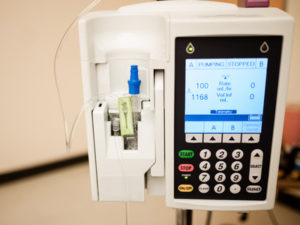
    Precision, by the way, is a big deal.  It’s best to use an infusion pump.  Infusion should be by infusion pump not a bag on a hook when you screen a ketamine clinic.Ketamine for depression is a safe drug but it’s a powerful drug for fragile patients with anxiety and mood disorders, and it should be administered with precision using a sophisticated infusion pump.  

    However, many clinics offer ketamine infusions from a bag that hangs on a hook with a little manual roller that adjusts the flow.

    The problem with this is the varying rate of the infusion. If it runs in too fast, you can have scary traumatic reactions or a scary spike in pulse and blood pressure — and if it’s too slow, it may not produce the therapeutic response during the infusion itself or the ultimate outcome we want to see.

    We can control the flow rate with an infusion pump — but without one, the flow rate could be adjusted or altered by anyone in the room. Not good.

    Routes of Administration

    If you suffer from treatment-resistant depression, ketamine treatment is the most advanced and effective treatment available. And it’s amazing to see ketamine at work in someone failed by traditional antidepressants.

    IV – Intravenous Precision

    But not all modes of administration are equal. IV delivery is the only route that allows you to receive exactly 100% of the dose you’re given. The only route.

    For ketamine to create the changes in the brain that relieve depression, you need to get the right dose, and your psychiatrist needs to know exactly how much ketamine your brain has seen in order to get that dose right … for you, for your next infusion, and for your overall treatment. Right dose, right rate, right length of time.

    IM – Intramuscular Gamble

    With IM administration of ketamine, you absorb about 93% of your dose … but not all the time, not every time, and not over the same period of time. What you get is a gamble. When you inject ketamine into muscle, you’re stuck. Literally. You can’t slow it down, you can’t turn it off, and you can’t decide to stop. Your right to discontinue treatment evaporates right there. If you suffer a reaction to ketamine, in the office (or hours later depending on how you absorb it), you have no recourse but to endure until it dissipates and the reaction ends.

    In fact, there’s nothing you can do but let it work its way through the tissues until the reaction subsides. “No” doesn’t work here.  “Um, I changed my mind” doesn’t work here. However, the psychiatrist can slow or stop IV ketamine immediately if you have an unexpected response … or if you just change your mind and say stop. Your psychiatrist can control the speed and intensity of the treatment. It’s just so much safer.   

    IN – Intranasal Roughshod and Random

    On top of that, if ketamine is given intranasally, it’s really poorly absorbed. You receive roughly 45% of the amount you spray. But, you only get that much if you’re lucky — if it doesn’t run down the back of your throat, or get trapped for a while in boggy sinuses. And since the right dose needs to reach your brain in order to work, what you’re doing with intranasal is just sort of sloppy. How could anyone really figure out what the right dose is for you, or what you actually got or absorbed, with all these variables?

    We’re not talking about treating allergies.

    We’re talking about suicide, trauma, severe intractable depression … anxiety that feels unbearable.

    And we’re dealing the brain and with structures — like neuronal dendrites — that have been altered physically and actually pruned, because of those experiences and symptoms … and the complex and delicate systems that operate there. Precise medication doses and rates can carefully change those systems and delicate balances for the better. And can get those dendrites to branch out again and connect.

    Intravenous infusion is the only way to be exact. Precise. Accurate.

    Checklist: What to Look For When You Screen a Ketamine Clinic

    Considering ketamine for depression?  Get a pen, or copy and paste this list.

    Satisfy yourself that all of your questions have been answered.  You want to know that if you undertake this treatment, it will be provided in the safest, most therapeutic and most effective way possible. You should know if your treatment is based on research protocols. Whether it’s standardized. If it’s personalized.

    1. Who is actually evaluating you and determining if this treatment is appropriate for you? Is it within their scope of practice to do the kind of comprehensive psychiatric evaluation you need? What do they base their evaluation on? How much time do they spend? Who do they talk to? How much information do they gather? How do they handle substance abuse?

    2. Is the doctor who does the evaluation the same one who provides treatment?

    3. Is the doctor who provides ketamine treatment specialized to be able to treat your condition itself? In other words, is your ketamine doctor a psychiatrist who specializes in treating severe mood and anxiety disorders?  You don’t need a technician here, you need a specialist.

    4. What is the extent of his or her ketamine infusion experience? Ask about numbers, outcomes, whether they keep a registry of their own patient data and results, how they follow outcomes both during a treatment course and afterwards, how they coordinate your care with everyone else who’s treating you.

    5. Is the route for administration of ketamine specifically IV?

    Infusion pump delivers precise dose of ketamine so screen a ketamine clinic if they use one.

    6. Is ketamine given with a computerized infusion pump? Is the dose adjusted during infusions or throughout the treatment course? How often? Is the adjustment standardized or does it vary?

    7. Is there a recommended frequency? What is their experience with the number of days between infusions? And with extending a course of treatment for a patient?

    8. How are you monitored psychologically during and after your treatment … or how is the treatment experience processed or integrated? Is there continuous monitoring of your vital signs?

    9. How do they work with the set and setting (your mindset and the treatment setting) to help you have the best possible outcome?

    10. What happens when it’s over?

    Delayed Response Doesn’t Mean Un-Responsive

    With all this said, the fact remains that ketamine doesn’t help everyone.  Or at least it doesn’t seem to help everyone. At least not within the typical infusion course. But … we’re learning more about these non-responders all the time and we’re learning about them in our offices … probably because we’re in the trenches.

    For instance, if you didn’t show a definite improvement within the first couple of infusions, we used to assume that ketamine was just not going to work for you.

    However, over time and with experience we’ve learned that some patients actually have a slow, delayed response to ketamine treatment. It may be weeks before they begin to experience the benefits of the ketamine treatment, but once it starts, it builds, and you can enjoy the same extraordinary benefits as patients who felt better after the first day.

    There are extraordinary individual stories where this has occurred (after they’ve left devastated that they didn’t respond!) … and we definitely need to learn much more about these treatment outliers and what turns the corner for them in the weeks or months following their treatment.

    For this reason, it’s important to stay in touch with your ketamine doctor and let them know how you are doing over time.

    Ketamine’s Not for Everyone…But It Could Be Just What You Need

    Ketamine isn’t for everyone, but 8 out of every 10 profoundly depressed patients we see whose previous treatment has failed them experience transformation from IV ketamine treatment.

    It’s fast and it’s powerful. For the sake of the rest of your life, your relationships, and your joy, give yourself the opportunity to turn your depression, suicidal thoughtsPTSD, severe anxiety, phobias, or OCD on its ear.

    Let’s talk and see if you’re a candidate for ketamine treatment. You can be free from the terrible weight and despair of depression, anxiety, and serious and compelling suicidal thoughts.

    At Innovative Psychiatry we’re available to offer you this extraordinary, life-changing medical treatment.

    Call us for an appointment to determine if you’re a candidate for ketamine treatment.

    You can feel good again. You can live a fulfilling life.

    To the emerging of your best self,

    Lori Calabrese, M.D.

    Lori Calabrese, MD offers innovative psychiatric treatment like IV Ketamine

error: Content is protected !!