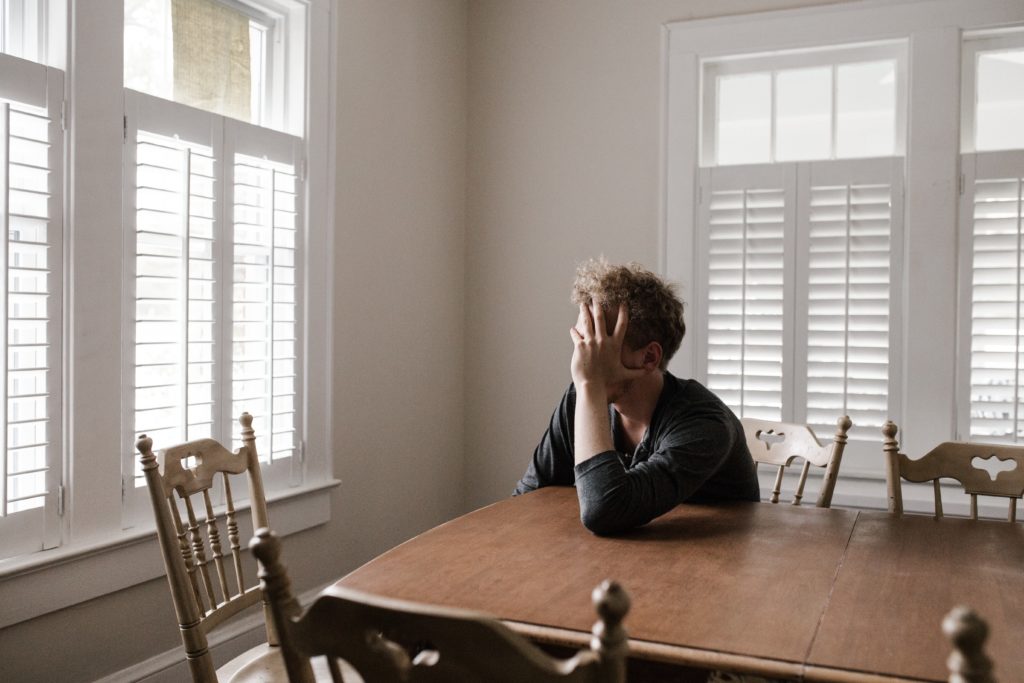
The gray, rainy morning had finally broken and sunshine peeked through the clouds as they parted. Patches of clear blue were spreading across the sky. It seemed to Russell this change in the weather should brighten his thoughts, but they didn’t. He guessed it would take something much more powerful than a weather change to alter his outlook. He thought about how dark he felt…and wondered if there was suicidal risk triggered by stressors that affected people right now.
Russell was losing his belief in living. This wasn’t the first time he’d felt such futility in the daily endurance exercise that characterized his life. He’d felt hopeless before — but with time, a new job, and better pay, he’d lightened up and everything began to make sense again.
Then, he met someone and felt like he was basically sitting on top of the world. He hoped he could keep his life working so well. The idea that joy would become commonplace for him… that would be so great.
The job was such a good fit. And he seemed to learn it quickly. His skills improved every week and every month… then he was promoted. His boss would pat him on the back…tell him to keep up the good work and all that.
He believed he had a real future in this job…and a career in the making.
Jenna came along, and maybe it’s because he was feeling so much better, or maybe it was because she was so amazing…but it was easy to talk to her, and so rewarding to listen. It wasn’t long until they were spending lots of time together.
Then, the coronavirus crisis took over the world. There was no place to escape to…it had covered the entire globe! Nowhere was safe.
Settling Into a New Normal in a Global Crisis
He was assigned to work from home. That was ok. Not great. It wasn’t easy to do as well, or be as creative, under these circumstances. But he was grateful for the paycheck. Surely this was a temporary setback.
Next thing he knew, however, the governor ordered a lockdown. HIs company laid off thousands of people. And he was included in the second round of cutbacks.
So, now he’s home, he has no job, and no way to get one. Russell made a point to watch the statistics around the world to see if the tide was turning yet. He was lonely, and he missed Jenna. Even though it helped to talk on the phone or online. There were plenty of apps to connect with her. But it wasn’t the same.
The Crisis Hits Close to Home: Fighting Panic
One day, she sent him a text. “Russell, my sister Beth tested positive for the coronavirus today. She’s self-quarantined in her apartment. I’m so worried. And my mom is beside herself.”
Russell tried to be understanding…this was terrifying. He wondered when Jenna last saw her sister. When her mother had last seen Beth. He wondered if either of them had been exposed.
This made it all seem so much more real. More threatening, to himself and everyone he cared about.
He felt horrifically helpless. So he paced. He washed his hands for good measure. Then paced more.
Darn! It’s so hard to feel useless like this!! He checked on Jenna often, and always remembered to ask about Beth’s condition.
Finally, it turned out that Beth was being transported to the hospital. She was struggling to breathe at all.
Russell felt his throat closing. He fought panic.
Jenna was devastated about her sister’s decline. She said their mom was in a heap. Neither Jenna nor her mom could be at the hospital with Beth.
Weeks were going by.
How could you stand with someone if you couldn’t be near them? How do you do it all verbally? He feared his relationship with Jenna was disintegrating like his job had. But he knew her primary concern was her sister, and he was sure worried about her, too.
Russell had never been the best communicator. In times of difficulty it was hard to find the words. He’d always made up for it with effort. Showing his support with hugs, helping out with food, etc.
He had no idea how to do that from miles away.
He feared his relationship with Jenna was disintegrating like his job had. But he knew her primary concern was her sister, and he was sure worried about her too.
And felt so helpless.
When he wasn’t talking or texting with Jenna, he was applying for jobs online. It seemed he had surely applied for hundreds of them by now. But nothing. No responses to his applications. He could only imagine the number of applicants competing for each job. He was sure it was more than ever before in his life.
Still he kept applying.
It was good to stay busy, and at the same time, it felt so futile.
Weeks turned into months, and he finally applied for unemployment. Sickening.
How could everything be so good, then take a 90-degree turn straight into the toilet??
As if it all wasn’t enough, he heard from Jenna about her sister. Beth, who’d been in the ICU on a ventilator, finally died. They had thought she was improving…thought she would come off the ventilator soon… then suddenly, she deteriorated. And died.
Russell was stunned. Speechless.
Jenna was heartbroken. Blind with grief. He tried so hard to comfort her. To listen. But there was nothing he could say to relieve her pain.
He couldn’t go to her, hold her, take her out to dinner so she could vent. And her mom was grief stricken and seemed to expect Jenna to comfort her.
He couldn’t think. It was as if the entire world was self-destructing around him. His head was spinning.
Profound Grief Causes Its Own Isolation
Jenna seemed to just be gutted…depleted…with no more to give to anyone.
She withdrew after that. She and her mom could not have a funeral for Beth. As the days went on, they both seemed more and more traumatized by the circumstances surrounding Beth’s death.
Russell became less and less vital to their grief, it seemed. If they needed his support, he didn’t know how to give it. He felt so useless. So powerless. Utterly flabbergasted that life had collapsed as it had in a couple short months.
He’d been in his house for 2 months, and the strain, disappointment, disillusionment, loss, confusion, and anxiety of his circumstances became worse and worse until they were unbearable.
He saw no reason to go on. He looked at the future through his dark perspective, and it looked hopeless.
Even after the lockdown was lifted, he still wouldn’t have a job, right along with millions of other people. He would be evicted from his apartment, and lose his car.
The melancholy of the past swelled until he was drowning in it. Russell just didn’t have the energy to go on. He didn’t believe he was strong enough to face any more…
He wanted to die. Every hope… every purpose… for living was gone. He couldn’t see how he could go on…
Russell’s Not Alone: So Many Fight Despair in Times Like This
The crisis created by this COVID-19 coronavirus is creating stressors and fears that go far beyond the risk of the viral illness. And as our friend Russell identified, there is no where to escape to.
Hundreds of thousands of people feel the same feelings and are thinking the same thoughts. But in each case, the situation is not necessarily as it seems.
Unfortunately, it is what seems to be true that people all too often act upon. And suicidal risk triggered by stressors in this crisis rises higher and higher.
However — and this is important — thinking about suicide is not logical thinking, even though it may seem to be at the time. Suicidal thoughts are symptoms of a disordered mind.
Suicidal Risk Triggered by Stressors in This COVID-19 Crisis
The stress of isolation, financial difficulties and strain, the uncertainties about income in the future, the emotional pressure of being separated from those you care about and who care about you, combined with a host of feelings that come out of nowhere in a time like this… can push you to the point of desperation.
And…if you’ve struggled with psychiatric symptoms in the past, these elements can put you at higher risk.
But There Are Ways to Find Relief
However, as overwhelming as circumstances appear, they’re still temporary. They will change. Life will be restored. But that can be hard to grasp if the thoughts are swirling and swirling around inside your head.
Meanwhile, you can seek support from friends and family online, see their faces and vent, laugh, and cry together.
You can reach out for counseling through telemedicine. And then consider treatment.
Again, suicidal thinking is a symptom of a disordered mind.
If you find yourself thinking those thoughts, reach out for help. The circumstances of your life are not normal right now. And people everywhere are feeling similar feelings, as well as desperation, cooped up in their homes.
Suicidal Risk Triggered by Stressors Like Grief, Financial Uncertainty, and Fears of All Kinds… Can Be Lowered With Treatment
Ketamine treatment is one of the most effective treatments for severe depression, bipolar depression, PTSD, social anxiety, and suicidal thoughts we know of. It also can relieve substance abuse and alcohol abuse.
As a result, resilience replaces listlessness, energy replaces lethargy, and hope replaces despair.
In spite of how it all seems to you right now, that reality you’re experiencing is based on temporary circumstances… In the challenges ahead, how much better to have the energy and hope you need to conquer and create a reality that fulfills you?
There is a future. And you’re in it.
You can reduce the suicidal risk triggered by stressors in your life by reaching out for ketamine treatment. If you’re experiencing some of the things Russell is, call us.
Give yourself, and those who love you, the benefit of treatment that can give you a new lease on life. You can be amazed at how the direction of your thinking transforms.
There is life beyond this COVID-19 crisis. And you’re in it …with a bright future.
A cause and affect relationship that’s a recipe for profound misery…is there hope?
Jarrod turned over. The room was dark except for the light of the clock. 3:45AM glowed brightly in the darkness. Jarrod sighed heavily. It had been 5 hours since he turned off the light. Exhaustion weighed him down like lead.
He hadn’t slept more than an hour all week. Why does it have to be so hard to just get some rest?? Rage was growing in a slow boil in his chest… He was afraid of what he might do if something didn’t break this maddening cycle. Sometimes he wanted to explode from the frustration. Sometimes he wanted to give up and die.
Much of the time, just after he dropped off, an alarm of sorts sounded inside his head and woke him wide awake again…
What is life if it has to be spent like this?
Months. Years. A lifetime.
None of his medicines worked. None. He felt defeated just thinking about it.
He tried to count sheep. His mind wandered fretfully slamming him with accusations, fears, uncertainty…hopelessness. Despair.
Buuuuzzzzzzz !!!
5:30AM. His alarm. He only slept maybe an hour and a half.
There was no choice but to drag himself out of bed and force himself to face another day… he knew he just couldn’t go on like this much longer… in fact, he wouldn’t.
Life-Threatening Misery
It’s not hard to connect the dots between insomnia and suicide. If you’ve suffered from chronic insomnia, you know the wretchedness of staring at the ceiling and watching the hours tick by.
And the longer it goes on, the more you worry about how you’ll get through the next day on 4 hours of sleep…or three hours… then 2 hours. Well, an hour and a half.
Have you ever experienced unrelenting insomnia for several nights in a row? If you have, you know that just as you’re getting sleepy, hoping you’ll drop off, suddenly you wake with a start and realize you had fallen asleep and woke up only 3 minutes later! It makes you want to chew nails.
In fact, it’s so terrible that prisoners of war are forcibly prevented from sleep as a torture to break down their resolve.
It’s not hard to see that prolonged insomnia can lead someone to want to die. Nor is it far-fetched to consider that having a desire to stop living could keep you from sleeping.
So which comes first? Well, it’s hard to know.
Sleep Disturbance is Treatable
Researchers have found that insomnia is an independent risk factor for suicidal thoughts, but a factor that’s not etched in stone. Because this is something that can be changed. And when it is, it relieves its influence on suicidal behaviors.
Genetics can’t be changed. Environment is hard to change. But insomnia..? It can usually be treated.
In addition, research has shown that insomnia is a risk factor and predictor for depression.
And among both adolescents and adults, those who seek treatment for problems with sleep experience more severe forms of depression than those who are depressed without sleep disturbance.
Insomnia Is An Independent Culprit
Traditionally, there has been an assumption that insomnia was a symptom of depression, but further research shows that sleep disturbance symptoms are experienced most often before the onset of depression, and continue longer after depression symptoms are relieved.
So is it the first symptom of depression that shows up long before other symptoms..? And the last to go after depression is resolved? Or is it a separate disorder that commonly accompanies other disorders?
You and I both know that when you go without sleep, or without enough sleep, 2-3 days in a row, it’s natural to find you’re more irritable and less able to control your mood.
When someone goes without sleep 5 days…or 8 days… their mental state becomes impaired, as well as coordination, cognition, and judgment. Often, at some point, they’ll finally sleep. Maybe for a few hours, maybe longer. And once they’re able to fall asleep once and remain asleep a few hours, they may have more success for the next few nights with more restful sleep.
Then the cycle begins again.
The Link Between Insomnia and Suicide Can Lead to Death
One recent study found that dysfunctional neuroplasticity may be to blame for insomnia. And that dysfunction can drive not only insomnia but other severe symptoms that are truly unbearable for you.
The theory is that neuroplasticity is a major mechanism in the cause of depression.
Neuroplasticity is the way the brain adapts to changes in the environment and to various stimuli.
Since sleep promotes synaptic neuroplasticity and a healthy ability to adapt and change, the lack of sleep reduces your ability to do that. Synaptic plasticity is also reduced in major depressive disorder.
Now think about this:
As many as 50% of people diagnosed with psychiatric disorders are never helped by medicines or therapies. Because of this, there’s been a need for a novel and advanced treatment to bring relief to their symptoms, as well as to their suicidal thoughts.
So it stands to reason that ketamine treatment can relieve both depressionandinsomnia. In fact, in a separate action, it can also erase suicidal thoughts in an hour or so.
Insomnia and Suicide
Stubborn long-term insomnia that doesn’t respond to medicines or therapy is not uncommon at all. But it contributes to your illness in ways that are so dangerous, it’s important to find effective treatment.
Suicidal thoughts are also life-threatening, and the longer they continue, the greater the risk to your survival.
If medicines and therapies haven’t relieved these symptoms, you may be a candidate for ketamine treatment. Ketamine treatment can restore your neuroplasticity and erase suicidal thoughts within 4 hours or less. Then, after that, you may find you can finally sleep.
At Innovative Psychiatry, patients walk out restored every week. They find they can do things they couldn’t do before, work through inner turmoil that they were unable to before, build relationships they lacked the energy and resilience to build before.
They can build rewarding lives and relationships.
And you can enjoy these breakthroughs, too.
Call us. You owe it to yourself to give your life and yourself the best advantage.
Your child. Devastating diagnosis. Potentially fatal.
The very thought runs chills down your spine. Takes your breath away. You’re paralyzed.
We’ve talked in the past about PTSD, and how there are varied events that can cause it. The best known cause is active combat. But many different kinds of traumatic events can lead to post-traumatic-stress-disorder (PTSD). And PTSD in parents can have an enormous impact on every family member.
No way! She’s fine! She just has a cold!! She was running and playing just last week! There must be some mistake. A mixup in the lab? Are these people wrong? This can’t be real.
PTSD. Because of things like domestic abuse, fire, or assault, to name a few. But something we haven’t discussed is the trauma parents experience when their child is suddenly diagnosed with a catastrophic or life-threatening illness.
In fact, parents who endure this traumatic and often long-term struggle are often all but ignored in lieu of the more pressing issues. And their suffering, though hidden, may lead to a larger and wider disorder of their own.
In the case of an auto collision, both the parents and the children involved have been subjected to trauma. If a child is critically injured, the parent’s trauma doubles . And as victims themselves, the parents are likely to be recognized as people who are in need of special support as they heal and cope with their child’s injuries and prognosis.
But in the case of the sudden diagnosis of a life-threatening illness, the focus is on the ill child. And the parent is left to try to cope with shock, fear, anxiety… maybe depression…and probably denial, too.
PTSD in parents can be crippling.
Studies conducted about this type of situation have shown that the parents have certain needs above all others.
If Your Child is Diagnosed with a Life-Threatening Illness
First, you need to have clear and accurate information about your child’s condition and prognosis. You may or may not be ready to grasp what the doctor tells you the first time you hear it. For this reason you need to have the opportunity to see the doctor at least once a day if your child is in the hospital (or at least very frequently if he or she is not). If the prognosis is poor, you probably need several visits each day. There is just so much to take in.
Second, you need to have privacy to hear this information, to discuss decisions, ask questions, and to grieve.
Third, you need emotional support. You need your child’s doctor to be compassionate, to listen for a few minutes. You also probably need a specific staff member — a doctor, nurse, social worker, or someone else who really knows — help you consider options, and show they care.
Fourth, and this is specific to situations where the child dies, you need to be able to hold and comfort your child in the final hours of his or her life. There comes a point when heroics need to be set aside to make way for grief, comfort, and goodbyes.
By reading articles like this one, you can gain a clearer idea of parents’ needs if you or a loved one ever faces such a situation like this. And by becoming familiar with what those needs are, you can help another parent — or you will understand better what you need to ask for yourself.
A number of studies have followed parents at the bedside of a critically-ill child to learn more about their needs, as well as their psychological reactions to their child facing this scenario.
And it turns out that these parents are so deeply affected by this threat to their child’s life that they often suffer symptoms that are in line with the symptoms of PTSD.
So let’s say your child nearly drowned, or was badly burned, or developed meningitis, or was in ICU with the new diagnosis of Type 1 diabetes, your reactions would be similar in all these scenarios… intense and difficult to relieve.
Faced with the heartbreaking gravity of your child’s condition, you may be plunged into shock. Numbness. Dread.
It may be difficult for hospital staff or family to effectively communicate with you because of your state of mind. You may have to ask several times for your child’s doctor to reiterate the current status of your child’s condition…until you “get it.”
Because it’s not uncommon for a doctor to explain a poor prognosis for a child, and the parent to respond by saying, “So you’re saying she’ll be OK when she goes home?”
Why does this happen?
Because you’re in shock, and with it, denial. You’re human and “reality” as you know it has taken a sudden left turn. It may even have come to a crashing halt. You need time, support, privacy, and patience to catch up with what’s going on.
At the same time, while you’re going through all this, your child is also suffering. Your instincts are telling you that she needs you. That she needs your comfort. And you want to provide that with everything in your being.
But the accumulation of the astounding turn of events, the devastating prognosis, the enormous amount of information you’re trying to sort through and grasp…well all of it together can be tremendously overwhelming.
You may find the doctors will repeat the same things to you each time they see you — to be sure you grasp it all and can move forward with decisions.
Many parents in this situation may begin to show symptoms of post-traumatic-stress-disorder weeks or months after their child has recovered and is discharged from the hospital…or …after their child has died.
These may include things like numbness, as we mentioned before, as well as denial. You might find yourself going over and over in your mind the string of events that led to this.
They may also find they avoid being near places that remind them of their child’s traumatic illness, or speaking of anything that might remind them of the pain their child suffered.
And the nightmares. Reliving the experience in your sleep, trying to do something to prevent it. Or reliving it to the worst possible outcome.
The misery, the trembling, the weeping…the headaches, stomach upset, even ulcers. And anxiety that escalates to panic, with such a pounding, fast heart rate, you wonder if you’re going to die.
The initial shock of the diagnosis, and the intrusive medical treatments that follow — all may serve to drive you into a state of real PTSD.
How You Can Increase Your Resilience
Can you prepare for a crisis like this? As a parent, you probably would like to so you can be sure to function at your best in such a difficult time.
But, as we’ve talked about before, the impact all these stressors have on you is more determined by your own personal resilience, and less about your educational preparation for crisis in general.
So how do you develop resilience?
By adapting.
How do you look at crises? Do you feel the very fact that you’re faced with a crisis is traumatic? Do you perceive yourself as a victim who’s been singled out to suffer? Are you overwhelmed with the unfairness of it all?
This is important: There’s no wrong answer to these questions…only your answer. And what you learn from it.
When you look at life as a series of mountains to be climbed, and you’re ready for the challenge, you’re less likely to be overwhelmed by crises when they come. When a crisis brings out your toolbox of problem-solving methods, you’re most likely to adapt and resolve the crisis.
On the other hand…if you face each crisis you encounter in life as another problem to be resolved… Then you go into each crisis with a little extra strength, a bit more armor against the attack.
But if you view yourself as an innocent victim who didn’t deserve this difficulty, you’re more likely to be crushed by the situation. The key is in the way you think about yourself and the situation around you.
So while you can’t prepare yourself for every inevitability, you cantrain yourself to adapt and seek solutions to every obstacle in life. You can train yourself to recognize that life is full of challenges for everyone, and obstacles can be taken in stride.
Doing so over time may not make you immune to trauma during a life-threatening illness in your child, because a crisis of that magnitude can be overwhelming to anyone.
But it can help you feel more equipped to navigate those waters until the seas calm again.
We have patients at Innovative Psychiatry who fall into this category. And sometimes, the PTSD is stubborn, and difficult to relieve. PTSD in parents magnifies a family’s calamity.
In fact, some patients who’ve been un-helped by medication and therapy for PTSD, consider ketamine treatment and enjoy remarkable relief.
So understand that PTSD is not a failure to be resilient…or a failure of attitude. That’s just not the case. But sometimes those who work to remove the “victim” mentality from their outlook are less affected by a terrible life crisis than someone who has not done the same work in their thinking through therapy.
Our hope is that you’ll be as healthy and resilient as you can be, and that your life will be an ongoing opportunity to learn about yourself, and the world around you. Seek out the lessons in each experience. This will help you become adaptable and strong.
Because adaptability gives rise to the strength of resilience.
Trudging through life isn’t reserved for only the sick, the suffering, and the poverty-stricken. On some level, trudging is part of the routine of daily living for many. Certainly, it isn’t the sentence for every human. But why? Could the reason be hidden in the science of joy…?
Or is it because those privileged with wealth and fame are spared the drudgery of a mundane routine, bad weather, or a car that won’t start?
Let’s talk about the differences between those who trudge and those who dance through life. Is joy the result of near-perfect surroundings? Is it an abundance of happiness?
Or is joy the result of nurturing a garden in your psyche and soul that pays off in dividends of fragrance, beauty, patience, and the aromatic blossoming of inner joy?
For the last 4 weeks, we talked about ways to remodel the infrastructure of your mindset, your outlook, and your attitude. Our purpose has been to show you the potential for developing an atmosphere in your thought life that nurtures your remission after ketamine treatment, and gives you the rich soil you need to grow a healthy and peace-cultivating way of thinking.
Letting Go, Then Facing Your Truth, Sets You Free
When you let go of those things that you’ve held onto that have been obstacles to your wellbeing, you give yourself the gift of freedom from addictions, freedom from bitterness, freedom from rage that drives reactions inside you that can enslave you. You give yourself the gift of new options as you move forward in life.
Sometimes in the process of letting go of those things that have been destructive to your wellbeing, you find yourself against a wall that you don’t know how to penetrate. We talked about facing the truth about situations you haven’t wanted to face. You may have been defending yourself in your mind, and running active arguments through your mind to defend that thing you haven’t faced.
Then you can open yourself to the possibility that maybe you were actually wrong, or that you share the responsibility, and you can face and accept that. Telling that person you’ve been in conflict with that you know you were wrong, and asking forgiveness, can lift such a burden of shame and blame off you, and let you enjoy peace within yourself, and with others.
It doesn’t matter that you know their actions were terribly wrong and caused damage. That’s their responsibility. But you’ve evicted that guilt, resentment, and denial from your mind and heart. And the place it occupied is now filled with peace.
“Persisting” Leads to a Life of Peace and Kindness
Once you know you have nothing to prove, and you enjoy the relief and freedom that brings, you’re equipped to face the next item in your life that surfaces and go through that same process to find peace, once again.
You then learn that this is a way of life, and you can grow in peace and freedom by persisting in this process with each issue that arises within you.
You’re on a mission to set yourself free. And it’s working.
Then LOVE follows. Your process, your system for recovery, leads you to treat yourself with love, and that flows to others in kindness. Your former short-tempered, impatient, self-focused self becomes more focused on others and helping them find peace, too. And your personality begins to mold around the kindness that dominates in your interactions with others.
This process repeated over and over, reduces your stress and strengthens your resilience … and all those gut knots that had been your constant companions in life relax and dissipate…
And you begin to notice that joy bubbles up from within.
So let’s talk about the anatomy of that joy.
What Is the Science of Joy?
Is it about happiness? Well, joy can make you smile like happiness can, but it’s based on different things.
Happiness is centered on “happenstance” …or basically when circumstances align with what you want. Maybe you’ve worked hard for that job, and maybe you got the promotion. Or maybe you were able to buy a car, after having to rely on the bus for the last 3 years. And just maybe… that gorgeous woman you met online finally agreed to meet you for coffee.
All of these things are good. And they present themselves as solutions to one problem or another. But the problem with happiness is that it is limited to your circumstances being a certain way that pleases you.
Now, the problem with life is that circumstances may line up with your desires from time to time, but then they change, don’t they? Happenstance, as such, is fickle. One day everything is just like you want it, and the next, well your world has been turned upside down.
You got passed up for the promotion after all. Someone ran a stop sign and your new car is wrecked. That gorgeous woman turned out to be a liar and a witch.
If that upsets your happy outlook, then you’re only happy when things go your way.
So there has to be something that comes from a deeper place—something that remains stable no matter which way the wind blows or the direction your boat floats.
It needs to be something that emerges from deep inside you, even when times are hard, and tells you everything is going to be alright. Something that fuels optimism in a storm.
It’s joy. Joy transcends circumstances. And it’s not based on you getting what you want.
Hmmm……you’re saying. What’s this?
Joy In Your Heart In Tough Times
Remember how we talked about giving of ourselves and the kindness that naturally follows? Well, this is also where joy comes in. While happiness is based on circumstances, joy flourishes as a product of transcending those circumstances.
Let’s say that again:
The Science of Joy teaches you that joy flourishes as a product of transcending your circumstances.
In fact, joy comes from giving to someone to the point of your own personal sacrifice, and from seeing that person gain freedom and joy, too.
Joy also arises from your gratitude.
Researchers have found that humans tend to focus more on negative experiences than positive ones. Even though we may have many times more positive experiences in a given 24 hour period, it’s the negative one that can ruin our day. That is, if we let it.
One thing people tend to do is to miss the chance to focus on the things that are good in their lives. And … after awhile … they don’t notice them at all.
This is where the attitude of gratitude comes in. A compelling component in the science of joy. One study showed that people who make a list each morning of all the things they’re grateful for, are healthier physically and psychologically, more successful, and happier. They’re less materialistic and envious, and more generous in giving to others.
Happiness vs. Joy
What is the opposite of happiness? Unhappiness.
Hmmm.
What is the opposite of joy? Depression.
And what is a telltale sign that you’re in remission after ketamine treatment? Joy. And HOPE.
So it stands to reason that to maintain a joyous heart is to build a sort of insurance policy against depression. To rise in your aspirations higher than material gain, personal pleasure, or the attention that comes from achievement…well, it’s liberating. Then, to transcend your own desires, and rather reach beyond yourself to help someone else find fulfillment — that results in joy.
And because that joy is not dependent on you having what you want, it lasts.
And fuels your mind and heart with passion that motivates you to make the world a better place, one person at a time.
Mother Teresa and Your Family
Mother Teresa knew all about joy. She said, “Help one person at a time and start with the person nearest you…” and “..If you want to change the world, go home and love your family.”
For the most part, it’s safe to say that what you need is to be freed from making yourself happy. The science of joy, in a nutshell.
It might be interesting to write down all the things you think you want, and the stressors subtly associated with each one.
Like, the car payment you’d have to make every month, keeping it clean, paying for gasoline, changing the oil, paying for new tires, and the list goes on…
Then, think about the needs you see around you. Your parents? Maybe your spouse? Certainly your children…and maybe your neighbor or co-worker. Sometimes your presence is the greatest gift of all.
The science of joy includes simplifying your life. To free up your time and resources for a more rewarding way to live.
Sharing Your Joy
A researcher at Brigham Young University, Nathaniel Lambert, conducted a recent study that showed that when you share your positive experiences and the things you’re grateful for, it leads to heightened wellbeing, more energy, and better overall satisfaction in life.
Isn’t that amazing?? Practicing the very thing that supercharges your joy makes your life BETTER!!
When you take a step back and really think about all these aspects of joy, you gotta start to wonder if we all just need to make a major shift in what motivates us. Because when you’re motivated to please yourself, it leads to all sorts of obstacles to your peace.
But when you follow the path of joy, everything seems to fall into place.
And that’s the science of joy.
These are the keys to building an infrastructure to help your remission thrive… but if you haven’t received ketamine treatment yet, you may want to talk about it with us.
But the most exciting work with ketamine centers on using it to stop suicidal ideation. To stop suicidal thinking. And to avoid going to the ER. To avoid getting hospitalized. Put simply, to stop the suffering.
What a game changer.
And the remarkable thing about suicidal thinking is that ketamine can erase those thoughts fast – in less than an hour.
Reach out to us, or have your doctor get in touch with us. We love working with the doctors who already know you and take care of you so that we can create your best outcome.
If you think ketamine treatment might be right for you, call us. Let’s talk about whether you’re a candidate for ketamine treatment.
No other medication has offered such extraordinary outcomes to so many people. Our joy is helping you get better… really better.
(Reuters) – An advisory panel to the U.S. Food and Drug Administration on Tuesday voted in favor of Johnson & Johnson’s experimental nasal spray, which has a compound similar to often-abused ketamine, bringing the drug closer to approval.
The panel voted 14-2 in favor of the drug esketamine, developed to treat major depression in patients who have not benefited from at least two different therapies, saying its benefits outweighed the risks. One panel member abstained from voting.
Esketamine is a chemical mirror image of anesthetic ketamine, which is also abused as a recreational party drug and goes by the street nickname “Special K”.
“I think esketamine has the potential to be a game-changer in the treatment of depression … I use the term potential because the issues of cost and patient accessibility need to be addressed,” said Walter Dunn, who voted in favor of approval.
However, the panel members echoed concerns raised by FDA staffers on Friday regarding the increased risk of sedation, dissociation and higher blood pressure observed in the study.
The FDA recommended implementing a risk evaluation and mitigation strategy (REMS) program which included ensuring esketamine is only dispensed and administered under supervision.
“Ketamine is a nasty drug … should (J&J’s) drug get approved, I think a strong effort has to be given as part of REMS … so that patients really know what they are getting themselves into,” said Steven Meisel, another member who voted ‘yes’.
Major depressive disorder affects over 300 million people globally. About 30 percent to 40 percent of these patients fail to respond to first-line treatments such as antidepressants, most of which take at least four weeks to show effect.
However, depression is a tricky area of development. Patients in clinical trials often show a big placebo response, masking the efficacy of the drug being tested.
Currently, Eli Lilly and Co’s Symbyax is the only FDA-approved drug for treatment-resistant depression.
“There is a lot of potential for people that just want that quick fix. I really would be cautious,” said Kim Witczak, a panel member who voted ‘no’.
J&J’s esketamine, used in combination with a newly prescribed antidepressant, works by restoring the nerve cell connections in the brain, leading to an improvement in depression symptoms.
The FDA, although not mandated to follow the panel’s recommendation, is expected to announce its decision on esketamine by March 4.
Live your life in a way that creates inspiration – and leave a legacy of restoration in your wake.
We’ve been talking about how ketamine treatment can help you reach remission, and how your frame of mind, attitude, and the way you react to frustration and hurt can either support your new-found remission, or sabotage it. Remission gives you the opportunity to build change in yourself, to build stronger relationships, and to reduce strain. As you build upon the principles we’ve already talked about, you might consider adding this key secret to your edifice of peaceful strength: When you’re building your infrastructure, love heals and kindness matters.
Some of these changes in attitude and reactions are ways to lower your own inner stress and make your own peace.
We’re talking about your recovery after you’ve received your ketamine treatment. And… We’re talking about building the infrastructure in your mind and life that will enhance your peace and support your new remission.
Which brings up another point. If you have not had ketamine treatment, or if you’re deep in the throes of depression, fatigue, despair, and anxiety, please don’t think that our statements about love and its healing dismiss your suffering. We know suffering. And we don’t judge.
Illness is illness. And you need effective treatment. We’ve said this before … that no matter how much treatment you’ve received, if you don’t feel better it’s the same as if you were untreated. And you need to keep seeking solutions.
So, if you’re not receiving effective treatment, getting it is the first step. That’s where improvement begins and how remission gets a jump-start.
There are novel and advanced options that can help you really begin to recover from this illness. Ketamine treatment, transcranial magnetic stimulation (TMS), and other treatments here and in the pipeline. Don’t expect so much from yourself that an article like this one seems insurmountable and overwhelming to you.
Give yourself a break…ok? And focus on getting well with one of the advanced treatments available like a ketamine infusion series.
We want to help you get better. Until then, your wellbeing remains the goal.
But after you’ve received effective treatment, and you’re experiencing joy and motivation…even hope (I know, right?)… for the first time in years, then your next step is to intentionally work to build your personal infrastructure. That underpinning that helps your life move forward smoothly and with peace.
And if you’ve achieved remission, and want to do the work to build that framework of peace and calm, love and kindness… then follow the advice in the last four of our most recent blog articles to get you started. We’re on a roll to help you.
Because you likely were not building warmth and love while you were ill. It takes a lot of energy to do that, and you may not have had the energy to give to others while you were suffering yourself. In fact, you may have been withdrawn and a bit irritable. Why? Because you felt so crummy.
Depression and anxiety can lead to a short temper, impatience, intolerance, and harshness. However, when you use the neuroplasticity ketamine gives to work with your therapist… and look at yourself to make the changes you want to make, you can generate a serene outlook and reverse the tension we all tend to create by hiding conflicts from ourselves and others.
Everybody needs a group of trusted friends.
Everyone needs a hearth, a home, some sort of sanctuary where you can trust the people there to love you as you are and inspire you to live as your best self. Where you know you’re loved, and where your love is received and appreciated. Where you can trust the truthful feedback and use it to grow. Home is supposed to be like this… but too often, it’s not.
Don’t worry if you don’t have family and friends like this now. You may be amazed how your world changes as you change. Be a friend to those who are in your life, and you may be amazed at the deeply caring, valuable friends who are drawn to you. The kind you can trust with your deepest secret who will listen and support you no matter what onslaughts may come your way.
Building Infrastructure? Love Heals… and Kindness Matters, too
For you, it might be one or two friends who know you well. And love you. And know your fallibility as well as their own. People who are exquisitely grateful for the friendship the three of you share, and treat it with reverence and respect.
Friends like these can help you heal, help you let go, lovingly hold you accountable to persistence in your walk of better living… spirit, soul, and body.
And you’ll help them heal, hold them accountable, and keep them wrapped in love, too.
The fact is it’s hard to heal without love. Whether the love you receive is face-to-face with family or friend, on a commuter train, at the checkout when you buy groceries… at church, or with co-workers… even on facebook….
But here’s what’s important. Not only do you need to be wrapped in an atmosphere of love, so does everyone else. And especially those who’ve been shattered, abused, wounded, and damaged. Those who feel lost and broken.
As you experience the relief ketamine treatment provides, you’ll have the opportunity to find ways to give back. Just as you’ve been loved, supported, and helped, you can offer love, support, and help to others who are not as whole as you are yet.
You can be the one to listen, to embrace, to help find solutions; to work to get the solutions to more of those who need them.
And when you do, don’t be surprised when love for those who are suffering swells in you. Because love is not only the most powerful force in the universe, it’s a communicable force. You can catch it, and others can catch it from you. Every time you give it away, more of it explodes inside you. And around you.
Becca Stevens was a child who was forced into sexual abuse at the age of 5, after the death of her father. With her family in crisis over his death, her mom desperately lonely, an unseemly man came into Becca’s young life. He continued using her, abusing her, for four years. She hated it, but didn’t know what to say or who to talk to. She was overwhelmed. And she endured. She was a young child.
After she grew up, she studied for the Episcopal priesthood at Vanderbilt Divinity School. Once she became a priest, she sought to help other women who have been used, abused, and damaged by others. This ministry came to be known as Thistle Farms.
Fast forward twenty years to now, and there are Thistle Farms outposts in five countries and across the US. It consists of women who have been damaged, abused, mistreated, and addicted, who need a safe place to heal, grow, and rebuild their lives.
Since many have been convicted of felonies, Thistle Farms also markets handmade bath and body products, as well as candles, that they sell through 500 stores. These products help these women to get on their feet, pay off debt, buy a car or a home, and find purpose in their lives.
There are no authority figures in these homes. Only the women themselves who recover and grow, then mentor those who come behind them.
Becca’s story is an example of healing, recovering, then finding purpose in giving back.
And you can, too.
In partnership with the loving and healing is the kindness that automatically takes root in your life. As you feel more whole, and experience the almost miraculousremission and recovery that follows, plus the hope and energy to live again, you will have experience and love to give to others who need it like you once did.
Kindness Matters
Letting go of the sick and broken self, and embracing your more whole self, will likely give you the energy to be patient. To love and help restore the next person you meet. And as you do that…putting their need over and above your convenience… a seed of love sprouts inside you. Each time you give, it grows bigger and fuller. As you fill with love, you have more love to give, and the more you give the more patient and kind you can be.
And in generously giving away patience, kindness, support, and help, you find you like who you’re becoming. That impatient hurting person who snapped heads off before is now kinder, warmer, and more understanding.
Does this nurture your remission? Absolutely! Will it positively prevent relapse? Nothing can do that at this point. But your chances of maintaining your remission go much higher when you let go of stress and replace it with love and kindness.
And guess what? Other things that are driven by stress like high blood pressure, asthma, heart disease… well, reducing your stress radically may reduce your symptoms of these other conditions, too.
So ask yourself… when you go to the grocery store, does the clerk’s kindness matter to you ? If you’re anything like me, it matters a lot. So would you guess that your kindness matters to her, too? Of course it does.
Love Heals and Kindness Matters… So Don’t Give Up
Apply both in your life and to the lives of those you care about – as well as those who cross your path. Just as others may have been harsh with you when you were so ill for so long, so now those you meet may be ill, too. You have the power to make their day a bit better now.
A friend of mine used to say that she dumped darkness on anyone in her path during her 8 year depression. Since her ketamine treatment she now says it’s her turn to spread light on everyone she meets. And she can smile from ear to ear! How dazzling to see her face light up!
You never know what someone has been through right before you make contact with them. So treat everyone with kindness to make their day easier, and to make you stronger.
And like Becca Stevens, the day just may come when you find yourself the leader in bringing joy and love into the lives of others in your world. And you may help them change their world, too.
Maybe You Haven’t Received Ketamine Treatment Yet…
If you’re thinking you might be interested in ketamine treatment, and that you’d like the chance to experience remission and recovery… it probably means you’ve endured many trials with medicines that didn’t help.
We know how hard that is… to keep swallowing pills day after day for weeks or months without getting any benefits at all. In doing so you’ve certainly shown your determination. You need your hope to be rewarded.
We’d like to help with that.
We see people walk out of our office every week after ketamine treatment. We see them rejuvenated, hopeful, and relieved. Read the other blog articles linked here to help you understand more about how this treatment works, then call us.
Ketamine doesn’t make everyone well, but it’s extraordinary in its effects in most cases. Find out how you can enjoy life in wonderful ways you may have forgotten about.
A version of the club drug is expected to be approved for depression in March. Researchers think it could help treat suicidal thinking.
Joe Wright has no doubt that ketamine saved his life. A 34-year-old high school teacher who writes poetry every day on a typewriter, Wright was plagued by suicidal impulses for years. The thoughts started coming on when he was a high schooler himself, on Staten Island, N.Y., and intensified during his first year of college. “It was an internal monologue, emphatic on how pointless it is to exist,” he says. “It’s like being ambushed by your own brain.”
He first tried to kill himself by swallowing a bottle of sleeping pills the summer after his sophomore year. Years of treatment with Prozac, Zoloft, Wellbutrin, and other antidepressants followed, but the desire for an end was never fully resolved. He started cutting himself on his arms and legs with a pencil-sharpener blade. Sometimes he’d burn himself with cigarettes. He remembers few details about his second and third suicide attempts. They were halfhearted; he drank himself into a stupor and once added Xanax into the mix.
Wright decided to try again in 2016, this time using a cocktail of drugs he’d ground into a powder. As he tells the story now, he was preparing to mix the powder into water and drink it when his dog jumped onto his lap. Suddenly he had a moment of clarity that shocked him into action. He started doing research and came upon a Columbia University study of a pharmaceutical treatment for severe depression and suicidality. It involved an infusion of ketamine, a decades-old anesthetic that’s also an infamous party drug. He immediately volunteered.
His first—and only—ketamine infusion made him feel dreamlike, goofy, and euphoric. He almost immediately started feeling more hopeful about life. He was more receptive to therapy. Less than a year later, he married. Today he says his dark moods are remote and manageable. Suicidal thoughts are largely gone. “If they had told me how much it would affect me, I wouldn’t have believed it,” Wright says. “It is unconscionable that it is not already approved for suicidal patients.”
The reasons it isn’t aren’t strictly medical. Over the past three decades, pharmaceutical companies have conducted hundreds of trials for at least 10 antidepressants to treat severe PMS, social anxiety disorder, and any number of conditions. What they’ve almost never done is test their drugs on the sickest people, those on the verge of suicide. There are ethical considerations: Doctors don’t want to give a placebo to a person who’s about to kill himself. And reputational concerns: A suicide in a drug trial could hurt a medication’s sales prospects.
The risk-benefit calculation has changed amid the suicide epidemic in the U.S. From 1999 to 2016, the rate of suicides increased by 30 percent. It’s now the second-leading cause of death for 10- to 34-year-olds, behind accidents. (Globally the opposite is true: Suicide is decreasing.) Growing economic disparity, returning veterans traumatized by war, the opioid crisis, easy access to guns—these have all been cited as reasons for the rise in America. There’s been no breakthrough in easing any of these circumstances.
But there is, finally, a serious quest for a suicide cure. Ketamine is at the center, and crucially the pharmaceutical industry now sees a path. The first ketamine-based drug, from Johnson & Johnson, could be approved for treatment-resistant depression by March and suicidal thinking within two years. Allergan Plc is not far behind in developing its own fast-acting antidepressant that could help suicidal patients. How this happened is one of the most hopeful tales of scientific research in recent memory.
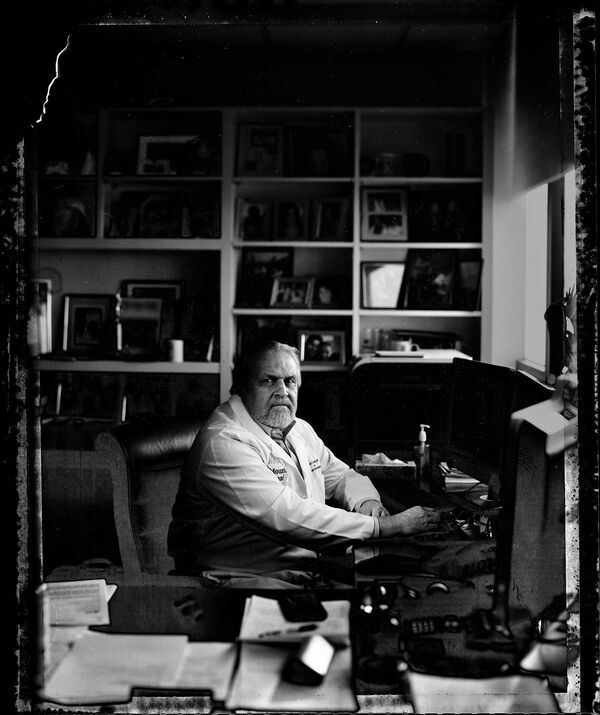
Dennis Charney at Mount Sinai.PHOTOGRAPHER: MAX AGUILERA-HELLWEG FOR BLOOMBERG BUSINESSWEEK
Dennis Charney, dean of the Icahn School of Medicine at Mount Sinai in New York, works from an office filled with family pictures, diplomas, and awards from a long career in research. One thing on the wall is different from the rest: a patent for the use of a nasal-spray form of ketamine as a treatment for suicidal patients. The story of the drug is in some ways the story of Charney’s career.
In the 1990s he was a psychiatry professor, mentoring then associate professor John Krystal at Yale and trying to figure out how a deficit of serotonin played into depression. Back then, depression research was all about serotonin. The 1987 approval of Prozac, the first selective serotonin reuptake inhibitor, or SSRI, ushered in an era of what people in the industry call me-too drug development, research that seeks to improve on existing medicines rather than exploring new approaches. Within this narrow range, pharmaceutical companies churned out blockbuster after blockbuster. One in eight Americans age 12 and older reported using antidepressants within the past month, according to a survey conducted from 2011 to 2014 by the U.S. Centers for Disease Control and Prevention.
Charney was a depression guy; Krystal was interested in schizophrenia. Their curiosity led them to the same place: the glutamate system, what Krystal calls the “main information highway of the higher brain.” (Glutamate is an excitatory neurotransmitter, which helps brain cells communicate. It’s considered crucial in learning and memory formation.) They had already used ketamine to temporarily produce schizophrenia-like symptoms, to better understand glutamate’s role in that condition. In the mid-1990s they decided to conduct a single-dose study of ketamine on nine patients (two ultimately dropped out) at the Yale-affiliated VA Connecticut Healthcare System in West Haven to see how depressed people would react to the drug.
“If we had done the typical thing … we would have completely missed the antidepressant effect”
Outside the field of anesthesiology, ketamine is known, if it’s known at all, for its abuse potential. Street users sometimes take doses large enough to enter what’s known as a “K hole,” a state in which they’re unable to interact with the world around them. Over the course of a day, those recreational doses can be as much as 100 times greater than the tiny amount Charney and Krystal were planning to give to patients. Nonetheless, they decided to monitor patients for 72 hours—well beyond the two hours that ketamine produces obvious behavioral effects—just to be careful not to miss any negative effects that might crop up. “If we had done the typical thing that we do with these drug tests,” Krystal says, “we would have completely missed the antidepressant effect of ketamine.”
Checking on patients four hours after the drug had been administered, the researchers saw something unexpected. “To our surprise,” Charney says, “the patients started saying they were better, they were better in a few hours.” This was unheard of. Antidepressants are known for taking weeks or months to work, and about a third of patients aren’t sufficiently helped by the drugs. “We were shocked,” says Krystal, who now chairs the Yale psychiatry department. “We didn’t submit the results for publication for several years.”
When Charney and Krystal did publish their findings, in 2000, they attracted almost no notice. Perhaps that was because the trial was so small and the results were almost too good to be true. Or maybe it was ketamine’s reputation as an illicit drug. Or the side effects, which have always been problematic: Ketamine can cause patients to disassociate, meaning they enter a state in which they feel as if their mind and body aren’t connected.
But probably none of these factors mattered as much as the bald economic reality. The pharmaceutical industry is not in the business of spending hundreds of millions of dollars to do large-scale studies of an old, cheap drug like ketamine. Originally developed as a safer alternative to the anesthetic phencyclidine, better known as PCP or angel dust, ketamine has been approved since 1970. There’s rarely profit in developing a medication that’s been off patent a long time, even if scientists find an entirely new use for it.
Somehow, even with all of this baggage, research into ketamine inched forward. The small study that almost wasn’t published has now been cited more than 2,000 times.
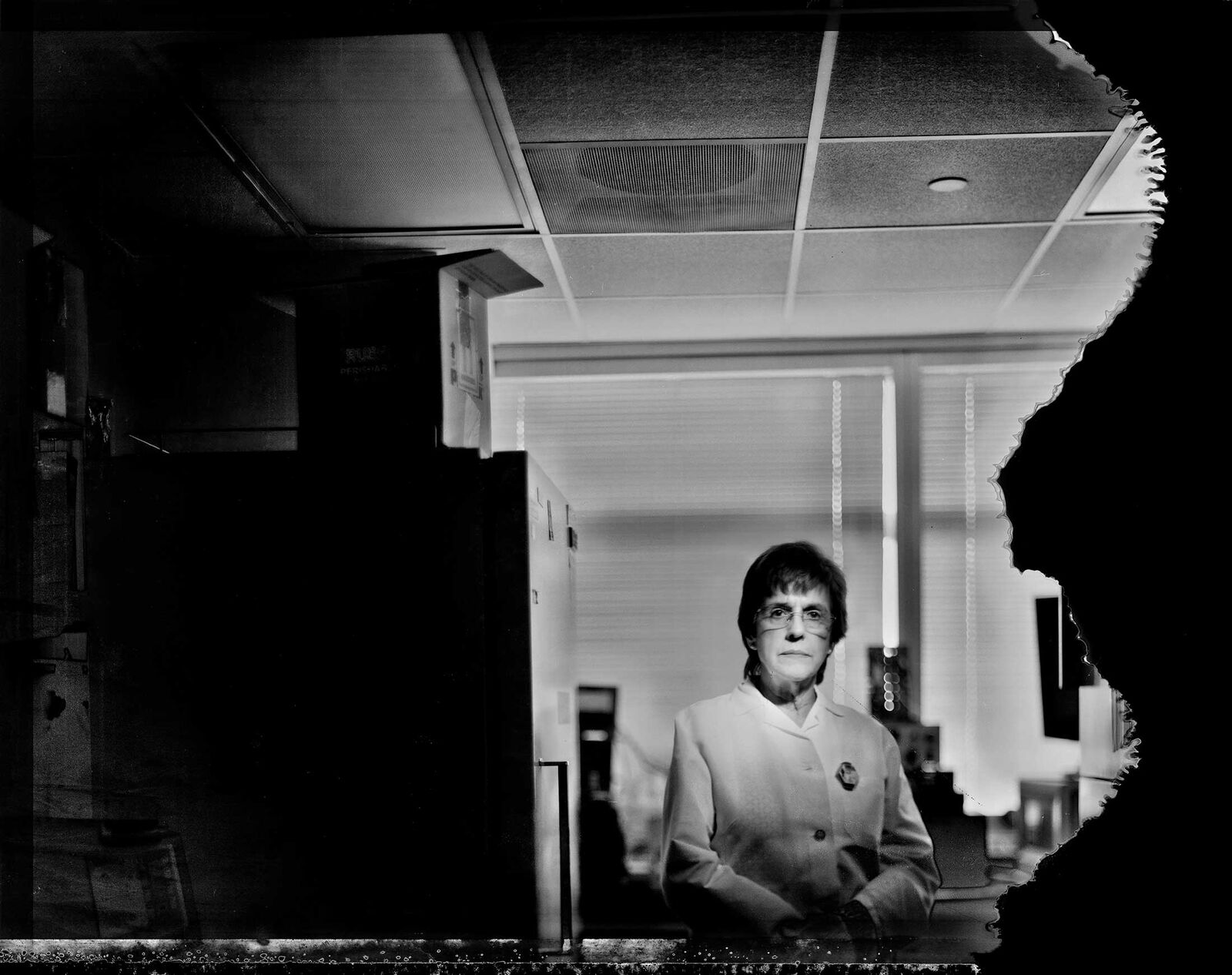
John Mann in his office at Columbia’s New York State Psychiatric Institute.PHOTOGRAPHER: MAX AGUILERA-HELLWEG FOR BLOOMBERG BUSINESSWEEK
Suicide is described in medicine as resulting from a range of mental disorders and hardships—a tragedy with many possible roots. Conditions such as severe depression, bipolar disorder, and schizophrenia are known risk factors. Childhood trauma or abuse may also be a contributor, and there may be genetic risk factors as well.
From these facts, John Mann, an Australian-born psychiatrist with a doctorate in neurochemistry, made a leap. If suicide has many causes, he hypothesized, then all suicidal brains might have certain characteristics in common. He’s since done some of the most high-profile work to illuminate what researchers call the biology of suicide. The phrase itself represents a bold idea—that there’s an underlying physiological susceptibility to suicide, apart from depression or another psychiatric disorder.
Mann moved to New York in 1978, and in 1982, at Cornell University, he started collecting the brains of people who’d killed themselves. He recruited Victoria Arango, now a leading expert in the field of suicide biology. The practice of studying postmortem brain tissue had largely fallen out of favor, and Mann wanted to reboot it. “He was very proud to take me to the freezer,” Arango says of the day Mann introduced her to the brain collection, which then numbered about 15. “I said, ‘What am I supposed to do with this?’ ”
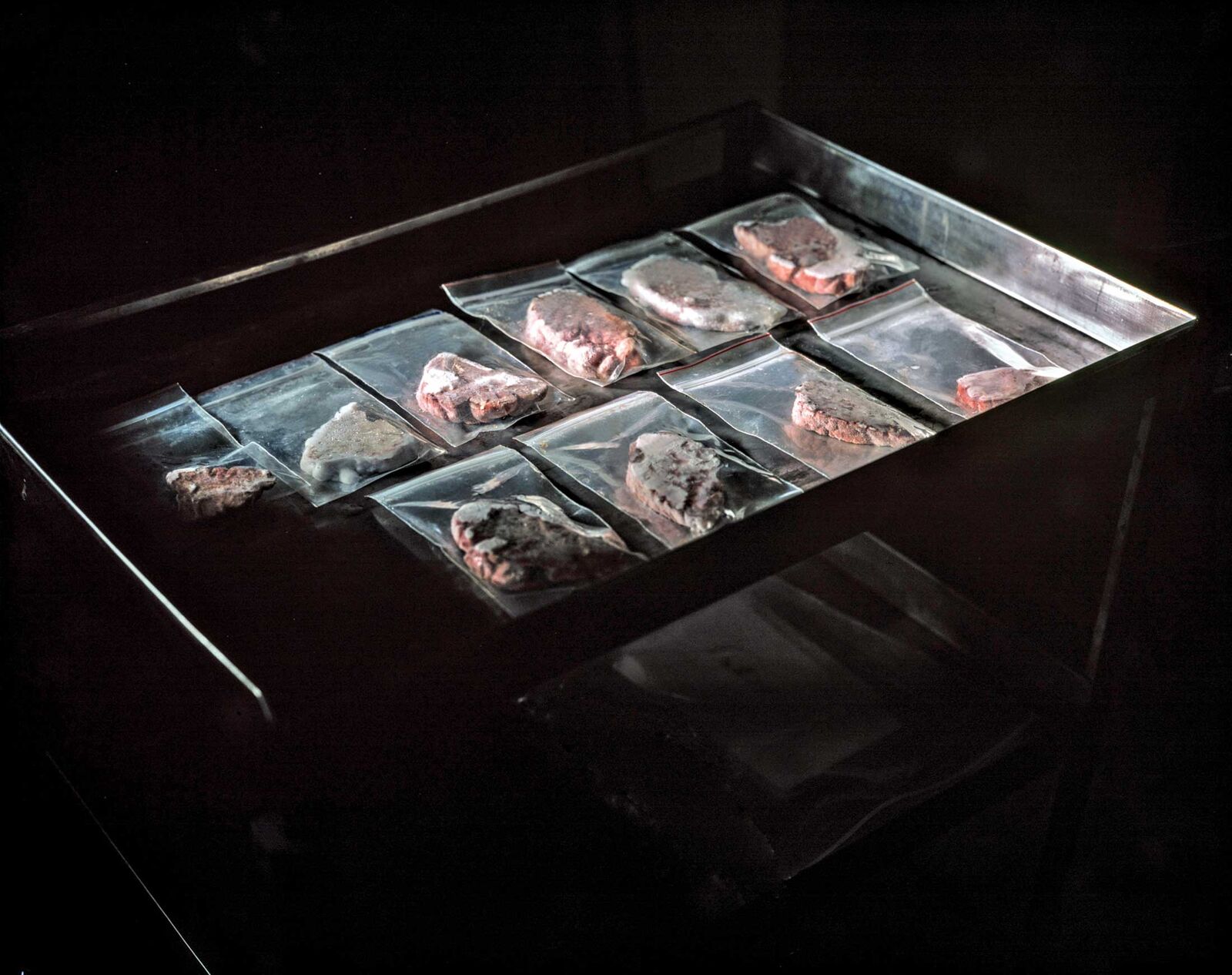
Some of Mann’s brain collection.PHOTOGRAPHER: MAX AGUILERA-HELLWEG FOR BLOOMBERG BUSINESSWEEK
They took the work, and the brains, first to the University of Pittsburgh, and then, in 1994, to Columbia. They’ve now amassed a collection of some 1,000 human brains—some from suicide victims, the others, control brains—filed neatly in freezers kept at –112F. The small Balkan country of Macedonia contributes the newest brains, thanks to a Columbia faculty member from there who helped arrange it. The Macedonian brains are frozen immediately after being removed and flown in trunks, chaperoned, some 4,700 miles to end up in shoe-box-size, QR-coded black boxes. Inside are dissected sections of pink tissue in plastic bags notated with markers: right side, left side, date of collection.
In the early 1990s, Mann and Arango discovered that depressed patients who killed themselves have subtle alterations in serotonin in certain regions of the brain. Mann remembers sitting with Arango and neurophysiologist Mark Underwood, her husband and longtime research partner, and analyzing the parts of the brain affected by the deficit. They struggled to make sense of it, until it dawned on them that these were the same brain regions described in a famous psychiatric case study. In 1848, Phineas Gage, an American railroad worker, was impaled through the skull by a 43-inch-long tamping iron when the explosives he was working with went off prematurely. He survived, but his personality was permanently altered. In a paper titled “Recovery From the Passage of an Iron Bar Through the Head,” his doctor wrote that Gage’s “animal propensities” had emerged and described him as using the “grossest profanity.” Modern research has shown that the tamping iron destroyed key areas of the brain involved in inhibition—the same areas that were altered in the depressed patients who’d committed suicide. For the group, this was a clue that the differences in the brain of suicidal patients were anatomically important.
Columbia’s Victoria Arango.PHOTOGRAPHER: MAX AGUILERA-HELLWEG FOR BLOOMBERG BUSINESSWEEK
“Most people inhibit suicide. They find a reason not to do it,” Underwood says. Thanks to subtle changes in the part of the brain that might normally control inhibition and top-down control, people who kill themselves “don’t find a reason not to do it,” he says.
About eight years ago, Mann saw ketamine research taking off in other corners of the scientific world and added the drug to his own work. In one trial, his group found that ketamine treatment could ease suicidal thoughts in 24 hours more effectively than a control drug. Crucially, they found that the antisuicidal effects of ketamine were to some extent independent of the antidepressant effect of the drug, which helped support their thesis that suicidal impulses aren’t necessarily just a byproduct of depression. It was this study, led by Michael Grunebaum, a colleague of Mann’s, that made a believer of Joe Wright.
“It’s like you have 50 pounds on your shoulders, and the ketamine takes 40 pounds off”
In 2000, the National Institutes of Health hired Charney to run both mood disorder and experimental drug research. It was the perfect place for him to forge ahead with ketamine. There he did the work to replicate what he and his colleagues at Yale had discovered. In a study published in 2006, led by researcher Carlos Zarate Jr., who now oversees NIH studies of ketamine and suicidality, an NIH team found that patients had “robust and rapid antidepressant effects” from a single dose of the drug within two hours. “We could not believe it. In the first few subjects we were like, ‘Oh, you can always find one patient or two who gets better,’ ” Zarate recalls.
In a 2009 study done at Mount Sinai, patients suffering from treatment-resistant depression showed rapid improvement in suicidal thinking within 24 hours. The next year, Zarate’s group demonstrated antisuicidal effects within 40 minutes. “That you could replicate the findings, the rapid findings, was quite eerie,” Zarate says.
Finally ketamine crossed back into commercial drug development. In 2009, Johnson & Johnson lured away Husseini Manji, a prominent NIH researcher who’d worked on the drug, to run its neuroscience division. J&J didn’t hire him explicitly to develop ketamine into a new pharmaceutical, but a few years into his tenure, Manji decided to look into it. This time it would come in a nasal-spray form of esketamine, a close chemical cousin. That would allow for patent protection. Further, the nasal spray removes some of the challenges that an IV form of the drug would present. Psychiatrists, for one thing, aren’t typically equipped to administer IV drugs in their offices.
While these wheels were slowly turning, some doctors—mostly psychiatrists and anesthesiologists—took action. Around 2012 they started opening ketamine clinics. Dozens have now popped up in major metropolitan areas. Insurance typically won’t touch it, but at these centers people can pay about $500 for an infusion of the drug. It was at one time a cultural phenomenon—a 2015 Bloomberg Businessweek story called it “the club drug cure.” Since then, the sense of novelty has dissipated. In September the American Society of Ketamine Physicians convened its first medical meeting about the unconventional use of the drug.
“You are literally saving lives,” Steven Mandel, an anesthesiologist-turned-ketamine provider, told a room of about 100 people, mostly doctors and nurse practitioners, who gathered in Austin to hear him and other early adopters talk about how they use the drug. Sporadic cheers interrupted the speakers as they presented anecdotes about its effectiveness.
There were also issues to address. A consensus statementin JAMA Psychiatry published in 2017 said there was an “urgent need for some guidance” on ketamine use. The authors were particularly concerned with the lack of data about the safety of prolonged use of the drug in people with mood disorders, citing “major gaps” in the medical community’s knowledge about its long-term impact.
The context for the off-label use of ketamine is a shrinking landscape for psychiatry treatment. An effort to deinstitutionalize the U.S. mental health system, which took hold in the 1960s, has almost resulted in the disappearance of psychiatric hospitals and even psychiatric beds within general hospitals. There were 37,679 psychiatric beds in state hospitals in 2016, down from 558,922 in 1955, according to the Treatment Advocacy Center. Today a person is often discharged from a hospital within days of a suicide attempt, setting up a risky situation in which someone who may not have fully recovered ends up at home with a bunch of antidepressants that could take weeks to lift his mood, if they work at all.
A ketamine clinic can be the way out of this scenario—for people with access and means. For Dana Manning, a 53-year-old Maine resident who suffers from bipolar disorder, $500 is out of reach. “I want to die every day,” she says.
After trying to end her life in 2003 by overdosing on a cocktail of drugs including Xanax and Percocet, Manning tried virtually every drug approved for bipolar disorder. None stopped the mood swings. In 2010 the depression came back so intensely that she could barely get out of bed and had to quit her job as a medical records specialist. Electroconvulsive therapy, the last-ditch treatment for depressed patients who don’t respond to drugs, didn’t help.
Her psychiatrist went deep into the medical literature to find options and finally suggested ketamine. He was even able to get the state Medicaid program to cover it, she says. She received a total of four weekly infusions before she moved to Pennsylvania, where there were more family members nearby to care for her.
The first several weeks following her ketamine regimen were “the only time I can say I have felt normal” in 15 years, she says. “It’s like you have 50 pounds on your shoulders, and the ketamine takes 40 pounds off.”
She’s now back in Maine, and the depression has returned. Her current Medicare insurance won’t cover ketamine. She lives on $1,300 a month in disability income. “Knowing it is there and I can’t have it is beyond frustrating,” she says.
Mark Underwood at the New York State Psychiatric Institute.PHOTOGRAPHER: MAX AGUILERA-HELLWEG FOR BLOOMBERG BUSINESSWEEK
Ketamine is considered a “dirty” drug by scientists—it affects so many pathways and systems in the brain at the same time that it’s hard to single out the exact reason it works in the patients it does help. That’s one reason researchers continue to look for better versions of the drug. Another, of course, is that new versions are patentable. Should Johnson & Johnson’s esketamine hit the market, the ketamine pioneers and their research institutions stand to benefit. Yale’s Krystal, NIH’s Zarate, and Sinai’s Charney, all of whom are on the patent on Charney’s wall, will collect royalties based on the drug’s sales. J&J hasn’t said anything about potential pricing, but there’s every reason to believe the biggest breakthrough in depression treatment since Prozac will be expensive.
The company’s initial esketamine study in suicidal patients involved 68 people at high risk. To avoid concerns about using placebos on actively suicidal subjects, everyone received antidepressants and other standard treatments. About 40 percent of those who received esketamine were deemed no longer at risk of killing themselves within 24 hours. Two much larger trials are under way.
When Johnson & Johnson unveiled data from its esketamine study in treatment-resistant depression at the American Psychiatric Association meeting in May, the presentation was jammed. Esketamine could become the first-ever rapid-acting antidepressant, and physicians and investors are clamoring for any information about how it works. The results in suicidal patients should come later this year and could pave the way for a Food and Drug Administration filing for use in suicidal depressed patients in 2020. Allergan expects to have results from its suicide study next year, too.
“The truth is, what everybody cares about is, do they decrease suicide attempts?” says Gregory Simon, a psychiatrist and mental health researcher at Kaiser Permanente Washington Health Research Institute. “That is an incredibly important question that we hope to be able to answer, and we are planning for when these treatments become available.”
Exactly how ketamine and its cousin esketamine work is still the subject of intense debate. In essence, the drugs appear to provide a quick molecular reset button for brains impaired by stress or depression. Both ketamine and esketamine release a burst of glutamate. This, in turn, may trigger the growth of synapses, or neural connections, in brain areas that may play a role in mood and the ability to feel pleasure. It’s possible the drug works to prevent suicide by boosting those circuits while also reestablishing some of the inhibition needed to prevent a person from killing himself. “We certainly think that esketamine is working exactly on the circuitry of depression,” Manji says. “Are we homing in exactly on where suicidal ideation resides?” His former colleagues at NIH are trying to find that spot in the brain as well. Using polysomnography—sleep tests in which patients have nodes connected to various parts of their head to monitor brain activity—as well as MRIs and positron emission tomography, or PET scans, researchers can see how a patient’s brain responds to ketamine, to better understand exactly what it’s doing to quash suicidal thinking.
Concerns about the side effects of ketamine-style drugs linger. Some patients taking esketamine have reported experiencing disassociation symptoms. Johnson & Johnson calls the effects manageable and says they cropped up within an hour of the treatment, a period in which a person on the drug would likely be kept in the doctor’s office for monitoring. Some patients also experienced modest spikes in blood pressure within the same timeframe.
Nasal-spray dosing brings other issues. The Black Dog Institute in Australia and the University of New South Wales in Sydney, which teamed up to study a nasal-spray form of ketamine, published their findings last March in the Journal of Psychopharmacology. The researchers found that absorption rates were variable among patients. J&J says its own studies with esketamine contradict these findings.
But in the wake of the opioid crisis, perhaps the biggest worry is that loosening the reins too much on the use of ketamine and similar drugs could lead to a new abuse crisis. That’s why Wall Street analysts are particularly excited by Allergan’s rapid-acting antidepressant, rapastinel, which is about a year behind esketamine in testing. Researchers say it likely acts on the same target in the brain as ketamine, the NMDA receptor, but in a more subtle way that may avoid the disassociation side effects and abuse potential. Studies in lab animals show the drug doesn’t lead creatures to seek more of it, as they sometimes do with ketamine, says Allergan Vice President Armin Szegedi. Allergan’s medicine is an IV drug, but the company is developing an oral drug.
For its suicide study, Allergan is working hard to enroll veterans, one of the populations most affected by the recent spike in suicides, and has included several U.S. Department of Veterans Affairs medical centers as sites in the trial. More than 6,000 veterans died by suicide each year from 2008 to 2016, a rate that’s 50 percent higher than in the general population even after adjusting for demographics, according to VA data.
“How the brain mediates what makes us who we are is still a mystery, and maybe we will never fully understand it,” Szegedi says. “What really changed the landscape here is you had clinical data showing ‘This really does the trick.’ Once you find something in the darkness, you really have to figure out: Can you do something better, faster, safer?”
With perseverance, you can build the life you want to live.
You’ve probably seen the photo of an old stone lighthouse in the storm, with overwhelming waves crashing against it and around it. It looks like it will surely be knocked down…but it’s not. Those waves go on year in and year out, decades upon decades, but it stands strong. It stands to give light to ships in the storm. Steadfast, it shines its light, no matter what.
This is persistence. Holding steadfast to the hope for better days, believing in the peace that will follow the storm, no matter how great the pressure… it endures.
Storms are a part of every life, and the risk of collapse is real. If there was no fear, no risk, the endurance would be unremarkable.
However, because the risk is real, there is great reward when you see the calm that follows the storm. And each storm that you survive prepares you to be stronger to withstand the next one.
Holding Steady in Chronic Illness and Abuse
Marti withstood storms. Life-threatening illness that came in waves and threatened to destroy her. An abusive partner who shifted from violent to repentant and back again, bringing her within an inch of her life. Repeatedly.
But each time, she nursed her wounds, and determined to try again.
Marty had contemplated or attempted suicide quite a few times in the 25 years she’d been depressed. Through those times Marty’s depression worsened and she wanted to die, but she kept holding on for a day when life might get better.
After her ketamine treatment, she discovered that she still had some of the perseverance she’d developed through those years of constant crisis. And, she learned about the importance of practicing endurance, self-control,letting go, and honesty with herself.
As the ketamine treatment continued to improve her outlook long after the infusions were over, she thought often about how to work on her “infrastructure” that she’d heard so much about.
How to increase her own determination to stand steady when some symptom returned, by knowing it would pass again like they’d come to do.
Or to keep putting one foot in front of the other when she lost her job and wanted to give up. …Or when she had 2 twelve-day hospitalizations the same month and she couldn’t see a time when she would be well.
Persistence – The Road to Resilience – May Be Enhanced by Ketamine
While she was undergoing ketamine treatment, she arranged with her therapist to have a session 24 hours after each infusion. It was clear she needed therapy to heal from the scars of that abusive relationship.
And she’d understood that there was something special about the 24 mark after the infusion that really helped the therapy to be more effective.
Marti found the neuroplasticity ketamine treatment had initiated allowed her to see through her faulty thinking in that relationship, so she could heal, and move forward in her life.
It encouraged her when she realized that each time she held steady through a period of emotionally swinging out of control, she felt stronger to do that the next time.
After awhile, she also worked at being kind to others in the wake of her symptoms subsiding post- infusion. The more times she stopped herself from over reacting toward someone, the easier it was the next time.
Each of these steps helped her peace to grow. She felt more serene, more confident in her ability to function in life. And in her healthier state, she found someone new who brought out the best in her, and supported her healing and restoration.
She’s now in full remission and kindness has again become the backdrop of her nature, though her assertive personality is still fully hers. She couldn’t have gained this ground without ketamine, but once she had its help, she made great strides that paid off in the reward of a fulfilling life.
Holding Steady Between Bipolar Episodes
Bernie withstood storms. Like Marty, he came close to succumbing to them. The frequent storms of bipolar depression made survival appear like an ugly life sentence, with no escape.
But, then his parents heard about ketamine treatment. They gave him articles to read …and the more he learned, the more he wanted it.
After the treatment, he felt relieved… but there were still symptoms some of the time. When symptoms did come up, he knew he needed to keep putting one foot in front of the other, and keep moving forward, because he could finally see hope.
He found that the reduced symptoms and his better frame of mind in between was making his life more “endurable” when the symptoms did rise up.
Persistence is believing in good days ahead when a storm is pounding down on you and your ship is breaking apart beneath your feet.
Persistence knows that no matter how overwhelming this moment…or this decade…seems to be, there will be a better day – a happier ending.
When you’re persistent, your mind is focused on the positiveoutcomeof the crushing circumstances you’re enduring, and you know that you don’t want obstacles like complaining or an attitude of defeat to prevent you from reaching that reward. So you look at the promise you see of what lies ahead, rather than focusing on or magnifying the circumstances you’re in.
And like Marty, each time you hold onto that promise and plod forward with determination, you gain more strength to do it again in an even worse storm. You get stronger.
The seeming foreverness of each bout with illness that never seemed to stop for years, and the seeming inevitability that the abuse would finally end her life, only bowed and gave way to her hope as she worked with the ketamine treatment to change her outlook.
And hope, as well as the ability to be resilient during storms, finally took root and stayed.
So persistence is a component of strength you can develop,nurture, and establish within yourself. Like a well-dug foundation it will hold you on course during the most threatening times of life.
Persistence is akin to perseverance.
Keep on keeping on…no matter how shrill the wind whistles. And no matter how long you pull your cap down over your head and bow into the freezing rain, you will endure. Because that persevering will hold firm in your mind the view on the other side of what’s going on, and it gives you the durability to emerge from the whole horror unscathed.
A bit wiser, a bit stronger, yes. But with a new confidence that drives away fear.
In time, you can arm yourself with that new confidence and the hard-earned wisdom that reminds you what it takes to survive, and build the future you find in the pot o’ gold on the other side.
One step at a time. With determination, and a new instinctive sense that it’s persistence that will keep you on the scene so you can enjoy the rewards that await you.
Because it’s persistence that helps you try again and again and again. Perseverance tells you to get back up after falling down, brush yourself off, figure out why you fell, and incorporate that new knowledge into your next try.
Stubborn Persistence is Required for Marriage to Survive
Do you notice older couples who are white haired, and take evening walks holding hands with their dog on a leash? Ever wonder how they stayed in love that long?
It wasn’t magic.
There is no 40-, 50-, 60-year marriage or more that lasted that long without persistence. No one knows how to make a marriage work on the wedding day.
Some may have a little more insight than others about getting along, or putting someone else’s interests ahead of their own.
In this generation of self-assertion and self-absorption, that’s all but a lost art. Still, it wasn’t an accident that two people with stooped posture and white hair feel like holding hands and enjoying each other’s company after so many decades of living together.
To enjoy their autumn years, they had to learn early about getting back up and trying again. They’ve most likely had times when they couldn’t stand each other and didn’t want to stay together even another day. But one of them, one time or another, probably stepped up with persistence and determined to build a bridge, forgive the other one, and ask for forgiveness, too.
Without that? They wouldn’t have made it to their next anniversary. And you can ask them…but I’d guess with confidence that they both have done that many times…and more times than they can count… they’ve each taken turns at playing that role, until they managed to get really good at it.
Over time they learned that persistence, road to resilience, has kept their marriage strong.
…And, eventually realized they were glad they were still together…to watch their children graduate from high school; to give away their daughters in marriage; and to welcome and play with their grandchildren and great grandchildren.
You’re Human, After All
Everyone falls down in their endeavors. But the persistent ones brush off and get back up and try again…and again… As many times as it takes as long as they live.
That kind of persistence leads to success, and resilience, and countless rewards.
Does a three-year-old play the violin like a maestro the first time he picks it up?
No.
He makes mistakes and gets frustrated. He wants to throw it away and forget it. But his mom, whose name is Persistence, sees that he picks it back up and tries again. And practices. Again and again… and over the years, the 3-year-old eventually lands 1st chair in high school… and later gets to decide if he’d like to accept that invitation to play in the Philadelphia Philharmonic.
What do you want to bet he’s now become so good at persistence, he knows how to apply it in countless areas of his life? As with the hare and the tortoise: slow and steady – consistently – wins the race.
Persistence.
Honestly? Without perseverance and persistence there’s not much you can accomplish in life. Because everyone falls down. Everyone gets discouraged at some point. Everyone fails at something. Abandoning the vision strikes the death blow to that endeavor.
However, with persistence there’s nothing you cannot do. The more you use it, the stronger it gets. Until persisting is part of who you are, and a tool you put to use in every project. And persistence gives way to resilience.
The character of a psychiatric disorder – the actual activity of it in the brain – wears down resilience, and flattens out persistence. If you’ve suffered from depression, social anxiety, PTSD, bipolar depression, or addiction, or suicidal thinking, you probably can’t imagine the resilience and persistence required to stand up after you’ve been down so long.
But that’s where ketamine comes in. Since at least a third of all people afflicted with these disorders experience no relief from prescribed medications,something more novel and advanced is required to bring relief. Ketamine treatment is the first treatment that has made an extraordinary difference for these patients.
And it’s such an advantage that another benefit of ketamine is its neuroplasticity that makes it easier for you to make changes in your mind that allow you adapt to your circumstances, reduce your stress, apply persistence, and build resilience.
If you’re even considering treatment with IV ketamine, or have recently received it, you know you have persistence and a good measure of grit.
You know what it’s been like…how you’ve been able to withstand the disappointment of one treatment after another — or one effort after another — not working. You already have some persistence working for you.
Ketamine delivers a one – two punch. First restoring connections in the signaling systems in the brain, and then providing neuroplasticity to help you make the changes in your outlook you want to put in place.
Because if you’ve been depressed, and now you feel better after ketamine treatment, you want to keep feeling better, right?
You want to do the work that will help you maintain a remission frame of mind. So you can continue growing, and press on with developing the life you want to live. The best way to do that is to remove the stressors in your life.
We do the work, too. We’re up at night, reading, refining, persisting in trying to identify the best treatment options that can get you back to your best self. We offer treatment when your symptoms persist, when your doctors have done all they can, when you’ve just gotten tired.
We’re here to help you win your battles… and in that process, persistence is priceless.
Be sure it’s your real self you’re showing. Because it is your real self that needs to be loved. Daphne Rose Kingma
It’s the most healing thing you can accomplish as you work through the changes in your thinking, your responses, your outlook and attitude about people and your world after ketamine treatment. As you build an infrastructure of peace and generosity…fix your inner life and learn to embrace the truth about yourself.
Self-doubt, self-defensiveness, and pretense eat away at your self-respect and love of yourself…and can lead to depression. But you want to reduce the stress in your life to help your wellbeing thrive.
How do you reduce the stress? By facing the truth that eats at you or that you hide from yourself.
What sort of truth..? Well, that you’re human, for starters. That you’re not always perfect in your responses to life’s stressors. And that there are plenty of things you can learn to make your life work better for you.
Things like humility, admitting your shortcomings, and asking for forgiveness, to name a few. To accept yourself as a learner in this life and not to expect yourself to know everything out of the gate.
Using Pride as a Shield of Protection
Pride drives many of us to present ourselves as infallible, until we realize that pride also shackles us from the fulfillment of intimacy in relationships.
Replacing pride with love can be scary. It can make you feel exposed and vulnerable until you get used to it. But doing so can transform your life and drive loneliness away.
Something we do as humans is to construct personas that we tell ourselves others will find more likable or respectable than who we really are. But a persona that you construct is always stilted. Unnatural.
Have you ever been around someone who’s utterly at home in his own skin? Isn’t he or she absolutely enjoyable and relaxing to be around? The reason they’re enjoyable and relaxing to be around is because they’ve found a certain degree of peace with who they are.
They accept themselves as they are so there’s no need for pretense. When someone is trying to prove themselves, it can make you uncomfortable. But when you sense they have nothing to prove, you subconsciously feel like you can relax.
At the same time, you get the sense that their mental health is pretty good.
It’s the exception to meet someone like that, rather than the rule. Most of us aren’t free of pretense, until we learn what we need to learn so we can bewho we are.
This shouldn’t be so hard. You know?
But we live in a world that feels dangerous and makes us think we have to protect ourselves. So we do. We build walls around ourselves. Thick, impenetrable armor to keep ourselves safe.
And we guard that armor, those walls, to stay safe. Then, if anything threatens to expose us under the armor, we get anxious and defend it. Don’t we?
So, after all that work, we’re reluctant to knock down those walls. We don’t feel safe without the armor.
And that’s why we have to learn to see what the walls and the armor are costing us. We have to see that they’re interrupting our social development and our opportunities for close, fulfilling relationships.
They also require that we remain vigilant, prepared to defend any attack on our security in the armor. So we can’t relax. We can’t let our guard down.
Fix Your Inner Life
You have to change the way you think. The way you respond to things.
You may need to get really honest with yourself. You may find you have to learn how to embrace the truth, and learn to accept yourself as human, fallible, and forgivable. When you do that, you may also feel more lovable.
And when you feel lovable…and LOVED… you’ll tend to find it much easier to generously love others.
Ok. I know it’s certainly easier said than done. It’s an uncomfortable process to look head-on at things in yourself you haven’t before. But, it leads to a very comfortable, confident, joyful way of living.
But, if you’ve had ketamine treatment, and feel much, much better, you sure want to stay better, right?
Well, one important aspect of staying better is to unravel the conflict you carry inside you that you may not even realize is there.
But…it IS there. And it interferes with the peace within you. So what can you do?
Embrace the truth about yourself.
Just like letting go of what you NEED to let go of, when you embrace truth about yourself it helps you relax with who you really are.
Accepting your shortcomings, and dropping that guard that says you’re flawless, admirable, or beyond reproach, helps you embrace the truth that you’re a real living fallible human worthy of giving and receiving love.
And there’s another plus: doing so will increase your self respect.
Sound pretty far out? What if you don’t know what you have inner conflict about? Or how to tell if your guard is up?
What if you’ve been presenting yourself the way you think people expect you to for so long you don’t remember what it was like to be yourself?
Scrutinizing Your Inner Self
Start with looking closely at that experience or event that scratches at your conscious memories. What are you telling yourself about it? What about it might be seen differently?
Pay attention to your inner voice…do you find yourself defending yourself over what happened? What could you be “hiding” from yourself?
It might be related to some sort of blame you place on another person… or something you’re hiding from yourself. Look deeper. Could you have caused the situation, even though you didn’t intend to? Is it possible you share responsibility for what happened?
And what happens when you look at the other person’s role with a heart of forgiveness and understanding? Can you see how the outcome might not have been his/her intent?
Then. Just say it. “It’s my responsibility that so-and-so happened. ” Or…share the responsibility… ” I share in the responsibility that so-and-so happened. I didn’t intend for it to go down the way it did. He/she probably didn’t intend it either. I’m human, and I was wrong. I handled the situation badly. I’m truly sorry, and I’ll really try to not do it again.” Then move on with the resolve to make good decisions and to treat others well going forward.
I Was Wrong
It’s very difficult sometimes to reach this point. But giving up the fight and accepting that you’re fallible can be so liberating. You THOUGHT it could destroy you, hence the long arduous combat in your mind.
But when you really see that you were wrong…you can accept that it happened. And the fight inside you…the defensive arguments in your head…begin to disappear and become quiet.
And that quiet is a deposit of peace into your inner self. Enjoy the reward of harmony you feel.
Then take what you’ve learned and apply it to the next situation that comes to mind…because another situation will. You’re human and fallible. And so is everyone you know.
Going forward, you may find you’re a little less judgmental, a bit less inhibited…and more and more relaxed. In that relaxed and peaceful state, it’s much easier to feel better.
With these things at work within you, you can accept yourself as human, and realize that through forgiveness of yourself you are more able to love and receive love. And that brings joy.
Remember, this discussion is NOT to say that if your remission fades away, it’s your fault.
At Innovative Psychiatry, we want to be a part of your recovery as you use your ketamine treatment to help you bring change in your thinking, your outlook on life, and your attitudes.
If you’re not in the habit, but have experienced joy from ketamine treatment, changes like we’ve talked about can help you continue to enjoy that joy, increasing love…and freedom from emotional pain.
In past posts, we’ve talked about remission by ketamine, the 50-year-old anesthesia medicine that stepped up to the plate in the last ten years or so… to bridge the gap in the treatment of an array of psychiatric disorders.
And once you’ve achieved remission, you want to help ketamine remission last. You don’t want to return to your same old ways of reacting. Or to the same old stress and risk losing the ground you’ve gained.
So let’s continue. We’ve talked about the growing body of evidence that demonstrates the extraordinary antidepressant effects of this medicine in numerous psychiatric disorders. Illnesses like severe treatment-resistant depression and bipolar depression. as well as its unparalleled impact on PTSD to arrest symptoms and restore peace to the traumatized individual.
In our own practice, Innovative Psychiatry, we’ve seen ketamine treatment make a dramatic difference with social anxiety, that cruel disorder that creates obstacles between you and financial success, self respect, meaningful relationships, and general fulfillment in life.
So that after ketamine treatment, you can effectively interview for the job you want. You can initiate and develop loving relationships. In fact, you can basically BE who you are and at your best. While you contribute to your team at work and your family and community, as well. So you want to help ketamine remission last.
But it doesn’t stop there. We’ve also seen ketamine treatment relieve OCDsymptoms, providing the neuroplasticity for needed changes through therapy.
And then there’s alcohol use disorder as well as crack and other addictions, which ketamine (as demonstrated through the work of Dakwar and others) helps you conquer by weakening or erasing cravings.
We’ve seen similar positive results in our own practice, though there have not yet been enough studies to validate this benefit across the board… yet.
Then, possibly the most amazing of all is suicidal thinking…no matter what the cause that led to it… can be eradicated, often within an hour, and usually in less than four. We’ve seen extensive positive outcomes of this life-saving benefit in our office.
Your Personal Infrastructure Seems to Play Some Role in Making or Breaking Your Remission
Interestingly, because stress is such an important cause of the pruning of brain cell connections (synapses) it appears that sometimes when patients receive ketamine treatment while under severe stress, it seems to not work for them.
Then, sometimes it happens that the patient finally begins to enjoy ketamine’s benefits after the stress is significantly reduced. This is something we’ve observed multiple times but lack the extensive research to back up… yet.
So it’s important that we distinguish those benefits we see every week at Innovative Psychiatry from those that have already been validated by peer-reviewed research.
It takes time for research to catch up with the widespread use of ketamine treatment. And it requires multiplied studies upon more studies to establish the reliability of any benefit.
So let’s be clear that the benefits of ketamine treatment we’ve seen at Innovative Psychiatry have already been reported in research studies. But, not with the overwhelming stacked-up body of evidence that stands behind ketamine for depression. Not enough to proclaim them from the housetops without an explanation.
Even so, it’s important that you know these things are happening, and we’re playing a waiting game for the research to catch up and explain what we’re seeing in practice.
Meanwhile, while we wait, we want to let you know that we’re discussing what we’ve found works for our patients. And although we make the disclaimer that this is not individualized medical advice for you personally, we want to share the best of what we’re reading and actually doing. In the name of transparency. And in the name of hope.
Now to recap…we were talking about how stress seems to undermine the benefits of ketamine…or at least it appears to. And there’s more to stress than meets the eye. Right?
Sometimes the stress is inside our heads…like things aren’t going the way we wish they would, or something we hoped would last doesn’t, or maybe people aren’t doing what we think they should.
Or we like the job but hate the commute and arrive at work ready to rip someone’s head off…or we hate the job and every day is miserable.
…or we have friends who drive us crazy, use and abuse us, but we keep spending time with them.
And that’s where “infrastructure’ comes in. You want to help ketamine remission last. And the rebuilding of your environment, your decision-making, your thinking patterns, and your responses to the challenging moments in life, is part of your personal infrastructure. All of that tries to return you to your former state before treatment…or can establish you in your new peaceful life of joy and productivity.
It’s impossible to cover all those elements in one post, but we’ll attempt to show ways you can tackle certain elements that make up your inner and outer environment over time… here and in some posts to come.
A Full Overhaul Of Your Life, Step by Step, Can Be the BEST Medicine
And a good place to start is by taking a look at learning to let go. It’s completely normal and natural to assume that any depression or anxiety you have is the result of the behavior of others. That you just got worn down from it all.
And there may be some truth in that.
But in exploring the causes, it may surprise you to learn that their behavior may not actually be the cause, as much as your reaction to their behavior that is.
Now understand this.We’re not implying here in any sense that your lack of response to ketamine, or the loss of remission, is in any way your fault, or even within your control.
But it’s important to understand that the best prescription for maintaining stability with remission includes maintaining health in those things in your life and environment that you can control.
Things like your respect for yourself and for other people. Your persistence in pursuing peace in your life and relationships. The development of a kindness-centered approach to yourself and those in the world around you.
…And the evaluation of your life and simplification of the burdens and demands it presents. Ensuring you have the power to enjoy life’s simplest pleasures…which may include letting go of things that pull you down or hold you back.
These are things that can help ketamine remission last.
So let’s talk about a fundamental skill that can change your life…for the better.
Letting Go
When we talk about letting go, it’s not reserved to only one thing…such as letting go of a relationship. Since relationships can be so important in our lives, and the ending of them can be so painful, letting go of relationships that have died is high on the list.
But there are other issues in our lives that may present themselves as we consider letting go to reduce stress.
Such as letting go of being right in our discussions at work with our boss or co-workers, and in our discussions at home with those we love most, such as our spouse and kids.
And what about letting go of fighting to get our way, when obstacles are thrown in our path? This may be akin to letting go of being right, but it has a personality all its own.
Possessions Can Shift from Useful Tools to… Jailer
How about letting go of your pride in your possessions…? For instance, let’s imagine a teenager sets his icy soft drink can on your dining room table…allowing condensation to mar its flawless finish?
What goes through your mind when you see it? Rage that a kid with no manners has caused your beloved heirloom table some damage…? Fear that your spouse will hit the ceiling? Compassion for a young man who didn’t know better… so you pick up the can and set it on a coaster for him?
It’s ok to enjoy having nice things, but when the “thing” is higher on your priority list than the development and well-being of a person…well that “thing” is controlling you.
Which do you value more: A 19th century mahogany table with a flawless finish that was handed down through your family over a hundred years….? Or a tall and lanky boy who needs a haircut and a clean t-shirt ?
If you’re honest with yourself, it really might be the table. But if that’s the case, maybe it will help you see the kinds of things you can work on, possibly with a therapist, to improve the infrastructure in your head.
Because anger causes stress. And anger toward that kid is stress you don’t need. Compassion on the other hand doesn’t, and actually supports your remission frame of mind.
Remember…you’re learning to nurture peace… in your head. And to do it means developing a response of gratitude, humility, and kindness.
What If You Lost It All?
On the other hand, picture your belongings lost in a fire. No one’s fault, really. But it cost you every material thing you own. How do you feel about that? Sad? Sure… all those memories and photos…but the house and belongings?
This is a loss you’ll never fully recover from materially, but does it reach the core of who you are?
Now. Picture the phone call that makes the world STOP. Your spouse, your three children, and your only grandchild have been in a terrible car accident. No one survived.
What do you feel? What does the furniture or sports car mean to you now?
My point here is that we have a way of putting people and things on a priority list… and that list can get all mixed up. But this scenario helps to show how those things we think are important lose their glow instantly when those at the core of our hearts are lost.
And that being the case, putting ourselves through unnecessary stress to preserve things that pale in comparison to those we love… well, it’s a waste of valuable moments and energy when we think about what really matters to us.
And therein lies the secret. Rather than wasting our lives by hurting people to preserve things, we find our life is best spent preserving the moments with those we love the most.
And the things…the houses, cars, antiques, reputation, recognition…none of these things can compete with the peoplewe love the most.
The Greedy Monkey
You’ve heard the story of the monkey who is shown a jar of cookies. A jar that has a small mouth. He sticks his hand in and grabs a cookie…but can’t pull his hand out unless he lets go of the cookie. The opening just won’t accommodate anything larger than his open hand.
Because he won’t let the cookie go, he panics. Swinging the jar around in the air in a temper because it won’t give him the cookie, he finally smacks himself on the head with the jar and it hurts so much, he immediately lets go of the cookie to hold his head.
Sound familiar… at all? Is there anything in your life that’s pleasurable to you that you don’t want to let go? And if circumstances prevent you from having it or keeping it…does it make you mad?
If you have any marred tables or unyielding jars in your life, take a moment and breathe… Think about what trying to protect and preserve that “thing” costs you. Are your feelings on your cuff? Do do you snap at people when its security is threatened? Do you feel panic at the idea of it being removed from your life…?
The Surprise Benefits of Letting Go
The unexpected surprise you can discover by disengaging from “it” is that the angst of control that you’re powerless to perfect is replaced by a growing peace and relief. And when you have succeeded in reaching that point, that same peace and relief is a signal that you’ve now added a brick to the foundation in your personal infrastructure.
That thing, whether it’s your marriage, your shiny sports car, your child who’s supposed to fulfill your dreams….your house, the money you make in your job that prevents you from spending time with those who yearn for your attention…no matter what it is, has been holding you back and isn’t deserving of what it takes from you.
Picture serenity in your life. Peace. What has been removed from the picture when you think of it?
An alcoholic wife, an abusive screaming boyfriend, a job that you bring home and work on till you go to bed…? Maybe it’s more house than you can afford, so you’re driven to work three jobs to pay the bills. If it is, that house controls you.
Life is short. We get the most out of it when we can cherish every moment. In your daydreams, when you wish for reprieve…what do you erase from your life in your mind’s eye to make room for hope? Peace? Love? Enjoyment?
Commit to Finding Ways to Let It Go
First of all, in your mind and heart.
This is one facet of the infrastructure in your life that you may need to confront and adjust to make room for remission.
It will be easier to explore these things after you’ve had ketamine treatments because of the neuroplasticity that results. The ability to think in new ways. To change, and make productive decisions for your life.
So…to get there… you may want to consider ketamine treatment for severe and suffocating depression, your wracking and immobilizing bipolar depression, PTSD that injects traumatic reactions into your days…and your nights.
OCD that stands in the way of your achievements, and that social anxiety that has plagued and isolated you since you were a child. And for suicidal thinking that threatens to snuff your life before you even have a chance to recover.
Wanna Help Ketamine Remission Last? You Can If You Strengthen Your Infrastructure
Strengthening your infrastructure involves ferreting out burdens you can lift off yourself, like excess belongings, excess weight, whatever it is that requires your service and obligation…and prevents you from freely enjoying opportunities with those relationships that matter.
Let it go. Help Ketamine Remission Last
By giving your brain…your inner self…the most optimal environment for healing and growing possible.
It means simplifying the grandness of your life… For you, it might mean living beneath your means so you can travel, write, or volunteer. Or shedding those friendships that demand your time but don’t contribute. It’s shedding the less meaningful to free up time and space for what’s ultimately important.
For this person it may mean letting go of the bitterness he carries toward his ex-spouse for leaving him. For another, it may mean selling the house to travel the country in an RV and stop and paint when the view is spectacular.
And for someone else, it can mean retiring from the corporate job to teach underprivileged children, or to cook meals in a soup kitchen for the homeless.
For you? Maybe it’s saying no to all those obligations that crowd your life so you have time to spend with those who adore you.
Basically, it’s about pulling weeds in your life to help ketamine remission last, and to preserve your joy. To put the life ketamine helps you find to the very best use.
You know what your strengths are…if you take time to think about it. Those special gifts you have ached to get out.
No one can tell you what it is for you. But that’s the fun of exploring your own infrastructure to find your path for cherishing the moments of life, and enjoying your new found joy. It’s a painful process that gives birth to fulfillment. And along that path, you’ll find joy.
Even though we don’t see everyone achieve remission with ketamine treatment, we do get to see that most do. And more and more physicians are learning better and better methods for administering ketamine for the best possible outcomes.
The result is that more physicians are reporting higher numbers and better outcomes. The field of ketamine for psychiatric disorders is growing as physicians and researchers collaborate and learn from each other.
Meanwhile, researchers and physicians alike continue to discover more with hopes of bringing relief and remission to those who aren’t experiencing it now.
If you suffer from symptoms that no medicine has helped, call us.
We’re here to help you experience life the way you’ve longed to live it.