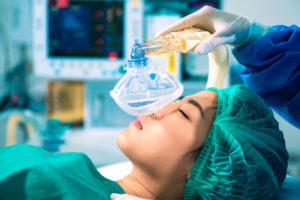
 If This is What You Picture When You Imagine IV Ketamine Treatment for Depression, Think AGAIN!!
And nix that image. Because we’re going to talk about who should provide IV ketamine as treatment for depression.
Ketamine treatment is getting more and more attention in the press as a paradigm shifter for effective treatment for psychiatric mood disorders. And more and more medical professionals are opening offices to offer ketamine treatment for depression, and for pain management. Of course, more availability of ketamine treatment means more relief for more sufferers.
Which is a good thing … right?
Well, yes, but it raises some serious questions.
Ketamine Isn’t for Everyone
Like, for instance, is ketamine treatment for everyone? And the answer to that is “No.” Not everyone will respond to it when it’s used for psychiatric mood disorders.
But there are clinical factors and genetic tests that doctors can use to predict more accurately whether you’re likely to respond to ketamine treatment for depression.
And another question: Is providing ketamine treatment for depression similar to providing ketamine treatment for pain? Is this something any medical doctor can easily do? After all, it’s just a simple medication like any other, right?
The answer to that isn’t exactly straight forward. First of all, the question includes an assumption that any medical doctor can easily prescribe any medication … even for specialized needs.
Legally, this is true. Ethically and practically, it’s not.
And while he may be able to prescribe a drug legally as a medical doctor…is he deeply versed enough in the nuances of the patient’s response to the drug and the drug’s potential side effects…as well as the patient’s potential reaction to those side effects and what to do about them….?
Is it really the best decision for a doctor to treat a condition he/she isn’t fully knowledgable about?
Should an internist treat your periodontal disease?
An internist is expected to recognize and treat pretty much anything going on with your body…after all, he’s well-versed in inflammation and infections, and knows all about antibiotics. But his wide scope prevents him from having a specialist’s focused knowledge and deep experience with specialized aspects of your body, like your gums, for instance. So, you go to a dentist, and your dentist may send you to a periodontist for your gums…if you need it…a specialist’s specialist.
Do All Psychiatrists Treat All Psychiatric Conditions?
Well, let’s consider the nuances of psychiatry. There is a wide range of psychiatric disorders, including behavior disorders, mood disorders, personality disorders, cognitive disorders, developmental disorders, addictive disorders, and more — including all kinds of treatment modalities and several different kinds of psychotherapies we use — and most psychiatrists are not experts at everything.
Of course not.
Most of us gravitate naturally to our interests, and the best of us align our work with our own best selves — we choose the age range, the population, the conditions that fascinate us and tug at our hearts…the modalities that align with the way our own brains work and the way we interact. Some of us are researchers. Some of us are in the trenches. We play to our strengths.
We all should.
Now, back to IV ketamine treatment.
Anesthesiologists Use Ketamine in Surgery
It’s understandable that anesthesiologists would be pretty comfortable treating patients with IV ketamine  since they’ve been using ketamine in surgery and emergency settings throughout their career.
They’re also at ease sitting and monitoring a patient throughout the infusion treatment, because that’s what they do.
Some medical doctors might get a bit antsy during that whole process, but it’s just second nature to an anesthesiologist.
And, it’s true there are certainly plenty of anesthesiologists offering IV ketamine treatment for psychiatric mood disorders. They’re highly skilled in starting IVs, familiar with ketamine, and excellent in handling emergencies in the ER and in the OR.
An anesthesiologist’s education and training is all about life support during critical moments in surgery. And these specialists know physiology like nobody’s business.
But…
Who Should Provide IV Ketamine as Treatment for Depression?
When it comes to evaluating a psychiatric patient as a candidate for off-label use of IV ketamine treatment for treatment-resistant depression or other mood or anxiety disorders, there’s a great deal to manage. The role of ketamine used as an adjunct with complex medications and psychotherapy, for instance.
Plus, the patients’ response to the drug and how to treat therm in their specific state of mind, whatever it is, that emerges during treatment… All within the context of their baseline psychiatric symptoms and vulnerabilities.
Anesthesiologists just aren’t trained for that.
The same is true of nurses, even those in advanced practice.
It’s my belief that the use of ketamine in the treatment of psychiatric disorders is something that is best done by psychiatrists who are thoroughly familiar with IV ketamine treatment.
And here’s why.
Because the things that this treatment requires — assessment of the patient and of the psychiatric response (not just the physiologic response), dose adjustment, management of fear, management of expectations… this is all psychiatric expertise. In addition, the family and their overall involvement (or lack of involvement) in the patient’s suffering… It requires we curate the experience, integrate it with psychotherapy, coordinate it within the context of the patient’s medical problems and with the professionals treating them. All these things are without a doubt what WE do and what our entire specialty is about.
We deal with suicidal patients all day long and every night and weekend–anesthesiologists don’t and, understandably, don’t want to. But many, if not most, patients who receive IV ketamine treatment are not only no strangers to suicide, but in fact are so plagued by such thoughts their lives sometimes hang in the balance. Even to survive till the end of the infusion.
Those tormenting thoughts just seem to creep in even when you’re not looking for them, and bring a presence to the ketamine room that stuns everyone involved. That is, until ketamine stops the suicidal thinking independently… and even if the depression doesn’t stop immediately… but lifts more slowly. A well-informed psychiatrist needs to be present to walk each patient through every scenario, especially when the outcome is a surprise.
So, again, who should provide IV ketamine as treatment for depression? Definitely, not just anybody. Preferably a psychiatrist deeply experienced and educated in the nuances of ketamine treatment in psychiatric patients.
Just as internists are not specialists in all areas of illness, not all psychiatrists are versed in the use of ketamine for psychiatric mood disorders.
So What Kind of Psychiatrist Steps Out to Offer IV Ketamine Treatment?
The ones who are really comfortable with medicine, and adjusting, adapting, and combining it for therapeutic outcomes. The ones who also have a strong identity as a physician first, and who are already experts in psychopharmacology.
These psychiatrists are accustomed to a model of consultation and collaboration. And they like to work collaboratively with other psychiatrists, therapists, PCP’s, and families.
This is no place for lone riders.
These are the ones who know what it’s like when you’re the most suicidal of the suicidal, and who will stand with you and not be afraid. Those who understand that something transformative happens during an infusion. And that the specific experience of the infusion itself matters if there’s to be healing.
We are grateful to the anesthesiologists who brought ketamine out of the OR and into the office.
But the psychiatric care of our most fragile, desperate, and ill patients — with multiple tangled psychiatric disorders, complex histories of polypharmacy and treatment failures, excruciating trauma, and concurrent medical problems — demands the finest life-saving that we have to offer, by psychiatrists. Nothing less.
We continue forward to learn all we can from our patients and the dedicated neuroscientists who  continue to explore the actions of this remarkable drug. As they explore, we continue to see our treatment-resistant patients enjoy extraordinary responses in 80% of cases.
If you’ve suffered from treatment-resistant mood disorders and have tried multiple treatments without success, we get it. Innovative Psychiatry is a practice that specializes in helping people who have not found help before. People who have been to other psychiatrists and were failed by traditional treatments. People who are running low on hope.
Innovative Psychiatry is into hope renewal. Through groundbreaking use of medications and treatments, we’re helping people like you live again. Enjoy life again. Please call us to schedule an appointment. We’ll evaluate whether you’re a likely candidate. There really is hope.
To the release of your very best self,
Lori Calabrese, M.D.


 What Is Your Microbiome and Why Does It Matter?