
Tag: OCD

  • Breaking News: Another Way IV Ketamine SMASHES Depression

    Breaking News: Another Way IV Ketamine SMASHES Depression

    Another way IV ketamine smashes depression is by moving g proteins off lipid rafts in cell membrane.Another way IV Ketamine SMASHES depression

    Sometimes news is so hot it sizzles.

    It lures you away from whatever you’re into.  It captivates you.  And then — just face it — you think to yourself, with admiration, OMG.  You say to yourself … whoever came up with that is brilliant. They nailed it.

    Well, Mark Rasenik and his group from the University of Illinois Chicago College of Medicine nailed it.  They presented absolutely breathtaking work in May at the SBP meeting — the Society of Biological Psychiatry.  It’s the meeting where research is presented that is just so brilliantly conceived and executed that it’s mind-blowing.

    Rasenik’s work is like that.

    He and his group came in from left field with their brilliant discovery of a new way ketamine works which just might explain how and why it can begin to lift depressive symptoms in minutes.

    Understand ketamine’s talents, then get creative

    The goal was to learn what happens on a molecular level that causes IV ketamine’s fast depression relief.  Because, of course, someone wants to design a drug just as effective as ketamine but without its side effects. This is the ever-loving quest for new drugs that wannabe like ketamine.  

    Now, we’ve talked before about how IV ketamine acts on synapses to stimulate them to grow, branch out, and flourish — multiplying the numbers of connections between neurons that send signals deep into the brain. We’ve also talked about neuroplasticity, and how it’s key to this process that causes the brain to change.

    As new synaptic connections are built, and greater communication between brain cells develops, the brain gains the ability to see things in a different perspective, and your outlook becomes brighter and healthier. IV ketamine can jump start that process. Wait. No. It can turbo-charge it.

    How to Get Those G’s Back to Work

    So Rasenik and his team found that “g proteins” were packed on “lipid rafts” in the cell membrane with people G proteins on lipid rafts are moved off the raft shows another way IV ketamine smashes depression.who are depressed. In addition, their brain cell signaling is stifled, which may be the cause of that numbness depressed people experience.

    If this is you, listen up.  Numbness is no joke.

    They’ve demonstrated that when SSRI antidepressants are used, they move g proteins from lipid rafts (I love that visual…like the G’s are languidly floating on a raft in the pool…taking time off being lazy) very gradually, and back into WORK mode. Which is how SSRI’s help some people who are depressed — but it takes weeks or months for relief.

    You see, G proteins produce cyclic AMP, which is vital for the nerve cells to properly send their signals.

    And, Rasenick and his team noted that the movement of the G proteins under the influence of SSRI antidepressants, was gradual … over a period of several days.

    So, let’s take a breath here.

    The Many Talents of IV Ketamine

    We’ve talked about how IV ketamine stimulates neurons to flourish, grow branches, and become prolific with healthy connections for sending signals throughout the brain, especially into the deep brain structures like the hippocampus.

    Now, Dr. Rasenick and his team have discovered that IV ketamine also gathers up the tools the nerve cells need so they actually can send signals throughout this new and bountiful network of connections, or synapses.

    Those unemployed g proteins that were hanging out on the rafts, are pulled off the rafts and put to work to equip the brain cells to do their job.

    And they work fast.

    Remember how it takes several days for the g proteins to move off the rafts with an SSRI? Well, with IV ketamine, it happens in 15 minutes!!

    So … do you see why ketamine acts so fast to remove suicidal thinking and depression?Young man is relaxed as he benefits from yet another way IV ketamine smashes depression.

    I’m telling you, the more we know about IV ketamine, the more hope explodes with all of its potential.

    Letting Go of OLD Ideas

    There’s been a belief for years that ketamine’s one action was to block NMDA receptors.  (Boy, does that seem like the dark ages now!) But ketamine is the only drug that blocks NMDA receptors AND moves g proteins off lipid rafts. It’s a double whammy, a one-two punch!

    Once again, ketamine shows its highly targeted prowess in its assault on depression and its potential for assault on other psychiatric disorders.

    In addition, ketamine and other compounds like it, improve glutamate levels, which SSRIs really don’t touch. When the processing of glutamate doesn’t function properly, that also contributes to depression.

    So…wait a minute…that’s three actions ketamine uses to turn depression on its ear!

    Oh, and the fourth:  it turns on mRNA … to turn on DNA … to make more BDNF (Brain Derived Neurotrophic Factor) so that neurons grow new branches.

    The Four Ways.  Four different ways that ketamine smashes depression.  This has brought a level of excitement into psychiatry like nothing else.

    Someone should write a book.

    A full 80% of those who are treated with IV ketamine infusions in our Relieved and relaxed lady shows another way IV ketamine smashes depression.office respond, and many of those achieve complete remission of their symptoms. But, I’ve said before that it isn’t for everyone.  If it’s not for you, we have other treatments like TMS to help you get better.

    If you have symptoms of depression (chronic, recurrent, bipolar, postpartum),  PTSD, and treatment-resistant OCD and have not been helped by anti-depressants, call or email us to arrange an appointment for a consultation. We’ll thoroughly check you out, and analyze what we learn, to determine the treatment most likely to truly help you feel better. I don’t mean to reduce your current symptoms, but to actually get well.

    We’re Innovative Psychiatry.  (Um, you’d have to be to translate lipid rafts and g proteins into treatment that works in your office … )  And we’ll work with you to find the best steps that will help you get well and live the life you want to live.

    To the discovery of your best self,

    Lori Calabrese, M.D.

    Lori Calabrese, MD offers innovative psychiatric treatment like IV Ketamine

  • Obsessive Compulsive Disorder Treatments Change the Game

    Obsessive Compulsive Disorder Treatments Change the Game

    Obsessive Compulsive Disorder treatments change the game.

    Just because it feels natural…doesn’t mean it’s good for you

    Macie is a 32 year-old administrative assistant who feels growing tension when she leaves the house. She opens and closes the door, locks it then unlocks it, and opens and closes it again to be sure it’s latched. Then locks it… and unlocks it. It doesn’t feel secure yet.  So she repeats this ritual five times. For some reason, after the fifth cycle, she can finally leave. So she does.

    She gets in the car, puts her key in the ignition, and starts it up. Then she turns it off, takes her key out, then reinserts it, and starts it up again. After three cycles, she’s ready to back her car out of the driveway.

    These behavior patterns of repetitious cycles follow her through her day. For instance, when she goes to the restroom at work, she washes her hands, rinses them, and examines them. But they don’t feel very clean and the idea of the germs that are probably still there makes her shudder… so she sticks her hands back under the water, soaps them up, rubs them together and wrings them, rinses them, and turns off the water. 

    Nope…not there yet.  It takes at least 3 more cycles like this before she can dry her hands and leave the restroom.  She uses a paper towel to turn the doorknob.

    People can be cruel.

    Macie didn’t think much about these rituals until someone commented…someone else laughed… then became impatient waiting for all this to be completed. The comments of others began to wear on her…and she started to realize that maybe she was different than the others around her. And she felt ashamed.

    She isn’t the fastest worker in her office, because of all these cycles that slow her down. But she has an eye for detail…and is great with spreadsheets. Meticulous, careful, accurate.Obsessive Compulsive Disorder Treatments Change the game for a pea sorter like this one.

    Her husband, Josh, learned long ago to be patient and tolerant. It didn’t take long for him to realize that pushing her, pressuring her to hurry up and get moving, only resulted in her anxiety shooting up, her tension doubling, and then . . . instead of 5 cycles to lock the door, she needed 12, and instead of 3 hand washings, she needed 9.

    In short, heightened anxiety just made everything harder … and worse.

    Why do some people act this way…?

    Macie has Obsessive Compulsive Disorder, and only recently she realized it’s affecting her job, and her friendships.

    Obsessive Compulsive Disorder is a combination of recurring, intrusive, unwanted or disturbing thoughts or ideas that cause a person to feel unsettled and distressed. Then, to relieve the misery they feel, they’re driven to perform a repetitive action. Behaviors like these — such as Macie’s hand washing or checking the door locks — tend to interfere with their daily functioning to a dramatic degree.

    Now we’re not talking about someone who locks the door twice and goes on his way. The rituals referred to here are so numerous and compelling that people like Macie have a difficult time maintaining a job, or maintaining relationships, because of them. The pressure to keep going through the cycle until it feels right is so great that if the cycle is disrupted, it causes terrible stress and consternation.

    You know that feeling you have when you’re on a road trip and the second day you can’t remember if you left food and water for the cat…?  You don’t want to go back and start your trip over, but you also don’t want your cat to starve.  It’s so troubling, and anxiety builds until you resolve the situation.

    Well, multiply that distress by about 50, and  you’ll have a glimpse of the distress Macie feels about failing to lock that door.  Then imagine this happening all day long.

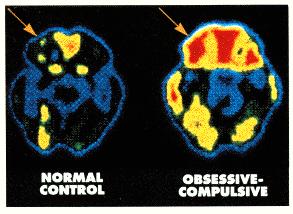
    OCD is like having a huge nasty bully in your headPET scan shows hyperactivity in OCD but Obsessive Compulsive Disorder Treatments change the game.

    …that no one else can see

    In Macie’s case, she knows in the back of her mind that the fears she has aren’t real…but logically knowing it doesn’t ease her distress. Because this is not a logical problem. It’s rooted in anxiety that doesn’t go away. Anxiety she doesn’t understand, and can’t explain away. So she continues with her routines as if they’re just part of everyday life.  Every day. 

    For her…they actually are.

    In many cases, someone with OCD doesn’t seek treatment until they’re fired from their job or lose a relationship with someone who ran out of patience. When sorrow mounts that’s caused by their OCD behaviors, they get ready to seek help.

    Obsessively ordered bottles on shelf so he should know that Obsessive Compulsive Disorder Treatments Change the Game.

    Is OCD common?

    About 1.2% of adults suffers from OCD, which can begin in childhood, adolescence, or adulthood. If you have parents or close family members with OCD, the risk of developing it is higher for you. 

    Also, if you have another psychiatric disorder, that also may increase your risk of developing this one, too.

    And then there’s trauma. When a terrifying or profoundly distressing experience presents itself, it draws a reaction from you. Your reaction may be fear of it happening again, or disgust at the thought of it, or some other disturbing feeling. For some people after an experience like this, a pattern of coping goes into play. To keep the thought of it out of your mind, you do something that’s reassuring or distracting. The disturbing thought is often connected to the repetitive action.

    • Fear of sickness from germs or chemicals => may result in feeling driven to clean incessantly,  repetitively washing and washing your hands…even being afraid to touch people or objects others have touched.
    • Fear of an intruder => may result in repetitive cycles of door locking and re-locking
    • Fear of hitting someone with the car => may trigger the need to back up at stop signs, or pull off the road to check, or call the local hospitals 

    The point is that these distressing thoughts can compel the person who’s suffering to perform certain rituals, and those rituals can interfere with normal functioning in a productive life. In fact, they can be debilitating.

    Is there treatment? 

    Yes, there are medications that bring relief in some cases. But of the patients who take medications, 40-60% receive partial relief or none at all. There are therapies like CBT and exposure therapy that sometimes help to ease the disturbing and intrusive thoughts, as well as the compulsions. But these treatments leave only about 10% of people with OCD successfully treated.

    Which calls for innovative treatments.

    Obsessive Compulsive Disorder Treatments

    For this reason, we offer other options, like Transcranial Magnetic Stimulation, for patients who haven’t experienced relief from Obsessive Compulsive Disorder through medication and therapy. TMS is not systemic, so there are none of the side effects like you may experience with antidepressants.

    IV Ketamine also shows great promise and success in treating OCD. Like TMS, IV Ketamine is a treatment that targets brain structures to bring relief to OCD symptoms.

    Obsessive Compulsive Disorder treatments change the game.

    We can learn more about what you need to feel better… LIVE better….through a thorough psychiatric evaluation. If Woman lounges in pool free of OCD after obsessive compulsive disorder treatments change the game for her.you’ve suffered with the harrowing symptoms of OCD and have not experienced relief from the medications you’re taking, let us help match you to the solution best suited to you.

    Helping you to find the life you ache to live is our highest, never-ending goal. Let’s join forces to find your solutions.

    To the emerging of your best self,

    Lori Calabrese, M.D.

    Lori Calabrese, MD offers innovative psychiatric treatment like IV Ketamine

  • Is IV Ketamine Therapy the Future of Depression Treatments?

    Is IV Ketamine Therapy the Future of Depression Treatments?

    Each year, millions of Americans are diagnosed with major depression. Not all of them will seek treatment, and roughly 40% of those who do will not respond to antidepressants.

    Fortunately, there’s an alternative to Treatment-Resistant Depression – IV Ketamine Therapy

    IV ketamine therapy relieves treatment-resistant depression.

    Ketamine is administered at a low dose by IV infusion, and it works quickly. Many patients feel the benefits within hours. Although it is not FDA approved for the treatment of depression, several studies have shown it to be safe and effective when used as an IV infusion in low doses.

    It’s not uncommon for doctors to go “off-label” in prescribing medications. That means they prescribe medications to treat conditions research has demonstrated the medication is effective for. The medication might not have been approved for that use, but the FDA often approves a given medication only once. Once it is approved for use, research and experience sometimes reveals other uses for the medication.

    Scientific studies have shown that even a low dose of ketamine administered IV can dramatically improve depressive symptoms. Symptoms like suicidal thoughts, loss of pleasure or interest in things, and decreased concentration tend to respond quickly. In fact, the rapid response to IV ketamine infusions can be life saving. Studies have shown that a single dose of IV ketamine often dramatically reduce suicidal thoughts.

    Patients with Depression Respond to IV Ketamine Therapy when Nothing Else Appears to be Working

    Low self-esteem, impaired sleep and appetite, overeating, decreased sexual desire, and other depressive symptoms also improve rapidly. With IV ketamine treatment, patients who’ve been unable to escape depression have a better chance. By putting lifestyle changes into place that help keep depression in remission, they can life more rewarding lives.

    It’s important to note that Ketamine is not a miracle drug. Although it’s effective for the majority of patients, it doesn’t always work for everyone. As we know, the treatment of depression is complex and the best outcomes occur when treatment is comprehensive and tailored to each patient individually.

    If you’ve been battling depression and feel as though traditional antidepressants aren’t working, it may be time to consider IV Ketamine infusions.

    For more information or to schedule an appointment, please contact my office today.

    To getting you back to your best self,
    Lori Calabrese, MD
    calabrese-0180_G

  • Ketamine Reduces OCD Symptoms

    Ketamine Reduces OCD Symptoms

    ketamineObsessive-compulsive disorder is a psychiatric disorder that causes repetitive behaviors, intrusive thoughts, and fear. The traditional treatment for OCD has been cognitive behavior therapy, drug therapy, or a combination. But Ketamine has shown promise in reducing OCD symptoms. The theory that ketamine reduces OCD has been studied and continues to be backed up by ongoing research.
    Ketamine Reduces OCD Quickly and Affordably

    A recent study was presented to the American Psychological Association (APA) during the annual meeting showing promising results of ketamine therapy to reduce OCD symptoms. This study included 10 unmedicated patients with OCD who were each given an infusion of 0.5mg of ketamine and 0.5mg of saline randomly.

    During the first week, half of the patients responded to treatment. The patients who received ketamine in the first infusion were evaluated two weeks later; 40% responded to treatment.

    Ketamine Reduces OCD in 40% of Patients who Were Studied

    The theory is that ketamine infusions work through the glutamate system to rapidly decrease the symptoms of OCD. More research is necessary to fully understand the sustained effect of ketamine in the treatment of OCD. However, this study has shown promising results for future OCD treatment.

    Call My Office to Hear More about How Ketamine Reduces OCD

    To getting you back to your best self,
    Lori Calabrese, MD
    calabrese-0180_G

  • 3 Myths About OCD

    3 Myths About OCD

    OCDObsessive-compulsive disorder (OCD) is a psychiatric disorder that affects approximately 1 in 100 Americans each year. This disorder is often misunderstood and those suffering struggle with the stigma associated with it. This stigma can negatively impact all areas of life. It’s time to stop the stigma with these 3 myths about OCD.

    1. Having OCD Means You’re a “Clean Freak” or “Germaphobe”

    OCD manifests differently in different people, which means no two cases are necessarily the same. Only a portion of people with OCD have a fear of germs or have compulsions of keeping themselves and everything around them clean. There are many fears or obsessions associated with OCD so to say that being afraid of germs or liking to be clean is a sign of OCD is perpetuating stigma. Common fears in people with OCD include:

    • Fear of certain numbers, colors, words, etc.
    • Fear of committing a sin
    • Fear of germs
    • Fear of a loved one dying

    In addition to these fears, those with OCD also cope with compulsive behaviors. Many of these behaviors are repetitive and include:

    • Hand washing
    • Tapping or touching objects
    • Counting
    • Repeating certain movements
    • Hoarding

    Each patient is different and will experience OCD differently. In addition, symptoms can change over time, with some disappearing and new ones popping up.

    2. Having OCD Means You Love Being Neat and Organized

    How many of you have heard someone say, “I have OCD” while tidying up or trying to stay organized? High levels of anxiety accompany OCD, so, while you may think that someone enjoys being organized, they’re really doing it to stave off anxiety. It’s not something they enjoy doing; it’s something they feel as though they have to do to feel better.

    3. Having OCD Means You’re Weak and Uptight

    If you don’t have a psychiatric disorder, it’s difficult to understand those who do because a healthy mind doesn’t work the same way. Those with OCD aren’t weak because they can’t stop compulsive behavior. Their brain is wired differently making it difficult or even impossible for them to change their behavior without treatment. Getting upset or frustrated with someone who has OCD isn’t beneficial to anyone and it may make him or her feel worse about him or herself.

    It’s important to know the facts before speaking on a subject. We all have our opinions, but, oftentimes, it’s those very opinions that keep the stigma surrounding psychiatric disorders alive. It’s this stigma that often prevents people from seeking treatment for one reason or another.

    To getting you back to your best self,
    Lori Calabrese, MD
    calabrese-0180_G

error: Content is protected !!