Author: Lori Calabrese, M.D.

  • Gender-Related Psychiatric Conditions Caused by Forced Abstinence from Alcohol

    Gender-Related Psychiatric Conditions Caused by Forced Abstinence from Alcohol

    There’s more to getting sober than to just stop drinking…

    Ever heard someone say, “Oh, she’ll never stop drinking…she’s just weak…” I’m here to tell you there is more to it than just not drinking anymore. And certainly it’s not about being weak or strong. There’s a condition that causes more conditions, and altogether they sabotage a person’s hard efforts to get sober. Abstinence from alcohol, after prolonged heavy use of it, can lead to changes in the brain that trigger other disorders. Gender-related psychiatric conditions like depression, PTSD, anhedonia can be triggered by abstinence. Disorders like these emerge as a result of sudden abstinence, and to maintain abstinence you may need treatment to relieve the other disorders, too.

    Meet Leann…

    Leann tripped as she skittered down the steps of the theatre. It was a beautiful July night, with a soft breeze on her shoulders. Collie and Jack were soon right beside her by the time she regained her footing.

    “You ok Leann? Watch that first step…it’s a doozie!” Everyone snickered at the bad joke.

    “Ok,” Jack took over. “Fun play, but let’s focus on our next course of entertainment…”

    Collie jumped in. “Let’s do a bar hop!”

    Jack joined in. “Ok yes…there’s a great little place at the next corner. We can stop there and decide where to go next!”

    All three filed into the pub and found a table. They’d each enjoyed a couple drinks at intermission, but that was an hour ago. Time to recharge. After ordering mojitos all around when the waiter came by, the friends split up to go to the restrooms, and found themselves back at the table just after their drinks were served.

    Time was passing fast as they talked and laughed, and after a second round, it was time to move on.

    Bar-hopping? Might Lead to Excessive Alcohol Consumption…

    The next stop was 4 blocks to the east, so they enjoyed the aromas of downtown restaurants and strolled those blocks in no time.

    Then, after a variety of chef-created drinks that seemed to crank up the atmosphere all the more… they staggered out….laughed at their unsteady gait…and crossed the street to a well-known hotel bar. 

    And 2 margaritas each with limes stuck onto the glasses that were cut to look like little suns surrounded with rays. The girls ordered theirs frozen and Jack requested his on-the-rocks. 

    It was getting late so they decided to have one more. Leann went for a Bailey’s Irish Cream martini, Collie requested a Godiva smoothie, and Jack ordered 2 fingers of Kentucky Honey neat.
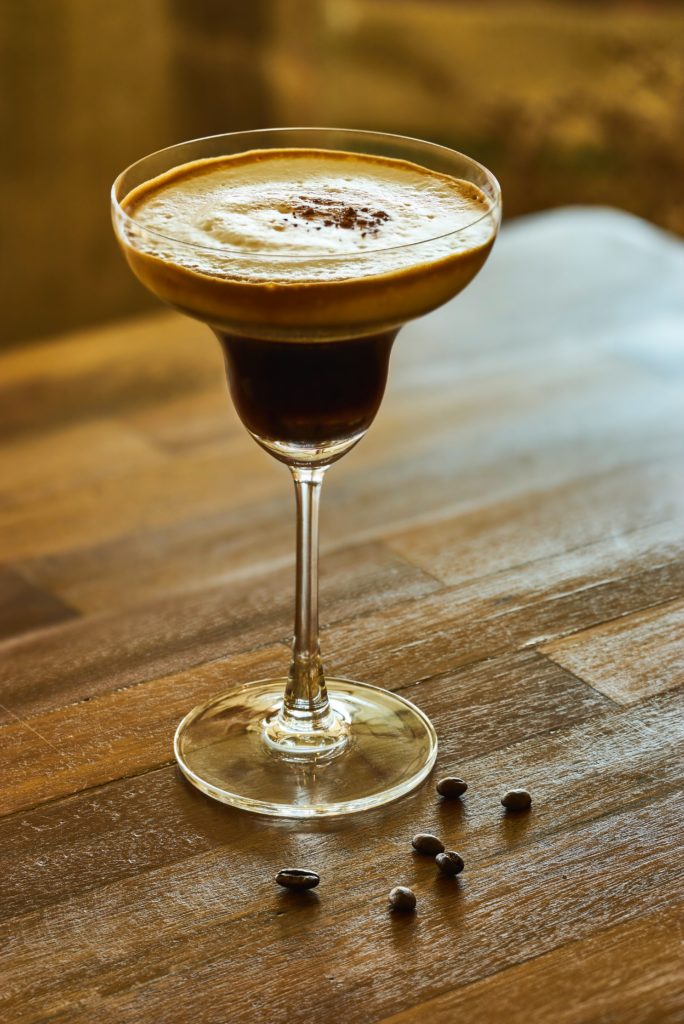
    Then they called for a cab and helped each other stagger to the cab at the curb, laughing and snorting every step of the way.

    The next morning, Leann and Collie had spent the night in Leann’s apartment, and someone’s cell rang.  They both startled awake…then groaned and grabbed their heads.

    “Turn off that noise!!“

    They were miserable. 

    Utterly.  Heads splitting, stomachs rolling and threatening to erupt.

    They looked at each other, and one of them whispered…”it was fun last night…wasn’t it?”

    “Oh my gosh, Collie, what were we thinking??? I feel so so sick….” And with that Leann ran to the toilet heaving… and barely got there in time.

    After Collie left to go home and nurse her hangover, Leann poured herself a drink, to hopefully make the symptoms milder….

    And so it went. That pattern….going out under the guise of “fun”…drinking too much… then waking up sick and drinking more and more every day to feel better.  

    By Friday, she was ready to start the cycle over again…

    (Watch how gender-related psychiatric conditions emerge and threaten her ability to get control in her life…)

    But on one of these Friday nights, Leann was with a group she didn’t know that well. When she reached that stumbling down part of the night…someone she barely recognized insisted on driving her home, so she’d be “safe.”  Except, he wasn’t about her safety, but about isolating her and taking what he wanted. She landed in a parking lot, her underwear torn off, her clothes filthy from the asphalt…her makeup smeared all over her face. 

    And deeply humiliated…traumatized…and feeling like a fool.
    She got a cab home…then took a shower… and cried.

    The next day, after drinking lots of water and tomato juice, she realized she needed to talk to someone she could trust, so she called Jack. She’d known him since high school, and he’d always made her feel safe.  And he had a good head on his shoulders.

    Sometimes You Need a Reliable Friend

    She felt so foolish…but she told Jack through sobs what had happened. He was angry some creep had assaulted her. But they talked about her lifestyle, and that if it didn’t change, she could be hurt again, or worse.

    They made a pact that day. They agreed to start spending Friday nights together, without alcohol, and play cards or something, but break this cycle. After spending every Friday and sometimes Saturday this way for the last 3 years… popcorn and vita water was a BIG change.

    Well, they played cards and board games all weekend, just as they planned. By Monday, Leann was feeling a bit down. It was neat to do something companionable for a change, and she and Jack had talked and laughed. But still…she felt sort of bummed out.

    By the end of the week, Leann was wanting to drink. But she remembered that horrible assault in an asphalt parking lot, and determined to play games with Jack. No matter what.

    And that’s what they did. But she was having a hard time caring about the games by now. They decided to watch TV together all weekend, just to stay occupied.

    Jack hadn’t imbibed in as much alcohol during the weeks as Leann had, and he was suffering less than she was.

    Gender-related Psychiatric Conditions

    This “fast” from alcohol was affecting her more intensely than she ever dreamed it would. It was as if her body had become accustomed to it. Like she was in a sort of withdrawal like someone with a drug addiction. She had had no idea this could happen…and the realization shocked her. 

    Leann’s abstinence, she realized, was not just physically hard, but emotionally hard, too. Was that a thing? She’d never heard of this before. But she was feeling depressed, nervous…and listless.  She was jumpy, easily startled.

    As her emotions sank, her hope evaporated, and she had little interest in food or sweets. A huge change for her. Eventually, Leann began to think about dying a lot to escape this misery. She just didn’t think she was strong enough to endure much more of the body shakes and aching or the depression and anxiety that had become her constant companions. Either she was going to start drinking again, or she would die.

    What else could she do??

    Treatment for Gender-Related Psychiatric Conditions Can Help Prevent Relapse

    Well, interestingly enough, there were options she didn’t know about. Leann’s story is a common one, as teens and young adults learn their limitations with alcohol, and find out they’ve developed disorders through overuse.

    Alcohol Use Disorder is a common and costly neuropsychiatric disorder, that robs sufferers of their health and stability. Once this disorder is established, withdrawal from alcohol can result in a wide variety of destructive conditions, such as depression and anxiety. These, in turn, increase the risk of relapse and make it extremely difficult for the sufferer to abstain from alcohol in the long term.

    Studies have shown that there are changes in the brain cells that vary by gender. For instance, women are more likely to relapse due to the emotional impairments they experience as a result of abstinence, like depression and anxiety. Men, on the other hand, are more likely to relapse when enjoying the social presence of others who are drinking alcohol.

    In the story above, there is no mention of Jack’s history before that night, but if he’d been abstaining, the barhopping with friends was an easy setup for relapse for him. On the other hand, Leann’s depression and anxiety after a couple weeks of abstinence was intensifying her craving to drink, and might have led to relapse for her. 

    Because gender-related psychiatric conditions determine different changes in brain cells, and therefore different vulnerabilities to relapse.

    Her listlessness, her reduced interest in food or sweets… the sudden forced abstinence had triggered anhedonia.

    She needed treatment to help her maintain her abstinence. A treatment that would relieve the neuropsychiatric changes that abstinence had triggered. Depression, anhedonia, PTSD, anxiety symptoms….these comorbid conditions threatened to push her to relapse.

    So what could she do?

    She could reach out for ketamine treatment, that’s effective with each of those comorbid conditions and with alcohol use disorder.

    We’ve talked before about how studies have shown that even one ketamine infusion can dramatically reduce alcohol consumption. Also, if you’re female, the comorbid conditions increase the risk of relapse for you.

    Since ketamine treatment can be so remarkably effective with these conditions, it’s almost like a firehose extinguishing the fires of these additional symptoms, too. And gender-related psychiatric conditions affect your ability to maintain abstinence but ketamine can prevent relapse.

    What can you do if you’re struggling with alcohol use disorder?

    Combine abstinence with ketamine treatment. Feel better, engage in life and the things that matter most. Build your career, your relationships, your self respect, and your hope. 

    Gender-related psychiatric conditions during abstinence can be alleviated by ketamine treatment.

    There really is a way out of alcohol over use. And a way up to better, more fulfilling living.

    If you can identify with Leann’s story, call us. 

    If you want to control your drinking, and have failed when you tried before, call us

    Independence Day is ahead, and you can be in control of your sobriety before the celebration. You can enjoy the joys of life…and love…without the impairment of excessive drinking. You’re understood and accepted here… we understand how social drinking can sometimes cause changes in your brain structures that lead to a risky lifestyle.

    We want to help you achieve the life you want. To enjoy celebrations safely and without impairment. We want you to revel in your wellbeing.

    Lori Calabrese, M.D. is on the front end of the race to stop PTSD in its tracks using IV ketamine treatment.

    To the restoration of your best self,
  • Ketamine Slashes Anhedonia in Treatment Resistant Bipolar Depression

    Ketamine Slashes Anhedonia in Treatment Resistant Bipolar Depression

    Depression shows its face in a lot of different ways:

    If you live in the misery of bipolar depression, anhedonia is right there, up close and personal.  So what is it? Anhedonia is the loss of interest or pleasure in things you used to enjoy. So you stop enjoying.  But if you can’t enjoy... life can taste like… sawdust. Bipolar depression is never fun. It’s interesting that those who suffer the type of depression that’s dominated by anxiety often have trouble sleeping…and tend to lose weight. While those who suffer from the type of depression dominated by lethargy tend to gain weight and sleep long hours…. like 19 hours straight. And anhedonia is right there, in your face, when you’re depressed. It can permeate your life and creep into conditions that sometimes tag along with depression and bipolar depression, like PTSD or substance abuse. And ketamine slashes anhedonia in these conditions.

    Now, here’s the problem. In bipolar depression, there is plenty of evidence that shows that the usual treatments for bipolar depression don’t relieve the anhedonia. In fact, they sometimes actually blunt the rewarding experience. We’ve talked about this in other articles, referring to the activity of cell bursting in the lateral habenula. 

    Let’s be frank. When you’re depressed, you want to feel better. NOT feeling isn’t good enough. You need to be able to enjoy.

    We talked about how important that is. To live a fulfilling and rewarding life includes enjoying. Because without any enjoyment, life is more of a drudgery…and you trudge through proverbial mud day in and day out.

    Who Says So??

    Peer reviewed studies have demonstrated that depressed patients with anhedonia have a poorer prognosis for recovery than depressed patients with no anhedonia. And anhedonia can also cause emotional blunting and even physical blunting, like inability to experience sexual pleasure or orgasm.

    A study published in the American Journal of Psychiatry demonstrated that when anhedonia is present in a major depressive episode, it can predict that suicide is likely to end that life.

    In 2014, there was no FDA approved treatment for anhedonia…and the suicide rate was climbing, and continued to climb and is still climbing. Currently, suicide is the 10th leading cause of death in the US.

    All that illustrates that “not enjoying anything’ isn’t as tepid as it may sound. It can actually be life-threatening.

    And in the meantime, in order to understand depression and bipolar depression, you do need to wrap your head around anhedonia.

    Ketamine Treatment Slashes Anhedonia in Bipolar Depression

    A neuroscience research team led by N. Lally that included Carlos Zarate and D.A. Luckenbaugh, looked at the effects of ketamine on anhedonia in Oct 2014. The study showed that ketamine causes rapid-acting anti-anhedonic effects in treatment-resistant bipolar depression. To go a step further, they found it it improves and relieves anhedonia independently of its antidepressive benefits.

    Over half of people diagnosed with treatment resistant bipolar depression suffer from serious anhedonia. And the researchers in this study demonstrated… and concluded….that ketamine treatment is vital for the treatment of anhedonia in patients with bipolar depression.

    We’ve talked before about how bipolar depression is characterized by an intensity that distinguishes it from major depressive disorder. And these researchers found that even when a patient with bipolar depression can laugh at a joke, or likes eating something sweet, he lacks the motivation to to go to the effort to get it for himself.

    So lack of motivation is embedded in anhedonia, and to restore motivation requires alleviating the anhedonia.

    But standard antidepressants aren’t always effective for anhedonia, at least there’s no proven evidence of it. So something had to give.

    And ketamine treatment seems to target regions in the brain that cause anhedonia. Not as part of its antidepressant benefits, but independently.

    We also know that IV ketamine also stops suicidal thoughts…and again it seems that it can do this independently from its antidepressant benefits.

    Is it any wonder so many are so excited about the restoration they’ve experienced after ketamine treatment?

    And what about you?

    Do you know what anhedonia is like from your own experience? Do you recognize the description of not enjoying things you used to enjoy…of having no motivation to drag yourself out of bed or to do anything?

    Ketamine treatment can be an ideal treatment for your symptoms, even when nothing else has worked — and sometimes, especially when nothing else has worked! — and can relieve depression by targeting a variety of areas in your brain, It’s almost as if it’s custom made just for you to dissolve your bipolar depression symptoms.

    I’m not saying ketamine treatment is a cure-all. Far from it. Depression and bipolar depression are complex disorders that require multifaceted treatment approaches. When anhedonia persists no matter what you do or try, you may want to consider ketamine treatment.

    Ketamine Slashes Anhedonia For You, Too

    At Innovative Psychiatry, we offer ketamine treatment for treatment resistant depression and bipolar depression. And our patients often tell us they’re amazed at the relief they experience and at how much easier it becomes to manage their lives after treatment.

    If you haven’t experienced relief, or even just partial relief, from the prescriptions you’ve taken…and you still don’t enjoycall us.

    If you find yourself thinking about dying, or wish you didn’t have to wake up in the morning… reach out for help. Don’t go it alone. Call the National Suicide Prevention Lifeline at 1-800-273- TALK (1-800-273-8255) or in the US, text HOME to 741741 to connect with a crisis counselor at the Crisis Text Line.

    And learn about how we’re using IV ketamine infusions to help stop suicidal thinking in depression.

    You really can enjoy again…the fragrance of a flower, the energy to have fun, the motivation to accomplish your goals and build healthy relationships.

    Give yourself the chance to find out how good you can feel.

    Lori Calabrese, M.D. is on the front end of the race to stop PTSD in its tracks using IV ketamine treatment.

    To the restoration of your best self,
  • Ketamine Can Stun PTSD Through This Pandemic

    Ketamine Can Stun PTSD Through This Pandemic

    As businesses and services begin to slowly, cautiously open back up, we have questions.

    Is it safe to be around others? Experts say social distancing is still the ticket, as well as masks and gloves and hand washing. Yes, yes, and yes. And what if you’ve got something gripping you in the midst of this pandemic that just makes everything so much more difficult to control? We’re going to talk about how ketamine can stun PTSD through this pandemic — and make it let go of its grip.

    Tom could use a little of that. For sure. He found managing his outlook, frame of mind, and overall health…. challenging.

    Tom had been isolated for months. The COVID-19 lockdown was doing a number on him. It had really cramped his style, and being cooped up for so long made him feel like exploding. He’d undergone treatment for PTSD, but even though he’d seen improvement, he had to be careful about his frame of mind and exercise and nurture peace in his life.

    After two tours in Afghanistan, he had some trauma and scars. Headaches, nightmares, chronic pain, a little hearing loss. He’d lost some good buddies. And then later, he lost his emotional and mental balance.

    For years, the scenes from those six years crashed into his awareness with a blast that was so real, he reacted to it as though he was there all over again. And while the scene was exploding around him, triggered when he least expected by the littlest things, his body reacted, again and again, just like it did the first time. When it was real.

    Combat Stress charity helps war veterans with mental ill-health | Express.co.uk

    He’d hit the floor, smelling fear, seeing enemy fire around him. And sometimes he’d crawl to his gun safe and scrabble for the gun, on high alert. Ready. Waiting.

    His wife eventually was so frightened by his reactions when he was terrified and reacting to his terrors that she finally just moved out with the kids. And he was left alone.
    Have you ever been terrified … and then abandoned by the one person you trusted would always have your back?

    Imagine how that could magnify the terror!

    If only he’d known that ketamine can stun PTSD…and transform his nightmare into joy.

    Tom felt like he’d tried everything. A variety of treatments and programs. Doctors, therapists, meds, you name it.  In some cases, he’d see a little improvement, but even that turned out to be temporary. The discouragement choked him. Despondency flooded him. He didn’t know how he could go on.

    He had said he wouldn’t go through any more treatment unless the person offering it had seen combat. It didn’t seem to him that anyone could imagine what this was like. And he didn’t want to keep wasting his time.

    Then he started drinking again.  Tom had been sober for years…but his desperation, his loneliness, and the humiliation he felt by his behavior was sometimes just too much to bear. He had to find some relief.

    He wondered…maybe if he got just a little drunk, for just a little while, it would give him some relief. It would quell these horrid episodes.

    Tom was alone. 

    Locked up in his house.

    And living through terrors.

    He felt helpless.

    And angry.

    Ketamine can reverse PTSD so you can relax at home rather than walking the streets like Tom.

    He signed up for an online alcohol recovery group, hoping it might help him get a grip. They met 3 times a week, and he felt like maybe it would help… but the jury was still out.

    Then one afternoon, the conversation turned and seemed to suck him right in. Some of the members were talking about PTSD. 

    Finally, something relevant!!!

    And a young woman spoke about her pain, and her quest for freedom, as well as her determination to stop hiding her pain behind alcohol.

    She’d been sexually assaulted in a parking garage at night. A stranger who came out of nowhere.

    She described her own night terrors.

    And he could see that she had lived in her own type of combat. And he ached for her.

    A New Solution Emerged

    Later, as some of the more involved members continued their online discussion, a middle-aged guy, who said he’d also served in Afghanistan, mentioned a treatment he’d had that transformed him. Wiped out his PTSD symptoms. That the PTSD that had all but destroyed him seemed to be gone…he wasn’t sure….but he had not had PTSD symptoms for 17 months. He had tried ketamine treatment.

    Blew his hair back.

    He said he and his wife were back together, and the kids were learning they could relax around him again. His own self respect was getting stronger as he worked his way through the daily challenges of life.

    He also said that the treatment had seriously helped him stay sober. It was like the cherry on top of the sundae.  

    Tom and the young woman both wanted to know about the treatment that had made such a dramatic difference for him.

    “IV ketamine treatment,” he said. “I read about it, checked some studies I found online, talked to some people I found who’d gone for it, and realized I needed to give myself a chance. I wanted to see if I could get better.”

    He was quick to add, “They tell you that not everyone benefits from this treatment, so be prepared. It might not work. But the percentage of people who felt it worked was extremely high, from my point of view. Ketamine can stun PTSD and it did for me.”

    Tom realized this was his chance. 

    Ok, so it doesn’t work for everyone. But if this treatment worked so well for this guy, it might do just as well for me, he thought. He’d lost his family, and his job was shaky.  He had to try.

    So he made the call.

    Sometimes Solutions Emerge Unexpectedly – For Example: Ketamine Can Stun PTSD

    That’s Tom. He lived his life responsibly and with a heart of service when he signed up for the Marines. And he served bravely and well. But it cost him his family and a rewarding life because of PTSD. It cost his peace of mind and his self respect. He felt helpless and weak because of his episodes of terror. Man, did he hate feeling weak.

    Tom desperately needed a solution… especially after months in lockdown during the pandemic. All that had just intensified the pressure and intensity of those earth-shattering attacks.

    After so much loss, and so many failures from treatments he sought, Tom was desperate, and beginning to consider ending his life.

    Even though he didn’t believe in 12 step groups, he tried one anyway to reach out for support in his isolation. And there online, he found good people who cared. But the biggest surprise was the treatment he learned about that had nothing to do with the 12 steps.

    His new friends told him about IV ketamine treatment.

    More and more evidence shows that glutamate, the excitatory neurotransmitter, goes to work to respond to stress, impacting the formation of traumatic memories and all the pathophysiology of PTSD.

    Ketamine treatment works on the mechanisms that create traumatic memories, and can help reform the memory in a way that releases the traumatic aspect of it. By stimulating neuroplasticity, these mechanisms can adapt and help that memory to become more circumstantial rather than traumatic.

    Ketamine can reverse PTSD but it's not for everyone.

    And rather than requiring several weeks or months to deliver these trauma reducing benefits, ketamine can work fast — within hours, days, or a week or two.

    Ketamine Can Stun PTSD

    And loosen its grip.

    At Innovative Psychiatry, we provide IV ketamine treatment for people who suffer from PTSD caused by combat, sexual assault, a devastating illness, and more. And we see people with terrible trauma make their way out from underneath their PTSD symptoms, all the time.

    It doesn’t take away the fact that the trauma happened. But it can take away the hold that the trauma has on you.

    Can you relate to Tom?  Has the pandemic imposed isolation that has intensified your symptoms? Do you wish for relief from your episodes that nothing else helped? If so, call us.

    We don’t want to imply that ketamine is a cure-all for whatever ails you.  That wouldn’t even sound real. And it isn’t effective for everyone. But no other treatment has been so effective for so many who suffer from psychiatric symptoms that nothing else helps.

    We’re here constantly working to make sure you get the relief you desperately need. 

    We want you to achieve full remission. And to enjoy a fulfilling and rewarding life. 

    Give yourself the opportunity like Tom did.

    Lori Calabrese, M.D. is on the front end of the race to stop PTSD in its tracks using IV ketamine treatment.

    To the restoration of your best self,
  • Bipolar Disorder Treatment for Depression and Suicidal Thinking

    Bipolar Disorder Treatment for Depression and Suicidal Thinking

    Treating bipolar disorder with all its comorbid symptoms can be a delicate process.

    Some people suffer tragically when all’s right with the world. The COVID-19 changes have made the last 5 months especially difficult for them. Those who suffer severely lack the medications and treatments to help them function during this period of isolation and quarantine.  For example, bipolar disorder treatment for depression, anxiety, and suicidal thoughts is all the harder in crises like these.

    Many people suffer with these symptoms when the world is balanced and functioning. However, during this period of crisis their difficulties torment them mercilessly.

    Bipolar disorder is one of the most severe psychiatric disorders, but unfortunately it has not received the most attention for studies, breakthroughs, and relief. Not even close.

    This serious disorder plays a significant role in the lives of people who live in shelters, in jail, or who commit suicide.

    To take it a step further, some doctors warn that no one should still be prescribing antidepressants for bipolar disorder.  

    I’m not one of them—but more on that in a bit.

    It’s true that depression is a terrible symptom of bipolar disorder. In most cases, it dominates many more of your days compared to mania or hypomania. And it’s vital to find a way to treat the depression while also avoiding the mania (or hypomania).

    Add to that the other conditions that often run hand in hand with mood disorders. Those that accompany the depression and mania — like severe anxiety, panic disorder, and OCD. Anxiety can appear as a cluster of conditions that vary in severity, with flares that occur willy-nilly. Boy, can they exacerbate each other! And boy, can a simple straightforward medication for an anxiety disorder suddenly make your mood disorder worse. And vice versa.

    If you or someone you care about has bipolar disorder, you know what I mean. The meds that are supposed to help can be hellish.

    Then, there’s another point to be aware of… 

    Bipolar Disorder Treatment for Depression, Anxiety, and Suicidal Thoughts …is Tricky

    An article in Psychiatric Times recommended we use evidence-based medications like lithium, quetiapine, lamotrigine, lurasidone, and cariprazine, and avoid antidepressants in people with bipolar disorder. And they have reasons for that.

    Those are excellent medicines. But what about when a patient doesn’t respond to any of them?  

    But people are individuals. And we design and personalize the treatment for each individual.

    For instance, when we find that patients with bipolar disorder also have severe anxiety disorders (panic disorder, OCD), the anxiety can be hard to address with therapy alone or occasional medications. Sometimes it’s just so bad that it needs to STOP. We can sometimes control these it best with a concurrent SRI — the current updated term for SSRI — to suppress panic attacks or OCD. 

    Why do that? Because some people with frequent unpredictable panic attacks just can’t function very well. Some people with OCD are tortured by it.

    Give them an SRI and it could go a long way towards suppressing all of that. But then … their mood can really go haywire. Rapid cycling can occur — and everything can spiral out of control.

    There is no one-size-fits-all for psychiatric treatment. Especially if you have bipolar disorder. And its friends. Anxiety? Agitation? Hyped-up energy? Frustration? Each symptom must be teased apart and treated carefully, without upsetting the other symptoms. Without upsetting the rest of your life.

    Because the fact is, bipolar depression can be severe,  unrelenting, and life-threatening. To expect someone with severe bipolar disorder to muscle through bipolar depression along with panic attacks, anxiety, OCD, being untreated, too, is cruel. While you’re waiting for the proposed mood stabilizing medicines to relieve the plethora of symptoms you suffer…when it never happens, it can feel pretty desperate. You can feel pretty hopeless.

    People who suffer from bipolar disorder live at risk for ending their own lives. Their frustration with unrelenting symptoms, their shame over behaviors when their mania –or hypomania– is not controlled, and their impulsiveness during mixed states make effective treatment so important.

    The stakes are high.

    Sometimes an SRI can ease the panic attacks…or the OCD… without actually relieving the depression.

    And yet, what’s the alternative?

    For some patients, these medicines can help prevent hypomania or mania, and in some they also stabilize depression, too.  But when they don’t help the depressive symptoms, something more really does need to be done.  Pretty quickly.

    Ketamine Treatment Can Help with Bipolar Depression

    And ketamine treatment can relieve bipolar depression pretty quickly. It helps many patients whose depressive symptoms aren’t relieved by these mood stabilizing medicines or SRIs. But we use it carefully. Because ketamine infusions occasionally induce hypomania.

    At Innovative Psychiatry, we see people with bipolar disorder improve dramatically from ketamine treatment’s extraordinary antidepressant effects on their bipolar depression. By bringing relief with this treatment to the dangerous and overwhelming threat this condition causes, and by reversing the suicidal thoughts that can accompany it, mood stabilization can become easier.

    Bipolar disorder is not a walk in the park, but effective treatments and personalized, innovative psychiatric care can bring you joy, peace, and a rewarding life. 

    It’s what we do. It’s what we live for.

    We invite your healthcare team to work together with us to get you back to your best self. Please feel free to have them call.

    If you suffer from bipolar depression, call us.

    You actually can live very well with the right treatment for you.

    We’re here to help. 

    Lori Calabrese, M.D. is on the front end of the race to stop PTSD in its tracks using IV ketamine treatment.

    To the restoration of your best self,

  • Ketamine Plus Motivation Enhancement Therapy = Better Abstinence

    Ketamine Plus Motivation Enhancement Therapy = Better Abstinence

    Study shows abstinence from alcohol improved when ketamine and talk therapy were combined.

    We’ve talked before about the benefits of ketamine to reduce the craving for cocaine and for alcohol use, as well. A substance use disorder is can be a prison with no way out. We’re going to talk about the work of researcher who works for relief and freedom for those with disorders like this, Elias Dakwar, M.D., and his study using ketamine plus motivation enhancement therapy. But first, Jackson’s story can give an idea about how much suffering can happen for those with this type of disorder.

    Jackson’s Story

    Jackson wiped the sweat from his forehead, and told himself he could do this. He had an AA meeting in a few hours. Surely, he could make it till then.

    He tried to focus on the TV, to get his mind off the yawning craving he felt for a drink.  It had been three days since his last drink, and he knew if he started drinking again, he’d be right back at the crack house.

    Nobody told him it was like this. 

    If he could stay away from crack, he might almost be able to get clean and stay clean. But he knew from experience that if he saw some on the table, there would be no avoiding it.

    But what was really frustrating, was that drinking alcohol always led to his seeking out crack cocaine. He didn’t know why…but it just happened that way.

    You know, when you’re partying with friends, or even just getting together for dinner… everyone’s always drinking. And you think Why not? Glass of wine or a beer… no big deal, right?

    But one drink would lead to another… and another. And the next thing he knew he was waking up wasted. Hating himself.

    Why oh why did he ever try cocaine the first time? It had wrecked his life. But he couldn’t blame it all on that. He knew that tendency to have one drink after another could be a problem, even if he hadn’t tried crack cocaine.

    It definitely was not a well thought out, informed decision, by any stretch. It was sudden, impulsive, and fit right in with the fun he was having.

    And it destroyed his life.

    There was no way he realized at the time how it would put a ring in his nose and lead him around whether he liked it or not.

    Ketamine plus motivation enhancement therapy can break addiction that began at parties like this.

    It was fun for awhile, but after some time he’d burned through his paychecks, his credit cards, and sold what he had just to get more. He’d stolen from his family, and betrayed everyone who mattered to him. 

    He wanted out.

    But there was no getting out…  it was like a vice clamped on his mind that wouldn’t let go. 

    Sheer Will is Often NOT Enough

    So he’d stayed away from it for nearly a week, then went to dinner with friends. Of course, everyone had drinks, so he ordered one too.  By dawn…he’d been using this stuff all night long. And had no idea what had happened to his car.

    That happened over and over…and over.

    He would have the best intentions, and ask his family to loan him money for his car payment, or help him buy a new car, so he could go to work and keep his job. And over and over again… he’d have a drink with friends and end up at the crack house.

    So now. He had been going to Alcoholics Anonymous, and to Narcotics Anonymous. He was determined to win. 

    Then, his girlfriend just got fed up with it all and broke up with him. He NEEDED her.   Why would she leave him now when he needed her the most??

    He just needed something to help him relax…So he picked up a six pack of beer. Three days later he finally dragged himself out of that same awful flop house… and he was hating himself. Why couldn’t he find the willpower to stop drinking and stop using crack cocaine?

    What Do You Do When You Can’t Stop?

    If you suffer with substance use disorder or alcohol use disorder, the cravings  can be so strong because of changes in your brain that cause them. But as far back as 2013, Elias Dakwar, M.D., published his research showing that IV ketamine can dramatically reduce these cravings.

    Now, a research team led by Dr. Dakwar that includes shining stars like Sanjay Mathew, M.D., Frances Levin, M.D., and Carl Hart, M.D. has published another study that has taken this work a step further.

    This new pair of studies shows that ketamine plus motivation enhancement increases abstinence for people with dependence.

    In our story of Jackson above, we learned about his experience trying to abstain from both alcohol and cocaine. There are also those who struggle to abstain from either alcohol or cocaine individually.

    This man is trapped in cocaine use disorder and can't stop.

    People who fit in both of these categories can benefit from the work of Dr. Dakwar’s team.

    They completed two studies in 2019 and 2020. One for alcohol use disorder and one for cocaine use disorder.

    Cocaine Use Disorder

    Dr. Dakwar’s team, including Sanjay Mathew, M.D., Frances Levin, M.D., and Carl Hart, M.D., has published another study that has taken this work a step further. These researchers were part of the team who conducted the 2013 study.

    His early study included 8 volunteers and demonstrated how IV ketamine could reduce cravings for cocaine.

    This new 2019 study included 55 cocaine dependent individuals who were admitted as inpatients for 5 days. During this study, they were randomly divided and one group received a single ketamine infusion and the other received a midazolam infusion. In addition, they began a 5 week course on mindfulness-based relapse prevention.

    As it turned out, 48.2% of those who received ketamine with the mindfulness-based course maintained abstinence through the last 2 weeks of the treatment course, whereas only 10.7% of the midazolam group achieved the same.

    So, this led to the study with alcohol use disorder.

    Alcohol Use Disorder

    It’s surprising to realize that death from alcohol use disorder accounts for a whopping 3.8% of all deaths globally. 

    And that’s just the deaths. It goes without saying that the impairment of life, the breakdown in families, the cost due to sick days related to alcohol use disorder is gargantuan and is an enormous social and economic problem in our society. 

    And while 12 step programs provide a valuable service, helping many to abstain and rebuild their lives, there are too many that fall through the cracks.  Because of cravings.

    Ketamine Plus Motivation Enhancement Therapy

    So this team designed a study that involved more subjects than the earlier work, and that measured the impact of combining IV ketamine plus with motivation enhancement therapy in subjects with alcohol dependence.

    These subjects were enrolled in motivation enhancement therapy, which had been determined to be only modestly effective by itself. They were given 6 sessions during a 5 week period, with a single ketamine infusion at week 2 then a motivational enhancement session 24 hours after that infusion.

    Social drinking is hard to resist except with ketamine plus motivation enhancement therapy.

    Another group was given midazolam instead of ketamine infusions during week 2 with a motivation enhancement session 24 hours after the infusion.

    As it turned out, the subjects who were given ketamine with the motivation enhancement therapy were able to abstain from alcohol longer than those given midazolam. 82% of them were still abstaining at the end of 3 weeks when the study completed. Of those given midazolam, only 65% were still abstaining.

    And possibly one of the best outcomes of all, was that more of those given ketamine resumed abstinence if they relapsed than those given midazolam. 

    And this was with only one infusion. 

    Studies are conducted under strict controls, but imagine how much a full ketamine plus motivation enhancement therapy 24 hours after each infusion can do for you ability to stay sober and build the life you want to live.

    She is free of substances and happy thanks to ketamine plus motivation enhancement therapy.

    Ketamine plus motivation enhancement therapy can be life-changing for you if you can relate to someone like Jackson.

    At Innovative Psychiatry, we welcome the opportunity to collaborate with your therapist and the rest of your healthcare team to help you break the hold that cocaine or alcohol may have in your life.

    There is evidence that talk therapy 24-48 hours after your ketamine infusions can be far more effective than talk therapy alone. One reason for this may be the neuroplasticity that ketamine stimulates. It makes it easier for your brain to change, think new and different thoughts…see things in a new way.

    There is hope for Jackson, and there is hope for you. Don’t give up if substance use disorders have made you lose control of your life. Ketamine plus motivation enhancement or some form of relapse prevention therapy can give you back your life and your sense of control.

    Of course, it will take work, but you don’t have to feel helpless. You can get your self respect, your dignity, and your joy back. You can rebuild those damaged relationships and build a rewarding life.

    If you can relate to Jackson, and want out of the vicious cycle, call us. If you need freedom from alcohol or other substance abuse disorders, call us.

    We want to see you whole and free.

    Lori Calabrese, M.D. is on the front end of the race to stop PTSD in its tracks using IV ketamine treatment.

    To the restoration of your best self,

  • Chronic Stress Pathology: IV Ketamine Kicks It to the Curb

    Chronic Stress Pathology: IV Ketamine Kicks It to the Curb

    Is depression common ..? 

    Is it something suffered only by the rare individual…? The World Health Organization says it’s the leading cause of disability.  Have you heard that? Not those rare people no one ever sees… but people all around you struggle to function, and paste on their “upbeat faces” … while feeling more alone than words can say. Likely as not, chronic stress pathology is at work wearing them down.

    And it’s not just depression. It’s bipolar depression, and generalized anxiety disorder, and PTSD, and social anxiety… These conditions are all different, and the way their symptoms present in each person can be really different.  

    But all these disorders also have something in common. Something called chronic stress pathology or CSP. They may have been triggered by a traumatic event, or a terrible loss, and just a constant nagging of unrelenting heaps of difficulty that wear away at your ability to cope.

    There’s something else they have in common. They tend to clump together …why?  Because of what happens in your brain. We call it comorbidity.

    We’ve often talked about how long and severe chronic stress prunes the dendrites and dendritic spines of the neurons in the prefrontal cortex and the hippocampus, breaking down synapses (or “synaptic connections”).

    Well …it turns out that there is a cascade of changes during these chronic stress situations that also increases brain derived neurotrophic factor or BDNF to increase synaptic connections in the amygdala and nucleus accumbens in another area of your brain.  The nucleus accumbens is part of the basal ganglia located near the hypothalamus.

    Oh dear…this is getting a bit tongue-twisting. 

    But get this: in one part of the brain, the synaptic connections are SHRINKING from chronic stress while in another area, they’re EXPLODING where they shouldn’t be.

    You heard right.

    This creates a vicious cycle that continuously drags you back into this disordered condition over and over…making it terribly difficult for you to recover. In the amygdala, the hippocampus, the prefontal cortex, and the nucleus accumbens, nerve connections (called neuronal connections) are being changed and damaged because of long term chronic stress.

    That condition may be major depression. It may be PTSD. It may be an anxiety disorder. But it goes on and on. And on.

    These Disorders are NOT a Chemical Imbalance

    You can see why the old idea — and people still talk about it like it’s a thing — that this is “a chemical imbalance”…is archaic, mistaken, and doesn’t even describe what’s going on at all. 

    We’re talking about dramatic changes in structures in your brain. Damage. Not just chemical changes.

    Misinformation Feeds Stigma… But Knowledge is Power

    This idea of chemical imbalances is leftover from 30 years ago, before neuroscience understood these structural changes and thought depression was the result of changes in serotonin alone….a neurotransmitter that turned out to be a only a component in the overall process.

    Ketamine Research has Taught Us So Much More… About Chronic Stress Pathology And Its Effects on Your Brain

    As we’ve talked about before, evidence has been accumulating for years showing that ketamine treatment can reverse the pruning of synaptic connections in the prefrontal cortex and hippocampus – caused by stress – by robustly increasing them — turning on your mRNA to switch on your DNA… and that releases BDNF. 

    And you know what BDNF does. It TURBO boosts those synaptic connections in those areas, which in effect turns the light on in the darkness. You feel better, function better. Your creativity flourishes. And you have the patience and capacity to build and repair your relationships. Hope surges and futility morphs into purpose.

    But you know what? We don’t talk very often about ketamine’s effect on the synapses in the amygdala and nucleus accumbens. There, it turns off the production of BDNF and reduces those connections there which helps to reduce your symptoms. 

    Chronic stress pathology wears you down when stress goes on too long.

    It also tamps down the cell bursting in the lateral habenula to help you relax and enjoy yourself. So you can revel in the fragrance of honeysuckle, and the aroma of burgers on the grill. 

    The fact is that chronic stress pathology is at the root of much of your suffering. Your body is intricately balanced, your emotions are influenced by a complicated series of changes in your gut through your microbiome, in your brain cells, as well as your muscles and organs.

    If you have a severely broken leg, the pain, repair, and convalescence of that injury can have a significant effect on your emotions. And symptoms of chronic stress, depression, and anxiety can make your muscles and joints ache.

    Which is why I’m on a mission to eradicate the term “mental illness.” Because your whole body is affected when something is malfunctioning in just one part of it. 

    For example, diabetes can predispose you to depression. And so can open heart surgery.  Your brain is part of your body…not a separate entity. And when one part of your body is affected, other parts are affected, too.

    So, the more we learn about our brains and bodies, the more we understand about the intricacies of how we function on every level.

    Now… what if you do have chronic stress pathology working against you?  What if you’ve been traumatized… or what if you’ve weathered a long, repetitive, unrelenting assault of stressors?

    Cheryl’s Story

    Cheryl did. Cheryl’s husband began complaining about the family’s budget..insisting they needed to make changes or there would be nothing to retire on. He finally became harsh about the need to find a less expensive house. Cheryl worked 60 hours a week…and the kids had needs, and schedules, and practices, and uniforms….  When could she look at houses..?  Or worse…when could she possibly pack?

    But since her husband Ben was so adamant about it, she tried to cooperate. She looked at houses during her lunch break, and after she dropped her sons off at practice.

    She stayed up late searching the internet for houses she could look at, but she and her husband couldn’t seem to find the time to look together.  Finally, she found one that could work, and Ben took a look on his lunch hour and agreed it was just fine. 

    Working late, marriage problems, and mom with cancer cause severe stress.

    After frantically packing every free minute for weeks…they closed on the house and moved. Cheryl was exhausted and the rooms packed with unopened boxes in the new house just made her want to cry.

    Then as soon as she moved, her mother asked her to go to the doctor with her. At the appointment, the doctor told her mother she had breast cancer. She explained the details, the treatment, and prognosis to both of them.

    When they got back in the car they cried together. 

    Cheryl knew her mother would need her extensively through this process. And she was committed to be at her side as much as she could.

    She rearranged her schedule, her children’s schedules, and approached her boss about shortening her work hours for the next several months.

    Unpacking the new house was a mountain to climb…and Cheryl kept wondering why Ben wasn’t on hand to help…

    And why was his job so demanding through all this, anyway??

    Then she found out…  Ben told her he wanted a divorce.

    “A divorce??  NOW?? IS THIS WHY YOU WANTED TO MOVE…??”

    Cheryl felt herself coming apart.. 

    There was nothing to do but keep moving. Her children needed her to be reliable through this. To be a safe haven…a comfort.  

    Her mother needed her support as she looked a life threatening condition in the face.

    Cheryl couldn’t think about how she felt…she had to keep going.

    But 8 months later, after the divorce was final and her mother’s treatments were complete… Cheryl couldn’t get out of bed.

    Over the weekend…Cheryl just felt like she was in a long dark tunnel.  She called in to work on Monday. Her sister came over and got the kids on a bus…

    Sometimes it’s just too much.

    Chronic stress pathology is the damage caused by long term unrelenting crises.

    And what about you?

    Have intense stressors piled up in your life and worn down your hope? Have you taken prescriptions that just didn’t help? 

    Do you feel like the crises just keep pelting you without mercy?

    Sometimes we’re subjected to repeated stressful assaults in life that we can’t control. But there is something you can do about your ability to cope with it. Reach out for IV ketamine treatment.

    At Innovative Psychiatry, we offer IV ketamine treatment expertly titrated and see resilience return to our patients every week. We also have published research that you can read about our results. We’re serious about what we do.

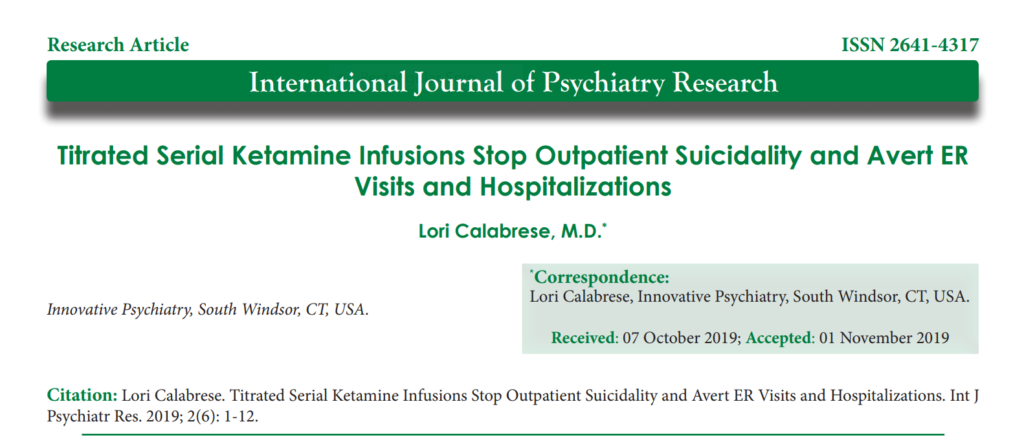
    Titrated Serial Ketamine Infusions Stop Outpatient Suicidality and Avert ER Visits and Hospitalizations. Lori Calabrese MD.

    Things have changed since the days of “chemical imbalance” thinking. (That’s so 20th century!) Neuroscience is making 21st century discoveries that offer better treatments than we’ve ever known before.

    And you get to take advantage of those advances.

    If you can relate to Cheryl and prescriptions haven’t helped, call us. If you have symptoms of PTSD, call us.

    Ketamine treatment can give you relief from the damage of chronic stress pathology.

    IV ketamine treatment can reverse the damage caused by chronic stress pathology. Chronic stress doesn’t always result in this damage, but it does all too often.

    And when you’re the one suffering, you need a solution. You need to cope. While ketamine doesn’t work like this for everyone, it does provide rapid, robust relief for most. And chances are, it will transform your life to allow joy, hope, and resilience.

    Give yourself the opportunity to live well again. To enjoy a fulfilling and rewarding life.

    Lori Calabrese, M.D. is on the front end of the race to stop PTSD in its tracks using IV ketamine treatment.

    To the restoration of your best self,

  • Ketamine In A Pandemic: New Depression and Anxiety Can Strike Anyone

    Ketamine In A Pandemic: New Depression and Anxiety Can Strike Anyone

    The sky grew darker as clouds morphed from white to gray, and created a solid ceiling over the city.

    It had rained off and on for days, and thunderstorms had filled the night skies with a threatening latticework of lightening. In an aggressive assault on the grayness, Evie stepped back from the window and decided to turn all the lights on. The quiet in her bungalow, the gray skies, and the silence felt like a blanket that she couldn’t seem to shake off. She turned on music and tried to dance around the living room, but that didn’t last. There had to be a way to ward off this expanding gloom. She’d heard about ketamine in a pandemic, because these symptoms can strike anyone…even if they’d never had them before. Could that be what’s going on?

    Dread crept up inside her, and she couldn’t understand why. Where was this coming from? She didn’t object to this isolation. It had given her the excuse to read more, which she’d salivated to do for years. She enjoyed her own company.

    So where was the dread coming from?

    It was as if things she normally would do as part of her routine just seemed too hard to do lately.

    A heaviness grew darker and heavier in her chest..?  Her stomach…?  What was it?

    Evie had always prided herself in her ability to snap back from disappointment, to face fearful situations and push through them. She just lived with her sleeves rolled up, ready to take on whatever life tossed her way.

    Her younger brother had never been so resilient. And unfortunately, she hadn’t been very supportive.  She just had never understood why he wouldn’t just shake it off. Call a friend, pitch in and help someone in need, walk in the sunshine…and get over it! 

    Now…she was eating her words.

    Isolation and Even Social Distancing Take a Toll on Your Emotions

    She strained her brain to understand what was causing this. Internet articles pointed out that being cooped up this for weeks or months was affecting people in a negative way. 

    But Evie liked being alone. She loved the quiet. The uninterrupted freedom to do what she enjoyed.

    And these articles also talked about fear. People were afraid. Sales of guns had skyrocketed, and ammo was sold out and on back order, as people have bought up more and more.

    She had to admit to herself…that THAT was scary. All sorts of people armed against unknown dangers…

    But seriously. She wasn’t afraid of looters or invasions.

    It seemed clear to her that it was just a matter of waiting this out.

    Ketamine in a Pandemic Can Relieve Anxiety and Depression in Someone Who’s Never Had It Before

    So what was wrong with her?? Why was she lying in bed and reading all day every day? Things had piled up. Her garden needed weeding. But the idea of doing it was overwhelming.

    Motivation, initiative… it seemed to have drained out of some proverbial hole in her bucket.

    When a knock came on her door…Evie didn’t answer it. She just stayed quiet and waited for whoever it was to go away. The same with her phone. She didn’t want to talk…not to anyone. 

    She remembered a few months ago, when she saw a map of the world that depicted the incidence of this COVID-19 virus in countries around the world. She was stunned to see how every country seemed to be red. The entire world!

    So if she had thought she could just get out of town and wait for this to blow over, she was fooling herself. There was no escape on the planet.

    Maybe that shock started this…this feeling of dread…

    Large Scale Change Increases Stress

    Then they closed the schools and restaurants and businesses. Then required mask wearing.

    You know that feeling that “it will never happen to me”…?  But this thing has happened to everyone. Everywhere.

    So was the dread from feeling trapped?  Evie thought about that. It might be the case with some people, but how could she feel trapped all snugged up in our home she loved doing things she enjoyed?

    She didn’t know what was wrong with her or what specifically caused it. She did know that she wasn’t herself. There had to be some serious thinking about her brother and so many others who suffer from symptoms like this. Who really couldn’t shake it off, like she couldn’t now.

    And she acknowledged it was a difficult place to be. That her brother had been very brave all these years to keep fighting to function when medication and therapy didn’t work for him. 

    She’d read enough to know that many people were being affected by these circumstances. Some, like Evie, had never felt this way before. 

    She promised herself she’d call a doctor to see if she could get treatment — as soon as she could scrape up the initiative to do it.

    Evie’s not alone, is she? 

    And this is why telepsychiatry has been so vital through these months. A new flood of people who never needed psychiatric treatment before have emerged…and need treatment.

    Ketamine in a Pandemic: Depression and Anxiety Can Strike Anyone in These Circumstances

    Then, there are those who’ve been receiving treatment with prescriptions that now don’t seem to be working anymore. And in isolation, these people are at higher risk because they’re alone, and feeling all the things Evie feels, but often the symptoms of suicidal thoughts have been added to the mix.

    Ketamine in a Pandemic for Depression and Anxiety Can Be A Lifesaver

    A team of medical researchers set out to try to  evaluate the psychiatric effects this global pandemic — and the restrictions that have been part of it — to better understand its impact on mental health in individuals around the world.

    They published the results of their survey.  One of the most remarkable outcomes was that 41% of adults showed they were more concerned about their increasing anxiety, than they were about their financial problems. That’s 2 in 5 adults.

    Two out of 5 in line at the grocery store. Two out of 5 in line at the gas station.

    Think about it.

    Also, 2/3 said they feel like they’ve lost control of their lives. Sound familiar?  And 56% say they find it difficult to manage their responsibilities amid this pandemic.

    So, yes.  You’re not alone. If you’ve been struggling with these things too, just recognize you’re not alone. You’re part of the “new normal.”

    Except that it doesn’t feel normal.  

    And it doesn’t mean you should keep struggling with these feelings of uncertainty, anxiety, and depression.

    Do call your doctor and talk about what you’re going through.

    And…if you’ve been taking prescription medicines, and find they aren’t helping, don’t lose hope.

    Reach out for ketamine treatment, which can restore your resilience in the face of all this. It can restore your initiative and motivation. Aren’t you glad that there is something that can help in times like these? Ketamine in a pandemic can bring remarkable relief for depression and anxiety that’s triggered by these restrictions.

    At Innovative Psychiatry, we’re providing ketamine treatment here in our office every week. We’ve instigated safety protocols that allow us to provide you the essential treatment you need to help you get through this stressful time.

    While the process of recovery from a global pandemic is more complicated and time consuming than we wish, you don’t have to live in misery. Ketamine treatment can restore your hope, your resilience, your initiative, and your confidence.

    And if hopelessness has been rising up inside you, stripping away your belief that things will ever get better, that’s a symptom. It’s not reality. And ketamine treatment can relieve those thoughts, and help you get your momentum back.

    We specialize in treating suicidal thoughts. In fact, we’ve done research which shows ketamine’s remarkable effectiveness with this symptom.

    If you suffer from the symptoms we’re talking about, call us.

    We’re here to help you find your best self again. We want you to enjoy your life and live well.

    You aren’t alone. You really aren’t.

    Reach out for help. Your best days could be just around the corner.

    To the rejuvenation of your best self,

    signature of Lori Calabrese, M.D.

    Lori Calabrese, M.D.

  • For the Depressed Mom:  Ketamine Can Restore Your Joy

    For the Depressed Mom: Ketamine Can Restore Your Joy

    “Motherhood is a choice you make everyday, to put someone else’s happiness and well-being ahead of your own, to teach the hard lessons, to do the right thing even when you’re not sure what the right thing is…and to forgive yourself, over and over again, for doing everything wrong.” – Donna Ball, author of At Home on Ladybug Farm

    Let’s talk about moms.

    Yesterday was Mother’s Day, and if you were a mom yesterday, chances are, you’re still a mom today. We could talk about all the idealistic and billowing praises that are bestowed upon moms in greeting cards, but let’s don’t. Let’s talk about what it’s really like to be one. And if you’re a depressed mom, ketamine can restore your hope, your joy, and your stamina to help your children grow. More about that in a bit.

    Motherhood Is a Handful.

    With the best of intentions, you gather your kids together and tell them you’re all going on a camping trip. Together! But….there is so much to be done before you can all load the car. So in the spirit of pitching in and working for the common good, you assign each one a task that will help shorten the prep time.

    Then you focus on your own tasks which include packing food for meals. While you’re busy in the kitchen, you hear an unusual noise.

    Closer inspection reveals that your 10 year-old son is in the bathroom (which he was supposed to be cleaning) after putting his sleeping bag  by the front door, and has filled the sink with water.

    He’s floating a little boat on the water with his pet hamster in the boat which immediately jumps out of the boat, over to the counter and jumps down under the cabinet and disappears.

    Oh dear.  

    Now there’s a loose rodent in the house. Aaaarrrgghhhhh!!

    Feel your resilience waning..? If you find out you’re a depressed mom, ketamine can restore. Keep reading…

    Your son, who got bored cleaning the bathroom, had gotten distracted with his hamster. Now how to find the hamster?

    Kids are just kids. Full of surprises. It takes a sense of humor…

    When It Rains It Pours

    Meanwhile, you stop in the boys’ room and find your 7 year-old, who was supposed to clean his room after delivering his sleeping bag to the front door,  sitting among a pile of Little Golden books. Reading. (What joy!) But apparently he had to go through the entire bookshelf of 43 Little Golden  books to find the one he wanted to read. His floor is covered with books he’s tossed.

    After sternly instructing him to pick up all his books PRONTO! you realize you better check on your 21 month-old daughter. Distractions can pile up when you’re focusing on packing 3 meals a day for 4 days and you have a houseful of active children…you didn’t notice she wandered off.

    Turns out she’s in your bedroom. At first sight, you panic. Is that blood?  Her face is covered! What happened?? 

    Upon closer inspection after snatching her up in your arms, you see that it’s not blood. It’s lipstick. Her face is so covered with the stain of it, you know she’ll be raw by the time you get it even partially off.

    Then you look at your feet.  Your favorite white leather summer bag, and your butter soft cream-colored pumps, have both been painted with lipstick to match.  

    How thoughtful. Sigh.

    The fact that that was a brand new tube of lipstick is now beside the point.

    Calamities, Crises, and Catastrophes

    Then…sniff, sniff… what is that smell…?

    You head for the kitchen, baby girl on your hip, and the kitchen and living area are in a cloud of smoke…then BEEEEEEEEEEEEEP!!!!!!    The smoke alarms.

    Run to the stove. OH NO!! The eggs you put on to boil for sandwiches have boiled dry and are burning!!! 

    Move the pan off the burner. Turn off the burner. Open windows. Gather kids and go outside for fresh air.

    You collapse into a lawn chair and watch the kids playing happily in the yard. The classic comic escapades of Calvin and Hobbes comes to mind…

    Maybe you’ll just get chicken at the drive-through…?

    Add to all of this the challenges of quarantine in a global pandemic!  There aren’t words. But you do what you have to do, don’t you?

    Motherhood is providing a listening ear, helping with Cub Scouts and Brownies, fighting fevers in the wee hours, encouraging the discouraged, instilling hope, tutoring when homework overwhelms, instructing, providing structure, instilling values, creating celebrations, stretching the budget, inspiring creativity, keeping idle hands occupied, teaching self-reliance, comforting broken hearts, and so much more.

    And this is when you’re healthy, resilient, and stable.

    But what about when you’re not?

    What about when anxiety makes it impossible for you to participate in sports with your child, or Cub Scouts, Brownies, or Blue Birds? 

    The sheer dread you feel about leaving the house to take your child to these activities and interact with the parents makes it so difficult that you may make it a time or two, but eventually the energy required to push through all that dread and fear leads to missing meetings and practices…if not abandoning it altogether.

    To the Depressed Mom: Ketamine Can Restore Your Hope

    Then there’s the guilt you feel for failing to give your child every advantage.

    What about when PTSD creates such traumatic responses in you that you just can’t leave the house, and find your reactions are terrorizing your children…but you can’t make it stop..?  

    If you’re a mom with PTSD…or a depressed mom… ketamine can restore your resilience and your hope.

    A simple pat on the back when you attend a gathering, or a loud noise in the kitchen…even the deep voice of a stranger… can send you into such terror, sweating, and reactions that, you know, you just feel safer at home.

    Or when you just can’t get out of bed… so you get the children to watch TV, because you know at least they’re safe, but it nags at you because you know this isn’t a healthy, carefree way to spend childhood.

    But it’s the best you can do. 

    If you struggle with symptoms like these, and they interfere with the mom you want to be…and if the medicines prescribed by your doctor haven’t helped…  there’s hope.

    When you’re a depressed mom, ketamine can restore your joy.

    Ketamine treatment consists of 6 infusions, give or take, over the course of 2-3 weeks. It’s, hands down, the most effective, innovative treatment for severe depression, social anxiety, PTSD, bipolar depression, and alcohol use disorder.

    If you’ve been seeing your doctor and the medicines she’s prescribed have worked to reduce your symptoms, then you’re all set. 

    But did you know that at least a third of people who have these symptoms are not helped at all by prescription medicines?

    That’s where ketamine treatment comes in. It works in the brain in ways these prescribed medications don’t. And its remarkable, even extraordinary, and robust relief is transformative for most of those who receive it.

    Ketamine works in multiple ways and in multiple areas in the brain. And it’s fast. So, instead of having to wait weeks or months for a prescription to help you feel better, with ketamine treatment you can feel better in hours or days.

    Ketamine turns on mRNA so it will turn on DNA to turboboost BDNF — brain derived neurotrophic factor — that works like a rich compost to trigger the rapid and prolific growth of dendrites and dendritic spines in the neurons in your brain.

    This multiplies the synapse connections fast to send signals across your brain, and wake up your emotions. Creativity blooms, quick thinking, solid decision making, initiative, motivation, hope…and joy all come to life and transform your outlook and your productivity.

    And you can love life again. 

    You Don’t Have to Endure Suicidal Thoughts…You Really Don’t

    In addition, if you’ve been plagued by suicidal thoughts, it can stop those thoughts in a few hours. Then you can be free to invest in restoring your life, rebuilding your thoughts and infrastructure, and restructuring and strengthening your relationships.

    It may sound too good to be true…but if you’re a depressed mom, ketamine can restore the real you, the person who has dreams for yourself and your children, and wants to have the resilience to help them fulfill their dreams.

    At Innovative Psychiatry, we enjoy the privilege of watching people walk out with fresh joy and hope every week.

    If you’ve struggled with the kinds of symptoms we’ve talked about here, and medicines haven’t helped, call us.

    We’re here to help you live well again, to find your joy in life again.

    Ketamine doesn’t do this for every single person who receives it –of course not!– because there isn’t any medicine or treatment that helps everyone. But it does amazing things for most. There’s no other treatment currently available that brings relief and restoration so quickly for so many who are so symptomatic — in the privacy of a beautiful office, beginning that afternoon . . .

    Discouraged, Depressed Mom? Ketamine Can Restore Your Resilience

    You can sing again, experience joy welling up inside you, laugh with your children, and all the things you have wished you could do.

    Give yourself the opportunity to feel truly better. Spend this year enjoying your life and your family. We can help you get there.

    To the blooming of your best self, 

    signature of Lori Calabrese, M.D.

    Lori Calabrese, M.D.

  • Explore: Method to Differentiate Bipolar Depression vs Unipolar Depression

    Explore: Method to Differentiate Bipolar Depression vs Unipolar Depression

    As you may know, May is mental health month.

    IV ketamine can restore her joy whether it's bipolar depression vs unipolar depression.

    And as such, it’s a good time to talk about symptoms of mental health disorders, don’t you think? We want to increase understanding and dispel stigma which will help people who suffer gain better access to the help they need. Stigma is steeped in ignorance about something someone doesn’t understand. In addition, the global circumstances of these last few months have impacted the mental health status of so many. So let’s use this month to broaden understanding and better equip us to respond to ourselves and those around us. So here’s something to talk about: A new way to differentiate bipolar depression vs. unipolar depression may be emerging.

    Leading Cause of Disability

    The leading cause of disability in the world today is not heart disease or cancer…it’s depression. Depression is that common. We talk about severe depression and we talk about bipolar depression. When you see someone with either of these conditions, they may look rather similar from your vantage point, but they’re actually two distinctly different conditions.

    When we diagnose someone in this depressed state, it can be difficult to determine whether they suffer from major depression or bipolar depression, unless they have a history of mania or hypomania to determine the difference.

    Unipolar depression and bipolar depression don’t feel the same…but they do sort of look the same.

    Which is why a doctor asks whether you’ve had times when your mood was elevated, you felt energetic, hyperactive, maybe irritable, angry… and overly confident…all at the same time?

    For this reason, so many with bipolar disorder are first diagnosed with major depression, especially those with bipolar II disorder, since their symptoms include far more depression than hypomania.

    When you first see a psychiatrist about your depression, it’s important to be patient. Because some of your symptoms may not have emerged yet…and you may appear to have unipolar depression. Then later, mania or hypomania emerges, and your doctor may change your diagnosis to bipolar disorder, along with your prescriptions.

    Because of the challenge of diagnosing someone accurately who has a low mood, researchers have been seeking a means of using some sort of biological markers to determine scientifically the proper diagnosis and character of the depressive symptoms.

    This man is in pain but doesn't know if it's bipolar depression vs unipolar depression.

    Something that would differ in patients with unipolar depression from those with bipolar depression. Possibly brain activity. Or maybe proteins in the blood? Possibly genetics?

    Exploring Bipolar Depression vs Unipolar Depression

    An interesting study conducted by Brain and Behavior Foundation researchers, led by Mary Phillips, Ph.D., performed with a relatively small group of subjects, suggests a way your doctor might differentiate the two disorders clinically to aid in accurate diagnosis.

    Using functional magnetic resonance imaging (fMRI), full brain scans were conducted on a group that included 18 bipolar patients who were in bipolar depression, 23 depressed patients who’d been diagnosed with major depressive disorder (MDD), and another 23 who were healthy without a diagnosed disorder.

    It’s unfortunate that their study involved so few, and also that 90% of those with bipolar disorder were diagnosed with bipolar II disorder, leaving only 10% who had bipolar I disorder. A more evenly distributed group might have told us more.

    Even so, they did make some significant observations.

    The working memory system is used by the brain to maintain, manipulate, and update information that is associated with tasks that are presently at hand. When the networks of nerves in this system are damaged, learning – reasoning – and decision- making ability can be disabled.

    This is particularly true in those with mood disorders, like depression.

    So, the researchers gave each participant an easy task and a difficult one, while the participant was undergoing an fMRI brain scan. The design of the tests was to highlight that people form expectations about a task before they fulfill it.

    Bipolar depression vs unipolar depression can both be treated effectively with IV ketamine treatment.

    A person might feel the task will be easy, so there’s little stress in performing it. But if he expects the task to be difficult, his stress increases before he begins.

    It turned out, that there were patterns of neural (brain cell) activation in the medial and lateral areas of the prefrontal cortex, that were related to how easy or difficult a task would be.

    Mechanism Defends the Person with Bipolar Depression From Emotional Pain

    The researchers reported that people with bipolar disorder may actually block anticipation of a negative experience to avoid experiencing negative emotion while performing a task. That basically people with bipolar disorder seem to have a built in defensive mechanism to help protect them from negative emotions.

    So enlightening. People with unipolar depression don’t do this. They feel what they feel. But those with bipolar experience such damage from their negative emotions.

    As I said earlier, unipolar depression and bipolar depression may look similar to someone observing people suffering from these. But they feel different.

    Let’s add to that, that both of these disorders can often end in suicide, unfortunately. Even so, it’s more common in bipolar disorder.

    There are traditional medicines for people with these disorders. And those medicines do help a lot of people.

    But not all.

    For that reason it’s important to seek help until you find treatment that helps you feel better, function better, and live a rewarding life.

    IV Ketamine Doesn’t Differentiate Between Bipolar Depression vs Unipolar Depression – It’s an Extraordinary and Robust Depression Treatment

    At Innovative Psychiatry, we offer IV ketamine treatment to help you experience relief from severe depression that prescriptions haven’t helped…. And for bipolar depression that is unrelenting in spite of prescription medications.

    Bipolar depression vs unipolar depression for this woman is still crushing.

    IV ketamine treatment isn’t effective with mania or hypomania. But the mania or hypomania is easier to manage and treat without bipolar depression. This treatment can be exceptionally effective for both unipolar and bipolar depression. In fact, it can be utterly life-changing.

    And… in regard to the risks of suicidal thoughts, IV ketamine treatment can erase those thoughts in an afternoon. A few hours. And if you’re not plagued by thoughts of death and dying, you’re a great deal freer to work toward healing, restoration, and joy.

    In this current global crisis, suicides have been increasing, among those with disorders, healthcare workers, physicians, and more.

    IV ketamine can save lives by removing thoughts that lead to suicide.

    IV ketamine has given her joy instead of depression.

    If you suffer from bipolar depression or unipolar depression, and medications haven’t helped, call us.

    Let us help you find your joy again, and your hope. The current global crisis is temporary, but it has affected the outlook of millions. The good news is that joy can be restored, and hope can return. You can feel resilient, and equipped for what life has in store.

    We’re here for you, and we’re working within a safety protocol so you can be treated without fear.

    Better days are ahead.

    To the restoration of your best self,

    signature of Lori Calabrese, M.D.

    Lori Calabrese, M.D.

  • Suicidal Risk Triggered by Stressors in the Covid-19 Crisis

    Suicidal Risk Triggered by Stressors in the Covid-19 Crisis

    Russell paced back and forth by the window. 

    The gray, rainy morning had finally broken and sunshine peeked through the clouds as they parted. Patches of clear blue were spreading across the sky. It seemed to Russell this change in the weather should brighten his thoughts, but they didn’t. He guessed it would take something much more powerful than a weather change to alter his outlook. He thought about how dark he felt…and wondered if there was suicidal risk triggered by stressors that affected people right now.

    Russell was losing his belief in living. This wasn’t the first time he’d felt such futility in the daily endurance exercise that characterized his life. He’d felt hopeless before — but with time, a new job, and better pay, he’d lightened up and everything began to make sense again. 

    Then, he met someone and felt like he was basically sitting on top of the world. He hoped he could keep his life working so well. The idea that joy would become commonplace for him… that would be so great.

    The job was such a good fit. And he seemed to learn it quickly. His skills improved every week and every month… then he was promoted. His boss would pat him on the back…tell him to keep up the good work and all that.

    He believed he had a real future in this job…and a career in the making.

    Jenna came along, and maybe it’s because he was feeling so much better, or maybe it was because she was so amazing…but it was easy to talk to her, and so rewarding to listen. It wasn’t long until they were spending lots of time together.

    Then, the coronavirus crisis took over the world. There was no place to escape to…it had covered the entire globe!  Nowhere was safe.

    Settling Into a New Normal in a Global Crisis

    He was assigned to work from home. That was ok. Not great. It wasn’t easy to do as well, or be as creative, under these circumstances. But he was grateful for the paycheck. Surely this was a temporary setback.

    Next thing he knew, however, the governor ordered a lockdown. HIs company laid off thousands of people. And he was included in the second round of cutbacks. 

    So, now he’s home, he has no job, and no way to get one.  Russell made a point to watch the statistics around the world to see if the tide was turning yet. He was lonely, and he missed Jenna. Even though it helped to talk on the phone or online. There were plenty of apps to connect with her. But it wasn’t the same.

    The Crisis Hits Close to Home: Fighting Panic

    One day, she sent him a text. “Russell, my sister Beth tested positive for the coronavirus today. She’s self-quarantined in her apartment. I’m so worried. And my mom is beside herself.”

    Russell tried to be understanding…this was terrifying. He wondered when Jenna last saw her sister.  When her mother had last seen Beth. He wondered if either of them had been exposed.

    This made it all seem so much more real. More threatening, to himself and everyone he cared about.

    He felt horrifically helpless. So he paced. He washed his hands for good measure. Then paced more.

    Darn!  It’s so hard to feel useless like this!! He checked on Jenna often, and always remembered to ask about Beth’s condition.

    Finally, it turned out that Beth was being transported to the hospital. She was struggling to breathe at all. 

    Russell felt his throat closing. He fought panic.

    Jenna was devastated about her sister’s decline. She said their mom was in a heap. Neither Jenna nor her mom could be at the hospital with Beth.  

    Weeks were going by. 

    How could you stand with someone if you couldn’t be near them?  How do you do it all verbally?  He feared his relationship with Jenna was disintegrating like his job had. But he knew her primary concern was her sister, and he was sure worried about her, too.  

    Russell had never been the best communicator. In times of difficulty it was hard to find the words. He’d always made up for it with effort. Showing his support with hugs, helping out with food, etc.

    He had no idea how to do that from miles away.

    He feared his relationship with Jenna was disintegrating like his job had. But he knew her primary concern was her sister, and he was sure worried about her too.  

    And felt so helpless.

    When he wasn’t talking or texting with Jenna, he was applying for jobs online. It seemed he had surely applied for hundreds of them by now. But nothing. No responses to his applications. He could only imagine the number of applicants competing for each job. He was sure it was more than ever before in his life.

    Still he kept applying. 

    It was good to stay busy, and at the same time, it felt so futile. 

    Weeks turned into months, and he finally applied for unemployment. Sickening.

    How could everything be so good, then take a 90-degree turn straight into the toilet??

    As if it all wasn’t enough, he heard from Jenna about her sister. Beth, who’d been in the ICU on a ventilator, finally died. They had thought she was improving…thought she would come off the ventilator soon… then suddenly, she deteriorated. And died.

    Russell was stunned. Speechless.

    Jenna was heartbroken. Blind with grief. He tried so hard to comfort her.  To listen. But there was nothing he could say to relieve her pain.

    He couldn’t go to her, hold her, take her out to dinner so she could vent. And her mom was grief stricken and seemed to expect Jenna to comfort her. 

    He couldn’t think. It was as if the entire world was self-destructing around him. His head was spinning.

    Profound Grief Causes Its Own Isolation

    Jenna seemed to just be gutted…depleted…with no more to give to anyone.

    She withdrew after that. She and her mom could not have a funeral for Beth. As the days went on, they both seemed more and more traumatized by the circumstances surrounding Beth’s death.

    Russell became less and less vital to their grief, it seemed. If they needed his support, he didn’t know how to give it. He felt so useless. So powerless. Utterly flabbergasted that life had collapsed as it had in a couple short months.

    The grief he felt for Jenna’s loss eroded his foundations. His resilience. The energy seemed to drain out of him. His hope disappeared.

    He’d been in his house for 2 months, and the strain, disappointment, disillusionment, loss, confusion, and anxiety of his circumstances became worse and worse until they were unbearable.

    He saw no reason to go on. He looked at the future through his dark perspective, and it looked hopeless.

    Even after the lockdown was lifted, he still wouldn’t have a job, right along with millions of other people. He would be evicted from his apartment, and lose his car. 

    The melancholy of the past swelled until he was drowning in it. Russell just didn’t have the energy to go on.  He didn’t believe he was strong enough to face any more…

    He wanted to die. Every hope… every purpose… for living was gone. He couldn’t see how he could go on…

    Russell’s Not Alone: So Many Fight Despair in Times Like This

    The crisis created by this COVID-19 coronavirus is creating stressors and fears that go far beyond the risk of the viral illness. And as our friend Russell identified, there is no where to escape to. 

    Hundreds of thousands of people feel the same feelings and are thinking the same thoughts. But in each case, the situation is not necessarily as it seems.

    Unfortunately, it is what seems to be true that people all too often act upon. And suicidal risk triggered by stressors in this crisis rises higher and higher.

    However — and this is important — thinking about suicide is not logical thinking, even though it may seem to be at the time. Suicidal thoughts are symptoms of a disordered mind.

    Suicidal Risk Triggered by Stressors in This COVID-19 Crisis

    The stress of isolation, financial difficulties and strain, the uncertainties about income in the future, the emotional pressure of being separated from those you care about and who care about you, combined with a host of feelings that come out of nowhere in a time like this… can push you to the point of desperation.

    And…if you’ve struggled with psychiatric symptoms in the past, these elements can put you at higher risk.

    But There Are Ways to Find Relief

    However, as overwhelming as circumstances appear, they’re still temporary. They will change. Life will be restored. But that can be hard to grasp if the thoughts are swirling and swirling around inside your head.

    Meanwhile, you can seek support from friends and family online, see their faces and vent, laugh, and cry together.

    You can reach out for counseling through telemedicine. And then consider treatment.

    Again, suicidal thinking is a symptom of a disordered mind.

    If you find yourself thinking those thoughts, reach out for help. The circumstances of your life are not normal right now. And people everywhere are feeling similar feelings, as well as desperation, cooped up in their homes.

    Suicidal Risk Triggered by Stressors Like Grief, Financial Uncertainty, and Fears of All Kinds… Can Be Lowered With Treatment

    At Innovative Psychiatry, we’re treating people every week with ketamine treatment provided with carefully planned safety protocols.

    Ketamine treatment is one of the most effective treatments for severe depression, bipolar depression, PTSD, social anxiety, and suicidal thoughts we know of. It also can relieve substance abuse and alcohol abuse.

    As it goes to work restoring the synapses in your brain, proliferating connections between nerve cells to explode communication through your brain, it also can restore your motivation, your creativity, and your joy.

    As a result, resilience replaces listlessness, energy replaces lethargy, and hope replaces despair.

    In spite of how it all seems to you right now, that reality you’re experiencing is based on temporary circumstances… In the challenges ahead, how much better to have the energy and hope you need to conquer and create a reality that fulfills you?

    Suicidal risk triggered by stressors of the covid crisis can be reduced by ketamine treatment.

    There is a future. And you’re in it.

    You can reduce the suicidal risk triggered by stressors in your life by reaching out for ketamine treatment. If you’re experiencing some of the things Russell is, call us.

    Give yourself, and those who love you, the benefit of treatment that can give you a new lease on life. You can be amazed at how the direction of your thinking transforms.

    There is life beyond this COVID-19 crisis. And you’re in it …with a bright future.

    To the resilience of your best self,

error: Content is protected !!