Author: Lori Calabrese, M.D.

  • Coping with Anticipatory Grief in the Covid-19 Crisis

    Coping with Anticipatory Grief in the Covid-19 Crisis

    Jocelyn and her friends missed their interaction on Friday nights after a week of work.

    They’d meet somewhere and have dinner and talk about work, their plans for the weekend, the people they knew, and their hopes for the future. But since the COVID-19 crisis, they worked from home and Friday was just another day.  So they decided to have a meet-up online. Jack set up a zoom meeting so they could all see each other, and it commenced Friday night at 7pm like they’d always done before. They ate their dinner in front of their laptops and chatted about this and that, vented about isolation, about technical problems when all work had to take place online, and family frustrations. And they talked about the horrid emotions they felt. The idea that millions were expected to get sick and die. Scott, a therapist, mentioned ways of coping with anticipatory grief. Someone else said, “Wha..??” Jack said, “What the heck is anticipatory grief??”
    Scott went on to explain that horrid feeling they all described, the dread they felt about all the sickness and death, the fear that their friends or family members would likely be among the dead…that this all falls under the category of anticipatory grief: Grieving about losses that haven’t happened yet, but might. 

    He also said that when you read all the articles that come out every day about the potential damage the COVID-19 virus can do, that dread increases day by day. Then you hear about someone’s co-worker or family member who tested positive for the virus, it gets a bit closer to home, and your dread and fear of loss increases.

    When Fear and Grief Hit Home

    Next, you get word that your own relative or co-worker dies… or the relative or coworker of someone close to you dies, then you feel the loss up close.  It becomes your own loss.  And it hangs on you, weighing you down, long after…because it goes so deep. 

    Celia hesitated, then spoke up. “My aunt died. It’s been so sad I haven’t wanted to talk about it. But she lives in New York City, and tested positive. She tried to recover at home…then her breathing got really bad one night and they had to take her to the ER. She was in the ICU with a ventilator for 17 days. Just about the time she seemed to be getting better, she suddenly got bad again…and died that day.”

    Everyone told Celia how sorry they were. How terrible it was to lose someone you love over a virus.
    Nick spoke up. He had a sadness about him most of them had noticed.  He said, “ A friend of our family…someone I grew up with…started feeling bad, and called the doctor. The doctor told her to go for a test at a drive through testing center. She tested positive and her cough was so intense, her breathing so bad, they admitted her to the hospital, too. Within 3 days she was gone.  She was my age! It’s so hard to make sense of it.

    “I hear about people protesting the lock down…or throwing COVID parties…and I want to scream. So many people don’t get it. I wondered myself in the beginning. But as I saw the numbers increase around the world, I realized this is real. I wish each one of those people who went to one of those parties could see how it feels to lose someone you care about. And who knows who’s next?? It could be one of us!”

    Celia jumped in and said, “Yes…or to see what’s it like to be sick with this. Sure there are people who aren’t having symptoms, but talk to the ones who are! My friend got sick and had to let someone take care of her child while she convalesced.  She said it was the worst thing she ever experienced.”

    Scott then pointed out how THIS is anticipatory grief. Realizing that someone you care about could get sick. Could die. And worrying about it. 

    “And,” he said, “there are things you and I can do to help us get through this.”

    Study: 40% Say Anticipatory Grief Is The Worst

    “A Swedish study,” he went on,” found that no matter how much you grieve before you experience the loss, it doesn’t reduce your grief after the loss really happens. And that 40% of the people studied felt the grief you experience when you anticipate loss is far more stressful than the grief you experience afterward.”

    Jocelyn asked, “If that’s the case, then it sounds as though I’d be much better off waiting until someone dies to grieve, than grieving about everyone in advance. But I do feel fearful…I have anxiety all day and especially at night…On top of that, I’m drinking more than I ever have. Just to try to relax and not think about what could happen.”  

    Scott agreed. “But how do you wait until you have someone’s death to actually grieve??? Coping with anticipatory grief is so much harder than we could have expected!”

    Celia finally blurted out, “My husband is beside himself. He’s so angry, filled with doom and gloom. Constantly rehearsing the latest statistic in illnesses and deaths in every country around the world. His rage is so hard to be around, even though I know it’s just how he’s coping. But it all makes me all the more lonely…

    Symptoms of Anticipatory Grief

    “Ok let’s all look at this, guys…” Scott was talking in a softer voice now. “We have Nick, who’s been so sad, and has lost a lifelong friend, and Celia’s husband who is irritable and furious about what’s happening…and likely struggling with feeling out of control…which he is… and Jocelyn who feels fear, anxiety, and uncertainty… and Celia who’s sad about her aunt, stressed about her husband, and lonely.  

    “You know what?  All of these things are symptoms of anticipatory grief. So what can you do, what can WE do, to cope right now…and get through this?

    Coping With Anticipatory Grief – We Need Each Other

    Nick, Celia, and Jack all said at the same time: “Keep getting together like this!”

    Scott and Jocelyn laughed…and heartily agreed.

    Nick admitted that meeting and talking, opening up and feeling understood were all amazing for him. He could see that spending time together was great medicine.

    So they agreed that the lockdown would no longer interfere with their mutual support. And they would continue their Friday night @ 7 gathering online, until they could meet in person again.

    Grief is a looming and saturating condition for many, if not most, of us during this COVID-19 crisis. Grieving over the death of someone we care about is a form of grief that’s inescapable when we lose someone, no matter the circumstances. 

    But anticipatory grief is another form that can cause anxiety, depression, and overwhelm. In trying to prepare for loss, it magnifies the suffering of loss itself, and can continue to cause more pain months or more after that loss occurs. Right now, news from government and medical experts can ignite enough fear to trigger anticipatory grief. 

    How long will I be out of work?  Will we lose the house?  How will we feed the family?  What if one of us dies?  Who will take care of the children?…And that suffering intensifies the actual suffering from this global crisis. Coping with anticipatory grief includes finding ways to stop the cycle of fear in our thinking.

    Like these friends, fear of what might happen, fear of losing loved ones or other things in life you hold dear, can overwhelm your outlook, and drown your perspective.

    But if you have friends like these, people who care about you and with whom you can discuss your feelings and listen to theirs, you may be able to restore balance to the way you look at life.

    But What if You’re NOT Coping with Anticipatory Grief? And Friends Don’t Help?

    Unfortunately, sometimes talking, listening, and caring isn’t enough. Sometimes you realize you don’t have many friends. Sometimes you need help. If the stressors of life, and of this period of isolation, have worn you down, stripped your resilience, and damaged your hope, then you may need the help of a treatment that can make a real difference in everything for you.

    At Innovative Psychiatry, we know that the COVID-19 crisis, and the enforced isolation that has been necessary because of it, can drain your hope, your energy, and your motivation.

    You may find you’re drinking more than you mean to, or that you’re using other substances and it’s getting out of hand.

    It can make it almost impossible to just keep being brave, and willing, and steadfast. It can make you feel like you’re afloat at sea, all alone, without hope or remedy.

    But as we’ve talked about so many times before, this is caused by the pruning and wearing down of synapses in your brain. That’s what stress does. But ketamine treatment gets your brain-derived-neurotrophic-factor (BDNF) going…burgeoning…which works like a rich compost to produce…no — more than that…to PROLIFERATE… the dendrites and dendritic spines that create those synaptic connection between the neurons in your brain.

    And when that happens, your outlook brightens like the sunrise, your thoughts begin to flash through your mind, your creativity starts blooming, and your joy and hope are restored.

    That same dose of ketamine can also help reduce your drinking, and your use of substances.

    With all that going on, believe it or not, you can be resilient whether you’re isolated or not.

    Ketamine Treatment Can Erase Suicidal Thoughts, Too

    That’s the beauty of ketamine treatment. And what’s more? It’s so effective.

    And remember. The kind of discouragement, depression, and fear we’ve been talking about can make some people want to stop living. If you have struggled with those thoughts, if you’re not coping well with anticipatory grief, we want to help. Because ketamine treatment can stop suicidal thoughts in an afternoon.

    This is why we’re open when everything else is closed. Because taking care of you is essential. And that’s what we’re here to do.

    If you’ve struggled with some of the feelings Jocelyn, Nick, Jack, Celia, and Scott were talking about, call us.

    We’re here and still providing ketamine treatment right now with safety protocols to protect you and to protect our staff. Just call us, and we’ll talk you through the process.

    You don’t have to suffer alone. We’re here to help you get through this confusing time, and to help you experience the joy and hope that will see you through.
    Lori Calabrese, M.D. is on the front end of the race to stop PTSD in its tracks using IV ketamine treatment.

    To the restoration of your best self,
  • Resilience During Social Distancing in the Pandemic

    Resilience During Social Distancing in the Pandemic

    “May you have interesting times always…” the asian proverb says.

    Annie's resilience during social distancing helps her to enjoy the moments wherever she is.

    Well, these are interesting times. Some of us might think a little too interesting…!  And I guess most of us are eagerly looking toward the time when we’ll have times that are less interesting and more peaceful and predictable. Who could blame us?  Still, for now, these interesting times require most to be shut-in in the name of social distancing, to “flatten the curve.” And prolonged periods of missing our routines, our friends, our gatherings, and enjoyable habits can really take a toll. Many otherwise healthy people are experiencing anger..even rage…, depression, feelings of anxiety, and grieving over the loss of friends or family members, as well as the loss of what makes life feel “normal.” But it’s actually possible to experience resilience during social distancing, believe it or not.

    Even the basic loss of freedom to do what you want when you want to is devastating for some. And even though we know in our heads that this is temporary, that doesn’t necessarily help as much as you think it should. 

    And while there’s no right or wrong way to feel through this challenging time, there are some things you can do to improve your own resilience.

    For Some, Resilience is Second Nature

    Take Annie, for instance. 

    Annie is a single, middle-aged woman who lives alone with her orange tabby cat. She has always been upbeat, generous, and helpful, while taking care of her responsibilities. The one who bakes cookies as a gift when a new neighbor moves in, pitches in after the garbage collectors come by returning her neighbors’ receptacles to their garage doors, and offers a bright smile to whomever she meets.

    When the COVID-19 pandemic emerged, she was dutiful in washing her hands often, and being careful during trips to the grocery store. Then the social distancing order meant she stayed in her house or garden at all times. She was fine for the first few weeks, enjoying contact with her friends and family online.

    Resilience During Social Distancing May Not Be as Easy as Expected

    But, after awhile, she noticed a dark wave of melancholy creeping over her. She was surprised by it, and discouraged. What was the matter with her…? She didn’t object to staying home awhile, to help stop the spread of the virus, and prevent more people getting sick.  

    Why did she feel this way?

    Day after day, the gloom grew darker, and more overwhelming. Then she even found it was hard to get out of bed.  

    Why??

    Where was this coming from???

    She tried to fight it, to drag herself out of bed, clean and disinfect the house, and sweep the porch and sidewalk. She tried to pull weeds from her flowerbeds…but after 2 or 3 weeds, she just lost interest. And went back to bed with a book.

    For a week, she forced herself to be productive, hoping this weight that was getting heavier would dissolve. 

    Resilience during social distancing helps Annie to maintain hope.
    Eventually, she stopped sleeping. Laying in bed in the dark all night long, watching the sun come up then dozing a little while.  Night after night. She grew more and more tired, and anxiety wound her up till her thoughts raced all night long.

    She had a prescription the doctor had given her for sleep in case she needed it about 6 months ago. So she took the prescribed dosage, and it made no difference. All night long — wide awake.

    Who would have thought that the lack of resilience during social distancing could interfere with sleep?

    Finally, she decided to stop fighting it. She could do nothing about the social distancing, or about the weight of gloom. But she could just take the time to take care of herself and see what happened.

    So Annie gave some thought to her dietary habits. For one thing, she decided to be careful to eat what was good for her, as she had avocados, walnuts, salmon, and chicken from her last trip to the store. She stayed away from the  chips and cookies in the cabinet and tried to eat foods that actually benefitted her brain and body.

    And she gave herself the next week off. No cleaning or gardening unless she wanted to. Why not?? She was home every day anyway.

    It was an experiment, and the world wouldn’t end if she didn’t clean for a week. She hoped that by taking pressure off, and taking care of herself, resilience during social distancing would become strong again.

    Since news of the pandemic began, Annie had searched the internet throughout the days looking for information about hospital capacities, testing availability, and masks and gloves up till now. So she decided to stay off the internet for the coming week, too.

    “They’ll have to figure it out without me I guess…” and she laughed to herself at the absurdity.

    And she chose books to read that had hope in their message. Fiction with happy endings, non-fiction with a message of hope. About that time, a trusted friend sent her an email to see how she was doing. 

    It seemed like a good idea to get some of this off her chest. So she told her friend how she’d been feeling, and how baffling it was.

    A Friend Can Divide the Burden

    Her friend, Carrie, was so understanding. Carrie said, “Annie!  You’re not alone! I’ve been having some bad days, too. I think lots of people have. When you look on facebook, it’s everywhere!”

    Resilience during social distancing is important for Carrie.

    Carrie went on, “Some people are angry, others are whining and complaining, others are criticizing the government or other countries or whoever they can find to blame. I think that these changes, along with worry about whether we will get it, or someone we love will die, along with the uncomfortable reality that we’re out of control, just takes a greater toll than we realize. I think we all need to be patient with ourselves. This pandemic is going to end. It’s not permanent.”

    Nothing Carrie said was a surprise, but somehow talking about all this, and hearing her support, seemed to help a little.

    When Resilience is Natural for You, It’s Easier to Restore

    So Annie embarked on her “week off” and just did what she felt like doing and what she enjoyed. She read books, relaxed, drank coffee in the mornings, and San Pellegrino at night with her healthy foods. 

    After 3 days of this, Annie woke up and realized she had slept all night. That was a breakthrough. The next day she went for a walk on her street. 

    Then, the next day, she worked in her flowerbed, and pulled out weeds and turned the soil. Her heart was getting lighter, she could tell. A few days later, she was ready to clean her house, a little at a time. Most importantly, she sensed hope emerging inside her again. A little exercise, reduced pressure, good food, and sunshine…as well as avoiding depressing news sources …and Annie was almost as good as new.

    Resilience during social distancing helps Annie find productive ways to enjoy each day.

    You may find that Annie’s remedy can help you, too. It’s helped lots of people going through these “interesting” times.

    When You Aren’t Naturally Resilient, There’s Still Hope…

    But, if you’ve been depressed, anxious, overwhelmed since long before the pandemic began, Annie’s remedy may not be strong enough to make the difference you need. And if that’s the case, don’t worry. 

    There’s no shame in a condition that saps your energy and darkens your outlook. It just might mean that you need treatment to help you find the hope Annie did.

    Because hope is something every human needs to live well.  And resilience is a product of hope. You need both.

    Ketamine Treatment Restores Resilience

    We have a treatment that can restore hope, joy, and resilience for you if you’ve lost them.  It’s not a temporary or artificial “fix” like some people seek in shadowy places. Ketamine treatment goes into your brain cells and stimulates the growth of essential elements that are missing.

    Things like brain derived neurotrophic factor (BDNF) that proliferates the production of synaptic connections that brighten the communication of thoughts and creative signals in your brain.

    It’s more like ketamine sets your brain cells in optimum working condition, like they should be. 

    And when that happens, your mind can function to provide you with a sense of wellbeing, so you feel hopeful, joyful, and resilient.

    At Innovative Psychiatry, we’re an essential service in this crisis, present and ready with a full safety protocol for treating patients who need to be treated during this difficult and challenging time of social distancing. 

    The coronavirus hasn’t reduced the need for treatment of depression, PTSD, anxiety, suicidal thinking, and other conditions, but has actually increased it. And we’re here to help you get through this uncertain time with treatment that can reduces, or even eradicate your symptoms.

    Resilience during social distancing due to the pandemic is important, and can be restored in you.

    Resilience during social distancing helps you find joy in the midst of the pandemic.

    We understand the difficulty of social distancing, of feeling isolated, and of coping with symptoms that traditional medicines aren’t helping. 

    If you believe ketamine treatment can help you, call us.

    We’ll talk about whether ketamine treatment might be a good fit for you and talk you through the process of treatment.

    There really is a way to function and feel up for the challenges of life during this time. You really can have joy again, and hope.
    Lori Calabrese, M.D. is on the front end of the race to stop PTSD in its tracks using IV ketamine treatment.

    To the restoration of your best self,

  • When You’re Tormented by Fear, PTSD, and Panic in Isolation

    When You’re Tormented by Fear, PTSD, and Panic in Isolation

    Shannon awoke, looked around the room hoping the new day would reveal it had all been a nightmare, and that life was back to normal.

    But when she saw the the shattered mirror – cracks spreading out from a broken center – she remembered hitting it with her fist last night and realized nothing had changed. She looked at her hand…to  see if it was cut. It was no surprise to see the cuts on the heel of her hand, the dried blood. It looked like the damage was minor and it would heal on its own. Why do fear, PTSD, and panic strike so hard at night?

    The nights were hard.

    Stay Safe, Stay Home the governor had said…

    But for someone like Shannon, these instructions were costly. She understood it was important. But the silence, the darkness, the feeling that the walls were closing in turned her apartment into a house of horrors at times. Those sounds she couldn’t identify that made the hair stand up on the back of her neck and her heart race. 

    She’d grab the 18” long flashlight she kept in bed with her, to defend herself if an intruder broke in. The baseball bat was just under her bed if she needed it.

    Last night she couldn’t see anyone, but the sounds started reverberating around her, and she finally exploded through the house ready to fight. She screamed, she cried, and she finally sank to the floor sobbing.

    She’d wanted to die. She wondered how she could escape her life and her terrifying thoughts.

    The mirror happened at some point during that experience and she wished she had never woken up again. But she did.

    Right now she was calm. Why did she get so wound up by the dark?  

    Fear, PTSD, and Panic Attacks Seem to Get Worse at Night

    All day she tried to manage herself. Her doctor had reminded her to try to avoid news broadcasts and news websites. Just reading about all the evolving changes in the city and country every day was overwhelming and depressing. Her doctor had pointed out that the sheer volume of information was too much for anyone to digest.

    Instead she encouraged Shannon to find people online she could encourage. Or to offer to pick up groceries for people in the apartment  complex who were at greater risk for the COVID-19 virus. 

    She’d said that doing things to help others can give her more peace and good feelings. And can help her stay balanced.

    But it was hard.

    Even though Shannon had followed her doctor’s advice, even interacting with friends on social media was becoming more challenging as more and more people were spewing anger, rage, and blame.

    Sometimes it seemed as though fear attracted fear. And she wondered how to attract optimism, instead.

    Listening to the rants of her friends stirred up her anger, too.  But more than anger was the fear that their fears ignited.

    And when you have a disorder, fear can present its own danger.

    Counting her pills helped her verify she had been taking her meds on schedule. Of all times, this weird time shut in her apartment was not the time to miss her meds.  She needed all the help she could get and she knew it.

    Shannon decided she better request an online meeting with her doctor on the secure server. She thought she better tell her what happened last night.  She didn’t want to.

    It was embarrassing, but she was learning that facing her symptoms in all their “glory” gave the doctor the information needed to make sure her meds were at the best dosage. 

    She’d only been coming clean with her doctor for a couple years. Before that, she’d always tried to protect herself with a clean and respectable image and then everything would fall apart. She guessed she’d learned that her condition wasn’t something she should be ashamed of, but rather a condition with symptoms she and her doctor worked together to manage. 

    It had lifted a load off her to finally accept the condition rather than hide it. She wondered…if she did die here, how long would it be before they found her body…?

    Shannon forced herself to stop thinking that way. She just had to not think like that…but how could she make the thoughts go away?

    The Relief Ketamine Treatment Can Bring

    Next door, Sam woke up after the night of bumping, pounding, broken glass, screaming, and crying that kept him awake last night, wondering how he could face the day. He thought he might have dozed for an hour or two in all.

    One of the hard things about working at home was the desire to crawl back into bed or doze on the couch when he was tired.  

    Nevertheless, he showered, got his coffee, and sat at his computer at 8:30am right on schedule.

    Fear, PTSD, and Panic Attacks Can Affect People Near You, Too

    As his day began, he was distracted thinking about all the noise from next door. It wasn’t the first time. He wondered if the person who lived there was being mistreated by someone or if she was there alone.

    If she was there alone, he sure could understand this social distancing getting to her. It seemed to him that social distancing is great for happy introverts who want to quietly read books or something but it had to be hard for people who draw their energy from spending time with other people.

    As for himself, he was just so relieved that he had as much self control in these circumstances as he did. 

    For years, PTSD had kept him so torn up, so terrified at times, that his wife and children were afraid of him. Being shut in like this would have been really really hard.

    But he was lucky.

    He’d learned about a treatment that helped him find a calm, a feeling of well-being, and  a peace he didn’t know was possible.

    His buddies from Afghanistan had talked about all kinds of special treatments. There were camps people went to that were so expensive, he didn’t have the means to try them.  

    One of his friends came back doing somewhat better, but still had the awful flashbacks at times. A couple others didn’t get much out of it…after all that money.

    There were counseling programs, outpatient medicines, and more.

    But one guy told him about ketamine treatment. And this guy seemed almost well. Hard to believe but he did.  They became good friends and talked more and more often. He said that fear, PTSD, and panic were much more rare now.

    Turned out the guy went for 6 treatments at his psychiatrist’s office… and he just kept feeling more and more normal.

    So Sam looked into it. He found out he could get special financing from a medical loan service, so he went for it.

    That was a year and a half ago, and he was just so glad for his calmer frame of mind during this lockdown. He could only imagine what this period of time would be like otherwise. Fear, PTSD, and panic would have been the fabric of his existence. But…

    By eating healthy, working out in his living room over lunch hour, and looking for ways to help people around him, he felt a bit more like a hero to some of the older people in his complex, and less like someone who came home from the war broken. 

    He did attend an online meeting for people with PTSD once a week,  and tried to apply everything the therapist suggested. But he also felt like he had things he could contribute, too. This treatment almost seemed to increase his insight into the trauma he experienced, so the more meetings he attended, the less victimized he felt.

    Sam wished he could help the girl next door.  He wished he had something to offer. He needed to think about that more. Maybe he could come up with something to cheer her up without having actual contact with her.

    He felt so privileged to be living this well. It was as if he’d been to hell and back…and he just wanted to give something somehow to those who hadn’t found the freedom he had.

    Weathering The Coronavirus Crisis

    As you get through the days in your home, you look around you, and there are people in all the other homes and apartments you see. Some are coping fine, though they may be getting cabin fever. Others are working hard, with some tension building as they work because of the conditions in the world.

    But some are suffering. Fear, PTSD, and panic attacks along with severe depression threaten the health and wellbeing and sometimes the lives of some. From ailments that make life alone at home a lot harder. And those whose symptoms are intensified by the isolation they feel may be suffering more than you can imagine.

    Here at Innovative Psychiatry, we’re seeing patients every day.  Our psychopharmacology patients we see by telemedicine. It’s important for all of us to avoid face to face contact, but it’s also important to take care of our patients.

    And those patients who need ketamine treatment? We’re carefully treating you here at the office. Using a safety protocol that protects you, and protects us, too.

    We’ll screen you for exposure to COVID-19 to protect your safety and ours, as well.

    Ketamine treatment can help ease your symptoms, improving the neuroplasticity in your brain cells, so you can change the way you see things, and respond to them.

    And …often even separately from your symptom improvement, it can erase suicidal thoughts in a few hours. If you’re isolated, and the suicidal thoughts have become overwhelming, call us.

    And if you suffer with PTSD, severe depression, severe bipolar depression, with symptoms that medication doesn’t relieve, schedule a consult to see if ketamine treatment could be right for you.

    For suicidal thoughts, you’ll be amazed at what ketamine treatment can do to give you peace from those.

    Stay Safe, Stay Home. But if you find it too hard to get through the days and nights right now, and if the terror and despair overwhelm you, call us.

    We’re here to help you achieve a healthier, more balanced frame of mind to see you through the current crisis and beyond.

    You can get through this, with help. We’re all in it together.

    Lori Calabrese, M.D. is on the front end of the race to stop PTSD in its tracks using IV ketamine treatment.

    To the restoration of your best self,

  • When Coronavirus Illness and Grief Hit Home

    When Coronavirus Illness and Grief Hit Home

    Leia dragged herself off the couch.

    Good grief. She felt soooo tired. She didn’t sleep that well last night…couldn’t get comfortable… maybe that’s why, she guessed. After walking into the kitchen to brew some tea, she decided to just take it easy and read a book on the coffee table. After awhile…she dozed off. Then, her phone beeped and woke her with a start. Shoot. Her tea was cold. She dragged herself up to go make more… uggghhh… what was this burning…?  Sort of a weird sensation from her windpipe to her lungs…  strange. Surely not, she thought.  She hadn’t heard anyone mention this sensation when she read about symptoms of the dreaded coronavirus. Covid-19, they called it. Coronavirus illness and grief was all over the news. But she and her friends never expected it to affect them.

    Leia realized she was too tired to wait for hot water for her tea. She slunk back to the couch and collapsed. She needed to go to the bathroom but didn’t know if she could get there without rest first.

    What’s the matter with me??

    Then, Leia remembered a little test people talked about online to help you see if this was “the virus.”  They said to fill your lungs with air, hold it for ten seconds, then let it out. 

    They said if it hurt to hold it, it might be a sign you’ve contracted the covid-19 virus.

    Ok, she thought to herself. I’ll do that.

    She filled her lungs and counted…1… 2…3…owww!

    She quickly exhaled.

    That really hurt. Leia wished she had tried the test when she was well so she could see what it’s supposed to feel like. But it had never been painful to hold her breath.  She knew that much.

    The Coronavirus Illness and Grief Is Worse Than Imagined

    The next morning, Leia woke up feeling desperately worse. The aching all over her body felt like her body was breaking. To call it an ache was far too mild a description. Especially in her back and all her joints.

    She had to get to the bathroom. She steadied herself on the side of her bed… then gingerly crept slowly to the bathroom. This is overwhelming…! What was she going to do ?  The severity of whatever this was surprised her.

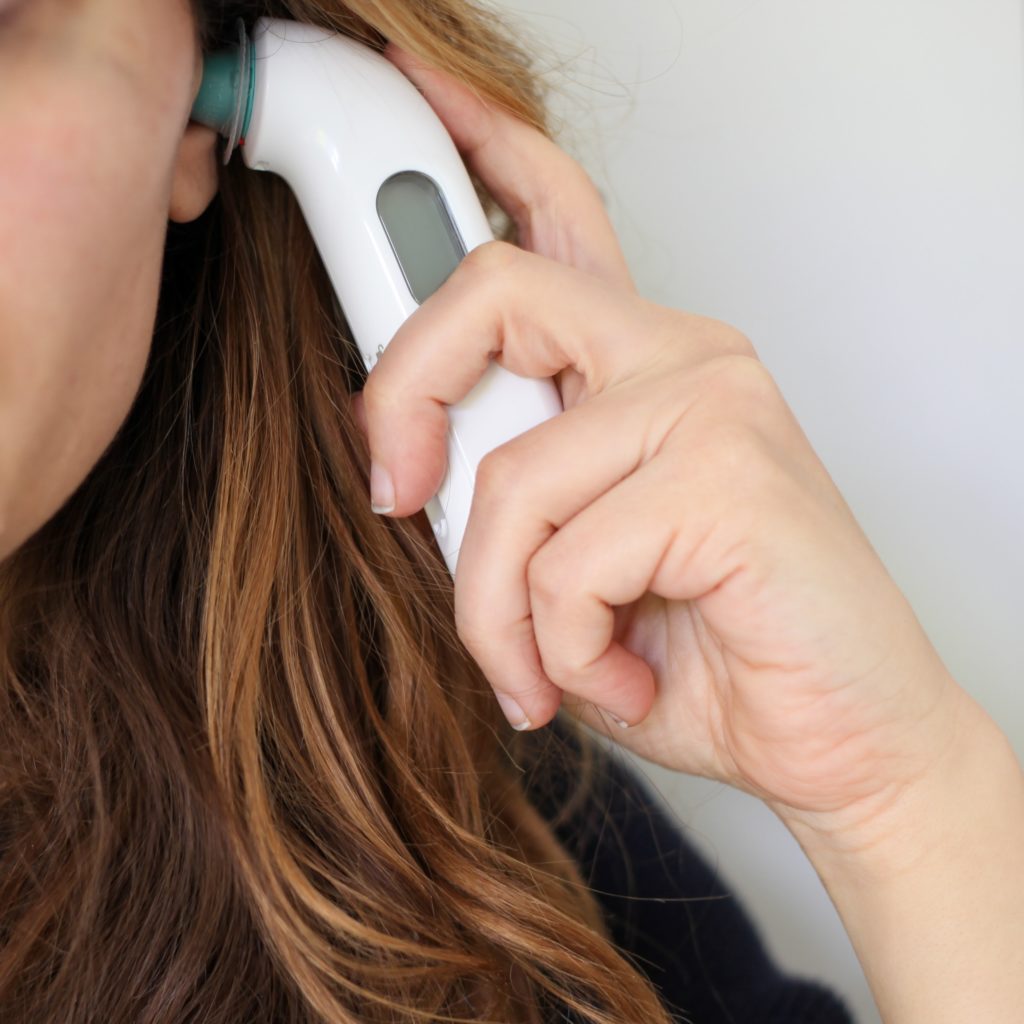
    After she awoke from a nap, she let out a little cry from the body pain. It occurred to her to take her temperature. Where was the thermometer…? She pulled herself up from the couch, holding onto the lamp table until she was upright. Her chest hurt… exerting herself a little made her gasp for air.

    The coronavirus illness and grief requires checking for fevers.

    Inching slowly, she made her way into the bathroom and searched for it. When she thought she couldn’t stay on her feet much longer, she spotted the thermometer, grabbed the alcohol and made her way back to the couch. Her labored breathing alarmed her…

    Once near the couch she started coughing…long and hard. She leaned in to get the alcohol bottle and thermometer to the coffee table. Then, holding onto the table she braced herself till she reached the couch and collapsed.

    This is terrible! What’s going to happen to me here..? Her thoughts scared her, so she tried to calm herself.

    Honestly, she needed someone there with her. Even getting her own fluids was so hard. The simple act of going to the bathroom was terribly difficult. 

    Leia wondered if she should carry her pillow and blanket with her on her next trip to the bathroom so she could lay down there and not have to walk back to the couch.

    Coronavirus illness and grief is hard to bear when you're alone.
    She thought about the night she had dinner at a friend’s house with a few other friends. Everyone there was sure they hadn’t been exposed to that virus. These were 20-somethings who’d lived their lives without incident and had come to call this pandemic an “old person’s disease.”

    They had even laughed at the thought that they needed to be that careful, locked in their houses, washing hands all the time. Sillyness.

    That was six days ago.

    Oh dear… how could we all have been so naive..? So wrong??

    She needed help, but knew she mustn’t ask anyone to come over. This was an awful illness, and even though she felt scared, she wouldn’t wish it on anyone.

    She’d heard about someone in their circle of friends who was staying with his girlfriend’s family while he fought it. She wondered how he could expose them that way. It seemed wrong to her.

    She coughed hard again. A dry cough with nothing that came up. But it hurt. Her lungs hurt. She thought to herself that it would be hard to describe to someone what it felt like.

    She managed to reach her thermometer from the coffee table, and checked her temperature. 

    102.4F

    Oh no.

    The cough, the aching and weakness, the fever… she’d bet the farm she had “it.” If she had the energy she’d text others who were there that night at the dinner… see who else was sick. But it was too much.  Coronavirus illness and grief was a Goliath… She drifted off to sleep again.

    Leia woke up drenched in sweat. But she was too weak to move to get dry clothes… This must be COVID-19. She’d never felt anything this severe. Coronavirus illness and grief filled her with sorrow and regret. How she wished she’d stayed home and avoided that dinner.

    Her chest felt tight. She tried to take a deep breath but couldn’t.  And it hurt so much.

    The next time she woke up, she could barely breathe. She could barely move. She could tell her fever was up again but it was too hard to reach the thermometer.

    Leia drifted off to sleep, fighting for air…

    Avoiding Coronavirus Illness and Grief Justifies Isolation

    Is COVID-19 just like the flu? Really?? Is that what you’ve heard? One report after another emerges where you read that someone believed all this caution was part of an elaborate hoax. And then they suffer from this infection themselves… and try to spread the word that this sickness is terrible, so take it seriously.

    Worse than anything they’ve experienced before. Unfortunately, some even die.

    You know, it’s probably safe to say that our whole country’s population is grieving on some level.  Elizabeth Kübler Ross wrote a book decades ago about the stages of grief. It starts with denial, then advances to anger, then  bargaining, then depression/resignation …and finally acceptance.

    Do you find yourself in any of these stages?

    Actually, you may experience more than one stage at the same time…and you may repeat stages, too.

    Coronavirus illness and grief can be so suffocating when you're alone at home feeling scared and sick.

    If you’ve heard about “corona parties” where people thumb their noses at quarantine and lockdowns by gathering for a party… Not only are they likely to be cited or arrested, but these people are in the first stage of grief…Denial.  It’s really not a river in Egypt, right?  

    Denial’s about telling yourself something isn’t really happening, and as a result you can sometimes put yourself and others at risk..  and even in grave danger.

    So, when you see that going on, don’t adopt that outlook. Leia, in our story above, made that mistake along with her friends. And she paid a dear price.

    Even so, you need connections, interactions, exchanges that say you care, and that others care about you, too.

    If you have complied with self-quarantine, you may still be grieving. Most are. And that’s ok.

    It’s hard to see the changes taking place in the world, and to not know what to expect.

    Will life ever return to the way it used to be?

    It’s ok to ask the questions, and to ponder the answers. There’s uncertainty for everyone. 

    Coronavirus Illness and Grief Can Seem Overwhelming

    Still, try to reassure yourself that you’re not alone. Most people are grappling with the same questions, and will find answers together.

    Even so, just knowing that may not be enough. If you find the questions and uncertainties go around and around in your mind, if you find that you’re weary and losing hope… if it seems insurmountable, call us.

    We’re here to help you through times like these. It’s possible you may need treatment beyond what’s been in place up till now for your depression and anxiety or PTSD. Being cooped up and losing your routine can be so unsettling. Possibly frightening.

    Ketamine treatment can bring you resilience to cope with the coronavirus illness and grief.

    Our patients find that ketamine treatment can help them balance, restore, and become resilient again in the face of times like these.

    If you wonder, call us. We’ll speak with you on the phone to determine if you’re a good candidate for ketamine treatment and to screen you for possible exposure to COVID-19.

    You will get through this, and we’re here to help. While non-essential workers are locked in their homes, our medical services are essential for helping you cope with your life now, and to help you get better for your future.

    We’re here to help you breathe in life again.

    Lori Calabrese, M.D. is on the front end of the race to stop PTSD in its tracks using IV ketamine treatment.

    To the restoration of your best self,

  • Houston based depression psychiatrist, Dr. Sandhya Prashad, M.D., tells how this new drug might save lives and cost less than expected

    Houston based depression psychiatrist, Dr. Sandhya Prashad, M.D., tells how this new drug might save lives and cost less than expected

    As seen on a Sussex Directories Inc site

    FDA approves Spravato, a version of ketamine backed by Johnson & Johnson that sees rapid results in patients battling treatment resistant depression and suicide.

    HOUSTON, March 5, 2019 /PRNewswire/ — New FDA approved depression treatment, esketamine, is the biggest advancement in depression treatment in thirty years” – says Houston based Psychiatrist, Dr. Sandhya Prashad. This approval allows ketamine treatments to be more widely available and will likely be covered by various insurance providers for patients who have failed previous treatments.

    Depression is the leading cause of disability worldwide, and an estimated 16.2 million adults in the United States have had at least one major depressive episode. According to a survey conducted from 2011 to 2014 by the U.S. Centers for Disease Control and Prevention, one (1) in eight (8) Americans age 12 and older are reported to have used antidepressants within the past month.

    Ketamine has been hailed as the most important advancement in the treatment of depression in the past 50 years. Ketamine works on the NMDA receptor and modulates glutamate instead of serotonin, norepinephrine, and dopamine like traditional antidepressants. It is thought to help restore nerve synaptic connections in brain cells in people with major depressive disorder. It also works faster than other antidepressants. Patients often report symptom improvement in days instead of weeks. Suicidality also often improves rapidly.

    Other psychiatrists in Dr. Prashad’s network have been sighted to confirm the drugs’ effectiveness and long-term results as per this weeks interview from the TODAY show: esketamine nasal spray discussed on the Today show.

    Today, Johnson & Johnson’s nasal form of Ketamine, esketamine, which will be marketed under the name Spravato, was FDA approved. The long-term safety study showed that esketamine was generally tolerable, with no new safety signals with dosing up to 52 weeks. Discontinuation rates due to esketamine-related adverse events were low.

    Traditional, conventional antidepressant drug treatments have a therapeutic lag of 3–4 weeks, and about a third of patients do not respond. At this time, ketamine has been available as an off-label treatment for depression and is not covered by insurance. Given the fact that ongoing treatment is required, it can become rather costly, and this has greatly affected its accessibility for patients. Johnson and Johnson has been developing a nasal version of ketamine called esketamine (Spravato) for treatment resistant depression. With FDA approval, insurance companies will begin to cover costs of the medication and make the treatment more widely accessible. The drug would be the first novel therapeutic for depression in 35 years.

    “We’ve always prided ourselves in offering the most advanced treatments to our patients,” Dr. Prashad said. “Insurance coverage of esketamine will allow this life-saving treatment to be accessible to patients that need it. With one-third of those suffering from depression unable to respond to antidepressant medications, being able to provide relief to patients that are otherwise treatment resistant is a great opportunity.”

    Dr. Sandhya Prashad, board certified Psychiatrist based in Houston, has specialized in treatment resistant depression and has been using ketamine in her practice since 2016. A graduate of Baylor College of Medicine for both Medical School and Psychiatry Residency, she has presented on the national level at conferences regarding the use of ketamine. She is a founding member and the secretary of the American Society of Ketamine Physicians (www.ASKP.org) which is a non-profit organization created to advocate for the safe use of ketamine for mental illness and pain disorders and to expand access to ketamine therapy. Dr. Prashad was also named one of Houston’s Top Doctors by H Texas Magazine for 2017, 2018 and 2019.

    Patients may learn more about the treatment and the practice by calling 832-436-4055 or visiting www.houstonketaminetherapy.com

    For Press Inquiries, contact:
    Bianca Bucaram
    The Bucaram PR Group
    713-898-6552
    bianca@bucaramprg.com

    SOURCE: Dr. Sandhya Prashad

    [Read the Original Post Here]

  • Fight the Effects of Isolation Depression By Reaching Out to Help Someone

    Fight the Effects of Isolation Depression By Reaching Out to Help Someone

    Cameron pulled back the drape to look out into the empty street. No cars were moving, but an endless row of them lined each side of the street. A recent rain left the pavement dark and glistening. He let the curtain drop and walked into the kitchen for some herbal tea. The house was dark. Quiet. He had to admit to himself, it was lonely, too. Ok there. He said it. He felt lonely…as in alone. The effects of isolation depression were getting to him.

    Cam woke up each day wondering what his purpose in life could possibly be. There was no point in this endless endurance. He didn’t have the energy or motivation to do much at all. He’d been to the doctor a few times, only to take medicine that didn’t change anything except make him gain weight.

    The more he thought about it the more he wanted to die. His mind focused on how he could help that happen.

    He’d been fighting off this wretched despair for weeks … trying as hard as he could to rise above the gloomy, empty feeling that had been trying to drown him. Even though he’d tried cooking, he got bored with that pretty quickly. He’d tried reading. But the constant silence stifled his outlook.

    They’d been told on the news to stay home. Some sort of pandemic. But Cam didn’t care …he never went out much anyway. 

    He kept the blinds closed, the drapes pulled, and the door locked. The idea of seeing someone, or anyone, peering into his apartment made his heart race and the hair stand up on the back of his neck.

    To pay his bills, he offered accounting work for people online. You might say a virtual assistant, of sorts. He could work on his own timetable…when he could function. Office hours never had worked for him.

    The effrects of isolation depression are making this senior citizen want to give up hope.

    Then, he saw a post on social media. Something about how to reduce your own anxiety and depression. 

    That caught his attention.

    It said to find a way to help someone. Offer to do a favor for a friend or a stranger. That by doing that, it could help lift your own mood.

    Cam thought about it a moment. Hmm. The idea seemed far-fetched, even ludicrous. (Like, really ludicrous.) People who feel crummy, who have no energy, and who are miserable around others…have got to be the worst possible candidates for acts of kindness and helpfulness. People with energy should do those things.

    Right..??

    After digging around in the fridge, he came up with some frozen potato fries and put a generous pile of them on a baking sheet in the oven. He checked for ketchup, confirmed there was half a bottle, and returned to his desk.

    While he worked on a customer account, that message about generosity and kindness ran laps around his mind.

    Finally, he turned around in his chair and stretched.

    Could it be? Is it possible that a melancholy loner could actually do anything that would benefit someone else?

    Thoughtfully, he laced his fingers behind his head.

    Good grief, he thought. We’re not supposed to leave our homes. How on earth could someone like him do anyone any sort of favor?

    Aaaacccckkk!  Forget about it. It’s a crazy thought and it’s not happening.

    He reluctantly turned back to his work, then the timer sounded. 

    After serving the hot, steamy potatoes up on a plate, he decided they smelled sort of good. He poured himself a glass of iced tea, and munched away. It was unusual for him to have an appetite at all. 

    He studied the fried potato in his hand…rolling it to examine it top and bottom distractedly. 

    Finally, he dipped it in ketchup, put it in his mouth, and then it hit him.

    Numbers! That’s something I have to give, he thought. Something I understand. And all the kids are schooling at home. I wonder if they need math tutoring!  

    Maybe it was a little thing, but for someone who had found no purpose for his life, it was a world-changing revelation for Cam.

    He realized he could fight the effects of isolation depression with his own skill with numbers.

    Before self doubt had a chance to suffocate his idea, Cam got on the neighborhood social app, and announced that if there were any children or teens needing math tutoring, he would be happy to offer it online. For free.

    He pushed send, then his heart sank.

    What had he done???

    He couldn’t face people he didn’t know. He didn’t feel like they’d like him, and his way of explaining math probably wouldn’t  help at all.  The effects of isolation depression had intensified his social anxiety… but could he push through ?

    After all, he was weird… he knew he was.

    Just thinking about someone contacting him for math help — then failing at it — made him die a thousand deaths. He just didn’t need any more failure.

    An hour later, he heard the familiar :::BING:::  It was a message.  Someone in his building had a 12 year-old struggling with math. They were happy to pay him but just didn’t know how to help their son themselves. 

    Doing his best to sound like he was taking it in stride, he arranged a time the next day to talk with their son.

    His heart was beating pretty fast …but it wasn’t as much anxiety, he thought, but maybe more excitement.

    And he had discovered something he’d been missing.

    PURPOSE.

    Suddenly he had the purpose to help a preteen boy develop stronger math skills.

    The next morning, he woke up, got his coffee, and sat down at his desk. There were five more messages. People whose kids needed tutoring…ranging in age from 11 to 17.

    Oh yikes.

    He didn’t know if he should try to work with all of them. What if he had a bad day and couldn’t function?  That happened pretty often.

    What if he got sick ?

    The responsibility for all these kids loomed over him.

    But finally, he made himself calm down.  He decided he would try to do this a day at a time, and if it got to be too much he’d call his doctor.  Or he could quit.  

    But for the first time in a very long time, he wanted to try.

    Cameron isn’t alone, is he? You may be in a position a lot like his. Feeling cooped up, dragging from day to day, seeing no purpose in life, and wondering how long you can endure the days.

    The Effects of Isolation Depression

    If you live in a city that’s been “locked down” it can be hard to fight the isolated feeling of aloneness and despair.

    It may be that finding a way to reach out and help someone in a small way could give you a lift, too.

    IV Ketamine Serial Infusions Can Help You Fight The Effects Of Isolation Depression

    Or, it may be too much to try without some help.

    If that’s the case for you,…if you’ve tried prescriptions for many months that just never did help… and you would like to see what
    can do for you, we have good news. We’re offering this treatment at our office. Still.
    The effects of isolation depression are eased by family.
    Because it’s essential. Because it can be life-saving. 

    We’re sympathetic to your situation, and in this climate of lockdowns, isolation, and uncertainty, we want to help you with the equipping to not only face the days, but to enjoy them. To have the initiative and hope to find ways to help others, and to enjoy the reward of it.

    This public virus situation is temporary, but for now you need all the help you can get weathering the uncomfortable circumstances that arise, and to have the resilience to help others manage them, too.

    Give yourself the chance to rise above these difficulties. Give yourself the strength of resilience. We’re here to help.

    Lori Calabrese, M.D. is on the front end of the race to stop PTSD in its tracks using IV ketamine treatment.

    To the restoration of your best self,

  • COVID-19 Anxiety Has Gone Viral – How You Can Weather The Uncertainty

    COVID-19 Anxiety Has Gone Viral – How You Can Weather The Uncertainty

    Covid 19 anxiety has gone viral, and fear of catching the virus results in isolation.

    The President has declared a national emergency.

    Schools have been closed and gatherings cancelled. Your plans for Spring 2020 have been turned upside down. The news is filled with the increasing numbers of cases of this strange virus, and everywhere you turn, conversations focus on discussing the dangers and risks. What do you do with this information overload? COVID-19 anxiety has gone viral – How do you weather the uncertainty?

    Thousands Self-Quarantine

    Lilyanne, a mother of five, returned from a spring break trip to the northwest. It was a chance to see grandparents, aunts, uncles, and cousins. They were able to get outside and camp, and take in the beauty of the rugged Oregon coast. After she and her children arrived back in their small rural town in Oklahoma, she didn’t feel right. She checked her temperature and it was 102. No wonder!

    Before long she was coughing…hard. It was a dry cough but it hurt. Her preschooler was wheezing, and with her daughter’s asthma history she thought it best to take her to the doctor. The doctor prescribed Tamiflu for both Lilyanne and her little girl. 

    Her daughter Bessie started feeling better quickly but Lilyanne felt no improvement. She asked the doctor for a COVID-19 test, and the doctor said he wasn’t sure yet how to test for that.

    A couple days went by, and Lilyanne decided to go to an urgent care. She worried that she might get too sick to care for her children, and also wanted to know if she should isolate herself away from them. The urgent care had no idea how to do the testing either. 

    So Lilyanne went to the ER. She hated to expose others there but tried to be very careful. She needed to know if she’d been infected in Oregon or in the plane…or somewhere else.
    Covid 19 has gone viral with shortage of testing kits.

    The ER doctor tested her for other infections, but explained that she didn’t meet criteria for a COVID-19 test.

    “I don’t meet criteria?? Why not??” She felt overwhelmed.

    Covid 19 anxiety has gone viral, and she wished she knew what to do…

    The best thing she knew to do was to quarantine herself and her five children in the house. But to do that…she needed groceries so they could eat.

    Again, she tried to be really careful, using hand sanitizer every few minutes at the store. She quickly filled her cart with necessities since they’d been out of town 9 days. Then, she chose frozen meats, veggies, and snacks, along with milk, juice, pasta, and produce. 

    She paid without touching the cashier, wiped down the terminal where she inserted her card, and hurried out of the store.

    Once home, the kids helped with unloading groceries, and she took off her clothes, put on her nightgown, and crawled under the covers.  Before long, her oldest son, Colton, brought her a steaming mug of herbal tea.

    So far, none of her children showed symptoms, but how was this going to go? Her two oldest kids could handle meals, but how long could they manage the young ones? The laundry? Keeping the peace..?  How bad would this get?

    Could she trust all 5 of them to stay in the house, when she was in bed?

    Her temperature had risen higher. 102.9. The coughing was hard to control and painful. Her lungs hurt.  

    She called the CDC to ask them what to do…

    Anxiety is a natural response to a situation with an unknown outcome. 

    And just because the outcome is unknown, it doesn’t mean you’re facing doom. That’s the thing about anxiety. It feels foreboding. Scary. Threatening. 

    But if you can decide to think about it differently, you just might find a way to relax a little…and patiently see what happens next.

    For instance…

    Covid 19 anxiety has gone viral but you can take a walk in the fresh air like this puppy.
    If you’ve been watching the news or reading articles on the internet and you feel your heart rate increasing, turn off the TV for awhile, walk away from your computer, and take a short walk in the fresh air, do a little gardening, or go in the kitchen and cook something. 

    That heart rate rises to give you more energy to fight or run in a crisis, so put that energy to work for something productive and enjoyable.

    An unsolicited act of kindness, no matter how small, can help you redirect your energy and focus, and the smile you bring to the recipient will give you good feelings that help you feel a little better, too.

    Facetime or Skype a friend, and talk and laugh. Just because you’re isolated doesn’t mean you can’t continue to nurture your friendships, and show others you care. Keeping the connections in your life strong will gird up your own resilience to get through this challenge.

    There are also apps for your phone like Marco Polo, where you can talk back and forth and see each other’s faces. Just being able to talk face-to-face can help you relax, feel connected, and encouraged.

    Because COVID-19 anxiety has gone viral, and the people you care about are comforted hearing from you.

    And remember that by isolating yourself at home, you’re taking care of others. Odds are that you’re likely to recover fine if you’re infected with the COVID-19 but you quarantine yourself for the sake of those who might not recover as easily.

    When you isolate yourself, it’s an act of kindness toward all of those people whose paths you would cross.

    We’re all surrounded with people who have compromised immune systems, or underlying conditions, and we don’t even realize it. A colleague who suffers from Crohn’s Disease, Type 1 Diabetes, leukemia, or any other immunocompromised condition could be made critically ill by contact with you.

    And any of the people you see at the grocery store, on the train, in an airplane, or on an elevator are protected because you chose to isolate yourself until you’re no longer contagious.

    Now, even though we talk about productive things to do with the anxiety you might feel, sometimes you just can’t manage it. 

    Sometimes you need help.

    And just as we’ve used IV ketamine treatment for depression, it’s also shown significant efficacy for anxiety. We know that anxiety and depression often go hand in hand, don’t we?

    We know that that breakdown for treatment effectiveness goes something like this:

    About a third of patients with depression improve with their first trial of antidepressants, and another one third or so respond well to a second trial of a different antidepressant or combination. That leaves about 1/3 who aren’t helped by that method of treatment. The ones we might call treatment resistant.

    Still it’s not so much that those patients are treatment resistant, it’s that traditional antidepressants are the wrong treatment for those patients.

    But that group of patients shows wonderful response to IV ketamine treatment, with 80% responding remarkably well.

    At Innovative Psychiatry, we’re seeing patients every week who walk out with their heads high, a spring in their step, and full of anticipation and joy about what lies ahead.

    And the resilience these patients can enjoy that IV ketamine can supply, can give them the flexibility and resilience to bounce back in the atmosphere we’re challenged with right now in this country and the world.

    What’s more, IV ketamine infusions can stop suicidal thoughts in an afternoon.

    It’s so good to know you don’t need a hospital stay to receive this extraordinary treatment. You can come to the office, relax in a private area, and after your infusion, slip out quickly and head home with a ride.

    Covid 19 anxiety has gone viral but you can be happy and at peace through it all.

    Don’t let our current challenges tear down your confidence in your ability to manage your life. COVID-19 anxiety has gone viral, but it doesn’t have to affect you.

    If you’re part of that last 1/3 and need relief, call us.

    We’re here to help you safely receive treatment, so you can emerge with a new outlook on your life, new energy and resilience to face these challenges, and new hope and joy to build your future.

    Lori Calabrese, M.D. is on the front end of the race to stop PTSD in its tracks using IV ketamine treatment.

    To the restoration of your best self,

  • Ketamine Restoration in the Amygdala Repairs Social Connections

    Ketamine Restoration in the Amygdala Repairs Social Connections

    Nick walked in after school, slamming the door behind him.

    His mom looked up, startled by the noise. “What’s that dirty look about..?? You’re so judgmental!!” Nick was fuming, and with that he headed upstairs. His mom followed him upstairs and spoke softly, knowing her son was apparently volatile. She didn’t realize that what just happened could be repaired by ketamine restoration in the amygdala.

    “Nicholas, I’m sorry my face looked judgmental. I wasn’t feeling judgmental…I was startled by the noise the door made, and concerned that you seemed so upset. Did something happen..?”

    Nick crumbled. 

    He didn’t know why he misread his mom, or why he was so angry. Nick hated himself for being hateful. He just felt so angry so much of the time, and when he wasn’t angry, he just wanted to cry… what was wrong with him?

    “Sorry, mom.  I thought you were mad about me slamming the door. I have a lot of homework and I just don’t want to do it. It all seems pointless.”

    Nick’s mom knew he’d been under a cloud since the last school year. He was seeing a psychiatrist, which he always dreaded. The medications didn’t seem to be helping, in spite of the fact he was on his third different medicine.

    He’d all but refused to see the therapist any more. As his mom, she just wanted him to feel better and enjoy his adolescent life, but she was hitting a wall. All she knew to do was to encourage him to keep trying and to provide a little comfort where she could.

    “Why don’t you come downstairs, and I’ll make you a sandwich. Eating something might help your homework seem a little easier to face.”

    Ketamine Restoration in the Amygdala

    While Nick ate, he decided to mention to his mom what his buddy in History had told him.

    “Mom, you know Zach? He’s been down for a long time…even longer than me. He told me today that he’s getting IV ketamine treatment. He said he took pills for a year and they didn’t help, no matter what brand the doctor ordered. Anyway, his dad read about this treatment, and Zach says it’s already helping.”

    “Really Nicholas? Does his doctor give him the treatment?”

    “No, he said his dad is taking him to a different psychiatrist who does it. He says his own doctor is all for it. He’ll go for two or three weeks and he’ll be done. So far, he’s finished the first week.  I can tell he’s doing better. He smiles and laughs. It’s weird. But I also envy him…”

    “I tell you what, Nicholas. You go work on homework, and I’ll see what I can find out about this treatment. IV ketamine you say? We’re going to find help, honey.”

    Three months later, Nick walked in the door, smiling ear to ear.  

    “Hi Mom. Since it’s Friday, is it ok for me to go to a movie tonight with Zach and Tim?  Oh and by the way, Chelsea said she’ll go to prom with me.”

    Nick beamed.

    “Oh that’s fantastic, Nicholas! I’m so glad she said yes. She’ll be on the arm of the nicest and best looking guy at school!  And sure, the movie’s fine. Zach and Tim are great guys.”

    IV ketamine restoration in the amygdala can make all the difference.

    Depression Can Impair the Amygdala’s Ability to Process Faces

    To the casual observer, this may all sound a little too easy. And for some people, it might be. Everyone’s different. But for most people like Zach and Nicholas, their misery is reversed by a series of 6 IV ketamine infusions, sometimes a few more.

    And in some cases supplements are needed to address low blood levels of certain hormones or nutrients first. But, when you consider the comparison of that to years of traditional antidepressants that aren’t working, it’s an easy choice.

    On top of that, the prospect of joy – and hope – in place of the damaged relationships caused by a short temper, a hopeless outlook, and absent motivation, is again…an easy choice.

    Humans like to feel good. When you don’t, you’re not very pleasant to be around, you know? Is there anything that makes you feel worse than severe, unrelenting depression complicated by anxiety and phobias?  It’s misery.

    And the thing is, it colors the way you see everything. You can be looking in someone’s face who’s just preoccupied, and interpret their expression as angry, critical, irritable… then you snap at them about it, and they feel attacked from out of nowhere.

    Guess what?  There’s a scientific reason you do that. It’s not just your imagination. And the good news is that IV ketamine treatment actually changes something deep in your brain to help you interpret their facial expression for what it’s intended to be.

    To understand this, we need to talk about the a wonderful structure in the brain called the amygdala.

    Ketamine Restoration in the Amygdala

    The amygdala consists of 2 almond shaped structures deep in the sides of the brain at the temporal lobe. It’s one part of the limbic system which processes emotion, records emotional memories, influences behavior, motivation, and the sense of smell, as well. 

    One key job the amygdala performs is helping you to look at facial expressions in others and determine their emotion. For instance, if you see someone frowning, with their face tense and lips tight, do you assume they’re happy? Of course not. It’s your amygdala that sees their expression and determines they may be angry.

    Well, when someone is suffering from a disorder like severe depression or bipolar depression, their amygdala may be malfunctioning.

    Study Explores Ketamine’s Effect on Amygdala Function

    So recently, a team of researchers led by Joana R.A. Loureiro in Los Angeles and Chicago set out to study what effect two rapid acting depression treatments have on the amygdala’s ability to accurately process facial expressions. Using functional MRIs (fMRI) they tested 44 adults who were all experiencing an episode of severe depression.

    They divided the group into two parts: 17 subjects were given an individualized number of treatments of ECT and 27 were given IV ketamine infusions 2 or 3 times a week until they had received 4 infusions. 

    This was an interesting approach because both forms of treatment affect brain function and emotional processing, so they wanted to see if it worked at the level of the brain cells. 

    Since interpreting the facial expressions of others is such an important part of social functioning, they focused on the subjects’ ability to accurately do that. The subjects were tested by the task of matching emotional faces on a screen. If the face at the top of the screen was smiling, they needed to match the face at the bottom of the screen that was also smiling.

    They found that both modes of treatment improved the accuracy of the subjects’ amygdala function.

    When Depression Impairs – Ketamine Repairs

    Now, about the type of scenario that Nicholas and his mom experienced. At the moment he walked in the door he believed he saw criticism and judgment in her facial expression, when her look was actually surprise and concern.

    When someone is severely depressed, it’s as though they have an affinity for negative feelings and beliefs. So, when they see a facial expression that appears negative to them, it goes to the bone. They feel it so deeply and lightening fast.

    It’s easy to see that this type of misinterpretation and reaction only further damages relationships that are already fragile when someone is severely depressed.

    And even though both ECT and ketamine improved the amygdala’s function, ECT is a treatment that carries some bias and even stigma for its side effects and history.

    We also know that ketamine not only blocks the NMDA receptors but it also activates AMPA receptors and an array of other actions that can make you feel remarkably better.

    And there’s another life-changing benefit ketamine can provide:

    IV ketamine can stop suicidal thoughts in a few hours.

    This in-depth study shows yet another way that depression impairs your function, and how ketamine treatment can restore it better than ever.

    Reach Out for Ketamine Restoration in the Amygdala – And Get Your Joy Back

    At Innovative Psychiatry, want to help you feel a lot better than just “less depressed.” We want you to experience joy, a song in your heart, hope for the future, and energized motivation to build the life you want, with healthy and strong relationships.

    It’s almost like using a car jack to crank up your life and replace the pain and loss with new ideas, new projects, new joy in relationships.

    If you can relate to Nick, and you want to feel joyful and able to care about others as you put your best foot forward, call us.

    We want to work with you and your healthcare team to help you experience extraordinary relief. 

    Reach out now for hope.

    Lori Calabrese, M.D. is on the front end of the race to stop PTSD in its tracks using IV ketamine treatment.

    To the restoration of your best self,

  • Therapists Are Unprepared to Talk to People About Taking Psychedelics

    Therapists Are Unprepared to Talk to People About Taking Psychedelics

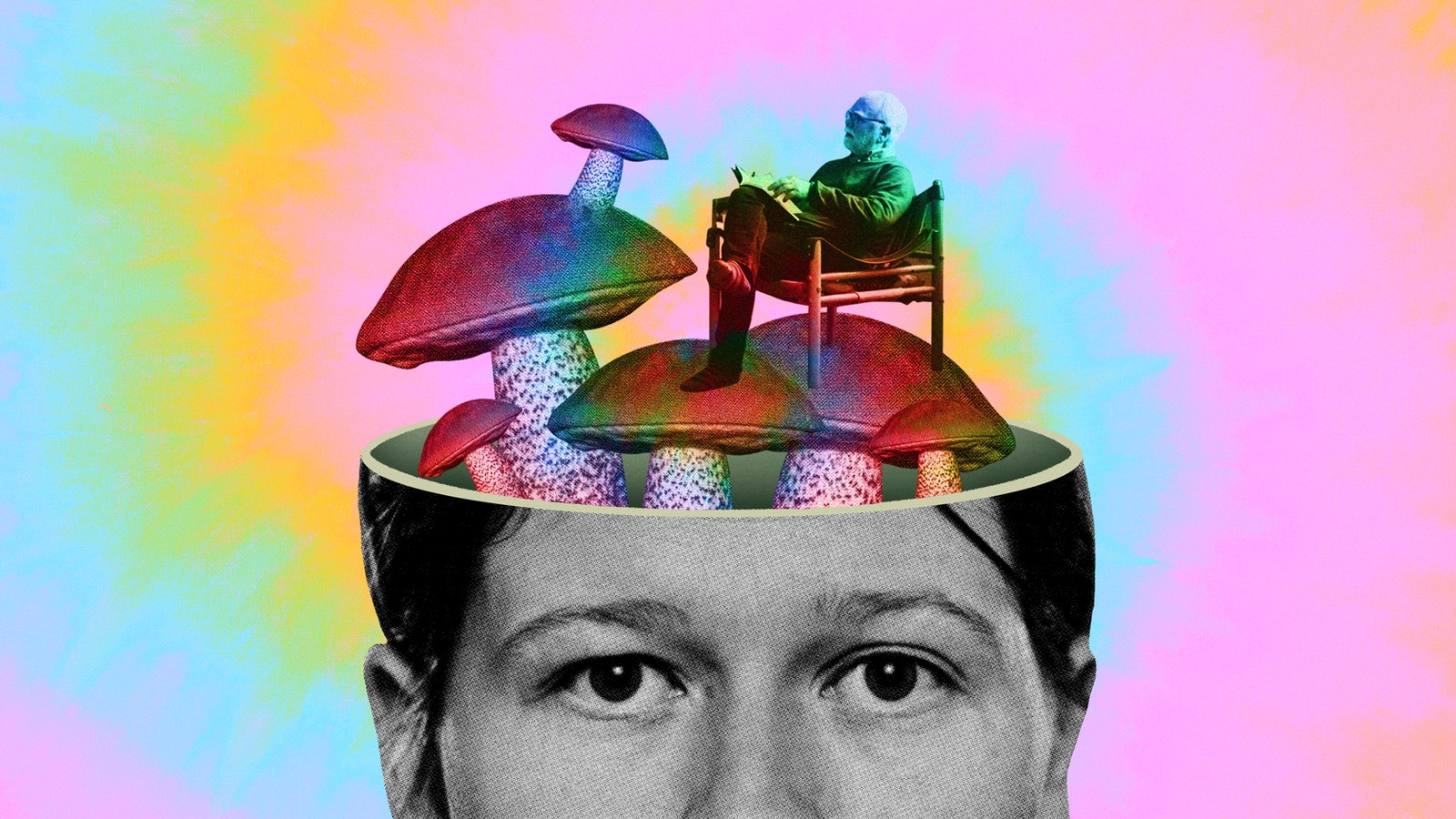
    The psychedelic revolution has arrived—yet psychologists still have major gaps in knowledge about going on a shrooms trip in the name of mental health.

    Michael Kuntz had been in talk therapy for a couple years, and felt stuck, like he wasn’t making progress on his anxiety or depression. “I found myself at a place where I couldn’t understand where this was all coming from, what was buried beneath the surface,” the 41-year-old said. 

    Then, he started to read about the use of psychedelics for mental healthissues in clinical trials around the world. Michael Pollan’s 2018 book, How to Change Your Mind: What the New Science of Psychedelics Teaches Us About Consciousness, Dying, Addiction, Depression, and Transcendence, came out. Kuntz excitedly turned to his therapist for advice: What did she think about him trying psychedelics?

    “And she told me, “Look I am starting to hear a lot about the subject myself,’” Kuntz said. ‘”But that is not something that I would not be able to work with you on, because of the sensitivities around legal issues.’”

    Kuntz felt even more lost. He knew that recreational use of psychedelics was illegal in New York, where he lived, but that there were places in the world he could go to where they weren’t. He hadn’t wanted his therapist to give him drugs, just answer his questions.

    As more people discover the research on psychedelics for depression, anxiety, addiction, they will find themselves in Kuntz’s position: asking their therapists and doctors for advice. But since psychedelics have been illegal for decades, they may find therapists who have gaps in knowledge or residual stigma about going on a shrooms trip in the name of mental health.

    Meanwhile, FDA approval of MDMA for post traumatic stress disorder (PTSD) could arrive by 2021. In 2018, psilocybin got Breakthrough Therapy designation from the FDA, and the clinical trials for psilocybin depression treatment are in phase two of three. As we stand on the precipice of psychedelic treatments, there’s now a growing recognition that the therapist part has been neglected. There are not many clinicians who are able to guide people—not only during a trip, but before and after.

    “There will be a great need for competent therapists trained in this clinical specialty,” according to a review on psychedelic therapists from 2017.

    After some internet research, Kuntz found his way to Ingmar Gorman, a psychedelic integration therapist. Gorman doesn’t administer psychedelics, tell patients where to get drugs, or sit with people on drug trips. He is a new, emerging kind of therapist, expert in answering questions about psychedelic drugs, knowing what a psychedelic experience is like and how to help people make sense of it, and being up-to-date on the ongoing research.

    There are not many clinicians who are able to guide people—not only during a trip, but before and after.

    Gorman is a rare breed, and he knows it. Because of this, he and his colleague Elizabeth Nielson, a psychedelic researcher and therapist at New York University, have formed a company called Fluence, which offers training in psychedelic integration therapy. So far, over 500 therapists have gone to their training sessions.

    “There’s a pretty big demand for this,” Gorman said. “And not enough education to meet it.”


    Integration is a loose term, referring to the meaning-making and incorporation of a psychedelic trip into a person’s life. While it’s recognized as important, there hasn’t been much research on it. In one study on ketamine for depression from 2017, patients were randomized to get therapy after the infusions, or no therapy. The people who got therapy after felt relief from their depression for longer.

    Integration therapy and support groups used to be places where people would process difficult trips. But the reality is more complex now. In the 2020 version of integration therapy, Gorman said that patients reach out to him for a wide variety of reasons—only some from having a “bad” trip.

    Recently, a mother called him because her teenage daughter had depression and they decided to try ketamine infusions, which are legal, after no other treatments worked. When she mentioned them to her therapist, the therapist ended their relationship and called child protective services on the mother for allowing her daughter to receive ketamine.

    “You don’t think about psychedelic integration when you think about that story, but what we do in our training is educate and inform so people don’t have the kind of stigma or fear response to working with clients who have had some sort of relationship with psychedelics,” Gorman said.

    Another mother reached out after her daughter had done ayahuasca on a whim while on vacation with her friends. While on the drug, she had a vision of being sexually abused by her father. She approached the shaman and said, “This is what I saw, is this real?” The shaman told her that whatever ayahuasca shows you is true.

    She turned to integration therapy for a more nuanced processing of what she had seen—which contradicted the way she actually felt about her father. As medical clinicians, Gorman said they don’t treat psychedelics as “sacred” or gatekeepers of truth. He would never tell someone what was “real” or not—his job was to work through how the experience was psychologically affecting his client.

    These scenarios, along with other examples of complex patient experiences, are one part of what Gorman and Neilson present their trainees, in a program that’s been evolving and updated for the past six years. Their core workshops, Psychedelics 101 and 102 also offer a basic introduction to psychedelic drugs, their history, and current research with MDMA and psilocybin, clinical trials, and legal status.

    Patients reach out for a wide variety of reasons—only some from having a “bad” trip.

    A bad trip is something a therapist learns how to deal with. But what about a confusing one? Or a non-experience? Gorman said they teach therapists how to deal with a patient’s disappointment. “For a lot of people, even when it’s their first experience, this is not a quick fix,” Gorman said. “Sometimes it doesn’t work that way and they can really feel like they’re broken. That’s there’s something wrong with me because it works for everybody else but it didn’t work for me. And so we have a whole process around helping a person digest that disappointment.”

    Therapists learn about how to address preconceived beliefs and expectations a patient may have towards the drugs, as well as biases a clinician might hold. “If therapists become too overly enthusiastic of psychedelics being purely helpful, they can alienate their patients who are having difficult experiences,” Gorman said.

    When they started their training, Gorman said he thought they were going to see people who were already deep into psychedelics, with lots of experience. “That didn’t turn out to be true,” he said. “I would say that actually the contrary is true. The majority of the clients that I see are not people who come from the psychedelic culture.”

    That’s who Ingmar wants to teach. His goal with Fluence is to reach out to clinicians who haven’t had a psychedelic experience. “That’s where it matters, you know?” he said. “That’s where we’re really making an impact in terms of educating people because people know very little if they have never done a psychedelic.”

    He said that he and Nielson agree that a clinician doesn’t need to have had their own experience to help something with integration. “What I think is really healing for people is their therapeutic relationship, feeling like they can be heard and understood.”

    Paul Ratliff, a 55-year-old marriage and family therapist who attended a training workshop, hasn’t had an experience with psychedelic drugs since he was in his 20s. He said that his interest started to be piqued again once he started reading about it in major media outlets. “Then, I think for myself, like a lot of other people, the publishing of Michael Pollan’s book was a pivotal event,” Ratliff said. “It was this indication of: Oh, this is going mainstream. I felt the door swing open. Part of my decision to formalize my exposure to it is a sense that this is the crest of a wave.”

    “It’s not easy to get trained. It’s not really available.”

    Marc Sholes, a psychoanalyst in New York for 30 years, said that psychedelic integration therapy, at its core, is not that different from traditional psychotherapy. But the kinds of experiences that can come up for patients are somewhat specific, hard to get access to, and practice on, elsewhere. “It’s not easy to get trained. It’s not really available,” Sholes said.

    Ratliff said this stigma could deter a person from being honest with their therapists. “You want to be with someone who’s going to embrace this sort of experimentation you’re doing,” Ratliff said. “Even a small concern about being judged by your therapist could affect the therapeutic relationship.” He also came away with strategies for how to interact with a patient’s desire to take an illegal drug— in a harm reduction way.

    “I think it’s really risky right now for everybody to be involved in this work,” said psychologist Signe Simon. “Patient and clinician.”

    Though Simon doesn’t hold any personal stigma towards psychedelics, she wanted to hear about what those risks are, and what her responsibility and duties were as a clinician to keep her patients safe.

    “It’s in such a gray zone right now that I think for me a lot of it was out of fear,” psychologist Simone Humphrey said. “This is something that I really want to work with, but I also want to know that I have the training necessary to handle something that might be unpredictable and might put the patient at risk or myself as a clinician. What am I legally allowed to disclose and not disclose? Is it okay to recommend? And all of the specifics around how to handle it.”

    Psychedelics 101 and 102 is just one framework for psychedelic integration therapy. Gorman and Neilson are working on codifying it as much as they can, creating a manual, and setting up more formal accreditations.

    But ultimately, there’s nothing stopping any clinician from saying they can help with psychedelic integration, whether or not they have experience, or biases about the drugs themselves.

    In a paper in the Social Science Research Network, a social worker and psychedelic-therapy trainee Rose Jade argued that integration is a vague term, one subject to “hijacking.” “It may mean assistance akin to that provided in an FDA trial…or it could mean just post-dose talk therapy, or at times a mix of the above, or…something completely different,” Jade wrote. “It is a very vague term that is now being freely bandied about in conversations and used … in advertising by licensed health care professionals to attract clients and generate income for the professional.”

    Just like psychedelic treatments, outside of a strict, clinical trial context, there’s no one monitoring or policing what exactly integration would entail.

    And as it matures, as with other aspects of psychedelic medicine, access and cost are an issue. Multiple sessions with trained professionals is expensive, and if regular psychotherapy is rarely covered by insurance, psychedelic integration therapy will likely fall under the same umbrella.

    It raises a sticky question currently plaguing the psychedelic medicine scene: do guides and integration specialists need to be therapists? Ratliff said that therapists “literally have a code of ethics,” and so he feels like people with a clinical background are best positioned to help. A clinician might be better equipped to deal with anxious and depressed patients who are curious about psychedelics.

    The FDA doesn’t regulate psychotherapy, but medical devices can require a training program, like transcranial magnetic stimulation. Should someone wanting to treat people with, before, or after psychedelics be tasked with the same barrier?

    “I think when we think about this process and we think about standards and we think about safety, that’s when my impulse is to say there should be some training, there should be some kind of formalized method because otherwise anyone can call themselves an integration therapist, potentially do damage,” Humphrey said.

    The need for integration therapy isn’t going away. When Frank*, a middle-aged man living in New York, became interested in taking psychedelics, it was to help with his social anxiety. Frank hadn’t taken any drugs in 30 years, including alcohol—he is sober after having addiction issues when he was younger.

    He wanted to see a therapist versed in psychedelics before taking anything, to help him create a safety net around his decision—for himself and those close to him. “My boyfriend was very concerned about his, and I was able to say, ‘Hey, I’m doing all these steps to make sure that I’m doing it in a good and in a cautious way,’” Frank said.

    His previous therapist didn’t couldn’t respond to all of his questions. “You just cannot go to a random therapist and ask because they won’t know the answers,” Frank said.

    Sherry Sacks, 46, had serious depression for about eight years. She had been in therapy, been on antidepressants, tried transcranial magnetic stimulation. “It came to a point where none of these things were working, and I fell into a really deep despair.”

    Over the course of two years, Sacks did 11 ketamine infusions, the most recent last June. She started to see Gorman after her first couple treatments, not because she had a bad trip, but because she wanted a place to explore the meaning of the experiences.

    “Anyone else, like your regular CBT or armchair therapist is going to be like, ‘That was a nice trip. You were on drugs. Of course you found that interesting,’” Sacks said.

    “You just cannot go to a random therapist and ask because they won’t know the answers.”

    With proper integration and preparation, a person’s experience with psychedelics could be enhanced. Gorman feels that the importance of integration may not necessarily be on everyone’s radar—especially given how hard it is to find an integration therapist besides searching online and asking therapists about their experience and credentials. “I would say that amongst lay people right now, there is a lot more focus on the experience itself, and not so much awareness on what happens afterwards.”

    Kuntz ended up going to Synthesis, a legal psilocybin retreat near Amsterdam. He had been doing integration work for about three months before he went, through therapy, journaling, and reading. When he sat down with the others at the retreat, he felt much more prepared than everyone else.

    “I was just ready for whatever was going to come at me,” Kuntz said. “It was almost as if the things that I had outlined in my journal, one by one, started to come up for me. Some of those things were terribly painful. I don’t want to paint a picture that I sat, smiling in bliss, for five hours. But the ability for me to be able to address some of these things, detach myself from it, examine them from a different angle, and really feel it—and then let it move through me and move to a place of acceptance… it just exceeded my expectations.”

    *Name has been changed to protect privacy.

    [Read the Original Article Here]

  • Does Hopelessness Accompany Suicidal Thoughts or Cause Them?

    Does Hopelessness Accompany Suicidal Thoughts or Cause Them?

    Tim dragged himself into the school cafeteria where the photographers had set up equipment to take school pictures.

    He felt angry, bitter, sullen, and hopeless. What purpose could there be in school pictures? What’s the point? he thought. Tim hated being at school. He felt like he would self-destruct if he didn’t get out of there. Then it was his turn for his portrait. He stared at the camera. The photographer said, “Smile!” (Does hopelessness accompany suicidal thoughts…or cause them?)

    He just stared straight ahead. Enduring. He knew if he smiled it would make him look like a horror-movie character. Click. Flash. And it was over.

    Tim got up, and dragged himself out of the cafeteria and out the back door of the school.  He shuffled home. He couldn’t stand being there any longer. 

    Right behind Tim in the line a pretty girl waited her turn. Emily smiled for the camera. She didn’t want to. But she tried to do the right thing. Her sad eyes gave away her despair. Emily lived in a neighborhood where everyone knew each other, got together, barbecued, and enjoyed the community.

    The problem with that is that one of her neighbors offered to spend time helping her with her music lessons. Her parents encouraged her to take advantage of the expertise of this “nice man.” Luis was 41, college educated, and very musical.

    Emily didn’t know how to tell her parents that every time she went to his house, he had other ideas in mind. She felt ashamed. Troubled. Scared. Dirty.

    She tried to be responsible and do everything expected of her. Her parents just knew she was a good student, kind, and obedient. Does hopelessness accompany suicidal thoughts…or cause them?

    Once when Emily tried to tell her mom about Luis, her mom corrected her before she could get it out. She told her to be sure to be respectful toward him when she was at his house.

    Emily clammed up.

    But she was reaching the breaking point. After two years, she didn’t think she could take this any longer. She didn’t know how to stop it. She was feeling more and more hopeless that there would ever be an end to it. And Luis threatened that if she told anyone he would hurt her family.

    So Does Hopelessness Accompany Suicidal Thoughts or Cause Them?

    Both Tim and Emily were losing their strength to hang on. Of the two, Tim was the most likely to be identified by teachers as one who might need to see a psychiatrist. His facial expressions, attitude, and disposition made him a likely candidate for that kind of help.

    Emily, on the other hand, seemed quiet, compliant, and responsible to the school staff. Her teachers guessed she must come from a very nice family.  Emily’s depression wasn’t easy to notice because she didn’t let it show. Her goal was to please those in authority in her life.

    Tim’s doctor, on the other hand, diagnosed him with bipolar II disorder. He prescribed medication, but Tim did not feel much better.

    Tim directed his anger at his dad. Because he felt his dad lacked understanding for his condition. He resented his dad expecting him to function when he felt so bad. He wished he could crawl into a hole and hide from the world.

    Emily felt completely alone in the world because she couldn’t talk to anyone about what she was going through. And though her parents were good people, they had no idea she continuously faced such a horror.

    We can look at Tim and Emily and draw our own conclusions. But you have to ask yourself does hopelessness accompany suicidal thoughts…or does it cause them?

    Tim’s problem wasn’t his dad so much as the symptoms of his illness that weren’t relieved by his medicine. And Tim didn’t know how to approach his dad in a way to help him see what he was going through. His dad just felt he needed to discipline his belligerent son.

    In Emily’s case, it seemed that her problems could be resolved by simply blowing the whistle on Luis. That message is plastered on the walls of the school… “Tell someone!”

    She’d heard that message all her life.  She could go to the school nurse, or a teacher she trusted, or even a police officer. But she didn’t.  When she would think about it, all she could think of was how hurt her parents would be that she talked to a stranger instead of keeping their business in the family. 

    She was also afraid her dad might do something crazy to Luis that would get him arrested, then  what would her mom and brothers do?

    Every time she thought about talking to someone she hit a wall of all the reasons why she couldn’t…

    Then, in a two week period, two students in the high school took their own lives.

    Everyone wondered why. 

    No one dreamed Emily was sad or had any reason to do such a thing. Except her heartbroken parents… because Emily left a note. And Luis was arrested.

    Tim’s dad was devastated. He’d been doing his best to help Tim get the treatment he needed, but each new medication required several weeks –sometimes months — to see if it helped him feel better. Talk therapy takes time, everyone said. And he hadn’t heard of a treatment like IV ketamine. He just assumed Tim’s doctor would do what was best for his son.

    It was so hard to know the difference between his son’s bipolar symptoms and just a bad rebellious attitude. He worried about it all the time. Just not knowing how to respond to Tim’s responses.  He wished he had a guide book. But now it was too late. He just didn’t realize how severe it was.

    These two deaths stunned and rocked the school they both attended. Two very different students who didn’t know each other, but who both could have been helped…if only…

    Does hopelessness accompany suicidal thoughts…or does it cause them?

    If you knew Tim or Emily, you’d likely have been grief stricken by their deaths. Probably baffled.  And for good reason. Because hopelessness and despair come in different forms. And you probably wish you could have helped them.

    Tim’s hopelessness was within him, as a symptom of a severe and difficult-to-treat illness.

    Tim probably spent most of his time in the throes of bipolar depression. When your mind and outlook are so dark so much of the time, you can desperately need a break from it. 

    But if you know of no medicine that will supply that break for you…  if your doctor knows of no medicine that will help without trying one after another… you get your hopes up over and over…only to experience a new type of grim despair. Hopelessness grows after years of this…and it may dawn on you there’s nothing that can help.

    And you don’t know where to look for hope.

    Emily’s hopelessness was internal, too. She felt trapped by an external force. If that external force could have been removed from her life, she probably could have recovered. Unless conditions like PTSD or severe depression complicated her condition. But even those conditions can be relieved with a novel and advanced treatment like IV ketamine.

    Children and teens should be able to live healthy, active, trusting lives in a perfect world. But it’s not a perfect world.

    When they’re assaulted, and wounded, they may need special care with a skilled therapist, support from friends and family, and treatment to help them heal. Sometimes that can be treatment with a novel, advanced treatment like IV ketamine.

    A group of researchers led by Ilya Baryshnikov, M.D., asked whether the hopelessness people with depressive disorders experience is a crucial predictor of suicidal thoughts and plans.

    They guessed that hopelessness was the sign that a person would be having suicidal thoughts, so they conducted an in-depth study which was just published this month in the Journal of Clinical Psychiatry.   

    They followed 406 people for 10 years, and used diagnostic tools to determine what role hopelessness played, as well as what role the severity of the depression played, in each person’s experience with suicidal thoughts.

    Standard tools like Scale for Suicidal Ideation, Beck Depression Inventory, Beck Hopelessness Scale, Beck Anxiety Inventory, Perceived Social Support Scale – Revised, and Eysenck Personality Inventory helped them evaluate the state of mind as well as personality traits of their subjects. 

    They found that hopelessness served to explain the suicidal thoughts, but wasn’t so much a crucial prerequisite… and that it’s actually the severity of the depression that leads to suicidal thoughts.

    In the cases of Tim and Emily, both needed intervention. For Tim, IV ketamine could have possibly changed his whole world. By helping him to achieve remission, and restoring his energy and hope, his world — and his relationship with his dad — could have been transformed. 

    It’s likely his dad, like so many, had no idea that IV ketamine was an option. Much less understanding about what it could do for his son.

    For Emily, it is possible the long term stress of abuse wore down her resilience, undermining her resolve to protect herself and report Luis. To trust her parents and make them listen, so they could help.

    In her case, too, IV ketamine could have helped restore her emotional strength to do what was needed to make herself and other girls in her neighborhood safe …to speak up.

    At Innovative Psychiatry, we see teens like Tim and Emily — and find the transformative effects of IV ketamine treatment can bring restoration not only to their outlook, but to many aspects of their lives. Relationships grow stronger, energy for school improves their performance, and their hope and joy billow. Not for everyone, certainly, but for most,

    If you, or your teen, have been depressed from major depressive disorder or from bipolar depression, and oral antidepressants aren’t working, call us. Let’s talk about whether you’re a candidate for IV ketamine treatment.

    If you’ve suffered from a major trauma that other treatments haven’t helped, call us. IV ketamine treatment can restore you if PTSD has impaired your function in life.

    IV ketamine can be dramatically effective also with severe social anxiety, alcohol abuse disorder, substance abuse disorder, and can stop suicidal thinking in an afternoon.

    We want you, and your teen, to be restored to the best you ever, and have a rewarding a fulfilling life with your own joy… and hope… abounding. 

    Lori Calabrese, M.D. is on the front end of the race to stop PTSD in its tracks using IV ketamine treatment.

    To the restoration of your best self,
error: Content is protected !!