Author: Lori Calabrese, M.D.

  • Newsweek: Ketamine Restores Ability to Experience Pleasure in Depressed Patients within Minutes

    Newsweek: Ketamine Restores Ability to Experience Pleasure in Depressed Patients within Minutes

    There are many faces to depression: sadness, hopelessness, trouble sleeping, lack of motivation, an inability to experience pleasure.

    That last one has a medical name—anhedonia—and people experiencing it often no longer enjoy activities that used to bring happiness. Anhedonia is not found just in depression; it can be an important part of other disorders, including schizophrenia, obsessive-compulsive disorder and addiction.

    [button url=”https://www.newsweek.com/ketamine-restores-ability-experience-pleasure-depressed-patients-within-278943″]Read the Full Article Here[/button]

  • Ketamine Curbs Suicidal Ideation Independent of Antidepressant Effect

    Ketamine Curbs Suicidal Ideation Independent of Antidepressant Effect

    Key clinical point: Ketamine quickly reduces suicidal ideation even in patients whose depressive symptoms are unresponsive.

    Major finding: Ketamine infusions significantly reduced suicidal ideation even in patients whose treatment-resistant depression did not respond to the drug.

    Data source: This ongoing observational study included 27 patients with treatment-resistant depression who received seven intravenous infusions of ketamine over roughly a 3-week period.

    [button url=”https://www.mdedge.com/clinicalpsychiatrynews/article/116353/depression/ketamine-curbs-suicidal-ideation-independent”]Read Full Article Here[/button]

  • What It’s Like to Have Your Severe Depression Treated With a Hallucinogenic Drug

    What It’s Like to Have Your Severe Depression Treated With a Hallucinogenic Drug

    Everyone’s depression is different, but Ted, a 40-year-old resident of Portland, Oregon, describes his as a “continuous dark veil — a foul, dark, awful perspective that informs every moment of your whole life.” He’d tried to treat it with antidepressants, therapy, visits to psychiatrists, “the whole nine,” but although the antidepressants kept him functional, they by no means offered relief. He was getting desperate, so when his sister — an obstetrician who works in New York — mentioned the National Institute of Health was conducting experimental studies using ketamine to treat depression, he gave them a call.

    [button url=”https://nymag.com/scienceofus/2016/03/what-its-like-to-treat-severe-depression-with-a-hallucinogenic-drug.html”]Read the Full Article Here[/button]

  • Street Drug ‘Special K’ May Offer New Hope For People With Treatment-Resistant Depression

    Street Drug ‘Special K’ May Offer New Hope For People With Treatment-Resistant Depression

    A hallucinogenic drug known on the street as “Special K” offers new hope to those suffering from severe, treatment-resistant depression.

    Ketamine, which was originally developed in the 1960s as a milder version of PCP, already has a well-established medical use as a sedative or pain killer. But since 2000, small but high-quality studies have demonstrated its uses as a powerful and fast-acting treatment for major depression.

    [button url=”https://www.huffingtonpost.com/2014/12/12/ketamine-depression_n_6312166.html”]Read the Full Article Here[/button]

  • Symptomatology and Predictors of Antidepressant Efficacy in Extended Responders to a Single Ketamine Infusion

    Symptomatology and Predictors of Antidepressant Efficacy in Extended Responders to a Single Ketamine Infusion

    Abstract

    BACKGROUND:

    Antidepressant response to a single sub-anesthetic dose infusion of the glutamatergic modulator ketamine is transient in most depressed patients; however, a minority continue to experience an extended response. This study examined depressive symptoms and potential clinical predictors of extended response to ketamine in subjects with mood disorders and found that a dissociative response during the infusion and a history of alcohol use in first-degree relatives predicted an extended response to ketamine.

    [button url=”https://www.ncbi.nlm.nih.gov/pubmed/27839782″]Read Full Article Here[/button]

  • Ketamine: 50 Years of Modulating the Mind

    Ketamine: 50 Years of Modulating the Mind

    Abstract

    Ketamine was introduced into clinical practice in the 1960s and continues to be both clinically useful and scientifically fascinating. With considerably diverse molecular targets and neurophysiological properties, ketamine’s effects on the central nervous system remain incompletely understood. Investigators have leveraged the unique characteristics of ketamine to explore the invariant, fundamental mechanisms of anesthetic action. Emerging evidence indicates that ketamine-mediated anesthesia may occur via disruption of corticocortical information transfer in a frontal-to-parietal (“top down”) distribution. This proposed mechanism of general anesthesia has since been demonstrated with anesthetics in other pharmacological classes as well. Ketamine remains invaluable to the fields of anesthesiology and critical care medicine, in large part due to its ability to maintain cardiorespiratory stability while providing effective sedation and analgesia. Furthermore, there may be an emerging role for ketamine in treatment of refractory depression and Post-Traumatic Stress Disorder. In this article, we review the history of ketamine, its pharmacology, putative mechanisms of action and current clinical applications.

    [button url=”https://www.ncbi.nlm.nih.gov/pmc/articles/PMC5126726/”]Read the Full Article Here[/button]

  • Ketamine Administration in Depressive Disorders: A Systematic Review and Meta-Analysis.

    Ketamine Administration in Depressive Disorders: A Systematic Review and Meta-Analysis.

    INTRODUCTION:

    Ketamine’s efficacy in depressive disorders has been established in several controlled trials. The aim of the present study was to determine whether or not ketamine administration significantly improves depressive symptomatology in depression and more specifically in major depressive disorder (MDD), bipolar depression, resistant depression (non-ECT studies), and as an anesthetic agent in electroconvulsive therapy (ECT) for resistant depression (ECT studies). Secondary outcomes were the duration of ketamine’s effect, the efficacy on suicidal ideations, the existence of a dose effect, and the safety/tolerance of the treatment.

    [button url=”https://www.ncbi.nlm.nih.gov/pubmed/25038867″]Read the Full Article Here[/button]

  • Should Anesthesiologists Administer Ketamine – SoCal PBS Interview Part 2

    Should Anesthesiologists Administer Ketamine – SoCal PBS Interview Part 2

    Excerpts of PBS SoCal show on the drug ketamine for the treatment of depression.


  • New Mechanisms Elicited with Ketamine in Treatment-Resistant Depression

    New Mechanisms Elicited with Ketamine in Treatment-Resistant Depression

    Ronald S. Duman, PhD, Elizabeth Mears, Ph.D., and House Jameson, Ph.D., Professor of Psychiatry and Professor of Neurobiology and of Pharmacology at Yale School of Medicine, discuss advances in the treatment of depression. (April 2011)

  • Ketamine Acts as Antidepressant by Boosting Serotonin

    Ketamine Acts as Antidepressant by Boosting Serotonin

    Date: January 7, 2014

    Source: RIKEN

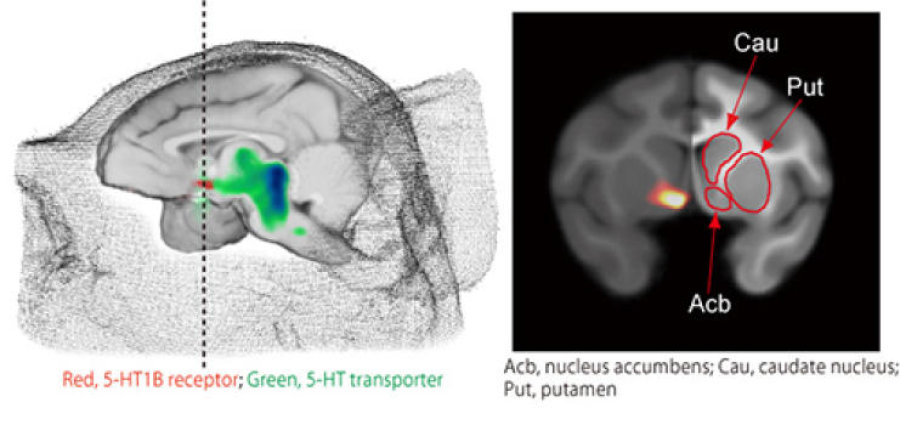
    Summary: PET molecular imaging of the brain reveals that ketamine may act as an antidepressant by boosting serotonin activity in brain areas involved in motivation.

    [button url=”https://www.sciencedaily.com/releases/2014/01/140107102442.htm”]Read the Full Story Here[/button]

error: Content is protected !!