Author: Lori Calabrese, M.D.

  • Self-Blaming Depression: Forgive Yourself for Being Human

    Self-Blaming Depression: Forgive Yourself for Being Human

    We often think of depression as being caused by loss. Things like death, or loss of an important relationship, loss of job or status… Sometimes there is a period when everything is going well, then suddenly things begin to go equally badly. You can experience a sort of whiplash that occurs that brings on depression when fulfillment changes to deprivation.

    But there’s another type of depression that works surprisingly differently. Self-blaming depression. In this case, you feel the loss you experience as a form of punishment for your failures. When that happens, it’s harder for you to be supported or comforted, because you’re convinced you don’t deserve comfort or support. In fact, you blame yourself mercilessly

    Celina had been a happy preschooler, confident, expecting others to believe the best of her. She had a spring in her step and joy in her heart until her family moved out of state when she was in 3rd grade. She didn’t feel welcome in her new school, it was hard to make new friends, and she felt her teacher didn’t respect her.

    The sunshine that had filled her life that she had enjoyed in her early years, seemed to disappear and be replaced by deprivation. Oh she had food to eat — but emotionally and socially her young heart withered. A crawling, creeping darkness seemed to ooze around her and inside her. She had no idea what was wrong or what she could do. So she just tried to muscle through.

    Signs of depression mounted within her until by junior high she found it difficult to be in school, and stayed home more and more often. That continued through high school. Seeking to become something more, she married the first year of college… she just so believed that marriage would brighten her life. (It’s supposed to do that, right?) She believed her dreams finally would come true. But the problems of keeping college going in a new marriage was tough on their budding relationship and once again, sunshine was replaced with more deprivation. And depression took over again… leading to suicidal thoughts this time.

    Eventually she was functioning with the help of an antidepressant, which helped. She got good at putting one foot in front of the other.

    Then, came March of 2020, and the COVID-19 pandemic.

    People worked remotely from home, and Celina was no exception. She lived with her small dog. Alone. All that isolation resulted in time to think about all her mistakes and misfires in her life. Month after month. Self-blaming took over her life.

    She didn’t just think about her mistakes a little … or in passing. She thought about her missteps long, hard, and deep. How could she have been so callous? Insensitive? Uncaring? While she hadn’t intended offense at the time, she now was tormented about the pain and hurt she must have caused others. She couldn’t forgive herself.

    Celina knew her situation was like everyone else’s. Her prolonged isolation wasn’t unique.  Every few months she would drive a couple hours to see her family. They had all been diligent about isolation and felt safe to see each other. They were all fully vaccinated and no one in the immediate family had tested positive for COVID. These were good times — but they didn’t happen very often. And her mind felt compelled to chew on self-blaming for her failures to others.

    But here’s the thing. All that time to think led to second guessing all the major mistakes she’d made in life, including decisions that weren’t even necessarily wrong. Certainly work takes time, but  she was dissecting every decision of her life with all the time she had when she wasn’t working. And with each one, she came up short. Shame wrapped around her like a slithering serpent. She finally found it almost impossible to work.

    And with the shame, a creeping darkness filled her like a fog, but so dark and suffocating. For a year or more she couldn’t seem to rise above it, to even breathe.

    She thought about her younger sister, Suzanna, and how Celina believed she’d neglected Suzanna when they were girls, not including her when Suzanna had been lonely. She remembered times when she was impatient with her, intolerant of her quirks …and now Celina had no tolerance of her own treatment of Suzanna.

    In spite of the fact that preadolescent girls cling to friends and private sharing, she could not give herself understanding or compassion for those failures. It was unreasonable to expect a mature, adult type of compassion and support in herself toward her sister, when she had been a preteen herself. But somehow Celina just couldn’t seem to see it for what it was.

    She called her sister and told her how sorry she was for not being a better sister and friend when they were growing up. Her sister appreciated her intent, but knew they had both been just kids and didn’t want Celina to suffer over it. It was long in the past and she encouraged her to let go of it.

    For Celina, that was easier said than done.

    Medications to treat her depression that had worked for her in the past were just not working for her now. The depression was unrelenting. Period. It consumed her. The shame she felt for being such a selfish person threatened to eat her alive.

    Do you torment yourself for your past failures?  Maybe mistakes you made in adolescence… or in your relationships… or your marriage?  Maybe in your childrearing? 

    For Celina, it was as though her compassion turned against her. Her compassion for her sister, when she’d been insensitive to her, was far greater than any compassion she had for herself. The shame threatened to swallow her up.

    That self-blame was profound. And penetrating.

    Celina needed to decide to forgive herself, just for being human. She needed to stop self-blaming… and start self-nurturing.

    Yes.

    It’s not hard to imagine how such deep depression created its own stress, combined with the stress of isolation, the pandemic, and her own self blame. That stress wears down synapse connections that create a network for signals to travel around the brain. To restore resilience and remission requires that those synapses be fleshed out again so that the network is in full function — so that you can flourish again.

    And that can happen with IV ketamine treatment. It has for so many. When mRNA triggers DNA to release BDNF (brain-derived-neurotropic-factor), those synapses sprout like crazy, and like oak trees branch out in every direction, proliferating connections. And those connections can light up your emotions, giving you energy and hope…and the power to build a rewarding life.

    Self-blaming depression is deeply stressful, and can be difficult to treat by traditional means, but IV ketamine treatment has the potential to restore the connections needed to get your brain working properly again.

    You can turn that self-blame to self-compassion with IV ketamine treatment and practicing kindness toward yourself.

    If that sounds exciting — if these symptoms sound familiar, and nothing you’ve tried has helped — just call us.

    Self-blaming depression is self-defeating. But you can turn it around and enjoy your life again.

    We’d love to help.

    Lori Calabrese, M.D. is on the front end of the race to stop PTSD in its tracks using IV ketamine treatment.

    To the restoration of your best self,
  • Adults Bullying Adults Is Harmful and Threatening to Their Health

    Adults Bullying Adults Is Harmful and Threatening to Their Health

    Heard of adult bullying? Heard of adults considering suicide as a result?

    We often focus on bullying of children in school, which is life threatening for some children, but did you know adults bullying adults can also be a serious threat to the health and wellbeing of those adults?

    Gina is an economics teacher at the local high school. She’s a team player and is always ready to drop what she’s doing to work at a project for the common good. Unfortunately, the shop teacher works closely with her in preparing students for artisan livelihoods after high school, so they need to get along.

    However, the shop teacher, Frank, is far less committed to the idea of getting along, and far more invested in getting his way.

    This made for some miserable days.

    One day Gina was in her classroom after hours, grading papers, and Frank came storming in, shouting. Frank wanted a workshop for combining shop projects with instructions on economics to show the students how to market and sell their wares. But he was planning it for a Friday when Gina’s class was presenting their projects — in costume — in preparation for a test. 

    Gina didn’t want this special day disrupted, but Frank wouldn’t consider a different date. He wanted it his way without argument. So he yelled.

    Then, his yelling became peppered with derogatory remarks aimed at Gina.

    This wasn’t the first time their communication had descended to this level.  Every time Frank had a similar meltdown, Gina tried to reason with him, and all too often she had given in and let Frank have his way to maintain peace.

    But this was affecting Gina’s health. Her blood pressure had become difficult to control, and honestly, she was losing her joy for teaching. Every day was such a battle. 

    She approached administration. And long story short, they said to ignore Frank.  Not so easy, that’s for sure. Gina didn’t like to stir up conflict, and fighting with administration just seemed futile.

    Gina needs this job. During the pandemic, it’s not easy to quit and get another good teaching job. She had worn herself out using every interpersonal skill she could muster to come to compromises with Frank.  Last week the doctor told her she has an ulcer developing. She’s always internalizing the conflicts with Frank.  What’s she supposed to do?

    Now, she’s run down from dealing with Frank…from compromising at the cost of her own students’ welfare.  She’s thought about changing jobs, but she just doesn’t have the energy for it. She’s tired of trying so hard. Lost her fight for confrontation. And she’s begun thinking about a way to be rid of all these problems… not that she’d do anything drastic.  …or would she? She has to find a way to get away from Frank.

    The trouble with adult bullying is that adults try to solve their own problems. When they do, sometimes the crisis turns on them, with migraines, ulcers, and blood pressure problems. Sometimes it can be even worse with suicidal thoughts and actions. If they do report the behavior, they’re often told to ignore it and it will resolve itself…or they’re told to work it out with their coworker. But…when dealing with a bully, that rarely brings a solution.

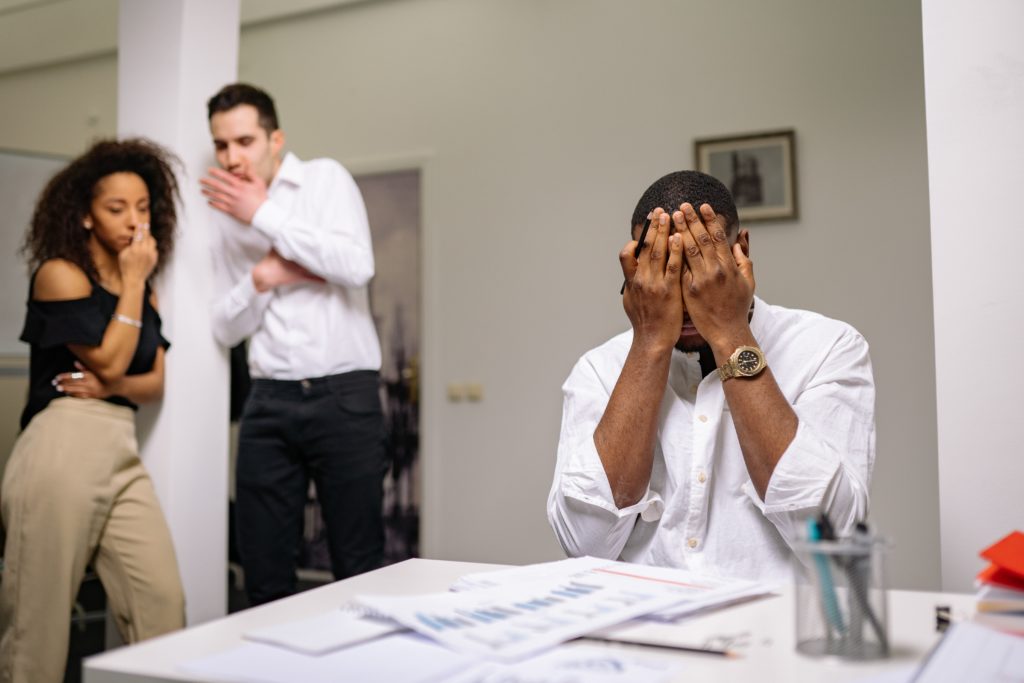
    Have you ever worked with a toxic coworker?  Have you, an adult, been bullied by an adult? 

    It’s easy to consider someone who isn’t all that pleasant, as being toxic…or a bully. But is that always the case? So how do we define a bully? The APA describes bullying as an aggressive behavior that intentionally and repeatedly causes another person harm or discomfort. And when the aggression intimidates, demands, and demeans, harm is the result.

    Some people find it so difficult to cope with this ongoing demeaning that they internalize the rage they feel… and seek a way of escape.

    Bullying should never be ignored.  

    If you are being, or have been, bullied at work or at home, steps should be taken to make you safe. 

    And…if the ongoing mistreatment has resulted in depression that doesn’t respond to other treatments, IV ketamine treatment may be an effective option for you. 

    Sometimes depression can lead to thoughts of hurting yourself, especially if the circumstances scream for escape. If that happens, take action right away to stop those thoughts. One action you can take is to reach out for IV ketamine treatment to stop suicidal thoughts. To keep you safe, while you seek further treatment for safety to avoid injury or harm.

    Of course, IV ketamine treatment won’t stop bullying. You have to do that. But ketamine treatment can restore your ability to come up with creative solutions, and the resilience you need to do that. It isn’t for everyone. But the percentage of people it helps is so high, that chances are it can be transformative for you.

    When we work together to restore your resilience through IV ketamine treatment, your options can open up again. The restored creativity you experience can help you make decisions that strengthen and improve your life. That trapped feeling can dissipate, and be replaced by new hope. 

    If you’ve been experiencing symptoms of severe depression, bipolar depression, PTSD, social anxiety, substance or alcohol use disorders…or if you’re experiencing suicidal thoughts, and nothing you’ve tried has helped, call us.

    We’re here at Innovative Psychiatry to help you get your life back on track by restoring hope and resilience through ketamine treatment.

    Lori Calabrese, M.D. is on the front end of the race to stop PTSD in its tracks using IV ketamine treatment.

    To the restoration of your best self,

  • When Your Brain Won’t Work, Can Ketamine Improve Cognition?

    When Your Brain Won’t Work, Can Ketamine Improve Cognition?

    What can you do when cognitive function skids to a slow crawl… how can you restore it?

    Nelson clattered along the path that followed the lake. His shoes were loose and slapped the ground with each step. He could have stopped to tie them on more snugly, but who cared? He was frustrated and too tired to carry about his shoes. How to fix his situation? When your brain won’t work, can ketamine improve cognition?

    He’d been really down for months now, but life had to go on. School had to go on. What could he do — tell them he wouldn’t be coming for awhile because he was ‘downa’?  Sounded to him like a great way to get a bucket of zeros.

    But it was hard. He couldn’t think of answers to things he could normally answer or even figure out things he could usually figure out. He felt like a genuine nubster. Like gum you chew and chew and spit out, and there it is a sticky blob on the ground.  Like that. Useless. Unsightly. 

    What do you do when your brain won’t work? He talked to his doctor about it last time he had an appointment. She said this was not an unusual thing to happen when you’re depressed. Okayyyyyy…but NOT HELPFUL.

    Even if it was true, he needed a solution. Something that would get his mind working for him, rather than against him.

    He walked home with a guy, Roger, who also was seeing a doctor for depression. Nelson decided to talk to him about it and see if he could relate. Anyway, it was nice not having to pretend everything was fine. When they didn’t feel like talking, they didn’t.

    “Hey man.”

    “Hey man, what’s up?”

    “Is something up with school? …or I mean, it seems harder right? Maybe I’m off or something. Like… can you keep your grades up?  Because I’m having a harder time thinking than I did before this year…and my grades are dropping…”

    “Yeah… I’ve had a harder time than before. I talked to my doctor about it…it’s just one more thing to be depressed about, and to feel bad about. One more reason to feel like a failure. Anyway, my doctor talked to my parents and they started talking about IV ketamine treatment. I’m getting it now. Twice a week.  I can’t say the change is instant and magical, but I can say the depression is definitely getting better and the problem with thinking is improving, too.  I’ll let you know how it goes…”

    “IV ketamine. Hmmm. Maybe I’ll talk to my parents about it. This feeling that I’m not smart anymore is really kicking me in the gut. I already feel like a failure and this is making it so much worse.  Thanks man. Keep me up to date ok…?”

    “You bet. I should tell you that ketamine doesn’t just help the thinking problem. It can give you the feeling that you can accomplish what you want to accomplish…like you have confidence.  And hope…. Plus all those feelings of self-criticism, self-hatred, beating yourself up….? That stuff calms down and gets quiet. And it helps you want to get stuff done that you need to do.  Hard to describe, but it’s helping me. A lot. I have one more week of treatments left.”

    Ketamine.  IV ketamine.

    So here’s the thing. Major depressive disorder affects more than 16% of people in  their lifetime. And among those, nearly 40% of those patients have cognitive dysfunction. That means they experience impaired memory, decision making ability, and problem solving. 

    One weird word you don’t see much anymore — but is at the root of “cognizant” is — cognize. And that’s what you need to do, but it’s hard to do when you’re depressed. It’s hard to cognize… to grasp, fathom, pick up on things. You may be cognizant that you’re not keeping up. That you’re making mistakes. That problem solving and figuring things out has become harder and harder. Making decisions is harder and harder. But to be able to “cognize” effectively is important. And that’s where “cognitive” comes from.

    Cognitive function is the most impaired function as a result of depression, and it’s also the function most improved by ketamine. What a relief! There’s hope!

    A research team led by Anna Stippl used the Beck Depression Inventory – II, or BDI-II, to measure depression severity in a group of 47 participants just last year. The BDI-II is one of the most widely used tools used for this. They divided into three categories the elements of the inventory: Cognitive, Affective, and Somatic. 

    And it turns out that IV ketamine treatment can improve cognition. In fact, the largest reduction in symptom severity following IV ketamine treatment in those categories was in the area of cognition. 

    So, while IV ketamine treatment reduces Roger’s depression symptoms of lethargy, hopelessness, despair, and wanting to give up…. It also helps his cognition: ability to make decisions, problem solve, find solutions, and set priorities.  And it also relieves the body aches, listlessness, lethargy, and lost feeling that seemed to dominate Nelson.

    In fact, improved cognitive function has been reported after a single ketamine infusion — yep! — as well as following a series of ketamine infusions.

    What about ketamine causes the positive effect ketamine has on cognitive function? 

    While there is no easy fix for major depressive disorder, and the cognitive impairment that can go with it,  IV ketamine can provide dramatic change in cognition, outlook, behavior, and hope.

    When you come for ketamine treatment, you'll have a comfortable, quiet room to get the most from your treatment.

    You may think that the purpose of ketamine is to just help you feel better. And it is — though that’s an oversimplification. Because these areas of cognition, mood, behavior, and physical symptoms like body aches, all play a role in how you feel and function.  Ketamine helps so much more. It helps when your brain won’t work, ketamine can improve cognition…and make you better on many levels.

    IF you have symptoms like Roger or Nelson, and nothing you’ve tried has helped….call us.

    We live and work to help you experience relief from your symptoms, like cognitive function, sadness and despair, and listlessness, lack of energy and hopelessness.

    You can reach out for hope, better performance, and freedom to pursue the rewarding life you long for.

    Lori Calabrese, M.D. is on the front end of the race to stop PTSD in its tracks using IV ketamine treatment.

    To the restoration of your best self,

  • Seasonal Affective Disorder: Feeling SAD Lately? There’s a Reason for That

    Seasonal Affective Disorder: Feeling SAD Lately? There’s a Reason for That

    It’s that time of year again. The holidays and parties and celebrations are behind. We’re left to clean up the mess, pay the bills for what we spent…. And try to avoid falling into depression.

    That’s right. January is often considered the most depressing month of the year. And actually there’s a reason for that. And that’s not your imagination. Through the holidays the days kept getting shorter, the dark looming earlier in the evening, sun setting during what feels like the afternoon, and rises after you start work. We need sunshine to feel good, healthy, and to enjoy wellbeing. But it’s not as available this time of year, is it?  Even during the day when the sun is up, and you’re working, it’s often cloudy, gloomy, and you have to slog through snow or rain. Seasonal affective disorder, feeling SAD at this time of year, may be the culprit for your flagging emotions and energy.

    This infringement on our daylight takes its toll.

    Beverly looked at her watch. The time was dragging by. Only 40 minutes had passed since her workday began. Surely it had been hours. Only 40 minutes?? She felt so heavy, so groggy. If only she could lie down and close her eyes for a bit. This was torture.

    She knew she was supposed to be working on the team project but she just couldn’t seem to concentrate on it. As much as she researched…she read and read… she wasn’t getting anywhere. So she searched for more to read. And read…

    Finally, Beverly said, “Enough.” 

    She dragged herself out of her chair and walked to her car to get a reference book she’d left there that morning. She needed to walk a bit to wake herself up, so this was a good excuse.

    But the worst of it was that she didn’t feel like doing anything. Her mind seemed numb. What do you do when you feel like a nub. Not accomplishing anything, devoid of interest or creativity, without energy to invest in the team’s outcomes. This was her job, for heaven’s sake! She wasn’t getting paid to doze, or stare into space! Seasonal affective disorder, feeling sad and tired, was draining her outlook and her ability to do her job.

    It was January, and she’d been out of it, not feeling anything useful inside herself, since November. 

    To make things worse, she wasn’t sleeping very well at night. Then, every day it was all she could do to keep herself awake enough to get through the day. Talk about days and nights being mixed up!

    The hours finally passed and it was time for her to take her lunch break. She carried her food into the lounge and rifled through the newspapers and periodicals on the table. Across the top of one, a headline seemed to burst to capture her attention: “A Way Out of Seasonal Depression”… so she scanned the article while she ate. 

    Beverly learned some things she found eye-opening. Seasonal depression is a state of depression brought on by too little sunlight during this time of year. The article said that when daylight savings time ends in the fall, it starts getting dark earlier, because sunset begins to occur an hour earlier every day. 

    To make things worse, the shorter days combined with earlier sunsets mean that many of us get very little sunlight, if any, after work. Then, add to that, the inclement weather that’s so common, and — due to rain and snow — the sun doesn’t shine as much on us as it does the rest of the year. 

    Plus, the farther away from the equator you are, the shorter the days.

    She also learned that Vitamin D is a hormone…that’s right, a hormone… that is reduced when there is less sunlight available.  In fact, they think that more women suffer from seasonal depression …or seasonal affective disorder…because of changes in estrogen levels. 

    She learned that Vitamin D is important to nearly every chemical process that takes place in the body. When Vitamin D is deficient, it’s easy for depressive symptoms to emerge.

    She also learned a lack of sunlight can cause too much melatonin to be produced by the pineal gland. When there is too much melatonin, you can get sleepiness, grogginess, and lethargic lack of energy and stamina. Melatonin regulates the sleep wake cycle, and when there is too much, alertness suffers.

    Maybe that also explained the change in her circadian rhythm. It turned out that there was more to the lack of sunlight. That it causes an uptick in serotonin transporter activity. Add that to the increased melatonin and the result is disrupted circadian rhythm… that sleep wake cycle that forgets when you need to sleep and when you need to be awake.

    Beverly was so relieved to learn there were things she could try to relieve her horrid depressed melatoninised, groggy condition. (You heard right.) For one thing, she went to a vitamin store and picked up some high dose vitamin D3 to try to replace her deficiency. She also started a routine of riding her stationary bike at home before work in the morning, in hopes the extra activity would help her feel more productive.  

    And she learned about using phototherapy, which would give her an artificial form of incredibly bright light — 10K lux of brightness — without any ultraviolet light — to replace what she was missing this time of year. That it was the brightness that was important, not the claims about “full spectrum.” She could see that it was best to use it in the morning so her normal sleepiness in the evening could do its job. She was hopeful that combining the light with exercise in the mornings could get her system off to a better start.

    In all, the steps Beverly took weren’t exactly transforming, but they did produce some improvement to help her get through the SAD time of year.

    She knew she’d feel better when Spring took hold with sunshine, warm breezes, and blooming plants all around.

    What about you?  Do you struggle with seasonal affective disorder…feeling SAD…this time of year? Does seasonal affective disorder sneak up and drain you around November ?  Or…if the holidays help you cope with the doldrums until January, do you feel like the rug was ripped out from under you in January?

    If the tips that Beverly found don’t help, what can you do?

    Weight gain or weight loss can occur, social withdrawal, crying easily, difficulty concentrating, and suicidal thinking can be problems.

    Like any form of depression, suicidal thinking is a potential risk and is dangerous. The solutions Beverly found may be effective for you, but if it’s not and if you endure suicidal thoughts, ketamine treatment is an effective way of removing those dangerous thinking patterns. It can allow you to seek more effective treatment.

    In fact, we conducted and published a real world retrospective study that showed that IV ketamine treatment is incredibly effective in our own clinic, in a lovely outpatient setting, in stopping suicidal thinking in a few hours. It can save you a trip to the ER, and help you avoid hospitalization. It could save you life.

    Literally.

    This is a lifesaving function of IV ketamine treatment that’s separate from its effectiveness with severe depression, PTSD, social anxiety, bipolar depression, substance and alcohol use disorders. Let’s say that again.

    IV ketamine treatment can save lives by stopping suicidal thoughts.

    When you come for ketamine treatment, you'll have a comfortable, quiet room to get the most from your treatment.

    There is so much good news about what ketamine treatment can do that it drove me to open an additional segment of my practice just for treating people who suffer from things like social anxiety that keeps them from interviewing for jobs or building families. People who suffer from bipolar depression, which impairs function to the point it’s devastating. Or people who suffer so severely from PTSD they can’t work, build relationships, or carry on a rewarding life. There is so much IV ketamine treatment can do. AND it saves lives.

    We want to see you achieve remission. We want to see you build a rewarding life.

    If you struggle with symptoms of depression or these other conditions, call us.

    For years, we’ve watched people come in depressed, anxious, overwhelmed…. and after they’ve received IV ketamine treatment, so many emerge after a few treatments full of hope, resolve, confidence, and freedom.

    You can have the same joy of remission, too.

    Reach out for a brighter change. We’re here to help.

    Lori Calabrese, M.D. is on the front end of the race to stop PTSD in its tracks using IV ketamine treatment.

    To the restoration of your best self,

    .      

  • Our Response to “I Took Ketamine for Depression. Things Got Pretty Weird.”

    Our Response to “I Took Ketamine for Depression. Things Got Pretty Weird.”

    Why did it get weird? Is that an indisputable element of IV ketamine treatment for depression? We respond with a resounding NO!

    (article from The New York Times, 12/26/2022)

    Every once in awhile, someone publishes a first-hand account of their experience with ketamine as a treatment for depression. (And it goes viral because….well, it’s just so interesting to see what it’s like.) We wrote a blog responding to a first-hand account way back on July 30, 2017 (we’ve been blogging about ketamine for years!) and back then, we were responding to an article in TIME magazine.  Today, let’s chat about a piece in The New York Times (and we’ve done that, before, too!), from December 26, 2021, and the good, the bad, and the ugly experiences that can happen during ketamine infusions. Let’s really talk. Here’s our response to “I took ketamine for depression. Things got pretty weird.”

    In the New York Times article, “I Took Ketamine for Depression. Things Got Pretty Weird”, writer Vanessa Barbara describes her experience with IV ketamine treatment for her depression, which she received in Juiz de Fora, Brazil. 

    A splashy title like that draws a lot of attention — from those who are familiar with ketamine treatment, people who are just curious about it (because it’s all over the news), from doctors, medical experts, business people…. Just about everyone’s been hearing about and reading about the renaissance of psychedelic research exploding in the US and around the world for the treatment of depression, anxiety, trauma, and substance abuse.

    Many people reading first-person accounts of ketamine treatment for depression haven’t received it themselves. So they’re interested in learning all they can.

    The fact is that there’s such a wide variety of patient experiences when ketamine is used in treating psychiatric conditions because there are so many different settings in which it is currently offered, such varied approaches to it in terms of patients and the symptoms they hope it will help, so many ways to prepare for and integrate the treatment experience…. and such a wide range of administration.

    And a negative experience can have to do with the rate of the infusion, the size of the dose, the consistency of flow, the comfort or discomfort of the setting, and even your mindset as the infusion begins…

    There is so much more to the the treatment–and to the experience and your response to it–than just getting the medicine from an IV bag into your body.

    (More on that later because we don’t even use IV bags.)

    Ketamine is recognized as extraordinarily effective for severe depression that hasn’t responded to other treatments or medicines. But the way you might feel during the treatment itself can be hard to predict.

    Since Ms. Barbara’s description pertained to her experience with IV ketamine treatment, let’s focus on ketamine administered intravenously.

    Not all IV experiences with ketamine are equal. For example, just to start with mechanics, if the rate of the infusion is controlled by a precise intravenous pump, ketamine reaches the brain at an even, controlled rate. But if the infusion is monitored and controlled by hand, adjusting a wheel located on the tubing from a hanging bag, the flow of medicine may speed up too fast. And that can result in too much medicine too fast, yielding an upsetting acceleration of ketamine’s effects. 

    When the rate is determined by the thumb on a wheel, a patient can be overwrought. (….or if the cannula inside the vein changes position, the flow can slow.)  A precision pump can ensure a smooth, consistent flow of medicine, and enhance the experience. That’s good, right?

    But the ”right rate” for one person may be too fast for another.

    Or the starting dose for one person may be too much for someone else.

    And — so importantly — there are many ways your own mindset can influence your experience during ketamine treatments and during other psychedelic treatments coming down the road. The dissociation during an infusion can sometimes feel overwhelming because you’re anxious, sensitive, or afraid to experience a non-ordinary state of consciousness. Because it’s not going the way you expected or the way you’ve read about.

    Sometimes the dissociation you feel during an infusion is a little nebulous. Not clear. There’s not a story line. There’s no colors. Things feel strange and unreal but without a clear meaning that you can piece together. You feel gypped–how come everybody else gets blissed out and you don’t? Maybe you’re stuck obsessing and the one thing you need to get out of your life and away from is right there, front and center, during your infusion. (That can be so maddening.) Maybe you’re riled because you had a fight on the way in. (Which is so bad for you, by the way–try to avoid that!) Or maybe, the whole experience is just so strange that it seems like you don’t have any thoughts…. You might feel so out of your body that you’re not sure you’re even a person.

    And this is supposed to HELP you? Really??

    Really.

    Even someone who’s had a negative or challenging ketamine experience can get better and go into full remission. But they’re going to need a little help making sense of how and why it happened…. discerning the meaning and the message…. and integrating that experience so that they can come out on the other side of it and move forward.

    Positively, Creatively. With a new narrative.

    Then consider the problem Ms. Barbara experienced when her partner joked with her and she suddenly thought her daughter was 15 and not 3.

    Words spoken to you when you are deeply dissociated during a ketamine infusion may sound intense, or far away, or frightening because they interrupt you and pull you back into the room, and the dissonance can be…. jarring.

    Before and during your infusion, your mindset and the treatment setting itself help shape the experience.


    Ours is pretty gorgeous, by the way.

    We value the importance of set and setting. Preparing yourself emotionally for your treatment is critically important (and we’ll help you with that!). And making sure that the setting is private, soothing, safe, and that you feel like you have the time you need to come back into your body, and ground yourself at the end. We keep things safe, quiet, meticulously clean…. and soft, warm and inviting.

    During ketamine treatment, you are open and vulnerable.

    It’s easy to misinterpret a kind word or light humor…to think your 3 year old is suddenly 15 and you’ve missed her life.

    We don’t want anything to intrude that triggers stress for you — from disruptive conversation, to joking, to cell phone calls —because it can undermine what can be an extraordinary experience.

    Ms. Barbara spoke of pleasant music. And she was on to something important. We encourage you to bring in instrumental music to listen to during your treatment — music without words reaches you without engaging you cognitively to think about the words in the lyrics. The rhythm and flow of music that you find beautiful can help shape your experience. And we work with ketamine integration therapists who can provide special music tracks specifically for each infusion.

    And a final point. Ms. Barbara signed up for 6 infusions. But experience has taught us that 6 infusions sometimes aren’t enough. In others, it may take a few more. To make this decision requires evaluation of the whole patient and their response to treatment.

    Some people reach remission after just 4 infusions, like the lovely young woman we treated with severe anorexia. Her response was so dramatic, she made a video about it. Others need 8 or 9, and then they turn around dramatically. Imagine the disappointment she experienced when she was not better after 6 infusions if 8 might have done the job?  

    Sadly, there are severely depressed people in the US and around the world who received too few infusions and gave up. They believe ketamine didn’t work for them and won’t work for them in the future. And maybe it won’t. It doesn’t work for everyone.

    Ms. Barbara’s experience is a good example.

    It might be very different if you are given a different approach—preparation, attention, and integration of the infusion experience.

    Let’s be clear. Ketamine treatment is not for everyone. It truly doesn’t help everyone who tries it. But it does help a high percentage of those who need it. Still, for some people it just takes more to achieve the relief and joy they wish for and need. And Ms. Barbara — and thousands like her — has no way of knowing if ketamine is not for her, or if another couple of infusions might have helped her achieve remission and the joy that goes with it?

    There is so much more research we need.

    Our goal is to get you back to your best self, to see you thrive, connect with friends, bubble over with gratitude for the gifts you have in your life.

    We love that. We’ve seen it happen with people we treat. And we know to respect the medicine and the differences in individuals… to administer the medicine and titrate it to work.  

    This is not a one-size-fits-all medical treatment.

    You can find ketamine treatment in clinics, hospitals, and private practices. My private practice is Innovative Psychiatry, and we’ve worked for decades to use innovative methods to help people get better. We never stop learning. And we back everything we do with research and evidence-based outcomes.

    When you come for ketamine treatment, you'll have a comfortable, quiet room to get the most from your treatment.

    When I learned what ketamine could do for my patients I began offering ketamine treatment several years ago for those who were candidates. And we’ve seen exceptional results from our work.

    We continue to go the extra mile, and bend over backwards, to care for our patients through the process.

    If you suffer from severe depression, PTSD, social anxiety, alcohol and substance use disorders, or suicidal thoughts, call us.

    Ketamine can make such a transformative difference in your life. 

    Give yourself the opportunity to find out what remission is like for you.

    Lori Calabrese, M.D. is on the front end of the race to stop PTSD in its tracks using IV ketamine treatment.

    To the restoration of your best self,

  • Say My Friend, How’d You Sleep Last Night? Sleep Disturbances and Psych Disorders

    Say My Friend, How’d You Sleep Last Night? Sleep Disturbances and Psych Disorders

    Your answer to that question could quite possibly be a hint to your mental health going forward. 

    Why? Generally, because the more early indicators we can identify and treat, the better the outcomes we see by catching symptoms early… before they turn into real problems. In fact, the more indicators we can identify, the more psychiatric disorders we might be able to prevent from blooming. Sleep disturbances and psych disorders often present themselves hand in hand, with sleep disturbance often being the first sign of a troubled mind.

    Sam was 9 years old, and had shown signs like sleep walking. He would come into the living room where his mom usually decompressed at the end of the day after children were in bed. He would begin talking to her and not making much sense, eyes open and bloodshot. It didn’t take long for Mom to realize he was asleep.

    Sometimes his mom would walk by her son’s room and hear him talking. Often, she stopped in to ask why he wasn’t aslee., But she quickly realized his talking was while he slept..  She would gently wake him up, then soothe him back to sleep.  Other times, he would walk into the living room talking …again about something she didn’t understand. His eyes would be open, and he would answer direct questions, but he didn’t seem to understand himself what he was saying.

    In these instances she could gently walk him back to bed and he would willingly go with her, then get back in bed and seemingly go back to sleep.

    What was this ?

    Because sleep disturbances like insomnia are so often associated with psychiatric disorders, researchers look at insomnia as a possible predictor of new cases of depressive disorder. Insomnia is a disorder with ongoing problems associated with going to sleep or staying asleep that affect daytime functions.

     Researchers include daytime and nighttime symptoms to determine whether individual cases were significant.

    But there’s more to sleep problems than just insomnia.

    Like what?

    Parasomnias — Unwanted physical experiences with behaviors that occur while going to sleep, during sleep or awaking from sleep. Easily confused with psychiatric disorders, think of these as out-of-the-ordinary motor or emotional behaviors. (And know that they’re sometimes misjudged as symptoms of abnormal waking experiences.)

    Marcy could tell she was waking up, but she couldn’t seem to open her eyes and sit up.  A demon was chasing her, reaching out to tear off her legs by grabbing her ankle… but she managed to break free and keep running over and over. She knew should could wake up and kept telling herself to wake up…but it wasn’t working.  Then a dark, sinister shadow passed over her and she could feel her legs being pulled off….and suddenly Marcy woke terrified. She couldn’t tell if she was awake or asleep…she couldn’t tell if the dark fog was still ripping her legs off or if it was gone.  So she cried hysterically…then little by little began to realize she was actually awake…and safe. Marcy sat up suddenly and cried each time this happened.

    Nightmare disorder (formerly labeled dream anxiety attacks) — this is distinct from non-REM (NREM) sleep terrors. These are repetitive, extremely long lasting and upsetting, dreams that are easy to recall. They threaten survival, security, and physical well being in the dream state. They occur during the second phase of the sleep cycle. Dreams like this may be herald signs of comorbid sleep disturbances and psych disorders that lie ahead.

    Sydney has experienced odd times when he felt unable to move when first waking up. He felt he was floating above his body, and either his body wouldn’t move or he didn’t care if it moved or not. Sometimes he felt as thorough he must not be awake yet..that maybe he is still partially asleep…or that he had just awakened and his muscle control had not yet returned. In most cases, it slowly returned to normal…so he convinced himself that the key was patience.

    Recurrent isolated sleep paralysis.- sleep paralysis associated with the deficiency of usual or expected tone in the muscles, when sleep has become dissociated. It can intrude when you fall asleep or it can persist as you wake. Experienced often as discomfort-causing or frightening. And more common than you think. The prevalence of this type of sleep experience is between 2.3% to 40%

    Somewhat bizarre experiences like these play a role in countless people’s livesand they’re often never investigated or treated.

    It’s believed that these experiences may serve as alert for possible psychiatric disorders, and while it’s true that the symptoms can give way to psychiatric disorders, that doesn’t mean that they always do.

    Still there is much to be said for seeking psychiatric evaluation to open up the opportunity to treat a disorder early and hope for faster effectiveness. 

    In the cases listed here, Sam was eventually diagnosed with Bipolar 2 disorder, Marcy was diagnosed with severe adolescent depression, and Sydney was treated for severe adult onset depression. These diagnoses were given years after these sleep aberrations first appeared. (And of course, their names have been changed to protect their privacy).

    At Innovative Psychiatry, we talk with patients every day about their sleep. It’s true that sometimes sleep disturbances are a part of a disorder, and require treatment. Identifying and treating depressive symptoms with IV ketamine can rapidly resolve sleep disturbances — even if the first treatment sometimes keeps people up a bit that night going over their experience, and digesting it. Ketamine treatment can be effective for both major depressive disorder as well as sleep disturbances, and we’re going to be talking about that here in greater depth soon.

    Get ready to her about some great science in the next few weeks.

    Since sleep disturbances often accompany depression, by treating depression symptoms, the sleep disturbances often resolve as well.

    And IV ketamine can help make that happen.

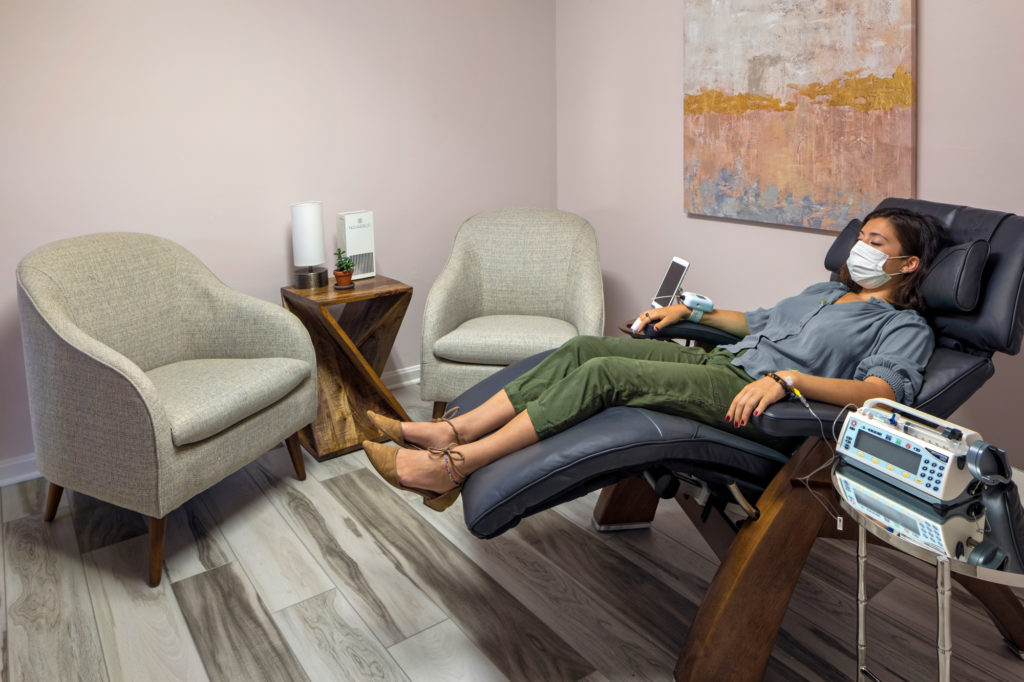
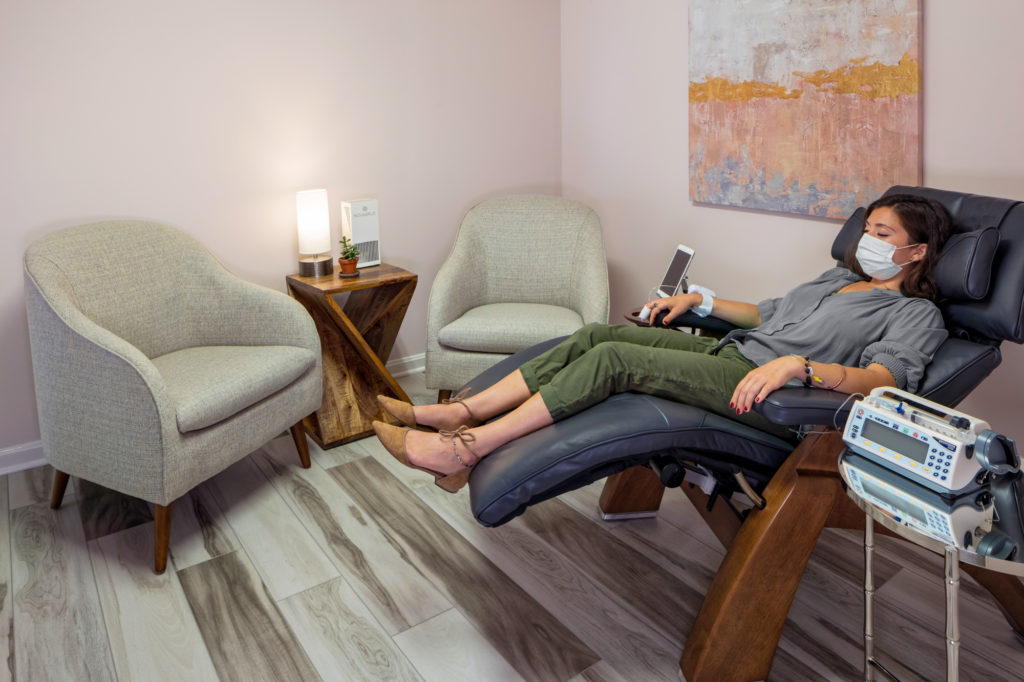
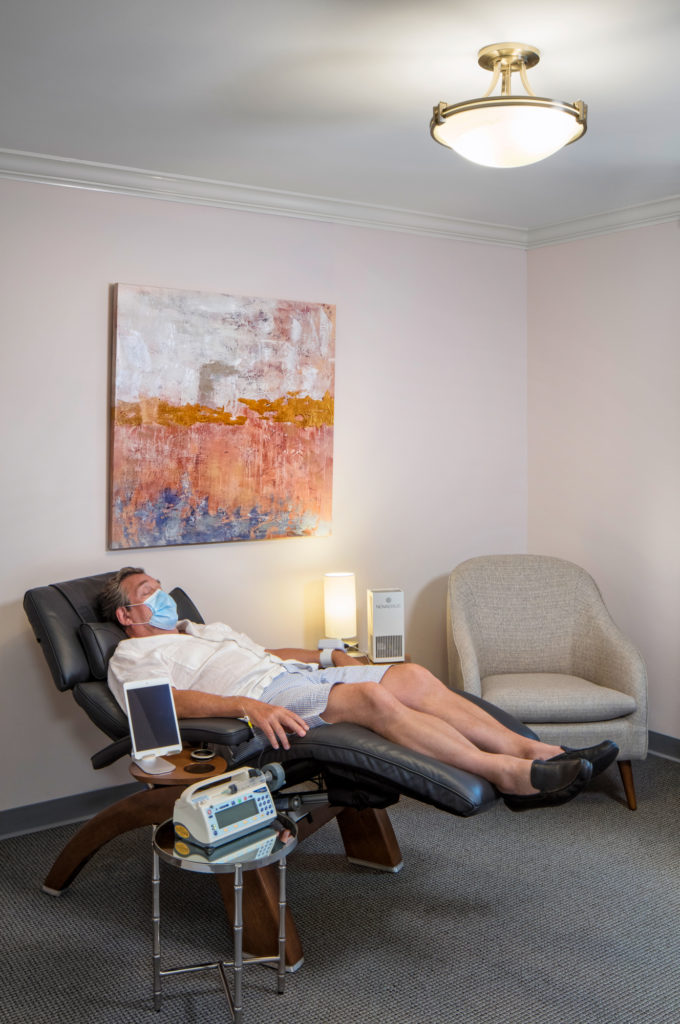
    When you come in for treatment, we’ll meet you at the door and lead you to your private and pleasant treatment room. You’ll be monitored comfortably with state-of-the-art equipment. Your dose and rate will be precisely meted out by a state-of-the-art IV pump. You can bring your own soothing music to listen to in your heated zero-gravity leather recliner.

    We want you to be utterly comfortable to get the most out of your treatment. You may notice an elegant white box on the table that uses plasma cell technology to destroy the DNA of all viruses, bacteria and mold in the room. In fact our clinic was the first ketamine treatment center in the US to use plasma cell technology to constantly destroying pathogens to keep you safe and free from infection. Developed by the Department of Defense and NASA, this technology destroys 99.99% of all pathogens in the air you breathe.

    IV ketamine treatment is the most precisely controlled form of ketamine administration because we can absolutely customize and adjust every aspect of your experience–before, during, and after infusion–to help you get better. No other outpatient psychiatric treatment has ever been so rapidly effective against depression, social anxiety, PTSD, substance and alcohol use disorders, or suicidal thinking.

    Give yourself the best advantages for getting better, without an ER visit or hospitalization. CALL US.

    Make 2022 a new beginning for you.

    Lori Calabrese, M.D. is on the front end of the race to stop PTSD in its tracks using IV ketamine treatment.

    To the restoration of your best self,
  • Taking a Closer Look at Neuropsychiatric Discoveries About COVID from 2021

    Taking a Closer Look at Neuropsychiatric Discoveries About COVID from 2021

    As we look back on the discoveries of 2021, we find a collection of enlightening, if somewhat troubling, information.

    Not surprisingly, there was a wealth of research to better understand, and fight, COVID-19 in 2021. For instance, the coronavirus’ impact on the brain and theories for how it gets into the brain, have created shocking revelations. Neuropsychiatric discoveries about COVID give us information for more effectively fighting this invasive coronavirus.

    The current pandemic has presented challenges the likes of which defy memory. The terrible Spanish flu pandemic from the early 20th century lasted for approximately two years. 

    Since we’re looking down the barrel of a possible third year from COVID-19… or longer….we continue to research this illness to understand how it does some of the things it does.

    We were introduced to COVID as a respiratory illness that eventually led to respiratory failure in some patients. That was especially true in those older or with compromised immune systems…or underlying illnesses. And it still is. But at this point, we’re especially concerned about the effect it has on the brain.  Neuropsychiatric discoveries about COVID are vital in this pandemic.

    Illnesses involving the nervous system and psychiatric symptoms are causing researchers to focus on brain damage caused by this virus. Things that have been prevalent are cognitive and attentional symptoms that manifest as brain fog. In addition, psychosis, depression, anxiety, seizures, and suicidal thinking and intent have all become prevalent. 

    Inflammation of the central nervous system is a likely contributor, and we’ll be talking about that soon.

    In an article published in the Journal of the American Medical Association, researchers discussed things like anosmia, which is the inability to smell. (That’s associated with the brain’s olfactory system…) and they’ve also  found COVID-19 proteins in the lining of the brain’s blood vessels. They’ve hypothesized about ways the proteins may invade the brain bypassing the blood/brain barrier.

    The blood brain barrier is a safety barrier to protect the brain from viruses, bacteria, and toxins. But somehow COVID-19 is getting through this and infecting the brain.

    For instance, researchers at University of California, San Diego, published new evidence suggesting how this coronavirus creeps in to access the brain. They discovered that cells called pericytes surround the blood vessels of the brain. These may be acting as Trojan horses, providing a path the pericytes may use to enter the brain. They then multiply and infect the surrounding tissue in the brain.

    This research team found that pericytes contain ACE2 receptors, which is a passageway COVID uses to invade cells in the lungs, heart, kidneys, intestines, and arteries. Not until this research were they found in pericytes.

    Not surprisingly, getting to the bottom of these methods whereby the virus invades the brain is an urgent and intense focus of current research. The more we research, the more neurological and psychiatric discoveries about COVID emerge.

    This team built a living model using nerve tissue from stem cells by which they could study the infection of the brain by COVID more closely, as well as methods by which the virus invades. 

    From autopsies conducted on people who had died from this disease, they learned that the COVID virus had spread through the brain through blood vessels and cells in the immune system. Just one way neuropsychiatric discoveries about COVID are so valuable.

    It’s important to note that inflammation can give way to leakage through the blood vessels in the brain.

    Patients with long COVID (also called long-haulers) often experience neuropsychiatric symptoms, when they never have before. Seizures. Anxiety. Depression. Suicidal behavior. Even strokes. Finding out how the virus works and how to reverse these effects is an emergent need for medical science.

    IV ketamine treatment is an extraordinary treatment for social anxiety, depression, suicidal thinking, substance and alcohol use disorders.

    We can’t treat you if you have an active COVID infection. But, we can treat you once your infection has become inactive. For the sake of our other patients, please wait till you have recovered from COVID symptoms and have a negative COVID test.

    At Innovative Psychiatry, we go the extra mile to protect you from the COVID virus. When you come in for treatment, you’re protected from infection and can relax.

    We’ll meet you at the door and take you directly to your treatment room. Settle into a comfy recliner. Feel free to bring your own soothing music to listen to during your infusion.

    When you come for ketamine treatment, you'll have a comfortable, quiet room to get the most from your treatment.

    We’ve equipped our offices with a plasma cell technology that destroys the DNA of viruses, bacteria, and mold in the air. It’s contained in that little white box you’ll see on the table in each room, and it’s world class. Developed by NASA and the Department of Defense, it’s a no-nonsense method of keeping the environment clean and pure for you during this pandemic.

    If you suffer from anxiety, depression, or suicidal thinking, please call us.

    But if you also suffer from social anxiety, PTSD, substance or alcohol use disorder, then do call. 

    IV ketamine treatment is the most effective rapid outpatient treatment available for depression, and is extraordinary in its benefits with these disorders.

    Start the New Year feeling good, with burgeoning hope. 

    Reach out for life-transforming IV ketamine treatment.

    Lori Calabrese, M.D. is on the front end of the race to stop PTSD in its tracks using IV ketamine treatment.

    To the restoration of your best self,

  • Navigating COVID Delta and Omicron As the New Year Dawns To 2022

    Navigating COVID Delta and Omicron As the New Year Dawns To 2022

    We’ve been doing COVID’s version of life on this planet for close to 2 years. We’ve done what we’re told, but this coronavirus just keeps dumping more on us. When will this be over?

    About the time we think we’re pushing the delta variant back, who should step up to bat but omicron? We hope you’ve enjoyed Christmas and the winter holidays. Now as we look to the New Year, so many are asking, “When will it end?” How long must we continue wearing masks, testing, avoiding crowds, and getting boosters? Navigating COVID delta and omicron requires tenacity and determination going forward.

    As we move into 2022, we face a new highly contagious variant: omicron. For example, omicron, has caused a startling surge in cases in New York City… and is so contagious that it’s expected to become the dominant strain of COVID in just weeks, compared to delta’s timetable of taking months to do the same thing.

    One epidemiologist, Dr. Jay Verma, warns that if lightning speed adjustments aren’t made now, the danger of omicron taking over with record-breaking hospitalizations and death is irrefutable.

    And that’s the risk with navigating COVID delta and omicron.

    Every few months we seem to hear about another variant of COVID-19, and are given new instructions. 

    We’re tired of it. But even so, you can’t get millions of people to comply with new instructions all that quickly… People as a whole tend to resist change. At first, COVID gave symptoms like cough, shortness of breath, and fever. Now a “loud” symptom to watch for is a scratchy throat.

    So what do we do?  We get a scratchy throat and worry.  And worry.  We go for testing.  At any other time in our lives, a scratchy throat meant a cold or flu (or maybe just allergies), was starting. We knew what to do with it. But, a scratchy throat now means “get a COVID test.”

    And unlike the past symptom alarms, it also means it can get worse and worse if you haven’t been fully vaccinated. (Fully vaccinated used to mean two shots, but now it means two “plus a mRNA-based booster.”)

    Will it EVER Stop? Will COVID be with us forever?

    And, by the way, what on earth is an mRNA – based booster?  Well, specifically, It’s a booster supplied by Moderna or Pfizer.

    We’re at war.

    As to the question of whether the pandemic will ever end, there is no answer yet. There are experts who question whether we’ll ever see the end of COVID-19, and get back to normal. More experts suggest we should accept that we’re at war with this virus, and accept the adjustments that are inevitably part of wartime.

    We keep assembling our “antiCOVID troops” and so far that includes 3 vaccinations, masks, hand washing…and social distancing. (Been to UPS to ship gifts recently? The social distancing pushes people right out the door! This is December. And it’s cold out there…)

    Yes, we’re hoping for things to get better. But some experts believe these variants will keep reproducing ad infinitum. We’ll see. But what about in the meantime?

    It’s tough to make adjustments in war time.

    Meanwhile, we don’t want to isolate. We want to get out, mix with friends, gather for weddings, and we want to enjoy ourselves. 

    While we sympathize — we’re all in the same boat, right?—to keep our families well, to keep our children in school uninterrupted, we have to participate in these latest requirements put forth last Tuesday.

    We have to just do it.

    If we don’t, omicron is going to spread faster than we can imagine. And those without all three vaccinations (including a booster), are likely to be the ones who get seriously sick in the coming year. Boosters offer additional protection against delta and omicron. They’re a necessary part of our arsenal.

    We’re told that those with all three vaccinations are less likely to get seriously sick if they’re infected. However, those without all three vaccines are most at risk for critical illness and death if they’re infected.

    So navigating COVID delta and omicron requires a few pointers for preparing for the new year and with it, the growing wave of omicron. 

    Are you playing tug o’war?

    Now let’s talk about you, and how this may affect you. Stress happens when you want a situation to be different than it is. Picture the rope in a tug-of-war. When someone’s stationed at each end, the tension in the rope is tight. Now picture yourself at one end of the rope and the COVID war at the other end. 

    As long as you pull on your end of the rope, and COVID pulls on the other, with the necessity of masks, hand washing, and social distancing that you may resent, stress is the result for you. That rope is tight. Your stress heightens, and anxiety takes hold …and maybe even depression.  

    But if you let go of the rope by deciding to accept that you can’t change the situation—by complying with the adjustments you’re asked to make in this war—your rope goes slack, and your stress is relieved over this issue.

    Over-simplified? Maybe. But clear.

    You could just stop tugging.

    You might want to evaluate your approach to the next leg of the pandemic that lies before us in the new year, navigating COVID delta and omicron. Your peace and emotional balance is worth more than your resistance… don’t you think?  

    And …if your anxiety and depression, or your substance and alcohol use, are already bad—and you can’t change your mind or make decisions that improve your frame of mind—then you may need treatment.

    If you’ve taken other medications and treatments that haven’t helped, IV ketamine treatment may be just the thing to not only relieve the symptoms of stress, but actually help you achieve remission.

    Imagine having your resilience restored, your outlook on life brightened, the strength and resolve to build meaningful, healthy relationships, the creativity and motivation to excel in your job. And the peace, freedom, and hope to build a rewarding life.

    Just Imagine.

    Ketamine isn’t for everyone. But odds are that you’re squarely in the middle of those whose lives can be transformed by this extraordinary treatment

    At Innovative Psychiatry, we work with people every day struggling with these same symptoms. They come in bearing up under the burden of these symptoms, and complete treatment with a new lease on life, new hope, new freedom from symptoms.

    IV ketamine treatment can reverse symptoms of these disorders, replace them with joy, motivation, initiative, and confidence.

    When you come for ketamine treatment, you'll have a comfortable, quiet room to get the most from your treatment.

    When you come in, you’ll find a comfy, heated recliner you can settle into, and relax. A little white box on the table will be quietly running, destroying (not filtering, but destroying) viruses and bacteria in the air. This little miracle worker uses plasma cell technology to destroy the DNA in the microbes in the air, making the air pure for you to breathe. And it’s efficient. It destroys 99.99% of all microbes in the air, including viruses like flu and COVID with all its variants like omicron and delta.

    We go the extra mile (in every way) to ensure you’re safe from infection and able to focus on getting the most from your treatment.

    IF you suffer from these symptoms and nothing else is helping, call us.

    What else has you in a tug of war? Depression? Apathy? Anxiety that doesn’t let up? Trauma? PTSD symptoms? Bipolar depression? Suicidal thoughts? Or worries about suicidal thoughts in someone you love?

    We’re here to help. With all the tugs. With all the wars you may be fighting…

    Lori Calabrese, M.D. is on the front end of the race to stop PTSD in its tracks using IV ketamine treatment.

    To the restoration of your best self,

  • Suicide at Christmas? Who would do such a thing? and WHY???

    Suicide at Christmas? Who would do such a thing? and WHY???

    People like your mom, your brother, your nephew, your grandfather, your aunt…your spouse or son or daughter. This time of year is a time of disappointments, when broken relationships or perceived failures are felt most deeply, and those loved ones who have died before are acutely missed.

    For some, it’s a logical time to find reasons to die. Suicide at Christmas is all too common, so we need to be tuned in to those around us for signs of grief, defeat, despair, or inappropriate cheer which can be a way of hiding disturbing thoughts.

    Monty was depressed, but it was hard for his family and friends to grasp how he sees this holiday season. When he arrived downcast, instead of with an air of celebration, it was easy for them to be impatient with his “downer” attitude.

    For his family, it was hard to wrap their heads around the idea that some people aren’t living in the moment of Christmas, excited about exchanging gifts and seeing friends and relatives they haven’t seen in forever.

    Rather, some, like Monty, may be suffering about things that happened in years past, and the holiday atmosphere brings the memory to life.                  

    Monty felt responsible for a tragedy long ago, and assumed everyone present was blaming him. He also resents some people who are present whom — he feels — carry some blame for the tragedy. 

    And sometimes, everyone’s cheer is more than he can bear. So he looked for a way to escape the noise and pressure. To find a private corner to be alone in his sorrow. He also thought a little bottle of spirits would be just the thing to help him forget.

    With all the festive chatter and cheer, it’s easy to miss a pending suicide at Christmas.

    What does the family see?  It’s likely they don’t see Monty suffering helplessly. Sadly, what they often see is the family screwup getting drunk instead of “contributing” to the family experience. They see selfishness. And they pour shame on this family member whose complicated life they don’t understand.

    But suffering isn’t necessarily selfish at all, is it? Sometimes it’s just misery. Despair. Hopelessness. 

    And when someone like Monty knows he’ll be judged for his suffering,  when he (or she) KNOWS he will find no compassion — only criticism — sometimes that alone is enough to push him deeper into his dark place. And in that place, he may make the decision to stop the misery by destroying himself.

    Let’s hope not.

    But it’s for these reasons–and many others–that the holidays is a time that some people take their lives. Sometimes privately, or in a clandestine way, and sometimes in a public way.

    There is no simple solution to the conflicts in a family gathering that includes someone who is susceptible to suicidal thoughts and/or actions.

    Every family has conflicts, whether spoken or unspoken… secret resentments or boisterous loud ones. Jealousies, insecurities, and differences of opinion. What’s the saying..?  “If we both think alike, one of us is superfluous.“

    Variety is the spice of life, but in a family, subtle differences can stimulate conflict. And that happens a lot.

    But for someone like Monty, whose mind makes him feel hurt more deeply, who has a fractured sense of himself, those differences can torment. Devastate.

    And those minor conflicts among family can highlight Monty’s insecurities and shame.

    So while you can’t save everyone all the time, you can offer a warm hug or handshake, a friendly and compassionate conversation. You can seek ways to set the suffering one at ease. A little effort and genuine support can prevent a suicide at Christmas.

    And who’s the suffering one?

    It’s the one who seems to always create a scene, gets into trouble when the family is trying to celebrate. It’s the one who sits alone looking down, awkward, or angry. Like Monty. Or maybe she looks like she’s going to cry. 

    You most likely know who it is in your family who tends to be the lightning rod. That family member you watched grow up… and he surprised you with his mistakes, problems, scrapes… just so many things. That loved one is possibly in pain and needs love and acceptance to get through this holiday. If he seems like a clown, he just may be laughing on the outside but crying on the inside…

    If THAT one disappears, find out where he is. He may have gone to the backyard to whittle on a stick. Or he may have left with plans to jump off a bridge. No, you’re not your brother’s keeper …but you are someone who can show compassion and caring if someone is in danger of serious injury. Your act of love can thwart a suicide at Christmas and that may give someone like Monty some much needed time.

    How hard is it to listen?

    If you have a family member like Monty, you likely know who it is.  And you may be weary of their shenanigans. But, maybe, just maybe, they can use acceptance, someone to listen. So ask them their story. And let them talk… and show you’re listening.

    IF…and that’s a big IF… but IF they’re contemplating suicide this is a good time to listen to them talk about it. Don’t be afraid to even ask, “Do you ever feel like hurting yourself?” and then, “What about now?” Opening the door of communication without judgment can be lifesaving. Call the Suicide Hotline at the bottom of this post.

    Many who are contemplating suicide at Christmas have been suffering from Seasonal Affective Disorder for months caused by the reduction of light in the fall months. Don’t think anytime of the year is devoid of suicide risk. Whatever cheers up one person, is just as likely to trigger suicidal thinking in another.

    In addition, the risk of suicide doesn’t end during the holiday season, but actually increases in January.

    Also, it’s good for you to be equipped with the knowledge that if he’s thinking about suicide, IV ketamine can stop those suicidal thoughts in an afternoon. So he can be free of the tortuous thoughts and mental images… and focus on getting better through therapy, medication, or IV ketamine treatment for depression.

    In fact, in our practice, we’re transparent about how we can help. We’ve looked at results, published them, and presented (nationally internationally) on the effect of IV Ketamine Infusions for Suicidal Thinking showing how they can prevent a trip to the Emergency Room, or a hospitalization.

    To be able to remove suicidal thoughts in a day is life changing, even life saving, for so many.

    At Touchpoints180™, we’re privileged to see people come in racked in the throes of suicidal thinking, and often see them at peace a few hours later. Stopping suicidal thoughts isn’t a cure-all. But it gives you time to seek treatment, participate in therapy, and overall pursue remission. It keeps you safe while you get better.

    Receive your ketamine treatment in a comfy recliner to erase memory triggers of alcohol use.

    When you come in for your infusions, you can just sink into your recliner, settle back and relax. That white box on the lamp table labeled Novaerus is a wonderful piece of advanced technology that destroys the DNA of viruses, bacteria, and mold spores in the air. This plasma cell technology was designed for the International Space Station, and is outstanding in removing 99.99% of all pathogens in the air and specific to the square footage of your infusion suite. So you’ll breathe pure, clean, safe air. Your mind can rest at ease knowing you’re safe from infection (including COVID-19 delta, lambda, and omicron) in this uncertain world.

    Don’t let suicidal thoughts rob you of your life. if you have symptoms of suicidal thoughts, call us.

    Also call if you have a loved one like Monty who’s been having suicidal ideas.

    Life can be so much better when your symptoms are out of the way. Imagine that…life without symptoms of despair, hopelessness. You deserve a life worth living and the power to live it. Let us help.

    Reach out for a life free of shame and despondency. Let us help.

    The Happiest of Holidays to you and yours.

    If you — or someone you know — is considering suicide, please contact the National Suicide Prevention Lifeline at 1-800-273-TALK (8255), text “home” to the Crisis Text Line at 741-741 or go to suicidepreventionlifeline.org.

    Lori Calabrese, M.D. is on the front end of the race to stop PTSD in its tracks using IV ketamine treatment.

    To the restoration of your best self,

  • If Holiday Depression Crushes Your Spirit, There’s Hope

    If Holiday Depression Crushes Your Spirit, There’s Hope

    Yes, it’s the Holidays, but that doesn’t mean it’s a time of comfort and joy for everyone…

    Depression is soul crushing at any time of year. But the stressors that pour out during the holidays can magnify the misery. Here is Tom’s story about how holiday depression crushed his spirit. There is hope for relief.

    Tom was finding the stress of the holiday season building inside him, till he felt he was reaching the breaking point.  Holiday depression was crushing his spirit. With working at home, the noise of the family outside the study door, his reduced income indirectly related to the pandemic, and kids wishing for expensive gifts for Christmas, he was wringing his hands.

    Add to that the car needed new tires, and now with snow on the ground, the risks were heightened all the more. He would have to get those tires.

    And yet…this was the season of giving. A season of good will, and sharing cheer. Tom didn’t feel cheerful… He felt worried… and depressed.

    In fact, he’d been depressed since the beginning of the pandemic…doctors had prescribed medicines that didn’t help.  He felt trying to treat this was hopeless. It must just be this pandemic, and he knew there were people all over the world who had it tougher than he did.

    And what about his job?  Just how secure was it?  His job required some creativity, and Tom didn’t feel creative. In fact, he felt like a rock. A smooth rock that lay at the bottom off a river, one that the trials of life rushing over him all the time had worn away his rough edges… leaving,…well, not much.

    Tom had read that people everywhere were more depressed than they’d ever been, so what made him so special..?  He’d just have to keep plodding, and try to get the gifts the kids wanted, and hope for the best. 

    Boy he could sure benefit from Sara’s presence right now. She’d always had a way of finding a silver lining that he could never see, God rest her sweet soul. He so needed her right now.

    “Sara, why did you have to go..?? I need you. The kids need you!!”

    Tom stood up, shuddered, and decided a quick walk to the mailbox might help his doldrums.

    Good grief, he was talking to his dead wife now. He had to get a grip!!

    As he walked through the kitchen, he grabbed an apple and took a bite. Ugghhh…not very good, so he chucked it in the trash.

    Life tasted like sawdust these days.

    Charlotte rushed into the room, and said, “Daddy, can I get a dress for the Winter dance at school? Pleeeeease…?”  (Oh no…more expenses.). 

    Tom offered a weak smile, said, “Sure honey, but try to keep the cost down…” and shuffled back to his study. When it rains, it seems to not only pour but deluge. Holiday depression crushes your spirit.

    Just as he sat down at his desk, he heard a shrill shriek, and adolescent male shouts.  Oh no.

    Tom ran downstairs, and saw quickly that the dishwasher was pouring soap suds into the floor of the kitchen and front hall.  He called for, “Towels!! Lots of towels!!” 

    Kids came running with bath towels and hand towels and a mop. Before too long they had sopped up the water, mopped the kitchen, and started a load of towels to wash. He knew he needed to replace the dishwasher...sigh….

    Back in his study, Tom noticed he had an email from his boss, asking that he call him.  Tom’s stomach dropped to the floor. What could it be? He couldn’t lose his job, he just couldn’t. Not right now.

    Like a man walking to the gallows, Tom picked up the phone and called his boss.  The man answered the phone right off, and Tom braced himself.

    “Hi Tom, thanks for calling me back.  I have some news and wanted to give it to you right away, so you can plan.”  (Oh no…plan… for unemployment?)

    “That project you took Lead on last summer drew a lot of attention from the C suites, and they are very impressed.  You’ll be receiving a bonus next week that I think will please you, and they’re prepared to offer you a promotion if you’re interested. It will mean more responsibility and higher pay that might help you get a sitter for your kids while you work.  I know it’s been a challenge at home.”

    Tom was numb. They weren’t firing him.  They were giving him a bonus and a raise. What?

    He was shocked.

    But he gathered his composure and thanked his boss. Made an appointment to discuss the changes and demands of the new position, and hung up.

    Then, he leaned over his desk and put his head in his hands. He would be able to get the dishwasher fixed AND put new tires on the car. Why wasn’t he excited?  At least, relieved.

    He felt nothing. Bland.

    Even though things had a way of working out, it didn’t change the way he felt. He felt empty, flat, emotionless… hopeless. Why??

    All he could think was, Who cares..? It doesn’t matter….

    This time of the year is intended to bring people together, give a sense of joy and celebration. And it does for many.

    But there are those, like Tom, who can’t experience much joy…or pleasure.

    Those for whom holiday depression crushes their spirit.

    Because the pathology of stress is such that it strips your ability to ENJOY. It all comes down to the dendrites and dendritic spines on the neurons in your brain…as well as the lateral habenula. 

    Stress pathology results in the thinning and pruning of those dendrites and dendritic spines, leaving them ineffective for transmitting signals effectively. The lateral habenula sports a mechanism that prevents your ability to feel pleasure, unless the cell bursting there is tamped down. 

    IV ketamine builds up the dendrites and they become dense and healthy, restoring the broad communication of signals around the brain, dendritic spines, proliferating them using BDNF (brain-derived-neurotrophic-factor).

    Our quiet, private treatment rooms allow you to relax to receive your IV ketamine treatment.

    At Innovative Psychiatry, we see people every week experience joy, hope, and resilience through IV ketamine treatment. Because of its broad action in the brain, ketamine is bringing relief of symptoms to so many who suffer from severe treatment resistant depression, bipolar depression, PTSD, social anxiety, suicidal thinking, substance use and alcohol use disorders.

    When you come in for treatment, a white box may catch your attention where it graces a table. That little box is a powerful tool for keeping you safe and healthy while you’re with us.

    Labeled Novaerus, this instrument uses plasma cell technology that processes the air in the room and destroys the DNA of viruses, bacteria, and mold — even COVID and its variants. All these pathogens are destroyed, leaving the air clean and pure for you to breathe, so relax.

    Our air purifying technology was developed by the Department of Defense and NASA and is 99.99% effective in destroying viral DNA. Because we go to every extent to keep you safe, so you can focus on your treatment and get the most from it.

    After all, you’ll be with us 6 or 8 times…maybe more…and you need the assurance that you’ll stay well while you’re here.

    Treatment resistant depression can be devastating, but if holiday depression has crushed your spirit, call us.

    Let’s talk about whether IV ketamine treatment is an option for you.

    If it is, you need to give yourself the opportunity to live the best life you can live, while you discover, and enjoy being, your best self.

    Lori Calabrese, M.D. is on the front end of the race to stop PTSD in its tracks using IV ketamine treatment.

    To the restoration of your best self,

error: Content is protected !!