Author: Lori Calabrese, M.D.

  • Smashing Anorexia with a Therapeutic Ketogenic Diet Plus IV Ketamine

    Smashing Anorexia with a Therapeutic Ketogenic Diet Plus IV Ketamine

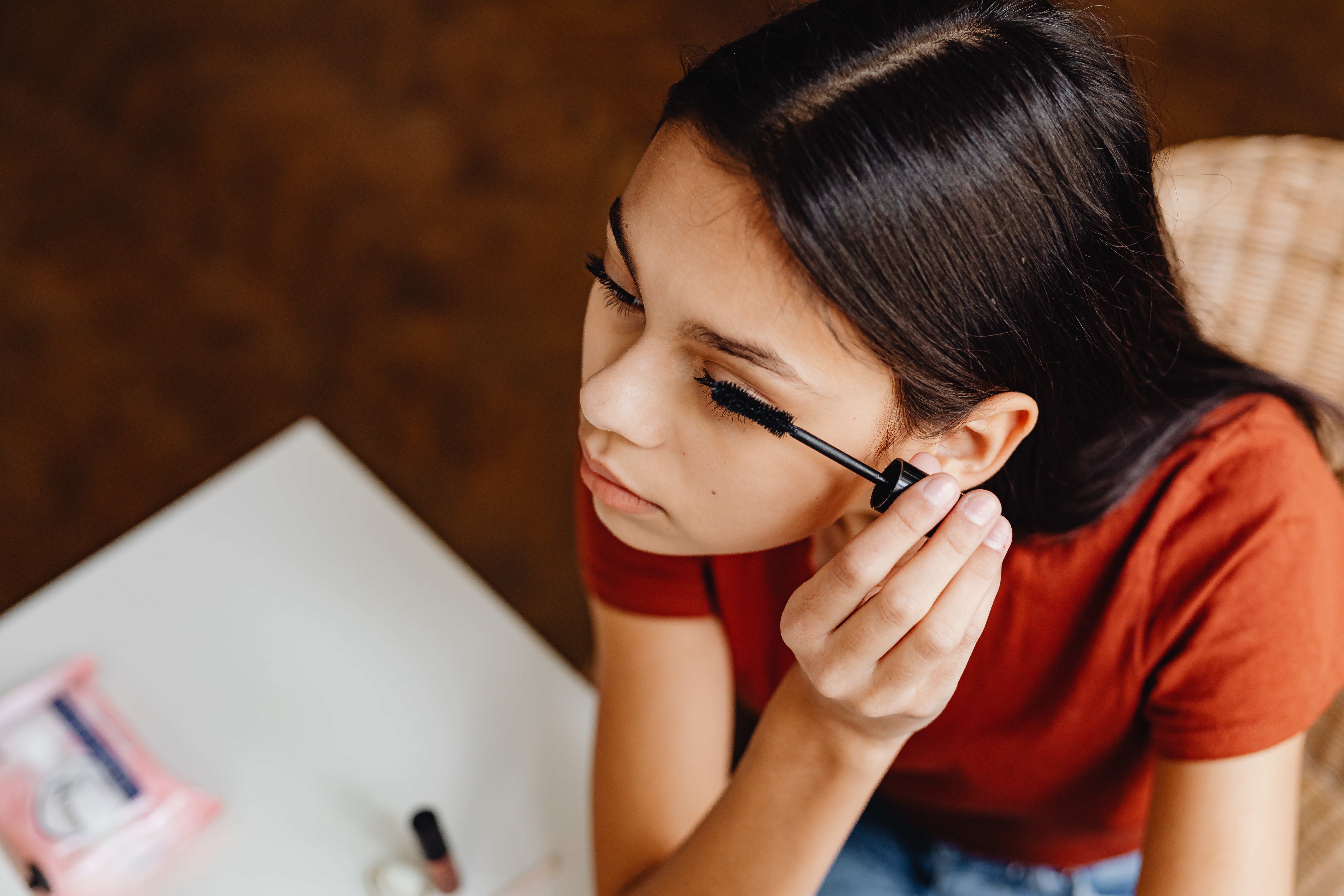
    Halley put on her makeup and looked in the mirror. She abhorred her round face and the fat on her chest and arms. She quietly resolved that she’d swim more laps tomorrow, because the 30 laps she swam daily just wasn’t improving her appearance. It was hard, so hard, to go out in public because she knew in her gut that she would be secretly criticized for her excess weight. She saw an article about treating anorexia with a ketogenic diet plus IV ketamine, but she didn’t read it. She tossed it aside. Halley didn’t believe in anyone’s solution. She wanted nothing to do with it.

    Maybe it was denial. Or maybe it was some sort of cosmic nagging and shaming. She didn’t know. But she didn’t want to hear it. She fought guilt and shame every day.

    Halley had been avoiding family meals for a year or more, because she just  couldn’t load up on all that heavy food. It was easier to go to the gym during dinner time, and privately eat 4 peanuts, drink powerade, and chew a stick of gum. When she ate with the family, it always seemed to descend into a conflict over what she ate. Too exhausting.

    One day, Halley’s mom walked into her room and found her crying in front of the mirror.  

    “What is it, honey?” She put her arm around her painfully thin daughter and gently squeezed her. 

    Halley’s tears rolled down her cheeks.

    “I’m so fat! I try and try to diet and exercise but I stay so heavy. I hate myself.”

    Her mom embraced her. “Halley, you’re not fat! You’re really thin…”.  Then, her mom realized they might slip into a conflict, so she added, “Honey, you’re beautiful, inside and out.”

    Halley rushed out of the room. She felt like a total failure. 

    As her weight dropped more, her mom became more and more worried. Halley’s face went from slender to gaunt, and her arms lost shape, as her muscle mass diminished. 

    But Halley kept working out, running now and swimming laps, eating little to nothing. And feeling like she was heavily overweight. She felt appalled at her appearance, but it was a distorted perception. To observers, she looked rail thin, but when she looked in the mirror she thought she looked massive.

    At some point, Halley realized she hadn’t had a period in months. She’d been so busy with working out she hadn’t noticed. This scared her because she thought she wanted to have children some day. Her hair was brittle and falling out. It collected on her brush like a haystack.

    Finally, her mom convinced her to get a check up so the doctor could evaluate why her hair was falling out and her periods had stopped. 

    The doctor spent time evaluating her, asking questions, doing lab work, and listening. Then diagnosed anorexia nervosa. Her doctor referred her to a dietitian and a psychiatrist.

    But there was a problem.

    Even though the doctor recommended group therapy for Halley, the inner drive to restrict her eating and push through excessive exercise continued. There was a voice in her head that drove her. It shamed her for eating, it shamed her when she looked in the mirror, it degraded her and made her feel deeply unworthy.

    So she tired of the group therapy eventually. The reason? That anorexic voice still drove her.

    She was angry about the anorexia diagnosis. Didn’t believe anything was wrong with her. Not really.

    But she felt bad… sad…pretty hopeless. And empty. She felt ashamed to be around friends, and just didn’t feel very connected anymore. To anyone.

    Halley also felt light-headed more and more often. Sometimes dizzy, and somewhat weak.

    One day she collapsed.

    Her mom ran to her room when she heard the crash and found Halley on the floor unconscious. Mom dialed 911 and paramedics arrived in 7 minutes. They told her mom her blood pressure was low, and her pale color could be anemia. They transported Halley to the hospital and admitted her to ICU.
    Halley remained semiconscious for 3 days, while she received IVs of electrolytes, TPN (total parenteral nutrition), fluids, and iron. Lab work revealed her electrolytes were out of balance, and her liver and kidney function were out of whack, too. And she was very anemic. Thankfully, her heart wasn’t damaged — but it could have been.

    As her body’s electrolytes, fluids, and glucose balanced, Halley did a lot of thinking. She had to face that something was very wrong with her life … and potentially damaging. Even though she was glad she had survived this, she knew she needed to do something. She decided she needed to open herself to help, treatment, and changes in her life.

    The day before she was discharged from the hospital, a nurse came to talk to her. She told her that her own daughter had suffered from anorexia for years and but had recently turned it around using a special program developed by a team of specialists. Medical doctors, a registered dietitian specializing in medical ketogenic nutrition, peer counselling, and a psychiatrist.

    The approach included education, peer support counselling, a specially designed therapeutic ketogenic diet plus IV ketamine treatment.

    And it is new. We first wrote about it here 2 years ago, in a blog about Caroline, the first patient we treated with this sequence. And then published a case report about her remission from chronic anorexia.

    Another Study To Replicate Results

    Recently we conducted a pilot study with 5 women who had struggled with chronic anorexia for at least 10 years. This was our next step to replicate our outcomes from the first case study. We’ve just recently published that data in Eating and Weight Disorders: Studies on Anorexia, Bulimia and Obesity.

    Our team included an internist, a registered dietitian specializing in medical ketogenic nutrition, a psychiatrist, peer support counselling.

    Similar to the initial case study with Caroline in 2020, the subjects in our pilot study were thin—but partially weight restored—and medically stable enough to participate. (This was key.) But they were still plagued by the shaming anorexia inner voice, distorted perceptions of their shape and weight, and seriously low self esteem.

    They began a specially designed therapeutic ketogenic diet — aimed at nurtritional ketosis, not weight loss — and maintained it for several weeks.

    There is no psychiatric medication that targets specific residual symptoms of the compulsions, self-starvation, and the anorexic voice — and so they often continue even after weight has been restored to normal. And all too often, relapse occurs. Because the anorexic voice just hangs on and torments.

    To effectively treat anorexia, the compulsions and that shaming voice must be targeted and quieted.

    This is what this two-part protocol was aimed to address and where IV ketamine infusions come in.

    After at least 4 weeks of maintaining the therapeutic ketogenic diet, each participant received a series of IV ketamine infusions (modeled after the success of the first patient we treated with this approach.)

    And the voice quieted. In fact, it disappeared.

    We followed the participants closely, presented our preliminary results in Oxford, UK and published our results at six months follow-up. Four women showed significant improvements across the measures we used to assess recovery and remission; one relapsed and was admitted to a residential program.

    This approach of using a therapeutic ketogenic diet (an approach that induces safe, nourishing nutritional ketosis — not weight loss or starvation ketosis) may seem counterintuitive, but it’s based on science, and evidence supports it.

    This isn’t keto from YouTube.

    Our approach offers a potentially life-altering and lifesaving two-part treatment for a deadly disorder.

    More research is needed to understand the mechanisms in the brain that result in quieting these compulsions and the anorexic voice, and in studying this treatment sequence in anorexia. A lot more research. But we’re excited to discover and report something truly new and hopeful for so many who have suffered so long: a very careful therapeutic ketogenic nutritional approach followed by IV ketamine.

    If you’ve struggled with symptoms of chronic anorexia for a long time … if you think you might want to work with us … if you’re interested in the program we’re developing, please contact us.

    Tell us a little about yourself and your story.

    Let’s talk. Let’s start something new.

    Lori Calabrese, M.D. is on the front end of the race to stop PTSD in its tracks using IV ketamine treatment.

    To the restoration of your best self,
  • Does Your Teen’s “Selective Hearing” Drive You Batty? There’s More To It…

    Does Your Teen’s “Selective Hearing” Drive You Batty? There’s More To It…

    Your teen's selective hearing turns to peers and away from parents to support independence.

    “Riley?  Riley… RILEYYYY!!”  “MOM, why are you YELLING?”  “Because you aren’t ANSWERING ME!!” Sound familiar? Does it seem like your teen has her ears stuffed with cotton?  What about when it’s her friends talking to her? They have her undivided attention, right? Your teen’s selective hearing can drive you bonkers…

    What is this?  Is it just rebellion? A breakdown of respect?

    It turns out there’s a neurobiological change that happens in your teen’s brain that results in their “selective” hearing. Before puberty, they’re hardwired to recognize their mother’s voice amidst other voices. They associated that voice with nourishment, as well as social and language learning. The sound of that familiar and important voice lights up multiple parts of the child’s brain.

    But all that changes at puberty.

    Your teen's selective hearing may make you feel ignored.

    Get this: A study conducted at Stanford University delved into this phenomenon to better understand it. Led by Daniel A. Abrams, Ph.D., and Vinod Menon, Ph.D., they set out to learn more. After discovering in previous years that children 12 years old and younger can recognize mom’s voice with a 97% accuracy, they wondered: what about older kids? They also saw that mom’s voice set in motion multiple brain areas. Functional brain imaging scans allowed researchers to visualize them.

    Brain regions like the reward centers, emotion processing areas, and the auditory cortex were activated. (The job of the auditory cortex is simply to process sound.) Of particular import were brain networks that give a person the ability to differentiate when information introduced is particularly worthy of attention. That’s the key.

    For an infant, the mother’s voice signals nourishment, comfort, language and social learning.

    These researchers set out to build on this previously discovered information. If an infant needs to focus primarily on mother’s voice for survival and development, what happens when a child reaches adolescence?

    Needs change. Survival depends on other needs being filled.

    In the new study, they compared responses to auditory tests of children under 13, to those 13-16. The latter group is in an age of transition, when a dependent child grows toward adulthood. To achieve that independence, his prowess at reaching out to others outside his family must be developed.

    Selective hearing develops around age 12-13.

    Because of that, he experiences a shift in who he’s drawn to focus on. (And he’s not even aware of it. Nature just flips the switch.) Researchers discovered that the process of becoming independent is initiated by a subconscious biological signal. This turns on a teen’s ability to connect socially outside his family. He becomes more and more attracted to the unfamiliar voices of potential friends and companions. He wants to be in their company and spend time together. As a result, he becomes socially skilled outside his family.

    As disrespectful as this “selective hearing” may seem, it’s actually a vital and normal part of teen growth and development, when everything else is normal.

    However, sometimes there are other circumstances that complicate the teen’s “selective” type of hearing. Adolescent depression is an example. When a teen is depressed, he may not feel much like responding, especially to someone in his family. That’s a symptom all its own and can complicate the neurobiological shift in focus a teen experiences toward those outside his family.

    The first step in communicating with your teen comes in recognizing that as much as he needs you until he’s ready to make his own home and take care of himself, he also needs to safely transition to that independence.

    That can be a painful process for both parent and teen. But if you, as parent, can recognize that his instincts to pull away are biologically based, you can better guide him patiently to take those steps toward independence, safely. Allowing his maturity to catch up with each new stride.

    The second step is to be informed and familiar with symptoms of psychiatric disorders that can seriously complicate the process. And if those symptoms emerge, you’ll be there to help him find the treatment that can make all the difference for him.

    For disorders like treatment resistant depression, bipolar depression, PTSD, social anxiety, panic attacks, and symptoms like suicidal thinking, IV ketamine treatment can restore, renew, and give him hope. It can stop suicidal thoughts in an afternoon. It can help your teen move forward with building his life, engaging with friends, and performing in school.

    These symptoms can interrupt your teen’s development, but ketamine can set him back on solid ground.

    If your teen exhibits symptoms beyond just selective hearing, or if you struggle with symptoms of your own, call us.

    Get the help your teen and your family need to enjoy resilience and balance.

    And you can get back to the “simple job” of patient, loving support and guidance as he grows into the future ahead for him.

    Lori Calabrese, M.D. is on the front end of the race to stop PTSD in its tracks using IV ketamine treatment.

    To the restoration of your best self,

  • Do Parents with Social Anxiety and Panic Pass It On to Their Kids?

    Do Parents with Social Anxiety and Panic Pass It On to Their Kids?

    Social anxiety and panic attacks can be passed from parent to child.

    School is starting. Teens are beginning their academic year in junior high, high school, and college. Exciting and a little scary… for parents too. Do parents with social anxiety and panic pass it on to their kids? Anxiety disorders run rampant for this age group. General anxiety, social anxiety, and panic plagues many teens, along with co-morbid depression and bipolar depression.

    Research confirms that a child who has a parent with anxiety holds a compounded risk of anxiety. It’s even more true if both parents have an anxiety diagnosis.

    The more we understand that relationship the better prepared we are to help those parents’ offspring who are at risk. These conditions can be responsible for absence and avoidance of school. In fact, when they’re severe, it can become almost impossible for your teen to endure.

    We know that genetic connections and watching an anxious parent respond to anxious situations increase the likelihood of a child showing signs of anxiety, too.

    Social anxiety and panic attacks  make it hard for a teen to succeed in school.

    And the more this occurs, the stronger that response — or reaction — exhibits itself in your child.

    By the teen years, kids can become entrenched in these patterns. And the responses become “knee-jerk” reactions.

    Social anxiety, panic, and general anxiety can interfere with your child’s normal growth and development, making it more and more difficult to make friends, perform in class, and enjoy success. When symptoms drag on without successful treatment, it can be extremely difficult to apply for a job, perform in the workplace, maintain a relationship, enjoy marriage (yes, some people do!)… and so much that’s a part of a rewarding life.

    To better understand these risk factors, a team led by Barbara Pavlova, Ph.D. and Rudolph Uher, M.D., Ph.D., at Dalhousie University, embarked on a study to show how parents pass their anxiety disorders down to their children, and published it in JAMA Network Open. 

    They showed that children whose same-sex parent suffers from anxiety disorders are more likely to suffer from anxiety than those whose opposite-sex parent has such a disorder.

    By age 10. (Yes, you got that right: 10).

    And the lowest risk of a child’s developing anxiety disorders exists when neither parent suffers from these disorders. 

    Social anxiety and panic attacks can be treated with IV ketamine.

    But the likelihood is almost as low when the parent with anxiety is effectively treated for it. When anxiety symptoms are treated, and the parent has relearned responses that don’t convey fear to fearful or worrisome circumstances, their child can learn healthier responses, too.

    Anxiety disorders are the most widespread psychiatric disorders, and among the leading causes of disability. 

    When you understand the impact your own anxious responses have on your child, it’s easier to see the importance of treating your own anxiety, as well as your teen’s. You may not even realize you struggle with anxiety… the way you are may just seem like it’s just the way you are

    Worried a lot of the time…  with thoughts running through your mind so much that they keep you from sleeping at night.  Maybe it’s extremely difficult for you to walk into a crowded room, or attend a party where you don’t know many — or any — people? …Maybe you just avoid gatherings like that.

    Anxiety and panic attacks can interrupts your teen's success in school.

    Or maybe sometimes anxiety builds and builds until you just shut down… or want to cry, or scream… or you just freeze and can’t make yourself function.

    Maybe sweat breaks out on your face, your palms, in your armpits. And it’s completely beyond what you can control. Social anxiety, panic, and excessive worry can not only interrupt your normal living, but can be complicated by depression. And they can influence your behavior around your children, and interrupt their lives, too.

    But IV ketamine treatment can be transformative for these conditions, and other disorders.

    Research has shown what a difference IV ketamine treatment can make, in you, your spouse, and your teen.

    By releasing mRNA to turn DNA “ON”, brain-derived-neurotrophic-factor (BDNF) is released and turbo-boosted proliferating the brain cells. Dendrites and dendritic spines explode by the bushel, sending signals throughout the brain like a flood. Your brain can light up with creative and positive thought, solutions, and hope.

    The darkness and oppression that’s trapped you… the anxiety and tension… dissipates and can be replaced by joy.

    Yep. Joy. 

    We’re ready for you at Innovative Psychiatry to help you find that joy and hope through IV ketamine treatment.

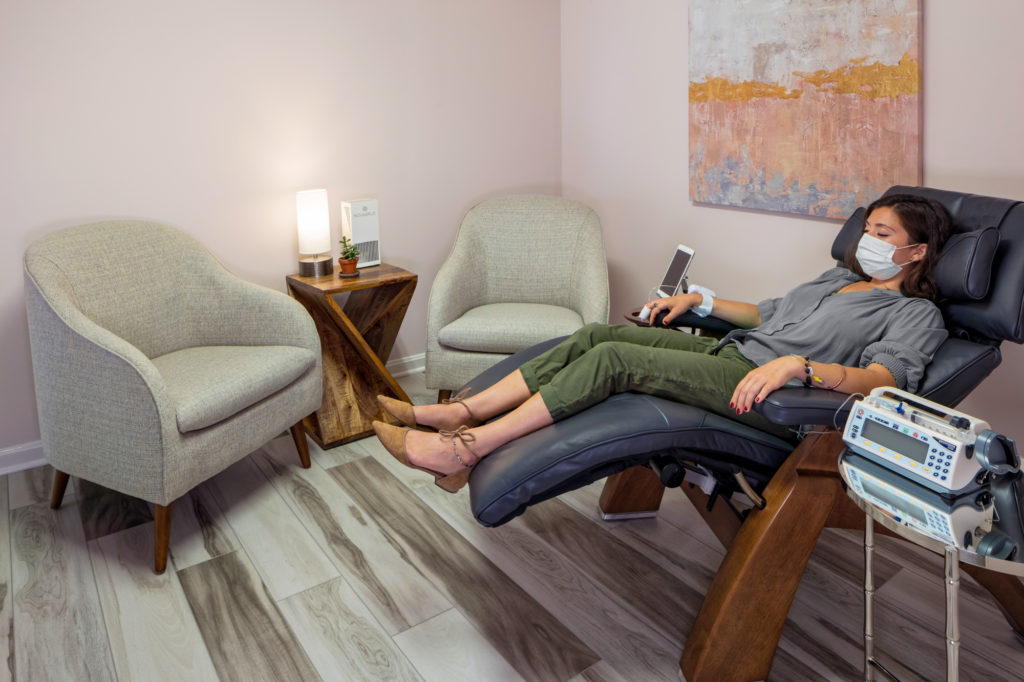
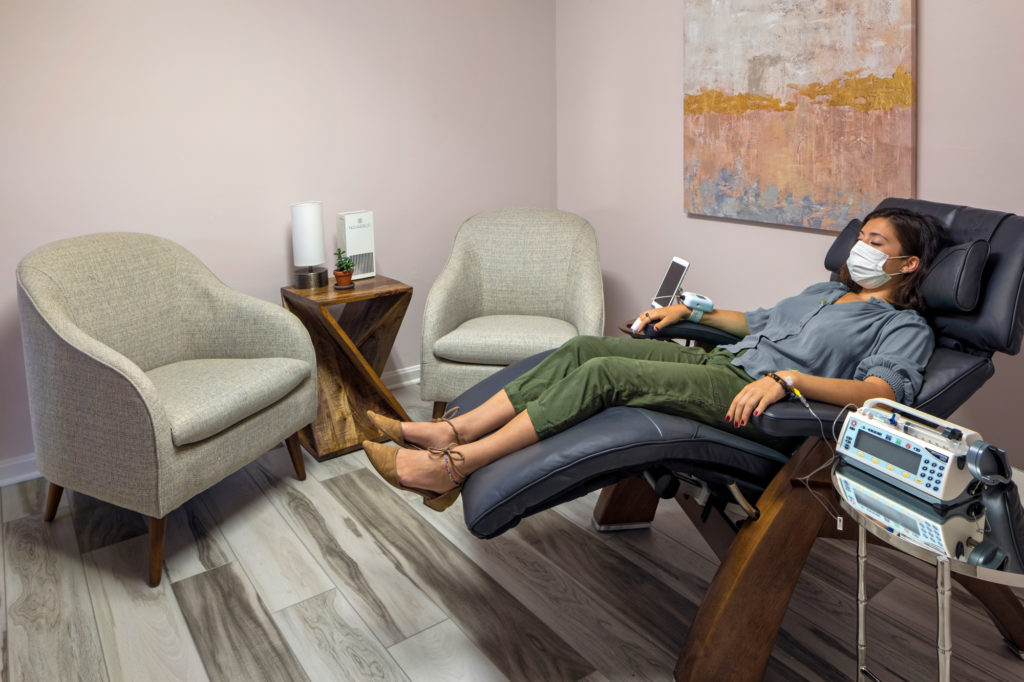
    When you come in, you’ll be led to a quiet, beautiful room where you can relax in a heated, zero-gravity leather recliner, listen to the music you bring if you choose, and close your eyes to receive your infusion and get the most from it.

    Social anxiety and panic attacks can be relieved by IV ketamine treatment.

    You’ll notice a trim, white box on the table that’s specialized for destroying bacteria, viruses, and molds of all kinds, leaving your room free of pathogens — and giving you a germ-free space to breathe and relax. Your safety is important to us, and in this ever-changing COVID environment, you will be completely safe from infection. Using plasma cell technology, we’ve installed a unit specific to the square footage of each treatment room throughout our offices. (Who else does that?)

    We’re meticulous — and for years we’ve pioneered best practices, set the standards, and led the pack.

    It may take 6 infusions for you to feel better, and to achieve remission from your symptoms… or maybe 8, 9, or 10. (Every person and every brain is different.) But we’re committed to help you receive the full benefits of your IV ketamine treatment.

    Ketamine isn’t for everyone, but it can be transformative for most. Chances are it will provide you with the peace, joy, and hope you need.

    Give yourself the benefit of what 21st century psychiatry can offer for treatment-resistant disorders.

    If these conditions sound familiar, call us.

    We’re committed to help you get better with IV ketamine. This is about you and your teen.

    Lori Calabrese, M.D. is on the front end of the race to stop PTSD in its tracks using IV ketamine treatment.

    To the restoration of your best self,

  • Anxiety, Panic, and Depression in Teens:  IV Ketamine Offers Hope

    Anxiety, Panic, and Depression in Teens: IV Ketamine Offers Hope

    Anxiety, panic disorder, and depression can be relieved with IV ketamine.

    Anxiety. Some people never struggle with it. A little bit of anxiety for them can be a motivator to study for a test, practice lines for a play, or learn math. Those who experience small spurts of anxiety can often perform very well. But when anxiety grows out of bounds it’s no longer motivating. When it explodes into fear, it can freeze you in place, making it extremely difficult to take care of things you need to do. That’s especially difficult for teens in school — including getting ready for college. And when issues crop up like anxiety, panic, and depression in teens, it can be just too much to manage.

    Emma’s Anxiety

    Take Emma. As a young child in her elementary school, she loved learning to read, working on group projects, and helping with the scenery for the class play. She wasn’t shy… but wasn’t outgoing either. She was just task oriented, good at things, and liked to excel.

    But as she got older, social anxiety crept in. Going into a full classroom if she was late made her feel like she would die a thousand deaths. (So she tried very hard to not be late.) The anxiety that built inside her about giving a report in front of the class or participating in group discussions or projects robbed her of the motivation to do a good job. She worried and worried about it and then, exhausted, just wanted to disappear.

    Some days she was so exhausted by it all that she just stayed home. Told her mom she had a sore throat or upset stomach.

    Anxiety, panic disorder, and depression can make it difficult for a teen to function in school.

    Then, when Emma was 15, she woke up one day and the anxiety about going to school overwhelmed her. She dropped to the floor crying and couldn’t move. Her mother came in to tell her to get dressed or she’d be late. But Emma couldn’t do anything. She felt frozen and helpless. She cried and cried harder, and told her mother she couldn’t do more than she was doing. Her mom was caught by surprise… but thought Emma was testing her boundaries. She was sick of the drama, tired of the hormones, and wanted Emma to just get up and go to school.

    But no matter what her mother said, Emma remained in a heap on the floor.

    Anyone who has had a weeping teen knows that you can lead a horse to water but you can’t make them drink. Her mom knew she could try to get her daughter dressed out the door, but she couldn’t force her to participate in school. She decided she better try a different approach.

    She asked her daughter what was wrong. Why was she crying? Emma took a long time to answer but finally said she didn’t know what was wrong. So she stayed home again and spent the day relaxing. Anxiety, panic disorder, and depression created a complex knot of overwhelm for this teenage girl.

    She took a mental health day.

    She took a lot of them.

    Eventually, Emma graduated from high school. She was so relieved to be away from that world that she was euphoric… and hoped she’d be ok now.

    Emma spent the summer doing things she enjoyed with her closest friend. She didn’t have a ton of friends since social anxiety caused her to stay to herself or with the friend she knew well. In August, it was time to move into the dorm at the college where she was scheduled to start. The last week she was home anxiety choked her. She wasn’t sure she could do this… so many people she didn’t know! How would she register? How could she move into a dorm with a stranger? Who would she eat with? 

    The fears spun in her mind faster and faster. She felt like she was frozen in a vault unable to communicate with anyone. Her parents tried to help her get ready and pack, though she couldn’t focus on it. They drove her to the campus and helped her carry her boxes to her dorm room.

    Then they drove away and she was alone.

    Anxiety interferes with life changes

    She froze where she stood. She was the first one in the room. And it was small. The terror of being in her room and facing her roommate was too much. She didn’t move. Emma worried that her roommate wouldn’t like her, and she’d have nowhere to escape to get away from her. She finally walked to the library to find a place she could be alone. It wasn’t long before she found a cool, dark corner where she could huddle. 

    Social anxiety, panic disorder, and depression can be relieved by IV ketamine treatment.

    After a couple hours there, Emma forced herself to go back to her dorm, and after standing outside the door for 20 minutes trying to get the courage to go in, she finally held up her card key, buzzed herself in, and walked in. She and her roommate introduced themselves but neither wanted to talk much.

    And so it began.

    Emma managed to go class, spent her weekends studying in her room or the library, and got through the semester. But once the next semester started, she was in trouble. Anxiety rose more and more until she couldn’t leave her dorm room.  She didn’t make it to many classes. 

    She stayed in her dark dorm room and slept instead of going to class. Emma slept all the time. Kids down the hall and acquaintances from her classes stopped by but she didn’t answer the door. She couldn’t face going outside and walking to class.  Couldn’t face other students. She’d gotten so far behind she felt too overwhelmed to fix it. And she was placed on academic probation. Now she had to tell her parents what was going on.

    Emma felt so much shame. Abject failure. But no idea what to do to turn this around. She felt like there was something wrong with her. She believed she was just weak. Inept. Worthless.

    Social anxiety, panic, and depression were a complex set of problems, on the heels of COVID, that proved too difficult to overcome.

    Reaching out for help

    She decided—finally—to talk to one of the campus counselors. Even though she had no idea what they could do, Emma knew she needed some sort of help.

    The counselor asked lots of in-depth questions about Emma and her history, her school life, and her family life. She got Emma to talk about what her thoughts were when she avoided class. Counseling on campus is short-term. So she gave Emma the name of a psychiatrist nearby who might be able to help.

    Emma called her parents and told them what she was going through, about her grades, and about the counselor. She cried — a lot. She asked her parents if they would help her see the psychiatrist. They agreed. 

    Her visit with the psychiatrist was enlightening. He told her that she had social anxiety, and depression—and probably panic disorder. He prescribed meds that day and she started taking them. But she felt tired, wasn’t sleeping well, and after a couple months she was still getting no relief. She felt no different. He tweaked her meds—a couple of times—and suggested a different therapist to see one-on-one for CBT (cognitive behavioral therapy) for anxiety… but she didn’t want to do that. Her social anxiety was too intense for her to tell her story. All over again.

    And then he told her that 30-40% of people with anxiety and/or depression aren’t helped by traditional medicines and treatments.

    She wished she’d known that before wasting so many months. 

    And he gave her the name of a psychiatrist who offered IV ketamine treatment.

    Really? How would she know if she was even legit?

    Emma called and made an appointment.

    But she felt no different after the first infusion. And started to worry—maybe this wasn’t going to work?—even though she knew that it could take a few infusions before her symptoms turned around. The dissociation was interesting… weird but interesting. She hoped it would help.

    That panicky feeling calmed a little after the second infusion later that week. Just a bit. But every little bit helped.

    A few days later, she went for the third infusion.  She felt just a bit better the next day. Not a lot. But a little.

    Social anxiety, panic disorder, and depression can go into remission with IV ketamine treatment.

    Then, on the day of the 4th infusion, she began to feel less and less anxious, less out of control of her life, less afraid. She could tell it was helping. With the 5th and 6th infusions, she felt better and better… but was still a little shaky as she tried to make arrangement for a new semester. The doctor suggested she come in for another one or two infusions. She was almost there.

    After 8 infusions, she wasn’t afraid anymore. The depression was gone. Emma had the courage to face the school officials and made a plan with the campus counselor about repairing the damage to her GPA… She embraced her responsibilities and met with tutors. She started spending time with her roommate (who turned out to be a really nice girl) and they actually became good friends. Emma was so much better that she felt normal.

    Anxiety and panic disorder can go together. We call that co-morbidity. (What a word, right?) In Emma’s case, her depression was another whole thing she suffered from. With so much going on, she couldn’t figure out how to function or manage her life.

    This is actually pretty common in teens and college students. New stressors—like starting high school or college—can trigger even more severe anxiety. It can bring on depression. And make your teen—or you—shut down.

    It’s important for parents to talk with their preteens and teens about mental health symptoms, and seek help when symptoms interfere with daily living. Symptoms like anxiety can be easy to misinterpret or overlook, so it’s really valuable to talk about how they feel. If they learn to talk about their experiences as they go through challenges, it will be easier to identify problems that need to be addressed…and treated.

    It will be easier to develop resilience.

    And if unexpected symptoms emerge, you’ll be in a better place to help.

    If Emma’s experiences sound at all familiar — and if treatment isn’t making a dramatic difference — call us.

    We’re here to help you with innovative solutions—and to help you reach for remission.

    Let’s see if we can get your life back.

    Lori Calabrese, M.D. is on the front end of the race to stop PTSD in its tracks using IV ketamine treatment.

    To the restoration of your best self,
  • Ketamine for Bipolar Depression in Teens

    Ketamine for Bipolar Depression in Teens

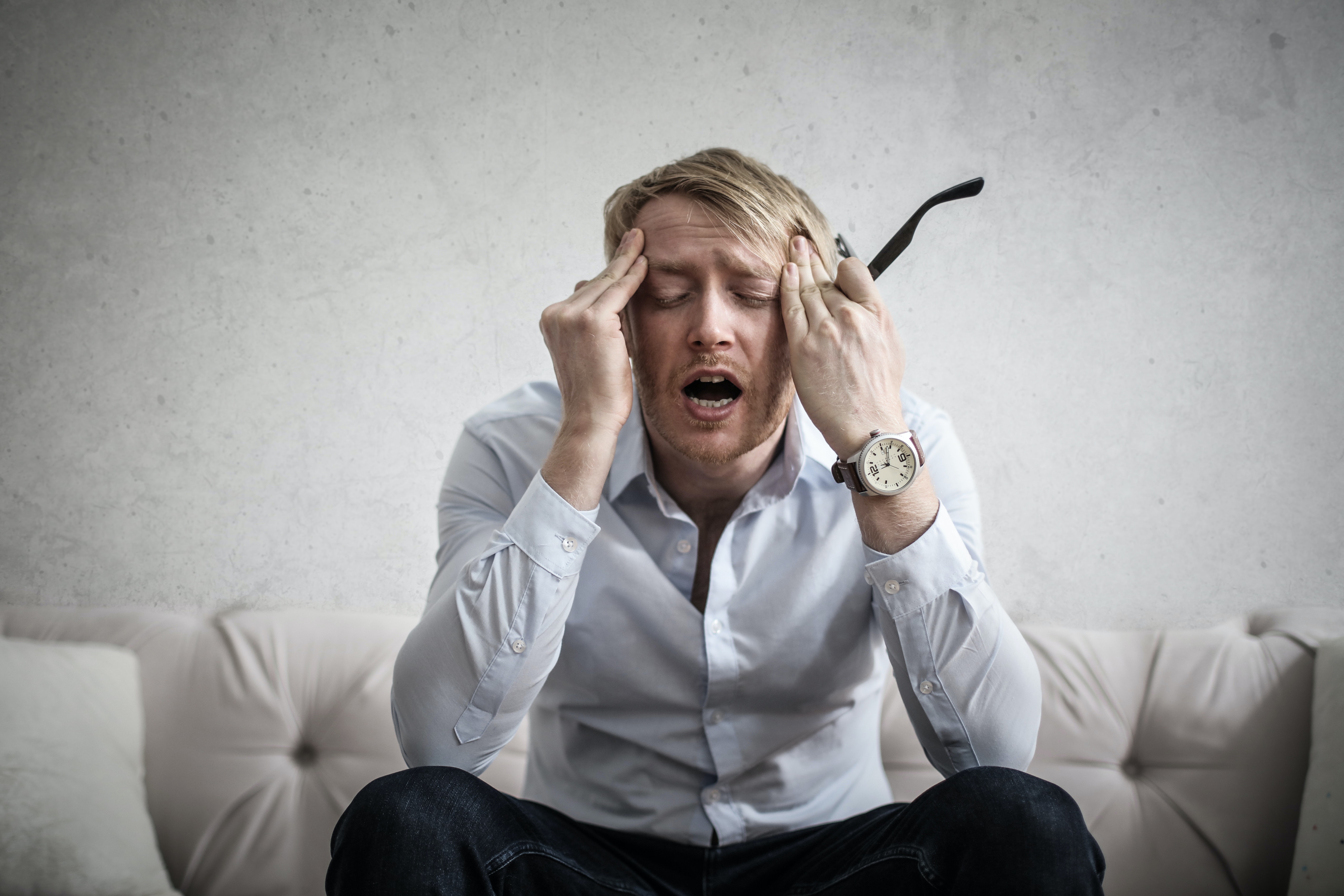
    Jarrett woke up with the weight of the world on his chest. He was so weighted down, so hopeless, and felt like he’d explode.  He went to the kitchen, poured a glass of milk, drank it, and slammed the glass down on the counter. Then stomped outside, gripping his fists at this side. Jarrett didn’t realize he had bipolar depression in teens.

    He was fed up with feeling this way. So irritable, sometimes explosive, impatient, and full of shame. He felt like a monster when he was like this. With such a short fuse, he snapped at his family, then stormed out of the kitchen.

    Later, at school, he felt saturated with self-loathing and despair. Agitation stirred in him as he went to class and tried to focus. Just sitting in his seat seemed impossible, so he’d ask to go to the restroom just to be able to move around. And he dreaded going back to class. So he messed around, procrastinated going back. Finally, he returned to the classroom and folded his arms, stared at his lap, and just sat there until class was over.

    This misery wasn’t new to Jarrett. He had been struggling with bipolar depression in teens for two or three years… just irritability at first, but then one day his parents had said something to him about inappropriate behavior and it cut him to the quick. 

    Suddenly, he felt himself getting angrier and angrier, and spewing words with an intensity he never had before. His mind was swirling with panic and offense, and he felt utterly betrayed. 

    The shocked look on their faces revealed they didn’t understand his reaction. He felt justified in his rage, more than he ever had before. The pain he felt from their accusation was the deepest he had ever felt. They could see he was genuinely hurt, but couldn’t understand why he felt so strongly.

    And that was the beginning.

    After that, other situations and disagreements led to similar reactions. His forceful words were peppered with profanity and vulgarity. Sometimes the culmination of this upheaval gave way to Jarrett storming out the door, ignoring their calls for him to come back.

    Sometimes he was gone an hour, sometimes two or three. But he usually eventually returned in a calmer frame of mind, sometimes sorry for his outburst.

    As he got older, the outbursts grew louder and went on longer. Then he began to form friendships with more troubled kids his age. His parents grew increasingly more worried and tried to influence how he spent his time. But it became more and more difficult to supervise him. 

    They were afraid for him, and made an appointment with a psychiatrist to try to get him help.  The doctor diagnosed Jarrett with bipolar I disorder. Jarrett grew darker, and more depressed… and hopeless. They could hardly get him out of bed. He missed school because he just wasn’t functioning. Bipolar depression in teens can be so debilitating that school attendance can become almost impossible.

    He seemed to sleep around the clock. Getting him to wake up and go to a doctor’s appointment was difficult…sometimes next to impossible. When they finally did, the doctor prescribed some medicines, some of which had intense side effects. Jarrett’s tolerance for the added difficulties caused by the medicines wore thin.

    The medicines weren’t making much of an improvement in how he felt, and the side effects were complicating his misery.

    He didn’t want to live like this any more. He wanted to die.

    Teens with bipolar depression can recover with IV ketamine treatment.

    Finally, Jarrett read online about IV ketamine treatment for bipolar depression.  He read about people who had been greatly helped by it. Even though it wasn’t a solution for all his symptoms, it might help resolve the depression symptoms that wound their way through everything.

    When he told his parents about IV ketamine treatment, they searched online for more information, and for a psychiatry practice that offered it.  They called the doctor who diagnosed Jarrett’s bipolar disorder to see if he would provide it, but he told them he didn’t offer it. Then they found a psychiatrist who offered IV ketamine treatment and made an appointment.

    After a thorough evaluation, he began his first infusion treatment.

    That afternoon after the infusion, he didn’t feel quite as deeply depressed, but he wondered if it was just that he was hopeful that this treatment would help. Sort of a placebo maybe?

    The infusion was a new experience.  He felt like he was floating and had sensations and images in his mind. It felt like he was moving through time and space. Overall, it was pleasant, and a bit curious.

    A few days later, he went for his second infusion. That evening, he definitely felt a mild improvement. It wasn’t his imagination this time. He could tell something was changing. The difference was mild, but a great relief. Jarrett wondered if this was the full result of the treatment.

    But, the following week he went for his third infusion and felt even better afterward. His hope was growing.

    Teens with bipolar depression can be helped with IV ketamine.

    The 4th, 5th, and 6th infusions led to his feeling better and better and better. And in the weeks that followed his outlook continued to improve. He still needed treatment for his manias, but they didn’t come that often, and the freedom from depression made it so much easier for him to manage his school work. 

    Jarrett had hope for the first time in years.

    He began to focus on his schoolwork to make up the time he had lost.  For the first time since third grade he felt like he might have a future after all.

    Bipolar disorder is the 4th leading cause of disability in young people ages 10-24. Often diagnosed in adolescence, it can wreak havoc during your teen’s formative years. Symptoms like emotion dysregulation, impulsivity, and irritability can show up during earlier childhood before mania appears. Bipolar depression in teens is a severe form of depression that can interrupt your child’s childhood and adolescence, interfering with their normal growth and development, distorting their perceptions of themselves, and crushing their ability to succeed.

    IV ketamine treatment can be transformative for your teen. The chaotic symptoms of bipolar disorder can scramble your child and make it difficult for him to focus on goals. When symptoms of depression disappear, the illness can become much more manageable. Your teen can feel more in control of his life.

    Kids don’t understand when these symptoms emerge in them. They often feel angry and justified in their anger, incensed that they would be challenged. (Sounds like adolescence, doesn’t it? The difference is the intensity of the anger, how misunderstood they feel, and a cluster of other symptoms at the same time.) That son or daughter you were able to reason with in the past may no longer negotiate or cooperate.

    If he or she seems irrational, panicked, and possibly violent, get help. This may not be a war of wills, but a mood disorder.

    We can help.

    Lori Calabrese, M.D. is on the front end of the race to stop PTSD in its tracks using IV ketamine treatment.

    To the restoration of your best self,

  • If Your Teen is Thinking of Suicide: Save Her with IV Ketamine

    If Your Teen is Thinking of Suicide: Save Her with IV Ketamine

    When your teen contemplates suicide, take it seriously and seek IV ketamine treatment.

    Shannon was 13 and woke up almost every morning disappointed to realize she was still alive. Her last thought before falling asleep was usually hoping, praying, she would not wake up in the morning. Her misery was difficult to describe but it involved every aspect of her life — parents and family, her school work, her friends, and her health. Shannon knew something was wrong. But didn’t know what IV ketamine could do. (When your teen is thinking of suicide, she may not even realize that’s where that could really go.) Her mom always said, “If everything and everyone around you seems wrong, maybe it’s time to look at yourself.”

    She did look at herself, and didn’t blame anyone else for her frame of mind. She didn’t intend to be creating trouble of any kind…she just felt so bad…so, so bad. Shannon felt like a failure at school, always hearing from her teachers that she was she was “not living up to her potential.” She couldn’t focus, didn’t have the drive to do her assignments or study. And coping with other kids at school every day was painful and exhausting. She had nothing to say, and people shunned her because they thought she was standoff-ish. 

    Shannon didn’t intend withdraw, but it was all she could do. Her social anxiety was cruel and crippled her efforts at connecting with anyone.

    She didn’t feel like her parents understood her, and her brother and sister never stopped ribbing her and poking at her.

    Her parents would have sit-down talks with her and try to whip up her motivation, her commitment to her “responsibilities” … and it just discouraged her all the more. It proved to her what a failure she was.

    They thought she would grow out of it, that time would just eventually give her a little boost, or that she would find a surge to enjoy life.

    So they waited.

    Shannon thought about dying often, but didn’t know if she had the courage to take action.

    Months and months of this without improvement led Shannon’s parents to find a therapist and psychiatrist for her, and they put all their hopes on this treatment. Over the next year, fruitless talk, prescribed medication, adjusted doses, and then new medication…. brought no improvement. 

    Shannon had lived with this despair, hopelessness, anxiety, and listlessness, as well as feeling utterly worthless, for years — and she just couldn’t do it anymore. It seemed pretty clear to her that the rest of her life would be like this. The only solution was to stop living.

    Then at school, a girl in her class told her she’d been in class with her for two years and noticed Shannon always seemed to carry a burden. Since she’d herself been deeply depressed, and had been a teen thinking of suicide, she thought she recognized it in Shannon.

    She said, “I just want you to know you’re not alone. I’ve been there.”

    Shannon told her she didn’t know why she felt so bad, and turned to walk away. The girl, Christy, rushed to catch up.

    “Do you ever feel like you want to die? I did, and I wonder if it’s the same for you,” Christy offered.

    “All the time,” Shannon responded.

    “Would you like to meet up after school? Maybe we could hang out…talk…?”

    When a teen contemplates suicide, it's vital to take it seriously and get ketamine.

    Shannon was hesitant. She didn’t really know Christy that well, though they’d been in classes together. She was afraid she wouldn’t have anything to say. It would take energy she didn’t really have. ….Still, Christy seemed to understand what she was going through. She pushed herself to accept.

    “Ok.”

    They met and walked to Christy’s car. She drove them to a cute little place that served frozen yogurt.

    They each got a cup and found a table. Before long, Shannon was talking about her situation and Christy listened, seeming to know how to ask the right questions.

    Finally Shannon asked, “How do you know so much about all this? You seem fine.”

    Christy told her about her own depression, how desperate she had felt, how hopeless. Then she read about a treatment that turned out to be her answer.

    “IV ketamine treatment.” It’s used for anesthesia, but in the last 10 or 15 years it’s become a pretty amazing treatment for depression. It’s not like the pills you’ve tried. Some people feel great after the first infusion. For others, it takes a few infusions before they feel better. In general, the treatment requires a series of infusions, 6 or 8 or so, maybe more, and it can transform the way you feel. It’s hard to describe, but my suicidal thoughts stopped — it was like poof! — and my depression completely lifted.

    “The reason I approached you, is because I know what it’s like to be deeply, dangerously depressed.  I know the thoughts you probably have, and I wanted you to know there is hope. If there is anything I can do to help, I will.”

    After Christy took Shannon home, Shannon talked to her parents. She told them about her talk with Christy and her desire to look into IV ketamine treatment. They all looked online for more information, to understand the risks and benefits.

    Christy had given Shannon the name of the doctor who had provided the treatment for her so Shannon gave it to her parents. Before bed, Shannon’s mom gently asked her if she had had any thoughts of dying. She thought maybe her teen is thinking of suicide.

    Shannon stared at her hands.

    Her mom told her that in her research of IV ketamine, she had learned that ketamine was especially good for suicidal thoughts. That it can actually erase those thoughts.

    “Shannon, honey, hang on. Tomorrow I’ll call and get you an appointment. Let’s see what this treatment can do. Will you hang on with me?”

    Shannon nodded.

    The next day, her mom made an emergency appointment and took Shannon in for a comprehensive consultation and she was able to get a ketamine infusion that same afternoon.

    Within a couple hours, Shannon’s suicidal thoughts stopped. The depression didn’t feel much better yet but the thoughts and images of killing herself were gone. They made appointments for the rest of the series of infusions.

    After the second infusion, Shannon thought she might feel slightly better. Still hopeless, despairing, and without energy, but she got out a book from English class and began to read an assignment.

    When your teen contemplates suicide, IV ketamine can stop suicidal thoughts fast.

    She hadn’t made any effort with school in months. Initiative, her mom thought. 

    Then, after the third infusion, she could tell she was feeling better. Like sparks of light were seeping through the darkness of the last few years. From that point, she continued to feel better and better. After her 7th infusion, she was laughing, talkative with her family, sometimes singing under her breath. And as time went by she just kept improving. She worked with her teachers and explained her story, and made arrangements to make up her missed work.

    Her parents were flabbergasted at the change they saw in her. She completed the year with A’s and B’s in every class, and enjoyed her school work… was motivated to excel.  She talked on the phone with friends… and even went on a few dates.

    Shannon and Christy became good friends, with their common history of depression and recovery. And together they reached out to other teens who were thinking of suicide.

    Teen suicide is the third leading cause of death in young people between the ages of 10 and 14. It’s the second leading cause of death in people aged 15 to 24. It’s extremely important to recognize signs of depression as well as signs of suicidal thinking in teens and take action.

    Because teens can be impulsive, suicide is a higher risk at this stage of life. The prefrontal cortex is not fully developed until the mid twenties, so executive decision making can be impaired. Teens may not think of the consequences of a decision that an adult over 30 is more likely to consider. 

    In addition, while depression is a serious risk factor for suicide, about half of those who commit suicide did not have symptoms of depression.

    Some people can seem fine, are productive and excelling in life, when they cause their own death. So it’s important to talk with your teen about suicide in an open and matter-of-fact manner. Check in with them often. 

    Be sure your family is familiar with the new hotline for suicide: 9-8-8.

    And know that IV ketamine treatment is available to help you recover. It’s not a fluke or a passing trend. (People might have thought that years ago when I first started providing this treatment.) Ketamine has been used for over 50 years safely. You may hear people disparage this amazing medicine as a horse tranquilizer, a psychedelic used on the streets as Special K, and other misnomers. The fact is that it’s been used in combat since the Vietnam war, is used for an anesthetic for humans and animals — and in the 21st century, it’s been studied and used effectively for depression, and other mood disorders. Like most good medicines for pain, ketamine has also been abused as a party drug for its dissociative properties.

    But make no mistake.

    When your teen contemplates suicide, IV ketamine can restore their joy for life.

    IV ketamine is one of the most, if not THE most, effective depression treatments available. It has a broad effect on the brain in the hippocampus, amygdala, the prefrontal cortex and the lateral habenula. It turns on mRNA which switches DNA to “ON” and triggers a proliferation of brain derived neurotrophic factor. This in turn acts like a compost to turbo boost the dendrites and dendritic spines on the brain neurons, to vastly multiply connections between brain cells, lighting up the brain with creative thought, bright emotions, hope, and confidence.

    When your teen is thinking of suicide — when your child is thinking of suicide— you may recognize the signs… or you may not even dream they’re considering it because they appear so active and successful. Don’t be caught unawares. Encourage your kids to talk about their feelings. And know that a self-reliant successful person can be suicidal without showing signs.

    Our goal is to help those who feel trapped in their frame of mind and in suicidal thoughts. Ketamine can stop suicidal thinking even before depression lifts—and that’s ok. It can save a life. It can save your life.

    If you feel like Shannon, or worry about your own suicidal thoughts, call us.

    We’ll help you with the best ketamine treatment available to be free of those thoughts, and give you the time you need to pull in everything you need to get better.

    You’re not alone. We’re here to help.

    Lori Calabrese, M.D. is on the front end of the race to stop PTSD in its tracks using IV ketamine treatment.

    To the restoration of your best self,
  • Ketamine for Teenage Depression: How To Set Your Teen on Solid Ground

    Ketamine for Teenage Depression: How To Set Your Teen on Solid Ground

    Set your teen on solid ground with IV ketamine treatment.

    Brittney dressed for school and left for the bus. She waited 20 minutes then slipped back into the house and slid under the bed. And she waited. She couldn’t face school…. all the kids who she felt judged her. The sleepiness that made it impossible to pay attention in class. The expectations from teachers she couldn’t meet. What can set a teen on solid ground? Brittney didn’t know about ketamine for teenage depression, so she had no hope that anything would change.

    She wasn’t intending to do anything dishonest, she was just trying to survive. School was a problem she didn’t know how to solve. She had no energy or drive for homework, for the tension of being around people all day she had no rapport with. Every day, every day, every day…it never stopped. 

    She felt she would be trapped in this misery forever. So she found a safe place to avoid it.

    Under her bed there was no pressure. No tension from unfulfilled expectations. No students asking her intrusive questions. 

    “Are you on something? You always sleep in class… What do you do at night?”

    “No.”

    “Why do you always sleep?”

    “I don’t know.”

    She just couldn’t stay awake. And she didn’t want to, anyway. 

    When it was time to be arriving home from school, she slipped out of the house… And when the bus stopped she walked into her home by the front door, went upstairs and watched TV. Teen depression can drive them to do desperate things.

    Her mom came in. “Hi Brittney, how was your day?” “Fine.” 

    “Do you have homework?”

    “I finished it at school.”

    “Well, that’s good.”

    Her mother never suspected she was not going to school until the teacher’s conference. And it came out that she … a former “A” student… was failing from missed homework, absence from class, and missed tests.

    Talking with your child often can help set your teen on higher ground.

    After a long talk, and lots of tears, Brittney’s mom realized her daughter needed help. And that was the beginning of a long, painful road. Brittney wasn’t thumbing her nose at the system, she was trying to survive. Her mom racked her mind to find solutions, but didn’t know about ketamine for teenage depression.

    For years, we’ve been fighting a crisis of adolescent depression, bipolar depression, anhedonia, PTSD, social anxiety, substance and alcohol misuse, addiction, and suicide. As teens like Brittney drop out of adolescent society to withdraw into a seemingly safe, though dark place, they need someone to reach out and help.

    Someone who recognizes their misery and is willing to help them discover how to find freedom and joy. Because these symptoms aren’t a natural part of adolescence. Misery isn’t a required rite of passage … so if your teen is exhibiting a sullen withdrawal, they may very well need treatment rather than punishment.

    Because here’s the thing.

    Adolescence is a challenging time with hormone fluctuations, changes in self image, reduced energy associated with fast growth and less sleep, and the problems that arise from being suspended between childhood and adulthood.

    It’s no walk in the park to be a teenager, or the parent of one.

    But it’s not an illness. When you see symptoms of illness, that’s the time to seek help.

    And when it comes to illness… i.e., a psychiatric disorder…finding people who can help and a treatment that works can be easier said than done.

    Some teens want to see a therapist and some refuse. Some respond to oral medication and some don’t. If your teen can take a pill and feel better, function better, and get better, wonderful. But if he or she doesn’t respond, something else needs to be done. These are formative years when your teen is forming ideas about who he is and what he wants his future to hold.

    To let time go by without helping them feel their best is blocking that development. But it’s possible to help set your teen on solid ground.

    And for that, stop and consider IV ketamine treatment.

    Set your teen on higher ground with IV ketamine treatment for depression.

    Effective with a broad percentage of people, and responsible for helping so many more achieve remission, IV ketamine is a novel and advanced treatment that can be used for teens be used who suffer with psychiatric disorders like the ones we’ve talked about.

    There has never been a medication that helps everyone, but no medication we use has ever helped so many as quickly as IV ketamine has. It doesn’t help everyone — but in our practice, it does help most of those who need it. And when it helps, it can transform.

    If your teen struggles with anxiety about school, or social anxiety, or depression that hasn’t gotten better, or PTSD, IV ketamine treatment may be just the thing to relieve those symptoms and give him or her the chance to start the year on solid ground in high school or college. 

    It’s normal to be a little nervous about a new experience, but if your teen is depressed rather than excited about going to school, meeting new people, living in a dorm, and tackling harder classes, he or she may need the boost that IV ketamine for teenage depression can give.

    Receive your ketamine treatment in a comfy recliner to erase memory triggers of alcohol use.

    If you start now, you have time to benefit from a series of infusions before school starts.

    Back-to-school treatment to restore resilience and hope is far more important than back-to-school clothes shopping. Take advantage of 21st century neuroscience so that your teen (or you, if you’re a teen) can reap the benefits of IV ketamine treatment.

    Let us help you prepare your child for the challenges ahead. Call us now.

    Set your teen on solid ground and equip her to meet the demands.

    Sometimes it takes a village.

    Lori Calabrese, M.D. is on the front end of the race to stop PTSD in its tracks using IV ketamine treatment.

    To the restoration of your best self,

  • When You Need Resilience, IV Ketamine’s Got Your Back

    When You Need Resilience, IV Ketamine’s Got Your Back

    Chronic Illness Creates Physical Stress

    Janie has a chronic illness that causes her to be admitted to the hospital — often the ICU — relatively frequently. Her condition becomes urgent, throwing her electrolyte balance, her pH balance, and her other systems into disarray. Each time she’s admitted, she suffers dreadfully with overwhelming nausea, vomiting…. and her awareness dims. Janie needs resilience to get her through these times.

    When this happens, she’s under extreme physical stress.

    At the same time, Janie fights depression related to feelings of inadequacy because the hospitalizations that occur so often have interrupted the normal development of her life. Being sick has put her life on pause. She blames herself for not building a career, and considers herself “worthless” because of her lack of success in the business world.

    So Janie suffers from physical and emotional stress. Unbelievable stress. And expanding shame.

    Work Pressure Creates Mental Stress

    Brandon has a severely stressful job. As a manager in a fast-paced, intense environment, he is constantly bombarded with problems that need to be resolved. Things his team members are not in a position to solve themselves. The mental stress of this constant bombardment prevents him from having even a few minutes to recover. Brandon works from 8am to 10pm… and often through the weekend. Sometimes the bombardment continues far into the night. 

    He has very little time with his family, and wonders how long he can hold up under this prolonged onslaught of demands. The mental strain he experiences threatens to break him.

    Janie and Brandon need a heaping dose of resilience. We can think of resilience as the power to quickly bounce back and recover from extreme stress.

    Stress can be emotional, mental, or physical. All three types of stress can prune and wear down the synapses, or connections, between brain cells in the prefrontal cortex, the hippocampus, and the amygdala. According to research, the prefrontal cortex has heavy connections to the emotion-linked areas of the brain in people with a lot of resilience. 

    You NEED those connections.

    Resilience Can Diminish if Not Supported

    While it’s true that the prefrontal cortex is heavily connected to the emotions in a resilient person, non-stop stressors can still wear down those connections and resilience can wane. When your resilience is high, you have incredible flexibility of thought. But as your resilience diminishes, so does that flexibility. So does the synaptic plasticity that creates it.

    There is a plethora of neurotransmitters that play a part in resilience: norepinephrine, neuropeptide Y, galanin, corticotropin releasing hormone, dehydroepiandrosterone (DHEA), dehydroepiandrosterone sulfate (DHEA-S), dopamine, serotonin, abrineurin (BDNF), and allopregnanolone (ALLO). These neurotransmitters and proteins are an integral part of the networks that help create resilience.

    And here’s an important point: not only is your gut involved in your response to stress, but large parts of your brain are involved in your response to stressful stimuli. Are you resilient in your response to the stress you face? Resilient people use higher levels of brain power — as in 3 times the number of genes — than those who have less resilience.

    Think about that.

    Developing Resilience

    And how you develop resilience is influenced by your personality, your temperament, physical fitness, and your social support network. Do you see stress as a challenge or a threat….? It’s unclear how much of a role genetics play in developing resilience, but you can improve your ability to recover from stress by choosing an optimistic solution to problems, by honing a problem-solving outlook, by investing yourself in seeking what’s important to you in life and what brings meaning to it for you, by surrounding yourself with people who support and believe in you

    Pushing Yourself to Stretch Beyond Your Comfort Zone

    You can also develop your own confidence by pushing the envelope, and see how much you can accomplish under duress… without disrupting your peace of mind. And you can support and help others with their challenges…which helps them and puts your own life challenges into perspective. And, by the way, this keeps your brain engaged in life, projects, work, and pleasure.

    Can Janie or Brandon stretch? Can you?

    When Janie’s in the ICU, and barely conscious from her severe condition, she’s not in a position to apply these lessons to improve her resilience. But when she recovers—each time she recovers—it’s a good time to think about her outlook, her problem solving, and her optimism.

    The science of resilience helps you overcome difficulties .

    And when Brandon’s in the throes of one thing going wrong after another at work, he may not be able to think of anything but the pressures that pound him. But when he’s off, he can work on his outlook, his physical fitness, his purpose, and he can choose to surround himself with people who support him and believe in him.

    Sounds good, right?
    Except when it doesn’t work.

    When the onslaughts of stress are severe, they can wear down those connections between brain cells and reduce the neurotransmitters… and it may be just too overwhelming to build resilience.

    You may need help with that.

    IV Ketamine Can Restore Resilience

    IV ketamine can restore resilience. It can build up the connections between brain cells in the prefrontal cortex. It can give you the benefit of turbo charged BDNF to create dendritic growth and spark those connections. The more connections, or synapses, the more you can reach out and the world can reach in. The better you feel.

    Then you have the freedom to build your own inner thought life to support the resilience you’ve gained as a result of treatment. It’s a sort of “leg up” to better living and recovery ability.

    Do you have stressors that overwhelm you? Have you tried treatments or medications that haven’t helped?

    Call us

    When you come for ketamine treatment, you'll have a comfortable, quiet room to get the most from your treatment.

    IV ketamine treatment can set you on higher ground, so you can not only develop resilience but you can maintain it. So you can face difficulty with confidence.

    Let’s work together to equip you to thrive — not just cope — with the challenges you face.

    You have just one life. Make it a joyful one filled with hope and confidence.

    We’re here to help

    Lori Calabrese, M.D. is on the front end of the race to stop PTSD in its tracks using IV ketamine treatment.

    To the restoration of your best self,

  • PTSD Permeates Our World with a State of Post Traumatic Stress

    PTSD Permeates Our World with a State of Post Traumatic Stress

    Since the Uvalde, Texas shooting at Robb Elementary on May 24 where 22 people were killed and 18 wounded, 40 more mass shootings have occurred in this country. As we spoke about in our post Shooters are Terrorizing Us, people who hear or read about these terrible events struggle to make sense of them, and in many cases feel the rise of PTSD. Traumatic events like this are all around us. PTSD permeates our world.

    This is National PTSD Awareness Month, and you can help those with PTSD with your awareness and by understanding their pain.

    PTSD isn’t limited to soldiers who’ve survived active combat. It’s also a risk for people in domestic violence situations and those who’ve been assaulted. It can also develop in people who’ve survived transportation accidents, those who have survived a vicious divorce, horrible bullying, and so many other terrible and damaging experiences.

    Some say the whole world is living in a post-traumatic era.

    I say we’re living in an era that’s currently traumatic. There is so much that threatens to fill our lives with trauma. From the deaths and severe illnesses of people we knew and loved related to the COVID pandemic —which is still happening! — to the wildfires, natural disasters, wars and shaken refugees pouring into any country where they can be safe… to the cruel murders carried out by marginalized people who have a hate crime or score to settle.

    We’re seeing it all.

    Hypervigilance creates a prison of trauma

    PTSD permeates our world. Why is that? Maybe because our world is increasingly permeated by experiences that lead to post traumatic stress …. changes within our bodies and our minds characterized by hypervigilance, fear, and hopelessness.

    When we speak of hypervigilance, what are we describing? It’s that exaggerated condition of constantly looking around you for potential threats…something or someone who might hurt you. If you experience trauma, the impact of it can stay with you, always threatening to rear its ugly head again.

    This state can prevent you from relaxing, enjoying the circumstances you’re in, because of the danger of missing a threat. Your subconscious is constantly scanning for danger. Because it feels like it can be anywhere.

    It can make you feel on edge, tense, fearful, and overwhelmed. Post traumatic stress can keep you frozen in fear.

    The stress of PTSD that permeates our world wears down and prunes the nerve connections (synapses) in your brain, making it difficult to think of other things, or focus on the people you love. It’s as though you’re on high alert and ready to jump to defend yourself at the smallest surprise or noise.

    IV ketamine treatment has proven especially effective with PTSD. It causes those synapses to rebuild and reconnect to give you the ability to relax and enjoy the moments in your life with loved ones and friends.

    How does ketamine work?

    By triggering RNA to turn DNA “ON,” and to produce BDNF, a growth factor for brain cells that works like fertilizer to get those synapses growing, flourishing, and connecting…. filling your brain with new, robust connections. It’s as though the lights turn on as the signals in your brain transmit feelings of calm, relaxed enjoyment… and you can feel lighter and infused with hope. Resilience returns (or begins) for you and patience becomes part of you as you find new ways of enjoying your life.

    Imagine waking up in the morning with a song going through your mind, or even waking up singing…! (I know, right? when was the last time?) Imagine not reacting when someone playfully slaps you on the back. That you can go about your business without scanning the crowd for some threat…

    You can live free of those restraints and painful symptoms, and actually focus on your child’s birthday party, or conversation with your partner at dinner.

    At Innovative Psychiatry, it’s a joy to see people freed from PTSD symptoms after ketamine treatment every week. (Makes working so late into the evening doing infusions so worth it!) The robust impact ketamine wields on PTSD is a marvel to witness and can be — hands down — life changing. Whether the trauma is from exposure to tragic events, or verbal or physical assault, or injuries from accidents, or a catastrophic disease.

    Even though PTSD permeates our world — and maybe permeates yours — know that there is hope.

    If you suffer from symptoms we’ve described here and nothing has helped, call us.

    We’re here to help you receive your ketamine infusions in the best possible healing environment. You’ll have a beautiful treatment room where you can relax in a zero-gravity heated recliner while we monitor your heart rate and blood pressure. Your infusion of ketamine will be by a precise infusion pump that measures your dose to the tenth of a milliliter. We don’t hang a bag on a hook, cross our fingers, and let gravity take over, or run a bag in fast because we have to leave. (You wouldn’t believe the stories!) Your recovery is too important for that so we do our absolute best for you.

    And while you undergo your infusion, you’ll be safe from infection from the COVID virus, as well as bacteria and molds. Because 99.99% of all viruses, bacteria, and molds in our air are destroyed by the plasma cell technology we’ve installed in our offices. This is that system we’ve talked about before that was developed by NASA and the Department of Defense for the International Space Station. While our technology works to protect you, you’ll be free to focus on your treatment and getting better.

    We know that there are lots of ways to administer ketamine — lots of ways to administer IV ketamine… and most practices just don’t do what we do. Your journey starts with me—and with an incredibly thorough diagnostic evaluation—not a checklist, not a quick referral form, or a phone call where someone (medical? not medical? a closer?) just sets up an appointment. We don’t run a clinic with one size fits all…we do the very best we can possibly do to foster your recovery and remission.

    Get in touch with us and let’s talk it through.

    We want to see you enjoying your life — and you want that, too.

    So let’s do this! You have nothing to lose and a bright future to gain.

    Lori Calabrese, M.D. is on the front end of the race to stop PTSD in its tracks using IV ketamine treatment.

    To the restoration of your best self,

error: Content is protected !!