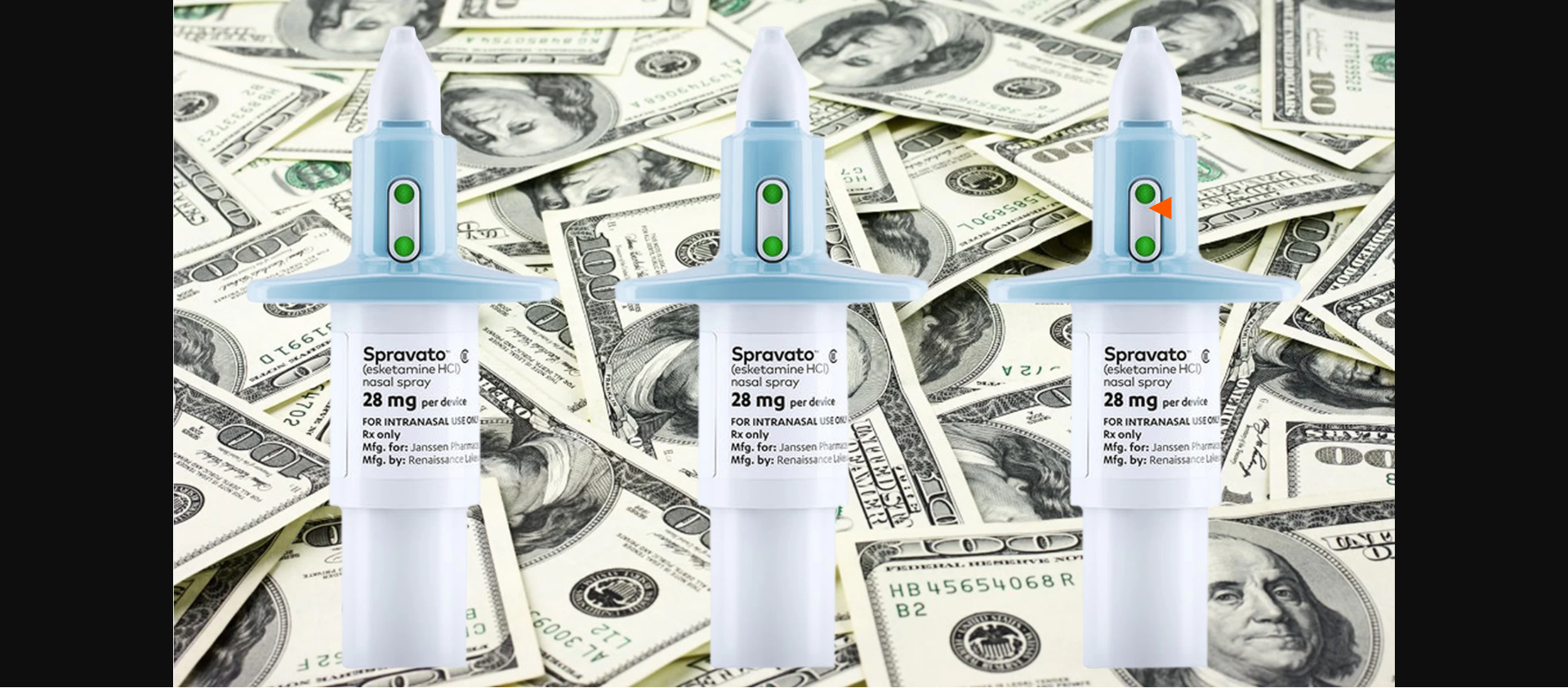
Johnson & Johnson patented a form of the psychedelic with less research and a ridiculous price tag.
In a popular and public move, the United States’ Federal Drug Administration recently approved intranasal esketamine, one of the components of the psychedelic ketamine, for treatment-resistant depression. The nasal spray costs nearly $900 per dose—or roughly $7,000 for the first month of treatment, and each treatment takes at least two hours in a clinic. (It has yet to be decided how much of the cost insurance plans will cover.)
Esketamine can be unwieldy to use and carries a number of significant potential side effects. Shockingly, it was no better than placebo in two of the three short-term Phase-III studies submitted to the FDA for approval.
But the biggest problem at hand is not the drug itself. It’s the fact that instead of representing a revolution in mental health treatment, as it has been touted to do, esketamine is not a breakthrough at all. It’s just a way for pharmaceutical company Johnson & Johnson to make a significant profit off gullible insurance companies and vulnerable patients.
It’s currently difficult, if not impossible, to provide generic ketamine treatment in public clinics, even to patients who need it, because there haven’t been any large-scale, randomized trials, both with and without psychotherapy. Without these trials, and resources, physicians can’t be reimbursed by insurance companies for ketamine treatment like they will be able to do with esketamine.
Ordinary ketamine is a racemic medication, meaning it is made up of two molecules that are mirror images of each other. Because ordinary ketamine is generic, Johnson & Johnson simply isolated one of the two molecules in regular ketamine so that it qualified as “new.” The reality is that we don’t know whether esketamine is more or less effective than regular ketamine because there have been no head-to-head trials between the two. Johnson & Johnson only tested esketamine against a placebo, likely because they feared esketamine might actually perform worse than the generic version.
As many critics have pointed out, this strategy has become the bread and butter of drug development in the United States today. Largely because of the influence of pharma on the FDA itself, our drug approval process rewards copycat variation of already-available drugs instead of truly innovative pharmaceutical design.
When Psychotherapy Is Missing
The trials for esketamine also reveal a larger issue in the field: they de-emphasized the importance of psychotherapy while focusing solely on its chemical effects. The most effective treatment strategy for treatment-resistant depression is intensive psychotherapy along with the use of medication, but the FDA esketamine trials didn’t include therapy at all.
Getting insurance companies to pay for psychotherapy is already difficult, and without it as part of the protocol, they will likely offer no reimbursement for patients interested in receiving a psychotherapy session after their esketamine dose in order to process the experience.
Our colleagues who offer ketamine-assisted psychotherapy say that this is a vital part of the process. One such session can require upwards of three hours of one-on-one treatment in order to prepare patients for the experience, take care of patients while they are under the influence of ketamine, and then integrate the effects afterwards. Ironically, insurance companies would save more money paying for generic ketamine-assisted psychotherapy rather than esketamine treatment alone, as the former is both cheaper than the latter and can lead to long-term remission of symptoms.
Alternatives
Private ketamine clinics currently do exist, but they have to fight the stigma of the drug, and sporadic cases of malpractice. Some private clinics do not properly screen patients prior to initiating treatment and often charge outrageous sums of money—one reason that both patients and medical systems have been hesitant to implement it more widely. Those clinics that are providing ketamine responsibly, however, offer a potentially lifesaving treatment for patients living with depression who have exhausted all other available options.
Although there are no quick fixes for the broken drug-development and approval process that led us to esketamine, it is possible to take concrete steps to address the most glaring problems. Insurance companies and the FDA ought to require head-to-head study designs of clinical trials to investigate generic and patented medications. Additionally, current research on medication-assisted psychotherapy with other psychedelic substances such as MDMA and psilocybincan serve as a model for future research that explores ketamine-assisted psychotherapy, instead of the drug alone.
While Johnson & Johnson rakes in the profits from esketamine, patients dealing with depression and trying to navigate our struggling mental health system will bear the cost. Fostering the development of mental health treatments that are novel, effective, and affordable will require a critical examination of the undue corporate interests that drive drug approval in American psychiatry today.
Dr. Michael D. Alpert is a psychiatrist and clinical faculty at Harvard Medical School. He is also a therapist with the MAPS Clinical Study of MDMA-Assisted Psychotherapy for PTSD.
Dr. J. Wesley Boyd, MD is a psychiatrist and associate professor at the Center for Bioethics at Harvard Medical School.
Dr. Marco A. Ramos is a psychiatry resident at Yale University.
I just returned from the American Psychiatric Association’s 2019 Conference in San Francisco.
This is the 175th Anniversary of the APA, and look how far we’ve come. The theme this year was: Revitalize Psychiatry – Disrupt – Include – Engage – Innovate. and it certainly provided fodder toward those goals. It was an informative and eye-opening conference with a wide array of talks and poster presentations. Plus, I was privileged to make a presentation, too. More about mine in a bit.
The attendance at this conference exceeded them all, with thousands of attendees from around the world and new research presentation abstracts which spread out over 800 pages!
You may not be aware that the APA is the oldestmedical organization in the nation. (We’re proud of that.) The venue was enormous and the camaraderie rich, inclusive, and restorative.
The presentations flowed from every aspect of psychiatry, including geriatric issues as well as issues specifically relevant to children, and adolescents, too. There were talks from ADHD to dementia and addiction to psychosis.
From Saturday through Wednesday the venue was chock-full of courses, convocations, lectures, symposia, talks, and media presentations by the hundreds. There were more than 360 new research presentations every dayin the poster sessions which went up every morning and every afternoon.
There’s no way I could ever provide a synopsis here of all the findings presented. But there were a couple I do want to mention.
My own focus was on those presentations specifically related to suicide, depression and other mood disorder treatment, and especially ketamine treatment. I drank up all the information and data I could hold. (That and espresso kept me going.)
Here we’ll talk about two of the presentations focused on ketamine and the one I presented on suicidal thinking.
Ketamine’s Effect on OCD
I was so pleased to see there has been more work focused on ketamine for obsessive-compulsive disorder (OCD). Clinical Psychiatry News featured this article with the title: “Ketamine may help OCD, but much work remains.”
The author, Carolyn Rodriguez, MD, pointed out that the symptoms of OCD are severe, and 1 in 7 people with OCD attempts suicide at some point in their lives. She said that there is a significant and painful delay between the time of diagnosis and the time when the patient experiences benefits from the medicine — 2-3 months or even longer.
She talked about her interest in looking at therapies that worked much faster, and were more thorough. This is so important so that patients could feasibly experience more complete eradication of symptoms.
Since more and more evidence indicates that glutamate seems to contribute to neuron communication as an excitatory chemical messenger, she chose to see what ketamine could do, considering it blocks the glutamate receptor.
The only study using ketamine with OCD was conducted by Dr. Rodriguez and her team in 2013. Not surprisingly, she’s planning a new one now which will compare ketamine with midazolam, to study the effects of ketamine on the circuits associated with OCD.
She Called for More Studies On Ketamine’s Effects on OCD
She says a larger study is needed to learn more about how long ketamine’s effects on OCD symptoms lasts. It’s also important to see if the effects seen in the 2013 study can be replicated.
This is exciting work, as we need more information about what ketamine does for OCD so we can help more patients.
Dr. Rodriguez commented on the FDA approval of esketamine this past March. She made the point that those OCD patients with “contamination OCD” are likely to be unwilling to use a nasal spray.
Disrupt – Include – Engage – Innovate …
Ketamine and Opioid Receptors
Another talk, presented by Nolan Williams, MD, from Stanford University, discussed ketamine’s mechanism of action. Since there’s wide recognition that stress is directly related to a buildup of glutamate outside the cells which causes unwanted effects, ketamine blocks the NMDA receptors, blocking glutamate, and reverses these unwanted results.
Dr. Williams made the point that ketamine affects many neurotransmitter systems and has a wide variety of effects, both good and bad, as a result of that.
Researchers know that ketamine’s effect on pain is complex, and an opioid receptor antagonist prevents ketamine from relieving pain. We know that opioids have an antidepressant effect, and Dr. Williams wondered if ketamine’s antidepressant effect depended on the opioid system.
There were 12 subjects in all who completed the study; 7 had dramatic relief of symptoms. Even more interesting, 6 of the 7 achieved remission.
Now, the design of the study included crossing over between 2 groups of subjects. So, to accomplish this, one half received a placebo an hour earlier, then ketamine. The other half received naltrexone an hour beforehand, then ketamine. As you may know, naltrexone blocks opioid receptors, so if ketamine relies on the opioid system, in part, then naltrexone should prevent ketamine from reducing depression symptoms.
After the ketamine infusion, they allowed the subjects to become depressed again. They became deeply enough depressed to reach the 20% mark on their evaluation tool. Then they were given another infusion of ketamine. If they received placebo with the first infusion, this time they were given naltrexone. If they received naltrexone with the first infusion, this time they were given placebo.
Those who received naltrexone experienced no benefit from the ketamine infusion, whether they received it prior to the first ketamine infusion or the second one.
The same is true of suicidal thinking as measured on the tool. Those who received naltrexone experienced no reduction in suicidal thoughts.
Interesting, right? But, keep in mind, this was a very small study, and much, much more work needs to be done looking at these issues. This is too preliminary, and these numbers are too small, to make sweeping generalizations. Certainly, closer to home, at Yale, patients treated with naltrexone have responded to IV ketamine.So much to learn!
Disrupt – Include – Engage – Innovate…
Ketamine Infusions Stop Suicidal Ideation in Outpatients and Avert ER Visits and Hospitalizations
Finally, my own story. I had the opportunity to present my own data.
I’m very interested in how IV ketamine can rapidly reverse suicidal thinking in patients with depression. Passionate about it, actually. Taking a long, hard look at my own experience with more 235 adults and adolescents with treatment resistant depression, I presented data which showed that serial, titrated ketamine infusions stopped suicidal thinking in the majority, and prevented ER visits and psychiatric hospitalization.
We have dozens of case reports, small studies, beautifully written case series, and elegant placebo-controlled trials of ketamine treating depressive episodes — and very fine studies teasing out the effects of ketamine on suicidal thoughts in small numbers of patients.
What’s been missing — for us all — are extensive results from real-world psychiatric treatment with ketamine in large numbers of patients like the ones we see every day–people who are complex, and have more than just one thing going on (like anxiety, OCD, trauma, and histories of substance misuse in addition to their depression or bipolar disorder). People who are medically ill, or in chronic pain. Those who have made numerous trips to the ER for suicidal ideation. So many who have been hospitalized, made suicide attempts, have been failed by ECT, or failed by TMS.
People like you. Or like people you know.
When I think about what ketamine can do best, and who it needs to work for first, it’s the patients I see — people like this: Depressed. Sick and tired of it. Sick and tired of treatment not working. With thoughts it would be a relief to not wake up, or with frank thoughts of suicide.
There were No Suicide Deaths, Suicide Attempts, ER Visits or Hospitalizations in my High Risk Group Treated with IV Ketamine Infusions
This is the first report from a real-world psychiatry office practice in the community using IV ketamine to treat suicidal thinking in hundreds of adult and adolescent patients with treatment resistant depression.
The response from attendees to the data was enthusiastic. But we were even more excited with the breadth of new research presented during that same 2 hour poster session. Information that touched on ketamine,suicidality, and treatment resistant depression. It’s extraordinary to see so much energy and thought put into examining these connections. Here are some examples of the new research posters that surrounded me:
Effect of Ketamine and Esketamine in Suicidal Ideation: Relationship to Depression
Patient-Reported Outcomes in Major Depressive Disorder with Suicidal Ideation: A Real-World Data Analysis using Patientslikeme Platform
Care Setting Type and Readmission/Subsequent ED Visit Risk Among Patients with Major Depressive Disorder and Suicide Ideation or Suicide Attempt
Do the Impact of Risk Factors or Protective Factors for Suicidality Change in Response to Effective Treatment? A Case Study
Esketamine’s Antisuicidality Effects on Treatment-Resistant Depression: A Role for the Subcutaneous Route
The Relationship between the Big Five Personality Traits and the Suicide Crisis Syndrome in an Outpatient Population
Resilience Moderates the Relationship between Suicidal Narrative and Suicidal Behaviors
Effects of Ketamine and Esketamine on the Levels of Brain-Derived Neurotrophic Factor in Patients with Treatment Resistant Depression
Development of a Real-World Ketamine Database Registry: Centers of Psychiatric Excellent (COPE)
Managing Esketamine Treatment Frequency Toward Successful Outcomes: Analysis of Phase 3 Data
Esketamine’s Antisuicidality Effects on Treatment Resistant Depression: A Role for the Subcutaneous Route
And the beat goes on.
Disrupt – Include – Engage -Innovate !!
So, in fact, we enjoyed a wealth ofdisruptiveinformation shared through hundreds of studies, new technologies, and new paradigms. We engagedwith the information and with each other, included diverse groups who attended and the patients they advocate for and treat. We’re moving forward to innovate in our mindset, our approach, our science, and our treatments.
Because after all, it’s for you that we attend these conferences. No doctor practices in a vacuum, but our best and most healing practices are born from collaboration within the psychiatric and neuroscience community.
Ketamine Treatment at Innovative Psychiatry
So here at home, we focus our energies on you. Do you have thoughts about suicide that treatment has not been able to stop? Do you suffer from symptoms of depression that recur or persist no matter what you do?
While it isn’t the right treatment for everyone, (because nothing is) it is remarkably helpful to most. And we’re learning all the time more ways it can help more people.
We live, study, collaborate, work, and share our findings to help you find the rewarding and fulfilling life you’ve longed for. Together, we can Disrupt -Include – Engage – Innovate …and help transform your life. Give yourself the opportunity to feel well and to enjoy the things in life that mean the most to you. We’re here to help.
“Though I am often in the depth of misery, there is still calmness, pure harmony, and music inside me.” —Vincent Van Gogh
May is Mental Health Awareness Month, and I’ve been thinking about how to disrupt the stigma of “mental illness.” It’s a term I don’t like – but it’s still used throughout the world, unfortunately. To me, “mental illness” is an archaic and stigma-ridden phrase. Because it can isolate people who experience these illnesses in their own dark corner of misery, and surrounds their condition with mystery and skepticism. Yet cardiovascular, pulmonary, or liver disease are all discussed in the light of day and with credibility. There should be no difference. So, let’s talk about the ins and outs of one “brain” illness: the oddities, charm, and suffering of bipolar disorder.
My patients encounter stigma every day. Family members and friends who are furious with them, and just worn out by it all. Critical. Disgusted. Steeped in stigma.
And many of my patients are steeped in shame. It’s for them — and their families — that I’m writing today… and for you.
So let’s talk about what a person can be like who endures the suffering of bipolar disorder. Because the symptoms of a disorder like this one can seem to be intertwined with the person’s personality … for better or for worse.
In fact, neuroscience researchers have discovered a genetic connection that influences the personality development of a person with bipolar disorder. We’ll be talking more about the scientific side of bipolar disorder in a future post.
Emma was diagnosed with bipolar I when she was 15. She’d stolen her parents’ credit card, and had charged $4700 in a weekend taking friends to nice restaurants, shopping for clothes, and attending concerts. She felt like a million bucks…and tried to spend a million, too.
Her parents got alarmed, and she got admitted to a mental health crisis unit where she could be evaluated for 72 hours. It was here that she received her diagnosis of bipolar I disorder. The doctors there started medications to help stabilize her mood, and discharged her within a week.
Shock and awe. Not enough time to see how the medications really worked, or to wade through her questions and fears about this new diagnosis. This wasn’t how it was supposed to go.
She left confused, a bit shell-shocked, and with no small amount of anxiety as to what life would be like now. The shame she felt gripped her. How could she face anyone? She believed she’d never be able to show her face again anywhere… and the new pills she was taking made her feel weird.
Emma’s next few years were tumultuous, as the medicines didn’t help her stabilize, but even seemed to make her more unstable. Add to that the hormonal changes of adolescence and their affect on symptoms, and the instability…better said, the roller coaster… of her emotions was almost impossible to endure.
Everywhere she looked, she saw disapproval. Despite regular and frequent visits with her psychiatrist, she felt miserable and her symptoms seemed to get worse and worse.
Emma and her parents participated in therapy, to become educated about this illness. They also learned how to support structure in her life, as well as methods of helping her decompress when the need arose.
Oddities, Charm, Suffering of Bipolar Disorder… So Many Facets
But her ability to participate with them in counseling got sporadic as her symptoms worsened. During depression she couldn’t get out of bed, and anxiety made leaving the house seem insurmountable.
But there were also transient periods when she felt a bit more like herself. Her sense of humor had always been spectacular, and often kept her family in stitches. Those light-hearted fun times reminded them of the history they shared, and endeared her to them all the more.
But…her bedroom floor. Trashed! It was the place clothes and food wrappers went to die. And personal hygiene? …Let’s just say that was a work in progress. She didn’t bother to shower unless she was badgered. But she was feeling better, and creating magnificent, enchanting poetry, so no one wanted to argue with her about hygiene. They had all learned to choose their battles.
Still, there were also the times when she came home drunk or high. She told her parents she was sorry, but they feared for her…and wondered what to do.
The irony was that when her friends were high, they acted crazy. However, at the same time, when she was high it made her mind feel clear and grounded. She didn’t crave the substance, she craved the clarity. But her parents knew the dangers of addiction.
She was an odd bird, and she knew it. She figured she’d always feel like the odd one out.
But, for real, she had to give her parents credit. She could see they were really trying to understand. But it wasn’t a walk in the park.
At times she felt anxious and angry, and couldn’t tell why. But her parents would react in ways that seemed to her more like an attack. So she responded in kind.
So Complicated!!
Through therapy they learned that “pulling rank” and trying to force her to comply only served to escalate her reactions and agitate her when she was manic. They learned to listen patiently when she verbally shot words like bullets in a long tirade. They learned this was a symptom.
And they learned it was important to treat her with respect, in spite of her outbursts. After all, she wasn’t a spoiled child, she was ill. And… they learned that during times of peace, her talents, empathy, and growing wisdom had a richness they’d never seen in anyone before.
They had to admit this was new territory, and they couldn’t fall back on their old parenting patterns without making matters worse.
She was still their Emma, but there were times they didn’t recognize her. The counselor helped them see that all of these behaviors together were part of “their daughter with bipolar disorder.” Good times, bad times, times she amazed, and times she broke hearts.
Though Emma came home from the crisis center filled with shame, through counseling and the love and acceptance of her parents, along with time, she found she was slowly healing. She and her parents learned together that the mood swings – which were sometimes violent – were not a sign of her contempt for them, but rather a shift in her brain cell function that was involuntary.
So her parents learned to show her they were standing with her when she found herself in mixed states, exploding with manic energy, rage, and heartbreak.
Emma had made a friend at the crisis center, and was saddened for her and the awful scenes she described with her parents. Her friend felt so alone and hopeless because her parents viewed her behaviors as threats to their authority, rather than symptoms, and tried to shame her into compliance. Before long, her friend ran away from home.
Emma knew she was really lucky to have parents who tried so hard to support her and stand with her in this illness.
At times, she felt upbeat, pleasant, and enjoyed time with her parents, as well as a friend. In those same times, Emma often waxed poetic, writing pages of melodious rhyme, describing her magical wonder of the world as she saw it. Her words carried wisdom far beyond her years, and her creativity resulted in thoughtful and meaningful gifts for those she cared about.
But as the wonder bubbled up…the bubbles came faster and faster until she felt as though she was all bubbles, like helium…and she was floating, exhilarated, and able to do anything.
The Suffering of Bipolar Disorder Can Appear To Be Something Else
She’d climb a water tower and paint graffiti at the top, or she’d have sex with three different guys in the same night, or shoplift something from Macy’s. Why? Because she could do anything.(or at least she thought she could.)
Was she rebellious? Not intentionally. But she was manic at those times, and her perceptions were distorted, as well as her judgment. And impulsive. Oh my…intensely impulsive. Could that be fixed by her parents’ discipline? Ummm…not likely.Impulsivity and distorted perceptions are symptoms of bipolar disorder.
Unfortunately, there were times the police brought her home, or the store security officer called her parents, or… once…she found out she was pregnant.
Sadly, she miscarried 6 weeks later. It was all so terribly painful. The grief so suffocating. She really wanted that baby. It didn’t matter that she struggled to care for just herself…she wanted that baby more than she wanted air.
The grief continues to this day. On bad days, the pain of it rises up fresh and in waves. It’s almost more than she can bear. And the pain never lessens, or heals, but is always fresh and suffocating…because of the disorder in her brain. And the pain she feels when the waves return often push her into another mixed state episode.
But eventually, with sleep, healthy meals, and medication, she begins to recover each time.
Then, just about the time she feels a little stable, here come the bubbles again. And she forgets to go home by curfew because of the adventure she’s on. Then the crash… and eventually, the recovery.
The Suffering of Bipolar Disorder Untreated Leads to Worsening Symptoms
Years later…? Emma was 22, and the periods of depression became too frightening. The pressure within her gave way to visions of her death. The pain, then the end. The determination to end the pain rose higher and stronger. The risk of an impulsive act that would remove her hope permanently led her parents to deeply research the options that might be available to help her.
They learned about IV ketamine treatment and how it can end suicidal thinking in a few hours. They discussed it with her psychiatrist and made arrangements to see a psychiatrist who offered this treatment and would consult with Emma’s doctor to coordinate her care.
All three of them made the trip together, planning to stay for a couple weeks and make it a sort of vacation. They hoped the break and new scenery would do her good. And they believed that saving their daughter was the best investment they could make.
They’d read of people who had experienced help from bipolar depression with IV ketamine treatment, but their greatest concern was to help her continue to live.
They’d also read that people with bipolar disorder have an average life span of 25 years less than those who don’t have this illness. They could see the risk and felt they had to take measures to protect her.
After the couple of infusions, she didn’t appear to be so deeply and dangerously depressed. Her mom mentioned the suicidal thoughts, asking if there was any change.
Emma blinked. Oh yeah. As a matter of fact, she realized she hadn’t had any thoughts like that in 2 days. With all that was going on…she forgot that was why she was here. Her parents exchanged a hopeful glance.
With another infusion, her mom noticed she was picking up after herself. And she got in the shower and shampooed her hair…then blew it dry! Now this was a moment both parents noticed…but tried to not make an issue of it.
By the end of the series of treatments, Emma’s mom saw a light in her eyes that had been gone for months. And Emma suggested a shopping trip and lunch, which never happened when she was depressed.
Once they arrived back home, Emma was upbeat, and disappeared into her room to organize it and clean. This was no small chore, mind you. She asked her dad to carry out the 3 huge trash bags of trash she picked up from the floor. He jumped at the chance.
Emma, herself, was surprised about her own motivation and initiative. And she found sheenjoyed the sun filtering through the trees…the ducks paddling around the pond at the park, and the aroma of someone’s barbecue cooking outside.
There was no question about it. She was feeling better. In fact, she felt better every week.She slept better at night, and had more energy for living during the day. A few weeks later, she realized she had a song playing in her head. So she hummed along. Her mom flashed a grin at her. It was so good to see her feeling so much better.
Emma has had some rough days and weekends since her IV ketamine treatment. Times when she felt exhilarated and knew she might make a bad decision. But she’d learned to call her doctor, report the subtle symptoms, go in and do what she needed to do to avoid sliding into hypomania.
Overall, her life improved dramatically after ketamine. Every month she sent a note to her ketamine doctor to let her know how she was doing. She missed fewer appointments with her local psychiatrist and her therapist. And somehow she seemed better able to manage herself now.
While Emma still has challenges, her life is happier and easier to manage. She’s more productive and was able to go to college and actually do the work. What traditional medications couldn’t do for her, IV ketamine treatment could.
At Innovative Psychiatry, we see patients who suffer from bipolar disorder often. Patients who experience significant improvement through IV ketamine treatment. If the suffering of bipolar disorder, especially bipolar depression, begins to return at some point, we’ll quickly arrange an appointment so you can receive a new infusion to refresh your well being.
If you suffer from bipolar disorder or another mood disorder, and you’ve not been helped by the medicines your doctor prescribes up till now, please call us. We will schedule a consult to determine if you’re a candidate for IV ketamine treatment. And if you are, you can begin your treatments right away.
We’ll help you connect with the version of the best you that has become hidden, and help you feel and function better, so you can enjoy a rewarding and fulfilling life.
We’re here to disrupt stigma.
And innovate— not just with fresh new effective treatments like ketamine, but innovate with understanding.
We don’t just infuse ketamine—we infuse compassion, and we infuse hope. We live for that.
With respect and appreciation for the beauty of your best self,
We celebrated Mother’s Day yesterday. What was it like for you?
We truly hope you enjoyed a day of love and hugs as you celebrated with your children. But if you’re a mom who has lost a child, and especially if you’ve lost a child by suicide, this is a day that reminds you of that loss. And we wish you comfort…and hope… as you reflect. We offer these thoughts for solace, along with our warmest wishes.
The death of someone you love is a terrible event. You’re left with a hole cut through your heart that never closes. Even if you expected the death, and you know that person lived a fulfilling life, you can’t predict how their absence will affect you, or how long it will be before you feel anything close to yourself again.
After the sudden and unexpected loss of a loved one by the tragedy of suicide, the traumatic experience generates utterly unbearable loss, horror, confusion, shock, and stigma. A tragedy of this magnitude initiates a search for answers that survivors experience that will likely continue the rest of their lives.
We go through our lives and we don’t remember everyone we’ve known, but we never forget a friend who took his own life. The shock and confusion of the death brands our memories. The questions we asked that couldn’t be answered and the reactions of others around us suffering the same trauma can linger forever.
Multiply the fallout by a thousand if this person was your child, your spouse, or your parent.
The BIGGEST Question
It’s natural for everyone in the inner circle — and the outer one as well — to wonder if something happened that instigated the suicide. Was there a huge disappointment? A terrible argument? Was there something he couldn’t face?
But underneath all those queries the BIG question lurks: WHY? “She had everything to live for…” “He’d finally finished school…” “ She was so beautiful and had such a beautiful family…”
Of course, these questions have no answers. Unless she left a note, or a phone message — and then it might not say why. It might be just a last minute thought for the recipient.
And here’s an important truth. When someone commits suicide there may not be a clear reason. It could have been an impulsive, spur-of-the-moment act, when something overwhelming makes it seem impossible to go on.
Their craving for relief, for release, may have overwhelmed logic and reason.
Or… if your loved one suffered from from an underlying mood disorder, she may have been having compelling thoughts about death and suicide, about despair and futility, and images of the relief suicide would bring, as well as images that helped her plan this “release.”
Her reasoning was not your reasoning. Hers may have come from circuitry in her brain that was malfunctioning. So your best intentions in helping her to see “all she has to live for” might have fallen on deaf ears. She may have been incapable of grasping your words.
When you don’t suffer with suicidal thoughts, it’s hard to imagine what that person’s thinking processes are like. It’s hard to picture how their thoughts can be suffused with distortions that defy logic, and overwhelm consideration.
You Probably Focus the Most on Your Lost Loved One, But Something Traumatic Is Also Happening To You
The news of such a tragedy strikes us without warning. We have no time to prepare, to shore up for the devastation that’s sure to follow, like a Category-5 hurricane slamming into a coastal town.
We instinctively want to tell someone, and we do… whether it’s our spouse, our parent, our best friend…even our child. And when we talk about it, we’re surprised that though there’s a small sense of comfort, the horror of the loss inflated by their absence and the permanence of it, are often far too suffocating to be eased by the sharing of a burden.
And…it probably seems surreal. Some part of you expects her to walk through the door any minute. You find yourself secretly asking, “Do we really know it was her? Could there be a mistake?” And you sift through the facts at hand, mentally trace her steps in your mind, to find any inconsistency that would reveal it isn’t really true.
But eventually, you realize this loved one really is gone. And little by little, perhaps, you begin to notice you’re able to accept it in tiny bites at a time.
Be Assured: KNOW You’re Not Alone When You Collide With the Tragedy of Suicide
Like any traumatic event, the pain of this can be isolating. You can feel like no one knows what you’re the going through, and that no one notices your pain, or understands it.
At the same time, you may find you experience “triggers” — locations, tokens, sights, sounds that remind you of your loved one’s suicide. Or it may remind you of where you were when you heard about it.
And the tragedy of suicide comes crashing down upon you again.
Bottom line, this has been one of the most traumatic events of your life. Reminders of it can create their own version of PTSD. Trembling, suddenly bursting into tears, lashing out in anger, or hiding in a dark corner, can all happen with you when these reminders trigger the memories.
Those moments may also cause you embarrassment. It can even make it hard to leave the house. You can feel so vulnerable to these reactions occurring out of nowhere. And you may fear it happening without warning. Just another fallout of this terrible loss.
When you’re touched by the tragedy of suicide it can seem that you’re often swept away with waves of grief and disbelief.
Grief is Hard on Your Relationship
You and your partner or spouse may both be experiencing these symptoms of grief. The energy you each expend to navigate this terrible time reduces the energy you have for each other. What’s more, it’s natural to withdraw to some degree as you sort out these emotions, thoughts, fears, confusion, anger… loss, sadness, maybe even guilt… and the combination of it all can cause a certain distance between you.
This is a time when you need each other the most. But, circumstances may make it terribly difficult to lean, share, or support.
Again, be assured you’re not alone. Thousands upon thousands of others are experiencing the same things you are at this same moment. And there is support, kindness, and empathy nearby if you’ll allow yourself to seek it out.
Take Healing Step by Step After You’re Touched by the Tragedy of Suicide
First, take care of yourself. There’s a wonderful book by Michael Myers, M.D. and Carla Fine, called Touched by Suicide — Hope and Healing After Loss. As you navigate your way through the days, weeks, months, and years, this book may be a great help in the process.
Next, take care of your relationship. As soon as you’re able, listen to each other. Your emotions are probably ragged. But, trusting the most important relationship in your life can help you land on more secure footing as you get through your days. When you’re able to open your heart to your spouse, listen to your spouse’s heart, too. You can begin to knit together a greater intimacy than you’ve had before… from the fiber of this tragedy.
Third, take care of your family and allow them to take care of you. This is the place where you can be nurtured, even while you nurture them. This is your safe place, and you need each other, and will continue to.
And when you’re ready,look for others who who need the support only you can give, and give it freely. When you have the opportunity to generously give support out of the well of your own walk with the tragedy of suicide and the recovering process, you may find you can triumph in that tragedy. Your most terrible wound can become your strength.
Intense Stress Can Lead to Depression, So Keep a Watchful Eye
And do keep in mind, that the loss of a loved one is an extreme stressor. The fact that the loss you mourn was caused by suicide only makes it greater.
If you’ve been reading with us for at least a little while, you know that stress can cause depression. Watch your loved ones as the weeks and months go by, for signs of depression… and encourage them to watch you, too.
Grief is normal, and sadness is part of grief. There’s no time table for determining an “appropriate length of time” to grieve the loss of your loved one by the tragedy of suicide. But if you find yourself stuck in a spot, and not moving forward, at some point you may want to consider treatment.
If sadness gives way to despair and despondency, seek help.
Our hearts are with you, and hope for your joy and resilience to return soon. Remember, while the hole left by your loved one will not really close, over time you’ll learn to live around it, to grieve when it’s time, and to rejoice in life when it’s not.
And if you already suffer from a mood or anxiety disorder that’s not getting better, and have been plunged into grief and loss, it may be important for you to seek treatment now. Call us and let us help you restore the resilience that can help you navigate the sadness, and in your own time, recover and move forward.
An important discovery has been made at the University of Pittsburgh. It raises the prospect that there may be an entirely new way of relieving major depression in people who repeatedly have failed to respond to existing treatments—people at elevated risk for suicide whose lives are often unrelentingly dark and full of anguish.
There are 15 million Americans suffering from major depression, and 15 percent of these (that is, 2,250,000 people in the U.S. alone) do not respond to treatment.
Last August, 2012 Young Investigator Grantee Lisa A. Pan, M.D., in collaboration with a team that includes 2001 Distinguished Investigator and 2006 Ruane Prizewinner David A. Brent, M.D., at the University of Pittsburgh, reported in the American Journal of Psychiatry that they had successfully tested—so far on a small scale—an approach to treating patients with longstanding, treatment-resistant depression.
The team’s new approach is based on the theory that in at least some people, resistance to treatment in depression is caused by abnormalities in metabolism—abnormalities that can be corrected. “Metabolism” refers to the myriad processes inside our bodies in which chemical reactions generate all of the compounds that we rely upon to function as living beings.
That covers a lot of ground. Drs. Pan, Brent and colleagues had something more specific in mind. A portion of our metabolism is involved in the manufacturing of the message-carrying chemicals called neurotransmitters that have long been implicated in many brain disorders, including depression.
“Not enough serotonin in the brain.” That vitally important observation, made three decades ago in people with depression who were at elevated risk of suicide, helped spur the development of Prozac and other drugs of the same class, called SSRIs (selective serotonin reuptake inhibitors), for depression and other disorders, (notably anxiety, which often occurs along with depression). Prozac (fluoxetine) came on the market in 1987. It and other SSRI drugs have been prescribed tens of millions of times since then, for depressed people in the U.S. and around the world.
SSRIs prevent serotonin from being soaked up by cells that make and release it. This allows it to remain longer in the tiny gaps between nerve cells, called synapses, and presumably enhances the ability of adjacent cells to communicate. This, in turn, is thought to reduce symptoms of depression, for reasons that even today are not clear.
SSRI drugs address the problem of what scientists call serotonin “re-uptake.” But what about the chain of chemical processes through which serotonin is created within cells? This involves metabolic processes. As Dr. Pan has pointed out, strategies that address “reuptake may not be effective if there is an inability to make serotonin.”
She became acutely interested in the possible role of metabolism in depression after attempting over a period of years to help a young man with treatment-resistant major depression. Dr. Pan had been caring for adolescents and young adults at risk for suicide since 2002. In the lab, some of her research involved using brain imaging to look for markers of such risk.
At the STAR Center (Services for Teens At Risk) at the University of Pittsburgh Medical Center’s Western Psychiatric Institute, Dr. Pan tried to solve the mystery of the young man’s persistent deep depression, which involved suicidal thinking and several suicide attempts and resisted all forms of treatment they tried.
In 2011, in what she later called a “case of necessity,” Dr. Pan brought others in to consult. Facing the alternative of committing this young person to a psychiatric institution for longterm care, she engaged Jerry Vockley, M.D., Ph.D., chair of genetics at Pittsburgh, who had helped to train her years earlier. Another consultant was David Finegold, M.D., a professor of human genetics.
The team conducted tests that ordinarily would not be given to people with depression. Among them was a detailed analysis of the cerebrospinal fluid, or CSF. It is a colorless fluid that circulates around the spinal cord and throughout the brain, and bears evidence of the many metabolites—the chemical reactants—engaged in the synthesis of the many proteins, including hormones and neurotransmitters, that help the cells in the brain function.
Analysis of his CSF revealed the 19-year old had abnormally low levels of “intermediates”—chemical precursors—of tetrahydrobiopterin, or BH4. It has many roles, among them in the synthesis of neurotransmitters including dopamine, norepinephrine and serotonin. The doctors knew of a replacement for BH4 called sapropterin. After a few weeks of receiving it, the young man’s depression began to melt away. Rather than a psychiatric hospital, he went to college, graduating at age 24.
His dramatic result encouraged Dr. Pan and colleagues to examine the CSF of five more adolescent patients in the same clinic, all suffering from treatment-resistant major depression. Three of the five had low CSF levels of 5-MTHF. This is a chemical breakdown product of folic acid, an essential metabolite throughout the body, including in the brain.
During pregnancy, mothers must have sufficient dietary intake of folic acid to assure proper development of the fetus’s brain. Deficiency can result in neural tube defects and brain damage to the newborn. Folic acid supplementation, ideally begun before conception and continued through the perinatal period, especially in women with poor diets, is accepted practice worldwide.
That is only one of many functions of folic acid, however. Deficiency of 5-MTHF in the brain—a condition called cerebral folate deficiency (CFD)—was seen in three of the five additional adolescents studied by Dr. Pan and colleagues. This, too, could be addressed, via treatment with folinic acid over a period of weeks. The patients improved.
This provided the rationale for the more rigorous “case-control” study funded by Dr. Pan’s 2012 Young Investigator Grant and reported in the American Journal of Psychiatry in August 2016. Dr. Pan and colleagues recruited 33 young people with treatment-resistant depression and 16 healthy comparison subjects. The results were impressive and full of hope. First, none of the healthy participants had metabolite deficiencies in their CSF. In contrast, 21 of the 33 refractory depressed patients (63 percent) were found to have abnormal metabolite levels in the CSF, with 12 of the 21 (36 percent of the total group) suffering specifically from cerebral folate deficiency. Ten of these 12 made it through the treatment and a follow-up period. All 10 had reductions in depression symptoms, and four had remissions. A number of those treated also had significant reductions in suicidal thinking.
“We’re looking at the end product of multiple complicated metabolic pathways and [in patients we studied] we’re finding something missing, and we’re working backwards to replace it,” Dr. Pan told the Pittsburgh Post-Gazette.
In reporting their results, the team stressed that blood tests alone would not have identified the metabolic deficiencies that showed up in the CSF. It is not easy to obtain CSF—a lumbar (lower back) puncture with a needle is required, a procedure that is uncomfortable and involves more than nominal risk. Yet it was crucial to obtain the fluid, for in cerebral folate deficiency, folate levels in the blood are normal. The lack of folate is in the brain, where the chemical is involved in neurotransmitter synthesis. They hope to devise a blood test that will identify what the CSF tests reveal.
In addition to its known role in brain development, folate in one of its several forms (L-methylfolate) has previously been used as adjunctive treatment to improve depression symptoms. L-methylfolate is involved in neurotransmitter metabolism. But, say Dr. Pan and her colleagues “this is different from our findings” in cerebrospinal fluid. In fact, L-methylfolate addresses a different part of the metabolic pathway involving folic acid, and may not help the patients with cerebral folate deficiency, the researchers say.
At the same time, while folinic acid treatment “seems appealing,” they add, it may take several years to show its full effect due to the very slow turnover of neurons in the brain. They want to know more about the precise role of metabolite abnormalities in depression as well as in treatment resistance. They move forward on two fronts: expanding the size of their study to include more treatment-resistant patients, and trying to learn more about them by sequencing their full genomes. To date, only small portions of patient genomes have been sequenced. With the entire genomes in view, it is expected that new knowledge will be gleaned that can help to resolve the age-old mystery about depression’s root causes.
No Wonder Treatment Resistance Has Been Such a Mystery! Clue: Look in the Cerebral Spinal Fluid!
A man in his forties, Greg had never experienced life without depression. Treating mood disorders didn’t seem to be his psychiatrist’s forte. (Ohboy…) At least not in his case. Every accomplishment, every failure, struggled for expression beneath the darkness of that clinging lead blanket.
People had always admired his quiet humility and unrelenting integrity.
But they had no idea of the courage he required to face every single day. As a child, just to face each day of school…As a young man, to walk from his apartment to his car, and from his car into the building — to start another work day.
Complex Disorders Make Things Worse
Social anxiety filled him with self-doubt, self-consciousness, and dread. Agoraphobia made it incredibly difficult to walk out the door to face another day. To walk into a salon to get a haircut. Or to shop for groceries.
Family gatherings were impossible. He’d show up late, linger as long as he could bear, then quietly slip out to seek refuge in the safety of his car, and drive home to the quiet security of his apartment where his cat purred when she saw him.
His family became accustomed to his disappearances. “Has anyone seen Greg?”
“No..?”
“Well, I guess he went home…” :::sighhhh:::
His days filled with thoughts of ending his life, his nights with planning a suicide that would work.
No one grasped the shame he felt that he couldn’t function like others he saw.
Of course, he’d sought treatment. Prescriptions of Zoloft, Wellbutrin, and Lexapro tried his patience. Oh and then Effexor, Abilify… He hated taking the pills, but had had the highest hopes for relief thatnever came…
Psychotherapy never seemed to make any difference. He’d seen a lot of therapists.
In fact, it was worse than that. It was maddening… nothing that came up was new to him. It was boring and frustrating. And the effort required to go… to push through the dread and phobias to get there… just became too big a price to pay and he stopped going.
He’d heard it said that there’s a difference between a good therapist and a great one. He hadn’t found a great one, apparently. Treating mood disorders came to seem like a cruel game to him.
Decades of Complex Treatment Resistant Disorders
In his twenties, he had beat all odds by starting and developing a consulting company. When he was in his thirties, with a long list of brilliant consultants on his payroll, and rivers of money streaming in, an episode of severe depression and crippling phobias threatened to bring his company to its knees. His mind shut down and he withdrew. It had been 15 years since he felt desperate enough to seek a psychiatrist’s care.
So he tried once again.
Once again, he took the latest antidepressant medicine…Cymbalta…for five miserable months. He tried to give it every chance. But his suicidal thoughts only increased. Depression, anxiety, and desperation made it nearly impossible to work, much less carry the load of generating new clients, advising his team, and keeping the payroll covered.
Then recently, he learned about IV ketamine for depression. He scoffed at the idea. As far as he was concerned, this was yet just another shiny new penny. Obviously, people clamored to get in on it. Articles that dismissed the validity of ketamine for depression drew him in. It was easier to find ammunition to protect himself from any more risk of disappointment …until something happened.
His cousin had been severely depressed all her life, too. He’d heard that depression runs in families. But it happened that she went for IV ketamine treatment. It was a rocky process for her. Because of major stressors in her life, she had ups and downs. But eventually, she seemed to be better than he’d ever seen her.
He was reluctant to ask questions. He didn’t want to be swept into the “ketamine frenzy.” He knew disappointment was a huge risk. But this was someone he knew well and trusted. And he wanted to know if he could get better.
Ketamine Slashes Depression in More People When the Causes of Failure Are Explored
She told him she didn’t experience it quite like others she’d heard about.
Others who simply received six infusions and by the third were feeling great, caused her to have unrealistic expectations. She wanted a wow. But she had to just take it a step at a time.
She didn’t improve until the 4th infusion, then felt better and better…almost great…until a terribly stressful bout in the hospital seemed to end the benefits she’d experienced with ketamine. The depression came back. So she’d go for another infusion… a “booster” she called it. And again she’d improve dramatically…
Until another severe stressor, and she’d lose it again. This pattern had continued for a few infusions. She felt like she was on a see-saw.
But finally, she began to improve every week. Still, she had a cloak of fatigue that colored her joy in shades of gray.
She explored various supplements that might help, and found a “smart coffee” product that gave her the extra little spring and energy she needed, and just the right touch of mood enhancement, so she could enjoy her day. It bumped her just enough past the remarkable effects of ketamine, that she finally felt truly better. Soon after that, she realized she had achieved remission. She was bubbly. Her eyes sparkled. She sang spontaneously and laughed infectiously all the time.
She could cope with difficulties like she hadn’t been able to before. Daily tasks became routine instead of insurmountable. Her hope for the future and what she could accomplish began to rise.
Greg had watched her transformation. He knew how wonderful she felt now. Quietly, he secretly longed for the same.
He scheduled a series of ketamine infusions with a local psychiatrist. After 6 infusions, he’d experienced a lifting of the depression and suicidal thoughts, but in less than a week those depressive symptoms — and the suicidal thoughts — began to creep back in.
Then, he received another, with good then fleeting results, then another.
His fear that he was so treatment resistant…and had been for so long…that he was beyond help…well, it engulfed him. It settled into his mind like stone and wouldn’t budge.
He knew it. He decided he just couldn’t be helped.
When Treating Mood Disorders Sometimes We Have to Fight and Not Let Go
Then one day he read an article about neurometabolic abnormalities and how they can have such profound impact on the brain that depression can dominate mood.
He remembered reading somewhere that treatment resistance in some cases can be overcome. One way is by treating underlying conditions like low testosterone, thyroid, and folate deficiencies. He’d dismissed it at the time, but now he asked his doctor to order these lab tests.
The article he read focused on a study in the American Journal of Psychiatry.
The study was initiated because of a particular young man who suffered with treatment refractory (same as treatment-resistant) depression for most of his life, as well as unrelenting suicidal thoughts and several suicide attempts.
It was remarkable to Greg that the young man’s experience and symptoms were so parallel to his own.
The authors of the study knew that treating mood disorders could be challenging, so they took their exploration of this man’s serum levels a step further. They performed a lumbar puncture to collect cerebral spinal fluid.
They discovered his CSF (cerebral spinal fluid) levels were much lower than his serum levels. So even though it seemed that his serum levels of key hormones, nutrients, and metabolites were “normal” there were severe deficiencies in his brain.
In particular, he had a severe deficiency of CSF tetrahydrobiopterin, a critical component you need to manufacture neurotransmitters like serotonin, dopamine, and norepinephrine in your body. After they treated him with sapropterin, a compound with a molecular structure very similar to tetrahydrobiopterin, their subject experienced a dramatic and long-lasting remission of his depression symptoms.
Wow!
Study Shows Surprising Results for Treatment Resistant Patients
Because of this discovery, they conducted a study of 33 adolescents and young adults with treatment resistant depression who hadn’t responded to at least 3 trials of antidepressant medication, and 16 healthy control subjects for comparison. They created profiles of each of them using urine levels, serum levels, and CSF levels of a wide variety of metabolic compounds.
They found that CSF metabolite levels were abnormal in 21 of those 33 subjects. The most common abnormality occurred in 12 of the 21 participants. In these, the serum levels were normalbut the CSF level of 5-methyltetrahydrofolate (5-MTHF) was low.
There was one patient in that group who had a low CSF level of 5-methyltetrahydrofolate (5-MTHF) as well as low CSF tetrahydrobiopterin.
These patients were treated with folinic acid and the one who also had low CSF tetrahydrobiopterin was also treated with sapropterin. All of these patients showed improvement in depression symptoms as a result of treating these CSF deficiencies.
It’s important to note that the healthy control subjects had no CSF deficiencies.
The conclusion the authors reached was that checking the CSF levels of metabolites produced a surprisingly large group of people who had normal serum levels but severe deficiencies in their CSF metabolites.
So — they expect that examination of CSF metabolites can identify unexpectedly high percentages of treatment resistant patients who have treatable metabolic conditions. And treatment of those deficiencies just may resolve their depression symptoms.
Until recent years, it wasn’t clear that treating mood disorders could be such a complex process, but that so many who have not been helped can be.
Greg (whose name has been changed to protect his privacy) is currently undergoing treatment for his metabolic deficiency. We’ll talk about the results when he has completed treatment. Meanwhile, we applaud him for taking the emotional risk and making the effort to find solutions for his illness.
Greg’s story is important to help us understand why we need to dig deeper and sometimes include specialists on our treatment team to find remission and resilience for our treatment resistant patients in every case that we can.
The more we learn about all the factors that enter in to balanced wellbeing, the more avenues we can explore.
In the past, psychiatry depended largely on observing a patient for signs of their illness, and listening to them describe how they felt. But as we advance further into the 21st century, we’re stockpiling more and more tools to help in the diagnosis and treatment of our patients.
At Innovative Psychiatry, in treating mood disorders we encourage our patients to include specialists to explore their possible deficiencies and treat them. We work with the entire health team because often, it requires a team effort.
After all, the goal of your recovery is our top priority.
If anything about Greg’s story or this study sounds familiar to you, and if you’ve not found joy or resilience with other treatments, call us. We’re committed to provide the support you need to feel again, to enjoy life and relationships again. To live again.
IV ketamine treatment combined with treatment of serum and CSF level deficiencies can restore your hope, your initiative, your motivation, and your creativity.
In a world where things go wrong and people get sick, every once in awhile something comes along that makes things right again. I’m talking about something that’s so dramatic in its solutions we’re tempted to call it a “miracle.”
But we won’t.
We’ll call it a game-changer.
Because IV ketamine treatment is changing history.
Nothing elicits our excitement like a tool that helps people to the degree this one does. So many people with complex co-morbid psychiatric disorders drop their shackles of symptoms …and discover they’re free to live rewarding lives.
IV Ketamine Restores Brain Circuitry
Ketamine does exactly that in the vast majority of those who were before hopeless in their condition. People whose severe illnesses prevented them from working, from building relationships, from enjoying anything. People whose lives were at risk because symptoms like suicidal thinking were made worse by their own despair.
The World Health Organization (WHO) declares depression and other severe mood disorders the leading cause of disability throughout the world. And yet, until the last several years, at least a third of these people could not be helped.
But, in the last decade, an often-abused anesthetic has emerged as a game-changer that millions were searching for.
Ketamine — so safe and effective that the WHO lists it as one of its 10 essential medicines — is now rising as one of most effective and extraordinarily restorative treatments we’ve ever had.
But to be clear — and to be fair — there are still some who don’t benefit. We continue to watch for more research that helps us understand why. And to look for and learn ways to possibly help them and more.
New Study Throws Open the Shutters on Synapse Restoration
Conor Liston, M.D., Ph.D
A study just released this month by Conor Liston of Weill Cornell Medicine, and colleagues, revealed yet more than we knew before about how ketamine works to achieve this remarkable restoration.
Dr. Liston is a leading researcher in the field of circuitry specific to the prefrontal cortex and its impact on cognitive and emotional processes. It’s the dedication of researchers like Dr. Liston, and a host of others, that has helped us understand and use the benefits of ketamine for our patients. We never take our neuroscience researchers for granted.
The combined effort of research teams like Dr. Liston’s in the U.S. and Tokyo resulted in expanded understanding of just what happens when ketamine reaches the brain in someone who’s stressed and depressed.
Of course their work is performed in the laboratory with lab animals, but gives insight about what happens in the brains of people, and how ketamine restores brain circuitry for them. Insights like this are changing the course of psychiatric treatment.
Ketamine’s Active Role with Neurons and Dendrites
The researchers used a “cutting-edge” technology that included light microscopes and allowed them to view the tiny dendrites and dendritic spines of synapses (in the medial prefrontal cortex) over time, so they could see what happens there over several hours, and then what happens after more than a day.
It turned out that the neuronal circuits changed first, with a readily observable change in behavior, in the initial 3 hours after ketamine. (Hold that thought: the circuit activity changes first.)
Then, over the next 12-24 hours, they saw that the number of spines had increased by well over half of those that had been lost during stress.
So they realized that the new spines and synapses were the result of the improved circuit activity.
Extraordinary.
New Technology Opens New Doors
This is the first time we’ve had an inkling into the timing of the effects and repair instigated by ketamine. The improvement seems to be a one-two punch. Once the spines survive a few days, they form new connections, and then within another 2-7 days, improved behavior and function became apparent.
This brand new discovery of ketamine’s effects helps us understand that there can be an immediate response to ketamine, and then a longer lasting reversal of symptoms that occurs a little later.
Both of these functions are important.
Old Treatment Replaced by New Insights
Remember that theold premise for treating depression was to increase the availability of neurotransmitters like serotonin to improve the movement of signals in the brain. For some people this was enough to help relieve the depression.
But in too many others, it did very little to relieve anything. We know now that stress prunes the signaling structures themselves. Stress from life, illness — whatever — breaks down, weakens, and destroys the synapses. The dendrites, dendritic spines, and synapses that are the highways the signals travel must be rebuilt. Without these structures, neurotransmitters like serotonin, dopamine, and norepinephrine can’t do their job.
This revelation about how ketamine restores brain circuitry will most likely contribute to the ongoing development of new psychiatric drugs. We’re excited about the possibility that new medications can be designed to do all of this before they’re used by physicians for our patients.
Getting Closer to Bigger Breakthroughs
So we have a new paradigm, a new pattern to build upon. We may see over 80% response in patients with ketamine now, but we’re shooting for the time when researchers can improve upon this across the board… to be able to truly relieve psychiatric suffering — hopefully in our lifetime.
And we keep getting closer.
The Modes of Response Vary
As it stands now, there are some people who are so responsive to ketamine treatment that they feel remarkably better after the first infusion, and with each treatment, they become more and more hopeful, brighter, more joyful, more creative, and more resilient.
There are others who sense nothing for 3 or more infusions, then finally experience improvement, relief, and eventually joy just like the first group. These may require a few more than six infusions to reach that point.
Then there are those who may have 8 or 9 infusions. They may experience a few days of improvement throughout the process, but seem to keep losing the beneficial effects. In those cases, we explore other body systems and serum levels to find areas that need to be treated so the “treatment-resistance” can be penetrated, then with another infusion or two they finally achieve the same joy and resilience. We call it remission. And we fight for it.
Still, of course, there remains that small group who don’t seem to improve, so we continue to press on, to explore reasons…and possible solutions.
Science …and ART
IV ketamine treatment is the most remarkable treatment for mood disorders we’ve seen. And clinicians and researchers are looking beyond “mood disorders” all the time. Addictions and substance use disorders, for example, were considered to be disorders of motivated behaviors and treatment focused on teaching behavior control. We’ve learned so much, and while treating these disorders is complex, we’re finding IV ketamine can play a dramatic role in reducing craving and contributing to abstinence. “Dramatic” is an understatement.
Overall, the administration of IV ketamine treatment is both a science and an art.
Ketamine Treatment is a Process Toward Restoration
At Innovative Psychiatry in South Windsor, CT we encourage our patients to have patience with the process. To hold a commitment to see it through to fulfillment. And to consider a “booster” infusion if benefits subside or fade — whether it’s once every year or two, or twice a year…or every 3-4 months, if necessary.
Because every brain is different, and every life has its own unique character and pitfalls. It may be necessary to build and improve the infrastructure in your life. To accept yourself and others as they are, and learn toembrace the joys of life and ignore the stressors. All of this can help strengthen your remission and help it last longer.
If you’ve suffered the symptoms of a disorder without relief from treatments or medications, call us.
We’re committed to your restoration and eventual joy.
The anesthetic-cum-party drug restores the ability to make connections among brain cells. The Food and Drug Administration’s approval last month of a depression treatment based on ketamine generated headlines, in part, because the drug represents a completely new approach for dealing with a condition the World Health Organisation has labelled the leading cause of disability worldwide. The FDA’s approval marks the first genuinely new type of psychiatric drug—for any condition—to be brought to market in more than 30 years.
Although better known as a party drug, the anesthetic ketamine has spurred excitement in psychiatry for almost 20 years, since researchers first showed that it alleviated depression in a matter of hours. The rapid reversal of symptoms contrasted sharply with the existing set of antidepressants, which take weeks to begin working. Subsequent studies have shown ketamine works for patients who have failed to respond to multiple other treatments, and so are deemed “treatment-resistant.”
Despite this excitement, researchers still don’t know exactly how ketamine exerts its effects. A leading theory proposes that it stimulates regrowth of synapses (connections between neurons), effectively rewiring the brain. Researchers have seen these effects in animals’ brains, but the exact details and timing are elusive.
A new study, from a team led by neuroscientist and psychiatrist Conor Liston at Weill Cornell Medicine, has confirmed that synapse growth is involved, but not in the way many researchers were expecting. Using cutting-edge technology to visualize and manipulate the brains of stressed mice, the study reveals how ketamine first induces changes in brain circuit function, improving “depressed” mice’s behavior within three hours, and only later stimulating regrowth of synapses.
As well as shedding new light on the biology underlying depression, the work suggests new avenues for exploring how to sustain antidepressant effects over the long term. “It’s a remarkable engineering feat, where they were able to visualize changes in neural circuits over time, corresponding with behavioral effects of ketamine,” says Carlos Zarate, chief of the Experimental Therapeutics and Pathophysiology Branch at the National Institute of Mental Health, who was not involved in the study. “This work will likely set a path for what treatments should be doing before we move them into the clinic.”
Another reason ketamine has researchers excited is that it works differently than existing antidepressants. Rather than affecting one of the “monoamine” neurotransmitters (serotonin, norepinephrine, and dopamine), as standard antidepressants do, it acts on glutamate, the most common chemical messenger in the brain. Glutamate plays an important role in the changes synapses undergo in response to experiences that underlie learning and memory. That is why researchers suspected such “neuroplasticity” would lie at the heart of ketamine’s antidepressant effects.
Ketamine’s main drawback is its side effects, which include out-of-body experiences, addiction and bladder problems. It is also not a “cure.” The majority of recipients who have severe, difficult-to-treat depression will ultimately relapse. A course of multiple doses typically wears off within a few weeks to months. Little is known about the biology underlying depressive states, remission and relapse. “A big question in the field concerns the mechanisms that mediate transitions between depression states over time,” Liston says. “We were trying to get a better handle on that in the hopes we might be able to figure out better ways of preventing depression and sustaining recovery.”
Chronic stress depletes synapses in certain brain regions, notably the medial prefrontal cortex (mPFC), an area implicated in multiple aspects of depression. Mice subjected to stress display depression-like behaviors, and with antidepressant treatment, they often improve. In the new study, the researchers used light microscopes to observe tiny structures called spines located on dendrites (a neuron’s “input” wires) in the mPFC of stressed mice. Spines play a key role because they form synapses if they survive for more than a few days.
For the experiment, some mice became stressed when repeatedly restrained, others became so after they were administered the stress hormone corticosterone. “That’s a strength of this study,” says neuroscientist Anna Beyeler, of the University of Bordeaux, France, who was not involved in the work, but wrote an accompanying commentary article in Science. “If you’re able to observe the same effects in two different models, this really strengthens the findings.” The team first observed the effects of subjecting mice to stress for 21 days, confirming that this resulted in lost spines. The losses were not random, but clustered on certain dendrite branches, suggesting the damage targets specific brain circuits.
The researchers then looked a day after administering ketamine and found that the number of spines increased. Just over half appeared in the same location as spines that were previously lost, suggesting a partial reversal of stress-induced damage. Depression-like behaviors caused by the stress also improved. The team measured brain circuit function in the mPFC, also impaired by stress, by calculating the degree to which activity in cells was coordinated, a measure researchers term “functional connectivity.” This too improved with ketamine.
When the team looked closely at the timing of all this, they found that improvements in behavior and circuit function both occurred within three hours, but new spines were not seen until 12 to 24 hours after treatment. This suggests that the formation of new synapses is a consequence, rather than cause, of improved circuit function. Yet they also saw that mice who regrew more spines after treatment performed better two to seven days later. “These findings suggest that increased ensemble activity contributes to the rapid effects of ketamine, while increased spine formation contributes to the sustained antidepressant actions of ketamine,” says neuroscientist Ronald Duman, of the Yale School of Medicine, who was not involved in the study. Although the molecular details of what happens in the first hours are not yet fully understood, it seems a restoration of coordinated circuit activity occurs first; this is then entrenched by neuroplasticity effects in synapses, which then maintain behavioral benefits over time.
[To prove that new synapses were a cause of antidepressant effects, rather than just coinciding with the improved behaviors, the team used a newly developed optogenetic technique, which allowed them to eliminate newly formed spines using light. Optogenetics works by introducing viruses that genetically target cells, causing them to produce light-sensitive proteins. In this case, the protein is expressed in newly formed synapses, and exposure to blue light causes the synapse to collapse. The researchers found that eliminating newly formed synapses in ketamine-treated mice abolished some of the drug’s positive effects, two days after treatment, confirming that new synapses are needed to maintain benefits. “Many mechanisms are surely involved in determining why some people relapse and some don’t,” Liston says, ” but we think our work shows that one of those involves the durability of these new synapses that form.”
And Liston adds: “Our findings open up new avenues for research, suggesting that interventions aimed at enhancing the survival of these new synapses might be useful for extending ketamine’s antidepressant effects.” The implication is that targeting newly formed spines might be useful for maintaining remission after ketamine treatment. “This is a great question and one the field has been considering,” Duman says. “This could include other drugs that target stabilization of spines, or behavioral therapies designed to engage the new synapses and circuits, thereby strengthening them.”
The study used three behavioral tests: one involving exploration, a second a struggle to escape, and a third an assessment of how keen the mice are on a sugar solution. This last test is designed to measure anhedonia—a symptom of depression in which the ability to experience pleasure is lost. This test was unaffected by deleting newly formed spines, suggesting that the formation of new synapses in the mPFC is important for some symptoms, such as apathy, but not others (anhedonia)—and that different aspects of depression involve a variety of brain circuits.
These results could relate to a study published last year that found activity in another brain region, the lateral habenula, is crucially involved in anhedonia, and injecting ketamine directly into this region improves anhedonia-related behavior in mice. “We’re slowly identifying specific regions associated with specific behaviors,” Beyeler says. “The factors leading to depression might be different depending on the individual, so these different models might provide information regarding the causes of depression.”
One caveat is that the study looked at only a single dose, rather than the multiple doses involved in a course of human treatment, Zarate says. After weeks of repeated treatments, might the spines remain, despite a relapse, or might they dwindle, despite the mice still doing well? “Ongoing effects with repeated administration, we don’t know,” Zarate says. “Some of that work will start taking off now, and we’ll learn a lot more.” Of course, the main caution is that stressed mice are quite far from humans with depression. “There’s no real way to measure synaptic plasticity in people, so it’s going to be hard to confirm these findings in humans,” Beyeler says.
“If I see far, it’s that I stand on the shoulders of giants.”
If you find yourself feeling alone and forgotten in your symptoms, feeling that there’s no one who really cares, please let me emphasize that there are hundreds, even thousands, of neuroscience researchers, medical doctors with PhDs, biochemists, psychopharmacologists, and psychiatrists who have been painstakingly searching for the answers you need for your suffering for generations, and millennia. You can feel alone, but there’s a host of people who have your back.
After eons of exploration, and hundreds of generations have suffered without remedy, we are living in an amazing time when solutions are emerging.
We’ve learned that the mild-mannered anesthesia medicine, ketamine hydrochloride, has been hiding in plain sight for nearly five decades, all along carrying within it the power to potentially transform your crippling depression, PTSD, and social anxiety into resilience, remission, fulfillment…and a rewarding life.
It was right under our noses, but we were missing it…
What else is lurking in plain sight that may hold the secret to relief for millions of people?
More to Learn to Relieve Psychiatric Disorders
While the vast majority of severely ill patients has been enjoying a life they’d not been capable of enjoying until they were treated with IV ketamine, there were still those who seemed to be unaffected and un-helped by it. We haven’t known why.
And even some of those who seemed unaffected and un-helped by ketamine treatment, began to improve in a slowly spreading glow until they too achieved remission months later.
And we learned about genetic alleles for BDNF that may indicate an individual’s responsiveness to treatment, and clinical indicators associated with treatment response.
Now we’ve been learning even more. About deficiencies of nutrients that can cause depression and other disorders. One of these deficiencies has been exposed as a key factor in autism. And when the deficiency was treated with high doses, the symptoms of autism diminished!
Who knew?
Right under our noses. Sometimes it takes generations of exploration passed down through generations of researchers to find the answers we’re looking for … which were lurking in plain sight.
We’ve talked about how a deficiency in testosterone can be a culprit blocking remission from depression.
Another BIG player is cerebral folate.
Cerebral Folate Deficiency
Folate is vitamin B-9, and provides important services throughout the body. In the brain, it plays an important role in neurotransmitter production. So when it’s deficient, the neurotransmitters tend to be produced more slowly.
You can read the label on your breakfast cereal box and see that it contains folic acid. But folic acid can’t cross the blood-brain barrier, which is there to protect the the brain from fluctuations that can interfere with its function.
Only in the form of folinic acid or methylfolate can folate reach the brain. And to do that it has to have a transport, called the folate receptor alpha, to take it there.
So to get B-9 into your brain to do its part in the neurotransmitter factory, it has to be in a certain form that can get through the security gate of the brain, known as the blood-brain barrier. Plus, it has to hitch a ride on a specific type of truck, and that truck has to be a specific model – the “low affinity folate transporter.”
It’s not hard to picture that a brain can get low on this stuff. So many hoops to jump through!
How Cerebral Folate Deficiency Can Affect You
And interestingly, most of the research about this has involved infants and children. In fact, the story of folate in the brain has a gripping history. It involves autistic children and infants with severe neurological disorders..but as those discoveries made their way into adult psychiatry.…
Well, we’re talking about it now because it turns out that adults have deficiencies too…and this is a deficiency that may contribute to why your depression seems treatment-resistant — but the problem is not that hard to treat. Which is good news…really good news.
In fact, if we find you’re treatment- resistant because of folate deficiency, we can prescribe folinic acid or l-methylfolate to treat the deficiency. Then, you may find you’re not treatment-resistantany more. Sound like a plan?
This is BIG news.
What this means is that some people who don’t get better with ketamine treatment, may just need their folate deficiency restored so their neurotransmitter factory can crank up again and turn out those much needed neurotransmitters.
Then, ketamine has what it needs on hand to help you get dramatically better.
Isn’t that amazing??
Researchers Paved the Way
In 2005, Dr. VT Ramaeker defined cerebral folate deficiency as “any neuropsychiatric disorder involving problems getting enough folate into the brain.” He was referring to the infants he treated. They had severe neurological illness, and happily, many of them responded to high doses of folinic acid.
Then, in 2013, Dr. Richard Frye studied 93 pediatric patients with autism and found that 75.3% had cerebral folate deficiency. He also found that those patients who had a cerebral folate deficiency also had antibodies to the folate receptor alpha — that specialized transport truck that takes the folate into the brain.
The following year, we’re back to Dr. Ramaeker, who measured cerebral folate in 18 patients with treatment-resistant schizophrenia…and you guessed it! 15 of them had cerebral folate deficiency. He treated 8 of them with high doses of folinic acid and 7of them got better.
Now, I should explain that finding the level of folic acid in the brain is a bit more involved than lab work. It requires a lumbar puncture so the folic acid in the cerebrospinal fluid can be measured. The measure of folic acid found in the cerebrospinal fluid is then multiplied by 1.5 to find the level in the brain.
Then, in 2017, Dr. Lisa Pan measured folic acid in 33 patients with treatment-resistant unipolar depression. 12 of these had cerebral folate deficiency and 10 out of those 12 responded after high doses of folinic acid.
Google’s Take on Folate and Cerebral Folate
When you google “folate,” you get all sorts of links about how folate is needed in your body. It helps make red and white blood cells in the bone marrow, convert carbohydrates into energy, and manufacture RNA and DNA.
(Hmmmm, makes you stop and think about BDNF. How it turns on mRNA to switch on DNA so the synapses proliferate and rebuild circuitry in the brain… interesting…)
But when you google “cerebral folate,” you find yourself reading about autism, and about treating it with folinic acid.
Cerebral Folate Deficiency Causes Tragedies
Cerebral folate is so important in the brain, that the lack of it causes all sorts of tragic results…. in infants, neural tube defects, spina bifida, cleft palate…
To think that autism, schizophrenia, and depression show links to cerebral folate deficiency — in at least some people — pushes us and the psychiatric and neuroscience research community to learn more about the central role that l-methylfolate and folinic acid play in the the central nervous system and in the genesis of psychiatric disorders.
These early important studies should prompt more extensive clinical studies. And they should prompt more interest in testing our patients with treatment-resistant disorders for this deficiency so that we can treat it sooner rather than later, don’t you think?
Unfortunately, that’s not as easy as it sounds. But it’s a start for us to realize this B vitamin is essential to our health and wellbeing. And just might be the key to your treatment-resistant disorder.
Treating Deficiencies in Vital Nutrients Helps You Thrive
At Innovative Psychiatry we test for cerebral folate deficiency when we suspect it could be a cause of treatment-resistance. We prescribe treatment for it to help improve your response to your treatment, including ketamine, and in turn, potentially improve your resilience and remission.
If you suffer from treatment-resistant depression, and think you might be a candidate for ketamine treatment, call us. We’ll do an evaluation to learn more about you and your illness. We can also order testing to help ensure your best outcome with IV ketamine treatment.
With so many who have gone before us, shining the light brighter so we can better see the obstacles to your joy, we’re here to help you find the life you ache to live.
Since low testosterone in men has long been presumed to accompany aging, it can be overlooked as a cause of TRD in young men.
John had gained 75 lbs (!) through the stressful and exhausting project at work. He’d come to hate the way he looked.
Co-workers had turned on each other, undercutting rather than supporting each other as a team. John was a team player, and while his skill was beyond the skill of others on the team, he could feel himself slipping into depression…again. And his skills were slipping, too.
Because he was losing his edge, it was getting harder and harder to think through to solutions, much less articulate them to the others. He knew he was doomed. As long as his mind worked he could maintain his position in the department, but as depression returned, he became sluggish, he felt dense, and hopelessness rose like water in a submerged car.
To add insult to injury, his girlfriend was complaining that they never went out anymore, and that she felt he’d lost interest in her. He knew he hadn’t lost interest in her any more than anything else…he just didn’t have the energy to face restaurant crowds…or even show her what she meant to him. In fact, he hardly had the energy to get out of bed on lots of days.
And to make matters worse, his sex drive was shot. He just didn’t care about anything, but also felt like a failure as a man.
Before the project began, he had a few suicidal thoughts at night… But through the tormented road at work this year, the suicidal thoughts were cramming into each hour of the day at about 40/hour. He winced to himself… almost sounds like the speed of a car rather than an obsession to die.
This had been going on most of his adult life. Why couldn’t it be fixed? Why oh why did he keep trying…going to work…diving into the hopelessness again and again day after day? Why not just get off…?
Major Depressive Disorder (MDD) is complicated by a discouraging rate of relapse, even with those who achieve remission at some point. Studies of long duration have shown that patients who have residual symptoms after treatment have a worse prognosis. Which is why we do all we can to help our patients achieve remission, if possible.
Treatment resistant depression (TRD) causes immeasurable suffering. Because the symptoms don’t improve with traditional medicines, the ongoing struggle to find relief only seems to worsen symptoms. And untreated depressive symptoms that go on in spite of treatments can be debilitating and costly.
Treatment resistance occurs in 45% of depressed patients. These are patients whose symptoms have not improved after at least 2 medicine trials… or some combination…for 12-16 weeks each. This condition increases risks because of higher prevalence of suicidal thoughts, attempts, and tragically, death. Nearly a third of treatment resistant patients attempt suicide in their lifetime.
For years, most people thought that there were far more depressed women than men. That women are more prone to depression because they are more expressive of their emotions. But it turns out that isn’t true.
Depressed Men Don’t Act Like Depressed Women
However, studies emerged revealing that many men display different depression symptoms than women, and as a result their depression can be overlooked. Rather than sadness, they sometimes exhibit anger, irritability, and aggression. As such, those around them may pull away, rather than recognizing their loved one is actually depressed.
Another factor is that men are less likely to talk about how they’re feeling or seek help. So that creates the idea there aren’t as many depressed men as women, because their families can’t read their minds, right?
So a man who’s irritable and autocratic may actually be depressed, rather than just a difficult guy. (Surprising, sometimes.) This is good news for those friends and family members who love them. Because, if he is, he needs treatment… but he may not ask for it. Even if he does, there is a strong chance the treatment won’t help, or at least, not much.
If we’re to know what to do for him, we have to consider other things first.
Honestly, the same things that cause depression in women, for the most part. Chronic stress,genetic factors, environmental factors, biological events like heart attack, stroke, chronic pain, or amputation, and other illnesses like diabetes, Parkinson’s, heart disease, or cancer.
But, there’s another condition that’s often overlooked. Low testosterone, or low T, is seen with hypogonadism.
The testes produce most testosterone (90-95%). But a small portion is produced in the adrenal gland. And studies have established that testosterone treatment can help men feel better emotionally, so a deficiency of testosterone can erode their mood and outlook.
Some men receive the diagnosis of hypogonadism. This is a condition that causes their bodies to produce too little testosterone.
It’s been said that hypogonadism, or low T, is a malady of elderly men. But, that’s a generalization that doesn’t take into account the many men between ages 18-40 whose testosterone level is below 10.4 nmol/L and who have treatment resistant depression.
Low T in YOUNG Men
Low testosterone is a leading cause of treatment resistant depression in older men, but many overlook that it’s a big cause of treatment resistant depression in younger (age 18-40) men, too.
Stanley Korenman, M.D., and his team published their work about the link between low T in young men (ages 18-40) and depression in a paper published November 2018 in the Journal of the Endocrine Society.
They studied 186 young men who made visits to a university medical center for any reason between the years 2013-2015. These men had symptoms of treatment resistant depression.
The prevalence of hypogonadism was present in 22.6% of these men.
The authors called for more research to determine if the hypogonadism causes the treatment resistant depression or if the treatment resistant depression causes the hypogonadism…maybe both?
Because to neglect this connection may be to ignore a condition that’s reversible. One that turns treatment resistant depression into treatable depression. And treatable depression can be transformed to remission.
We Strive to Treat YOU in YOUR Own Uniqueness
Our approach at Innovative Psychiatry is to treat each underlying condition and its own symptoms, then watch to see how the /improvements in function combine toward resilience and remission. It can be a tedious process but it’s all worth it when your symptoms finally dissipate.
A key component of your recovery may include IV ketamine treatment, if you have a treatment resistant disorder. Ketamine does its best work in patients with the most complex treatment resistant illnesses. But for ketamine to do its best work in restoring your brain cell connections prolifically, you need to treat other conditions like low T that may get in the way.
For this reason, we also may encourage you to see a specialist as we work on the process of treating your depression. We always love to work with your specialized health care team to help you get the most personalized care so you can feel really good again.
There is no one-size-fits-all remedy for everyone and every complexity of illnesses. But we must work together, exhaustively, and explore your disorders, your nutrient imbalances, your social and work life, your family life, your exercise, your diet…every aspect of your health…to tease apart those elements that may be contributing to the way you feel.
And while it may require an investment of time, effort, treatments, and re-evaluations for awhile, it will all be worth it when you look in the mirror and love the person you see there. Better days are ahead.
You will never hear me say, “There’s nothing more we can do.” Those days are over in psychiatry, I hope… but you will hear me ask, “What was the very best YOU you’ve ever been…? That’s the you we’re going to help you find again – together.”