
Tag: IV Ketamine for PTSD

  • Breathtaking Ketamine2022: Ketamine and Related Compounds Conference, Oxford, UK April 4-6

    Breathtaking Ketamine2022: Ketamine and Related Compounds Conference, Oxford, UK April 4-6

    It’s coming, and we’ll be there!

    This conference, hosted by Rupert McShane, Consultant Psychiatrist and Associate Professor, Oxford, UK will be a stunning international hybrid event and the list of speakers reads like the Who’s Who of the field. This is, quite simply, the most important and prestigious conference on ketamine and related compounds for mood disorders and other psychiatric conditions this year.

    Period.

    And it’s not too late to sign up. Come in person, show up online. Listen and learn from the people who actually break fresh ground. If you are a patient, a study participant, a scientist, scholar, researcher, a doctor, therapist, psychiatrist, psychologist, anesthesiologist, a policy-maker, journalist, a stakeholder, investor, funder, or regulator…. clear your calendar.

    Don’t miss this opportunity.

    Experienced researchers and clinicians from all over the world are coming together in a unique forum to talk about… everything. Like what? Like practice-defining large randomized clinical trials, exciting preclinical studies shedding light on mechanism of action, the operation of ketamine clinics, the use of ketamine in the emergency room…. updates about new devices, new forms of administration, regulatory issues, exploration of novel compounds — the breadth and depth is pretty stunning, along with asynchronous presentations, and e-posters. There is so much more, so many more presentations that we can’t describe it all here, but if you are interested, you can be a part of it. You can join us. Stream us. You can be on the cutting edge.

    If you remember, the first Ketamine and Related Compounds Conference in Oxford, UK in 2018 proved to be monumental in the findings and research that was presented. Those were early days. Rupert was young. (We were all young–my goodness!) I was there presenting a poster on my earliest findings with using ketamine for suicidal thinking in my own practice. Real world research. Real world results. Later, I published a large retrospective analysis on using ketamine to stop suicidal thinking in the office.

    At that first conference in Oxford in 2018, we pointed out how diligently we work in psychiatry. And even more so in the emerging field of therapeutic ketamine for psychiatric conditions, to gather information.

    How we read the research, scour the published studies in the field, pore over data, gather and analyze the latest information. We keep up with whatever is happening. The science…. and the misinformation. (And wow, has there been misinformation: sensationalism, commercialization, pseudoscience, hucksters. Be careful out there.)  

    In those early years, when off-label ketamine treatment for treatment resistant depression was finding its way into real world practice, the common complaint was that there was too little research.

    Too little information. Too many unknowns. Not enough data. No clear protocols. Some said it was like the wild west out there.

    (Some say it still is.)

    But five years and one pandemic later — with war exploding in Ukrainedepression, isolation, suicide, trauma, and anxiety are skyrocketing.

    And despite an explosion of research on the mechanisms of action of ketamine, and the use of ketamine for suicidal thoughts, mood disorders, PTSD, alcohol and cocaine addiction….. even with all of that, there are still physicians and therapists who claim there is still too little research on ketamine and related compounds in psychiatry for them to recommend it.

    Here’s to bringing them (and you!) important, relevant, game-changing information…. data that is transforming our field, and that we hope will be able to change people’s lives.

    What a privilege it was to be in Oxford, UK at the beginning in 2018 exchanging ideas and learning from the world’s leading ketamine researchers, scientists, clinicians and thought leaders! Their work, and the work of many before them, has opened doors for thought-provoking and ground-breaking new treatments in psychiatry.

    Now, once again, Ketamine2022 and @Oxfordpsych is presenting the brightest and best international researchers and experienced clinicians on ketamine.

    Here are just a few (with big apologies because I can’t do them–and the rest of the best–justice.)

    Carlos Zarate from NIMH is kicking off the conference and is an undisputed leader in ketamine research for psychiatric disorders. He’ll speak on glutamatergic modulators and next generation antidepressants. What refreshing hope it brings to look forward to new medicines that will give depressed persons a chance to feel better again.

    Roger McIntyre from Toronto will address the real world evidence that supports long term treatment with ketamine, and how the face of depression has transformed in the wake of ketamine treatment. (And he’ll be engaged in what is sure to be a fascinating debate on whether current data in the field supports widespread therapeutic use of ketamine in psychiatry

    Jeff Becker and Jason Wallach will speak on a new subcutaneous delivery system they’ve been developing for ketamine. Look how far we’ve come!

    And then Jason Wallach comes back again (full of brilliance and passion!) to dive into dissociatives–NMDA receptor antagonism and structure/activity relationships.

    I’ll speak on the results from a brand new clinical trial my team and are are conducting using ketamine in the treatment of chronic anorexia — with a therapeutic ketogenic diet (yep! in anorexia) followed by a series of ketamine infusions. (The publication is in the review process, so this is the first sneak peak at the data.)

    Gerald Sanacora will present the closing talk, expounding on lessons learned during two decades of ketamine research.

    (Let’s just say Rupert knows how to keep people in their seats til the very end!)

    But there’s so much more in between!

    Lisa Monteggia is talking about the mechanism for rapid and prolonged antidepressant action. You don’t want to miss this!

    Chadi Abdallah will present data on PTSD treatment: a large randomized controlled trial (RCT) of ketamine in veterans. And how does ketamine affect the connectome? 

    Pouya Movahed Rad presents ECT vs ketamine: results of a 1 year randomized, open-label trial in resistant depression

    Emma Robinson will talk on Filling the Half Empty Glass, referring to ketamine and negative affective bias

    David Monks will speak on the results of a feasibility study using ketamine to prevent postpartum depression after a planned C-section

    Paul Glue will be talking about the Bedroc Study, using controlled release ketamine tablets for treatment-resistant depression

    Rebecca Price will speak on extending the benefit of a single ketamine infusion with automated neurocognitive training

    Robert Shoevers will present qualitative data on patient experiences with oral esketamine treatment

    Alison McInnes presents real world data from the Osmind data platform

    David Barbic’s presentation on Agitation in the ER: an RCT of ketamine vs midazolam

    Rod Machado-Vieira presents his work on kynurenine pathway and biomarkers of response to ketamine

    Terry Kelly breaks ground with a single, ascending dose study of R-ketamine

    Amanda Jones will give a sneak peak at AXS-95, a new oral NMDA receptor antagonist for major depression

    Dong Jing Fu will speak on long term efficacy data for esketamine

    Esther Hagai introduces an oral form of esketamine for daily at home use (all eyes on this one!) I bet it’ll generate a lot of interest

    Gisèle Pickering will talk about using ketamine pain and depression both in RCTs and in real world clinical practice

    Polymni Georgiou will present data on how CRF primes the antidepressant response to ketamine and its metabolites

    Fabrice Jollant presents the results from a French multicenter RCT using IV ketamine for severe suicidal ideation

    Joshua Rosenblatt will speak on whether all depression subtypes respond similarly to ketamine

    These descriptions barely scratch the surface. (Apologies to all!) The depth and breadth of the research that is about to be presented is, quite simply, extraordinary.

    Treatment of depression, bipolar depression, PTSD, social anxiety, substance use disorders, suicidal ideation has transformed this century. And transformed how we look at things (….like even flavonoids…. social media….. and neglect).

    So why do we do this?

    Why do we read journals, attend conferences, talk to each other on the phone, compare outcomes, present, and publish our own papers about the therapeutic use of ketamine?

    Because people suffer. Because we want to know what else is being discovered to help more people. We want to see people get BETTER who’ve suffered without relief from severe treatment resistant depression, bipolar depression, social anxiety, PTSD, substance and alcohol use disorders, suicidal thinking, and eating disorders.

    We want to learn what works and why with ketamine and related compounds. And when it doesn’t work, why not?

    So we travel across the world in the midst of a pandemic to sit in a seat and listen and learn and share. Or we tune in to watch the conference online, never wanting to miss a thing.

    It’s because of all the researchers who study and publish their findings from every continent that we have such effective treatments in psychiatry now — one of the most groundbreaking being ketamine. Ketamine and other compounds have opened countless doors for patients who suffer.

    Jump in. We hope you can attend this breakthrough informative gathering, either in person or online.
    Lori Calabrese, M.D. is on the front end of the race to stop PTSD in its tracks using IV ketamine treatment.

    To the restoration of your best self,
  • Feeling Anxiety About Ukraine? How Long Will It Last? What Will Putin Do Next?

    Feeling Anxiety About Ukraine? How Long Will It Last? What Will Putin Do Next?

    Remember what you were doing when the planes crashed into the World Trade Center? Or when President Reagan was shot? Well, what about when Putin invaded Ukraine..?

    Which time, you ask? For real. That’s a good point. When world changing events occur, they make a lasting impression that stays with us, often for the rest of our lives. And when Vladimir Putin’s forces attacked Ukraine, destroying military bases, airports, and captured Chernobyl, it may have had this kind of impact on you. You likely are feeling anxiety about Ukraine.

    Now there’s talk of a great war coming to Europe, and that’s scary to think about. It’s been 80 years since we’ve seen anything like that. And now nuclear warfare is so threatening, we can’t afford a “Great War.”

    You may feel angry. Most of us do.

    Do you know someone who’s in Ukraine now, huddling in a bomb shelter, or evacuating on a train? Or someone standing in line at a border country, trying to cross over? The helplessness you feel when you have no idea from minute to minute if they’re ok…whether they’re safe…

    As the leader of a world power, when Putin invaded the beautiful, peaceful country of Ukraine, he had to know full well the peace-loving countries of the world would would not be passive, right? It leaves us all to wonder, “What’s he thinking?” “What’s next?”

    Ok, so what’s the recipe for fear? Create uncertainty, have everything ride on it, rip away supports and familiarity…and attack relentlessly and without warning. Sound familiar? Sounds like Putin’s tactic, doesn’t it?

    That’s why you’re afraid. As are people around the world, and especially in Ukraine.

    First: our compassion and horror for the citizens of Ukraine rises high as we worry about them. 

    How far will he go?  How long will the bombs continue to be launched and explode?  Already he’s attacked not just city centers, but kindergartens, orphanages, a Holocaust massacre site, and hospitals. It’s understandable that you feel anxiety about Ukraine. Right?

    This guy breaks all the rules of humanity…and that makes us feel anxiety about Ukraine. And anger. So much anger.

    Will the people have food?  What about uncontaminated water, when infrastructure is being destroyed? Will they survive? What can you do to help? Those thoughts swirl through your mind around and around.

    They do in mine, too.

    Peace loving countries will mobilize means of offering aid to the citizens of Ukraine. Surely. Somehow.

    But there is so much we don’t know. Outcomes we can’t foresee. And that causes anxiety. The handwringing worry that can rob us of the freedom to live our lives in peace.

    We wonder why something like this is happening, and we sit in front of the TV watching news to try to understand, or we scour the internet. In a situation like this — when a world leader doesn’t share our values — there can only be theories as to why he’s doing this. We may or may not guess his motives. Or how far he’ll go. But we’re feeling anxiety about Ukraine… and feel helpless to change the situation.

    It’s safe to say that we’re probably all horrified at what we’ve heard and watched and read about Putin’s attacks on Ukraine this past couple weeks. Unprovoked attacks on the peaceful people of that country has probably made you wonder how this could happen…to try to make sense of it. 

    And to worry what all this might lead to? Broader acts of war in more of the world?  Genocide is already happening. How much worse will it get? It’s also so hard to watch something so heinous being imposed on innocent people. Of course you’re feeling anxiety about Ukraine.

    But if worry, anxiety, and fear dominate your mind and mine, they can rob our ability to help others.

    In the midst of it, you still have to live your life, take care of yourself and your family.

    Too much much worry can backfire.

    We’ve dedicated our lives to the prevention and treatment of suffering—however we find it. For some people  ketamine can provide relief—when their nightmares kick up… when they can’t sleep because new trauma activates old trauma … when they sit glued to their news apps, the TV, Sirius.

    So let’s talk about how you can be better for those closest to you. It doesn’t mean we forget what Ukrainians are going through.  It just means giving yourself breaks from the TV and internet — and perhaps from the inappropriate guilt you feel because you’re safe and surviving — and maybe just go outside for a little while, go for a walk….  bake or barbecue something for your family. 

    Breathe.

    Find ways to seek balance emotionally when you’re feeling so bombarded with a despot’s unthinkable crimes.

    When there are opportunities to send aid to the people there, do that for them. Participate in drives for the people of Ukraine when you see an opportunity. Do something today that is meaningful and purposeful.

    Spread goodness.

    Acute anxiety about the war can lead to other serious conditions. It can also make your symptoms worse if you already suffer from past trauma with PTSD, for instance. Brooding and obsessing about the war can cause your anxiety to rise.

    In fact, even if you’ve never experienced anxiety before, you may be feeling it now for the first time with symptoms like worry, brooding, a rapid heart rate and perspiration that can actually be bad enough to feel like you’re having a heart attack.

    What we need in the face of what is going on is resilience, hope, strength, a sense of belonging, a sense that we are not alone, and a generosity of spirit that will give us the courage to do the right thing.

    Our heart goes out to innocent people and their families in Ukraine and everywhere where there is suffering.

    Receive your ketamine treatment in a comfy recliner to erase memory triggers of alcohol use.

    When you think about Putin’s invasion of Ukraine, feeling horrified is palpable. But what if you find yourself growing angry, worrying about what will happen next, whether WW3 is around the corner…just feeling so helpless? What if you have loops of worry spinning around in your mind?

    If you have anxiety that is off the charts, and nothing you’ve tried has helped, call us.

    The IV ketamine treatment we offer can be a game-changer for you — even when the world is turning upside down. It can give you the power to think productive thoughts that aren’t so dominated by anxiety and fear. It’s remarkable, even extraordinary, what IV ketamine treatment can do for some types of anxiety… for depression… for hopelessness.

    We have to be careful and make sure we’re clear: not all the time and not for everyone. But for MOST of the people we see.

    We want you to enjoy the freedom to live your life, free of crippling fear, or handwringing worry. After all… you have good things still left to do — for your family and in your life.

    Let’s work together to make your life better for you.

    Lori Calabrese, M.D. is on the front end of the race to stop PTSD in its tracks using IV ketamine treatment.

    To the restoration of your best self,

  • Indicators for Postpartum Depression May Protect Moms and Babes

    Indicators for Postpartum Depression May Protect Moms and Babes

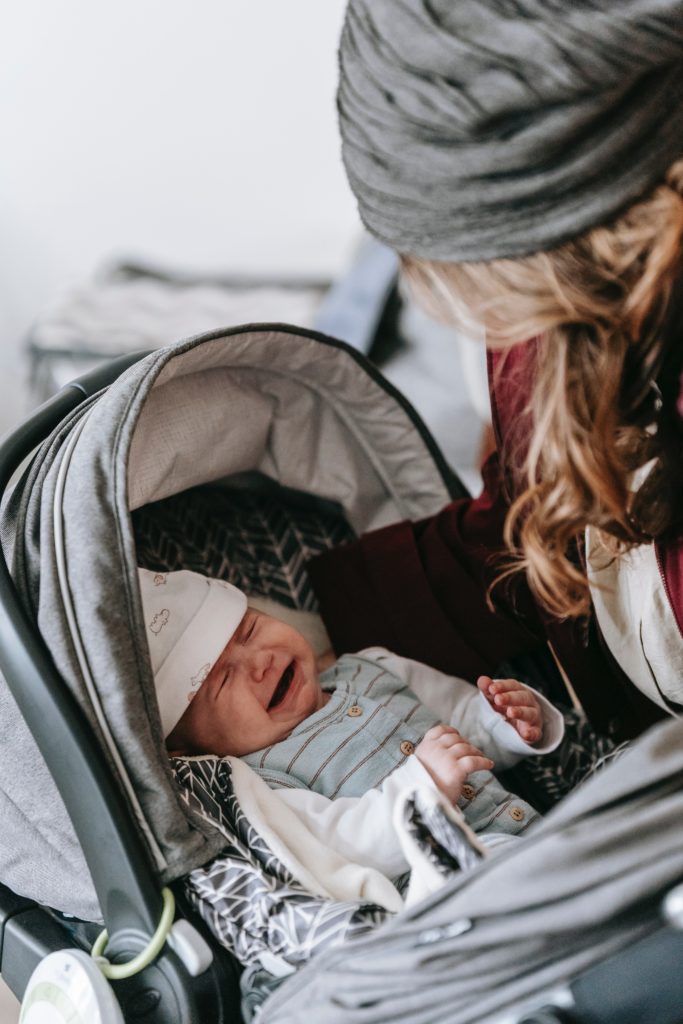
    In addition to the suffering a new mother experiences from postpartum depression, the baby is at risk for lower IQ, increased likelihood of ADHD, slower language development, and increased risk of behavior problems and other psychiatric disorders.

    Indicators for postpartum depression — or risk factors, as we might call them — can be identified and treated to possibly prevent this illness. Psychiatric history before pregnancy, psychiatric illness in the family, depression during pregnancy, along with environmental causes including a pandemic, adverse life events like trauma in a family member, or death in the family, and obstetrical outcomes, including baby’s health at birth, can all increase the risk that a mom could develop post-partum depression (PPD).

    Jill tried to enjoy her pregnancy during the early months of the COVID-19 pandemic. While she had many joyful moments, she also worried deeply about the impact of the pandemic on her baby, and whether she, her husband, or her baby would be infected with COVID. Fear that the coronavirus would cause some sort of damage to her unborn child if it invaded her womb.

    This was her first pregnancy, and she had no idea when she found out she was pregnant that a pandemic was coming. She was 3 months along when read about the pandemic. The news filled Jill with terror.

    Her husband, Jason, wasn’t himself. He was painfully fearful about the pandemic and vented about it all the time. Quite honestly, she wished she had a calm home and calm marriage while she was pregnant.  She’d had a tendency to get anxious for years, and little frustrations at work could really set her off with shortness of breath, sweaty palms, neck, and forehead. Her hands would tremble, and her knees would give way.  

    After a cool drink of water, and the calm reassuring chat with a friend, she could calm down. But until that happened, it was embarrassing.

    So when she started showing these same symptoms during pregnancy, she worried. Jill knew it wasn’t good for babies in utero to feel mom’s panic and tension. She worried her anxiety would impact her baby.

    Unfortunately, as the months went by, her anxiety and panic attacks grew worse. She just tried to keep her nose above water….  Then finally the baby was born.  

    Her doctor admitted her to the hospital to induce labor, and after hours of labor, she became more and more anxious. After she entered the transition phase of labor, the monitor revealed the baby was in distress. The nurse and doctor wheeled her to the delivery area. Their baby was born but was not breathing properly. 

    Jill and Jason felt panic and terror. The respiratory emergency team worked on the baby for 45 minutes then finally took him to the NICU. 

    After 24 hours, the baby was functioning well, and was pink all over. But it was such a traumatic experience for Jill and Jason, and they worried about the long term effect on their baby.

    When they got home it started. The baby cried hard all the time. Exhaustion prevented Jill from enjoying the baby. She was in what seemed a constant state of breastfeeding…without sleep, without peace… and though Jason would walk the baby for hours, Jill still couldn’t fall asleep.

    A visit to the doctor when the baby was nine months old resulted in the doctor explaining that her anxiety was sky high and so was her baby’s.

    The OBGYN referred them to a group therapy directed by a pediatrician. He encouraged a special schedule to retrain the baby to nurse longer and sleep longer.  Within a month the baby was sleeping at night. 

    Jason and Jill began to sleep.  They started to wake refreshed. They were both deeply shaken by the nine months they’d spent with a hysterical baby, and were only cautiously optimistic that it would last.

    Jill continued seeing her therapist by telepsychiatry sessions, and trauma from her childhood began to emerge.

    Jill is continuing in therapy, and learning more and more about the damage she incurred as an abused child

    Over time, she realized that the postpartum anxiety and depression emerged in the presence of stress, and when the stress eased, she found she had access to old wounds and could get help and heal. She learned a great deal during these sessions, and often deeply wept. Jason felt so enlightened, and was so grateful to see his wife healing. It’s a long process, and while she is steadily learning and healing, more continues to emerge.

    Authors of the PPD biomarkers study found that focusing on maternal mental health to treat and relieve illness resulted in mental and physical outcomes for everyone in the family.

    Indicators for postpartum depression present a useful method for noting a pregnant woman at high risk for PPD, and treating her symptoms proactively.

    To prevent PPD, it’s most effective if it is identified before symptoms emerge. That requires identifying the factors that can contribute to the onset of illness.

    Think about the fact that out of every 100 pregnant women, 10-15 will develop postpartum depression. Out of that group, if any of them have risk factors for postpartum depression — such as a history of psychiatric disorder, and are not taking medications — the risk of developing PPD is even higher. In addition, if there is a family history of psychiatric illness, as well as depression during pregnancy, there is a higher risk of PPD.

    Add to that environmental risk factors like socioeconomic status, adverse life events — including the impact of a pandemic, and obstetrical outcomes (like a baby not breathing at birth) or a preterm birth.

    Notice that we spoke of one indicator for postpartum depression being psychiatric illness without medication. One of the most effective treatments for depression and PPD is IV ketamine treatment. With its action to increase brain derived neurotrophic factor (BDNF) to rapidly trigger dendrites and dendritic spines to grow and flourish, and remodel synapses in the brain, ketamine can bring transformation, emotional energy, motivation and initiative, as well as joy to your life. With the renewed joy, you can find you enjoy your baby, and bonding can replace the exhausted, detached feeling you may have had with your baby.

    We must mention here that ketamine isn’t for everyone. It’s a treatment that helps some people dramatically, but not all — and like with so many treatments in medicine, we don’t yet understand why. IV ketamine treatment can bring many people with treatment resistant depression, including postpartum depression, into rapid and extraordinary remission. Chances are it can be transformative in your life.

    At Innovative Psychiatry, we often see women with indicators for postpartum depression achieve remission with IV ketamine treatment. It’s a joyous, hope-filled, new outlook on life and relationships that can give you the energy you need for your husband and children, and your baby. The ‘funny’ thing about ketamine is that it really seems to be most effective with those whose illness is the most severe. It seems to love to show its power in full transformations.

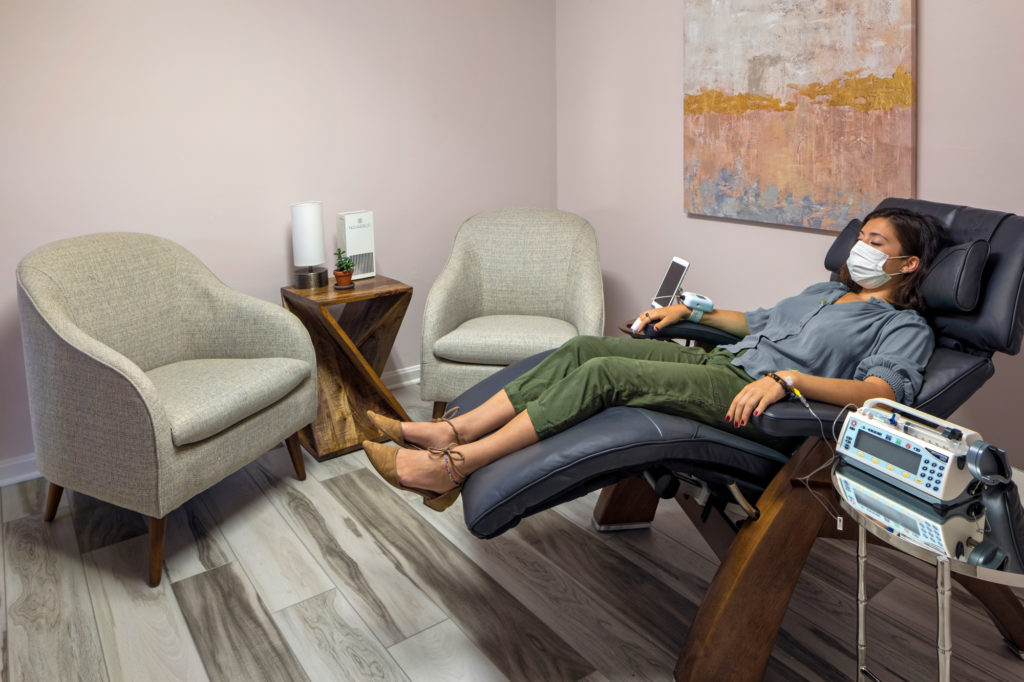
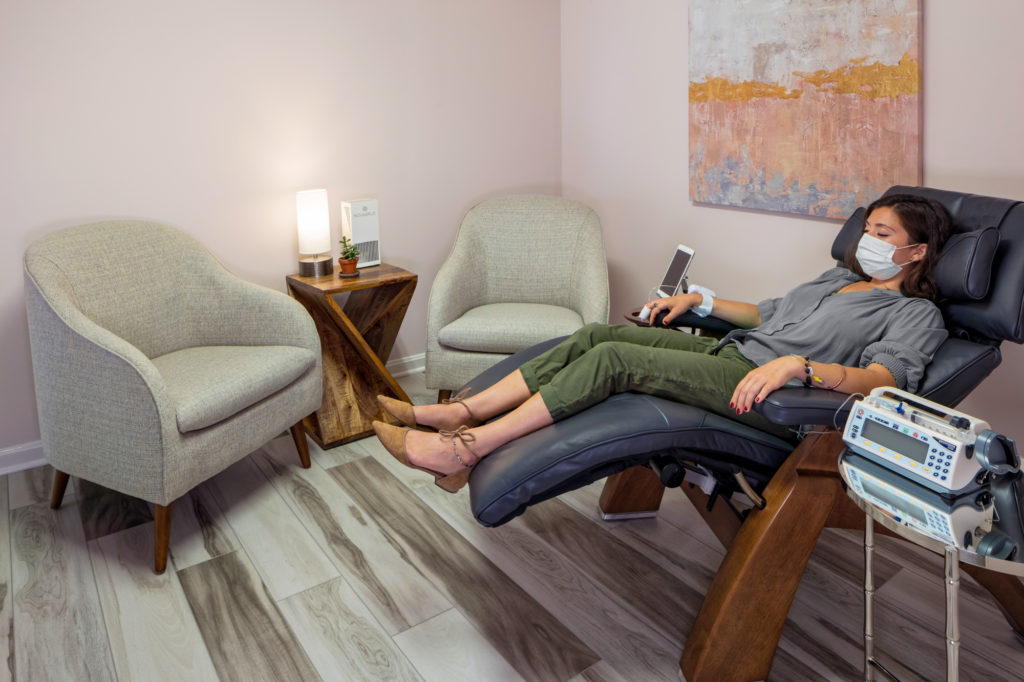
    When you come for ketamine infusions, we’ll meet you at the door and show you to your private treatment room where you can settle in and get comfortable on your recliner designed to help you relax most completely. You may bring your favorite relaxing music and a sweater to stay warm.

    When you come for ketamine treatment, you'll have a comfortable, quiet room to get the most from your treatment.

    You’ll notice an elegant white box inscribed with the word Novaerus sitting on the table. This technology is at work in every room of our practice to protect you from infection of any kind while you’re here. Using plasma cell technology, this process was developed by the Department of Defense and NASA for the Space Station to prevent infection there. It destroys all viruses — including COVID delta, lambda and mu — bacteria, and fungi in the air. (It can even lift Staph aureus from hard surfaces. Amazing!) And our plasma cell technology can keep you safe while you undergo treatment, even during this pandemic.

    This safety allows you to relax, not worry, and focus on your treatment, to get the most out of it.

    We’ve gone the extra mile to ensure you feel safe and free of risk regarding infection.

    Because you need to get better now…and not wait till the COVID pandemic finally comes to an end.

    If you recognize the indicators of postpartum depression in yourself, and you think they might have led to the way you’re feeling now, you can get better, feel like yourself again, and enjoy your new baby.

    Give yourself the extra boost you need to feel joy.

    Lori Calabrese, M.D. is on the front end of the race to stop PTSD in its tracks using IV ketamine treatment.

    To the restoration of your best self,

  • Self-Blaming Depression: Forgive Yourself for Being Human

    Self-Blaming Depression: Forgive Yourself for Being Human

    We often think of depression as being caused by loss. Things like death, or loss of an important relationship, loss of job or status… Sometimes there is a period when everything is going well, then suddenly things begin to go equally badly. You can experience a sort of whiplash that occurs that brings on depression when fulfillment changes to deprivation.

    But there’s another type of depression that works surprisingly differently. Self-blaming depression. In this case, you feel the loss you experience as a form of punishment for your failures. When that happens, it’s harder for you to be supported or comforted, because you’re convinced you don’t deserve comfort or support. In fact, you blame yourself mercilessly

    Celina had been a happy preschooler, confident, expecting others to believe the best of her. She had a spring in her step and joy in her heart until her family moved out of state when she was in 3rd grade. She didn’t feel welcome in her new school, it was hard to make new friends, and she felt her teacher didn’t respect her.

    The sunshine that had filled her life that she had enjoyed in her early years, seemed to disappear and be replaced by deprivation. Oh she had food to eat — but emotionally and socially her young heart withered. A crawling, creeping darkness seemed to ooze around her and inside her. She had no idea what was wrong or what she could do. So she just tried to muscle through.

    Signs of depression mounted within her until by junior high she found it difficult to be in school, and stayed home more and more often. That continued through high school. Seeking to become something more, she married the first year of college… she just so believed that marriage would brighten her life. (It’s supposed to do that, right?) She believed her dreams finally would come true. But the problems of keeping college going in a new marriage was tough on their budding relationship and once again, sunshine was replaced with more deprivation. And depression took over again… leading to suicidal thoughts this time.

    Eventually she was functioning with the help of an antidepressant, which helped. She got good at putting one foot in front of the other.

    Then, came March of 2020, and the COVID-19 pandemic.

    People worked remotely from home, and Celina was no exception. She lived with her small dog. Alone. All that isolation resulted in time to think about all her mistakes and misfires in her life. Month after month. Self-blaming took over her life.

    She didn’t just think about her mistakes a little … or in passing. She thought about her missteps long, hard, and deep. How could she have been so callous? Insensitive? Uncaring? While she hadn’t intended offense at the time, she now was tormented about the pain and hurt she must have caused others. She couldn’t forgive herself.

    Celina knew her situation was like everyone else’s. Her prolonged isolation wasn’t unique.  Every few months she would drive a couple hours to see her family. They had all been diligent about isolation and felt safe to see each other. They were all fully vaccinated and no one in the immediate family had tested positive for COVID. These were good times — but they didn’t happen very often. And her mind felt compelled to chew on self-blaming for her failures to others.

    But here’s the thing. All that time to think led to second guessing all the major mistakes she’d made in life, including decisions that weren’t even necessarily wrong. Certainly work takes time, but  she was dissecting every decision of her life with all the time she had when she wasn’t working. And with each one, she came up short. Shame wrapped around her like a slithering serpent. She finally found it almost impossible to work.

    And with the shame, a creeping darkness filled her like a fog, but so dark and suffocating. For a year or more she couldn’t seem to rise above it, to even breathe.

    She thought about her younger sister, Suzanna, and how Celina believed she’d neglected Suzanna when they were girls, not including her when Suzanna had been lonely. She remembered times when she was impatient with her, intolerant of her quirks …and now Celina had no tolerance of her own treatment of Suzanna.

    In spite of the fact that preadolescent girls cling to friends and private sharing, she could not give herself understanding or compassion for those failures. It was unreasonable to expect a mature, adult type of compassion and support in herself toward her sister, when she had been a preteen herself. But somehow Celina just couldn’t seem to see it for what it was.

    She called her sister and told her how sorry she was for not being a better sister and friend when they were growing up. Her sister appreciated her intent, but knew they had both been just kids and didn’t want Celina to suffer over it. It was long in the past and she encouraged her to let go of it.

    For Celina, that was easier said than done.

    Medications to treat her depression that had worked for her in the past were just not working for her now. The depression was unrelenting. Period. It consumed her. The shame she felt for being such a selfish person threatened to eat her alive.

    Do you torment yourself for your past failures?  Maybe mistakes you made in adolescence… or in your relationships… or your marriage?  Maybe in your childrearing? 

    For Celina, it was as though her compassion turned against her. Her compassion for her sister, when she’d been insensitive to her, was far greater than any compassion she had for herself. The shame threatened to swallow her up.

    That self-blame was profound. And penetrating.

    Celina needed to decide to forgive herself, just for being human. She needed to stop self-blaming… and start self-nurturing.

    Yes.

    It’s not hard to imagine how such deep depression created its own stress, combined with the stress of isolation, the pandemic, and her own self blame. That stress wears down synapse connections that create a network for signals to travel around the brain. To restore resilience and remission requires that those synapses be fleshed out again so that the network is in full function — so that you can flourish again.

    And that can happen with IV ketamine treatment. It has for so many. When mRNA triggers DNA to release BDNF (brain-derived-neurotropic-factor), those synapses sprout like crazy, and like oak trees branch out in every direction, proliferating connections. And those connections can light up your emotions, giving you energy and hope…and the power to build a rewarding life.

    Self-blaming depression is deeply stressful, and can be difficult to treat by traditional means, but IV ketamine treatment has the potential to restore the connections needed to get your brain working properly again.

    You can turn that self-blame to self-compassion with IV ketamine treatment and practicing kindness toward yourself.

    If that sounds exciting — if these symptoms sound familiar, and nothing you’ve tried has helped — just call us.

    Self-blaming depression is self-defeating. But you can turn it around and enjoy your life again.

    We’d love to help.

    Lori Calabrese, M.D. is on the front end of the race to stop PTSD in its tracks using IV ketamine treatment.

    To the restoration of your best self,

  • Adults Bullying Adults Is Harmful and Threatening to Their Health

    Adults Bullying Adults Is Harmful and Threatening to Their Health

    Heard of adult bullying? Heard of adults considering suicide as a result?

    We often focus on bullying of children in school, which is life threatening for some children, but did you know adults bullying adults can also be a serious threat to the health and wellbeing of those adults?

    Gina is an economics teacher at the local high school. She’s a team player and is always ready to drop what she’s doing to work at a project for the common good. Unfortunately, the shop teacher works closely with her in preparing students for artisan livelihoods after high school, so they need to get along.

    However, the shop teacher, Frank, is far less committed to the idea of getting along, and far more invested in getting his way.

    This made for some miserable days.

    One day Gina was in her classroom after hours, grading papers, and Frank came storming in, shouting. Frank wanted a workshop for combining shop projects with instructions on economics to show the students how to market and sell their wares. But he was planning it for a Friday when Gina’s class was presenting their projects — in costume — in preparation for a test. 

    Gina didn’t want this special day disrupted, but Frank wouldn’t consider a different date. He wanted it his way without argument. So he yelled.

    Then, his yelling became peppered with derogatory remarks aimed at Gina.

    This wasn’t the first time their communication had descended to this level.  Every time Frank had a similar meltdown, Gina tried to reason with him, and all too often she had given in and let Frank have his way to maintain peace.

    But this was affecting Gina’s health. Her blood pressure had become difficult to control, and honestly, she was losing her joy for teaching. Every day was such a battle. 

    She approached administration. And long story short, they said to ignore Frank.  Not so easy, that’s for sure. Gina didn’t like to stir up conflict, and fighting with administration just seemed futile.

    Gina needs this job. During the pandemic, it’s not easy to quit and get another good teaching job. She had worn herself out using every interpersonal skill she could muster to come to compromises with Frank.  Last week the doctor told her she has an ulcer developing. She’s always internalizing the conflicts with Frank.  What’s she supposed to do?

    Now, she’s run down from dealing with Frank…from compromising at the cost of her own students’ welfare.  She’s thought about changing jobs, but she just doesn’t have the energy for it. She’s tired of trying so hard. Lost her fight for confrontation. And she’s begun thinking about a way to be rid of all these problems… not that she’d do anything drastic.  …or would she? She has to find a way to get away from Frank.

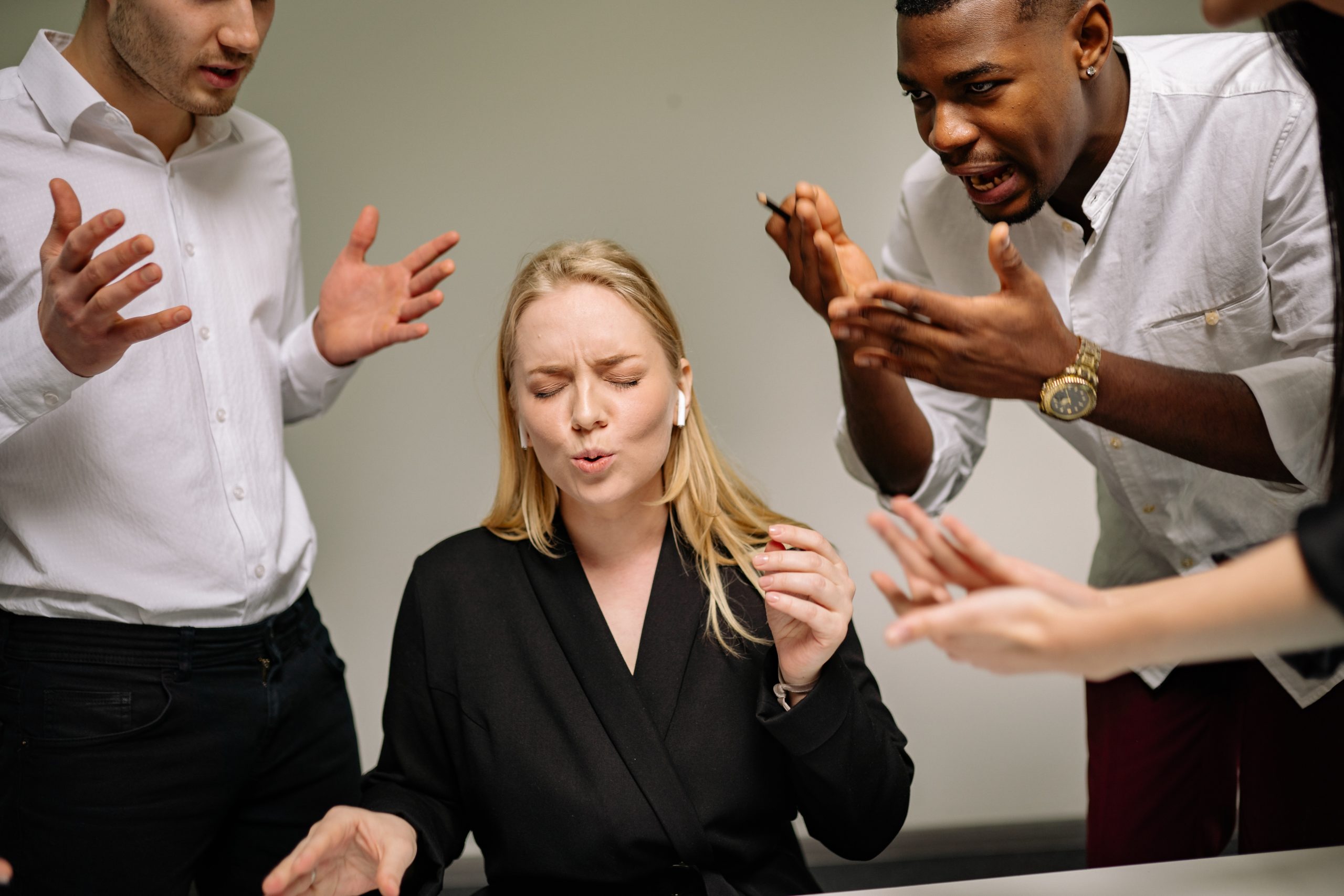
    The trouble with adult bullying is that adults try to solve their own problems. When they do, sometimes the crisis turns on them, with migraines, ulcers, and blood pressure problems. Sometimes it can be even worse with suicidal thoughts and actions. If they do report the behavior, they’re often told to ignore it and it will resolve itself…or they’re told to work it out with their coworker. But…when dealing with a bully, that rarely brings a solution.

    Have you ever worked with a toxic coworker?  Have you, an adult, been bullied by an adult? 

    It’s easy to consider someone who isn’t all that pleasant, as being toxic…or a bully. But is that always the case? So how do we define a bully? The APA describes bullying as an aggressive behavior that intentionally and repeatedly causes another person harm or discomfort. And when the aggression intimidates, demands, and demeans, harm is the result.

    Some people find it so difficult to cope with this ongoing demeaning that they internalize the rage they feel… and seek a way of escape.

    Bullying should never be ignored.  

    If you are being, or have been, bullied at work or at home, steps should be taken to make you safe. 

    And…if the ongoing mistreatment has resulted in depression that doesn’t respond to other treatments, IV ketamine treatment may be an effective option for you. 

    Sometimes depression can lead to thoughts of hurting yourself, especially if the circumstances scream for escape. If that happens, take action right away to stop those thoughts. One action you can take is to reach out for IV ketamine treatment to stop suicidal thoughts. To keep you safe, while you seek further treatment for safety to avoid injury or harm.

    Of course, IV ketamine treatment won’t stop bullying. You have to do that. But ketamine treatment can restore your ability to come up with creative solutions, and the resilience you need to do that. It isn’t for everyone. But the percentage of people it helps is so high, that chances are it can be transformative for you.

    When we work together to restore your resilience through IV ketamine treatment, your options can open up again. The restored creativity you experience can help you make decisions that strengthen and improve your life. That trapped feeling can dissipate, and be replaced by new hope. 

    If you’ve been experiencing symptoms of severe depression, bipolar depression, PTSD, social anxiety, substance or alcohol use disorders…or if you’re experiencing suicidal thoughts, and nothing you’ve tried has helped, call us.

    We’re here at Innovative Psychiatry to help you get your life back on track by restoring hope and resilience through ketamine treatment.

    Lori Calabrese, M.D. is on the front end of the race to stop PTSD in its tracks using IV ketamine treatment.

    To the restoration of your best self,

  • When Your Brain Won’t Work, Can Ketamine Improve Cognition?

    When Your Brain Won’t Work, Can Ketamine Improve Cognition?

    What can you do when cognitive function skids to a slow crawl… how can you restore it?

    Nelson clattered along the path that followed the lake. His shoes were loose and slapped the ground with each step. He could have stopped to tie them on more snugly, but who cared? He was frustrated and too tired to carry about his shoes. How to fix his situation? When your brain won’t work, can ketamine improve cognition?

    He’d been really down for months now, but life had to go on. School had to go on. What could he do — tell them he wouldn’t be coming for awhile because he was ‘downa’?  Sounded to him like a great way to get a bucket of zeros.

    But it was hard. He couldn’t think of answers to things he could normally answer or even figure out things he could usually figure out. He felt like a genuine nubster. Like gum you chew and chew and spit out, and there it is a sticky blob on the ground.  Like that. Useless. Unsightly. 

    What do you do when your brain won’t work? He talked to his doctor about it last time he had an appointment. She said this was not an unusual thing to happen when you’re depressed. Okayyyyyy…but NOT HELPFUL.

    Even if it was true, he needed a solution. Something that would get his mind working for him, rather than against him.

    He walked home with a guy, Roger, who also was seeing a doctor for depression. Nelson decided to talk to him about it and see if he could relate. Anyway, it was nice not having to pretend everything was fine. When they didn’t feel like talking, they didn’t.

    “Hey man.”

    “Hey man, what’s up?”

    “Is something up with school? …or I mean, it seems harder right? Maybe I’m off or something. Like… can you keep your grades up?  Because I’m having a harder time thinking than I did before this year…and my grades are dropping…”

    “Yeah… I’ve had a harder time than before. I talked to my doctor about it…it’s just one more thing to be depressed about, and to feel bad about. One more reason to feel like a failure. Anyway, my doctor talked to my parents and they started talking about IV ketamine treatment. I’m getting it now. Twice a week.  I can’t say the change is instant and magical, but I can say the depression is definitely getting better and the problem with thinking is improving, too.  I’ll let you know how it goes…”

    “IV ketamine. Hmmm. Maybe I’ll talk to my parents about it. This feeling that I’m not smart anymore is really kicking me in the gut. I already feel like a failure and this is making it so much worse.  Thanks man. Keep me up to date ok…?”

    “You bet. I should tell you that ketamine doesn’t just help the thinking problem. It can give you the feeling that you can accomplish what you want to accomplish…like you have confidence.  And hope…. Plus all those feelings of self-criticism, self-hatred, beating yourself up….? That stuff calms down and gets quiet. And it helps you want to get stuff done that you need to do.  Hard to describe, but it’s helping me. A lot. I have one more week of treatments left.”

    Ketamine.  IV ketamine.

    So here’s the thing. Major depressive disorder affects more than 16% of people in  their lifetime. And among those, nearly 40% of those patients have cognitive dysfunction. That means they experience impaired memory, decision making ability, and problem solving. 

    One weird word you don’t see much anymore — but is at the root of “cognizant” is — cognize. And that’s what you need to do, but it’s hard to do when you’re depressed. It’s hard to cognize… to grasp, fathom, pick up on things. You may be cognizant that you’re not keeping up. That you’re making mistakes. That problem solving and figuring things out has become harder and harder. Making decisions is harder and harder. But to be able to “cognize” effectively is important. And that’s where “cognitive” comes from.

    Cognitive function is the most impaired function as a result of depression, and it’s also the function most improved by ketamine. What a relief! There’s hope!

    A research team led by Anna Stippl used the Beck Depression Inventory – II, or BDI-II, to measure depression severity in a group of 47 participants just last year. The BDI-II is one of the most widely used tools used for this. They divided into three categories the elements of the inventory: Cognitive, Affective, and Somatic. 

    And it turns out that IV ketamine treatment can improve cognition. In fact, the largest reduction in symptom severity following IV ketamine treatment in those categories was in the area of cognition. 

    So, while IV ketamine treatment reduces Roger’s depression symptoms of lethargy, hopelessness, despair, and wanting to give up…. It also helps his cognition: ability to make decisions, problem solve, find solutions, and set priorities.  And it also relieves the body aches, listlessness, lethargy, and lost feeling that seemed to dominate Nelson.

    In fact, improved cognitive function has been reported after a single ketamine infusion — yep! — as well as following a series of ketamine infusions.

    What about ketamine causes the positive effect ketamine has on cognitive function? 

    While there is no easy fix for major depressive disorder, and the cognitive impairment that can go with it,  IV ketamine can provide dramatic change in cognition, outlook, behavior, and hope.

    When you come for ketamine treatment, you'll have a comfortable, quiet room to get the most from your treatment.

    You may think that the purpose of ketamine is to just help you feel better. And it is — though that’s an oversimplification. Because these areas of cognition, mood, behavior, and physical symptoms like body aches, all play a role in how you feel and function.  Ketamine helps so much more. It helps when your brain won’t work, ketamine can improve cognition…and make you better on many levels.

    IF you have symptoms like Roger or Nelson, and nothing you’ve tried has helped….call us.

    We live and work to help you experience relief from your symptoms, like cognitive function, sadness and despair, and listlessness, lack of energy and hopelessness.

    You can reach out for hope, better performance, and freedom to pursue the rewarding life you long for.

    Lori Calabrese, M.D. is on the front end of the race to stop PTSD in its tracks using IV ketamine treatment.

    To the restoration of your best self,

  • Seasonal Affective Disorder: Feeling SAD Lately? There’s a Reason for That

    Seasonal Affective Disorder: Feeling SAD Lately? There’s a Reason for That

    It’s that time of year again. The holidays and parties and celebrations are behind. We’re left to clean up the mess, pay the bills for what we spent…. And try to avoid falling into depression.

    That’s right. January is often considered the most depressing month of the year. And actually there’s a reason for that. And that’s not your imagination. Through the holidays the days kept getting shorter, the dark looming earlier in the evening, sun setting during what feels like the afternoon, and rises after you start work. We need sunshine to feel good, healthy, and to enjoy wellbeing. But it’s not as available this time of year, is it?  Even during the day when the sun is up, and you’re working, it’s often cloudy, gloomy, and you have to slog through snow or rain. Seasonal affective disorder, feeling SAD at this time of year, may be the culprit for your flagging emotions and energy.

    This infringement on our daylight takes its toll.

    Beverly looked at her watch. The time was dragging by. Only 40 minutes had passed since her workday began. Surely it had been hours. Only 40 minutes?? She felt so heavy, so groggy. If only she could lie down and close her eyes for a bit. This was torture.

    She knew she was supposed to be working on the team project but she just couldn’t seem to concentrate on it. As much as she researched…she read and read… she wasn’t getting anywhere. So she searched for more to read. And read…

    Finally, Beverly said, “Enough.” 

    She dragged herself out of her chair and walked to her car to get a reference book she’d left there that morning. She needed to walk a bit to wake herself up, so this was a good excuse.

    But the worst of it was that she didn’t feel like doing anything. Her mind seemed numb. What do you do when you feel like a nub. Not accomplishing anything, devoid of interest or creativity, without energy to invest in the team’s outcomes. This was her job, for heaven’s sake! She wasn’t getting paid to doze, or stare into space! Seasonal affective disorder, feeling sad and tired, was draining her outlook and her ability to do her job.

    It was January, and she’d been out of it, not feeling anything useful inside herself, since November. 

    To make things worse, she wasn’t sleeping very well at night. Then, every day it was all she could do to keep herself awake enough to get through the day. Talk about days and nights being mixed up!

    The hours finally passed and it was time for her to take her lunch break. She carried her food into the lounge and rifled through the newspapers and periodicals on the table. Across the top of one, a headline seemed to burst to capture her attention: “A Way Out of Seasonal Depression”… so she scanned the article while she ate. 

    Beverly learned some things she found eye-opening. Seasonal depression is a state of depression brought on by too little sunlight during this time of year. The article said that when daylight savings time ends in the fall, it starts getting dark earlier, because sunset begins to occur an hour earlier every day. 

    To make things worse, the shorter days combined with earlier sunsets mean that many of us get very little sunlight, if any, after work. Then, add to that, the inclement weather that’s so common, and — due to rain and snow — the sun doesn’t shine as much on us as it does the rest of the year. 

    Plus, the farther away from the equator you are, the shorter the days.

    She also learned that Vitamin D is a hormone…that’s right, a hormone… that is reduced when there is less sunlight available.  In fact, they think that more women suffer from seasonal depression …or seasonal affective disorder…because of changes in estrogen levels. 

    She learned that Vitamin D is important to nearly every chemical process that takes place in the body. When Vitamin D is deficient, it’s easy for depressive symptoms to emerge.

    She also learned a lack of sunlight can cause too much melatonin to be produced by the pineal gland. When there is too much melatonin, you can get sleepiness, grogginess, and lethargic lack of energy and stamina. Melatonin regulates the sleep wake cycle, and when there is too much, alertness suffers.

    Maybe that also explained the change in her circadian rhythm. It turned out that there was more to the lack of sunlight. That it causes an uptick in serotonin transporter activity. Add that to the increased melatonin and the result is disrupted circadian rhythm… that sleep wake cycle that forgets when you need to sleep and when you need to be awake.

    Beverly was so relieved to learn there were things she could try to relieve her horrid depressed melatoninised, groggy condition. (You heard right.) For one thing, she went to a vitamin store and picked up some high dose vitamin D3 to try to replace her deficiency. She also started a routine of riding her stationary bike at home before work in the morning, in hopes the extra activity would help her feel more productive.  

    And she learned about using phototherapy, which would give her an artificial form of incredibly bright light — 10K lux of brightness — without any ultraviolet light — to replace what she was missing this time of year. That it was the brightness that was important, not the claims about “full spectrum.” She could see that it was best to use it in the morning so her normal sleepiness in the evening could do its job. She was hopeful that combining the light with exercise in the mornings could get her system off to a better start.

    In all, the steps Beverly took weren’t exactly transforming, but they did produce some improvement to help her get through the SAD time of year.

    She knew she’d feel better when Spring took hold with sunshine, warm breezes, and blooming plants all around.

    What about you?  Do you struggle with seasonal affective disorder…feeling SAD…this time of year? Does seasonal affective disorder sneak up and drain you around November ?  Or…if the holidays help you cope with the doldrums until January, do you feel like the rug was ripped out from under you in January?

    If the tips that Beverly found don’t help, what can you do?

    Weight gain or weight loss can occur, social withdrawal, crying easily, difficulty concentrating, and suicidal thinking can be problems.

    Like any form of depression, suicidal thinking is a potential risk and is dangerous. The solutions Beverly found may be effective for you, but if it’s not and if you endure suicidal thoughts, ketamine treatment is an effective way of removing those dangerous thinking patterns. It can allow you to seek more effective treatment.

    In fact, we conducted and published a real world retrospective study that showed that IV ketamine treatment is incredibly effective in our own clinic, in a lovely outpatient setting, in stopping suicidal thinking in a few hours. It can save you a trip to the ER, and help you avoid hospitalization. It could save you life.

    Literally.

    This is a lifesaving function of IV ketamine treatment that’s separate from its effectiveness with severe depression, PTSD, social anxiety, bipolar depression, substance and alcohol use disorders. Let’s say that again.

    IV ketamine treatment can save lives by stopping suicidal thoughts.

    When you come for ketamine treatment, you'll have a comfortable, quiet room to get the most from your treatment.

    There is so much good news about what ketamine treatment can do that it drove me to open an additional segment of my practice just for treating people who suffer from things like social anxiety that keeps them from interviewing for jobs or building families. People who suffer from bipolar depression, which impairs function to the point it’s devastating. Or people who suffer so severely from PTSD they can’t work, build relationships, or carry on a rewarding life. There is so much IV ketamine treatment can do. AND it saves lives.

    We want to see you achieve remission. We want to see you build a rewarding life.

    If you struggle with symptoms of depression or these other conditions, call us.

    For years, we’ve watched people come in depressed, anxious, overwhelmed…. and after they’ve received IV ketamine treatment, so many emerge after a few treatments full of hope, resolve, confidence, and freedom.

    You can have the same joy of remission, too.

    Reach out for a brighter change. We’re here to help.

    Lori Calabrese, M.D. is on the front end of the race to stop PTSD in its tracks using IV ketamine treatment.

    To the restoration of your best self,
    .      

  • Our Response to “I Took Ketamine for Depression. Things Got Pretty Weird.”

    Our Response to “I Took Ketamine for Depression. Things Got Pretty Weird.”

    Why did it get weird? Is that an indisputable element of IV ketamine treatment for depression? We respond with a resounding NO!

    (article from The New York Times, 12/26/2022)

    Every once in awhile, someone publishes a first-hand account of their experience with ketamine as a treatment for depression. (And it goes viral because….well, it’s just so interesting to see what it’s like.) We wrote a blog responding to a first-hand account way back on July 30, 2017 (we’ve been blogging about ketamine for years!) and back then, we were responding to an article in TIME magazine.  Today, let’s chat about a piece in The New York Times (and we’ve done that, before, too!), from December 26, 2021, and the good, the bad, and the ugly experiences that can happen during ketamine infusions. Let’s really talk. Here’s our response to “I took ketamine for depression. Things got pretty weird.”

    In the New York Times article, “I Took Ketamine for Depression. Things Got Pretty Weird”, writer Vanessa Barbara describes her experience with IV ketamine treatment for her depression, which she received in Juiz de Fora, Brazil. 

    A splashy title like that draws a lot of attention — from those who are familiar with ketamine treatment, people who are just curious about it (because it’s all over the news), from doctors, medical experts, business people…. Just about everyone’s been hearing about and reading about the renaissance of psychedelic research exploding in the US and around the world for the treatment of depression, anxiety, trauma, and substance abuse.

    Many people reading first-person accounts of ketamine treatment for depression haven’t received it themselves. So they’re interested in learning all they can.

    The fact is that there’s such a wide variety of patient experiences when ketamine is used in treating psychiatric conditions because there are so many different settings in which it is currently offered, such varied approaches to it in terms of patients and the symptoms they hope it will help, so many ways to prepare for and integrate the treatment experience…. and such a wide range of administration.

    And a negative experience can have to do with the rate of the infusion, the size of the dose, the consistency of flow, the comfort or discomfort of the setting, and even your mindset as the infusion begins…

    There is so much more to the the treatment–and to the experience and your response to it–than just getting the medicine from an IV bag into your body.

    (More on that later because we don’t even use IV bags.)

    Ketamine is recognized as extraordinarily effective for severe depression that hasn’t responded to other treatments or medicines. But the way you might feel during the treatment itself can be hard to predict.

    Since Ms. Barbara’s description pertained to her experience with IV ketamine treatment, let’s focus on ketamine administered intravenously.

    Not all IV experiences with ketamine are equal. For example, just to start with mechanics, if the rate of the infusion is controlled by a precise intravenous pump, ketamine reaches the brain at an even, controlled rate. But if the infusion is monitored and controlled by hand, adjusting a wheel located on the tubing from a hanging bag, the flow of medicine may speed up too fast. And that can result in too much medicine too fast, yielding an upsetting acceleration of ketamine’s effects. 

    When the rate is determined by the thumb on a wheel, a patient can be overwrought. (….or if the cannula inside the vein changes position, the flow can slow.)  A precision pump can ensure a smooth, consistent flow of medicine, and enhance the experience. That’s good, right?

    But the ”right rate” for one person may be too fast for another.

    Or the starting dose for one person may be too much for someone else.

    And — so importantly — there are many ways your own mindset can influence your experience during ketamine treatments and during other psychedelic treatments coming down the road. The dissociation during an infusion can sometimes feel overwhelming because you’re anxious, sensitive, or afraid to experience a non-ordinary state of consciousness. Because it’s not going the way you expected or the way you’ve read about.

    Sometimes the dissociation you feel during an infusion is a little nebulous. Not clear. There’s not a story line. There’s no colors. Things feel strange and unreal but without a clear meaning that you can piece together. You feel gypped–how come everybody else gets blissed out and you don’t? Maybe you’re stuck obsessing and the one thing you need to get out of your life and away from is right there, front and center, during your infusion. (That can be so maddening.) Maybe you’re riled because you had a fight on the way in. (Which is so bad for you, by the way–try to avoid that!) Or maybe, the whole experience is just so strange that it seems like you don’t have any thoughts…. You might feel so out of your body that you’re not sure you’re even a person.

    And this is supposed to HELP you? Really??

    Really.

    Even someone who’s had a negative or challenging ketamine experience can get better and go into full remission. But they’re going to need a little help making sense of how and why it happened…. discerning the meaning and the message…. and integrating that experience so that they can come out on the other side of it and move forward.

    Positively, Creatively. With a new narrative.

    Then consider the problem Ms. Barbara experienced when her partner joked with her and she suddenly thought her daughter was 15 and not 3.

    Words spoken to you when you are deeply dissociated during a ketamine infusion may sound intense, or far away, or frightening because they interrupt you and pull you back into the room, and the dissonance can be…. jarring.

    Before and during your infusion, your mindset and the treatment setting itself help shape the experience.


    Ours is pretty gorgeous, by the way.

    We value the importance of set and setting. Preparing yourself emotionally for your treatment is critically important (and we’ll help you with that!). And making sure that the setting is private, soothing, safe, and that you feel like you have the time you need to come back into your body, and ground yourself at the end. We keep things safe, quiet, meticulously clean…. and soft, warm and inviting.

    During ketamine treatment, you are open and vulnerable.

    It’s easy to misinterpret a kind word or light humor…to think your 3 year old is suddenly 15 and you’ve missed her life.

    We don’t want anything to intrude that triggers stress for you — from disruptive conversation, to joking, to cell phone calls —because it can undermine what can be an extraordinary experience.

    Ms. Barbara spoke of pleasant music. And she was on to something important. We encourage you to bring in instrumental music to listen to during your treatment — music without words reaches you without engaging you cognitively to think about the words in the lyrics. The rhythm and flow of music that you find beautiful can help shape your experience. And we work with ketamine integration therapists who can provide special music tracks specifically for each infusion.

    And a final point. Ms. Barbara signed up for 6 infusions. But experience has taught us that 6 infusions sometimes aren’t enough. In others, it may take a few more. To make this decision requires evaluation of the whole patient and their response to treatment.

    Some people reach remission after just 4 infusions, like the lovely young woman we treated with severe anorexia. Her response was so dramatic, she made a video about it. Others need 8 or 9, and then they turn around dramatically. Imagine the disappointment she experienced when she was not better after 6 infusions if 8 might have done the job?  

    Sadly, there are severely depressed people in the US and around the world who received too few infusions and gave up. They believe ketamine didn’t work for them and won’t work for them in the future. And maybe it won’t. It doesn’t work for everyone.

    Ms. Barbara’s experience is a good example.

    It might be very different if you are given a different approach—preparation, attention, and integration of the infusion experience.

    Let’s be clear. Ketamine treatment is not for everyone. It truly doesn’t help everyone who tries it. But it does help a high percentage of those who need it. Still, for some people it just takes more to achieve the relief and joy they wish for and need. And Ms. Barbara — and thousands like her — has no way of knowing if ketamine is not for her, or if another couple of infusions might have helped her achieve remission and the joy that goes with it?

    There is so much more research we need.

    Our goal is to get you back to your best self, to see you thrive, connect with friends, bubble over with gratitude for the gifts you have in your life.

    We love that. We’ve seen it happen with people we treat. And we know to respect the medicine and the differences in individuals… to administer the medicine and titrate it to work.  

    This is not a one-size-fits-all medical treatment.

    You can find ketamine treatment in clinics, hospitals, and private practices. My private practice is Innovative Psychiatry, and we’ve worked for decades to use innovative methods to help people get better. We never stop learning. And we back everything we do with research and evidence-based outcomes.

    When you come for ketamine treatment, you'll have a comfortable, quiet room to get the most from your treatment.

    When I learned what ketamine could do for my patients I began offering ketamine treatment several years ago for those who were candidates. And we’ve seen exceptional results from our work.

    We continue to go the extra mile, and bend over backwards, to care for our patients through the process.

    If you suffer from severe depression, PTSD, social anxiety, alcohol and substance use disorders, or suicidal thoughts, call us.

    Ketamine can make such a transformative difference in your life. 

    Give yourself the opportunity to find out what remission is like for you.

    Lori Calabrese, M.D. is on the front end of the race to stop PTSD in its tracks using IV ketamine treatment.

    To the restoration of your best self,
  • Say My Friend, How’d You Sleep Last Night? Sleep Disturbances and Psych Disorders

    Say My Friend, How’d You Sleep Last Night? Sleep Disturbances and Psych Disorders

    Your answer to that question could quite possibly be a hint to your mental health going forward. 

    Why? Generally, because the more early indicators we can identify and treat, the better the outcomes we see by catching symptoms early… before they turn into real problems. In fact, the more indicators we can identify, the more psychiatric disorders we might be able to prevent from blooming. Sleep disturbances and psych disorders often present themselves hand in hand, with sleep disturbance often being the first sign of a troubled mind.

    Sam was 9 years old, and had shown signs like sleep walking. He would come into the living room where his mom usually decompressed at the end of the day after children were in bed. He would begin talking to her and not making much sense, eyes open and bloodshot. It didn’t take long for Mom to realize he was asleep.

    Sometimes his mom would walk by her son’s room and hear him talking. Often, she stopped in to ask why he wasn’t aslee., But she quickly realized his talking was while he slept..  She would gently wake him up, then soothe him back to sleep.  Other times, he would walk into the living room talking …again about something she didn’t understand. His eyes would be open, and he would answer direct questions, but he didn’t seem to understand himself what he was saying.

    In these instances she could gently walk him back to bed and he would willingly go with her, then get back in bed and seemingly go back to sleep.

    What was this ?

    Because sleep disturbances like insomnia are so often associated with psychiatric disorders, researchers look at insomnia as a possible predictor of new cases of depressive disorder. Insomnia is a disorder with ongoing problems associated with going to sleep or staying asleep that affect daytime functions.

     Researchers include daytime and nighttime symptoms to determine whether individual cases were significant.

    But there’s more to sleep problems than just insomnia.

    Like what?

    Parasomnias — Unwanted physical experiences with behaviors that occur while going to sleep, during sleep or awaking from sleep. Easily confused with psychiatric disorders, think of these as out-of-the-ordinary motor or emotional behaviors. (And know that they’re sometimes misjudged as symptoms of abnormal waking experiences.)

    Marcy could tell she was waking up, but she couldn’t seem to open her eyes and sit up.  A demon was chasing her, reaching out to tear off her legs by grabbing her ankle… but she managed to break free and keep running over and over. She knew should could wake up and kept telling herself to wake up…but it wasn’t working.  Then a dark, sinister shadow passed over her and she could feel her legs being pulled off….and suddenly Marcy woke terrified. She couldn’t tell if she was awake or asleep…she couldn’t tell if the dark fog was still ripping her legs off or if it was gone.  So she cried hysterically…then little by little began to realize she was actually awake…and safe. Marcy sat up suddenly and cried each time this happened.

    Nightmare disorder (formerly labeled dream anxiety attacks) — this is distinct from non-REM (NREM) sleep terrors. These are repetitive, extremely long lasting and upsetting, dreams that are easy to recall. They threaten survival, security, and physical well being in the dream state. They occur during the second phase of the sleep cycle. Dreams like this may be herald signs of comorbid sleep disturbances and psych disorders that lie ahead.

    Sydney has experienced odd times when he felt unable to move when first waking up. He felt he was floating above his body, and either his body wouldn’t move or he didn’t care if it moved or not. Sometimes he felt as thorough he must not be awake yet..that maybe he is still partially asleep…or that he had just awakened and his muscle control had not yet returned. In most cases, it slowly returned to normal…so he convinced himself that the key was patience.

    Recurrent isolated sleep paralysis.- sleep paralysis associated with the deficiency of usual or expected tone in the muscles, when sleep has become dissociated. It can intrude when you fall asleep or it can persist as you wake. Experienced often as discomfort-causing or frightening. And more common than you think. The prevalence of this type of sleep experience is between 2.3% to 40%

    Somewhat bizarre experiences like these play a role in countless people’s livesand they’re often never investigated or treated.

    It’s believed that these experiences may serve as alert for possible psychiatric disorders, and while it’s true that the symptoms can give way to psychiatric disorders, that doesn’t mean that they always do.

    Still there is much to be said for seeking psychiatric evaluation to open up the opportunity to treat a disorder early and hope for faster effectiveness. 

    In the cases listed here, Sam was eventually diagnosed with Bipolar 2 disorder, Marcy was diagnosed with severe adolescent depression, and Sydney was treated for severe adult onset depression. These diagnoses were given years after these sleep aberrations first appeared. (And of course, their names have been changed to protect their privacy).

    At Innovative Psychiatry, we talk with patients every day about their sleep. It’s true that sometimes sleep disturbances are a part of a disorder, and require treatment. Identifying and treating depressive symptoms with IV ketamine can rapidly resolve sleep disturbances — even if the first treatment sometimes keeps people up a bit that night going over their experience, and digesting it. Ketamine treatment can be effective for both major depressive disorder as well as sleep disturbances, and we’re going to be talking about that here in greater depth soon.

    Get ready to her about some great science in the next few weeks.

    Since sleep disturbances often accompany depression, by treating depression symptoms, the sleep disturbances often resolve as well.

    And IV ketamine can help make that happen.

    When you come in for treatment, we’ll meet you at the door and lead you to your private and pleasant treatment room. You’ll be monitored comfortably with state-of-the-art equipment. Your dose and rate will be precisely meted out by a state-of-the-art IV pump. You can bring your own soothing music to listen to in your heated zero-gravity leather recliner.

    We want you to be utterly comfortable to get the most out of your treatment. You may notice an elegant white box on the table that uses plasma cell technology to destroy the DNA of all viruses, bacteria and mold in the room. In fact our clinic was the first ketamine treatment center in the US to use plasma cell technology to constantly destroying pathogens to keep you safe and free from infection. Developed by the Department of Defense and NASA, this technology destroys 99.99% of all pathogens in the air you breathe.

    IV ketamine treatment is the most precisely controlled form of ketamine administration because we can absolutely customize and adjust every aspect of your experience–before, during, and after infusion–to help you get better. No other outpatient psychiatric treatment has ever been so rapidly effective against depression, social anxiety, PTSD, substance and alcohol use disorders, or suicidal thinking.

    Give yourself the best advantages for getting better, without an ER visit or hospitalization. CALL US.

    Make 2022 a new beginning for you.

    Lori Calabrese, M.D. is on the front end of the race to stop PTSD in its tracks using IV ketamine treatment.

    To the restoration of your best self,
  • Taking a Closer Look at Neuropsychiatric Discoveries About COVID from 2021

    Taking a Closer Look at Neuropsychiatric Discoveries About COVID from 2021

    As we look back on the discoveries of 2021, we find a collection of enlightening, if somewhat troubling, information.

    Not surprisingly, there was a wealth of research to better understand, and fight, COVID-19 in 2021. For instance, the coronavirus’ impact on the brain and theories for how it gets into the brain, have created shocking revelations. Neuropsychiatric discoveries about COVID give us information for more effectively fighting this invasive coronavirus.

    The current pandemic has presented challenges the likes of which defy memory. The terrible Spanish flu pandemic from the early 20th century lasted for approximately two years. 

    Since we’re looking down the barrel of a possible third year from COVID-19… or longer….we continue to research this illness to understand how it does some of the things it does.

    We were introduced to COVID as a respiratory illness that eventually led to respiratory failure in some patients. That was especially true in those older or with compromised immune systems…or underlying illnesses. And it still is. But at this point, we’re especially concerned about the effect it has on the brain.  Neuropsychiatric discoveries about COVID are vital in this pandemic.

    Illnesses involving the nervous system and psychiatric symptoms are causing researchers to focus on brain damage caused by this virus. Things that have been prevalent are cognitive and attentional symptoms that manifest as brain fog. In addition, psychosis, depression, anxiety, seizures, and suicidal thinking and intent have all become prevalent. 

    Inflammation of the central nervous system is a likely contributor, and we’ll be talking about that soon.

    In an article published in the Journal of the American Medical Association, researchers discussed things like anosmia, which is the inability to smell. (That’s associated with the brain’s olfactory system…) and they’ve also  found COVID-19 proteins in the lining of the brain’s blood vessels. They’ve hypothesized about ways the proteins may invade the brain bypassing the blood/brain barrier.

    The blood brain barrier is a safety barrier to protect the brain from viruses, bacteria, and toxins. But somehow COVID-19 is getting through this and infecting the brain.

    For instance, researchers at University of California, San Diego, published new evidence suggesting how this coronavirus creeps in to access the brain. They discovered that cells called pericytes surround the blood vessels of the brain. These may be acting as Trojan horses, providing a path the pericytes may use to enter the brain. They then multiply and infect the surrounding tissue in the brain.

    This research team found that pericytes contain ACE2 receptors, which is a passageway COVID uses to invade cells in the lungs, heart, kidneys, intestines, and arteries. Not until this research were they found in pericytes.

    Not surprisingly, getting to the bottom of these methods whereby the virus invades the brain is an urgent and intense focus of current research. The more we research, the more neurological and psychiatric discoveries about COVID emerge.

    This team built a living model using nerve tissue from stem cells by which they could study the infection of the brain by COVID more closely, as well as methods by which the virus invades. 

    From autopsies conducted on people who had died from this disease, they learned that the COVID virus had spread through the brain through blood vessels and cells in the immune system. Just one way neuropsychiatric discoveries about COVID are so valuable.

    It’s important to note that inflammation can give way to leakage through the blood vessels in the brain.

    Patients with long COVID (also called long-haulers) often experience neuropsychiatric symptoms, when they never have before. Seizures. Anxiety. Depression. Suicidal behavior. Even strokes. Finding out how the virus works and how to reverse these effects is an emergent need for medical science.

    IV ketamine treatment is an extraordinary treatment for social anxiety, depression, suicidal thinking, substance and alcohol use disorders.

    We can’t treat you if you have an active COVID infection. But, we can treat you once your infection has become inactive. For the sake of our other patients, please wait till you have recovered from COVID symptoms and have a negative COVID test.

    At Innovative Psychiatry, we go the extra mile to protect you from the COVID virus. When you come in for treatment, you’re protected from infection and can relax.

    We’ll meet you at the door and take you directly to your treatment room. Settle into a comfy recliner. Feel free to bring your own soothing music to listen to during your infusion.

    When you come for ketamine treatment, you'll have a comfortable, quiet room to get the most from your treatment.

    We’ve equipped our offices with a plasma cell technology that destroys the DNA of viruses, bacteria, and mold in the air. It’s contained in that little white box you’ll see on the table in each room, and it’s world class. Developed by NASA and the Department of Defense, it’s a no-nonsense method of keeping the environment clean and pure for you during this pandemic.

    If you suffer from anxiety, depression, or suicidal thinking, please call us.

    But if you also suffer from social anxiety, PTSD, substance or alcohol use disorder, then do call. 

    IV ketamine treatment is the most effective rapid outpatient treatment available for depression, and is extraordinary in its benefits with these disorders.

    Start the New Year feeling good, with burgeoning hope. 

    Reach out for life-transforming IV ketamine treatment.

    Lori Calabrese, M.D. is on the front end of the race to stop PTSD in its tracks using IV ketamine treatment.

    To the restoration of your best self,
error: Content is protected !!