Tag: IV Ketamine for PTSD

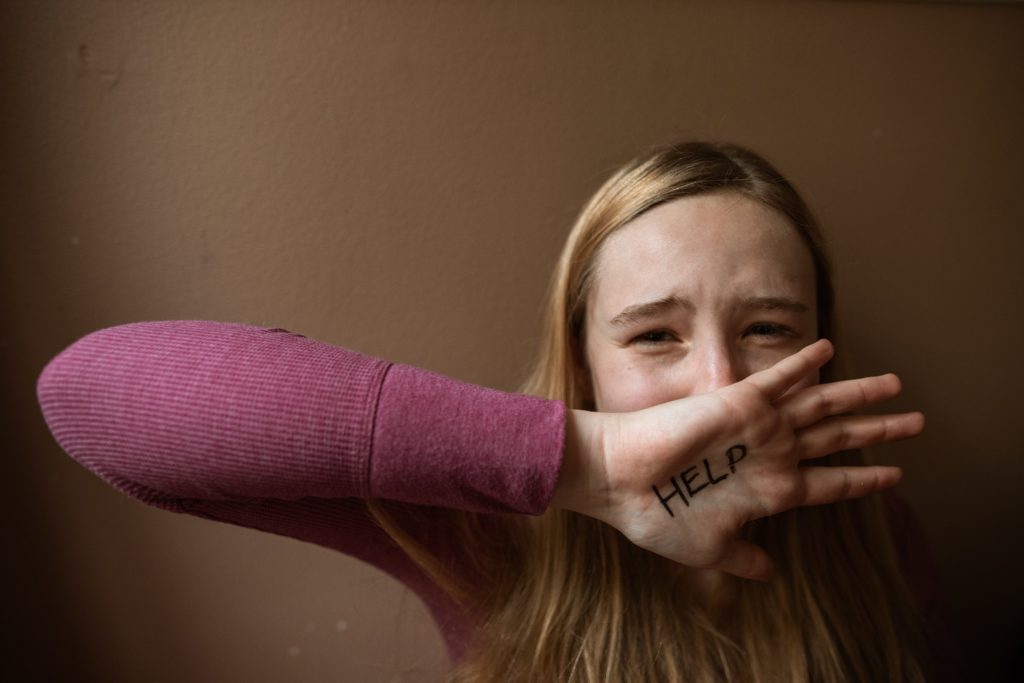
  • Some Wounds ARE Invisible… But There’s HELP… IV Ketamine Treatment Can Crush PTSD. FAST.

    Some Wounds ARE Invisible… But There’s HELP… IV Ketamine Treatment Can Crush PTSD. FAST.

    June has been National PTSD Awareness Month. And June is nearly over. But PTSD awareness shouldn’t end with June. If you have PTSD, it can go on day after day…after day.
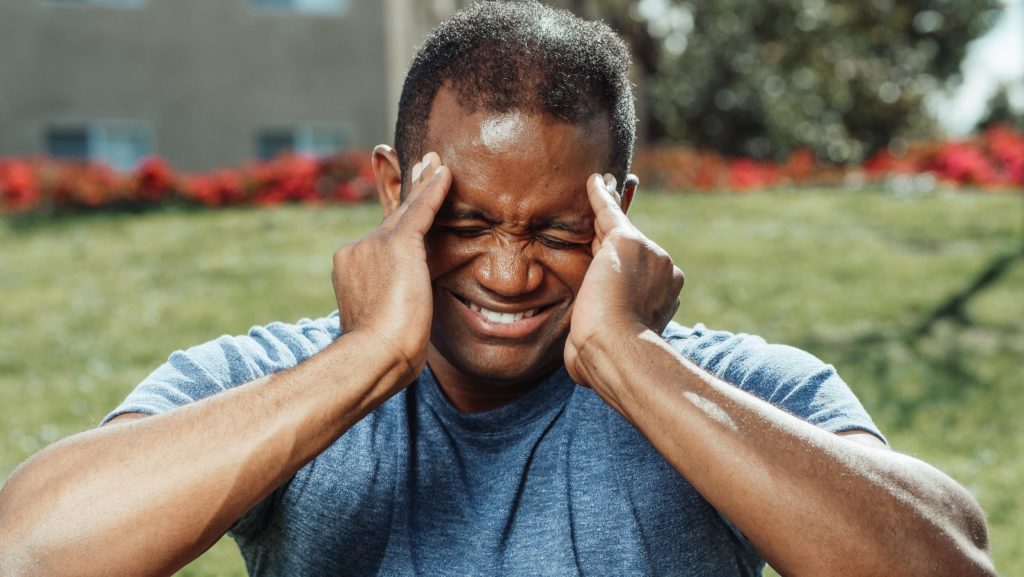
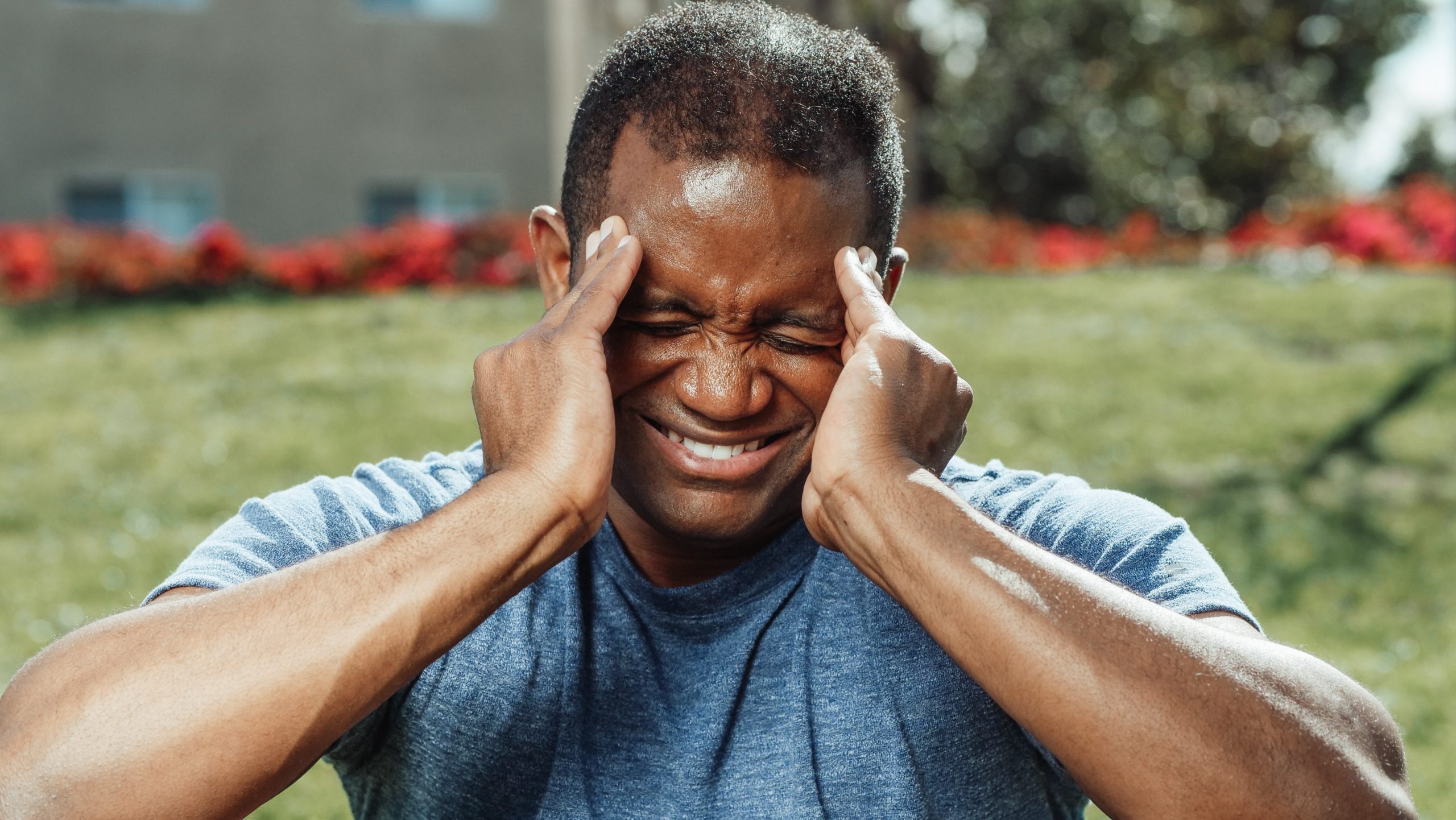
    During flashbacks, Harry suffers from traumatic memories

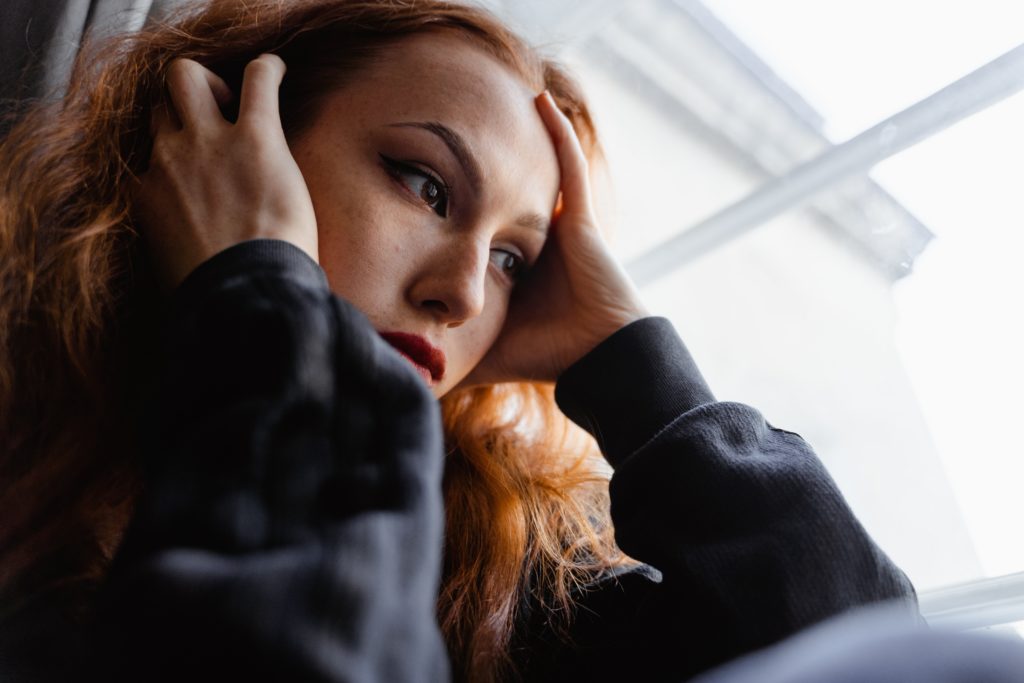
    Something terrible happened. Over time, it seemed you slowly got past it. You hardly thought about it anymore. Then, in a split second, you’re there again. Something happens that triggers the memory, and you’re fighting all of the sickening feelings that just well up inside. You’re determined to break free and run. Turns out a friend is hugging you…. And you come back to yourself and feel embarrassed about your “over-reaction.” Some wounds appear invisible. But they run deep, and wide. And when they do, PTSD can be crippling, and it can take you captive in a moment.

    National PTSD Awareness Month gives us an opportunity to realize that PTSD exists — more often than you imagine, and in people you’d never suspect… that it’s sometimes surprising in the way it’s triggered… and (so importantly!) that those who suffer from it have experienced severe trauma. While it’s true that two people can suffer the same kind of car crash or the same horrible domestic violence, and only one of the two develops PTSD, that doesn’t mean one is weaker than the other. The impact of PTSD has NOTHING to do with how tough someone is. There are a lot of factors that come together to predispose you to PTSD. Genetics can play a big role. And one huge new mind-blowingly transformative treatment — IV ketamine — can be exceedingly effective.

    It’s important for you and for the people you know and love to learn the signs and symptoms of PTSD — for your own health and wellbeing, and to help others who suffer from it. Because since some wounds are invisible, so also the symptoms are sometimes only visible to those closest to the person suffering from them.

    You may have symptoms of depression, anger, rage, irritability, suddenly becoming startled… or feeling numb and disconnected. There may be flashbacks or nightmares, or you may just find yourself reliving the terrible experience over and over. You also may have increasingly aroused emotions and mental thoughts, which can make it tough to sleep.

    Ok, but there’s more to think about and watch for. Like the types of PTSD. Because all PTSD cases aren’t alike. 

    PTSD doesn’t accumulate traumas like depression can accumulate “reasons to be depressed.”

    Comorbid  PTSD – symptoms of trauma combined with symptoms of other disorders.

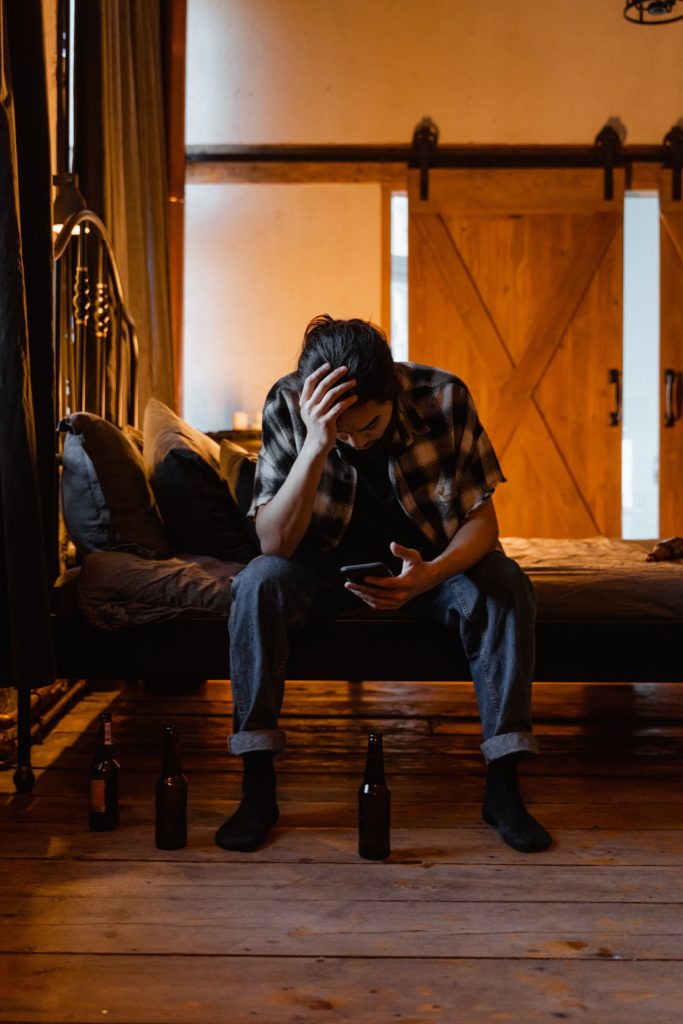
    It’s not at all uncommon for people with comorbid PTSD to also have substance use issues. Because most people who suffer from PTSD typically suffer with more than one disorder, comorbid PTSD is probably the most common form of PTSD. Some disorders that often occur with PTSD are panic disorder and depression.

    Normal Stress Response – This occurs during and following an experience that’s traumatic and stressful but before PTSD begins.

    Not all people who experience a normal stress response advance to PTSD. 

    Acute Stress Response – Typically, someone experiences an acute stress response after a huge stress, like being frightened by a perceived predator, a near miss auto accident

    …or even a frightening accident where all parties survived. But if acute stress symptoms keep coming back for a month or more, they may be transitioning to PTSD.  Symptoms of acute stress response may include headache, sweating, chest pains, palpitations, nausea, and stomach pain. Acute Stress Disorder can be treated using support groups or therapy …and medication. IV ketamine treatment has shown great promise in treatment.

    Complex PTSD – This describes a condition associated with more than one traumatic event.

    A cluster of events, each driving its own response. And the responses can interfere with each other, drive each other, and complicate each other. Because some wounds are invisible… but still present and exhibiting deep trauma, which causes more of its own.

    So… how can you know if you have PTSD?  Maybe you feel anxious in the moment, or sudden sounds cause you to jump.  Is that PTSD?

    When most people go through a shocking or traumatic experience, they feel shaken, and off balance for awhile, but in time and with the kind of self care that helps them feeling their own pain and loss, they usually move on. Certainly they keep a memory that never leaves, but they don’t experience the torment and flashbacks of PTSD. 

    The memories of that terrible day crash down upon Sarah, because some wounds are invisible.

    However, some people are deeply injured by a terrible experience, and may not improve without intensive treatment. As we’ve said before, while we don’t understand all the intricacies to explain why one person suffers so much more extensively than another, we do know there is a genetic link to this process.

    If it happened to someone you love, or even to you, would you recognize the symptoms and know what to say in support?  If you’re not informed and prepared in advance, you may be tempted to be irritable, dismissive, or annoyed.

    First, of course, there has to have been a traumatic event. Something has happened that terrified you, you felt threatened to the point of death, and what you saw in the process was shattering.

    Symptoms may emerge within a month…or they may not erupt for years. But once they emerge, they can cause severe problems socially, at work, and in relationships. Because PTSD symptoms show. Whether it’s a sudden panic attack in front of others, and you’re far too disrupted to explain, or in some other way, they make it close to impossible to go about your daily routine. Basic tasks can be impossible.

    These symptoms fall into roughly 4 groups:

    Intrusive memories, avoidance, negative changes in thinking …or mood, and changes in your physical and/or emotional reactions.

    The symptoms you suffer may vary in intensity. With time, they may seem to disappear, then out of the blue you may be confronted with a moment that mimics that first trauma, and suddenly you’re in it. You’re terrified.  You’re fighting for your life. Except that nothing dangerous or life threatening is happening. It just “feels” like it’s the same.

    You can see how these moments could be upsetting to friends or co-workers.  And eventually embarrassing for you.

    The image of Sarah's abuser hitting her returns over and over in her mind, because some wounds are invisible.

    You may wonder if you need to see a doctor. If these disturbing moments have been happening for more than a month since the original incident, then it is wise to see a psychiatrist. He or she can be very useful in directing your treatment, or referring you to additional treatment. Your psychiatrist is a specialist. Some wounds are invisible but he or she knows how to find them and treat them, to help you find your way back to a rewarding life.

    If you should have suicidal thoughts, call a friend, family member, or a neighbor to spend time with you. Call your doctor to reveal the severity of your symptoms. In a crisis, call the National Suicide Prevention Lifeline (800) 237-TALK or text CONNECT to 741741, or call 911. Remember this has nothing to do with your mental strength or courage. The fact that you reach out for help is a great step of bravery for you to protect your well-being.

    And if the thoughts are persistent, know that IV ketamine treatment can be dramatically fast working and can stop those thoughts in an afternoon. That reprieve will give you time to seek out more treatments.

    IV ketamine treatment can relieve PTSD symptoms quickly.

    At Innovative Psychiatry, we have seen IV ketamine treatment provide a wonderful lifting of symptoms and relief from PTSD to many patients. It’s nothing short of remarkable to see what this treatment can do for someone caught in the throes of trauma. Many patients find talk therapy and other forms distinctly more liberating after ketamine infusions. We like to work with your healthcare team to learn how we can help the process of restoration in your life.

    IV ketamine treatment ferrets out the painful memories and thoughts and can dramatically relieve them. Just because some wounds are invisible doesn’t mean they can’t be healed.

    Since we know that new strains of COVID are still emerging (and because frankly, we’re a health care office!) we wear masks, and have installed of the top plasma cell air disinfection at a level designed by NASA to remove viruses, bacteria, molds, and pollen from the air in our offices. So you can feel safe when you’re here, and you can focus on receiving treatment and getting better.

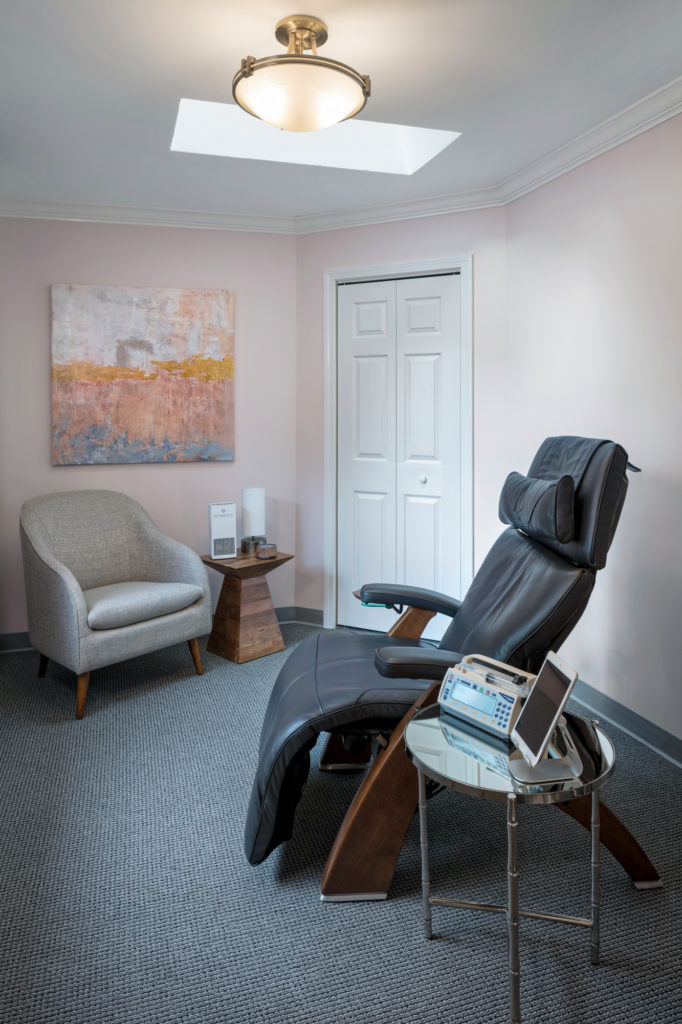
    You’ll have a zero-gravity, soft leather recliner to make your experience feel well supported and secure, and heat at the touch of a button. We want you to get better, and want to help that happen any way we can.

    To the restoration of your best self,

    Lori Calabrese, M.D.

  • How to Stay Resilient When Life Changes Knock You Down – Bounce Back!!

    How to Stay Resilient When Life Changes Knock You Down – Bounce Back!!

    Resilience – The power to bounce back emotionally after a major disappointment or event.

    Here we are. COVID cases have dropped dramatically…right along with COVID deaths. We’re slowly transitioning from the pandemic to what we hope will be post-pandemic. Slowly over time. It won’t be a one day change, but an advancing progressive adjustment to a less restrictive environment. Some people have stopped wearing masks. However, many of us still do. The CDC says fully vaccinated people can go without wearing masks, especially around others who are fully vaccinated. But this doesn’t apply to those who are unvaccinated. This is one of a thousand frustrations all around you. So you’ll want to stay resilient when life changes–and we’ll give you some ideas how to do that.

    A crowd of employers have begun calling employees back to work. Most employers of office workers have moved their employees home to avoid spread of illness, and all those employees are beginning to go back to work little by little. It’s not that they’ve not been working, but they haven’t had a commute as they work and meet on Zoom at home.

    Many others, if not most, will wait yet awhile. It does still seem early.

    But do you know what we’ve seen?

    People struggling with fear, worried whether it’s safe to re-enter company buildings. People who succumbed to depression, PTSD, and anxiety during the worst of COVID-19 and haven’t yet recovered.

    So this is not as simple as it may seem.

    Of course, our role is NOT to tell you when you should return to work in your company facility. Or when the kids should be back in school.

    We just want to help you make the transitions ahead, embrace the adjustment within yourself that will allow you to make this change when the time is right. To help you navigate your concerns or anxiety if you face it.

    You may have lost a loved one over the past year. Maybe you had to watch the funeral of a loved one over Zoom or Facetime. That must have been difficult for you. So many incidents and events were shocking. For so many people.

    You may have had a baby over the last year. Did you have a COVID baby? We’ve learned that the birth of a baby during all the isolation, social distancing, and mask wearing has created such intense loneliness for some new mothers that postpartum depression has been more widespread and support has been hard to come by for many isolated moms.

    One first time mom, who was weeping in frustration and overwhelmed, said, “I’ve always heard it takes a village to raise a child. So WHERE’S MY VILLAGE???” If you’re one of those parents, you will have to find your own transition and recovery. Make sure you’re fully vaccinated so you’re free to seek out friends and family to get their support, and improve your own resilience.

    Then there are the children. Children who’ve been involved in distance/remote learning have displayed behavior outbursts and other forms of acting out. But on the other hand, some children thrived from the closer nurturing they felt while being home. And as they move into summer, and then repopulate schools in the fall (or whenever that will happen!) they may need guidance to help them adapt smoothly, re-socialize, and integrate in their school’s routine.

    Maybe you’ve asked “Why me?” through the crises and losses the last year and a half. But when you think that way it nurtures self pity…which can be suffocating. Better to ask yourself in that instance…”Why NOT me?” Because if you’re alive in this world you’re going to have struggles, difficulties, and losses.

    And you may be tempted to want to run. But resilience comes when you plant your feet, square your shoulders, and get through it. You can be resilient when life changes.

    When my friend heard there was a pandemic wrapping around the world, her first thought was to get on a plane and escape it. Then she looked at the charts and maps on the internet and saw that this infection covered the globe, and there was nowhere to run. What a shock that felt like.

    But by staying where we are, using personal protective equipment, and isolating ourselves, using social distancing when in public, we as a nation and as a planet have survived together.

    Many say, “Failure is not an option”…but actually failure is a requirement for resilience. And in terms of the pandemic, as well as working at home, learning at home, there have been countless efforts that failed and required we try again and again to get whatever the need was to work. Stronger internet connections, getting food to people who needed it, keeping online services up and functioning well.

    Here are some strategies for building resilience now:

    Recognize that difficulties, losses, and inconveniences are part of life. Realize right off that all these things are not a sign of unfair punishment of you or me, but just part of life. And realize that you’ll find your way through it.

    Make the serenity prayer a part of you…to accept things you cannot change. To change those things you can (or change the things you cannot accept.) And hold onto the wisdom to know the difference. So focus on where to put your attention… changing the things you CAN change. And choosing peace about the rest.
    Choose Life. Choose what is good for you. Walk away from things that aren’t good for you. (Yep, we said walk away. Seriously walk away…) Then be patient and compassionate with yourself.

    Here’s a challenge for you: Every day, list 3 things you’re grateful for. It will help you maintain peace and the strength to face new challenges…because you know that challenges are part of being alive too, right?

    And… you know? every time there is a failure, or disappointment, or loss… once you’ve responded to it and moved forward, ask yourself, what you might learn from it… or whether someone was help from the natural fallout of it, etc. There is meaning all around you, and when you’re stressed with difficulty, it’s easy to miss it. So make a point to focus on the meaning you find in all those challenges… that will deepen those roots of resilience, too.

    Stay Resilient When Life Changes — If you fall, you can snap right back up on your feet

    Of course, not everyone can effectively build their own treasure chest of resilience. A disorder can make that very difficult. So we do offer IV ketamine treatment to help restore your resilience. To help your brain restore it’s own synapse connections, to take the G proteins off those rafts in the cell membrane and put them back to work. To slow down the bursting cells in the lateral habenula. And to generally help your hippocampus and amygdala function better, so YOU can function better.

    Sometimes it takes more than well-intended exercises. Sometimes it takes an intervention. And even though IV ketamine treatment doesn’t work for everyone, it can be transformative for the vast majority who have treatment resistant depression, PTSD, bipolar depression, social anxiety, substance use and alcohol use disorders, and suicidal thoughts. It can replace those miseries with resilience, motivation, confidence, initiative, and especially hope.

    So Reach Out for Resilience and the Life You Long to Build

    At Innovative Psychiatry, we have the privilege of seeing people who have achieved remission from these disorders every week. Remission means you have energy to support others, to build your own life and healthy strong relationships, and to face difficulties with strength. Remission means you once again feel like the very best self you’ve ever experienced. It means you stay resilient when life changes and can snap back in the face of difficulties.

    And while we’re transitioning from active pandemic to a post-COVID world, we’re not there yet. And we want you to have the confidence that in our office you’re completely safe from infection caused by any virus, bacteria, or mold. Our plasma cell technology that continually scrubs the air you breathe to keep you safe from viruses, bacteria, and molds while you’re receiving treatment with us.

    Reach out for resilience. If you struggle with the disorders we talked about, reach out for the hope of remission.

    We want that for you and we can help.

    Lori Calabrese, M.D. is on the front end of the race to stop PTSD in its tracks using IV ketamine treatment.
    To the restoration of your best self,

  • How Do You Disrupt a Fearful Memory? Learn to Erase a Conditioned Fear Response

    How Do You Disrupt a Fearful Memory? Learn to Erase a Conditioned Fear Response

    We’ve been talking lately about how neuroscience researchers explore for possibilities for better medicines. 

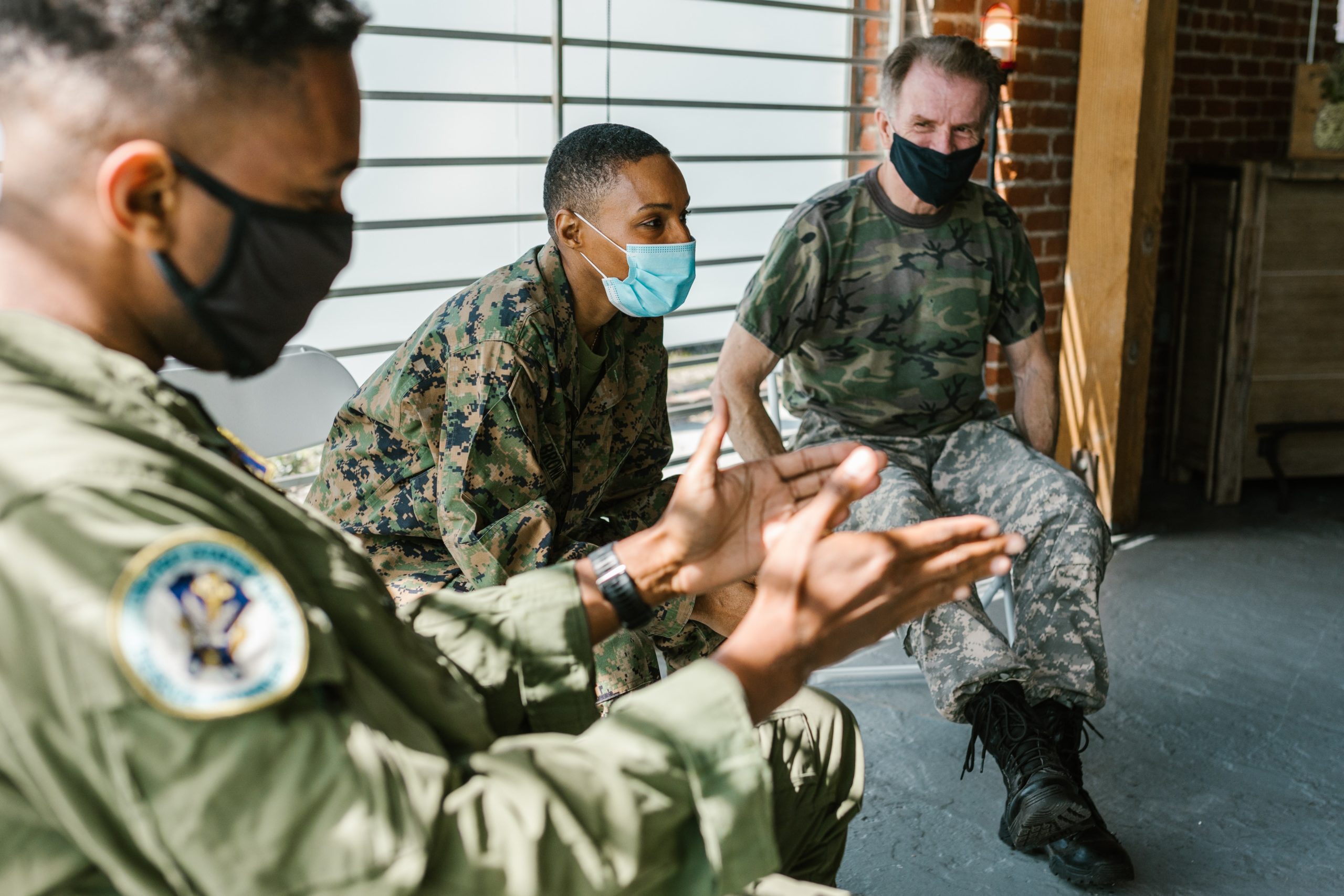
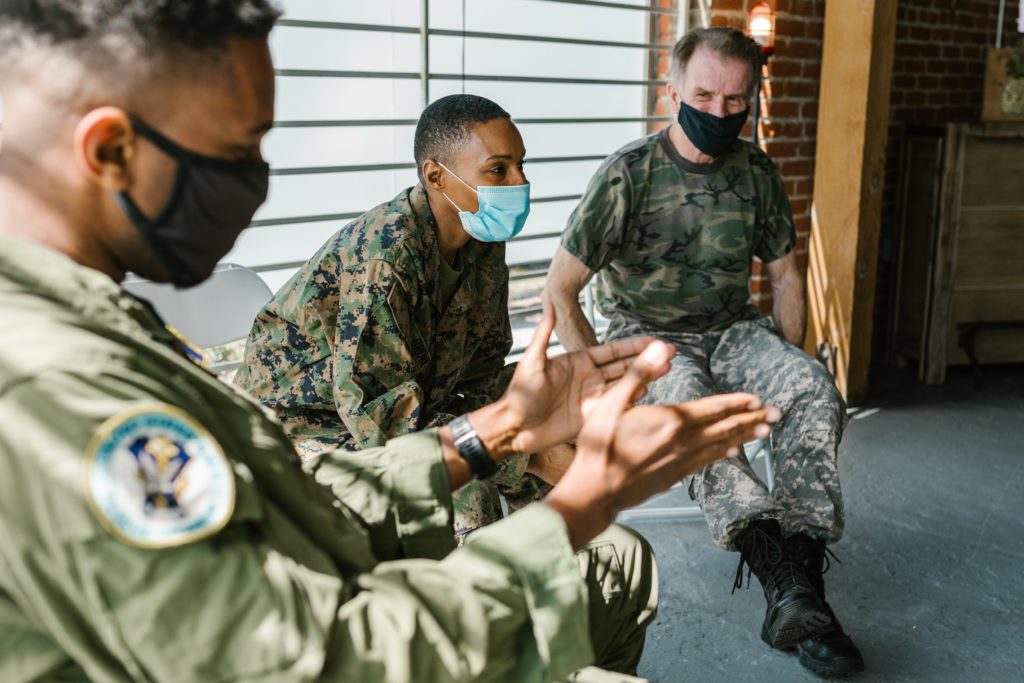
    Group therapy for combat veterans suffering from PTSD

    Lately, there’s been more work exploring fear and memories of fearful experiences, and how to erase those memories…or at least make the memories weaker. Those memories play a big role in anxiety, PTSD, and bipolar disorder. We talked about AKT. Now, a team of researchers at Texas A&M University led by Stephen Maren, Ph.D. recently published their work in Nature Neuroscience, and used prolonged exposure therapy in an effort to extinguish to erase or weaken conditioned fear response memories.

    These methods often work well for awhile…but in time about 50% of patients relapse and over the long-term the fear memories take hold with a vengeance.

    Briefly, the way these therapies work is to repeatedly expose you to situations, sounds, or other associations with the trauma, over and over and over… with the hope that, in time, the trauma is no longer triggered.

    But, unfortunately in many patients, remission from PTSD doesn’t last.

    So, knowing that these efforts don’t prevent relapses in some patients, Dr. Maren and his team have designed innovative experiments (in rodents) so they can test the possibility of disrupting the original fear memory… this is the memory that we think starts all the suffering in a person who develops PTSD. 

    How do you disrupt a memory?

    Because here’s the thing. The memory forms at the moment of the trauma…or in the 4-6 hour window that follows. This is a crucial time period.

    Keep in mind that the 4-6 hour period from the moment of trauma or shock is the period of memory consolidation, or when the memory forms.

    These skilled researchers sought to intervene during the period of time when memories are recalled due to a key stimulus …like a car backfiring… that might trigger a traumatic fear memory of assault, or combat…or a vehicle crash. This little window of time after a sound or other stimulus in the environment triggers the traumatic memory is called re-consolidation. The stimulus can result in reaction behavior… like hiding under a table… or striking someone nearby… or grabbing a weapon.

    Think of triggering memories by this method, like noises, as indirect retrieval. 

    Extinguish PTSD fear with erasing a conditioned fear response.

    But keep in mind that retrieving memories this way – by indirect retrieval – can help retrieve the traumatic memory but without an attempt to manipulate or otherwise change the original memory. The researchers’ intention is to retrieve that person’s response to it. To weaken or erase a conditioned fear response.

    …So back to the rodent experiment.

    Backward conditioning was a key intervention the team used.  It’s a unique and fresh method to get the rodents to retrieve their own trauma — a conditioned, context-dependent fear memory….without the subject being aware of the experience.

    Ok, so this is where it got reeeeeally interesting.

    With all this accomplished, they were facing 2 questions:

    1) Could they use neural tracing technology to identify basic circuits that were activated in this process?

    2) Could they intervene in such circuitry to see if they could alter the process of memory re-consolidation..to the extent they could alter or eliminate the fear memory and its potential to negatively impact behavior.

    Then, the team switched on cells in the hippocampal fear memory circuit, which caused the rodents to “freeze” because of prior conditioning to react with fear. 

    And, in the final stage of this experiment, the team used rapamycin to disrupt this particular circuit associated with conditioned fear memory. (Rapamycin is used to coat heart stents and to prevent rejection of transplanted organ tissue. Weird, huh? )

    Rapamycin interrupts the neuron’s ability to produce proteins that are necessary for the circuit to function. As a result, the inclination of the rodent to freeze in fear is weakened or erased altogether.

    And it worked. And they did succeed in associating fear memory reconsolidating with circuitry in the hippocampus. They did it!

    Basically, these researchers successfully interfered in a circuit to change an original fear memory… which is what begins and is key in trauma-related conditions like PTSD. By forcing the circuit to “forget” the fear, the “freezing” behavior can be weakened or erased completely.

    Like, gone.

    If you or someone you love suffers from PTSD… a painful fearful memory, that’s triggered by little noises, a sight or smell or other cues, this can be life-changing.

    Such an important step toward developing a new way to treat PTSD, or perhaps even substance or alcohol use disorders. Cues that trigger relapse might feasibly be interrupted in the circuit, to prevent it. 

    Heady, exciting stuff!

    Thankfully, as we watch this development unfold, we have IV ketamine treatment NOW. IV ketamine treatment that’s effective in treating PTSD, substance use disorder, alcohol use disorder, social anxiety… all cue-related conditions. And of course, it is robustly effective for treatment-resistant depression and bipolar depression, and there is new exciting evidence of how ketamine is effective in teenagers.

    It’s encouraging to see how research is exploding as we continue to seek treatments that can resolve devastating relapse and suffering.

    At Innovative Psychiatry, we are meticulous about our outcomes, present our data at scientific meetings, publish our own findings in peer-reviewed journals, and stay up nights and weekends reading. We are on the cutting edge for breakthroughs in psychiatry and neuroscience. You deserve to be treated by experts dedicated to excellence.

    If you suffer from any of these conditions, you would probably like some support, some help, and probably some treatment. We’ll schedule an appointment for you to come in and talk about your history, your current difficulties, and the possibility that you might be a candidate for IV ketamine treatment. We won’t be able to make a judgment about that until we talk.

    If you’re a candidate, you can come to our practice with confidence that you’re safe even in this ongoing pandemic. Our plasma cell technology for removes 99.99% all viruses, bacteria, and molds from our air and surfaces means you can relax and focus on your treatment… and getting better.

    Better days are ahead for you to live, dream, build, and hope.

    We really want that for you. And we’re ready to help.

    Lori Calabrese, M.D. is on the front end of the race to stop PTSD in its tracks using IV ketamine treatment.
    To the restoration of your best self,

  • What Makes Ketamine Work? This Research Team Seeks Answers

    What Makes Ketamine Work? This Research Team Seeks Answers

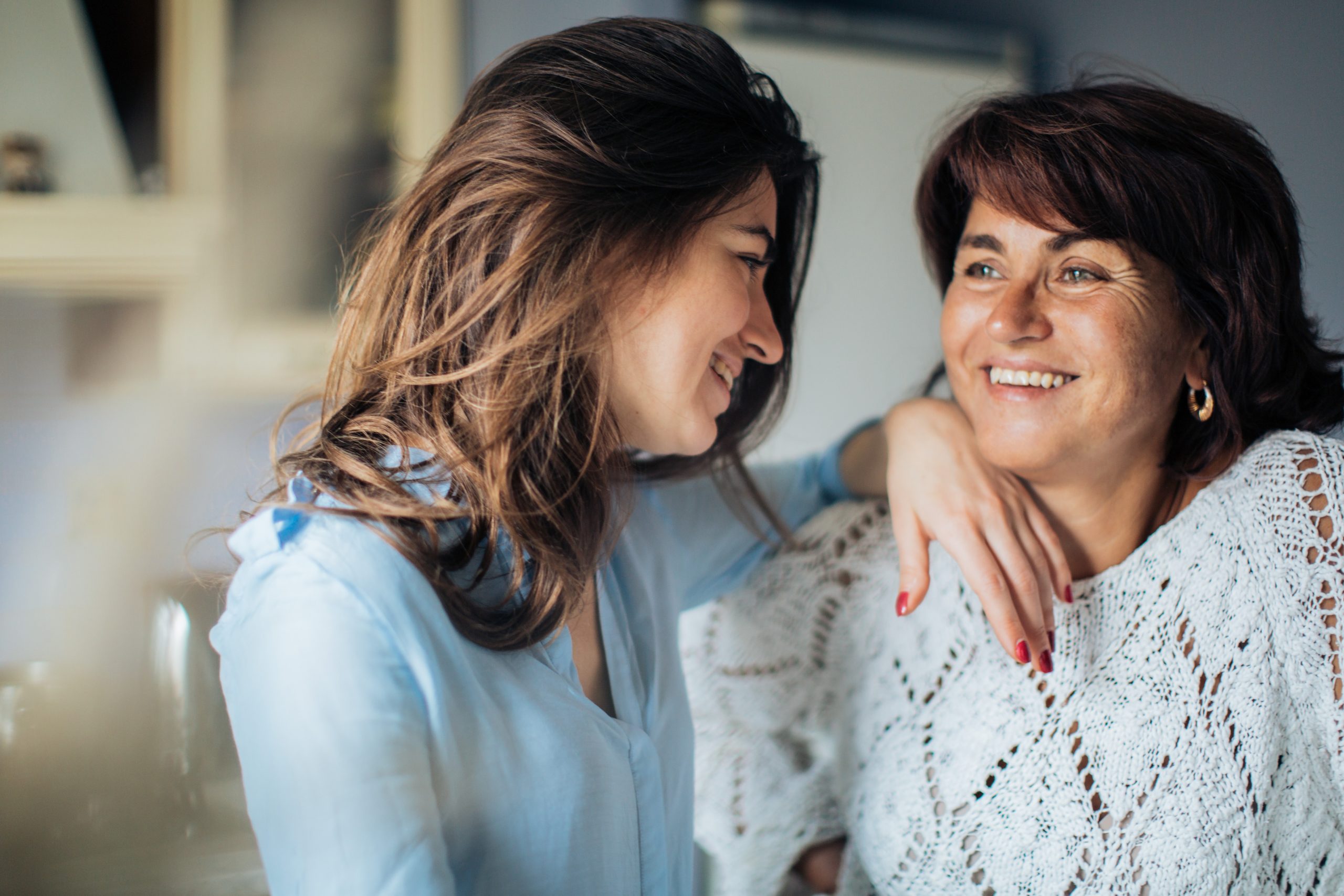
    What makes ketamine work? It brings joy to this mother.

    We’ve talked about ketamine’s rapid antidepressant effects. Last month we talked about the role of dissociation in ketamine’s antidepressant benefits. Neuroscientists are studying ketamine to find out WHY it provides such rapid antidepressant results. They’re hoping they can determine what exactly ketamine does in the brain, and whether they can isolate that action from the side effects without losing its extraordinary effectiveness. It’s a long road (rife with trials!), but they soldier on… hoping to make new medications that could become more available to more people. So let’s follow this team of neuroscientists through their quest over nearly 2 decades so far, to see what makes ketamine work.

    Lisa Monteggia, Ph.D.

    A team of researchers, led by Lisa Monteggia, Ph.D., have studied this question for 18 years. Beginning in 2003, she and her team were interested in what makes antidepressants work. At the time, they knew that neurons released the neurotransmitter serotonin to keep the mood stable. Therefore, if the serotonin level was “low,” that was the cause of depression. (Or so they thought.)

    A lot of antidepressant medicines at that time were designed to increase serotonin availability. (They worked to prevent serotonin from being taken back up by the releasing neuron, and to keep it around in the synapse.)

    However, Dr. Monteggia’s team saw a problem with that whole explanation because those antidepressants (SSRIs and SNRIs–serotonin reuptake inhibitors and serotonin norepinephrine reuptake inhibitors) took weeks to relieve depressive symptoms — when the meds worked. So they realized other things must be going on at the same time, since serotonin alone wasn’t the key element.

    Next, her team identified an important aspect of neuronal signaling, as well as something vital for antidepressant effects… and that was brain-derived neurotrophic factor (BDNF).

    A variation of the gene that “tells” cells to make BDNF contains an error or oddity that can change what the gene and the BDNF do. And that’s significant. Because further studies showed that people who have this “odd” gene, can have a reduced, dampened effect from antidepressants.  

    Hmmm..!!

    Now don’t miss this next part of her story: As her team was studying this weird anomaly, another team (remember research was going on globally!) published their work about the ketamine, an anesthesia agent that can produce rapid antidepressant effects when given at a low dose — too low for it to produce anesthesia.

    Ketamine already had a reputation for abuse when taken in moderate to higher doses.

    But this finding was so important! That at a low dose, ketamine can effectively sweep away symptoms in someone who has severely treatment resistant depression. Basically, someone who has not been helped by anything else they’ve tried for their depression.

    So this really charged up Dr. Monteggia and her research team. They committed to learning all they could about ketamine. And they say they want to use it as a Rosetta Stone, so to speak. In other words, they want to use low dose ketamine as the key to understanding rapid acting antidepressant action. Why? Because maybe understanding the mechanisms of action of ketamine could fuel the development of new antidepressants without side effects… Ah!

    For one thing, it may hopefully show us how effective antidepressants work. (Actually work, not how we assume or think they work.) To learn the actual mechanism behind effectiveness; as in, something we haven’t yet seen or identified.  

    The other is that ketamine is known to impact a specific protein in the brain…the NMDA receptor. This receptor is found embedded on certain neurons — a lot of neurons!!

    The team confirmed that ketamine blocks the NMDA receptor. In addition, ketamine has specific effects on a certain signaling pathway, and when they blocked that pathway, ketamine didn’t work.

    Ok…the process of elimination. 

    But let’s see what else they learned.

    Here’s one exciting thing … and we count on it with ketamine treatment. They were able to show that when ketamine blocks the NMDA receptor which affects signaling…it produces a series of downstream effects which trigger a special form of neuroplasticity in the brain cells.

    Neuroplasticity is the ability of the connections (or synapses) between the brain cells to change their strength. So ketamine helps those synapses change their strength in new and unexpected ways.

    The team has tested other medications to see if they act like ketamine. (For instance, memantine is similar to ketamine in some ways, and it does block the NMDA receptor, but it goes about it in a different way. So interesting, though: despite all that, it does not have the same effect on signaling as ketamine, nor does it trigger this novel type of plasticity that ketamine does.)

    They only see this specific type of plasticity with rapid antidepressant action. Eureka!!

    (OK, so we’re a little excited here. I know.)

    So it occurred to them that perhaps this special form of plasticity may actually be an integral part of rapid antidepressant action.…? And they wonder whether this type of neuroplasticity plays a role in “healing” depression, and demonstrates what makes antidepressants work … Not sure yet. 

    But here’s something to keep in mind: some experts in the field of neuroscience call ketamine a “dirty” drug. 

    Don’t panic!

    When they say that, they don’t mean it’s grimy.  They mean that it works in many ways to affect many parts of the brain — it doesn’t do just one thing that explains definitively how it relieves depression. If they could develop a drug that targeted the absolute biologic mechanisms that are specifically involved in depression, bipolar depression, PTSD, suicidal thoughts, and the rest, that would be a breakthrough!

    So ketamine emerged as a treatment for psychiatric disorders — quite by surprise.  

    This team of researchers believe that ketamine’s actions are especially important in the hippocampus. They believe that after ketamine affects brain cells in the hippocampus, changes flow back to the prefrontal cortex (this part of the brain is behind your forehead) and other areas.

    So they’re hoping they can follow the path of those changes backward…from hippocampus to prefrontal cortex to other area. The more they learn, the closer they may come to understand rapid acting antidepressants better.

    They believe that blocking NMDA receptors results in that novel neuroplasticity and call it “homeostatic” neuroplasticity. This is a different form of plasticity than the one involved in learning.

    And as they continue forward with these experiments, studying homeostatic plasticity, which they believe is at the core of what makes ketamine work as an antidepressant, then they can work with other, perhaps newer, medications that do the same thing…to find more and better options.

    Meanwhile, we do have IV ketamine treatment. And people often experience remission with it. So we’ll keep using it, and celebrating your joy, freedom…and hope.

    At Innovative Psychiatry, we happily work with you in hopes you’ll achieve remission with IV ketamine treatment. We’ll joyfully welcome you for your treatment, and you’ll receive that treatment in a safe environment with clean, pure air. Sanitized to 99.99%. We take every precaution, like our intense plasma cell technology, to keep our environment here safe for you.

    Innovative. Super modern. Seeking the best.

    For you.

    IV ketamine treatment is just like that in our hands: innovative, supermodern, seeking your best self. Is it for everyone? Does it make everyone better? Sadly no. Which is why we’re so grateful that there are teams of researchers…around the world…who won’t give up, who seek more options and even better ones, for all of us.

    If you struggle with the kinds of disorders we’ve talked about, and treatments haven’t helped, call us.

    We’ll set an appointment to help you know whether you might be a likely candidate for this extraordinary treatment. Your rewarding and fulfilling life lies ahead.

    We look forward to meeting you.

    Lori Calabrese, M.D. is on the front end of the race to stop PTSD in its tracks using IV ketamine treatment.

    To the restoration of your best self,

  • Suffer from Postpartum PTSD?        Ketamine Can Bring Back Your Joy

    Suffer from Postpartum PTSD? Ketamine Can Bring Back Your Joy

    We say that childbirth is utterly natural. But the experience of giving birth doesn’t always go as planned. Sometimes there are surprises, disappointments, unexpected changes, fears, and excessive pain.

    A terribly painful labor or delivery can become a traumatic memory for a postpartum mom. Loss of the baby during the process can also create an unbearable trauma for the mom. Especially in situations where the infant doesn’t survive, the mom can be so deeply affected that the smell of baby powder or lotion can trigger a cascade of PTSD symptoms. Or the cry of a newborn baby. Mothers who suffer from postpartum PTSD can have severe reactions to triggers for months after delivery.

    Leanne has five children.  The first four of her deliveries were increasingly traumatic. In one case, the baby’s head was lodged at the side of the pelvis and after hours of pushing with no progress, she was moved to surgery for a C- section. This was the fourth delivery.  More about that one in a bit.

    With the first, she labored for 38 hours and when the baby was finally born, she tore through her rectum. Bonding with her baby didn’t go well, because she was in so much pain. Plus, she felt beat up, traumatized, exhausted, and unable to find any warm feelings for her newborn. (And too ashamed of this to say it out loud.) Eventually, over months, she began to improve.

    But within 7 months of that birth, she found out she was expecting again. She sat down and cried. She didn’t feel ready. The pain in her rectum had only recently subsided.

    Then, the circumstances of her second baby’s birth were also excessively painful. (We’ll leave out the details.) She began to feel like she just had terrible luck… or just wasn’t supposed to be a mother.

    From that time, she cried anytime her husband tried to touch her.  She couldn’t separate the suffering of the two births from amorous times with her husband. Leanne couldn’t face the risk of another childbirth. One day she was so angry, she slammed the dishwasher door hard over and over, then sat down and cried.

    Leanne’s husband quietly slipped out of the house and bought a new set of dishes.

    Leanne talked with her doctor, and he said that she suffered from Postpartum PTSD.

    Then, one day Leanne and her husband went to visit friends for a backyard cookout. They took the babies with them and really had a wonderful day. That night, they were both relaxed, and enjoyed cuddling. One thing led to another…

    And soon enough, Leanne was pregnant with her third child. She’d been in therapy for 2 years at that point, so she was guardedly optimistic…but on shaky ground.

    This time, unfortunately, the crisis was placenta previa… specifically the placenta was overlapping the opening of the womb to the birth canal.  Once she began to dilate, portions of the placenta broke free, causing a rush of blood loss. She started to hemorrhage.  She panicked, called her husband, called her doctor, called her mom. ( If only she had called 911…but she was too shaken to think clearly.)  Of course, her husband was on his way, and told her to call 911 NOW.  She called 911 then called a neighbor to come stay with her little toddlers. She was rushed to the hospital, unconscious when she arrived. Doctors went to work hoping beyond hope they could save both mother and child.

    Thankfully both mother and child survived, but again, Leanne was exhausted, shaken, and shut down. She just couldn’t relate to the baby.  She was overwhelmed with guilt that her mistakes had come so close to causing the baby’s death. 

    Even though Leanne and her husband were committed to living a natural lifestyle, and had never used birth control, she just felt she couldn’t go through this again.  But he stood strong about not using birth control. So she used the best form of preventing pregnancy she could think of. Anytime her husband touched her or was affectionate, she pushed him away…or sometimes she just fell to the floor in a heap, weeping her heart out.

    She had times when she just began to tremble and couldn’t stop. One day she dropped a jug of milk that spilled and splattered all over the kitchen. Then she had to pull herself together to clean it up. Who else would?

    By this point, she tried to be a good mom to her innocent babies, but so much of the time she felt vacant. Other times she felt angry. Then, there were times when she had such anxiety that she didn’t dare drive, even to the grocery store.

    If you suffer from postpartum PTSD, ketamine treatment can help.

    She managed to avoid pregnancy for two years. Her marriage had become volatile. She just couldn’t be calm to communicate with her husband. Everything was falling apart.

    Her husband suggested they let the 3 kids stay with Grandma and Grandpa, so they could take vacation to somewhere peaceful. They took a week in Jamaica. It was wonderful with swimming, great food, walks on the beach, and local music. (And those drinks with umbrellas! She loved them!) So many sites, smells, and friendly people. They both believed this was just what the doctor ordered.

    On their 5th night, they danced to local music, and drank more umbrella drinks than they realized…  They found their way to their room and collapsed in bed. The next day neither of them remembered how they got there. In their inebriated state, their celebration led to baby-producing activity. So rare for them, at this point.

    You guessed it…baby #4 was on the way.

    Leanne home-schooled her children, so by now she was doing lessons with babies #1 and #2.

    At least on the days she was functioning. But her anxiety was pretty high.  How could she take care of these children when she was so shaky?  A few times during the pregnancy she experienced a panic attack. Her therapist was working with her to help her work through the anxiety.

    Bless her heart. This was the delivery we mentioned earlier. The baby’s head seemed to be stuck to the side in her pelvis and they couldn’t get the baby to move into the birth canal. It was the last straw for Leanne. She had a full out panic attack during the latter portion of her labor. She was standing up in her bed and screaming and crying. No one could calm her. She just wasn’t rational. She was terrified. So they did an emergency C-section after putting her sleep.

    When she emerged from the anesthetic, she was disoriented, surprised to learn her 4th baby was born and doing well in the nursery.  Her doctor encouraged her to rest before they brought the baby to see her. But she just withdrew.

    Leanne had had dreams of being such a natural “earth mom” …she’d started out wanting to give birth to her children at home. But each childbirth had been too risky to continue at home. She felt cheated. Angry. Beaten. Each labor and delivery was a nightmare.

    All her plans for meaningful home births had been vanquished. She knew she suffered not just from postpartum depression but from postpartum PTSD … and she just didn’t know what to do about it.

    Her doctor had advised Leanne and her husband to consider a tubal ligation during this C-section but she had been far too distraught for a decision like that. So he encouraged them to consider it later, to give her a chance to  recover.

    While they were “thinking” about it, she got pregnant once again. She told her doctor she definitely wanted the tubal ligation done during her final C-section. As it happened, this 5th birth went smoothly as a C-section, and the tubal ligation was completed in the same procedure.

    She was able to bond with her new baby peacefully, and she enjoyed him so much. 

    A wonderful, simple, easy, planned C-section — with no crash carts, hemorrhages, horrible images, horrible fears, horrible pain. Why couldn’t it replace all those awful memories? Why did they shake her up during the day, and infiltrate her dreams at night? And why did every little thing seem to be a trigger? The kids were healthy, right? They were OK, right? She was OK, right? Well on that one, no…she was really not ok. She still suffered from postpartum PTSD symptoms — and all the treatment she had had over the years hadn’t made a dent in it.

    So when a friend encouraged her to consider IV ketamine treatment, Leanne grabbed her phone, and started trying to learn what ketamine can do for postpartum depression and postpartum PTSD. She made the call.

    Scheduled her appointment. And left the children with a babysitter. 

    After the first infusion, she felt no different. Same after the second. After the third she decided to cook a new recipe for supper. Such a little thing, right? But it was such a big deal—she hadn’t done that for months. (Ketamine can restore initiative and motivation.) After the fourth, she could feel rays of hope inside her. Almost like rays of sunshine, she said.  By the time she went for the 5th infusion, she was calmer. No longer shaking. And although there was still anxiety, she was becoming hopeful. She had good days and bad days. But there was improvement. She could feel it. She just wasn’t there yet.

    So she went for a 7th infusion…and then an 8th. By this time she went for her 8th infusion, she had joy. She felt free of the fear and anxiety.  And as the days passed, she felt more resilient all the time.

    She became her old self over the next several weeks — felt happy, calm, fun-loving. (Oh wow, when was the last she she’d felt that?) She had patience with her children, she had creativity in home schooling them, she enjoyed socializing. She also had the initiative and motivation to clean up the house and invite another couple with kids over for dinner — outside, on the patio. 

    Leanne hadn’t felt this good since her first baby was born.  

    If you suffer from postpartum PTSD, try ketamine treatment. This mom found her joy again after she did.

    She also found the patience, wisdom, and determination to work with her children in family therapy in hopes of improving their security with her and building the bonds that suffered with these pregnancies and deliveries. 

    And she was thankful that her husband was still at home so they could work together with a marriage counselor to strengthen their relationship.

    IV ketamine treatment has developed a track record for helping women who suffer from postpartum PTSD to achieve remission. Choosing to seek out this treatment was a wise move for Leanne to make. At the same time, it’s important that you understand that ketamine is not for everyone. (There isn’t anything that works for 100% of people 100% of the time.) But ketamine can be transformative for most people who are suffering from severe postpartum PTSD, depression, social anxiety, bipolar depression, postpartum depression, and more.

    Innovative Psychiatry provides IV ketamine treatment for postpartum PTSD.

    At Innovative Psychiatry, we’re experts in psychiatry, in postpartum disorders, and in all the treatments available for them—including IV ketamine—and we work with you to map out the best course of treatment for you. We have the protocols and — incredibly important — the technology to protect you from viruses including COVID-19, bacteria, and molds, so you can come for your treatment with peace of mind. You can breathe easy…even if you haven’t for months.

    If you suffer from postpartum PTSD, don’t keep toughing it out. Call us.

    We’ll set up an appointment to talk about your history and current symptoms and all the things we need to know to determine if you’re a candidate for IV ketamine treatment. You deserve the care of a specialist.

    Don’t hesitate to call. Get your hope back. And the power to enjoy your family.

    We want to help.

    Lori Calabrese, M.D. is on the front end of the race to stop PTSD in its tracks using IV ketamine treatment.

    To the restoration of your best self,

  • Postpartum Stress Is Vicious: Reach Out for Support…It Takes a Village

    Postpartum Stress Is Vicious: Reach Out for Support…It Takes a Village

    Do you have a COVID baby?  If so, you’ve had compounded stress.

    Most moms are familiar with the exhaustion (and the overwhelm!) that often takes over when your newborn comes home from the hospital. It isn’t as though you were sleeping great before you went into labor.  Then contractions started and progressed to active serious labor. Then the hard pushing. Bottom line, giving birth is hard, hard work. You think you just can’t wait till the baby is OUT of your body so you can finally sleep.  WAKE UP CALL!!! Actually, once baby is outside your body, she’s adjusting too.  So she cries.  And cries. What can you do but nurse her till she drops off to sleep… until 30 mins later she wakes up in your arms crying again. So you put her back on the breast. And then it starts. And a challenging pattern emerges. Baby feels warm, secure, and happy when she’s nursing. Then, bereaved when the nursing stops. And you? Stressed to the max. Postpartum stress can be persistent if you’ve had a COVID baby…and even if your baby was born before COVID.

    The trouble with that is that anxiety can shoot up when baby nurses, wakes, and nurses some more. Because you want some sleep… you NEED sleep.

    And when anxiety rises, it’s hard to go to sleep. Your mind just keeps racing.

    So what do you do?  You call your mom, your sister, or your best friend to come and walk baby while you get some rest. And that’s not all it’s cracked up to be either, because you lay on the bed, wide awake….staring at the ceiling…worrying about the baby. 

    This is especially true for first time moms who so want to be perfect moms in every way but hadn’t counted on exhaustion and stress making you miserable. In fact, postpartum stress can be especially brutal for moms who try to be perfect.

    Try to relax and let go. Perfect moms don’t exist. Cut yourself lots of slack and call in help when you feel like you’re at the end of your rope. Don’t keep pushing. Because you just have to break the stress cycle periodically.

    And kick guilt to the curb!

    This is also true for moms with a baby/toddler and other children…. it can be so hard to cover all the bases of everyone’s needs. Plus laundry, cooking, baths, keeping the house picked up after you’ve been up all night with the baby.

    And You Wonder…Where Can You Find Postpartum Stress SOLUTIONS?

    Parenting books are full of advice about how to manage your baby AND your other children when there’s no one to help. (Ha! is what I said when I read them, on baby #4.) But, when you try to put their advice to work…well it’s not as easy as it sounds.

    Postpartum stress is that midlevel and escalating stress that occurs after the baby blues but before postpartum depression takes over.

    If relief isn’t found, postpartum depression can settle in.

    FAST FOWARD 10 months…

    You finally got the baby into a schedule where she sleeps several hours each night and you depend on that chance to rest.  Then you go on vacation. (Ha! they say it’s a vacation….) The changed vacation schedule disrupts baby’s schedule and she starts wanting to find comfort in constant nursing again.

    By the time you get home from your trip, you’re exhausted again. And not sleeping. And you’re crying more than baby. Sound familiar?

    Stress plus exhaustion is a devastating combination.

    First, understand that babies are individuals with temperaments unique to them. Some are easy going, relatively relaxed, and honestly, some seem almost self contained. Moms with babies like this have no idea why you’re so stressed. So ignore what those moms say. Right??

    Some babies are “high need” and may require lots of patience.  This type of baby may also be colicky, and as the saying goes, it takes a village. To walk her, to soothe her, and to give you a break to rest and breathe.

    You always hear that childbirth is a natural part of life…and it is. But it’s still a huge strain on your body and emotions. If you don’t have support, it can be difficult to recover.

    And women who don’t receive support during childbirth have a harder time recovering from it. They can continue to struggle for weeks or longer. In fact, a study by researchers led by CT Beck found 18% of American moms reported symptoms of PTSD. We call that postpartum post-traumatic-stress-disorder –really!–and we’ll be talking about that, soon.

    What is postpartum stress anyway?

    It’s like this…when something goes on that sets you on edge, but it doesn’t happen just once…or twice. It happens all the time, all the time. Like a baby crying incessantly…or children screaming because they’re mad, The longer this cacophony goes on the more it strips your patience…your ability to cope…to endure. And it goes on and on, day and night, week after week after month. It goes from acute stress to chronic stress… postpartum stress.

    When this happens, think of it as wearing down the synapses — those connection between neurons in the brain that help messages go from one part of the brain to the other. Those synapses can break down. The dendrites and dendritic spines also break away. You can think of it as pruning, like you do to a tree. But in terms of synapses, this is not a good thing. As those synapses break down, the connections between neurons are lost. And what’s left is a depressed mood. Anxiety. Misery.

    Postpartum Stress Needs to be Relieved

    Whether by natural means of relief and support, or by a remarkable treatment. Because left untreated it can easily advance to postpartum depression, a more dangerous condition.

    What it comes down to is that you need all the synapses you can get in the right parts of your brain so you can be resilient and not defeated. So you can embrace challenges as they arise.

    This is why it takes a village. Because you must have support from grandparents, friends, family, and as your baby grows older and is easier to manage, you can help another young mom.  

    But what if postpartum stress has resulted in damage too extensive for you to find the relief and resilience you need just by taking a nap, or walking and relaxing while someone else cares for baby?

    Well maybe that’s where IV ketamine treatment comes in.

    Nothing restores resilience like IV ketamine treatment. Nothing restores those synapses as thoroughly or as fast as IV ketamine treatment. For so many. Because ketamine restores resilience by restoring those synapses, by causing mRNA to flip on DNA to turbo boost brain-derived-neurotrophic-factors. By moving those G proteins off the lipid rafts to get those neurotransmitters revved up to do their job. By stopping the cell bursting in the lateral habenula… all these things working together to help you feel up to the tasks before you… Full of initiative, the motivation to do what needs to be done, and the hope for making your life rewarding again.

    Postpartum Stress Disorder can be overwhelming so reach out for help.

    At Innovative Psychiatry we’re in place to meet you here when you arrive for ketamine treatment. Because if you want to rise above the hopeless and dark listlessness that is overshadowing your time with your baby, we’re here to help. And for the safety of you and your baby, and the confidence it brings, we’ve outfitted our offices with a space station technology developed by NASA to remove 99.99% of the viruses, bacteria, mold, and pollen from the air and surfaces in our office.

    We keep the door locked so that only those who have been scheduled to be there will be there. You can feel safe here.

    We’re here to help you get better, feel better, and have the power to enjoy your baby, and your family. To have the power to face the challenges with resilience.

    Take affirmative steps to find out if you’re a candidate for IV ketamine treatment. Call us.

    We’re here to help.

    Lori Calabrese, M.D. is on the front end of the race to stop PTSD in its tracks using IV ketamine treatment.

    To the restoration of your best self,

  • Is Dissociation Important for Ketamine to Work?

    Is Dissociation Important for Ketamine to Work?

    Dissociation is necessary for antidepressant benefits of ketamine.

    The Big Question

    Is dissociation needed? Is it necessary? Can you get better without it, or with “just a little bit” of dissociation? Does the kind of dissociative experience you have during a ketamine infusion predict whether ketamine is going to work? Or how much it will help? …. or If it will help faster? If it will work better….? Will it be scary? Will it be negative? Can it set you back….or make you worse? Can you do anything to shape it (yep, the dissociative experience) to get the most out of it? Boy, what IS dissociation anyway? And is dissociation important for ketamine to work?

    I’m tellin’ ya, that is the question of the hour. Every hour. (Or every 90 minutes, I should say. Because that’s the time we set aside for you, when you receive a ketamine infusion. )

    When you come in for ketamine, we dive deep. We look for what you used to be like at your best selfreally like. Or… if it feels like you never had a best self, we go back further still. And then we look at all of the factors that have contributed to where you are today: what happened, how it happened, what the interplay is genetics, experiences, people in your life, work and the things you love, symptoms and how they’ve spiraled out of control, treaters and treatments that didn’t work out for you.

    We want to understand your narrative. Because if you are a candidate for treatment with IV ketamine, we want to offer you the hope and the possibility to change that narrative….and write a new one moving forward.

    So the question is what does that? What moves you forward? Ketamine itself? the racemic molecules, the NMDAR antagonism and disinhibition? glutamate activation? the multiple downstream effects involving AMPA activation, and g-protein fast action sliding off lipid rafts? The production of BDNF (brain-derived neurotrophic factor), and the growth of new branches on neuronal trees that leads to synaptic plasticity and flexibility of thought?

    There is a lot of action that ketamine creates (and a lot that we are still exploring because we don’t have all the answers yet about exactly how it works). And it is all very wonderful and scientific. We love the molecular, we love the granular….we love translational neuroscience. But more than that, we love the transformation that we see when science blooms deep in the mind.

    And that’s what happens in dissociation.

    Science blooms in the mind.

    Let me tell you what that means.

    Dissociation has been described with all kinds of terms, including feeling dreamy, floaty, spaced out …. Detached from yourself or not a part of yourself, feeling detached from your surroundings. Having changes in your sense of self and where you are–feeling like you’re not yourself but a collection of thoughts or a mind/heart somewhere in the universe.

    You’ll hear people describe it as feeling weird, loopy, or really trippy, with visual experiences, or feeling that time expands or contracts. Feeling an ineffable sense of awe. Or sometimes feeling like something dark is trying to intrude.

    Early reports with IV ketamine for depression suggested that dissociation was associated with a good response to ketamine. Not that it was to be avoided, but that it was actually OK. More than OK, it was part of the treatment and part of what might be helping lift depression.

    More recent clinical research, and the experience of countless ketamine clinicians and thousands of patients suggests not only that is it welcomed, but that the dissociative experience during your treatment could be necessary, maybe even IMPORTANT for you to experience, to remember, to analyze and to integrate into your life’s experience as your move forward…and AWAY from your depression, your anxiety, your trauma.

    We think dissociation is incredibly important, and that the way that you recall your experiences during dissociation, interpret them, and look for meaning will help you grow, develop flexibility of thought, open you up to new possibilities and reawaken old loves (like the love of music, or sports, or the outdoors) or invite you to seek out new ones. The biological changes that lay the structure, and the ineffable and sometimes spiritual or mystical experiences that can occur during dissociation can be absolutely transformative. Stunningly effective. In a way nothing else we have is.

    Is it important?

    You betcha.

    Can we prove it?

    Ah. That’s another story.

    Prominent Ketamine Researchers Seek Answers

    Recently, two veteran neuroscience researchers in this exciting “ketamine for depression” saga, Elizabeth D. Ballard, Ph.D. and Carlos A. Zarate, M.D., published a groundbreaking paper in Nature Communications. They addressed the question about whether dissociation is important for ketamine’s antidepressant effects.

    To do that, they scoured over 76 papers — peer-reviewed published reports and clinical trials of IV ketamine used in the treatment of depression, reviews, psychedelic research.

    There are physicians who offer 6 ketamine infusions at a “standard dose” of 0.5 mg/kg over 40 minutes. This was the early protocol used in early research trials. And there are certainly many who haven’t veered from it.

    There are others who have taken a more flexible path to help more people achieve remission. We’ve hinted about how we titrate the dose, the rate, and the number of infusions, in an effort to evoke a better response. Getting better is what matters. Living better is what sings.

    Still, there has been some controversy about the role dissociation plays in ketamine achieving that response, especially remission from severe depression. So, we applaud Elizabeth Ballard, PhD and Carlos Zarate, MD for their diligence in trying to find answers to the questions.

    Let’s talk about their paper, and address the current position ketamine holds among treatments for depression and other disorders, and how far it’s come.

    This beautifully written manuscript highlights the immediate antidepressant effects ketamine treatment produces, along with the short-term dissociative effects that often occur during the infusion itself.

    So… is dissociation important for ketamine’s antidepressant benefits? Let’s see…

    They say the primary purpose for their publication is to scrutinize other studies and to learn — through a close examination of other research — and figure out the answer to this question. Is the side effect of dissociation necessarily a requirement of the antidepressant impact that is so restorative to so many… you could even say most…patients?

    Oral antidepressants have a slow onset of relief, taking at least weeks, and often months, to bring relief. In fact, after all that waiting, sometimes those medicines don’t improve symptoms much at all. (If you’re reading, you probably know this firsthand.)

    Ketamine, in contrast, can create rapid improvements in many symptoms within hours or a day. Ketamine treatment is not for everyone (for a variety of reasons). But for those who are good candidates, ketamine usually provides more relief and more remission than any other medicine we use.

    Extraordinary Restoration in Treatment Resistant Conditions

    Ketamine shows its greatest effectiveness and rapid responses in treatment resistant depression, bipolar depression, PTSD, OCD, social anxiety disorder, substance dependence, and suicidal thoughts.

    As we’ve also talked about before, in a separate action, ketamine has become known for rapid eradication of suicidal thoughts. We’ve reported our own real world results about how ketamine can stop suicidal thoughts in an afternoon in the office, preventing visits to the emergency department and hospitalizations.

    Chemists originally developed ketamine as an anesthetic to replace phenylcyclidine (known as PCP) in the ’60’s because PCP caused delirium, agitation, hallucinations…and violence. So it was taken off the market. Those chemists set out to develop ketamine in the same laboratory to initiate anesthesia. Ketamine didn’t illicit violent behaviors, thankfully. But dissociation and out-of-body experiences accompanied it and it was labeled a dissociative anesthesia

    Then, in the early part of the 21st century, studies began to explore what ketamine might do for people with treatment resistant depressive disorders using small doses…and the results were eye opening.

    As far as the connection between dissociation and an effective antidepressant response to ketamine:

    A study in 2014 found that the other side effects of ketamine, such as systolic blood pressure changes, diastolic blood pressure changes, pulse changes, or manic symptoms, weren’t associated with improvement in depressive symptoms…not at 230 minutes, or at 7 days after the infusion.

    On the other hand, dissociative symptoms were associated with antidepressant improvement at 230 minutes, and at 7 days after the infusion.

    Another finding of note was that some subjects with treatment resistant depression respond enthusiastically to their rapid improvement. But, when healthy subjects received the infusions, some of them experienced a transient period of dysphoria, feeling uncomfortable and ill at ease, after a ketamine infusion.

    Beyond various side effects — including dissociation — that others have experienced, there’s more to consider. Let’s talk about the importance of a patient having the ability to access a “non-ordinary state” of mind to fully benefit from the work that ketamine does.

    This “non-ordinary state of consciousness” can usher in neuroplasticity in the brain. Where the synaptic connections are growing, proliferating, changing… and this state of change can open your mind to think new thoughts, and to think differently about things that happen.

    Like how you feel about a trauma, or a stressor, and to change your response to that experience.

    The experiences, the meaning, the imagery often open up new and deeper ways of thinking about the experiences in your life in new ways, and give you an opportunity to perhaps forge a new path.

    How exhilarating that can be!

    So now, ketamine treatment…a series of infusions over a few weeks….is building a reputation for effectiveness with treatment resistant depression, bipolar depression, social anxiety, PTSD, OCD, and substance dependence. And by a separate action, ketamine has shown it can eradicate suicidal thoughts rapidly.

    Because ketamine’s effects have been so remarkably effective in those it helps, it’s inspiring the development of new medicines in hopes of discovering more wonderful treatments for people who suffer.

    So what is dissociation, really?

    According to one expert, dissociation is defined as a discontinuity in the normal integration of consciousness, memory, identity, emotion, perception, body representation, motor control, and behavior. These veteran researchers acknowledge that it would be beneficial if ketamine could be as effective without the side effects of such things as dissociation. But it is not yet clear whether the dissociation is a core feature of the antidepressant response. Or, it could be just a side effect. Ballard and Zarate point out that the evidence is just not conclusive or clear.

    Yes…but what’s important about dissociation??

    Well, that depends on who you are…and where you’re coming from. The early researchers showed it was important because it was associated with a better response to ketamine treatment. Ballard and Zarate, in the paper we talked about above, question that because their analysis of the literature to date suggests the findings are inconsistent. They conclude that “the relationship between dissociation and ketamine remains an open question.” Part of the question may be that the rating scale used in most of the the studies to “measure dissociation,” the CADSS, might not be the right one. It was designed to measure dissociation just before and after the recall of traumatic memories in patients with PTSD. But it might not really be the best scale to capture the rapid dissociative experience that happens during a ketamine infusion and the range of experiences —like perceptual changes, peacefulness, bliss. (There are other scales out there that might capture these better.)

    So…if you’re a researcher, “important” means predictive of, or statistically associated with, or prognostic for. Then “is dissociation important?” means “is it necessary for response or remission?”

    Stick with us here.

    However, if you’re a pharmaceutical company, you might see dissociation as just a weird and hard to quantify experience. Troublesome. You list it as an adverse effect. (Because it’s not the primary goal of treatment–remission is.) It could get in the way of your FDA approval, and of allowing your newly developed drug to be approved for at-home use. It can affect your sales. It might get in the way, it might push you to test and produce low doses and leave it at that.

    BUT…if you’re the one sitting in the chair, what you want to know is this:  Is what I experience during an infusion important for ME?  How can I make sense of it? For me? How can I use the experience… to help me? Can dissociation—and the whole experience—actually help me?   

    Is dissociation important for ketamine to work?

    What ketamine infusions can do for you is what is important to you. The whole experience — from start to finish, from the beautiful serene setting to your mindset and your intentions (and your hopes and your fears) as the infusion begins — can and should be integrated so that you can move forward and into a better, richer, life.

    Infusion. Infused with hope.

    There really is hope.

    At Innovative Psychiatry, ketamine treatment continues to be the best treatment we offer for rapid relief and remission of depression and suicidal thoughts, and for rapid relief in so many of the conditions we’ve discussed. We look forward to following the research — and working with our own patients, who are often our finest teachers — and to learning from all of it as the field moves forward.

    We’re also set and ready to provide ketamine treatment for you in our safe offices. We’ve installed a system that destroys bacteria and viruses, including coronavirus, from the air and lifts them from hard and soft surfaces so you can get treatment, even in the midst of a pandemic, without hesitation or fear.

    We titrate your dose and adjust your infusion rate to make your treatment comfortable, productive, and effective. We want you to get better. We want you to find your joy again…to embrace bliss.

    If you’ve found that your medicine for your disorder isn’t helping, call us.

    We’ll talk about your history, your symptoms, your needs… and determine if ketamine treatment is a good fit for you. 

    Although we can’t guarantee your outcome (no one can), we’ll offer you our best judgment, and all of our clinical expertise. This treatment is very effective for the majority of our patients, and it could be transformative for you.

    Call us and let’s work together to see what ketamine treatment can do for you.

    Lori Calabrese, M.D. is on the front end of the race to stop PTSD in its tracks using IV ketamine treatment.

    To the restoration of your best self,

  • Do You Suffer From Pandemic-Induced Social Anxiety?

    Do You Suffer From Pandemic-Induced Social Anxiety?

    When you think about going to a gathering, walking into a room full of people, how do you feel? Tense…nervous…?

    People are getting vaccinated.  It’s highly likely, if you’ve had both vaccine injections, that you may be invited to an July 4th gathering of friends and family who’ve also been vaccinated. Can you imagine? How long has it been since you were invited to a backyard barbecue? Would you feel excited to go? Or would you find yourself feeling a bit nervous about it? You may have struggled with social anxiety for years, or you may be one of the new breed who never felt socially uncomfortable until the COVID-19 pandemic kept you socially distanced for a year and a half. Pandemic-induced social anxiety is an emerging real problem for so many.

    A study recently published in Lancet Psychiatry found that about 1/3 of COVID-19 survivors suffer from long term brain disorders. They looked at 236,000 who were diagnosed with the coronavirus over a six month period. Turns out that 34% display neurological or psychiatric disorders. Of those, 13% had never suffered from these before.

    They found that those who had survived the COVID infection were at increased risk for brain disorders. Psychiatric disorders. Neurological disorders.

    So you have to ask yourself…should that be a surprise?  Over a year of keeping to yourself, seeing no one in person except for your own household. If you live alone, that’s a long time to be isolated. And when you’re around strangers, at the grocery store, for example… Everyone is wearing a mask and you can’t tell if anyone is smiling or not. The world can become a drab place.

    At the very best, the last 14 months have been disruptive, challenging, and alarming. Routines have been tossed out the window, normal interactions with friends, family, acquaintances, and co-workers have all but stopped. Major conferences, gatherings, and events were cancelled. 

    In short, we’ve all adapted to a different way of living. And little by little, life is going to change again. And eventually, we’ll be changing to a world with lower risk. But not yet.

    For now: do you suffer from pandemic-induced social anxiety?

    It comes in all sorts of forms. We ask ourselves, has he been wearing a mask consistently?  Does she practice social distancing? And we still need support.

    That’s quite a jump from the way it used to be, when we’d say, “Of course we’ll be there! What can I bring?”

    There are also those who have dealt with social anxiety for years, so this isolation was easier to adjust to. Until it got old. While theirs isn’t pandemic-induced social anxiety, theirs has likely been exacerbated by the pandemic.

    Because on some level, we humans need some social interaction. Until the pandemic, we naturally chose the amount of interaction — and the type — that fit most comfortably.

    But now it’s harder. Scarier. And the stakes are higher. Add to that the nagging feeling that people around you are probably judging you… harshly. 

    If you already struggled with social anxiety before the pandemic ever happened, you know that feeling. It’s awful. That horrid sense that you just know the people around you are so put off by you… that they’re talking about you.  About you!  When in truth, they’re likely talking about where they’re going Friday night…or what they thought of the latest blockbuster movie.

    If you never tasted social anxiety before now, you probably had no idea what it’s like. But now, people who have developed social anxiety from the restraints, isolation, and precautions of the pandemic are experiencing that horrid feeling themselves for the first time. And, that feeling feels real. 

    When you’re in the throes of it, you are acknowledging as truth the FACT that everyone in the room is appalled by your appearance or behavior and they’re ALL judging you and verbalizing it to the person next to them. You believe that feeling.

    You know what?  

    This is an early stage of post-COVID reaction, specifically post-COVID social anxiety.

    And just like social anxiety probably didn’t go away on its own when there was no pandemic… it may not go away on its own now

    It may be that you can slowly help yourself adjust to the new reality and give yourself time to resolve it, or you may have to take intentional steps.  

    By treating yourself with compassion, you may find you can identify the scenarios that stir up anxiety for you, and not force yourself to do too much too soon. Determine to be your own best friend. Give yourself credit for baby steps. Maybe coffee with a friend, or taking a walk with a neighbor. As you find yourself comfortable in these smaller situations, then you can increase your exposure as you feel ready.  Lunch with two friends. Dinner with a friend, relative, or co-worker you really like!

    Because, if you’re paying attention to what pumps up anxiety for you, then you probably realize that dinner with someone you don’t like is unnecessary stress this early in your recovery … or maybe we should say …this early in your re-entry.

    And that really is what it comes down to, isn’t it? Everyone is re-entering society over this next year. And that means some will be re-entering in spite of pandemic-induced social anxiety. After you’ve had both your vaccines. After most others have had both of theirs, too.

    We can all expect to see people jumping into public places, parties, dinners, ball games, just as soon as it’s possible, but that doesn’t mean you should do the same.

    A friend who lives in Texas where restrictions have been lifted, stopped in a popular restaurant recently to get takeout for her family.  She expected the restaurant to be practically empty, but to her surprise it was packed, with a full waiting room! 

    She knew that ALL those people weren’t vaccinated. And most weren’t even wearing masks.

    This illustrates how much the general public may be chomping at the bit to get out and about again,  whether it’s wise or not.

    That being said, there are probably plenty of people pressuring friends to go with them to public places. And those pressured invitations may be just one more way this re-entry environment stirs up anxiety for you.

    Don’t put yourself through that. BE PATIENT with yourself, and stand up for yourself when others are moving ahead faster than you’re comfortable.

    Take it slow and do what’s best for YOU.

    By limiting your face-to-face interaction to only vaccinated people, you’ll automatically reduce your own anxiety to some degree because you know you’re safe.  Pandemic-induced social anxiety may be daunting, but you choose what you’re ready for day by day.

    And if these outings continue to be difficult, talk to someone you trust.  Whether it’s a family member, or a close friend, or a therapist, it can just help you to relax about the issue to say it out loud. It can help  you feel more normal. And will possibly help reduce anxiety, too.

    Finally, we have to address the question, “What if this anxiety doesn’t get better? What can I do?”

    If you’ve found you’re gripped inside every time you go out, and it never seems to get better in spite of all you’ve tried, you may be a candidate for IV ketamine treatment.

    Ketamine is that mild-mannered anesthesia medicine that wears a cape and leaps tall buildings in a single bound when it’s applied to treatment resistant depression, social anxiety, PTSD, bipolar depression, substance use disorders, and suicidal thinking.

    (I just couldn’t resist.)

    It has helped many of those who have received it to achieve remission. Because IV ketamine treatment is not one of those meds that just, you know, takes the edge off symptoms. Rather, it either doesn’t help someone… or it transforms them to a joyful, hopeful person with a new lease on life.

    And while ketamine treatment isn’t for everyone, it helps such a large percentage of the patients we treat that chances are good it will transform your life, too.

    At Innovative Psychiatry, we want to make your IV ketamine treatment give you the best it’s got. So we’ve worked out methods and protocols to give you the most personalized titrated dose and rate available. 

    We also have invested in a state-of-the-art system for destroying viruses, bacteria, and molds in the air and on hard and soft surfaces to protect you and keep you safe from infection like COVID, influenza, and even pollen. Your focus needs to be squarely aimed at getting better, without the worry of contagious disease. We want you to feel safe.  

    With that said, if you’re still sitting squarely in the midst of your anxiety, call us.

    Everything we do all boils down to our primary focus of seeing you get better, and live well with joy and purpose.

    Our patients each represent a wonderful story of restoration and resilience. We want to see your story join theirs.

    With only one life you get to live, it’s worth the effort to find the path for your best life.

    We’re here and look forward to hearing from you.

    Lori Calabrese, M.D. is on the front end of the race to stop PTSD in its tracks using IV ketamine treatment.
    To the restoration of your best self,

  • Overcoming Feelings of Shame and Worthlessness Even in a Pandemic!

    Overcoming Feelings of Shame and Worthlessness Even in a Pandemic!

    Grace had been depressed off and on since her she was a little girl. No one called it depression back then.  She was shy, and her withdrawal was dismissed by others as just another of her odd behaviors. They thought she just got more “wound up” than some people. After she was grown and married, the family psychiatrist diagnosed her depression and prescribed antidepressants. 

    Overcoming feelings of shame and worthlessness had proven her most difficult challenge. She tried the first prescription for a few years, with only a little improvement. She was accustomed to trudging. Eventually, her prescription was changed, and she began to feel much better. So much better in fact, that she considered herself overall better for years. She was grateful to be one of those 30% who were actually helped by medication.

    Even though Grace experienced loss from divorce and deaths in the family, and though she grieved, she never became depressed like she’d been before. Sadness was different than major depression, as a medical condition. She still functioned through her days, but felt sad for a good while after each loss. Until she could finally move forward again.

    But then the pandemic spread around the world. It imposed changes upon households everywhere, like isolation, mask wearing, and social distancing. Basically, adaptations were required from everyone.

    It was a shock. And it was tiring.

    As far as Grace was concerned, she began to notice her optimism was diminishing. The resilience she had come to expect and rely on weakened. The agitation and short tempers in loved ones she trusted startled her, shocked her, and shook her foundations. She felt beat up.

    More and more beat up… until she didn’t want to expose herself to the blows of others.

    And she withdrew.

    Of course, Grace told herself she was isolating herself to comply with social distancing, but little by little she had to admit to herself that this was something more. She found herself losing motivation and initiative, and a desire for interaction with others, as well. She began to read. In fact, she read all day until she went to sleep every night. She stopped answering the phone, and went to her mailbox at night to avoid running into anyone. 

    Heaven forbid she should have to see anyone…to be expected to interact. No way!

    Then, of all the horrors, her hair was falling out. Alarmingly quickly. What was this? She found wads of her hair on the shower drain. She felt it glide along her arms as it fell out and slid to the ground. Her brush and comb was full of her hair!

    Not to mention, she struggled with insomnia. She was still taking her usual medications, including her antidepressants and a sleep aid, but nothing seemed to be helping. It was baffling when it had all been under control for so long.

    Eventually she had to face that she was depressed for some reason, and what was worse, she suffered from pretty severe insomnia.

    Why? Where had this come from? 

    The state she was in was shocking when she’d been doing so well for years. Even decades!

    Overcoming these feelings of shame and worthlessness …well it seemed impossible.

    As a natural introvert, she couldn’t imagine that the isolation would bother her. It didn’t feel like it was bothering her…

    And she loved to read. She just hadn’t had time for so many years that she’d gotten out of the habit. The freedom to read one book after another was delicious. She reveled in it. 

    Well, not at first. At first the reading was more like something to fill her mind while she lay in bed. To keep her thoughts captured. But eventually, it became a pleasure. Her only pleasure.

    Even so, Grace was noticing some phobias in herself that had been absent for decades. What on earth? Seriously??

    She went out of her way to avoid contact with people. Trips to the grocery store were hard, but she managed ok as long as she didn’t look anyone in the eye. She had to have food, after all.

    Thankfully, her doctor had made small increases in her antidepressant and sleeping prescriptions, in hopes the changes would help.

    Along with the phobias, shame arose. Shame at her withdrawal and for avoiding people. Shame for all her life’s mistakes. Boy…when it rains it pours. And she was in a deluge!

    In all those quiet days and nights she had an abundance of time to think. To revisit the failures of her life. Those times when she handled conflict poorly. All those times she let someone down. The mistakes and misunderstandings of her marriage, and her divorce. She was drowning in regret, and the ways she failed her children. The shame of her human missteps was unbearable. So unbearable that she felt worthless. Unworthy to be loved, or to take up the air she breathed. 

    On one particularly sorrowful night, it occurred to her how easy it would be to make her life stop. She had various tools in the house that would simplify the action.

    Finally, as news of more people receiving vaccines led to hope that things might soon open up, Grace began to see some light at the end of the tunnel. She found that she laughed out loud as she read certain books. Then she found herself more animated as she talked with loved ones on the phone. Her energy began to return, and cooking seemed easier.

    Maybe she would eventually emerge from this…?

    After a year in a pandemic, severe ice storms unprecedented in some areas…depression, isolation, anxiety, brought on by isolation…  This has been a very — no, extremely — difficult year. Pat yourself on the back that you’re reading this and in one piece.

    No kidding! It’s been a bear, hasn’t it??

    What about you? How have you fared?

    You may be beating yourself up for what you didn’t do. Were you optimistic…or did you grow pessimistic and disgusted with the world…and yourself? Did you find ways to make the best of annoying circumstances… or has it been a struggle? Did you enjoy the camaraderie that came with the awareness that the entire world was in the same boat… or have you felt alone?

    Don’t punish yourself!

    Reports from across the globe speak of increasing numbers of people diagnosed with depression, when they’ve never been depressed before. You’re not alone! Those who already grappled with disorders found them getting worse. (Reports of hair loss have skyrocketed.)

    Overcoming feelings of shame and worthlessness can be so hard, and they can come unexpectedly. The world has seen a level of shock on an individual level that hasn’t been seen in over 100 years. If you think you haven’t been deeply affected by the happenings of the last year, you may have been touched in ways you didn’t realize.

    None of us is an island, as they say. We’re all connected in ways we may not understand, but also can’t really deny.

    If you haven’t tested positive for COVID-19, you may have been surprised like Grace at some of the impact that still invaded your life. Inexplicably. 

    On the other hand, if you already were receiving treatment for a disorder like severe depression, PTSD, bipolar depression, or suicidal thinking, it might have gotten worse.

    Are you like Grace, finding your treatment is no longer enough? Do you try and fail to overcome feelings of shame and worthlessness? Do you know those painful feelings are also a symptoms of some disorders, like severe depression, bipolar depression, and PTSD?

    If you can relate to Grace’s struggles, hurts, despair, and shame, you’re among friends. This pandemic has been tough on everyone, and it’s shown no mercy. In addition, if you were already trying to climb out of an emotional hole before the pandemic, this year of difficulty may have been business as usual for you.

    But there is help.

    If your medication hasn’t helped, IV ketamine just might. It reverses symptoms for so many.

    Understand that ketamine infusions aren’t for everyone. They never have been. Still, research continues to explore the depths and limitations of ketamine. And because of its wide therapeutic success in others with treatment resistant mood disorders and trauma, the likelihood it will help you is strong.

    At Innovative Psychiatry, we just want to see you free of defeating symptoms, with the energy, clarity, and hope to move forward and enjoy a productive and rewarding life.

    To that end, we’ve supplied protection for you from coronavirus and bacteria in the air and on surfaces in our office so you can focus on getting treatment so you can get better. Even though the COVID-19 cases have dramatically reduced, the pandemic continues. But when you’re in our offices, you will be protected and cared for.

    Everything we do is focused on helping you get better, achieve remission, and enjoy your life and your relationships. It’s amazing the energy and insight you can have in relationship building when the burden of symptoms is removed.

    Life is getting better and will keep improving. We want that for you and are here to help.

    Lori Calabrese, M.D. is on the front end of the race to stop PTSD in its tracks using IV ketamine treatment.
    To the restoration of your best self,

  • IV Ketamine for Teens ? Ya gotta be kidding me, right?

    IV Ketamine for Teens ? Ya gotta be kidding me, right?

    We’re not. We’re dead serious. We want to keep them alive.

    Maybe you have a teen like the ones we see. Maybe you are are one… like the ones we see. Or maybe you’re quiet. Kind. Smart. Everybody’s friend. Absolutely gorgeous. An athlete. A contender. Someone who’s had it all. Or maybe you’re NOT any of that. Maybe you’re a worrier, shy, awkward. Maybe you feel like you’re always messing up, like no one wants to be with you, like no one knows how to help you. Like you’re lost. Like you just don’t get it. How everybody else is goofing around, laughing, having fun while you just sit there, wondering how it ever happened that things got so screwed up, and that you got so messed up. Know anybody like that? If you do, or if that is you–or your teen, or your sister, or your best friend–listen up. You’re in the right place. Because there is IV ketamine for teens.

    Just when you think that nothing can help, know that we have help. We have the experience, and the guts and the compassion–and we had the foresight–to see the potential that ketamine infusions could offer adolescents who are just suffering.

    We knew it years ago, when we first started using IV ketamine for treatment resistant depression. Then bipolar depression. Suicidal thoughts. We saw it, and decided to really look at what happened to real people (who always have 50 million things going on, not just one rarified condition or syndrome. We looked at our own patients, in our own practice. We wanted to look at our own numbers, the truth of who gets better, how many get better, what does it take– (in terms of ketamine) — how much? how often?

    We stepped up, powered up, and wrote up a critical research report and published it in a peer reviewed journal about what happens for patients who come to see a psychiatrist to see if ketamine treatment can help–for their depression, it was back then–and find that it can stop hopelessness and suicidal thinking in an afternoon.

    The thing is, we saw years ago it could help adolescents… Adolescents who weren’t just needing to take a pill to get better. These didn’t get better with one pill, or two…or a combination of several. And when they didn’t get better, it was said they had treatment resistant depression.

    But treatment resistance is a funny thing. It used to be that it meant you’d tried 4 different meds, then it was dropped to 2 different meds, and now in this adolescent study, treatment resistance was defined as having been treated with one medication that didn’t work.

    We’re glad that the requirement was just one failed medication trial before they were given the opportunity to be treated with IV ketamine.

    Why?

    Because so much is happening in a teen’s life and it’s happening so fast. They’re rate of growth is so intense that a day, a week, a month, of loss causes too much loss. And when there is no resolution found, time can fly by in years, and a teen loses a major block of development they never can get back.

    IV ketamine for teens to put a stop to loss.

    So what losses can they afford? To miss a month…or a semester…of high school? Or college?? To drop out of basketball? Lose friends? Teens often don’t have the patience and tenacity for a friend who just doesn’t show up. Or one who is always down. Defeated.

    Adolescents need action. They need solutions that work quickly. They don’t have the time to wait for 4 different medicine trials that go on for weeks or months. There is just too much loss.

    That’s why IV ketamine is so important.

    When there’s no time to lose this is something that works fast.

    How much can your kid afford to lose …how much can you afford to lose?

    Hopefully we’ll able to have more and more data coming out so that our kids won’t have to suffer so long… so they get better faster. So we can treat them with what is most likely to work before trying something first that probably won’t.

    We do the best we know in this profession. But we need more studies and more information. And until we have it…well, like I said, we do the best we know.

    And we know this treatment has been in use to help adults of all ages for years. But what if you’re a teen? Teens get depressed, suffer social anxiety, even suffer from PTSD, suicidal thoughts, and bipolar depression. And when it’s treatment resistant, the unrelenting symptoms can interfere with your life, your development, and your hope. So we step forward and reach for IV ketamine for teens.

    A study was just published about treating these kids with IV ketamine, to see if it was truly effective and safe…more about that coming up. But get this:

    76% of this study group below had relief within 3 days of the ketamine infusion!

    Imagine what that would mean to a teen who’s suffering, hopeless, and giving up.

    So IV ketamine treatment has been effective in smashing those symptoms in thousands of people. But let’s look at this study especially for adolescents:

    IV Ketamine for Teens

    A team of researchers at Yale University led by Jennifer Dwyer, M.D., conducted a 4-week study using IV ketamine in teens with treatment-resistant depression recently published in the American Journal of Psychiatry. They selected 17 adolescents ages 13 to 17 who had been diagnosed  with major depressive disorder, or MDD. 

    It’s a massive undertaking to find kids that don’t have 6 different things going on with them… a cluster of co-morbidities. Teens who have just one diagnosis are the only ones that fit into a study like this. Just finding the subjects for a study is hard.

    Each teen in the group had been failed by at least 1 antidepressant medication treatment, but overall the average of failed treatments among the group was 3.24. (That’s a lot!–a lot of trials, a lot of weeks and months waiting for medications to help and being disappointed when they didn’t.) The average length of the current depression episode for these teens was 21 months. Almost two years. Too long.

    This crossover study gave each teenager either IV ketamine 0.5mg/kg over 40mins, or IV midazolam 0.045mg/kg over 40 mins. 

    Then 2 weeks later, each teen received an infusion of the other medicine. 

    It’s important to understand that midazolam (which is from the Valium family) is often used as the “placebo” tested against ketamine because it provides an experience of deep relaxation, so at low doses it can be a bit difficult for the subjects to know which one they’re receiving. (Often, though, there are little clues and little differences between them so that they can tell.) But midazolam provides no antidepressant benefits.

    It turned out that 76% of the adolescents experienced at least a 50% or greater antidepressant response within 3 days following their ketamine infusion.  (Compare this for a second: with an oral antidepressant, only 35% get 50% better….after 6-8 weeks.)

    IV ketamine for teens prevents loss of important moments in their lives.

    Were there side effects during the infusion in the study? Of course. But minor. For example, adolescents who had received ketamine experienced an increase in blood pressure compared to the midazolam infusion, but within a few hours those effects subsided.

    Oh, the beauty of it.

    When you’ve struggled and hidden in sullen isolation, sometimes for years… and you don’t know whether to search for a solution or hide, it’s so darn hard. You’ve missed class, missed practice…because it was too hard.

    Until something happens… and you realize you only seem mad at others — and the world — because you feel so terrible.

    Because you’re depressed.

    And you also may be laboring under the weight of other disorders as well, like trauma, PTSD, OCD or social anxiety…ugghhhh. When all of these different symptoms or disorders cluster and tangle together, it’s so much harder to find relief.

    Then, after months or years of searching for help, you learn about IV ketamine treatment. 

    And you come back to yourself after treatment. Older and a bit wiser maybe, but joyful and creative again. Able to love again.

    This is the beautiful story about how IV ketamine can transform adolescents…and can restore their hope.

    For years, the use of ketamine treatment was up in the air. Respected doctors and neuroscientists were quick to offer their professional opinion… which was to wait. They said that ketamine had not been researched enough. There was not enough information to back it up…so they said.

    But now we know that IV ketamine can transform adolescents, adults, and even children. It can erase suicidal thoughts, and give you … a teen… the time you need to get the help you need to see things differently. To redefine what life can be for you. To rebuild your hope. You purpose. And to restore the energy you need to build friendships that are strong and healthy.

    We’ve waited a looong long time. Too long for some adolescents…

    Even though we need more studies and more questions answered, we have to be willing to step up and take care of our kids who have everything on the line. For them it could be a matter of hope vs despair…life and death.

    We live on that line all the time.

    For all of us. We choose life. We need to choose it for our kids, too.

    Every body deserves a seat at the table for IV ketamine treatment and ketogenic diet for remission.

    At Innovative Psychiatry, we find great joy in watching young promising people like you — who come to us without hope or confidence — tell us enthusiastically after their treatment how good they feel and how their life is getting better and better.

    And because this process, this treatment, is so important, we took steps to make our office a safe place for you. We have technology that destroys viruses and all kinds of germs in the air and on surfaces, so you can feel safe and protected from infection of any kind. Whether it’s COVID-19 or influenza, or strep…it all dies immediately. So you can be in the safest possible environment during this pandemic and focus on your treatment and getting better.

    If you’re an adolescent with symptoms of depression or anger, if you have tried antidepressants that haven’t helped, ask your Mom or Dad or someone who cares about you to call us.

    We want you to find your joy again. To find your freedom and your hope.

    We’re here to help.

    Lori Calabrese, M.D. is on the front end of the race to stop PTSD in its tracks using IV ketamine treatment.


    To the restoration of your best self,

error: Content is protected !!