Tag: IV Ketamine for PTSD

  • Pandemic Anxiety Depletes Bandwidth You Need to Cope With Stress of Living

    Pandemic Anxiety Depletes Bandwidth You Need to Cope With Stress of Living

    We’re all weary of hearing about COVID and mask wearing precautions. Aren’t we?
    About the negative impact of isolation. And while we see improvement on the horizon through wide spread vaccinations, there are still imminent risks, and new cases as well as deaths every day. Those risks add to your daily stress in ways you may not realize. Pandemic anxiety depletes your bandwidth for coping with daily living. The story of Carolee and Jacob illuminates the kinds of stressors that can go on behind closed doors…

    Carolee and Jacob walked the two blocks to the grocery story to pick up food for dinner. They were discussing a news story they’d read on the internet about how some states are lifting mandates for COVID precautions, like wearing masks, social distancing, and use of hand sanitizer. They liked walking to their neighborhood store when they could, just for fresh air and exercise.

    Since they passed a number of people on the sidewalk as they walked, they always wore masks, even when they were outside.

    Carolee expressed her frustration that those particular states were lifting the requirements, in spite of the fact that each governor had strongly encouraged citizens to continue to use precautions on their own.  

    Of course, there will be those who step up and “discipline themselves” and maintain the precautions. But she knew there would be so many… so so many…who would not. Her frustration and disgust exploded.

    “WHY?????  Why would they drop this requirement before we’re ready for it?  People aren’t going to do the right thing. They’re going to just be glad to be rid of it all and do what they want to do for fun!  And the cases will start growing…and more will die… and….”

    You Can’t Control Everyone… Just Yourself, Right?

    Jacob squeezed her hand and tried to soothe her. “Carolee, you know there are already so many who don’t follow the rules. But you and I can only do what’s best for us…Don’t you think it’s futile to struggle about everyone else, when it’s something we have no control over?  It’s really not worth you getting wound up and shaken about something you can’t control…is it?

    “It’s about bandwidth, Carolee. The amount of information your brain can receive…like per second. We’re flooded with so much more to consider about every detail of life than we’ve ever had to. This pandemic anxiety depletes the bandwidth we need just to get through every minute, every hour. We have to find ways to tamp down our own response to things, so we have more energy for everything else.”

    Jacob knew that Carolee hadn’t been sleeping well lately. She seemed to wake up frequently, sometimes walking through the house wringing her hands.  Sometimes just pacing. Staring out the window. Standing out on the patio.

    They’d talked several times about how the COVID-19 variants were spreading, asking questions about whether the new vaccines would be effective with the variants… About how long they were waiting on the list to get their own vaccines. Each time they talked, they agreed to let it go, for their own peace of mind.

    But that was easier said than done.

    To make matters worse, Jacob was feeling more and more worn down by the stress of the pandemic, his work responsibilities, and Carolee’s meltdowns.  He knew she would get past them, but he found himself worrying about her more and more. He needed to find a way to relax. In addition to Carolee, Jacob sure needed some relief.

    Worry. Worry. Then worry some more.

    Life was already full when COVID-19 came along. People were already stressed with daily responsibilities to job, family, faith organizations, maintenance of home and car, children and their struggles.

    When the pandemic appeared on the horizon like a vast dark cloud of pestilence, it pervaded everything.  Those aspects of life that were so routine and required little attention, came to require acute attention often overloaded with a sense of panic with fear of doing it wrong. 

    A psychiatrist wrote in Psychiatric Times about the fear and guilt she experienced when she stopped by the bank for cash only to find the drive-through banking not yet open. So she wrestled with herself about whether to go inside the lobby or park and wait  an hour for the drive-through to open. She went inside, but worried about whether she had been exposed to COVID-19 and  who she might expose through the day as a result. She worried about it all far more than she normally would have.

    Kate Murphy, a NYT journalist, made the point that your brain is overburdened by this pandemic. That things you normally relegate to your brain’s autopilot now require serious thought and risk analysis. And…as a result, you have less bandwidth for higher order thinking.  

    Less bandwidth.

    Isn’t it true?

    And those pandemic anxiety reactions eat up bandwidth.

    If you’ve depleted yourself through a panicky reaction to forgetting your mask when you MUST buy groceries, or driving through for a meal but your hand sanitizer is empty…how can you eat without sanitizing your hands?? Or you’re trying to cope with working from home and the kids are jumping out of their skins from cabin fever??

    What do you do when you keep hitting your thumb with a hammer?

    Those bandwidth-eating reactions are similar to hitting your thumb with a hammer, over and over and over…  because more and more damage is done. You can hardly cope with everything else when your thumb is screaming in pain, you know? You just have to step away from the hammer!!

    Then, if you’ve already been taking medication for anxiety, and the exponential expansion of anxiety caused by the pandemic sends your worry and panic through the roof, well, you have difficulties you hardly know how to manage.

    There was a time before the pandemic was anticipated, that worrying about little things blew up into worrying about disasters in your mind, and as your  grandma would say, “Honey, you’re borrowing trouble and making a mountain out of a molehill.”

    But now, the ongoing stream of changes and increased risks you face everyday can result in outright panic for some, and on a lesser scale, confusion and exhaustion…and dread. This pandemic anxiety just depletes your bandwidth for life.

    You probably know people who have contracted COVID-19. You may have seen some who experienced extremely mild symptoms, if any at all. Still, you may also know someone who experienced serious or extremely severe symptoms. Maybe you know people who have died.

    If you’ve known more than 1 person who has died, your anxiety about death may have filled you with alarm. Alarm about masks, about social distancing, about making sure OTHERS are doing what they’re supposed to be doing.

    And what’s more upsetting than people who won’t comply?? You just have to step away from that hammer…

    The more traumatic your experience has been, the more anxiety you may feel about the risks. On the other hand, if you have not known anyone who was hospitalized from COVID-19, exposure may not seem like a great risk to you at all.

    Unique Pandemic Trauma and Loss Requires More Bandwidth

    Either way, you need to be grounded. To let the world take care of the big solutions while you manage the challenges of your daily life. To help with that, take daily walks – wearing your mask! — but get out in the fresh air and sunshine. Take a friend or family member along and talk. Take care of YOU. Then look after your family.

    Pandemic anxiety depletes your bandwidth for your own life. Right now, you need all the energy and mental clarity you can get just to get through life, day by day.

    Because YOUR life needs to go on.

    Still, if your medications and fresh air and exercise don’t help at all, then you may need help getting your symptoms of depression, bipolar depression, PTSD, and suicidal thoughts under control. Then maybe… you should consider IV ketamine infusions.

    Since IV ketamine treatment is at the front lines transforming people when nothing else has helped, it may be an obvious next step for you. And receiving these infusions is a relaxing and comfortable experience. With your remission as our goal, your dose will be titrated according to your individual response during each infusion.
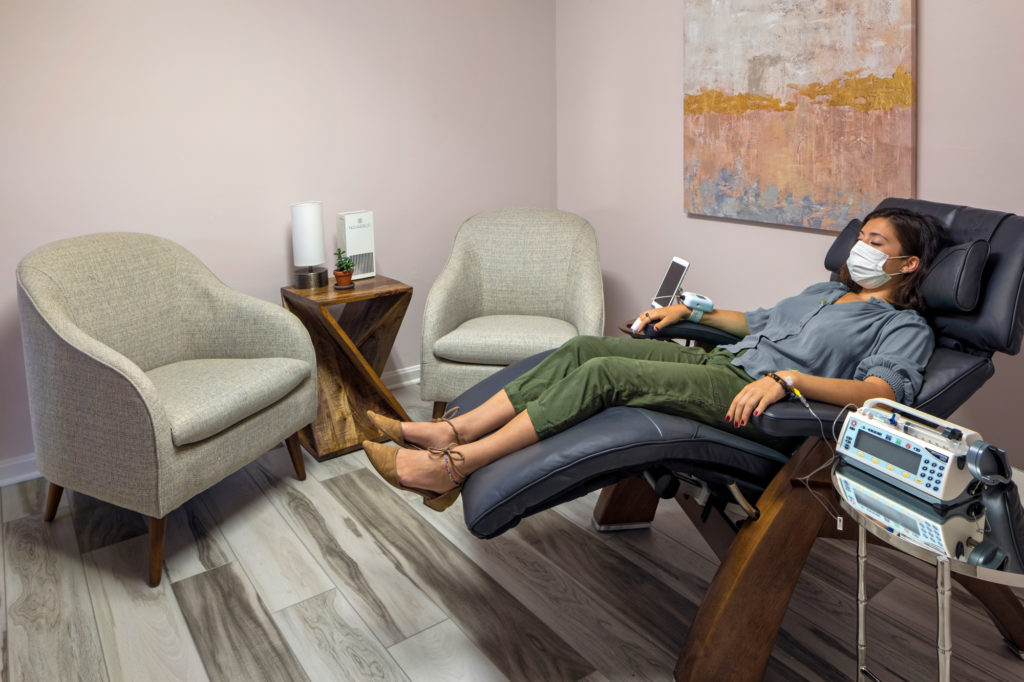
    Pandemic anxiety depletes bandwidth for coping with COVID, but you'll not be exposed to viruses in our office. You're safe here.

    At Innovative Psychiatry, we’re working every day to respond to the call for helping people who are against the wall in this pandemic. If your own bandwidth for coping with the demands of COVID on top of the demands of your life is growing slim, you’re not alone. A vast mob of stressed out, overwhelmed, exhausted, and depressed people surround you. You have to decide what to do about it, if your efforts toward exercise, fresh air, and medication have become futile.

    In that process, it could be that the results of stress have depleted your ability to cope anymore. You may need to reboot. You may need a remodeling project in your synapses to increase your synaptic plasticity. To relieve your symptoms of depression, PTSD, or suicidal thinking. To give you fresh bandwidth.

    For your safety, we’ve installed state-of-the-art technology that utterly removes and destroys COVID-19 and viruses and pathogens from the air and surfaces. So you don’t have to spend bandwidth on your safety, when getting treated is so important for you. Just one more thing to lighten your load. You have enough on your mind.

    If this sounds like you, and you’d like to discuss IV ketamine treatment, call us.

    This pandemic has been hard for everyone. You’re not alone. And we’re here to help.

    We look forward to talking with you and working together for your relief.

    Lori Calabrese, M.D. is on the front end of the race to stop PTSD in its tracks using IV ketamine treatment.

    To the restoration of your best self,
  • Don’t Let Stressors You Can’t Control Hurt YOU: Add Resilience

    Don’t Let Stressors You Can’t Control Hurt YOU: Add Resilience

    Turns Out Winter 2021 Hasn’t Run Out of Stressors to Throw at You Yet…

    People like you have been finding ways to adapt and endure this historical and very strange year. Never think that major factors in society, and in science, and in government, have no effect on you and your personal life. In fact, the ongoing onslaught of external pressures can take a serious toll. In fact, the toll can be so subtle you don’t realize it’s happening. If you find yourself sinking into what feels like quick sand, stop and take action. You don’t have to go down for the count. Stressors you can’t control don’t have to control you or even hurt you. But without intervention, you may find it all gets to be too much.

    Take Janeen and Carole, for example:

    Janeen and Carole were neighbors and had been friends for years. They enjoyed shopping together, stopping for coffee and pastries, or splurging on Italian food at their favorite white cloth restaurant. They were both upbeat single empty nesters and reveled in their freedom once their grown children built lives of their own.

    Carole was the more practical of the two, and Janeen was the more spontaneous, but oh, they had such fun together.

    As the pandemic emerged, and as surprising as it was, they didn’t expect it to have that much of an impact on their lives because they were both already so content doing things at home — together or individually. And they did, whether it was a craft project, or constructing a puzzle, or playing cards.

    However, with the spread of the pandemic, they each knew more and more people who became ill from it. Of course, Janeen and Carole were diligent with all the precautions including masks, gloves, hand sanitizer, and social distancing. Still, they knew someone who was critically ill with the coronavirus, and while she survived, it was pretty scary.

    Then Janeen learned that a life long friend of her family had died in the hospital from COVID. 

    Three weeks later, the brother of her co-worker also died. Both losses hit her hard. Then a cousin also died. Of course, they were reading about someone well-known who also died every day or two. The losses of dear people in this pandemic were unexpected and heartbreaking.

    You know that feeling when something so alarming happens that you hear about it in the news…but you never think it will happen to anyone you know..? Exactly. The alarming aspects of this disaster were getting too close to home for these friends. And in spite of the upbeat friendship Janeen and Carole shared, they discovered stressors you can’t control weren’t as easy to push aside when they plunder your personal life and those you hold dear.

    That Last Straw that Can Break a Camel’s Back…

    Finally, Carole’s sister Greta called and the tone of the conversation turned sour, then bitter…until her sister attacked her utterly unexpectedly. She attacked her political beliefs, her faith, and her family. By the time Carole ended the call, she was shocked and deeply wounded. Devastated. She felt betrayed at the deepest level. Carole trusted her sister. She respected her opinions and felt support from her so fundamentally, that she had always been confident they would never treat each other with disrespect. 

    Carole told herself her sister was just having a bad day. Or maybe the stressors of everything happening were wearing down Greta, too..? At any rate, Carole felt silly that she was so hurt by the things her sister said. She’d never been one to be so touchy with her family, to have her feelings on her cuff.

    But… for Carole, it was as if the clouds had covered the sun. The shades on her life had been drawn. And the light that had normally shone on her days disappeared. Carole didn’t understand what was happening to her. But the color in life had turned shades of gray.

    There was no reason to take her sister’s verbal assault so personally. But still, her outlook deteriorated. She couldn’t seem to help it.

    She read on the internet that depression seemed to be on the rise with COVID…and she wondered if that was happening to her for some inexplicable reason. It was as if she had lost her zest for life. As the days and weeks passed,  she realized she didn’t really care what her sister did…or what Janeen did. She felt so deflated she didn’t want to get out of bed

    So she didn’t. 

    Carole’s highly energized and determined personality went limp. Sad. Empty. 

    As days, weeks, and months passed, Carole knew she had become withdrawn. But she didn’t care. Nothing seemed to matter.

    Eventually, she realized she didn’t see any reason to keep living. Her children were living their own lives now, and she was no longer needed. She thought sometimes about how the end of life would come for her. Would she just not wake up one day?

    Or develop a catastrophic disease?  Then she realized she didn’t really have to wait…

    So she wondered how hard it would be to just put a STOP to her life.  To be released from the phenomenal stress she’d lived with.

    The more those thoughts built in her mind, the more reasonable they sounded to her.

    Janeen checked on her regularly, but Carole tried to end those contacts quickly. She just didn’t want to talk, visit, or exert any energy at all. She wished she could just sort of fade away.

    Above all, though, she knew she didn’t want to do anything that caused her family pain… Still, she continued to think about it…

    Another Perspective on Stress

    We talk about stress. How it can defeat otherwise unsinkable people. How it can reduce immunity and how it can contribute to disorders like depression, panic disorder, PTSD, alcohol use disorder, bipolar depression, social anxiety disorder, and suicidal thoughts. Stressors you can’t control are so much more difficult than those you can. And the helplessness that accompanies them does its own damage.

    When we look back in history to extremely stressful situations, we see how severe stressors can lead to suicide in masses of people. For instance, the stock market crash of 1929 for example, illustrates how extreme stress contributed to psychiatric crises for countless people.

    This winter — 2021 — has been a “perfect storm” of circumstances with the combination of the COVID-19 pandemic, flu season, the COVID variants, remote learning at home for kids, remote working from home, (where stressed parents try to do their job while supervising their children in the same space) and now a historical series of severe arctic storms sweeping from coast to coast, with snow, sleet, and ice causing life threatening traffic pileups, a break down in transportation of goods and services, preventing communities from having what they need… plus a presidential election and an impeachment.

    This is proving to be the most stressful, crisis-ridden winter this nation has seen in a very long time. And everyone is facing stressors they can’t control.

    And all this stress is dangerous. 

    Some people have taken every precaution to try to maintain health and safety, and to help contain the fallout of each of these crises.  Others have all but thumbed their noses at the need for precaution, and so many others have fallen somewhere in between. 

    Most people are relatively resilient, and will weather whatever is thrown across their path. But if major stressors are tossed at them day after day, week after week, month after month…eventually they’ll need some sort of reliefa break to recover.

    In this particular winter of 2020/2021, we may find ourselves isolated or quarantined. But we still need that break. We need to reach out for relief.

    By building a network of people we look forward to talking and laughing with online. Or writing for self-fulfillment and to draw interaction from others, or cooking meals and delivering them to neighbors nearby. 

    Stressors you can't control can hurt without resilience. Ketamine treatment restores.
    We all need to give. We all need to receive. And we all need feedback.  When we give, receive, and participate in feedback…well, those are stressors we can control…so they help.
    When the things we need as humans are accessible and balanced in our lives, it’s easier to maintain a certain equilibrium. 

    But our human needs aren’t always easy to fulfill, and as stressors pile high upon us, we may need more to help us survive.

    We may need a treatment to help restore equilibrium. These are highly stressful times for many, many people for a multitude of reasons. While we need to lean into our support system and find it’s not in place, we may need extra support.

    Something that IV ketamine treatment excels at is resilience. And resilience chases away the clouds of disillusionment and despair. It helps you bounce back after disappointment and devastation. You may have an abundance of resilience already. But if you don’t, ketamine treatment can sure restore it and arm you for what you face when you’re confronted with stressors you can’t control.

    At Innovative Psychiatry, resilience is a remarkable and startling bloom we often see in our ketamine patients. After years of living in a slump, stripped of courage, patience, hope, purpose…to see the same person develop a bright and open countenance, to hear the laughter in his voice, the hope, the confidence…the warmth; to see a life changed so splendidly makes what we do so rewarding.

    While ketamine is not effective for everyonewe so wish it was! — its extraordinary impact is life-transforming for many. Neuroscience researchers continue to probe to find reasons for those it doesn’t help.

    We also have protocols to ensure your safety when you come to our office for treatment. With Novaerus units in each room that remove the coronavirus from the air you breathe, and surfaces treated by Steramist, which removes 99.999% of all the virus, bacteria, and dangerous pathogens from ALL surfaces, we are diligent about keeping our air clean. We all wear masks, and keep the door locked. We’ve made so many changes… and reinvent down to the smallest details.

    You can feel secure knowing that, so you can seek treatment for your depression, PTSD, social anxiety, and suicidal thinking symptoms without fear of COVID infection.

    When it seems that the things in life you could always trust seem to fall around you, and the dread of it wears down your ability to try anymore, you might want to call us.

    You might want to discuss your options for getting your resilience back.

    And if you do, we’ll do our best to help you navigate your way through the barrage.

    To find the best you to face the circumstances around you and the stressors you can’t control.

    We look forward to talking with you.

    Lori Calabrese, M.D. is on the front end of the race to stop PTSD in its tracks using IV ketamine treatment.

    To the restoration of your best self,
  • Why Are Anxiety and Depression so Prominent in This COVID Pandemic?

    Why Are Anxiety and Depression so Prominent in This COVID Pandemic?

    What makes it so hard?

    Anxiety and depression are so prominent in a pandemic.

    Devon tuned into his department meeting. Another Zoom meeting. He was so tired of online meetings…the technical lapses, interruptions…  you can read people so much easier face to face. At the same time, he could sit in an easy chair for the meetings, so that wasn’t so bad. But no one seemed like themselves. Anxiety and depression are so prominent and have clearly taken their toll on his colleagues.

    Still, maybe there’s also a palpable energy in face-to-face meetings. He wasn’t sure if that was the problem or not, but Devon found it more and more difficult to focus, and to think creatively for his job. As the year had passed, he felt less and less capable and more like dead weight. 

    He kept asking himself what was wrong with him? Where were the sparks that flew when he dove into a problem?  Rather than sparks, Devon felt more like a dud.

    Then, he got the phone call about his next door neighbor’s son. Just like Devon’s family, his neighbor’s son was taking his high school classes at home, and online. At first, the young man Stewart, had stopped logging in to classes. Devon had heard this was becoming more and more of a problem in his community. 

    But, apparently Stewart was becoming more and more depressed. Devon just learned yesterday the boy had ended his life…right there at home.

    The grief settled over Devon like a black fog. This on top of the recent deaths from COVID-19 of two of his friends, 10 days apart. But Stewart was 15. His whole life was ahead of him. It was all too tragic.

    COVID Tragedies Can Trigger Anxiety and Depression

    He’d watched the boy grow up, playing with his own kids over the years. And it stirred up more worry about Devon’s own family. He and his wife had tried to keep a close eye on their children to be sure they logged in to school and did their work.

    But, they couldn’t be everywhere and they both worked online. But they tried. Still, life was becoming increasingly overwhelming. His heart went out to Stewart’s family. And he felt a low, sinister rumble of trepidation within himself. The dangers of the pandemic went far beyond the risk of getting sick with the virus. 

    The fear of becoming too depressed to function, or of his family succumbing to it, rose inside him till his  ears were buzzing.

    All in all, Devon knew he had to keep functioning, and presenting a solid, unified front with his wife. He also knew the danger of drowning in it all. When his meeting ended, he called a highly recommended psychiatrist for a consultation appointment. He wanted to be proactive, before it was too late to think straight.

    There’s just something about a pandemic that can make happy people depressed or relaxed people overwhelmed with anxiety.

    We’ve talked about it before. In the early months of COVID-19, that the circumstances that accompany a widespread environment like this can lead to your symptoms worsening. It can also lead to symptoms you never suffered before. Anxiety and depression are so prominent these days.

    Well, at this point, this global state of affairs has been causing stressors that aren’t new anymore. But they do go on and on and on….and on…

    And periodically, we need to stop and take a breath and ask how you’re doing?

    At this point, there have been 99,195,630 COVID-19 cases globally, with 2.1 million deaths. In the US, 25.2 million cases, and over 419 thousand deaths. The numbers are staggering. And the scale of this pandemic is difficult to grasp.

    These are people. Our teachers, our friends, our neighbors, our families. Grandparents. Parents. Our children.

    And…since we are a species with both mind and body, it stands to reason— doesn’t it? —that both our minds and our bodies are impacted by this. With anxiety about sickness, anxiety about isolation, anxiety about lifestyle change and lack of spontaneous freedom, it does stand to reason that the problems and stress factors would pile up and also lead to depression. Anxiety and depression are so prominent these days…and they often go together.

    We’ve watched a 1st wave of COVID spread, then a 2nd wave, then a 3rd…and it’s not over. The virus changes, mutates, and different strains have varying impacts. Some cause milder symptoms, some spread much faster, some cause more severe symptoms. It goes without saying that all this has affected you…and all of us,

    Most of us know people who have had the COVID-19 virus, and many of us have seen our friends and loved ones die because of it. This is a traumatic time that none of us will forget.

    Research Helps Us Understand the Impact of a Tragic and Stressful Experience

    A group of Danish researchers in Copenhagen and Aarhus, Denmark led by Søren Østergaard conducted a survey during each of those 3 waves to better understand the variation in psychological well-being regarding symptoms of anxiety and depression during this pandemic, among participants in Denmark. 

    Their results were relevant to the global community, even though severity of the disease hasn’t been equal everywhere.

    They reported results of the survey for wave 1 (March 31st to April 6th), wave 2 (April 22 – April 30th), and wave 3 (November 20 – December 8 … just last month.)

    The 1554 respondents were an average age of 49.5.

    There was a statistically significant decline in psychological well being from wave 2 to wave 3, especially with men. And during wave 3, worry, anxiety, and hopelessness decreased over those levels in wave 2, but feelings of guilt increased.

    Anxiety and depression have been prominent in Denmark, too.

    In a nutshell, these researchers ended the paper with the statement that by late November to early December, the psychological well being of the Danish population had fallen again to the level of March/April, when it had been at its lowest.

    Overall, they found that when COVID cases are high, and the measures to reduce the spread of the virus like quarantine, isolation, social distancing, and major lockdowns are the most widespread, there is a significant impairment of psychological wellbeing.

    What Can You Do with This Information?

    Setting aside the particulars of a study in Denmark, and focusing on right here in the US, we need to find ways to intervene in your own state of mind. Your own wellbeing.

    Gather online with friends and family to interact for online chess. Talk and laugh together. Watch your grand babies blow bubbles.  Share a spaghetti dinner, complete with candles, where each participant cooks at home then all connect and chat while eating.

    Social interaction is fundamental to your well being. When you share a meal on Zoom, you don’t have to wear a mask!

    Even so, if this ongoing pandemic seems to be having a serious impact with depression, social anxiety, hopelessness, even suicidal thinking, ketamine infusions may be able to turn that around and refresh your resilience. There is still hope.

    Anxiety and depression so prevalent during pandemic

    At Innovative Psychiatry,  we’re all about helping you get a leg-up to manage these challenging times, and meet the frustrations in your life with flexibility and peace. We offer IV ketamine treatment — after a thorough screening and evaluation — to those whom we determine are good candidates for ketamine’s extraordinary benefits. Ketamine treatment is not for everyone, because circumstances as well as the medical and psychiatric history of some patients indicate ketamine is not the right choice. However, it can be so helpful to so many…it can be transformative.

    We provide a safe place for treatment. We now test our staff at least once each week to verify they are COVID free… We can also refer our patients to a local DNA lab that will do same day PCR testing for those patients who wish it. In addition, we installed technology that destroys the coronavirus and all viruses and bacteria in the air and on all surfaces fast.

    Our goal is to help you get better and to keep you safe.

    You have struggled, tried to break through, tried to carry the anxious and depressive symptoms that have weighed you down for a long, long time. We want to help you put that struggle in your past. So you can feel restored. So that you can be your best self. To have the energy, freedom, and hope to build your life again with creativity and joy…and to have the resilience to move from day to day and week to week.

    You needn’t postpone it any longer. Call us.

    We can answer your questions and sort out the possibilities together.

    Lori Calabrese, M.D. is on the front end of the race to stop PTSD in its tracks using IV ketamine treatment.

    To the restoration of your best self,
  • Does Mine Look Like His?? How Disorders Look Different in Different People

    Does Mine Look Like His?? How Disorders Look Different in Different People

    It can be alarming to see you brother try to navigate his way through a challenging diagnosis like depression or bipolar disorder. His symptoms may be alarming for you, and while you’re trying to be supportive, he may feel the world is crashing in. His dramatic reactions can be overwhelming, especially when you had a friend with bipolar disorder who had a volatile temper, it seemed, and seemed hypersexed, but she didn’t act like your brother is acting now. Surely they got his diagnosis wrong. But the doctor says that disorders look different in different people…at different times and under different circumstances.

    And it’s good to know.

    Charlotte might be a good example.

    Charlotte first began to show signs of less confidence and depression around the age of 6. She tried so hard to have a stiff upper lip, to invest her effort and perform well at school to please her parents, and to be industrious. Her parents were always so proud of her. But they didn’t recognize depression in herbecause she tried so hard.

    Now, Charlotte’s family already showed signs of psychiatric disorders in other members. Her mom had suffered from depression since childhood, her oldest brother had suffered from depression since he was 4. Plus, her other brother received a diagnosis of bipolar disorder. He had actually displayed symptoms since he was a young child. See the similarities?

    In addition, Charlotte’s uncle struggled with Narcissistic Personality Disorder. So did her grandfather.

    So much going on in Charlotte’s extended family. In fact, so much woven through the whole family.

    But in her case, her primary diagnosis turned out to be severe treatment-resistant bipolar disorder. Plus alcohol use disorder, social anxiety, and some phobias.  

    Happily, her bipolar depression, social anxiety, and alcohol use disorder, eventually improved dramatically. Some aspects reached remission after IV ketamine treatment.

    Sometimes depression or bipolar depression expresses itself as anger… even rage. Sometimes it can look like alcohol use disorder. In one person it may look like sadness and despair. In someone else, it may show up as disrespect for others. One person with bipolar disorder may seemed quiet, full of sorrow, and hopeless a lot of the time, but another might feel angry, disillusioned, and seeking revenge. How is it that the same disorder can present so differently? It can look different in different people and with different circumstances.

    Lots of people wonder about the same thing. Why does one person with depression act so angry?  Then someone else with depression suffers from quiet despair..? One eats carbohydrates in large amounts, and gains weight steadily. While another has no appetite and loses weight at an alarming rate?

    Which came first?  The chicken or the egg?  Disorders have a way of emerging and creating more difficulties. Depression can give way to phobias, weight gain, social anxiety

    Bipolar depression may show up as raging anger at times, unrestrained sexuality at times, and terrible despair in one person. Then, in another person, it may look like self-harming, unlawful behavior, and substance use.

    One reason? It’s not uncommon for someone with depression or bipolar depression to also experience anxiety, phobias, hypersexuality, or substance use disorder, alongside the original diagnosis. As a result, you may have a friend or relative who displays a certain cluster of behaviors, and you form the idea that this is what bipolar looks like.

    Then, someone else you know is given the same diagnosis, and while they display erratic behavior, it’s nothing like the behavior of your friend.

    The same disorder can look really different in different people.

    So now you can meet Grayson.

    He was first diagnosed with ADHD, then bipolar depression, and finally obesity. 

    It would be natural to assume that his depression, bipolar depression, and ADHD were all linked to each other. Since some people who exhibit ADHD symptoms as school age children, are later diagnosed with bipolar disorder. And depending on the type of depression you have, you may find you eat high carbs, or you may find out you eat very little. 

    Here’s Grayson’s experience:

    In Grayson’s case, ADHD emerged first when he was a child. About 6 years later, bipolar disorder became a more pressing concern, which SEEMED to lead to obesity. When Grayson is experiencing bipolar depression he tends to eat more, sleep lots, and feel listless and without energy.

    Disorders look different in different people.  

    In Grayson’s family, his own son was diagnosed with ADHD at the age of 7. Then, as he grew he was diagnosed with severe depression.  Grayson’s grandmother has suffered from depression all her life. His uncle has struggled with ADHD but learned to manage it in adulthood. 

    So.

    We know that depression, and many other psychiatric disorders, run in families. And these family connections call for us to show compassion for our family members who suffer from their own individual disorders. 

    If you suffer from depression along with other disorders, and if your current treatment isn’t working, feel free to call us.  Or ask your health care team to call us.

    We welcome the opportunity to work in conjunction with your healthcare team to help you get better.

    At Innovative Psychiatry, it’s true that we see multiple family members who each live with diagnoses and co-morbidities, and it’s true they may sometimes share the same diagnosis … or they may not. Although your symptoms need not necessarily be labeled, they do need to be evaluated as part of your overall self. And then they can be addressed, as needed, with appropriate treatment.

    While IV ketamine treatment is not the appropriate treatment for all of the symptoms you experience, we can work with your health care team to try to help you experience your best self.

    Does IV ketamine treatment help everyone who tries it? Unfortunately, no. But it does help many achieve remission and build fulfilling lives.

    So do try to avoid stressful situations or tasks during this season.

    Do make decisions that are productive for your own health and the health of your family.

    And do call us if we can help you get better with better with IV ketamine treatment. Give yourself the best opportunity for a fulfilled 2021.

    Lori Calabrese, M.D. is on the front end of the race to stop PTSD in its tracks using IV ketamine treatment.

    To the restoration of your best self,

  • Prepare Your Family to Respond to the Risk of Adolescent Suicide

    Prepare Your Family to Respond to the Risk of Adolescent Suicide

    September is National Suicide Prevention Month And Adolescents Have the Highest Risk

    So let’s look at adolescent suicidal behavior. If you have an adolescent in your family, you may not be able to even imagine your child contemplating suicide. Or, if your child visits a psychiatrist regularly for a disorder, you may worry that he considers death or dying, and you may privately feel terrified about it. But, it’s ok to ask. Have you? This is not a taboo subject, and since risk of adolescent suicide is so much greater than it is for adults, it’s a subject to be discussed openly in every family.

    Did you know that about half of all teens who attempt suicide for the first time die? 50%! It’s so alarming. How can you prepare yourself, and more importantly, prepare your child, if you had no idea she was thinking about it?

    Brain and Behavior Research Foundation funds dedicated suicide researchers across the globe who seek to learn as much as possible about suicidal behavior in youths. And that gives you an edge over parents a generation ago. By studying teens who consider death, dying, and ending their own lives, these researchers have been learning ways to help you make your child at least somewhat safer.

    And of course we want to do those things that can interrupt a self-destructive plan…to make time for treatment, relief, and hope.

    Because one thing about adolescents is that they can be unpredictable, impulsive, impetuous, and lack emotional regulation — even when they’re healthy and having a normal day!

    But, when a teen is struggling with a disorder, when his or her emotions are all over the map and something has happened that seems irreparable to him, or when he finds himself in crisis and can see no way through it, he can make an irreversible decision that silences his options.

    Of course there are some teenagers who never consider self destruction.  Some whose sense of survival is strong and immovable.  And if you were that kind of youth yourself, you may not be able to grasp that your own teen could be different…might think there is no way out, might think that he has no other option.

    Did you know that the risk for suicidal behavior in an adolescent is about 100 times higher than it is for an adult?

    It’s true.

    And because of this, as a parent you can’t presume this risk doesn’t apply to your family. So it can be so helpful to have some ideas about what to look for. 

    You need to be informed and alert enough to watch for signs that your youth could be at risk for suicidal thoughts or behaviors. 

    There are screening programs for uncovering risks in your youth, more sophisticated programs than charts you fill out on paper. Machine learning has been developed that collect more detailed information. 

    These researchers have learned that 10.7% of those who die by suicide visited the Emergency Department within the last 2 weeks. 

    And this will surprise you…  

    Their reason for the ED visit is not about suicidal thoughts…but other complaints, like chronic medical illness like diabetes or asthma, aches and pains in their body, assault, head injury, alcohol or drug intoxication, or because they are using the ED as a primary care clinic.

    This is so important

    It’s important because it’s during these visits for physical maladies that patients can be screened for suicidal behavior risk. 

    Just think about it… when someone you love attempts suicide or dies by suicide, and you realize they visited the ED 10 days earlier, how could you not want to throw your hands up? 

    As parents, keep this aspect of your adolescent front of mind for all medical treatment, and if you have concern that your child may be considering dying, ask for help. 

    Parents do the best we know, but do reach out for medical help, psychiatric evaluation, and diagnosis. 

    More thoughts that may surprise you:

    These conditions may predispose your youth for suicidal behavior:

    If they’ve attempted suicide before

    (And remember, 50% of teens who attempt suicide die on the first try)

    If they have problems sleeping
    Or, if there is marital conflict in the home
    If they have a tattoo  

    (Remember, not everyone who has a tattoo is at risk for suicide, but a large percentage of those who consider or attempt suicide DO have tattoos. So consider that if your child wants a tattoo that it’s not unreasonable to explore whether he may have pain he hasn’t talked about.)

    Also, if they have been imprisoned (again, a source of pain)
    Of course, if they have a mood disorder
    And pay attention if they use negative words commonly that are associated with death, dying, evil, darkness, self-hatred, etc. Because this is also a risk factor.

    Use of positive words like happy, joy, sunny, sunshine are not typically part of the vocabulary of a teen at high risk for suicidal behaviors.

    Risk of adolescent suicide drives us to prevent it using a Safety Plan.

    Create a Safety Plan

    Finally, when you do have risk of adolescent suicide in your family, participate with your youth’s healthcare team, therapist, and psychiatrist to create with your child a Safety Plan together. Identify those triggers that can increase distress and work together to find those things that can decrease it. 

    The effectiveness of the plan you form relies on the involvement of all involved, and your child’s willingness to help and respond.

    And then, in the case of an unexpected suicidal young person, for whom you have no prepared plan, you can start by helping him or her call:

    The National Suicide Prevention Lifeline: 1-800-273-TALK (8255)

    With all that said, remember there is an option available as a part of your safety plan that can intervene without hospitalization or a trip to the Emergency Department.

    Ketamine treatment can has been so remarkable in its ability to stop suicidal thoughts in a few hours or less. It can stop them. Erase them. 

    And when that happens, it gives you the freedom to work on getting better. Because the crisis can pass.

    This is so extraordinary that I conducted and published a retrospective chart review on a patients I’ve treated — with complicated stories, real life issues, lots of different symptoms, and the suffering that happens when treatment doesn’t work, with such promising results that I’ve had the opportunity to share what I learned with colleagues across the US and in the UK.

    Ketamine Suicidality

    Ketamine treatment can rapidly replace thoughts of death and dying with hope to give you the opportunity to work toward getting better, and even remission.

    Risk of adolescent suicide is frightening, but prevention gives a child her life to live.

    At Innovative Psychiatry, we offer ketamine treatment to people as young as 14, in a safe environment during this pandemic. We see teens and adults improve dramatically every week. Not all—some teens and adults don’t respond—but many experience complete remission from their symptoms.

    Risk of adolescent suicide is high. It’s the second leading cause of death in persons age 15-24.

    If you or your teen suffers from symptoms of depression or suicidal thoughts or behaviors, reach out or text one of the support hotlines, or call us if you would like to consider ketamine treatment to stop those thoughts.

    We understand all too well how these symptoms can not only disrupt — but endanger — your life, and we want to help. Seeing you experience relief from your pain, torment, and suffering is why we get up in the morning.

    Your desire to pursue a fulfilling and rewarding life is your fundamental human need, and we want to help that happen for you.

    Reach out for remission.

    Lori Calabrese, M.D. is on the front end of the race to stop PTSD in its tracks using IV ketamine treatment.

    To the restoration of your best self,

    We can all help prevent suicide. The National Suicide Prevention Lifeline provides 24/7, free and confidential support for people in distress, as well as prevention and crisis resources for you or your loved ones.

    The National Suicide Prevention Lifeline 1-800-273-TALK (8255)

    The Veterans Crisis Line and Military Crisis Line 1-800-273-8255 Press 1

    Crisis Text Line: 741-741 Free text hotline 24/7

  • Explore: Method to Differentiate Bipolar Depression vs Unipolar Depression

    Explore: Method to Differentiate Bipolar Depression vs Unipolar Depression

    As you may know, May is mental health month.

    IV ketamine can restore her joy whether it's bipolar depression vs unipolar depression.

    And as such, it’s a good time to talk about symptoms of mental health disorders, don’t you think? We want to increase understanding and dispel stigma which will help people who suffer gain better access to the help they need. Stigma is steeped in ignorance about something someone doesn’t understand. In addition, the global circumstances of these last few months have impacted the mental health status of so many. So let’s use this month to broaden understanding and better equip us to respond to ourselves and those around us. So here’s something to talk about: A new way to differentiate bipolar depression vs. unipolar depression may be emerging.

    Leading Cause of Disability

    The leading cause of disability in the world today is not heart disease or cancer…it’s depression. Depression is that common. We talk about severe depression and we talk about bipolar depression. When you see someone with either of these conditions, they may look rather similar from your vantage point, but they’re actually two distinctly different conditions.

    When we diagnose someone in this depressed state, it can be difficult to determine whether they suffer from major depression or bipolar depression, unless they have a history of mania or hypomania to determine the difference.

    Unipolar depression and bipolar depression don’t feel the same…but they do sort of look the same.

    Which is why a doctor asks whether you’ve had times when your mood was elevated, you felt energetic, hyperactive, maybe irritable, angry… and overly confident…all at the same time?

    For this reason, so many with bipolar disorder are first diagnosed with major depression, especially those with bipolar II disorder, since their symptoms include far more depression than hypomania.

    When you first see a psychiatrist about your depression, it’s important to be patient. Because some of your symptoms may not have emerged yet…and you may appear to have unipolar depression. Then later, mania or hypomania emerges, and your doctor may change your diagnosis to bipolar disorder, along with your prescriptions.

    Because of the challenge of diagnosing someone accurately who has a low mood, researchers have been seeking a means of using some sort of biological markers to determine scientifically the proper diagnosis and character of the depressive symptoms.

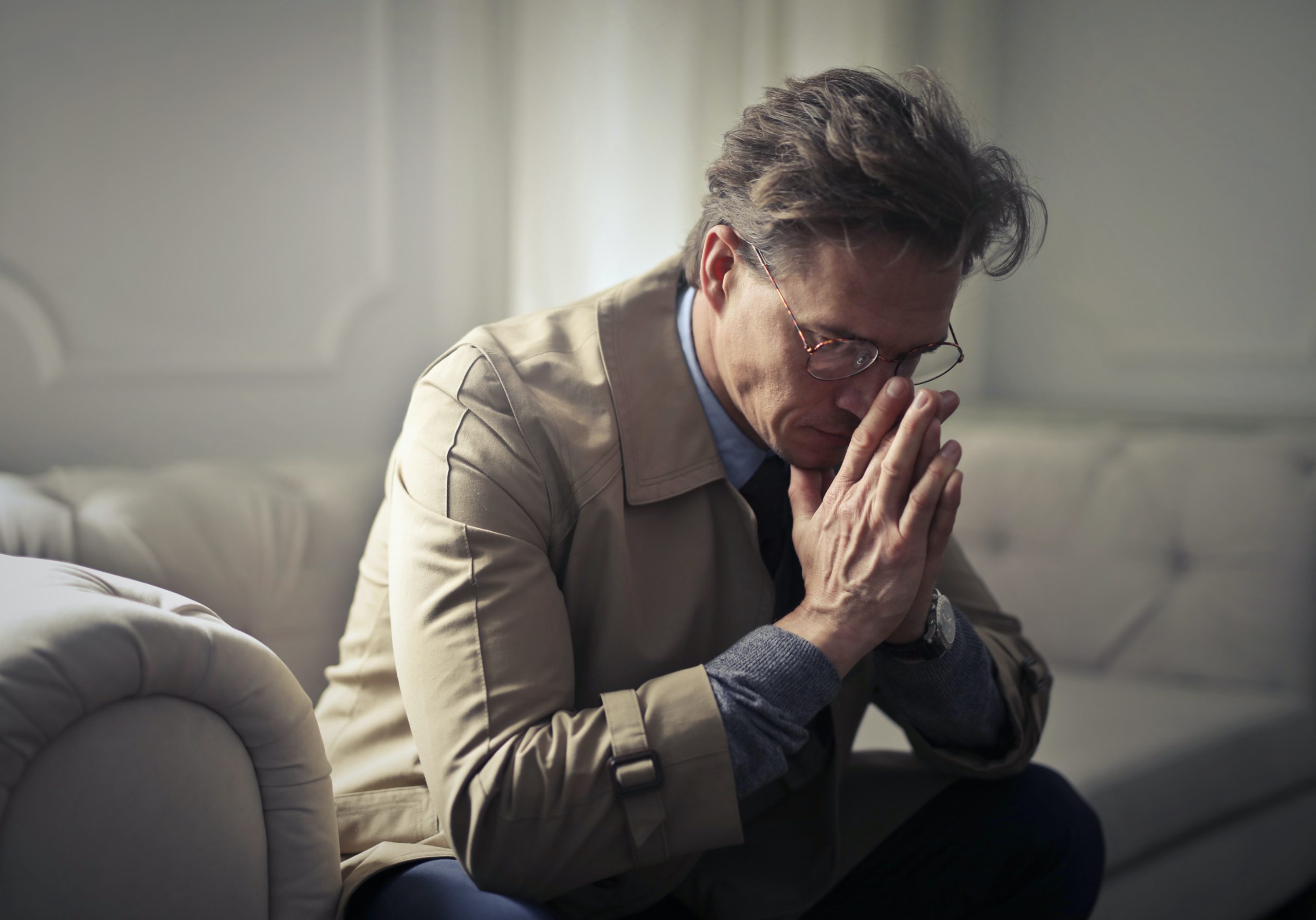
    This man is in pain but doesn't know if it's bipolar depression vs unipolar depression.

    Something that would differ in patients with unipolar depression from those with bipolar depression. Possibly brain activity. Or maybe proteins in the blood? Possibly genetics?

    Exploring Bipolar Depression vs Unipolar Depression

    An interesting study conducted by Brain and Behavior Foundation researchers, led by Mary Phillips, Ph.D., performed with a relatively small group of subjects, suggests a way your doctor might differentiate the two disorders clinically to aid in accurate diagnosis.

    Using functional magnetic resonance imaging (fMRI), full brain scans were conducted on a group that included 18 bipolar patients who were in bipolar depression, 23 depressed patients who’d been diagnosed with major depressive disorder (MDD), and another 23 who were healthy without a diagnosed disorder.

    It’s unfortunate that their study involved so few, and also that 90% of those with bipolar disorder were diagnosed with bipolar II disorder, leaving only 10% who had bipolar I disorder. A more evenly distributed group might have told us more.

    Even so, they did make some significant observations.

    The working memory system is used by the brain to maintain, manipulate, and update information that is associated with tasks that are presently at hand. When the networks of nerves in this system are damaged, learning – reasoning – and decision- making ability can be disabled.

    This is particularly true in those with mood disorders, like depression.

    So, the researchers gave each participant an easy task and a difficult one, while the participant was undergoing an fMRI brain scan. The design of the tests was to highlight that people form expectations about a task before they fulfill it.

    Bipolar depression vs unipolar depression can both be treated effectively with IV ketamine treatment.

    A person might feel the task will be easy, so there’s little stress in performing it. But if he expects the task to be difficult, his stress increases before he begins.

    It turned out, that there were patterns of neural (brain cell) activation in the medial and lateral areas of the prefrontal cortex, that were related to how easy or difficult a task would be.

    Mechanism Defends the Person with Bipolar Depression From Emotional Pain

    The researchers reported that people with bipolar disorder may actually block anticipation of a negative experience to avoid experiencing negative emotion while performing a task. That basically people with bipolar disorder seem to have a built in defensive mechanism to help protect them from negative emotions.

    So enlightening. People with unipolar depression don’t do this. They feel what they feel. But those with bipolar experience such damage from their negative emotions.

    As I said earlier, unipolar depression and bipolar depression may look similar to someone observing people suffering from these. But they feel different.

    Let’s add to that, that both of these disorders can often end in suicide, unfortunately. Even so, it’s more common in bipolar disorder.

    There are traditional medicines for people with these disorders. And those medicines do help a lot of people.

    But not all.

    For that reason it’s important to seek help until you find treatment that helps you feel better, function better, and live a rewarding life.

    IV Ketamine Doesn’t Differentiate Between Bipolar Depression vs Unipolar Depression – It’s an Extraordinary and Robust Depression Treatment

    At Innovative Psychiatry, we offer IV ketamine treatment to help you experience relief from severe depression that prescriptions haven’t helped…. And for bipolar depression that is unrelenting in spite of prescription medications.

    Bipolar depression vs unipolar depression for this woman is still crushing.

    IV ketamine treatment isn’t effective with mania or hypomania. But the mania or hypomania is easier to manage and treat without bipolar depression. This treatment can be exceptionally effective for both unipolar and bipolar depression. In fact, it can be utterly life-changing.

    And… in regard to the risks of suicidal thoughts, IV ketamine treatment can erase those thoughts in an afternoon. A few hours. And if you’re not plagued by thoughts of death and dying, you’re a great deal freer to work toward healing, restoration, and joy.

    In this current global crisis, suicides have been increasing, among those with disorders, healthcare workers, physicians, and more.

    IV ketamine can save lives by removing thoughts that lead to suicide.

    IV ketamine has given her joy instead of depression.

    If you suffer from bipolar depression or unipolar depression, and medications haven’t helped, call us.

    Let us help you find your joy again, and your hope. The current global crisis is temporary, but it has affected the outlook of millions. The good news is that joy can be restored, and hope can return. You can feel resilient, and equipped for what life has in store.

    We’re here for you, and we’re working within a safety protocol so you can be treated without fear.

    Better days are ahead.

    To the restoration of your best self,
    signature of Lori Calabrese, M.D.

    Lori Calabrese, M.D.

  • COVID-19 Anxiety Has Gone Viral – How You Can Weather The Uncertainty

    COVID-19 Anxiety Has Gone Viral – How You Can Weather The Uncertainty

    Covid 19 anxiety has gone viral, and fear of catching the virus results in isolation.

    The President has declared a national emergency.

    Schools have been closed and gatherings cancelled. Your plans for Spring 2020 have been turned upside down. The news is filled with the increasing numbers of cases of this strange virus, and everywhere you turn, conversations focus on discussing the dangers and risks. What do you do with this information overload? COVID-19 anxiety has gone viral – How do you weather the uncertainty?

    Thousands Self-Quarantine

    Lilyanne, a mother of five, returned from a spring break trip to the northwest. It was a chance to see grandparents, aunts, uncles, and cousins. They were able to get outside and camp, and take in the beauty of the rugged Oregon coast. After she and her children arrived back in their small rural town in Oklahoma, she didn’t feel right. She checked her temperature and it was 102. No wonder!

    Before long she was coughing…hard. It was a dry cough but it hurt. Her preschooler was wheezing, and with her daughter’s asthma history she thought it best to take her to the doctor. The doctor prescribed Tamiflu for both Lilyanne and her little girl. 

    Her daughter Bessie started feeling better quickly but Lilyanne felt no improvement. She asked the doctor for a COVID-19 test, and the doctor said he wasn’t sure yet how to test for that.

    A couple days went by, and Lilyanne decided to go to an urgent care. She worried that she might get too sick to care for her children, and also wanted to know if she should isolate herself away from them. The urgent care had no idea how to do the testing either. 

    So Lilyanne went to the ER. She hated to expose others there but tried to be very careful. She needed to know if she’d been infected in Oregon or in the plane…or somewhere else.
    Covid 19 has gone viral with shortage of testing kits.

    The ER doctor tested her for other infections, but explained that she didn’t meet criteria for a COVID-19 test.

    “I don’t meet criteria?? Why not??” She felt overwhelmed.

    Covid 19 anxiety has gone viral, and she wished she knew what to do…

    The best thing she knew to do was to quarantine herself and her five children in the house. But to do that…she needed groceries so they could eat.

    Again, she tried to be really careful, using hand sanitizer every few minutes at the store. She quickly filled her cart with necessities since they’d been out of town 9 days. Then, she chose frozen meats, veggies, and snacks, along with milk, juice, pasta, and produce. 

    She paid without touching the cashier, wiped down the terminal where she inserted her card, and hurried out of the store.

    Once home, the kids helped with unloading groceries, and she took off her clothes, put on her nightgown, and crawled under the covers.  Before long, her oldest son, Colton, brought her a steaming mug of herbal tea.

    So far, none of her children showed symptoms, but how was this going to go? Her two oldest kids could handle meals, but how long could they manage the young ones? The laundry? Keeping the peace..?  How bad would this get?

    Could she trust all 5 of them to stay in the house, when she was in bed?

    Her temperature had risen higher. 102.9. The coughing was hard to control and painful. Her lungs hurt.  

    She called the CDC to ask them what to do…

    Anxiety is a natural response to a situation with an unknown outcome. 

    And just because the outcome is unknown, it doesn’t mean you’re facing doom. That’s the thing about anxiety. It feels foreboding. Scary. Threatening. 

    But if you can decide to think about it differently, you just might find a way to relax a little…and patiently see what happens next.

    For instance…

    Covid 19 anxiety has gone viral but you can take a walk in the fresh air like this puppy.
    If you’ve been watching the news or reading articles on the internet and you feel your heart rate increasing, turn off the TV for awhile, walk away from your computer, and take a short walk in the fresh air, do a little gardening, or go in the kitchen and cook something. 

    That heart rate rises to give you more energy to fight or run in a crisis, so put that energy to work for something productive and enjoyable.

    An unsolicited act of kindness, no matter how small, can help you redirect your energy and focus, and the smile you bring to the recipient will give you good feelings that help you feel a little better, too.

    Facetime or Skype a friend, and talk and laugh. Just because you’re isolated doesn’t mean you can’t continue to nurture your friendships, and show others you care. Keeping the connections in your life strong will gird up your own resilience to get through this challenge.

    There are also apps for your phone like Marco Polo, where you can talk back and forth and see each other’s faces. Just being able to talk face-to-face can help you relax, feel connected, and encouraged.

    Because COVID-19 anxiety has gone viral, and the people you care about are comforted hearing from you.

    And remember that by isolating yourself at home, you’re taking care of others. Odds are that you’re likely to recover fine if you’re infected with the COVID-19 but you quarantine yourself for the sake of those who might not recover as easily.

    When you isolate yourself, it’s an act of kindness toward all of those people whose paths you would cross.

    We’re all surrounded with people who have compromised immune systems, or underlying conditions, and we don’t even realize it. A colleague who suffers from Crohn’s Disease, Type 1 Diabetes, leukemia, or any other immunocompromised condition could be made critically ill by contact with you.

    And any of the people you see at the grocery store, on the train, in an airplane, or on an elevator are protected because you chose to isolate yourself until you’re no longer contagious.

    Now, even though we talk about productive things to do with the anxiety you might feel, sometimes you just can’t manage it. 

    Sometimes you need help.

    And just as we’ve used IV ketamine treatment for depression, it’s also shown significant efficacy for anxiety. We know that anxiety and depression often go hand in hand, don’t we?

    We know that that breakdown for treatment effectiveness goes something like this:

    About a third of patients with depression improve with their first trial of antidepressants, and another one third or so respond well to a second trial of a different antidepressant or combination. That leaves about 1/3 who aren’t helped by that method of treatment. The ones we might call treatment resistant.

    Still it’s not so much that those patients are treatment resistant, it’s that traditional antidepressants are the wrong treatment for those patients.

    But that group of patients shows wonderful response to IV ketamine treatment, with 80% responding remarkably well.

    At Innovative Psychiatry, we’re seeing patients every week who walk out with their heads high, a spring in their step, and full of anticipation and joy about what lies ahead.

    And the resilience these patients can enjoy that IV ketamine can supply, can give them the flexibility and resilience to bounce back in the atmosphere we’re challenged with right now in this country and the world.

    What’s more, IV ketamine infusions can stop suicidal thoughts in an afternoon.

    It’s so good to know you don’t need a hospital stay to receive this extraordinary treatment. You can come to the office, relax in a private area, and after your infusion, slip out quickly and head home with a ride.

    Covid 19 anxiety has gone viral but you can be happy and at peace through it all.

    Don’t let our current challenges tear down your confidence in your ability to manage your life. COVID-19 anxiety has gone viral, but it doesn’t have to affect you.

    If you’re part of that last 1/3 and need relief, call us.

    We’re here to help you safely receive treatment, so you can emerge with a new outlook on your life, new energy and resilience to face these challenges, and new hope and joy to build your future.

    Lori Calabrese, M.D. is on the front end of the race to stop PTSD in its tracks using IV ketamine treatment.

    To the restoration of your best self,
  • Ketamine Restoration in the Amygdala Repairs Social Connections

    Ketamine Restoration in the Amygdala Repairs Social Connections

    Nick walked in after school, slamming the door behind him.

    His mom looked up, startled by the noise. “What’s that dirty look about..?? You’re so judgmental!!” Nick was fuming, and with that he headed upstairs. His mom followed him upstairs and spoke softly, knowing her son was apparently volatile. She didn’t realize that what just happened could be repaired by ketamine restoration in the amygdala.

    “Nicholas, I’m sorry my face looked judgmental. I wasn’t feeling judgmental…I was startled by the noise the door made, and concerned that you seemed so upset. Did something happen..?”

    Nick crumbled. 

    He didn’t know why he misread his mom, or why he was so angry. Nick hated himself for being hateful. He just felt so angry so much of the time, and when he wasn’t angry, he just wanted to cry… what was wrong with him?

    “Sorry, mom.  I thought you were mad about me slamming the door. I have a lot of homework and I just don’t want to do it. It all seems pointless.”

    Nick’s mom knew he’d been under a cloud since the last school year. He was seeing a psychiatrist, which he always dreaded. The medications didn’t seem to be helping, in spite of the fact he was on his third different medicine.

    He’d all but refused to see the therapist any more. As his mom, she just wanted him to feel better and enjoy his adolescent life, but she was hitting a wall. All she knew to do was to encourage him to keep trying and to provide a little comfort where she could.

    “Why don’t you come downstairs, and I’ll make you a sandwich. Eating something might help your homework seem a little easier to face.”

    Ketamine Restoration in the Amygdala

    While Nick ate, he decided to mention to his mom what his buddy in History had told him.

    “Mom, you know Zach? He’s been down for a long time…even longer than me. He told me today that he’s getting IV ketamine treatment. He said he took pills for a year and they didn’t help, no matter what brand the doctor ordered. Anyway, his dad read about this treatment, and Zach says it’s already helping.”

    “Really Nicholas? Does his doctor give him the treatment?”

    “No, he said his dad is taking him to a different psychiatrist who does it. He says his own doctor is all for it. He’ll go for two or three weeks and he’ll be done. So far, he’s finished the first week.  I can tell he’s doing better. He smiles and laughs. It’s weird. But I also envy him…”

    “I tell you what, Nicholas. You go work on homework, and I’ll see what I can find out about this treatment. IV ketamine you say? We’re going to find help, honey.”

    Three months later, Nick walked in the door, smiling ear to ear.  

    “Hi Mom. Since it’s Friday, is it ok for me to go to a movie tonight with Zach and Tim?  Oh and by the way, Chelsea said she’ll go to prom with me.”

    Nick beamed.

    “Oh that’s fantastic, Nicholas! I’m so glad she said yes. She’ll be on the arm of the nicest and best looking guy at school!  And sure, the movie’s fine. Zach and Tim are great guys.”

    IV ketamine restoration in the amygdala can make all the difference.

    Depression Can Impair the Amygdala’s Ability to Process Faces

    To the casual observer, this may all sound a little too easy. And for some people, it might be. Everyone’s different. But for most people like Zach and Nicholas, their misery is reversed by a series of 6 IV ketamine infusions, sometimes a few more.

    And in some cases supplements are needed to address low blood levels of certain hormones or nutrients first. But, when you consider the comparison of that to years of traditional antidepressants that aren’t working, it’s an easy choice.

    On top of that, the prospect of joy – and hope – in place of the damaged relationships caused by a short temper, a hopeless outlook, and absent motivation, is again…an easy choice.

    Humans like to feel good. When you don’t, you’re not very pleasant to be around, you know? Is there anything that makes you feel worse than severe, unrelenting depression complicated by anxiety and phobias?  It’s misery.

    And the thing is, it colors the way you see everything. You can be looking in someone’s face who’s just preoccupied, and interpret their expression as angry, critical, irritable… then you snap at them about it, and they feel attacked from out of nowhere.

    Guess what?  There’s a scientific reason you do that. It’s not just your imagination. And the good news is that IV ketamine treatment actually changes something deep in your brain to help you interpret their facial expression for what it’s intended to be.

    To understand this, we need to talk about the a wonderful structure in the brain called the amygdala.

    Ketamine Restoration in the Amygdala

    The amygdala consists of 2 almond shaped structures deep in the sides of the brain at the temporal lobe. It’s one part of the limbic system which processes emotion, records emotional memories, influences behavior, motivation, and the sense of smell, as well. 

    One key job the amygdala performs is helping you to look at facial expressions in others and determine their emotion. For instance, if you see someone frowning, with their face tense and lips tight, do you assume they’re happy? Of course not. It’s your amygdala that sees their expression and determines they may be angry.

    Well, when someone is suffering from a disorder like severe depression or bipolar depression, their amygdala may be malfunctioning.

    Study Explores Ketamine’s Effect on Amygdala Function

    So recently, a team of researchers led by Joana R.A. Loureiro in Los Angeles and Chicago set out to study what effect two rapid acting depression treatments have on the amygdala’s ability to accurately process facial expressions. Using functional MRIs (fMRI) they tested 44 adults who were all experiencing an episode of severe depression.

    They divided the group into two parts: 17 subjects were given an individualized number of treatments of ECT and 27 were given IV ketamine infusions 2 or 3 times a week until they had received 4 infusions. 

    This was an interesting approach because both forms of treatment affect brain function and emotional processing, so they wanted to see if it worked at the level of the brain cells. 

    Since interpreting the facial expressions of others is such an important part of social functioning, they focused on the subjects’ ability to accurately do that. The subjects were tested by the task of matching emotional faces on a screen. If the face at the top of the screen was smiling, they needed to match the face at the bottom of the screen that was also smiling.

    They found that both modes of treatment improved the accuracy of the subjects’ amygdala function.

    When Depression Impairs – Ketamine Repairs

    Now, about the type of scenario that Nicholas and his mom experienced. At the moment he walked in the door he believed he saw criticism and judgment in her facial expression, when her look was actually surprise and concern.

    When someone is severely depressed, it’s as though they have an affinity for negative feelings and beliefs. So, when they see a facial expression that appears negative to them, it goes to the bone. They feel it so deeply and lightening fast.

    It’s easy to see that this type of misinterpretation and reaction only further damages relationships that are already fragile when someone is severely depressed.

    And even though both ECT and ketamine improved the amygdala’s function, ECT is a treatment that carries some bias and even stigma for its side effects and history.

    We also know that ketamine not only blocks the NMDA receptors but it also activates AMPA receptors and an array of other actions that can make you feel remarkably better.

    And there’s another life-changing benefit ketamine can provide:

    IV ketamine can stop suicidal thoughts in a few hours.

    This in-depth study shows yet another way that depression impairs your function, and how ketamine treatment can restore it better than ever.

    Reach Out for Ketamine Restoration in the Amygdala – And Get Your Joy Back

    At Innovative Psychiatry, want to help you feel a lot better than just “less depressed.” We want you to experience joy, a song in your heart, hope for the future, and energized motivation to build the life you want, with healthy and strong relationships.

    It’s almost like using a car jack to crank up your life and replace the pain and loss with new ideas, new projects, new joy in relationships.

    If you can relate to Nick, and you want to feel joyful and able to care about others as you put your best foot forward, call us.

    We want to work with you and your healthcare team to help you experience extraordinary relief. 

    Reach out now for hope.

    Lori Calabrese, M.D. is on the front end of the race to stop PTSD in its tracks using IV ketamine treatment.

    To the restoration of your best self,

  • Does Hopelessness Accompany Suicidal Thoughts or Cause Them?

    Does Hopelessness Accompany Suicidal Thoughts or Cause Them?

    Tim dragged himself into the school cafeteria where the photographers had set up equipment to take school pictures.

    He felt angry, bitter, sullen, and hopeless. What purpose could there be in school pictures? What’s the point? he thought. Tim hated being at school. He felt like he would self-destruct if he didn’t get out of there. Then it was his turn for his portrait. He stared at the camera. The photographer said, “Smile!” (Does hopelessness accompany suicidal thoughts…or cause them?)

    He just stared straight ahead. Enduring. He knew if he smiled it would make him look like a horror-movie character. Click. Flash. And it was over.

    Tim got up, and dragged himself out of the cafeteria and out the back door of the school.  He shuffled home. He couldn’t stand being there any longer. 

    Right behind Tim in the line a pretty girl waited her turn. Emily smiled for the camera. She didn’t want to. But she tried to do the right thing. Her sad eyes gave away her despair. Emily lived in a neighborhood where everyone knew each other, got together, barbecued, and enjoyed the community.

    The problem with that is that one of her neighbors offered to spend time helping her with her music lessons. Her parents encouraged her to take advantage of the expertise of this “nice man.” Luis was 41, college educated, and very musical.

    Emily didn’t know how to tell her parents that every time she went to his house, he had other ideas in mind. She felt ashamed. Troubled. Scared. Dirty.

    She tried to be responsible and do everything expected of her. Her parents just knew she was a good student, kind, and obedient. Does hopelessness accompany suicidal thoughts…or cause them?

    Once when Emily tried to tell her mom about Luis, her mom corrected her before she could get it out. She told her to be sure to be respectful toward him when she was at his house.

    Emily clammed up.

    But she was reaching the breaking point. After two years, she didn’t think she could take this any longer. She didn’t know how to stop it. She was feeling more and more hopeless that there would ever be an end to it. And Luis threatened that if she told anyone he would hurt her family.

    So Does Hopelessness Accompany Suicidal Thoughts or Cause Them?

    Both Tim and Emily were losing their strength to hang on. Of the two, Tim was the most likely to be identified by teachers as one who might need to see a psychiatrist. His facial expressions, attitude, and disposition made him a likely candidate for that kind of help.

    Emily, on the other hand, seemed quiet, compliant, and responsible to the school staff. Her teachers guessed she must come from a very nice family.  Emily’s depression wasn’t easy to notice because she didn’t let it show. Her goal was to please those in authority in her life.

    Tim’s doctor, on the other hand, diagnosed him with bipolar II disorder. He prescribed medication, but Tim did not feel much better.

    Tim directed his anger at his dad. Because he felt his dad lacked understanding for his condition. He resented his dad expecting him to function when he felt so bad. He wished he could crawl into a hole and hide from the world.

    Emily felt completely alone in the world because she couldn’t talk to anyone about what she was going through. And though her parents were good people, they had no idea she continuously faced such a horror.

    We can look at Tim and Emily and draw our own conclusions. But you have to ask yourself does hopelessness accompany suicidal thoughts…or does it cause them?

    Tim’s problem wasn’t his dad so much as the symptoms of his illness that weren’t relieved by his medicine. And Tim didn’t know how to approach his dad in a way to help him see what he was going through. His dad just felt he needed to discipline his belligerent son.

    In Emily’s case, it seemed that her problems could be resolved by simply blowing the whistle on Luis. That message is plastered on the walls of the school… “Tell someone!”

    She’d heard that message all her life.  She could go to the school nurse, or a teacher she trusted, or even a police officer. But she didn’t.  When she would think about it, all she could think of was how hurt her parents would be that she talked to a stranger instead of keeping their business in the family. 

    She was also afraid her dad might do something crazy to Luis that would get him arrested, then  what would her mom and brothers do?

    Every time she thought about talking to someone she hit a wall of all the reasons why she couldn’t…

    Then, in a two week period, two students in the high school took their own lives.

    Everyone wondered why. 

    No one dreamed Emily was sad or had any reason to do such a thing. Except her heartbroken parents… because Emily left a note. And Luis was arrested.

    Tim’s dad was devastated. He’d been doing his best to help Tim get the treatment he needed, but each new medication required several weeks –sometimes months — to see if it helped him feel better. Talk therapy takes time, everyone said. And he hadn’t heard of a treatment like IV ketamine. He just assumed Tim’s doctor would do what was best for his son.

    It was so hard to know the difference between his son’s bipolar symptoms and just a bad rebellious attitude. He worried about it all the time. Just not knowing how to respond to Tim’s responses.  He wished he had a guide book. But now it was too late. He just didn’t realize how severe it was.

    These two deaths stunned and rocked the school they both attended. Two very different students who didn’t know each other, but who both could have been helped…if only…

    Does hopelessness accompany suicidal thoughts…or does it cause them?

    If you knew Tim or Emily, you’d likely have been grief stricken by their deaths. Probably baffled.  And for good reason. Because hopelessness and despair come in different forms. And you probably wish you could have helped them.

    Tim’s hopelessness was within him, as a symptom of a severe and difficult-to-treat illness.

    Tim probably spent most of his time in the throes of bipolar depression. When your mind and outlook are so dark so much of the time, you can desperately need a break from it. 

    But if you know of no medicine that will supply that break for you…  if your doctor knows of no medicine that will help without trying one after another… you get your hopes up over and over…only to experience a new type of grim despair. Hopelessness grows after years of this…and it may dawn on you there’s nothing that can help.

    And you don’t know where to look for hope.

    Emily’s hopelessness was internal, too. She felt trapped by an external force. If that external force could have been removed from her life, she probably could have recovered. Unless conditions like PTSD or severe depression complicated her condition. But even those conditions can be relieved with a novel and advanced treatment like IV ketamine.

    Children and teens should be able to live healthy, active, trusting lives in a perfect world. But it’s not a perfect world.

    When they’re assaulted, and wounded, they may need special care with a skilled therapist, support from friends and family, and treatment to help them heal. Sometimes that can be treatment with a novel, advanced treatment like IV ketamine.

    A group of researchers led by Ilya Baryshnikov, M.D., asked whether the hopelessness people with depressive disorders experience is a crucial predictor of suicidal thoughts and plans.

    They guessed that hopelessness was the sign that a person would be having suicidal thoughts, so they conducted an in-depth study which was just published this month in the Journal of Clinical Psychiatry.   

    They followed 406 people for 10 years, and used diagnostic tools to determine what role hopelessness played, as well as what role the severity of the depression played, in each person’s experience with suicidal thoughts.

    Standard tools like Scale for Suicidal Ideation, Beck Depression Inventory, Beck Hopelessness Scale, Beck Anxiety Inventory, Perceived Social Support Scale – Revised, and Eysenck Personality Inventory helped them evaluate the state of mind as well as personality traits of their subjects. 

    They found that hopelessness served to explain the suicidal thoughts, but wasn’t so much a crucial prerequisite… and that it’s actually the severity of the depression that leads to suicidal thoughts.

    In the cases of Tim and Emily, both needed intervention. For Tim, IV ketamine could have possibly changed his whole world. By helping him to achieve remission, and restoring his energy and hope, his world — and his relationship with his dad — could have been transformed. 

    It’s likely his dad, like so many, had no idea that IV ketamine was an option. Much less understanding about what it could do for his son.

    For Emily, it is possible the long term stress of abuse wore down her resilience, undermining her resolve to protect herself and report Luis. To trust her parents and make them listen, so they could help.

    In her case, too, IV ketamine could have helped restore her emotional strength to do what was needed to make herself and other girls in her neighborhood safe …to speak up.

    At Innovative Psychiatry, we see teens like Tim and Emily — and find the transformative effects of IV ketamine treatment can bring restoration not only to their outlook, but to many aspects of their lives. Relationships grow stronger, energy for school improves their performance, and their hope and joy billow. Not for everyone, certainly, but for most,

    If you, or your teen, have been depressed from major depressive disorder or from bipolar depression, and oral antidepressants aren’t working, call us. Let’s talk about whether you’re a candidate for IV ketamine treatment.

    If you’ve suffered from a major trauma that other treatments haven’t helped, call us. IV ketamine treatment can restore you if PTSD has impaired your function in life.

    IV ketamine can be dramatically effective also with severe social anxiety, alcohol abuse disorder, substance abuse disorder, and can stop suicidal thinking in an afternoon.

    We want you, and your teen, to be restored to the best you ever, and have a rewarding a fulfilling life with your own joy… and hope… abounding. 

    Lori Calabrese, M.D. is on the front end of the race to stop PTSD in its tracks using IV ketamine treatment.

    To the restoration of your best self,

  • Spravato: Esketamine Nasal Spray Controversy Storms Ahead

    Spravato: Esketamine Nasal Spray Controversy Storms Ahead

    This man is happy following treatment in spite of esketamine nasal spray controversy.

    Have you tried Spravato?

    Periodically, we’ve added our two cents to the discussion. Since its approval by the FDA in March of last year, we’ve seen a variety of protests from psychiatrists about its value for treating treatment resistant and severe depression. A recent article published in The Lancet provides an overview of the back and forth discussion. A group of physicians wrote a series of editorials published in The Lancet in October 2019, challenging Spravato’s value when weighed against its dangers and modest effectiveness. And the esketamine nasal spray controversy surges forward.

    A significant benefit for Spravato is supposed to be that because the FDA approved it, some insurances cover the cost of the medication and the cost of the doctor’s 2-hour office visit to administer it. (Stay with us–more on this later!) That’s a substantial benefit in the eyes of some patients.

    There have not yet been head-to-head controlled trials comparing racemic ketamine infusions to Spravato. But there are plenty of physicians around the country who have used both in their offices with patients. And when you compare Spravato with the effectiveness of IV ketamine treatment, Spravato’s benefit is less dramatic, and rather than occurring rapidly and robustly — it seems much milder and more gradual.

    Spravato esketamine nasal spray controversy is hot on The Lancet.

    In addition,  FDA approval requires the use of an antidepressant at the same time as Spravato.

    (It’s like Spravato is an adjunctive treatment to an antidepressant you’re starting at the same time, or an add-on to an antidepressant that’s on board but not completely effective.) Hmm. When you think about it, it may be harder and harder to know what the FDA trials really showed.

    So let’s look at the objections of these doctors, and the response from a team led by Ella Daly, M.D., associated with Janssen, the maker of Spravato.

    A Former FDA Recruiter Expresses Misgivings about Spravato’s Trials

    One of the critics of Spravato’s FDA approval was a former FDA reviewer himself. Erik Turner, MD, of Oregon Health and Science University in Portland, OR, made a point in his editorial.

    He said that some physicians who had heard that Spravato was a “game-changer” were likely to feel disappointed when they found out that  81% of the response to this medicine was experienced by those who were given the placebo!  

    Dr. Erik Turner challenges FDA approval of Spravato esketamine nasal spray.
    Erik Turner, M.D.

    As a former reviewer himself, he expressed his concern that esketamine nasal spray was basically approved on only two positive trials, in spite of the failed ones. 

    In a short-term trial to show effectiveness, the response of reduced symptoms was not maintained for even 24 hours. It’s not hard to see why that wasn’t satisfactory. 

    In the FDA trials, Janssen used the Montgomery-Asberg Depression Rating Scale (MADRS) to rate change in mood in the subjects who were taking esketamine spray. Surprisingly, there was only a mean 4 point improvement on that scale which has a possible score of 60. 

    It’s only fair to note that 69% of subjects who were taking the active drug vs. placebo technically responded. However, when we consider that they deemed only 2 points on the MADRS as “clinically significant,” practicing psychiatrists might not see it the same way when evaluating their own patients.

    Still, 52% of the placebo group scored 50% or higher improvement on their MADRS rating. So research team labeled them “responders,” (meaning the nasal spray they were testing had made them feel 50% better). But…the nasal spray that the placebo group was using was a placebo….

    You can see why Dr. Turner had some misgivings about the accuracy of the conclusions.

    Maintenance Trial Findings Distorted..?

    Dr. Turner also challenged whether the maintenance trial’s findings were up to par because a single site in Poland was the basis for those results. Trouble was that 100% of participants in the placebo group there relapsed. Which most researchers consider a red flag.

    The Janssen team defended their findings, and pointed out that the FDA didn’t see the need to eliminate data from the Polish site. In this recent response published by Dr. Daly and her colleagues, they produced another analysis which eliminated the Polish data. They used updated estimates and concluded they maintained the statistical significance.

    Dr. Turner came up with his own calculation based on information openly accessible to the public. His conclusion was that there was a “non-significant difference.” So he made the appeal “in the spirit of open science” that Janssen would provide an unbiased researcher with the patient-level data to hopefully resolve this conflict and try to replicate Janssen’s findings.

    Then …there is the issue that 6 people died during FDA trials. Of the six, 3 were suicides. The suicides occurred on the 4th day, the 12th day, and the 20th day after the last dose of esketamine.

    Esketamine nasal spray controversy is about Spravato not helping people like the FDA implied it would.
    There were no deaths with the placebo.

    Again …troubling. And confusing for a lot of people.

    Right now, the FDA says that Spravato can only be administered in offices, clinics, or hospitals registered with the Spravato Risk Evaluation and Mitigation Strategy  (Spravato REMS). Patients must remain in the office for monitoring for 2 hours after each dose.

    Another Editorial by Two Experts Fuels the Esketamine Nasal Spray Controversy

    Ioana Cristea, Ph.D., of the University of Pavia in Italy, also published one of the editorials in October in The Lancet with Florian Naudet, M.D., Ph.D., of Universitaire de Rennes in France.

    Dr. Cristea pointed out that the mild benefits of Spravato should be weighed against its potential for harm.

    She also holds that since Spravato is so expensive, has high potential for abuse, and has a troublesome history for safety, the bar for FDA approval for antidepressants should be raised.

    And she has a point.

    In the real world, our patients suffer severe and complex disorders, and the need for robust and rapid solutions for them has been gaping for 30 years. 

    Mild benefits that build gradually are only effective in select patients. 

    At Innovative Psychiatry we do use Spravato for select patients — but we use IV ketamine much more often. 

    Why?

    Because IV ketamine treatment can yield such rapid and robust benefits. And many patients need a treatment that’s both rapid and robust. It’s often life-saving. And we’ve published our results using IV ketamine infusions to stop suicidal thinking in real-world patients and presented our ongoing data at several conferences.

    For some patients, the insurance coverage that makes Spravato more accessible to them is well worth the risk of a less robust outcome. And we’re pleased to help them access the treatment best suited to them.

    With that said, since Spravato is made with the left-side enantiomer of the racemic ketamine molecule, it’s lacking the attributes of the right-side enantiomer. This is a subject that’s been side-stepped. We need more data about the right-side enantiomer.

    Esketamine Nasal Spray Controversy – Was Spravato the Only Alternative to IV Ketamine?

    And another thought. Janssen’s stance in developing the esketamine nasal spray was that ketamine was only available in IV form. But was that a real concern? Long before Spravato was approved, compounding pharmacies were already creating nasal sprays for ketamine, so it’s clear that a nasal spray using the full racemic ketamine molecule was a viable consideration. Some doctors have been prescribing that, and oral lozenges (called troches).

    Spravato esketamine nasal spray provides only a mild and gradual benefit in some people.

    So was it really because ketamine was only available in IV form? Or was it because ketamine’s patent had expired? (Hint: The big money is in the patent.)

    Is it possible that safety and effectiveness were sacrificed in lieu of monster profits?

    There is no pharmaceutical company sponsoring controlled studies of racemic ketamine.

    But there are real-world physicians with complicated patients around the country willing to carefully and diligently report what they see in their day-to-day offices. These are retrospective studies of their protocols, their patients, and their patients’ responses. Submitted for peer-review. And published.

    We know because we’re one of them. (We’re actually the first one of them. With the largest numbers, and with extraordinary responses to treatment.)

    Why do we do this?

    Because we know that once insurance companies realize that IV ketamine treatment in the office can rapidly stop suicidal thoughts and plans in patients with treatment-resistant depressioneven those who’ve made attempts before, been hospitalized, been failed by ECT, failed by TMS — those insurance companies are going to be pressured to stand up and listen.

    If we can turn these patients around (you? someone you love? someone you know?) so that they don’t have to go to the ER, and don’t have to be psychiatrically hospitalized…. WOW! What insurance company wouldn’t jump at paying for IV ketamine infusions instead of ambulances, ERs, and hospital days??

    That’s what I advocate for. Every day. Safe, effective, rapid treatment. Hope. Better lives for my patients.

    Imagine that.

    Imagine the goodwill gesture — such a small gesture, and such a small cost –for your insurance company to just simply approve payment for the codes we use everyday for office-based IV ketamine infusions for depression.

    What a concept. Radical. Life-saving.

    Read the paper. See for yourself.

    IV ketamine treatment stands as the most rapid, effective treatment against severe and treatment-resistant depression, as well as suicidal thinking, that we’ve ever seen. In the office, in an evening. In less than an hour.

    Which insurance company will step up and pay for IV ketamine to save a life?

    A girl can dream …and that goes for psychiatrists and their patients, too.

    If you believe Spravato can work for you, call us. We’re happy to provide this treatment for you. Don’t let the esketamine nasal spray controversy discourage you. In some people it works very well.

    Esketamine nasal spray controversy didn't stop this man from responding to treatment.

    If you’ve tried Spravato and you were disappointed with the results, call us and let’s talk about what IV ketamine might do that Spravato can’t.

    We’ll help you understand the differences in the fixed doses available with Spravato and compare them to what is available when ketamine is used IV.

    And if you suffer from severe depression or bipolar depression, PTSD, social anxiety, alcohol use disorder, or another substance use disorder, and have been failed by other treatments, call us, too.

    Because you can feel good again.

    You can rebuild your life with the motivation, initiative, and energy that’s been missing with restored hope … and joy. What’s more, creativity can return and grow as you invest in your career, your relationships, and your hobbies.

    We’re all about seeing you restored, fulfilled, rewarded.

    Give yourself the opportunity to live well again.

    Lori Calabrese, M.D. is on the front end of the race to stop PTSD in its tracks using IV ketamine treatment.

    To the restoration of your best self,

error: Content is protected !!