Tag: IV Ketamine for Social Anxiety

  • 2018 Innovative Psychiatry: Ketamine Developments

    2018 Innovative Psychiatry: Ketamine Developments

    2018 Innovative Psychiatry ketamine developments show 80% response in treatment-resistant disorders.

    What a year it’s been!!

    As this busy year creeps toward its end, it’s fun to look back on all we’ve accomplished in our hard work to help find more effective treatment for those who suffer with symptoms that don’t respond to traditional treatment.

    Since the early beginnings in my work as a psychiatrist, I’ve been devoted to staying on the leading edge, and to finding solutions for those whose symptoms persist despite their best efforts.
    2018 Innovative Psychiatry ketamine developments demonstrated 80% response in patients with treatment resistant disorders.
    As I’ve added innovative and advanced treatments to my practice to extend our effectiveness. And I’ve discovered that IV ketamine treatment in a series of infusions given closely together, is the most exciting, effective treatment for depression that just won’t lift.

    So, we’ve invested time, money, and staff to help us learn more about this treatment for those who need it, and about what it can do.

    Interventions and Adjustments

    At the beginning of the year, we explored a variety of schedules and extended hours. We’ve continued to adjust them all year.  It’s always a moving target as we try to offer an opportunity for everyone to be seen and treated.

    Since I began providing ketamine treatment 3 years ago, we’ve been compiling data to learn more about the outcomes with our own patients here, as well as with those who come to us from outside Innovative Psychiatry.

    And we’ve consistently been amazed at what we see. But more about that in a bit.

    Then, in March, I had the opportunity to attend the International Conference on Ketamine and Related Compounds for Psychiatric Disorders 2018, in Oxford, England.
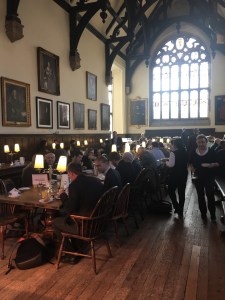
    2018 Innovative Psychiatry ketamine developments included attendance at the Oxford Conference.

    This conference was the first gathering globally of neuroscience researchers, psychiatrists, and psychopharmacologists specializing in ketamine research for psychiatric use.

    This momentous academic gathering explored the rapidly emerging data on the history, development, and use of ketamine, and related compounds in psychiatric treatment — in basic neuroscience, neuroimaging, and clinical studies. How does it work? Why does it work? How can we know? What does neuroimaging tell us about ketamine and the default mode network (DMN)? What’s in the pipeline with esketamine and related compounds? These are some of the questions research has been answering about ketamine. We’re gaining confidence in it as a viable and extremely useful treatment, as opposed to just an experimental treatment that would soon dissipate (as naysayers claimed). 

    I presented some of my data on treatment of suicidal thinking, and what ketamine can do to erase it in a poster session.  

    Next, came the first annual American Society of Ketamine Physicians (ASKP) Conference in September, where I saw a number of the same professionals I’d seen in Oxford…again meeting to share insights and experiences with the use of ketamine treatment in psychiatry and in pain management.

    Again, we talked about the broad applications of ketamine.  And the openness among us sharing information and insights helped to broaden the horizon for all present regarding what ketamine can do to relieve suffering in our patients.

    Suffering that, for far too many, had remained unrelieved before ketamine.

    Friendships were building at both of these conferences as we learned from each other, asked questions, and exchanged information. I took notes as fast as I could type. The information was compelling, exciting, and clinically useful.

    Then, in November, along came KRIYA Conference 2018. Many of the same medical professionals gathered along with a host of others, and something magical happened.

    These celebrated and deeply experienced experts in the field of ketamine treatment for psychiatric disorders left any pretense (they might have justifiably possessed) at the door.

    Deep connection happened. And a light bulb turned on. 

    2018 Innovative Psychiatry ketamine developments included a well-received presentation at the Kriya conference in San Francisco.

    We took notes voraciously, exchanged ideas generously, talked intensively, asked questions of each other, and utilized every second we were together.

    We gathered for coffee before the speakers began. Chatted on the steps. Talked on the way in and out, and everywhere in between. And lingered even after we were ushered from the building at the end of the day … then met at restaurants and continued far into the night. 

    I presented from the podium this time, and appreciated the enthusiastic response my data received. But I have to say, when it comes to the feats of ketamine, it’s hard to not be excited.

    In fact, Raquel Bennett Ph.D., the founder of KRIYA, declared in her opening remarks that we’re witnessing, and are also players in, the birth of a new field: ketamine for psychiatric disorders. And that this time will go down in history as a renaissance of psychiatric treatment.

    As the year has progressed, those of us in this new field are collaborating and continually refining and improving our methods of treatment as we probe more deeply into the potential of this extraordinary treatment.

    The Birth of a New Field

    If you or someone you love suffers from depression that has not responded to treatment, this collection of researchers and doctors understands, and we’re all working tirelessly to find answers for you.  

    You really aren’t alone.

    We’re also watching research for more evidence about new areas of ketamine research to show us more ways to apply it.
    2018 Innovative Psychiatry ketamine developments include ongoing research and collaboration globally.

    At the same time, ketamine’s actions inspire more research into why it’s so effective, and pharmaceutical companies are developing new and related medications with the advances in this frontier.

    Ketamine treatment consistently shows a strong response rate for treatment-resistant depression and bipolar depression; plus there is exciting emerging data for those with disorders like OCD, social anxiety, and substance use disorders that haven’t responded to other medications. 

    2018 Innovative Psychiatry ketamine developments include research opportunities.

    We continue to collaborate and follow research to find ways to increase those numbers. To make a rewarding life available to more people.

    I’ve been busy behind the scenes reviewing new research for upcoming new treatments– like esketamine, rapastinel infusions, and brexanolone infusions for post-partum depression and the exciting work done by the scientists at Neuro-Rx.

    Our Experiences at Innovative Psychiatry with You Provides Useful Aid to Other Patients in Other Practices

    My experiences with my patients in the last few years inspired me to respond to a Request of Information from the NIH/NIMH on the use of ketamine for suicidal patients — hopefully to help shape future research directions. And … to write an article that we plan to publish in a scientific journal. More information about this should be coming in the weeks ahead.

    As a result of all these new connections, I’ve had the opportunity to collaborate on an international level. 
    2018 Innovative Psychiatry ketamine developments include ongoing research in my practice to allow new drug trials.

    Over the summer, we began exploring how to serve as a potential study site so we could offer patients the opportunity to participate in clinical research trials with new medications — more on that to come. 

    This would give people an opportunity to get treatment with a new agent long before it’s available to the general public.

    Exciting, isn’t it?

    As you know, we’re all about educating our patients.

    In addition to our Ketamine Blog, we offer The Ketamine Library for our patients. (Who does that? I can tell you, from my trips around the country and into Europe … no one we know.)

    Extraordinary efforts at education. It’s one of the things we’re known for. 

    2018 Innovative Psychiatry

    And we’ve also added Instagram to reach more of our readers. We’re getting the word out about new breakthroughs in treatment.

    And have you noticed the facelift to our website menu bar

    You’ll notice a new menu along the top emphasizing our Ketamine Blog.  (It should really be called the Ketamine and So Many Other New Things Blog –but that didn’t fit very well!)  Seriously, we’ve been busy writing all year. 

    If you haven’t explored the blog much, jump in — we write about everything from science to heartache, from fear to gratitude, from children to aging gracefully, from friendships to loneliness, from narcissism (STILL such a hot topic!) to ketamine wannabees.

    And… we also offer advice, recommendations, and insights on the topics that are hard to find anywhere else — from how to screen a ketamine clinic to why your doctor might not yet be offering ketamine treatment. Check it out!

    We write about stories, successes and failures.

    I look forward to telling you more about all that and about other new initiatives we have planned, coming up in the new year ahead.

    This has been such an exciting year in the advancement of better and more effective treatment for our patients. The ground is rumbling with new breakthroughs for 2019.

    Enjoy your holiday season as it unfolds, and remember to take a moment to show kindness to those around you. It’s one of the most important things we can do for each another.

    Ketamine Inspires Hope

    Lots of inspiring news here. The purpose in all we do is to help you get better. And with the hundreds of medicines at our disposal, only about 2/3 of people psychiatrists treat with all those medicines actually improve. 

    Ask your psychiatrist to help you get better. But if you’ve tried a couple of medications…or even if you’ve tried 30!…and you don’t feel better, ketamine may really help you. 

    Ketamine treatment is amazing. It can smash depression, relieve social anxiety, dismantle PTSD, break addiction, and erase suicidal thinking within a couple hours. That’s why we’re celebrating the 2018 Innovative Psychiatry ketamine developments that are saving and restoring lives. 

    Ketamine treatment seems to demonstrate its greatest power with those who are the most ill, who’ve had the least amount of hope.

    If this sounds like you, or someone you love, call us. 
    2018 Innovative Psychiatry ketamine developments help more people achieve a fulfilling life.

    We are most thrilled by the opportunity to help you get better, really truly better, and to feel well and able to build the life of meaning you’ve always wished for.

    To find the motivation and initiative to pursue, and invest in, those things that are important to you. To build relationships that have the depth and longevity to add strength to your life. Basically, to have the energy to live well, rather than endure.

    Give yourself your best hope.  Call for an appointment to see if ketamine treatment is right for you.

    To the release and restoration of your best self, 

    Lori Calabrese, MD offers innovative psychiatric treatment like IV Ketamine
    Lori Calabrese, M.D.

  • NYT asks: Can We Stop Suicides? Here’s Our Response

    NYT asks: Can We Stop Suicides? Here’s Our Response

    Can we stop suicide? Yes, IV ketamine is saving lives daily.

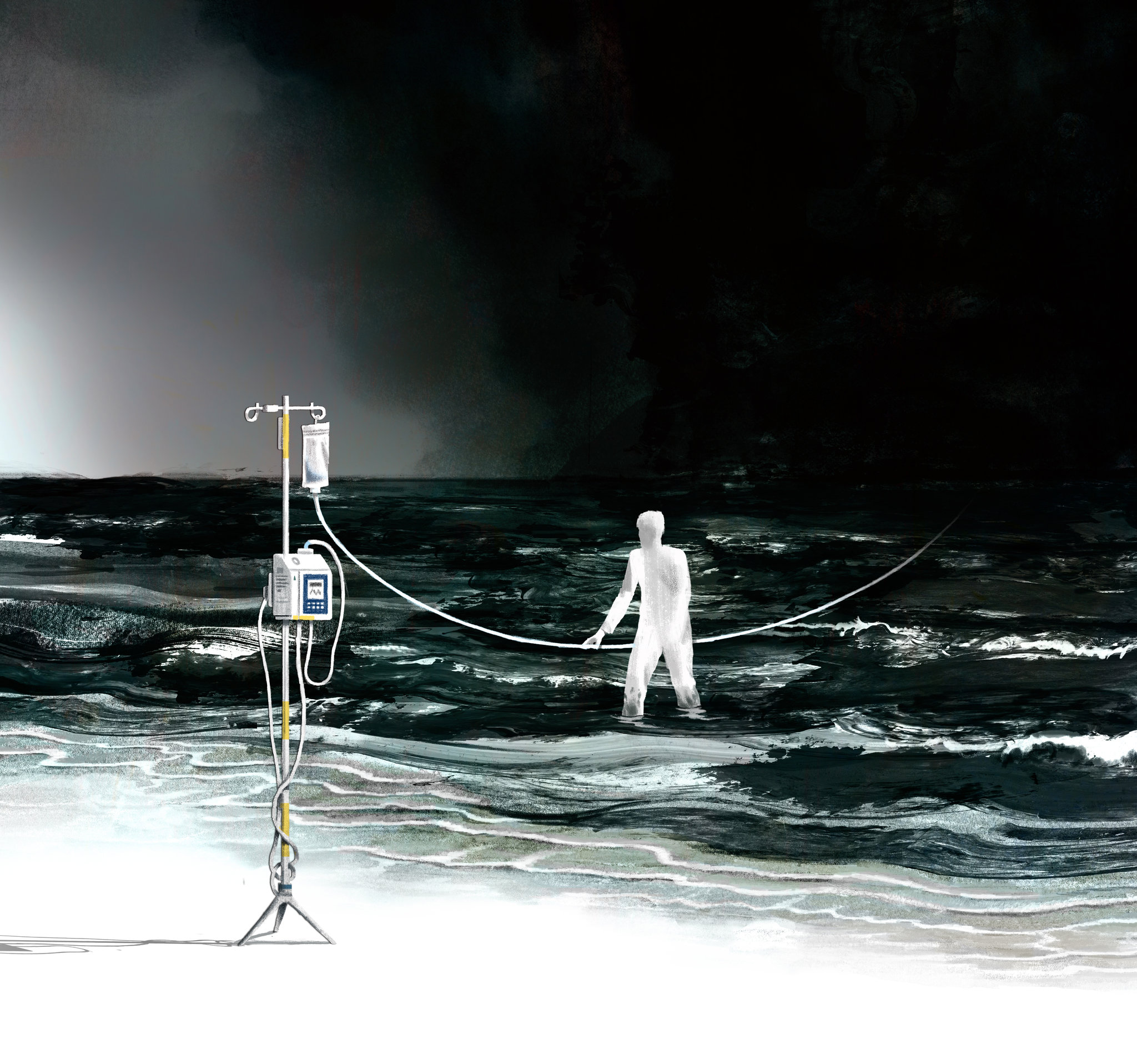
    An article published this past Friday, Nov. 30, 2018, in the New York Times Opinion section, asks about a possible remedy for suicidal thinking. Well researched, but not quite well enough. Keep reading…

    Author Moises Velasquez-Manoff explored the notion that maybe…just maybe…we can quell the epidemic rate of suicide. He points out that the suicide rate keeps rising, and according to the Centers for Disease Control and Prevention, suicide is now the 10th leading cause of death. After nearly two decades of growing statistics, suicide seems to be higher than it’s ever been. 

    Tragically, medicines to quell that tide have not kept up with the death statistics and doctors have been increasingly helpless to save a life in time.

    Until now. As research and clinical use of ketamine has increased, thousands of suicidal patients have been saved, giving them time to participate in therapy and other treatments so they can heal and rebuild fulfilling lives. 

    Best Mainstream Article on Ketamine to Date

    Can we stop suicide? Yes, with a series of IV ketamine infusions.

    Kudos to Mr. Velasquez-Manoff for his thorough research about ketamine and its effectiveness in treating suicide. All too often, articles in national publications provide a narrow, myopic view of ketamine and what it can do. 

    These articles have sometimes misrepresented the potential of this medicine because of a lack of thorough research. While there’s more to the story, which we’ll talk about, there’s lots of good information here for you to read and pass on to your friends and family.

    So…Can We Stop Suicide? 

    Let’s take a stroll through this NYT article, and talk about the truths and the half truths in the quest for what matters.

    NYT: Using ketamine to treat depression and suicidality is somewhat controversial. Numerous small studies suggest that it holds great promise, but it’s only now being tested in placebo-controlled trials with hundreds of patients. 

    Dr. Calabrese: It’s true that it’s been controversial. Like with many controversies, those who make the effort to find and read the research results for themselves quickly understand the value and significance of this drug. Too many listen to hearsay and scuttlebutt and form erroneous opinions… 

    “Ketamine will never get approved for this,” or “There are too many dangers with ketamine,” they say ….  cautious? skeptical? negative Nellies?

    We hear their voices loud and long. But clearly, in real-world psychiatry, this is a medication that is revolutionizing outpatient practice.

    Can we stop suicide? Yes, with a series of ketamine infusions.

    In all fairness, there is plenty we don’t — and can’t — know. Not yet. IV ketamine treating for treatment-resistant depression (TRD)  — and other psychiatric disorders —  has only been in moderately wide use for a few years. And it will be years before we really know the long-term consequences of single and repeat infusions, even with these tiny doses. Of course. That’s what long-term means.

    And we want to know long-term physiologic effects from low-dose repeated ketamine infusions or maintenance treatment — on the bladder, particularly.

    What about long-term impact on quality of life? Let’s talk about that. Since ketamine infusions for TRD use a much, much smaller dose than is ever used in anesthesia, and since we have 50 years of surgeries to go on, it seems pretty unlikely that a short sequence of a few tiny doses of ketamine will have any more negative impact on an individual’s quality of life than their severe treatment-resistant depression did.

    What we hear — and what my colleagues around the country hear –is that ketamine treatment can be transformative. 

    At the same time, the idea that it’s only now being tested in placebo-controlled trials is only true if the author is referring to this decade. Early trials at the beginning of this century were purely investigative to see what ketamine could do.

    We’ve said all along, ketamine isn’t for everyone.

    Still, its effectiveness is extraordinary especially for those who are most severely ill, and at highest risk for suicide.

    In the last few years, trials that were launched even earlier have finally gotten published. It takes time to conceptualize a study, and get it approved by the ethics committees and reviews boards that do these things. Then to  recruit exactly the right patients if you’re a major academic center,  collect, and analyze the data… we’re talking about a lot of time. 

    But even with that said, placebo-controlled trials have flourished in the last few years, as witnessed at the International Conference on Ketamine and Other Compounds for Psychiatric Disorders 2018, where researchers came from across the globe to present their findings. And more roll off the presses each month.

    NYT: Now, scientists think that they may have found one — an old anesthetic called ketamine that, at low doses, can halt suicidal thoughts almost immediately.

    Can we stop suicide? Yes with ketamine treatment.

    Dr. Calabrese: Yes! Isn’t that great news? In the last 50 years, there has been nothing that could stop suicidal thinking in 4 hours or less — sometimes within the first hour.

    And the beauty is that IV ketamine treatment doesn’t just make the suicidal thoughts easier to bear, it erases them.

    I wish it happened this way with every patient, but we still haven’t found a medicine that works the same way on everyone. Even so, psychiatry has never seen a medicine do this so quickly, so clearly, and so effectively in so many patients.

    NYT: After her suicide attempt, Louise’s psychiatrist suggested she try ketamine. She agreed, and received an infusion intravenously. Within hours, her sense of well-being improved. The hospital discharged her. Back home, she discovered that going to the market was no longer a “herculean task.” Getting her car washed wasn’t an insurmountable chore. “Life was better,” she said. “Life was doable.”

    Can we stop suicide? Yes, with a series of ketamine infusions.

    Dr. Calabrese: I love that the author included Louise’s story. Her description is characteristic of the descriptions I hear from my patients after ketamine treatment begins to take hold. And note that her response was hours after one infusion, not a series. Then the hospital discharged her.

    A single ketamine infusion can provide a wonderful respite from the heavy lead blanket that is depression, the emptiness and vacancy of feeling, the darkness and despondency…for a few days, or a week, or maybe even 2 weeks.

    But we know that one infusion fades.  Pretty much everybody knows that. 

    If your doctor provides you with only one ketamine infusion, it’s almost cruel…it whets your appetite for how life could be…only for it to be snatched away again in a week or two.

    This is the reason “ketamine treatment” has come to mean a series of  IV infusions at tiny doses over 2-3 weeks. It’s the repetition of infusions close together that seems to stack the benefits and overcome the temporary nature of a single infusion.

    What we’re feverishly all working to find out is: exactly how many infusions? 6? 8? Should the dose be based on real body weight or ideal body weight? Some ask if it should be based on body weight at all or just fixed like they’re doing with esketamine. Should the series be all one dose? or should the dose increase? how fast and how high? is there a best dose? 

    Research has not answered these questions yet.

    In our practice, we are sticklers for data, and we collect (and are about to publish) our outcomes.  We’ve already presented them at conferences in Europe and in the U.S.

    Can we stop suicide? YES, with a series of ketamine infusions.

    Here’s a clinical pearl: dose titration is important, and many physicians and nurses don’t titrate the dose to achieve the best response.

    This practice is often the cause for patients to believe ketamine doesn’t work for them. Not in every case, but far too often.

    Seek out a psychiatrist who is up-to-date.

    There seems to be so much misinformation circulating, and  disappointed patients could possibly avoid disappointment if they — and their doctors — had access to more up-to-date information. Doctors only know the up-to-date information if they take the time to search it out.

    NYT: The drug seems to address a longstanding problem in emergency psychiatry. Sedation and physical restraint aside, doctors have few ways to quickly stop suicidal ideation, or thoughts of killing oneself. The current crop of anti-depressants can take weeks and sometimes months to work, if they work at all. They may also, paradoxically, increase suicidality in some patients. Talk therapy takes time to help as well (assuming it does).

    Dr. Calabrese: This is a paradox to be sure. The antidepressants prescribed to treat depression can sometimes actually increase suicidal thoughts and actions as a side effect in some people. Confusing and discouraging if you’re suffering without solutions. And they’re slow to work.  Even lithium and clozapine — clear anti-suicide champions — are slow to work.

    Imagine what rapid relief would feel like.  Quick relief from suicidal thoughts — whether you’re an adult or an adolescent or even a child — can give you time to do the work to scaffold things into your everyday life that can keep you well.

    One infusion can give you relief. Several can cement remission. Not for just hours or a day or a few weeks or a month. For many patients, remission gives them the time and space to make changes that keep their symptoms at bay.

    Imagine that instead of sitting in an ER or on an inpatient unit somewhere.

    NYT: Dr. Michael Grunebaum, a Columbia psychiatrist who studies ketamine, thinks the drug should no longer be relegated to a last-line treatment. “It makes sense that it move up in the treatment algorithm in E.R.s and inpatient units,” he told me. (Although if emergency rooms everywhere began offering ketamine, it could create new problems, he adds. As has occurred with opioids, people might claim to be suicidal when, in reality, they’re trying to get high.)

    Dr. Calabrese: There’s an important point we need to make here. When a psychiatrist provides ketamine in the safest, most therapeutic way, the psychiatrist manages the dose and rate and the therapeutic experience so that the biological changes that ketamine induces — dendritic branching and synaptic proliferation — can be optimized. One of the indicators of this during the infusion is the degree of dissociation. With an infusion (as opposed to IM or intranasal or oral use), this can be very carefully controlled. And the responsibility for controlling the access, and the infusion experience lies with the doctor. This is not about getting high.

    Because people have used ketamine abusively in clubs and on the street, the massive doses they use in those settings — and repeat far too often — can provoke frightening hallucinations.  Some people crave that, and use more and more.

    If you use ketamine on the street you may think you “get” ketamine treatment…what it’s like… and that it’s likely all about the “trip.” But, that’s a street culture thing. That’s not the science of medicine that heals depression and anxiety and erases suicidal thoughts.

    Can we stop suicide? Yes, with a series of ketamine infusions.

    But when psychiatrists provide this medicine with skill and deep expertise, titrating the dose and the number of infusions, working synergistically with the rest of the patient’s medications and clinicians, it’s neither dangerous nor addictive. 

    The goal is remission, not ketamine ad infinitum.

    When a patient needs a new dose every month, ad infinitum, that patient likely didn’t achieve remission in the first place. 

    We want remission for you.  We want you to get better, get going, and give back.

    All in all, we loved Moises Velasquez-Manoff’s article. And glad we’ve had this opportunity to set the record straight.

    It’s refreshing to read a journalistic article about ketamine treatment for mood disorders that’s as close to accurate as this one.

    The question was, “Can we stop suicide?” And the answer is a resounding YES, most of the time, if you let us know you need the help.

    It’s wonderful when journalists help spread the word about novel and advanced treatments that relieve severe symptoms like suicidal thinking. The goal is to find relief and remission from the suffering. And new hope that you take with you into your future.

    At Innovative Psychiatry we see patients every week who experience renewed joy, purpose in life, creativity, motivation, and initiative after a full course of ketamine treatment. And those who have the best results are often the ones who had the most severe symptoms.

    Can we stop suicide? Yes, with a series of ketamine infusions.

    Even if no other medicine or treatment has helped you before, even if your doctor told you there was nothing more they could do to help you, even if you’ve been sick for decades, you are  not hopeless.

    So take hope.

    So many people with a story like yours have gotten better with ketamine treatment.

    If you have lost hope, call us.

    Find out what it’s like to feel alive, hopeful, and able to to build a new life. Chances are we can help you live again… and enjoy the little things in life like you haven’t in what may seem like a lifetime. 

    We want to help you get well.

    Can we stop suicide? Yes, with a series of IV ketamine infusions.


error: Content is protected !!