Tag: IV Ketamine for Social Anxiety

  • Repeated Ketamine Infusions Relieve PTSD Symptoms – New Study

    Repeated Ketamine Infusions Relieve PTSD Symptoms – New Study

    New study demonstrates that with repeated doses of IV ketamine, relief can last up to several weeks.

    A deep unfamiliar voice behind Sarah made her jump. In a flash, she turned and bolted down the stairs she’d been climbing, turned left, then left again, knocking into people in her path as she scrambled for a place to hide. A mad dash took her into the restroom, where she locked the door and turned off the lights to hide in the dark. Screams sounded as darkness enveloped the room. Her heart was pounding, sweat pouring from her scalp, down her face, her torso…her armpits. She willed her breathing to slow…so the man pursuing her would not hear her panting gasps. (Poor Sarah. She’s suffering… if only she knew what repeated ketamine infusions relieve…)

    Three women exploded out of their stalls complaining about the lights and searching for the switch. Sarah pushed past them to an empty stall and stood on the toilet seat with the door locked so her feet couldn’t be seen below the door.

    Sarah’s vision blurred as sweat poured into her eyes. With a quick swipe, she wiped the moisture from her eyes and forehead. And waited. Silently.

    By her watch, she saw time passing. She heard women come and go from the restroom…heard their quiet conversation…  but she waited, hands trembling.

    After 45 minutes crouched with feet on the toilet seat…Sarah began to feel calmer. It washed over her that she’d been hiding in a public restroom for close to an hour… and now she was late to work. 

    PTSD is Not Only Terrifying, It Seriously Interferes with Daily Living

    Again.

    Oh noooo.

    Reality settled in. After washing her hands without incident, she cautiously opened the door and saw nothing unusual outside the door. She began to realize that it had happened again. Like countless other times. The sound of that voice triggered her memory of the assault…and it was so real. Except it wasn’t. 

    She was surrounded in the trauma again. 

    And that was the problem. Yet again, she would clock in late and be reprimanded for it. There must be help to conquer the PTSD symptoms that had emerged after she was assaulted 2 years ago. She had to find peace. Sarah wanted her life back.
    Desperately.

    Repeated Ketamine Infusions Relieve PTSD Under Controlled Conditions

    PTSD can be so entrenched that it is very difficult to relieve — even with therapy, special trauma-based therapies, SRI’s, or a combination of approaches. Very early work with ketamine–and the brilliant neuroscientists behind those studies–showed ketamine could reduce PTSD symptoms.
    A recent study from the Icahn School of Medicine at Mt. Sinai published January 5, 2021 has made splashing news among ketamine researchers and clinicians as the first randomized, double blind, placebo-controlled trial of repeated ketamine infusions for chronic PTSD. Adriana Feder and her team deserve applause and admiration, and have just set the bar higher for ketamine clinical trials.

    It was brilliantly conceived, elegantly executed. Well done.

    Patients with chronic PTSD that had gone on for years, from a variety of traumas, were separated into two groups. One group received 6 ketamine infusions (3 times a week over 2 weeks); the other group received an infusion of midazolam, which was the “placebo” in the trial, but it is was an active placebo–it made them feel something but it wasn’t ketamine.

    Ok, now this is important: if you have PTSD, or if someone you love has PTSD, you want it to stop. That would be remission, and that would be ideal. But in the world of PTSD clinical research studies, researchers look for response, and response means a 30% decrease in your symptoms.

    That’s how response is defined, and that’s how it was defined for this study: 30% improvement. It doesn’t seem like a lot of improvement, does it? Unless your life is a nightmare. Then a 30% reduction is a lot of improvement.

    As it happened, 67% of those in the ketamine group responded after 6 infusions …  compared to only 20% of those getting the placebo study drug.

    A significant difference.

    And possibly even more exciting than that 67%, those who received ketamine infusions experienced significant improvements across 3 of the 4 PTSD symptom clusters: intrusions, avoidance, and negative alterations in cognitions and mood.

    So, Repeated Ketamine Infusions Relieve PTSD

    Dr. Feder and her team — and all of us, truly — are encouraged by this kind of outcome, and of course, call for more infusion studies using more infusions as well as trials using ketamine infusions combined with trauma-focused therapy. In fact, we can and are imagining all kinds of studies we’d like to see for PTSD — different infusion parameters, different infusion doses, titrated infusions, new medications, new therapies. The GREAT news is that relief for PTSD is under investigation and more effective treatment is on the horizon.

    Formal Studies Help to Establish Credibility

    Now, it’s important to note that for a study to be replicable, it’s required to use clear protocols and consistent dosing. In real world practice, we have the duty and the responsibility to treat each patient as an individual for the best possible outcome. Sometimes that means using a teeny, tiny dose, tinier that you would imagine; sometimes it means titrating the dose to get a better response.

    Medicine is a science and an art.

    Since we’ve learned that effective depression relief requires different treatment for different patients, and effective ketamine treatment often requires different ketamine doses for different patients (and different conditions), we might expect the same to be true for PTSD.

    The ketamine dose for each of the 6 infusions dose in this study was 0.5 mg/kg — the same dose used in the single-dose and early repeat-dose studies of treatment resistant depression.

    But we find clinically, and from our own published work, many patients with depression need higher doses to stop suicidal thoughts, to achieve remission, and to restore hope.

    By the way, notice that in the trial above, 67% of participants benefitted from ketamine infusions: they experienced a 30% drop in their symptoms. Ketamine is wonderful for those it helps — when it helps — but for reasons we don’t fully understand yet, it doesn’t help everyone. And it didn’t benefit everyone in the study. Ketamine is not a treatment that works for everyone. There isn’t anything that works for everyone.

    In real life practice, we can titrate. By that I mean that we use our expertise, in addition to evidence-based scientific results, to adjust the infusion dose during treatment (within certain parameters) to try to bring forth the most effective results for you.

    Because your treatment, of course, is about you. It’s all about you.

    New Studies, like this one with a Series of Ketamine Infusions for PTSD, build our Brain Trust about Ketamine so that We Can Provide More Relief to More People Who Need It

    One size may fit many, but not most, and one size never fits all.

    At Innovative Psychiatry, we treat PTSD with repeated titrated IV ketamine treatment. And we use our deep expertise with ketamine in psychiatry and in the treatment of trauma to give you the best possible results. We’re thrilled that randomized, controlled trials are now investigating this so carefully. Research underscores safety, efficacy, and credibility. The more researchers learn, the more we can help you.  

    If you’ve suffered with PTSD and other treatments and medications have not helped, repeated ketamine infusions may help remarkably. 

    And remember, until the COVID-19 pandemic has moved to another solar system (just kidding! — but wouldn’t that be great?),  we’re prepared to keep you safe when you’re here with us. We have the technology to keep the SARS-CoV-2 out of the air, and off of the surfaces in our office. We’re vaccinated, we’re tested regularly, we screen everyone. (And we keep the front door locked!) When you come for treatment, you can breathe easy. 

    We want you safe, and we want you relieved of PTSD and other symptoms.

    Because, like Sarah, you need a life that is free to develop. A life that’s not interrupted with unmanaged symptoms.

    And we want that life for you.

    So you can follow your own dreams, and build the life you want to build.

    If you suffer from PTSD and nothing has helped, call us.

    In fact, if you suffer from treatment resistant depression, bipolar depression, anxiety, suicidal thinking and nothing has helped, call us.

    Let us work with you to help you transform and enjoy your life.
    Lori Calabrese, M.D. is on the front end of the race to stop PTSD in its tracks using IV ketamine treatment.

    To the restoration of your best self,
  • Explore: Method to Differentiate Bipolar Depression vs Unipolar Depression

    Explore: Method to Differentiate Bipolar Depression vs Unipolar Depression

    As you may know, May is mental health month.

    IV ketamine can restore her joy whether it's bipolar depression vs unipolar depression.

    And as such, it’s a good time to talk about symptoms of mental health disorders, don’t you think? We want to increase understanding and dispel stigma which will help people who suffer gain better access to the help they need. Stigma is steeped in ignorance about something someone doesn’t understand. In addition, the global circumstances of these last few months have impacted the mental health status of so many. So let’s use this month to broaden understanding and better equip us to respond to ourselves and those around us. So here’s something to talk about: A new way to differentiate bipolar depression vs. unipolar depression may be emerging.

    Leading Cause of Disability

    The leading cause of disability in the world today is not heart disease or cancer…it’s depression. Depression is that common. We talk about severe depression and we talk about bipolar depression. When you see someone with either of these conditions, they may look rather similar from your vantage point, but they’re actually two distinctly different conditions.

    When we diagnose someone in this depressed state, it can be difficult to determine whether they suffer from major depression or bipolar depression, unless they have a history of mania or hypomania to determine the difference.

    Unipolar depression and bipolar depression don’t feel the same…but they do sort of look the same.

    Which is why a doctor asks whether you’ve had times when your mood was elevated, you felt energetic, hyperactive, maybe irritable, angry… and overly confident…all at the same time?

    For this reason, so many with bipolar disorder are first diagnosed with major depression, especially those with bipolar II disorder, since their symptoms include far more depression than hypomania.

    When you first see a psychiatrist about your depression, it’s important to be patient. Because some of your symptoms may not have emerged yet…and you may appear to have unipolar depression. Then later, mania or hypomania emerges, and your doctor may change your diagnosis to bipolar disorder, along with your prescriptions.

    Because of the challenge of diagnosing someone accurately who has a low mood, researchers have been seeking a means of using some sort of biological markers to determine scientifically the proper diagnosis and character of the depressive symptoms.

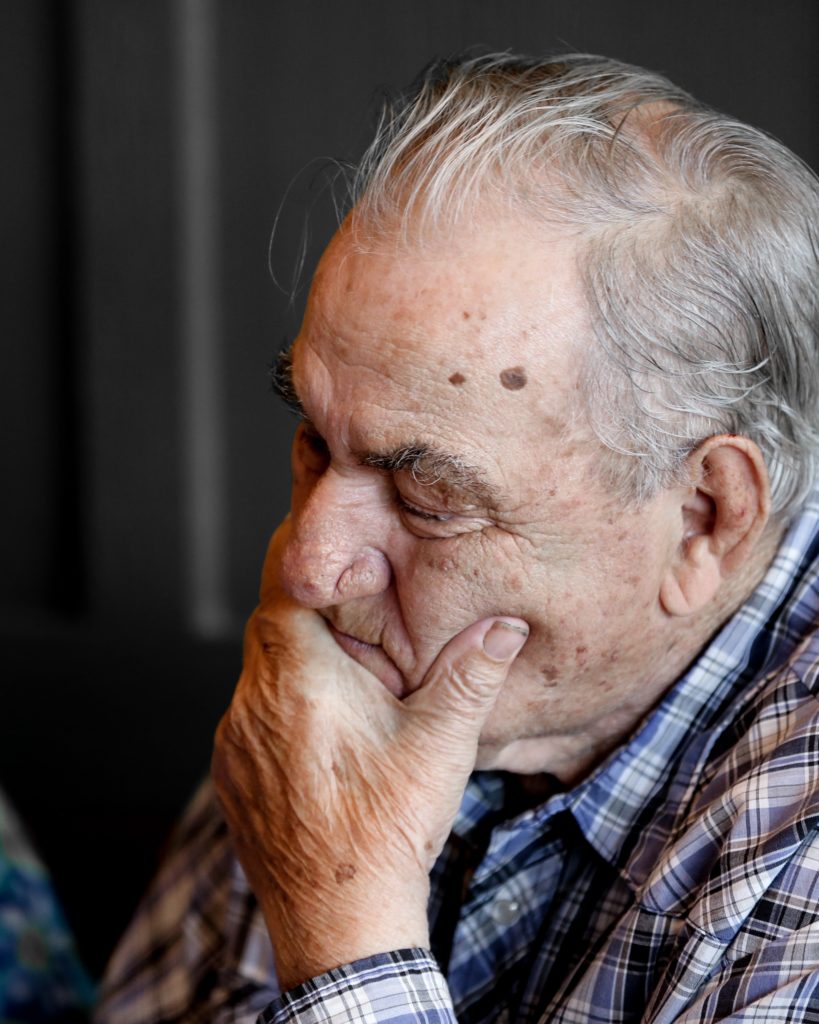
    This man is in pain but doesn't know if it's bipolar depression vs unipolar depression.

    Something that would differ in patients with unipolar depression from those with bipolar depression. Possibly brain activity. Or maybe proteins in the blood? Possibly genetics?

    Exploring Bipolar Depression vs Unipolar Depression

    An interesting study conducted by Brain and Behavior Foundation researchers, led by Mary Phillips, Ph.D., performed with a relatively small group of subjects, suggests a way your doctor might differentiate the two disorders clinically to aid in accurate diagnosis.

    Using functional magnetic resonance imaging (fMRI), full brain scans were conducted on a group that included 18 bipolar patients who were in bipolar depression, 23 depressed patients who’d been diagnosed with major depressive disorder (MDD), and another 23 who were healthy without a diagnosed disorder.

    It’s unfortunate that their study involved so few, and also that 90% of those with bipolar disorder were diagnosed with bipolar II disorder, leaving only 10% who had bipolar I disorder. A more evenly distributed group might have told us more.

    Even so, they did make some significant observations.

    The working memory system is used by the brain to maintain, manipulate, and update information that is associated with tasks that are presently at hand. When the networks of nerves in this system are damaged, learning – reasoning – and decision- making ability can be disabled.

    This is particularly true in those with mood disorders, like depression.

    So, the researchers gave each participant an easy task and a difficult one, while the participant was undergoing an fMRI brain scan. The design of the tests was to highlight that people form expectations about a task before they fulfill it.

    Bipolar depression vs unipolar depression can both be treated effectively with IV ketamine treatment.

    A person might feel the task will be easy, so there’s little stress in performing it. But if he expects the task to be difficult, his stress increases before he begins.

    It turned out, that there were patterns of neural (brain cell) activation in the medial and lateral areas of the prefrontal cortex, that were related to how easy or difficult a task would be.

    Mechanism Defends the Person with Bipolar Depression From Emotional Pain

    The researchers reported that people with bipolar disorder may actually block anticipation of a negative experience to avoid experiencing negative emotion while performing a task. That basically people with bipolar disorder seem to have a built in defensive mechanism to help protect them from negative emotions.

    So enlightening. People with unipolar depression don’t do this. They feel what they feel. But those with bipolar experience such damage from their negative emotions.

    As I said earlier, unipolar depression and bipolar depression may look similar to someone observing people suffering from these. But they feel different.

    Let’s add to that, that both of these disorders can often end in suicide, unfortunately. Even so, it’s more common in bipolar disorder.

    There are traditional medicines for people with these disorders. And those medicines do help a lot of people.

    But not all.

    For that reason it’s important to seek help until you find treatment that helps you feel better, function better, and live a rewarding life.

    IV Ketamine Doesn’t Differentiate Between Bipolar Depression vs Unipolar Depression – It’s an Extraordinary and Robust Depression Treatment

    At Innovative Psychiatry, we offer IV ketamine treatment to help you experience relief from severe depression that prescriptions haven’t helped…. And for bipolar depression that is unrelenting in spite of prescription medications.

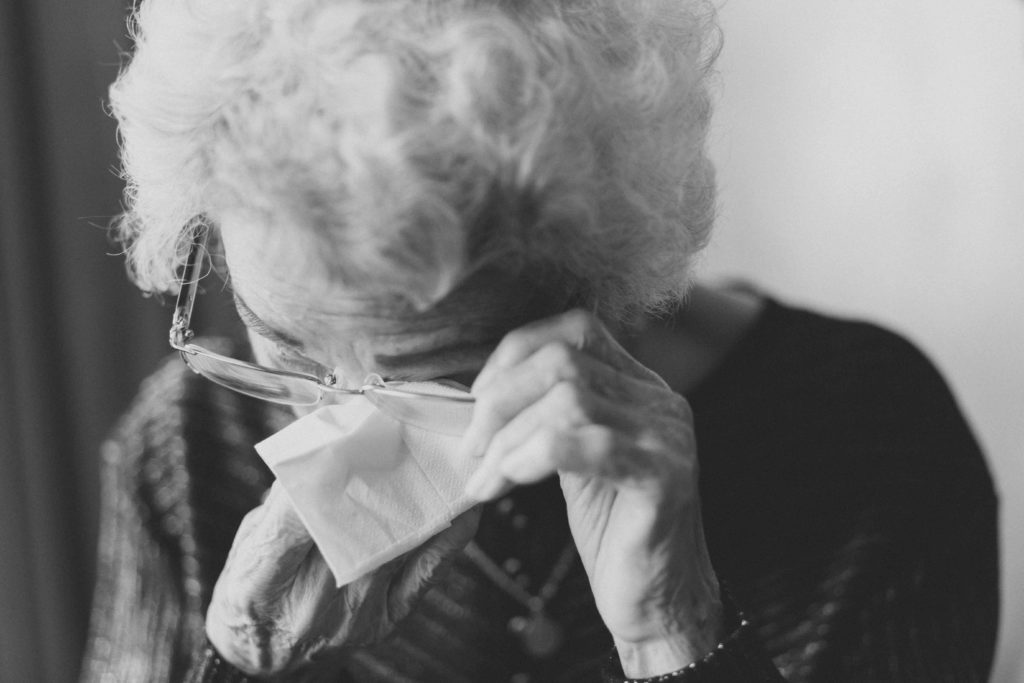
    Bipolar depression vs unipolar depression for this woman is still crushing.

    IV ketamine treatment isn’t effective with mania or hypomania. But the mania or hypomania is easier to manage and treat without bipolar depression. This treatment can be exceptionally effective for both unipolar and bipolar depression. In fact, it can be utterly life-changing.

    And… in regard to the risks of suicidal thoughts, IV ketamine treatment can erase those thoughts in an afternoon. A few hours. And if you’re not plagued by thoughts of death and dying, you’re a great deal freer to work toward healing, restoration, and joy.

    In this current global crisis, suicides have been increasing, among those with disorders, healthcare workers, physicians, and more.

    IV ketamine can save lives by removing thoughts that lead to suicide.

    IV ketamine has given her joy instead of depression.

    If you suffer from bipolar depression or unipolar depression, and medications haven’t helped, call us.

    Let us help you find your joy again, and your hope. The current global crisis is temporary, but it has affected the outlook of millions. The good news is that joy can be restored, and hope can return. You can feel resilient, and equipped for what life has in store.

    We’re here for you, and we’re working within a safety protocol so you can be treated without fear.

    Better days are ahead.

    To the restoration of your best self,

    signature of Lori Calabrese, M.D.

    Lori Calabrese, M.D.

  • COVID-19 Anxiety Has Gone Viral – How You Can Weather The Uncertainty

    COVID-19 Anxiety Has Gone Viral – How You Can Weather The Uncertainty

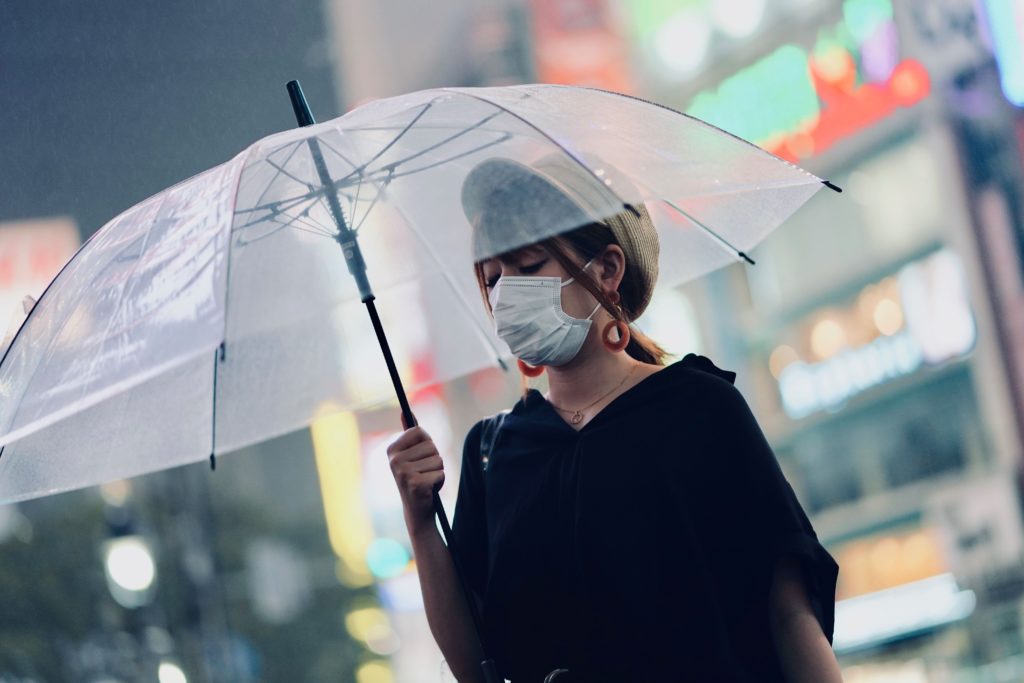
    Covid 19 anxiety has gone viral, and fear of catching the virus results in isolation.

    The President has declared a national emergency.

    Schools have been closed and gatherings cancelled. Your plans for Spring 2020 have been turned upside down. The news is filled with the increasing numbers of cases of this strange virus, and everywhere you turn, conversations focus on discussing the dangers and risks. What do you do with this information overload? COVID-19 anxiety has gone viral – How do you weather the uncertainty?

    Thousands Self-Quarantine

    Lilyanne, a mother of five, returned from a spring break trip to the northwest. It was a chance to see grandparents, aunts, uncles, and cousins. They were able to get outside and camp, and take in the beauty of the rugged Oregon coast. After she and her children arrived back in their small rural town in Oklahoma, she didn’t feel right. She checked her temperature and it was 102. No wonder!

    Before long she was coughing…hard. It was a dry cough but it hurt. Her preschooler was wheezing, and with her daughter’s asthma history she thought it best to take her to the doctor. The doctor prescribed Tamiflu for both Lilyanne and her little girl. 

    Her daughter Bessie started feeling better quickly but Lilyanne felt no improvement. She asked the doctor for a COVID-19 test, and the doctor said he wasn’t sure yet how to test for that.

    A couple days went by, and Lilyanne decided to go to an urgent care. She worried that she might get too sick to care for her children, and also wanted to know if she should isolate herself away from them. The urgent care had no idea how to do the testing either. 

    So Lilyanne went to the ER. She hated to expose others there but tried to be very careful. She needed to know if she’d been infected in Oregon or in the plane…or somewhere else.
    Covid 19 has gone viral with shortage of testing kits.

    The ER doctor tested her for other infections, but explained that she didn’t meet criteria for a COVID-19 test.

    “I don’t meet criteria?? Why not??” She felt overwhelmed.

    Covid 19 anxiety has gone viral, and she wished she knew what to do…

    The best thing she knew to do was to quarantine herself and her five children in the house. But to do that…she needed groceries so they could eat.

    Again, she tried to be really careful, using hand sanitizer every few minutes at the store. She quickly filled her cart with necessities since they’d been out of town 9 days. Then, she chose frozen meats, veggies, and snacks, along with milk, juice, pasta, and produce. 

    She paid without touching the cashier, wiped down the terminal where she inserted her card, and hurried out of the store.

    Once home, the kids helped with unloading groceries, and she took off her clothes, put on her nightgown, and crawled under the covers.  Before long, her oldest son, Colton, brought her a steaming mug of herbal tea.

    So far, none of her children showed symptoms, but how was this going to go? Her two oldest kids could handle meals, but how long could they manage the young ones? The laundry? Keeping the peace..?  How bad would this get?

    Could she trust all 5 of them to stay in the house, when she was in bed?

    Her temperature had risen higher. 102.9. The coughing was hard to control and painful. Her lungs hurt.  

    She called the CDC to ask them what to do…

    Anxiety is a natural response to a situation with an unknown outcome. 

    And just because the outcome is unknown, it doesn’t mean you’re facing doom. That’s the thing about anxiety. It feels foreboding. Scary. Threatening. 

    But if you can decide to think about it differently, you just might find a way to relax a little…and patiently see what happens next.

    For instance…

    Covid 19 anxiety has gone viral but you can take a walk in the fresh air like this puppy.
    If you’ve been watching the news or reading articles on the internet and you feel your heart rate increasing, turn off the TV for awhile, walk away from your computer, and take a short walk in the fresh air, do a little gardening, or go in the kitchen and cook something. 

    That heart rate rises to give you more energy to fight or run in a crisis, so put that energy to work for something productive and enjoyable.

    An unsolicited act of kindness, no matter how small, can help you redirect your energy and focus, and the smile you bring to the recipient will give you good feelings that help you feel a little better, too.

    Facetime or Skype a friend, and talk and laugh. Just because you’re isolated doesn’t mean you can’t continue to nurture your friendships, and show others you care. Keeping the connections in your life strong will gird up your own resilience to get through this challenge.

    There are also apps for your phone like Marco Polo, where you can talk back and forth and see each other’s faces. Just being able to talk face-to-face can help you relax, feel connected, and encouraged.

    Because COVID-19 anxiety has gone viral, and the people you care about are comforted hearing from you.

    And remember that by isolating yourself at home, you’re taking care of others. Odds are that you’re likely to recover fine if you’re infected with the COVID-19 but you quarantine yourself for the sake of those who might not recover as easily.

    When you isolate yourself, it’s an act of kindness toward all of those people whose paths you would cross.

    We’re all surrounded with people who have compromised immune systems, or underlying conditions, and we don’t even realize it. A colleague who suffers from Crohn’s Disease, Type 1 Diabetes, leukemia, or any other immunocompromised condition could be made critically ill by contact with you.

    And any of the people you see at the grocery store, on the train, in an airplane, or on an elevator are protected because you chose to isolate yourself until you’re no longer contagious.

    Now, even though we talk about productive things to do with the anxiety you might feel, sometimes you just can’t manage it. 

    Sometimes you need help.

    And just as we’ve used IV ketamine treatment for depression, it’s also shown significant efficacy for anxiety. We know that anxiety and depression often go hand in hand, don’t we?

    We know that that breakdown for treatment effectiveness goes something like this:

    About a third of patients with depression improve with their first trial of antidepressants, and another one third or so respond well to a second trial of a different antidepressant or combination. That leaves about 1/3 who aren’t helped by that method of treatment. The ones we might call treatment resistant.

    Still it’s not so much that those patients are treatment resistant, it’s that traditional antidepressants are the wrong treatment for those patients.

    But that group of patients shows wonderful response to IV ketamine treatment, with 80% responding remarkably well.

    At Innovative Psychiatry, we’re seeing patients every week who walk out with their heads high, a spring in their step, and full of anticipation and joy about what lies ahead.

    And the resilience these patients can enjoy that IV ketamine can supply, can give them the flexibility and resilience to bounce back in the atmosphere we’re challenged with right now in this country and the world.

    What’s more, IV ketamine infusions can stop suicidal thoughts in an afternoon.

    It’s so good to know you don’t need a hospital stay to receive this extraordinary treatment. You can come to the office, relax in a private area, and after your infusion, slip out quickly and head home with a ride.

    Covid 19 anxiety has gone viral but you can be happy and at peace through it all.

    Don’t let our current challenges tear down your confidence in your ability to manage your life. COVID-19 anxiety has gone viral, but it doesn’t have to affect you.

    If you’re part of that last 1/3 and need relief, call us.

    We’re here to help you safely receive treatment, so you can emerge with a new outlook on your life, new energy and resilience to face these challenges, and new hope and joy to build your future.

    Lori Calabrese, M.D. is on the front end of the race to stop PTSD in its tracks using IV ketamine treatment.

    To the restoration of your best self,

  • Ketamine Restoration in the Amygdala Repairs Social Connections

    Ketamine Restoration in the Amygdala Repairs Social Connections

    Nick walked in after school, slamming the door behind him.

    His mom looked up, startled by the noise. “What’s that dirty look about..?? You’re so judgmental!!” Nick was fuming, and with that he headed upstairs. His mom followed him upstairs and spoke softly, knowing her son was apparently volatile. She didn’t realize that what just happened could be repaired by ketamine restoration in the amygdala.

    “Nicholas, I’m sorry my face looked judgmental. I wasn’t feeling judgmental…I was startled by the noise the door made, and concerned that you seemed so upset. Did something happen..?”

    Nick crumbled. 

    He didn’t know why he misread his mom, or why he was so angry. Nick hated himself for being hateful. He just felt so angry so much of the time, and when he wasn’t angry, he just wanted to cry… what was wrong with him?

    “Sorry, mom.  I thought you were mad about me slamming the door. I have a lot of homework and I just don’t want to do it. It all seems pointless.”

    Nick’s mom knew he’d been under a cloud since the last school year. He was seeing a psychiatrist, which he always dreaded. The medications didn’t seem to be helping, in spite of the fact he was on his third different medicine.

    He’d all but refused to see the therapist any more. As his mom, she just wanted him to feel better and enjoy his adolescent life, but she was hitting a wall. All she knew to do was to encourage him to keep trying and to provide a little comfort where she could.

    “Why don’t you come downstairs, and I’ll make you a sandwich. Eating something might help your homework seem a little easier to face.”

    Ketamine Restoration in the Amygdala

    While Nick ate, he decided to mention to his mom what his buddy in History had told him.

    “Mom, you know Zach? He’s been down for a long time…even longer than me. He told me today that he’s getting IV ketamine treatment. He said he took pills for a year and they didn’t help, no matter what brand the doctor ordered. Anyway, his dad read about this treatment, and Zach says it’s already helping.”

    “Really Nicholas? Does his doctor give him the treatment?”

    “No, he said his dad is taking him to a different psychiatrist who does it. He says his own doctor is all for it. He’ll go for two or three weeks and he’ll be done. So far, he’s finished the first week.  I can tell he’s doing better. He smiles and laughs. It’s weird. But I also envy him…”

    “I tell you what, Nicholas. You go work on homework, and I’ll see what I can find out about this treatment. IV ketamine you say? We’re going to find help, honey.”

    Three months later, Nick walked in the door, smiling ear to ear.  

    “Hi Mom. Since it’s Friday, is it ok for me to go to a movie tonight with Zach and Tim?  Oh and by the way, Chelsea said she’ll go to prom with me.”

    Nick beamed.

    “Oh that’s fantastic, Nicholas! I’m so glad she said yes. She’ll be on the arm of the nicest and best looking guy at school!  And sure, the movie’s fine. Zach and Tim are great guys.”

    IV ketamine restoration in the amygdala can make all the difference.

    Depression Can Impair the Amygdala’s Ability to Process Faces

    To the casual observer, this may all sound a little too easy. And for some people, it might be. Everyone’s different. But for most people like Zach and Nicholas, their misery is reversed by a series of 6 IV ketamine infusions, sometimes a few more.

    And in some cases supplements are needed to address low blood levels of certain hormones or nutrients first. But, when you consider the comparison of that to years of traditional antidepressants that aren’t working, it’s an easy choice.

    On top of that, the prospect of joy – and hope – in place of the damaged relationships caused by a short temper, a hopeless outlook, and absent motivation, is again…an easy choice.

    Humans like to feel good. When you don’t, you’re not very pleasant to be around, you know? Is there anything that makes you feel worse than severe, unrelenting depression complicated by anxiety and phobias?  It’s misery.

    And the thing is, it colors the way you see everything. You can be looking in someone’s face who’s just preoccupied, and interpret their expression as angry, critical, irritable… then you snap at them about it, and they feel attacked from out of nowhere.

    Guess what?  There’s a scientific reason you do that. It’s not just your imagination. And the good news is that IV ketamine treatment actually changes something deep in your brain to help you interpret their facial expression for what it’s intended to be.

    To understand this, we need to talk about the a wonderful structure in the brain called the amygdala.

    Ketamine Restoration in the Amygdala

    The amygdala consists of 2 almond shaped structures deep in the sides of the brain at the temporal lobe. It’s one part of the limbic system which processes emotion, records emotional memories, influences behavior, motivation, and the sense of smell, as well. 

    One key job the amygdala performs is helping you to look at facial expressions in others and determine their emotion. For instance, if you see someone frowning, with their face tense and lips tight, do you assume they’re happy? Of course not. It’s your amygdala that sees their expression and determines they may be angry.

    Well, when someone is suffering from a disorder like severe depression or bipolar depression, their amygdala may be malfunctioning.

    Study Explores Ketamine’s Effect on Amygdala Function

    So recently, a team of researchers led by Joana R.A. Loureiro in Los Angeles and Chicago set out to study what effect two rapid acting depression treatments have on the amygdala’s ability to accurately process facial expressions. Using functional MRIs (fMRI) they tested 44 adults who were all experiencing an episode of severe depression.

    They divided the group into two parts: 17 subjects were given an individualized number of treatments of ECT and 27 were given IV ketamine infusions 2 or 3 times a week until they had received 4 infusions. 

    This was an interesting approach because both forms of treatment affect brain function and emotional processing, so they wanted to see if it worked at the level of the brain cells. 

    Since interpreting the facial expressions of others is such an important part of social functioning, they focused on the subjects’ ability to accurately do that. The subjects were tested by the task of matching emotional faces on a screen. If the face at the top of the screen was smiling, they needed to match the face at the bottom of the screen that was also smiling.

    They found that both modes of treatment improved the accuracy of the subjects’ amygdala function.

    When Depression Impairs – Ketamine Repairs

    Now, about the type of scenario that Nicholas and his mom experienced. At the moment he walked in the door he believed he saw criticism and judgment in her facial expression, when her look was actually surprise and concern.

    When someone is severely depressed, it’s as though they have an affinity for negative feelings and beliefs. So, when they see a facial expression that appears negative to them, it goes to the bone. They feel it so deeply and lightening fast.

    It’s easy to see that this type of misinterpretation and reaction only further damages relationships that are already fragile when someone is severely depressed.

    And even though both ECT and ketamine improved the amygdala’s function, ECT is a treatment that carries some bias and even stigma for its side effects and history.

    We also know that ketamine not only blocks the NMDA receptors but it also activates AMPA receptors and an array of other actions that can make you feel remarkably better.

    And there’s another life-changing benefit ketamine can provide:

    IV ketamine can stop suicidal thoughts in a few hours.

    This in-depth study shows yet another way that depression impairs your function, and how ketamine treatment can restore it better than ever.

    Reach Out for Ketamine Restoration in the Amygdala – And Get Your Joy Back

    At Innovative Psychiatry, want to help you feel a lot better than just “less depressed.” We want you to experience joy, a song in your heart, hope for the future, and energized motivation to build the life you want, with healthy and strong relationships.

    It’s almost like using a car jack to crank up your life and replace the pain and loss with new ideas, new projects, new joy in relationships.

    If you can relate to Nick, and you want to feel joyful and able to care about others as you put your best foot forward, call us.

    We want to work with you and your healthcare team to help you experience extraordinary relief. 

    Reach out now for hope.

    Lori Calabrese, M.D. is on the front end of the race to stop PTSD in its tracks using IV ketamine treatment.

    To the restoration of your best self,
  • Does Hopelessness Accompany Suicidal Thoughts or Cause Them?

    Does Hopelessness Accompany Suicidal Thoughts or Cause Them?

    Tim dragged himself into the school cafeteria where the photographers had set up equipment to take school pictures.

    He felt angry, bitter, sullen, and hopeless. What purpose could there be in school pictures? What’s the point? he thought. Tim hated being at school. He felt like he would self-destruct if he didn’t get out of there. Then it was his turn for his portrait. He stared at the camera. The photographer said, “Smile!” (Does hopelessness accompany suicidal thoughts…or cause them?)

    He just stared straight ahead. Enduring. He knew if he smiled it would make him look like a horror-movie character. Click. Flash. And it was over.

    Tim got up, and dragged himself out of the cafeteria and out the back door of the school.  He shuffled home. He couldn’t stand being there any longer. 

    Right behind Tim in the line a pretty girl waited her turn. Emily smiled for the camera. She didn’t want to. But she tried to do the right thing. Her sad eyes gave away her despair. Emily lived in a neighborhood where everyone knew each other, got together, barbecued, and enjoyed the community.

    The problem with that is that one of her neighbors offered to spend time helping her with her music lessons. Her parents encouraged her to take advantage of the expertise of this “nice man.” Luis was 41, college educated, and very musical.

    Emily didn’t know how to tell her parents that every time she went to his house, he had other ideas in mind. She felt ashamed. Troubled. Scared. Dirty.

    She tried to be responsible and do everything expected of her. Her parents just knew she was a good student, kind, and obedient. Does hopelessness accompany suicidal thoughts…or cause them?

    Once when Emily tried to tell her mom about Luis, her mom corrected her before she could get it out. She told her to be sure to be respectful toward him when she was at his house.

    Emily clammed up.

    But she was reaching the breaking point. After two years, she didn’t think she could take this any longer. She didn’t know how to stop it. She was feeling more and more hopeless that there would ever be an end to it. And Luis threatened that if she told anyone he would hurt her family.

    So Does Hopelessness Accompany Suicidal Thoughts or Cause Them?

    Both Tim and Emily were losing their strength to hang on. Of the two, Tim was the most likely to be identified by teachers as one who might need to see a psychiatrist. His facial expressions, attitude, and disposition made him a likely candidate for that kind of help.

    Emily, on the other hand, seemed quiet, compliant, and responsible to the school staff. Her teachers guessed she must come from a very nice family.  Emily’s depression wasn’t easy to notice because she didn’t let it show. Her goal was to please those in authority in her life.

    Tim’s doctor, on the other hand, diagnosed him with bipolar II disorder. He prescribed medication, but Tim did not feel much better.

    Tim directed his anger at his dad. Because he felt his dad lacked understanding for his condition. He resented his dad expecting him to function when he felt so bad. He wished he could crawl into a hole and hide from the world.

    Emily felt completely alone in the world because she couldn’t talk to anyone about what she was going through. And though her parents were good people, they had no idea she continuously faced such a horror.

    We can look at Tim and Emily and draw our own conclusions. But you have to ask yourself does hopelessness accompany suicidal thoughts…or does it cause them?

    Tim’s problem wasn’t his dad so much as the symptoms of his illness that weren’t relieved by his medicine. And Tim didn’t know how to approach his dad in a way to help him see what he was going through. His dad just felt he needed to discipline his belligerent son.

    In Emily’s case, it seemed that her problems could be resolved by simply blowing the whistle on Luis. That message is plastered on the walls of the school… “Tell someone!”

    She’d heard that message all her life.  She could go to the school nurse, or a teacher she trusted, or even a police officer. But she didn’t.  When she would think about it, all she could think of was how hurt her parents would be that she talked to a stranger instead of keeping their business in the family. 

    She was also afraid her dad might do something crazy to Luis that would get him arrested, then  what would her mom and brothers do?

    Every time she thought about talking to someone she hit a wall of all the reasons why she couldn’t…

    Then, in a two week period, two students in the high school took their own lives.

    Everyone wondered why. 

    No one dreamed Emily was sad or had any reason to do such a thing. Except her heartbroken parents… because Emily left a note. And Luis was arrested.

    Tim’s dad was devastated. He’d been doing his best to help Tim get the treatment he needed, but each new medication required several weeks –sometimes months — to see if it helped him feel better. Talk therapy takes time, everyone said. And he hadn’t heard of a treatment like IV ketamine. He just assumed Tim’s doctor would do what was best for his son.

    It was so hard to know the difference between his son’s bipolar symptoms and just a bad rebellious attitude. He worried about it all the time. Just not knowing how to respond to Tim’s responses.  He wished he had a guide book. But now it was too late. He just didn’t realize how severe it was.

    These two deaths stunned and rocked the school they both attended. Two very different students who didn’t know each other, but who both could have been helped…if only…

    Does hopelessness accompany suicidal thoughts…or does it cause them?

    If you knew Tim or Emily, you’d likely have been grief stricken by their deaths. Probably baffled.  And for good reason. Because hopelessness and despair come in different forms. And you probably wish you could have helped them.

    Tim’s hopelessness was within him, as a symptom of a severe and difficult-to-treat illness.

    Tim probably spent most of his time in the throes of bipolar depression. When your mind and outlook are so dark so much of the time, you can desperately need a break from it. 

    But if you know of no medicine that will supply that break for you…  if your doctor knows of no medicine that will help without trying one after another… you get your hopes up over and over…only to experience a new type of grim despair. Hopelessness grows after years of this…and it may dawn on you there’s nothing that can help.

    And you don’t know where to look for hope.

    Emily’s hopelessness was internal, too. She felt trapped by an external force. If that external force could have been removed from her life, she probably could have recovered. Unless conditions like PTSD or severe depression complicated her condition. But even those conditions can be relieved with a novel and advanced treatment like IV ketamine.

    Children and teens should be able to live healthy, active, trusting lives in a perfect world. But it’s not a perfect world.

    When they’re assaulted, and wounded, they may need special care with a skilled therapist, support from friends and family, and treatment to help them heal. Sometimes that can be treatment with a novel, advanced treatment like IV ketamine.

    A group of researchers led by Ilya Baryshnikov, M.D., asked whether the hopelessness people with depressive disorders experience is a crucial predictor of suicidal thoughts and plans.

    They guessed that hopelessness was the sign that a person would be having suicidal thoughts, so they conducted an in-depth study which was just published this month in the Journal of Clinical Psychiatry.   

    They followed 406 people for 10 years, and used diagnostic tools to determine what role hopelessness played, as well as what role the severity of the depression played, in each person’s experience with suicidal thoughts.

    Standard tools like Scale for Suicidal Ideation, Beck Depression Inventory, Beck Hopelessness Scale, Beck Anxiety Inventory, Perceived Social Support Scale – Revised, and Eysenck Personality Inventory helped them evaluate the state of mind as well as personality traits of their subjects. 

    They found that hopelessness served to explain the suicidal thoughts, but wasn’t so much a crucial prerequisite… and that it’s actually the severity of the depression that leads to suicidal thoughts.

    In the cases of Tim and Emily, both needed intervention. For Tim, IV ketamine could have possibly changed his whole world. By helping him to achieve remission, and restoring his energy and hope, his world — and his relationship with his dad — could have been transformed. 

    It’s likely his dad, like so many, had no idea that IV ketamine was an option. Much less understanding about what it could do for his son.

    For Emily, it is possible the long term stress of abuse wore down her resilience, undermining her resolve to protect herself and report Luis. To trust her parents and make them listen, so they could help.

    In her case, too, IV ketamine could have helped restore her emotional strength to do what was needed to make herself and other girls in her neighborhood safe …to speak up.

    At Innovative Psychiatry, we see teens like Tim and Emily — and find the transformative effects of IV ketamine treatment can bring restoration not only to their outlook, but to many aspects of their lives. Relationships grow stronger, energy for school improves their performance, and their hope and joy billow. Not for everyone, certainly, but for most,

    If you, or your teen, have been depressed from major depressive disorder or from bipolar depression, and oral antidepressants aren’t working, call us. Let’s talk about whether you’re a candidate for IV ketamine treatment.

    If you’ve suffered from a major trauma that other treatments haven’t helped, call us. IV ketamine treatment can restore you if PTSD has impaired your function in life.

    IV ketamine can be dramatically effective also with severe social anxiety, alcohol abuse disorder, substance abuse disorder, and can stop suicidal thinking in an afternoon.

    We want you, and your teen, to be restored to the best you ever, and have a rewarding a fulfilling life with your own joy… and hope… abounding. 

    Lori Calabrese, M.D. is on the front end of the race to stop PTSD in its tracks using IV ketamine treatment.

    To the restoration of your best self,

  • Spravato: Esketamine Nasal Spray Controversy Storms Ahead

    Spravato: Esketamine Nasal Spray Controversy Storms Ahead

    This man is happy following treatment in spite of esketamine nasal spray controversy.

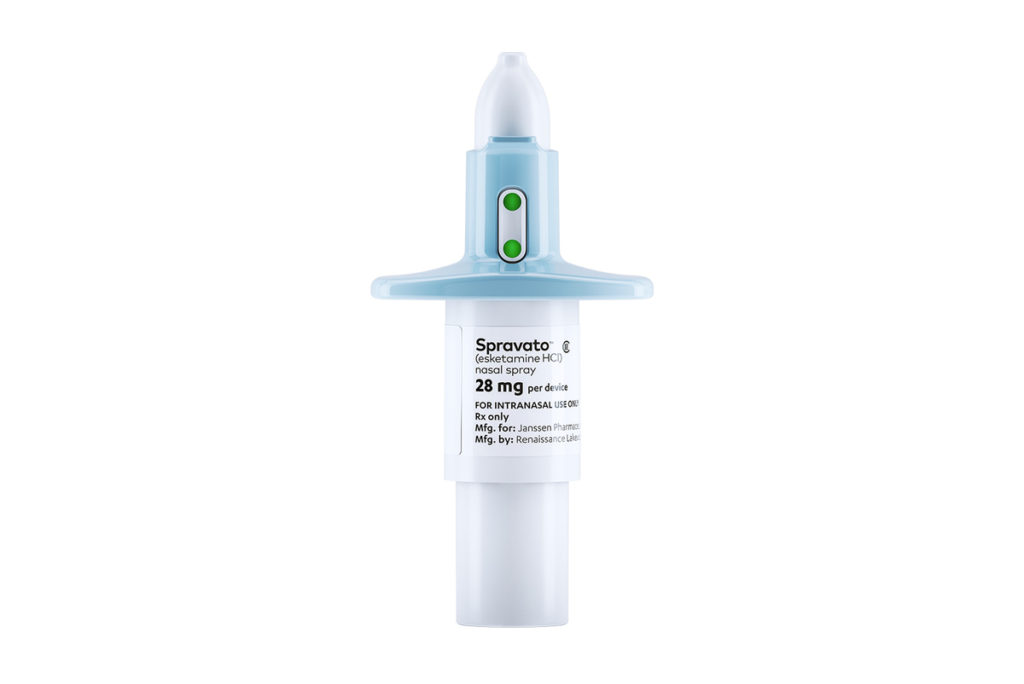
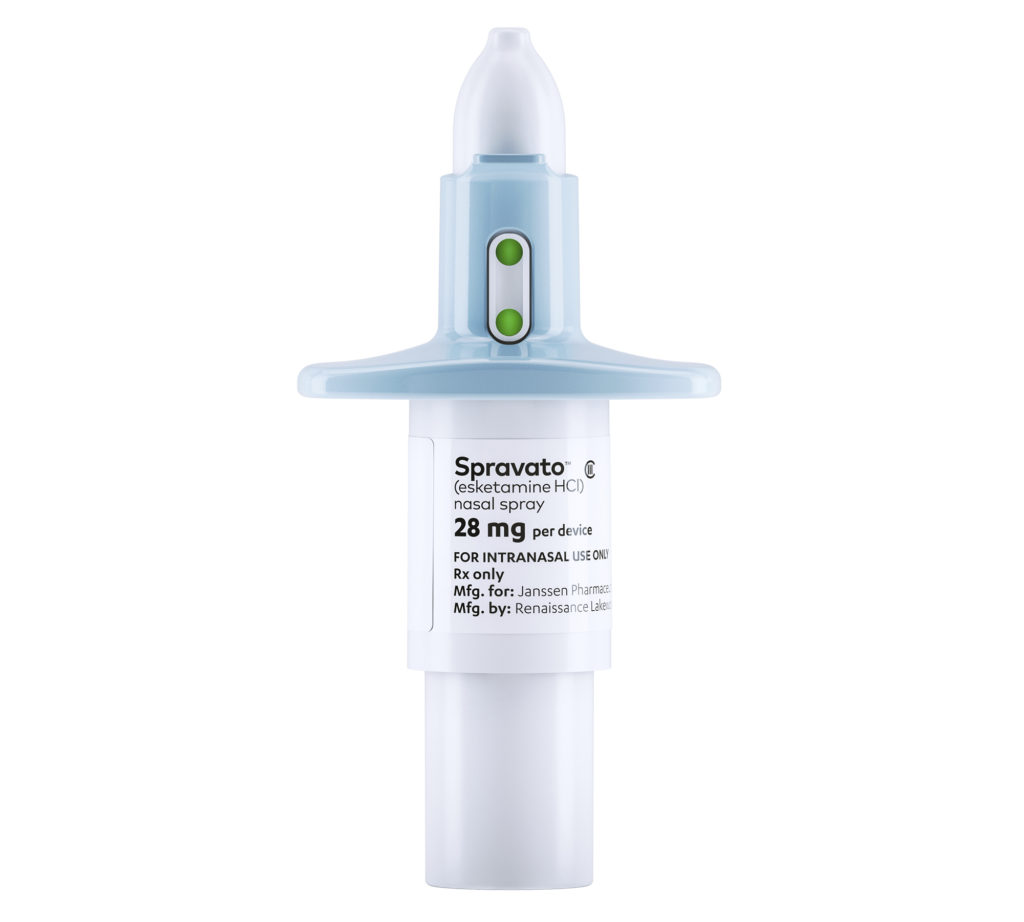
    Have you tried Spravato?

    Periodically, we’ve added our two cents to the discussion. Since its approval by the FDA in March of last year, we’ve seen a variety of protests from psychiatrists about its value for treating treatment resistant and severe depression. A recent article published in The Lancet provides an overview of the back and forth discussion. A group of physicians wrote a series of editorials published in The Lancet in October 2019, challenging Spravato’s value when weighed against its dangers and modest effectiveness. And the esketamine nasal spray controversy surges forward.

    A significant benefit for Spravato is supposed to be that because the FDA approved it, some insurances cover the cost of the medication and the cost of the doctor’s 2-hour office visit to administer it. (Stay with us–more on this later!) That’s a substantial benefit in the eyes of some patients.

    There have not yet been head-to-head controlled trials comparing racemic ketamine infusions to Spravato. But there are plenty of physicians around the country who have used both in their offices with patients. And when you compare Spravato with the effectiveness of IV ketamine treatment, Spravato’s benefit is less dramatic, and rather than occurring rapidly and robustly — it seems much milder and more gradual.

    Spravato esketamine nasal spray controversy is hot on The Lancet.

    In addition,  FDA approval requires the use of an antidepressant at the same time as Spravato.

    (It’s like Spravato is an adjunctive treatment to an antidepressant you’re starting at the same time, or an add-on to an antidepressant that’s on board but not completely effective.) Hmm. When you think about it, it may be harder and harder to know what the FDA trials really showed.

    So let’s look at the objections of these doctors, and the response from a team led by Ella Daly, M.D., associated with Janssen, the maker of Spravato.

    A Former FDA Recruiter Expresses Misgivings about Spravato’s Trials

    One of the critics of Spravato’s FDA approval was a former FDA reviewer himself. Erik Turner, MD, of Oregon Health and Science University in Portland, OR, made a point in his editorial.

    He said that some physicians who had heard that Spravato was a “game-changer” were likely to feel disappointed when they found out that  81% of the response to this medicine was experienced by those who were given the placebo!  

    Dr. Erik Turner challenges FDA approval of Spravato esketamine nasal spray.
    Erik Turner, M.D.

    As a former reviewer himself, he expressed his concern that esketamine nasal spray was basically approved on only two positive trials, in spite of the failed ones. 

    In a short-term trial to show effectiveness, the response of reduced symptoms was not maintained for even 24 hours. It’s not hard to see why that wasn’t satisfactory. 

    In the FDA trials, Janssen used the Montgomery-Asberg Depression Rating Scale (MADRS) to rate change in mood in the subjects who were taking esketamine spray. Surprisingly, there was only a mean 4 point improvement on that scale which has a possible score of 60. 

    It’s only fair to note that 69% of subjects who were taking the active drug vs. placebo technically responded. However, when we consider that they deemed only 2 points on the MADRS as “clinically significant,” practicing psychiatrists might not see it the same way when evaluating their own patients.

    Still, 52% of the placebo group scored 50% or higher improvement on their MADRS rating. So research team labeled them “responders,” (meaning the nasal spray they were testing had made them feel 50% better). But…the nasal spray that the placebo group was using was a placebo….

    You can see why Dr. Turner had some misgivings about the accuracy of the conclusions.

    Maintenance Trial Findings Distorted..?

    Dr. Turner also challenged whether the maintenance trial’s findings were up to par because a single site in Poland was the basis for those results. Trouble was that 100% of participants in the placebo group there relapsed. Which most researchers consider a red flag.

    The Janssen team defended their findings, and pointed out that the FDA didn’t see the need to eliminate data from the Polish site. In this recent response published by Dr. Daly and her colleagues, they produced another analysis which eliminated the Polish data. They used updated estimates and concluded they maintained the statistical significance.

    Dr. Turner came up with his own calculation based on information openly accessible to the public. His conclusion was that there was a “non-significant difference.” So he made the appeal “in the spirit of open science” that Janssen would provide an unbiased researcher with the patient-level data to hopefully resolve this conflict and try to replicate Janssen’s findings.

    Then …there is the issue that 6 people died during FDA trials. Of the six, 3 were suicides. The suicides occurred on the 4th day, the 12th day, and the 20th day after the last dose of esketamine.

    Esketamine nasal spray controversy is about Spravato not helping people like the FDA implied it would.
    There were no deaths with the placebo.

    Again …troubling. And confusing for a lot of people.

    Right now, the FDA says that Spravato can only be administered in offices, clinics, or hospitals registered with the Spravato Risk Evaluation and Mitigation Strategy  (Spravato REMS). Patients must remain in the office for monitoring for 2 hours after each dose.

    Another Editorial by Two Experts Fuels the Esketamine Nasal Spray Controversy

    Ioana Cristea, Ph.D., of the University of Pavia in Italy, also published one of the editorials in October in The Lancet with Florian Naudet, M.D., Ph.D., of Universitaire de Rennes in France.

    Dr. Cristea pointed out that the mild benefits of Spravato should be weighed against its potential for harm.

    She also holds that since Spravato is so expensive, has high potential for abuse, and has a troublesome history for safety, the bar for FDA approval for antidepressants should be raised.

    And she has a point.

    In the real world, our patients suffer severe and complex disorders, and the need for robust and rapid solutions for them has been gaping for 30 years. 

    Mild benefits that build gradually are only effective in select patients. 

    At Innovative Psychiatry we do use Spravato for select patients — but we use IV ketamine much more often. 

    Why?

    Because IV ketamine treatment can yield such rapid and robust benefits. And many patients need a treatment that’s both rapid and robust. It’s often life-saving. And we’ve published our results using IV ketamine infusions to stop suicidal thinking in real-world patients and presented our ongoing data at several conferences.

    For some patients, the insurance coverage that makes Spravato more accessible to them is well worth the risk of a less robust outcome. And we’re pleased to help them access the treatment best suited to them.

    With that said, since Spravato is made with the left-side enantiomer of the racemic ketamine molecule, it’s lacking the attributes of the right-side enantiomer. This is a subject that’s been side-stepped. We need more data about the right-side enantiomer.

    Esketamine Nasal Spray Controversy – Was Spravato the Only Alternative to IV Ketamine?

    And another thought. Janssen’s stance in developing the esketamine nasal spray was that ketamine was only available in IV form. But was that a real concern? Long before Spravato was approved, compounding pharmacies were already creating nasal sprays for ketamine, so it’s clear that a nasal spray using the full racemic ketamine molecule was a viable consideration. Some doctors have been prescribing that, and oral lozenges (called troches).

    Spravato esketamine nasal spray provides only a mild and gradual benefit in some people.

    So was it really because ketamine was only available in IV form? Or was it because ketamine’s patent had expired? (Hint: The big money is in the patent.)

    Is it possible that safety and effectiveness were sacrificed in lieu of monster profits?

    There is no pharmaceutical company sponsoring controlled studies of racemic ketamine.

    But there are real-world physicians with complicated patients around the country willing to carefully and diligently report what they see in their day-to-day offices. These are retrospective studies of their protocols, their patients, and their patients’ responses. Submitted for peer-review. And published.

    We know because we’re one of them. (We’re actually the first one of them. With the largest numbers, and with extraordinary responses to treatment.)

    Why do we do this?

    Because we know that once insurance companies realize that IV ketamine treatment in the office can rapidly stop suicidal thoughts and plans in patients with treatment-resistant depressioneven those who’ve made attempts before, been hospitalized, been failed by ECT, failed by TMS — those insurance companies are going to be pressured to stand up and listen.

    If we can turn these patients around (you? someone you love? someone you know?) so that they don’t have to go to the ER, and don’t have to be psychiatrically hospitalized…. WOW! What insurance company wouldn’t jump at paying for IV ketamine infusions instead of ambulances, ERs, and hospital days??

    That’s what I advocate for. Every day. Safe, effective, rapid treatment. Hope. Better lives for my patients.

    Imagine that.

    Imagine the goodwill gesture — such a small gesture, and such a small cost –for your insurance company to just simply approve payment for the codes we use everyday for office-based IV ketamine infusions for depression.

    What a concept. Radical. Life-saving.

    Read the paper. See for yourself.

    IV ketamine treatment stands as the most rapid, effective treatment against severe and treatment-resistant depression, as well as suicidal thinking, that we’ve ever seen. In the office, in an evening. In less than an hour.

    Which insurance company will step up and pay for IV ketamine to save a life?

    A girl can dream …and that goes for psychiatrists and their patients, too.

    If you believe Spravato can work for you, call us. We’re happy to provide this treatment for you. Don’t let the esketamine nasal spray controversy discourage you. In some people it works very well.

    Esketamine nasal spray controversy didn't stop this man from responding to treatment.

    If you’ve tried Spravato and you were disappointed with the results, call us and let’s talk about what IV ketamine might do that Spravato can’t.

    We’ll help you understand the differences in the fixed doses available with Spravato and compare them to what is available when ketamine is used IV.

    And if you suffer from severe depression or bipolar depression, PTSD, social anxiety, alcohol use disorder, or another substance use disorder, and have been failed by other treatments, call us, too.

    Because you can feel good again.

    You can rebuild your life with the motivation, initiative, and energy that’s been missing with restored hope … and joy. What’s more, creativity can return and grow as you invest in your career, your relationships, and your hobbies.

    We’re all about seeing you restored, fulfilled, rewarded.

    Give yourself the opportunity to live well again.

    Lori Calabrese, M.D. is on the front end of the race to stop PTSD in its tracks using IV ketamine treatment.

    To the restoration of your best self,

  • Student Need for Psychiatric Care on Campus Quadrupled

    Student Need for Psychiatric Care on Campus Quadrupled

    Mason walked to the student union and plopped down to drink his coffee.

    Man, he just wasn’t feeling it. He went to class, but the studying and note taking, and researching all year was getting to him. He just wanted to go to bed and stay there. Just another example of student need for psychiatric care on campus. I’m a statistic, he thought to himself. Great.

    It was that time in the semester for another round of exams, and he was worried he couldn’t pass them. He tried to study but it just didn’t stick. He’d go over it and over it…but couldn’t seem to retain much at all. 

    It’s not like he was partying or anything…he wasn’t doing much of anything social. He didn’t feel like seeing anybody. Just wanted to be alone.  So he’d try to study then just lay his book down and turn over and go back to sleep. 

    Spiring Break was 3 weeks away.  Maybe that would help.  But he had to pass all his exams before then. What was he going to do?  His self-confidence was fading, and he was feeling more and more like a real loser. What was wrong with him?

    “Hey Mase! What’s up? Are you going to the campus movie night tonight?”

    “No man.  I’ve gotta study…”  Mason felt like he was lying, because he knew studying wouldn’t help anything. His brain was a lump of cold oatmeal.  Useless.

    “Oh really? You know we’ve got a study group going for Chemistry, right?  You wanna join us?”

    “Maybe, man.  Where do you meet…? “  He knew he wouldn’t go.  He couldn’t handle being around people right now…

    “We meet in Greg’s dorm room. At Stratton Hall.  327 Tomorrow after lunch.”

    “Thanks man. Maybe I will…”

    Depressed or Anxious Students Seek Solitude to Avoid Embarrassment

    Mason trudged off toward his dorm before someone else came along to strike up more conversation.  He felt like he was dumb as a rock. What had happened to him?  It used to be easy to learn. Mason’s self doubts were common for students suffering from disorders. Student need for psychiatric care was weighing down the healthcare system on campus.

    Once in his dorm, he sat at his desk and opened his economics book…determined to get something out of it. He opened to the page he was supposed to be reading and started reading.

    Then his mind wandered off to an online game he had played last year…  the action was really good in it. And it was challenging.  He had to really work at making points. There were some cool guys who played… Wonder why they…

    Aaackkk!!! Mason realized his mind was wondering again.  He put his eyes back on the beginning of that page and started reading again.  He read the first half of that page 4 times…and couldn’t recall what it said.  

    He slammed his book shut and dove into his bed and covered his head with his pillow. And that’s when his roommate walked in talking out loud. Mason pulled another pillow over his head.

    If only he could sleep. I mean really sleep. When was the last time he’d actually slept all night?  Laying there in the dark, his mind wandering…his worry about school choking him… listening to his roommate snore.  How does he do that??  He’s over there sleeping like he doesn’t have a care in the world. 
    Student need for psychiatric care is tripled what it used to be on campus and this young man needs treatment.

    He knew his parents would disown him if he didn’t make the grades. He was so tired…

    Student Need for Psychiatric Care on Campus Soars

    It’s true. Mason isn’t alone. The Center for Collegiate Mental Health (CCMH) at Pennsylvania State University released an annual report in 2018 that showed that student demand for mental health care on 550 university campuses increased by 30-40% between 2009-2015. The increase in enrollment was only 5%. 

    The primary complaints have been much the same as they’ve always been as students seek counseling for depression, anxiety, and relationship struggles. 

    And there’s a difference between relationship counseling and student need for psychiatric care due to depression, bipolar disorder, anxiety disorders, and PTSD.

    But, a recent article in Psychiatric News, a publication of the American Psychiatric Association, indicated that students carry more distress than they used to, and it’s more upsetting and worrisome to them.

    So they tend to take things harder, and if they never struggled before, they still are more likely to struggle in college.

    Social Media is Again at Fault

    Students now are also tormented by the belief that everyone else around them has a perfect life, and that they’re the only one struggling.

    This is largely related to the facade they see on social media. As they internalize these false beliefs, some students succumb to self-doubt and self-hatred, because of these comparisons.

    Suicide May Be a Consideration..?

    On top of that, suicide has become less implausible…more common place—at least from some students’ perspectives.  Obviously, this is a grave concern for campus counseling services. Through surveys, the CCMH has found that suicidal thoughts have increased among students every year for the 8th year in a row.

    Student need for psychiatric care on campus is overwhelming, and some students slip through the cracks.

    The reality of it has burdened these organizations to not only train their own staff for suicidal thoughts in students.

    They also must train everyone on campus to recognize signs and symptoms and take action… including campus police, professors, residential advisors, librarians, and anyone else whose job includes student contact.

    Some campuses focus on meeting the need in more minorities and male students, who tend to avoid mental health services. Other campus are including a counseling office in the campus clinic to make counseling more accessible with less stigma. 

    At any rate, while all these campuses scramble to provide services their students’ needs, the demand has risen so fast that they remain limited in resources for what they can do.

    Meanwhile, more intervention is needed. The demand overwhelms the system.

    Many of These Suffering Students Can Achieve Remission Off Campus

    Many of these students are diagnosed for the first time with depressive or anxiety disorders in college. But many more were diagnosed years earlier, and have been undergoing treatment before college. The increased pressure and demands of college often push them into more severe symptoms.

    For these who’re being treated before they enter college, or for whom treatment has become inadequate, a very real option can be IV ketamine treatment. When medicines are no longer helping, or never did, IV ketamine infusions can relieve symptoms dramatically. 

    The lack of energy, the struggle to learn, the despair, can be replaced by motivation, initiative, and the creativity to study and perform once again. 

    The restoration of brain circuitry, and proliferation of structures in the brain can rapidly build the resilience to embrace school again.

    On top of that, suicidal thoughts or behaviors can be eradicated in an afternoon with IV ketamine treatment. It’s a remarkable way to reverse suicidal thoughts, so a student can focus on getting better.

    IV Ketamine Can Transform Students and Reduce Student Need for Psychiatric Care on Campus

    At Innovative Psychiatry, we see students like this regain their joy and hope after IV ketamine treatment and walk out with confidence. IV ketamine treatment can lift your student’s outlook and energy. Despair can become hope, and listlessness can turn into purpose-driven initiative.

    These students are resilient and happily studying together because of IV ketamine treatment.

    That sullen student can wake up with new ideas, energy to socialize, and a song he’s singing. 

    This treatment can be transformative. And the more ill your child is, the more powerfully it seems to work.

    If your child sounds like Mason, or if his symptoms are even worse, call us

    And if you can relate to Mason’s story, and don’t know where to turn for help, call us… we want to help you rediscover your creativity, energy for work, relationships, and fun. We want to see your hope restored.

    Don’t let something like your education or your future fall by the wayside. You don’t have to because you do have options. 

    Let us help you live again with joy.

    Lori Calabrese, M.D. is on the front end of the race to stop PTSD in its tracks using IV ketamine treatment.

    To the restoration of your best self,

  • Relieve the Heartbreak of Elderly Depression with IV Ketamine

    Relieve the Heartbreak of Elderly Depression with IV Ketamine

    Ruby’s daughter let herself in with her key at the back door.

    When she walked in, the house was dark. Strange…she thought. Her mom was usually home on Saturdays.  She quietly stepped through the house looking for some sign of her mom.  A grave sense of dread came over her as the house continued to be silent…what was she going to find…? She stepped into her mom’s bedroom, and saw her form lying in bed. Joan stopped and caught her breath. Joan had been worried about her mom lately, and the heartbreak of elderly depression, since her husband died 11 months ago.

    Then a weak voice said, “Hi honey…”

    Joan exhaled. What a relief.

    “Hi Mom! The house was dark and quiet…  I was concerned.  You rarely leave the house on Saturday…”

    Joan stopped short of voicing what she’d feared.

    “Are you feeling ok? Why are you in bed..? It’s really dark in here…”

    “What day is it?” Ruby quietly asked.

    “It’s Saturday, Mom. How long have you been in bed..?”

    “Well, I remember watching the weather on Tuesday…I was wondering if I needed to wrap the pipes.”

    “Ok.  That was Tuesday…  Do you remember what happened Wednesday?”

    “I guess I’ve just been sleeping…”

    “Mom?  Since Tuesday?”

    “I don’t know…maybe? I got up and went to the bathroom at times then just felt tired and went back to bed…”

    “Do you remember if you ate anything..?”

    “No…not really.”

    Joan was alarmed.  Her mom hadn’t eaten since Tuesday.  No wonder she was weak. And she’d gone four days without her medicines. 

    Four Days without Her Medication

    Joan headed to the kitchen to make her mom some soup.  She wanted to go easy and see how she digested soup before solid food.  After opening the can of soup and dumping it in the pan, she looked at her mom’s medicines.

    Well, that confirmed it. The pills were still in the Wednesday, Thursday, and Friday compartments.

    Joan was shaken to think if she hadn’t dropped by, and another week had gone by, what could have happened.

    Joan brought her mom the bowl of soup with some crackers and a glass of milk on a tray.  She helped her 84 year-old mom sit up and propped her with pillows, then set the tray in front of her.  Slowly, her mom nibbled on a cracker, sipped the milk and finally scooped a spoonful of hot chicken noodle soup.  She closed her eyes as she swallowed.

    “Ok mom?”

    “ Yes, it tastes good.”

    Joan talked about trivial things to try to lighten the mood. Ruby had looked after everyone all her life, but since Joan’s dad, her mom had seemed less and less engaged in her own life.

    Maybe listless was the word. 

    She’d withdrawn from her bridge friends. She’d said it didn’t seem as fun anymore. Her grandkids were all grown with families of their own. Cleaning house and cooking was a chore without Charles to do it for.

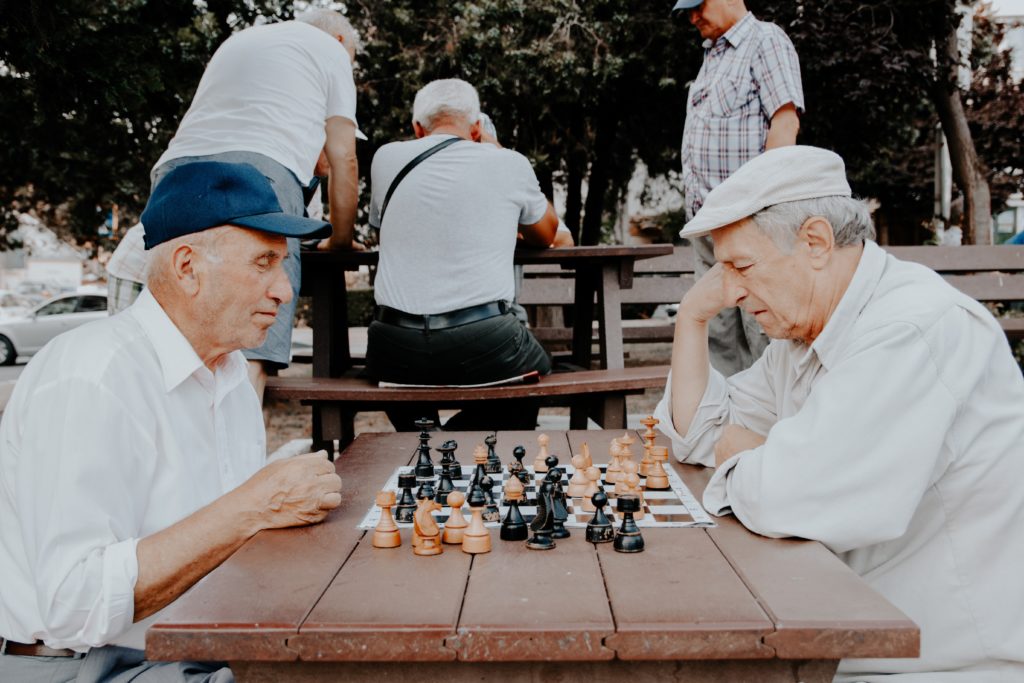
    She just got tired of the struggle. What was the point?

    She felt tired all the time, and found herself taking more and more naps.  

    How do you find purpose in life after the companion who’s been there for 62 years is suddenly gone?

    The Heartbreak of Elderly Depression

    The more questions Joan asked, the clearer it became that her mom wasn’t fighting the flu, she was depressed. At least she seemed to be.

    Joan wondered how long she’d been depressed. And whether she’d thought about ending her life… It had really shaken her to walk through that dark silent house.

    She asked her mom more questions. Ruby was matter-of-fact. “Yes, the doctor told me I was depressed a couple years before your dad died. He prescribed some pills for me, and I took them, but they didn’t do anything. I think they must have been those sugar pills you hear people talk about. I finally stopped taking them.  There was no point.”

    “Joan,” Ruby said, “I miss your dad. Charles and I talked about everything. Without him, life is flat. It’s just so empty. I have you and your sister, and I love you both, and all the grandkids and their families. But I feel so empty.”

    “Mom, I can only try to imagine how much loss you feel with Dad gone. We all miss him, but he was your constant companion and love for 62 years. I ache for you… and I can’t help but feel that even though grief has made you feel empty, that does’t mean your time on earth is finished. Maybe something can be done to help you feel better, you know? Would you be ok with me making an appointment to see Dr. McShane? We can go together.. Ok?”

    The Heartbreak of Elderly Depression – How Can We Help?

    Here’s the thing. Our parents (and grandparents) do look after everyone else all their lives. Then, they slow down, and the the rest of the family can easily forget to touch base. Why? Because life is busy. We all live with packed schedules, and a week can go by without our even noticing it.

    Our elderly loved ones can find themselves withdrawing, slowing down, and feeling somewhat useless. It’s not that unusual for depression to follow. 

    In many cases, prescribed antidepressants help. But in some, they don’t help in spite of trying more than one. When the disorder doesn’t respond to multiple treatments, something more advanced is needed.

    IV Ketamine Treatment Can Reverse Elderly Depression

    IV ketamine for treatment resistant depression may just be the treatment of choice, to restore your parent’s brain circuity. By turning on mRNA which switches DNA to “ON” your brain-derived-neurotrophic-factor (BDNF) turbo boosts the prolific and rapid production of dendrites and dendritic spines to sweep through the important parts of the brain with connections to send signals at the speed of light.

    Depression lifts, joy surges, creative thought grows, and Grandma gets that sparkle back in her eye,  and has the energy to play bridge with the girls again… and make cookies for children in the neighborhood.

    At Innovative Psychiatry we love treating grandparents and watching them get a new lease on life. Of course, if they’re grieving losses, they can grieve while still enjoying life. 

    Ketamine treatment doesn’t prevent grief, which is a part of life.  But ketamine can help them think through the grief in a healthy, healing way. And meanwhile, they can also enjoy their friends, family, and grandchildren.

    Your Loved One Can Recover from the Heartbreak of Elderly Depression, and So Can You

    Do you have a parent or grandparent who seems to have lost their joy for living? Maybe they’ve tried antidepressants but still seem serious, irritable, edgy… or bland, shut down, and without energy. Maybe you notice they don’t bathe very often anymore, and have lost interest in their appearance, or in things they normally love to do. 

    If this sounds familiar, and you have loved ones you hope can be helped by IV ketamine treatment, call us. 

    In fact, if this describes you, please call us and let us help you find your joy again.

    IV ketamine treatment rapidly proliferates your brain circuits with an abundance of new synapse connections that make the way for restored creativity, emotion like joy, happiness, love…and hope. You want to do things you enjoy again.

    Amazingly, this proliferation also increases emotional energy that can translate to more physical energy, too. Initiative and motivation increase, and joie de vivre abounds. Few phrases express what ketamine can do like this French phrase, which means “a cheerful enjoyment of life and exultation of spirit.” 

    If you have lost the song in your heart, you can have that restored. Some of our patients report waking up in the mornings singing. 

    How about you?  Have you lost your song? IV ketamine treatment can restore it, and give you that, “Oh what a beautiful morning!” feeling. 

    It’s amazing to realize that people with joy and a song in their heart are that way because they have a LOT more synapses than others, isn’t it? 

    Let us help you and your mom find your songs again.

    Lori Calabrese, M.D. is on the front end of the race to stop PTSD in its tracks using IV ketamine treatment.

    To the restoration of your best self,

  • Reach Out for Ketamine… to Get Better… and Make 2020 Your Best Year Yet

    Reach Out for Ketamine… to Get Better… and Make 2020 Your Best Year Yet

    This is the first Monday of the New Year…so how do you start a new year?

    With resolutions? A diet?  Maybe more exercise? Lots of people do. But what about you? What if you don’t have an appetite…?  Might be hard to stick to a diet more than a couple days… and what if you haven’t slept in days…and you’re exhausted… who cares about the new year and any good intentions? When you feel crummy, the beginning of the year seems like just more of the same ol’ misery. Maybe you wonder, why try? You’ve been so depressed, with so much anxiety, and have felt so alone, so vacant, for so looong, it seems futile to try something new…  BUT. What if there really IS an answer that could sweep away your misery and you could finally feel like the best you you’ve ever been…?  I know, you probably think that sounds impossible. But wait a sec…this is the 21st century, my friend. Treatments have improved. Or a better way to put it, there’s now a treatment that’s a game changer. But it won’t come to you.  You’ll have to reach out for ketamine so you can get better now. You’ll have to do something…because this treatment won’t magically show up in your living room. So why not do it now?

    IV Ketamine Treatment – The Game Changer for Psychiatric Disorders

    Of course, I’m talking about the treatment that came out of the woodwork the last decade. The one that started as a trusted anesthesia medicine listed on the World Health Organization (WHO) List of Essential Medicines. The one that’s been so safe for 50 years that it’s been used in surgical settings for people of all ages across the globe, and also in surgical settings for pets of all sizes. 

    Like most exceptional medicines that are designed for sedation and/or pain relief, it’s been abused by people on the street and in the club scene for its dissociative side effects. As a result, it’s sometimes been misunderstood as a result.

    But under psychiatric supervision, it’s nothing less than extraordinary in its effect on people whose disorder has not responded to traditional medications. Which is one of its many endearing charms.

    Why wait any longer? Why not reach out for ketamine now and start this new decade on far better footing..? Stick your neck out and make the call for treatment now because you deserve the chance to live a fulfilling life, free of symptoms that keep your life shackled.

    Ketamine Treatment Relieves a Broad Variety of Disorder Symptoms

    It happened last week, and it shocked me. Someone asked me about the best treatments for depression, anxiety, and PTSD. As I began to talk about treatments, I saw a blank look on his face when I mentioned ketamine infusions. He’d never heard about them…! And I realized that though this medicine is always in my radar, there are countless people who know nothing about what it can do.

    Someone who suffers from unrelenting and severe depression, bipolar depression, PTSD, OCD, social anxiety, substance use disorder, alcohol use disorders – and sometimes eating disorders like Anorexia Nervosa – can achieve remission with IV ketamine treatment.

    IV ketamine treatment can be a bit tepid in relieving symptoms for those with milder cases. But, let me quickly say that when you feel bad, it doesn’t feel mild. And that’s why we have criteria to help us measure the severity of each case.

    Just knowing how severe it is – or not – can guide us in how to treat it. When we see someone who has suffered with symptoms for years in spite of multiple medication trials, in spite of other treatments, who has also been hospitalized for symptoms, and may have attempted suicide multiple times, we realize this patient has suffered severely for a very long time. And patients like this usually experience a dramatic remission after IV ketamine treatment.

    Not always. But usually…

    IV ketamine treatment doesn’t work like this for everyone… sadly, not even for everyone who’s severely ill. But it has a remarkably fast and vigorously thorough effect on a very high percentage of patients… higher than any other office treatment for these disorders.

    And that’s not all.

    Freedom from the Doldrums

    You know how it is with depression that hangs over you…month after month and year after year… even if you have a few days that are a bit better…and you can actually smile some…as soon as someone says something that hits a nerve – you plunge again…back into the pits. It’s like you have nothing to fight with, like a tightrope performer with no net. So even a lighter feeling for a few days is temporary and you know it. You can feel how fragile it is.

    But with IV ketamine treatment, that fragile-ness seems to evaporate. You get offended by the guy at the party who ALWAYS has his foot in his mouth, and it burns you up. But the nosedive you expect floats away, as you think through that guy’s words and realize your peace is too important to jeopardize… and ::::poof!:::: you move on. And it’s forgotten.

    One reason may be the resilience ketamine builds. You’re able to adapt and quickly recover from the offenses that happen and you have the power to just snap back and be ok. It’s amazing…in fact, it’s priceless.

    So, reaching out may require that you talk to yourself. Maybe you’ll need to “psych yourself up,” but when you do whatever you need to do, and reach out for ketamine treatment, you’ll find yourself surprised at all that happens for you.

    Neuroplasticity + Psychotherapy = Peace & Joy in life

    Then, to point out yet another talent of this treatment, researchers and therapists have learned that because of the neuroplasticity ketamine creates in your brain circuitry, psychotherapy can be much more effective about 24 hours after an infusion.

    At Innovative Psychiatry, we love working with your psychiatrist and therapist to help make that benefit available to you with scheduled infusions coordinated with your therapy appointment 24 hours later.

    But, the fact is, that none of this can be available to you unless you reach out. It requires that you call us. Let us coordinate with your healthcare team.

    You’re probably thinking, How Can I Do THAT?  I Can’t Seem to Get Out of Bed??!!

    And there’s the rub.

    There is more help available for your tormentous symptoms than has ever been seen by your parents or grandparents or great grandparents… 

    But the biggest obstacle between you and having a healthy, balanced, rewarding life is actually a characteristic of your illness. To get to that rewarding life (you may have all but given up on,) you have to do something you may not think you can do. And here it is…

    PUSH through.

    …and make the call.

    And you know how you can do that..? 

    By grabbing on to HOPE. 

    The drowning man has to take hold of the rope. If he’s passive and tries nothing, he’ll drown.

    The mountain climber who loses his footing and careens over the cliff has to reach out and GRAB – something. A rock…a rope…a bush…?

    Once you reach out, it gets easier. We step in. You’ll still have to show up, but each time it will probably get easier and easier. And as ketamine goes to work in your brain cells – the systems and circuits and structures – surging hope and strength and resilience will billow from within you.  

    It doesn’t happen all at once the very first minute…

    Maybe it just trickles at first, but then the trickles become waves, and the joy and initiative surges, and you find you’re CAPABLE of doing things you want to do, that you’d all but forgotten about.

    For some it’s during the first infusion…for some it’s after the second one. For others it’s after the third… and in some cases it’s even after the fourth.

    Your family may notice the changes in you before you do. You may show unexpected initiative before you FEEL all that much better. (Miranda, are you actually folding clothes? Unbelievable!)

    Reach Out for Ketamine!

    More than likely, you’ve heard of ketamine treatment. Maybe you dismissed it, because you’ve heard of it as “Special K” or thought it was just a horse tranquilizer. You think it all sounds bizarre, or the creepy kind of experimental treatment that happens in somebody’s garage.

    If so, maybe it’s time you do your own homework? The National Institute of Health funds extensive research about ketamine treatment because it’s so extraordinary.

    Esteemed neuroscience researchers around the world submit their research to peer-reviewed medical journals. Conferences of psychiatrists, neurologists, neuroscientists, and physicians in other fields are hosted in major cities like Oxford (UK), NYC, Austin, San Francisco, and more. And this has been going on for years.

    IV ketamine treatment is the most effective medicine for psychiatric disorders we’ve ever seen. It’s not FDA approved because no one wants to pay for FDA trials if they can’t make a profit off a patent. And..ketamine is too old…there’s no patent to be had.

    So, we lobby for it to be covered by insurance companies, anyway. And until then, you have to pay for this treatment out-of-pocket. However, there is medical financing available everywhere. And your resurrected life, your ability to pursue your dreams, build strong, healthy relationships, and enjoy your hobbies on your terms…isn’t all that worth a small loan?  To be able to live again?

    Reach Out for Ketamine and Get Better for 2020

    This is a new year, and a new decade. Right now, this week, is the perfect time to turn the tables on misery, take hold of your hope, and reach out to get better.

    Tell yourself that it’s your turn to get better. And that you’re not going to give in to excuses. That you want to live better, healthier, and more balanced. That you want your life to BE better. Give Hope the benefit of the doubt.

    This step can turn your entire life around for the better. But you’re the one who has to take it.

    Because it’s not right for everyone. We need to be sure you’re a candidate. And we’ll evaluate that first. 

    So…you may say, What if it doesn’t work for me?

    This young woman chose to reach out for ketamine and it changed everything about her life.

    Well…we say, What if it does??

    The likelihood it will transform your life is much stronger than the likelihood it won’t work for you.  Much stronger.

    Do you really want another decade to crawl by while you’re trapped in the misery and despair of this disorder?

    Reach out for Hope and for a better life in 2020 and beyond. 

    We’ll walk you through the process, answer your questions, and make it as easy for you as we possibly can. We’re here waiting for you to call us because we want to see you enjoying a full life.

    Reach out for ketamine and grab onto HOPE.

    Lori Calabrese, M.D. is on the front end of the race to stop PTSD in its tracks using IV ketamine treatment.

    To the restoration of your best self,

  • Ketamine and Other Breakthroughs in Psychiatry for 2019

    Ketamine and Other Breakthroughs in Psychiatry for 2019

    Man on a cell phone demonstrates one of the breakthroughs in Psychiatry of 2019.

    Tomorrow is the last day of 2019…and the day before a new year – and a new decade – begins.

    Let’s jump in and look back. Let’s celebrate our progress over the last year and consider the impact of new breakthroughs this year. Some of these breakthroughs in psychiatry for 2019 may surprise you.

    The World Health Organization says that depression is the leading cause of disability worldwide. (This is not a breakthrough–it’s one of the sad facts of our time.) And for at least 1/3 of those who suffer with it, traditional brand name and generic antidepressants on the market don’t work.

    In the early 2000’s, researchers discovered that IV ketamine caused a rapid and  robust response in people with major depression.

    Now, 10 years later, a ketamine derivative is one of our biggest breakthroughs this year. So let’s talk about that, and other breakthroughs in psychiatry for 2019, as well.

    Breakthroughs in Psychiatry for 2019

    1. Esketamine (Spravato)

    Spravato is one of the breakthroughs in psychiatry for 2019, because it won FDA approval this year.

    In March of this year, the FDA approved a derivative of ketamine, the left enantiomer of the molecule, in a specially designed nasal spray for treatment resistant depression under medical supervision in approved clinics. However, the FDA approved this to be used only in conjunction with another andtidepressant at the same tije.Use of esketamine requires the initiation of a new antidepressant at the same time. 

    After years of promising outcomes with IV and IM ketamine in treating depression and other disorders as an off-label treatment, FDA approval of esketamine presented a milestone — it’s a novel form of treatment as a nasal spray and it uses a derivative of a medication that we’ve been using successfully and safely for years. PTSD, cocaine use disorder, alcohol use disorder, bipolar depression, social anxiety, and suicidal thinking can all respond to IV ketamine.

    While esketamine hasn’t been studied for most of these conditions, it can create a robust add-on response to an antidepressant in some patients who benefit from low doses. And the beauty of it is that because of its FDA approval, esketamine as a medication is covered by many insurance programs.

    Although there are tons of hoops to jump through, red tape, paperwork, REMS monitoring (the risk mitigation program that the FDA requires that all doctors and patients participate in).

    So… FDA approval marked a new breakthrough in psychiatry for 2019, and a milestone in ketamine’s journey. The quest for wider acceptance as a remarkable treatment for people who’ve remained depressed in spite of traditional medicines.

    This 21st century novel and advanced treatment for psychiatric disorders is changing the face of disability.

    Growing numbers of people are experiencing not only improvement, but remission from their symptoms, and are recovering to build fulfilling and rewarding lives, relationships, and futures.

    Here at Innovative Psychiatry, we offer both IV ketamine treatment and esketamine nasal spray for those patients who are candidates for these treatments.

    2. Telemental Health Support

    Healthcare services provided by online video or telephone has been growing for a number of years. It has improved medical care for shut-ins  and the elderly who have difficulty accessing it in the office. Psychiatric patients in remote areas have received better psychiatric coverage through this means of communication.

    By combining technology with new policies, telemental health has advanced in its effectiveness again. Sometimes using a method of treatment reveals new opportunities for improvement as challenges reveal themselves.  

    So, The National Center for Performance Health in Florida recently established ecare4kids. This tele-counseling program serves public school children in Florida with online tele-counseling. All 50 states provide some amount of tele-health services through Medicaid.

    Then in February 2019, Congress introduced the Mental Health Telemedicine Expansion Act. The Ways and Means Committe approved it in June of this year to ensure more psychiatric health care in remote areas throughout the US.

    3. Gene-guided medicine

    The Human Genome Project completed mapping the genome in 2003.

    So what’s a genome? 

    Good question. It’s the complete set of DNA, or the genetic material, found in a microorganism or the cell of any living thing. In this case, we’re specifically talking about human DNA.

    To clarify, DNA is made of a pair of twisting or spiraling strands that consist of four chemical units which we call nucleotide bases. And the bases are made of adenine (A), thymine (T), guanine (G), and cytosine (C). These bases are paired in specific patterns, i.e., an A is paired with a T, and a G is paired with a C.

    This woman is bursting with excitement from the treatment she's gotten listed in psychiatry breakthrougs for 2019.
    Now imagine this: there are 3 billion of these base pairs in your DNA, which are held within 23 pairs of chromosomes…in the nucleus of every cell of your body.

    You can see how ambitious it was for this team to take on the project of mapping all this out.

    Well, now that we have that mapping, the obvious next step follows the reduction in price of mapping your own individual genome. The initial mapping project was estimated to cost 30 million dollars. 

    But the more they use this process, the more the process reduces in cost. The next steps can feasibly include things like getting your own map so your medical and health needs, and even the medicines you take, can be so specifically customized to your genetic profile as well as your environment and lifestyle, that the effectiveness of treatments you need can soar.

    Which brings us to the point that the disorders we talk about and treat are, in most cases, inherited to some degree. So you see multiple family members suffering from psychiatric illnesses at the same time…and all too often — severe illnesses.

    Imagine if we could better fit a medication or treatment specifically to your DNA profile. And the same for your family members. So much suffering from side effects could be eliminated.

    We have important information already available to us about the cytochrome P450 enzyme system (the enzyme system in the liver responsible for the oxidative metabolism of many of our medications) …and at Innovative Psychiatry we use evidence-based genetic information as we have available to help explain your responses and guide your treatment.

    4. Genetic Editing

    You feel like dancing like these friends from the psychiatry breakthroughs of 2019.

     …Say what?? It hasn’t been that long since we figured out what the genome looks like.  Now we’re talking about editing it? Like editing a paper?  

    Well, sort of.

    It turns out that this year genetic scientists broke through in a major way with a possible method for potentially removing genetic links to disorders and diseases like Alzheimer’s, ADHD, and autism, and replacing those links in the individual’s DNA with healthy links.

    So…scientists at Harvard and MIT took the wraps off a new approach to what they coined, “prime editing.” The chemist/biologist who led the unveiling described its usefulness as a metaphor of Word processing.

    A total WOW.

    He said these little prime editors search for certain DNA sequences and precisely remove them, then replace them with sequences that don’t produce disease. He says that 89% of disease-causing defects can be resolved by this method…eventually.

    Such astounding breakthroughs in psychiatry for 2019 – what can they imagine next?

    The potential here goes without saying. What would happen if we would eventually do a little primed editing and edit out suffering? Like the kind associated with severe depression? With bipolar disorder? With alcohol dependence? With anxiety? We get breathless just thinking about it!

    5. Psychiatric Healthcare with Cell Phones

    Man on a cell phone demonstrates one of the breakthroughs in Psychiatry of 2019.

    A technical/data science/healthcare company (Mindstrong) has secured a handful of patents to develop an innovative method of providing mental healthcare services over cellphones.

    By partnering with your health insurance company, services can be provided to you free of charge, including evaluations, psychotherapy, psychiatrist visits, medication evaluations, and support when things unexpectedly come up between doctor visits. Their psychiatrist will work with yours to provide smoother and continuing care. And because it’s designed to be free (for you), more people can receive care for their disorders.

    Using a mobile app, text therapy can be provided as Cognitive Behavioral Therapy (CBT), Coping and Emotion Regulation, Psycho-education, Crisis Management, Reflective Listening, and Empathy.  

    Since 75% of Americans own a cell phone, finding a way to reach a broader audience with mental healthcare is evolving to naturally involve mobile phones. Hmmmm…..

    Digital phenotyping collects data from the smartphone to provide measures of cognition and emotion. They say that the way you use your cell phone tells them a lot about your mood and state of mind. They can’t see you but they collect data. 

    They’re not covering every cellphone in the US yet, but they’re growing…and it won’t be long. 

    What do you think about this idea? I’d love to hear your comments below.

    With all these psychiatry breakthroughs in 2019, it’s easy to get caught up in the sci-fi talk and forget what we have NOW.

    We’re living in a new world, and IV ketamine treatment IS sci-fi. 

    We could not have imagined in the past century that a medicine originally designed for anesthesia would come out of the woodwork and actually provide a solution to major depression, alcohol overconsumption, opiate dependency, anxiety disorders, PTSD, OCD, bipolar depression, and suicidal inclinations. Ever.

    Let’s not miss what’s right in front of us. 

    IV ketamine treatment can resolve depression symptoms. 

    This is the jarring news we take with us into the new decade. 

    Depression, PTSD, OCD, social anxiety, bipolar depression, substance use disorders, and suicidal thoughts no longer have to be a final sentence. You can get better. Your life can transform to a new, meaningful, rewarding source of joy…and hope.

    If you wonder whether IV ketamine treatment could work for you, call us to schedule an appointment and come in. We invite contact from your health team, and we’d love to collaborate with them to help your life transform.

    We look forward to the opportunities to meet you and discuss options in the new year.

    Have a Happy and Healthy New Year in 2020 – full of  hope, purpose, and joy.

    Lori Calabrese, M.D. is on the front end of the race to stop PTSD in its tracks using IV ketamine treatment.

    To the restoration of your best self,
error: Content is protected !!