
Tag: IV Ketamine Treatment for Alcohol Use Disorder

  • What Makes Ketamine Work? This Research Team Seeks Answers

    What Makes Ketamine Work? This Research Team Seeks Answers

    What makes ketamine work? It brings joy to this mother.

    We’ve talked about ketamine’s rapid antidepressant effects. Last month we talked about the role of dissociation in ketamine’s antidepressant benefits. Neuroscientists are studying ketamine to find out WHY it provides such rapid antidepressant results. They’re hoping they can determine what exactly ketamine does in the brain, and whether they can isolate that action from the side effects without losing its extraordinary effectiveness. It’s a long road (rife with trials!), but they soldier on… hoping to make new medications that could become more available to more people. So let’s follow this team of neuroscientists through their quest over nearly 2 decades so far, to see what makes ketamine work.
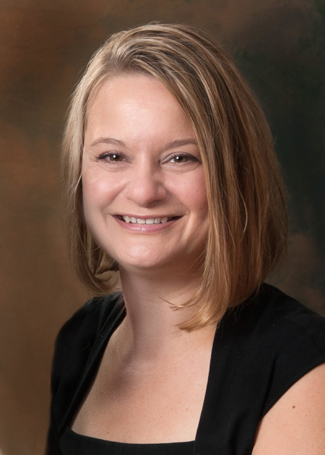
    Lisa Monteggia, Ph.D.

    A team of researchers, led by Lisa Monteggia, Ph.D., have studied this question for 18 years. Beginning in 2003, she and her team were interested in what makes antidepressants work. At the time, they knew that neurons released the neurotransmitter serotonin to keep the mood stable. Therefore, if the serotonin level was “low,” that was the cause of depression. (Or so they thought.)

    A lot of antidepressant medicines at that time were designed to increase serotonin availability. (They worked to prevent serotonin from being taken back up by the releasing neuron, and to keep it around in the synapse.)

    However, Dr. Monteggia’s team saw a problem with that whole explanation because those antidepressants (SSRIs and SNRIs–serotonin reuptake inhibitors and serotonin norepinephrine reuptake inhibitors) took weeks to relieve depressive symptoms — when the meds worked. So they realized other things must be going on at the same time, since serotonin alone wasn’t the key element.

    Next, her team identified an important aspect of neuronal signaling, as well as something vital for antidepressant effects… and that was brain-derived neurotrophic factor (BDNF).

    A variation of the gene that “tells” cells to make BDNF contains an error or oddity that can change what the gene and the BDNF do. And that’s significant. Because further studies showed that people who have this “odd” gene, can have a reduced, dampened effect from antidepressants.  

    Hmmm..!!

    Now don’t miss this next part of her story: As her team was studying this weird anomaly, another team (remember research was going on globally!) published their work about the ketamine, an anesthesia agent that can produce rapid antidepressant effects when given at a low dose — too low for it to produce anesthesia.

    Ketamine already had a reputation for abuse when taken in moderate to higher doses.

    But this finding was so important! That at a low dose, ketamine can effectively sweep away symptoms in someone who has severely treatment resistant depression. Basically, someone who has not been helped by anything else they’ve tried for their depression.

    So this really charged up Dr. Monteggia and her research team. They committed to learning all they could about ketamine. And they say they want to use it as a Rosetta Stone, so to speak. In other words, they want to use low dose ketamine as the key to understanding rapid acting antidepressant action. Why? Because maybe understanding the mechanisms of action of ketamine could fuel the development of new antidepressants without side effects… Ah!

    For one thing, it may hopefully show us how effective antidepressants work. (Actually work, not how we assume or think they work.) To learn the actual mechanism behind effectiveness; as in, something we haven’t yet seen or identified.  

    The other is that ketamine is known to impact a specific protein in the brain…the NMDA receptor. This receptor is found embedded on certain neurons — a lot of neurons!!
    The team confirmed that ketamine blocks the NMDA receptor. In addition, ketamine has specific effects on a certain signaling pathway, and when they blocked that pathway, ketamine didn’t work.

    Ok…the process of elimination. 

    But let’s see what else they learned.

    Here’s one exciting thing … and we count on it with ketamine treatment. They were able to show that when ketamine blocks the NMDA receptor which affects signaling…it produces a series of downstream effects which trigger a special form of neuroplasticity in the brain cells.

    Neuroplasticity is the ability of the connections (or synapses) between the brain cells to change their strength. So ketamine helps those synapses change their strength in new and unexpected ways.

    The team has tested other medications to see if they act like ketamine. (For instance, memantine is similar to ketamine in some ways, and it does block the NMDA receptor, but it goes about it in a different way. So interesting, though: despite all that, it does not have the same effect on signaling as ketamine, nor does it trigger this novel type of plasticity that ketamine does.)

    They only see this specific type of plasticity with rapid antidepressant action. Eureka!!

    (OK, so we’re a little excited here. I know.)

    So it occurred to them that perhaps this special form of plasticity may actually be an integral part of rapid antidepressant action.…? And they wonder whether this type of neuroplasticity plays a role in “healing” depression, and demonstrates what makes antidepressants work … Not sure yet. 

    But here’s something to keep in mind: some experts in the field of neuroscience call ketamine a “dirty” drug. 

    Don’t panic!

    When they say that, they don’t mean it’s grimy.  They mean that it works in many ways to affect many parts of the brain — it doesn’t do just one thing that explains definitively how it relieves depression. If they could develop a drug that targeted the absolute biologic mechanisms that are specifically involved in depression, bipolar depression, PTSD, suicidal thoughts, and the rest, that would be a breakthrough!

    So ketamine emerged as a treatment for psychiatric disorders — quite by surprise.  

    This team of researchers believe that ketamine’s actions are especially important in the hippocampus. They believe that after ketamine affects brain cells in the hippocampus, changes flow back to the prefrontal cortex (this part of the brain is behind your forehead) and other areas.

    So they’re hoping they can follow the path of those changes backward…from hippocampus to prefrontal cortex to other area. The more they learn, the closer they may come to understand rapid acting antidepressants better.

    They believe that blocking NMDA receptors results in that novel neuroplasticity and call it “homeostatic” neuroplasticity. This is a different form of plasticity than the one involved in learning.

    And as they continue forward with these experiments, studying homeostatic plasticity, which they believe is at the core of what makes ketamine work as an antidepressant, then they can work with other, perhaps newer, medications that do the same thing…to find more and better options.

    Meanwhile, we do have IV ketamine treatment. And people often experience remission with it. So we’ll keep using it, and celebrating your joy, freedom…and hope.
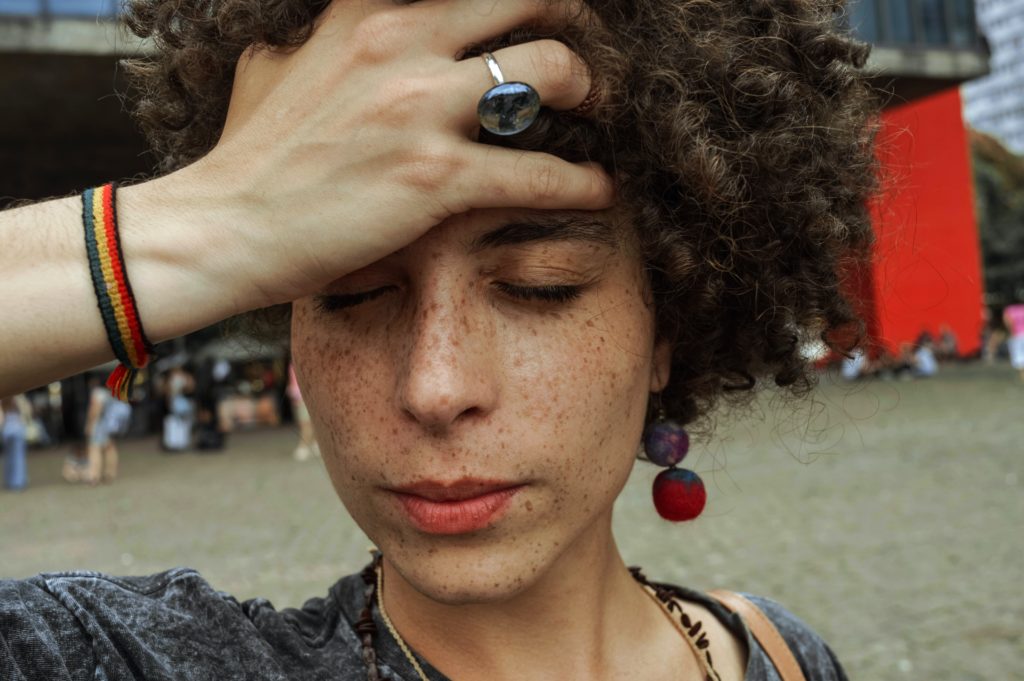
    At Innovative Psychiatry, we happily work with you in hopes you’ll achieve remission with IV ketamine treatment. We’ll joyfully welcome you for your treatment, and you’ll receive that treatment in a safe environment with clean, pure air. Sanitized to 99.99%. We take every precaution, like our intense plasma cell technology, to keep our environment here safe for you.

    Innovative. Super modern. Seeking the best.

    For you.

    IV ketamine treatment is just like that in our hands: innovative, supermodern, seeking your best self. Is it for everyone? Does it make everyone better? Sadly no. Which is why we’re so grateful that there are teams of researchers…around the world…who won’t give up, who seek more options and even better ones, for all of us.

    If you struggle with the kinds of disorders we’ve talked about, and treatments haven’t helped, call us.

    We’ll set an appointment to help you know whether you might be a likely candidate for this extraordinary treatment. Your rewarding and fulfilling life lies ahead.

    We look forward to meeting you.
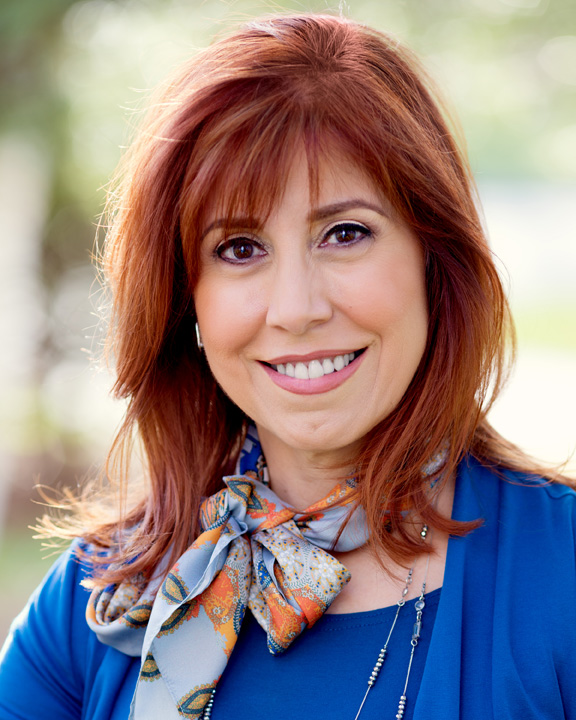
    Lori Calabrese, M.D. is on the front end of the race to stop PTSD in its tracks using IV ketamine treatment.

    To the restoration of your best self,
  • Pandemic Anxiety Depletes Bandwidth You Need to Cope With Stress of Living

    Pandemic Anxiety Depletes Bandwidth You Need to Cope With Stress of Living

    We’re all weary of hearing about COVID and mask wearing precautions. Aren’t we?

    About the negative impact of isolation. And while we see improvement on the horizon through wide spread vaccinations, there are still imminent risks, and new cases as well as deaths every day. Those risks add to your daily stress in ways you may not realize. Pandemic anxiety depletes your bandwidth for coping with daily living. The story of Carolee and Jacob illuminates the kinds of stressors that can go on behind closed doors…

    Carolee and Jacob walked the two blocks to the grocery story to pick up food for dinner. They were discussing a news story they’d read on the internet about how some states are lifting mandates for COVID precautions, like wearing masks, social distancing, and use of hand sanitizer. They liked walking to their neighborhood store when they could, just for fresh air and exercise.

    Since they passed a number of people on the sidewalk as they walked, they always wore masks, even when they were outside.

    Carolee expressed her frustration that those particular states were lifting the requirements, in spite of the fact that each governor had strongly encouraged citizens to continue to use precautions on their own.  

    Of course, there will be those who step up and “discipline themselves” and maintain the precautions. But she knew there would be so many… so so many…who would not. Her frustration and disgust exploded.

    “WHY?????  Why would they drop this requirement before we’re ready for it?  People aren’t going to do the right thing. They’re going to just be glad to be rid of it all and do what they want to do for fun!  And the cases will start growing…and more will die… and….”

    You Can’t Control Everyone… Just Yourself, Right?

    Jacob squeezed her hand and tried to soothe her. “Carolee, you know there are already so many who don’t follow the rules. But you and I can only do what’s best for us…Don’t you think it’s futile to struggle about everyone else, when it’s something we have no control over?  It’s really not worth you getting wound up and shaken about something you can’t control…is it?

    “It’s about bandwidth, Carolee. The amount of information your brain can receive…like per second. We’re flooded with so much more to consider about every detail of life than we’ve ever had to. This pandemic anxiety depletes the bandwidth we need just to get through every minute, every hour. We have to find ways to tamp down our own response to things, so we have more energy for everything else.”

    Jacob knew that Carolee hadn’t been sleeping well lately. She seemed to wake up frequently, sometimes walking through the house wringing her hands.  Sometimes just pacing. Staring out the window. Standing out on the patio.

    They’d talked several times about how the COVID-19 variants were spreading, asking questions about whether the new vaccines would be effective with the variants… About how long they were waiting on the list to get their own vaccines. Each time they talked, they agreed to let it go, for their own peace of mind.

    But that was easier said than done.

    To make matters worse, Jacob was feeling more and more worn down by the stress of the pandemic, his work responsibilities, and Carolee’s meltdowns.  He knew she would get past them, but he found himself worrying about her more and more. He needed to find a way to relax. In addition to Carolee, Jacob sure needed some relief.

    Worry. Worry. Then worry some more.

    Life was already full when COVID-19 came along. People were already stressed with daily responsibilities to job, family, faith organizations, maintenance of home and car, children and their struggles.

    When the pandemic appeared on the horizon like a vast dark cloud of pestilence, it pervaded everything.  Those aspects of life that were so routine and required little attention, came to require acute attention often overloaded with a sense of panic with fear of doing it wrong. 

    A psychiatrist wrote in Psychiatric Times about the fear and guilt she experienced when she stopped by the bank for cash only to find the drive-through banking not yet open. So she wrestled with herself about whether to go inside the lobby or park and wait  an hour for the drive-through to open. She went inside, but worried about whether she had been exposed to COVID-19 and  who she might expose through the day as a result. She worried about it all far more than she normally would have.

    Kate Murphy, a NYT journalist, made the point that your brain is overburdened by this pandemic. That things you normally relegate to your brain’s autopilot now require serious thought and risk analysis. And…as a result, you have less bandwidth for higher order thinking.  

    Less bandwidth.

    Isn’t it true?

    And those pandemic anxiety reactions eat up bandwidth.

    If you’ve depleted yourself through a panicky reaction to forgetting your mask when you MUST buy groceries, or driving through for a meal but your hand sanitizer is empty…how can you eat without sanitizing your hands?? Or you’re trying to cope with working from home and the kids are jumping out of their skins from cabin fever??

    What do you do when you keep hitting your thumb with a hammer?

    Those bandwidth-eating reactions are similar to hitting your thumb with a hammer, over and over and over…  because more and more damage is done. You can hardly cope with everything else when your thumb is screaming in pain, you know? You just have to step away from the hammer!!

    Then, if you’ve already been taking medication for anxiety, and the exponential expansion of anxiety caused by the pandemic sends your worry and panic through the roof, well, you have difficulties you hardly know how to manage.

    There was a time before the pandemic was anticipated, that worrying about little things blew up into worrying about disasters in your mind, and as your  grandma would say, “Honey, you’re borrowing trouble and making a mountain out of a molehill.”

    But now, the ongoing stream of changes and increased risks you face everyday can result in outright panic for some, and on a lesser scale, confusion and exhaustion…and dread. This pandemic anxiety just depletes your bandwidth for life.

    You probably know people who have contracted COVID-19. You may have seen some who experienced extremely mild symptoms, if any at all. Still, you may also know someone who experienced serious or extremely severe symptoms. Maybe you know people who have died.

    If you’ve known more than 1 person who has died, your anxiety about death may have filled you with alarm. Alarm about masks, about social distancing, about making sure OTHERS are doing what they’re supposed to be doing.

    And what’s more upsetting than people who won’t comply?? You just have to step away from that hammer…

    The more traumatic your experience has been, the more anxiety you may feel about the risks. On the other hand, if you have not known anyone who was hospitalized from COVID-19, exposure may not seem like a great risk to you at all.

    Unique Pandemic Trauma and Loss Requires More Bandwidth

    Either way, you need to be grounded. To let the world take care of the big solutions while you manage the challenges of your daily life. To help with that, take daily walks – wearing your mask! — but get out in the fresh air and sunshine. Take a friend or family member along and talk. Take care of YOU. Then look after your family.

    Pandemic anxiety depletes your bandwidth for your own life. Right now, you need all the energy and mental clarity you can get just to get through life, day by day.

    Because YOUR life needs to go on.

    Still, if your medications and fresh air and exercise don’t help at all, then you may need help getting your symptoms of depression, bipolar depression, PTSD, and suicidal thoughts under control. Then maybe… you should consider IV ketamine infusions.

    Since IV ketamine treatment is at the front lines transforming people when nothing else has helped, it may be an obvious next step for you. And receiving these infusions is a relaxing and comfortable experience. With your remission as our goal, your dose will be titrated according to your individual response during each infusion.

    Pandemic anxiety depletes bandwidth for coping with COVID, but you'll not be exposed to viruses in our office. You're safe here.

    At Innovative Psychiatry, we’re working every day to respond to the call for helping people who are against the wall in this pandemic. If your own bandwidth for coping with the demands of COVID on top of the demands of your life is growing slim, you’re not alone. A vast mob of stressed out, overwhelmed, exhausted, and depressed people surround you. You have to decide what to do about it, if your efforts toward exercise, fresh air, and medication have become futile.

    In that process, it could be that the results of stress have depleted your ability to cope anymore. You may need to reboot. You may need a remodeling project in your synapses to increase your synaptic plasticity. To relieve your symptoms of depression, PTSD, or suicidal thinking. To give you fresh bandwidth.

    For your safety, we’ve installed state-of-the-art technology that utterly removes and destroys COVID-19 and viruses and pathogens from the air and surfaces. So you don’t have to spend bandwidth on your safety, when getting treated is so important for you. Just one more thing to lighten your load. You have enough on your mind.

    If this sounds like you, and you’d like to discuss IV ketamine treatment, call us.

    This pandemic has been hard for everyone. You’re not alone. And we’re here to help.

    We look forward to talking with you and working together for your relief.

    Lori Calabrese, M.D. is on the front end of the race to stop PTSD in its tracks using IV ketamine treatment.

    To the restoration of your best self,
  • Repeated Ketamine Infusions Relieve PTSD Symptoms – New Study

    Repeated Ketamine Infusions Relieve PTSD Symptoms – New Study

    New study demonstrates that with repeated doses of IV ketamine, relief can last up to several weeks.

    A deep unfamiliar voice behind Sarah made her jump. In a flash, she turned and bolted down the stairs she’d been climbing, turned left, then left again, knocking into people in her path as she scrambled for a place to hide. A mad dash took her into the restroom, where she locked the door and turned off the lights to hide in the dark. Screams sounded as darkness enveloped the room. Her heart was pounding, sweat pouring from her scalp, down her face, her torso…her armpits. She willed her breathing to slow…so the man pursuing her would not hear her panting gasps. (Poor Sarah. She’s suffering… if only she knew what repeated ketamine infusions relieve…)

    Three women exploded out of their stalls complaining about the lights and searching for the switch. Sarah pushed past them to an empty stall and stood on the toilet seat with the door locked so her feet couldn’t be seen below the door.

    Sarah’s vision blurred as sweat poured into her eyes. With a quick swipe, she wiped the moisture from her eyes and forehead. And waited. Silently.

    By her watch, she saw time passing. She heard women come and go from the restroom…heard their quiet conversation…  but she waited, hands trembling.

    After 45 minutes crouched with feet on the toilet seat…Sarah began to feel calmer. It washed over her that she’d been hiding in a public restroom for close to an hour… and now she was late to work. 

    PTSD is Not Only Terrifying, It Seriously Interferes with Daily Living

    Again.

    Oh noooo.

    Reality settled in. After washing her hands without incident, she cautiously opened the door and saw nothing unusual outside the door. She began to realize that it had happened again. Like countless other times. The sound of that voice triggered her memory of the assault…and it was so real. Except it wasn’t. 

    She was surrounded in the trauma again. 

    And that was the problem. Yet again, she would clock in late and be reprimanded for it. There must be help to conquer the PTSD symptoms that had emerged after she was assaulted 2 years ago. She had to find peace. Sarah wanted her life back.
    Desperately.

    Repeated Ketamine Infusions Relieve PTSD Under Controlled Conditions

    PTSD can be so entrenched that it is very difficult to relieve — even with therapy, special trauma-based therapies, SRI’s, or a combination of approaches. Very early work with ketamine–and the brilliant neuroscientists behind those studies–showed ketamine could reduce PTSD symptoms.

    A recent study from the Icahn School of Medicine at Mt. Sinai published January 5, 2021 has made splashing news among ketamine researchers and clinicians as the first randomized, double blind, placebo-controlled trial of repeated ketamine infusions for chronic PTSD. Adriana Feder and her team deserve applause and admiration, and have just set the bar higher for ketamine clinical trials.

    It was brilliantly conceived, elegantly executed. Well done.

    Patients with chronic PTSD that had gone on for years, from a variety of traumas, were separated into two groups. One group received 6 ketamine infusions (3 times a week over 2 weeks); the other group received an infusion of midazolam, which was the “placebo” in the trial, but it is was an active placebo–it made them feel something but it wasn’t ketamine.

    Ok, now this is important: if you have PTSD, or if someone you love has PTSD, you want it to stop. That would be remission, and that would be ideal. But in the world of PTSD clinical research studies, researchers look for response, and response means a 30% decrease in your symptoms.

    That’s how response is defined, and that’s how it was defined for this study: 30% improvement. It doesn’t seem like a lot of improvement, does it? Unless your life is a nightmare. Then a 30% reduction is a lot of improvement.

    As it happened, 67% of those in the ketamine group responded after 6 infusions …  compared to only 20% of those getting the placebo study drug.

    A significant difference.

    And possibly even more exciting than that 67%, those who received ketamine infusions experienced significant improvements across 3 of the 4 PTSD symptom clusters: intrusions, avoidance, and negative alterations in cognitions and mood.

    So, Repeated Ketamine Infusions Relieve PTSD

    Dr. Feder and her team — and all of us, truly — are encouraged by this kind of outcome, and of course, call for more infusion studies using more infusions as well as trials using ketamine infusions combined with trauma-focused therapy. In fact, we can and are imagining all kinds of studies we’d like to see for PTSD — different infusion parameters, different infusion doses, titrated infusions, new medications, new therapies. The GREAT news is that relief for PTSD is under investigation and more effective treatment is on the horizon.

    Formal Studies Help to Establish Credibility

    Now, it’s important to note that for a study to be replicable, it’s required to use clear protocols and consistent dosing. In real world practice, we have the duty and the responsibility to treat each patient as an individual for the best possible outcome. Sometimes that means using a teeny, tiny dose, tinier that you would imagine; sometimes it means titrating the dose to get a better response.

    Medicine is a science and an art.

    Since we’ve learned that effective depression relief requires different treatment for different patients, and effective ketamine treatment often requires different ketamine doses for different patients (and different conditions), we might expect the same to be true for PTSD.

    The ketamine dose for each of the 6 infusions dose in this study was 0.5 mg/kg — the same dose used in the single-dose and early repeat-dose studies of treatment resistant depression.

    But we find clinically, and from our own published work, many patients with depression need higher doses to stop suicidal thoughts, to achieve remission, and to restore hope.

    By the way, notice that in the trial above, 67% of participants benefitted from ketamine infusions: they experienced a 30% drop in their symptoms. Ketamine is wonderful for those it helps — when it helps — but for reasons we don’t fully understand yet, it doesn’t help everyone. And it didn’t benefit everyone in the study. Ketamine is not a treatment that works for everyone. There isn’t anything that works for everyone.

    In real life practice, we can titrate. By that I mean that we use our expertise, in addition to evidence-based scientific results, to adjust the infusion dose during treatment (within certain parameters) to try to bring forth the most effective results for you.

    Because your treatment, of course, is about you. It’s all about you.

    New Studies, like this one with a Series of Ketamine Infusions for PTSD, build our Brain Trust about Ketamine so that We Can Provide More Relief to More People Who Need It

    One size may fit many, but not most, and one size never fits all.

    At Innovative Psychiatry, we treat PTSD with repeated titrated IV ketamine treatment. And we use our deep expertise with ketamine in psychiatry and in the treatment of trauma to give you the best possible results. We’re thrilled that randomized, controlled trials are now investigating this so carefully. Research underscores safety, efficacy, and credibility. The more researchers learn, the more we can help you.  

    If you’ve suffered with PTSD and other treatments and medications have not helped, repeated ketamine infusions may help remarkably. 

    And remember, until the COVID-19 pandemic has moved to another solar system (just kidding! — but wouldn’t that be great?),  we’re prepared to keep you safe when you’re here with us. We have the technology to keep the SARS-CoV-2 out of the air, and off of the surfaces in our office. We’re vaccinated, we’re tested regularly, we screen everyone. (And we keep the front door locked!) When you come for treatment, you can breathe easy. 

    We want you safe, and we want you relieved of PTSD and other symptoms.

    Because, like Sarah, you need a life that is free to develop. A life that’s not interrupted with unmanaged symptoms.

    And we want that life for you.

    So you can follow your own dreams, and build the life you want to build.

    If you suffer from PTSD and nothing has helped, call us.

    In fact, if you suffer from treatment resistant depression, bipolar depression, anxiety, suicidal thinking and nothing has helped, call us.

    Let us work with you to help you transform and enjoy your life.

    Lori Calabrese, M.D. is on the front end of the race to stop PTSD in its tracks using IV ketamine treatment.

    To the restoration of your best self,
  • Wake up and Dream Your Most Heartfelt Dreams This Holiday Season

    Wake up and Dream Your Most Heartfelt Dreams This Holiday Season

    A dream is a wish your heart makes, when you’re fast asleep…

    At least that’s what Cinderella sang, in Disney’s classic animated movie. But… the kind of dreams you have when you’re fast asleep are actually different than the dreams your heart makes. This is the week of Christmas, which has filled children’s dreams with sugar plum fairies and their favorite toys for centuries. It’s also the Christmas of the pandemic of 2020, which has had its own impact on dreaming. We’re living history right now; yet we’re also building our futures. So maybe we should all wake up and dream to make our lives better.

    But you’re not Cinderella or her Prince Charming. You’re you…and you live in the real world. And in a global pandemic, no less.

    You may know Jaxon. He’s been struggling to get his feet on the ground as long as he can remember. He’s tried one job after another, year after year. But during the COVID pandemic with its lack of job security, he’s realized he’s sick and tired of feeling he has no control in his life. So he’s decided to wake up and dream. He plans to take his uncle up on the offer to pay for his training as an airline mechanic. Jaxon is good with engines, and has been studying jet engines.  So as soon as the pandemic eases, he’s going to enroll in training. It will improve his life, and the life of his family. And he’s chomping at the bit to realize his dream.

    Then there’s Cheryl. She’s always dreamed of furthering her education so she can be a nurse practitioner or Advanced Practice nurse. She’s already a registered nurse with a Bachelor of Science degree. It will be a long road to earn the Advance Practice status, or Nurse Practitioner degree. But she wants more out of life. So she decided to not give up but wake up and dream. And the exhaustion of the COVID pandemic has shown her she wants to specialize and do her best work, as well as improve her income for her family’s sake. Her dream is to specialize in pediatrics. So she has begun taking online courses now to move toward that goal.

    After 10 months of COVID-19 this year, many have become discouraged and lost the pluck it takes to visualize life beyond this. Dreams of what we want to accomplish, or create…or overcome.  These are the dreams that are a wish your heart makes….

    “I want to own my own business…”

    “My wish is for a promotion..”

    “Wishing for a spouse and family…”

    “Someday, I’ll have my own daycare center.”

    “My dream is to be a doctor.”

    “I’m hoping to manage my symptoms so I can feel others respect me and I can build a life I’m proud of.”

    A dream is a wish your heart makes… it’s something you don’t have now, but wish you did. Something that you’re willing to wait for…and to work for… that you believe would improve your life.

    Your dream is the shape and color scheme of your hope. Hope says, “Life will get better.”

    Your dream determines HOW it will get better.

    A book published this year called Dream Big, written by the New York Times best selling author Bob Goff, is so timely for the pandemic and the stress you may feel. Actually, it’s called Dream Big: Know What You Want, Why You Want It, and What You’re Going To Do About It.

    Of course, it may not be that easy to know what you want. What you wish. What your big dream is. But it’s worth it to dig deep and figure it out.  You have to figure out what that dream is to figure out if it’s worth it to you to fight for it. 

    And figuring out why it matters is a good step toward putting down roots for the future you dream of. 

    Then, you’ll start taking steps. Because that dream is your lifeblood and fuel.

    It’s timely that this book was published this year — 2020 because so many have been so overwhelmed by the status quo of the pandemic, world economics, and politics, that they’ve given up the fight.  Their energy is drained, along with their determination and strength to move forward.

    But right now, in 2020, is the time to DREAM.  Not hide, not go to sleep. And certainly not give up. But since COVID has seeped into daily life, it may seem to you that it’s too late to fight.

    But you can stretch beyond the limitations you see around you in the pandemic. Reach far. Seek new possibilities. Dream big.

    It’s never too late to fight for YOU.

    Think of the time you have now to reevaluate and restructure your life plan. This is the time to decide if you want your life to continue, business-as-usual, or do you want to find ways to enjoy more, love more, help more.

    Right now is the time to make those decisions. The ones that pursue your dreams.  Because as the COVID vaccinations reach more people and the presence of this illness is reduced, and society becomes able to move around again… you’ll need to already be in your stride with your new plans, your new life style.

    But there’s another facet. And that’s the fact that symptoms prevent some hard working people from pursuing their dreams. In fact, severe symptoms of anxiety or depression can muddle a person’s ability to even form his own dream.

    When that happens, that person may need the treatment to get his symptoms under control so he can move forward toward his own fulfilling life.

    Depression and bipolar depression are two more disorders that can interfere with your power to pursue your dream.  Social anxiety can do that, too.

    PTSD is an example of a disorder that can severely block progress toward the fulfillment of a dream…or even forming one to pursue.

    IV ketamine treatment has well documented evidence for treating and relieving the symptoms of these disorders. It turns on mRNA which switches DNA to “ON” to turbo boost brain-derived-neurotrophic-factors which go to work proliferating the synapses (connections between brain cells) throughout your brain.

    Your brain wakes up, and signals light up your brain as they carry messages everywhere at high speed. You feel joy, you feel creative, you have a renewed ability to invest in your work and healthy relationships. You can wake up and dream because you have hope.

    At Innovative Psychiatry, we’re gratified to watch people come alive with hope and purpose after IV ketamine treatment. We offer this remarkable life-changing treatment in a safe atmosphere where we’ve invested in VB Enviro Care’s plasma cell technology that removes all COVID virus particles (in fact all viruses, bacteria, and mold) from the air and the surfaces in our offices.

    I know it sounds a little sci-fi and actually… it is. This technology was developed at MIT and NASA to fight biological warfare, and it’s extremely effective. You’re safe here and you can be treated without fear.

    We understand that the pandemic has taken a toll both emotionally and physically on so many and we want to help you restore, and achieve remission from your symptoms. So you can wake up and dream, and invest in the life you want to live.

    Ketamine doesn’t work for everyone. No treatment or medicine does. But it is so effective for the majority of patients who suffer from severe symptoms. It can be extraordinarily effective when everything else has failed.

    If you suffer from symptoms of severe depression, bipolar depression, PTSD, social anxiety, alcohol use disorder, substance use disorder, or suicidal thinking, call us.

    You can schedule appointments for IV ketamine treatment without a long wait…usually just a few days.

    Start 2021 hopeful, and empowered to live your life as your best self.

    We’re here to help so you can live a truly rewarding life.

    Lori Calabrese, M.D. is on the front end of the race to stop PTSD in its tracks using IV ketamine treatment.

    To the restoration of your best self,

  • Reduce Stress and Stay Safe This Holiday Season

    Reduce Stress and Stay Safe This Holiday Season

    Although some things are easier said than done…

    Cecilia and Ben have been working remotely since March 2020, so they both work in their home. They’ve faced the challenge of setting up work spaces in their home so they both have privacy for their online meetings. It took some doing, moving furniture, opening up areas and storing what they could when they’d rather be relaxing on the weekend. It’s all been about reduced stress and staying safe and healthy.

    So they’ve adapted. And have designed their lives around working remotely in their own spaces. For their own wellbeing and for everyone else.

    They’re very careful about avoiding exposure to SARS-CoV-2, the virus that causes COVID-19. Twice a month trips to grocery store with gloves and masks. Very cautious. 

    Cecilia also has concerns about managing her bipolar disorder. With the help of medication, she manages fairly well. But she and Ben are careful about avoiding stressful situations to help with her stability.

    They were invited to share Thanksgiving with Jake and Robin, Cecilia’s brother and sister-in-law…so they discussed–again, at length–how careful Jake and Robin were about isolation and precautions, and were assured they were extremely cautious. Both couples agreed to a COVID test the week before the holiday.  All four tests came back negative.

    Halfway through the day on Thanksgiving, they were enjoying a quiet time together chatting as they prepared the meal.

    Suddenly, the doorbell rang.  Jake and Robin looked at each other puzzled as if to say, Are you expecting anyone?  No… are you?

    When they answered the door, a jovial group of 8 more people roared Happy Thanksgiving!!! and charged through the door. The eight people included the Robin’s cousin, his wife, their 5 children, and Cecilia’s elderly mother.

    Jake and Robin stepped out of the way, baffled, shocked, and horrified; Ben and Cecilia were equally horrified. Grandma came in with her walker. Four children ran through the house, and a baby in a carseat wailed from her position on the floor.

    After quick greetings, and well-intended but strained smiles, Jake asked the parents of the wild offspring if they’d had recent COVID tests and they laughed and said, “No, of COURSE not!!  Don’t you believe that whole COVID propaganda, Jake!! Relax! It’s Thanksgiving and it’s time for family!!!”

    The new arrivals then commenced to talk about a party at another cousin’s house a few days before and what a great time they had.

    A party?  How many were there?”

    They held their breath.

    “Aww, I don’t know… 30 or so. You should see Tom’s oldest. She is really grown up!”

    So Robin said, “You know what? We love you guys and it’s great to see you…but we take this pandemic pretty seriously. We each got a COVID test last week to be sure we didn’t have the virus to expose to each other.

    “We don’t want to hurt your feelings but until this COVID thing is resolved, we’re not letting anyone be here in the house who isn’t carefully isolating, using precautions, and can show a negative test result. We’re really concerned about Mom, too, because she’s high risk–she’s vulnerable to the virus and all kinds of complications. And she’s being exposed to you guys today. You’ve been with at least 30 people who may or may not have COVID, so now she has been exposed to those 30 people, too.

    “To tell you the truth, you should all put on masks, and you should take her home. We can see that you don’t feel as cautious as we do, but we just have to protect our health and others the best we can.”

    With bruised feelings, the cousins and Grandma all accepted masks to wear and loaded back into the car. They weren’t happy about being sent away without welcome. To say they took it personally would be an understatement.

    The following week, Callie got a phone call from her mom.  Her mom had not been feeling well for a couple days, so she went to the ER. With a history of heart trouble and asthma, she was worried. The hospital COVID test was positive, and Grandma was admitted to the ICU. Within 4 days, her breathing had deteriorated, and become very difficult, so her diagnosis was upgraded to COVID and pneumonia. Doctors said it was grave.

    About the same time, Ben started feeling symptoms of severe fatigue, shortness of breath, and intestinal cramping. Cecilia drove him to a drive through testing center for another test. It came back in two days — positive.

    Ben was the sickest he’d ever been. So weak he could barely walk to the bathroom. Cecilia tried to keep him quarantined in the bedroom. And she wore a mask and gloves and washed her hands often. After about 16 days, Ben began to improve. And Cecilia was weary and discouraged.

    Cecilia’s daily calls to the hospital to check on her mom were frightening. Heartbreaking. Her mom was now on a ventilator. And her cousin’s wife was also sick with COVID.

    After taking every precaution, Ben and Cecilia still found themselves exposed to COVID and were facing the possible loss of her mother. Their fear and grief were only surpassed by their profound frustration and powerlessness. They really thought they could reduce stress and stay safe for Thanksgiving.

    You just never know, do you?

    But all the more difficult, Cecilia’s bipolar depression symptoms were rearing up in the face of the deep frustration she felt. First frustration, then anger, then rage…at her cousin who ignored all the warnings and put her mom and everyone else at risk. 

    She could feel her mood moving from neutral to a dark melancholy… bipolar depression was looming… she could feel it coming on.

    Oh no. How would she get through this and when her mom was in ICU? What if her mom died? It was all just too much. Her hope was dwindling. She felt both agitated and defeated… Even though she didn’t contract COVID, those around her who did played a role in her own condition worsening.

    Reduce Stress and Stay Safe at the SAME Time

    We’ve talked about how stress has become a traditional element of the holiday season, as we’ve allowed our traditions to become obligations. And how the stress that results from all those insurmountable obligations actually creates misery, sickness, and destructive conditions like depression and anxiety symptoms. So that to reduce that stress we need to make some hard decisions that put relationships and our own peace before the race to “get it all done.”

    We’ve also talked about how this holiday season 2020 is unique because COVID cases are increasing so fast that we’ve been asked not to travel, and to limit the gathering in our homes to those who live there–and possibly one or two who’ve tested for COVID and received a negative result, and who are extremely careful about isolation and protection.

    Of course, this appeal ricocheted around the internet and news media before Thanksgiving, and some heeded it.  Many others ignored it. 

    Aside from the precautions for limiting spread of the virus that is causing the COVID pandemic, there is another issue that deserves attention. That’s the tension, anxiety, and depression symptoms that can be relegated to the ongoing news about the virus and the damage it can cause. 

    Add to that the conflict that arises when individuals hold opposing opinions about their decisions for celebrating the holiday… and the disagreements that erupt. Yikes.

    This time of year is celebrated as a time of giving and receiving love and connection with friends and family. To worship true to your conscience, and hopefully be refreshed. Don’t you agree?

    So what can you do when friends and family stir up conflict?

    We all know someone who stirs up conflict wherever they go. The Button Pusher.  
    Then there are those who find their fuel by subtly inflicting guilt. We love them but we hate the guilt trips. 
    And every group has someone looking to push the crowd into doing something they don’t want to do…

    Yours isn’t the only family with these delightful people. 

    Aren’t you glad?

    The Good News. Disconnect your buttons before you have contact with the Button Pushers… Turn off your guilt switch and let the guilt purveyors buzz away while you walk away. And those Mr. Pushy types?  Just say NO.

    This is a year to consider fewer gifts and more emails, cards, letters, especially those cards with pictures enclosed or attached. Share your news without exposing yourself, your family, or the vulnerable family members to potential illness.

    Let the pandemic die down.  Give the vaccinations some months to do their job.  And let’s save Winter 2021 to hopefully move around the country and spend time with those we love.

    Reduce Stress and Stay Safe — Enjoy the Holidays and Enter 2021 Healthy and Happy

    And… if your efforts to reduce stress and stay safe are undermined like Cecilia’s and Ben’s were, you have options. They may be as simple as isolating and watching Christmas movies together, with popcorn and mugs of hot chocolate. But if you symptoms rise and intensify, if your medications aren’t effective in managing your symptoms of depression, bipolar depression, PTSD, alcohol use disorder, substance use disorderIV ketamine treatment may be a very real and lasting help for you. It doesn’t work for everyone — because nothing works for everyone — but it can be extraordinarily effective even when everything else has failed.

    With a series of titrated ketamine infusions personalized specifically for you and your response, you can feel like your best self again. Think back to the last time in your life when you were at your best self for a good stretch. Ketamine treatment can help you feel like that again.

    It can be amazing, and has a remarkable effect on the structures in your brain. You can feel restored, with the energy to give your best on your job and in your relationships, with improved creativity. And hope.

    At Innovative Psychiatry, people with these conditions and more come through every week. We have an atmosphere we keep safe from the spread of COVID due to 21st century plasma cell technology we’ve installed that destroys the COVID virus in the air and on surfaces. With the technology available anywhere to keep our air and surfaces COVID-free, and meticulous procedures in our office, you can come for treatment with confidence, and relax in a quiet private treatment room with reduced stress where you can stay safe.

    Above all, take very good care of yourself, your health, your outlook, and the wellbeing of your family.

    We care about you, and we’re here to help you experience relief of symptoms and the power to enjoy this time of year by enjoying what you love and those dear to you.

    If you want to see what IV ketamine treatment can do for you, call us.

    We understand and can help.

    Lori Calabrese, M.D. is on the front end of the race to stop PTSD in its tracks using IV ketamine treatment.

    To the restoration of your best self,
  • Does Mine Look Like His?? How Disorders Look Different in Different People

    Does Mine Look Like His?? How Disorders Look Different in Different People

    It can be alarming to see you brother try to navigate his way through a challenging diagnosis like depression or bipolar disorder. His symptoms may be alarming for you, and while you’re trying to be supportive, he may feel the world is crashing in. His dramatic reactions can be overwhelming, especially when you had a friend with bipolar disorder who had a volatile temper, it seemed, and seemed hypersexed, but she didn’t act like your brother is acting now. Surely they got his diagnosis wrong. But the doctor says that disorders look different in different people…at different times and under different circumstances.

    And it’s good to know.

    Charlotte might be a good example.

    Charlotte first began to show signs of less confidence and depression around the age of 6. She tried so hard to have a stiff upper lip, to invest her effort and perform well at school to please her parents, and to be industrious. Her parents were always so proud of her. But they didn’t recognize depression in herbecause she tried so hard.

    Now, Charlotte’s family already showed signs of psychiatric disorders in other members. Her mom had suffered from depression since childhood, her oldest brother had suffered from depression since he was 4. Plus, her other brother received a diagnosis of bipolar disorder. He had actually displayed symptoms since he was a young child. See the similarities?

    In addition, Charlotte’s uncle struggled with Narcissistic Personality Disorder. So did her grandfather.

    So much going on in Charlotte’s extended family. In fact, so much woven through the whole family.

    But in her case, her primary diagnosis turned out to be severe treatment-resistant bipolar disorder. Plus alcohol use disorder, social anxiety, and some phobias.  

    Happily, her bipolar depression, social anxiety, and alcohol use disorder, eventually improved dramatically. Some aspects reached remission after IV ketamine treatment.

    Sometimes depression or bipolar depression expresses itself as anger… even rage. Sometimes it can look like alcohol use disorder. In one person it may look like sadness and despair. In someone else, it may show up as disrespect for others. One person with bipolar disorder may seemed quiet, full of sorrow, and hopeless a lot of the time, but another might feel angry, disillusioned, and seeking revenge. How is it that the same disorder can present so differently? It can look different in different people and with different circumstances.

    Lots of people wonder about the same thing. Why does one person with depression act so angry?  Then someone else with depression suffers from quiet despair..? One eats carbohydrates in large amounts, and gains weight steadily. While another has no appetite and loses weight at an alarming rate?

    Which came first?  The chicken or the egg?  Disorders have a way of emerging and creating more difficulties. Depression can give way to phobias, weight gain, social anxiety

    Bipolar depression may show up as raging anger at times, unrestrained sexuality at times, and terrible despair in one person. Then, in another person, it may look like self-harming, unlawful behavior, and substance use.

    One reason? It’s not uncommon for someone with depression or bipolar depression to also experience anxiety, phobias, hypersexuality, or substance use disorder, alongside the original diagnosis. As a result, you may have a friend or relative who displays a certain cluster of behaviors, and you form the idea that this is what bipolar looks like.

    Then, someone else you know is given the same diagnosis, and while they display erratic behavior, it’s nothing like the behavior of your friend.

    The same disorder can look really different in different people.

    So now you can meet Grayson.

    He was first diagnosed with ADHD, then bipolar depression, and finally obesity. 

    It would be natural to assume that his depression, bipolar depression, and ADHD were all linked to each other. Since some people who exhibit ADHD symptoms as school age children, are later diagnosed with bipolar disorder. And depending on the type of depression you have, you may find you eat high carbs, or you may find out you eat very little. 

    Here’s Grayson’s experience:

    In Grayson’s case, ADHD emerged first when he was a child. About 6 years later, bipolar disorder became a more pressing concern, which SEEMED to lead to obesity. When Grayson is experiencing bipolar depression he tends to eat more, sleep lots, and feel listless and without energy.

    Disorders look different in different people.  

    In Grayson’s family, his own son was diagnosed with ADHD at the age of 7. Then, as he grew he was diagnosed with severe depression.  Grayson’s grandmother has suffered from depression all her life. His uncle has struggled with ADHD but learned to manage it in adulthood. 

    So.

    We know that depression, and many other psychiatric disorders, run in families. And these family connections call for us to show compassion for our family members who suffer from their own individual disorders. 

    If you suffer from depression along with other disorders, and if your current treatment isn’t working, feel free to call us.  Or ask your health care team to call us.

    We welcome the opportunity to work in conjunction with your healthcare team to help you get better.

    At Innovative Psychiatry, it’s true that we see multiple family members who each live with diagnoses and co-morbidities, and it’s true they may sometimes share the same diagnosis … or they may not. Although your symptoms need not necessarily be labeled, they do need to be evaluated as part of your overall self. And then they can be addressed, as needed, with appropriate treatment.

    While IV ketamine treatment is not the appropriate treatment for all of the symptoms you experience, we can work with your health care team to try to help you experience your best self.

    Does IV ketamine treatment help everyone who tries it? Unfortunately, no. But it does help many achieve remission and build fulfilling lives.

    So do try to avoid stressful situations or tasks during this season.

    Do make decisions that are productive for your own health and the health of your family.

    And do call us if we can help you get better with better with IV ketamine treatment. Give yourself the best opportunity for a fulfilled 2021.

    Lori Calabrese, M.D. is on the front end of the race to stop PTSD in its tracks using IV ketamine treatment.

    To the restoration of your best self,

  • KRIYA Conference 2019: The Flexibility of Ketamine

    KRIYA Conference 2019: The Flexibility of Ketamine

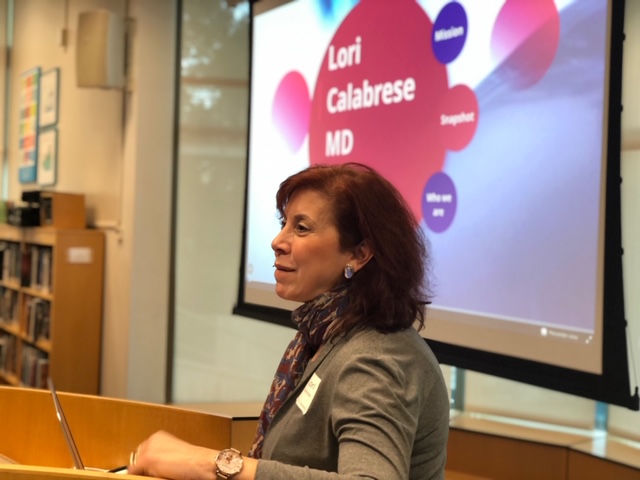
    Dr. Lori Calabrese speaks at KRIYA and applies the flexibility of ketamine.

    We’ve come so far in ketamine treatment for depression, and we still have so far to go.

    KRIYA held the first conference on ketamine treatment for depression in 2015. Now, 5 years later, there are several medical conferences that support the exchange of information in this field. Raquel Bennett, the founder of KRIYA – The Ketamine Research Institute –  says that ketamine is a flexible tool and should be used with freedom and skill. She urges clinicians to make the most of the flexibility of ketamine.

    This is the last conference by KRIYA that will be held in this format, according to Dr. Bennett. She plans to possibly shift to an online format next year to accommodate the huge numbers of clinicians who wish to be included.

    What’s more, KRIYA has supported, from the beginning, the use of ketamine by different routes and for varied conditions, and encourages participation from providers across the gamut of ketamine applications. So we’re a wonderfully diverse crew who come together for these conferences. As for me, I know that I’ve learned so many things and forged new friendships and collaborations from KRIYA conferences. 

    And…my own contributions have been so warmly received. As far as the educational gathering, there are psychiatrists, psychologists, therapists, ER physicians, pharmacists, anesthesiologists, neuroscientists, nurses, and experts in consciousness medicine. 

    Raquel Bennet, Psy.D. Stepped Up as a Leader in the Field of Ketamine for Depression

    Dr. Bennett reminds us she has created a “tasting menu,” if you will… from

    all corners of the field. At this conference, she opted for breadth vs depth to make us privy to all that’s happening in the field of working with ketamine. And she emphasizes that speakers are working from different paradigms. So, she urges us to listen for the paradigm they report from….and learn.

    And she’s right when she says that ketamine is a flexible tool that contributes to a variety of needs.  When a patient is too depressed to talk, ketamine lightens depression so they can participate in talk therapy. To help manage severe pain and the depression that goes with it. It can help the patient go deeper into therapy, and explore their traumatic experiences gently. It can treat acute suicidal thoughts and prevent hospitalization. And she says, it can induce mystical visions for existential exploration.

    Raquel had much, much more to say, but I want to mention some of the other speakers.

    Brent Turnipseed, MD and Lindsey Slater, LPC, from Austin, TX talked about their use of EMDR in ketamine-assisted therapy.

    Brent Turnipseed speaks about the flexibility of ketamine.

    In PTSD, the body’s own reaction to a patient’s traumatic memories activates adrenaline , which prevents their ability to process their trauma. Ketamine can calm the body enough that they can process the trauma without the distraction of adrenaline. As a result, it can help relieve their fears. 

    EMDR works by helping the patient desensitize by brief exposures to the trauma, then by redirecting the patient’s attention, EMDR induces a relaxed neurological state similar to rapid eye movement (REM).

    Elias Dakwar, M.D., psychiatrist and the addiction researcher we’ve often talked about before, gave a wonderful presentation. 

    He presented a thought -provoking talk on meditation and mindfulness as it relates to ketamine in treating addiction.

    The field of ketamine for psychiatric disorders, including  addiction treatment, continues to wrangle with how to take ketamine into psychiatry but that’s because our paradigms are problematic. Mainstream psychiatry has tried to cut ketamine down to size instead of using this extraordinary medicine as a DISRUPTOR.

    Dr. Dakwar entered addiction research after a long time practice of meditation and with great compassion for the patients he sees.

    He described his previous and current work in detail–look for it in the journals.

    Ian Mitchell, M.D., Emergency Medicine in British Columbia,

    spoke about the uses for ketamine in the emergency department. He spoke about its use for sedation during an emergency procedure, such as setting bones, repairing wounds, or the removal of foreign bodies, pediatric sedation for the same types of procedures, sub-dissociative dosing for pain management, especially for neuropathic pain, to prepare a patient for intubation, sedation for the out of control, prehospital pain relief, and to manage an overstimulated patient.

    In British Columbia, ambulances are equipped with intranasal ketamine for prehospital pain management as a result of the PAIN-K trial. More of ketamine’s flexibility.

    Wesley Ryan, M.D., psychiatrist from Marina del Ray, CA,  Parria Zarrinnegar, M.D., psychiatrist in Portland, OR, and Daniel Barton, M.D., psychiatrist from Nashville, TN all presented riveting case reports.

    Kelan Thomas, Pharm.D,

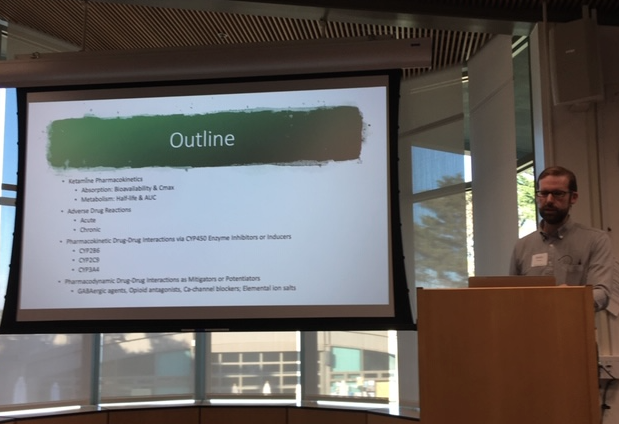
    spoke about adverse reactions and drug-to-drug interactions that have been documented with ketamine. So important and so well-done.

    Annie Oak, a journalist from the Bay area, spoke on the use of ketamine outside the medical setting.

    Gita Vaid, M.D., psychiatrist and psychoanalyst, spoke on using ketamine in psychoanalytic psychotherapy in very long session. She talked about how she has witnessed ketamine help patients relax and defenses soften so they can have freedom to talk. The psychotherapist builds relationship with the patient and it can be transformational.

    Jason Wallach, Ph.D., is a pharmacologist and neuroscience researcher whose energy and depth of knowledge captivates us every time he speaks. He spoke about the neuroscience and  pharmacology of ketamine. Gave an update on some of the other dissociative drugs he’s tested. (I think he’s tested them all!) He made the point that ketamine has been called a dirty drug because of the receptors it hits ex-vivo and in animal models — but that’s not true. It’s really one of the more selective drugs of this class at the doses used in people.

    Jessica Katzman, Ph.D., and Harvey Schwartz, Ph.D., spoke about bumps in the road they’ve discovered with ketamine assisted psychotherapy and in the integration work that follows treatment… What is integration? It comes from a latin word that means “to make whole” or “to begin again.” Bring your clinical compass, but don’t forget your humanity. A beautiful duo talk with lots of clinical examples.

    Eli Kolp, M.D., a pioneer in ketamine treatment, gave a beautiful talk on the phenomenology of ketamine-induced dissociative states.

    There were so many other speakers and so much to absorb–my computer battery kept dying down, so between Surface notes, handwritten notes, and photos, I can’t do justice to the breadth of expertise in the room, and the excitement.

    Greg Wells, Ph.D.  Sylver Quevedo, M.D., Veronika Gold, M.F.T.Eric Sienknecht, Psy.D. presented as a panel on their model of coordination of care between prescriber and psychotherapist. Peter Koshland, Pharm.D. talked about how to work with a compounding pharmacy for varied compounded preparations of racemic ketamine. Nate Schmidt, A.R.N.P spoke about scheduling and billing logistics.

    Sunday was a treasure with a very special presentation by Francoise Bourzat on the Use of Sacred Medicines in the Age of Technology and Medicalization. It was a delight to meet her. She captivated the audience, and her new book, Consciousness Medicine, is a wonderful synthesis of her life’s work.

    Kelley O’Donnell, M.D. and Christian Yavorsky, Ph.D. are doing yeoman’s work with KRIYA and presented an excellent (and not dry!) talk on Measuring Clinical Outcomes: Scales and Assessment Tools. And in addition to the training for Ketamine Assisted Psychotherapy that Raquel Bennett presented and discussed earlier in the conference, Jennifer Dore, MD presented a model of training for Ketamine Assisted Psychotherapy developed by Phil Wolfson, MD and Julane Andrews, that they have used around the country.

    IV Ketamine can STOP suicidal thoughts fast…Now that’s flexibility of ketamine!

    On the last day, and as the next to the last speaker, I took the podium to share my data in working with patients in my own practice, and showing how IV ketamine infusions can stop suicidal thinking, and save patients from having to go to the ER or be hospitalized.  

    Lori Calabrese. MD understands the flexibility of ketamine.

    With heartfelt gratitude. These are my people–the clinicians and many of the greats in the field (who were in the audience) who launched my interest, encouraged my work, supported my writing–and showed me how to apply for an IRB. It’s amazing how much can happen in a year. So I saved the newest data and my newest results (using a new protocol and a new rating scale) for my colleagues and my friends here at KRIYA. I wanted them to hear it first.

    I wanted to give back to those who have sparked my imagination, nurtured my interests, given wind to my sails.

    It gives me such joy to share how this remarkable medicine that can do so much, can also save a life in a short time. And to see clinicians in practice eager to take this information home.

    And that’s the beauty of meeting together at KRIYA and swapping stories and describing outcomes and victories that have restored the lives of people we work with.

    Looking Back…and Reaching Forward – Preserving the Flexibility of Ketamine

    It’s been such a busy fall with travel and speaking engagements each month… along with treating patients. (I’m sure my colleagues are as tired as I am. We need a vacation. Seriously.) But it’s gratifying to look back and know all this information that’s been shared will improve the lives of people we each cross paths with after KRIYA and all the other conferences.

    I know these reports “from the front” can seem science-y and vague, but I want you to see how hard clinicians, neuroscientists, and practitioners of all types are constantly working to learn the breadth and depth of what ketamine can do to help people live better, improved lives. That’s really what it’s about. Ketamine’s flexibility allows for treatment that can turn your life around.

    And if you’ve been reading along, and wondering if there is help for you, call us. In spite of all the travel and bustle, we’re still in all this to help you get better, live better, and have the ability to build a truly fulfilling life.

    You owe it to yourself to try, if you’ve not found a medicine that works for you. It’s not that ketamine is a cure-all for everyone, but it works in so many areas of your brain, that it can restore areas damaged by stress and trauma in most people who are treated with it.

    As the holidays approach, give yourself the best chance you can to enjoy the time ahead and the new year that follows.

    Lori Calabrese, M.D. is on the front end of the race to stop PTSD in its tracks using IV ketamine treatment.

    To the restoration of your best self,

  • Where Can You Find Real Help for a Suicidal Person?

    Where Can You Find Real Help for a Suicidal Person?

    To help a suicidal person, ask hard questions, then listen. Help them connect with people who care. You can save a life.

    What is a suicidal person like?  How do you find help for a suicidal person? Can you describe the profile of someone who wants to die? Are they melancholy?  Irritable or agitated?  Are they funny?  Always making people laugh when they’re dying inside? Do they present themselves one way in public and another way in private? Are they sad…do they fit in …or are they misfits?

    Yes. The answer is YES.  And NO.

    A suicidal person can be any of these people, or none of them.  Someone like you …or me.  Or different than both of us.

    Anyone is capable of suicide given the wrong set of circumstances.

    Someone who can’t remember a time when he wasn’t sad… or just vacant. A person who’s had a series of deep losses, major stressors, and profound disappointments: all in a row…or all at once.

    Someone who just finished medical school. A young mother; a 9 year-old child. An elderly field laborer. A mail carrier.

    The pastor of a mega church.  The owner of a multimillion dollar consulting firm. A thirty year-old single father. A world-famous performer. The head of a university medical department. A kindergarten teacher. A 14 year-old girl.

    Sister, father, son, daughter, grandmother.

    WHO is a Suicidal Person?

    For every person you find who ends his or her life, there are thousands with similar circumstances who don’t.  

    Why?  What makes the difference?

    You can help a despondent person like this man by talking to him, asking if he's thought about hurting himself, and talk to him about how IV ketamine can erase suicidal thoughts.

    What causes one person who seems to have “everything to live for” want to die, and another whose life is similar want to live and not even consider dying…? Why is it that two people can face shame, humiliation, failure; and one wants to die and the other bounces back and moves forward?

    One thing is for certain. It’s not about one person being weak and another being strong. 

    Or about one being flawed and another being “normal.”

    The complexities of suicidal thoughts as symptoms of a deeper, more complex underlying condition cannot be completely explained yet…certainly not here. But, somewhere in it all you’ll find genetic links, brain circuitry, complicated response mechanisms, and more. 

    Why does one person bear the burden of kidney malfunction or lung disease and another doesn’t?  Or Type 1 diabetes? Or liver disease?

    One person’s genetic makeup provides a tendency toward more resilience and another’s genes lean more toward less resilience. One woman’s genes map out a future with breast cancer while another’s don’t.

    How Many In a Week..?

    Last week was Suicide Prevention Week. On last Monday, September 9, 2019, a beloved associate paster of a prominent church in Riverside, California, officiated over the funeral of a lady who had ended her life. Before the day was over, he had ended his own, too.

    Don’t ask why. Ask, “How can I help?”

    We Need to Supply Real Help for a Suicidal Person

    Then, two days later, the director of psychological services at a prominent state university jumped from his 17th- story balcony.

    The gentle and caring pastor was a devoted, loving husband and father of two. He founded Anthem of Hope in 2016, for those who suffer from depression and suicidal thoughts. He had always been open about his own struggles with the same.

    Jarrid Wilson, pastor at Harvest Christian Fellowship, died by suicide last week.

    Jarrid Wilson was a kind-hearted, vibrant, encouraging person, with two beautiful children, and an amazing wife. He’d suffered from depression since childhood. His depression and suicidal thoughts became too much to bear for him that day. 

    His wife is grief-stricken, suffocating with the loss of her best friend, and his church is stunned.

    Our hearts go out to his family, his church, and all who knew and loved him. 

    Jarrid’s life didn’t end because of something that was wrong in his life, but because of something that was malfunctioning in his brain. This is why we promote treatment for suicidal thoughts. 

    When you hear someone say, “She had so much to live for,” remind them that this is an illness. It’s not about hating her life.

    We must find help for a suicidal person like Dr. Eells.

    Gregory Eells, Ph.D., was accomplished and a strong, capable leader. Was there a reason, or was his death also the symptom of an underlying disease..?

    That’s the thing about suicide. Since we don’t know what his thoughts were, we can only guess. But it’s important to understand that stress…too much of it for too long…can lead to depression.

    Prolonged Severe Stressors Can Result in Depression and Lead to Suicidal Thoughts

    Stress breaks down those signaling structures and interferes in other areas of the brain. When that happens, the connections between brain cells become pruned and sparse… and signals are reduced in strength and number. The more severe the depression, the more profusely suicidal thoughts may grow.

    Crisis on top of crisis; death and loss; financial difficulty; illness; divorce; foreclosure; …all of these things together can prune away those connections and lead to deep and overwhelming depression.

    Then come the thoughts. Maybe a desire to escape the torture? Possibly. But more likely they’re somehow related to the poor communication of signals within the brain. The darkness. The silence. The void. The vacancy of any reward.

    These thoughts tend to intrude in your mind when your depression and anxiety are most severe. Some people experience these intrusive thoughts of death and dying no matter what they’re doing. The more their condition worsens, the more these thoughts bombard their minds.

    Suicide is Reaching Epidemic Proportions

    In 2017, 1.4 million people attempted suicide, succumbing to those intrusive thoughts. Of those, 47 thousand people died. We talked last week about how this means that suicide is the 10th leading cause of death in this country alone.

    Let's help a suicidal person like this by reaching out and talking to her, and telling her about IV ketamine for suicidal thoughts.

    And we haven’t even scratched the surface of all the people who have suicidal thoughts, plans, or intentions. Most of us are unaware of the numerous people around us who struggle with suicidal thoughts, because they maintain a brave mask.

    This is why IV ketamine treatment is so vitally important now more than ever. As suicide threatens to take more lives, we need more and better ways to prevent it. And to do that, we need treatment that stops those thoughts.

    IV Ketamine Can Provide Extraordinary Help for a Suicidal Person

    By a mechanism that’s separate from what ketamine infusions do to relieve depression, they also can stop those intrusive suicidal thoughts in an hour or two…or an afternoon. So even those patients who might not feel relieved of depression symptoms after ketamine infusions, may still be relieved of those thoughts of death…and dying. 

    IV ketamine infusions are a life-saving treatment, and nothing else comes close. Other medicines that have been used for this purpose required weeks or months to be effective. And, well…with someone severely suicidal, that may be too late.

    Ketamine acts in a multiple areas in the brain, and in a variety of ways. We do know some of the ways it works, but we suspect neuroscience researchers will continue to uncover more and more of ketamine’s handiwork going forward.

    Ways IV Ketamine Goes to Work in Your Brain to Lift Depression

    We know that as a NMDA receptor antagonist, ketamine increases levels of the excitatory neurotransmitter glutamate, the most prolific neurotransmitter in the body. 

    We know that ketamine turns the mRNA switch to “ON” which turns on DNA, that turbo boosts BDNF (brain-derived-neurotrophic-factor). Then the BDNF acts like a rich compost, stimulating growth of the connections between neurons, or brain cells, called synapses…and their branches of dendrites and dendritic spines.

    IV ketamine helps suicidal thinking by erasing those thoughts and replacing them with hope.

    These synapses, and dendritic branches proliferate abundantly throughout the brain, building superhighways for signaling to be high speed and abundant, lighting up the brain like a Christmas tree. 

    The slow, dark, sluggish signals that crept along during depression, explode with speed and efficiency as the brain comes alive.

    When this happens, your thoughts become creative, extensive, and bright. Your outlook soars, and so does your initiative and sense of purpose. Resilience replaces despair, and hope sets down roots. THIS is real help for a suicidal person.

    While all this is going on, there’s a change in the lateral habenula, that tamps down that bursting of cells that prevents you from enjoying reward. Your ability to enjoy moments, scenery, beauty, appreciation, and love is restored.

    Then, there are those G cells stacked up on lipid rafts in the cell membrane. They lazily while away the afternoon. Then IV ketamine comes along and slides those G’s off the lipid rafts and puts them back to work moving signals down the highway.

    These are the things we KNOW about.  We’re sure there are more actions we don’t know yet. But we will.

    The result is joy. And hope. And the energy and motivation to take initiative and build relationships, strengthen bonds, improve productivity at work, creatively advance in all you do, for a rewarding and fulfilling life.

    Spread the Word and Stop the Torment to Provide Real Help for a Suicidal Person

    At Innovative Psychiatry we see people like Jarrid and Gregory often. And we see so many others. People who don’t want to die…but who don’t want to keep living like this, tormented by pain and suicidal thoughts, images, and ideas. People who want to enjoy life, enjoy their families, and invest their energy in their careers, hobbies, and interests.

    IV ketamine treatment can erase suicidal thoughts and restore your best self.

    We’re thrilled and relieved to see the majority of them walk out without suicidal thoughts at all, confident they can get better with therapy and medication. Or they walk out in remission.  

    That’s the beauty of IV ketamine treatment at work. We’re trying to get the word out that there is now a treatment that can rapidly stop suicidal thinking. Help us spread the word.

    We’d like to help you.

    Are you tired of living like this? Do you ache for the freedom to build your relationships, your career, and your hope?

    Protect yourself from those thoughts of death that try to lure you to an action you don’t want to take. Call us. Let us help you tap into the life you hunger for.

    You’re not alone, and we’re here to help.

    Please, if you have suicidal thoughts, call us. Or call the Suicide Prevention Lifeline: +1(800) 273-8255. Those intrusive thoughts are symptoms of an underlying condition and treatment can help.

    IV ketamine treatment can erase those thoughts in an afternoon. We want you to live and to discover what life can be for you. We want to help you heal.

    To the healing of your best self,



error: Content is protected !!