Tag: IV Ketamine Treatment for Seasonal Affective Disorder

  • Where Can You Find Real Help for a Suicidal Person?

    Where Can You Find Real Help for a Suicidal Person?

    To help a suicidal person, ask hard questions, then listen. Help them connect with people who care. You can save a life.

    What is a suicidal person like?  How do you find help for a suicidal person? Can you describe the profile of someone who wants to die? Are they melancholy?  Irritable or agitated?  Are they funny?  Always making people laugh when they’re dying inside? Do they present themselves one way in public and another way in private? Are they sad…do they fit in …or are they misfits?

    Yes. The answer is YES.  And NO.
    A suicidal person can be any of these people, or none of them.  Someone like you …or me.  Or different than both of us.

    Anyone is capable of suicide given the wrong set of circumstances.

    Someone who can’t remember a time when he wasn’t sad… or just vacant. A person who’s had a series of deep losses, major stressors, and profound disappointments: all in a row…or all at once.

    Someone who just finished medical school. A young mother; a 9 year-old child. An elderly field laborer. A mail carrier.

    The pastor of a mega church.  The owner of a multimillion dollar consulting firm. A thirty year-old single father. A world-famous performer. The head of a university medical department. A kindergarten teacher. A 14 year-old girl.

    Sister, father, son, daughter, grandmother.

    WHO is a Suicidal Person?

    For every person you find who ends his or her life, there are thousands with similar circumstances who don’t.  

    Why?  What makes the difference?

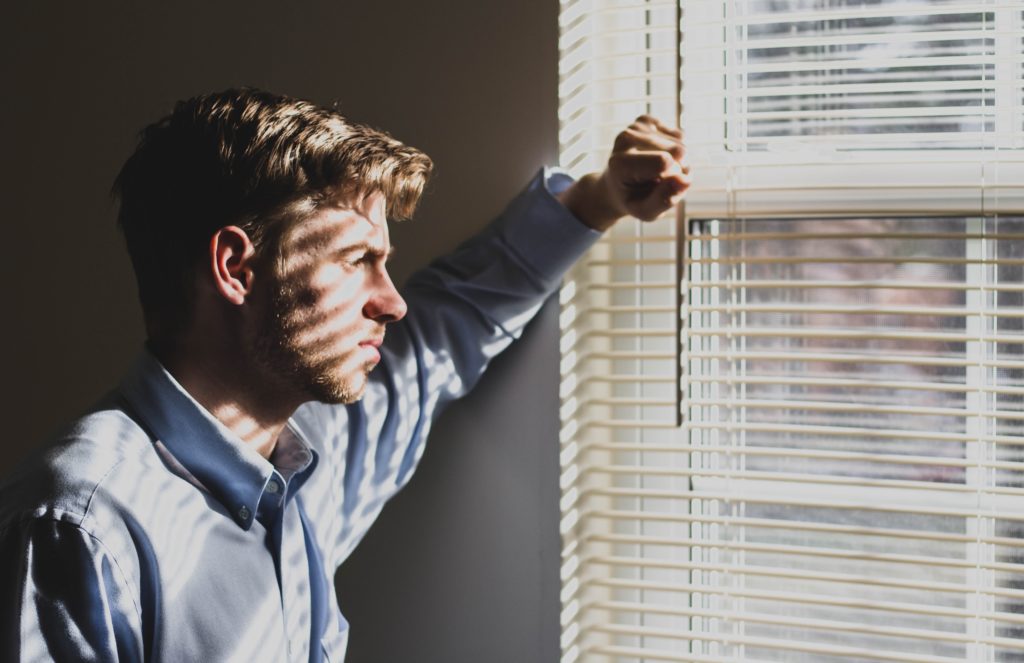
    You can help a despondent person like this man by talking to him, asking if he's thought about hurting himself, and talk to him about how IV ketamine can erase suicidal thoughts.

    What causes one person who seems to have “everything to live for” want to die, and another whose life is similar want to live and not even consider dying…? Why is it that two people can face shame, humiliation, failure; and one wants to die and the other bounces back and moves forward?

    One thing is for certain. It’s not about one person being weak and another being strong. 

    Or about one being flawed and another being “normal.”

    The complexities of suicidal thoughts as symptoms of a deeper, more complex underlying condition cannot be completely explained yet…certainly not here. But, somewhere in it all you’ll find genetic links, brain circuitry, complicated response mechanisms, and more. 

    Why does one person bear the burden of kidney malfunction or lung disease and another doesn’t?  Or Type 1 diabetes? Or liver disease?

    One person’s genetic makeup provides a tendency toward more resilience and another’s genes lean more toward less resilience. One woman’s genes map out a future with breast cancer while another’s don’t.

    How Many In a Week..?

    Last week was Suicide Prevention Week. On last Monday, September 9, 2019, a beloved associate paster of a prominent church in Riverside, California, officiated over the funeral of a lady who had ended her life. Before the day was over, he had ended his own, too.

    Don’t ask why. Ask, “How can I help?”

    We Need to Supply Real Help for a Suicidal Person

    Then, two days later, the director of psychological services at a prominent state university jumped from his 17th- story balcony.

    The gentle and caring pastor was a devoted, loving husband and father of two. He founded Anthem of Hope in 2016, for those who suffer from depression and suicidal thoughts. He had always been open about his own struggles with the same.
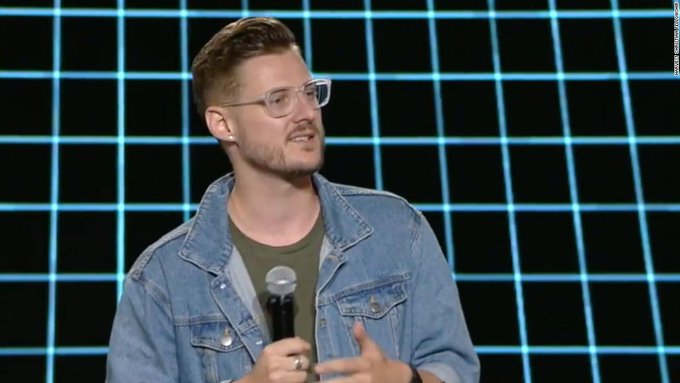
    Jarrid Wilson, pastor at Harvest Christian Fellowship, died by suicide last week.

    Jarrid Wilson was a kind-hearted, vibrant, encouraging person, with two beautiful children, and an amazing wife. He’d suffered from depression since childhood. His depression and suicidal thoughts became too much to bear for him that day. 

    His wife is grief-stricken, suffocating with the loss of her best friend, and his church is stunned.

    Our hearts go out to his family, his church, and all who knew and loved him. 

    Jarrid’s life didn’t end because of something that was wrong in his life, but because of something that was malfunctioning in his brain. This is why we promote treatment for suicidal thoughts. 

    When you hear someone say, “She had so much to live for,” remind them that this is an illness. It’s not about hating her life.

    We must find help for a suicidal person like Dr. Eells.

    Gregory Eells, Ph.D., was accomplished and a strong, capable leader. Was there a reason, or was his death also the symptom of an underlying disease..?

    That’s the thing about suicide. Since we don’t know what his thoughts were, we can only guess. But it’s important to understand that stress…too much of it for too long…can lead to depression.

    Prolonged Severe Stressors Can Result in Depression and Lead to Suicidal Thoughts

    Stress breaks down those signaling structures and interferes in other areas of the brain. When that happens, the connections between brain cells become pruned and sparse… and signals are reduced in strength and number. The more severe the depression, the more profusely suicidal thoughts may grow.

    Crisis on top of crisis; death and loss; financial difficulty; illness; divorce; foreclosure; …all of these things together can prune away those connections and lead to deep and overwhelming depression.

    Then come the thoughts. Maybe a desire to escape the torture? Possibly. But more likely they’re somehow related to the poor communication of signals within the brain. The darkness. The silence. The void. The vacancy of any reward.

    These thoughts tend to intrude in your mind when your depression and anxiety are most severe. Some people experience these intrusive thoughts of death and dying no matter what they’re doing. The more their condition worsens, the more these thoughts bombard their minds.

    Suicide is Reaching Epidemic Proportions

    In 2017, 1.4 million people attempted suicide, succumbing to those intrusive thoughts. Of those, 47 thousand people died. We talked last week about how this means that suicide is the 10th leading cause of death in this country alone.

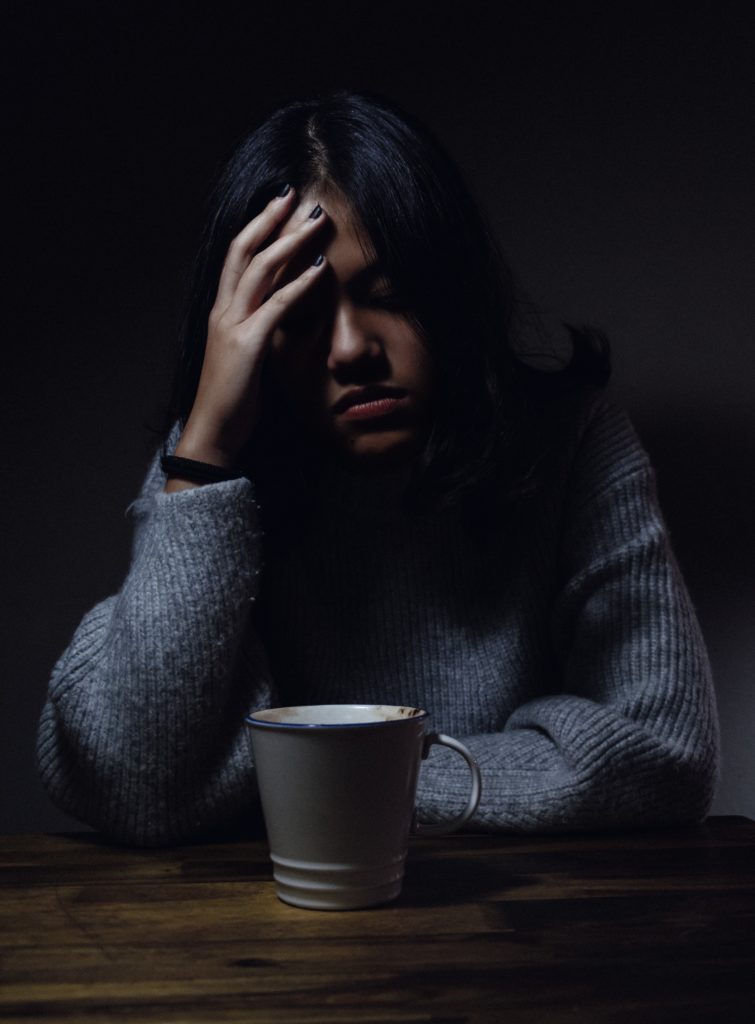
    Let's help a suicidal person like this by reaching out and talking to her, and telling her about IV ketamine for suicidal thoughts.

    And we haven’t even scratched the surface of all the people who have suicidal thoughts, plans, or intentions. Most of us are unaware of the numerous people around us who struggle with suicidal thoughts, because they maintain a brave mask.

    This is why IV ketamine treatment is so vitally important now more than ever. As suicide threatens to take more lives, we need more and better ways to prevent it. And to do that, we need treatment that stops those thoughts.

    IV Ketamine Can Provide Extraordinary Help for a Suicidal Person

    By a mechanism that’s separate from what ketamine infusions do to relieve depression, they also can stop those intrusive suicidal thoughts in an hour or two…or an afternoon. So even those patients who might not feel relieved of depression symptoms after ketamine infusions, may still be relieved of those thoughts of death…and dying. 

    IV ketamine infusions are a life-saving treatment, and nothing else comes close. Other medicines that have been used for this purpose required weeks or months to be effective. And, well…with someone severely suicidal, that may be too late.

    Ketamine acts in a multiple areas in the brain, and in a variety of ways. We do know some of the ways it works, but we suspect neuroscience researchers will continue to uncover more and more of ketamine’s handiwork going forward.

    Ways IV Ketamine Goes to Work in Your Brain to Lift Depression

    We know that as a NMDA receptor antagonist, ketamine increases levels of the excitatory neurotransmitter glutamate, the most prolific neurotransmitter in the body. 

    We know that ketamine turns the mRNA switch to “ON” which turns on DNA, that turbo boosts BDNF (brain-derived-neurotrophic-factor). Then the BDNF acts like a rich compost, stimulating growth of the connections between neurons, or brain cells, called synapses…and their branches of dendrites and dendritic spines.

    IV ketamine helps suicidal thinking by erasing those thoughts and replacing them with hope.

    These synapses, and dendritic branches proliferate abundantly throughout the brain, building superhighways for signaling to be high speed and abundant, lighting up the brain like a Christmas tree. 

    The slow, dark, sluggish signals that crept along during depression, explode with speed and efficiency as the brain comes alive.

    When this happens, your thoughts become creative, extensive, and bright. Your outlook soars, and so does your initiative and sense of purpose. Resilience replaces despair, and hope sets down roots. THIS is real help for a suicidal person.

    While all this is going on, there’s a change in the lateral habenula, that tamps down that bursting of cells that prevents you from enjoying reward. Your ability to enjoy moments, scenery, beauty, appreciation, and love is restored.

    Then, there are those G cells stacked up on lipid rafts in the cell membrane. They lazily while away the afternoon. Then IV ketamine comes along and slides those G’s off the lipid rafts and puts them back to work moving signals down the highway.

    These are the things we KNOW about.  We’re sure there are more actions we don’t know yet. But we will.

    The result is joy. And hope. And the energy and motivation to take initiative and build relationships, strengthen bonds, improve productivity at work, creatively advance in all you do, for a rewarding and fulfilling life.

    Spread the Word and Stop the Torment to Provide Real Help for a Suicidal Person

    At Innovative Psychiatry we see people like Jarrid and Gregory often. And we see so many others. People who don’t want to die…but who don’t want to keep living like this, tormented by pain and suicidal thoughts, images, and ideas. People who want to enjoy life, enjoy their families, and invest their energy in their careers, hobbies, and interests.

    IV ketamine treatment can erase suicidal thoughts and restore your best self.

    We’re thrilled and relieved to see the majority of them walk out without suicidal thoughts at all, confident they can get better with therapy and medication. Or they walk out in remission.  

    That’s the beauty of IV ketamine treatment at work. We’re trying to get the word out that there is now a treatment that can rapidly stop suicidal thinking. Help us spread the word.

    We’d like to help you.

    Are you tired of living like this? Do you ache for the freedom to build your relationships, your career, and your hope?

    Protect yourself from those thoughts of death that try to lure you to an action you don’t want to take. Call us. Let us help you tap into the life you hunger for.

    You’re not alone, and we’re here to help.

    Please, if you have suicidal thoughts, call us. Or call the Suicide Prevention Lifeline: +1(800) 273-8255. Those intrusive thoughts are symptoms of an underlying condition and treatment can help.

    IV ketamine treatment can erase those thoughts in an afternoon. We want you to live and to discover what life can be for you. We want to help you heal.

    To the healing of your best self,


  • Dissociation: Is It Key to Ketamine’s Antidepressant Response?

    Dissociation: Is It Key to Ketamine’s Antidepressant Response?

    Ketamine's antidepressant effects may be predicted by dissociative experiences.That Floating Sensation May Predict Ketamine’s Healing At Work

    Know anyone who’s depressed?

    I don’t mean someone feeling blue or disappointed, but really depressed. The hard-to- function type of depression. The hard-to-think-hard-to-get-out-of bed kind of depression. Where everything looks dark and hopeless, and you doubt yourself and your value…and it continues and gets worse for months or years.

    Severe depression. The kind that makes you want to die, and you can’t see any value in your life…and those thoughts start coming… that everyone who knows you would be so relieved if you were gone. Lies that kill.

    Depression like this messes with your outlook, your decisions, your abilities, your energy, your motivation, your perception of your own value… and it’s almost insurmountable to get out of bed.

    We Call Your Disorder “Treated” Only If You Feel Better

    In some cases we call this Major Depressive Disorder, or MDD. In others, it Ketamine's antidepressant response may be predicted by dissociative experiences.may be the depressive part of the cycle in bipolar disorder. Depression of this magnitude can be debilitating. And it needs to be treated effectively. In fact, no matter what treatment is used, if you don’t feel better, then it’s the same as if your depression weren’t treated at all.

    No matter how many pills you’ve swallowed or how many therapy sessions you’ve attended —

    Treatment must produce results you can feel and confirm. Or else it’s not effective. And if you aren’t feeling better and functioning better … well, what’s the point?

    Ketamine is a medicine that was developed in the 1960’s and ’70’s as an anesthesia medicine. It’s been used for 50 years safely with children, adults, and senior citizens. It regulates glutamate in the brain, and blocks the NMDA receptor which prevents it from causing you to feel depressed.

    AMPA Gives You Power to Adapt and Develop Flexibility

    It also fires up AMPA , which is another glutamate receptor that is responsible for most of the fast excitatory transmission in the brain.

    In other words, it’s the AMPA receptors that are behind the synaptic plasticity, Ketamine's antidepressant response may be predicted by dissociation.which means they empower the connections between brain cells to grow and flourish and move signals around the brain much more rapidly.

    Plasticity basically means changeability. Or…changeableness.  (Are those even words…?)

    So, synaptic plasticity changes the connections in your brain and makes them grow and bud and sprout like crazy…which helps you to develop more and more ability to adapt the way you think, the way you respond, the way you see events and circumstances so you can develop flexibility, healthier thinking habits and more resilience, too.

    This is one big part of what makes ketamine work so well.

    Ketamine’s Antidepressant Response

    Then it tells the cell to make more and more AMPA fast, so you feel better and better rapidly. And this is just one action ketamine performs to fight depression. There are lots of others, but let’s focus on this one for now.

    We’ve talked often about ketamine treatment, provided in tiny doses roughly equal to 0.5mg/kg given IV over 40 minutes by a psychiatrist who is adept with psychopharmacological methods that make the most of each infusion.

    Ketamine is a molecule that modulates the excitatory neurotransmitter glutamate.

    We’ve talked about how important close supervision by a psychiatrist is to determine the rate and dose needed specifically for you, and your brain, so you have the quality of response to the medicine that will provide the best outcome for you.

    And…we’ve pointed out that some providers have popped up in the landscape who give the same dose to every patient, or the same protocol, or varying doses to every patient with little attention to precision rate or infusion length. This is super easy for the provider, easy for the clinic. There is no infusion pump, and the only rate control is the rolling wheel on the IV tubing.

    You see where I’m going.

    Care in Ketamine Administration Yields Better Results for You

    We’ve hypothesized that this less precise administration of ketamine may be theKetamine's antidepressant response may be predicted by dissociation during infusion. reason that non-psychiatrists and psychiatrists alike who use this one-size-fits-all method for treating depressed patients was resulting in a lower percentage of remission from mood disorders across the board. 

    We know that we’ve seen an 80% response in treatment-resistant patients by using this precise and remission-focused approach.

    Well, researchers published a study in February this year in the Journal of Affective Disorders along this line. It demonstrated how the various dissociative effects can predict how much antidepressant effect a person will receive from a ketamine infusion.

    Led by Mark J. Niciu, a team of researchers including Carlos Zarate (a leader in ketamine research), conducted a followup study to their previous work to determine whether the quality of dissociation was correlated to a positive antidepressant response.

    Dissociation…and Ketamine’s Antidepressant Response

    We’ve all been interested in this. Is dissociation “just a side effect,” or does it Ketamine's antidepressant response restores the power to enjoy.MATTER? Is it necessary to have dissociation for ketamine to “work?” Or for depression to lift? For anxiety to dissolve? For trauma to heal? And what dissociative features, exactly? How intense are we talking about? And for how long?

    The researchers took a group of 126 people from 18 to 65 with mood disorders – 84 with major depression and 42 with bipolar disorder and asked them to complete rating scales just after their treatment about what they experienced during their ketamine infusion.

    Dissociation is basically a detachment from reality, but it can include detachment from yourself (depersonalization), detachment from your surroundings (derealization)…and sometimes a sense of amnesia.

    The Study:

    Now, each patient involved in the study was currently experiencing a full episode of depression that had been going on at least 2 weeks. Prior treatments had failed all of these subjects. In some cases just one, but many had tried multiple treatments.

    Researchers selected the subjects very carefully.  None of them had psychotic symptoms and none of them had dissociative symptoms at baseline.

    Some patients received a ketamine infusion (yep, just one, not a series) at a prescribed dose of 0.5mg/kg over 40 minutes and others received a placebo…

    And guess what?

    People who experienced dissociation during their ketamine infusions had much more improvement in their depressive symptoms – the more intense the dissociation, the better the improvement.

    And the specific dissociative feature (remember there are 3:  depersonalization, derealization and amnesia) that was most strongly associated with responding to ketamine?  Depersonalization.

    The antidepressant effect was strongest at Day 7, not 3-4 hoursKetamine's antidepressant response may be predicted by dissociation. after or a day later.
    You Can’t Know Without Testing – There’s So Much to Learn

    Isn’t that interesting? You’d think the response would have been strongest during the first 24 hours, but not so in this study. You know… the miracle WOW that everyone seems to expect. (Boy, do we have to explain and help reset expectations here.) When you think about how ketamine restores signaling structures as well as all the other things it does, it does stand to reason that as the structures in the brain improve, so would the antidepressant effects.

    The research team encouraged more studies to pin down and confirm their findings. And we do, too. But it’s exciting to consider that the very dissociative experience you feel during a ketamine infusion is actually connected to the wonderful restoration it does. 

    Understanding Your Treatment and Your Healing

    It’s important to know that the experience itself is important… important for your improvement and healing.

    When you understand this, it’ll help you not be afraid.

    And it’ll help you understand that the dissociative experience during treatment is not something we see as bad or unwanted or as an adverse event that needs to be avoided or abolished. It’s an integral part of the treatment itself, and something that we have come to understand is critical for transformation.

    With proper treatment, and fine control of the dose and rate of your infusion, we work towards just the right place for you … where your treatment, and your dissociative experience during your treatment, fuse together in the best possible way, to give you the best possible outcome. 

    Now that’s a sweet spot!

    When you’ve felt trapped by a disorder, you’ll do just about anything to live a fulfilling life and wake up every morning with hope.

    Every single step of research that shines another light on ketamine’s Ketamine's antidepressant response may be predicted by dissociation during infusion.extraordinary impact on depression and other mood disorders brightens the path for all of us who treat patients with ketamine, and for those who suffer from all these mood disorders and haven’t been helped by anything else before.

    There really is hope!

    We Want You to Enjoy a Rewarding Life

    Here at Innovative Psychiatry we continue to see people like you who suffer and have given up. Then, after a ketamine treatment series, we often see them achieve remission and enjoying their restored ability to create, to invest themselves, to build relationships, and to savor life’s moments. We see this everyday.

    If you’re struggling with a psychiatric mood disorder that has not improved with other treatments, call us. We’re here to help you find the relief thousands of others have found.

    This is a new era, and you really can feel better…you can even feel well.  Kick that disorder to the curb…  let’s work together to help you live again.

    Lori Calabrese, MD offers innovative psychiatric treatment like IV KetamineTo the reinvigoration of your best self,


    Lori Calabrese, MD


  • IV Ketamine Treatment for the Saddest Day of the Year…?   Maybe so, if it’s SAD – Seasonal Affective Disorder Treatment

    IV Ketamine Treatment for the Saddest Day of the Year…? Maybe so, if it’s SAD – Seasonal Affective Disorder Treatment

    Seasonal Affective Disorder Treatment is available in IV ketamine treatment.So maybe you’ve heard of Blue Monday…?  January 15, the saddest day of the year. This 13 year old hoax needs a little straightening out. See if you agree. Blue Monday? What does that have to do with psychiatry?

    Pretty much nothing … but let me explain.

    In 2005, a guy named Dr. Cliff Arnall in Wales devised a formula for determining the single saddest, most depressing day of the year.

    Was he a neurologist? No. A psychiatrist? Not even close.

    He was actually working to help a travel agency determine the most likely day that people would book a tropical holiday. The “psychology” behind it measured up to this: When you feel the worst, you want to escape. Get away. So what’s the next best thing…? A vacation on the beach! Once you’ve set up the get-away, you have something to look forward to, and you feel excited about it, and life gets easier. At least that’s the theory.

    The “Gloominess” Calculation

    And what did he base his calculations on to determine when you’ll feel the worst?

    Of course, it had to land on a Monday…who likes Mondays..?  Plus, it had to be after the long stretch of holiday excitement from Thanksgiving, Christmas, and New Years was past.

    And it needed to be far enough past Christmas shopping that you’d have received the bills and wish you’d spent less. And far enough past January 1st to have broken your New Year’s resolutions.

    Then…add to that the gloomy winter weather, the overcast skies… remember he didn’t live in Southern California, but in Wales…the cold and snow and rain, and the short days and long nights at that time of year.

    seasonal affective disorder treatment

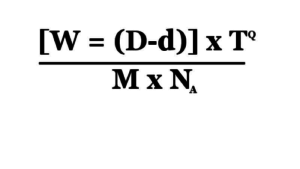
    So in Arnall’s equation to the right, W=weather, D=debt, d=monthly salary, T=time since Christmas, Q=time since failing new year’s resolutions, M=low motivational levels and Na=the feeling for a need to take action.

    Now, rather than taking the time to disprove his equation, let’s just be real. Arnall was quite pleased that he was paid for his clever equation, which earned him 1650 British Pounds, or about $2265.93 in US dollars. A drop in the bucket compared to the revenue gained by the travel agency who hired him. For them, it was a great ROI.

    Internet Advertising … Is It Always True?

    But the fact is, there is no truth to the idea that January 15 is the saddest day of the year. Just as there is no truth to Audi’s “Truth in Engineering” slogan, since we all know they cheated on the emissions tests with about half a million cars. Not as truthful as they claim, are they?

    Audi’s slogan is part of a PR marketing campaign intended to sell cars, and Arnall’s formula was part of a PR campaign intended to drive business to a travel agency. Neither one was a scam, but rather a marketing gimmick.

    And the fact remains, he just made it up!

    There is NO saddest day of the year. And if this time of the year is hard for you, that may be a seasonal problem. And we can help with treatment, if you need it.

    So, my suggestion is that social media participants stop aiding and abetting this 2005 advertising gimmick, so that we can talk about things like sadness, moodiness, and depression in real and helpful ways.

    Sound good?

    SAD – Seasonal Affective Disorder Treatment

    This time of year can be difficult for those who are sensitive to light, or the lack of it. While some are unaffected by these short, overcast days, you may be one who is deeply affected by the cloud cover, the cold, the gloominess…SAD Seasonal Affective Disorder Treatment IV ketamine treatment beats SAD.

    And if that happens, it’s great to do something to brighten your mood. Go to a movie, or get your hair done, maybe shop for a new shirt. If that helps you feel a lighter mood, then you’ve accomplished a worthwhile goal.

    Some people know that this mood slide begins early in the fall, every year. And you might find that light therapy helps. The idea is to use a 10,000 LUX light box or lamp for about 30 minutes very early in the morning to replace the light you’re missing in your environment. There are some variables to this depending on you, related to how far the light is placed from your eyes, and how much you can tolerate the brightness.

    One of the ways around this to to use a visor with a 10K lux light on the inner brim.  They are so versatile and easy to wear that you can walk around, make a cup of coffee, make the bed, get ready for your day, all while wearing the visor.  You’re not stuck sitting still in front of a light on a table.

    For some people this can really help. For others with seasonal affective disorder (SAD), even light therapy might not be enough. SAD is also called winter depression and it can occur episodically, just when fall strikes, and last through spring. Sometimes, people who have depression chronically or who have frequent episodes always seem to have a seasonal exacerbation — a winter worsening. And an antidepressant along with light therapy may bring you relief.

    However, some people suffer so severely from depression when it occurs as seasonal affective disorder, winter after winter, that they have periods when they can’t function at all.  And just like any form of severe depression, seasonal affective disorder can be crippling, even devastating.

    Where you’re too sluggish to function, and you feel hopeless, helpless, fatigued, and gloomy. And gloominess advances to despondency… Despondency may even progress to thoughts of ending your life.

    If this sounds familiar…if you’re feeling this way and having thoughts you haven’t admitted to anyone yet, there is hope.

    In fact, there’s more than HOPE. There’s a SOLUTION.

    IV Ketamine Treatment Beats SAD – Seasonal Affective Disorder

    Until the last several years, only a third of depressed patients were helped by antidepressants. Which has been wonderful for those patients, but what about those who didn’t improve?

    Well for those, another 1/3 felt some improvement with a second try using another antidepressant, or a combination of medications.

    And for those who did find help, life had hope again. They could return to work, resume their lives and relationships.

    But what about the 1/3 who were left in the pits of depression and despair…?  What about them?Woman relaxed by fire due to IV ketamine treatment beats SAD seasonal affective disorder.

    There’s now another form of treatment for severe depression, and it is as effective for severe seasonal affective disorder, or severe winter depression, as it is for depression any time of the year. It’s called IV ketamine treatment, and it’s not just 33% effective. IV ketamine treatment is effective in treating 80% of treatment-resistant cases of depression at Innovative Psychiatry in South Windsor, CT.

    That means that if you’ve tried medications and treatments that haven’t helped, you may be a good candidate for IV ketamine treatment.

    IV Ketamine Treatment Operates Like a S.W.A.T. Team Against Depression

    Ketamine acts on different aspects of the brain than traditional antidepressants. Rather than affecting serotonin or dopamine receptors, it works on rebuilding the synapse branches that connect nerve cells in the brain to each other. 

    Let’s pretend you’re in the old west. And you need to get a message to your family in Boston that you’ve arrived safely in San Francisco. You want to send a message by telegraph. So you go to the telegraph office, and they tell you that the lines have gone down between San Francisco and Boston due to tornadoes and fires. There’s no connection.

    And you can’t reach anyone until all those lines are repaired.

    IV Ketamine Treatment at Work

    The synapse connections from signaling cells to more signaling cells in your brain have been broken down, weakened, or destroyed by the stress of depression. This is what depression does to your brain, and these connections have to be repaired and restored so you can get the information signals moving fast around your brain. When that happens, you’ll feel upbeat again.

    IV ketamine treatment helps clear away the old broken branches, called dendrites and dendritic spines, to make way for new ones. Then it goes to work fast to rebuild new healthy, resilient connections that proliferate throughout your brain. 

    The result? Your sad, dark, depressed brain comes alive and lights up like Times Square on New Year’s Eve!

    All that activity and signaling lightens your mood brighter and brighter, restores your motivation, your hope, your energy, and your IV Ketamine treatment beats SAD seasonal affective disorder.creativity…and you feel better.  So much better, it may be the best you ever remember feeling.

    IV ketamine treatment also stimulates mRNA to switch on DNA to turbo boost brain-derived-neurotrophic-factors (BDNA). BDNA is like a rich compost in the brain that helps to stimulate prolific and rampant growth of dendrites and dendritic spines in the synapse connections.

    Another of ketamine’s talents involves moving lazy G proteins off their lipid rafts and back to work to enhance the signaling communication.

    Now let’s be clear…IV ketamine treatment isn’t for everyone. But more than likely, it’s just what you need to recover, to find your best self again, and to revel in your life.

    So don’t let the gloominess of the skies at this time of year drain your hope. At Innovative Psychiatry, we’re innovative and we offer solutions — even more than we’ve talked about here.

    If your winters are too hard to bear, call us. Let’s talk about options that just may be available for you.  And you can dance on your way to work, and twinkle about the joy of building a warm fire to sit by when you get home at the end of the day.

    Winter can be about popcorn, hot chocolate, fuzzy sweaters, and crackling fires. Discover how you can enjoy the beauty of winter through advanced treatment options like IV ketamine treatment

    There’s hope for your winters.

    Lori Calabrese, MD offers innovative psychiatric treatment like IV KetamineTo the liberation of your best self,

    Lori Calabrese, MD

error: Content is protected !!