When you think about going to a gathering, walking into a room full of people, how do you feel? Tense…nervous…?
People are getting vaccinated. It’s highly likely, if you’ve had both vaccine injections, that you may be invited to an July 4th gathering of friends and family who’ve also been vaccinated. Can you imagine? How long has it been since you were invited to a backyard barbecue? Would you feel excited to go? Or would you find yourself feeling a bit nervous about it? You may have struggled with social anxiety for years, or you may be one of the new breed who never felt socially uncomfortable until the COVID-19 pandemic kept you socially distanced for a year and a half. Pandemic-induced social anxiety is an emerging real problem for so many.
A study recently published in Lancet Psychiatry found that about 1/3 of COVID-19 survivors suffer from long term brain disorders. They looked at 236,000 who were diagnosed with the coronavirus over a six month period. Turns out that 34% display neurological or psychiatric disorders. Of those, 13% had never suffered from these before.
They found that those who had survived the COVID infection were at increased risk for brain disorders. Psychiatric disorders. Neurological disorders.
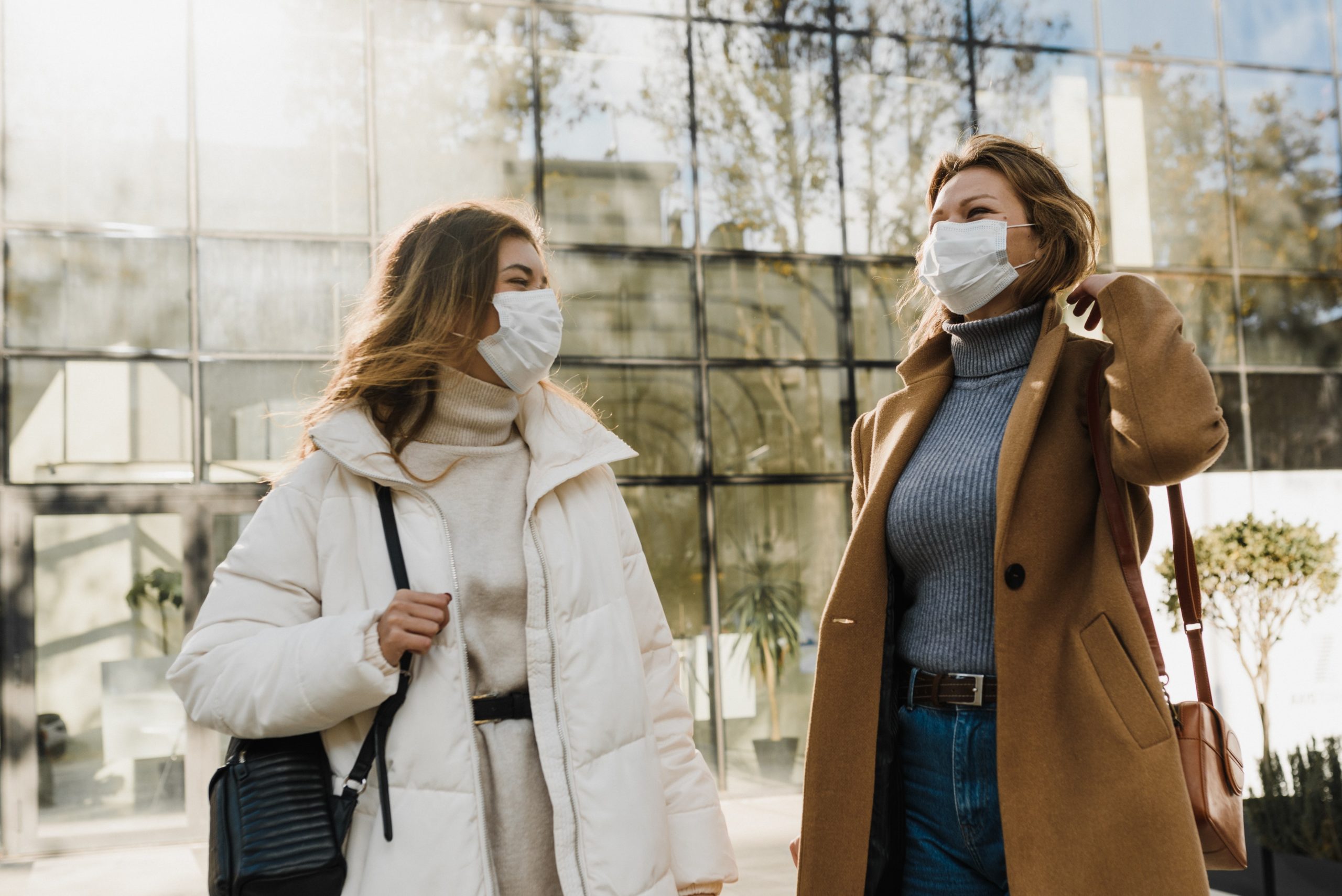
So you have to ask yourself…should that be a surprise? Over a year of keeping to yourself, seeing no one in person except for your own household. If you live alone, that’s a long time to be isolated. And when you’re around strangers, at the grocery store, for example… Everyone is wearing a mask and you can’t tell if anyone is smiling or not. The world can become a drab place.
At the very best, the last 14 months have been disruptive, challenging, and alarming. Routines have been tossed out the window, normal interactions with friends, family, acquaintances, and co-workers have all but stopped. Major conferences, gatherings, and events were cancelled.
In short, we’ve all adapted to a different way of living. And little by little, life is going to change again. And eventually, we’ll be changing to a world with lower risk. But not yet.
For now: do you suffer from pandemic-induced social anxiety?
It comes in all sorts of forms. We ask ourselves, has he been wearing a mask consistently?Does she practice social distancing? And we still need support.
That’s quite a jump from the way it used to be, when we’d say, “Of course we’ll be there! What can I bring?”
There are also those who have dealt with social anxiety for years, so this isolation was easier to adjust to. Until it got old. While theirs isn’t pandemic-induced social anxiety, theirs has likely been exacerbated by the pandemic.
Because on some level, we humans need some social interaction. Until the pandemic, we naturally chose the amount of interaction — and the type — that fit most comfortably.
But now it’s harder. Scarier. And the stakes are higher. Add to that the nagging feeling that people around you are probably judging you… harshly.
If you already struggled with social anxiety before the pandemic ever happened, you know that feeling. It’s awful. That horrid sense that you just know the people around you are so put off by you… that they’re talking about you. About you! When in truth, they’re likely talking about where they’re going Friday night…or what they thought of the latest blockbuster movie.
If you never tasted social anxiety before now, you probably had no idea what it’s like. But now, people who have developed social anxiety from the restraints, isolation, and precautions of the pandemic are experiencing that horrid feeling themselves for the first time. And, that feeling feels real.
When you’re in the throes of it, you are acknowledging as truth the FACT that everyone in the room is appalled by your appearance or behavior and they’re ALL judging you and verbalizing it to the person next to them. You believe that feeling.
You know what?
This is an early stage of post-COVID reaction, specifically post-COVID social anxiety.
And just like social anxiety probably didn’t go away on its own when there was no pandemic… it may not go away on its own now.
It may be that you can slowly help yourself adjust to the new reality and give yourself time to resolve it, or you may have to take intentional steps.
By treating yourself with compassion, you may find you can identify the scenarios that stir up anxiety for you, and not force yourself to do too much too soon. Determine to be your own best friend. Give yourself credit for baby steps. Maybe coffee with a friend, or taking a walk with a neighbor. As you find yourself comfortable in these smaller situations, then you can increase your exposure as you feel ready. Lunch with two friends. Dinner with a friend, relative, or co-worker you really like!
Because, if you’re paying attention to what pumps up anxiety for you, then you probably realize that dinner with someone you don’t like is unnecessary stress this early in your recovery … or maybe we should say …this early in your re-entry.
And that really is what it comes down to, isn’t it? Everyone is re-entering society over this next year. And that means some will be re-entering in spite of pandemic-induced social anxiety. After you’ve had both your vaccines. After most others have had both of theirs, too.
We can all expect to see people jumping into public places, parties, dinners, ball games, just as soon as it’s possible, but that doesn’t mean you should do the same.
A friend who lives in Texas where restrictions have been lifted, stopped in a popular restaurant recently to get takeout for her family. She expected the restaurant to be practically empty, but to her surprise it was packed, with a full waiting room!
She knew that ALL those people weren’t vaccinated. And most weren’t even wearing masks.
This illustrates how much the general public may be chomping at the bit to get out and about again, whether it’s wise or not.
That being said, there are probably plenty of people pressuring friends to go with them to public places. And those pressured invitations may be just one more way this re-entry environment stirs up anxiety for you.
Don’t put yourself through that. BE PATIENT with yourself, and stand up for yourself when others are moving ahead faster than you’re comfortable.
Take it slow and do what’s best for YOU.
By limiting your face-to-face interaction to only vaccinated people, you’ll automatically reduce your own anxiety to some degree because you know you’re safe. Pandemic-induced social anxiety may be daunting, but you choose what you’re ready for day by day.
And if these outings continue to be difficult, talk to someone you trust. Whether it’s a family member, or a close friend, or a therapist, it can just help you to relax about the issue to say it out loud. It can help you feel more normal. And will possibly help reduce anxiety, too.
Finally, we have to address the question, “What if this anxiety doesn’t get better? What can I do?”
If you’ve found you’re gripped inside every time you go out, and it never seems to get better in spite of all you’ve tried, you may be a candidate for IV ketamine treatment.
It has helped many of those who have received it to achieve remission. Because IV ketamine treatment is not one of those meds that just, you know, takes the edge off symptoms. Rather, it either doesn’t help someone… or it transforms them to a joyful, hopeful person with a new lease on life.
And while ketamine treatment isn’t for everyone, it helps such a large percentage of the patients we treat that chances are good it will transform your life, too.
At Innovative Psychiatry, we want to make your IV ketamine treatment give you the best it’s got. So we’ve worked out methods and protocols to give you the most personalized titrated dose and rate available.
We also have invested in a state-of-the-art systemfor destroying viruses, bacteria, and molds in the air and on hard and soft surfaces to protect you and keep you safe from infection like COVID, influenza, and even pollen. Your focus needs to be squarely aimed at getting better, without the worry of contagious disease. We want you to feel safe.
With that said, if you’re still sitting squarely in the midst of your anxiety, call us.
Everything we do all boils down to our primary focus of seeing you get better, and live well with joy and purpose.
Our patients each represent a wonderful story of restoration and resilience. We want to see your story join theirs.
With only one life you get to live, it’s worth the effort to find the path for your best life.
You may hear people say, “Antidepressants and other psych meds just don’t doanything…”
Some people say, “…placebos work better…” Oh please. But why do they say that? Maybe their own experience with prescribed medicines was disappointing. So — of course — they’re disillusioned about these medicines. We get it. And we know that any given medicine that works for some people won’t help some others at all, or might even make them worse. Sooo… what’s up with that? Well, the answer isn’t simple. We do know that antidepressants,when first prescribed, only help about 30% of depressed people. We know that psych drugs help some people but not others and that men and women can experience depression and anxiety and fear differently. It’s a tangle to unravel it all. That’s why we’re so excited about new developments. We want to keep your eyes on AKT because it might explain how we learn and forget fear.
Meet Jill and Greg to see how differences affect their well being and livelihood:
Jill and Greg own a coffee shop together and are partners in life as well. They have a great balance of power, in the tasks they divide between them and the strengths they each bring. Greg is a people person, creative, funny, and efficient at both designing new drinks and training staff to make them just right. Jill is a numbers person, and sometimes comes off a little stiff and awkward, because she just doesn’t have Greg’s gift for setting people at ease. She also has some social anxiety going on.
She does ordering from suppliers, closes out the books every night, and keeps a close eye on profit and loss. They’re a perfectly matched pair and love working together. That is, as long as they’re both at their best. With Greg building relationships with customers and vendors, and Jill keeping the financial end sound, they really do provide strength for the weakness of the other.
Unfortunately, they both suffer from disorders that periodically causes some lost time at the shop. When that happens, the one who is doing OK ends up carrying a double load. And both of them struggle with anxiety… or basically fear on some level.
Greg was diagnosed with bipolar II disorder when he was a teenager. Jill was diagnosed with depression in college. She’s a worrier. He just explodes sometimes—and refuses to call it anxiety. Greg takes medication for mood stability that also has an antidepressant effect. Jill takes an antidepressant that only sort of works. They probably both need medicines that reduce anxiety.
In a perfect world…
Since their coffee shop venture requires all hands on deck to run smoothly, Jill and Greg are eager to find the right meds for both of them to help stay in the game. They need to be able to go in to work—they can’t afford not to. It seems to Greg that since his medication helps him as much as it does, Jill should ask her doctor to prescribe the same for her. She’s a nervous wreck! However, she knows enough about changing meds that she can’t just jump on another medication just because it works for Greg. She’s tried that before. It didn’t work.
At this point, Jill has tried five different antidepressants over the past few years, and has researched enough about IV ketamine treatment that she wants to talk to her doctor about whether she’s a candidate for it.
Considering something new takes a little bit of courage. She wasn’t sure what her psychiatrist would say. A visit with her psychiatrist surprised her–he was cautious but supported her trying something that might help. Jill decided to pay for it out of savings, because her bouts of severe depression were taking a toll on the shop and their income.
She arranged for treatment and began infusions. When the treatment was complete, she had received 8 infusions over about 3 weeks, and she felt like she had a new lease on life. Her ketamine infusions seemed to wake up her brain. And that got better and better day by day — even after she completed treatment. She found she enjoyed singing and dancing, and painting became her new passion. When they had a problem in the shop, she had so many more ideas for solving it. Working on the book work was no longer a drudgery–she enjoyed it and got more accomplished in a shorter time.
Jill and Greg’s life became so much better at work and at play. Greg still had slumps when his meds weren’t quite holding him, but their life was so much better overall. They had read that ketamine treatment could help bipolar depression, too. Maybe the next time he went through a bad bout of that, Greg would talk to his doctor about it. To see if it was right for him—not just to copy Jill.
Finding the right medicine for you is sometimes a long search. And medicine that works for you may not work for your sister…or your son. But it’s well worth the work researchers do to better understand why.
A research study at the University of Colorado Boulder offers one fascinating revelation about why those differences between people and genders might exist.
It has to do with a key protein kinase in the brain called AKT…which functions differently between males and females.
They found presence of a certain form of AKT (called an isoform) in male mice can help the male let go of fear from a past painful experience–and form a new adaptive response to get around the old fear. Wait, what? Doesn’t that remind you of the way synaptic plasticity helps you adapt?
Ok, you’re right…mice aren’t people and it doesn’t work quite that way…. but AKT is remarkably similar across mice and humans and this kind of translational research can begin to give us specific information to make our medicines and medical care more specific. Potentially even gender specific.
So you’ll do well to keep your eye on AKT because so much is being learned about how we learn and how we forget fear.
By figuring out the very complicated cascades involved in creating synaptic plasticity, we may be on the verge of figuring out how to shape and foster the neuroplasticity–for the better.
We may be able to personalize medication therapies so that they don’t just broadly address a disease state, but so that they can be specific for the man or woman who needs them.
Charles Hoeffer, the principal investigator of this study, said it like this: “We need to stop hitting every ‘disorder’ with the same hammer.” Well said! (Wish I had said that!)
We’re always talking about personalizing treatment. About how important it is to provide treatment that fits the individual. Just as that’s true with all of the fine details involved in ketamine treatment, it’s also true with all of the medicines we prescribe.
So… about AKT.
It turns out AKT plays a lead role in synaptic plasticity. We’ve talked about that too… The idea that the connections between cells in the brain can change and adapt. They can change and adapt as a result of an experience. (This is why trauma can change us.) But — so importantly — these connections can also grow, change, and adapt as a result of the deeply emotional experiences, like the incredibly deep and awe-filled experiences you can have during a ketamine infusion. So many of our patients do. We’ve talked about how taking advantage of that process by scheduling psychotherapy 24 hours after a ketamine infusion can enhance the effectiveness of the infusion.
Why? Because therapy helps you think differently about something…and synaptic plasticity empowers those changes in thought. Many of our patients also find that journalling, creative writing, meditation and other activities help to integrate those experiences into their lives, find meaning in the experience, and move forward. Keep your eyes on AKT… there’s so much more to learn.
AKT helps you create memories. Like a child touching his hand to a hot stove. To encode that memory so that he will be cautious in the future around hot burners, his brain needs to activate protein kinases like AKT.
In fact, AKT is one of the first proteins to present itself to form a memory like that.
There are 3 main variants, or isoforms, of AKT and they do different things and affect people in different ways (More on that in a sec!)
AKT1 is important in encoding new experiences and allowing you to forget the old.
AKT2 is often found in the astroglia…which are star-shaped brain cells.
AKT3 seems to be important in brain growth and development. This one plays a positive role in mental health and wellbeing.
And when AKT1 and AKT2 are working together in the prefrontal cortex, they’re vital for learning, for memory … for dynamic change.
Maybe like the kind of dynamic change that you want for yourself. So yes. So many different forms, working singly and sometimes together, in ways we are only now just beginning to understand for people suffering with psychiatric disorders.
Now. To add another twist to this picture. In this study, researchers found a dramatic difference between genders regarding AKT.
They found that male laboratory animals whose AKT1 was functioning well, had far more ability to replace unwanted memories with new ones…than those who were missing AKT1.
Draw that out for a moment now…. and imagine men who’ve experienced the trauma of illness, or assault, or combat… and imagine for a moment that they’re given the opportunity to experience something new — maybe hopeful, blissful, awe-filled, like they might during a ketamine infusion — and then the excitement of realizing that a tiny little protein kinase like AKT1 may play a part in helping to encode that new feeling. Turn it into a new memory. Make the old traumas fade. (That’s called extinction learning.) Teeny little AKT1 helps with this. In males.
Incredible.
There are endless little nuances in your brain that translate your experiences, encode them, and shape your synapses…and your individual functioning. And maybe your future possibilities.
(Let’s just say we read all this stuff for fun–at nights, on the weekends, and at 5 am with a double shot of espresso.)
And at this point, serial titrated IV ketamine infusionsstill do the best job we’ve seen in bringing relief to more people with treatment-resistant depression and anxiety than just about anything else available today.
But ketamine treatment doesn’t work for absolutely everyone. Is it because of AKT or something different? We don’t know. Not yet. Researchers like the ones at Boulder are still searching to understand the nuances of dendritic growth and synaptic plasticity in order to refine our treatments–and discover better ones.
At Innovative Psychiatry, we personalize treatment to fit you — all the complexity and all the wonderfulness of you! And we aim for remission. Not just response. That’s the reason we titrate your dose, duration of the infusion, and the number of infusions you need to help you discover — once again — your best self.
When you struggle and suffer from the symptoms of disorders that can be tormenting and exhausting, getting treatment is paramount. And feeling safe is critical — so we have state-of-the-art technology that crushes 99.999% of all viruses and pathogens. During this pandemic we want to make things easy. We all need a little bit of easy.
HAPPY NEW YEAR! Here’s our hope for you that you’ll find ways to make 2021 a more fulfilling and rewarding year for you and your family.
Let’s talk about the difference in between isolation, solace, and quarantine. People need people, and the pandemic has created an atmosphere where it’s hard to tell if you’re just enjoying solace, or if your isolating yourself and pulling back from socializing in a way that builds the habit of avoiding social interaction. And there there is quarantine, where you isolate yourself to avoid spread of COVID-19 after being exposed to it. But a strong support system can protect you from depression symptoms caused by isolation.
In the hustle bustle world of daily activity in a non-pandemic world, it can be difficult to find peace and quiet for an hour. That works fine for some people, who soak up quiet and refuel in a quiet atmosphere of solace.
You know who you are. Lovely quiet periods help you refuel, and give you energy to get back out there.
There are also people who draw their energy from being with people, listening to and absorbing their energy. If you’re one of those, it can be really difficult to be stuck at home in silence all the time. Without outside stimulation, your battery can run down dead and flat. Both in your personality and your emotions.
This is true even when there is no pandemic to deal with.
We want to get a handle on what can make life better while we see the pandemic through to its resolution. Right? We do!!
Quarantine can cause isolation if it goes on too long, can’t it?
When a family of 5 is exposed to the COVID-19 virus, and all test positive, they need to quarantine until they’ve been symptom free, according to CDC guidelines. But what can be done to help prevent the isolation that can lead to depression…? Interaction is a big and important step.
Online friendships are lifesavers during this time of isolation and quarantine. Family and friends in your support system can help protect you when discouragement threatens to cause depression.
Here are two stories…about two different friends and how their outcomes compared in isolation vs. quarantine with online support.
First meet Tamara. She’s 19 and was attending community college for her first semester when the COVID-19 pandemic emerged.
About 2 months into the semester, her school was closed and all classes were switched to remote online learning from home. Tamara was relieved at this because it’s natural for her to enjoy solitude, and looked forward to the peace and quiet and the chance to read voraciously without interruption.
But there were some unexpected obstacles for Tamara. For one thing, as much as she loved to read, she struggled with algebra and chemistry. Quite honestly, in those subjects she’d always tried to get involved with study groups to help her grasp what she couldn’t seem to wrap her head around on her own.
While study groups were available online, she didn’t benefit as much. However, she tried, and kept reaching out to various people in the group for help to understand the mysteries of those classes.
So… she put in her time, worked on her assignments, and spent most of her free time reading books she enjoyed.
For the first 3 months, her freedom to enjoy the quiet and read one book after another was an indescribable luxury.
However, because her mom had passed away a few years before this, she didn’t have her to talk to anymore. And talking to her dad didn’t go that smoothly. So she didn’t really have a true support group. Her only sibling was a brother who was in the Air Force, and his life was full. She rarely heard from him.
Long story short, Tamara was alone. Quite alone.
And the natural social interactions that had happened on campus before the pandemic weren’t available anymore.
By the fourth month of the pandemic, she noticed she was losing her desire to have contact with anyone. Online or in person. She wore her mask and used hand sanitizer when she went to the pharmacy or grocery store… But avoided eye contact.
As Tamara moved into the summer months, she found she had far less energy she had before. She didn’t want to leave her apartment. It became harder and harder to go to the mailbox. And she wasn’t really keeping up with friends anymore on facebook, text, or email.
Then someone stopped by and realized Tamara didn’t appear to be cleaning up her place — or even showering. She seemed shut down.
Tamara was embarrassed, but honestly didn’t have the energy to do more than she was doing. She was managing to keep her grades up in most of her classes, though Chemistry seemed a lost cause.
Finally, her dad came by to see her. He wore a mask and so did she, and they sat across the living room and tried to talk. Seeing her like this alarmed him. Dishes piled high in the sink, her own hygiene seemed to have lapsed…this wasn’t the Tamara he knew.
And he realized she was missing the support system that can protect against the threats of isolation and depression.
So he asked her to let him help by getting her a telepsychiatry appointment. That was actually a good solution, so she wouldn’t have to see anyone face to face…
Now, meet Carolina. Carolina is 20, and knew Tamara in high school. They’d ended up at the same community college, but had not run into each other before classes closed for COVID-19.
Even though Carolina also enjoys solace, she has a nice group of friends to study with, and talk on her phone and text with. So even though she, too, has been home with remote online learning since a couple months after the semester started, she also has friends she talks to.
She doesn’t see them face to face, but they talk on FaceTime and Skype, as well as Marco Polo just so they can have live interaction. Carolina also lives at home with her family. Her parents are both working remotely from home, and her sister and three brothers are all learning remotely online.
So, in spite of not seeing much of friends or relatives face to face, they meet up on Zoom, have a party, talk about their friends and their classes, music and the food they have delivered to their houses. What’s tasty and what isn’t.
If one of them is exposed to COVID-19 and then tests positive, they all gather online to encourage and offer suggestions for managing it.
The truth of it is that Carolina and her friends really haven’t struggled that much with feelings of depression. Maybe because they keep each other so engaged in daily living. Somebody in the group always has a story to tell. All in all they offer each other a strong support system can protect against the damage that comes from too much isolation.
Maybe it’s because their long term friendships have kept them all feeling more supported, resilient, and less vulnerable.
It’s true that too much isolation can lead to depression symptoms in some people. And as we move into 2021, it’s a good idea to embrace the new year with a willingness to reach out to those who seem to lack support.
A really good idea.
Everyone around you needs a support system right now. Some have it, others don’t really. But you can help with that online.
And there are also those who have been suffering under the weight of depression for a long time, and nothing has helped. Those who are sick and tired of feeling so hopeless, despondent, alienated, and drained.
IV Ketamine Treatment Opens Doors of Hope
For those, there is further hope in IV ketamine treatment. A series of 6 or maybe 8 infusions spread over a few short weeks, and expertly titrated to ensure you get the dose that’s right for you. Ketamine has blown the doors off depression treatment in the last ten years and especially the last 5. It’s reputation has grown from skeptical to celebrated in that time. Why?
Because ketamine treatment does so much. In the brain-derived-neurotrophic-factor, the lateral habenula, the synapses, the G proteins heaped up on lipid rafts, the AMPA receptors and signals flying at high speed around your brain. For so many, ketamine can work so much better than the medications, therapy and treatments they have tried. It targets areas that were otherwise ignored before this.
IV ketamine treatment can be extraordinary in its effectiveness to help you achieve remission.
At Innovative Psychiatry, we’ve been so encouraged by the help ketamine offers that we’ve dedicated a section of our office for treating those who need to receive this breakthrough treatment. We’ve also responded to the concerns caused by COVID-19 by installing and using specialized technology that keeps the air and surfaces free of the virus that causes COVID-19, as well as the other viruses, bacteria, and molds that can threaten your health.
While we’re not attempting to conquer the entire pandemic we are busily at work to help you get better, free of depression symptoms, in an environment where you feel — and are — safe.
In spite of all the other challenges in the world, you can take them in hand best if you’re at your best. It helps so much if you’re strong, functioning, and creative to embrace today’s challenges. You need to be the best you, you can be. And a strong support system can protect you and help you build the resilience you need.
We’re here to help with that, and to get you off to a much better start for the year.
If you’ve been suffering, trudging, and feeling overwhelmed by daily living… if nothing much has helped, call us.
We believe in what you can accomplish without depression symptoms holding you back.
A dream is a wish your heart makes, when you’re fast asleep…
At least that’s what Cinderella sang, in Disney’s classic animated movie. But… the kind of dreams you have when you’re fast asleep are actually different than the dreams your heart makes. This is the week of Christmas, which has filled children’s dreams with sugar plum fairies and their favorite toys for centuries. It’s also the Christmas of the pandemic of 2020, which has had its own impact on dreaming. We’re living history right now; yet we’re also building our futures. So maybe we should all wake up and dream to make our lives better.
But you’re not Cinderella or her Prince Charming. You’re you…and you live in the real world. And in a global pandemic, no less.
You may know Jaxon. He’s been struggling to get his feet on the ground as long as he can remember. He’s tried one job after another, year after year. But during the COVID pandemic with its lack of job security, he’s realized he’s sick and tired of feeling he has no control in his life. So he’s decided to wake up and dream. He plans to take his uncle up on the offer to pay for his training as an airline mechanic. Jaxon is good with engines, and has been studying jet engines. So as soon as the pandemic eases, he’s going to enroll in training. It will improve his life, and the life of his family. And he’s chomping at the bit to realize his dream.
Then there’s Cheryl. She’s always dreamed of furthering her education so she can be a nurse practitioner or Advanced Practice nurse. She’s already a registered nurse with a Bachelor of Science degree. It will be a long road to earn the Advance Practice status, or Nurse Practitioner degree. But she wants more out of life. So she decided to not give up but wake up and dream. And the exhaustion of the COVID pandemic has shown her she wants to specialize and do her best work, as well as improve her income for her family’s sake. Her dream is to specialize in pediatrics. So she has begun taking online courses now to move toward that goal.
After 10 months of COVID-19 this year, many have become discouraged and lost the pluck it takes to visualize life beyond this. Dreams of what we want to accomplish, or create…or overcome. These are the dreams that are a wish your heart makes….
“I want to own my own business…”
“My wish is for a promotion..”
“Wishing for a spouse and family…”
“Someday, I’ll have my own daycare center.”
“My dream is to be a doctor.”
“I’m hoping to manage my symptoms so I can feel others respect me and I can build a life I’m proud of.”
A dream is a wish your heart makes… it’s something you don’t have now, but wish you did. Something that you’re willing to wait for…and to work for… that you believe would improve your life.
Your dream is the shape and color scheme of your hope. Hope says, “Life will get better.”
Your dream determines HOW it will get better.
A book published this year called Dream Big, written by the New York Times best selling author Bob Goff, is so timely for the pandemic and the stress you may feel. Actually, it’s called Dream Big: Know What You Want, Why You Want It, and What You’re Going To Do About It.
Of course, it may not be that easy to know what you want. What you wish. What your big dream is. But it’s worth it to dig deep and figure it out. You have to figure out what that dream is to figure out if it’s worth it to you to fight for it.
And figuring out why it matters is a good step toward putting down roots for the future you dream of.
Then, you’ll start taking steps. Because that dream is your lifeblood and fuel.
It’s timely that this book was published this year — 2020— because so many have been so overwhelmed by the status quo of the pandemic, world economics, and politics, that they’ve given up the fight. Their energy is drained, along with their determination and strength to move forward.
But right now, in 2020, is the time to DREAM. Not hide, not go to sleep. And certainly not give up. But since COVID has seeped into daily life, it may seem to you that it’s too late to fight.
But you can stretchbeyond the limitations you see around you in the pandemic. Reach far. Seek new possibilities. Dream big.
It’s never too late to fight for YOU.
Think of the time you have now to reevaluate and restructure your life plan. This is the time to decide if you want your life to continue, business-as-usual, or do you want to find ways to enjoy more, love more, help more.
Right now is the time to make those decisions. The ones that pursue your dreams. Because as the COVID vaccinations reach more people and the presence of this illness is reduced, and society becomes able to move around again… you’ll need to already be in your stride with your new plans, your new life style.
But there’s another facet. And that’s the fact that symptoms prevent some hard working people from pursuing their dreams. In fact, severe symptoms of anxiety or depression can muddle a person’s ability to even form his own dream.
When that happens, that person may need the treatment to get his symptoms under control so he can move forward toward his own fulfilling life.
Depression and bipolar depression are two more disorders that can interfere with your power to pursue your dream. Social anxiety can do that, too.
PTSD is an example of a disorder that can severely block progress toward the fulfillment of a dream…or even forming one to pursue.
IV ketamine treatment has well documented evidence for treating and relieving the symptoms of these disorders. It turns on mRNA which switches DNA to “ON” to turbo boost brain-derived-neurotrophic-factors which go to work proliferating the synapses (connections between brain cells) throughout your brain.
Your brain wakes up, and signals light up your brain as they carry messages everywhere at high speed. You feel joy, you feel creative, you have a renewed ability to invest in your work and healthy relationships. You can wake up and dream because you have hope.
At Innovative Psychiatry, we’re gratified to watch people come alive with hope and purpose after IV ketamine treatment. We offer this remarkable life-changing treatment in a safe atmosphere where we’ve invested in VB Enviro Care’s plasma cell technology that removes all COVID virus particles (in fact all viruses, bacteria, and mold) from the air and the surfaces in our offices.
I know it sounds a little sci-fi and actually… it is. This technology was developed at MIT and NASA to fight biological warfare, and it’s extremely effective. You’re safe here and you can be treated without fear.
We understand that the pandemic has taken a toll both emotionally and physically on so many and we want to help you restore, and achieve remission from your symptoms. So you can wake up and dream, and invest in the life you want to live.
Ketamine doesn’t work for everyone. No treatment or medicine does. But it is so effective for the majority of patients who suffer from severe symptoms. It can be extraordinarily effective when everything else has failed.
Cecilia and Ben have been working remotely since March 2020, so they both work in their home. They’ve faced the challenge of setting up work spaces in their home so they both have privacy for their online meetings. It took some doing, moving furniture, opening up areas and storing what they could when they’d rather be relaxing on the weekend. It’s all been about reduced stress and staying safe and healthy.
So they’ve adapted. And have designed their lives around working remotely in their own spaces. For their own wellbeing and for everyone else.
They’re very careful about avoiding exposure to SARS-CoV-2, the virus that causes COVID-19. Twice a month trips to grocery store with gloves and masks. Very cautious.
Cecilia also has concerns about managing her bipolar disorder. With the help of medication, she manages fairly well. But she and Ben are careful about avoiding stressful situations to help with her stability.
They were invited to share Thanksgiving with Jake and Robin, Cecilia’s brother and sister-in-law…so they discussed–again, at length–how careful Jake and Robin were about isolation and precautions, and were assured they were extremely cautious. Both couples agreed to a COVID test the week before the holiday. All four tests came back negative.
Halfway through the day on Thanksgiving, they were enjoying a quiet time together chatting as they prepared the meal.
Suddenly, the doorbell rang. Jake and Robin looked at each other puzzled as if to say, Are you expecting anyone? No… are you?
When they answered the door, a jovial group of 8 more people roared Happy Thanksgiving!!! and charged through the door. The eight people included the Robin’s cousin, his wife, their 5 children, and Cecilia’s elderly mother.
Jake and Robin stepped out of the way, baffled, shocked, and horrified; Ben and Cecilia were equally horrified. Grandma came in with her walker. Four children ran through the house, and a baby in a carseat wailed from her position on the floor.
After quick greetings, and well-intended but strained smiles, Jake asked the parents of the wild offspring if they’d had recent COVID tests and they laughed and said, “No, of COURSE not!! Don’t you believe that whole COVID propaganda, Jake!! Relax! It’s Thanksgiving and it’s time for family!!!”
The new arrivals then commenced to talk about a party at another cousin’s house a few days before and what a great time they had.
“Aww, I don’t know… 30 or so. You should see Tom’s oldest. She is really grown up!”
So Robin said, “You know what? We love you guys and it’s great to see you…but we take this pandemic pretty seriously. We each got a COVID test last week to be sure we didn’t have the virus to expose to each other.
“We don’t want to hurt your feelings but until this COVID thing is resolved, we’re not letting anyone be here in the house who isn’t carefully isolating, using precautions, and can show a negative test result. We’re really concerned about Mom, too, because she’s high risk–she’s vulnerable to the virus and all kinds of complications. And she’s being exposed to you guys today. You’ve been with at least 30 people who may or may not have COVID, so now she has been exposed to those 30 people, too.
“To tell you the truth, you should all put on masks, and you should take her home. We can see that you don’t feel as cautious as we do, but we just have to protect our health and others the best we can.”
With bruised feelings, the cousins and Grandma all accepted masks to wear and loaded back into the car. They weren’t happy about being sent away without welcome. To say they took it personally would be an understatement.
The following week, Callie got a phone call from her mom. Her mom had not been feeling well for a couple days, so she went to the ER. With a history of heart trouble and asthma, she was worried. The hospital COVID test was positive, and Grandma was admitted to the ICU. Within 4 days, her breathing had deteriorated, and become very difficult, so her diagnosis was upgraded to COVID and pneumonia. Doctors said it was grave.
About the same time, Ben started feeling symptoms of severe fatigue, shortness of breath, and intestinal cramping. Cecilia drove him to a drive through testing center for another test. It came back in two days — positive.
Ben was the sickest he’d ever been. So weak he could barely walk to the bathroom. Cecilia tried to keep him quarantined in the bedroom. And she wore a mask and gloves and washed her hands often. After about 16 days, Ben began to improve. And Cecilia was weary and discouraged.
Cecilia’s daily calls to the hospital to check on her mom were frightening. Heartbreaking. Her mom was now on a ventilator. And her cousin’s wife was also sick with COVID.
After taking every precaution, Ben and Cecilia still found themselves exposed to COVID and were facing the possible loss of her mother. Their fear and grief were only surpassed by their profound frustration and powerlessness. They really thought they could reduce stress and stay safe for Thanksgiving.
You just never know, do you?
But all the more difficult, Cecilia’s bipolar depression symptoms were rearing up in the face of the deep frustration she felt. First frustration, then anger, then rage…at her cousin who ignored all the warnings and put her mom and everyone else at risk.
She could feel her mood moving from neutral to a dark melancholy… bipolar depression was looming… she could feel it coming on.
Oh no. How would she get through this and when her mom was in ICU? What if her mom died? It was all just too much. Her hope was dwindling. She felt both agitated and defeated… Even though she didn’t contract COVID, those around her who did played a role in her own condition worsening.
Reduce Stress and Stay Safe at the SAME Time
We’ve talked about how stress has become a traditional element of the holiday season, as we’ve allowed our traditions to become obligations. And how the stress that results from all those insurmountable obligations actually creates misery, sickness, and destructive conditions like depression and anxiety symptoms. So that to reduce that stress we need to make some hard decisions that put relationships and our own peace before the race to “get it all done.”
We’ve also talked about how this holiday season 2020 is unique because COVID cases are increasing so fast that we’ve been asked not to travel, and to limit the gathering in our homes to those who live there–and possibly one or two who’ve tested for COVID and received a negative result, and who are extremely careful about isolation and protection.
Of course, this appeal ricocheted around the internet and news media before Thanksgiving, and some heeded it. Many others ignored it.
Aside from the precautions for limiting spread of the virus that is causing the COVID pandemic, there is another issue that deserves attention. That’s the tension, anxiety, and depression symptoms that can be relegated to the ongoing news about the virus and the damage it can cause.
Add to that the conflict that arises when individuals hold opposing opinions about their decisions for celebrating the holiday… and the disagreements that erupt. Yikes.
This time of year is celebrated as a time of giving and receiving love and connection with friends and family. To worship true to your conscience, and hopefully be refreshed. Don’t you agree?
So what can you do when friends and family stir up conflict?
We all know someone who stirs up conflict wherever they go. The Button Pusher.
Then there are those who find their fuel by subtly inflicting guilt. We love them but we hate the guilt trips.
And every group has someone looking to push the crowd into doing something they don’t want to do…
Yours isn’t the only family with these delightful people.
Aren’t you glad?
The Good News. Disconnect your buttons before you have contact with the Button Pushers… Turn off your guilt switch and let the guilt purveyors buzz away while you walk away. And those Mr. Pushy types? Just say NO.
More good news: This is the pandemic year and it’s not recommended that you travel or join other households for the celebration. So contact could be limited to a ZOOM meeting. When it’s over, it’s over…!
This is a year to consider fewer gifts and more emails, cards, letters, especially those cards with pictures enclosed or attached. Share your news without exposing yourself, your family, or the vulnerable family members to potential illness.
Let the pandemic die down. Give the vaccinations some months to do their job. And let’s save Winter 2021 to hopefully move around the country and spend time with those we love.
Reduce Stress and Stay Safe — Enjoy the Holidays and Enter 2021 Healthy and Happy
And… if your efforts to reduce stress and stay safe are undermined like Cecilia’s and Ben’s were, you have options. They may be as simple as isolating and watching Christmas movies together, with popcorn and mugs of hot chocolate. But if you symptoms rise and intensify, if your medications aren’t effective in managing your symptoms of depression, bipolar depression, PTSD, alcohol use disorder, substance use disorder… IV ketamine treatment may be a very real and lasting help for you. It doesn’t work for everyone — because nothing works for everyone — but it can be extraordinarily effective even when everything else has failed.
With a series of titrated ketamine infusions personalized specifically for you and your response, you can feel like your best self again. Think back to the last time in your life when you were at your best self for a good stretch. Ketamine treatment can help you feel like that again.
Above all, take very good care of yourself, your health, your outlook, and the wellbeing of your family.
We care about you, and we’re here to help you experience relief of symptoms and the power to enjoy this time of year by enjoying what you love and those dear to you.
If you want to see what IV ketamine treatment can do for you, call us.
It can be alarming to see you brother try to navigate his way through a challenging diagnosis like depression or bipolar disorder. His symptoms may be alarming for you, and while you’re trying to be supportive, he may feel the world is crashing in. His dramatic reactions can be overwhelming, especially when you had a friend with bipolar disorder who had a volatile temper, it seemed, and seemed hypersexed, but she didn’t act like your brother is acting now. Surely they got his diagnosis wrong. But the doctor says that disorders look different in different people…at different times and under different circumstances.
And it’s good to know.
Charlotte might be a good example.
Charlotte first began to show signs of less confidence and depression around the age of 6. She tried so hard to have a stiff upper lip, to invest her effort and perform well at school to please her parents, and to be industrious. Her parents were always so proud of her. But they didn’t recognize depression in herbecause she tried so hard.
Now, Charlotte’s family already showed signs of psychiatric disorders in other members. Her mom had suffered from depression since childhood, her oldest brother had suffered from depression since he was 4. Plus, her other brother received a diagnosis of bipolar disorder. He had actually displayed symptoms since he was a young child. See the similarities?
In addition, Charlotte’s uncle struggled with Narcissistic Personality Disorder. So did her grandfather.
So much going on in Charlotte’s extended family. In fact, so much woven through the whole family.
But in her case, her primary diagnosis turned out to be severe treatment-resistant bipolar disorder. Plus alcohol use disorder, social anxiety, and some phobias.
Happily, her bipolar depression, social anxiety, and alcohol use disorder, eventually improved dramatically. Some aspects reached remission after IV ketamine treatment.
Sometimes depression or bipolar depression expresses itself as anger… even rage. Sometimes it can look like alcohol use disorder. In one person it may look like sadness and despair. In someone else, it may show up as disrespect for others. One person with bipolar disorder may seemed quiet, full of sorrow, and hopeless a lot of the time, but another might feel angry, disillusioned, and seeking revenge. How is it that the same disorder can present so differently? It can look different in different people and with different circumstances.
Lots of people wonder about the same thing. Why does one person with depression act so angry? Then someone else with depression suffers from quiet despair..? One eats carbohydrates in large amounts, and gains weight steadily. While another has no appetite and loses weight at an alarming rate?
Which came first? The chicken or the egg? Disorders have a way of emerging and creating more difficulties. Depression can give way to phobias, weight gain, social anxiety…
Bipolar depression may show up as raging anger at times, unrestrained sexuality at times, and terrible despair in one person. Then, in another person, it may look like self-harming, unlawful behavior, and substance use.
One reason? It’s not uncommon for someone with depression or bipolar depression to also experience anxiety, phobias, hypersexuality, or substance use disorder, alongside the original diagnosis. As a result, you may have a friend or relative who displays a certain cluster of behaviors, and you form the idea that this is what bipolar looks like.
Then, someone else you know is given the same diagnosis, and while they display erratic behavior, it’s nothing like the behavior of your friend.
The same disorder can look really different in different people.
So now you can meet Grayson.
He was first diagnosed with ADHD, then bipolar depression, and finally obesity.
In Grayson’s case, ADHD emerged first when he was a child. About 6 years later, bipolar disorder became a more pressing concern, which SEEMED to lead to obesity. When Grayson is experiencing bipolar depression he tends to eat more, sleep lots, and feel listless and without energy.
Disorders look different in different people.
In Grayson’s family, his own son was diagnosed with ADHD at the age of 7. Then, as he grew he was diagnosed with severe depression. Grayson’s grandmother has suffered from depression all her life. His uncle has struggled with ADHD but learned to manage it in adulthood.
So.
We know that depression, and many other psychiatric disorders, run in families. And these family connections call for us to show compassion for our family members who suffer from their own individual disorders.
If you suffer from depression along with other disorders, and if your current treatment isn’t working, feel free to call us. Or ask your health care team to call us.
We welcome the opportunity to work in conjunction with your healthcare team to help you get better.
At Innovative Psychiatry, it’s true that we see multiple family members who each live with diagnoses and co-morbidities, and it’s true they may sometimes share the same diagnosis … or they may not. Although your symptoms need not necessarily be labeled, they do need to be evaluated as part of your overall self. And then they can be addressed, as needed, with appropriate treatment.
While IV ketamine treatment is not the appropriate treatment for all of the symptoms you experience, we can work with your health care team to try to help you experience your best self.
Does IV ketamine treatment help everyone who tries it? Unfortunately, no. But it does help many achieve remission and build fulfilling lives.
Cameron pulled back the drape to look out into the empty street. No cars were moving, but an endless row of them lined each side of the street. A recent rain left the pavement dark and glistening. He let the curtain drop and walked into the kitchen for some herbal tea. The house was dark. Quiet. He had to admit to himself, it was lonely, too. Ok there. He said it. He felt lonely…as in alone. The effects of isolation depression were getting to him.
Cam woke up each day wondering what his purpose in life could possibly be. There was no point in this endless endurance. He didn’t have the energy or motivation to do much at all. He’d been to the doctor a few times, only to take medicine that didn’t change anything except make him gain weight.
The more he thought about it the more he wanted to die. His mind focused on how he could help that happen.
He’d been fighting off this wretched despair for weeks … trying as hard as he could to rise above the gloomy, empty feeling that had been trying to drown him. Even though he’d tried cooking, he got bored with that pretty quickly. He’d tried reading. But the constant silence stifled his outlook.
They’d been told on the news to stay home. Some sort of pandemic. But Cam didn’t care …he never went out much anyway.
He kept the blinds closed, the drapes pulled, and the door locked. The idea of seeing someone, or anyone, peering into his apartment made his heart race and the hair stand up on the back of his neck.
To pay his bills, he offered accounting work for people online. You might say a virtual assistant, of sorts. He could work on his own timetable…when he could function. Office hours never had worked for him.
Then, he saw a post on social media. Something about how to reduce your own anxiety and depression.
That caught his attention.
It said to find a way to help someone. Offer to do a favor for a friend or a stranger. That by doing that, it could help lift your own mood.
Cam thought about it a moment. Hmm. The idea seemed far-fetched, even ludicrous. (Like, really ludicrous.) People who feel crummy, who have no energy, and who are miserable around others…have got to be the worst possible candidates for acts of kindness and helpfulness. People with energy should do those things.
Right..??
After digging around in the fridge, he came up with some frozen potato fries and put a generous pile of them on a baking sheet in the oven. He checked for ketchup, confirmed there was half a bottle, and returned to his desk.
While he worked on a customer account, that message about generosity and kindness ran laps around his mind.
Finally, he turned around in his chair and stretched.
Could it be? Is it possible that a melancholy loner could actually do anything that would benefit someone else?
Thoughtfully, he laced his fingers behind his head.
Good grief, he thought. We’re not supposed to leave our homes. How on earth could someone like him do anyone any sort of favor?
Aaaacccckkk! Forget about it. It’s a crazy thought and it’s not happening.
He reluctantly turned back to his work, then the timer sounded.
After serving the hot, steamy potatoes up on a plate, he decided they smelled sort of good. He poured himself a glass of iced tea, and munched away. It was unusual for him to have an appetite at all.
He studied the fried potato in his hand…rolling it to examine it top and bottom distractedly.
Finally, he dipped it in ketchup, put it in his mouth, and then it hit him.
Numbers! That’s something I have to give, he thought. Something I understand. And all the kids are schooling at home. I wonder if they need math tutoring!
Maybe it was a little thing, but for someone who had found no purpose for his life, it was a world-changing revelation for Cam.
He realized he could fight the effects of isolation depression with his own skill with numbers.
Before self doubt had a chance to suffocate his idea, Cam got on the neighborhood social app, and announced that if there were any children or teens needing math tutoring, he would be happy to offer it online. For free.
He pushed send, then his heart sank.
What had he done???
He couldn’t face people he didn’t know. He didn’t feel like they’d like him, and his way of explaining math probably wouldn’t help at all. The effects of isolation depression had intensified his social anxiety… but could he push through ?
After all, he was weird… he knew he was.
Just thinking about someone contacting him for math help — then failing at it — made him die a thousand deaths. He just didn’t need any more failure.
An hour later, he heard the familiar :::BING::: It was a message. Someone in his building had a 12 year-old struggling with math. They were happy to pay him but just didn’t know how to help their son themselves.
Doing his best to sound like he was taking it in stride, he arranged a time the next day to talk with their son.
His heart was beating pretty fast …but it wasn’t as much anxiety, he thought, but maybe more excitement.
And he had discovered something he’d been missing.
PURPOSE.
Suddenly he had the purpose to help a preteen boy develop stronger math skills.
The next morning, he woke up, got his coffee, and sat down at his desk. There were five more messages. People whose kids needed tutoring…ranging in age from 11 to 17.
Oh yikes.
He didn’t know if he should try to work with all of them. What if he had a bad day and couldn’t function? That happened pretty often.
What if he got sick ?
The responsibility for all these kids loomed over him.
But finally, he made himself calm down. He decided he would try to do this a day at a time, and if it got to be too much he’d call his doctor. Or he could quit.
Cameron isn’t alone, is he? You may be in a position a lot like his. Feeling cooped up, dragging from day to day, seeing no purpose in life, and wondering how long you can endure the days.
The Effects of Isolation Depression
If you live in a city that’s been “locked down” it can be hard to fight the isolated feeling of aloneness and despair.
It may be that finding a way to reach out and help someone in a small way could give you a lift, too.
IV Ketamine Serial Infusions Can Help You Fight The Effects Of Isolation Depression
If that’s the case for you,…if you’ve tried prescriptions for many months that just never did help… and you would like to see what
can do for you, we have good news. We’re offering this treatment at our office. Still.
Because it’s essential. Because it can be life-saving.
We’re sympathetic to your situation, and in this climate of lockdowns, isolation, and uncertainty, we want to help you with the equipping to not only face the days, but to enjoy them. To have the initiative and hope to find ways to help others, and to enjoy the reward of it.
This public virus situation is temporary, but for now you need all the help you can get weathering the uncomfortable circumstances that arise, and to have the resilience to help others manage them, too.
Give yourself the chance to rise above these difficulties. Give yourself the strength of resilience. We’re here to help.
We’re smack in the middle of the holidays! The last month of 2019 has begun. If this December is anything like the past, it will zoom by like a rocket. I hope your Thanksgiving was a joyful time for you. Going forward, it’s part of the tradition at this time of year to overindulge …then let diet and exercise obligations pelt us like hail at the start of the New Year. But I have another suggestion, and it’s related to exercise now. Beginning today, increasing your exercise can reduce your risk of depression going forward. In fact, exercise reduces future depression even in the holidays ahead. Wouldn’t that be nice?
As you know, depression can run in families, and when you’ve experienced recurring bouts of depression all your life, it can seem like an albatross. Something that’s part of your life that robs you of resilience and the energy to face the demands of a busy time of year like this.
If you have other family members who also struggle, you can start to think this is just how life is. And that there is just nothing you can do about it.
Trudging as if in mud, a dark cloud hanging over you…feeling listless and overwhelmed, and just wanting to go to bed.
Another way is to spend at least 30 minutes a day in the sunshine, and in good weather, more than that. Good for your spirit, good for your body as it makes Vitamin D. It’s essential for nearly every chemical reaction that occurs in your body, and especially those that impact your emotions and frame of mind.
And here’s another big one: the E word.
The E word?
That word we dread hearing from our doctorS, and when they ask about it, we look at the floor and mumble.
EXERCISE!!
Now don’t tune me out. Stay with me…
Many of us are on a guilt trip about working out, about not exercising enough on a regular basis. There are those inspiring icons who are at the gym every day, running, lifting weights, building muscle, stretching… the SLEEK ones. You can pick them out anywhere. The mall, the grocery store, your favorite restaurant.
But, my friend, believe it or not, those people are not the mainstream. And you are NOT shameful that your exercise schedule doesn’t match theirs.
The truth is, exercise is for YOU. It’s for your enjoyment (no I’m not kidding), for your own release of tension, it’s for your health to keep your arteries clean and clear and your heart strong…and to ward off diabetes and other diseases.
But that’s not all.
Exercise Reduces Future Depression
Did you know that?
You’ve probably heard it will help you combat depression now…but who feels like getting out and moving anyway? When you feel crummy, exercising is the last thing you feel like doing.
Except that getting outside, breathing in fresh air, and moving your body, your joints, your muscles… can be a lifeline of hope if you let it.
In fact, a biobank cohort study published in Depression & Anxiety, showed that when you’re active it can help prevent depression in the future regardless of your genetic predisposition.
Using a data base of 8000 people of European ancestry, Karmel Choi, Ph.D. and her colleagues determined that an increase in physical activity was associated with decreased likelihood of depression episodes in the future. And this wasn’t just in cases of people with a background of heavy daily workouts or participations in sports.
Whether the activity was intense, like aerobic exercise or the use of exercise machines, or lower-intensity movement like yoga and stretching, each time they added a 4-hour block of activity in per week it was linked to a 17% reduction in the likelihood of a new episode of depression going forward. According to these findings, exercise reduces future depression. It’s worth pushing through.
Exercise – At Least As Important in Fighting Depression As What You Eat
Recognizing this can help your psychiatrist prescribe more movement and activity to reduce depression for you going forward.
When you’re depressed, it goes without saying that you just don’t feel like getting out, being active, pushing through the fog and inertia to initiate exercise, but doing so anyway can open the door to better days ahead.
And even if your doctor tells you to be active 4 hours each week, it doesn’t mean that you will. It can really seem futile, when your outlook is dark. But it’s worth the commitment and the effort.
And if you find you can hardly get out of bed…if at all… and you really do need some sort of a leg up just to start the exercise, you may be a candidate for IV ketamine treatment.
IV Ketamine Treatment Gives You a Head Start
At Innovative Psychiatry, our patients often find they’re so much more able to participate in their own recovery after IV ketamine treatment. By restoring synaptic connections and signaling pathways in key brain regions, returning the lateral habenula to optimal function, your energy can improve dramatically — for getting exercise, building relationships, enjoying your family, doing things with friends, pursuing hobbies, and performing at work.
The G proteins can slide off their lipid rafts to enhance neurotransmitters to do their jobs, and you can enjoy motivation and initiative you’ve lacked for so long…to do things like exercise for the sake of your future health.
It’s true that IV ketamine treatment isn’t for everyone… Some people just don’t benefit like we want them to. But those are the exception rather than the rule. Sometimes when a patient doesn’t respond at first, several weeks later they’ll experience restoration as a sort of delayed response. It can seem to bubble up on its own.
In fact, there has never before been a medicine for depression that has been so quickly and so widely effective. Never.
You Can Enjoy Energy, Initiative, and Hope
If you’ve tried antidepressants without improvement, you owe it to yourself to let IV ketamine treatment show you what it can do. We have financing options to help you access this extraordinary treatment, and we can schedule you within a few days in most cases.
If you want to be proactive toward your recovery with better diet and more exercise… and to invest yourself in the lives of people you love… but you just can’t find the initiative or energy to do it, call us.
IV ketamine treatment offers the most robust, remarkable antidepressant benefits to more people with treatment resistant mood disorders than any treatment we’ve seen in psychiatry to date.
This is YOUR time. 2020 can be your best year yet.
We’ve come so far in ketamine treatment for depression, and we still have so far to go.
KRIYA held the first conference on ketamine treatment for depression in 2015. Now, 5 years later, there are several medical conferences that support the exchange of information in this field. Raquel Bennett,the founder of KRIYA – The Ketamine Research Institute – says that ketamine is a flexible tool and should be used with freedom and skill. She urges clinicians to make the most of the flexibility of ketamine.
This is the last conference by KRIYA that will be held in this format, according to Dr. Bennett. She plans to possibly shift to an online format next year to accommodate the huge numbers of clinicians who wish to be included.
What’s more, KRIYA has supported, from the beginning, the use of ketamine by different routes and for varied conditions, and encourages participation from providers across the gamut of ketamine applications. So we’re a wonderfully diverse crew who come together for these conferences. As for me, I know that I’ve learned so many things and forged new friendships and collaborations from KRIYA conferences.
And…my own contributions have been so warmly received. As far as the educational gathering, there are psychiatrists, psychologists, therapists, ER physicians, pharmacists, anesthesiologists, neuroscientists, nurses, and experts in consciousness medicine.
Raquel Bennet, Psy.D. Stepped Up as a Leader in the Field of Ketamine for Depression
Dr. Bennett reminds us she has created a “tasting menu,” if you will… from
all corners of the field. At this conference, she opted for breadth vs depth to make us privy to all that’s happening in the field of working with ketamine. And she emphasizes that speakers are working from different paradigms. So, she urges us to listen for the paradigm they report from….and learn.
And she’s right when she says that ketamine is a flexible tool that contributes to a variety of needs. When a patient is too depressed to talk, ketamine lightens depression so they can participate in talk therapy. To help manage severe pain and the depression that goes with it. It can help the patient go deeper into therapy, and explore their traumatic experiences gently. It can treat acute suicidal thoughts and prevent hospitalization. And she says, it can induce mystical visions for existential exploration.
Raquel had much, much more to say, but I want to mention some of the other speakers.
Brent Turnipseed, MD and Lindsey Slater, LPC, from Austin, TX talked about their use of EMDR in ketamine-assisted therapy.
In PTSD, the body’s own reaction to a patient’s traumatic memories activates adrenaline , which prevents their ability to process their trauma. Ketamine can calm the body enough that they can process the trauma without the distraction of adrenaline. As a result, it can help relieve their fears.
EMDR works by helping the patient desensitize by brief exposures to the trauma, then by redirecting the patient’s attention, EMDR induces a relaxed neurological state similar to rapid eye movement (REM).
Elias Dakwar, M.D., psychiatrist and the addiction researcher we’ve often talked about before, gave a wonderful presentation.
He presented a thought -provoking talk on meditation and mindfulness as it relates to ketamine in treating addiction.
The field of ketamine for psychiatric disorders, including addiction treatment, continues to wrangle with how to take ketamine into psychiatry but that’s because our paradigms are problematic. Mainstream psychiatry has tried to cut ketamine down to size instead of using this extraordinary medicine as a DISRUPTOR.
Dr. Dakwar entered addiction research after a long time practice of meditation and with great compassion for the patients he sees.
He described his previous and current work in detail–look for it in the journals.
Ian Mitchell, M.D., Emergency Medicine in British Columbia,
spoke about the uses for ketamine in the emergency department. He spoke about its use for sedation during an emergency procedure, such as setting bones, repairing wounds, or the removal of foreign bodies, pediatric sedation for the same types of procedures, sub-dissociative dosing for pain management, especially for neuropathic pain, to prepare a patient for intubation, sedation for the out of control, prehospital pain relief, and to manage an overstimulated patient.
In British Columbia, ambulances are equipped with intranasal ketamine for prehospital pain management as a result of the PAIN-K trial. More of ketamine’s flexibility.
Wesley Ryan, M.D., psychiatrist from Marina del Ray, CA, Parria Zarrinnegar, M.D., psychiatrist in Portland, OR, and Daniel Barton, M.D., psychiatrist from Nashville, TN all presented riveting case reports.
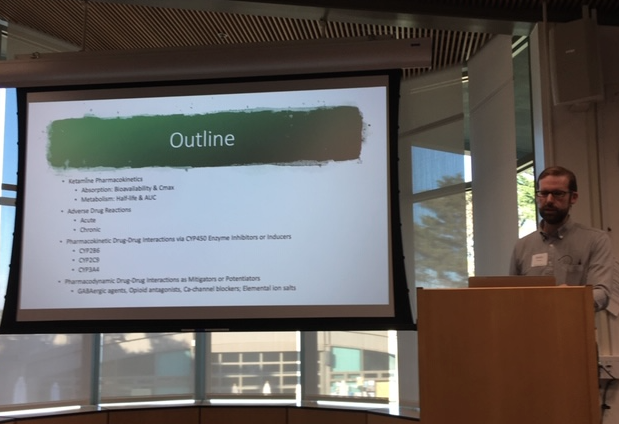
Kelan Thomas, Pharm.D,
spoke about adverse reactions and drug-to-drug interactions that have been documented with ketamine. So important and so well-done.
Annie Oak, a journalist from the Bay area, spoke on the use of ketamine outside the medical setting.
Gita Vaid, M.D., psychiatrist and psychoanalyst, spoke on using ketamine in psychoanalytic psychotherapy in very long session. She talked about how she has witnessed ketamine help patients relax and defenses soften so they can have freedom to talk. The psychotherapist builds relationship with the patient and it can be transformational.
Jason Wallach, Ph.D., is a pharmacologist and neuroscience researcher whose energy and depth of knowledge captivates us every time he speaks. He spoke about the neuroscience and pharmacology of ketamine. Gave an update on some of the other dissociative drugs he’s tested. (I think he’s tested them all!) He made the point that ketamine has been called a dirty drug because of the receptors it hits ex-vivo and in animal models — but that’s not true. It’s really one of the more selective drugs of this class at the doses used in people.
Jessica Katzman, Ph.D., and Harvey Schwartz, Ph.D., spoke about bumps in the road they’ve discovered with ketamine assisted psychotherapy and in the integration work that follows treatment… What is integration? It comes from a latin word that means “to make whole” or “to begin again.” Bring your clinical compass, but don’t forget your humanity. A beautiful duo talk with lots of clinical examples.
Eli Kolp, M.D., a pioneer in ketamine treatment, gave a beautiful talk on the phenomenology of ketamine-induced dissociative states.
There were so many other speakers and so much to absorb–my computer battery kept dying down, so between Surface notes, handwritten notes, and photos, I can’t do justice to the breadth of expertise in the room, and the excitement.
Greg Wells, Ph.D.Sylver Quevedo, M.D., Veronika Gold, M.F.T., Eric Sienknecht, Psy.D. presented as a panel on their model of coordination of care between prescriber and psychotherapist. Peter Koshland, Pharm.D. talked about how to work with a compounding pharmacy for varied compounded preparations of racemic ketamine. Nate Schmidt, A.R.N.P spoke about scheduling and billing logistics.
Sunday was a treasure with a very special presentation by Francoise Bourzat on the Use of Sacred Medicines in the Age of Technology and Medicalization. It was a delight to meet her. She captivated the audience, and her new book, Consciousness Medicine, is a wonderful synthesis of her life’s work.
Kelley O’Donnell, M.D. and Christian Yavorsky, Ph.D. are doing yeoman’s work with KRIYA and presented an excellent (and not dry!) talk on Measuring Clinical Outcomes: Scales and Assessment Tools. And in addition to the training for Ketamine Assisted Psychotherapy that Raquel Bennett presented and discussed earlier in the conference, Jennifer Dore, MD presented a model of training for Ketamine Assisted Psychotherapy developed by Phil Wolfson, MD and Julane Andrews, that they have used around the country.
IV Ketamine can STOP suicidal thoughts fast…Now that’s flexibility of ketamine!
On the last day, and as the next to the last speaker, I took the podium to share my data in working with patients in my own practice, and showing how IV ketamine infusions can stop suicidal thinking, and save patients from having to go to the ER or be hospitalized.
With heartfelt gratitude. These are my people–the clinicians and many of the greats in the field (who were in the audience) who launched my interest, encouraged my work, supported my writing–and showed me how to apply for an IRB. It’s amazing how much can happen in a year. So I saved the newest data and my newest results (using a new protocol and a new rating scale) for my colleagues and my friends here at KRIYA. I wanted them to hear it first.
I wanted to give back to those who have sparked my imagination, nurtured my interests, given wind to my sails.
It gives me such joy to share how this remarkable medicine that can do so much, can also save a life in a short time. And to see clinicians in practice eager to take this information home.
And that’s the beauty of meeting together at KRIYA and swapping stories and describing outcomes and victories that have restored the lives of people we work with.
Looking Back…and Reaching Forward – Preserving the Flexibility of Ketamine
It’s been such a busy fall with travel and speaking engagements each month… along with treating patients. (I’m sure my colleagues are as tired as I am. We need a vacation. Seriously.) But it’s gratifying to look back and know all this information that’s been shared will improve the lives of people we each cross paths with after KRIYA and all the other conferences.
I know these reports “from the front” can seem science-y and vague, but I want you to see how hard clinicians, neuroscientists, and practitioners of all types are constantly working to learn the breadth and depth of what ketamine can do to help people live better, improved lives. That’s really what it’s about. Ketamine’s flexibility allows for treatment that can turn your life around.
And if you’ve been reading along, and wondering if there is help for you, call us. In spite of all the travel and bustle, we’re still in all this to help you get better, live better, and have the ability to build a truly fulfilling life.
You owe it to yourself to try, if you’ve not found a medicine that works for you. It’s not that ketamine is a cure-all for everyone, but it works in so many areas of your brain, that it can restore areas damaged by stress and trauma in most people who are treated with it.
As the holidays approach, give yourself the best chance you can to enjoy the time ahead and the new year that follows.
Just think about it. How far reaching is this one condition?
Sure people talk about being depressed with a casual tone. You get the feeling they feel crummy…but it seems to be their response to circumstances. And when circumstances change, they seem to forget they felt bad. But when you think about who’s affected by severe chronic depression, you think of people who don’t have the energy to get up in the morning. You think about people who are trapped in substance abuse and have grown to hate themselves. You think about people who are just tired. Of everything.
Let’s take a closer look at the people affected by severe chronic depression. Who are they?
Gary is one.
Gary worked hard his entire life. He worked tirelessly to help others improve their lives. He worked to inspire and comfort. But, when you’re in the business of helping people enjoy richer, more meaningful lives, there are always those few who spurn your efforts, and even come back to crush you, if they can. And sometimes it’s the one you believed in the most.
In Gary’s case, there were two of them. They robbed his house when he was away for the evening. Then, spread false stories attacking his integrity. And Gary was cut to the heart. After being robbed and betrayed, he was hurt, angry, disheartened. In fact he was shattered.
Even though he’d always been optimistic, and bounced back after disappointments, this time he utterly lost his footing. Shock and devastation swarmed around and within him. He lost his bearings…and withdrew into the quiet safety of his house.
He found himself acting strangely, behaving in ways he never had before.
Months went by. He ordered food from Amazon and avoided any human contact if at all possible. He didn’t answer the door, and friends gave up, one by one, and became absorbed with their own lives.
A relative helped him get in to see a doctor finally. He was diagnosed with Bipolar II Disorder. The doctor prescribed a medicine to help prevent the hypomanic episodes, but the depression and withdrawal didn’t improve much. Years went by and he settled into a routine of leaving the house maybe once a week. His warm, inviting personality became subdued and cautious.
Something needed to give. To help free him from the box he’d built around himself.
And thankfully something did …but we’ll get back to that in a moment.
And Who ELSE?
Dan is.
Dan had his first drink when he was 14, and was hanging out on a Saturday night with his brother’s friends. They were all 16 and 17, and after getting some six- and 12-packs of beer, they all went to the lake on a Saturday night and drank all they had. Some ended up vomiting, others passed out in the car. Dan did both. But he liked the way the beer made him feel, and he knew he’d be up for drinking more when he had the chance.
High school beer bashes led to frat party blow outs, and while he experimented with some other things when he had the chance, it was alcohol that became his “go-to” in good times and in bad.
At 42, he drank whenever he was free. He had managed to get through college with a degree and land a job that was steady, but nights and weekends were his time to reward himself — whether anyone was with him or not. He worked hard to earn the right to get smashed on Saturday night.
After marrying in his 20s…hoping for happily ever after… he found himself alone and single again in his 30s. So many fights about his drinking. She was just beautiful, and he was so proud to be seen out with her, but she was so critical.
Alcohol Addiction and Depression… A Dangerous Combination
Now in his 40s, Dan began to understand why. And he realized he was likely to spend his life alone and drunk, if something didn’t change. He’d actually tried to stop drinking but something always happened and he was back at it. He felt pretty defeated. It seemed to be bigger than he was.
Every day he dragged himself out of bed, and went to work. He was often hung over, but 25 years of this had helped him develop an armor that got him to work, helped him function well enough to not get fired, and then home again to repeat the habit of every other night of his life. He had come to hate his empty, dead-end life, and his empty, dead-end self.
Dan hadn’t enjoyed anything in his life in at least ten years. He endured, and barely existed. He had no purpose. No joy. He was the chair person for the Dan Hatred Club. It was hard to see any reason to keep living. He wondered how to stop without it hurting too much. He was convinced no one would notice if he was gone.
There’s more to Dan’s story.
And I want you to know what happened. A little later.
While it’s so true that many people are very ill, even disabled in some cases, with severe chronic depression, you can see that many have other illnesses that are complicated by depression.
Some people suffer with a complex combination of disorders, and diagnosis and treatment can be complicated, too. We talked about Gary and his traumatic experience, the depression and phobias that followed and led to his eventual confusing behaviors, and a Bipolar 2 diagnosis.
We talked about Dan, his early introduction to alcohol and the long term impact it had on his brain…and his life. How his drinking gave way to poor social function, and the inability to give his best to his marriage. Eventually he found himself in a self-destructive rut and didn’t know how to turn it around. Then the suicidal thoughts began.
So who else is devastated – and disrupted – by severe depression symptoms?
Cheryl is.
Cheryl is 26. She’d finished college and was working on her masters degree in forensic psychology when she found herself pregnant. She and her husband wanted children, but they weren’t sure when.
Still, she felt like she was carrying a miracle within her, and the couple set about learning all they could about pregnancy, their baby’s development, and child rearing. They wanted this to go perfectly. She would find a way to complete her masters degree. But she was determined to celebrate their child’s life.
Her pregnancy was hard at first, with morning sickness that seemed unrelenting. But around the 13th or 14th week she thought she might be feeling a bit better. She began to browse in baby stores, looking at the tiny clothes and trying to imagine her baby wearing them. Her clothes were also getting tighter, and she shopped to find some pants that were looser and more comfortable. It was all beginning to feel amazing, just thinking about this little person who was safely cradled and growing out of sight….but under her heart.
The weeks dragged by, and her excitement about her baby became almost too much at times. She and her husband began shopping for a bassinet, a crib…and a stroller. She learned about support meetings for breastfeeding mothers and attended as often as she could. There was so much to learn!
Weeks turned into months, and finally she was in her third trimester. Just 3 more months. Through her pregnancy her emotions were filled with excitement and joy. A sense of wonder seemed to give the whole world a glow.
Happy Times Preparing for Baby
She and her husband attended childbirth classes and toured the hospital. They practiced exercises and breathing patterns at home to try to truly equip themselves for the adventure of labor and delivery.
Then, when she was 41 weeks along, those Braxton-Hicks contractions everyone talked about began to get out of hand. Within a couple hours she was in the ER being checked out.
Finally, she was in labor.
Cheryl’s labor progressed normally the first 10 hours. Then, in spite of hard and nearly constant contractions she was no longer progressing. Her doctor confirmed his suspicions: the baby’s head was lodged at an angle in the pelvic region and couldn’t move forward. He called for a C-section.
Within 15 minutes she was wheeled into the operating room, and suddenly asleep. When she awoke, everything seemed strange. Then she remembered the labor, the baby, and oblivion.
Her husband was smiling and told her they have a beautiful baby girl. She felt too groggy to understand what he was saying. She blinked hard to try to clear her head. Her husband handed her a little bundle. She laid it in her lap. What was it?
As the fog cleared her head, her memory of the labor returned. Her new baby slept in her bundled blanket. And Cheryl put the pieces together. She had had a baby. She was sleepy because of emergency surgery. The baby couldn’t get out… But where was that baby?
Traumatic Birth Can Interfere with Bonding Between Mother and Child
She asked her husband, and he told her their baby was in her lap. But the bundle in her lap didn’t look like anyone she knew. It just didn’t feel real…somehow…
She felt no connection to this tiny human, in spite of her husband’s reassurance… She felt sure she would have recognized her own baby, right?
Cheryl found herself detached, stunned, disconnected from feeling like a mother. Her strange behavior puzzled her husband. Why didn’t she cuddle their beautiful baby girl? The nurses tried to help her breastfeed, but the baby only cried. Almost as if this baby girl could sense her mom’s disconnect.
Cheryl and her husband took their new baby home and named her Phoebe Mae. She desperately wanted to feel something good toward the baby. But, she didn’t. She couldn’t. All that anticipation for 9 months, and this is it? Endless exhaustion and sleepless nights? Where was the joy..?
Her behavior worried (and angered) her husband. He just didn’t understand his wife’s coldness. Was this damaging Phoebe? What damaged Cheryl to cause this?
Months went by and Cheryl had long since taken up bottle feeding Phoebe formula. Besides, her husband could help more easily this way.
Then, Phoebe’s first smile was for her daddy. And her first laugh, too. Cheryl felt a bit jealous that she stayed with her daughter all day and fed her and took her on walks, but she really only responded to her daddy.
Who Else is Affected… or should I say, Overwhelmed ?
The family is.
Everyone who loves you. They worry, they try to help, they pitch in, they listen.
And try as they might, they’re helpless. And desperate for solutions. Your severe chronic depression breaks their hearts.
These few examples give only a glimpse of the complex symptom clusters any one person might suffer. There are so many more.
But IF, and only IF, you can safely and effectively reduce or even eliminate, the symptoms of depression, you may be able to see your life restored and functioning again.
Of course, traditional SRI and SNRI antidepressants play their role in helping people with depression feel better. Roughly a third to half of them…maybe a bit more. For those people, antidepressants are enough.
Remember, there is no medicine for depression that is as fast working as ketamine. No other medicine is as widespread in its antidepressant benefits in the brain. And no other medicine helps as many people recover, even achieve remission, and build restored, rewarding and fulfilling lives like IV ketamine treatment can.
Plus, it’s safe.
Ketamine doesn’t cause long lasting side effects. The notorious effects most antidepressants display, like sexual dysfunction and weight gain, don’t exist with IV ketamine. Ketamine doesn’t raise or lower the blood levels of other medicines you’re taking. It just goes to work. And, hopefully for you, it accomplishes the transformative restoration it’s so famous for.
The World Health Organization includes ketamine on its List of Essential Medicines. Respected around the world in ORs, ERs, disaster areas, and war zones, ketamine isn’t new.
Remission Often Replaces Severe Chronic Depression at Innovative Psychiatry
How did IV ketamine treatment impact Gary, Dan, and Cheryl? Did they recover from their own severe chronic depression symptoms?
IV Ketamine Treatment Does Its Best Work When Symptoms of Severe Chronic Depression Seem Untreatable
Remember Gary?
And his boxed-in anxiety-filled existence? The same friend who helped him go to the doctor, also helped him access IV ketamine treatment.
After 7 infusions, Gary bloomed. The warm, outgoing, generous man who had served people in need all his life re-emerged. Gary’s confidence returned along with his energy to participate in the lives of people who needed his help.
His life became rewarding again, filled with activity and relationships. You might say his best self was restored.
Then there was Dan.
Dan was suicidal when a friend told him about IV ketamine treatment. He learned that ketamine not only relieved depression, but could be effective in helping break addiction. And… that it could stop suicidal thoughts in a few hours. Dan wanted to see what it could do for him. He felt like this was his last ditch effort. He didn’t want to die, exactly. But he didn’t want to live like thisany more.
Well, he was not disappointed. The first half hour of the first infusion, those images of death and thoughts of dying disappeared. Almost like poof! gone. He emerged from the infusion smiling. That was a good start alright.
That night, he found he had no interest in a drink, so he skipped it. How about that, he thought to himself.
After the second infusion, he definitely felt less depressed. Improved. NOT great…but better. By the time he arrived for the 4th infusion he was feeling pretty good. Hopeful…motivated.
It’s been six months since his 6th infusion now, and Gary feels like he’s living. He’s stopped drinking completely, sees a few friends, met a terrific woman. His future looks bright.
And Cheryl…?
Well, Cheryl’s husband heard about ketamine for depression from a friend at work. He encouraged her to talk to her doctor about it. Her doctor said that effectively treating the depression could reverse her struggle with bonding.
When Phoebe was six months old, Cheryl received her first infusion. On the way home with her husband she could tell no difference. He encouraged her to keep an open mind. That he’d heard it could take awhile.
By the 4th infusion he noticed she was taking initiative in the kitchen, preparing a new recipe. She hadn’t done that since Phoebe was born. Then the next day she was sitting with Phoebe playing patty cake… and that night rocked her, kissing her on the forehead as she drifted off.
She was expressing joy more and more and laughing with Phoebe. By the end of the 6th infusion she didn’t feel perfect but she did feel happy. The doctor said it would get better and better.
Severe Stress Can Cause a Setback
Then Phoebe got sick. At 8 months she caught her first cold. Cheryl was up all night comforting her, sitting with her near the humidifier to help her breathe. This continued for 4 days until Phoebe started feeling better.
But the lack of sleep and strain took their toll. And Cheryl’s depression returned. Not as severe as it had been. But severe enough. A couple weeks later her husband asked her to call the doctor, who told her she may need another “booster” infusion. So she complied.
She felt much better again after the infusion, and Phoebe stayed well all summer. They had daily walks in the sunshine, and Cheryl and Phoebe both had rosy cheeks and and a tan.
The next time Phoebe got sick in the fall, the stress didn’t affect Cheryl adversely at all. She had the resilience to go without sleep as she cuddled her baby girl through the illness.
Before long, Phoebe turned a year old. Cheryl and her husband threw a big party for all their friends. It was a celebration of their little girl’s milestone, and for the joy Cheryl and her husband were enjoying again.
This Can Happen for You, Too
These stories all have happy endings. But low dose IV ketamine isn’t for everyone. Is there any medicine that is? Nope…not a one. But the response rate to ketamine treatment is remarkably high.
Still, that remarkably high response rate relies on skilled administration. Low dose IV ketamine treatment is not a one-size-fits-all treatment. It requires careful titration, identifying specific responses in the patient, and finding the sweet spot in dose and rate that yields the best outcome for each individual.
Unfortunately, many providers of ketamine don’t understand this, and give the same dose at the same rate to every patient, then schedule them to come in for regular maintenance infusions, indefinitely.
In other cases, they try a different dose with each successive infusion, because they don’t really understand how to achieve the therapeutic response.
Find Restoration from Severe Chronic Depression
Innovative Psychiatry is the premier provider of IV ketamine treatment in Connecticut for safe, effective treatment of depression and other psychiatric disorders. We offered the first ketamine treatment center of Connecticut for severe chronic depression and other disorders.
Innovative Psychiatry offers you a most extraordinary psychiatric treatment, IV ketamine. Some people require booster infusions now and then for awhile, and others achieve remission with the initial six infusions.
Every brain is different, just as every person is different.
We can’t predict what it will be like for you, but we can promise to provide the most effective administration of this remarkable treatment that can be found anywhere.
Can you relate to Gary, Dan, or Cheryl..? Or maybe to their loved ones? If you have similar symptoms or variations of your own, that have not responded to the treatments you’ve tried, call us.
Like the people we’ve talked about here, you can have restored joy, renewed initiative and motivation, the energy to pursue your dreams, and to rebuild relationships.
We’re here to help. Let’s work together to help you live a fulfilling and rewarding life.