
New Advances in Ketamine Treatment
2018 has been a good year. A very good year.
In this fall season of harvest and bounty which surrounds us outdoors, we find ourselves as ketamine physicians with wonderful gifts to work with: in our world of neuroscience and psychiatry, the soil is rich, the seeds have been planted, and hard work has been done – sometimes for years! – by experts who have paved the way, and brilliant emerging experts whose work and insights inspire us all.
I’m talking about the 2018 ASKP Meeting in Austin, TX.
Ya shoulda been there
It was the Inaugural Meeting of the American Society of Ketamine Physicians – hence, ASKP – and it was a conference that fueled excitement, embraced inquiry, acknowledged the need for temperance … and left all of us thirsting for more opportunities to work, study, collaborate, and publish.
I want to tell you about the meeting.
Especially if you or someone in your life suffers from a mood disorder. If you’ve been struggling for a terribly long time. If you’ve begun to think of yourself with symptoms that have become “treatment-resistant.” Sound familiar? Then dial in to learn about IV ketamine treatment advances.
What you learn may help you think outside the box you’ve found yourself in.
Hard Pruning Can Leave You Unable to Recover

As you know, it’s terrible to struggle to live your life when your confidence, your hope, your ability to think and perform, are all dulled, impaired…broken down.
Major depression, panic disorder, social anxiety, PTSD, OCD, bipolar disorder, addiction … the list goes on … all of these can make it nearly impossible to reach the goals you may have for your life.
You’ve probably seen your doctor and tried some different medicines, but if you’re not feeling better, you may be part of the large group of depressed or anxious people for whom conventional medications don’t work.
If you’ve heard of ketamine, you may know that it’s showing great promise for helping a majority of people who weren’t helped by antidepressants.
But, you may not have been able to find someone who administers ketamine treatment properly. Because until recently doctors have just been on their own offering ketamine the best way they know how.
Sometimes their methods don’t work very well.
So physicians who provide ketamine treatment are beginning to organize into groups to exchange their ideas, experiences, and discoveries, in hopes of solidifying some of the true “best practices” that provide the best outcomes for their patients.
An important organization that’s doing this is the American Society of Ketamine Physicians, or ASKP — and we just held our Inaugural Conference September 20-22, in Austin, TX.
Let me start by saying how grateful I am for the many opportunities to meet with other medical pioneers who are committed — like we are — to helping people who suffer with treatment resistant psychiatric disorders.
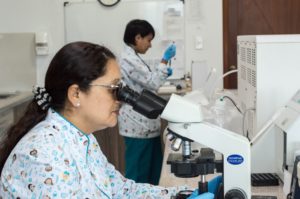
Conferences are a festival for the mind. Ideas spark, slides fly by, data positively crackles in the air — and so does good humor, agreeableness, collaboration, and humility. We are humbled by the pain our patients experience, and inspired by our colleagues to learn more, think critically, design carefully, proceed with integrity.
We are privileged to have ketamine in our toolbox and to be able to offer ketamine treatment to patients whose suffering has become unbearable.
ASKP is helping us do just that.
IV Ketamine Treatment Advances: Leaders
We were treated to a lineup of seminal leaders in the field. Steve Mandel, M.D., the President of ASKP and Ketamine Clinics of Los Angeles, James Murrough, M.D., of Mount Sinai and Sam Wilkinson, M.D., of Yale, Steve Levine, M.D., of Actify Neurotherapies, Carl Bonnett, M.D., of Klarisana in San Antonio who has been working with veterans for years treating depression, PTSD and pain; Rupert McShane, M.D., whom I met at KRIYA and Oxford, Raquel Bennett, Ph.D., the founder of KRIYA Institute and the KRIYA Conference, and Jason Wallach, Ph.D, of University of the Sciences, a brilliant synthetic chemist and expert on the pharmacology of ketamine and related novel NMDAR antagonists.
Dr. Mandel’s opening address caught everyone’s attention when he opened with statistics about suicide. He reported that 44,000 people die by suicide each year, and 25 times that number attempt to end their lives. There are more suicides among physicians than any other profession.

He stressed that there are so many people who need this medicine and not nearly enough doctors providing it — if for no other need than to help prevent suicide. But of course, we shouldn’t stop there.
He also pointed out that in his practice, he’s seeing more and more patients who have a delayed response, just as we see at Innovative Psychiatry.
Because of this, it’s so important that if you don’t feel better after your series of infusions, that you must not give up. You may be a late responder and we’re learning more about this all the time.
Extensive Research That Began During Residency
James Murrough, M.D., Ph.D., was next and he talked through the history of ketamine’s research for treating psychiatric disorders. He spoke of Carlos Zarate’s work in 2010 which was the first study in patients with treatment-resistant bipolar disorder.
He got involved in ketamine research as a resident in a study of 47 patients led by Sanjay Mathew, MD who, with Zarate, co-authored the book Ketamine for Treatment-Resistant Depression. It was a difficult study, and ketamine treatment was surrounded by skepticism at the time. (For some people, it still is.) But it was the largest number of patients studied clinically at that point.
Dr. Murrough did a beautiful, comprehensive review of the clinical literature on ketamine’s effectiveness. He and his team published a study in 2015 that demonstrated that ketamine’s effect is rapid and robust.
Then, studies accumulated that showed ketamine’s effect lasts longer when given in a series. (Which is why we give a series of 6 – 9 at Innovative Psychiatry.)
Groundbreaking studies…over and over and over.
Steven Levine, M.D., talked about what he’s learned through 30,000 ketamine infusions with 3000 patients over the past several years.
And he made the point that stress itself is a risk factor for relapse.
I don’t have room here to tell you enough about every presentation, but really quickly I want to tell you about Raquel Bennett’s presentation.
Raquel Bennett, Ph.D., spoke about the varied ways ketamine is used in psychotherapy and the importance of selecting patients appropriately for each type of treatment.
She also chaired a panel discussion with Eli Kolp, M.D., Robert Grant, M.D., and Jeff Becker, M.D., about their varied therapeutic approaches and their work with ketamine in psychotherapy.

Sandhya Prashad, M.D., spoke about the hallucinogenic potential of ketamine. While many physicians have been reluctant to delve into this aspect of ketamine, the dissociative symptoms patient experience are key to their improvement.
This wonderful gathering included research scientists, clinical researchers, full-practice physicians, and psychologists who explained their own discoveries for us to assimilate.
So many luminaries, so little time…
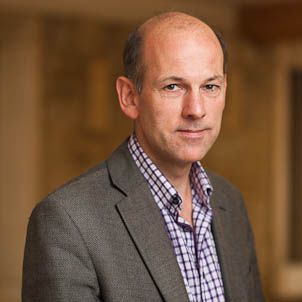
Sam Wilkinson, M.D., explained the challenges of research and reviewed key studies. Rupert McShane, M.D, presented data on oral ketamine and abuse concerns. I first met Rupert at the KRIYA conference and he encouraged me to attend the Oxford International Conference on Ketamine for Psychiatric Disorders 2018 conference last March. He chaired the Oxford event, which was spectacular. He’s been generous with his mentorship in so many ways. Such a lovely man.
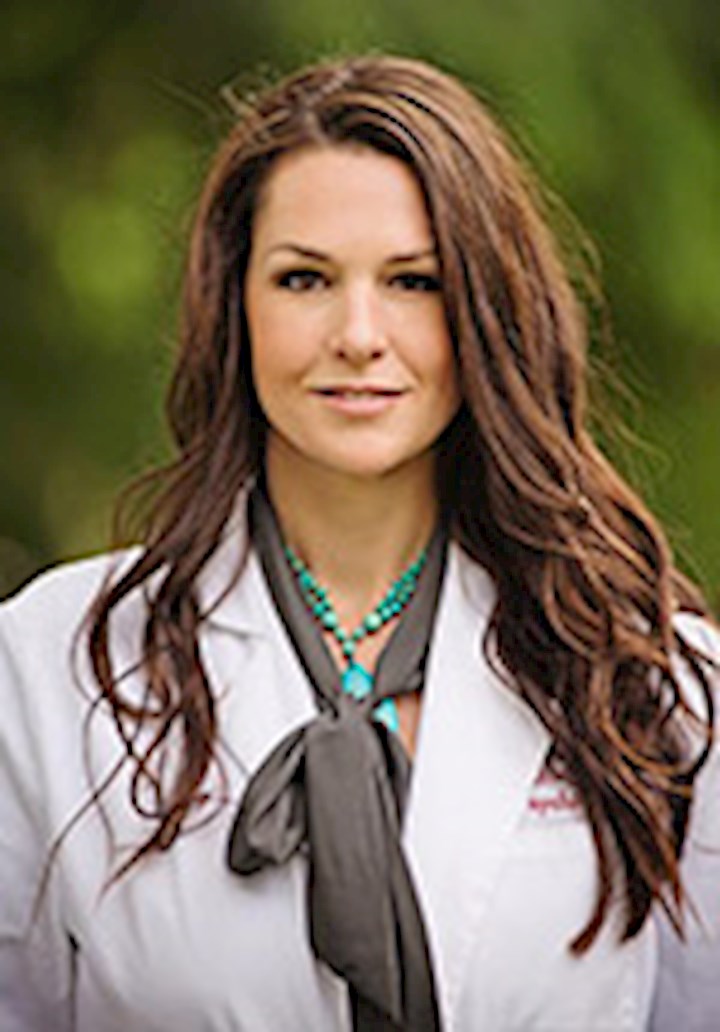
Rachel Dalthorpe, M.D., talked about hormonal factors in ketamine infusion treatment. She referred specifically to premenopausal women and proposed an ideal time during the menstrual cycle for scheduling follow up infusions. Such valuable information.
I was delighted to see so many of the luminaries there who have previously spoken at Kriya… like Jason Wallach, Jeff Becker, and Steve Levine … and from the Oxford Conference like Rupert McShane and Jenny Southgate … Such friends … and such a hall of fame!
Benjamin Keizer, Ph.D., talked about pain and the impact it has on the brain. Jennifer Southgate, Ph.D., spoke about her work with urothelium and bladder inflammation, and how ketamine can affect the bladder.
Ronald Hertz, M.D., explained his important work on the use of ketamine for treating severe and chronic pain…and CRPS. Randall Malchow, M.D., talked about his own studies treating pain. Jason Wallach, Ph.D., spoke on the pharmacodynamics of ketamine, expounding on the history of derivatives of PCP. He also discussed the difference between r-ketamine and s-ketamine. He is brilliant, engaging and makes chemistry fascinating.
Ketamine Advocacy Network Helps Physicians and Patients Alike
Finally, Dennis Hartman, who founded the Ketamine Advocacy Network, spoke about the extreme importance of patient advocacy. I was delighted to meet Kim Juroviesky. Kim hosts a Facebook group for ketamine patients, which is growing fast and helping so many.

The entire two days was chock-full of data, expert opinions and suggestions regarding clinical use of ketamine.
What an inauguration! Ketamine treatment is growing rapidly in use and in its positive effects. The more we can learn, the better able we are to effectively treat more patients with bright outcomes.
At Innovative Psychiatry, we administer ketamine and other treatments for treatment-resistant mood disorders. And we align our methods with best practices to help you achieve the most favorable outcome.
If you suffer from severe depression, social anxiety, bipolar disorder, PTSD, OCD, substance abuse disorder, and suicidal thinking, please call us.
And know that you don’t have to suffer with your symptoms. Let us help you find the life you want to live, and discover the best you, you can be.
 To the reinvigorating of your best self,
 [line][line]

 Ketamine Can
  and performed well in school…receiving all sorts of academic awards.
 answering the telephone. School became an insurmountable mountain to climb. She began to hide under her bed for the school day so no one would know she didn’t go. She couldn’t go.
  Finally, she was placed on
  The verbal abuse and horrific scenes deteriorated to physical abuse, but just reminded her that she knew what it was to suffer. And he’d been alone without support, so she was determined to be that support and “help him heal.”
 Bangkok she suffered a gargantuan panic attack. She couldn’t think to find her luggage, her gear, or her phone. Finally, she called her family collect and asked them to help her get home. Knowing her fragile state, they readily complied.
  shoulders that left her left shoulder 3 inches shorter than her right one. She was unable to move her upper body without extensive treatment.
 she got out of the hospital.
 months. Then she began to feel the old depression returning, the critical thoughts, the anger, the hopelessness…but for the first time since she was a little girl…
 her through the illnesses and surgeries, and life is working for her now on an exciting new level.
 dangerous depression can be.
 Smash Treatment-Resistant Mood Disorders with Rapid-Acting Antidepressants: Like Ketamine Treatment
 Through a series of leaks and improprieties however, it began to drift onto the streets as an illegal substance. The drug was phencyclidine, or PCP. Remember
 with thoughts of suicide, if those thoughts can’t be eradicated quickly, the risk of death is high.
  and instead prolong them. As we’ve moved forward in clinical practice, we’ve found that increasing the number of infusions in some cases can ensure remission. That is, if the initial six fell short of that goal. And we’ve worked with different infusion protocols over 2-3 weeks.
 with many new medicines that operate quickly to treat mood disorders. But that’s the way of progress.
 your effort,
 to reduce stressors that wear down your
  antidepressants and other treatments.

 Does Your College Student Know Where to Find Mental Health Support?
 these students are still very much adolescent. Add to that the fact that 75% of psychiatric disorders are diagnosed before the age of 24, and you can see that the college years are predisposed to turmoil for many kids.
 17% reported learning disabilities. These are parents whose children have been diagnosed or treated.

 achieve remission with


 activities, the overwhelming work… drove you into a corner that just got darker and darker…
 says with conviction that brighter days are ahead for those in darkness. He now knows there is hope for the future.
 depression, a much tinier dose is used than is ever required for anesthesia. We administer it with a


 with anticipation to see if research this year will reveal even more.
 elation when interviewed that such a thing has happened in their lifetime.
  traditional antidepressants, and without any of the weight gain, sexual dysfunction, fatigue, or GI side effects they can cause.