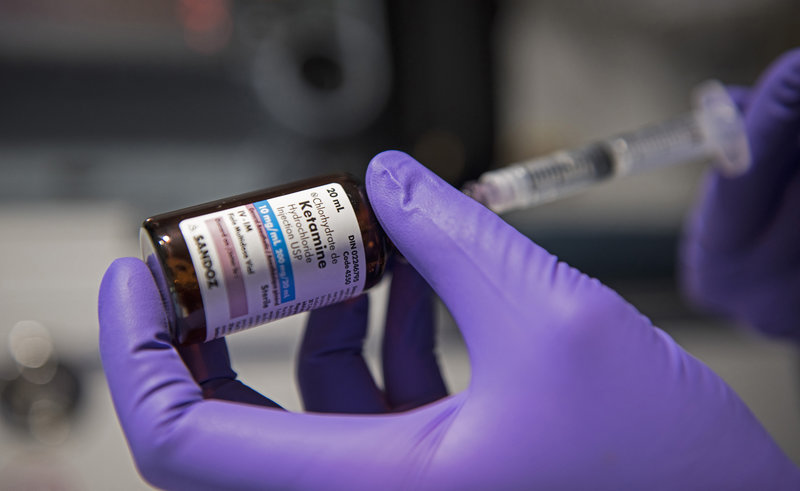

Tag: IV Ketamine Treatment for Suicidal Thoughts

  • What Does Loneliness Do To Your Health and Your Relationships?

    What Does Loneliness Do To Your Health and Your Relationships?

    What does loneliness do to you at Thanksgiving?  Does the crowd of family help? Or hurt?

    Thursday is Thanksgiving, and most of us realize what a toll the holidays take on some people. But we may not understand why.

    Many of us have at least one loved one who is not comfortable in a family gathering at this time of year. They may be in pain, or mourning a loss, or just otherwise uncomfortable in a crowded room. Maybe you wonder what does loneliness do to someone who is isolated. Sometimes it could be age related: If they’re over the age of 65, they may feel like it’s hard to connect with the younger generation, and if they’re young they may feel like fish out of water.

    Or they may suffer from a psychiatric disorder that makes them miserable whether they’re alone or with family and friends. Bottom line, the holidays are a joyous time for many, but we need to stop and consider those who struggle at this time of year.

    Loneliness has been getting more attention lately, because it’s becoming more and more widespread.  It’s not just the elderly anymore, although the elderly who live alone or in certain settings still often ache so severely from loneliness that depression takes over and makes it worse. 

    What loneliness can do is to separate you from those you love and depend on, just as these lions depend on each other.

    You know that feeling when you’re lonely in a room full of people?  Loneliness doesn’t just attack when you’re by yourself.  If you’re mourning the loss of a companion because of death or divorce or breakup, the loneliness is so deep. Being surrounded with people, even people you know well and love, just may not soothe that deep corrosive ache you feel.

    But it’s not always about loss. 

    Tom is 69, has been single for decades, and has Narcissistic Personality Disorder. Tom has always been lonely. Because of his disorder, he doesn’t grasp that he does anything inappropriate, or that he offends others…especially his ex-wife or a girlfriend. His first marriage lasted over 20 years, but the older he got the more inflexible he got.

    What does loneliness do to you?

    And because of his disorder, he assumes that every conflict is because his mate doesn’t appreciate how good he is to her. He just can’t see that he causes the misery he does. All he knows is that he’s desperately lonely. So he is constantly on dating sights hoping to find the person who will fill that yawning void he feels. 

    Aging Sometimes Makes Isolation Worse

    Now at 69, he’s in a wheelchair and still looking for romance, but he’s run out of candidates…

    One day, he told his sister with incredulously…  “I figured out why my wives have all left me… they just didn’t appreciate how good I was to them.”  

    Tom just couldn’t see what was needed from him for a relationship to be fulfilling to both people.

    He couldn’t imagine he had room for improvement.  But that can go with Narcissistic Personality Disorder. And as much as he abused the people he loved, and drove them all away from himself, he couldn’t imagine there was anything he could do about their “lack of gratitude.”  And so he was desperately, heartbreakingly lonely.  And talked about it often.  

    But maybe that’s not so surprising really, for someone with that particular disorder.  

    Still, there are other scenarios.

    Some Think They’re Flawless, Others Believe Their Flaws Are Irreparable

    Either Way What Does Loneliness Do To Your Health, Your Relationships, and Your Self – Image?

    However, there are multitudes who struggle on the other end of the spectrum. Those who are unable to accurately assess their own worth to those who love them. They may be overwhelmed with shame and worthlessness. So many people who suffer from depression, bipolar disorder, PTSD, panic disorder….  

    What does loneliness do to someone covered in shame?

    So many feel inadequate, and struggle with feelings of such abject worthlessness, they struggle to receive love and support. When they join their family for a holiday gathering, they feel like they stand out like a sore thumb as the “loser,” the one who has amounted to nothing, the black sheep…They rehearse these self-defeating opinions about themselves in their own minds until it’s all they can imagine. 

    And they know without question this is the view held by everyone who knows them. (whether it’s true or not) These people are their own worst enemies. So they arrive at a gathering of people they love on the defensive, unable to absorb the love around them because they’ve convinced themselves they don’t deserve it.  And they’re even lonelier with their family than they are at home.

    It happens that sometimes lonely people are forgotten people. Sometimes they’re displaced people. Sometimes they’re people who have driven others away.

    But they’re all hurting.

    An editorial by Nicholas Kristof in the New York Times recently focused on the rampant, widespread impact of loneliness as a health crisis. He compared loneliness and social isolation with the health risks of smoking 15 cigarettes a day, or of obesity. He made the point that since obesity is associated with 300,00 to 600,000 deaths a year, loneliness must be a serious killer.
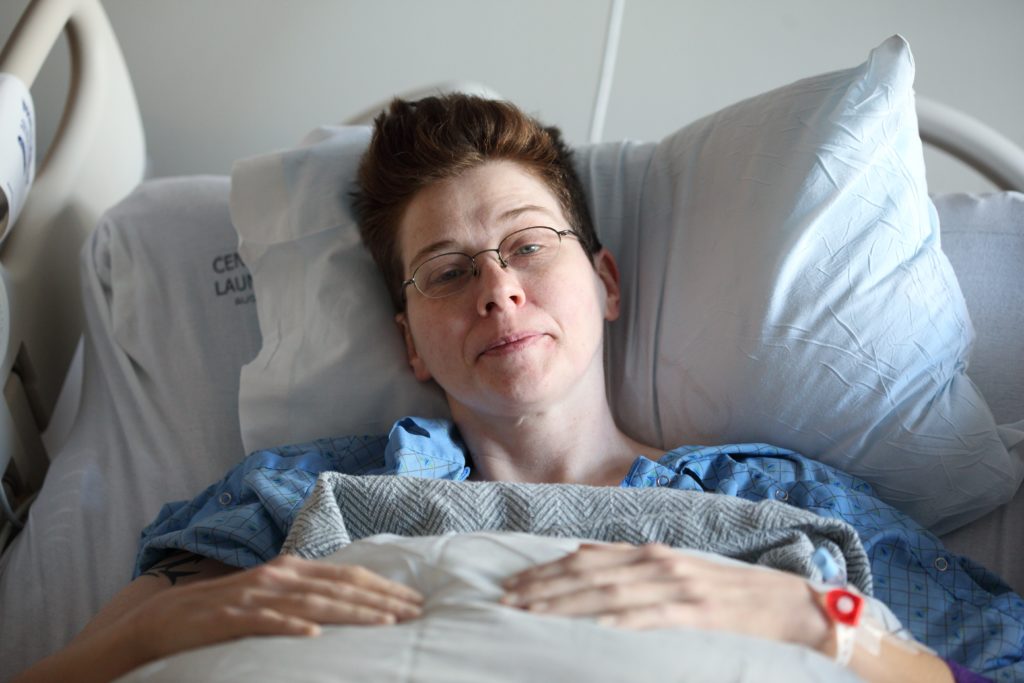
    Loneliness does what to you? It increases inflammation which leads to a host of diseases.

    What we do know is that loneliness increases inflammation, heart disease, depression, and suicidal thoughts… among a multitude of miseries. Inflammation alone can lead to cancer, a plethora of chronic and debilitating illnesses, and death. We’re social creatures, and fundamentally, we each need to be loved by someone, and to love in return.

    We need to contribute, and we need someone to give back. 

    In a survey taken in the US and Britain, more than half of respondents said they are often, if not always, lonely. With the rising numbers of single adults who never marry, and those who find themselves single again and stay that way, social isolation has become a growing cloud… The connectedness of multiple generations in a household is a thing of the past. 

    In Great Britain, an effort to counteract this disconnectedness, this isolation, led to the formation of the Ministry of Loneliness, complete with the Baroness of Loneliness to lead it. Baroness Barron’s direction instigated initiatives to bring people together. Things like benches for conversations. Clubs to draw people together who have similar interests. Public invitations to connect, share hobbies and activities.

    The Baroness stresses that everyone experiences loneliness at some point in their lives…some more than others. But because of the shifts in our western society away from extended family units, more and more people live alone. They don’t have the built-in structures that keep them connected. And their health suffers.

    So she encourages building ways to connect around people’s strengths… like their talents and hobbies. And to avoid focusing on their weaknesses, such as their isolation and lack of friends.

    What does loneliness do to you when you're facing hardship by yourself?

    So what is it, actually, that happens in your brain when you’re lonely, and you feel isolated?

    Social Neuroscience

    A study led by Livia Tomova and her team published in the Journal of Social Neuroscience considered the work of John Cacioppo.  Cacioppo was a social neuroscientist who defined this field… what happens in the brain in relation to our connections with others.  What if those connections are missing?

    He was the first to study the effects of loneliness in the brain. He said that the brain is the organ that creates, monitors, nurtures, and maintains social connections, and that everyone needs them. However, if you have some and don’t feel you have enough, then you’re likely to feel lonely, anyway. Because it’s how you feel about your connections with others that determines whether you feel fulfilled, or lonely.
    Loneliness is like hunger and thirst in that it makes you want to take action to feel better.

    He compares loneliness to hunger and thirst because it signals you to do something to to help yourself feel better.

    We Crave Connection

    And it isn’t just knowing people. It’s having someone or a few someones whom you trust, and you can give to, and who gives back to you in a way you can receive. A single trusted friend or a few is far better than a crowd of acquaintances who don’t meet that need.

    So in the study, Tomova and her team focused on the dopamine reward system, trying to integrate their experiences with animal and human responses. Their results showed that in lab animals, social isolation typically increased social motivation, which was managed by the brain’s mesolimbic dopamine system. 

    However, in humans, social isolation or “alone-ness,” can lead to either increases or decreases in social motivation.  Put another way, humans may withdraw… or reach out feverishly… in response to a painful rejection. This takes place in a part of the brain called the insular cortex.

    But chronic loneliness leads to decreased social motivation., due to changes in the dopaminergic responses in the striatum.

    What Does Loneliness Do in YOUR Life?

    All of this is to say that loneliness, or that feeling that comes from having unmet social needs, can come from a variety of life circumstances, but it occurs in the brain. And in the brain, we respond. 

    You’re built to love and be loved.  To trust and to be trusted. To be interested in someone else’s life…and for someone to be interested in yours.

    When you love someone who loves you back, loneliness has no power over you.

    There is no medicine that will heal loneliness. But there is help for those things in your life that may contribute to it. 

    By the same token, as you join with family and friends this Thanksgiving, you can keep your ear to the ground for others in your company who may not be socially motivated…and help them to break through obstacles that prevent connections. 

    On the other hand, if you feel isolated and alone, and want to withdraw, consider a baby step or two and reach out to someone…anyone…in your world who seems to be withdrawn, too. 

    Your helping hand just may help both of you. 

    Happy Thanksgiving

    Lori Calabrese, M.D. is on the front end of the race to stop PTSD in its tracks using IV ketamine treatment.

    To the restoration of your best self,
  • Cost of Ketamine Treatment: Is it Worth It?

    Cost of Ketamine Treatment: Is it Worth It?

    The cost of ketamine treatment was worth it for James- his life is blooming.

    “IV Ketamine treatment…?  I can’t afford that.” 

    “Sure, I want to feel better.  I’ve tried so many medicines and treatments. I don’t even know what it’s like to enjoy something, anything…or to feel happy. I don’t have the energy to even get out of bed half the time, much less get anything done. But…the cost of ketamine treatment is way out of reach for me. I don’t even know if it’s worth it?” That’s Ann Marie, out loud.

    “When I go to work, my mind is plagued with images of people dying… or me dying. Dark, hopeless thoughts and pictures in my head. Sometimes gruesome…

    The cost of ketamine is a worthwhile investment.

    “But we all know IV ketamine treatment is for people who’ve got money….   right?”

    ……….

    This is what people say to themselves, and to their family…comments like this, or others similar…

    And since IV ketamine treatment can restore your hope, your motivation, and initiative, you’re likely to be far more able to make those payments after you’ve benefitted from the treatment.

    So, maybe they aren’t seeing the big picture…  in fact, maybe you aren’t seeing it either. It’s something to think about. 

    Because, you know, you don’t have to have the free cash to pull the payment out of your wallet on the spot. You know that, right? Countless companies offer medical financing to pay for medicines and procedures over time. Advance Care Credit, United Medical Credit, and M-Lend are a few.

    For example, have you thought about the benefits of investing in IV ketamine treatment ? Yes, there’s an initial investment, but have you thought about this..?

    Discontinue Medications and Save $$

    For one thing, you’ve likely been taking medications for your depression or other disorder for years…haven’t you? And even though they haven’t helped, you may still be taking them.

    But, the beauty of ketamine is that it works independently of SRIs, SNRIs, anxiolytics, etc. So by investing in as few as 6 ketamine infusions, or a few more as needed, you may find you’re well enough to think about eventually tapering some of the add-ons that didn’t add anything.

    IV ketamine treatment may make it possible for you to wean off expensive medications that don't help, so the cost of ketamine treatment may be reduced by savings.

    Some of your medicines may not be expensive, but some may be pretty pricey.  In some cases, people have found that IV ketamine treatment paid for itself in 3-6 months. Even when you have insurance, your treatment costs can be exorbitant. Now it seems like everyone has a huge deductible to pay before insurance even kicks in. How much money would you save if you were able to stop taking those …. add-ons that maybe aren’t adding anything? Well, that money could go toward paying for your IV ketamine infusions.

    Then, there are those calls for extra appointments with your doctor when your symptoms flares.

    Fewer Doctor Visits

    If you’re not having symptoms, you may find you don’t need to see your doctor as often as you were when your symptoms were so persistent and so severe. What a relief that would be–if you didn’t need to call to be fit in for extra appointments when you took a dive, didn’t have to reach out to an answering service on the weekend. You’d probably prefer to spend that time and money doing things you enjoy, right?

    Why pay for a parking garage and sit in a waiting room when you’d rather be hiking in the woods, or playing tennis, or shopping? When ketamine goes to work on your brain systems, and restores the circuitry there, you regain the power to enjoy. And if you’re enjoying yourself, it’s likely you may not feel the need to check in with your doctor nearly so often. 

    Add to that the expense and the hassle of lab work. Some medications require that regular lab work be done to monitor your liver, or your kidneys, or your blood sugar and your cholesterol.

    To spend more of your time enjoying your life, your work, your hobbies, and your relationships is a far more fulfilling way to spend your time than having blood drawn in a lab on a Saturday…don’t you think? 

    Cost of ketamine treatment can be offset by fewer meds and doctor visits so you can do things you enjoy, like picnics.

    And money spent on co-pays and fuel, as well as wages lost from missed work and days you take under your FMLA for symptom flares and doctors’ visits…well, those funds have such better uses when you feel really well.  Baseball tickets, funnel cake, or…a picnic in the park!

    Cost of Ketamine Treatment Improves the Quality of Your Life

    But most of all, it’s the quality of your life. While the costs can be reclaimed in countless ways by a happier, healthier you as time goes on, can you put a price on your improved, deeply rewarding, utterly fulfilling new life?

    James comes to mind. A patient of mine who couldn’t remember ever feeling happy, or having fun, or enjoying those little moments in his life. Ketamine worked for him. And now, he enjoys a fragrance he notices in the air, the way the meat responds to the fire when he’s cooking, the clear blue of a mountain spring.

    Things he never noticed before because of the dark gray cloud that hung over him, suffocating him. He arranged financing for his treatment, and that monthly payment feels easy, because he lives every day the life he had wished for as long as he could remember.

    And his life has bloomed, because he has the energy to step out and live. He has a family that’s growing and his mind is on his family’s future…in fact, he realizes his whole life is ahead of him. He invested himself and the cost of ketamine treatment was part of that.

    Then, there’s Lisa. She grew up in a home where she never felt understood.  She was sensitive, intelligent, and meticulous. Her parents were hard working, confident, and not so tuned-in. Not really understanding their daughter’s sensitive nature, they made a plan for her from earliest childhood. She would be a doctor, and would make them proud. 

    But Lisa’s heart turned to music, and she sang like an angel. From the time she was losing her front teeth, she could feel her parents’ pressure to be who they wanted her to be. She wanted so much for them to appreciate her for who she really was.

    Lifelong Depression Wears Down Brain Circuity

    Innocent child waits in the darkness for her parents.

    By her 6th birthday, she would arrive at home after she got off the bus, and enter the dark house frightened, alone, and shaken. The anxiety from those long afternoons alone in a dark house grew to a dread that followed her wherever she went.

    Depression drained her energy, and her hope in life. Adolescence turned out to be a cruel time, and she felt she didn’t fit in anywhere. College was a chance to excel. Getting married was a no-brainer. And though she had transient reprieves from the trudging existence she endured, the dark hopelessness and choking despair always returned.

    Pregnancy after pregnancy…she could conceive, but had no energy to care for the children, and would just go back to bed. The kids spent a lot of time at their friends’ houses while she slept on the couch. They learned how to make their own mac and cheese.

    Hospitalizations didn’t make much difference. Medicines her doctors prescribed brought no relief. The kids raised themselves.

    The Cost of Ketamine Treatment

    But finally, when her first grandchild was on the way, and Lisa wanted the ability to build a relationship with this child, she heard about what ketamine treatment was doing.  She learned that she would need at least 6 infusions, so she needed to be prepared to pay for them. 

    Those who knew her and loved her wanted to help. Eventually, a friend offered to help her pay for the treatment.

    For Lisa, it got unreal right then. There was an unreal-ness about suddenly having a way to get real help…to maybe have an opportunity to feel good for the first time in her memory.

    And as she’d hoped, within a week she was improving. Little beams of hope penetrated her cold damp tomb of anxious despondency …one little beam at a time. It was slow. She started taking walks, just because. Then she started reading books and meeting friends for lunch. 

    A friend’s help made the cost of ketamine treatment manageable.

    A joyful grandma is grateful she had the cost of ketamine treatment so help her get well and happy.

    Now, Lisa is a rosy-cheeked, very active grandmother. She takes her granddaughter on picnics and to the zoo, for ice cream, and to play in the park and feed the ducks. Her grown children watch in disbelief–where was she when they were little?–but they’re relieved that she is finally functioning, happy, productive, and interested.

    She has the energy to share all kinds of experiences with her grandkids…both the physical as well as emotional energy. They play games and she teaches them about good sportsmanship and the competitiveness to win, too.

    Lisa made little payments to her friend for three years to repay the loan that gave her back her life. She says that loan was the greatest gift she’s ever received. She has the power to love again. To dance and sing and play ball with her family.

    Ketamine Treatment Must Be Available to Those Who Need It

    Is there anything more important than the power to live your life well? Happily, generously, joyously?

    When people ask me how they can afford to pay for this treatment, I wonder. A lot.

    I wonder how we can afford to stand by while our sisters, our friends, our kids, and our husbands slowly shut down.

    I wonder how we justify the days lost, the jobs lost, the unpaid FMLA’s, the lost opportunities. The kids’ games that we missed, the holidays we suffered through, the long agony of a weekend that was empty.

    I wonder how our insurance companies so readily deny payment for an infusion that could stop suicidal thinking and save a life –but quickly fork over $1300 for an ambulance ride to the ER and another $1500 for the night spent on a gurney, waiting to see if the crisis worker will hospitalize you or send you home?

    Insurance will pay for that, and refuse to cover ketamine infusions? The procedure exists, the billing code is there, the diagnosis is clear …the results speak for themselves.

    I wonder, sometimes, not about affording ketamine, but about how we can afford this: to live like this, day after day. What’s it costing us? What’s it costing our kids?

    In the light of the transformative effect of ketamine at its best, you owe it to yourself to find a way to give yourself an opportunity to live – and live well. To enjoy your life, to invest in it, to learn and grow, to stop the suicidal thoughts, to get rid of the depressive symptoms. To be happy.

    Cost of ketamine treatment brings great returns on investment through joyful living and loving.

    It’s true that IV ketamine treatment can’t offer a 100% response rate, but no medicine can do that. The cost of ketamine is an investment… But there are few investments available to us with the return that comes from this extraordinary treatment.

    James made this comment, “Instead of spending all my energy trying to figure out how to survive the week and how to ignore the suicidal thoughts that are always there, I’m excited about figuring out my next step, and I’m looking forward to good things happening. I’ve never experienced anything like that before.”

    Everyone should have the opportunity to live free of symptoms, and to have the energy and hope to invest in the things you believe in.

    At Innovative Psychiatry, we’re investing in you and your future. If you’ve suffered and treatments haven’t helped, call us. The cost of ketamine treatment? We think it’s worth it. It can make real living, fulfilling engagement, rewarding relationships, available to you.

    To the unveiling of your best self,

    Lori Calabrese, M.D.

  • A Bit of Bipolar Science and a Dab On Schizophrenia, Too

    A Bit of Bipolar Science and a Dab On Schizophrenia, Too

    Like other disorders of the brain and mind, bipolar disorder is complicated. 

    With all the movies and cartoons made at the expense of people who suffer from disorders like this, we want to help more people know more about some of the facts with a bit of bipolar science.

    It’s different for each person. The length and intensity of manic episodes, the distribution of time from one end of the spectrum to the other. How hallucinations and delusions fit into the mix. These symptoms are individual.

    It’s physical. It can shake and shatter your body, through intense and sudden swings from one extreme to another. 

    Plus, it can cause such unexpected assaults on your emotions that your body is exhausted. Those swings can feel almost like a convulsion at times.

    It can also create sensations. Some people with this disorder complain of feeling like they have fire ants on their brain. Of course, there are no insects involved. But the disordered circuitry creates a sensation in some cases.

    And it’s mental. It changes your perceptions of what you see and hear. By coloring the way you interpret what happens, it tattoos that impression deeply in your memory. It can distort your view of yourself, and marinate your thoughts in shame. Then it can turn on the firehose of pain and rage, until you’ve experienced such extremity of horror, you can feel like you sweat blood.

    But, that’s not all. Bipolar disorder also seems spiritual, sometimes pulling you into its dungeons of horror until you lose all connection to your own spirit. Righteous indignation can morph to revenge. A little anxiety can billow until it’s a life-threatening terror.

    And yet, this disorder can be all of these things, or it can be none of them. OR… you can begin with these experiences, then medication can help them melt away. OR… there may be no medication that mitigates them at all.

    What you can’t know when all that is happening, is that specific changes in your brain cells are translated to the violent swings and misery you face in your daily life. You may find yourself craving a bit of bipolar science to try to gain perspective about what’s happening to you.

    To help reduce the stigma surrounding bipolar disorder, and the behaviors of people who suffer so deeply from it, let’s look at a tidbit of breakthrough science related to the spectrum of “bipolar disorders.”

    A Bit of Bipolar Science…

    You’ve heard of the blood-brain barrier, right? Relatively few people outside the medical field have any remote idea what that is. So if you’ve heard of it, consider yourself “in the know.” Kudos!  

    OK. There are two types of blood barriers in the brain. One is the blood-brain barrier, or BBB. The other is the blood-CSF barrier. And that’s the one we’re going to talk about now.

    So the blood-CSF barrier keeps the blood and whatever is in it separate from your cerebral spinal fluid (CSF). Since the CSF is constantly washing the brain tissues, it needs to be free of contaminants, toxins, or components that are harmful to the brain’s delicate circuitry and structures.

    The CSF performs a couple of primary functions.  One is to cushion and protect that most vital organ – your brain – that keeps everything else humming along. And the other is to keep the toxins in your brain and spinal cord flushed out.  

    CSF and the Choriod Plexus

    But…Where does the CSF come from?

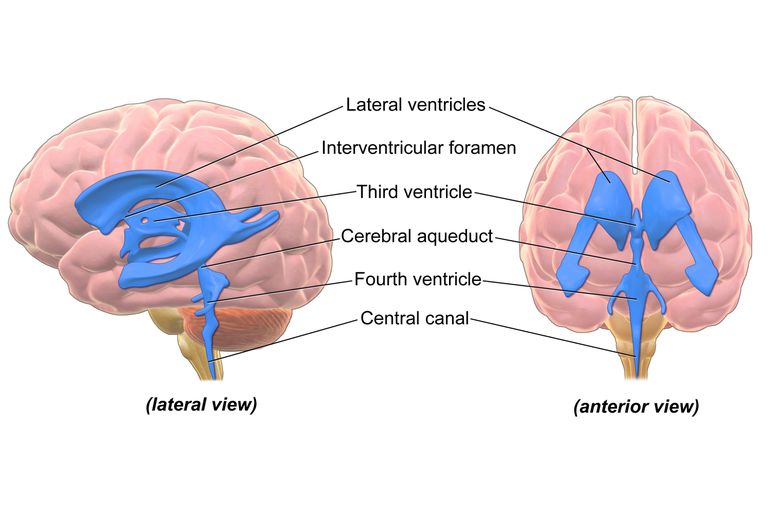
    BruceBlaus Wikipedia Commons

    So glad you asked. The choroid plexus produces this most vital and beneficial fluid. There are special cells that secrete it, and other tissues absorb it.

    Because the ventricles of your brain can handle 150ml of CSF at a time, but the choroid plexus actually makes 450ml a day!  Clearly, as it circulates, it also is absorbed or drained off and replaced by more. 

    This keeps your brain cushioned and protected by fresh CSF at all times.

    If the choroid plexus makes too much CSF, and if the pathway for draining off excess become blocked, then the amount of CSF in the brain can increase dangerously, increasing pressure in the brain. And a condition known as hydrocephalus can develop, along with the risk of brain damage.

    By the same token, if the choroid plexus makes too little CSF, the brain cannot function. And the cushion it provides to help it remain buoyant within the bony chamber of the skull is inadequate.

    So there’s a need for balance between the CSF, the cavities in the brain, and the circulation of it.

    About Psychosis

    So let’s talk about how the choroid plexus relates to schizophrenia and bipolar disorder with a bit of bipolar science.

    There are four cavities in the middle of the brain called the ventricles. The CSF washes and cushions the brain all around, and is produced and distributed from choroid plexuses in these ventricles.

    New Research

    Newly published research sponsored by Brain and Behavior Research Foundation (BRRF) has directly linked the size of the ventricles with psychosis. While the size of ventricles is not specifically correlated to schizophrenia and bipolar disorder, the volume of the choroid plexus is significantly larger in subjects with psychosis.

    In addition, these researchers found that the volume of the choroid plexus in siblings, parents, and children of those with psychosis was less than the affected individual but still significantly larger than those unaffected by psychosis in their family. This demonstrated that the volume of the choroid plexus is something one inherits to a large degree.

    But here’s the big news.

    They found that when a subject had a larger choroid plexus, they also tended to have lower cognition, less grey matter, a smaller amygdala, larger ventricles, and fewer connections between neurons. 

    All of these things can be connected to the pathological processes that cause psychosis. 

    Now that’s news.

    But there’s more.

    That increased size in the choroid plexus in subjects with psychosis was also associated with increased levels of interleukin 6 (IL-6). IL-6 is a signaling cell in the immune system. 

    So here’s the rub.

    A bit of bipolar science helps this woman understand her terrible depression at least a little.
    IL-6 can penetrate and seep through the protective barriers between the brain, blood, and CSF.  Since researchers know that IL-6 is a strong suspect connected to bipolar disorder and schizophrenia, the identity of the gang of thieves behind psychosis – you might say – seems to be emerging. Add to that the connection between IL-6 and the reduced amount of grey matter in the cerebral cortex, and the case just grows stronger.

    “Our findings suggest the involvement of the choroid plexus across the psychosis spectrum, with a potential mechanism involving the neuro-immune system, which functions in regulating the brain and interacting with the body’s immune and inflammatory systems,” the team concluded.

    If you struggle with bipolar disorder, schizophrenia, or episodes of psychosis, you may appreciate the work of these researchers that sheds more light on what happens in the brain causing these difficult episodes.

    Neuroscience researchers are making great strides in learning more than has ever been known before about the symptoms of these disorders. And the more we understand, combined with a bit of bipolar science, the more research will lead to better treatments.

    No matter what your difficulty, whether you struggle with bipolar disorder, PTSD, social anxiety, severe depression, or even thoughts of suicide, we may be able to help. IV ketamine treatment is emerging as a dramatic game changer for people who suffer from specific types of symptoms. And happily, the types of symptoms keep growing in number.

    But if you think you’d like to know if IV ketamine treatment might help you, please call us. We’ll help you find out if you might be a candidate for ketamine…because some people aren’t. But if ketamine is for you, you can experience a transformation in your own life.  

    While ketamine isn’t showing promise for psychosis, it can bring remarkable relief to your depression symptoms. Every little bit helps, doesn’t it?

    Since bipolar depression can be the most debilitating symptom for many patients, resolving the depression in your illness can make your life so much more manageable.

    As research learns more, we’ll be right there using it to help our patients. Our whole purpose is a better life, and more hope, for you.

    Lori Calabrese, MD explains esketamine FDA approval and what it involves.

    To the restoration of your best self, 

    Lori Calabrese, M.D.

  • The Pain and Marginalizing of Stigma

    The Pain and Marginalizing of Stigma

    Young woman holds her hair back while she thinks about the pain and marginalizing of stigma.

    Stigma Isolates, Humiliates, and Separates

    As I think about what to write today, my thoughts are filled with a comment I received from a man who’d read last week’s blog, which you can read here. He wrote that he also suffers from bipolar 1 disorder and was upset and hurt by the description of the young man in the story who showed signs of violence. For him, a description like the one I wrote perpetuates stigma because it portrays someone suffering from a psychiatric disorder as a “dangerous” person.

    Pause. Deep breath here. Not what I intended.

    My concerned reader made the point that he takes medication to manage his symptoms and works hard to keep them from dominating his life. He emphasized that he had never thrown a lamp or a table (like the young man I’d described) … which is often the case. Most of the time, mood dysregulation is not accompanied by physical explosiveness or violence. He was right.

    And he felt that last week’s blog misrepresented him and others like him.

    It was heartbreaking to me that this reader felt hurt by my story. I never want to cause pain to anyone with my writing. But it can be hard to prevent. My readers come from a wide variety of backgrounds and experiences. My practice, on the other hand, consists primarily of the most ill, treatment-resistant patients for whom medications have failed.

    So today, I want to go a little deeper and talk about stigma and the damage it causes.

    And I want to explain why I write the accounts I do of severely ill patients and how they suffer.

    The Pain and Marginalizing of Stigma

    So what is stigma anyway? 

    We get the word “stigma” from the ancient Greeks, who used it to describe a mark made on the body that signaled to others to avoid or shun the bearer of the mark. And, we use it the same way today. Except in our present culture there’s no need for a mark on the body… with our words we make a mark on the soul.
    pain and marginalizing of stigma

    Stigma creates shame, disgrace, humiliation…and the bad reputation that goes with certain things in our society. It’s associated with anything in someone’s life that labels them. A label that results in judging someone by the label rather than on their own merits.

    Labels like this separate people from the group just as lepers were separated from the city in ancient times.

    An example might be the experience of prison. When someone breaks the law and is sentenced to prison, that label hangs over them, as much within themselves as from the outside. This person might feel they’re “less than” others, that they deserve less respect. And they’ll almost certainly run into narrow minded people who will hold that fact from their past over them… impose upon them the pain and marginalizing of stigma to bring them shame and humiliation. 

    But the fact is, that some of those who spend time in prison continue a lawless lifestyle and others use the opportunity to improve their lives and accomplish great things. Still, it’s fair to say that improvement isn’t easily won. That person has to work very hard to rise above the experiences from his or her past.

    Another example of stigma seems to accompany psychiatric disorders. There are those in our society who still associate the need for psychiatric treatment as a sign of weakness, “craziness,” and/or questionable character.

    Working to Reduce Stigma and Increase Enlightenment

    As we work to reduce stigma, and open conversations about brain disorders, behavior disorders, and the medications we use to manage them, we have to look honestly at individuals, and who they are.  And we need to try to understand each other.

    Because not all diabetics are alike. Not all the people with bipolar disorder are alike. Not all the people with PTSD are alike. Each one is an individual — with their own unique needs, symptoms, challenges, and vulnerabilities.

    Most of us know someone who suffers from diabetes, either Type 1 or Type 2. There is some amount of stigma associated with diabetes. If you’re well informed about this condition, you know that while diet and exercise can help improve the condition for people with Type 2 diabetes, there is nothing someone with Type 1 can do to make this condition go away.

    It’s pretty short-sighted of anyone who tells a person who suffers from this disease that they just need to stop being so sloppy about how they take care of themselves.

    While it’s true that diet and exercise can improve their control of symptoms, it’s a disease that progresses and is not preventable.

    Words can cut deeply … and we never really know the story that people keep hidden in their hearts.  

    In both cases, diet and exercise help in its management, but that’s true in a wide variety of illnesses. People with coronary artery disease, arthritis, hypertension, asthma, obesity, as well as depression, bipolar disorder, PTSD, and more…all can enjoy improved symptoms through diet and exercise. Improvement. Not cure.

    The cruelty of stigma lies in the cutting words and attitudes the “unenlightened” use to build a box around an individual without knowing his story.

    Pain and Marginalizing of Stigma ISOLATES

    Disorders like bipolar I disorder, bipolar II disorder, major depressive disorder, PTSD, substance misuse, dependence and addiction, eating disorders, OCD, panic disorder, ADHD — are not understood…and are not familiar….to a very broad segment of society. And what human nature doesn’t understand, human nature too often misjudges.

    But what we DON’T want to do is marginalize individuals no matter what their experience is. 

    Man sitting alone is isolated like stigma isolates.
    And just what do I mean by “marginalize” exactly? I mean that I don’t want anyone to feel shut out, alienated, trivialized, or ignored in any way by my words or actions. Whether you use all your strength to hold your symptoms under control or whether your medication helps you do that, your experience is important. You are important. And you matter.

    When someone suffers from one of these disorders, but has no outward symptoms — because of medication or their own unique disease process — they can feel blocked out and unheard…misunderstood and not represented.

    (By the same token, if you only know someone who takes medication that’s working, and never has any symptoms that show, it’s super easy to think that people with psych disorders should have their symptoms under control. Nothing should show.)

    Maybe you know someone with kidney disease who looks and acts like anyone else. And maybe I know someone with kidney disease who is thin, pale, with only patches of hair.  When I meet your friend I may believe there is no way your friend is ill.  And you may believe that my friend has something much worse than kidney disease because she looks so terribly ill.

    But in fact, they both have the same disease but it differs in severity.

    Why Assume Everyone’s the SAME?

    This is the case with disorders that are related to the brain. Why is a disorder more severe in one person than another?  I don’t know. I may know some factors that could affect its severity, but I don’t know why one person has bipolar I disorder and another has bipolar II, or a third person has cyclothymic disorder.

    None of these three got off scot-free. They all suffer.

    The pain and marginalizing of stigma results in silent suffering.
    And why does one person respond to medication and another doesn’t?  If I knew the answer to that, I’d go on vacation more often!  These are questions I’ve been studying to find answers to all the years I’ve been a psychiatrist.

    For those who respond to medications, I’m very glad and thankful.  For those who don’t, I search and read and research and seek hope for those patients. And when I write about people with severe cases of their illness, it’s to show others who suffer in this way that they aren’t forgotten. That there is no shame in their symptoms.  Because in their case, the medicines aren’t working. And the symptoms run rampant.

    It can be devastating.   

    Don’t Misinterpret Symptoms: Hollywood vs. Reality

    And I want to add –quickly– that a table or chair that is flung out the window is not necessarily a sign of danger to others. It signals dysregulation, sure, and warrants a very careful assessment. Because often, even someone who is markedly dysregulated can draw the line between hurling an inanimate object and hurting another person.

    Hollywood has a way of exploiting the human suffering of mental health problems, to intensify fear. That’s Hollywood. Get to know individuals and take note of how they differ from what you see on the big screen.

    Coronary Artery Disease

    One of my neighbors has coronary artery disease.  He took medications, but eventually had to have open heart surgery.  Does that mean that everyone with coronary artery disease needs open heart surgery?  

    No.  In fact, I have a relative who has coronary artery disease, who manages to live a full life with medicines, diet, and exercise and has never needed surgery.

    These individuals tell their own personal stories. And report their own personal symptoms.

    Words can be so hurtful even when they’re not intended to be. We’ve all done it. Without realizing someone’s personal story we tell the story of someone else that’s too close to their own…and it sounds to them like we’re judging them.

    Pain and Marginalizing of Stigma… is Cruel

    By the same token, when a treatment or clinic pops up that seems to promise a world of wonder to everyone, (which nothing can do, by the way), people can feel trivialized and ignored. Because they may not fit in that “slot” for a variety of reasons.

    Let’s put up our antennas and notice when the pain and marginalizing of stigma has someone walled off from the world. Alone. Isolated.

    Psychiatric disorders marginalize people, and we marginalize them, too.  Every doc-in-a-box or one-size-fits-all protocol marginalizes your individual experience of suffering by suggesting there is a panacea.  

    Of course, there’s no universal cure, but there IS hope in a jar. Remember that story? 

    That was the story of ketamine treatment as a medicine prescribed “off label” because of its unique healing abilities in addition to the purpose it was FDA-approved for.

    One Size Fits Some

    ONE SIZE DOES NOT FIT ALL. Each patient needs to be custom treated for his own individual version of disorders. Each person also needs to be ACCEPTED and supported for who he is, and what he manages in life.

    Let’s vanquish the pain and marginalizing of stigma. Let’s stop leaving people isolated in their suffering. And let’s look people in the eye and seek to understand their struggles.

    Let's get to know each other, so we can understand what each person manages in life.

    If you don’t know what he manages, ask him. Let’s try harder to get to know each other, and respect each human for the life he or she manages.

    And you know what? If you suffer greatly, or if your struggles are partially managed by medication, I want to hear from you. Not that I can solve your challenges, but you matter to me. And you matter to a lot more people than you may be aware. You are included here. And your experience can help someone else feel less alone in the world. Please share your comments below.

    And if you’ve read about ketamine treatment and you want to see if it can help you, call us.

    We want to help you experience some degree of relief from your symptoms, whether it be a little or a lot.

    Lori Calabrese, MD offers innovative psychiatric treatment like IV Ketamine

    To the recovery of your best self,

    Lori Calabrese, M.D.

  • Are There Biomarkers for PTSD and Suicidal Thinking?

    Are There Biomarkers for PTSD and Suicidal Thinking?

    Biomarkers for PTSD and suicidal thinking can help doctors save lives.

    Know someone who’s suicidal? Or…how about this? Do you know someone you think might be?

    Is there someone in your life who’s always down, irritable, short-tempered… even jumpy, maybe? Maybe you wish they’d adjust their attitude, or take a chill pill. Sometimes, people can be like this and the problem is that they might be depressed. Or they may suffer from PTSD and even be suicidal. There are some researchers at Yale who are trying to identify biomarkers for PTSD and suicidal thinking. More about that in a moment, but first let’s talk about PTSD.

    Some 8% of people will meet criteria for PTSD at some point in their lives.  Those who have fought in active combat have roughly a 40% likelihood of receiving a PTSD diagnosis. But there are other life events that can also lead to PTSD such as sexual assault, domestic violence, cancer treatment, a child’s devastating illness, or a serious transportation accident, for example.

    The DSM-5 sets the criteria for diagnosis of psychiatric disorders. It says there are several criteria required to diagnose someone with PTSD:

    First, you must have been exposed to the threat of death or serious injury or sexual violence directly, or by witnessing it, or learning someone close to you experienced it.  Or by indirect exposure as a first responder

    Second, you have to re-experience this traumatic event by reliving memories,  or in nightmares, or maybe you suffer distress when you’re faced with a traumatic reminder of what happened.

    Third, you likely make effort to avoid situations that would remind you of the traumatic event, or to think thoughts that pull you back into the painful memories of it.

    Fourth, you have negative thoughts or feelings that resulted after the trauma.  Like blaming yourself or others, shaming yourself, holding a negative attitude, and isolating yourself. You have lost interest in doing things you used to enjoy or getting out with friends. Does any of this sound familiar? Stay with me…because there’s hope coming…

    This man shouts into his phone because his amygdala tells him to fight.

    Further, you find that you react to things that happen differently than you used to. Like you feel irritable and aggressive, or you may embrace high risk activities, or you may feel hyper-vigilant…always on edge for something to happen. Plus it’s hard to sleep  or stay asleep, and it’s hard to concentrate. You’re likely to experience depression, anxiety, possibly substance abuse in an effort to avoid thinking about the traumatic experience.

    Obstacles to Functioning

    And all these things often result in problems with friends, with family, with your job, your education…and even with taking care of yourself and your own needs.

    If you’re diagnosed with PTSD, these symptoms have lasted awhile and your doctor must know that you haven’t used other medications or illicit drugs that could have caused this.

    PTSD isn’t just feeling bad about something that happened. It’s a reaction inside you to something terrifying that changes the way you think and feel and respond to life. It changes your body… and your environment. Because it changes the way your mind interprets what you see, smell, hear, taste, and feel.

    How Fear is Connected to Suicidal Thinking

    The Brain and Behavior Research Foundation recently offered a webinar about the work they’re funding with regard to PTSD, suicidality,  and IV ketamine treatment. Lynnette A. Averill, Ph.D., Assistant Professor of Psychiatry at Yale University,  explained the link between the fear and anxiety people with PTSD have and how it’s connected to suicidal thinking.

    Three Regions of Your Brain are Key

    So let’s talk about your brain, and how PTSD affects it. There are multiple parts of your brain that play a role in your experience as part of this disorder.  And the trauma that caused this disorder triggered multiple changes in your brain. The prefrontal cortex, the amygdala, and the hippocampus are the primary areas involved, and what Dr. Averill’s team focused on.

    The prefrontal cortex regulates our emotions and helps us make decisions related to them. The amygdala helps us with fear processing. And the hippocampus helps us interpret emotional context.

    These three regions aren’t the only regions involved in PTSD, but they’re the most consistently significant.

    The hippocampus loses volume when you’re traumatized. So as PTSD increases and its symptoms increase, too, the volume of the hippocampus decreases.

    The prefrontal cortex thins in the presence of trauma.  In fact, the more severely traumatized you are, the thinner the tissues in the prefrontal cortex. It makes the decision whether you’ll fight, run, or chill.

    And the amygdala hyper-reacts. So it goes like this. Let’s say a T-Rex stomped down your street and through your yard. You look out the window and see his knees. Immediately, your amygdala sends out the alarm and calls upon adrenalin to scream, “FIGHT or FLIGHT!!”

    PTSD Changes Brain Function

    Biomarkers for PTSD and suicidal thinking can alert doctor to need for synaptic growth treatment, like ketamine.

    The job of the prefrontal cortex (PFC) is to call up the amygdala on speed dial…and tell him “Nothing’s wrong... It’s a hologram. Go back to your cable show… Everything’s ok.” And the amygdala settles back into his recliner.

    Because PTSD doesn’t just change the way the brain areas look, it also changes the way they functionand so, in turn, the way YOU function. 

    Now here’s the thing. People who are suicidal have impaired executive function.  This means that the organization, ability to focus and pay attention to others, as well as regulating emotion and disciplining yourself in a way that helps you meet goals…well, none of that is working well enough.

    It means you’re likely scattered, and probably unpredictable.  Maybe impulsive. The impairment of these abilities sets you at greater risk for making a tragic and impulsive final decision.

    Is Suicide Rare?

    Suicide is the 10th leading cause of death in the US across all age groups. To make that a little easier to grasp, think of it this way: 129 people take their own lives every single day in this country.

    In 2016, suicide was the 2nd leading cause of death for people aged 10 to 24. More than leukemia, or fire, or overdose.

    This is aside from the numbers for middle aged adults or the elderly. This includes children only 10 years old!  And we need to better understand any biomarkers that can help us identify those who are at higher risk to even attempt suicide.

    And it gets worse. Veterans are 1.5 to 2 times at higher risk for suicide. Sexual minorities are also at increased risk for suicidal thoughts and behaviors. The numbers include those individuals who suffer from bipolar disorder and have a 5 times greater risk for suicidal behaviors.

    So this brings up this point. We need something to point to that’s common to all these conditions.  Dr. Averill believes the link is synaptic growth.

    As this young man contemplates suicide, he needs to know there are biomarkers for PTSD and suicidal thinking, so he can be treated with ketamine treatment.

    Actually, it makes sense, doesn’t it?  When synaptic growth stops, and synapses break down and thin out, you’re more likely to experience depression, anxiety, and PTSD along with other disorders that are stress-based. And when you treat this synaptic deficit, the symptoms of these disorders tend to dissipate. 

    Ketamine Treatment Restores Synaptic Growth and Just May Be a Biomarker for PTSD and Suicidal Thinking

    The most effective treatment for these disorders is likely something that restores synaptic growth. Furthermore, that something needs to act rapidly, because there is the risk these patients may make suicidal attempts.

    It just stands to reason, doesn’t it?

    Well, it so happens that IV ketamine treatment does just that, and fast.

    It switches on mRNA which turns on DNA to turboboost brain-derived-neurotrophic-factor (BDNF) to rapidly proliferate new synapse connections with their dendrites and dendritic spines all through the brain. It also slides the G proteins off their lipid rafts in the brain cell membranes, so they can productively go to work enhancing signaling along these new synapse connections. And within 24 hours you can feel amazingly better. Or it might take you a few days depending on your brain and genetic makeup. 

    But traditional antidepressants take weeks or even months… in many cases it can be three or four.  And far too many people struggling with intrusive suicidal thoughts have ended their lives by then. That’s why it’s so extraordinary that ketamine is a RAAD (rapid-acting-antidepressant)  rather than a SAAD (slow-acting-antidepressant). 

    Biomarkers for PTSD and suicidal thinking help us discover solutions for those like this man suffer.

    Ketamine treatment is life-saving for a LARGE percentage of treatment-resistant cases.  Ketamine doesn’t work for everyone, but we’re learning every day how to help more people benefit from it’s restorative actions. 

    At Innovative Psychiatry, we work with people who suffer from PTSD and with people who suffer from suicidal thoughts. We’ve been so gratified to watch them walk out of the office with a smile, and energy, and a joy for living.

    If you suffer from PTSD, depression, bipolar depression, social anxiety, addiction, or other disorders that make life seem hopeless, or if you have thoughts about ending your life, call us. Let’s work together to help you find your joy, your hope, your fulfillment, and your relationships again.

    We want you to see how appealing life can be.

    Lori Calabrese, MD offers innovative psychiatric treatment like IV Ketamine

    To the emerging of your best self,

    Lori Calabrese, M.D.

    *****If you or someone you know is contemplating suicide, call the National Suicide Prevention Lifeline at 800-273-8255. There’s someone available to listen 24 hours every day.*****

  • How the Biology of Suicide  Illuminates Prevention

    How the Biology of Suicide Illuminates Prevention

    The biology of suicide shows us to prevent suicide with ketamine treatment.

    When someone commits suicide, you’ll sometimes hear people say, “It makes no sense! She had everything to live for…” Or, “What a selfish thing to do. What about all the people who loved him? What about his kids…his wife..?” But this sort of tragedy isn’t about selfishness. To grasp what happens with your suicidal loved one, we are beginning to understand that there is a biology of suicide, and it can play into whether or not someone takes her life. It also helps to know what can be done. Read one young woman’s story to see what I mean…

    …Casey climbed the stairs and disappeared into the darkness of her room without flicking on the light. Somehow the darkness was more comfortable. More familiar. She dropped her keys on the hall tree and her purse and coat on the floor, then flopped onto the sofa.

    Settling back, her neck resting on the back cushion, she stared blankly at the ceiling. Another day was behind her. 

    It was always a feat to survive another day of work. Miserable. Now that she had, her mind wandered to nothingness. The billowing relief that would come if she could just get off this ride…this miserable journey day in and day out… Casey lost herself in reverie thinking about what a relief that would be.

    She couldn’t do it anymore. She just couldn’t. And…she wouldn’t.

    No one in Casey’s life had any idea what she goes through. She seemed astute, responsible, reliable to those around her. Quiet. Sometimes a little short-tempered… But pretty self-sufficient.

    The darkness wrapped itself around her, and she hung her head in exhaustion.

    Random thoughts drifted through her mind. The summer she was 3. She had climbed a tree and went too high.  As she looked down she felt a little lightheaded and swayed in the branch as the wind blew. She had thought that if she just jumped, she would go to heaven. 

    “Good grief,” she thought. “I was only 3 then. Was there ever a day in my life I didn’t think about dying? Wish I could die? Figure out how to die…??”

    She closed her eyes. “Thirty one years. I guess it will go on as long as I live…”  Then, she thought, but why? What’s the purpose of my life beyond dreading, thinking about dying, seeing only futility..?”

    “Why put it off any longer..?”

    And then, something happened.

    She opened the drawer in her nightstand, reached to the back, and pulled out a tin of pills she’d been saving for years. The prescription said TWO pills.  And she’d taken one and stashed one. There was another bottle she’d squirreled away in her closet, so she felt around till she found it and tossed it on the sofa. 

    After a bit she dragged herself into the kitchen, and pulled the Kentucky Honey Whiskey from the cupboard a friend had left at her house 6 months ago. As she reached up for it, she saw the Tylenol and grabbed it.

    She knew that too much Tylenol would damage the liver, so slipped that into her pocket. The whiskey bottle was three-quarters full. That will help, she told herself. Then she grabbed a glass and took the bottle to the coffee table. 

    With all she would need in place…she lay down and drifted off to sleep…

    Honking from the street below. HONK HONK HONK!! Wondering about the time, she looked at her watch. 11:49.  Just a few minutes before midnight.  

    Methodically, she poured Kentucky Honey into her glass and chased the first few pills. Then poured another glass, and swallowed 4 or 5 more. 

    Pain pills and sleeping pills… hmmmmmm…    It seems to me I should feel a little different by now.  She was glad for the late hour. Unlikely anyone would find her too soon. No one ever knocks or stops by.

    She popped more pills into her mouth.

    The Kentucky Honey was becoming harder and harder to swallow. Her head was spinning from the glasses of it she’d had so far.

    All she could think about was the relief she would feel when this was over…

    This lady sank as she wondered about her worth and her purpose in life.

    No one had any idea…she had always held her feelings and frame of mind close to the vest. Impossible to get her to talk, really…

    We do so much research about what drives someone to suicide. But what actually happens– biologically?

    Why Now? Why Tonight ?

    Some people think about suicide every day of their lives and never act on it. What’s behind the moment someone actually takes the step to end his life? And what role does biology — the biology of suicide — play?

    Two prominent researchers are known for their insightful hypothesis about this way back in the 1990’s. Their contemporaries swore by the prevailing belief that depression was caused by low levels of the neurotransmitter serotonin. (You remember those days?) These two were burning the midnight oil trying to figure out HOW that was true.

    Their names were Charney and Krystal. Dennis Charney is now the Dean of Icahn School of Medicine at Mount Sinai in New York. He was focused on depression. John Krystal was exploring schizophrenia to better understand and treat it. 

    In both cases, their work at Yale at the time led them to glutamate, the most prolific neurotransmitter in the human body. As an excitatory neurotransmitter, glutamate helps brain cells communicate, so it’s critical in learning, memory development, mood and …. the list goes on.

    So they went to work together to learn what they could.

    Now, you need to understand that at that time, even though ketamine was a solid and relied-upon anesthesia medicine, its dark reputation as an abused substance in the club scene — and on the street — kept it from getting much attention in research.

    Glutamate Paves the Way to Ketamine

    Ketamine causes specific behaviors in people who use it on the street, usually within 2 hours after taking it. But the amount they ingest is around 100 times greater than the doses used in anesthesia, or the even smaller dose these researchers gave their subjects. 

    This is where some people get the wrong idea about ketamine. If they’ve heard about it or seen it on the street, they tend to be terrified of its use therapeutically because of severe side effects they’ve seen.

    But when ketamine is used in tiny doses therapeutically, it’s a completely different “animal.”

    Even so, Charney and Krystal didn’t want to miss anything that might show up later so, in an abundance of caution, they decided to monitor their research subjects for a full 72 hours after their ketamine infusion. They chose 9 subjects to try the ketamine infusion, but 2 of them dropped out. So they followed 7 depressed subjects for 72 hours. This was a turning pointKeep reading…

    This joyful guy benefitted from the biology of suicide when his doctor gave him ketamine to erase suicidal thoughts.

    Four hours after the ketamine was administered, they checked on the patients. These patients declared they felt better.  In fact, they felt a great deal better! Our researchers were shocked beyond belief. Everyone knew that antidepressants take weeks or months to produce an antidepressant effect, and this medicine produced dramatic results within 4 hours.

    They didn’t expect anyone to believe them, and kept these results under the radar for years. When they finally did publish their results in 2000, they got …. not much attention. 

    Low Serotonin Severely Alters the Brain – Which Plays into the Biology of Suicide

    But during the same time another research team, John Mann and Victoria Arango, set out to study the brains of suicide victims. Over time, they discovered that certain areas of the brain showed alterations in serotonin. A significant kind of alteration.

    In fact, this situation reminded them of the well-known story of Phineas Gage, back in 1848. Gage was a railroad worker, and had been impaled by a 43-inch cylindrical iron tamping bar right through his skull.

    Amazingly, he survived the accident, but his personality completely changed. His doctor later wrote that Gage’s “character” was altered by the damage and his “animal propensities” emerged, as he put it. He wrote that Gage was fitful and irreverent. He called him capricious and vacillating, and complained that he used the “grossest profanity.” Now Gage had been a foreman: a responsible, circumspect, hardworking man before the accident. So you see, the change was dramatic.

    It wasn’t until more modern times that research revealed the area of the brain destroyed by the iron tamping bar is the area that controls inhibitions, and in Gage’s case, his social inhibitions.

    And that’s one of the same areas affected by “low levels of serotonin transporter binding.”

    So, with low levels of serotonin, the inhibition disappears. In the cases of these suicidal victims, the researchers think the inhibition that kept them from committing suicide was lifted, and they surged forward and ended their lives.

    But again, this may have happened as a number of other social, economic, and interpersonal factors were unravelling. There are so many contributing factors to suicide. And even when we can study and pinpoint biological correlates, we know that low levels of serotonin in the cerebrospinal fluid, and probably low levels of serotonin transporter binding don’t always result in suicide.

    Of course they don’t.

    Moreover, even if the doctors of these patients had known the exact biological areas and brain processes involved in suicide, and had a way to modulate the activity there, it still might have taken weeks or months to reach a therapeutic effect — and it might not even have worked …as it may have been too late.

    Ketamine Takes Its Cue From the Biology of Suicide in YOUR Brain

    So this is a HUGE key to why ketamine treatment can be so vital to erasing suicidal thinking.  Because it can erase those thoughts in an afternoon, in the psychiatrist’s office. No need to wait weeks or months and risk suicide while you wait for it to take effect. 

    Compassion for Suicidal Loved Ones

    People who succeed in, or even attempt, suicide, aren’t thinking about the feelings of others. (There’s some truth to that…but not necessarily what the criticizers think.) Quite honestly, in that condition they can’t. They may have been induced by their disordered brain to think about suicide for a very long time, or maybe just so intensely, whether they wanted to or not. Then, if the biology of suicide kicks in and they have little or nothing to help them hold back, they may act impulsively and without recourse or consideration of consequences.

    For those of us who love them, unless we’re tormented by the same suicidal thoughts, we can’t imagine what it’s like to want to die, or to feel compelled to die.

    This isn’t selfishness…it’s sickness. It’s also not selfish when a Type 1 diabetic’s blood sugar drops so low he convulses. It’s a consequence of his serious illness.

    And it’s for this reason that it’s important to never dismiss or ignore talk of suicide.

    Thankfully, IV ketamine treatment can provide the safety stop to put on the brakes and end the suicidal thoughts.

    It can give your loved one time to heal and move forward with their lives.

    Biology of Suicide at Innovative Psychiatry

    At Innovative Psychiatry, we’ve seen so many who fought the torment of suicidal thoughts and inclinations, walk out free of those thoughts after IV ketamine treatment.

    This young man is working with a rope to end his life because of the biology of suicide.

    Many times they’ve reached the point of emergency late in the day and needed immediate treatment. Then, after ketamine treatment, found immediate relief. The biology of suicide – in those cases — is side-stepped and overcome by the most rapid and effective treatment for suicidal thinking of our time.

    We’re also flooded with relief for them as the suicidal thoughts subside, the light comes to their eyes, and they leave relaxed and eager to continue restorative treatment for their depression symptoms. 

    ***If you have suicidal thoughts a few times a week, or 20 times a day: please know that there is hope. Those thoughts can stop. Reach out immediately for support by calling the National Suicide Prevention Lifeline at 800-273-8255. OR text HOME 741741. Someone is available to listen 24 hours every day. ***

    And consider IV ketamine treatment. It can help you experience freedom from those tormenting thoughts and find hope and purpose in your life again through relief from depressive and anxious symptoms. Fast.

    This joyful woman has been transformed from suicidal thinking since ketamine treatment.

    The first step happens when your life is no longer at risk. 

    Your life really can be fulfilling, rewarding, and productive as you experience what ketamine treatment can do for you. While it’s not a one-size-fits-all treatment, IV ketamine treatment can restore your motivation and initiative, your creativity and energy, so you can invest in your relationships, your career, and your hobbies with enthusiasm and joy.

    Can we stop suicide? Yes, with a series of IV ketamine infusions.
  • OCD: Better Treatment Targets For a Happier You

    OCD: Better Treatment Targets For a Happier You

    OCD: better treatment targets can relieve this girl's intrusive and upsetting thoughts.

    Obsessive-Compulsive Disorder or OCD is a term that is sometimes thrown around mistakenly. It’s sometimes used to describe someone’s careful behavior… you know, like careful organization, attention to detail, or a tendency toward cleanliness, which of themselves are actually normal behaviors. Many of us may be particular about these things without giving them a second thought. So to use the term in jest to poke fun at someone’s distinctive tidiness, for example, should be discouraged. You know why? Because doing so fuels stigma for one thing, and trivializes a serious medical condition. But neuroscience research is showing us that with OCD better treatment targets can give you a happier, more fulfilling life.

    People with OCD have recurrent, intrusive, unwanted thoughts that just occur—like cardiac arrthymias—out of the blue and over and over, upsetting them, plagueing them and precipitating compulsive behaviors they use to relieve the anxiety spiked by their obsessive thoughts.

    Obsessive thoughts can fall into certain categories — such as fear of harm coming to you or someone you love, fear of harming others or yourself, fear of illness or contamination, or preoccupation with things like patterns, numbers, morality, or gender identity. Insecurity about the future. Fear of throwing up.

    And so many others.

    The thoughts can have a certain theme for weeks or months… and the themes can vary within a day or over time. How often they occur can vary dramatically even for the same person. Their intensity can vary, too — and really affects the degree to which they intrude in your life.

    These thoughts — and the behaviors they invoke — can be so upsetting and time consuming that they interfere with your ability to be on time, and be present, and function at work, school, or in your social life. In fact, they can interfere to such a degree that they cause intense discomfort and distress. And it’s the intensity and distress that sets apart those who have OCD and suffer from a disorder compared to those who are just a bit more hygienic or meticulous than their friends. There’s a BIG difference.

    If you have OCD, unpleasant or fearful thoughts can fuel a reaction–and if the reaction is a behavior, we call that behavior a compulsive behavior. That reaction always starts and intends to relieve your anxiety. Right? But it becomes so repetitive and time consuming, it distresses you even more.

    Compulsions can range from excessive doubting or asking (did she have an accident? is he cheating on me? did I do that right?) to excessive hand-washing, skin picking, or excessive safety checking — checking and rechecking the door knob, the knob on the stove, or locking and unlocking your car, or something else potentially dangerous. You could meticulously clean, re-read, re-write, or arrange objects. You do … and redo.

    And there’s so much more.

    There are also some other subdivisions of this disorder that you may not have even heard of: like harm OCD, obsessive slowness, tic-related OCD, and even pure obsessional OCD — where there are no observable compulsive actions but obsessive thoughts that just won’t stop.

    Bottom line: many people suffer from a complex mixture of these types of obsessions and compulsions.

    It’s surprising how often the diagnosis is missed.

    It may surprise you to know that many people with OCD are aware that their intrusive thoughts aren’t true and that the compulsive actions they take don’t help. But they still can’t make them stop. And this causes them severe distress.

    OCD: Better Treatment Targets Are Desperately Needed

    Brain and Behavior Research Foundation presented a talk recently regarding the work of researchers to find more treatment options for those with OCD who are not helped by current available medications or psychotherapy. Because there’s a HUGE need.

    Treatments for OCD

    Serotonin Reuptake Inhibitors (SRIs) have been the only proven monotherapy, or singular form of medication treatment.

    The serotonin system is pretty extensive. It’s involved in many different parts of the central nervous system: From the hippocampus, cerebral cortex, cerebellum, basal ganglia, thalamus, limbic cortex, and temporal lobe, to the rostral raphe nuclei, caudal raphe nuclei, and the spinal cord. Exhaustive, isn’t it?

    Remission with SRIs is only 10-15% which is wonderful for those who achieve it, but the other 85-90%, need more help than that.

    Those who achieve a partial response to an SRI experience a decrease in symptoms in 20-40% of cases… but only 20% still enjoy improvement after ten years.

    Not great.

    So it goes without saying how seriously we need to explore OCD better treatment targets that are effective. So here are some possible options on the horizon…

    Augmentation strategies

    OCD: better treatment targets can dispel the fearful obsessions this girl experiences.

    Glutamatergic agents like Ketamine

    Studies continue to investigate IV ketamine treatment for OCD. One study may show good responses, then another shows it’s less effective. Researchers are guessing this may be due to different types of symptoms needing different treatments. You can see that it’s so important to research more deeply — and study different patient populations — to see which ones do respond and which ones don’t.  And to learn why.

    Is it based on the types of symptoms the patient experiences? Fear of harming others vs. Fear of contamination? Or is it based on comorbidity, such as cognitive rigidity or the presence co-morbid depression or anxiety? Researchers continue to explore these questions.

    A common augmentation strategy is with dopaminergic blockade agents, such as atypicals, as they’re called. (A shortcut for atypical antipsychotics–we often avoid saying the “antipsychotic” part and just call them atypicals.) Interestingly, these medicines fast-tracked for FDA approval treat psychotic disorders often have promising results with a variety of neuropsychiatric conditions.

    They’re pretty amazing. They can get you unstuck, and get your thoughts unstuck. They’re like Goo Be Gone–you don’t quite know where all of those repetitive stuck thoughts went. They just seem to dissolve.

    When the meds work.

    Exposure and Response Prevention (ERP)

    This form of therapy can be extremely effective, but it’s hard for some patients to see it through. It requires patient and consistent steps to bring about progress.

    The steps required can cause so much anxiety that patients sometimes decide it’s not worth it to them… so they quit. It’s also hard to find enough skilled therapists to meet the needs of patients who need this kind of treatment. Here at Innovative Psychiatry we’re not able to offer this therapy to new patients. But we can offer other treatments.

    For those who have not improved with medicine or therapy, surgery can be a consideration.

    We don’t offer that either. Just sayin…

    Ablative Neurosurgery

    When medicines and psychotherapy bring no improvement, an option may be ablative neurosurgery. This involves surgically interrupting precise connections between the cortex and striatum.
    The cortex is the part of the brain where you make decisions and decide what action you’re going to take. The striatum is important for carrying out those actions. So creating a disconnect between the two interrupts the cycle. This procedure can be 50-70% effective.

    The problem with ablative neurosurgery is that it’s surgery…. and its non-reversible

    It’s non-reversible. 

    Deep Brain Stimulation

    Deep brain stimulation is high-frequency stimulation achieved by implanting electrodes deep into the brain that are powered by a device planted in the chest…something like a pacemaker for the brain.

    When there’s a disturbance in the reward system of the brain it can lead to addiction, depression, and/or OCD.

    And good outcomes have been achieved with deep brain stimulation.

    For instance, the most common target site that’s been used for DBS is the ventral capsule/ventral striatum (VC/VS) and the nucleus accumbens (NAc) area. This area is approved for deep brain stimulation and is also being investigated for other purposes.

    A newer target was utilized in a recent and exciting study. Keep reading…

    A recent study (March 2019) seeking an alternative to ablation neurosurgery was conducted by Tyagi et al., and compared the effectiveness of deep brain stimulation at the ventral capsule/ventral striatal (VC/VS)  region and the anteromedial subthalamic nucleus (amSTN) region in the same patients. They tested to determine the differences on mood and cognitive flexibility and associated neural circuitry. They also used cognitive behavioral therapy throughout the process. 

    Each patient received DBS in one region at a time, then at a separate time in the other region. Each patient received significant improvement of OCD symptoms following DBS to each site. But they didn’t get any real additional improvement after having stimulation to both sites at once. 

    Hand washing by someone with OCD: better treatment targets will restore a rewarding life to so many.

    But listen to this – It was so exciting to find that when patients received DBS to the VC/VS region, they experienced improved mood. When they received DBS to the limbic STN area, it improved their cognitive flexibility without affecting their mood at all.

    Better Treatment Targets

    So while DBS was effective for OCD symptoms at both targeted sites, this implies that if a patient is having more difficulty with co-morbid depression, then she might receive relief for both conditions following DBS to the VC/VS region. However, if the patient’s greatest difficulty is with rigid cognitive thinking and needs more cognitive flexibility, then the NAc region might be the preferred target for DBS. Very cool. How many more sites can be mapped for this?

    All in all, this study opened up more possibilities to be investigated for treating OCD by isolating the specific sub-symptoms different people endure. Just imagine how much more effective OCD treatment could be if we were able to identify the targets in the brain where stimulation would relieve each OCD symptom.

    OCD: Better Treatment Targets Will Improve Quality of Life

    At Innovative Psychiatry, we’ve worked with a variety of treatments for OCD including SRIs, Transcranial Magnetic Stimulation (TMS), and IV ketamine treatment. Both TMS and ketamine treatment continue to be studied to improve outcomes for patients with OCD. There’s lots of work to be done still. And so we keep a close eye on advancements in neuroscience research to help us provide the most personalized care possible at this point.

    With each passing year, we hope for more discoveries to guide us to more and more finely-tuned options.

    Effective Treatment Includes Tools to Restore What’s Missing

    Depression can be treated with IV ketamine treatment and brought to remission. But it doesn’t always happen that way. Your treatment might be challenged by underlying variations in serum levels or cerebrospinal levels of a certain folate or of hormones. In the same way, OCD treatment can be deterred by individual symptoms and the brain regions involved in a given person’s disorder.

    This is why personalized treatment and care is so important. So let’s say it again:

    One Size Doesn’t Fit ALL!!

    We want to help you get better. We want you to have the freedom to pursue the life you want, the career you believe in, and build the relationships that will fulfill your life.

    If you suffer from a disorder that has not responded to multiple treatment strategies, call us. We specialize in finding effective treatment for your individual symptoms. No matter what advances are being made in psychiatry and neuroscience, if you don’t feel better, it’s hard to see the relevance. We get that.

    Call us. We’re here to help.

    Lori Calabrese, MD explains esketamine FDA approval and what it involves.

    To the liberation of your best self,

    signature of Lori Calabrese, M.D.

    Lori Calabrese, MD

  • Cerebral Folate Deficiency and Its Impact on Treatment-Resistance

    Cerebral Folate Deficiency and Its Impact on Treatment-Resistance

    Man thinks alone on cold silent shore may have cerebral folate deficiency.

    “If I see far, it’s that I stand on the shoulders of giants.”

    If you find yourself feeling alone and forgotten in your symptoms, feeling that there’s no one who really cares, please let me emphasize that there are hundreds, even thousands, of neuroscience researchers, medical doctors with PhDs, biochemists, psychopharmacologists, and psychiatrists who have been painstakingly searching for the answers you need for your suffering for generations, and millennia. You can feel alone, but there’s a host of people who have your back.

    After eons of exploration, and hundreds of generations have suffered without remedy, we are living in an amazing time when solutions are emerging. 

    Treating cerebral folate deficiency empowers you to enjoy the people you love.

    We’ve learned that the mild-mannered anesthesia medicine, ketamine hydrochloride, has been hiding in plain sight for nearly five decades, all along carrying within it the power to potentially transform your crippling depression, PTSD, and social anxiety into resilience, remission, fulfillment…and a rewarding life.

    It was right under our noses, but we were missing it…

    What else is lurking in plain sight that may hold the secret to relief for millions of people?

    More to Learn to Relieve Psychiatric Disorders

    While the vast majority of severely ill patients has been enjoying a life they’d not been capable of enjoying until they were treated with IV ketamine,  there were still those who seemed to be unaffected and un-helped by it. We haven’t known why.

    And even some of those who seemed unaffected and un-helped by ketamine treatment, began to improve in a slowly spreading glow until they too achieved remission months later.

    And we learned about genetic alleles for BDNF that may indicate an individual’s responsiveness to treatment, and clinical indicators associated with treatment response.

    Now we’ve been learning even more.  About deficiencies of nutrients that can cause depression and other disorders. One of these deficiencies has been exposed as a key factor in autism. And when the deficiency was treated with high doses, the symptoms of autism diminished!

    Who knew?

    Right under our noses.  Sometimes it takes generations of exploration passed down through generations of researchers to find the answers we’re looking for … which were lurking in plain sight.

    We’ve talked about how a deficiency in testosterone can be a culprit blocking remission from depression. 

    Another BIG player is cerebral folate. 

    Cerebral Folate Deficiency

    Cerebral folate deficiency is the cause of treatment-resistant depression in many people, and is easily treated.

    Folate is vitamin B-9, and provides important services throughout the body. In the brain, it plays an important role in neurotransmitter production. So when it’s deficient, the neurotransmitters tend to be produced more slowly.

    You can read the label on your breakfast cereal box and see that it contains folic acid.  But folic acid can’t cross the blood-brain barrier, which is there to protect the the brain from fluctuations that can interfere with its function.

    Only in the form of folinic acid or methylfolate can folate reach the brain. And to do that it has to have a transport, called the folate receptor alpha, to take it there.

    So to get B-9 into your brain to do its part in the neurotransmitter factory, it has to be in a certain form that can get through the security gate of the brain, known as the blood-brain barrier. Plus, it has to hitch a ride on a specific type of truck, and that truck has to be a specific model – the “low affinity folate transporter.”

    It’s not hard to picture that a brain can get low on this stuff. So many hoops to jump through! 

    How Cerebral Folate Deficiency Can Affect You

    And interestingly, most of the research  about this has involved infants and children. In fact, the story of folate in the brain has a gripping history. It involves autistic children and infants with severe neurological disorders..but as those discoveries made their way into adult psychiatry.

    Well, we’re talking about it now because it turns out that adults have deficiencies too…and this is a deficiency that may contribute to why your depression seems treatment-resistant — but the problem is not that hard to treat. Which is good news…really good news.

    Cerebral folate deficiency may cause this man treatment-resistant depression.

    In fact, if we find you’re treatment- resistant because of folate deficiency, we can prescribe folinic acid or l-methylfolate to treat the deficiency. Then, you may find you’re not treatment-resistant any more. Sound like a plan?

    This is BIG news.

    What this means is that some people who don’t get better with ketamine treatment, may just need their folate deficiency restored so their neurotransmitter factory can crank up again and turn out those much needed neurotransmitters.

    Then, ketamine has what it needs on hand to help you get dramatically better. 

    Isn’t that amazing??

    Researchers Paved the Way

    In 2005, Dr. VT Ramaeker defined cerebral folate deficiency as “any neuropsychiatric disorder involving problems getting enough folate into the brain.” He was referring to the infants he treated. They had severe neurological illness, and happily, many of them responded to high doses of folinic acid.

    Then, in 2013, Dr. Richard Frye studied 93 pediatric patients with autism and found that 75.3% had cerebral folate deficiency. He also found that those patients who had a cerebral folate deficiency also had antibodies to the folate receptor alpha — that specialized transport truck that takes the folate into the brain.

    Treating cerebral folate deficiency can transform depression to joy.

    The following year, we’re back to Dr. Ramaeker, who measured cerebral folate in 18 patients with treatment-resistant schizophrenia…and you guessed it! 15 of them had cerebral folate deficiency. He treated 8 of them with high doses of folinic acid and 7of them got better.

    Now, I should explain that finding the level of folic acid in the brain is a bit more involved than lab work. It requires a lumbar puncture so the folic acid in the cerebrospinal fluid can be measured. The measure of folic acid found in the cerebrospinal fluid is then multiplied by 1.5 to find the level in the brain.

    Then, in 2017, Dr. Lisa Pan measured folic acid in 33 patients with treatment-resistant unipolar depression. 12 of these had cerebral folate deficiency and 10 out of those 12 responded after high doses of folinic acid.

    Google’s Take on Folate and Cerebral Folate

    When you google “folate,” you get all sorts of links about how folate is needed in your body. It helps make red and white blood cells in the bone marrow, convert carbohydrates into energy, and manufacture RNA and DNA.

    (Hmmmm, makes you stop and think about BDNF. How it turns on mRNA to switch on DNA so the synapses proliferate and rebuild circuitry in the brain…  interesting…)

    But when you google “cerebral folate,” you find yourself reading about autism, and about treating it with folinic acid.

    Cerebral Folate Deficiency Causes Tragedies

    Cerebral folate is so important in the brain, that the lack of it causes all sorts of tragic results…. in infants, neural tube defects, spina bifida, cleft palate…

    To think that autism, schizophrenia, and depression show links to cerebral folate deficiency — in at least some people — pushes us and the psychiatric and neuroscience research community to learn more about the central role that l-methylfolate and folinic acid play in the the central nervous system and in the genesis of psychiatric disorders.

    These early important studies should prompt more extensive clinical studies. And they should prompt more interest in testing our patients with treatment-resistant disorders for this deficiency so that we can treat it sooner rather than later, don’t you think?

    Unfortunately, that’s not as easy as it sounds. But it’s a start for us to realize this B vitamin is essential to our health and wellbeing. And just might be the key to your treatment-resistant disorder.

    Treating Deficiencies in Vital Nutrients Helps You Thrive

    At Innovative Psychiatry we test for cerebral folate deficiency when we suspect it could be a cause of treatment-resistance. We prescribe treatment for it to help improve your response to your treatment, including ketamine, and in turn, potentially improve your resilience and remission.

    Remission gives the power to enjoy, which you can experience after treating cerebral folate deficiency.

    If you suffer from treatment-resistant depression, and think you might be a candidate for ketamine treatment, call us. We’ll do an evaluation to learn more about you and your illness. We can also order testing to help ensure your best outcome with IV ketamine treatment.

    With so many who have gone before us, shining the light brighter so we can better see the obstacles to your joy, we’re here to help you find the life you ache to live.

    Ketamine KRIYA Conference 2018
  • Low T in Men Causing Your Treatment Resistant Depression..?

    Low T in Men Causing Your Treatment Resistant Depression..?

    Low T in men can be overlooked as the cause of depression.

    Since low testosterone in men has long been presumed to accompany aging, it can be overlooked as a cause of TRD in young men.

    John had gained 75 lbs (!) through the stressful and exhausting project at work. He’d come to hate the way he looked.

    Co-workers had turned on each other, undercutting rather than supporting each other as a team. John was a team player, and while his skill was beyond the skill of others on the team, he could feel himself slipping into depression…again. And his skills were slipping, too.

    Because he was losing his edge, it was getting harder and harder to think through to solutions, much less articulate them to the others. He knew he was doomed. As long as his mind worked he could maintain his position in the department, but as depression returned, he became sluggish, he felt dense, and hopelessness rose like water in a submerged car.

    To add insult to injury, his girlfriend was complaining that they never went out anymore, and that she felt he’d lost interest in her. He knew he hadn’t lost interest in her any more than anything else…he just didn’t have the energy to face restaurant crowds…or even show her what she meant to him. In fact, he hardly had the energy to get out of bed on lots of days.

    And to make matters worse, his sex drive was shot. He just didn’t care about anything, but also felt like a failure as a man.

    Before the project began, he had a few suicidal thoughts at night…  But through the tormented road at work this year, the suicidal thoughts were cramming into each hour of the day at about 40/hour. He winced to himself… almost sounds like the speed of a car rather than an obsession to die.

    This had been going on most of his adult life. Why couldn’t it be fixed? Why oh why did he keep trying…going to work…diving into the hopelessness again and again day after day? Why not just get off…?

    What was wrong with him? Where could he find a doctor who could help him..??

    Treatment Resistant Depression

    Major Depressive Disorder (MDD) is complicated by a discouraging rate of relapse, even with those who achieve remission at some point. Studies of long duration have shown that patients who have residual symptoms after treatment have a worse prognosis. Which is why we do all we can to help our patients achieve remission, if possible.

    Low T in men has similar symptoms as treatment resistant depression, so it may be the low T needs to be treated to improve depression.

    Treatment resistant depression (TRD) causes immeasurable suffering. Because the symptoms don’t improve with traditional medicines, the ongoing struggle to find relief only seems to worsen symptoms. And untreated depressive symptoms that go on in spite of treatments can be debilitating and costly.

    Treatment resistance occurs in 45% of depressed patients. These are patients whose symptoms have not improved after at least 2 medicine trials… or some combination…for 12-16 weeks each. This condition increases risks because of higher prevalence of suicidal thoughts, attempts, and tragically, death. Nearly a third of treatment resistant patients attempt suicide in their lifetime.

    For years, most people thought that there were far more depressed women than men. That women are more prone to depression because they are more expressive of their emotions. But it turns out that isn’t true.

    Depressed Men Don’t Act Like Depressed Women

    When men are depressed they may show it with anger, irritability or aggression.

    However, studies emerged revealing that many men display different depression symptoms than women, and as a result their depression can be overlooked. Rather than sadness, they sometimes exhibit anger, irritability, and aggression. As such, those around them may pull away, rather than recognizing their loved one is actually depressed.

    Another factor is that men are less likely to talk about how they’re feeling or seek help. So that creates the idea there aren’t as many depressed men as women, because their families can’t read their minds, right?

    So a man who’s irritable and autocratic may actually be depressed, rather than just a difficult guy. (Surprising, sometimes.) This is good news for those friends and family members who love them. Because, if he is, he needs treatment… but he may not ask for it. Even if he does, there is a strong chance the treatment won’t help, or at least, not much.

    If we’re to know what to do for him, we have to consider other things first.

    So what causes depression in men

    Low T in Men

    Honestly, the same things that cause depression in women, for the most part. Chronic stress, genetic factors, environmental factors, biological events like heart attack, stroke, chronic pain, or amputation, and other illnesses like diabetes, Parkinson’s, heart disease, or cancer.

    But, there’s another condition that’s often overlooked. Low testosterone, or low T, is seen with hypogonadism. 

    The testes produce most testosterone (90-95%). But a small portion is produced in the adrenal gland. And studies have established that testosterone treatment can help men feel better emotionally, so a deficiency of testosterone can erode their mood and outlook.

    Some men receive the diagnosis of hypogonadism. This is a condition that causes their bodies to produce too little testosterone.

    Low T in men is sometimes seen in young men who have treatment resistant depression symptoms.

    It’s been said that hypogonadism, or low T, is a malady of elderly men. But, that’s a generalization that doesn’t take into account the many men between ages 18-40 whose testosterone level is below 10.4 nmol/L and who have treatment resistant depression. 

    Low T in YOUNG Men

    Low testosterone is a leading cause of treatment resistant depression in older men, but many overlook that it’s a big cause of treatment resistant depression in younger (age 18-40) men, too.

    Stanley Korenman, M.D., and his team published their work about the link between low T in young men (ages 18-40) and depression in a paper published November 2018 in the Journal of the Endocrine Society.

    They studied 186 young men who made visits to a university medical center for any reason between the years 2013-2015. These men had symptoms of treatment resistant depression.

    The prevalence of hypogonadism was present in 22.6% of these men.

    The authors called for more research to determine if the hypogonadism causes the treatment resistant depression or if the treatment resistant depression causes the hypogonadism…maybe both?

    Because to neglect this connection may be to ignore a condition that’s reversible. One that turns treatment resistant depression into treatable depression. And treatable depression can be transformed to remission.

    We Strive to Treat YOU in YOUR Own Uniqueness

    Our approach at Innovative Psychiatry is to treat each underlying condition and its own symptoms, then watch to see how the /improvements in function combine toward resilience and remission.  It can be a tedious process but it’s all worth it when your symptoms finally dissipate.

    A key component of your recovery may include IV ketamine treatment, if you have a treatment resistant disorder. Ketamine does its best work in patients with the most complex treatment resistant illnesses. But for ketamine to do its best work in restoring your brain cell connections prolifically, you need to treat other conditions like low T that may get in the way.

    For this reason, we also may encourage you to see a specialist as we work on the process of treating your depression. We always love to work with your specialized health care team to help you get the most personalized care so you can feel really good again.

    Low T in men can be treated it can also help to relieve treatment resistant depression.
    There is no one-size-fits-all remedy for everyone and every complexity of illnesses. But we  must work together, exhaustively, and explore your disorders, your nutrient imbalances, your social and work life, your family life, your exercise, your diet…every aspect of your health…to tease apart those elements that may be contributing to the way you feel.

    And while it may require an investment of time, effort, treatments, and re-evaluations for awhile, it will all be worth it when you look in the mirror and love the person you see there.  Better days are ahead.

    You will never hear me say, “There’s nothing more we can do.”  Those days are over in psychiatry, I hope… but you will hear me ask, “What was the very best YOU you’ve ever been…? That’s the you we’re going to help you find again – together.”

    To the restoration of your best self, 

    Lori Calabrese, MD offers innovative psychiatric treatment like IV Ketamine

    Lori Calabrese, M.D.
  • Ketamine May Relieve Depression By Repairing Damaged Brain Circuits

    Ketamine May Relieve Depression By Repairing Damaged Brain Circuits

    NPR Logo

    Ketamine appears to restore faulty connections between brain cells, according to research performed in mice.

    The anesthetic ketamine can relieve depression in hours and keep it at bay for a week or more.

    Now scientists have found hints about how ketamine works in the brain.

    In mice, the drug appears to quickly improve the functioning of certain brain circuits involved in mood, an international team reported Thursday in the journal Science. Then, hours later, it begins to restore faulty connections between cells in these circuits.

    The finding comes after the Food and Drug Administration in March approved Spravato, a nasal spray that is the first antidepressant based on ketamine.

    The anesthetic version of ketamine has already been used to treat thousands of people with depression. But scientists have known relatively little about how ketamine and similar drugs affect brain circuits.

    The study offers “a substantial breakthrough” in scientists’ understanding, says Anna Beyeler, a neuroscientist at INSERM, the French equivalent of the National Institutes of Health, who wasn’t involved in the research. But there are still many remaining questions, she says.

    Previous research has found evidence that ketamine was creating new synapses, the connections between brain cells. But the new study appears to add important details about how and when these new synapses affect brain circuits, says Ronald Duman, a professor of psychiatry and neuroscience at Yale University.

    Studying ketamine’s antidepressant effects in mice presented a challenge. “There’s probably no such thing as a depressed mouse,” says Dr. Conor Liston, a neuroscientist and psychiatrist at Weill Cornell Medicine in New York and an author of the Sciencepaper.

    FDA Approves Esketamine Nasal Spray For Hard-To-Treat Depression

    So Liston and a team of scientists from the U.S. and Japan gave mice a stress hormone that caused them to act depressed. For example, the animals lost interest in favorite activities like eating sugar and exploring a maze.

    Then the team used a special laser microscope to study the animals’ brains. The researchers were looking for changes to synapses.

    “Stress is associated with a loss of synapses in this region of the brain that we think is important in depression,” Liston says. And sure enough, the stressed-out mice lost a lot of synapses.

    Next, the scientists gave the animals a dose of ketamine. And Liston says that’s when they noticed something surprising. “Ketamine was actually restoring many of the exact same synapses in their exact same configuration that existed before the animal was exposed to chronic stress,” he says.

    In other words, the drug seemed to be repairing brain circuits that had been damaged by stress.

    That finding suggested one way that ketamine could be relieving depression in people. But it didn’t explain how ketamine could work so quickly.

    Was the drug really creating all these new synapses in just a couple of hours?

    To find out, the team used a technology that makes living brain cells glow under a microscope. “You can kind of imagine Van Gogh’s Starry Night,” Liston says. “The brain cells light up when they become active and become dimmer when they become inactive.”

    That allowed the team to identify brain circuits by looking for groups of brain cells that lit up together.

    And that’s when the scientists got another surprise.

    After the mice got ketamine, it took less than six hours for the brain circuits damaged by stress to begin working better. The mice also stopped acting depressed in this time period.

    But both of these changes took place long before the drug was able to restore many synapses.

    “It wasn’t until 12 hours after ketamine treatment that we really saw a big increase in the formation of new connections between neurons,” Liston says.

    The research suggests that ketamine triggers a two-step process that relieves depression.

    First, the drug somehow coaxes faulty brain circuits to function better temporarily. Then it provides a longer-term fix by restoring the synaptic connections between cells in a circuit.

    One possibility is that the synapses are restored spontaneously once the cells in a circuit begin firing in a synchronized fashion, says INSERM’S Beyeler, who wrote a commentary accompanying the study.

    The new study suggests not only how ketamine works but also why its effects typically wear off after a few days or weeks, she says. “What we can imagine is that ketamine always has this short-term antidepressant effect, but then if the synaptic changes are not maintained, you will have relapse,” Beyeler says.

    If that’s true, she says, scientists’ next challenge is to find a way to maintain the brain circuits that ketamine has restored.

    [Read the Original Post Here]

error: Content is protected !!