
Tag: Ketamine for Depression

  • What Does Loneliness Do To Your Health and Your Relationships?

    What Does Loneliness Do To Your Health and Your Relationships?

    What does loneliness do to you at Thanksgiving?  Does the crowd of family help? Or hurt?

    Thursday is Thanksgiving, and most of us realize what a toll the holidays take on some people. But we may not understand why.

    Many of us have at least one loved one who is not comfortable in a family gathering at this time of year. They may be in pain, or mourning a loss, or just otherwise uncomfortable in a crowded room. Maybe you wonder what does loneliness do to someone who is isolated. Sometimes it could be age related: If they’re over the age of 65, they may feel like it’s hard to connect with the younger generation, and if they’re young they may feel like fish out of water.

    Or they may suffer from a psychiatric disorder that makes them miserable whether they’re alone or with family and friends. Bottom line, the holidays are a joyous time for many, but we need to stop and consider those who struggle at this time of year.

    Loneliness has been getting more attention lately, because it’s becoming more and more widespread.  It’s not just the elderly anymore, although the elderly who live alone or in certain settings still often ache so severely from loneliness that depression takes over and makes it worse. 

    What loneliness can do is to separate you from those you love and depend on, just as these lions depend on each other.

    You know that feeling when you’re lonely in a room full of people?  Loneliness doesn’t just attack when you’re by yourself.  If you’re mourning the loss of a companion because of death or divorce or breakup, the loneliness is so deep. Being surrounded with people, even people you know well and love, just may not soothe that deep corrosive ache you feel.

    But it’s not always about loss. 

    Tom is 69, has been single for decades, and has Narcissistic Personality Disorder. Tom has always been lonely. Because of his disorder, he doesn’t grasp that he does anything inappropriate, or that he offends others…especially his ex-wife or a girlfriend. His first marriage lasted over 20 years, but the older he got the more inflexible he got.

    What does loneliness do to you?

    And because of his disorder, he assumes that every conflict is because his mate doesn’t appreciate how good he is to her. He just can’t see that he causes the misery he does. All he knows is that he’s desperately lonely. So he is constantly on dating sights hoping to find the person who will fill that yawning void he feels. 

    Aging Sometimes Makes Isolation Worse

    Now at 69, he’s in a wheelchair and still looking for romance, but he’s run out of candidates…

    One day, he told his sister with incredulously…  “I figured out why my wives have all left me… they just didn’t appreciate how good I was to them.”  

    Tom just couldn’t see what was needed from him for a relationship to be fulfilling to both people.

    He couldn’t imagine he had room for improvement.  But that can go with Narcissistic Personality Disorder. And as much as he abused the people he loved, and drove them all away from himself, he couldn’t imagine there was anything he could do about their “lack of gratitude.”  And so he was desperately, heartbreakingly lonely.  And talked about it often.  

    But maybe that’s not so surprising really, for someone with that particular disorder.  

    Still, there are other scenarios.

    Some Think They’re Flawless, Others Believe Their Flaws Are Irreparable

    Either Way What Does Loneliness Do To Your Health, Your Relationships, and Your Self – Image?

    However, there are multitudes who struggle on the other end of the spectrum. Those who are unable to accurately assess their own worth to those who love them. They may be overwhelmed with shame and worthlessness. So many people who suffer from depression, bipolar disorder, PTSD, panic disorder….  

    What does loneliness do to someone covered in shame?

    So many feel inadequate, and struggle with feelings of such abject worthlessness, they struggle to receive love and support. When they join their family for a holiday gathering, they feel like they stand out like a sore thumb as the “loser,” the one who has amounted to nothing, the black sheep…They rehearse these self-defeating opinions about themselves in their own minds until it’s all they can imagine. 

    And they know without question this is the view held by everyone who knows them. (whether it’s true or not) These people are their own worst enemies. So they arrive at a gathering of people they love on the defensive, unable to absorb the love around them because they’ve convinced themselves they don’t deserve it.  And they’re even lonelier with their family than they are at home.

    It happens that sometimes lonely people are forgotten people. Sometimes they’re displaced people. Sometimes they’re people who have driven others away.

    But they’re all hurting.

    An editorial by Nicholas Kristof in the New York Times recently focused on the rampant, widespread impact of loneliness as a health crisis. He compared loneliness and social isolation with the health risks of smoking 15 cigarettes a day, or of obesity. He made the point that since obesity is associated with 300,00 to 600,000 deaths a year, loneliness must be a serious killer.
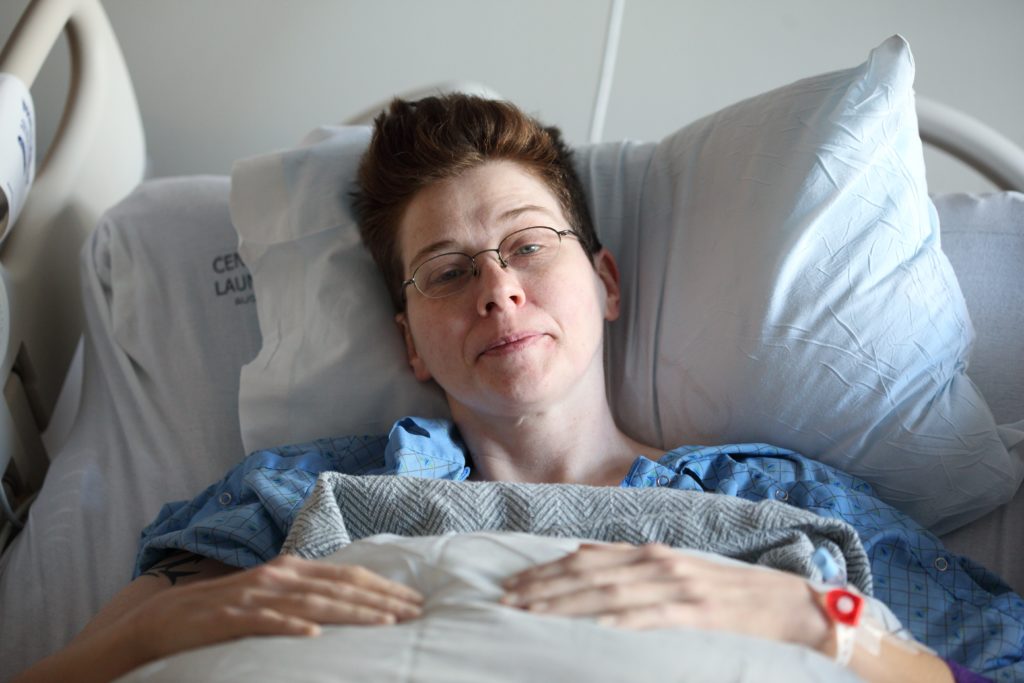
    Loneliness does what to you? It increases inflammation which leads to a host of diseases.

    What we do know is that loneliness increases inflammation, heart disease, depression, and suicidal thoughts… among a multitude of miseries. Inflammation alone can lead to cancer, a plethora of chronic and debilitating illnesses, and death. We’re social creatures, and fundamentally, we each need to be loved by someone, and to love in return.

    We need to contribute, and we need someone to give back. 

    In a survey taken in the US and Britain, more than half of respondents said they are often, if not always, lonely. With the rising numbers of single adults who never marry, and those who find themselves single again and stay that way, social isolation has become a growing cloud… The connectedness of multiple generations in a household is a thing of the past. 

    In Great Britain, an effort to counteract this disconnectedness, this isolation, led to the formation of the Ministry of Loneliness, complete with the Baroness of Loneliness to lead it. Baroness Barron’s direction instigated initiatives to bring people together. Things like benches for conversations. Clubs to draw people together who have similar interests. Public invitations to connect, share hobbies and activities.

    The Baroness stresses that everyone experiences loneliness at some point in their lives…some more than others. But because of the shifts in our western society away from extended family units, more and more people live alone. They don’t have the built-in structures that keep them connected. And their health suffers.

    So she encourages building ways to connect around people’s strengths… like their talents and hobbies. And to avoid focusing on their weaknesses, such as their isolation and lack of friends.

    What does loneliness do to you when you're facing hardship by yourself?

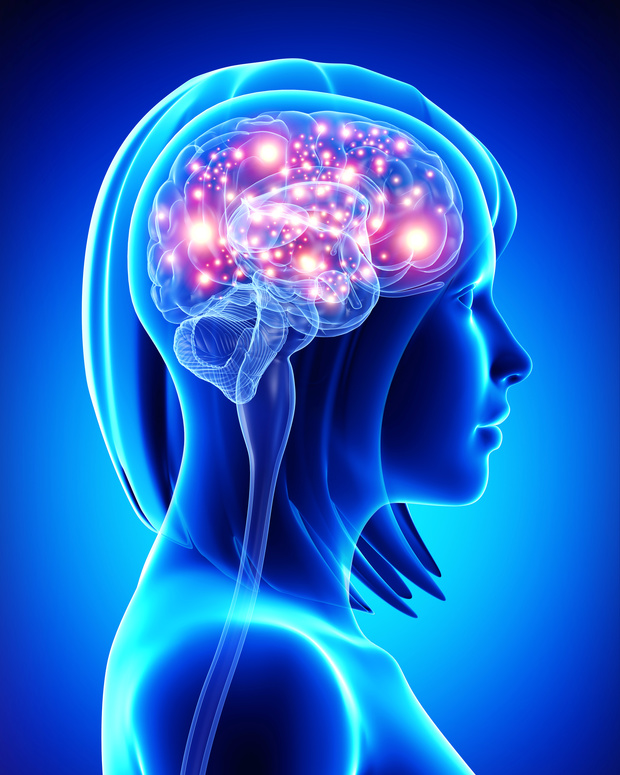
    So what is it, actually, that happens in your brain when you’re lonely, and you feel isolated?

    Social Neuroscience

    A study led by Livia Tomova and her team published in the Journal of Social Neuroscience considered the work of John Cacioppo.  Cacioppo was a social neuroscientist who defined this field… what happens in the brain in relation to our connections with others.  What if those connections are missing?

    He was the first to study the effects of loneliness in the brain. He said that the brain is the organ that creates, monitors, nurtures, and maintains social connections, and that everyone needs them. However, if you have some and don’t feel you have enough, then you’re likely to feel lonely, anyway. Because it’s how you feel about your connections with others that determines whether you feel fulfilled, or lonely.
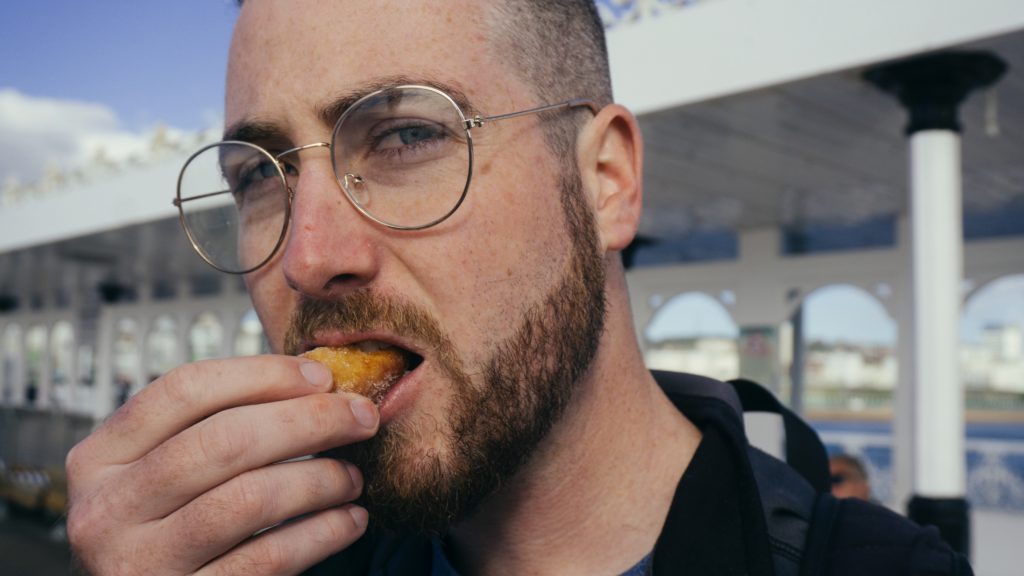
    Loneliness is like hunger and thirst in that it makes you want to take action to feel better.

    He compares loneliness to hunger and thirst because it signals you to do something to to help yourself feel better.

    We Crave Connection

    And it isn’t just knowing people. It’s having someone or a few someones whom you trust, and you can give to, and who gives back to you in a way you can receive. A single trusted friend or a few is far better than a crowd of acquaintances who don’t meet that need.

    So in the study, Tomova and her team focused on the dopamine reward system, trying to integrate their experiences with animal and human responses. Their results showed that in lab animals, social isolation typically increased social motivation, which was managed by the brain’s mesolimbic dopamine system. 

    However, in humans, social isolation or “alone-ness,” can lead to either increases or decreases in social motivation.  Put another way, humans may withdraw… or reach out feverishly… in response to a painful rejection. This takes place in a part of the brain called the insular cortex.

    But chronic loneliness leads to decreased social motivation., due to changes in the dopaminergic responses in the striatum.

    What Does Loneliness Do in YOUR Life?

    All of this is to say that loneliness, or that feeling that comes from having unmet social needs, can come from a variety of life circumstances, but it occurs in the brain. And in the brain, we respond. 

    You’re built to love and be loved.  To trust and to be trusted. To be interested in someone else’s life…and for someone to be interested in yours.

    When you love someone who loves you back, loneliness has no power over you.

    There is no medicine that will heal loneliness. But there is help for those things in your life that may contribute to it. 

    By the same token, as you join with family and friends this Thanksgiving, you can keep your ear to the ground for others in your company who may not be socially motivated…and help them to break through obstacles that prevent connections. 

    On the other hand, if you feel isolated and alone, and want to withdraw, consider a baby step or two and reach out to someone…anyone…in your world who seems to be withdrawn, too. 

    Your helping hand just may help both of you. 

    Happy Thanksgiving

    Lori Calabrese, M.D. is on the front end of the race to stop PTSD in its tracks using IV ketamine treatment.

    To the restoration of your best self,
  • Fuel Hope With Gratefulness All Year Round

    Fuel Hope With Gratefulness All Year Round

    Fuel hope with gratefulness this season.

    Surprising Results Can Follow Counterintuitive Choices

    Thank you.

    Such sweet words.

    Here in the US, we’re just ending a four-day celebration we call Thanksgiving weekend. True, the official day for Thanksgiving is the fourth Thursday of November each year — but it’s also true that most families spend the entire four day weekend continuing to celebrate, spend time together, and enjoy this holiday set aside for gratefulness.

    Plus, you probably know that “the holidays,” starting with Thanksgiving and lasting through New Year’s Day, is a difficult time for some people. Yet many others actually enjoy all the festivities, sharing, eating, and laughing that goes with good times together.

    Whether you’re a celebrator or an abstainer from these gatherings, there are some things we can talk about to improve these days for the grievers, and improve sensitivity for the revelers.

    Thanksgiving was first conceived by the Pilgrims after their original successful harvest in the New World. 

    That doesn’t mean it was their first harvest, but rather the first time it was successful and there was food to eat. There’s nothing like starvation to inspire gratitude for food.

    They called it their harvest festival. 

    George Washington made a proclamation that Thanksgiving should be celebrated in 1789, and it was sporadically celebrated. However, Thomas Jefferson chose not to celebrate the observance, so the day of gratefulness tended to be hit and miss until 1863. 

    In the midst of the Civil war, Abraham Lincoln declared Thanksgiving be observed as a federal holiday on the fourth Thursday of November … and that has continued to this day.

    Fuel hope with gratefulness for family.

    It might strike you as odd that President Lincoln started a federal holiday observation when the country was at war with itself, when families were torn apart by sons, fathers, and grandfathers marching off to to battle…

    Homes and farms were burned. Families were seeing more funerals than birthdays. 

    Does that sound like a time to be thankful…?

    Can you imagine the uproar? 

    “Have you heard what he’s done now???  He’s declared thankfulness as a national holiday, of all things!!”

    “I’m not surprised…after all, seeing as how we do have SO MUCH to be thankful for right now… I’m so sick of  this war and this administration!  I’ve lost my farm!  How will I feed my family?!!

    …and on and on it might have gone.

    Doesn’t sound all that different from what we hear today, does it?

    Counterintuitive Declaration in the Middle of the Chaos

    Is it possible he had a higher purpose than just creating confusion in the midst of the terrible war?

    We do know that he had an abiding faith. He seemed to understand that choosing thankfulness can inspire better decisions and better outcomes. Thinking of others inspires generosity…and his nation needed generous hearts from top to bottom if it were to heal.

    Some of the most liberating principles of life have been around for hundreds of years and dozens of generations. And sometimes they’re hard to grasp because they’re locked in counterintuitive thinking.

    Oprah Winfrey put it this way:

    “Be thankful for what you have; you’ll end up having more. If you concentrate on what you don’t have, you will never, ever have enough.” — Oprah Winfrey

    And therein lies the secret. The secret of justice and unity that President Lincoln reached for, the secret of poverty vs. abundance that Oprah warned about, the benefit that we all receive when we take the time to focus on everything and everyone in our life that’s good.

    The Secret of Gratefulness.

    “At times our own light goes out and is rekindled by a spark from another person. Each of us has cause to think with deep gratitude of those who have lighted the flame within us.” –Albert Schweitzer

    Albert Schweitzer may not be a familiar name to anyone under the age of 50. But, he won a Nobel Peace Prize in 1952 for his extensive work in Africa in an area now known as Gabon, near the Republic of the Congo.

    He had studied extensively in theology and medicine, and as a newlywed set out with his bride to live in this place where sickness and suffering were crushing the people. Over the course of his life he built an enormous hospital complex to treat the thousands who came to him for help.

    He wasn’t perfect — and even embraced perspectives that would offend us now in our modern culture — but he gave what he had from who he was and helped make life better for thousands. 

    It’s no mystery why he might have felt his “light go out” from time to time. His work was demanding and unrelenting in a place where hardships abounded.

    But he understood gratitude.

    Do you ever feel as though your light is going out…and you need it rekindled? Me, too. In fact, most of us can say that words of encouragement spoken at the right time can help to turn us around.

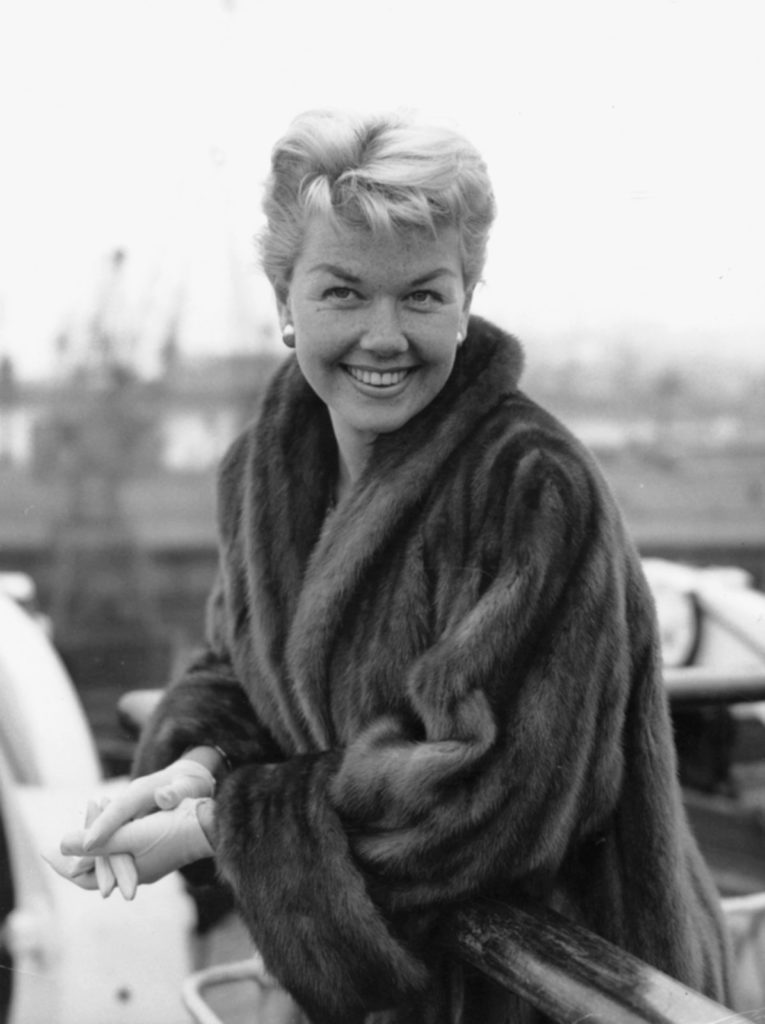
    Beloved 20th Century Actress Doris Day has seen it all.  She knows the value in that counterintuitive assertion of gratefulness. In her own words:

    “Gratitude is riches. Complaint is poverty.”

    Fuel hope with gratefulness.

    On her way to becoming a dance star, her car collided with a train. Her injuries took a serious toll that permanently ended her dancing career. But, rather than give up, she turned to singing under the training of a voice coach. She soon made movies that were wildly popular in the mid 1900’s … and her fans assumed her life was perfect.

    But behind the sweetheart-girl-next-door image she presented to the public… was a victim  of domestic abuse, a history of 4 marriages, the widow of the only man she loved, loss of her fortune, and complete exhaustion.

    But she, too, understands gratitude in the face of adversity.

    As humans we may envy what another has that we don’t. Wealth, charm, health, fame…but focusing on what we don’t have does nothing to improve our situation.

    Turning a laser beam of attention on our envy of another person only fuels a raging fire of jealousy inside us. And we grow more bitter and focused inward. It isolates us and doesn’t improve anything.

    On the other hand, being grateful for the gifts, the benefits, the talents we do have, empowers us to make those gift, talents, and benefits bigger, brighter, and more abundant.

    Helen Keller said that she cried that she had no shoes, until she met a man who had no feet.

    Helen Keller, if you’re not familiar with her, was blind, deaf, and mute… so you can see her metaphor about the lack of shoes…

    “Necessity is the mother of invention,” they say. So her gratitude for having feet led her to find ways to serve mankind, and especially others who were blind, deaf, or mute… or all three.

    Miss Keller knew there was no place in her life for self pity.

    She came to understand gratitude at a young age.

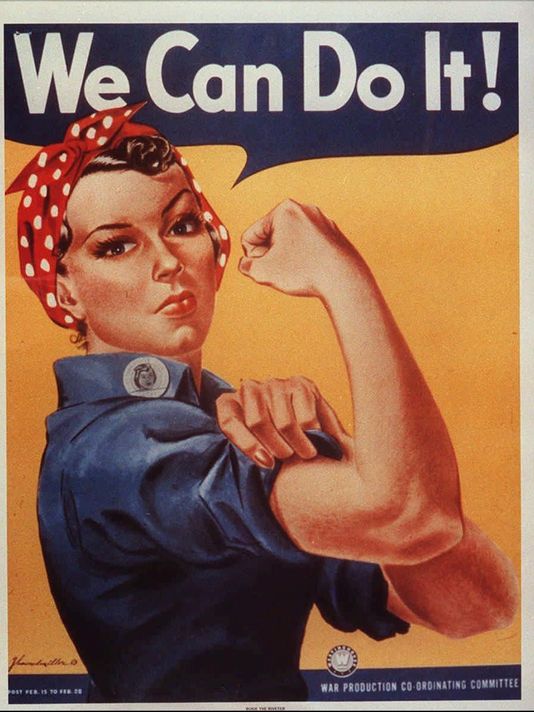
    During World War II, as able-bodied men went to war, and women and children were left behind, women who’d never considered such a thing went to work for wages.  It was a time of hardship. But, rather than complain, these women put on their work shoes and headed for the factories. 

    Many of us had grandmothers and great grandmothers who worked in the factories to make bombs, aircraft, trucks, and other tools needed to fight the war.

    Fuel hope with gratefulness.

    Is it any wonder that gratefulness and the can-do attitude that was required to rise above those difficulties led to a song in the last year of the war that strengthened that frame of mind? :

    You have to accentuate the positive, 

    Eliminate the negative, 

    And latch on to the affirmative, 

    But don’t mess with Mr. In-Between.

    Comical?  Maybe so…but you get the message.

    Like we saw with the man with no shoes, there is always something to be grateful for. And gratitude has a way of propelling you above the circumstances you wish would change, so you can see the bigger picture. 

    Gratefulness transforms your perspective.

    And when that happens, you’re no longer a victim, but rather on top of your circumstances. The circumstance may not change the way you want it to, but your improved outlook can give you power over it.

    No one is without flaws, and no one’s life is perfect. But each of us can contribute to the lives of others in some way, and in the process gain the freedom to overcome our own struggles on some level.

    Psychiatric disorders can render you emotionally paralyzed… trapped inside inertia, fatigue, and despair. And as you know, there are other types of paralysis. If you’ve experienced this, you may be able to relate to Jon Morrow.

    Jon Morrow is a wildly successful blogger whose body is paralyzed by Spinal Muscular Dystrophy.  He can move nothing except his eyes and lips. Helpless?  Well, he was for awhile. But he has pushed through from a point of inertia and despair to doing what he could do…until he learned to drive traffic to his blogs and has achieved the status of the most widely read blogger in the world.

    He has generated more than 200 million views of his blogs and earned $50 million as a result.  

    A spoiled rich kid?  Not in the least. This guy was facing the end of his life because of his need for healthcare, and no money to pay for it.  His story is hugely inspiring. If he can accomplish his dreams…anyone can.

    And Jon understands gratefulness.

    Look for his blog Unstoppable.me. It will give you a shot in the arm to choose and express gratefulness and overcome adversity.

    Gratefulness is liberating, empowering, and humbling… all at the same time. 

    Fuel hope with gratefulness

    So now that the Thanksgiving 2018 holiday weekend is behind us…let’s not lose sight of the lessons we’ve learned together as we venture through the rest of the winter holiday season and into the new fledgling year 2019.

    With gratefulness you can turn on the light in someone in your world, and illuminate your own heart at the same time.

    Still, if you’re suffering under the weight of a psychiatric disorder that hasn’t yielded to any medicine you and your doctor have tried, there is something more you can do as you focus on gratitude in your life.

    Ketamine treatment is a series of IV infusions that have demonstrated in thousands of cases an extraordinary capacity for relieving depression and anxiety in the vast majority of those who have not been helped by anything else.

    From severe treatment-resistant depression, bipolar depression, and suicidal thinking, to social anxiety, PTSD, OCD, and addictions, ketamine has the remarkable ability to rebuild signaling structures and systems along with regulating a wide variety of puzzle pieces in the brain that make up the sense of wellbeing, joy, motivation, and initiative you long for.

    Fuel hope with gratefulness.

    At Innovative Psychiatry, we’re big believers in joy. Happiness. And gratitude. We offer help and we offer hope — with new treatments that can turn things around for you.

    Call us. We want you to experience relief and the ability to build a rewarding life you enjoy… and to revive and renew the relationships in your life that are important to you.

    With gratitude for the opportunity to share my thoughts with you this year, I want to wish you a warm and heartfelt joyous season of holidays. 

    To the renewal of your best self,

    Lori Calabrese, M.D.
    Lori Calabrese, MD offers innovative psychiatric treatment like IV Ketamine
  • Outrageous Behavior: Mood or Personality??

    Outrageous Behavior: Mood or Personality??

    Outrageous behavior mood or personality? Ketamine can heal mood disorders.Outrageous Behavior: Mood or Personality Disorder?

    You met her at your friend’s house, and you’ve been dating a few months… Then you notice a blouse in her purse with price tags… no receipt.  What???

    Did she steal this stuff? You really like her, but ….  theft?  What the heck is going on…?

    When you ask her about it, she tells you she borrowed the top from a friend for your date on Friday.

    Hmmmm…

    A week later you notice the blouse is hanging in her closet.  Is she going to return it?

    She’s been a little on edge lately… could it be guilt?  But you hate to rock the boat because the nights are so HOT lately…

    Then, another shock. She borrows your credit card to put gas in her car…(which seems off)…and you discover she spent nearly a thousand dollars on dinner with “friends!”

    Outrageous Behavior: Mood or Personality…?

    Confrontation time. Is this amazing and beautiful woman a scammer? A con artist? Is there any other explanation?

    Her response is to lash out, scream expletives, and take off in her car. She returns in a couple hours and she’s been crying. She tells you she doesn’t know what got into her, or why she did any of it. That she really likes you and wants you to respect her – and trust her.  That sometimes she loses her perspective and just does things she can’t explain.

    After a long and tearful discussion, you learn that she did shoplift the blouse. She won’t take it Outrageous behavior: mood or personality?back to the store, or pay for it— too risky. She could get arrested. But she’s got a better idea, she says: she’ll give it away. Donate it. And the next thing you wonder is… if you’re in over your head…

    Scammer? …or maybe bipolar disorder..?

    So is she messed up?  Is she just someone who gets off breaking the law? or is there another explanation?

    To find out, she needs to put her trust in a skilled and experienced psychiatrist.

    good one, who will tease apart her symptoms, their causes, and work to bring her disordered mind to order and peace.

    It could possibly be that she’s fundamentally a rule-breaker. Someone who doesn’t think they apply to her–and doesn’t think what she’s done is a big deal. On the other hand, since she seems to care a great deal, you should pause. Ans she should be evaluated.

    Untreated bipolar disorder can cause all kinds of outrageous behaviors along with the sorrow and remorse

    Is She Hysterical or Just Seeking Attention…?.

    Sometimes, outrageous behavior can be a source of embarrassment to those who love you.

    Take Jason, the manager of the cell phone shop in town. You have no idea what he deals with until one day a glamorous woman walks into the shop crying, “Jasie, Jasie…pleeease I need your help!!  There’s a spider in the car!!”

    You can see Jason is embarrassed.  He tells her he’ll be able to break away in a minute after he rings up this customer.

    “But Jasie!”  She’s all a-flutter, breathless, in a panic.  She takes off her beautiful shoe and Outrageous Behavior: Mood or Personality?holds her tan, pedicured little foot up to show him. “See that dot?  I think it bit me!!” And she sobs and sobs big tears that splash on her cheeks… 


    You can see Jason has his hands full. So, you gesture for him to go ahead and tend to her…it’s ok…you don’t mind waiting. He takes her to the back and her sobs get louder. “I was at home, all alooone…. So I got in the car to go see Celia, and suddenly I saw that spider!!  I was terrified Jasie!  I didn’t know what to do!!!”

    Unbelievable.

    Jason tells her under his breath that her foot looks like it will be fine, and promises to take her to dinner after work.  She goes out the door smiling ear to ear and tells him to call her at Celia’s.  Her bracelets jingle as she waves.

    You Can Love Them… But Do Get Them Help

    You really feel for Jason. He was clearly embarrassed for his customers to get this glimpse into his private life. You wonder how on earth he stays with such a drama queen. You know you couldn’t take it.

    He smiles half-heartedly and rings up your purchase. Then apologizes for the scene. He quietly explains she’s had some serious blows lately and she’s been upset a lot by a series of little things.  “I guess she’s just having a bad day…” he quipped.

    So what on earth is the story with this lady? Is she like this all the time? Is this anxiety or drama? How can you tell the difference?Outrageous Behavior: Mood or Personality?
    Once again, her story needs to be teased apart, and a deeper history collected. It’s possible that the “blows” Jason referred to were multiple deaths in the family, betrayal by her best friend, combined with a lost pet, or some other major crisis.

    People do sometimes reach the “end of their rope” and find it hard to cope with the most minor thing.

    When that happens they may exhibit signs of depression or anxiety, which can be treated … to help them get their footing again.

    But it’s important to know the full picture. Was she always a drama queen? Or did she have a history of coping well until just recently…?  Enduring traits can suggest an underlying personality structure that just seems to get more and more fixed and unyielding as a person gets older.

    Outrageous Behavior – Mood or Personality?

    Meanwhile, your boss’s secretary is silently miserable. She’s married to a guy who acts superior to everyone. He boasts all the time and makes degrading comments to waiters at restaurants or when he’s buying something in a store. 

    Then word gets out that he’s having an affair with her next-door neighbor. Another affair.Outrageous Behavior: Mood or Personality? After all the I’m sorry’s and all the lies. After all the promises. She’s devastated.

    What is the matter with someone like him? Is he just a total jerk?

    Maybe he is. I know you may wish you could give him a swift kick, but there’s likely more to the story.

    On the one hand, he could be a narcissist. But to find out would require some in-depth information gathering to figure that out. Still, there are other possibilities, too.

    Has he suffered a job loss? Maybe he feels betrayed by a layoff right in the middle of his career. He may be depressed if something like that is the case. It’s still not an excuse for making his family miserable.

    Nor is it an excuse for infidelity. But, sometimes people take that road when they’re down on themselves. In fact, sometimes people do all sorts of destructive things when they feel bad, rather than seek help.

    Still, sometimes depression shows up in men by their anger, irritability, and short temper. If it’s depression, it can be treated. And getting the depression successfully treated may help him set things right again in his life.

    Miss Jekyll or Mrs. Hyde…

    The romance you’d always dreamed of. Finally, you’d met the most interesting and charming woman. She was everything you’d hoped to find: beautiful, fun, a hilarious sense of humor, always with a twinkle in her eye… and a wildcat in bed.

    She was so natural in a crowd and loved to entertain. She seemed like the ideal companion, Outrageous Behavior mood or personality?lover, and partner. You felt so lucky.

    Oh, there were little moments while you were dating that caught you by surprise, sure, where she seemed to react to a small thing you did or said. Moments that seemed to come out of nowhere… but the next time you talked, all was forgotten.

    Her charm was addictive…and made you feel like a million bucks.

    But several months later, everything seemed to change. She wasn’t so pleasant when you were alone. Sometimes you felt like she drank too much. And when she did, she wanted to do more and more risky things. She said you just didn’t know how to have fun.

    The next day she stormed into her job and slammed her keys on her boss’s desk, shouting, “I QUIT!!”

    When she got home and told you the story… well, you didn’t say a word. You didn’t dare.

    Then, one night, she stormed out of the house. Again. You got in the car to find her… and when you spotted her she was walking in the dark…and agreed to get in the car. But, as soon as you asked what was going on, she screamed she was going to kill herself and threw open the car door as you were flying down the highway.

    You were so relieved to park in the driveway. So much drama.

    The next week she tells you she’s having an affair with her optometrist. That you just weren’t spending enough time with her.

    What happened…?

    You’re friends tell you she’s crazy and you should pack your stuff and leave no forwarding address. You think there’s more to it. You see her when she’s sweet, thoughtful, caring, nurturing… she can be a wonderful person.

    But this is scary.

    What do you do??

    Once again, there can be a handful of explanations. Some are more hopeful than others.

    This is a good time to get an insightful psychiatrist involved. Because she may just be a brat who never learned to be accountable for her behavior. However, that’s probably not the most likely explanation.

    People with bipolar disorder sometimes have these outrageous behaviors, but when they’re nooutrageoust manic, they can be deep thinking, insightful, considerate people.

    People with borderline personality disorder can sometimes appear like this.

    Even people with substance abuse disorders can show these symptoms.

    You’re right to not make a snap judgment. As to what you should do, that’s another matter. If she has a psychiatric mood disorder, she can be treated and go on to live a fulfilling life.  But you may want to see a counselor you trust, to help you navigate this relationship.

    With counseling, you can learn how to be a therapeutic presence in her life, while taking good care of yourself. With counseling, you may also determine this relationship is not the best for you or for her. But follow your instincts and get support for both of you in the interim.

    You’re not alone.

    So many, many stories. So many lives in disarray. Outrageous behavior rings the gong.  It makes everything stop–or it should make everything stop. Because so often it damages the lives of everyone it touches. Sometimes it’s personality, plain and simple and enduring. (Which is really hard to take.)

    But so often, outrageous behavior is the bellwether of damaged or disordered brain functioning. Sometimes, the ones with outrageous behaviors are likely damaged (by genetic factors, environment, concussions, illnesses, substances–you name it) and unable to function in a normal, healthy way. So they behave in ways that cause damage to others and to their own overall lives.

    In cases like these, the first step is to withhold judgment, as tempting as it is to judge and label. How often have you heard that you don’t know someone’s story until you walk a mile in their shoes?

    When you see behaviors like these, you may be seeing symptoms of a disorder, rather than someone who’s deliberately choosing to be a brat. Deep down, it’s the desire of most of us to enjoy the respect of those around us. Most of us restrain our reactions to maintain that respect. But there are those who just can’t.

    Rule of thumb: If it looks like bad behavior, check it out.

    Ask an expert. Not your friends. Not a Facebook group. Because you might be mistaking a terrible mood or anxiety disorder as someone’s personality — or personality disorder. And that same person just might behave “respectably” and with constraint if their disorder were effectively treated. This is where shame lives. This is where stigma comes in.

    Let’s take a breath before we judge. Let’s stop the stigma.

    If you’ve experienced some of these behaviors and you secretly carry your shame and wonder what’s wrong, or if youOutrageous Behavior Mood or Personality? see outrageous behaviors in someone you love, reach out. Innovative Psychiatry offers novel and advanced treatment for psychiatric mood disorders, including IV ketamine infusions — one of the most extraordinarily effective treatments in psychiatry. It can give you your life back.

    We want to see you well and are eager to work with you to determine what will give you the best results.

    Call or schedule an appointment. You can have control over your impulses, and build strong relationships in your home and your work.

    Lori Calabrese, MD offers innovative psychiatric treatment like IV KetamineTo the release of your best self,

    Lori Calabrese, M.D.


  • How Stress Takes Down the Best People…and What To Do About It

    How Stress Takes Down the Best People…and What To Do About It

    Stress takes down the best people, but ketamine treatment restores them.Heather was 38, and had had a series of extreme stressors over a period of several years. She was a giver at heart, always looking for ways to help — always trying to make the lives of people she knew easier or more fun.

    But then her husband left her. It was the same old, tired story — an affair with her closest and dearest friend.  But still … she was left with two enormous losses, and a crippling sense of betrayal about both of them.

    She tried to function for the sake her of two children, Katie and Noah. One foot in front of the other. One day at a time.

    Another Devastating Crisis

    Three years later, Noah was hit by a school bus and rushed to the hospital. He had a Stress takes down the best people, but ketamine treatment puts them back in working order.concussion and his pelvis and femur were broken in so many places they gave her minimal hope he’d walk again.  Weeks in the hospital, then months of rehab. Asking neighbors and family members to pick her daughter up at school, get her to piano lessons, grab dinner.
    She was exhausted. And Noah was beginning to walk with a walker and just starting back to school when she got a phone call from her mother.

    Another Overwhelming Tragedy

    Her dad had died when she was 25 and her mom lived alone. Mom just found out she had an aggressive form of breast cancer. She’d been told to expect a year minimum of treatment then re-evaluation. But when her mom got so tired she couldn’t drive back and forth to chemo, there was nothing to do but have her mom stay with her. She’d probably be there through radiation, too. Heather asked her mom’s neighbors to look in on her house.

    So a household of three greatly stressed people became a household of four extremely stressed people. Heather just held her chin up and set out to get through this, too.  The idea of losing her mom when she was so young was terrifying.

    She cooked, cleaned, ran the kids around. Made dinner. Went to work. Drove her mom to chemo. Did everything.

    Stress Takes Down the Best People

    Finally, 6 months later, her mom had to be admitted to the hospital. Her next door neighbor Stress takes down the best people, but they can restore with ketamine treatment.offered to take care of Katie and Noah for a few days. Thank goodness.  But then … Heather didn’t get out of bed or out of her pj’s for three days … and she felt less and less like getting out of bed after that. She went through the motions of getting her kids to school and back home again … and feeding them when they were hungry.  But she was numb. She was barely functioning.

    Finally, darkness wrapped around her like a cold box, and she felt hollow. Numb. Adrift.

    Someone from the church came to see her. When they saw how she looked, they could see she’d been through too much for too long. They went to work to take over the care of her mom, and took her to the hospital. Heather was admitted with severe Major Depressive Disorder.

    Heather’s a giving, kind, and generous person. But chronic and repeating stress can take down the best people, and Heather was no exception. It brought her to her knees.

    How Stress Brings Someone Like Heather to Her Knees

    We’ve talked and talked about what stress does to your brain, and how it contributes to depression.

    But let’s talk about why that happens.

    Thanks to recent studies sponsored by Brain and Behavior Research Foundation, we’ve learned some things lately.

    And I’m excited to share them with you.

    It all makes so much sense when you get a peek inside the brain to see what happens.

    MIcroglia Unwittingly Launch a Destructive Attack

    There are immune cells in the brain, called microglia, that are responsible for defending against infection, among other things. One of the other things they do is help build and change the construction of neural connections in the brain.

    Huge. And hugely important.

    In this study, the research team, led by Ronald S. Duman, periodically caused laboratory mice to undergo stress-inducing conditions over a period of weeks. Then they evaluated the effects of this chronic stress on their brains.

    It’s not surprising that the mice displayed symptoms of depression and anxiety. The team demonstrated that the neurons in the prefrontal cortex — which control your abilities to make decisions and function socially — react to the stressors.

    Specifically, these brain cells signal the microglia to begin “remodeling” pyramidal neuronal circuits … which basically WEAKENS them. The outcome is that the synaptic connections between the neurons in the prefrontal cortex begin to break down. And too many of them are lost.

    Sounds like Heather. Broken down.  Lost.

    Maybe that sounds like you.

    How to Stop the Damage?

    Then the team carried it another step.

    When they blocked the neurons from signaling the Stress takes down the best people, but ketamine treatment can put them back on their feet again.microglia, the chronic stress the mice were subjected to did not affect their synapses in their prefrontal cortex so they did not become depressed.
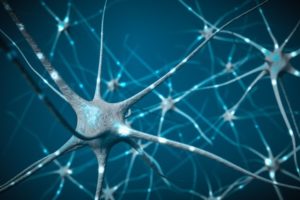
    The research team concluded that finding a way to block the neurons from signaling the microglia could be a way to treat anxiety and depression. 

    (It seems to me this could be a fantastic way to prevent anxiety and depression in those subjected to long term chronic stress, such as first responders, those with chronic illnesses, and more.)

    You can imagine that if you undergo extreme stress over an extended period of time, that more and more of these connections will be lost due to microglia activity. And depression and its accompanying anxiety become more and more severe.

    So what can be done about this deconstruction… these massive losses of synapses?

    Restoration through an Extraordinary Medicine

    Enter IV ketamine treatment, which has been shown to rapidly rebuild and proliferate these synapse connections that have been broken down by depression and anxiety … which are caused by stress and which create more stress of their own.

    Remember that tiny doses of ketamine, administered properly, turns on mRNA to switch on Stress takes down the best people, but ketamine restores synapses and restores peace.DNA which turbo charges the brain-derived-neurotrophic-factors (BDNF) so the synapses grow, branch out, and proliferate creating a dense forestation of neuron connections.

    And when all these neurons in the prefrontal cortex are tied together with a dense network of synapses, you come alive. Joy returns. Creativity blooms. Initiative and motivation billow.

    This is what we can do about those lost synaptic connections.

    Innovative Psychiatry Offers Expertly Administered Ketamine Infusions

    We know that stress takes down the best people. You probably know someone like Heather who tries to help everyone, but eventually she’s the one who breaks down and needs help.

    At Innovative Psychiatry, we see extraordinary, positive outcomes in treatment-resistant depression and bipolar depression, as well as in PTSD, OCD, social anxiety and suicidal thinking. That means that very ill people can get really, truly better. As in happy, upbeat, full of energy, initiative, and hope for the future.

    You can feel like yourself again. With the energy to embrace each day, the hope to look forward to the future. You can enjoy an afternoon breeze, a beautiful ocean view, or the fragrance of a summer rose.

    When was the last time that happened?

    If you suffer from depression, anxiety, bipolar disorder, PTSD, OCD, social anxiety or suicidal thoughts, and medications haven’t helped, call us. We can help you leave psychiatric disorders behind, and live a fulfilling life.

    Live as the best you you can be.

    Lori Calabrese, MD offers innovative psychiatric treatment like IV KetamineTo the emerging of your very best self,

    Lori Calabrese, M.D.

  • How to Start Today to Build Christmas Cheer and  Hanukkah Happiness… in Time for December 2018

    How to Start Today to Build Christmas Cheer and Hanukkah Happiness… in Time for December 2018

    Christmas cheer, hanukkah happiness you can start now to build for next year.Christmas Holidays…Hanukkah

    …. a season of Joy?

    The song says this is the most wonderful time of the year, and for so many children, it is…but for others, not so much. It’s also a treasured time for many adults…but not all. And while there’s no magic way to go through some step-by-step plan to snap from sorrow to happiness, there are some purposeful things you really can do to get your brain in a happier mode over time.

    Because although it feels like happiness and sadness come from your heart, they’re actually manufactured in your brain. And neuroscientists have done some remarkable work to get to the bottom of what makes or breaks our feelings of contentment, happiness, emotional warmth, and feeling loved. 

    There really are things you can do! 

    We have a tendency in our society to just let the way we feel “happen” to us. Some of us are naturally upbeat…others of us lean toward the grumpier side. Still others are downright melancholy.

    But if being happy doesn’t come naturally, you can regularly take some simple steps to train your brain into a happier, more upbeat outlook. And it’s like going to the gym.  If you go once a year…the results aren’t so impressive, right? On the other hand, if you go every day all year long … you’ll have a toned, well-developed body that responds instantly to any demand.

    Emotions are like that, too. If you’re a 97-pound weakling in the emotional part of yourself, every wind that comes along can knock you down. But, build your emotional strength and resilience, and you can stand and command in the face of all kinds of adversity with grace, patience, and confidence.

    Weight-lifting for emotional resilience

    A book by Alex Korb, neuroscience researcher at UCLA, entitled The Upward Spiral, reveals all sorts of eye-opening activity that happens in the brain in response to sadness, guilt, and rejection…and shows how you can turn those negative feelings on their ear by simple emotional strength-building actions.

    You know what it’s like to feel guilty or ashamed…these are terrible feelings and makeChristmas cheer, Hanukkah happiness to build up for next year it seem impossible to be happy again. Pride is an emotion you may use to try to overwhelm the feelings of guilt and shame, but interestingly, they all stimulate activity in specific parts of the brain: the dorsomedial prefrontal cortex, the amygdala, insula and the nucleus accumbens.

    There’s a lot of scientific jargon there, but these structures are as important to your emotional life as your heart, kidneys, and lungs are for your physical life.

    Turns out that worrying, which is a natural reaction to guilt and shame, actually decreases activity in the amygdala, and is calming.  (You’re tricking your brain into thinking you’re at least doing something about the problem.) Sounds crazy, because worrying does other things like stir up ulcers, so it’s not really a good solution.

    Play the Glad Game

    However, there is something that is:

    When you feel down, ashamed, guilty, or fearful, when you’re worrying a hole in it…Stop.

    Play Pollyanna’s Glad Game. Remember the old Walt Disney movie Pollyanna?  A child whose missionary parents had died was sent to her aunt’s to live. She had a way of turning frowns to smiles by following the principles her parents had taught her. Like counting her blessings when she was down.

    Ask yourself what you’re grateful for. Think hard. Just because you’re down, or maybe even devastated by one of life’s worst losses, there is always something to be grateful for. What’s important is that you search for it. It could be that you have a warm place to live…or if you don’t, it might be a friend you have, or that you’re healthy.

    Or if you’re sick … it might be that you have good care, or that you simply have a beating heart.

    But think about it, and search for it. Because gratitude increases neurotransmitters in your brain like serotonin and dopamine. And those neurotransmitters help signals move through your brain, to lighten your mood and to help you feel more sociable.

    And here’s another thing… expressing gratitude to others in your life, helps them feel grateful to you, too.  And that stimulates more mutual gratitude … and those relationships slowly become stronger. 

    So, bottom line, the search for things you can be grateful for actually helps your brain spiral upwards, as the title of Korb’s book Christmas cheer and Hanukkah Happiness is hard to hold onto at times.describes. Do it, everyday and often, to train your brain to be happier and stronger.

    But I’m just too angry…

    Now, let’s be realistic. Sometimes you feel so beaten down, so hopeless, so angry, or so scared, that you can’t – just can’t – think of something you’re grateful for.  The best thing to do when that happens?  Just name names.

    If you feel angry…?  Say, “I’m angry.” If you’re scared or worried…?  Say so. Best to not go into a diatribe about it, as that can backfire.  But if you just call it what it is, simply expressing the emotion you’re feeling reduces the activity in your amygdala and actually helps you feel some relief.

    So call it what it is.  Then move on.

    Another stab at the gratitude exercise might also be more effective right about now.  And remember…this is an exercise regimen to build a brain that’s better at happiness so keep up the good work!

    Get off the fence and MAKE that decision

    Now, let’s talk about those times when something is eating at you in the back of your mind. You know that gnawing… and it’s so subtle but unsettling….  You have to consciously stop and ask yourself, “what’s bugging me??”

    It just could be a decision you NEED to face and MAKE.  Staying on the fence about it is building anxiety, and anxiety creates all sorts of havoc in your emotions.  It can make you irritable, withdrawn, distracted.

    But making the decision does good things in your prefrontal cortex. And that calms down worry and anxiety, helping you to feel more relaxed wellbeing.

    So you need to get that decision settled.

    Here’s a clue that might help you get there. Decisions are sometimes choices that aren’t easy. Maybe there’s no perfect choice. At Christmas cheer and hanukkah happiness is hard sometimes.those times, neuroscientists say that a “good enough” decision is better than no decision.  Far better.

    When you accept that a good enough decision is acceptable, you release yourself from the stress of striving for perfection, and avoid activating the ventromedial segment of your brain which heightens your stress.

    Instead, accepting good enough switches on the dorsolateral prefrontal cortex regions, and you feel more in control…which is far more comfortable.

    And…you know what?  Good enough is almost always good enough. Things have a way of just working out, especially if you’re at peace and not tormented.

    Neuroscience says that actively choosing…or making the decision…increases the feelings of reward from dopamine activity. 

    Just do it.

    You deserve the break.

    Now, you’ve established some great habits:

    • like making a list of all the things you’re grateful for, building an attitude of gratitude
    • Naming names, calling out those emotions that feel awful, and taking the wraps off ‘em
    • Make that decision, and get out of limbo

    And you know what…?  People who are naturally upbeat and happy tend to do all these things instinctively.  Ever noticed that?

    Hugs for Christmas cheer and Hanukkah happiness

    And now the best of all, and my personal favorite, is to give and receive love with touch. Hand holding, shaking hands, hugs and squeezes, and pats on the back.

    In fact, research shows that 5 hugs/day for 4 weeks builds happiness in a measurable way. 

    Physical touch releases oxytocin, which is a neurotransmitter that gives a sense of wellbeing. This is the same neurotransmitter that’s released in the mother when she’s nursing her baby. It gives the mother a sense of wellbeing along with a stronger bond to her infant.

    Holding hands and hugging are some of the most therapeutic methods of touch, because that oxytocin reduces reactivity in the amygdala. 

    So get out there and hug, dear friend. Do it for science. And do it for your own happiness. And do it all year round for next year’s Christmas cheer and Hanukkah happiness. The more the better and for as long as possible!

    Take the findings of neuroscience researchers…and use them to YOUR advantage

    “[Optimism] is not about providing a recipe for self-deception. The world can be a horrible, cruel place, and at the same time it can be wonderful and abundant. These are both truths. There is not a halfway point; there is only choosing which truth to put in your personal foreground.”
    ― Sonja LyubomirskyThe How of Happiness: A Scientific Approach to Getting the Life You Want

    And if you’ve been suffering from symptoms of severe major depression, panic attacks, bipolar disorder, OCD, or PTSD, and Christmas cheer and hanukkah happiness for grandma and grandchild togetheryou’ve tried at least two forms of medication or other therapy, call us. Innovative Psychiatry specializes in advanced treatment options that can be provided in cooperation with your current psychiatrist.

    Help us help you by calling us for an appointment. We can determine if you’re a candidate for IV ketamine treatment or Transcranial Magnetic Stimulation (TMS). Here at Innovative Psychiatry we’ve consistently seen 80% positive results in our most treatment-resistant patients. We’ve also seen 75% positive response in our treatment-resistant patients to TMS.

    2018 can be your best year to date.  There are outstanding alternatives available now to help you if nothing has helped before.

    To the year of your best self yet,

    Lori Calabrese, M.D.

    Lori Calabrese, MD offers innovative psychiatric treatment like IV Ketamine

  • Considering Ketamine for Depression? Here’s How to Screen a Ketamine Clinic

    Considering Ketamine for Depression? Here’s How to Screen a Ketamine Clinic

    Screen a ketamine clinic before receiving treatment. Your brain is complex with delicate systems.

    Maybe you’ve heard the buzz.

    Ketamine for depression is in the headlines, the journals, and the chatter at Starbucks. If you or someone you love wrestles with the exhausting symptoms of depression, you’ve likely heard about it.

    Or maybe you haven’t.

    Either way, it’s the biggest news in psychiatry these days, and seems to be high on the list for some entrepreneurs looking to make a profit. The result is clinics that have popped up all over the country — almost overnight– run by businessmen, anesthesiologists, psychiatrists, ER docs, ICU docs, and nurses.

    If you’re considering ketamine for depression, maybe you’ve looked for someone in your area who offers ketamine treatment?

    There may be more places to get treatment than you think. Or there may be fewer than you wish. Either way, your health, your brain, and your mind ought to be treated with care, caution, and best practices, for best outcomes as well as safety.

    Let’s talk about the ins and outs of these clinics and practices, so that you can be your own advocate. Scrutinize … and screen a ketamine clinic before you agree to treatment.

    Psychiatric Treatment as a Business..?

    Healthcare should not incorporate high pressure sales techniques. But there has been an explosion of ketamine clinics … pop-up clinics … and non-MD CEO-types setting up ketamine clinic franchises and making a nice profit from them. They work with anesthesiologists, emergency department physicians, family medicine docs, and other non-psychiatrists to run these clinics, and pocket a lot of the money.

    They operate as call centers or use centralized calling services to funnel and schedule appointments, collect your money … and bend over backwards to get you in the door. Some of the call centers or clinics are pretty aggressive in encouraging you to schedule followups for maintenance dosing or buy clinic “memberships”  so that you can get maintenance ketamine on a regular schedule.  Even though the whole question of maintenance hasn’t been well-studied. 

    This is a business model. Not a wellness model.

    And in our experience, most patients don’t need maintenance ketamine on a regular schedule.  (We need much more research to determine that.) 

    One Size Never Fits All in Psychiatric Treatment

    Just like the degree of response, the need for maintenance doses of ketamine is purely individual, and should be handled on a case by case basis. In short, ketamine treatment for mood and anxiety disorders should be given by psychiatrists who can evaluate each patient for their response to treatment, its effectiveness, and durability.

    So … if ketamine infusions are $500-800 each, you can see the business model in that — and the profits — in making sure everyone comes in once every month or two. Whether they need it or not…?  

    But psychiatric care, like all health care, demands personalized care.  Expect to be treated with what you need, not what someone’s wanting to sell.

    Screen a Ketamine Clinic Before Treatment

    There are lots of options for ketamine treatment. Lots of places all of a sudden. 

    Major academic and teaching centers which offer ketamine treatment during a study… if you qualify for one of their studies.

    Dedicated ketamine clinics which offer only ketamine treatment … for depression, or pain, or both.

    And individual psychiatrists in established practices on the forefront of medicine who offer ketamine treatment because they’re on the forefront of medicine … and as one of many treatment options they offer for their patients.

    If you have a severe mood or anxiety disorder, you need psychiatric care.  Not anesthesia care –  Not critical care – Not part-time care – And certainly not a business-type CEO or “closer” trying to get you to book a series of treatments before you know if they’re even appropriate for you.

    When your suffering comes from a mood disorder, you need a mood specialist.

    If you’re really sick, you want to go to the best person to figure it out. You’re probably already seeing an expert … or you’ve seen a lot of them.  And if the treatment you’ve had hasn’t helped and you’re considering ketamine, it’s crucial that your psychiatric care is individualized and personalized to fit you, your symptoms, your Seek a psychiatrist who carefully supervises each patient's ketamine treatment when you screen a ketamine clinic.responses, and your personal needs.

    For that to happen, you should be evaluated by a psychiatrist who will work with you — and everyone involved in your treatment — to determine if you’re a candidate for IV ketamine treatment, or if you would be better served by something else.

    You need a psychiatrist who has deep experience with ketamine treatment and its effects on psychiatric symptoms, disorders, and patients …. who is comfortable with medicine, on top of the technology, and knowledgable, skilled and responsive throughout the infusion experience to manage every aspect of it.

    And who is willing to coordinate this aspect of your psychiatric care with everyone else caring for you.

    And so, of course, it’s not the same for everyone. It’s personal. You’re unique. Your story could be filled with dashed hopes, trauma, and a lot of misery. Your history could be sprinkled with substance abuse and infused with shame.  Where you go with it, whom you trust … is critical. Sometimes, it’s a matter of life and death.

    Inferior Standard of Care?

    The early published studies using IV ketamine in treatment-resistant depression used a very small dose — called a subanesthetic dose — administered through an IV pump over a set amount of time.

    Many doctors use this protocol widely.  It’s a strong standard. This delivers a dose of ketamine at a speed that’s fast enough to elicit the therapeutic response we want to see — during the infusion itself and afterwards — but slow enough to keep any unpleasant side effects at a manageable level.

    A full course of treatment is considered to be 6 infusions typically given 3 times a week for two weeks.  Again, based on the early studies that dosed ketamine kind of like ECT is scheduled– every other day.

    Now, for many patients, this regimen is remarkably effective, but with real-world patients, with complex symptoms and complex histories … varied and complex medical issues … or because of a host of other medications they need, their genetic profiles, history of drug reactions medications, severe anxiety … the research-based infusion protocols need to be modified. 

    We can tell this even during the infusion itself based on how you respond during the infusion. Some need a different schedule of administration — and let’s be real — sometimes that’s just due to practical reasons like travel, work schedules, or the inability to get a ride home. We’ve used a variety of intervals between infusions. Just as an example, for patients traveling from out of state, we’ve modified the protocol and used 3 daily infusions and then another 3 the following week, and the results were remission. Sometimes we add additional infusion treatments beyond just 6 to get the best possible outcome.

    The researchers among you could say:  What?  It doesn’t follow the protocol.

    Life doesn’t follow a protocol.

    Neither does real-world psychiatric treatment.

    And the best psychiatrists among us are constantly evaluating and precisely adjusting medication as we work with the biologic, genetic, individual, and psychological factors for each of our patients.

    Especially when we work with IV ketamine as a medical treatment for severe depression and anxiety disorders.

    You should expect nothing less.

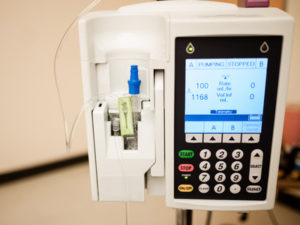
    Precision, by the way, is a big deal.  It’s best to use an infusion pump.  Infusion should be by infusion pump not a bag on a hook when you screen a ketamine clinic.Ketamine for depression is a safe drug but it’s a powerful drug for fragile patients with anxiety and mood disorders, and it should be administered with precision using a sophisticated infusion pump.  

    However, many clinics offer ketamine infusions from a bag that hangs on a hook with a little manual roller that adjusts the flow.

    The problem with this is the varying rate of the infusion. If it runs in too fast, you can have scary traumatic reactions or a scary spike in pulse and blood pressure — and if it’s too slow, it may not produce the therapeutic response during the infusion itself or the ultimate outcome we want to see.

    We can control the flow rate with an infusion pump — but without one, the flow rate could be adjusted or altered by anyone in the room. Not good.

    Routes of Administration

    If you suffer from treatment-resistant depression, ketamine treatment is the most advanced and effective treatment available. And it’s amazing to see ketamine at work in someone failed by traditional antidepressants.

    IV – Intravenous Precision

    But not all modes of administration are equal. IV delivery is the only route that allows you to receive exactly 100% of the dose you’re given. The only route.

    For ketamine to create the changes in the brain that relieve depression, you need to get the right dose, and your psychiatrist needs to know exactly how much ketamine your brain has seen in order to get that dose right … for you, for your next infusion, and for your overall treatment. Right dose, right rate, right length of time.

    IM – Intramuscular Gamble

    With IM administration of ketamine, you absorb about 93% of your dose … but not all the time, not every time, and not over the same period of time. What you get is a gamble. When you inject ketamine into muscle, you’re stuck. Literally. You can’t slow it down, you can’t turn it off, and you can’t decide to stop. Your right to discontinue treatment evaporates right there. If you suffer a reaction to ketamine, in the office (or hours later depending on how you absorb it), you have no recourse but to endure until it dissipates and the reaction ends.

    In fact, there’s nothing you can do but let it work its way through the tissues until the reaction subsides. “No” doesn’t work here.  “Um, I changed my mind” doesn’t work here. However, the psychiatrist can slow or stop IV ketamine immediately if you have an unexpected response … or if you just change your mind and say stop. Your psychiatrist can control the speed and intensity of the treatment. It’s just so much safer.   

    IN – Intranasal Roughshod and Random

    On top of that, if ketamine is given intranasally, it’s really poorly absorbed. You receive roughly 45% of the amount you spray. But, you only get that much if you’re lucky — if it doesn’t run down the back of your throat, or get trapped for a while in boggy sinuses. And since the right dose needs to reach your brain in order to work, what you’re doing with intranasal is just sort of sloppy. How could anyone really figure out what the right dose is for you, or what you actually got or absorbed, with all these variables?

    We’re not talking about treating allergies.

    We’re talking about suicide, trauma, severe intractable depression … anxiety that feels unbearable.

    And we’re dealing the brain and with structures — like neuronal dendrites — that have been altered physically and actually pruned, because of those experiences and symptoms … and the complex and delicate systems that operate there. Precise medication doses and rates can carefully change those systems and delicate balances for the better. And can get those dendrites to branch out again and connect.

    Intravenous infusion is the only way to be exact. Precise. Accurate.

    Checklist: What to Look For When You Screen a Ketamine Clinic

    Considering ketamine for depression?  Get a pen, or copy and paste this list.

    Satisfy yourself that all of your questions have been answered.  You want to know that if you undertake this treatment, it will be provided in the safest, most therapeutic and most effective way possible. You should know if your treatment is based on research protocols. Whether it’s standardized. If it’s personalized.

    1. Who is actually evaluating you and determining if this treatment is appropriate for you? Is it within their scope of practice to do the kind of comprehensive psychiatric evaluation you need? What do they base their evaluation on? How much time do they spend? Who do they talk to? How much information do they gather? How do they handle substance abuse?

    2. Is the doctor who does the evaluation the same one who provides treatment?

    3. Is the doctor who provides ketamine treatment specialized to be able to treat your condition itself? In other words, is your ketamine doctor a psychiatrist who specializes in treating severe mood and anxiety disorders?  You don’t need a technician here, you need a specialist.

    4. What is the extent of his or her ketamine infusion experience? Ask about numbers, outcomes, whether they keep a registry of their own patient data and results, how they follow outcomes both during a treatment course and afterwards, how they coordinate your care with everyone else who’s treating you.

    5. Is the route for administration of ketamine specifically IV?

    Infusion pump delivers precise dose of ketamine so screen a ketamine clinic if they use one.

    6. Is ketamine given with a computerized infusion pump? Is the dose adjusted during infusions or throughout the treatment course? How often? Is the adjustment standardized or does it vary?

    7. Is there a recommended frequency? What is their experience with the number of days between infusions? And with extending a course of treatment for a patient?

    8. How are you monitored psychologically during and after your treatment … or how is the treatment experience processed or integrated? Is there continuous monitoring of your vital signs?

    9. How do they work with the set and setting (your mindset and the treatment setting) to help you have the best possible outcome?

    10. What happens when it’s over?

    Delayed Response Doesn’t Mean Un-Responsive

    With all this said, the fact remains that ketamine doesn’t help everyone.  Or at least it doesn’t seem to help everyone. At least not within the typical infusion course. But … we’re learning more about these non-responders all the time and we’re learning about them in our offices … probably because we’re in the trenches.

    For instance, if you didn’t show a definite improvement within the first couple of infusions, we used to assume that ketamine was just not going to work for you.

    However, over time and with experience we’ve learned that some patients actually have a slow, delayed response to ketamine treatment. It may be weeks before they begin to experience the benefits of the ketamine treatment, but once it starts, it builds, and you can enjoy the same extraordinary benefits as patients who felt better after the first day.

    There are extraordinary individual stories where this has occurred (after they’ve left devastated that they didn’t respond!) … and we definitely need to learn much more about these treatment outliers and what turns the corner for them in the weeks or months following their treatment.

    For this reason, it’s important to stay in touch with your ketamine doctor and let them know how you are doing over time.

    Ketamine’s Not for Everyone…But It Could Be Just What You Need

    Ketamine isn’t for everyone, but 8 out of every 10 profoundly depressed patients we see whose previous treatment has failed them experience transformation from IV ketamine treatment.

    It’s fast and it’s powerful. For the sake of the rest of your life, your relationships, and your joy, give yourself the opportunity to turn your depression, suicidal thoughtsPTSD, severe anxiety, phobias, or OCD on its ear.

    Let’s talk and see if you’re a candidate for ketamine treatment. You can be free from the terrible weight and despair of depression, anxiety, and serious and compelling suicidal thoughts.

    At Innovative Psychiatry we’re available to offer you this extraordinary, life-changing medical treatment.

    Call us for an appointment to determine if you’re a candidate for ketamine treatment.

    You can feel good again. You can live a fulfilling life.

    To the emerging of your best self,

    Lori Calabrese, M.D.

    Lori Calabrese, MD offers innovative psychiatric treatment like IV Ketamine

  • Ketamine's Healing: Does Depression Run in Families?

    Ketamine's Healing: Does Depression Run in Families?

    • Depressed girl is unresponsive to nagging father -does depression runs families.

    Does depression run families?

    I didn’t ask if it runs in families. Does it run your family?

    Well, let me ask you this. Do you love someone who’s depressed … ?

    I mean really depressed.  Someone who’s been withdrawn, listless, drained, and nervous for months — or years… Maybe you hear how they wish they could die.  Maybe you hear that often.

    Have you helped your son, daughter, or spouse get to the doctor for treatment?  It was hard for them to even just get out of bed, I bet. Really hard.

    They grumbled … maybe slung harsh words at the obstacle of waking up, of getting out of bed. If they did, you probably felt annoyed with the abusive language, but you also knew their struggle was gargantuan. And you knew better than to say anything.

    At the doctor, maybe you listened as they described how they felt. If they even let you in. They probably didn’t have much to say. Too shut down … or too angry.

    When Treatment Doesn’t Help

    After years of doctor visits, years of trying new medications one after the other … then 2 or 3 in combination … maybe none helped very much or for very long. Years of watching her — or him — stop taking meds because “they don’t work anyway.” You’ve likely fought your own despair about ever finding any real help for them.

    You’ve probably wondered just how long one person can endure such hopelessness. And, if you’re human, you may have even secretly wished there was somewhere you could go for a vacation from it just to get away for a little while. But you put that secret thought aside, because what’s most important is finding relief for your son or your daughter or your spouse … or your sister … or your Mom.

    Depression is a Problem of the Family – Not Just the Patient

    You’ve watched phobias take over. Fear of answering the phone. Of going outside. Fear of driving and fear of crowded places. Even fear of eating.

    It’s one thing to watch someone you love in pain for a day or a week.  But when the years come and go and you’d give Father tries to comfort his daughter. He knows that depression is a family problem.anything to see her enjoy herself, even for a little while … it becomes terribly hard to bear. Or to take her to dinner for her birthday and see that frozen look of dread in her face.

    Searching the World for Someone Who Can Help

    So you’ve researched, asked doctors and friends, read articles, scanned the internet, to find that one program, residential treatment, or miracle drug that could lift the lead blanket from the life of this one you love so much.

    But…after a while, they all seem the same.  Nothing seems to make a difference.

    Then, you dig deeper.  You see her desperation, and you worry about suicide risk, so you pull out the stops.  She doesn’t want to hear about any more promises, so you subtly take sugar out of her diet…and dyes… plus salt…  and add a plethora of nutrients like folate, vitamins, and anything else you read on the web. 

    Breakthrough Possibilities

    You learn about new medications that are creating breakthroughs for others.  But she says, “NO.” She’s jaded, has lost her confidence in treatment. She’s sullen and disillusioned. She’s tired.

    Then one day, you’re sitting in the doctor’s waiting room with her, and you pick up a magazine. It says something about ketamine…for depression

    Hmmmm. Ketamine.  Why does that ring a bell…?  You think you’ve heard about it in the context of surgery. What was that? Something that helped a patient breathe…?  No… You read the article…and your head explodes.

    An anesthetic…?  A street drug…?  What on earth.

    You get online and find out there have been all sorts of articles and studies written about this for years but you never noticed them. But now with determination, you start Googling.

    Researching the Breakthrough

    The scientific articles are too hard to understand, but you discover articles written about the science. In everyday language. You read and take notes.  Read and take notes. Read more and take more notes.

    And it dawns on you this is something you haven’t tried. And instead of just a third of patients finding some sort of help, you’re reading about 75-80% of patients not just getting help, but getting better.  Symptom free. Really better.

    (***If you’re reading this, and you haven’t shared the yoke with a beloved spouse or child who’s, this all may sound ludicrous to you. “…Hey, aren’t you just a little over-invested there…?”)

    Depression is a problem of the family…

    A serious chronic disease impacts the entire family. It’s not only the ill person who suffers. The symptoms affect Little boy hugs his depressed dad. Does depression run families?everyone. Family gatherings are overshadowed by your family member’s reluctance to enter in, or to leave the house. Everyone carries the ache of this one’s suffering sadness. Everyone feels helpless — powerless — to offer relief.

    Mood Disorders – Serious, Crippling Illnesses

    Depression, specifically Major Depressive Disorder, is not a bad attitude, or laziness. It’s an illness caused by changes in brain structures and function. And depression is just one mood disorder. There are so many others just as crippling. OCD, PTSD, bipolar disorder, other anxiety disorders

    About 1/3 of depressed people are successfully treated by traditional antidepressants. For them, depression is treatable, and they’re able to live their lives in a meaningful way.

    For another 1/3 who weren’t helped by their first round of antidepressants, a new medication or a combination “cocktail” of meds turns out to be effective.

    But what about that other one-third? 

    The World Health Organization estimates 350  million people worldwide are depressed. That means 116 million people in the world are suffering all the pain of depression along with the anxiety that accompanies it, without help or relief. That’s more than 3 times the population of Tokyo, the largest city on earth. And for every person in that list, a family suffers with him.

    Their loved one remains weighted by the lead blanket of depression and anxiety.  Phobias, withdrawl, poor functioning socially and professionally, and despair.  And their risk for suicide grows with every month, every year, they continue to suffer.

    Until now.

    Ketamine Relieves the Family by Making the Patient Better

    Now there is, for the first time in the history of psychiatry, a medication that can stop suicidal thoughts within hours.  Since suicidal thinking — and planning — often create an emergent situation needing life-saving intervention, time is of the essence. 

    And it’s safe.

    Ketamine  hydrochloride is a compound that was FDA-approved for anesthesia in 1964. It’s proven itself to be an Child sits alone listless, depressed.effective and useful anesthesia medication for surgery and for managing pain in emergency situations for 50 years. Ketamine has also demonstrated its safety when used in appropriate doses for children, adolescents, and adults.

    It was even included in the List of Essential Medications by the World Health Organization.

    It’s demonstrated its safety as an anesthetic in all age groups for 50 years. In the last 15 years it has also emerged as an extraordinary drug for stopping suicidal thinking, and in treating many forms of depression and anxiety.  Specifically, treatment-resistant mood disorders.

    Ketamine has been proving itself in laboratories, studies, and private practices across the US and around the world as a rapid and robust antidepressant, when used in the tiny doses required for treatment of mood disorders.

    WARNING: Use of Ketamine to Self-Medicate is DANGEROUS

    While it’s true that ketamine, known on the street as Special K, has been abused and passed on the street as a hallucinogenic way to get high, the doses people in the drug scene use for tripping are much, much higher than the dose administered by psychiatrists in precise therapeutic infusions. 

    And those who abuse ketamine on the street use large doses, massive doses…and way, way too often. And…they can suffer serious side effects in the form of damage to their bodies that are irreversible. Like bleeding ulcers inside the bladder, kidney failure. Death.

    Depression is a problem of the family, not just the patient.

    We know that families need relief along with their loved one who suffers.

    If you and your family have been prisoners in the war against major depression and anxiety, ketamine treatment for your family member can restore the rest of your family.

    Ketamine Relieves Stress in the Family Caused by Psychiatric Mood Disorders

    At Innovative Psychiatry, we’re dedicated to finding treatment for the sickest of the sick. Those who’ve trudged andDad playing with kids after ketamine treatment. Does depression run families? bowed under the tyranny of psychiatric mood disorders. While we can’t accept more patients who need general psychiatric care, (we’re full!), we do want to talk to you if you’ve tried two or more medications or treatment combinations without success.
    If treatment has been failing you up till now, call us. Helping people like you is our specialty.

    Let’s schedule an appointment to determine whether you’re a good candidate for ketamine. While ketamine isn’t for everyone, it’s remarkably effective for 80% of people who have been failed by other traditional treatments.

    And chances are it could be just what you need to restore your life — so you can enjoy meaning, productivity, and relationships you haven’t been able to for a long time.

    To the emergence of your best self,

    Lori Calabrese, M.D.

    Lori Calabrese, MD offers innovative psychiatric treatment like IV Ketamine


  • A Little History: The Beginnings of Ketamine the Depression Dragon Slayer

    A Little History: The Beginnings of Ketamine the Depression Dragon Slayer

    ketamine is the depression dragon slayer.

    The Legend of Ketamine the Depression Dragon SLAYER

    Doesn’t that sound exciting…?  Conjures up images of kings, knights, dragons…and princesses. Ketamine the Depression Dragon SLAYER … the knight in shining armor, equipped with world-class weaponry … vanquishing the enemy.

    But this is no fairy tale. This is the real deal. The story of a tool…a drug…that slipped in quietly to center stage as a mild-mannered anesthesia medicine.  A drug so boring it literally put people to sleep.

    Then somebody noticed it was leaving relaxed, productive, happy people in its wake…

    Have you wondered where this remarkable treatment came from? Did it… for instance, start out as a medicine, or was it a club drug? 

    Ketamine: The 21st Century “Miracle”

    Have a seat and get comfortable while I tell you the story of this 21st century hero who’s Ketamine the Depression Dragon Slayer… and subjugator of a host of other mood disorders. It all started in an early 1960’s laboratory, where a team of researchers were working on a new compound…

    PCP for Anesthesia??

    A certain anesthesia drug — Sernyl — had been developed a decade earlier but had so many extreme side effects like delirium, agitation, and hallucinations that it was quickly taken off the market in ’65. No doctor wanted to deal with a drug like that.

    But, like some drugs do, it snuck onto the streets and was manufactured illegally. And it was highly addictive. The generic name for it was phencyclidine; its street name was PCP or angel dust.

    Meanwhile back at the lab, even before Sernyl was pulled, Dr. Calvin Lee Stevens was working at Wayne State University to develop similar compounds and better anesthesia agents for Parke-Davis, the oldest and largest pharmaceutical company in the U.S. at the time. (Parke-Davis has its own interesting story, but we’ll save that story for a different blog.)

    In 1962, Dr. Stevens developed ketamine hydrochloride, an effective and safe short-acting anesthesia drug with much milder side effects, and far less risk of Neuroscience researchers find more benefits of ketamine the depression dragon slayer.addiction.

    When it was first tested on humans, they asked for volunteers at Jackson Prison. 

    Unbelievable, right? 

    And the first study subjects reported a “floating feeling” and, in some cases, numbness in their arms and legs.

    Ketamine Approved by FDA

    So … now the story gets juicy.  One of the scientists who developed it ran away with it to Belgium to have it patented without the knowledge of Parke-Davis. And the battle began! Lawsuits, patent wars, big money . . . and intellectual property were at stake.

    In 1970, ketamine hydrochloride was approved by the FDA under the name Ketalar as a short-acting anesthetic for children, adults and the elderly.

    The Pentagon wasted no time ensuring it was available to the war zone. And it was quickly put to use to treat wounded soldiers during Vietnam, with widespread success.

    It’s not hard to fathom that for anesthesia, a floating sensation and absence of feeling in the body could be a good thing. Neat. The blood pressure doesn’t drop. You don’t lose the airway. And you can work fast — really fast. Especially in the case of big trauma … or setting a broken arm. So those characteristics weren’t really negative, but actually positive.

    And, by the way, as neuroscientists and doctors were considering this floating feeling and the inability to feel limbs … one of the key researchers, Edward Domino, MD, was scratching his head about how to characterize this medicine. What to call it, really. His wife Toni came up with the term dissociative anesthetic and he kind of liked that idea. (I love this story–so real.) He used the term with his colleagues and it stuck. Today, ketamine is considered everywhere as a dissociative anesthetic.

    A new term for a new type of drug.

    Ketamine is so safe, and so effective, that it’s been included on the World Health Organization’s List of Essential Medicines. That list is used by the Red Cross when stocking medications for disaster responses, emergency settings, and in war zones. 

    Ok, ok, so ketamine is safe for anesthesia. But how did it come to be used as a treatment for depression?

    Who Can Vanquish the Depression Dragon?

    For a long time, the idea was that if we could just give the brain a chance to make the stuff it knows how to make, and if we could help make sure that stuff hangs around long enough to get to where it’s supposed to go, then everything could function as it should — and mood and behavior and thinking would be restored to function as they should.

    But that’s pretty simplistic and it just doesn’t happen that way.  That’s one of the reasons so many different antidepressants were developed.  We kept trying to find different neurotransmitters that might be the key to treating certain kinds of depression and certain types of anxiety , thinking that we could hit on the thing that would work. For most people.

    But, the fact is, we needed something different.

    Something that worked more effectively in more parts of the brain to do more than just keep serotonin hanging around. It’s easy to do that. Anybody who’s ever taken an SRI (new term that’s replaced SSRI) and had it work knows that.

    But for the 70% who’ve had one fail, or who’ve had one after another after another fail . . . well, those millions of people realize that it’s just not so simple.

    We needed something that would activate things like the AMPA receptor, stimulate growth of BDNF, “fertilize” new growth of synapse branches, move G proteins off the lipid rafts faster.

    We needed solutions that truly rebuilt the communication system in the brain.

    And ketamine began to appear – surprisingly – like a possible solution…

    In 2000, (remember this is 36 years after ketamine was developed and widely used as an anesthesia) a randomized, double-blind study with only 7 subjects was conducted as a “proof of concept” to study ketamine –  and its effect on Major Depressive Disorder. These patients were given a small dose of ketamine IV spread out over 40 minutes.

    Then, their depression symptoms were assessed based on a couple of tools used in psychiatry and neuroscience research: the Hamilton Depression Rating Scale (HDRS) and Beck Depression Inventory (BDI).

    The results for this first time study?  Within 4 hours, ketamine produced rapid and robust positive results that lasted up to 72 hours.

    When you compare that to the 4-12 week and even 16 week wait time patients have always endured to experience This woman is enjoying her hike because of ketamine the depression dragon slayer.results from the traditional antidepressants that focus on increasing the levels of neurotransmitters, these results were pretty spectacular.

    And there’s more.

    Those side effects that produce the floating feeling subsided within about 2 hours and before the antidepressant effects took effect. This is important, and we’ll get back to that in a minute.

    Ketamine Vanquishes the Depression Dragon

    This was the first clinical study to show that drugs – like ketamine – that act on glutamate.. a neurotransmitter that excites reactions in your brain’s chemistry lab… just might be effective for treating major depressive disorder.

    Now, a weakness of this study, besides the small number of participants, was the fact that there was no follow-up assessment of the subjects beyond the three days after the infusion. So, it was impossible to know the duration of ketamine’s antidepressant effect.

    As a result, in 2006, another study was conducted to measure just that. In this one, the participants were assessed at 110 minutes after the infusion, and continually up until 7 days.

    It turns out 71% of these participants reported a positive response (measured by that same tool, HDRS) after one day.  And even more thrilling, 29% achieved full remission.

    Plus, 35% of the participants maintained that positive response still on day 7.

    That was when the study ended. But many more studies have followed and dozens are going on today. Different doses, different protocols, different lengths of time, and in different disorders like PTSD, OCD, phobias, bipolar disorder. The more researchers learn about ketamine, the more they want to learn.

    Ketamine the Depression Dragon Slayer

    At the time of the first human trial for ketamine as treatment for depression, the only known action of ketamine was in its direct impact on glutamate, the more “exciting” of the neurotransmitters.

    However, in recent years much more about ketamine’s extraordinary action in the brain has been discovered. To date, there are four known actions ketamine takes in the cells in the brain that rejuvenate the synaptic connections, and restore wellbeing.

    There’s Just No Other Like Ketamine the Depression Dragon Slayer

    But the best guess of any of us is that more will be found. There are other drugs being studied to treat depression that work much like ketamine does. In fact, one of them, esketamine, is in Stage III trials toward FDA approval.

    They all wannabe like ketamine but they don’t wannado what ketamine does during an infusion. They don’t want to create the feeling of dissociation.

    The Amazing Handiwork of a Masterful Restoration Expert

    However, there’s a point to consider. The “floating sensation” and whatever goes with it is an important aspect of the treatment.  And here’s why.

    Because when you’re experiencing those moments of “dissociation,” ketamine is actively working in The floating feeling is part of the process as ketamine the depression dragon slayer.your brain cells to rebuild and restore function. Notice in the research that they said the side effects had stopped before the antidepressant benefits began.

    That strange feeling is what you experience when ketamine is “fixing” your brain.

    We have medications to treat any aspect of the infusion experience that might become overwhelming for you. But, when you receive ketamine treatment, know that this particular sensation is part of the restorative process. It’s where the transformation begins. Embrace it…relax…and allow it to take its course.

    Because those sensations are a sign that your restoration is coming.

    Be hopeful. We are. We so appreciate the work of Parke-Davis, the neuroscientists, the anesthesiologists, and researchers who have brought all the information public about ketamine’s track record in treating psychiatric mood disorders.  And, we also appreciate the research and the medical professionals who continue to explore ketamine more deeply, and all who will participate in this adventure in the future.

    Ketamine’s not going anywhere. One by one, those who were skeptical and who held ketamine therapy at arm’s Woman enjoys afternoon sunshine because of ketamine the depression dragon slayer.length are crossing over to join us in watching the daily transformation this incredible drug provides.

    Like anything else, ketamine’s not perfect. But it’s the most exciting treatment that’s come along in psychiatry in our lifetime. At Innovative Psychiatry, we consistently see 80% of patients who’ve been failed by other treatments get better.

    If you’ve suffered from psychiatric mood disorders that have not responded to treatment, call us. Let’s find out if you’re a candidate for ketamine treatment. While it’s not for everyone, it may be just what you need to really live again.

    Let’s find your best self together,

    Lori Calabrese, M.D.

    Lori Calabrese, MD offers innovative psychiatric treatment like IV Ketamine

  • Who Should Provide IV Ketamine as Treatment for Depression?

    Who Should Provide IV Ketamine as Treatment for Depression?

    Should anesthesiologists give IV ketamine as treatment for depression.If This is What You Picture When You Imagine IV Ketamine Treatment for Depression, Think AGAIN!!

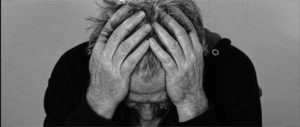
    And nix that image. Because we’re going to talk about who should provide IV ketamine as treatment for depression.

    Ketamine treatment is getting more and more attention in the press as a paradigm shifter for effective treatment for psychiatric mood disorders. And more and more medical professionals are opening offices to offer ketamine treatment for depression, and for pain management. Of course, more availability of ketamine treatment means more relief for more sufferers.

    Which is a good thing … right?

    Well, yes, but it raises some serious questions.

    Ketamine Isn’t for Everyone

    Like, for instance, is ketamine treatment for everyone?  And the answer to that is “No.” Not everyone will respond to it when it’s used for psychiatric mood disorders.

    But there are clinical factors and genetic tests that doctors can use to predict more accurately whether you’re likely to respond to ketamine treatment for depression.

    And another question: Is providing ketamine treatment for depression similar to providing ketamine treatment for pain? Is this something any medical doctor can easily do?  After all, it’s just a simple medication like any other, right?

    The answer to that isn’t exactly straight forward. First of all, the question includes an assumption that any medical doctor can easily prescribe any medication … even for specialized needs.

    Legally, this is true. Ethically and practically, it’s not.

    And while he may be able to prescribe a drug legally as a medical doctor…is he deeply versed enough in the nuances of the patient’s response to the drug and the drug’s potential side effects…as well as the patient’s potential reaction to those side effects and what to do about them….? 

    Is it really the best decision for a doctor to treat a condition he/she isn’t fully knowledgable about?

    Should an internist treat your periodontal disease? 

    An internist is expected to recognize and treat pretty much anything going on with your body…after all, he’s well-versed in inflammation and infections, and knows all about antibiotics. But his wide scope prevents him from having a specialist’s focused knowledge and deep experience with specialized aspects of your body, like your gums, for instance. So, you go to a dentist, and your dentist may send you to a periodontist for your gums…if you need it…a specialist’s specialist.

    Do All Psychiatrists Treat All Psychiatric Conditions?

    Well, let’s consider the nuances of psychiatry. There is a wide range of psychiatric disorders, including behavior disorders, mood disorders, personality disorders, cognitive disorders, developmental disorders, addictive disorders, and more — including all kinds of treatment modalities and several different kinds of psychotherapies we use — and most psychiatrists are not experts at everything.

    Of course not.

    Most of us gravitate naturally to our interests, and the best of us align our work with our own best selves — we choose the age range, the population, the conditions that fascinate us and tug at our hearts…the modalities that align with the way our own brains work and the way we interact. Some of us are researchers. Some of us are in the trenches. We play to our strengths. 

    We all should.

    Now, back to IV ketamine treatment.

    Anesthesiologists Use Ketamine in Surgery

    It’s understandable that anesthesiologists would be pretty comfortable treating patients with IV ketamine Who should provide and monitor IV ketamine Treatment for depression.since they’ve been using ketamine in surgery and emergency settings throughout their career.

    They’re also at ease sitting and monitoring a patient throughout the infusion treatment, because that’s what they do.

    Some medical doctors might get a bit antsy during that whole process, but it’s just second nature to an anesthesiologist.

    And, it’s true there are certainly plenty of anesthesiologists offering IV ketamine treatment for psychiatric mood disorders. They’re highly skilled in starting IVs, familiar with ketamine, and excellent in handling emergencies in the ER and in the OR.

    An anesthesiologist’s education and training is all about life support during critical moments in surgery. And these specialists know physiology like nobody’s business.

    But…

    Who Should Provide IV Ketamine as Treatment for Depression?

    When it comes to evaluating a psychiatric patient as a candidate for off-label use of IV ketamine treatment for treatment-resistant depression or other mood or anxiety disorders, there’s a great deal to manage. The role of ketamine used as an adjunct with complex medications and psychotherapy, for instance.

    Plus, the patients’ response to the drug and how to treat therm in their specific state of mind, whatever it is,  that emerges during treatment… All within the context of their baseline psychiatric symptoms and vulnerabilities.

    Anesthesiologists just aren’t trained for that.

    The same is true of nurses, even those in advanced practice.

    It’s my belief that the use of ketamine in the treatment of psychiatric disorders is something that is best done by psychiatrists who are thoroughly familiar with IV ketamine treatment.
    And here’s why.

    Because the things that this treatment requires — assessment of the patient and of the psychiatric response (not just the physiologic response), dose adjustment, management of fear, management of expectations… this is all psychiatric expertise. In addition, the family and their overall involvement (or lack of involvement) in the patient’s suffering… It requires we curate the experience, integrate it with psychotherapy, coordinate it within the context of the patient’s medical problems and with the professionals treating them. All these things are without a doubt what WE do and what our entire specialty is about.

    We deal with suicidal patients all day long and every night and weekend–anesthesiologists don’t and, understandably, don’t want to. But many, if not most, patients who receive IV ketamine treatment are not only no strangers to suicide, but in fact are so plagued by such thoughts their lives sometimes hang in the balance. Even to survive till the end of the infusion.

    Those tormenting thoughts just seem to creep in even when you’re not looking for them, and bring a presence to the ketamine room that stuns everyone involved.  That is, until  ketamine stops the suicidal thinking independently… and even if the depression doesn’t stop immediately… but lifts more slowly. A well-informed psychiatrist needs to be present to walk each patient through every scenario, especially when the outcome is a surprise.

    So, again, who should provide IV ketamine as treatment for depression? Definitely, not just anybody. Preferably a psychiatrist deeply experienced and educated in the nuances of ketamine treatment in psychiatric patients.

    Just as internists are not specialists in all areas of illness, not all psychiatrists are versed in the use of ketamine for psychiatric mood disorders.

    So What Kind of Psychiatrist Steps Out to Offer IV Ketamine Treatment?

    The ones who are really comfortable with medicine, and adjusting, adapting, and combining it for therapeutic outcomes. The ones who also have a strong identity as a physician first, and who are already experts in psychopharmacology.

    These psychiatrists are accustomed to a model of consultation and collaboration. And they like to work collaboratively with other psychiatrists, therapists, PCP’s, and families.

    This is no place for lone riders.

    These are the ones who know what it’s like when you’re the most suicidal of the suicidal, and who will stand with you and not be afraid. Those who understand that something transformative happens during an infusion. And that the specific experience of the infusion itself matters if there’s to be healing.

    We are grateful to the anesthesiologists who brought ketamine out of the OR and into the office.  

    But the psychiatric care of our most fragile, desperate, and ill patients — with multiple tangled psychiatric disorders, complex histories of polypharmacy and treatment failures, excruciating trauma, and concurrent medical problems — demands the finest life-saving that we have to offer, by psychiatrists. Nothing less.

    We continue forward to learn all we can from our patients and the dedicated neuroscientists who Who should provide Iv ketamine as treatment for depression in someone like this man?continue to explore the actions of this remarkable drug. As they explore, we continue to see our treatment-resistant patients enjoy extraordinary responses in 80% of cases.



    If you’ve suffered from treatment-resistant mood disorders and have tried multiple treatments without success, we get it. Innovative Psychiatry is a practice that specializes in helping people who have not found help before. People who have been to other psychiatrists and were failed by traditional treatments. People who are running low on hope.

    Innovative Psychiatry is into hope renewal. Through groundbreaking use of medications and treatments, we’re helping people like you live again. Enjoy life again. Please call us to schedule an appointment. We’ll evaluate whether you’re a likely candidate. There really is hope.

    To the release of your very best self,

    Lori Calabrese, M.D.

    Lori Calabrese, MD offers innovative psychiatric treatment like IV Ketamine

  • Will My Doctor Give Me an IV Ketamine Treatment Referral?

    Will My Doctor Give Me an IV Ketamine Treatment Referral?

    Will my doctor give me an IV ketamine treatment referral?

    Hoping for an IV Ketamine Treatment Referral?

    Recently, we talked about reasons some doctors may be reluctant to provide IV ketamine treatment for psychiatric mood disorders. We talked about how difficult it is to harvest all the information about ketamine for depression on the internet and become informed. No drug company spends millions of dollars in marketing a drug they won’t profit from. So there aren’t the usual easy-to-digest brochures and videos that help a doctor assimilate the information quickly. And there’s so much out there!

    Over 1200 papers, thousands of pages, that require trainloads of nights and weekends to study. When does a busy physician ingest all that?

    Skepticism about Prescribing Off-Label

    We also talked about the skepticism of doctors who want to see more solid long term studies. Studies with large numbers of subjects followed for years to see what long-term side effects might arise.

    In addition, we talked about what an enormous undertaking it is to set up a practice or clinic for IV ketamine Will my doctor give me an IV ketamine treatment referral?infusions. The protocols, the staff, the expensive equipment for monitoring and delivering the infusion. Plus the extra office space, the federal and state regulations that have to be followed regarding storage of a controlled substance, biohazardous waste, etc.

    It can be overwhelming for a psychiatrist who is accustomed to a practice of verbal evaluations and 15 minute med checks.

    To make a long story short, some psychiatrists aren’t that eager to prescribe a drug off-label. They want to see more studies, and they want to be sure it’s safe. Not to mention the fact that there’s fear of abuse.

    Ketamine for Depression is Spreading by Word of Mouth

    And this is the reason doctors who are currently treating their patients with ketamine for psychiatric mood disorders are publishing their results.

    We want you and your doctor to have the benefit of our experiences with our patients, the methods we’ve found to be the most effective and safe, and the reports of our patients after treatment.

    Because as we mentioned in the prior article, since pharmaceutical companies can’t make a huge profit with a drug that’s off patent, doctors everywhere just aren’t receiving all the usual aids offered to familiarize us with all the data about ketamine.

    Without Pharmaceutical Billions, Ketamine Resorts to Grass Roots

    So it’s become more of a grass roots movement, if you will, to share information with each other, with neuroscientists, and with the public, and raise awareness of the effectiveness of treatment with ketamine for psychiatric mood disorders, like depression and anxietyYoung woman enjoying life since IV ketamine treatment referral.

    Using the best practices encouraged by the Consensus Statement of the American Psychiatric Association Council of Research Task Force on Novel Biomarkers and Treatments, psychiatrists across the US and around the world, are finding ketamine treatment to have rapid and robust antidepressant results. And their patients are enjoying restored lives, restored enjoyment, and restored hope.

    Ketamine’s Short Duration: A Solution that Restores Joy in Life

    Some professionals caution that ketamine treatment has a short duration. But, psychiatrists and the anesthesiologists who’ve been using ketamine for decades, have made a discovery. And that is that approximately 6 infusions over a 2-week period seems to “stack up” enough of ketamine’s benefits that they last far more than just six times longer than one infusion. Like a synergistic treatment cluster.

    For many patients, this regimen brings more than improvement… it brings remission. For others, as long as there are maintenance doses to keep ketamine’s actions working, their lives are lived as if they’re well. Really well.

    So with so many doctors treating hundreds and thousands of patients with extraordinary results, why isn’t word spreading faster?  

    Frustrating, isn’t it?

    “Will my doctor give me an IV ketamine treatment referral?”

    Sorting Through the Literature

    You hope so. But understand that your doctor may need more time to come to an informed and confident opinion JAMA Psychiatryabout ketamine treatment. It may have a lot to do with the information he or she has found on the subject. She may be reading peer-reviewed studies as she gets time. Or he may have run into some articles that present vague results. But encourage them to keep researching. Because there are plenty of professional journals publishing exciting findings, even though there are some articles that are less optimistic.

    In fact, there are dozens of articles across the internet, written about ketamine treatment by biased individuals. Those who either aren’t medical professionals, or are biased without experience with ketamine. And these articles influence those seeking information, and sour them against recognizing the facts when they see them.

    When people form opinions without building them upon a foundation of neuroscience, but rather on the comments of others, prejudices form. Biases form based on impressions, opinions, hearsay… you can read examples in all sorts of forums on the web. Opinions tossed out with “impact,” but with little or no fact.

    Second Opinions May be Helpful

    And truth be told, while your doctor’s learning for himself what he believes about ketamine, you can learn about ketamine treatment and discuss seeking ketamine treatment.  And then share your results with your doctor and with your family.

    In fact, your family may suggest you let “a second set of eyes” look at you and your illness. Especially if they can see you haven’t been improving. Most doctors respect that, and it’s an ideal time to check with a doctor who offers innovative treatments like IV ketamine treatment.

    Still, understand that your doctor may not feel comfortable referring you for a treatment he’s not yet confident about. But you’re responsible for your own well-being and health. In the 21st century healthcare environment, individuals have become informed about their health and wellbeing and are far more engaged in looking for solutions than ever before. And you can choose to seek out physicians who do offer ketamine treatment, then report your results back to your doctor. By doing that, you’ll give him a data point to build his own research around.

    It’s true that some doctors have been known to react to a patient’s stepping away from their recommendations. And that’s a shame, if their advice has not helped you recover. It’s also true that you as the patient are the person actually living with your symptoms. And enduring them. I daresay, you should not be punished for actively seeking a better quality of life.

    The same is true if you’re a parent of a teen who struggles with a mood disorder. An example is with treatment-resistant bipolar depression. Since research shows that early treatment gives your child the best hope of getting better, as a parent you probably feel compelled to find the solution that really works.

    IV Ketamine Treatment for Depression – Experimental?

    Ketamine treatment is still considered “experimental” by some psychiatrists, but for those of us who have seen extraordinary success in the lives of so many patients, it’s become a relied upon and almost miraculous solution.

    The consensus statement by the task force mentioned above points out that more studies are needed with large populations. True. Of course that’s true. But, the task force members also laud the results of IV ketamine treatment with their own patients. The guidelines they suggest for providing ketamine were not to discourage doctors from using it, but rather to encourage doctors who offer it to offer it within safe parameters.

    At Innovative Psychiatry, we use the same careful monitoring and other safeguards recommended by the APA task force, as well as others, and have for years. We’ve seen very positive responses in 80% of our patients who have been failed by  traditional antidepressants over the long term.Enjoying things I used to enjoy since an IV ketamine treatment referral.

    They’re amazed at the continuous improvement in their lives, their relationships, and their enjoyment of life.

    If traditional antidepressant treatment has failed you, call us. We’ll schedule an appointment to determine whether IV ketamine treatment is right for you.

    We’re here to help you find joy in life again.

    To the emerging of your best self,

    Lori Calabrese, M.D.

    Lori Calabrese, MD offers innovative psychiatric treatment like IV Ketamine

error: Content is protected !!