Tag: Ketamine for Postpartum Depression

  • Bipolar Mixed States:  The Doctor Who Diagnosed It in the 12th Century

    Bipolar Mixed States: The Doctor Who Diagnosed It in the 12th Century

    If you suffer from mania, you’ve also experienced the transition that leads to it.

    Someone identified that transition emotion over a thousand years ago. Surprising?  Here we are in the 21st century, with all the technology and neuroscience we’ve discovered at our fingertips, and we still face that same emotion. And it often plays a strong role in bipolar mixed states.

    What is it?

    Anger.

    So many in our current society speak of various psychiatric disorders as if they’re a product of modern contrivance. Sometimes in psychiatry, our role is not only to treat those suffering from a disorder, but to also defend them against the cruel cynicism of skeptics who discredit their struggle.

    For someone who suffers from emotions that plunge so low, so dark, they don’t know how to hang on to a fiber of life… then without warning, those feelings change…shift…and become energized then agitated… with no reason….until they’re replaced by anger then rage….and more energy than can be managed….until they’ve reached a state of euphoria, unlimited possibility, and very high creative energy….  Someone like this knows the helplessness of erratic emotional states.

    And if you’ve experienced these wide changes in emotions, you know it’s painful.  When it’s happening inside you, it feels normal. It feels justified…because you don’t realize it’s happening because of malfunctioning signals in your brain.
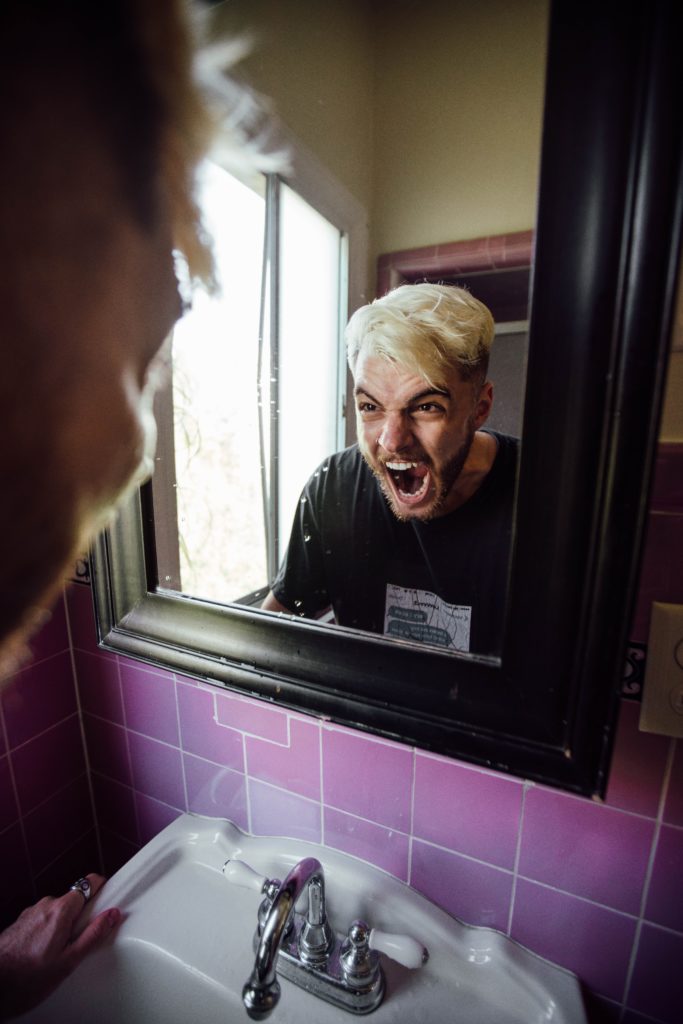
    If you feel anger…even rage… it just must be justified, right?

    But many people with a disorder like this have to experience it for many years before they can identify those moments when their mood swings in a new direction. It’s hard.  Really hard.

    So let’s talk about this ancient philosopher and physician from the 12th century, Avicenna.

    He saw this disorder, this syndrome… and described it.  He talked about how it affected both the psyche and the body.  Pretty profound for a guy who lived around the year 1100 AD.  He called this condition “melancholia” and in present day mental health we might think of melancholia as depression. 

    But the syndrome he described included mania. And mania specifically identifies what we now know as bipolar disorder.

    In his early descriptions, he divided this condition into two phases, the early phase and the chronic phase. Symptoms of the early phase were described as suspicions of evil, fear without cause, quick anger, involuntary muscle movements, dizziness, and ringing in the ears.  

    For the chronic phase of melancholia, he described moaning, suspicion, sadness, restlessness, and abnormal fear such as the “sky falling upon one’s head,” or “being swallowed by the earth.”

    In our current environment, we would likely consider these last two as delusions, or psychotic features.

    Not all people with bipolar disorder have delusions during manic or depressive episodes. But in some cases, it happens.

    Avicenna also described some symptoms we might now see in “bipolar mixed states” such as increased libido, involuntary laughter, and acting as though one is king… which we’d now call “grandiosity.”

    These can all be symptoms of the manic phase of bipolar disorder.

    These are descriptions that are more than 1100 years old. But they describe a condition that we still see today, and work hard to identify and treat. What is so hard is identifying it first. An episode of anger does not mean you have bipolar disorder — not by a long shot. And even if you have bipolar disorder, getting angry could be just… getting angry. It may not mean you’re in a manic, hypomanic or even mixed state.

    How to tell? Sometimes it’s difficult. It may take several episodes. Sometimes it can take years.

    You don’t have to let it. The good news is that mixed mood states are treatable. If you’ve been ridiculed for the medicines you take, or the psychiatric treatment you participate in… if people around you don’t believe this is not only a valid and debilitating disorder, or think it’s something modern day doctors have dreamed up, here’s proof your struggle is valid. 

    People can be so… uninformed. You have to just shake your head in disbelief.

    According to Avicenna, people have been suffering with this at least since the 1100’s. It’s still the real deal.

    And he described bipolar mixed states without using the term itself: a combination of depressive and manic symptoms all tangled together at the same time. With a back drop of depression, and the addition of agitation, grandiosity, heightened sexual drive, anger, and emotions that are easily aroused, changed, that alter quickly. 

    There are doctors who attempt to diagnose bipolar disorder as specifically depression with at least one clear episode of mania or at least one clear episode of hypomania. But for a large population of patients, this is utterly frustrating. Because what they have–and what you may have–are mixed states, or mixed episodes.

    If you’re one of them, you know.

    You KNOW you’re not either black or white emotionally. You KNOW you’re not specifically depressed or manic.  

    While you may be depressed at times, and you may experience mania at other times, you know that you also have all sorts of combinations of emotions in between the two.

    It can feel like you are a vertical accordian with shifting degrees of manic and depressive symptoms at the same time and with the ratio shifting throughout the day, or from day to day … over sometimes every few days. So many variations make it hard to identify, difficult to explain, and frustrating to report. Symptoms like grandiosity and anger can signal other disorders, as well.

    And you know it’s real, though you may be told something different.

    When you suffer like this, you first need validation that there are things happening inside you that you don’t cause.

    This is a very difficult condition, and what you experience may be different than what someone with the same diagnosis experiences. But it’s real.

    And it’s treatable.

    Bipolar disorder can be challenging to treat effectively — and may need patience and determination for you and your doctor to tame — but hang on to hope.

    We’ve only talked about bipolar mixed states and mania but there is also depression in bipolar disorder. And bipolar depression is also extremely difficult to endure. It can be terrible.

    Thankfully, bipolar depression can be treated effectively by IV ketamine

    Another aspect of the depression in bipolar disorder is the risk of suicidal thoughts. And IV ketamine can remove those thoughts and give you the freedom to live in joy.

    At Innovative Psychiatry, we offer IV ketamine treatment for bipolar depression and see patients whose treatment has helped them emerge from the depressive symptoms that held them down. Not everyone, of course, but many.

    And these patients often talk about how much easier their condition is to manage since the depression is gone.

    While bipolar depression can be tough to break, ketamine treatment can break it. Give yourself the opportunity to see how good you can feel, how productive life can be, without bipolar depression undermining you.

    If bipolar depression interferes with your life, call us.

    We’re here to help you achieve remission, with resilience, hope, and the joy of a loving and productive life.
    Lori Calabrese, M.D. is on the front end of the race to stop PTSD in its tracks using IV ketamine treatment.

    To the restoration of your best self,
  • COVID Hassles Annoying? Ketamine Can Help You Embrace Living Again

    COVID Hassles Annoying? Ketamine Can Help You Embrace Living Again

    COVID-19 – Growing number of people suffer from anxiety, depression, and suicidal thoughts who’ve never faced mental health issues before.

    We’ve talked about it before, but the numbers are growing. Quarantine, masks and gloves, working from home, kids schooling at home, social distancing, Zoom meetings. It’s not just the change in routine, it’s the feeling of isolation, of needing a break. Sometimes you just want to go out to eat on Friday night…right? But with businesses closed, you can’t. Cabin fever with tired parents, kids bouncing off the walls… where do you go to get refreshed? With COVID hassles annoying, ketamine can help you break through and enjoy your life again.

    You wanna hang out with the girls, paint a picture, drink wine, and chat till the cows come home. But you can’t.

    Or go to the gym every morning and work out your frustrations, break a sweat… and go home loose and ready for the day. But the gyms aren’t open.

    2020 has been a tough year. A year you won’t likely forget. 

    Of course, if you’ve gotten sick with this coronavirus, that’s its own battle. But for those who have dutifully worn their masks, stayed home and attended Zoom meetings all day without being infected, there is still a risk caused by the stress of confinement and isolation.

    And it’s serious enough that far too many people have succumbed and faced psychiatric disorders for the first time in their lives. 

    A poll by the Kaiser Family Foundation found that 45% of those who responded to the poll in April 2020 stated their mental health had suffered during COVID. That was 10% more than the previous month.

    COVID hassles annoying? Ketamine can erase suicidal thoughts.

    Social isolation in adolescents increases fear and worry,  which create their own type of stress, wearing down coping skills. Too often, those worry cycles plunge to suicidal thoughts, and the desire to escape the misery.

    Seniors are also at increased risk. Those who are shut-ins rely on loved ones for the stimulation, interaction, and camaraderie to keep their outlook bright. Without those regular visits, hopelessness can quickly wear down their purpose and resilience.

    Common Sense Says Isolation Takes a Toll

    This is not to BLAME the pandemic, but to recognize that people all around us need a lift these days.  Every bit of interaction is restorative for the speaker and for the listener… or both.

    It’s one thing to show compassion to those who have suffered from mental health disorders all their lives, because it’s certainly true that each of you need extra support through these times.

    But, isn’t it alarming to realize so many people have been so negatively impacted by the pandemic, with all its inconveniences and isolation, that they’ve used up their coping ability and have also succumbed to depression, anxiety, and suicidal thoughts?

    So let’s look at this more closely.

    True, this pandemic has caused annoying inconveniences, some more difficult to bear than others. But we can’t go back in time, can we?  We can’t undo the release of this virus, its spread around the world, the cost to families, the economy, and our general well-being.

    COVID Hassles Annoying – Ketamine Can Restore Resilience

    At the same time, we don’t have to break under its influence, right?

    In times like these, mastering the art of bending, adapting to circumstances, can keep you feeling like you actually ARE in control.

    That means if you’re accustomed to traveling on a whim, and you’re not so free to do that right now, you can shudder and fume at the frustration; or you can set travel aside for a better time and choose something new and accessible for your stimulation and reward now.

    Covid hassles annoying? Learn to draw and paint and enjoy yourself.

    An IT guy built his own igloo shaped pizza oven in his backyard. Never laid a brick in his life. But he invented a new interest and poured himself into it. And in so doing, kept anxiety and depression at bay.

    It was a whole new adventure for him… that began with a new and surprising thought. 

    A school bus driver had no students to drive on her bus since students were learning online from home. So she dove into art development tutorials, and mastered skills in drawing beautiful, life-like animals. 

    Pandemic? What pandemic??  She was having too much fun to notice.

    Adapting means changing course to accommodate changing circumstances.

    That’s not to say these responses are always successful. But they are, more often that not.

    On the other hand, warding off symptoms of anxiety and depression by inventing new stimulating interests, honing new skills, or finding new forms of entertainment, are sometimes not enough.

    There are those who know these principles, but in this atmosphere found symptoms of anxiety, depression, and despair creeped over them in spite of their efforts to escape.

    Sometimes that happens.

    Sometimes listlessness takes over, with severely reduced energy, a bleak outlook, hopelessness, and a lost sense of your own worth.

    Which can make way for thoughts of dying. Thoughts that there’s nowhere to go from here. Thoughts that you’ve spent all you have to give, you’re depleted, and your life is finished.

    And those thoughts can become dangerous for you.

    If you find that the thoughts of death, dying, and despair are prevalent for you, there is help.

    COVID hassles annoying – ketamine treatment can erase suicidal thoughts

    As much as we talk about ketamine treatment demonstrating extraordinary responses in those who are depressed, or suffer from PTSD, or substance abuse, or even anorexia nervosa, it’s also remarkable in its prowess for erasing suicidal thoughts.

    The National Suicide Prevention Lifeline 1-800-273-TALK (8255)

    Suicidal thoughts can be plaguing you to desperation, then an infusion of ketamine can make those thoughts disappear in a few hours. 

    Life saving.

    Astounding.

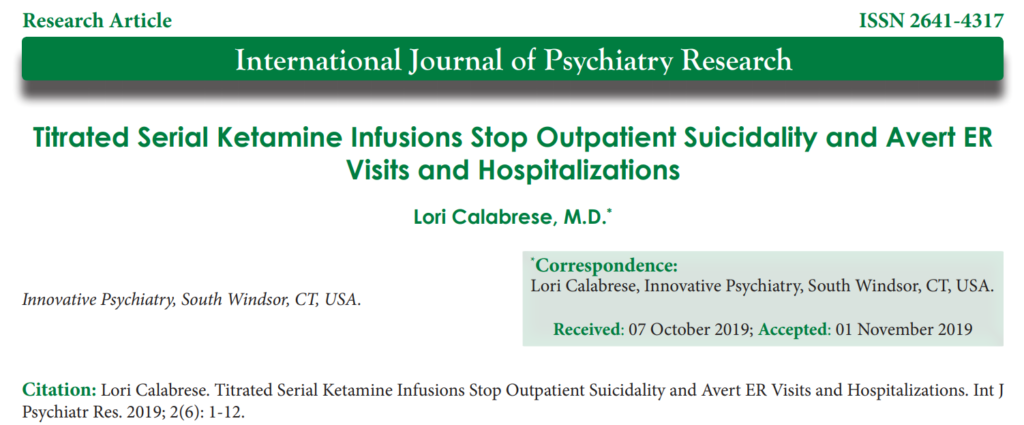
    It’s so dramatic that I published a retrospective chart review of my own patients in my large practice.

    Ketamine Suicidality

    This treatment can erase those thoughts without hospitalization or emergency department visits, and give you the freedom to safely get better and enjoy life again.

    At Innovative Psychiatry, we treat patients with ketamine treatment for depression, social anxiety, PTSD, alcohol use disorder, and substance use disorder. And we also treat suicidal thoughts for their own sake.

    COVID hassles annoying? Ketamine can erase suicidal thoughts.

    If keeping yourself diverted, seeking new stimulation and developing new interests to get through these times with healthy hope stops working… if you feel yourself sinking into a sense of loss, confusion, despair, call us.

    We can help you find joy again. Invigoration instead of despondency.

    And if you feel like you don’t want to live, please call us. 

    With ketamine treatment, you can be free of those thoughts and feelings, and find them replaced with hope and rewards in life.

    Lori Calabrese, M.D. is on the front end of the race to stop PTSD in its tracks using IV ketamine treatment.

    To the restoration of your best self,

    We can all help prevent suicide. The National Suicide Prevention Lifeline provides 24/7, free and confidential support for people in distress, as well as prevention and crisis resources for you or your loved ones.

    The National Suicide Prevention Lifeline 1-800-273-TALK (8255)

    The Veterans Crisis Line and Military Crisis Line 1-800-273-8255 Press 1

    Crisis Text Line: 741-741 Free text hotline 24/7

  • Keto Plus Ketamine:  A New Approach for Anorexia?

    Keto Plus Ketamine: A New Approach for Anorexia?

    A ketogenic diet can be a first step toward managing symptoms of anorexia.

    If you know someone with anorexia nervosa, you know how chronic… dangerous… and life-threatening it can be. I bet you didn’t know it could go into full remission.

    This is the story of a novel idea, a brand new course of treatment, an innovative treatment procedure, and a protocol that was born out of love.

    It’s a heartbreaking disease. And as surprising as it may be, there has been no effective treatment for it, whether it be medicine or psychotherapy. Self-starvation, hyperactivity, anxiety, body dissatisfaction, and difficulty managing one’s emotions all accompany this horrific disorder.  A new approach for anorexia is desperately needed… a new procedure, a new sequenced treatment…something.

    There are 32 million people–of all ages, races, and genders–in the US with an eating disorder. And someone dies every 62 minutes here because of their eating disorder. Anorexia is the scariest. The death rate in women with anorexia is 10 times higher than for other women, and that’s because the self-starvation causes medical problems that can be critical…. and because desperation can lead to suicide. A new approach for anorexia is vital.

    A new approach for anorexia is a ketogenic diet and IV ketamine treatment.

    To understand the persistence of anorexia, you need to recognize it’s not just about not eating…or losing weight.  Those are actually the results of the most crucial symptom, which we call the “anorexia voice.”

    Some medication solutions and some psychotherapy approaches may claim up to 60% response… meaning 60% got better. But for how long?  A couple weeks…?  A month? These patients require something different, a new approach to anorexia treatment.

    What’s more, 40% of adolescents never gain their weight back, and of the 60% who do, only half of them restore emotionally. On top of that, treatment is expensive. Multiple hospitalizations, out-patient treatments… the average cost of treatment is $110,000. This is what you might call the “white knuckle” approach. Hard work… mediocre outcomes.

    And there are so many who never get better.

    This is because they try to treat the actions of abstaining from food or over-exercising, rather than the symptom that’s most stubborn to relieve… that voice in your head we call the anorexic voice.

    A new approach to anorexia is with a ketogenic diet and psychiatric supervision, anorexic symptoms can subside.

    That voice that tells you you’re fat when you weigh 96 lbs and look in the mirror. The voice that tells you to not eat because you’re getting fat. The voice that says you’re ugly… that you’re too tall, or too short; too fat or too skinny.

    Like I said, we need to see something new and different, some new approach for anorexia.

    This singular aspect of anorexia is the most difficult to manage.

    And this symptom must be erased if you’re to get well and stay that way.

    Anorexia Nervosa often emerges in adolescence, but it can go on and on…. 

    In fact, if it continues for 3 years, it’s considered chronic and enduring… even treatment resistant, as we often say referring to other disorders.

    To find an innovative sequence of treatment, a new approach, a different protocol….that would dissolve the symptoms of anorexia nervosa…where the symptoms subside and the lack of symptoms lasts, and that voice goes SILENT…well, it could be life saving for many, and life restoring for the rest.

    A new approach to anorexia is bringing freedom to anorexic symptoms through a ketogenic diet and ketamine treatment.

    And that’s where a new approach for anorexia can bring hope.

    You may remember that we talked about the use of ketamine treatment to treat eating disorders back in May of 2018. And we pointed out way back then that eating disorders were actually the first psychiatric disorder studied with ketamine treatment. I.H Mills and his team conducted this study in 1998. 22 years ago!

    Well, I’m delighted to talk about my most recent work with a team of experts and an extraordinary 29-year old woman, Caroline, who’s suffered from anorexia nervosa since she was 14.  

    I was privileged to work with a medical doctor specializing in internal medicine and addiction medicine with a brilliant and compelling idea about a new course of treatment (Barbara Scolnick, MD), a reknowned dietitian and keto specialist (Beth Zupec-Kania, RD), a brilliant neuroscientist (Chiye Aoki, MD), an expert in eating disorders (Tom Hildebrandt, MD) and an extraordinary young woman, Caroline.

    And we’ve published a case report on the effectiveness of it for her.

    Iv ketamine treatment combined with a special ketogenic diet is a new approach to anorexia treatment.

    Effective isn’t the word. Exhilarating is more like it. Remission. Unexpected, fully sustained, and shocking. It comes from a brilliant idea, and from just being willing to look at anorexia with a different lens, with an innovative treatment that was upending and surprising in its rapidity and its effectiveness.

    Get ready. It’s time to open your mind.

    To understand the novel course of treatment we used, you need to understand a little neurology and pathophysiology. So, here’s a quick crash course.

    Lipids, and Lions and Bears, Oh Me!!

    Getting back to neuroscience,  metabolism, and hibernation, some studies have examined how the root cause of anorexia may be related to lipid signaling and how chronic starvation may be connected to hibernation.

    A ketogenic diet and ketamine treatment can turn off the anorexic voice.

    As you know, hibernation is what bears do in the winter, and lots of other animals, too. To survive the winter, their body metabolism slows way down, along with their temperature, so they can survive for several months without food. 

    In patients with anorexia nervosa, their long term starvation signals their body through their fats (lipids are fats), to slow down to help them survive. For the patient to recover, those lipid signals must be returned to normal both in their metabolism and in their central nervous system. This is vital information in the search for a new approach for anorexia nervosa treatment.

    To get those signals back to normal requires fats be introduced, even if they are processed at a much higher rate. So, a medical keto diet was developed by the team for Caroline, to ensure she had enough healthy, wonderful fats to improve her brain health and restore her metabolism. And her mood.

    And her anorexia improved. But it didn’t completely stop. The voice was still there.

    Then she began treatment with IV ketamine. We planned 6 treatments, but she didn’t need them. She got only 4. Because her anorexia symptoms — the obsessive thoughts, obsessive behaviors, and the anorexia voice in her head — completely stopped. And they’ve been gone for more than 6 months.

    A diet rich in good fats can feed mitochondria ketones and treat anorexia symptoms.

    Long enough to call it remission. And to know for sure that it’s real. Long enough to write it up as a case report, submit it for publication, and get it published.

    It is real. It’s so real that it’s a little unreal. If you’re in the anorexia world, you know how wild this sounds. Keto? No way. Anorexia experts and dietitians alike hate the idea, don’t trust it, see it as dangerous….and might think it’s just plain wrong. Ridiculous. Risky.

    Ketamine infusions? In a patient whose metabolically compromised? Unknown. Untested. Too risky. Until we carefully weighed the risks and benefits — for her– created the right set and setting, and gave it our best shot. Medicine is a science. And an art.

    So this is the new treatment protocol, the new combined treatment, the new procedure, if you will, that we designed: it’s a duo. And it worked.

    IV ketamine treatment and a ketogenic diet can silence the anorexic voice.

    Let’s talk about Caroline for a moment. She’s real, riveting, and absolutely raw.

    Caroline is 29, and had suffered from anorexia nervosa since she was 14.  Over the years she had intermittently struggled with alcohol dependence from the age of 18. She had seen numerous specialists, had been in and out of treatment programs, and she received supportive therapy periodically.  She also attended Alcoholic Anonymous meetings at least once a month.

    Obviously, she needed someone to come up with a new idea. The usual treatments just weren’t working. She desperately needed a new approach for anorexia.

    And before beginning this new procedural treatment course, she had abstained from alcohol for 15 months, which was a major accomplishment. It’s also an example of how psychiatric disorders are often found in clusters. This girl wanted to be better…she worked so hard. But that voice…

    She experienced the kinds of restrictions not uncommon for someone with anorexia.

    Caroline preferred to eat alone, and used a napkin rather than a plate. She ate only ice cream or peanut m&ms for days at a time. And used low calorie sweeteners excessively. She had “safe” foods which consisted of Splenda, frozen yogurt, zucchini, eggplant, and coffee.

    In addition, she exercised compulsively every day, usually for 2 hours. She had managed to keep her weight around 125 lbs. Hospitalization had been required two separate times in her life to help her metabolism stabilize. The first time was following a grand mal seizure 12 months after she was diagnosed with anorexia nervosa. She weighed 96 lbs at admission, that time.

    Personalized and Medically Designed Ketogenic Diet Specifically for Caroline

    Not something you can google or YouTube… personally designed for her body and metabolism by a registered dietitian renowned for her expertise in developing ketogenic diets for neurologic disorders.

    Enjoy a rewarding life with a new approach to anorexia treatment.

    And when you watch this remarkable story you’ll hear us talk about how the keto diet seemed to help her head clear. Her body began to respond. Her true personality emerged. She felt better.

    But that pesky, ruthless voice just kept cracking the whip. Constantly …constantly… trying to force her to stop eating and keep exercising.

    …Combined with Ketamine Infusions – An Innovative New Approach for Anorexia Treatment

    Then, came the ketamine treatment… as it turned out in her case: 4 infusions. And the voice died. It just disappeared.

    And she was free. For the first time in 15 years, she was free to be herself, make her own decisions…and pursue her own happiness.

    A case report, of course, is just that. It’s a report of one person.

    It’s exciting preliminary work, though. The novel treatment procedure and the dramatic outcome that Caroline experienced–sustained remission and recovery–with a medically designed ketogenic diet followed by IV ketamine infusions deserves further study and more research.

    We may be on a new horizon.

    Lori Calabrese, M.D. is on the front end of the race to stop PTSD in its tracks using IV ketamine treatment.

    To the restoration of your best self,

  • Does Psychiatric Treatment Suffocate Creativity in the 21st Century?

    Does Psychiatric Treatment Suffocate Creativity in the 21st Century?

    Have you avoided treatment fearing it would subdue your talent?

    This is a very real concern for some intelligent, talented people who suffer from certain disorders. The idea that suffering yields brilliant satire, beautiful music, heartbreaking poetry, and dazzling art that enrich mankind. It’s been a subject of controversy for eons. But is it true? If your treatment suffocates creativity, you can do something about that.

    We speculate about the connection between artistic genius and depression or bipolar disorder. Theories emerged that Vincent Van Gogh’s severe depression. He suffered serious bouts of anxiety, and possibly suffered from bipolar disorder.

    He self-medicated with alcohol… Of course, no medical treatment was available for his symptoms. 

    Ludwig von Beethoven stands as another historic creative genius we celebrate who suffered from bipolar disorder. Were his enthralling symphonies created by his illness?  

    Franz Haydn, his teacher and fellow composer, had remarkable words for him as he was getting to know him. “”You will accomplish more than has ever been accomplished,” he said. “You’ll have thoughts that no other has had. You will never sacrifice a beautiful idea to a tyrannical rule, and in that you will be right…”

    He was brilliant…there’s no question. And some would argue that brilliance and bipolar disorder sometimes go together. And he grew deaf. A tragedy for a musical genius. His behaviors as reported by his peers may have been indicative of depression. Maybe bipolar disorder.

    Still can you imagine his frustration at not hearing his own music?

    We must remember that our belief in the presence of a diagnosis of these figures in history is conjecture. That we’re basing our views on what we read about them, what their contemporaries said about them. And we try to piece together the puzzle pieces.

    So, if you’ve experienced severe bipolar I disorder, you may relate to some of these recollections of tormented icons. Their symptoms may seem pretty familiar to you.

    Again, there was no effective treatment available to him at that time, so we can only wonder.

    To learn whether treatment suffocates creativity, we have to fast-forward to the most recent 30 years of psychiatric treatment…and even better, the last five.

    In the days when Prozac was such a breakthrough, and then Paxil, I remember someone describing the way she felt. She said it was like she was “coated in wax.” 

    The early SRIs, and later the SNRIs, provided so much help to depressed people that they were considered a breakthrough at the time. People would joke, “the city needs to add Prozac to the drinking water. It could quite possibly solve all of society’s problems!”

    With time, we learned that these medications made a dramatic difference in quality of life for about 33% of those who suffered, and with some tweaking, titrating, and blending, over time that number increased to 50-65%. 

    But, eventually, it turned out that these medications weren’t always as remarkable as they seemed.

    There were plenty of people who stopped taking the medications because of the side effects of weight gain, sexual dysfunction, and more.  Plenty of others continued to take them and gained the weight and lived with the reduced sexual drive for the sake of functioning in their lives.

    Of the creatives who took these medications, some claimed the medicine impeded their creativity, while others found that with a clear mind, they could create more effectively.

    Those with bipolar disorder often take a mood stabilizer like lithium or depakote, and may experience more stability. But many others need a variety of medications to yield a more stable mood. And many others with bipolar disorder don’t experience any real or lasting relief from these medications.

    Does Psychiatric Treatment Suffocate Creativity In All This?

    While it wasn’t uncommon to hear patients complain of dampened creativity while taking SRIs and SNRIs, that’s not the case across the board. 

    Some who are treated for severe depression are relieved to discover they are able to be creative again. Others, not so much. It varies between people and can also depend on the symptoms. 

    And creativity and bipolar disorder share some genetic links, as well as some deviations from typical ways of thinking. Creativity includes new thoughts, original ideas, and freshness in composition of art, music, construction, etc.

    Still, neuroscience research reveals that the most productive creativity in someone with bipolar disorder happens when that person is in a non-extreme state, or euthymic period, or a hypomanic period.

    So, what about the last 5 years?

    Ketamine Treatment Doesn’t Suffocate Creativity

    Not only is ketamine treatment effective in treating depression and bipolar depression in far more people than SRIs or SNRIs, but it can actually enhance creativity. It’s in a category all its own.

    Ketamine treatment’s extraordinarily rapid and robust effects can proliferate the brain cell connections and the communication between different parts of the brain. These benefits can expand so dramatically that you can, and likely will, find yourself in a remission that defies all logic. 

    A kind of remission that finds you catching up on all the chores you’ve avoided for the last several years, advancing your career in ways you’d never thought about before, building strong, healthy relationships, and having fun…I mean really having fun.

    You can wake up singing songs that may have followed you while you dreamed, dancing spontaneously while you get your coffee. You may find yourself immersed in joy.

    Of course, ketamine treatment doesn’t do all this for every single person treated with it, but these benefits are widespread and common. There are a handful of sufferers who don’t enjoy these outcomes, but the vast majority do.

    In this day and age, on the brink of life changing treatments for severe psychiatric suffering, you have the opportunity to enjoy singing, dancing, and loving. 

    Watch the Clouds Part and the Sun Radiate Into Your Life

    At Innovative Psychiatry, we celebrate with our patients as they taste of a brightness of life and a hope that had always alluded them before. We provide ketamine treatment in a pandemic-safe, cautious protocol that protects our patients and our staff. 

    With this exacerbated environment for increased depression related to the pandemic,  it’s more important than ever to give yourself the additional support of a treatment that can renew your emotional energy and your patience to cope. 

    Does psychiatric treatment suffocate creativity? No…it doesn’t have to.

    If you’ve feared treatment because you fear losing your creative edge, call us.

    We’re here to help you open your doors and windows to let the light of your gifts shine through.

    Lori Calabrese, M.D. is on the front end of the race to stop PTSD in its tracks using IV ketamine treatment.

    To the restoration of your best self,

  • Fallout From the Covid Pandemic May Not Be All Bad

    Fallout From the Covid Pandemic May Not Be All Bad

    As tough as these times have been, there have been some bright spots. 

    In fact, some people who have suffered terribly from symptoms of their disorders are actually stabilizing and improving. Feeling as though they’re less “disordered” and almost more normal than they’ve felt before. Can you imagine? In fact, as much as we’ve struggled with grief, loss, and frustration, as well as worsened conditions from disorders, fallout from the covid pandemic may not be all bad.

    It’s something of a phenomenon.

    On the other hand, it may just be common sense. For instance, for some who struggle with shame and increased anxiety because of social anxiety, to be allowed to remain at home, and visit with your doctor through telepsychiatry, the pressure to interact in a public setting among strangers is gone.

    On top of that, that telepsychiatry visit gives you a sense of closeness with your psychiatrist you may not feel in the office. Some people feel less intimidated, and are even more likely to ask the doctor how she’s doing.

    Some with agoraphobia may also feel more relaxed, since so many others they know are also safely locked up at home.  

    Even those under a dark cloud of depression, feel less like the “odd man out” because there are so many experiencing depression for the first time and are so alarmed, so baffled, and are looking for someone to talk to about it.

    On the other hand, for most of the rest of us, there are all sorts of ways the pandemic has affected us. And it’s been a burden.

    It might have been novel and interesting for the more optimistic the first month or two, but few still find it engaging now.

    The Difference Between Depression and Grief

    It’s important to understand that what you’re feeling may not be depression or anxiety at all. In fact, it may have nothing to do with any pathology, per se.

    The process you would naturally go through when you grieve the loss of what used to be… could be affecting you. You may be also grieving the loss of a loved one. But grief is a natural part of life, and it includes feelings that are painful and troubling. 

    Think of it like you’re adapting: a completely healthy way to adjust to new challenges. Feeling deep loss, then over time adjusting to that missing person or those elements in your life, and finding ways to live with it. 

    Because the fallout from the Covid pandemic may not be all bad at all…in spite of the things you miss.

    Do you miss eating at your favorite restaurant..?  The wonderful food, yes…but you can pick that up and take it home…no it’s the entire experience, isn’t it?  The way the wine tastes after they pour it, the wonderful service, the ambiance. Do you miss your children catching the bus each morning after breakfast, and the peace and quiet that settles over your home while you drink your coffee…? 

    It’s the little things.  And you miss them, and that’s ok.  While it’s not uncommon to get angry…(that’s the first stage of grieving, by the way)… it’s also not all that productive to get stuck there, is it? 

    So you look for ways to reduce the impact of it all by finding ways to help others, reaching out with kindness… and catching up on your reading. 

    We’re All In This Together and Fallout From the Covid Pandemic Can’t Keep Us from Getting Through To Brighter Days

    And it stands to reason—doesn’t it?—that you are experiencing different effects from the pandemic and its side effects than your neighbor, your co-worker, and your family members.

    If you’ve not been someone with a depressive disorder in the past, but you feel terrible right now, don’t panic. Because you’re walking your own path. You may be grieving the loss of life as you knew it up until December 2019… or…you may actually have been so devastated by these blows that you’ve developed a disorder and need treatment. 

    If you need it, you’ll get it. And if you need to try some experiences we’ve talked about before to nourish your resilience, strengthen your compassion, and improve your wellbeing…  well how much better is it if there really is something you can do yourself?

    On the other hand…

    But if you can’t lift your head above the din of stressors, then there are treatments like  ketamine treatment to  restore your resilience, so you in turn can show kindness and support to others.

    Which is why at Innovative Psychiatry we continue to be mask-wearing essential services for you, if you need us.

    If you find yourself despondent, hopeless, unable to see any way to function, call us.

    We provide ketamine treatment in a safe, protected environment so you can get a fresh breath of air, a sort of new lease on life, and the energy and initiative to make changes in your life you want to make.

    I hasten to say that ketamine treatment really doesn’t accomplish these things for absolutely everyone who receives it, simply because there isn’t any treatment that makes everyone well.

    Even so, its beneficial effects on most of those with treatment resistant depression is nothing short of extraordinary. So much so, that NO ONE should suffer indefinitely without remedy.

    There is hope.

    And joy.

    And the promise of a rewarding and fulfilling life.

    Let us help you take the next step to wellbeing and peace.

    Lori Calabrese, M.D. is on the front end of the race to stop PTSD in its tracks using IV ketamine treatment.

    To the restoration of your best self,

  • Ketamine Slashes Anhedonia in Treatment Resistant Bipolar Depression

    Ketamine Slashes Anhedonia in Treatment Resistant Bipolar Depression

    Depression shows its face in a lot of different ways:

    If you live in the misery of bipolar depression, anhedonia is right there, up close and personal.  So what is it? Anhedonia is the loss of interest or pleasure in things you used to enjoy. So you stop enjoying.  But if you can’t enjoy... life can taste like… sawdust. Bipolar depression is never fun. It’s interesting that those who suffer the type of depression that’s dominated by anxiety often have trouble sleeping…and tend to lose weight. While those who suffer from the type of depression dominated by lethargy tend to gain weight and sleep long hours…. like 19 hours straight. And anhedonia is right there, in your face, when you’re depressed. It can permeate your life and creep into conditions that sometimes tag along with depression and bipolar depression, like PTSD or substance abuse. And ketamine slashes anhedonia in these conditions.

    Now, here’s the problem. In bipolar depression, there is plenty of evidence that shows that the usual treatments for bipolar depression don’t relieve the anhedonia. In fact, they sometimes actually blunt the rewarding experience. We’ve talked about this in other articles, referring to the activity of cell bursting in the lateral habenula. 

    Let’s be frank. When you’re depressed, you want to feel better. NOT feeling isn’t good enough. You need to be able to enjoy.

    We talked about how important that is. To live a fulfilling and rewarding life includes enjoying. Because without any enjoyment, life is more of a drudgery…and you trudge through proverbial mud day in and day out.

    Who Says So??

    Peer reviewed studies have demonstrated that depressed patients with anhedonia have a poorer prognosis for recovery than depressed patients with no anhedonia. And anhedonia can also cause emotional blunting and even physical blunting, like inability to experience sexual pleasure or orgasm.

    A study published in the American Journal of Psychiatry demonstrated that when anhedonia is present in a major depressive episode, it can predict that suicide is likely to end that life.

    In 2014, there was no FDA approved treatment for anhedonia…and the suicide rate was climbing, and continued to climb and is still climbing. Currently, suicide is the 10th leading cause of death in the US.

    All that illustrates that “not enjoying anything’ isn’t as tepid as it may sound. It can actually be life-threatening.

    And in the meantime, in order to understand depression and bipolar depression, you do need to wrap your head around anhedonia.

    Ketamine Treatment Slashes Anhedonia in Bipolar Depression

    A neuroscience research team led by N. Lally that included Carlos Zarate and D.A. Luckenbaugh, looked at the effects of ketamine on anhedonia in Oct 2014. The study showed that ketamine causes rapid-acting anti-anhedonic effects in treatment-resistant bipolar depression. To go a step further, they found it it improves and relieves anhedonia independently of its antidepressive benefits.

    Over half of people diagnosed with treatment resistant bipolar depression suffer from serious anhedonia. And the researchers in this study demonstrated… and concluded….that ketamine treatment is vital for the treatment of anhedonia in patients with bipolar depression.

    We’ve talked before about how bipolar depression is characterized by an intensity that distinguishes it from major depressive disorder. And these researchers found that even when a patient with bipolar depression can laugh at a joke, or likes eating something sweet, he lacks the motivation to to go to the effort to get it for himself.

    So lack of motivation is embedded in anhedonia, and to restore motivation requires alleviating the anhedonia.

    But standard antidepressants aren’t always effective for anhedonia, at least there’s no proven evidence of it. So something had to give.

    And ketamine treatment seems to target regions in the brain that cause anhedonia. Not as part of its antidepressant benefits, but independently.

    We also know that IV ketamine also stops suicidal thoughts…and again it seems that it can do this independently from its antidepressant benefits.

    Is it any wonder so many are so excited about the restoration they’ve experienced after ketamine treatment?

    And what about you?

    Do you know what anhedonia is like from your own experience? Do you recognize the description of not enjoying things you used to enjoy…of having no motivation to drag yourself out of bed or to do anything?

    Ketamine treatment can be an ideal treatment for your symptoms, even when nothing else has worked — and sometimes, especially when nothing else has worked! — and can relieve depression by targeting a variety of areas in your brain, It’s almost as if it’s custom made just for you to dissolve your bipolar depression symptoms.

    I’m not saying ketamine treatment is a cure-all. Far from it. Depression and bipolar depression are complex disorders that require multifaceted treatment approaches. When anhedonia persists no matter what you do or try, you may want to consider ketamine treatment.

    Ketamine Slashes Anhedonia For You, Too

    At Innovative Psychiatry, we offer ketamine treatment for treatment resistant depression and bipolar depression. And our patients often tell us they’re amazed at the relief they experience and at how much easier it becomes to manage their lives after treatment.

    If you haven’t experienced relief, or even just partial relief, from the prescriptions you’ve taken…and you still don’t enjoycall us.

    If you find yourself thinking about dying, or wish you didn’t have to wake up in the morning… reach out for help. Don’t go it alone. Call the National Suicide Prevention Lifeline at 1-800-273- TALK (1-800-273-8255) or in the US, text HOME to 741741 to connect with a crisis counselor at the Crisis Text Line.

    And learn about how we’re using IV ketamine infusions to help stop suicidal thinking in depression.

    You really can enjoy again…the fragrance of a flower, the energy to have fun, the motivation to accomplish your goals and build healthy relationships.

    Give yourself the chance to find out how good you can feel.

    Lori Calabrese, M.D. is on the front end of the race to stop PTSD in its tracks using IV ketamine treatment.

    To the restoration of your best self,
  • Antepartum and Postpartum Anxiety: Moms Who Suffer Without Feeling Sad

    Antepartum and Postpartum Anxiety: Moms Who Suffer Without Feeling Sad

    Ketamine treatment helped this mom restore from antepartum and postpartum anxiety.

    Treatment can help anxious moms relax and enjoy their babies.

    Jill was so excited to be pregnant.  She’d waited for 4 years after she and Joe were married to start trying.  She was just elated three months later when a home pregnancy test showed those two little lines.  She was pregnant! Even the slightest thought of antepartum and postpartum anxiety never crossed her mind.

    In spite of waves of nausea off and on the first couple months, by the time she got through her first trimester, she was feeling better.  Her excitement to see and hold her precious baby was bubbling up like crazy. How could she wait six more months??

    But as she moved through the 4th month, she began to feel… uneasy.  

    Just this vague sense that something bad could really happen… maybe something about her pregnancy wasn’t going as it should? She worried that something was going wrong with the baby. What if there was something wrong that they couldn’t see? Or a problem with his development?  What if he was in that 3%? What if something went really wrong during delivery?How would she take care of him?  

    Day by day the dread grew worse. She asked her doctor about her concern, and she assured her that everything looked good. Told her that she should enjoy her pregnancy.

    That was the problem. She couldn’t. She was worried sick.

    Then, when she reached her third trimester, the dreams started with a vengeance. Night after night she’d dream she gave birth … to an alien.  Or a forest creature.  Or a monstrous murderous demon. She was so ashamed that these were her nightmares that she couldn’t tell anyone. No one.

    When something is so terrible, who can you tell? Who can you trust?

    The nightmares were so cruel, so vivid, that she’d wake up in the wee hours sweating, heart pounding, and screaming. Her husband would try to comfort her, then she’d go back to sleep. And the nightmare would continue. It was as if she couldn’t escape. 

    By the time the baby was born, her joy was gone, and in its place loomed a terrible dread. She feared for the baby, and what he would grow to be.  Not who…but what.  She tried to nurse him in the hospital but would break down and cry and ask the nurses to take him for awhile to give her a break.

    Going Home From the Hospital Didn’t Help

    It wasn’t supposed to be like this!  What was happening to her?  Why couldn’t she enjoy her newborn son?

    The first 6 weeks or so she tried. She really tried. She was exhausted, and wondered if she’d ever get enough sleep to feel better. Waking every hour or two around the clock took a toll she didn’t anticipate. Her thoughts about her baby seemed irrational, even to her. She couldn’t imagine why she ever thought she wanted a baby.  Now here she was, stuck in a permanent nightmare. She felt cheated.

    Then her worries about what she might do to him if she let her guard down overwhelmed her.  She mentioned her concerns to her pediatrician during a routine visit, and he explained that this could be postpartum anxiety and gave her a card to see someone he trusted.

    Within a few months after her treatment began, she was beginning to see life, her son, and herself in a new light. She could sort of imagine now that it was possible she could have a good and loving relationship with him. 

    It helped enormously to know all this was a condition her hormonal imbalances and stress created. To fully realize that neither she nor her infant son were to blame. She read all she could find on antepartum and postpartum anxiety.

    There wasn’t much.

    But where, oh where, did it come from?

    We’re all familiar with postpartum depression, but you rarely hear people talk about postpartum anxiety. While the two often join forces, they’re actually individual disorders.  Since postpartum depression is often associated with sadness and anxiety, postpartum anxiety is sometimes overlooked.

    It’s actually possible to feel overwhelmed, severely stressed, and have thoughts of harming your baby or… of ending your own lifewithout feeling sad.

    When a woman gives birth, several changes go into high gear in her body. Pregnancy hormones drop, lactating hormones kick in, and the sudden changes in her brain give way to mood swings.  

    This woman suffers from antepartum and postpartum anxiety and needs treatment to feel relief and to bond with her baby.
    Add to that the painful engorgement in her breasts as milk comes in, lack of sleep from her baby’s waking every hour or two to eat, the soreness in her perineum from stitches, (or in her abdomen from a C-section) and cramping of her uterus as it recovers from pregnancy and childbirth, and this new mother is enduring substantial stress.

    Stress + Fear = Anxiety

    Even though many people are more familiar with postpartum depression, roughly 6% of all pregnant women and about 10% of those who are postpartum develop anxiety that’s severe enough to need treatment.

    It’s natural for a new mother to have mild worries or nervousness about whether her baby is eating enough, whether the baby’s stool is like it’s supposed to be…and wonder if she’ll ever feel rested again.

    But when mild worries become more intense, concern becomes a constant dread that something bad is going to happen, or intrusive thoughts begin of harming the baby or yourself, it’s time to seek help.

    So why do some mothers seem to adapt to the new addition to the family, along with hormone changes, the lack of sleep, and the new routine, while others feel and think things they don’t want to feel or think, struggle to bond with the baby or enjoy her, and wish for a way to escape … either temporarily or permanently…?

    There are a number of factors. And none of them are the anxious mother’s fault. 

    Risk Factors for Antepartum and Postpartum Anxiety

    First, mothers who have relatives with anxiety disorders –or have had anxiety disorders themselves in the past — are at higher risk for postpartum anxiety than woman with no family history of anxiety at all. In addition, women with thyroid imbalance are at higher risk, also. 

    Most of the time when we refer to postpartum anxiety, we’re talking about a generalized anxiety disorder that develops during or after pregnancy. Symptoms like nervousness, constant worry, difficulty sleeping, racing thoughts, tension…

    But there are a couple more types of postpartum anxiety that are important to highlight.

    Postpartum Panic Disorder

    Panic disorder doesn’t mean being panicky, or having anxiety that escalates easily until you feel wound up. It means having frank, out of the blue, and unprovoked panic attacks. You’re not just worried all the time about whether the baby is eating enough, whether you’re capable of being a good mother, or whether the baby will get sick, you begin to get random episodes of sheer panic.

    Sometimes multiple times a day.

    Shortness of breath, fast heart rate, chest pain, dizziness, and tingling along with feeling confined or like you’re suffocating can make it extremely difficult for you to take care of your baby, yourself, or the rest of the family. These sensations can come and go, but you may need professional help to cope with them and reduce their impact on you and your new family. 

    Postpartum Obsessive Compulsive Disorder (POCD)

    Symptoms of OCD can emerge during or after pregnancy, too. They’re similar to general symptoms of OCD but tend to be focused on the baby. Intrusive thoughts  about harm coming to your baby can crowd your mind, and even shock you.

    The next thing you know, you find yourself checking things over and over and repeating things over and over to try to avoid a circumstance that would allow your thought to come true. 

    And…you’re probably horrified at the thoughts that pop into your mind. But this is why we call them “intrusive” thoughts. They intrude into your thoughts without you inviting them.

    They’re a result of disordered circuitry, and misfiring signals, in your brain as the result of relentless and overwhelming stress, shock, and genetics.

    Of all of the antepartum and postpartum anxiety disorders, this may be the most difficult and the most upsetting of all. Even though you probably know in your head you would never follow through on the thoughts, and you also know that the repetitions and cycles of checking don’t really help, you probably feel powerless to stop. But treatment can do what you can’t by yourself.

    Because this condition is treatable, and you need to not endure these symptoms alone. Seek help and treatment so you can get your life and your relationship with your child back on track and in a healthier, brighter place.

    Postpartum anxiety disorders are not your fault.

    You’re not to blame for the intrusive thoughts, the fears, the compulsive reactions. These are a result of your genetics, your circumstances, your stress, and your family history. But treatment is not only available to you, it also can return your world back to its right and rewarding function.

    Antepartum and postpartum anxiety disorders come in various forms with a variety of faces.  But it’s vital that you not confront this alone. Rather, seek treatment. And please know that this is not your fault. Even so, you may not get better without help outside yourself. 

    Treatment for antepartum and postpartum anxiety is vital so mom and baby can bond and enjoy each other.

    If you’re pregnant and feeling feelings and thinking thoughts that aren’t what you wish you they were, there is help available. If your baby has been born, and those feelings are just starting or are getting worse, call us. We can help you feel better, or refer you to someone who can.

    Don’t face postpartum anxiety disorders alone.  

    You and your baby deserve a loving and happy relationship together. 

    Can we stop suicide? Yes, with a series of IV ketamine infusions.
  • Omegas: The Very Real Effect of Fatty Acids on Your Brain

    Omegas: The Very Real Effect of Fatty Acids on Your Brain

    The very real effect of fatty acids like omega-3s help your brain function at its best.

    Eat a diet that supports your positive mood and mental health.

    We’ve talked about the microbiome, or “second brain,” and how we can weaken or strengthen it with what we eat. We’ve talked about eating fresh vegetables of all colors. And how fermented foods like sauerkraut, pickles, kimchee, and kombucha introduce healthful organisms into our intestinal DNA system. We’ve talked about curcumin, and its benefits against depression. Now let’s talk about the very real effect of fatty acids on your brain.

    Did you know that some of the most important, even vital, foods you can ingest are fatty acids? Maybe that sounds a little creepy… But it’s true.

    The World Health Organization estimates that major depression is the greatest single cause of disability worldwide.

    A study by JR Hibbeln showed that around the world, countries that consume the least amount of fatty fish show the highest levels of major depression (MDD) in their population. And countries where fatty fish is the main diet show the lowest incidence of MDD.

    You Have a FAT Brain

    You think I’m kidding..??

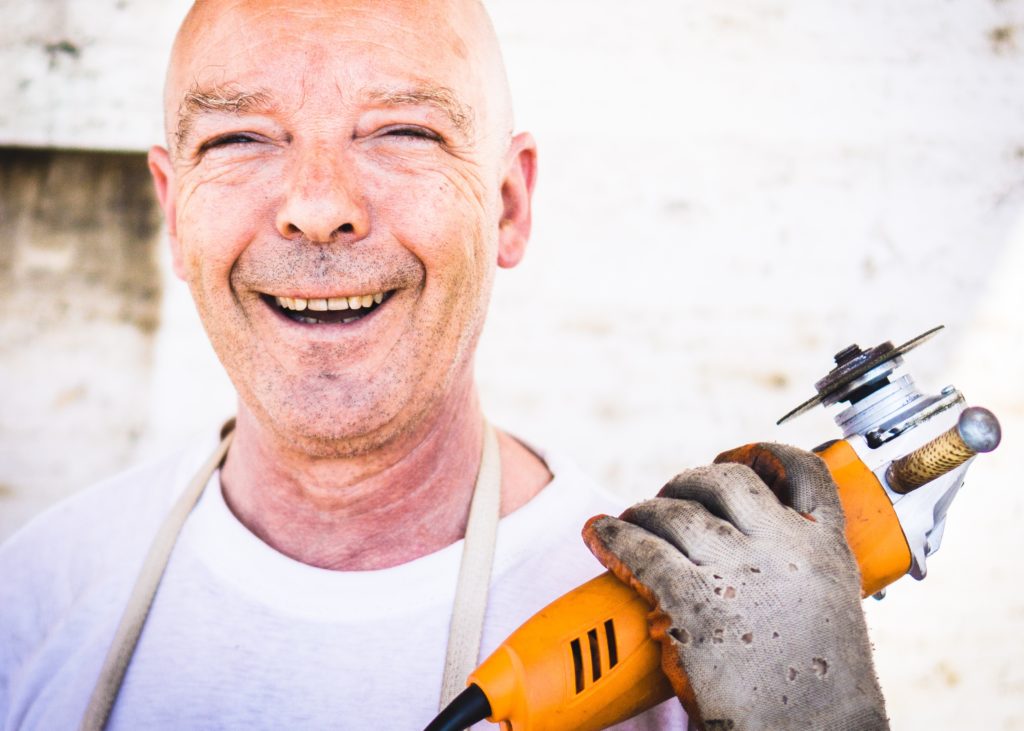
    The effect of fatty acids on the brain turned this miserable man to a happy fulfilled one.

    I’m telling you, your brain is 60% fat.  60% !! Shocking fact when you step on the scale. But don’t try to lose that excess weight from your head, because THAT fat is pretty important. 

    Fats reside in the neuronal membranes–the brain cell membranes–and in the myelin sheaths that surround them. And they’re important for delicate synapses. Remember that synapses are the connections between neurons.

    The saturated fatty acids are combined in what’s called a lipid bilayer and that lipid bilayer forms the membrane that surrounds each brain cell. It’s made up of straight chain carbon atoms so the membrane is more firm like butter is firm at room temperature.

    Now–this is where it gets interesting– unsaturated fatty acids are made of bent chain double bond curvy molecule structures. Because of this, there’s more space between molecules so when unsaturated fats are incorporated into the cell membrane, the membrane is more fluid. So, if you compared oil to the firmness of butter, these are more fluid like olive oil, for example. 

    The omega 3 fatty acids are fluid ones.

    Another remarkable characteristic of omega-3 fatty acids is that they’re precursors to eicosanoids like prostaglandin which can reduce inflammation. Super important for psychiatric disorders, which are associated with increased inflammation.

    Eicosanoids go by the nickname ‘local hormones’ because they act on cells close to their site of production. So fatty acids in your brain cause the release of prostaglandin, which reduces inflammation that contributes to depression.

    That’s a mouthful! But it tells a promising story.

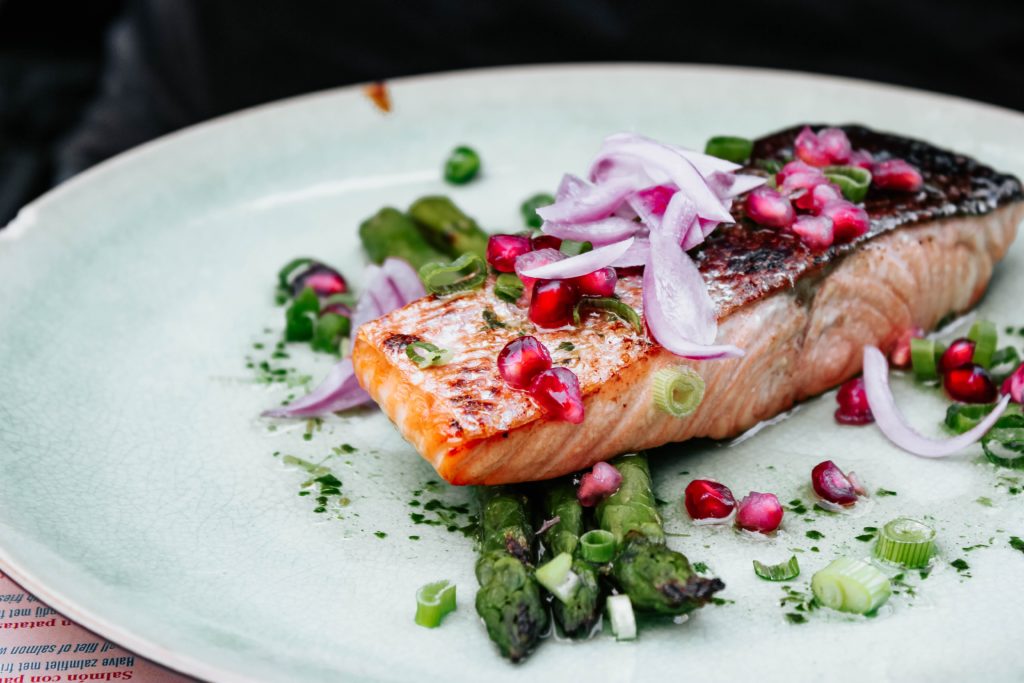
    Get the effect of fatty acids by eating more fatty fish.

    The effect of fatty acids on your brain results in wellbeing for you.

    Fatty acids like omega-3s are considered essential fatty acids, and you can only obtain them from your diet.

    So to maintain a healthier, more positive outlook, decrease inflammation that can lead to depression, and actually fight depression symptoms, increase the amount of mackerel, salmon, oysters, sardines, and trout in your diet. Make sense? I hope so, because doing that can make a real, tangible difference for you.

    In addition, seaweed is a nutrient dense food that’s rich in omega-3 fatty acids. Nori seaweed typically presents itself in sushi, and is a tasty snack on its own.  Also spirulina and chlorella are also in the algae family and are a good source of omega-3s that you can add to shakes and smoothies.

    Fatty Acids Are Essential for Your Brain Health

    In a presentation at the annual meeting for the Society of Biological Psychiatry in NYC last year, Dr. Roel Mocking spoke about the critical requirement of fatty acids in psychiatric wellness.

    He demonstrated that Omega 3 fatty acids reduce inflammation, reduce the release of cortisol from the hypothalamus-pituitary-adrenal-cortex-axis, and activate the amygdala. 

    This family love to hike together and enjoy life together.
    The amygdala is one part of the brain that contributes significantly in processing emotion and decision-making. When someone’s amygdala is damaged, or destroyed, they tend to be fearless, and don’t use the necessary caution to make safe decisions since the caution the amygdala would create is absent. 

    So, by multiplying your fatty fish consumption, you provide your amygdala the fuel to be activated to process fear and enhance circumspect decisions. You can also reduce the release of cortisol, the stress hormone that has a negative impact on your health. And you equip your brain to reduce inflammation…all of which improve your mental and emotional functioning.

    The Effect of Fatty Acids on Your Brain

    Dr. Drew Ramsey, a nutritional psychiatrist, and author of 3 books on foods that feed the brain, is an assistant clinical professor at Columbia University. Dr. Ramsey promotes better nutrition for the brain with his patients. He laments that most Americans overfeed themselves in calories but starve themselves of the critical micronutrients the brain needs to thrive.

    He prescribes antidepressants and other medications for his patients, and engages in psychotherapy with them, too. And he teaches that fresh and nutrition-packed foods help make other treatments more effective.

    It’s a shame, according to Dr. Ramsey, that it’s so rare for Americans to eat foods that meet the needs of the “most complex and energy consuming organ in the body” which is the human brain.

    Eat the Rainbow

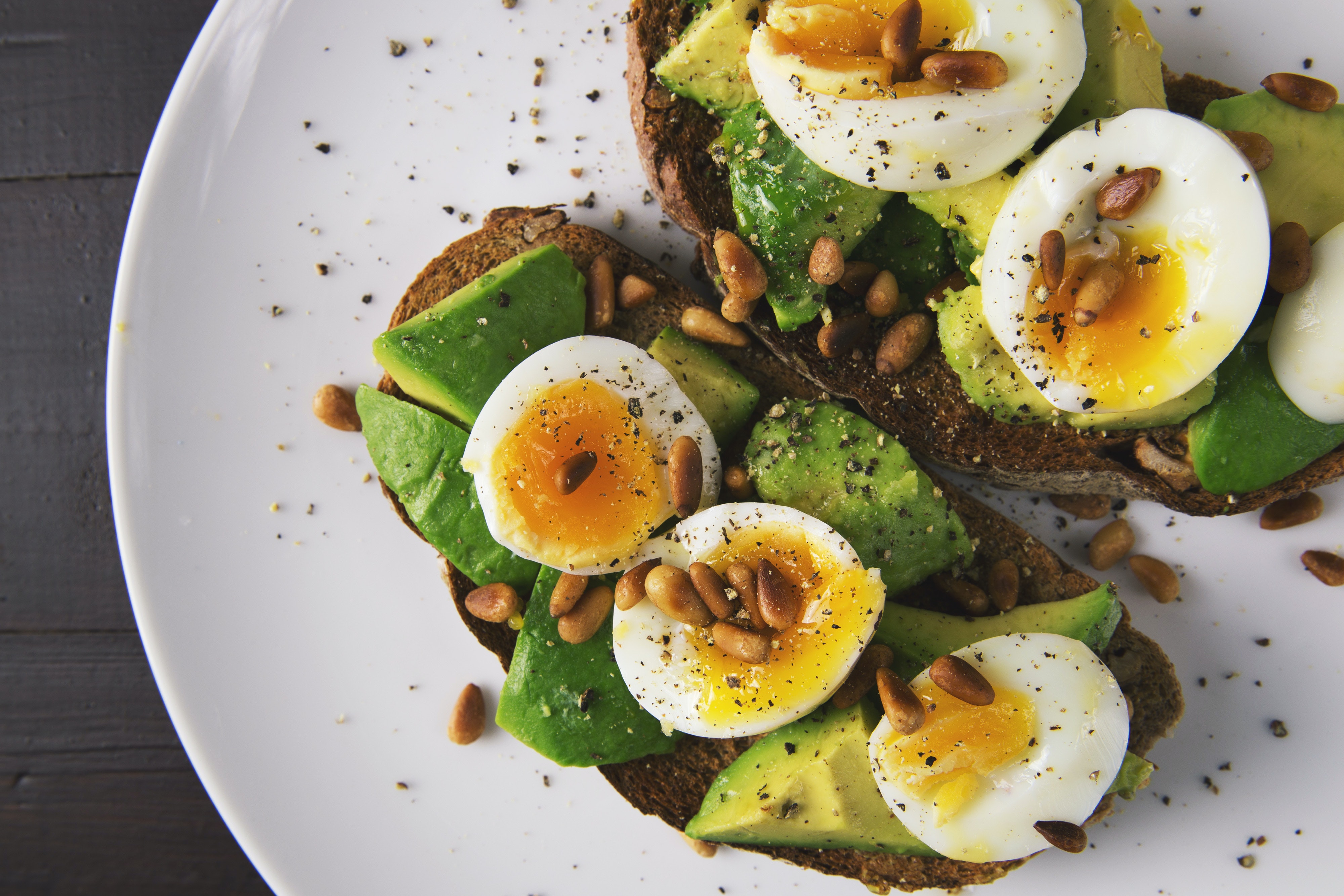
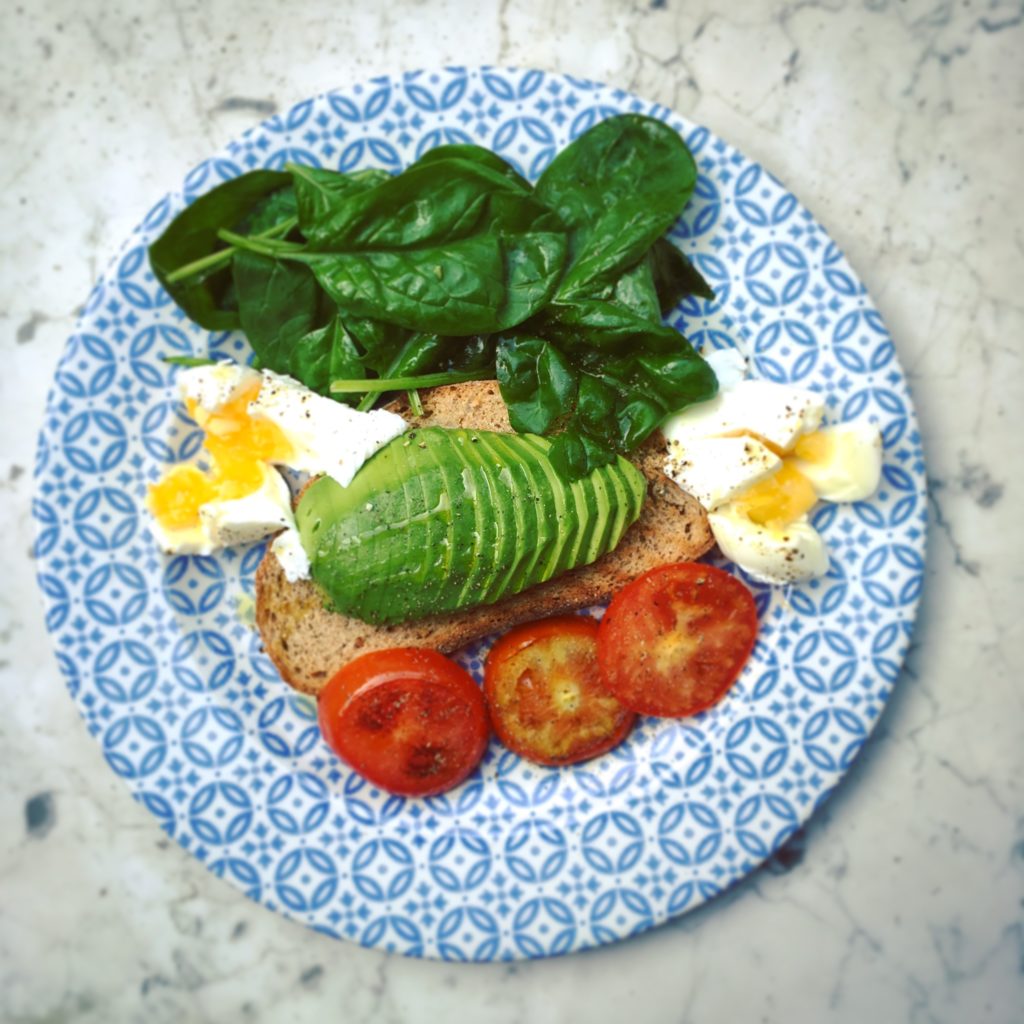
    This meal can contribute to the effect of fatty acids on your brain.

    He recommends “eating the rainbow,” as in eating all the colors of fruits and vegetables. Fresh foods like oranges, apples, bananas, pineapple, bell peppers, tomatoes, avocados, kale, sweet potatoes, and blueberries. 

    Combine these with fish like mackerel, salmon, trout, sardines. And walnuts, pecans, and almonds.

    These can help prevent harmful inflammation, and feed your brain, your heart, and your digestive system.

    They can reduce symptoms of depression and anxiety, and promote mental clarity. 

    Ketamine Treatment Can Help Give You a Fresh Start

    So, if your diet changes and medications aren’t bringing the relief you hope for, then let’s talk about ketamine treatment. Because this remarkable treatment of at least 6 infusions within 2-3 weeks has been changing lives across the country.  It just may change yours, too.

    At Innovative Psychiatry, we encourage brain supporting foods that improve your outlook and emotional wellbeing. 

    While we don’t center an entire treatment program around food, we do work with patients and guide them in supporting their brain function by avoiding food dyes and preservatives.

    In addition, we show them that by adding healthy foods, micronutrients, and lifestyle changes, they give their brains and emotions an optimal environment for restoration.

    This young woman is upbeat because of the effect of fatty acids in her diet.

    If you suffer from depression, symptoms of anxiety, or other mood disorders, and other treatments have brought no relief, call us.

    We’ll talk with you and determine whether you’re a candidate for ketamine treatment. We’ll guide you to eat foods that improve your well being. And please do follow the links in this article to read more information about your microbiome and your restoration.

    It’s all about getting better. Enjoying your life. Watching symptoms fade and your strengths rise. 

    Call us, and let’s create a plan to help you restore joy and fulfillment in your life.

    Can we stop suicide? Yes, with a series of IV ketamine infusions.
  • OCD: Better Treatment Targets For a Happier You

    OCD: Better Treatment Targets For a Happier You

    OCD: better treatment targets can relieve this girl's intrusive and upsetting thoughts.

    Obsessive-Compulsive Disorder or OCD is a term that is sometimes thrown around mistakenly. It’s sometimes used to describe someone’s careful behavior… you know, like careful organization, attention to detail, or a tendency toward cleanliness, which of themselves are actually normal behaviors. Many of us may be particular about these things without giving them a second thought. So to use the term in jest to poke fun at someone’s distinctive tidiness, for example, should be discouraged. You know why? Because doing so fuels stigma for one thing, and trivializes a serious medical condition. But neuroscience research is showing us that with OCD better treatment targets can give you a happier, more fulfilling life.

    People with OCD have recurrent, intrusive, unwanted thoughts that just occur—like cardiac arrthymias—out of the blue and over and over, upsetting them, plagueing them and precipitating compulsive behaviors they use to relieve the anxiety spiked by their obsessive thoughts.

    Obsessive thoughts can fall into certain categories — such as fear of harm coming to you or someone you love, fear of harming others or yourself, fear of illness or contamination, or preoccupation with things like patterns, numbers, morality, or gender identity. Insecurity about the future. Fear of throwing up.

    And so many others.

    The thoughts can have a certain theme for weeks or months… and the themes can vary within a day or over time. How often they occur can vary dramatically even for the same person. Their intensity can vary, too — and really affects the degree to which they intrude in your life.

    These thoughts — and the behaviors they invoke — can be so upsetting and time consuming that they interfere with your ability to be on time, and be present, and function at work, school, or in your social life. In fact, they can interfere to such a degree that they cause intense discomfort and distress. And it’s the intensity and distress that sets apart those who have OCD and suffer from a disorder compared to those who are just a bit more hygienic or meticulous than their friends. There’s a BIG difference.

    If you have OCD, unpleasant or fearful thoughts can fuel a reaction–and if the reaction is a behavior, we call that behavior a compulsive behavior. That reaction always starts and intends to relieve your anxiety. Right? But it becomes so repetitive and time consuming, it distresses you even more.

    Compulsions can range from excessive doubting or asking (did she have an accident? is he cheating on me? did I do that right?) to excessive hand-washing, skin picking, or excessive safety checking — checking and rechecking the door knob, the knob on the stove, or locking and unlocking your car, or something else potentially dangerous. You could meticulously clean, re-read, re-write, or arrange objects. You do … and redo.

    And there’s so much more.

    There are also some other subdivisions of this disorder that you may not have even heard of: like harm OCD, obsessive slowness, tic-related OCD, and even pure obsessional OCD — where there are no observable compulsive actions but obsessive thoughts that just won’t stop.

    Bottom line: many people suffer from a complex mixture of these types of obsessions and compulsions.

    It’s surprising how often the diagnosis is missed.

    It may surprise you to know that many people with OCD are aware that their intrusive thoughts aren’t true and that the compulsive actions they take don’t help. But they still can’t make them stop. And this causes them severe distress.

    OCD: Better Treatment Targets Are Desperately Needed

    Brain and Behavior Research Foundation presented a talk recently regarding the work of researchers to find more treatment options for those with OCD who are not helped by current available medications or psychotherapy. Because there’s a HUGE need.

    Treatments for OCD

    Serotonin Reuptake Inhibitors (SRIs) have been the only proven monotherapy, or singular form of medication treatment.

    The serotonin system is pretty extensive. It’s involved in many different parts of the central nervous system: From the hippocampus, cerebral cortex, cerebellum, basal ganglia, thalamus, limbic cortex, and temporal lobe, to the rostral raphe nuclei, caudal raphe nuclei, and the spinal cord. Exhaustive, isn’t it?

    Remission with SRIs is only 10-15% which is wonderful for those who achieve it, but the other 85-90%, need more help than that.

    Those who achieve a partial response to an SRI experience a decrease in symptoms in 20-40% of cases… but only 20% still enjoy improvement after ten years.

    Not great.

    So it goes without saying how seriously we need to explore OCD better treatment targets that are effective. So here are some possible options on the horizon…

    Augmentation strategies

    OCD: better treatment targets can dispel the fearful obsessions this girl experiences.

    Glutamatergic agents like Ketamine

    Studies continue to investigate IV ketamine treatment for OCD. One study may show good responses, then another shows it’s less effective. Researchers are guessing this may be due to different types of symptoms needing different treatments. You can see that it’s so important to research more deeply — and study different patient populations — to see which ones do respond and which ones don’t.  And to learn why.

    Is it based on the types of symptoms the patient experiences? Fear of harming others vs. Fear of contamination? Or is it based on comorbidity, such as cognitive rigidity or the presence co-morbid depression or anxiety? Researchers continue to explore these questions.

    A common augmentation strategy is with dopaminergic blockade agents, such as atypicals, as they’re called. (A shortcut for atypical antipsychotics–we often avoid saying the “antipsychotic” part and just call them atypicals.) Interestingly, these medicines fast-tracked for FDA approval treat psychotic disorders often have promising results with a variety of neuropsychiatric conditions.

    They’re pretty amazing. They can get you unstuck, and get your thoughts unstuck. They’re like Goo Be Gone–you don’t quite know where all of those repetitive stuck thoughts went. They just seem to dissolve.

    When the meds work.

    Exposure and Response Prevention (ERP)

    This form of therapy can be extremely effective, but it’s hard for some patients to see it through. It requires patient and consistent steps to bring about progress.

    The steps required can cause so much anxiety that patients sometimes decide it’s not worth it to them… so they quit. It’s also hard to find enough skilled therapists to meet the needs of patients who need this kind of treatment. Here at Innovative Psychiatry we’re not able to offer this therapy to new patients. But we can offer other treatments.

    For those who have not improved with medicine or therapy, surgery can be a consideration.

    We don’t offer that either. Just sayin…

    Ablative Neurosurgery

    When medicines and psychotherapy bring no improvement, an option may be ablative neurosurgery. This involves surgically interrupting precise connections between the cortex and striatum.
    The cortex is the part of the brain where you make decisions and decide what action you’re going to take. The striatum is important for carrying out those actions. So creating a disconnect between the two interrupts the cycle. This procedure can be 50-70% effective.

    The problem with ablative neurosurgery is that it’s surgery…. and its non-reversible

    It’s non-reversible. 

    Deep Brain Stimulation

    Deep brain stimulation is high-frequency stimulation achieved by implanting electrodes deep into the brain that are powered by a device planted in the chest…something like a pacemaker for the brain.

    When there’s a disturbance in the reward system of the brain it can lead to addiction, depression, and/or OCD.

    And good outcomes have been achieved with deep brain stimulation.

    For instance, the most common target site that’s been used for DBS is the ventral capsule/ventral striatum (VC/VS) and the nucleus accumbens (NAc) area. This area is approved for deep brain stimulation and is also being investigated for other purposes.

    A newer target was utilized in a recent and exciting study. Keep reading…

    A recent study (March 2019) seeking an alternative to ablation neurosurgery was conducted by Tyagi et al., and compared the effectiveness of deep brain stimulation at the ventral capsule/ventral striatal (VC/VS)  region and the anteromedial subthalamic nucleus (amSTN) region in the same patients. They tested to determine the differences on mood and cognitive flexibility and associated neural circuitry. They also used cognitive behavioral therapy throughout the process. 

    Each patient received DBS in one region at a time, then at a separate time in the other region. Each patient received significant improvement of OCD symptoms following DBS to each site. But they didn’t get any real additional improvement after having stimulation to both sites at once. 

    Hand washing by someone with OCD: better treatment targets will restore a rewarding life to so many.

    But listen to this – It was so exciting to find that when patients received DBS to the VC/VS region, they experienced improved mood. When they received DBS to the limbic STN area, it improved their cognitive flexibility without affecting their mood at all.

    Better Treatment Targets

    So while DBS was effective for OCD symptoms at both targeted sites, this implies that if a patient is having more difficulty with co-morbid depression, then she might receive relief for both conditions following DBS to the VC/VS region. However, if the patient’s greatest difficulty is with rigid cognitive thinking and needs more cognitive flexibility, then the NAc region might be the preferred target for DBS. Very cool. How many more sites can be mapped for this?

    All in all, this study opened up more possibilities to be investigated for treating OCD by isolating the specific sub-symptoms different people endure. Just imagine how much more effective OCD treatment could be if we were able to identify the targets in the brain where stimulation would relieve each OCD symptom.

    OCD: Better Treatment Targets Will Improve Quality of Life

    At Innovative Psychiatry, we’ve worked with a variety of treatments for OCD including SRIs, Transcranial Magnetic Stimulation (TMS), and IV ketamine treatment. Both TMS and ketamine treatment continue to be studied to improve outcomes for patients with OCD. There’s lots of work to be done still. And so we keep a close eye on advancements in neuroscience research to help us provide the most personalized care possible at this point.

    With each passing year, we hope for more discoveries to guide us to more and more finely-tuned options.

    Effective Treatment Includes Tools to Restore What’s Missing

    Depression can be treated with IV ketamine treatment and brought to remission. But it doesn’t always happen that way. Your treatment might be challenged by underlying variations in serum levels or cerebrospinal levels of a certain folate or of hormones. In the same way, OCD treatment can be deterred by individual symptoms and the brain regions involved in a given person’s disorder.

    This is why personalized treatment and care is so important. So let’s say it again:

    One Size Doesn’t Fit ALL!!

    We want to help you get better. We want you to have the freedom to pursue the life you want, the career you believe in, and build the relationships that will fulfill your life.

    If you suffer from a disorder that has not responded to multiple treatment strategies, call us. We specialize in finding effective treatment for your individual symptoms. No matter what advances are being made in psychiatry and neuroscience, if you don’t feel better, it’s hard to see the relevance. We get that.

    Call us. We’re here to help.

    Lori Calabrese, MD explains esketamine FDA approval and what it involves.

    To the liberation of your best self,

    signature of Lori Calabrese, M.D.

    Lori Calabrese, MD

  • Can Genetic Clues Really Predict Bipolar Disorder and Schizophrenia?

    Can Genetic Clues Really Predict Bipolar Disorder and Schizophrenia?

    Can genetic clues really predict bipolar disorder in people like this young woman, who doesn't understand her disorder.

    If you struggle with bipolar disorder, and the symptoms that seem to dominate your life, it may help you to know that many psychiatric disorders don’t really come with a list of predictable symptoms.

    If you have times when you’re short-tempered, highly energetic, sure of yourself, and quick to argue, you may have a mood disorder…or you may have had a frustrating week at work… And so goes the conundrum. You may feel like you’re low on energy most of the time, or find it hard to identify purpose for your life. How do you know if you’ve got something going on? How can you get a clue? It may seem far-fetched, but can genetic clues really predict bipolar disorder and schizophrenia?

    We look for clues all the time–little signs and symptoms that herald bigger problems to come. If you have all that going on… and it seems to run in cycles…  depression interrupted by periods of energy, over-confidence, a strong drive to win arguments… then periods when you can only think about dying…or ending your life yourself… Well, chances are, this may be more than a bad week at work. In fact, you should probably see a good psychiatrist in your area to help sort it out — because you may have a disorder. And if you do, treatment can help.

    So, let’s say maybe you feel intrigued to talk someone you just met into having risky sex with you…or maybe you’ve lost touch with the limits of your credit cards and feel inspired to do lots of shopping or travel and splurging. Maybe spending money gives you exhilarating feelings, but you feel like you’re accomplishing so much– and …you don’t notice this is out of character for you. You think it’s great.

    Oh boy.

    Your Disorder May Display Different Characteristics Than Someone Else’s

    Fighting cranes depict the unexpected conflict from someone with bipolar disorder.

    People with bipolar disorder don’t usually display all the symptoms, but they do display some of them. Whether it’s something like getting frustrated that leads to a major blowup and rage…and display of super human strength… or something like feeling untouchable and indestructible that leads you to do things that are so risky (so incredibly fun!) that the adrenaline just courses through your veins. Rather than feeling fear per se, you feel exhilarated — and want more of that feeling.

    Let’s look at it this way…

    If you contract a virus, something like the common cold, it’s easy to predict your symptoms, isn’t it?  

    Sneezing and a runny nose is how it starts.

    Sound familiar?  

    If it’s a particularly nasty cold, you might even have a fever. Then, the runny nose gives way to a stuffy head, maybe a cough or a scratchy throat, and you just feel awful. So predictable. We can pick up on the first inklings

    But some psychiatric disorders aren’t quite so easy to pick up on. 

    So Many Symptoms – Who Can Tell?

    Sure, there’s depression.  Everyone knows what that is…right? Or maybe not…  If you broke a nail right before a black tie event, that may seem depressing. But we’re not using the word appropriately when we say that. Because major depressive disorder (MDD) is a disorder… i.e., an illness. Grab your file and smooth out that nail. It won’t interfere with your fun at all. But if you have MDD, it’s not likely you’ll be able to have a very good time. Depression just takes the fun out of everything.

    Shopping can be fun, but sometimes spending way too much can be a sign of bipolar disorder.

    At the same time if you shopped for the event, spent your entire month’s earnings on an outfit for the affair, and left yourself with pretty much nothing to live on or pay bills with until your next paycheck, it’s pretty clear you used poor judgment. And poor judgment is not a disorder. It’s merely doing something risky that seemed like a good idea at the time …but a tough decision to live with the rest of the month. On the other hand, poor judgment can be a symptom of a disorder.

    Oh. Like when?

    So can explosive outbursts. Fits of rage. Or destruction of property. Again, they can be, but of themselves aren’t necessarily signs of a disorder.  So it begs the question: are there clues that predict whether a disorder is in the making? Are there genetic clues that really predict bipolar disorder and schizophrenia? Well… the answer is sometimes. And maybe.

    (This is where we tear our hair out.)

    You do need a psychiatrist to figure all this out. 

    Thirty years ago, a psychiatrist may or may not have been able to help. But chances were much better than they were 100 years ago, you know?  At that point, psychiatrists stumbled in the dark and devised theories to explain patients’ behavior, with little scientific evidence. There was so little we knew about the brain. Sometimes they helped their patients, but often they couldn’t. 

    In the absence of neuroscience discovery, psychiatrists did what all scientists do: they hypothesized. And they looked for evidence to see if they were right.

    Is it any surprise this branch of medicine was cloaked in stigma? 

    Can Genetic Clues Really Predict Bipolar Disorder and Schizophrenia?

    Now we’re advancing into the 21st century, and we’re still fighting the stigma that began in the dark absence of clear scientific evidence.

    So, let’s talk about where we’ve come in psychiatry.

    Now we can separate the genes on the chromosomes.

    You know what chromosomes are, right? Your DNA. But that tiny microscopic structure – that’s a map of who we are – is made up of genes. Now those are really tiny.
    We know what many of the chromosomes actually do. We also know that a tendency to develop various diseases can be found in specific positions on certain chromosomes.

    By the same token, certain clusters of genes in certain locations on the chromosomes can indicate personality traits that emerge in someone who has not yet developed a disorder. Genetic clues that can perhaps predict the later onset of bipolar disorder and schizophrenia… and the list goes on.

    Nicholas Pediaditakis, M.D.’s article in Psychiatric Times under the title, “The Dog That Did Not Bark,” explains how this might work. Sometimes, certain clusters of genes are missing… like if the “barking” genes are missing, it could result in a dog that doesn’t bark. 

    A child's temperament can be a clue to bipolar disorder or schizophrenia through genetic personality predictors.

    When that happens in people the genes that express themselves as personality traits, can create a “lopsided” personality, as he put it.  So the genes that would express themselves as socially outgoing may be missing or sparse, which can show up in the person as aloofness or an aversion to social situations along with a sense of autonomy. 

    Of course, this is an oversimplification for our purposes in this post, but the point is that this person is “premorbid”(in the sense that he doesn’t have signs of a disorder yet), but his “lopsided” personality can be a signal of schizophrenia or bipolar disorder that may be lurking in the future.

    Dr. Pediaditakis goes on to say that this premorbid asocial trait may result in a group of individuals who may be vulnerable and later turn out to develop schizophrenia or bipolar disorder. It’s sort of like a preview in the developing brain. He says,

    This synchrony is an emergent property of complexity. This probabilistic shift heralds the expression of the disorders and results in the development of characteristic symptoms for both schizophrenia and bipolar disorder.”

    The Give and Take That Leads to Gifting and Brilliance

    He also says that while both of these disorders tend to include psychosis at some point, there is also some trade off with traits that can be quite favorable.

    For instance, since their personality doesn’t include social traits, it’s as though they’re able to think in terms of unconventional alternatives and distinguish original and revolutionary patterns …whether scientific, mathematical, artistic, or musical. 

    Basically, since they have some freed up space in their head, they can also be remarkably gifted. Sound familiar?  

    Can genetic clues really predict         Can genetic clues really predict bipolar disorder?  This brooding man wants to know.

    It brings to mind the book and movie, “A Beautiful Mind,” about John Nash, Jr., the gifted mathematician who suffered from schizophrenia. And Vincent Van Gogh, the brilliant but tormented artist. And entertainers like Carrie Fisher, Mel Gibson, and Mariah Carey (to name just a few) who’ve struggled with bipolar disorder along with their creative brilliance.

    There’s a physiological reason, one only identifiable by neuroscience, that these great talents are simultaneously struggling with a severe disorder, while also displaying their creative gifts. The two might actually be linked, if indirectly.

    Neuroscience Leads the Way to Understanding More About These Disorders

    Molecular genetics, functional neuroimaging, and translational neuroscience has made great advancements in the diagnosis and treatment of both bipolar disorder or schizophrenia. Stigma about disorders like these is dying a slow death… we hope, in time, it will disappear altogether. 

    And we hope that time comes soon.

    Modern medical and neuroscience breakthroughs are exploding. And they raise the question: Can genetic clues really predict bipolar disorder and schizophrenia? There’s so much more we’re learning about brain circuitry, the hippocampus, the amygdala, the lateral habenula… and what is called translational neuroscience, where we take basic science research and translate it into clinical applications that help people. Like you, and the people you love.

    In the meantime, if you’ve been diagnosed with bipolar disorder, and if the medicines prescribed for you haven’t helped, you need treatment that works.

    You Deserve to Feel Better

    Ketamine treatment can make a dramatic difference in managing your bipolar disorder by wrangling bipolar depression. Scores of people in your position have been relieved to discover the difference ketamine treatment makes. 

    If your medicines are helping, you’re in a wonderful position. You’re finding you’re able to live your life with less difficulty and build upon the things that matter to you. But if your medicines aren’t working, if you’re tormented, living in chaos, and unable to invest in your job or relationships because of your symptoms, call us.

    Can genetic clues really predict bipolar disorder? Ketamine treatment  can  can give you great relief, if it does..

    At Innovative Psychiatry, we see people with bipolar disorder get much better all the time. Because lifting them out of depression that just hasn’t wanted to budge is a game-changer. When ketamine relieves depression, there is so much more time and energy left for managing your life. 

    We’re here to see that you get the help you need to enjoy your life, build up what’s broken down, and relish your friends, your family, and your work, as well.

    It can get better for you.  You’ll see.

    Can we stop suicide? Yes, with a series of IV ketamine infusions.
error: Content is protected !!