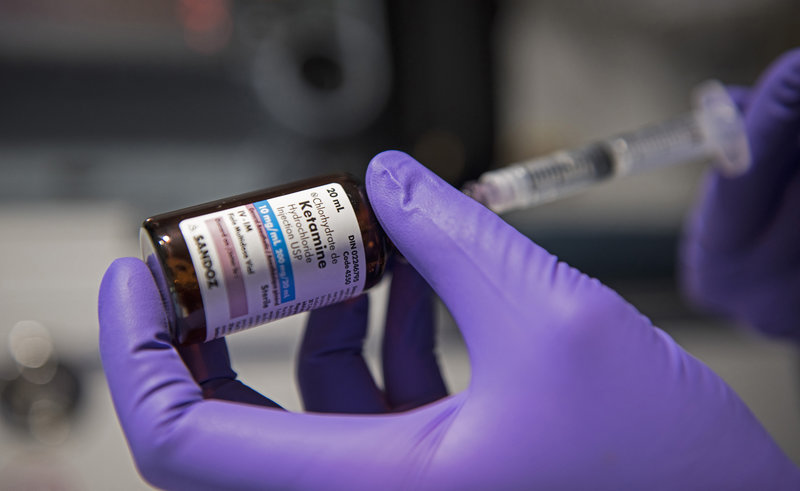

Tag: Ketamine for Postpartum Depression

  • Cerebral Folate Deficiency and Its Impact on Treatment-Resistance

    Cerebral Folate Deficiency and Its Impact on Treatment-Resistance

    Man thinks alone on cold silent shore may have cerebral folate deficiency.

    “If I see far, it’s that I stand on the shoulders of giants.”

    If you find yourself feeling alone and forgotten in your symptoms, feeling that there’s no one who really cares, please let me emphasize that there are hundreds, even thousands, of neuroscience researchers, medical doctors with PhDs, biochemists, psychopharmacologists, and psychiatrists who have been painstakingly searching for the answers you need for your suffering for generations, and millennia. You can feel alone, but there’s a host of people who have your back.

    After eons of exploration, and hundreds of generations have suffered without remedy, we are living in an amazing time when solutions are emerging. 

    Treating cerebral folate deficiency empowers you to enjoy the people you love.

    We’ve learned that the mild-mannered anesthesia medicine, ketamine hydrochloride, has been hiding in plain sight for nearly five decades, all along carrying within it the power to potentially transform your crippling depression, PTSD, and social anxiety into resilience, remission, fulfillment…and a rewarding life.

    It was right under our noses, but we were missing it…

    What else is lurking in plain sight that may hold the secret to relief for millions of people?

    More to Learn to Relieve Psychiatric Disorders

    While the vast majority of severely ill patients has been enjoying a life they’d not been capable of enjoying until they were treated with IV ketamine,  there were still those who seemed to be unaffected and un-helped by it. We haven’t known why.

    And even some of those who seemed unaffected and un-helped by ketamine treatment, began to improve in a slowly spreading glow until they too achieved remission months later.

    And we learned about genetic alleles for BDNF that may indicate an individual’s responsiveness to treatment, and clinical indicators associated with treatment response.

    Now we’ve been learning even more.  About deficiencies of nutrients that can cause depression and other disorders. One of these deficiencies has been exposed as a key factor in autism. And when the deficiency was treated with high doses, the symptoms of autism diminished!

    Who knew?

    Right under our noses.  Sometimes it takes generations of exploration passed down through generations of researchers to find the answers we’re looking for … which were lurking in plain sight.

    We’ve talked about how a deficiency in testosterone can be a culprit blocking remission from depression. 

    Another BIG player is cerebral folate. 

    Cerebral Folate Deficiency
    Cerebral folate deficiency is the cause of treatment-resistant depression in many people, and is easily treated.

    Folate is vitamin B-9, and provides important services throughout the body. In the brain, it plays an important role in neurotransmitter production. So when it’s deficient, the neurotransmitters tend to be produced more slowly.

    You can read the label on your breakfast cereal box and see that it contains folic acid.  But folic acid can’t cross the blood-brain barrier, which is there to protect the the brain from fluctuations that can interfere with its function.

    Only in the form of folinic acid or methylfolate can folate reach the brain. And to do that it has to have a transport, called the folate receptor alpha, to take it there.

    So to get B-9 into your brain to do its part in the neurotransmitter factory, it has to be in a certain form that can get through the security gate of the brain, known as the blood-brain barrier. Plus, it has to hitch a ride on a specific type of truck, and that truck has to be a specific model – the “low affinity folate transporter.”

    It’s not hard to picture that a brain can get low on this stuff. So many hoops to jump through! 

    How Cerebral Folate Deficiency Can Affect You

    And interestingly, most of the research  about this has involved infants and children. In fact, the story of folate in the brain has a gripping history. It involves autistic children and infants with severe neurological disorders..but as those discoveries made their way into adult psychiatry.

    Well, we’re talking about it now because it turns out that adults have deficiencies too…and this is a deficiency that may contribute to why your depression seems treatment-resistant — but the problem is not that hard to treat. Which is good news…really good news.

    Cerebral folate deficiency may cause this man treatment-resistant depression.

    In fact, if we find you’re treatment- resistant because of folate deficiency, we can prescribe folinic acid or l-methylfolate to treat the deficiency. Then, you may find you’re not treatment-resistant any more. Sound like a plan?

    This is BIG news.

    What this means is that some people who don’t get better with ketamine treatment, may just need their folate deficiency restored so their neurotransmitter factory can crank up again and turn out those much needed neurotransmitters.

    Then, ketamine has what it needs on hand to help you get dramatically better. 

    Isn’t that amazing??

    Researchers Paved the Way

    In 2005, Dr. VT Ramaeker defined cerebral folate deficiency as “any neuropsychiatric disorder involving problems getting enough folate into the brain.” He was referring to the infants he treated. They had severe neurological illness, and happily, many of them responded to high doses of folinic acid.

    Then, in 2013, Dr. Richard Frye studied 93 pediatric patients with autism and found that 75.3% had cerebral folate deficiency. He also found that those patients who had a cerebral folate deficiency also had antibodies to the folate receptor alpha — that specialized transport truck that takes the folate into the brain.

    Treating cerebral folate deficiency can transform depression to joy.

    The following year, we’re back to Dr. Ramaeker, who measured cerebral folate in 18 patients with treatment-resistant schizophrenia…and you guessed it! 15 of them had cerebral folate deficiency. He treated 8 of them with high doses of folinic acid and 7of them got better.

    Now, I should explain that finding the level of folic acid in the brain is a bit more involved than lab work. It requires a lumbar puncture so the folic acid in the cerebrospinal fluid can be measured. The measure of folic acid found in the cerebrospinal fluid is then multiplied by 1.5 to find the level in the brain.

    Then, in 2017, Dr. Lisa Pan measured folic acid in 33 patients with treatment-resistant unipolar depression. 12 of these had cerebral folate deficiency and 10 out of those 12 responded after high doses of folinic acid.

    Google’s Take on Folate and Cerebral Folate

    When you google “folate,” you get all sorts of links about how folate is needed in your body. It helps make red and white blood cells in the bone marrow, convert carbohydrates into energy, and manufacture RNA and DNA.

    (Hmmmm, makes you stop and think about BDNF. How it turns on mRNA to switch on DNA so the synapses proliferate and rebuild circuitry in the brain…  interesting…)

    But when you google “cerebral folate,” you find yourself reading about autism, and about treating it with folinic acid.

    Cerebral Folate Deficiency Causes Tragedies

    Cerebral folate is so important in the brain, that the lack of it causes all sorts of tragic results…. in infants, neural tube defects, spina bifida, cleft palate…

    To think that autism, schizophrenia, and depression show links to cerebral folate deficiency — in at least some people — pushes us and the psychiatric and neuroscience research community to learn more about the central role that l-methylfolate and folinic acid play in the the central nervous system and in the genesis of psychiatric disorders.

    These early important studies should prompt more extensive clinical studies. And they should prompt more interest in testing our patients with treatment-resistant disorders for this deficiency so that we can treat it sooner rather than later, don’t you think?

    Unfortunately, that’s not as easy as it sounds. But it’s a start for us to realize this B vitamin is essential to our health and wellbeing. And just might be the key to your treatment-resistant disorder.

    Treating Deficiencies in Vital Nutrients Helps You Thrive

    At Innovative Psychiatry we test for cerebral folate deficiency when we suspect it could be a cause of treatment-resistance. We prescribe treatment for it to help improve your response to your treatment, including ketamine, and in turn, potentially improve your resilience and remission.

    Remission gives the power to enjoy, which you can experience after treating cerebral folate deficiency.

    If you suffer from treatment-resistant depression, and think you might be a candidate for ketamine treatment, call us. We’ll do an evaluation to learn more about you and your illness. We can also order testing to help ensure your best outcome with IV ketamine treatment.

    With so many who have gone before us, shining the light brighter so we can better see the obstacles to your joy, we’re here to help you find the life you ache to live.


    Ketamine KRIYA Conference 2018
  • Low T in Men Causing Your Treatment Resistant Depression..?

    Low T in Men Causing Your Treatment Resistant Depression..?

    Low T in men can be overlooked as the cause of depression.

    Since low testosterone in men has long been presumed to accompany aging, it can be overlooked as a cause of TRD in young men.

    John had gained 75 lbs (!) through the stressful and exhausting project at work. He’d come to hate the way he looked.

    Co-workers had turned on each other, undercutting rather than supporting each other as a team. John was a team player, and while his skill was beyond the skill of others on the team, he could feel himself slipping into depression…again. And his skills were slipping, too.

    Because he was losing his edge, it was getting harder and harder to think through to solutions, much less articulate them to the others. He knew he was doomed. As long as his mind worked he could maintain his position in the department, but as depression returned, he became sluggish, he felt dense, and hopelessness rose like water in a submerged car.

    To add insult to injury, his girlfriend was complaining that they never went out anymore, and that she felt he’d lost interest in her. He knew he hadn’t lost interest in her any more than anything else…he just didn’t have the energy to face restaurant crowds…or even show her what she meant to him. In fact, he hardly had the energy to get out of bed on lots of days.

    And to make matters worse, his sex drive was shot. He just didn’t care about anything, but also felt like a failure as a man.

    Before the project began, he had a few suicidal thoughts at night…  But through the tormented road at work this year, the suicidal thoughts were cramming into each hour of the day at about 40/hour. He winced to himself… almost sounds like the speed of a car rather than an obsession to die.

    This had been going on most of his adult life. Why couldn’t it be fixed? Why oh why did he keep trying…going to work…diving into the hopelessness again and again day after day? Why not just get off…?

    What was wrong with him? Where could he find a doctor who could help him..??

    Treatment Resistant Depression

    Major Depressive Disorder (MDD) is complicated by a discouraging rate of relapse, even with those who achieve remission at some point. Studies of long duration have shown that patients who have residual symptoms after treatment have a worse prognosis. Which is why we do all we can to help our patients achieve remission, if possible.

    Low T in men has similar symptoms as treatment resistant depression, so it may be the low T needs to be treated to improve depression.

    Treatment resistant depression (TRD) causes immeasurable suffering. Because the symptoms don’t improve with traditional medicines, the ongoing struggle to find relief only seems to worsen symptoms. And untreated depressive symptoms that go on in spite of treatments can be debilitating and costly.

    Treatment resistance occurs in 45% of depressed patients. These are patients whose symptoms have not improved after at least 2 medicine trials… or some combination…for 12-16 weeks each. This condition increases risks because of higher prevalence of suicidal thoughts, attempts, and tragically, death. Nearly a third of treatment resistant patients attempt suicide in their lifetime.

    For years, most people thought that there were far more depressed women than men. That women are more prone to depression because they are more expressive of their emotions. But it turns out that isn’t true.

    Depressed Men Don’t Act Like Depressed Women

    When men are depressed they may show it with anger, irritability or aggression.

    However, studies emerged revealing that many men display different depression symptoms than women, and as a result their depression can be overlooked. Rather than sadness, they sometimes exhibit anger, irritability, and aggression. As such, those around them may pull away, rather than recognizing their loved one is actually depressed.

    Another factor is that men are less likely to talk about how they’re feeling or seek help. So that creates the idea there aren’t as many depressed men as women, because their families can’t read their minds, right?

    So a man who’s irritable and autocratic may actually be depressed, rather than just a difficult guy. (Surprising, sometimes.) This is good news for those friends and family members who love them. Because, if he is, he needs treatment… but he may not ask for it. Even if he does, there is a strong chance the treatment won’t help, or at least, not much.

    If we’re to know what to do for him, we have to consider other things first.

    So what causes depression in men

    Low T in Men

    Honestly, the same things that cause depression in women, for the most part. Chronic stress, genetic factors, environmental factors, biological events like heart attack, stroke, chronic pain, or amputation, and other illnesses like diabetes, Parkinson’s, heart disease, or cancer.

    But, there’s another condition that’s often overlooked. Low testosterone, or low T, is seen with hypogonadism. 

    The testes produce most testosterone (90-95%). But a small portion is produced in the adrenal gland. And studies have established that testosterone treatment can help men feel better emotionally, so a deficiency of testosterone can erode their mood and outlook.

    Some men receive the diagnosis of hypogonadism. This is a condition that causes their bodies to produce too little testosterone.

    Low T in men is sometimes seen in young men who have treatment resistant depression symptoms.

    It’s been said that hypogonadism, or low T, is a malady of elderly men. But, that’s a generalization that doesn’t take into account the many men between ages 18-40 whose testosterone level is below 10.4 nmol/L and who have treatment resistant depression. 

    Low T in YOUNG Men

    Low testosterone is a leading cause of treatment resistant depression in older men, but many overlook that it’s a big cause of treatment resistant depression in younger (age 18-40) men, too.

    Stanley Korenman, M.D., and his team published their work about the link between low T in young men (ages 18-40) and depression in a paper published November 2018 in the Journal of the Endocrine Society.

    They studied 186 young men who made visits to a university medical center for any reason between the years 2013-2015. These men had symptoms of treatment resistant depression.

    The prevalence of hypogonadism was present in 22.6% of these men.

    The authors called for more research to determine if the hypogonadism causes the treatment resistant depression or if the treatment resistant depression causes the hypogonadism…maybe both?

    Because to neglect this connection may be to ignore a condition that’s reversible. One that turns treatment resistant depression into treatable depression. And treatable depression can be transformed to remission.

    We Strive to Treat YOU in YOUR Own Uniqueness

    Our approach at Innovative Psychiatry is to treat each underlying condition and its own symptoms, then watch to see how the /improvements in function combine toward resilience and remission.  It can be a tedious process but it’s all worth it when your symptoms finally dissipate.

    A key component of your recovery may include IV ketamine treatment, if you have a treatment resistant disorder. Ketamine does its best work in patients with the most complex treatment resistant illnesses. But for ketamine to do its best work in restoring your brain cell connections prolifically, you need to treat other conditions like low T that may get in the way.

    For this reason, we also may encourage you to see a specialist as we work on the process of treating your depression. We always love to work with your specialized health care team to help you get the most personalized care so you can feel really good again.

    Low T in men can be treated it can also help to relieve treatment resistant depression.
    There is no one-size-fits-all remedy for everyone and every complexity of illnesses. But we  must work together, exhaustively, and explore your disorders, your nutrient imbalances, your social and work life, your family life, your exercise, your diet…every aspect of your health…to tease apart those elements that may be contributing to the way you feel.

    And while it may require an investment of time, effort, treatments, and re-evaluations for awhile, it will all be worth it when you look in the mirror and love the person you see there.  Better days are ahead.

    You will never hear me say, “There’s nothing more we can do.”  Those days are over in psychiatry, I hope… but you will hear me ask, “What was the very best YOU you’ve ever been…? That’s the you we’re going to help you find again – together.”

    To the restoration of your best self, 

    Lori Calabrese, MD offers innovative psychiatric treatment like IV Ketamine
    Lori Calabrese, M.D.
  • Ketamine May Relieve Depression By Repairing Damaged Brain Circuits

    Ketamine May Relieve Depression By Repairing Damaged Brain Circuits

    NPR Logo

    Ketamine appears to restore faulty connections between brain cells, according to research performed in mice.

    The anesthetic ketamine can relieve depression in hours and keep it at bay for a week or more.

    Now scientists have found hints about how ketamine works in the brain.

    In mice, the drug appears to quickly improve the functioning of certain brain circuits involved in mood, an international team reported Thursday in the journal Science. Then, hours later, it begins to restore faulty connections between cells in these circuits.

    The finding comes after the Food and Drug Administration in March approved Spravato, a nasal spray that is the first antidepressant based on ketamine.

    The anesthetic version of ketamine has already been used to treat thousands of people with depression. But scientists have known relatively little about how ketamine and similar drugs affect brain circuits.

    The study offers “a substantial breakthrough” in scientists’ understanding, says Anna Beyeler, a neuroscientist at INSERM, the French equivalent of the National Institutes of Health, who wasn’t involved in the research. But there are still many remaining questions, she says.

    Previous research has found evidence that ketamine was creating new synapses, the connections between brain cells. But the new study appears to add important details about how and when these new synapses affect brain circuits, says Ronald Duman, a professor of psychiatry and neuroscience at Yale University.

    Studying ketamine’s antidepressant effects in mice presented a challenge. “There’s probably no such thing as a depressed mouse,” says Dr. Conor Liston, a neuroscientist and psychiatrist at Weill Cornell Medicine in New York and an author of the Sciencepaper.

    FDA Approves Esketamine Nasal Spray For Hard-To-Treat Depression

    So Liston and a team of scientists from the U.S. and Japan gave mice a stress hormone that caused them to act depressed. For example, the animals lost interest in favorite activities like eating sugar and exploring a maze.

    Then the team used a special laser microscope to study the animals’ brains. The researchers were looking for changes to synapses.

    “Stress is associated with a loss of synapses in this region of the brain that we think is important in depression,” Liston says. And sure enough, the stressed-out mice lost a lot of synapses.

    Next, the scientists gave the animals a dose of ketamine. And Liston says that’s when they noticed something surprising. “Ketamine was actually restoring many of the exact same synapses in their exact same configuration that existed before the animal was exposed to chronic stress,” he says.

    In other words, the drug seemed to be repairing brain circuits that had been damaged by stress.

    That finding suggested one way that ketamine could be relieving depression in people. But it didn’t explain how ketamine could work so quickly.

    Was the drug really creating all these new synapses in just a couple of hours?

    To find out, the team used a technology that makes living brain cells glow under a microscope. “You can kind of imagine Van Gogh’s Starry Night,” Liston says. “The brain cells light up when they become active and become dimmer when they become inactive.”

    That allowed the team to identify brain circuits by looking for groups of brain cells that lit up together.

    And that’s when the scientists got another surprise.

    After the mice got ketamine, it took less than six hours for the brain circuits damaged by stress to begin working better. The mice also stopped acting depressed in this time period.

    But both of these changes took place long before the drug was able to restore many synapses.

    “It wasn’t until 12 hours after ketamine treatment that we really saw a big increase in the formation of new connections between neurons,” Liston says.

    The research suggests that ketamine triggers a two-step process that relieves depression.

    First, the drug somehow coaxes faulty brain circuits to function better temporarily. Then it provides a longer-term fix by restoring the synaptic connections between cells in a circuit.

    One possibility is that the synapses are restored spontaneously once the cells in a circuit begin firing in a synchronized fashion, says INSERM’S Beyeler, who wrote a commentary accompanying the study.

    The new study suggests not only how ketamine works but also why its effects typically wear off after a few days or weeks, she says. “What we can imagine is that ketamine always has this short-term antidepressant effect, but then if the synaptic changes are not maintained, you will have relapse,” Beyeler says.

    If that’s true, she says, scientists’ next challenge is to find a way to maintain the brain circuits that ketamine has restored.

    [Read the Original Post Here]

  • Weekly Ketamine Infusions Show Initial, Repeated Depression Benefits

    Weekly Ketamine Infusions Show Initial, Repeated Depression Benefits

    A new study shows that weekly ketamine infusions are associated with continued and maintained reductions in depressive symptoms among patients with treatment-resistant depression.

    The findings, which are considered novel among studies assessing ketamine administration for patients with treatment-resistant depression, evidence the promising role the controversial drug could play in psychiatric care.

    A team of investigators, led by Jennifer L. Phillips, PhD, an associate scientist in the Mood Disorders Research Unit at The Royal’s Institute of Mental Health Research, conducted a randomized, double-blind crossover comparison of single ketamine infusion versus active placebo control midazolam. The assessment, held with 41 participants with treatment-resistant depression at single treatment center, observed patients receive 6 open-label ketamine infusions 3 times per week over 2 once patients had a relapse of depressive symptoms.

    Patients who reported a decrease of at least 50% in the Montgomery-Åsberg Depression Rating Scale (MADRS) received another 4 additional infusions once weekly in a maintenance phase.

    Those administered a single ketamine infusion reported significantly reduced depressive symptoms at the primary efficacy endpoint of 24 hours post-care versus those treated with midazolam. The therapy showed cumulative antidepressant effects over repeated infusions, as well a doubling of antidepressant response rate in patients, according to linear mixed models.

    Investigators found that 59% of patients met the response criteria following repeated infusions, with 3 infusions serving as the median dosage required to reach achieved response. In patients receiving weekly maintenance infusions, no further improvement in MADRS scores were reported.

    The first-of-its-kind findings come just 1 month following the US Food and Drug Administration (FDA) approval of esketamine nasal spray (Spravato) for the treatment of patients with treatment-resistant depression. At the time, the therapy made history as the first novel treatment indicated for depression in 30 years—and headlines as one of the first hallucinogenic drugs to reach indication for a common condition.

    Dennis Charney, MD, Dean of Icahn School of Medicine at Mount Sinai and a member of the Yale University team that led pioneering antidepressant ketamine trials in the 1990s, told MD Magazine® that microdosing or implementing controversial therapies for psychiatric care require what any other trial requires: control, safety, and a carefully-assessed standard for efficacy.

    “No matter what treatment is being assessed, you have to follow those scientific approaches,” Charney said. “For conditions that don’t have effective treatments available, there should be an open mind.”

    Adversely, Dan Iosifescu, MD, associate professor of Psychiatry at NYU School of Medicine, director of Clinical Research at Nathan S. Kline Institute for Psychiatric Research, and prominent ketamine investigator, told MD Mag that—among other reasons—ketamine will never reach at-home therapy use due to its prominent abuse as street drug Special-K. He anticipated the marketed therapy will be costly, and prescribed as long-term therapy for only a small depression patient population.

    “For the majority of individuals that benefit from it, it will be essentially buying them time for other treatments—be them pharmacotherapies or device-based treatment, or psychotherapies, because those are beginning to work much more slower than ketamine does,” he said.

    Whatever its marketed use entails, Phillips and colleagues concluded positively that ketamine showed both initial and repeated benefits for antidepressant effects as a once-weekly infusion.

    “These findings provide novel data on efficacious administration strategies for ketamine in patients with treatment-resistant depression,” they wrote. “Future studies should further expand on optimizing administration to better translate the use of ketamine into clinical settings.”

    The study, “Single, Repeated, and Maintenance Ketamine Infusions for Treatment-Resistant Depression: A Randomized Controlled Trial,” was published online in The American Journal of Psychiatry.

    [Read the Original Article Here]

error: Content is protected !!