Tag: KETAMINE TREATMENT CONNECTICUT

  • Two Big Causes for Dread Today:  The Vote and Second Surge of Coronavirus

    Two Big Causes for Dread Today: The Vote and Second Surge of Coronavirus

    Disasters can come in many forms… barring natural disasters like earthquakes or floods… political disaster and a rising pandemic sound pretty daunting.
    There’s the anxiety that accompanies voting tomorrow, and hopefully you’ve had the opportunity to vote early and avoid the big final voting day… Then add to that the OUTCOME of the vote the next day. The fact that it will go one of two ways… and it’s easy to cling to the idea that the world as you know it will end if the vote doesn’t go YOUR way. Eeesh…. Right along side that is the rising tide of COVID-19 in the news as the daily infection rate rises higher and higher. The CDC reports 99,750 new cases this past Friday in the US, the highest single day count of new cases ever in the US. That’s up from 63,000 October 16. We are neck deep in the Second Surge of coronavirus.

    Yikes…

    Both of these issues have been looming. At the end of the summer, COVID seemed to have been receding. Then there was talk of the Second Surge of coronavirus. Now, the news is full of the threat of the worst flu season in memory because of the combination of influenza and COVID-19.

    Like the growing gloom of black thunderclouds on the horizon, when the low barometric  pressure is a hint of the impending storm… there is the sense in the nation that disaster looms.

    And you feel helpless.

    And fearful that life will become somehow unmanageable, so difficult that it may overwhelm you and those you love.

    Stop and take a breath.

    Breathe in…

    Breathe out…  

    Repeat.

    Because of particularly strong clashes of ideals and passions, they’re calling this vote an Election on Steroids.

    There was a time when elections were so apathetic that big chunks of the population didn’t bother themselves to vote.

    Not now.

    Where the presidential election is concerned….only one candidate will win. You know that.

    But here’s the rub. No matter who you voted for, life will move forward. Your life, your family, your job…your routine…will move forward.

    Those who didn’t vote for that candidate will adjust.  And those who did are sure to suffer their own disappointments at some point too…but that’s how life goes.

    You. Your loved ones. That’s who deserves your energy and support. So get up. Keep living, and being grateful for everything that’s good in your life.

    Remember that your vote is one vote in a nation of millions of people. We live in a great nation with all its faults and all its strengths. And you’re a part of these millions of people who comprise this nation.

    We’re all connected, no matter who we voted for, or who wins. We’re connected by virtue of being Americans, and by virtue of being human. We all share the same DNA and we need each other.

    Tensions Foster Divides But You Can Bridge Them

    During the tensions of an election it’s easy to fall into grievous criticisms of other beliefs and ideals than your own. But honestly, it’s beneath all of us to do that. 

    During the terrible fires that have swept across the northwest, California, and Arizona, Americans go and help.  Right..? They don’t ask if the people evacuating are of one ideology or another.  They just help because they’re people.

    And doing so increases peace in the helper.

    After this election is completed tomorrow, think about what YOU can do to maintain your peace of mind, your stability, your support of other humans. It’s likely there will be others who react because their candidate didn’t win, and those who celebrate because their candidate did win. 

    But think about your life, your loved ones, and your wellbeing as a family.  Make an effort to understand those you don’t agree with. Make a decision to limit the time you spend watching the news, or reading news or political rhetoric on the internet.

    And focus on the good in your life,  the people you love, and your care for them.

    Second Surge of Coronavirus: The Double Whammy Flu Season.

    People everywhere are seeking ways to protect others from the ravages of the spread of these viruses. We already have cities in our country where hospitals are full…businesses have been shuttered.

    The numbers of cases per day are swiftly rising. In the US overall, on October 16, the number of cases/day was 68,000 but is now 99,750.

    Just Think. 

    There IS a need to take every precaution. To choose safety, rather than take chances.

    In NYC this weekend, a Halloween party was held where 400 people attended. Many wore no masks. Why? You have to wonder. Of course, police handed out citations to all they could, but what causes people to knowingly contribute to the second surge of coronavirus …?

    Ok. Yes. We’re all fed up with masks and gloves, sanitizers, and handwashing, as well as social distancing. But that’s no reason to stop doing what’s safe, is it?

    Still, you cannot change what other people do. But you can make your safety decisions based on what is currently happening. And you should.

    So if you know the people in the post office or grocery store line aren’t wearing masks, don’t go there!  You can always send gifts from websites and have them delivered directly to your recipient.  

    When you go to the grocery or hardware store, use one where you can park in a special space and they’ll bring your purchase to you. So that you avoid going inside. You do have choices to keep yourself and loved ones safe.

    See how easy this can be? No muss, no fuss, no frustration.

    You can stay safe from this second surge of coronavirus by making thoughtful choices that take care of you.

    Plus, it’s a lot easier to make choices that are right for you than to let yourself get fearful, resentful, and angry at those you see not following the safety protocols.

    What Else Can YOU Do to Navigate and Weather the Sense of Dread You Feel At This Weird Time?

    Walks in the fresh air can help. Eating a diet that’s chosen from all the food groups, especially all the colors of vegetables and fruits. Greens, reds, blues, purples, yellows…

    And if you need the kind of treatment ketamine infusions can provide, call us. 

    At Innovative Psychiatry we’ve taken extra steps to make sure we’re constantly destroying COVID-19 and flu viruses in our offices. We’ve gone the extra mile, so you can feel safe here, and our staff is safe, too.

    If you struggle with these and treatment hasn’t helped, call us.

    Ketamine treatment may be able to help you rise above the dread and feel hope and clarity again.

    This is an unusual autumn. We won’t see another one like it anytime soon. And we’re going to get through this safely, together.

    Please call us and let us help.
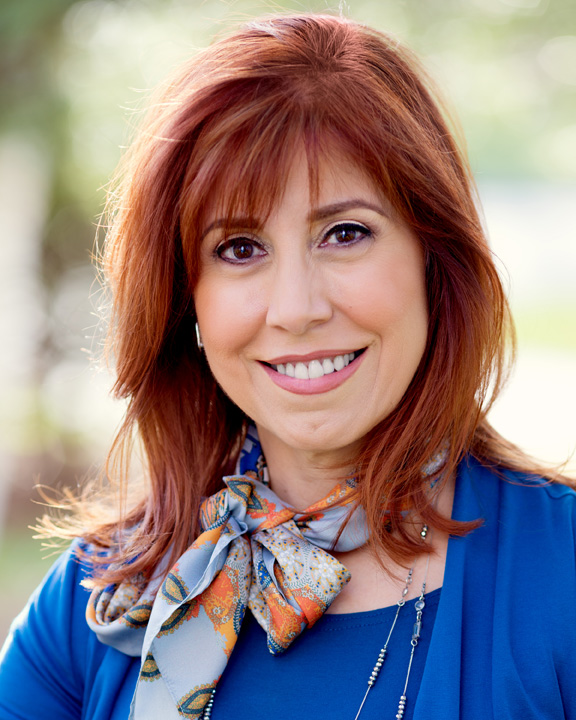
    Lori Calabrese, M.D. is on the front end of the race to stop PTSD in its tracks using IV ketamine treatment.

    To the restoration of your best self,
  • Plasma Cell Technology Destroys Viruses to Create a COVID-19 Safe Ketamine Clinic

    Plasma Cell Technology Destroys Viruses to Create a COVID-19 Safe Ketamine Clinic

    A 21st Century Approach to A Safe Ketamine Treatment Environment For You

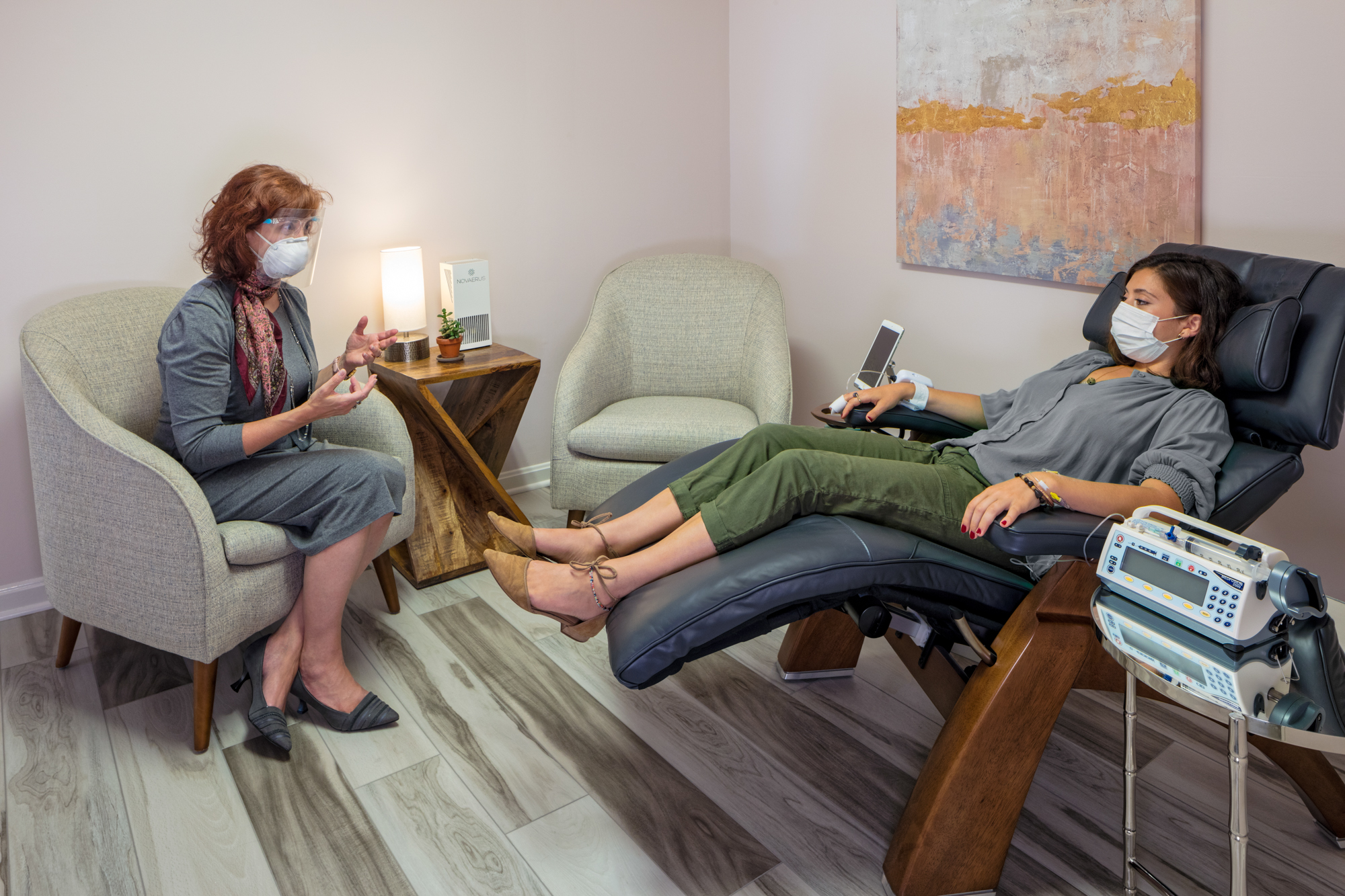
    We’re always on the leading edge. And we’ve taken your safety a step further as we lead the way in providing the safest possible clinical setting for ketamine treatments: IV, IM, IN, and ketamine-assisted psychotherapy. We’ve talked about the safety of IV and IM ketamine treatment. We’ve also talked about the ways we’re taking precautions to keep you safe during this pandemic when you come in for ketamine treatment. What you maybe didn’t know is that behind the scenes, we’ve been continually scrubbing the air you breathe to destroy viruses and bacteria, lifting pathogens from hard surfaces, and laying down protective microbarriers – with new plasma cell technology that destroys viruses. We’re innovators, always seeking the best possible solutions. So, true to form, we’re the first ketamine practice anywhere to offer this complete technological safety package for our patients. In fact, we’re leaps and bounds ahead because your safety and ours is of utmost importance.

    We’re in this together.

    Let me tell you about what we’re doing for you.

    We’re on the side of science — not just about psychiatry, treatment-resistant depression, PTSD, BDNF, mechanisms of action, the lateral habenula, g-proteins. (What is all this stuff, right?) We jump right in to understand the controversies, to wade through the weeds — with new treatments like ketamine and with new world-wide health threats like COVID-19 — and we’ve been looking the safest technology to create a safe space. Staying safe, and staying healthy, is really the biggest game in town.

    So we stay up late, reading. And sometimes, like you, we’re up early, worrying. About how to stay safe. How to make it. How to make sure that you make it.

    And we’re doing that with VB Enviro Care.

    If you’re thinking about ketamine treatment, you should see a psychiatrist who is on the forefront of innovation — in every aspect of their work, including the space they’ve created to offer you treatment. We believe that, and we live and breathe it. So today we’re going to talk about that space — our incredibly lovely space — and the air you breathe when you’re with us.

    VB Enviro Care provides us with the best technology that destroys viruses like coronavirus in our offices.

    So we can all breathe easier. So we can be less fearful.

    It’s tough enough to come up for a breath of air when you’re depressed, or anxious or dealing with trauma.

    You shouldn’t have to worry about that breath of air when you’re in your doctor’s office.

    We have plasma cell technology that was developed at MIT and NASA, prepared for a time when we might be faced with biological warfare. (OK… so I would say we’re facing the fight of our lives with this pandemic… it sure feels like that.)

    It’s a plasma cell technology that not only removes but destroys viruses, bacteria, and mold from the air and the environment in a closed space. So it’s perfect for a doctor’s office. A ketamine clinic. An infusion center. Hospitals, ERs, walk-in clinics… you name it. In fact, it’s been rigorously tested in hospitals and ICUs around the world specifically against stubborn, highly-resistant infectious viruses and bacteria.

    And we’ve got it here for you.

    A symphony of technology, products, and procedures to clean, disinfect, sanitize and protect our air and every hard and soft surface in our office. (Yep, even the gorgeous ones.)

    Lori Calabrese, MD

    So let’s talk about surfaces first. The ones you touch and see. As you know, there is a difference between surface cleaning and sanitizing (removing pathogens). For instance, some surface cleaners remove 97% of all viruses and bacteria from a surface. Others remove 99%

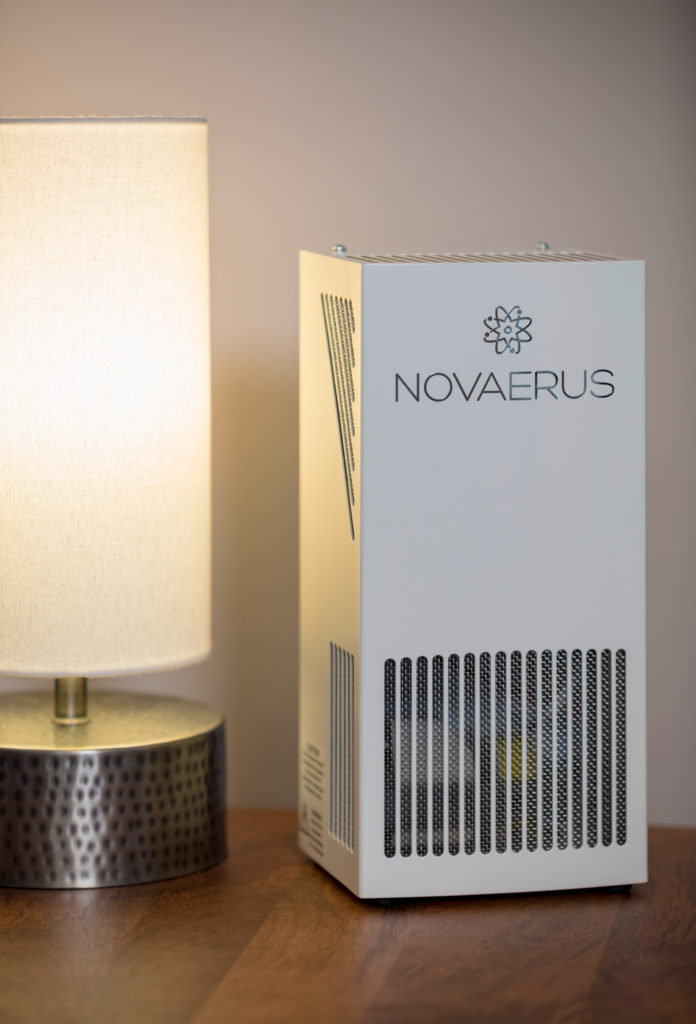
    But in a pandemic, and in a doctor’s office, you deserve not just thorough but the most thorough sanitizing available. Technology that targets and removes pathogens like viruses, bacteria and mold not JUST from the air, but from all of the hard surfaces you see and touch. The Novaerus units and Steramist service we use through VB Enviro Care obliterates and erases those microorganisms from the air — and even lifts them from those surfaces — continually and regularly.

    They do MISTING regularly to sanitize our surfaces and further sanitize our air.

    (Sometimes it’s called fogging or electrostatic spraying. We like “misting.”)

    MISTING DISINFECTS AND SANITIZES ALL HARD AND SOFT SURFACES AND LEAVES A PROTECTIVE COATING BEHIND TO REPEL VIRUSES AND BACTERIA FROM LANDING ON THOSE SURFACES. THIS TECHNOLOGY DESTROYS VIRUSES IN THE AIR AND ON EVERY SURFACE.

    Our system–our symphony–destroys 99.99% viruses, bacteria, and mold from surfaces…like cabinets, counters, tables, chairs, equipment, handles, and knobs. Including coronavirus… and flu.

    So we clean regularly, disinfect continuously (all day and all night) with Novaerus, and then have VB Enviro Care come in to mist with confidence and on schedule… which destroys virtually all of the organisms that can make you sick. Obliterates them. And leaves a protective barrier behind on every surface (even the soft ones).

    Why Is This a Big Deal?

    Because we live and work and see our doctors in enclosed spaces. We’re not talking about your back yard or the city park

    In the open, air can circulate constantly and replace the air that surrounds you. That constant circulation and diffusion thins out the concentration of any micro droplets of SARS-CoV-2 (the virus that causes COVID-19) — as long as people are distanced in open air areas. So coronavirus particles that waft your way are less concentrated.

    Oh wait. Microdroplets. What are those? When we talk about micro droplets, we aren’t referring to big juicy drops or even little juicy drops. These are so tiny they’re suspended in the air. (That’s why they’re called aerosols.) In fact, they can remain suspended for up to 16 hours. So the more an infected person talks and exhales in the same closed space, the more concentrated those aerosolized droplets become. And the more likely to spread the virus.

    Little side note here: This is also why we’ve been concerned that social distancing of 6 feet is not enough…because these particles can float 10 ft, 20 ft, even dozens of feet.

    And you know those sneezes and coughs we’re all so worried about? Those emit big drops…that are heavy and fall to land. But, the tiny aerosolized ones that are simply breathed out? They’re floating all over… ready to be inhaled.

    So what to do about them?

    While it’s important to keep washing your hands, to clean them of big droplets and keep them away from your face, it’s just not enough. Even wearing a mask isn’t enough. All those floating contaminants hang suspended indoors, slowly diffusing. Every time someone enters or leaves a building, more of those particles enter.

    Ok, so why not just boot up your laptop and order an air purifier?

    Because those have filters, and even some highly sophisticated systems that use UV, ozone, or chemicals…can block and hold the pathogens that are killing us. And there they can colonize, multiply, and escape back into the atmosphere.

    So think Plasma: It Destroys Infectious Organisms at the Molecular Level.

    VB Enviro Care and Novaerus use plasma technology. It kills airborne pathogens at the molecular level. Plasma, known as the fourth state of matter, can create an ultra low-energy “force field.” When bacteria, fungi, or virus particles—no matter how microscopic—move across this field, they are instantaneously destroyed at the level of their DNA. Every single one. Obliterated. 

    Novaerus is used in hospitals worldwide to safely kill airborne superbugs like MRSA, C. diff, and Tuberculosis, and has been proven to even be able lift and destroy them from hard surfaces. It has been tested and proven by more than 50 laboratories and clinical research sites, including the NASA Ames Research Centre in California. 

    So, this system is designed both for rapid remediation and continuous treatment of a given space.

    Our Novaerus units from VB Enviro Care perform with flying colors. They have been independently tested against MS2 Bacteriophage, a commonly used surrogate for SARS-CoV-2, and shown to reduce the virus by 99.99% in just 15 minutes.

    Plus they’re gorgeous. (Always a good thing.)

    A study published in June 2020, edited at Stanford University, highlighting the fact that COVID-19 is spread by sneezing or coughing has been corrected.

    Listen up because this is really important.  

    The truth is that just exhaling and talking release micro droplets containing the virus. So someone who has no symptoms can release infected micro droplets.

    The use of masks helps to manage these micro droplets. But only partially. 

    For this reason, it’s important to have the technology to destroy viruses in these infected micro droplets from the air you breathe.

    We have that technology. (I’m so excited that I’m saying it again, just in case you missed it!) Novaerus units through VB Enviro Care use patented filter-free ultra-low energy plasma technology with a single speed fan. And we’ve installed one of these units in every room in our offices.

    The result is that when you come in for ketamine infusions, the air you breathe is 99.99% free of coronavirus, influenza virus — and even the viruses that cause mild illnesses. It’s also free of bacteria and molds.

    What else are we doing?

    Locking our doors, keeping delivery folks outside, sanitizing what we bring in with ultraviolet lights. Washing our hands. Wearing masks, face shields, gloves. Cleaning with 70% alcohol throughout the day. Sanitizing each infusion room with with ultraviolet light after each infusion. Abiding by the rules, following quarantine guidelines, meticulously screening our patients and ourselves. We’re doing it all.

    We have protocols for you to follow to keep yourself safe, and for the safety all of our ketamine patients (and ourselves). We’ll send these to you before you come in for the first time and go over them again on the phone. Ask us about them before you come in for a follow-up infusion or maintenance infusion.

    These steps — combined with the best plasma cell technology and environmental care available that destroys viruses in our rooms — help you relax…and know you’re in safe hands. And in a safe place.

    So you can breathe easy.

    A symphony of care. Multiple layers of attention, time, and protection. You can have confidence when you’re with us.

    It’s enough that you are dealing with everything else this pandemic has caused while suffering from symptoms of treatment-resistant depression, anxiety, trauma, or suicidal thoughts.

    It’s ENOUGH.

    When there is so much to deal with, so much to overcome, to hold together, at least you can come in for your appointment and relax during treatment, knowing we’ve got your back. And the air that you breathe. Covered.

    We’ve talked often about how to screen a ketamine clinic. The 21st century technology that protects you when you are in that clinic is an important item to add to your list of requirements. For you, your family, and everyone you meet.

    At Innovative Psychiatry, we want to help you get better. And we’re relieved to be able to offer these advances in our office environment, so you can focus on your treatment and recovery.

    The medical journals these days talk about the increases in those who need psychiatric care during this pandemic — many who’ve never needed it before. Now, especially, you need to be not afraid to seek treatment for your symptoms.

    You need to feel better to cope. And you need to feel safe while you receive that treatment to feel better.

    So if you suffer from severe depression, bipolar depression, or PTSD that has not responded to treatment, call us. If you struggle with alcohol or other substances, call us.

    IV ketamine treatment may be the treatment that will make the difference for you. Although it doesn’t work for everyone (because nothing works for everyone), it does work for most. It can deliver hope, joy, and the capacity to build a rewarding life.

    Reach out and give yourself that opportunity safely.

    Lori Calabrese, M.D. is on the front end of the race to stop PTSD in its tracks using IV ketamine treatment.

    To the restoration of your best self,
  • Safety of IV Ketamine – What Do We Know About Repeated Infusions?

    Safety of IV Ketamine – What Do We Know About Repeated Infusions?

    Currently, with the growing use of IV or IM ketamine treatment for treatment resistant depression and bipolar depression, and years of clinical evidence to draw from, some people wonder if repeated use can cause adverse effects. 

    And while there is irrefutable evidence of serious adverse conditions among those who have used ketamine on the street in unmonitored doses, it’s time we learned more about the safety of repeated infusions of ketamine under a physician’s supervision. Thankfully, a prominent researcher has stepped up to the plate to give us answers to the question, “What is the safety of IV ketamine?” ~~

    Jackie’s sister Janie knocked on the door of her apartment. No answer. Her sister’s depression made it hard for her to see people…so it was common for her to not answer the door. Janie slipped the key from under the mat, and let herself in quietly. She found her sister in a ball in her bed… something was wrong. “Jackie, what is it? What’s happened?”

    Her 31-year-old sister was crying, and one look at her face told her she was more heartbroken than usual. She garbled through her tears, “I was so hoping ketamine treatment was going to help. I’d put all my hopes in it… that I’d get better, and be able to function, get a job and live like a normal person… But I was looking on the internet, and I found a site that said there are so many things that go can go wrong. I know it was just social media but I’m so afraid now…

    What is the safety of IV ketamine? I mean I really need to know. I so want my life to get better.”

    Janie sat next to Jackie wrapped her arms around her… and held her while she cried. She reached for the box of tissues and gave her one.

    “I have to tell you, Jackie, I’m not sure. But what I’ve read sounded good. My impression is that it’s safe, and effective…most of the time. Even though there are no guarantees…it sounds pretty transforming for most people.

    “But I’m sure there are naysayers out there. So let’s research it together — now. Let’s find out. I feel pretty sure we can read more studies and doctors; reports, and figure out how true what you read is.”

    She continued, “As it turns out, I did learn you may improve after the first infusion, but you may not. It may take a few. We won’t rush it, though. You suffered so many years from this depression, let’s give this treatment every chance to help you get truly, deeply better.

    “My hope for you to get help is huge. I’m not an expert, but this is the best potential solution we’ve found anywhere. So let’s dig. Let’s find the best truth we can.”

    Jackie had stopped crying…she was nodding. She sat up in bed and pulled her laptop into her lap. Together, they started with pubmed.gov and searched for studies about ketamine for depression.

                                                      ~~

    Just what is the safety of IV ketamine treatment? …Really.

    Then, there are those who talk about psychotic breaks during treatment, and those who say they have severe bladder damage… and the list goes on. But does that happen?

    Let’s face it, if you’ve never received ketamine treatment, you know how desperate you feel to get something that can alleviate your treatment resistant depression. But you read these reports that seem to be all over the internet … and you don’t want to be duped. You wonder if ketamine infusions are not as safe as you thought, and you don’t want to add other problems to your already horrific treatment resistant depression.

    Don’t you just wish you could get help to empower you to live your life? This life. The only life you have. And fear says…What is the safety of IV ketamine treatment? You don’t want to jump from the frying pan into the fire, right?

    Then, there are the reports of alarming hallucinations that are supposedly so terrifying some people are afraid to undergo this treatment. So much exaggeration.

    A research team led by David Feifel, MD, whose reputation in studying ketamine for depression stands for itself, recently published a study about the safety of IV ketamine treatment.

    His research team used a survey sent to 69 providers — most of whom were psychiatrists — originally. Since some didn’t complete the survey, and some surveys were incomplete that number for the survey reduced to 27 providers who reported on a total of 6630 patients who had received repeated ketamine treatment by IV or IM administration.

    Their focus was to determine the amount of adverse events these patients experienced and reported to their doctors…and it was surprisingly low.

    The patients were divided in the survey results by the number of treatments they received, the length of time they’d been receiving them, and how many discontinued their treatment due to adverse events. 

    Considering all the scuttlebutt and rumors that you can read about, it turned out that out of the 6630 patients, only 47 had to stop their treatment because of a side effect. (That’s means 0.7%.) Of those, 33 of the 47 had reported psychological distress during the treatment.

    Sometimes that can happen with dissociation. People with complex histories, lots of losses, tremendous trauma, and incredible emotional pain can sometimes experience distress or fear during a ketamine treatment session.

    With an IM treatment, absorption is quick and ketamine can peak quickly in the body — and it may be more challenging to manage distress. With IV treatment, the infusion can be stopped or slowed, or additional medication can be given rapidly to help quell the distress.

    This is why it’s so important for patients to be appropriately selected for this treatment, prepared for it–for what they might experience. And why it is so important that distress be recognized and attended to in the best possible way.

    In addition, Dr. Feifel reported that only 2 people experienced hypomania, which is 0.03%. No one became addicted to ketamine. No one suffered cognitive deficits as a result of the treatment. And only 1 person out of 6630 reported psychotic symptoms.

    As far as bladder symptoms…there were 3, or 0.06%. Let’s remember that some of these patients received ketamine far more than 20 times.

    And this may surprise you…

    About a quarter of the 6630 patients had 5 or less treatments.  But 42% received what’s considered the standard number of treatments: 6-10. And that left 1/3 of the 6630 who received over 10 treatments, with 7% of that 1/3 receiving over 20.

    So this population was well distributed to reveal the adverse effects in a few vs. a larger number of treatments.  

    The researchers noted that a study in South Korea on ketamine treatment for chronic pain used ketamine doses of 1mg/kg — higher than most in this study.  And that dose produced very few adverse events, with the treatment being considered very safe and tolerable.

    All in all, the adverse events seen with repeat ketamine treatments given IV or IM are pretty low risk. Of course we still have to be aware of all of the possible risks, and of all that we still don’t know about long-term side effects, especially about the incidence and severity of bladder symptoms. We are learning all the time — from our patients, our colleagues, and researchers around the world.

    And we learn from anecdotal experiences we read about of those who’ve used it on the street without medical supervision. 

    Dr. Feifel’s sorely needed report provides evidence about the safety of repeated parenteral (IV, IM) ketamine treatments. But even in those extremely rare situations where an adverse side effect occurred, we don’t know the particulars that may have contributed to it.

    But for many people who suffer treatment resistant depression or bipolar depression... or PTSD… and who look at the risks and benefits of a series of IV ketamine, the potential benefits often outweigh the risk of an adverse effect.

    Maybe that’s true for you, too.

    You deserve to have the power to live and enjoy your life.

    At Innovative Psychiatry, we’re uniquely equipped to keep you safe (and we’re working to do that even in the pandemic!). We welcome you into our treatment offices. Especially now you may need the freedom, relief, and extraordinary joy that ketamine infusions can provide.

    And if you, or your family or friends, want to know about the risks of repeated infusions in real world patients and real world outpatient settings, the data speaks for itself.

    And we’re always searching for more.

    Don’t miss the opportunity to feel like yourself… even if you haven’t been yourself for so long you don’t remember. You’ll recognize the real you when depression lifts and you are yourself again.

    Give yourself the chance to experience freedom, joy, and hope.

    If you believe ketamine treatment can help you, call us.

    We believe in who you can be.

    And we’re here to help you enjoy you again.

    Lori Calabrese, M.D. is on the front end of the race to stop PTSD in its tracks using IV ketamine treatment.

    To the restoration of your best self,
  • Recognize and Identify Depression and Seek Treatment

    Recognize and Identify Depression and Seek Treatment

    October is National Depression Awareness Month and October 8 is Depression Screening Day

    Recognize and identify depression symptoms with your friends and family so you can seek treatment.

    40 million US adults struggle with depression and/or anxiety. But not everyone who struggles recognizes they even have an identifiable or treatable condition, or that they need treatment. That’s why there are tools that you can use to help identify the symptoms and figure out if you might want to consider seeking treatment. This week, participate with people you love so you can recognize and identify depression. It can be lifesaving. For so many, it’s both. And like pedals propel the chain on a bicycle, depression and anxiety can just keep aggravating and perpetuating each other until you feel like you’re losing your footing.

    There was a time 20 years ago when society as a whole wasn’t aware of depression. There were all sorts of judgmental criticisms of those who suffered. So there is good reason to have a dedicated day — nationally — to draw attention to a condition that needs to be identified and treated.

    Apparently, it’s working, right?

    So let’s talk about screening.

    It’s important to know if you’ve just had a tiring day…or if you’re actually bearing the weight of a condition. Depression can present itself as mild to severe and anywhere in between.

    And while you may be able to get by with mild depression …in fact, you may be able to get through it with healthy activities, fresh air, good diet, and time to relax, severe depression probably is a sign you need treatment so you can function and recover.

    To recognize and identify depression in yourself or those you love is so much better than ignoring symptoms and behaviors you don’t understand.

    A screening tool measures – with your help – how you feel about your daily routine, about your energy, your sleep, your ability to concentrate, and your feelings about your life and future. 

    You can google “depression assessment tool” and take the little test to give you a somewhat objective impression. These tools are designed after a tool doctors use to help assess the severity of depressive symptoms called a PHQ-9.

    Of course, tools like this aren’t intended to take the place of  your psychiatrist, but using the tool informally may alert you to consider making an appointment.

    To take it the next step.

    Some people –you, maybe– have been moderately to severely depressed for so long, that your mood can lighten and you find your feel some relief but the screening tool still shows you’re moderately or moderately severely depressed. And it could be that you were actually severely depressed before you felt a lightening. 

    But with moderately or moderately severe depression, you should be under the care of a psychiatrist, to help you avoid a dangerous condition.

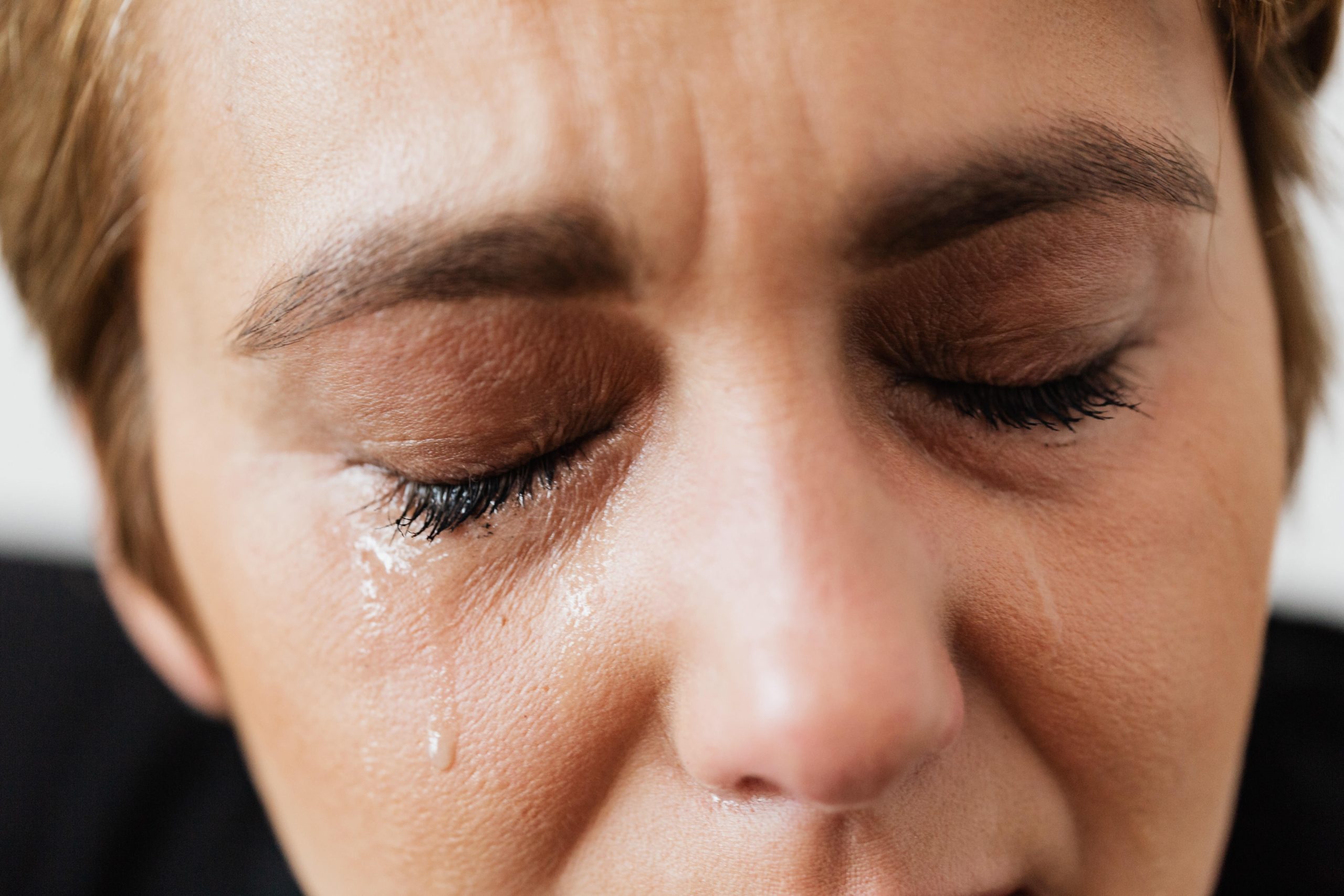
    if you feel terribly sad like this girl, recognize and identify depression symptoms so you can seek a psychiatrist.

    Remember, those tools can help you recognize your symptoms, get an idea of how severe they are and help you make a decision to see your doctor. Your psychiatrist will use a variety of screen tools, evolution, interview assessments, medical history, and more.

    So you need to know what to look for in adults, teens, and children, don’t you? 

    1. Do you feel empty? It may feel like sadness, or futility, too.

    2. Do you feel irritable..?  Do you find you’re just short tempered and easily agitated?

    3. Do you find you’re getting too thin, or maybe you’re suddenly gaining weight like crazy?

    4. Do you think about death, about dying, about yourself dying or someone else?  

    5. Is it hard to focus, concentrate, on your work, or a newspaper, or TV?


    As we stop to think about awareness and education toward recognizing depression in others, and offering support, there are some points we can celebrate as being positives that seem to come from depression.    

    For example, you may not realize that people who have suffered from depression tend to have more capacity for treating others with compassion. They often find they are less judgmental and have more capacity for understanding in what other suffer in life, and this is interesting: 

    They tend to be more analytical. 

    So they can break down complex problems into smaller, more manageable parts than those who haven’t experienced depression, and they often actually perform better on certain tests.

    Interesting, isn’t it?

    Still, what’s far more interesting is to utilize ways to recognize and identify depression so you can do something about it. To find the treatment that will restore, refresh, and help you feel good again.

    Antidepressants

    While it’s true that 35-60% of the people who have been diagnosed with depression respond to the first or second trial of oral antidepressants, there are about 35% who don’t respond to anything. 

    These cases are often among the most severe, and many have considered their depression to be treatment resistant. (The depression is treatment-resistant — not the person!) You can imagine why many attempts to receive effective treatment over months, years, even decades can result in feelings of futility.

    This guy is feeling despair, and needs to recognize and identify his depression symptoms and seek treatment.

    But in the last decade or so, IV ketamine treatment has become such a rapid and effective alternative treatment, that many have come to consider it their treatment of choice when nothing else has worked.

    Let me be clear though, that no one treatment is the treatment of choice for all depressed patients.

    Even so, even among that 35% who haven’t found help with other medicines or treatments, IV ketamine treatment can be effective

    “Effective” means that you could respond. Even better, “effective” means that you could REMIT.

    Picture remission like this…energy to meet friends for lunch and really enjoy your time with them, resilience to perform well at work and excel in your job, to bounce back from disappointment, and to build strong healthy relationships.

    And there’s more. Suicidal thinking is a life-threatening symptom of severe depression. IV Ketamine is also an extraordinary treatment to stop suicidal thoughts.

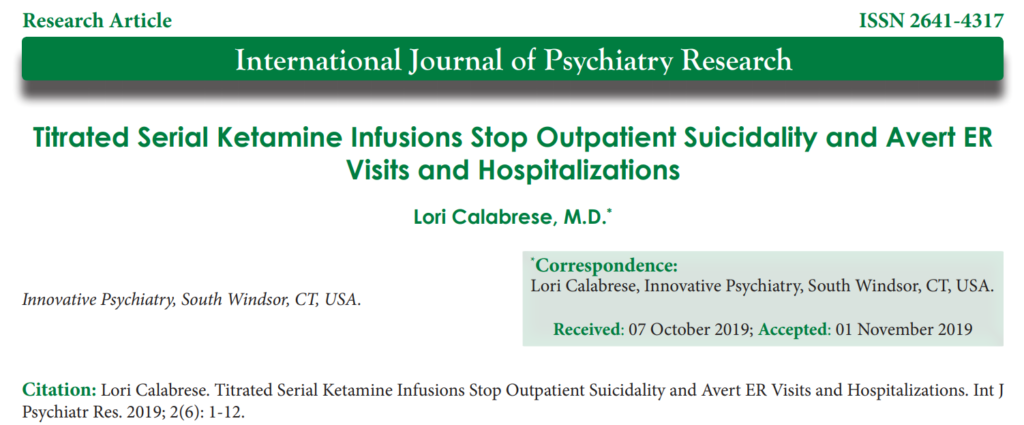
    Our study on ketamine’s effectiveness to stop suicidal thinking in the office in our patients with depression demonstrates ketamine’s potential for this life threatening symptom in a real world population of real people with complicated histories and hard lives. It can prevent that trip to the ER. It can help avoid a hospitalization.

    Ketamine Suicidality

    Our patients commonly go through ketamine treatment in our office over a couple weeks — and many emerge feeling wonderful. Ready to take on challenges, with the sparkle to be contribute, work with others, and be creative.

    Take care of your family to recognize and identify depression symptoms if they emerge.

    At Innovative Psychiatry, trying to do our best to help you and your family hasn’t stopped or slowed down because of the coronavirus pandemic. We continue to improve our protocols and technology for maintaining a safe environment for you.

    If you struggle with depression and have not found effective treatment, call us.

    Get with your loved ones and screen for depression this week. Reach out and take steps to recognize and identify depression in yourself or loved ones.

    And if you’ve suffered from unimproved depression, or if you find you’re thoughts filled with death images or plans, call us

    The National Suicide Prevention Lifeline: 1-800-273-TALK (8255)

    Sometimes the only person who can take care of you is you. Take care of yourself and reach out for help when you need it.

    There really is hope available so you, your fulfillment, and your future.

    We’re want to help you find relief from the emptiness, the despair, the futility, and instead experience the joy of living a rewarding life.

    Lori Calabrese, M.D. is on the front end of the race to stop PTSD in its tracks using IV ketamine treatment.

    To the restoration of your best self,
    We can all help prevent suicide. The National Suicide Prevention Lifeline provides 24/7, free and confidential support for people in distress, as well as prevention and crisis resources for you or your loved ones.

    The National Suicide Prevention Lifeline 1-800-273-TALK (8255)

    The Veterans Crisis Line and Military Crisis Line 1-800-273-8255 Press 1

    Crisis Text Line: 741-741 Free text hotline 24/7

  • Don’t Be Shy – Talk to Someone Suicidal Because You Might Save a Life

    Don’t Be Shy – Talk to Someone Suicidal Because You Might Save a Life

    This is National Suicide Prevention Awareness Week — Be aware and reach out.

    And while you may never have talked with someone who’s considering suicide, it’s likely you will at some point. Just as we need to refresh our CPR skills periodically, it’s important to refresh skills to talk to someone suicidal. It’s easy to brush off the risk as something dramatic like someone preparing to jump off a bridge. But the truth is, the guy in the next cubicle or the doctor you work with or a lady you see crying in the restroom — any of them could be struggling with suicidal thoughts.

    How often have you heard people say, “he had everything to live for,” or “he seemed like such a happy guy” or “she was so much fun.” Everyone’s baffled. And yet, obviously, it wasn’t all what it seemed. But maybe nobody asked.

    Most of the time, when someone reaches the point of considering suicide, it happens somewhat quietly. Thoughts of death and dying begin to creep into and then crowd their thoughts, but if you don’t ask, they may carry through on their thoughts without giving away their plans.

    You have to ask.

    Because, truth be told, we want to prevent suicide, don’t we? I know there are those who say that a person has the right to decide when he wants his life to end. But it’s a fallacy to assume that. Because those who have the clarity to make such a decision rationally, are the exception — not the rule.

    In most cases, suicide attempts and completed suicides are the result of a desperate desire to “not live like this anymore.”  It’s the result of desolate misery and finding no other option. 

    But there ARE options. For most people, if you can give them a way to live that’s joyful, productive, and rewarding without the incessant pain they endure, they would opt-out of death and choose a life that’s enjoyable and full of hope.

    And it’s for that reason we want to prevent suicide. 

    To give this suffering person a chance to live well. In a moment we’ll talk more about that. But for now, let’s focus on how to prevent a useless tragedy.

    So what can you do?

    Be AWARE that there are hurting people around you.  We all have busy lives and plenty of pressures, and it’s easy to be absorbed in our own pressures and worries and completely miss the guy we talk to every day who has actually reached the end of his endurance.

    So develop the habit of asking.

    Ask the people in your world how they’re doing, and listen to their response. Pay attention and show them that it really matters to you. This is paramount and is the primary way to find out if someone who crosses your path needs your help. Convey that you mean it.

    “How you doing, Jack?  No…I mean really.  How are you doing?”

    When you show that you’re not impatiently trying to give the expected greeting so they’ll disappear, but that you do truly care deeply how they are, you’re more likely to get real answers.

    And little by little, you’ll become known as someone who really cares, and someone a person could actually talk to. Which is why you want to talk to someone suicidal, because your caring could possibly be life saving for them.

    Understand that a person who is this depressed, or this desperate, has probably become isolated. And that’s a very lonely place

    To break that isolation, reach into it and show you care. One of the most powerful things you can do to prevent suicide is to be a friend to someone who’s isolated. Listen to them, spend time with them. BREAK the isolation.

    Feeling utterly alone in the world is part and parcel to the anatomy of suicidal thoughts. And remember, you can be utterly alone in a crowded room.

    Make Them Safe

    So what do you do if you talk to someone suicidal..? Start  by removing weapons from their environment, if you can.  Remove knives from the kitchen, guns from their house, maybe even the car keys. And don’t leave them alone. Find a friend or relative they trust to stay with them. Help to make their living environment a safe place.

    Also, do all you can to remove medications and alcohol from their household. Your purpose is not to control their life, but to provide safety while you find a way to give them hope.

    Then tell someone. One of their friends or family. Someone you can trust who will be with them, help them feel understood and supported.

    And talk with them about treatment.  About someone who can help them weather this storm and find new hope and new options to help them live.

    This is why you talk to someone suicidal.

    Help them find it.  Give them some good ideas for professional therapists. Because their life is more important than their crisis. It really can get better.

    The National Suicide Prevention Lifeline: 1-800-273-TALK (8255)

    Especially with the help of ketamine. Know that ketamine treatment can erase suicidal thoughts in a few hours…or even less.  That those horrific thoughts and images can be eradicated with the astounding effects of ketamine treatment.

    And that amazing benefit can give them the chance at life they wish they had had before…and give them the opportunity to find relief, restoration, and remission from depression and suicidal thinking.

    So there may very well be a solution. But how will they know unless you talk to someone suicidal and tell them? Suicidal thoughts are not limited by age, income, or any demographic. Children are susceptible, doctors and nurses are, investors and teachers are, your co-workers are.

    There is an alarming increase in suicide among doctors. No one is immune. So reach out and talk. And listen.

    At Innovative Psychiatry, we take suicidal thoughts very seriously. We offer ketamine treatment for suicidal thoughts and are thrilled to see the freedom from torment ketamine can provide. Someone whose life is at risk — high risk — because their thoughts are bombarded with death, dying, and ending their own lives, can walk out of our office relieved, hopeful, and grateful that those thoughts are gone.

    Ketamine treatment can be transformative, not just for suicidal thinking but also for the symptoms of depression, despair, substance use disorders including alcohol, PTSD, and anxiety. We share the joy of our patients as they walk out with hope and in remission.

    Not always, of course, and not everyone. Ketamine treatment is not a cure-all for everyone. No treatment is.

    But is may be what helps you when nothing else has. It may be what finally puts your symptoms into remission. If you yearn for the benefits ketamine can provide, call us

    We want to see you enjoying your life with hope and freedom from torment. Life can be rewarding and productive for you. Relationships can be strong and fulfilling. 

    Reach out for hope. We’re here to help.

    Lori Calabrese, M.D. is on the front end of the race to stop PTSD in its tracks using IV ketamine treatment.

    To the restoration of your best self,

    We can all help prevent suicide. The National Suicide Prevention Lifeline provides 24/7, free and confidential support for people in distress, as well as prevention and crisis resources for you or your loved ones.

    The National Suicide Prevention Lifeline 1-800-273-TALK (8255)

    The Veterans Crisis Line and Military Crisis Line 1-800-273-8255 Press 1

    Crisis Text Line: 741-741 Free text hotline 24/7

  • COVID Hassles Annoying? Ketamine Can Help You Embrace Living Again

    COVID Hassles Annoying? Ketamine Can Help You Embrace Living Again

    COVID-19 – Growing number of people suffer from anxiety, depression, and suicidal thoughts who’ve never faced mental health issues before.

    We’ve talked about it before, but the numbers are growing. Quarantine, masks and gloves, working from home, kids schooling at home, social distancing, Zoom meetings. It’s not just the change in routine, it’s the feeling of isolation, of needing a break. Sometimes you just want to go out to eat on Friday night…right? But with businesses closed, you can’t. Cabin fever with tired parents, kids bouncing off the walls… where do you go to get refreshed? With COVID hassles annoying, ketamine can help you break through and enjoy your life again.

    You wanna hang out with the girls, paint a picture, drink wine, and chat till the cows come home. But you can’t.

    Or go to the gym every morning and work out your frustrations, break a sweat… and go home loose and ready for the day. But the gyms aren’t open.

    2020 has been a tough year. A year you won’t likely forget. 

    Of course, if you’ve gotten sick with this coronavirus, that’s its own battle. But for those who have dutifully worn their masks, stayed home and attended Zoom meetings all day without being infected, there is still a risk caused by the stress of confinement and isolation.

    And it’s serious enough that far too many people have succumbed and faced psychiatric disorders for the first time in their lives. 

    A poll by the Kaiser Family Foundation found that 45% of those who responded to the poll in April 2020 stated their mental health had suffered during COVID. That was 10% more than the previous month.

    COVID hassles annoying? Ketamine can erase suicidal thoughts.

    Social isolation in adolescents increases fear and worry,  which create their own type of stress, wearing down coping skills. Too often, those worry cycles plunge to suicidal thoughts, and the desire to escape the misery.

    Seniors are also at increased risk. Those who are shut-ins rely on loved ones for the stimulation, interaction, and camaraderie to keep their outlook bright. Without those regular visits, hopelessness can quickly wear down their purpose and resilience.

    Common Sense Says Isolation Takes a Toll

    This is not to BLAME the pandemic, but to recognize that people all around us need a lift these days.  Every bit of interaction is restorative for the speaker and for the listener… or both.

    It’s one thing to show compassion to those who have suffered from mental health disorders all their lives, because it’s certainly true that each of you need extra support through these times.

    But, isn’t it alarming to realize so many people have been so negatively impacted by the pandemic, with all its inconveniences and isolation, that they’ve used up their coping ability and have also succumbed to depression, anxiety, and suicidal thoughts?

    So let’s look at this more closely.

    True, this pandemic has caused annoying inconveniences, some more difficult to bear than others. But we can’t go back in time, can we?  We can’t undo the release of this virus, its spread around the world, the cost to families, the economy, and our general well-being.

    COVID Hassles Annoying – Ketamine Can Restore Resilience

    At the same time, we don’t have to break under its influence, right?

    In times like these, mastering the art of bending, adapting to circumstances, can keep you feeling like you actually ARE in control.

    That means if you’re accustomed to traveling on a whim, and you’re not so free to do that right now, you can shudder and fume at the frustration; or you can set travel aside for a better time and choose something new and accessible for your stimulation and reward now.

    Covid hassles annoying? Learn to draw and paint and enjoy yourself.

    An IT guy built his own igloo shaped pizza oven in his backyard. Never laid a brick in his life. But he invented a new interest and poured himself into it. And in so doing, kept anxiety and depression at bay.

    It was a whole new adventure for him… that began with a new and surprising thought. 

    A school bus driver had no students to drive on her bus since students were learning online from home. So she dove into art development tutorials, and mastered skills in drawing beautiful, life-like animals. 

    Pandemic? What pandemic??  She was having too much fun to notice.

    Adapting means changing course to accommodate changing circumstances.

    That’s not to say these responses are always successful. But they are, more often that not.

    On the other hand, warding off symptoms of anxiety and depression by inventing new stimulating interests, honing new skills, or finding new forms of entertainment, are sometimes not enough.

    There are those who know these principles, but in this atmosphere found symptoms of anxiety, depression, and despair creeped over them in spite of their efforts to escape.

    Sometimes that happens.

    Sometimes listlessness takes over, with severely reduced energy, a bleak outlook, hopelessness, and a lost sense of your own worth.

    Which can make way for thoughts of dying. Thoughts that there’s nowhere to go from here. Thoughts that you’ve spent all you have to give, you’re depleted, and your life is finished.

    And those thoughts can become dangerous for you.

    If you find that the thoughts of death, dying, and despair are prevalent for you, there is help.

    COVID hassles annoying – ketamine treatment can erase suicidal thoughts

    As much as we talk about ketamine treatment demonstrating extraordinary responses in those who are depressed, or suffer from PTSD, or substance abuse, or even anorexia nervosa, it’s also remarkable in its prowess for erasing suicidal thoughts.

    The National Suicide Prevention Lifeline 1-800-273-TALK (8255)

    Suicidal thoughts can be plaguing you to desperation, then an infusion of ketamine can make those thoughts disappear in a few hours. 

    Life saving.

    Astounding.

    It’s so dramatic that I published a retrospective chart review of my own patients in my large practice.

    Ketamine Suicidality

    This treatment can erase those thoughts without hospitalization or emergency department visits, and give you the freedom to safely get better and enjoy life again.

    At Innovative Psychiatry, we treat patients with ketamine treatment for depression, social anxiety, PTSD, alcohol use disorder, and substance use disorder. And we also treat suicidal thoughts for their own sake.

    COVID hassles annoying? Ketamine can erase suicidal thoughts.

    If keeping yourself diverted, seeking new stimulation and developing new interests to get through these times with healthy hope stops working… if you feel yourself sinking into a sense of loss, confusion, despair, call us.

    We can help you find joy again. Invigoration instead of despondency.

    And if you feel like you don’t want to live, please call us. 

    With ketamine treatment, you can be free of those thoughts and feelings, and find them replaced with hope and rewards in life.

    Lori Calabrese, M.D. is on the front end of the race to stop PTSD in its tracks using IV ketamine treatment.

    To the restoration of your best self,
    We can all help prevent suicide. The National Suicide Prevention Lifeline provides 24/7, free and confidential support for people in distress, as well as prevention and crisis resources for you or your loved ones.

    The National Suicide Prevention Lifeline 1-800-273-TALK (8255)

    The Veterans Crisis Line and Military Crisis Line 1-800-273-8255 Press 1

    Crisis Text Line: 741-741 Free text hotline 24/7

  • School’s Starting: How’s Your Teen Now? Watch for Anger, Depression, Anxiety

    School’s Starting: How’s Your Teen Now? Watch for Anger, Depression, Anxiety

    School is starting for the 2020-21 school year, whether remotely or on campus. 

    Never before have these students started a new school year during a pandemic. It’s been over 100 years since the last one, and few of those students are still alive. But these students, yours and mine, are pioneers now.  School’s starting, how’s your teen coping with what lies ahead? They’re facing a new school year with social distancing, mask wearing, frequent hand washing… and they’re also facing new subjects, anxiety about whether the pressure will be too much, whether they’re up for the task… and they’re concerned about socializing.

    Some have already started.  The desks are six feet apart, they’re wearing masks.  And they feel uncertain. Shy… afraid they’ll do something wrong. Others are afraid of the long hours at their desks… Because those need movement and stimulation.  They’re afraid of consequences.

    Some of our students will take whatever changes they face in stride. Those are the adaptable ones. But others won’t.. because change causes them to suffer anxiety. 

    While, as a parent,  you may be eagerly awaiting school to start so you can get those kids back into school, since you may have had them home since March.

    But, make sure you’re in tune with them. Listen to their fears and don’t dismiss them. No matter how you feel about what’s happening in the world, your teen may not be equipped to handle the early adjustments of this new experience.

    Because here’s the thing… stress, especially long term continuous stress, can lead to circuitry damage in their brain cells…and that damage can result in depression. 

    Stress Damages. In Fact, It Can Kill.

    In a teen, depression doesn’t usually come with a label written across their forehead.  

    It may look like anger or rebellion. It may look like laziness. It may look like stubbornness.

    And symptoms like these are actually depression, PTSD, bipolar depression, substance abuse, social anxiety, suicidal thoughts…  and if it is, it may need treatment.

    Because these conditions create their own fallout, like poor grades, inappropriate behavior, non-compliance…

    Then, without proper and EFFECTIVE treatment, the condition can deteriorate to criminal behavior…or even suicide.

    Suicide is the 3rd cause of death among teens. 

    Did you know?

    If your teen talks about wanting to die, listen.

    Adolescents are emotional, their hormones rage, and they sometimes seem to be all over the map. 

    But listen to them with respect. 

    Because you need to watch… since school’s starting: How’s your teen doing?

    Parents of teens who have ended their own lives will be the first to say that dismissing these claims was a mistake. But in retrospect they realized their child had been crying for help for a long time.

    Is a “cry for help” really just manipulation?

    No…a cry for help is a plea for HELP. And what seems to you to be a solvable, transient struggle – or growing pains – to your teen may seem like the end of the world. 

    Don’t let it be. 

    Now, it can get tricky.

    If your adolescent has never been diagnosed with a disorder, you may not realize his disorder is escalating.  A fellow psychiatrist tells the story of seeing a 14 year-old he’d known since he was born as a family friend.

    During the intake evaluation, he finds out the boy has been deeply subdued, without joy, extremely shy, and having difficulty making himself participate in school work.  He looks at the parents and asks, Why am I just now hearing about this??

    Truth be told, if the boy’s parents had perceived psychiatric care in the same category as dental care, he would have. But, they’d never dealt with a disorder in the family before and didn’t know how to identify it. They tried more structure, more emotional support, more consequences… until one evening they found him in the fetal position in the shadows…and realized they needed help.

    Your heart goes out to that fellow. 

    And it goes out to his parents, too.

    Because they loved him and wanted him to be happy. They just didn’t recognize the signs.

    What about you?

    School's starting: how's your teen

     And what about your teen?

    Would you know the signs if your teen displayed the need for help?

    Are you sure?  His life may depend on it.  

    So think about this:

    Has your son or daughter suffered a severe loss like a crippling humiliation,  a lost relationship, or death of someone close…?

    What about substances like drugs or alcohol…?

    Has he or she been depressed for a long time? Has treatment helped?  Because if it hasn’t, it’s the same as no treatment at all.

    Has he or she ever been abused physically, emotionally, or verbally? Are you sure?

    Does he or she suffer from a dual diagnosis, like bipolar depression and substance use disorder, or depression and anxiety, or PTSD and alcohol use disorder..?

    Has there ever been a suicide attempt before?

    Has there been an arrest before?

    These are all risk factors for potential suicide attempt or completion.  Any of these indicate the need for special care.

    Further, if your teen talks about death, or feeling rotten inside, or hopeless, or worthless… is withdrawn, sullen, and talks about violence, or wanting to die, reach out for help.

    The National Suicide Prevention Lifeline 1-800-273-TALK (8255)

    At Innovative Psychiatry, we offer ketamine treatment every week. Specifically, if you’ve tried other antidepressant medication trials for at least a few months each, and have experienced no relief, ketamine treatment can help you achieve remission when other medicines didn’t come close.

    Ketamine Suicidality

    And if you endure suicidal thoughts and visuals, ketamine can erase those thoughts in a few short hours…maybe less.

    In this era of psychiatric treatment, you just don’t have to endure without treatment… or with treatment that doesn’t work.

    So… like I said, school’s starting: How’s your teen doing now?

    We treat adolescents and adults, age 14 and up with ketamine treatment when it’s appropriate, and celebrate with our patients as they complete treatment and walk out with the joy of a life of freedom of symptoms.

    While ketamine treatment doesn’t affect everyone this way, it does do this for most. And there are other ground breaking treatments you can try if you’re one of those rare people not transformed by ketamine.

    Thankfully, we no longer live in the Dark Ages even our grandparents did when it comes to psychiatric care. There is hope now. Wholeness. Remission.

    If you struggle with symptoms like we’ve talked about here, call us.

    We want to help you glide through the challenges ahead with resilience.

    Lori Calabrese, M.D. is on the front end of the race to stop PTSD in its tracks using IV ketamine treatment.

    To the restoration of your best self,

    We can all help prevent suicide. The National Suicide Prevention Lifeline provides 24/7, free and confidential support for people in distress, as well as prevention and crisis resources for you or your loved ones.

    The National Suicide Prevention Lifeline 1-800-273-TALK (8255)

    The Veterans Crisis Line and Military Crisis Line 1-800-273-8255 Press 1

    Crisis Text Line: 741-741 Free text hotline 24/7

  • Keto Plus Ketamine:  A New Approach for Anorexia?

    Keto Plus Ketamine: A New Approach for Anorexia?

    A ketogenic diet can be a first step toward managing symptoms of anorexia.

    If you know someone with anorexia nervosa, you know how chronic… dangerous… and life-threatening it can be. I bet you didn’t know it could go into full remission.

    This is the story of a novel idea, a brand new course of treatment, an innovative treatment procedure, and a protocol that was born out of love.

    It’s a heartbreaking disease. And as surprising as it may be, there has been no effective treatment for it, whether it be medicine or psychotherapy. Self-starvation, hyperactivity, anxiety, body dissatisfaction, and difficulty managing one’s emotions all accompany this horrific disorder.  A new approach for anorexia is desperately needed… a new procedure, a new sequenced treatment…something.

    There are 32 million people–of all ages, races, and genders–in the US with an eating disorder. And someone dies every 62 minutes here because of their eating disorder. Anorexia is the scariest. The death rate in women with anorexia is 10 times higher than for other women, and that’s because the self-starvation causes medical problems that can be critical…. and because desperation can lead to suicide. A new approach for anorexia is vital.

    A new approach for anorexia is a ketogenic diet and IV ketamine treatment.

    To understand the persistence of anorexia, you need to recognize it’s not just about not eating…or losing weight.  Those are actually the results of the most crucial symptom, which we call the “anorexia voice.”

    Some medication solutions and some psychotherapy approaches may claim up to 60% response… meaning 60% got better. But for how long?  A couple weeks…?  A month? These patients require something different, a new approach to anorexia treatment.

    What’s more, 40% of adolescents never gain their weight back, and of the 60% who do, only half of them restore emotionally. On top of that, treatment is expensive. Multiple hospitalizations, out-patient treatments… the average cost of treatment is $110,000. This is what you might call the “white knuckle” approach. Hard work… mediocre outcomes.

    And there are so many who never get better.

    This is because they try to treat the actions of abstaining from food or over-exercising, rather than the symptom that’s most stubborn to relieve… that voice in your head we call the anorexic voice.

    A new approach to anorexia is with a ketogenic diet and psychiatric supervision, anorexic symptoms can subside.

    That voice that tells you you’re fat when you weigh 96 lbs and look in the mirror. The voice that tells you to not eat because you’re getting fat. The voice that says you’re ugly… that you’re too tall, or too short; too fat or too skinny.

    Like I said, we need to see something new and different, some new approach for anorexia.

    This singular aspect of anorexia is the most difficult to manage.

    And this symptom must be erased if you’re to get well and stay that way.

    Anorexia Nervosa often emerges in adolescence, but it can go on and on…. 

    In fact, if it continues for 3 years, it’s considered chronic and enduring… even treatment resistant, as we often say referring to other disorders.

    To find an innovative sequence of treatment, a new approach, a different protocol….that would dissolve the symptoms of anorexia nervosa…where the symptoms subside and the lack of symptoms lasts, and that voice goes SILENT…well, it could be life saving for many, and life restoring for the rest.

    A new approach to anorexia is bringing freedom to anorexic symptoms through a ketogenic diet and ketamine treatment.

    And that’s where a new approach for anorexia can bring hope.

    You may remember that we talked about the use of ketamine treatment to treat eating disorders back in May of 2018. And we pointed out way back then that eating disorders were actually the first psychiatric disorder studied with ketamine treatment. I.H Mills and his team conducted this study in 1998. 22 years ago!

    Well, I’m delighted to talk about my most recent work with a team of experts and an extraordinary 29-year old woman, Caroline, who’s suffered from anorexia nervosa since she was 14.  

    I was privileged to work with a medical doctor specializing in internal medicine and addiction medicine with a brilliant and compelling idea about a new course of treatment (Barbara Scolnick, MD), a reknowned dietitian and keto specialist (Beth Zupec-Kania, RD), a brilliant neuroscientist (Chiye Aoki, MD), an expert in eating disorders (Tom Hildebrandt, MD) and an extraordinary young woman, Caroline.

    And we’ve published a case report on the effectiveness of it for her.

    Iv ketamine treatment combined with a special ketogenic diet is a new approach to anorexia treatment.

    Effective isn’t the word. Exhilarating is more like it. Remission. Unexpected, fully sustained, and shocking. It comes from a brilliant idea, and from just being willing to look at anorexia with a different lens, with an innovative treatment that was upending and surprising in its rapidity and its effectiveness.

    Get ready. It’s time to open your mind.

    To understand the novel course of treatment we used, you need to understand a little neurology and pathophysiology. So, here’s a quick crash course.

    Lipids, and Lions and Bears, Oh Me!!

    Getting back to neuroscience,  metabolism, and hibernation, some studies have examined how the root cause of anorexia may be related to lipid signaling and how chronic starvation may be connected to hibernation.

    A ketogenic diet and ketamine treatment can turn off the anorexic voice.

    As you know, hibernation is what bears do in the winter, and lots of other animals, too. To survive the winter, their body metabolism slows way down, along with their temperature, so they can survive for several months without food. 

    In patients with anorexia nervosa, their long term starvation signals their body through their fats (lipids are fats), to slow down to help them survive. For the patient to recover, those lipid signals must be returned to normal both in their metabolism and in their central nervous system. This is vital information in the search for a new approach for anorexia nervosa treatment.

    To get those signals back to normal requires fats be introduced, even if they are processed at a much higher rate. So, a medical keto diet was developed by the team for Caroline, to ensure she had enough healthy, wonderful fats to improve her brain health and restore her metabolism. And her mood.

    And her anorexia improved. But it didn’t completely stop. The voice was still there.

    Then she began treatment with IV ketamine. We planned 6 treatments, but she didn’t need them. She got only 4. Because her anorexia symptoms — the obsessive thoughts, obsessive behaviors, and the anorexia voice in her head — completely stopped. And they’ve been gone for more than 6 months.

    A diet rich in good fats can feed mitochondria ketones and treat anorexia symptoms.

    Long enough to call it remission. And to know for sure that it’s real. Long enough to write it up as a case report, submit it for publication, and get it published.

    It is real. It’s so real that it’s a little unreal. If you’re in the anorexia world, you know how wild this sounds. Keto? No way. Anorexia experts and dietitians alike hate the idea, don’t trust it, see it as dangerous….and might think it’s just plain wrong. Ridiculous. Risky.

    Ketamine infusions? In a patient whose metabolically compromised? Unknown. Untested. Too risky. Until we carefully weighed the risks and benefits — for her– created the right set and setting, and gave it our best shot. Medicine is a science. And an art.

    So this is the new treatment protocol, the new combined treatment, the new procedure, if you will, that we designed: it’s a duo. And it worked.

    IV ketamine treatment and a ketogenic diet can silence the anorexic voice.

    Let’s talk about Caroline for a moment. She’s real, riveting, and absolutely raw.

    Caroline is 29, and had suffered from anorexia nervosa since she was 14.  Over the years she had intermittently struggled with alcohol dependence from the age of 18. She had seen numerous specialists, had been in and out of treatment programs, and she received supportive therapy periodically.  She also attended Alcoholic Anonymous meetings at least once a month.

    Obviously, she needed someone to come up with a new idea. The usual treatments just weren’t working. She desperately needed a new approach for anorexia.

    And before beginning this new procedural treatment course, she had abstained from alcohol for 15 months, which was a major accomplishment. It’s also an example of how psychiatric disorders are often found in clusters. This girl wanted to be better…she worked so hard. But that voice…

    She experienced the kinds of restrictions not uncommon for someone with anorexia.

    Caroline preferred to eat alone, and used a napkin rather than a plate. She ate only ice cream or peanut m&ms for days at a time. And used low calorie sweeteners excessively. She had “safe” foods which consisted of Splenda, frozen yogurt, zucchini, eggplant, and coffee.

    In addition, she exercised compulsively every day, usually for 2 hours. She had managed to keep her weight around 125 lbs. Hospitalization had been required two separate times in her life to help her metabolism stabilize. The first time was following a grand mal seizure 12 months after she was diagnosed with anorexia nervosa. She weighed 96 lbs at admission, that time.

    Personalized and Medically Designed Ketogenic Diet Specifically for Caroline

    Not something you can google or YouTube… personally designed for her body and metabolism by a registered dietitian renowned for her expertise in developing ketogenic diets for neurologic disorders.

    Enjoy a rewarding life with a new approach to anorexia treatment.

    And when you watch this remarkable story you’ll hear us talk about how the keto diet seemed to help her head clear. Her body began to respond. Her true personality emerged. She felt better.

    But that pesky, ruthless voice just kept cracking the whip. Constantly …constantly… trying to force her to stop eating and keep exercising.

    …Combined with Ketamine Infusions – An Innovative New Approach for Anorexia Treatment

    Then, came the ketamine treatment… as it turned out in her case: 4 infusions. And the voice died. It just disappeared.

    And she was free. For the first time in 15 years, she was free to be herself, make her own decisions…and pursue her own happiness.

    A case report, of course, is just that. It’s a report of one person.

    It’s exciting preliminary work, though. The novel treatment procedure and the dramatic outcome that Caroline experienced–sustained remission and recovery–with a medically designed ketogenic diet followed by IV ketamine infusions deserves further study and more research.

    We may be on a new horizon.

    Lori Calabrese, M.D. is on the front end of the race to stop PTSD in its tracks using IV ketamine treatment.

    To the restoration of your best self,

  • YOUR Response to the Second Wave of COVID: Fear, Anger… or Acceptance?

    YOUR Response to the Second Wave of COVID: Fear, Anger… or Acceptance?

    “The second wave of the coronavirus has begun,” they tell us. 

    They say we’re in it now, and this will be worse than the first. How do you respond to announcements like this…with fear? Terror? Maybe anger? Some will… but you do have a choice. You don’t have to be the victim of your emotions. You can respond to the second wave of covid: fear, anger, or acceptance and common sense, rather than react instinctively. 

    Fear and anger trigger the fight or flight response…think about it.  Have you noticed fear and anger in yourself or in the people around you during the first wave? It’s probably safe to say we all have. 

    But think about this. This is the second run. COVID-19 is no longer a surprise… You’re experienced at dealing with it. You know all about wearing masks and gloves. About staying inside and wiping down your home. Washing your hands. Maintaining distance from people when you have to go out.

    You’re an old pro at dealing with Covid-19. Just look at your muscle bound, highly skilled self. 

    There really isn’t anything to fear… is there? Not really?

    Common sense says to take precautions. Wear a proper mask. Avoid contact with others. Maintain at least 6 feet from others in public. And to not push the envelope. 

    So…What’s pushing the envelope?

    Gathering with others assuming the mask is enough. An infected sneeze or cough may actually not be enough. But if you confine your gatherings to Skype, Zoom, FaceTime… Sneezes and coughs from others can do you no harm. 

    Common sense.

    On the other hand, if you succumb to your emotional gut reactions of anger or fear, the likelihood you’ll make risky decisions heightens the danger that you’ll inadvertently expose yourself to the coronavirus.

    Is your response to COVID: fear, anger… or acceptance and common sense? Are you a supporter or a discourager? You have a choice.

    And if you get sick, people around you will get sick, and the second wave of COVID-19 wreaks havoc on more lives.

    In this second wave of COVID, you can not only choose how to spend your time in safe ways and safe places, but you can also set an example for others who haven’t really thought all this through.

    You Can Be the Voice of Reason and Common Sense

    So how will you respond in the second wave of COVID: fear, anger, or… acceptance and common sense?

    Will you lead or follow?  Either way, you can hopefully find the wisdom and sense of safety that goes with protecting yourself and your loved ones. 

    That’s what we’re doing here at Innovative Psychiatry. We’re using caution, a commitment to protect our staff and our patients, and we’re fueled by common sense , CDC guidelines, and state and local guidelines. We have the latest plasma technology air filtration system. (We’re all about innovation.) With social distancing, masks, faceshields, and gloves for ketamine treatment, and telepsychiatry for our psychopharmacology patients, we can help you safely.

    But…what if you’re overwhelmed with fear…  and it won’t calm down? What if rage keep growing, on the verge of exploding, no matter how much you try to be rational and calm?  

    When Fear Seems to Swallow You Up… 

    When that happens you may need additional support. You may need an antidepressant or talk therapy. But if you’ve tried other treatments and they haven’t helped at all, you may need ketamine treatment.

    Ketamine treatment can restore the connections and structures in your brain that give you the ability to cope and to hope. When you can cope, your patience increases, your outlook brightens, and your inner strength grows. 

    Hope helps you see past the current pandemic, realizing that your life lies ahead…and that the pandemic will eventually pass and your life will still be there, ready for the new choices you make as you flourish.

    Ketamine treatment also can enable you to feel joy, and to enjoy experiences even when you’re isolated. It can empower you to build a happy and rewarding life, and rebuild healthy relationships.

    And when that happens, you can respond to COVID with kindness, caring, patience, and endurance…and help others around you achieve that peaceful frame of mind, too.

    Because the COVID-19 pandemic is temporary. We’re all in it together. Let’s truly be with each other, our families, and our friends. Let’s look forward to our future.

    Lori Calabrese, M.D. is on the front end of the race to stop PTSD in its tracks using IV ketamine treatment.

    To the restoration of your best self,
  • Fallout From the Covid Pandemic May Not Be All Bad

    Fallout From the Covid Pandemic May Not Be All Bad

    As tough as these times have been, there have been some bright spots. 

    In fact, some people who have suffered terribly from symptoms of their disorders are actually stabilizing and improving. Feeling as though they’re less “disordered” and almost more normal than they’ve felt before. Can you imagine? In fact, as much as we’ve struggled with grief, loss, and frustration, as well as worsened conditions from disorders, fallout from the covid pandemic may not be all bad.

    It’s something of a phenomenon.

    On the other hand, it may just be common sense. For instance, for some who struggle with shame and increased anxiety because of social anxiety, to be allowed to remain at home, and visit with your doctor through telepsychiatry, the pressure to interact in a public setting among strangers is gone.

    On top of that, that telepsychiatry visit gives you a sense of closeness with your psychiatrist you may not feel in the office. Some people feel less intimidated, and are even more likely to ask the doctor how she’s doing.

    Some with agoraphobia may also feel more relaxed, since so many others they know are also safely locked up at home.  

    Even those under a dark cloud of depression, feel less like the “odd man out” because there are so many experiencing depression for the first time and are so alarmed, so baffled, and are looking for someone to talk to about it.

    On the other hand, for most of the rest of us, there are all sorts of ways the pandemic has affected us. And it’s been a burden.

    It might have been novel and interesting for the more optimistic the first month or two, but few still find it engaging now.

    The Difference Between Depression and Grief

    It’s important to understand that what you’re feeling may not be depression or anxiety at all. In fact, it may have nothing to do with any pathology, per se.

    The process you would naturally go through when you grieve the loss of what used to be… could be affecting you. You may be also grieving the loss of a loved one. But grief is a natural part of life, and it includes feelings that are painful and troubling. 

    Think of it like you’re adapting: a completely healthy way to adjust to new challenges. Feeling deep loss, then over time adjusting to that missing person or those elements in your life, and finding ways to live with it. 

    Because the fallout from the Covid pandemic may not be all bad at all…in spite of the things you miss.

    Do you miss eating at your favorite restaurant..?  The wonderful food, yes…but you can pick that up and take it home…no it’s the entire experience, isn’t it?  The way the wine tastes after they pour it, the wonderful service, the ambiance. Do you miss your children catching the bus each morning after breakfast, and the peace and quiet that settles over your home while you drink your coffee…? 

    It’s the little things.  And you miss them, and that’s ok.  While it’s not uncommon to get angry…(that’s the first stage of grieving, by the way)… it’s also not all that productive to get stuck there, is it? 

    So you look for ways to reduce the impact of it all by finding ways to help others, reaching out with kindness… and catching up on your reading. 

    We’re All In This Together and Fallout From the Covid Pandemic Can’t Keep Us from Getting Through To Brighter Days

    And it stands to reason—doesn’t it?—that you are experiencing different effects from the pandemic and its side effects than your neighbor, your co-worker, and your family members.

    If you’ve not been someone with a depressive disorder in the past, but you feel terrible right now, don’t panic. Because you’re walking your own path. You may be grieving the loss of life as you knew it up until December 2019… or…you may actually have been so devastated by these blows that you’ve developed a disorder and need treatment. 

    If you need it, you’ll get it. And if you need to try some experiences we’ve talked about before to nourish your resilience, strengthen your compassion, and improve your wellbeing…  well how much better is it if there really is something you can do yourself?

    On the other hand…

    But if you can’t lift your head above the din of stressors, then there are treatments like  ketamine treatment to  restore your resilience, so you in turn can show kindness and support to others.

    Which is why at Innovative Psychiatry we continue to be mask-wearing essential services for you, if you need us.

    If you find yourself despondent, hopeless, unable to see any way to function, call us.

    We provide ketamine treatment in a safe, protected environment so you can get a fresh breath of air, a sort of new lease on life, and the energy and initiative to make changes in your life you want to make.

    I hasten to say that ketamine treatment really doesn’t accomplish these things for absolutely everyone who receives it, simply because there isn’t any treatment that makes everyone well.

    Even so, its beneficial effects on most of those with treatment resistant depression is nothing short of extraordinary. So much so, that NO ONE should suffer indefinitely without remedy.

    There is hope.

    And joy.

    And the promise of a rewarding and fulfilling life.

    Let us help you take the next step to wellbeing and peace.

    Lori Calabrese, M.D. is on the front end of the race to stop PTSD in its tracks using IV ketamine treatment.

    To the restoration of your best self,

error: Content is protected !!