
Tag: Ketamine Treatment for Suicidal Thinking

  • Ketamine Treatment and the Science of Joy

    Ketamine Treatment and the Science of Joy

    Science of joy resonates with your remission.

    Do you trudge or dance ?

    Trudging through life isn’t reserved for only the sick, the suffering, and the poverty-stricken.  On some level, trudging is part of the routine of daily living for many. Certainly, it isn’t the sentence for every human. But why? Could the reason be hidden in the science of joy…?

    Or is it because those privileged with wealth and fame are spared the drudgery of a mundane routine, bad weather, or a car that won’t start?

    Let’s talk about the differences between those who trudge and those who dance through life. Is joy the result of near-perfect surroundings?  Is it an abundance of happiness? 
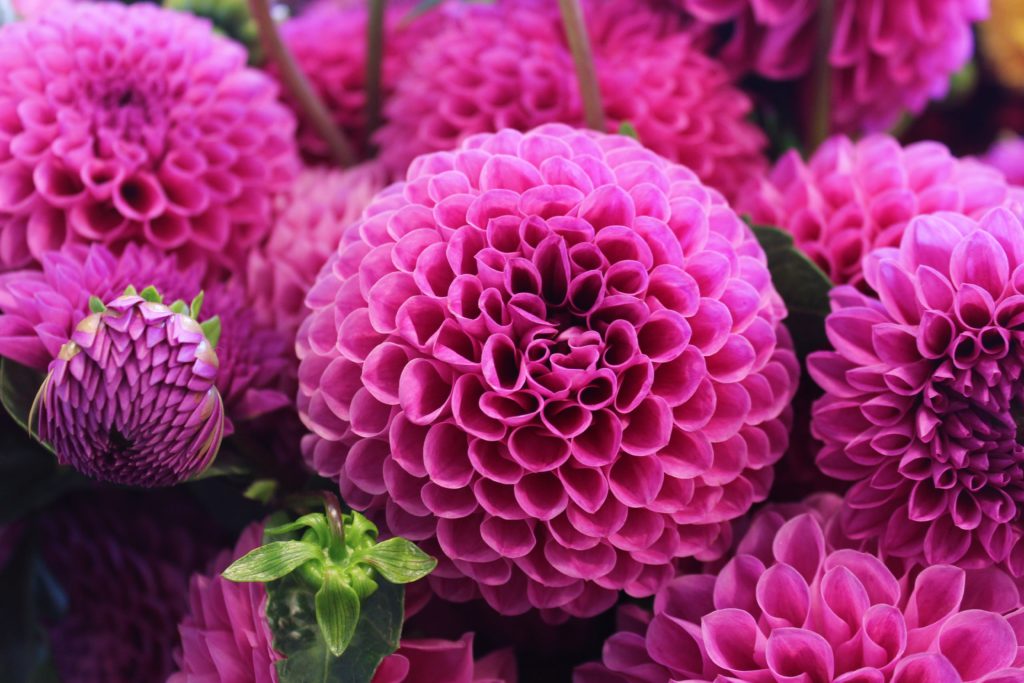
    Beautiful flowers blooming.

    Or is joy the result of nurturing a garden in your psyche and soul that pays off in dividends of fragrance, beauty, patience, and the aromatic blossoming of inner joy?

    For the last 4 weeks, we talked about ways to remodel the infrastructure of your mindset, your outlook, and your attitude. Our purpose has been to show you the potential for developing an atmosphere in your thought life that nurtures your remission after ketamine treatment, and gives you the rich soil you need to grow a healthy and peace-cultivating way of thinking.

    Letting Go, Then Facing Your Truth, Sets You Free

    When you let go of those things that you’ve held onto that have been obstacles to your wellbeing, you give yourself the gift of freedom from addictions, freedom from bitterness, freedom from rage that drives reactions inside you that can enslave you. You give yourself the gift of new options as you move forward in life.

    Sometimes in the process of letting go of those things that have been destructive to your wellbeing, you find yourself against a wall that you don’t know how to penetrate. We talked about facing the truth about situations you haven’t wanted to face. You may have been defending yourself in your mind, and running active arguments through your mind to defend that thing you haven’t faced.  

    A beautiful bloom like this one is fragrant and  amazing.
    Then you can open yourself to the possibility that maybe you were actually wrong, or that you share the responsibility, and you can face and accept that. Telling that person you’ve been in conflict with that you know you were wrong, and asking forgiveness, can lift such a burden of shame and blame off you, and let you enjoy peace within yourself, and with others. 

    It doesn’t matter that you know their actions were terribly wrong and caused damage. That’s their responsibility. But you’ve evicted that guilt, resentment, and denial from your mind and heart. And the place it occupied is now filled with peace.

    “Persisting” Leads to a Life of Peace and Kindness

    Once you know you have nothing to prove, and you enjoy the relief and freedom that brings, you’re equipped to face the next item in your life that surfaces and go through that same process to find peace, once again.

    You then learn that this is a way of life, and you can grow in peace and freedom by persisting in this process with each issue that arises within you. 

    You’re on a mission to set yourself free. And it’s working.

    Then LOVE follows. Your process, your system for recovery, leads you to treat yourself with love, and that flows to others in kindness. Your former short-tempered, impatient, self-focused self becomes more focused on others and helping them find peace, too. And your personality begins to mold around the kindness that dominates in your interactions with others.

    This process repeated over and over, reduces  your stress and strengthens your resilience … and all those gut knots that had been your constant companions in life relax and dissipate…  

    The Science of joy shows you how to make your heart explode with hope.

    And you begin to notice that joy bubbles up from within. 

    So let’s talk about the anatomy of that joy.

    What Is the Science of Joy?

    Is it about happiness? Well, joy can make you smile like happiness can, but it’s based on different things. 

    Happiness is centered on “happenstance” …or basically when circumstances align with what you want. Maybe you’ve worked hard for that job, and maybe you got the promotion. Or maybe you were able to buy a car, after having to rely on the bus for the last 3 years.  And just maybe… that gorgeous woman you met online finally agreed to meet you for coffee.

    Science of joy helps you to be stable through tough times.

    All of these things are good. And they present themselves as solutions to one problem or another. But the problem with happiness is that it is limited to your circumstances being a certain way that pleases you.

    Now, the problem with life is that circumstances may line up with your desires from time to time, but then they change, don’t they? Happenstance, as such, is fickle. One day everything is just like you want it, and the next, well your world has been turned upside down. 

    You got passed up for the promotion after all. Someone ran a stop sign and your new car is wrecked. That gorgeous woman turned out to be a liar and a witch.

    If that upsets your happy outlook, then you’re only happy when things go your way.

    So there has to be something that comes from a deeper place—something that remains stable no matter which way the wind blows or the direction your boat floats.

    It needs to be something that emerges from deep inside you, even when times are hard, and tells you everything is going to be alright. Something that fuels optimism in a storm.

    It’s joy. Joy transcends circumstances. And it’s not based on you getting what you want.

    Hmmm……you’re saying. What’s this?

    Joy In Your Heart In Tough Times

    Remember how we talked about giving of ourselves and the kindness that naturally follows? Well, this is also where joy comes in. While happiness is based on circumstances, joy flourishes as a product of transcending those circumstances. 

    Let’s say that again:

    The Science of Joy teaches you that joy flourishes as a product of transcending your circumstances.

    In fact, joy comes from giving to someone to the point of your own personal sacrifice, and from seeing that person gain freedom and joy, too.  

    Joy also arises from your gratitude. 

    Researchers have found that humans tend to focus more on negative experiences than positive ones. Even though we may have many times more positive experiences in a given 24 hour period, it’s the negative one that can ruin our day. That is, if we let it.

    One thing people tend to do is to miss the chance to focus on the things that are good in their lives. And … after awhile … they don’t notice them at all.  

    The science of joy helps people find meaning in their lives.

    This is where the attitude of gratitude comes in. A compelling component in the science of joy. One study showed that people who make a list each morning of all the things they’re grateful for, are healthier physically and psychologically, more successful, and happier. They’re less materialistic and envious, and more generous in giving to others.

    Happiness vs. Joy

    What is the opposite of happiness?  Unhappiness. 

    Hmmm.

    What is the opposite of joy?  Depression.

    This girl is jumping for joy!

    And what is a telltale sign that you’re in remission after ketamine treatment?  Joy. And HOPE.

    So it stands to reason that to maintain a joyous heart is to build a sort of insurance policy against depression. To rise in your aspirations higher than material gain, personal pleasure, or the attention that comes from achievement…well, it’s liberating. Then, to transcend your own desires, and rather reach beyond yourself to help someone else find fulfillment — that results in joy.

    And because that joy is not dependent on you having what you want, it lasts. 

    And fuels your mind and heart with passion that motivates you to make the world a better place, one person at a time.

    Mother Teresa and Your Family

    Science of Joy fills you with light as you care for others who need help.

    Mother Teresa knew all about joy. She said, “Help one person at a time and start with the person nearest you…”  and “..If you want to change the world, go home and love your family.”

    For the most part, it’s safe to say that what you need is to be freed from making yourself  happy. The science of joy, in a nutshell.

    It might be interesting to write down all the things you think you want, and the stressors subtly associated with each one. 

    Like, the car payment you’d have to make every month, keeping it clean, paying for gasoline, changing the oil, paying for new tires, and the list goes on…

    Then, think about the needs you see around you. Your parents? Maybe your spouse? Certainly your children…and maybe your neighbor or co-worker. Sometimes your presence is the greatest gift of all.

    The science of joy includes simplifying your life. To free up your time and resources for a more rewarding way to live.

    Sharing Your Joy

    A researcher at Brigham Young University, Nathaniel Lambert, conducted a recent study that showed that when you share your positive experiences and the things you’re grateful for, it leads to heightened wellbeing, more energy, and better overall satisfaction in life.

    Isn’t that amazing?? Practicing the very thing that supercharges your joy makes your life BETTER!!

    The science of joy is the outpouring from rebuilding your personal infrastructure.

    When you take a step back and really think about all these aspects of joy, you gotta start to wonder if we all just need to make a major shift in what motivates us.  Because when you’re motivated to please yourself, it leads to all sorts of obstacles to your peace.

    But when you follow the path of joy, everything seems to fall into place.

    And that’s the science of joy.

    These are the keys to building an infrastructure to help your remission thrive…  but if you haven’t received ketamine treatment yet, you may want to talk about it with us.

    Ketamine treatment is particularly effective if you’ve had depression but haven’t been helped by at least two different medications. Ketamine is effective even with the most severe cases of depression, bipolar depression, suicidal thinking, and PTSD. There is new and exciting work on its effectiveness with addictions, OCD, and social anxiety. There is early work that studied it in eating disorders.

    But the most exciting work with ketamine centers on using it to stop suicidal ideation. To stop suicidal thinking. And to avoid going to the ER. To avoid getting hospitalized. Put simply, to stop the suffering.

    What a game changer.

    And the remarkable thing about suicidal thinking is that ketamine can erase those thoughts fast – in less than an hour.

    The science of joy teaches us to focus on helping others to cultivate joy in ourselves.

    Reach out to us, or have your doctor get in touch with us. We love working with the doctors who already know you and take care of you so that we can create your best outcome.

    If you think ketamine treatment might be right for you, call us.  Let’s talk about whether you’re a candidate for ketamine treatment.

    No other medication has offered such extraordinary outcomes to so many people. Our joy is helping you get better…  really better. 

    Lori Calabrese, MD offers innovative psychiatric treatment like IV Ketamine

    To the healing and restoration of your best self,

    Lori Calabrese, MD

  • Persistence: The Road to Resilience Helps You Try, Try Again

    Persistence: The Road to Resilience Helps You Try, Try Again

    Persistence the road to resilience helps you get back up and try again when you fall.

    With perseverance, you can build the life you want to live.

    You’ve probably seen the photo of an old stone lighthouse in the storm, with overwhelming waves crashing against it and around it. It looks like it will surely be knocked down…but it’s not. Those waves go on year in and year out, decades upon decades, but it stands strong. It stands to give light to ships in the storm. Steadfast, it shines its light, no matter what.

    Persistence

    This is persistence. Holding steadfast to the hope for better days, believing in the peace that will follow the storm, no matter how great the pressure… it endures.

    Storms are a part of every life, and the risk of collapse is real. If there was no fear, no risk, the endurance would be unremarkable.

    However, because the risk is real, there is great reward when you see the calm that follows the storm. And each storm that you survive prepares you to be stronger to withstand the next one.

    Holding Steady in Chronic Illness and Abuse

    Marti withstood storms. Life-threatening illness that came in waves and threatened to destroy her. An abusive partner who shifted from violent to repentant and back again, bringing her within an inch of her life. Repeatedly.

    But each time, she nursed her wounds, and determined to try again.

    Marty had contemplated or attempted suicide quite a few times in the 25 years she’d been depressed. Through those times Marty’s depression worsened and she wanted to die, but she kept holding on for a day when life might get better.

    After her ketamine treatment, she discovered that she still had some of the perseverance she’d developed through those years of constant crisis. And, she learned about the importance of practicing endurance, self-control, letting go, and honesty with herself.

    As the ketamine treatment continued to improve her outlook long after the infusions were over, she thought often about how to work on her “infrastructure” that she’d heard so much about.

    How to increase her own determination to stand steady when some symptom returned, by knowing it would pass again like they’d come to do. 

    Or to keep putting one foot in front of the other when she lost her job and wanted to give up. …Or when she had 2 twelve-day hospitalizations the same month and she couldn’t see a time when she would be well.

    Persistence road to resilience provides determination, and strength.
    Persistence – The Road to Resilience – May Be Enhanced by Ketamine

    While she was undergoing ketamine treatment, she arranged with her therapist to have a session 24 hours after each infusion. It was clear she needed therapy to heal from the scars of that abusive relationship.

    And she’d understood that there was something special about the 24 mark after the infusion that really helped the therapy to be more effective.

    Marti found the neuroplasticity ketamine treatment had initiated allowed her to see through her faulty thinking in that relationship, so she could heal, and move forward in her life.

    It encouraged her when she realized that each time she held steady through a period of emotionally swinging out of control, she felt stronger to do that the next time.

    After awhile, she also worked at being kind to others in the wake of her symptoms subsiding post- infusion. The more times she stopped herself from over reacting toward someone, the easier it was the next time.

    Each of these steps helped her peace to grow. She felt more serene, more confident in her ability to function in life. And in her healthier state, she found someone new who brought out the best in her, and supported her healing and restoration.

    She’s now in full remission and kindness has again become the backdrop of her nature, though her assertive personality is still fully hers. She couldn’t have gained this ground without ketamine, but once she had its help, she made great strides that paid off in the reward of a fulfilling life.

    Holding Steady Between Bipolar Episodes

    Bernie withstood storms. Like Marty, he came close to succumbing to them. The frequent storms of bipolar depression made survival appear like an ugly life sentence, with no escape. 

    Persistence road to resilience leads to strength .

    But, then his parents heard about ketamine treatment. They gave him articles to read …and the more he learned, the more he wanted it. 

    After the treatment, he felt relieved… but there were still symptoms some of the time. When symptoms did come up, he knew he needed to keep putting one foot in front of the other, and keep moving forward, because he could finally see hope.

    He found that the reduced symptoms and his better frame of mind in between was making his life more “endurable” when the symptoms did rise up.

    Persistence is believing in good days ahead when a storm is pounding down on you and your ship is breaking apart beneath your feet.

    Persistence knows that no matter how overwhelming this moment…or this decade…seems to be, there will be a better day – a happier ending.

    When you’re persistent, your mind is focused on the positive outcome of the crushing circumstances you’re enduring, and you know that you don’t want obstacles like complaining or an attitude of defeat to prevent you from reaching that reward. So you look at the promise you see of what lies ahead, rather than focusing on or magnifying the circumstances you’re in.

    And like Marty, each time you hold onto that promise and plod forward with determination, you gain more strength to do it again in an even worse storm. You get stronger.

    The seeming foreverness of each bout with illness that never seemed to stop for years, and the seeming inevitability that the abuse would finally end her life, only bowed and gave way to her hope as she worked with the ketamine treatment to change her outlook.

    And hope, as well as the ability to be resilient during storms, finally took root and stayed.

    So persistence is a component of strength you can develop, nurture, and establish within yourself. Like a well-dug foundation it will hold you on course during the most threatening times of life. 

    Persistence is akin to perseverance.

    Keep on keeping on…no matter how shrill the wind whistles. And no matter how long you pull your cap down over your head and bow into the freezing rain, you will endure. Because that persevering will hold firm in your mind the view on the other side of what’s going on, and it gives you the durability to emerge from the whole horror unscathed. 

    A bit wiser, a bit stronger, yes. But with a new confidence that drives away fear.

    In time, you can arm yourself with that new confidence and the hard-earned wisdom that reminds you what it takes to survive, and build the future you find in the pot o’ gold on the other side.

    One step at a time. With determination, and a new instinctive sense that it’s persistence that will keep you on the scene so you can enjoy the rewards that await you.

    Because it’s persistence that helps you try again and again and again. Perseverance tells you to get back up after falling down, brush yourself off, figure out why you fell, and incorporate that new knowledge into your next try.

    Stubborn Persistence is Required for Marriage to Survive

    Do you notice older couples who are white haired, and take evening walks holding hands with their dog on a leash?  Ever wonder how they stayed in love that long?

    It wasn’t magic.

    Persistence

    There is no 40-, 50-, 60-year marriage or more that lasted that long without persistence. No one knows how to make a marriage work on the wedding day. 

    Some may have a little more insight than others about getting along, or putting someone else’s interests ahead of their own.

    In this generation of self-assertion and self-absorption, that’s all but a lost art. Still, it wasn’t an accident that two people with stooped posture and white hair feel like holding hands and enjoying each other’s company after so many decades of living together. 

    persistence

    To enjoy their autumn years, they had to learn early about getting back up and trying again. They’ve most likely had times when they couldn’t stand each other and didn’t want to stay together even another day. But one of them, one time or another, probably stepped up with persistence and determined to build a bridge, forgive the other one, and ask for forgiveness, too.

    Without that? They wouldn’t have made it to their next anniversary. And you can ask them…but I’d guess with confidence that they both have done that many times…and more times than they can count… they’ve each taken turns at playing that role, until they managed to get really good at it. 

    Over time they learned that persistence, road to resilience, has kept their marriage strong.

    …And, eventually realized they were glad they were still together…to watch their children graduate from high school; to give away their daughters in marriage; and to welcome and play with their grandchildren and great grandchildren. 

    You’re Human, After All

    Everyone falls down in their endeavors. But the persistent ones brush off and get back up and try again…and again…  As many times as it takes as long as they live.

    That kind of persistence leads to success, and resilience, and countless rewards.

    Does a three-year-old play the violin like a maestro the first time he picks it up?  

    No.

    persistence
    He makes mistakes and gets frustrated. He wants to throw it away and forget it.  But his mom, whose name is Persistence, sees that he picks it back up and tries again. And practices.  Again and again… and over the years, the 3-year-old eventually lands 1st chair in high school…  and later gets to decide if he’d like to accept that invitation to play in the Philadelphia Philharmonic.

    What do you want to bet he’s now become so good at persistence, he knows how to apply it in countless areas of his life? As with the hare and the tortoise: slow and steady – consistently – wins the race.

    Persistence.

    Honestly? Without perseverance and persistence there’s not much you can accomplish in life. Because everyone falls down. Everyone gets discouraged at some point. Everyone fails at something. Abandoning the vision strikes the death blow to that endeavor.

    However, with persistence there’s nothing you cannot do. The more you use it, the stronger it gets. Until persisting is part of who you are, and a tool you put to use in every project. And persistence gives way to resilience

    The character of a psychiatric disorder – the actual activity of it in the brain – wears down resilience, and flattens out persistence. If you’ve suffered from depression, social anxiety, PTSD, bipolar depression, or addiction, or suicidal thinking, you probably can’t imagine the resilience and persistence required to stand up after you’ve been down so long. 

    But that’s where ketamine comes in. Since at least a third of all people afflicted with these disorders experience no relief from prescribed medications, something more novel and advanced is required to bring relief. Ketamine treatment is the first treatment that has made an extraordinary difference for these patients.

    And it’s such an advantage that another benefit of ketamine is its neuroplasticity that makes it easier for you to make changes in your mind that allow you adapt to your circumstances, reduce your stress, apply persistence, and build resilience.

     If you’re even considering treatment with IV ketamine, or have recently received it, you know you have persistence and a good measure of grit.

    You know what it’s been like…how you’ve been able to withstand the disappointment of one treatment after another — or one effort after another — not working. You already have some persistence working for you.

    Ketamine delivers a one – two punch. First restoring connections in the signaling systems in the brain, and then providing neuroplasticity to help you make the changes in your outlook you want to put in place.

    Persistence road to resilience  can be expedite hope.

    Because if you’ve been depressed, and now you feel better after ketamine treatment, you want to keep feeling better, right?

    You want to do the work that will help you maintain a remission frame of mind. So you can continue growing, and press on with developing the life you want to live. The best way to do that is to remove the stressors in your life. 

    We do the work, too.  We’re up at night, reading, refining, persisting in trying to identify the best treatment options that can get you back to your best self. We offer treatment when your symptoms persist, when your doctors have done all they can, when you’ve just gotten tired.  

    We’re here to help you win your battles… and in that process, persistence is priceless.

    Call us if we can help. 

    To the persistence of your best self, 

    Lori Calabrese, MD offers innovative psychiatric treatment like IV Ketamine
    Lori Calabrese, M.D.
  • Fix Your Inner Life: Embrace the Truth About Yourself

    Fix Your Inner Life: Embrace the Truth About Yourself

    Be sure it’s your real self you’re showing. Because it is your real self that needs to be loved.   Daphne Rose Kingma

    Fix your inner life: embrace the truth about yourself.

    It’s the most healing thing you can accomplish as you work through the changes in your thinking, your responses, your outlook and attitude about people and your world after ketamine treatment.  As you build an infrastructure of peace and generosity…fix your inner life and learn to embrace the truth about yourself. 

    Self-doubt, self-defensiveness, and pretense eat away at your self-respect and love of yourself…and can lead to depression. But you want to reduce the stress in your life to help your wellbeing thrive.

    How do you reduce the stress? By facing the truth that eats at you or that you hide from yourself.

    What sort of truth..? Well, that you’re human, for starters. That you’re not always perfect in your responses to life’s stressors. And that there are plenty of things you can learn to make your life work better for you.

    Things like humility, admitting your shortcomings, and asking for forgiveness, to name a few. To accept yourself as a learner in this life and not to expect yourself to know everything out of the gate.

    Fix your inner life: embrace the truth about yourself.

    Using Pride as a Shield of Protection

    Pride drives many of us to present ourselves as infallible, until we realize that pride also shackles us from the fulfillment of intimacy in relationships.

    Replacing pride with love can be scary. It can make you feel exposed and vulnerable until you get used to it. But doing so can transform your life and drive loneliness away.

    Something we do as humans is to construct personas that we tell ourselves others will find more likable or respectable than who we really are. But a persona that you construct is always stilted. Unnatural.  

    Have you ever been around someone who’s utterly at home in his own skin?  Isn’t he or she absolutely enjoyable and relaxing to be around?  The reason they’re enjoyable and relaxing to be around is because they’ve found a certain degree of peace with who they are.

    They accept themselves as they are so there’s no need for pretense. When someone is trying to prove themselves, it can make you uncomfortable. But when you sense they have nothing to prove, you subconsciously feel like you can relax.

    At the same time, you get the sense that their mental health is pretty good.

    It’s the exception to meet someone like that, rather than the rule. Most of us aren’t free of pretense, until we learn what we need to learn so we can be who we are.

    This shouldn’t be so hard. You know?

    But we live in a world that feels dangerous and makes us think we have to protect ourselves. So we do. We build walls around ourselves. Thick, impenetrable armor to keep ourselves safe.

    Fix your inner life: embrace the truth about yourself.

    And we guard that armor, those walls, to stay safe. Then, if anything threatens to expose us under the armor, we get anxious and defend it. Don’t we?

    So, after all that work, we’re reluctant to knock down those walls. We don’t feel safe without the armor.

    And that’s why we have to learn to see what the walls and the armor are costing us. We have to see that they’re interrupting our social development and our opportunities for close, fulfilling relationships.

    They also require that we remain vigilant, prepared to defend any attack on our security in the armor. So we can’t relax. We can’t let our guard down.

    Fix Your Inner Life

    You have to change the way you think. The way you respond to things.

    You may need to get really honest with yourself. You may find you have to learn how to embrace the truth, and learn to accept yourself as human, fallible, and forgivable. When you do that, you may also feel more lovable.

    And when you feel lovable…and LOVED… you’ll tend to find it much easier to generously love others.

    Ok. I know it’s certainly easier said than done. It’s an uncomfortable process to look head-on at things in yourself you haven’t before. But, it leads to a very comfortable, confident, joyful way of living.

    Ketamine Treatment Can Help You Achieve Remission

    This isn’t news. We’ve known this for years.

    But, if you’ve had ketamine treatment, and feel much, much better, you sure want to stay better, right?

    Well, one important aspect of staying better is to unravel the conflict you carry inside you that you may not even realize is there.

    But…it IS there. And it interferes with the peace within you. So what can you do?

    Fix your inner life: embrace the truth about  yourself.

    Embrace the truth about yourself.

    Just like letting go of what you NEED to let go of, when you embrace truth about yourself it helps you relax with who you really are.

    Accepting your shortcomings, and dropping that guard that says you’re flawless, admirable, or beyond reproach, helps you embrace the truth that you’re a real living fallible human worthy of giving and receiving love.

    And there’s another plus: doing so will increase your self respect.

    Sound pretty far out? What if you don’t know what you have inner conflict about? Or how to tell if your guard is up?

    What if you’ve been presenting yourself the way you think people expect you to for so long you don’t remember what it was like to be yourself?

    Scrutinizing Your Inner Self

    Start with looking closely at that experience or event that scratches at your conscious memories. What are you telling yourself about it? What about it might be seen differently?

    Pay attention to your inner voice…do you find yourself defending yourself over what happened? What could you be “hiding” from yourself?

    It might be related to some sort of blame you place on another person… or something you’re hiding from yourself. Look deeper. Could you have caused the situation, even though you didn’t intend to? Is it possible you share responsibility for what happened?

    And what happens when you look at the other person’s role with a heart of forgiveness and understanding? Can you see how the outcome might not have been his/her intent?

    Then. Just say it. “It’s my responsibility that so-and-so happened. ” Or…share the responsibility… ” I share in the responsibility that so-and-so happened. I didn’t intend for it to go down the way it did. He/she probably didn’t intend it either. I’m human, and I was wrong. I handled the situation badly. I’m truly sorry, and I’ll really try to not do it again.” Then move on with the resolve to make good decisions and to treat others well going forward.

    I Was Wrong

    It’s very difficult sometimes to reach this point. But giving up the fight and accepting that you’re fallible can be so liberating. You THOUGHT it could destroy you, hence the long arduous combat in your mind.

    But when you really see that you were wrong…you can accept that it happened. And the fight inside you…the defensive arguments in your head…begin to disappear and become quiet.

    And that quiet is a deposit of peace into your inner self. Enjoy the reward of harmony you feel.

    Then take what you’ve learned and apply it to the next situation that comes to mind…because another situation will. You’re human and fallible. And so is everyone you know.

    Fix your inner life.  Embrace the truth about yourself.
    Going forward, you may find you’re a little less judgmental, a bit less inhibited…and more and more relaxed.  In that relaxed and peaceful state, it’s much easier to feel better.

    With these things at work within you, you can accept yourself as human, and realize that through forgiveness of yourself you are more able to love and receive love. And that brings joy.

    Remember, this discussion is NOT to say that if your remission fades away, it’s your fault

    IT’S NOT.

    But since stress remodels and prunes the signaling circuitry in the brain, which can lead to depression and other disorders, it stands to reason that the more you can remove stress from your life, the better the environment is for remission to thrive.

    At Innovative Psychiatry, we want to be a part of your recovery as you use your ketamine treatment to help you bring change in your thinking, your outlook on life, and your attitudes.

    Everyone needs these changes, but not all understand how to make them.

    If you’re not in the habit, but have experienced joy from ketamine treatment, changes like we’ve talked about can help you continue to enjoy that joy, increasing love…and freedom from emotional pain.

    Can we stop suicide? Yes, with a series of IV ketamine infusions.

  • Want to Help Ketamine Remission Last? First Strengthen Your Personal Infrastructure

    Want to Help Ketamine Remission Last? First Strengthen Your Personal Infrastructure

    Help ketamine remission last but letting go of bitterness, possessions, and fear.

    In past posts, we’ve talked about remission by ketamine, the 50-year-old anesthesia medicine that stepped up to the plate in the last ten years or so… to bridge the gap in the treatment of an array of psychiatric disorders.

    And once you’ve achieved remission, you want to help ketamine remission last. You don’t want to return to your same old ways of reacting. Or to the same old stress and risk losing the ground you’ve gained.

    So let’s continue. We’ve talked about the growing body of evidence that demonstrates the extraordinary antidepressant effects of this medicine in numerous psychiatric disorders. Illnesses like severe treatment-resistant depression and bipolar depression. as well as its unparalleled impact on PTSD to arrest symptoms and restore peace to the traumatized individual.  

    In our own practice, Innovative Psychiatry, we’ve seen ketamine treatment make a dramatic difference with social anxiety, that cruel disorder that creates obstacles between you and financial success, self respect, meaningful relationships, and general fulfillment in life.

    Help ketamine remission last by building meaningful relationships.

    So that after ketamine treatment, you can effectively interview for the job you want. You can initiate and develop loving relationships. In fact, you can basically BE who you are and at your best. While you contribute to your team at work and your family and community, as well.  So you want to help ketamine remission last.

    But it doesn’t stop there. We’ve also seen ketamine treatment relieve OCD symptoms, providing the neuroplasticity for needed changes through therapy.

    And then there’s alcohol use disorder as well as crack and other addictions, which ketamine (as demonstrated through the work of Dakwar and others) helps you conquer by weakening or erasing cravings. 

    We’ve seen similar positive results in our own practice, though there have not yet been enough studies to validate this benefit across the board… yet.

    Then, possibly the most amazing of all is suicidal thinking…no matter what the cause that led to it… can be eradicated, often within an hour, and usually in less than four. We’ve seen extensive positive outcomes of this life-saving benefit in our office.

    Your Personal Infrastructure Seems to Play Some Role in Making or Breaking Your Remission

    Sometimes people achieve remission with ketamine treatment only to lose it after a few months as the stressors of life wear away at the repair work the treatment accomplished, and the remission is lost… or seems to be.

    Interestingly, because stress is such an important cause of the pruning of brain cell connections (synapses) it appears that sometimes when patients receive ketamine treatment while under severe stress, it seems to not work for them.

    Then, sometimes it happens that the patient finally begins to enjoy ketamine’s benefits after the stress is significantly reduced. This is something we’ve observed multiple times but lack the extensive research to back up… yet.

    So it’s important that we distinguish those benefits we see every week at Innovative Psychiatry from those that have already been validated by peer-reviewed research.

    It takes time for research to catch up with the widespread use of ketamine treatment. And it requires multiplied studies upon more studies to establish the reliability of any benefit.

    So let’s be clear that the benefits of ketamine treatment we’ve seen at Innovative Psychiatry have already been reported in research studies. But, not with the overwhelming stacked-up body of evidence that stands behind ketamine for depression. Not enough to proclaim them from the housetops without an explanation.

    Even so, it’s important that you know these things are happening, and we’re playing a waiting game for the research to catch up and explain what we’re seeing in practice.

    Meanwhile, while we wait, we want to let you know that we’re discussing what we’ve found works for our patients. And although we make the disclaimer that this is not individualized medical advice for you personally, we want to share the best of what we’re reading and actually doing. In the name of transparency. And in the name of hope.

    Help ketamine remission last by unburdening yourself of self consciousness.

    Now to recap…we were talking about how stress seems to undermine the benefits of ketamine…or at least it appears to. And there’s more to stress than meets the eye. Right?

    Sometimes the stress is inside our heads…like things aren’t going the way we wish they would, or something we hoped would last doesn’t, or maybe people aren’t doing what we think they should.

    Or we like the job but hate the commute and arrive at work ready to rip someone’s head off…or we hate the job and every day is miserable.

    …or we have friends who drive us crazy, use and abuse us, but we keep spending time with them.

    And that’s where “infrastructure’ comes in. You want to help ketamine remission last. And the rebuilding of your environment, your decision-making, your thinking patterns, and your responses to the challenging moments in life, is part of your personal infrastructure. All of that tries to return you to your former state before treatment…or can establish you in your new peaceful life of joy and productivity.

    It’s impossible to cover all those elements in one post, but we’ll attempt to show ways you can tackle certain elements that make up your inner and outer environment over time… here and in some posts to come.

    A Full Overhaul Of Your Life, Step by Step, Can Be the BEST Medicine

    Help ketamine remission last by overhauling your attitudes, expectations, and responses.

    And a good place to start is by taking a look at learning to let go. It’s completely normal and natural to assume that any depression or anxiety you have is the result of the behavior of others. That you just got worn down from it all.

    And there may be some truth in that. 

    But in exploring the causes, it may surprise you to learn that their behavior may not actually be the cause, as much as your reaction to their behavior that is.

    Now understand this. We’re not implying here in any sense that your lack of response to ketamine, or the loss of remission, is in any way your fault, or even within your control.

    But it’s important to understand that the best prescription for maintaining stability with remission includes maintaining health in those things in your life and environment that you can control.

    Things like your respect for yourself and for other people. Your persistence in pursuing peace in your life and relationships. The development of a kindness-centered approach to yourself and those in the world around you.

    …And the evaluation of your life and simplification of the burdens and demands it presents. Ensuring  you have the power to enjoy life’s simplest pleasures…which may include letting go of things that pull you down or hold you back.

    These are things that can help ketamine remission last.

    So let’s talk about a fundamental skill that can change your life…for the better.

    Letting Go

    When we talk about letting go, it’s not reserved to only one thing…such as letting go of a relationship. Since relationships can be so important in our lives, and the ending of them can be so painful, letting go of relationships that have died is high on the list.

    Help ketamine remission last by reducing relationship conflicts and replacing with harmony.

    But there are other issues in our lives that may present themselves as we consider letting go to reduce stress. 

    Such as letting go of being right in our discussions at work with our boss or co-workers, and in our discussions at home with those we love most, such as our spouse and kids.

    And what about letting go of fighting to get our way, when obstacles are thrown in our path? This may be akin to letting go of being right, but it has a personality all its own. 

    Possessions Can Shift from Useful Tools to… Jailer

    How about letting go of your pride in your possessions…?  For instance, let’s imagine a teenager sets his icy soft drink can on your dining room table…allowing condensation to mar its flawless finish? 

    What goes through your mind when you see it? Rage that a kid with no manners has caused your beloved heirloom table some damage…?  Fear that your spouse will hit the ceiling? Compassion for a young man who didn’t know better… so you pick up the can and set it on a coaster for him? 

    It’s ok to enjoy having nice things, but when the “thing” is higher on your priority list than the development and well-being of a person…well that “thing” is controlling you.

    Which do you value more: A 19th century mahogany table with a flawless finish that was handed down through your family over a hundred years….?   Or a tall and lanky boy who needs a haircut and a clean t-shirt ?

    If you’re honest with yourself, it really might be the table. But if that’s the case, maybe it will help you see the kinds of things you can work on, possibly with a therapist, to improve the infrastructure in your head.

    Because anger causes stress. And anger toward that kid is stress you don’t need. Compassion on the other hand doesn’t, and actually supports your remission frame of mind.

    Remember…you’re learning to nurture peace… in your head. And to do it means developing a response of gratitude, humility, and kindness.

    What If You Lost It All?

    Help ketamine remission last by shedding attachments to things and cherishing people you love.

    On the other hand, picture your belongings lost in a fire. No one’s fault, really. But it cost you every material thing you own.  How do you feel about that?  Sad?  Sure… all those memories and photos…but the house and belongings?

    This is a loss you’ll never fully recover from materially, but does it reach the core of who you are?

    Now.  Picture the phone call that makes the world STOP. Your spouse, your three children, and your only grandchild have been in a terrible car accident. No one survived.

    What do you feel? What does the furniture or sports car mean to you now?  

    My point here is that we have a way of putting people and things on a priority list… and that list can get all mixed up. But this scenario helps to show how those things we think are important lose their glow instantly when those at the core of our hearts are lost.

    And that being the case, putting ourselves through unnecessary stress to preserve things that pale in comparison to those we love… well, it’s a waste of valuable moments and energy when we think about what really matters to us.

    And therein lies the secret. Rather than wasting our lives by hurting people to preserve things, we find our life is best spent preserving the moments with those we love the most. 

    And the things…the houses, cars, antiques, reputation, recognition…none of these things can compete with the people we love the most.

    The Greedy Monkey

    You’ve heard the story of the monkey who is shown a jar of cookies.  A jar that has a small mouth. He sticks his hand in and grabs a cookie…but can’t pull his hand out unless he lets go of the cookie.  The opening just won’t accommodate anything larger than his open hand. 

    Because he won’t let the cookie go, he panics. Swinging the jar around in the air in a temper because it won’t give him the cookie, he finally smacks himself on the head with the jar and it hurts so much, he immediately lets go of the cookie to hold his head.

    Sound familiar… at all?  Is there anything in your life that’s pleasurable to you that you don’t want to let go?  And if circumstances prevent you from having it or keeping it…does it make you mad?

    If you have any marred tables or unyielding jars in your life, take a moment and breathe…  Think about what trying to protect and preserve that “thing” costs you.  Are your feelings on your cuff?  Do do you snap at people when its security is threatened?  Do you feel panic at the idea of it being removed from your life…?

    The Surprise Benefits of Letting Go

    The unexpected surprise you can discover by disengaging from “it” is that the angst of control that you’re powerless to perfect is replaced by a growing peace and relief.  And when you have succeeded in reaching that point, that same peace and relief is a signal that you’ve now added a brick to the foundation in your personal infrastructure.  

    Help ketamine remission last by showing kindness, sowing seeds of love, and nurturing peace.

    That thing, whether it’s your marriage, your shiny sports car, your child who’s supposed to fulfill your dreams….your house, the money you make in your job that prevents you from spending time with those who yearn for your attention…no matter what it is, has been holding you back and isn’t deserving of what it takes from you.

    Picture serenity in your life.  Peace.  What has been removed from the picture when you think of it?

    An alcoholic wife, an abusive screaming boyfriend, a job that you bring home and work on till you go to bed…? Maybe it’s more house than you can afford, so you’re driven to work three jobs to pay the bills. If it is, that house controls you.  

    Life is short. We get the most out of it when we can cherish every moment.  In your daydreams, when you wish for reprieve…what do you erase from your life in your mind’s eye to make room for hope?  Peace?  Love?  Enjoyment?

     Commit to Finding Ways to Let It Go

    First of all, in your mind and heart.

    This is one facet of the infrastructure in your life that you may need to confront and adjust to make room for remission. 

    It will be easier to explore these things after you’ve had ketamine treatments because of the neuroplasticity that results. The ability to think in new ways. To change, and make productive decisions for your life.

    So…to get there… you may want to consider ketamine treatment for severe and suffocating depression, your wracking and immobilizing bipolar depression, PTSD that injects traumatic reactions into your days…and your nights. 

    OCD that stands in the way of your achievements, and that social anxiety that has plagued and isolated you since you were a child.  And for suicidal thinking that threatens to snuff your life before you even have a chance to recover.

    Wanna Help Ketamine Remission Last?  You Can If You Strengthen Your Infrastructure

    Strengthening your infrastructure involves ferreting out burdens you can lift off yourself, like excess belongings, excess weight, whatever it is that requires your service and obligation…and prevents you from freely enjoying opportunities with those relationships that matter.

    Let it go. Help Ketamine Remission Last

    By giving your brain…your inner self…the most optimal environment for healing and growing possible.

    It means simplifying the grandness of your life… For you, it might mean living beneath your means so you can travel, write, or volunteer. Or shedding those friendships that demand your time but don’t contribute. It’s shedding the less meaningful to free up time and space for what’s ultimately important.

    For this person it may mean letting go of the bitterness he carries toward his ex-spouse for leaving him.  For another, it may mean selling the house to travel the country in an RV and stop and paint when the view is spectacular.

    And for someone else, it can mean retiring from the corporate job to teach underprivileged children, or to cook meals in a soup kitchen for the homeless.

    For you? Maybe it’s saying no to all those obligations that crowd your life so you have time to spend with those who adore you.

    Basically, it’s about pulling weeds in your life to help ketamine remission last, and to preserve your joy. To put the life ketamine helps you find to the very best use.

    You know what your strengths are…if you take time to think about it. Those special gifts you have ached to get out.

    No one can tell you what it is for you. But that’s the fun of exploring your own infrastructure to find your path for cherishing the moments of life, and enjoying your new found joy.  It’s a painful process that gives birth to fulfillment.  And along that path, you’ll find joy.

    Even though we don’t see everyone achieve remission with ketamine treatment, we do get to see that most do. And more and more physicians are learning better and better methods for administering ketamine for the best possible outcomes.

    Help ketamine remission last by preserving and cherishing moments with those you love.

    The result is that more physicians are reporting higher numbers and better outcomes. The field of ketamine for psychiatric disorders is growing as physicians and researchers collaborate and learn from each other.

    Meanwhile, researchers and physicians alike continue to discover more with hopes of bringing relief and remission to those who aren’t experiencing it now.

    If you suffer from symptoms that no medicine has helped, call us.  

    We’re here to help you experience life the way you’ve longed to live it. 

    To the liberating of your best self, 

    Lori Calabrese, MD offers innovative psychiatric treatment like IV Ketamine


    Lori Calabrese, M.D.
  • Can You Overdo Probiotics? What Will it Hurt? What Can Happen?

    Can You Overdo Probiotics? What Will it Hurt? What Can Happen?

    What’s too much? Too little? Or maybe it’s the wrong strain? How do you get it right..?

    You know the saying, “If a little does a little bit of good… then a lot must do a whole lot of good…”  But when it comes to probiotics, too much of a good thing can be a bad thing.

    We’ve talked before about the microbiome, the ginormous collection of microbes that live in your gut.

    Some of those bacteria, fungi, viruses, and other microbes maintain a thriving ecosystem of sorts that assists your body in many of its functions. And they also provide a powerful immune system to protect you from infections, cancer, and viruses from the common cold to HIV.

    There are — at any given moment – -10 microbes to every single cell in the human body. So we’re vastly outnumbered from the start.

    Side effects too much probiotics can be alarming, like racing thoughts,  pounding heart rate, numbness in left arm.

    But thankfully, the majority of those microbes help us function and protect us from invaders. The rest of them are always on the attack and being destroyed or eaten by the “good” bacteria.

    Until something happens that jars that system out of balance. For example:

    An infection treated by antibiotics, where the good bacteria are wiped out along with the bad.

    Stomach upset that results in vomiting or diarrhea, where massive evacuation of the intestine leaves behind a weakened balance of beneficial and destructive microbes.

    An injury that drives you to take a heavy load of ibuprofen, and your stomach lining becomes irritated, causing pain and bleeding.

    In each of these examples, ingesting probiotics can help to restore balance in your gut, and relieve symptoms.

    But, there are so many probiotic products! How do you know what to take and what to avoid? How do you know you won’t cause more harm than good?

    The fact is, it’s hard to know. And unless you conduct some deep research on the subject, but rather grab a bottle off the grocery store shelf, you may not know now or ever.

    Since you hear all around you how probiotics make you healthy, it’s natural that so many people want to overload their systems with “good bacteria” without respecting the balance within the microbiome that keeps everything working. But, can you overdo probiotics?

    Balance is The Secret to Nature’s Success

    For instance, when you think about the jungle, it may be tempting to remove everything you consider unpleasant so you can enjoy an exotic hike when you’re on vacation.

    So let’s say we had a way of removing all the mosquitos, spiders, and other pesky insects, as well as lions, and snakes, and gila monsters. That does make it sound like strolling through the jungle would be so much safer for us…  

    But.  

    We know, don’t we, that there is a balance in the eco system, and every creature is somewhere on the food chain? So if we removed insects… then birds and reptiles and anteaters might starve. And that would starve the larger predators and soon… well, the whole system would likely collapse.

    We know we can’t do that. Balance is the key all through nature, and it’s when our body systems are balanced that we experience well-being.

    Microbes in our body must be balanced too.

    The same is true with the microbes in your gut. We must respect and support the balance there. 

    So when you get sick you may need to build up the good microbes a bit. But if you try to flood your system with good microbes that overwhelm the balance with the destructive ones, other systems can be thrown out of balance, too.

    As we’ve stressed before, your microbiome is your gut-brain axis. So what goes on in your microbiome shows up in your emotions and vice versa.

    There are even specific bacteria that contribute to a happier outlook, reduce anxiety, and increase wellbeing. Some of the most helpful are Lactobacillus plantarum, Lactobacillus acidophilus, Lactobacillus brevis, Bifidobacterium lactis (B. animalis), and Bifidobacterium longum.

    Can you overdo probiotics? Not by eating fermented foods rich in them.

    Fermented foods, like kombucha, kimchi, kefir, plain yogurt and sauerkraut introduce live bacterial cultures. They’re probiotic foods–they introduce varied bacterial strains that are so important to your health.

    But sometimes, if you can’t or don’t eat these, you might choose to buy a probiotic capsule. (Yep … we’ve all been guilty.) Sometimes it’s easier, faster, or you just need or want the extra assurance of varied bacterial cultures.

    If you choose a probiotic, it should include the specific bacterial strains above that help prop up and stabilize your outlook.

    And your dosing should be in moderation. Researchers state that a good probiotic should have up to 10 billion colony forming units (CFU) that you take daily, and that it should have at least 5 different strains per bottle. The more variety the better. 

    The reason you take a probiotic is to strengthen your beneficial bacteria so they’re not overwhelmed by the destructive ones, right?

    At the same time, you don’t want to overwhelm your system with those beneficial bacteria. There are so many questions we don’t yet have answers for… like can you overdo probiotics?

    Or… what happens if the yin-yang balance of tension between the two is removed? Do some of the beneficial bacteria switch sides? Do they become destructive… mimicking symptoms they have always before helped to eradicate?

    In which case… maybe too much of a good thing is a bad thing?

    Here is a better, more effective approach.

    Balance of Power in Your Microbiome is the Ticket

    But here’s where balance comes in. If your probiotic provides a great deal more than 10 billion CFU per day, you need to get your doctor’s advice. There are some products that provide 40 billion…and others even 400 billion CFUs.

    And while these may be helpful in someone who has been seriously ill and may need a strong probiotic for a few days, it’s not that hard to introduce too much probiotic into your system.

    Overdoing It By Over Dosing Probiotics

    Can You Overdo Probiotics?

    When this happens, side effects can emerge. It may be as simple as stomach upset and diarrhea, which can be terribly unpleasant. Or as complex as mimicking severe psychiatric symptoms like depression or anxiety or panic attacks.

    We need to learn from each other, and from research, and take caution when we hear of bad experiences others have had from accidentally mismanaging their probiotics.

    While research has not caught up with the widespread use of probiotics yet — we don’t have hard and fast guidelines about exactly what, how strong, how much, how often and for what, exactly — we’re learning more all the time. And there are cases of those who took a misstep and paid the price.

    Here’s one example…something that could happen to anyone:

    Carolyn is a 64-year-old woman in excellent health who’s always been robust and energetic.

    She’s cared for pets and farm animals all her life and loves working with and riding horses. There’s nothing she’s afraid of… nothing she won’t try.  In a word, she’s resilient.

    Years earlier, Carolyn had suffered a knee injury that occasionally flared up. She had been taking large doses of ibuprofen that eventually irritated her stomach and led to bloating, shortness of breath, cramping, and bloody diarrhea.

    She was frustrated with the misery and prolonged diarrhea, so she sought the advice of her nutritionist. He suggested a potent probiotic that provided 400 billion CFUs a day until the bottle was empty.  So she followed his advice and took the whole bottle. At that point she was feeling wonderful… physically and emotionally. 
    Can you overdo probiotics? Sometimes too much of a good thing is a bad thing.

    She was wrapped in a sense of burgeoning wellbeing and decided if a little did a little bit of good…  Her nutritionist suggested if she was to continue taking the probiotics, she should cut her dose in half.

    She went to the store to buy another bottle and continued to take the original dosage without reducing them. What could it hurt?

    Four days later, she awoke in the middle of the night feeling anxious. Her heart was racing, her left arm numb, and she was lightheaded. Eventually, she was able to go back to sleep, but the feelings of anxiety kept recurring.

    Three more days passed. She was laying in her bed at night when gripping fear overwhelmed her. Her thoughts were racing out of control, she was lightheaded…she thought of dying, of losing her mind, felt detached and terrified.

    Eventually, the terrible fear subsided, the racing thoughts slowed down, and she realized she was going to be ok. 

    But she was shaken.

    Carolyn had never experienced anything like this before in her life. She’d always been resilient and solid…both feet firmly planted… through even the most severe crises in her life.  What had happened to her?

    Even though the symptoms had passed again, they recurred often and unpredictably the next few days. She researched frantically to find answers for what was happening to her.

    The only thing that was different in her life was the probiotics, which had quickly healed her stomach problems. Could it have caused these new symptoms?

    Then she found an article in Mental Health Daily about the side effects and adverse reactions to probiotics that people have reported. And there she found her answer.

    That if you take more than 20 billion CFUs (she was taking 400 billion CFUs) per day, you can get side effects. And anxiety is listed as one of them. Who knew? She stopped the probiotics immediately. And hoped it would help.

    To the Emergency Department…A Heart Attack?

    Then, the next day, she woke from a sound sleep and believed she was having a heart attack. With her heart beating out of her chest, thoughts of dying in her bed overwhelmed her. She drove herself to the ED to get help. (Maybe not the best decision, but Carolyn was an independent sort.)

    She told the emergency department personnel that the only thing in her life that had changed was that she was taking probiotics. The nurse sloughed it off and said, “Probiotics never hurt anyone.”

    Her EKG was clear, so they gave her a medicine to calm her and sent her home.

    Happily, three days after she stopped taking the probiotic supplement, the anxiety dissipated, and she felt like herself again.

    She wanted to throw a party to celebrate!

    Professional Nutritionist Baffled

    The fact that the ED nurse had no idea probiotics could do this comforted Carolyn. She felt embarrassed to have unwittingly taken too much probiotics for too long…but apparently even some medical professionals weren’t aware there could be side effects with probiotics.

    Later, she told her nutritionist what happened, and he asked her why she didn’t stop when he told her to???  

    She sheepishly explained. 

    Then he said, “In my 25 years in nutrition, I’ve never heard of side effects with probiotics!”

    Carolyn told him, “Well, it sure happened to me!”

    She’s been doing great ever since the whole incident and is elated to be herself again. But she learned a hard lesson. “Harmless” probiotics deserve respect for their power and impact on the human system.

    Can you overdo probiotics? Maybe, but if you get them right you'll have health and wellbeing.

    From now on, she’ll ALWAYS follow directions when it comes to over-the-counter remedies. And especially probiotics!

    The good news is that if probiotics can cause this much change in someone who’s healthy, they can also make a significant difference in anyone who’s not.

    Along with improving health in your stomach and intestines, as well as reducing inflammation and infection throughout your body, they can also relieve symptoms of depression and anxiety.

    But be aware, they’re not to be taken lightly. Experts say that since each individual is unique, there is no one-size-fits-all for probiotic supplementation.

    Remember: In general terms, up to 10 billion CFUs daily. Start gently. Watch for out-of-the-ordinary symptoms. A specific strain may not be right for you, or a specific combination. Take several days or a couple weeks to test the effects of partial doses, raising the dose a little each day as long as you have no negative symptoms. Include your doctor in the process.

    This story isn’t to scare you away from using a preparation that can help you become stronger and more resilient. But rather to alert you to possible risks if you use probiotics without supervision or awareness of potential side effects.

    One more piece to the puzzle of health and wellbeing.

    And speaking of wellbeing, how is yours?

    When Nothing Else Helps, What Then?

    The use of things like probiotics to strengthen your microbiome, and bioavailable curcumin to improve your health, your mood, and your wellbeing, eating a healthy diet that includes fermented dishes like kimchee, sauerkraut, and yogurt, along with frequent exercise and a good night’s sleep, can all help you to achieve wellbeing in your life and reduce stress.

    But some of us are genetically predisposed to certain conditions, or find that life stressors spark symptoms or depression, anxiety, PTSD, OCD, addiction, and even suicide.

    Maybe you’ve taken the medicines your doctor prescribes but don’t feel they work because you’re still not better. Maybe the wait, or the weight gain, or other side effects are all not worth it any more.

    If that sounds like you, you may be a candidate for the kind of forward-thinking, innovative ketamine treatment that we offer.

    Since the beginning of this century it’s been intensively studied for treatment-resistant depression, bipolar depression, suicidal thoughts, and now for other psychiatric disorders. In the last few years its use has become more and more widespread, and studies have proliferated to learn more.

    For those of us in psychiatry who are treating our sickest patients with it, it’s the most extraordinary medicine we’ve seen in 50 years. In fact, in our lifetime.

    Can you overdo probiotics? Maybe, but you can get well with ketamine treatment.

    Interestingly, it seems to have the most robust effects on those whose disorder is the most severe. 

    If that sounds like you, we may be able to help you get better.

    As we say so often, ketamine isn’t for everyone…  But nothing else available works so rapidly and so well for so many struggling with hopelessness.

    So, if you’ve endured symptoms of a severe mood disorder way too long, call us.

    We want to help you start your new year on better footing, with the power to enjoy your life and relationships, and contribute to the lives of others.

    Here at Innovative Psychiatry, we see people who’ve been depressed for years walk out with joy, hope, and the energy to engage in the things that are important to them.

    Give yourself the chance to really live.

    To the emergence of your best self, 


    Lori Calabrese, M.D.
    Lori Calabrese, MD offers innovative psychiatric treatment like IV Ketamine

  • Treatment of Psychiatric Disorders: 2019 Year of Promise

    Treatment of Psychiatric Disorders: 2019 Year of Promise

    Treatment of psychiatric disorders with ketamine brings remarkable results.

    Compounds and methods for treating severe psychiatric disorders are getting better and better…

    Charlie sank into a chair in utter discouragement, as she realized she had awakened again, after hoping as she went to sleep that this would be her last night. Her last time to breathe. Night after night she prayed to die in her sleep. Morning after morning she woke up again. Ugh.

    She felt betrayed by whatever cruel powers that be…that there seemed to be no compassion for her misery…and no escape.

    She dragged herself to the bathroom and turned on the shower. Instantly, she saw an image of herself hanging by a rope from the shower head.

    And she screamed.

    Then climbed into the bathtub and stood sobbing under the shower.

    Finally, she shampooed her hair, soaped up her body, rinsed, and turned off the water.

    There was nothing to do but go to work…AGAIN…and try to function…AGAIN… and hopefully not get fired, because of her poor performance.  Tears filled her eyes…

    Suicidal Thoughts Can Be Deadly

    Charlie is one of millions in the US who want to die as a result of depression.  Approximately a million people commit suicide each year, and many times that amount try but survive. And many times more than those get struggle with suicidal thoughts that keep coming back.

    Because relatively few tell anyone they’re thinking about or even considering suicide, it’s been impossible thus far to estimate the number.

    Treatment for psychiatric disorders can turn anguish into joy.

    They don’t want to die, they just don’t want to live with this kind of misery any more. Maybe you know someone like this… or you’ve felt like this yourself.

    You are the ones we want to reach, to help, and to treat so you can rebuild fulfilling and rewarding lives again.

    Ketamine Treatment Continues to be Misrepresented

    With all its talents — with all its extraordinary mechanisms of actions — IV ketamine treatment may need a good PR firm!

    When have you seen a safe, rapid, extraordinarily effective, life-saving treatment misrepresented, misunderstood, lambasted, and gossiped about more than ketamine? (Think about that for a minute.)

    I saw a comment in STAT magazine the other day that took the cake.

    There were lots of great comments, some more informed than others. But you do sort of expect that in a national publication. And… there was a lengthy comment–difficult to decipher–claiming ketamine was inherently dangerous.

    It was clear the individual didn’t know about the research and data. All the information that’s poured out around the globe about ketamine and related compounds for psychiatric disorders over the last 10-15 years.

    The commenter seemed to only be acquainted with its dangerous and highly abusable street form, Special K. And with the extremely high doses used on the streets… repeatedly over and over and often… he or she had seen the damage that abuse of ketamine can do.

    As a psychiatrist, I hate to see it represented that way, but I cherish free speech, and freedom of expression. I also cherish scientific advancement and use it — every day — to relieve suffering.

    Ketamine should definitely be administered under a psychiatrist’s close supervision, not self-dosed.

    Then … there are the articles by young residents and clinicians, aspiring academics, and others. Those who have little true experience with the medicine or the treatment. But they’ve jumped in to write reviews of the literature or opinion pieces about it.

    Treatment of psychiatric disorders gave this man his smile.

    The best way to learn about ketamine treatment for psychiatric disorders is to hear directly from experts who actually use it — with many, many patients — every day in their offices or research units to treat psychiatric conditions. In this case, from the neuroscience researchers and psychiatrists who have worked with it a long time.

    Because the truth is, the majority of physicians have read snippets about it here and there. They’re just now getting up to speed. And some have distorted ideas about it.

    An article in VeryWell Mind by Naveed Saleh, M.D., May 2018, made some erroneous statements about ketamine treatment for suicidal thinking.

    First, he claimed that ketamine is best absorbed through the intramuscular (IM) route, which is just simply false.

    Ketamine is 100% bioavailable only when it’s given by the intravenous (IV) route. In IV form it’s delivered straight to the brain tissues that so desperately need its benefits. IM and IN (nasal spray), lozenges, troches, and oral liquids are all less bioavailable.

    In addition, there are other problems with IM injections of ketamine that we’ve discussed and that are described in that Time Magazine article we talked about.

    He also made claimed that if ketamine is to be widely-used, it most likely will be as an adjunct to other medications. Another misunderstanding of his research. Because the evidence says…

    Ketamine Treatment Acts Independently of Other Medications

    While that may or may not be true, my vote is that it won’t need to be. Evidence shows it doesn’t depend on other medicines for its mechanism of action. It’s not dependent on other medications to create a “partial response” that it augments. It acts independently on its own merits.

    In fact, the most robust research is in patients where medication has FAILED — patients who have TRD, or treatment-resistant depression.

    The left half of the ketamine molecule, known as esketamine, is nearing completion in its FDA trials and IS being tested as an adjunct to other medicines, not as a primary or stand-alone treatment. It’s being packaged as an intranasal spray, and has had some serious setbacks while seeking FDA approval.

    It’s exciting to see what new glimpses researchers will find as they continue to study ketamine and other related compounds for treatment of suicidal thoughts, depression, bipolar depression, PTSD, OCD, social anxiety, and addictions. Maybe it will be a new action not yet identified, or maybe additional applications or conditions that could be responsive to this extraordinary treatment. 

    But the majority of patients who receive IV ketamine treatment report that other antidepressants or anxiolytics have failed, and, even if they walk in on antidepressants and mood stabilizers, they attribute their response and remission to ketamine treatment.

    Ketamine Treatment of Psychiatric Disorders…

    At Innovative Psychiatry, we see the majority of patients with severe treatment-resistant depression, bipolar depression, and suicidal thoughts. respond and achieve remission. They are real-life, real-world people just like you or people you know. Often, they don’t have just one thing or just one disorder — because psychiatric symptoms and disorders are complex and tend to run hand-in-hand.

    We call that complex psychiatric cormorbidity.

    Don’t let the term scare you.

    It just means that when we see patients with treatment-resistant depression — as in unipolar depression and bipolar depression — they often also have other things, too, like social anxiety, PTSD, OCD, and addictions.

    They’re often hopeless. Often suicidal.

    It’s one of the reasons we’re so interested in following the research in using ketamine to treat suicidal thoughts and these other psychiatric conditions — and one of the reasons I write about them so often and devote space to them here.

    Suicidal thinking can disappear within a few hours with IV ketamine treatment. Think about what that would be like for you … or someone you love.

    If you’d like to consider ketamine treatment, give us a call. We can talk it through.

    The Microbiome Has Been Underestimated

    The microbiome is the collection of genes included in the trillions of bacteria, fungi, and viruses that populate the gut along nerve pathways connecting your brain to the rest of your body. These microorganisms provide our immune system and all work together to help our minds and bodies function properly and in partnership.

    Treatment for psychiatric disorders includes feeding your microbiome.

    Another area psychiatry is advancing quickly forward is in its understanding of the importance of the microbiome and its effect on psychiatric illness.

    When the balance between good organisms is outweighed by “bad” organisms, we become sick in some way. This may be an upset stomach, a systemic virus, or a disorder like depression, to name a few. Restoring the balance of these systems in our gut can help restore our health.

    In fact, physicians have come to understand that sometimes the extensive use of antibiotics may destroy so much bacteria that the good bacteria that fights disease becomes depleted.

    The more we learn, the more we can refine this essential part of our bodies to support our emotional well-being, as well as fight inflammation throughout our bodies.

    But, we’re also learning it’s possible to overdo good organisms, too.  And other disease symptoms can begin if there are far too many of them. It’s a balanced eco-system we’re looking for…  We’ll be talking more about that soon.

    Plans Unfolding for the 2019 Year Ahead

    And we’re brimming at Innovative Psychiatry. (How’s that for 2019?) With new initiatives, new efforts, and exciting plans.

    We’re expanding our hours and our availability, and preparing to publish our outcomes peer-reviewed journals in the hope of adding to the growing body of evidence of ketamine treatment’s remarkable benefits for treating an array of psychiatric disorders. (I’ll keep you posted as that develops.)

    We hope to present our outcomes at more national and international conferences this year.

    On top of that, we’re adding some opportunities to help us get more help to more of our patients to finance the cost of their treatment, and help fight for insurance companies to reimburse patients for the cost of their treatment.

    Ketamine Treatment: Getting Better, Giving Back

    Another opportunity in the wings is a program we’re developing — the first in the country– that would allow us to help patients Get Better and Give Back to their communities with special volunteer opportunities

    This program can help patients who would not have access to treatment any other way.

    As we get all our irons in the fire scheduled and the details sorted out, we’ll update you so you’ll know what to watch for. G

    2019 promises to be a year of hope, and a year of gratitude and goodwill, as we see more people feeling better... and getting well… after years of struggling without solutions.

    We want to see progress made toward insurance companies covering ketamine infusions for psychiatric disorders. The medical billing code for ketamine infusions exist but it is usually rejected when it is linked to a psychiatric diagnosis. We continue to fight stigma and stigmatizing terms.

    Hope is on the horizon. It’s going to be a good year.

    If you battle depressive symptoms, or suicidal thoughts like Charlie, that haven’t gotten better, despite various medicines you’ve tried, please get in touch with us if you’re interested in ketamine treatment.

    It consists of several doses of IV ketamine, usually about 6, and sometimes a few more, over 2-3 weeks. Ketamine isn’t appropriate for all patients — and doesn’t work as well for some as it does for most of our patients — so it’s not for everyone.

    But we see such high percentages of response, we can say that most likely the chances are it will be a great help to you.

    Treatment of psychiatric disorders like ketamine brings unparalleled relief.

    Most of our patients find after a full series of infusions, they can do things they’ve procrastinated about for years, enjoy things they used to enjoy, take advantage of energy to work, create, and socialize they had found impossible, in many cases for years.  And build relationships and careers that are rewarding and satisfying.

    We look forward to talking with you, and helping you find your smile again.

    To the best YOU you can be in 2019,

    Lori Calabrese, MD offers innovative psychiatric treatment like IV Ketamine
    Lori Calabrese, M.D.

  • Fuel Hope With Gratefulness All Year Round

    Fuel Hope With Gratefulness All Year Round

    Fuel hope with gratefulness this season.

    Surprising Results Can Follow Counterintuitive Choices

    Thank you.

    Such sweet words.

    Here in the US, we’re just ending a four-day celebration we call Thanksgiving weekend. True, the official day for Thanksgiving is the fourth Thursday of November each year — but it’s also true that most families spend the entire four day weekend continuing to celebrate, spend time together, and enjoy this holiday set aside for gratefulness.

    Plus, you probably know that “the holidays,” starting with Thanksgiving and lasting through New Year’s Day, is a difficult time for some people. Yet many others actually enjoy all the festivities, sharing, eating, and laughing that goes with good times together.

    Whether you’re a celebrator or an abstainer from these gatherings, there are some things we can talk about to improve these days for the grievers, and improve sensitivity for the revelers.

    Thanksgiving was first conceived by the Pilgrims after their original successful harvest in the New World. 

    That doesn’t mean it was their first harvest, but rather the first time it was successful and there was food to eat. There’s nothing like starvation to inspire gratitude for food.

    They called it their harvest festival. 

    George Washington made a proclamation that Thanksgiving should be celebrated in 1789, and it was sporadically celebrated. However, Thomas Jefferson chose not to celebrate the observance, so the day of gratefulness tended to be hit and miss until 1863. 

    In the midst of the Civil war, Abraham Lincoln declared Thanksgiving be observed as a federal holiday on the fourth Thursday of November … and that has continued to this day.

    Fuel hope with gratefulness for family.

    It might strike you as odd that President Lincoln started a federal holiday observation when the country was at war with itself, when families were torn apart by sons, fathers, and grandfathers marching off to to battle…

    Homes and farms were burned. Families were seeing more funerals than birthdays. 

    Does that sound like a time to be thankful…?

    Can you imagine the uproar? 

    “Have you heard what he’s done now???  He’s declared thankfulness as a national holiday, of all things!!”

    “I’m not surprised…after all, seeing as how we do have SO MUCH to be thankful for right now… I’m so sick of  this war and this administration!  I’ve lost my farm!  How will I feed my family?!!

    …and on and on it might have gone.

    Doesn’t sound all that different from what we hear today, does it?

    Counterintuitive Declaration in the Middle of the Chaos

    Is it possible he had a higher purpose than just creating confusion in the midst of the terrible war?

    We do know that he had an abiding faith. He seemed to understand that choosing thankfulness can inspire better decisions and better outcomes. Thinking of others inspires generosity…and his nation needed generous hearts from top to bottom if it were to heal.

    Some of the most liberating principles of life have been around for hundreds of years and dozens of generations. And sometimes they’re hard to grasp because they’re locked in counterintuitive thinking.

    Oprah Winfrey put it this way:

    “Be thankful for what you have; you’ll end up having more. If you concentrate on what you don’t have, you will never, ever have enough.” — Oprah Winfrey

    And therein lies the secret. The secret of justice and unity that President Lincoln reached for, the secret of poverty vs. abundance that Oprah warned about, the benefit that we all receive when we take the time to focus on everything and everyone in our life that’s good.

    The Secret of Gratefulness.

    “At times our own light goes out and is rekindled by a spark from another person. Each of us has cause to think with deep gratitude of those who have lighted the flame within us.” –Albert Schweitzer

    Albert Schweitzer may not be a familiar name to anyone under the age of 50. But, he won a Nobel Peace Prize in 1952 for his extensive work in Africa in an area now known as Gabon, near the Republic of the Congo.

    He had studied extensively in theology and medicine, and as a newlywed set out with his bride to live in this place where sickness and suffering were crushing the people. Over the course of his life he built an enormous hospital complex to treat the thousands who came to him for help.

    He wasn’t perfect — and even embraced perspectives that would offend us now in our modern culture — but he gave what he had from who he was and helped make life better for thousands. 

    It’s no mystery why he might have felt his “light go out” from time to time. His work was demanding and unrelenting in a place where hardships abounded.

    But he understood gratitude.

    Do you ever feel as though your light is going out…and you need it rekindled? Me, too. In fact, most of us can say that words of encouragement spoken at the right time can help to turn us around.

    Beloved 20th Century Actress Doris Day has seen it all.  She knows the value in that counterintuitive assertion of gratefulness. In her own words:

    “Gratitude is riches. Complaint is poverty.”

    Fuel hope with gratefulness.

    On her way to becoming a dance star, her car collided with a train. Her injuries took a serious toll that permanently ended her dancing career. But, rather than give up, she turned to singing under the training of a voice coach. She soon made movies that were wildly popular in the mid 1900’s … and her fans assumed her life was perfect.

    But behind the sweetheart-girl-next-door image she presented to the public… was a victim  of domestic abuse, a history of 4 marriages, the widow of the only man she loved, loss of her fortune, and complete exhaustion.

    But she, too, understands gratitude in the face of adversity.

    As humans we may envy what another has that we don’t. Wealth, charm, health, fame…but focusing on what we don’t have does nothing to improve our situation.

    Turning a laser beam of attention on our envy of another person only fuels a raging fire of jealousy inside us. And we grow more bitter and focused inward. It isolates us and doesn’t improve anything.

    On the other hand, being grateful for the gifts, the benefits, the talents we do have, empowers us to make those gift, talents, and benefits bigger, brighter, and more abundant.

    Helen Keller said that she cried that she had no shoes, until she met a man who had no feet.

    Helen Keller, if you’re not familiar with her, was blind, deaf, and mute… so you can see her metaphor about the lack of shoes…

    “Necessity is the mother of invention,” they say. So her gratitude for having feet led her to find ways to serve mankind, and especially others who were blind, deaf, or mute… or all three.

    Miss Keller knew there was no place in her life for self pity.

    She came to understand gratitude at a young age.

    During World War II, as able-bodied men went to war, and women and children were left behind, women who’d never considered such a thing went to work for wages.  It was a time of hardship. But, rather than complain, these women put on their work shoes and headed for the factories. 

    Many of us had grandmothers and great grandmothers who worked in the factories to make bombs, aircraft, trucks, and other tools needed to fight the war.

    Fuel hope with gratefulness.

    Is it any wonder that gratefulness and the can-do attitude that was required to rise above those difficulties led to a song in the last year of the war that strengthened that frame of mind? :

    You have to accentuate the positive, 

    Eliminate the negative, 

    And latch on to the affirmative, 

    But don’t mess with Mr. In-Between.

    Comical?  Maybe so…but you get the message.

    Like we saw with the man with no shoes, there is always something to be grateful for. And gratitude has a way of propelling you above the circumstances you wish would change, so you can see the bigger picture. 

    Gratefulness transforms your perspective.

    And when that happens, you’re no longer a victim, but rather on top of your circumstances. The circumstance may not change the way you want it to, but your improved outlook can give you power over it.

    No one is without flaws, and no one’s life is perfect. But each of us can contribute to the lives of others in some way, and in the process gain the freedom to overcome our own struggles on some level.

    Psychiatric disorders can render you emotionally paralyzed… trapped inside inertia, fatigue, and despair. And as you know, there are other types of paralysis. If you’ve experienced this, you may be able to relate to Jon Morrow.

    Jon Morrow is a wildly successful blogger whose body is paralyzed by Spinal Muscular Dystrophy.  He can move nothing except his eyes and lips. Helpless?  Well, he was for awhile. But he has pushed through from a point of inertia and despair to doing what he could do…until he learned to drive traffic to his blogs and has achieved the status of the most widely read blogger in the world.

    He has generated more than 200 million views of his blogs and earned $50 million as a result.  

    A spoiled rich kid?  Not in the least. This guy was facing the end of his life because of his need for healthcare, and no money to pay for it.  His story is hugely inspiring. If he can accomplish his dreams…anyone can.

    And Jon understands gratefulness.

    Look for his blog Unstoppable.me. It will give you a shot in the arm to choose and express gratefulness and overcome adversity.

    Gratefulness is liberating, empowering, and humbling… all at the same time. 

    Fuel hope with gratefulness

    So now that the Thanksgiving 2018 holiday weekend is behind us…let’s not lose sight of the lessons we’ve learned together as we venture through the rest of the winter holiday season and into the new fledgling year 2019.

    With gratefulness you can turn on the light in someone in your world, and illuminate your own heart at the same time.

    Still, if you’re suffering under the weight of a psychiatric disorder that hasn’t yielded to any medicine you and your doctor have tried, there is something more you can do as you focus on gratitude in your life.

    Ketamine treatment is a series of IV infusions that have demonstrated in thousands of cases an extraordinary capacity for relieving depression and anxiety in the vast majority of those who have not been helped by anything else.

    From severe treatment-resistant depression, bipolar depression, and suicidal thinking, to social anxiety, PTSD, OCD, and addictions, ketamine has the remarkable ability to rebuild signaling structures and systems along with regulating a wide variety of puzzle pieces in the brain that make up the sense of wellbeing, joy, motivation, and initiative you long for.

    Fuel hope with gratefulness.

    At Innovative Psychiatry, we’re big believers in joy. Happiness. And gratitude. We offer help and we offer hope — with new treatments that can turn things around for you.

    Call us. We want you to experience relief and the ability to build a rewarding life you enjoy… and to revive and renew the relationships in your life that are important to you.

    With gratitude for the opportunity to share my thoughts with you this year, I want to wish you a warm and heartfelt joyous season of holidays. 

    To the renewal of your best self,

    Lori Calabrese, M.D.
    Lori Calabrese, MD offers innovative psychiatric treatment like IV Ketamine
  • Ketamine KRIYA Conference 2018

    Ketamine KRIYA Conference 2018

    KRIYA!!

    Ketamine KRIYA Conference 2018-Dawn of a new field.

    The most phenomenal ketamine conference to date!  

    Last weekend I attended and presented at the ketamine KRIYA Conference 2018 in San Francisco. This conference emerged as the most dynamic gathering of front-line ketamine practitioners I’ve ever experienced.

    And what an event!

    The ketamine KRIYA Conference 2018 was extraordinarily different than any other research or clinical conference I’ve attended. It’s clear that the realm of ketamine treatment for psychiatric disorders is growing wider and deeper. 

    There was a true spirit of inquiry, extraordinarily open collaboration, and presentations of risks, failures, and triumphs. Sheer transparency. Openly exposed vulnerabilities. A clear admission of the limitations of what we know. The latest information about clinical uses of ketamine in psychiatry. 

    The insider news.

    What happened when Raquel put all of it — and all of us — together?

    Palpable energy instantly exploded!

    During the presentations — which were riveting. As we met for coffee. Chatted on the beautiful conference grounds, sprawled out over the steps, snugged down into comfy couches, talked over creative and inventive lunches, inhaled coffee (for some of us, all throughout the day!) — there was the sense that we needed to learn from each other as fast as we could. So … we shared Ubers and Lyfts and dinner tabs. 

    We came from all over the country … and from as far away as Russia.

    We’re serious about this.

    And what a weekend! We learned so much from each speaker and each other. We talked about our data, our practices, our experiences, what we’ve learned. What we still don’t know.

    Ketamine KRIYA Conference 2018 helped this man reach light in his life.

    Soooo many different backgrounds, so many different approaches providing patient care, so much desire to reduce suffering in our patients.

    Founded by Raquel Bennett, Ph.D., KRIYA is the Ketamine Research Institute and it is devoted to understanding the use of therapeutic ketamine in psychiatry and psychotherapy.

    I must give a shout out to Raquel Bennett.

    In such a few short years, she single-handedly founded, organized and grew KRIYA, an organization devoted to helping people heal and live fuller lives through safe, legal, and effective ketamine treatment. She is originator of the first international ketamine conference — KRIYA’s first conference, in 2015 — on the therapeutic use of ketamine.

    Raquel has earned our respect, appreciation, and applause for the enormously hard work of bringing together experts who work with therapeutic ketamine in very different ways, using different routes, for different therapeutic purposes, in all aspects of psychiatry and psychotherapy, as well as in chronic pain and hospice.

    Ketamine is a visionary medicine.

    But Raquel Bennett, Ph.D, is a visionary.  

    Fantastic speakers, wonderful food, and gorgeous (read: non-hotel) settings gave all of us opportunities to pick the brain of someone nearby. We shared, we ate, we discussed, we listened. And at the end, we kept talking until they put away the chairs, and turned out the lights … until we each left for the airport. And then checked in and kept going.

    Meet me in Terminal 2. I’m at Starbucks. Find us in the International Terminal.  We’re sitting in the food court.

    Until one by one, each had to break away to catch a plane.

     … You haven’t seen anything til you’ve seen the excitement that comes from connection.

    Many thanks to Raquel and her incredibly talented, organized and generous team for making this all possible.

    Ketamine KRIYA Conference Founder Raquel Bennett.
    Raquel Bennet, Psy.D.

    Though our backgrounds are different, and our methods varied, it was clear that we share the same passion: to help reduce suffering from psychiatric symptoms and physical pain.

    Next, let me say, I can’t possibly share it all with you here — there were 30 different speakers over 2 days, fascinating and varied discussion panels, and a lively sharing of experiences and ideas that kept us on our toes till the wee hours.

    This conference was thrilling.

    Thrilling.

    I attended KRIYA last year.  But there has been so much growth, so much more research, so many new frontiers since then … that this gathering really can’t compare.

    These 30 speakers ran the full gamut of experience with using therapeutic ketamine in psychiatry — different practice settings, different studies, varied doses, varied routes of administration, varied preparation. Varied goals.

    This was no room for small or closed minds.

    We ALL learned and grew during those two days.

    Raquel Bennett opened to set the stage for this smorgasbord of ideas. 

    She said, “We are witnessing the birth of a new field.”  She spoke about how ketamine was developed for anesthesiology and has served that field well. But the therapeutic use of ketamine has birthed a new field of ketamine in psychiatry.

    Ketamine KRIYA Conference 2018 demonstrates the difference between anesthetic ketamine and psychiatric ketamine.

    And she emphasized that the two are as different as apples and toast.

    One way they’re different is in the goals of treatment. For anesthesiologists, ketamine has been used for managing consciousness or sedation and addressing physical pain. In psychiatry, the goal of treatment is all about treating psychiatric symptoms and managing psychiatric distress.

    The second difference is in training and areas of expertise, diagnostic skills, and managing emergencies, and she described the differences between anesthesiologists and psychiatrists. Anesthesiologists are best at managing surgical emergencies, interventional pain procedures and life support.  But psychiatrists are experts in diagnosing psychiatric conditions and managing psychiatrist emergencies.

    The third difference is in the type of patient who presents for treatment.   In psychiatry, our patients need a lot of contact, a high degree of emotional safety, and a great deal of emotional support and reassurance. Things we’re deeply attuned to by our psychiatric training.

    She also talked about the differences in routes of administration as well as the dose used  for each type of patient to reach the individual goals of sedation vs. relief of psychiatric symptoms.

    Add to that the amount of preparation required in each field. An anesthesiologist can walk into the surgical area, say hello to his patient, and tell him to count backwards from 12. 

    However, psychiatrists and psychologists offering ketamine treatment invest in substantial and detailed preparation of the patient before beginning ketamine treatment — to prepare for the treatment itself, the treatment experience, and how to metabolize or make sense of the treatment experience. 

    And the preparation involves not only  a thorough history of symptoms, treatment course, previous medication and treatment failures, but also a thorough developmental and social history. 

    Our education and training centers on entering into an ongoing therapeutic relationship with our patients and the critical understanding and provision of a safe, therapeutic frame to do the deep work we do.

    These two fields are two different animals. 

    Dr. Bennet encouraged everyone to learn from everyone else, in effect, to “cross pollinate” these fields and help each other to improve in clinical practice.

    Then she described the use of ketamine in psychotherapy as a “lubricant” for psychotherapeutic work. 

    Several of the speakers described this method in their practices.  This is called ketamine-assisted psychotherapy, or ketamine-facilitated psychotherapy.

    Ketamine KRIYA Conference 2018 demonstrated what ketamine treatment can do.

    And she went a step further, to describe the use of therapeutic ketamine in psychotherapy as a tool for deep spiritual exploration. This is where the goal of treatment is not symptom relief per se, but personal growth, self-knowledge, or transcendent exploration.

    All in all, she encouraged matching the treatment to the individual patient, recognizing our responsibility to learn more about varied strategies and to share our findings within our field.

    Speakers were diverse and fascinating. If you’ve been keeping up with progress in the field of psychiatric ketamine treatment, some of these names are sure to jump out at you:

    Will Van Derveer, M.D., Wesley Rylan, M.D., Scott Shannon, M.D., Michael Stanger, M.D., Jeffrey Becker, M.D., Jason Wallach, Ph.D., Dan Engle, M.D., Lori Calabrese, M.D., John Krystal, M.D., Phil Wolfson, M.D., Jeff Guss, M.D., Elias Dakwar, M.D., George Greer, M.D., Evgeny Krupitsky, M.D., Patrick Sullivan, D.O., and Jennifer Winegarden, D.O.

    And we had some lively and fascinating panelists, including Gary Bravo, M.D., Alison McInnes, M.D., Steven Levine, M.D., Steve Best, M.D., Veronica Gold, M.F.T., Greg Wells, Ph.D., Bob Grant, M.D., Genesee Herzberg, Psy.D., Jessica Katzman, Psy.D., Jennifer Dore, M.D., Julie Megler, P.N.P., Steven Levine, M.D., Steve Best, M.D.,  Sandhya Prashad, M.D., Steve Mandel, M.D., and me.

    Oh yes, I mentioned I also presented my own data, and am excited to tell you more about that…

    But… that will have to wait for another day … Without question, our fledgling new psychiatric field has turned a corner.

    Ketamine KRIYA Conference 2018. 

    We’ll never forget this one. We can only hope they keep getting better…if that’s possible.

    As exciting as this wealth of information may be, if you’re suffering from depression, bipolar depression, PTSD, OCD, social anxiety, substance use disorders…and even suicidal thinking, don’t wait. Call us

    Thankfully, if your symptoms are mild, there are a host of antidepressants and other medicines and treatments that can hopefully help you.

    Ketamine is at its best for those who are severely suffering. 

    Ketamine KRIYA Conference 2018 educated psychiatrists to help this woman get better.

    If you’re deeply affected by severe symptoms of depression and anxiety, we can help.  Call and arrange an appointment.

    Ketamine isn’t for everyone. Of course not. It doesn’t help everyone. But even among those who aren’t helped initially… sometimes there are those who get a delayed response and in a few months reach remission quite by surprise. 

    And even though we can’t promise everyone they’ll reach remission, the truth is that a very large percentage do.

    As we’ve said before, ketamine is the most rapid and effective treatment for depression that we’ve seen in our lifetime … and really … ever.

    We’re constantly learning ways to help more people benefit and get better. And chances are…you’ll experience the most remarkable transformation you could have imagined.

    Our Results

    At Innovative Psychiatry, we see people with these symptoms and disorders get better every week with ketamine treatment. Our results are extraordinary, and our remission rate is very high. Call for an appointment and let’s talk.

    Ketamine works in some different areas of the brain in different ways than traditional medicines you might have tried that didn’t work for you. Your life really can improve dramatically.

    Find out what this remarkable treatment can do for you.

    Ketamine KRIYA Conference 2018
  • Biological Psychiatry Stamps Out Stigma and Old Wives’ Tales

    Biological Psychiatry Stamps Out Stigma and Old Wives’ Tales

    Biological psychiatry stamps out stigma and old wives tales.When Your Loved One Needs Treatment –

    The Stigma of Old Wives’ Tales Can Cause Crisis… or Tragedy…

    A mother’s heart is broken when she finds her 19 year old son dead in his car…apparently from carbon monoxide poisoning. She knew he’d struggled for years, saying things like he wished he was dead…or about how he wanted to jump off a bridge.

    She’d wanted to help him, wanted to relieve his sadness, but didn’t want to take him to a psychiatrist because of the stigma… she didn’t want him labeled.

    Believing he’d grow out of it… she didn’t want him hampered in life by a psychiatric diagnosis. She had the best intentions…

    Meanwhile, she signed him up for riding lessons at a nearby stable, tried to get him interested in basketball.  Helped him participate in Boy Scouts. 

    All because she thought a new interest would captivate him and help him overcome his sadness, poor self-image, and low energy.  He seemed to have no initiative, motivation, or courage to fight it off.

    So she kept trying… unwittingly missing the fact that these very symptoms were the reason why he needed help… and lacked interest in much of anything…

    Stigma About Psychiatric Illness Can Blind You to a Loved One’s Need

    A middle-aged man watches his wife of 23 years from the corner of his eye. Biological psychiatry stamps out stigma and old wives tales.What’s happened to her? he thinks to himself. 

    She’d always been a highly-motivated, creative person who took pride in herself and her contributions to their family and the community. But now she seemed to have lost interest in her appearance and her family.

    She was taking a lot of naps and had gotten behind on the laundry. In fact, he’d been running the washer and dryer in the evenings to just catch up, make things easier. Last week he started cooking meals because they’d gotten sick of carry-out.

    What happened…?  Had she gotten lazy…?  Or was it something else…?

    He tried to talk to her…to learn if something had happened to her friendships or if she needed more supplies for her hobbies… but she showed no interest in that subject.

    The truth is, he was growing more and more concerned.

    After mentioning this to a trusted friend at work, his friend suggested an appointment with a good psychiatrist might shed some light.  He was shocked.Biological psychiatry stamps out stigma and old wives tales.

    A psychiatrist???

    “My wife may be bored…or maybe she has the flu. But she doesn’t need a psychiatrist…!  That’s for nut cases!!”

    His friend shrugged. “I went to one a couple years ago, and to tell you the truth, it really helped.”

    Pshhhhhh. Psychiatrist.  Ridiculous.

    Or is it?

    Neuroscience Research is Shining a Light in Darkness

    Most of us realize that psychiatric disorders carry with them a stigma that’s sometimes associated with terms like, “nut jobs,” “looney tunes,” and “crazies.”

    However. Not only do neuroscience and psychiatry know there’s a mountain Biological psychiatry stamps out stigma and old wives tales.of information about the brain and how it works that we don’t know yet, but society in general knows even less.

    We’ve talked in past articles about the exciting things that are being discovered in neuroscience research, like G proteins on lipid rafts that must be slid off to play their role in signaling between parts of the brain.

    And neuronal bursts in the lateral habenula that seem to accompany depression, and how ketamine can dampen those bursts, and by doing so, relieve depression.

    We’ve talked about how siblings of someone with bipolar disorder are 10 times more likely to also develop the same disorder. But…we don’t know exactly why.  Just pieces of it.

    Biological Psychiatry Stamps Out Stigma by Helping Us Learn to See the Cause of Suffering

    So, in terms of actively exploring and learning and developing treatment, you might say the brain is the last real frontier in the human body. Since psychiatric disorders still carry lots of stigma in society, it’s important to learn all we can about what actually causes them, and what can be done to relieve them.

    It’s only been a few decades since “bad parenting” was considered the Biological psychiatry stamps out stigma by finding causes for disorders.root of so many disorders, not to mention blame on the sufferer who was considered “weak.” It’s pretty commonly known now that these were fallacies.

    An interview published last week in Psychiatric Times by two psychiatry residents with Carol Tamminga, MD, shed more light on the quest to get to the basis of the biology of these conditions.

    Dr. Tamminga specializes in biological psychiatry and its effort to find neurobiologic reasons for disease through brain imaging, genetics, and circuits. With her team, she searches for biologic confirmation of DSM diagnoses like schizophrenia, bipolar disorder, and schizoaffective disorder.

    But her research from that perspective didn’t really make the connections she thought it would. They had expected to find biomarkers for each diagnosis, but they weren’t there. So the team started over.

    They had about 1000 participants with psychosis symptoms across 5 states, Biological psychiatry stamps out stigma and old wives tales.and 500 people who had none of these symptoms.

    They tossed out the diagnoses and looked only at brain imaging, EEG brainwave analysis, eye tracking analysis, and cognition. And without information about diagnoses or signs and symptoms to influence their findings, they found these patients each fell into one of 3 clusters, based on these findings.

    Here’s a rundown of the 3 groups:

    • First – Biotype One: People who have low cognition, very low hyporeactive EEG, and the highest amount of gray matter of all the groups.
    • Next – Biotype Two: Modestly low cognition, very high hyper-reactive EEG
    • Finally – Biotype Three: The most interesting of all — “barely abnormal at all,” but just as severe psychosis as the other groups.

    So they scratched their heads to try to understand why this group didn’t have the biologic features of the first two, although their psychosis was still very severe.  And they discovered the common denominator was cannabis use during adolescence.

    … What?

    Stigma Is Born in Old Wives’ Tales

    Obviously, there is lots to talk about and learn from their findings, but for this Biological psychiatry stamps out stigma and old wives tales.conversation let’s focus on the point that stigma is born in wives’ tales…it’s not based on fact. And many people — more than we realize —  still believe the archaic views that were passed down to them from older family members about psychiatric illnesses.

    So you can see where those wives’ tales came from, right…?  They came from a time when neuroscience was as baffled by the brain’s behavior and disorders as anyone else … so there were theories …theories that are now being disproved because we have the technology to learn what’s really going on … piece by piece.

    Since false theories have fueled so much of the stigma, and connected it to diagnoses, maybe it’s a good thing for research to pave the way to do without the diagnostic labels… eventually… and instead to replace them with biotypes. You think? And then, perhaps, treatment could be according to biotype … ? 

    Biological Psychiatry Stamps Out Stigma and Old Wives’ Tales

    Let’s hope we can see a fresher perspective now…in ours. Because the whole purpose in knowing what’s causing the disorder — which is usually a combination of biologic conditions in the brain, environmental influences that can alter the expression of DNA (we call those “epigenetic factors”) and learned behavior that makes it worse — is to find out how to treat it. To bring relief.

    And there lies the reason for both the fields of psychiatry and psychology. 

    At least, there are all sorts of new questions to answer.

    At Innovative Psychiatry in South Windsor, CT, we seek answers every day for our patients who suffer from various psychiatric symptoms. We use the latest research to find solutions that will help you rediscover the best you can be.

    And among those solutions, the most powerful and widespread that’s been discovered is ketamine treatment.

    If you’ve suffered from severe depression that other treatments haven’t budged, as well as bipolar disorder, OCD, PTSD, social anxiety, panic disorder, or suicidal thinking, call us.

    We provide ketamine treatment in the most therapeutic way that’s currently been found through neuroscientific research. And we stay closely connected to current research as it happens to be sure we’re providing every opportunity for you to make the best possible recovery.

    Our goal is not to put a bandaid on your pain, but to help you achieve remission.

    It’s true that not every patient we treat achieves remission. And we’re still Biological psychiatry stamps out stigma and old wives tales.learning from researchers as well as our own patients’ experiences to help more patients.

    We see more remission with ketamine treatment than has ever been seen with any other psychiatric treatment. But for reasons we don’t yet understand, ketamine doesn’t seem to be for everyone.

    But odds are it will help you feel better and function better than you have in a very long time.

    If your psychiatrist doesn’t offer ketamine treatment, call us. We love working with your healthcare team to help you achieve the very best results for you.

    Give yourself the opportunity to be the best you you’ve ever been.

     Lori Calabrese, MD offers innovative psychiatric treatment like IV KetamineTo the rediscovery of your best self,

    signature of Lori Calabrese, M.D.


    Lori Calabrese, M.D.

  • Rapid-Acting Antidepressants Help You Get Better FAST

    Rapid-Acting Antidepressants Help You Get Better FAST

    Rapid-acting antidepressants like ketamine can restore dark emptiness to joy.Smash Treatment-Resistant Mood Disorders with Rapid-Acting Antidepressants: Like Ketamine Treatment

    We’ve talked before about the line to the throne where ketamine treatment now reigns. Formulators in a lab were seeking to create a new anesthesia, and they thought they’d found one.  They called it Sernyl—but the unpredictable side effects, hallucinations, and sometimes violent behavior, drove the pharmaceutical company to take it off the shelves.

    It was not the kind of medicine doctors wanted to give their patients. Rapid-acting antidepressants help you get better fast. Through a series of leaks and improprieties however, it began to drift onto the streets as an illegal substance. The drug was phencyclidine, or PCP. Remember during the ’70’s and ’80’s? If so, you know the havoc that PCP – or angel dust – wreaked on the street crowd.

    Rapid-acting Antidepressants

    But those researchers weren’t willing to give up. They kept working and developed another safer anesthesia that had some of the dissociative properties Sernyl had, but less in side effects when used at therapeutic doses.

    They coined it a “dissociative anesthesia” and it became internationally popular in the surgical suite, in the emergency department, and in war zones around the world.

    That medicine was ketamine hydrochloride. And testing for treating depression began forty years after ketamine was developed and widely used as an anesthetic. 

    And we’re now seeing outstanding results, as in remission of depression and other mood disorders, in both research studies and the clinical setting.

    So it’s not surprising, is it? That ketamine treatment has become the role model for emerging new medicines that treat mood disorders. 

    Still, knowing what ketamine treatment can do for major depression, Rapid-acting antidepressants like ketamine treatment restore inner joy.postpartum depression, social anxiety, bipolar disorder, PTSD, OCD, and suicidal thinking isn’t enough for neuroscience researchers.

    They want more.

    If ketamine does great work treating patients with treatment-resistant mood disorders, there must be more medicines that will also work as well.

    Or so they hope..?

    Antidepressants that Work as Well as Ketamine Treatment

    So the search is on to find other rapid-acting antidepressants that eradicate major depression, PTSD, bipolar disorder, OCD, social anxiety… and stop suicidal thinking in four hours…or less, like ketamine treatment does.

    It’s a tall order, but it’s the quest of the hour.

    Conventional antidepressants improve symptoms by increasing levels of neurotransmitters like serotonin and norepinephrine.

    But it takes 9-12 weeks or more for someone to experience that improvement. So the loud and strong need for rapid-acting antidepressants shouts its demand for these solutions.

    Why? Because when patients with severe disorders are inundated Rapid-acting antidepressants like ketamine treatment bring relief to despair.with thoughts of suicide, if those thoughts can’t be eradicated quickly, the risk of death is high.

    In addition, lost work time as well as abandonment of  the medication regimen, is more likely to happen. In short?  Patient safety is compromised.

    Seeking Ketamine Wannabes

    So, there’s a strong focus on compounds that CAN bring fast relief. They include ketamine, scopolamine, and “mechanistically-related” compounds. We’ll get to those in another blog post.

    But researchers added some newer ones to this list in the surge to find more rapid-acting medicines.

    Compounds like:

    • Antagonists of metabotropic (mGlu) 2/3 receptors
    • Negative allosteric modulators of α5-containing GABA A receptors
    • Psychedelic compounds like psilocybin

    I know…I know… sounds like Greek.

    How about this?

    These compounds need to demonstrate their effectiveness in large groups of people. Most importantly, when medications fail to help people get better, these compounds need prove they can be effective.

    And…as always…the biggest challenge is finding ways to make the positive effects last.

    Rapid-Acting Antidepressants Help You Get Better Fast

    Since the use of ketamine for depression began, the path of discovery started when ketamine first caused remarkable relief for depressed patients, but that relief didn’t last more than a few days or a week.

    Researchers tested a variety of methods, and discovered an effective regimen was 6 ketamine infusions given every few days over 2 weeks.

    By doing this, it seemed to bypass the short term beneficial effects Rapid-acting antidepressants deliver relief and peace to those who suffer with treatment-resistant mood disorders.and instead prolong them. As we’ve moved forward in clinical practice, we’ve found that increasing the number of infusions in some cases can ensure remission. That is, if the initial six fell short of that goal. And we’ve worked with different infusion protocols over 2-3 weeks.

    Like all aspects of psychiatry, personalizing the treatment to fit the patient’s needs yields the most effective outcomes.

    Review of Literature Clarifies the Search

    A brand new review was published in Current Pharmaceutical Design July 29 focused on these specific compounds and their potential. The team, led by Jeffrey M. Witkin, reviewed the current literature on compounds that produce immediate symptom relief.

    They determined that a foremost system for producing rapid effects is by amplifying excitatory neurotransmission (by glutamate) while activating AMPA receptors.

    These drugs cause glutamate to flow out of the cells which provide what researchers hypothesize is a triggering mechanism to increase the amplitude of AMPA receptors. 

    They concluded that the focus in pharmaceuticals these days is rapid-acting antidepressant compounds like ketamine, scopolamine, and psilocybin. All of these need extensive study. And they pointed out that two medicines, rapastinel and esketamine are in the last stages of FDA trials.

    So let’s look again at the up and coming compounds and medicines in the running to potentially supply the benefits that ketamine is now providing:

    • Ketamine — still at the top
    • Esketamine (developed by Jansen, a division of Johnson & Johnson)
    • Rapastinel (developed by Allergan)

    It’s probably fair to say that in the next few years we’ll be bombardedRapid-acting antidepressants bring hope in darkness for those with treatment-resistant mood disorders. with many new medicines that operate quickly to treat mood disorders. But that’s the way of progress.

    Even though esketamine is only half the ketamine molecule — with its own challenges and problems — it’s generating anticipation despite the problems that can come with an intranasal medication.

    Keep in mind that FDA approval doesn’t guarantee a medicine is superior to others. But it’s a sign we’re in a new era of better, faster, and more effective medicines for psychiatric disorders.

    Ketamine still reigns supreme. And physicians will likely need to combine esketamine with traditional antidepressants and mood stabilizers. Even so, mood disorder treatment is better than it used to be. Remember before ketamine treatment?

    Back then, it was necessary to wait for weeks or months to enjoy the benefit of a medicine.

    Times are changing and suffering is declining.

    At Innovative Psychiatry, we’re celebrating the onward development of pharmaceutical progress, while also providing the outstanding benefits that ketamine can offer to our patients with treatment-resistant illnesses.

    Our specialty is treating disorders that haven’t gotten better with other treatments. We’re here because we want to help you experience life like you were meant to live it.

    Lori Calabrese, MD offers innovative psychiatric treatment like IV KetamineTo the restoration of your best self,

    Lori Calabrese, MD
     

error: Content is protected !!