We’ll never forget 2020. For the COVID-19 pandemic, for the social and political turmoil, for the economic struggles and adjustments that have accompanied all of it.
And we’ll never forget the Thanksgiving Day 2020 holiday when people stayed home, meals attended by only a few, while watching the graphs of COVID cases, hospitalizations, and deaths skyrocket.. When the SARS-CoV-2 virus surged and spread around the world, and faster in the US than anywhere else. And families were isolated at home or in the hospital, rather than gathering. But the truth is, we’ve lived an historical event since January. It will be in the history books. But for now, what do we do with it?
Well, maybe a good place to start is with Giving Thanks. You may have lost loved ones this year, maybe even from COVID-19, or you may just miss them during the holidays because they’re gone…
There are plenty of reasons to be sad, or angry, or frustrated. There are also reasons to be thankful.
Choose Gratitude No Matter What
A study at Berkeley found that people who practice gratitude on a regular basis have healthier emotional lives, are happier, and build resilience for tough times ahead.
In addition, the more often we practice and feel a given emotion, the more space that emotion occupies in our psyche and becomes the mood we live within.
Honestly, during terribly difficult and turbulent times like 2020, you get to choose your frame of mind. The way you see your life. If you tell yourself that life conspires against you…c’mon now…be honest…. If you tell yourself that you’re a victim of some villainous force, then you will believe yourself, and live within a life of self-pity, blame, despair, powerlessness or bitterness…that’s all you’ll have.
But. if on the other hand, you tell yourself that you’re blessed in numerous ways…list them!…that life is working in your favor no matter what the challenges….you’ll feel gratitude, inspiration, and the power to make your life what you want it to be.
For the Thanksgiving Day 2020 holiday, you can make the most memorable experience by applying gratitude.
Gratitude … expressing how grateful you are… is practice toward underpinning your brain’s circuitry, and strengthening your resilience. And doing that helps you see the good in challenging circumstances.
Because, truth be told, you want to be resilient and healthy, and we want that for you. During Thanksgiving, as you and your loved ones make decisions geared at the wellbeing of everyone involved, you need resilience, love, and the ability to adapt.
First, for the older members of your family, and those with underlying or chronic conditions, this is not the time to take chances.
The increases in SARS-CoV-2 burgeons on. It’s far better to love your vulnerable family members to stay home and celebrate with you over FaceTime or Zoom, rather than risk their being infected, hospitalized, and worse. Next Year. Thanksgiving 2021 should be a holiday — hopefully — when you can all safely be together again.
But for this one Thanksgiving, when you sacrifice face to face contact, you can yield a life shared for years to come. And don’t travel, or let anyone come to you who has to travel. The risks right now are only increased by transportation that involves contact with others.
Second to that, only those who you’ve been around and KNOW their attention to isolation, distancing, and precautions, are the ones to be allowed near you during the holidays. Maybe two or three trusted friends or family…? If anyone comes to visit, insist on a COVID test before hand within time to get the results. All the rest can visit you online, but confine their exposure to those who live within their own homes.
And third? Well, here’s a suggestion:
Share your love and gratitude with those important people who can’t be there. Write the gift of a letter to each one with a list of why you’re thankful for them, or to remind them of a memory you share together. Find a way to shower your family with love, without face to face contact.
Choose Warmth, Kindness, and Generosity for an Unforgettable Thanksgiving Day 2020 Holiday
By choosing the frame of mind you want during this holiday time, by putting to work all the best safety precautions, by carefully selecting anyone from outside your home who joins you, and by reaching out to loved ones with love through email and gratitude, you can have the happiest and most fulfilling holiday in memory.
In the face of the pandemic, and the changes it causes, ADAPT. That’s how you survive and overcome difficulty. By adapting and applying new approaches. And enjoying them.
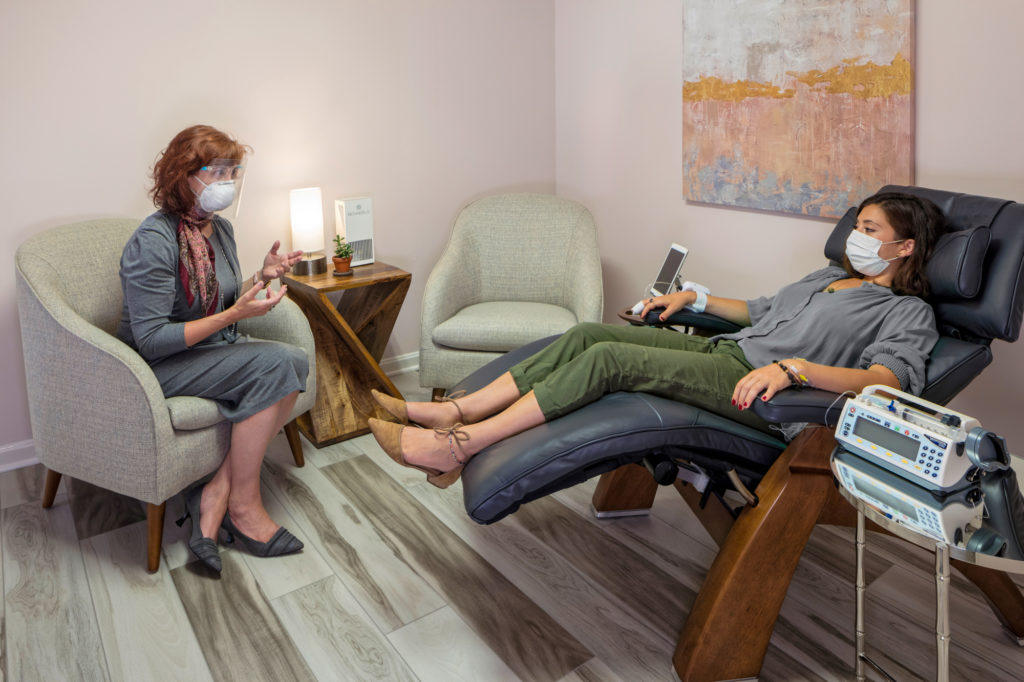
At Innovative Psychiatry, we’re fully functional in spite of the pandemic, with newly installed technology that gives you and our staff the best possible protection from COVID-19 in our offices.
We continue to serve as an essential service and we’re here for you when you need ketamine treatment.
There are lots of things about holidays and gatherings that unsettle and trouble some people who already suffer …
If oral medication hasn’t worked for you, if you’ve suffered from your symptoms that nothing has relieved, call us.
We’re here to help you in a safe and supportive environment.
Sam wasn’t sleeping enough. As in, not much at all. She just couldn’t drop off. But even if she did she’d wake right back up.
Day after day, week after week. She’s done everything she knows to do. And she has to work, so she just has to get by. Still, it scares her because her mind just isn’t clear. On top of that, she felt nervous all the time… shaky. What’s so hard about walking to the mailbox? What was the matter with her… Was there any connection to psychiatric disorders and COVID? The very idea made her shudder.
But it was real. And there were some things that had become harder and harder for her…since a couple months before she stopped sleeping. She didn’t know if being overly tired was making her feel uncertain about things like answering the phone or walking down the street, or if the nervousness was keeping her from sleeping?
Still, she was careful with COVID precautions. Always had her mask with her, and her hand sanitizer. She did have to work in the office, but everyone wore masks, and the cleaning service wiped everything down each night.
In spite of all that, she started feeling bad. Odd symptoms. On top of the shakiness. A tightness in her chest, strange feeling in her throat, and she felt sort of washed out. Then she ran a fever so she called in. Since her symptoms continued, she went for a drive-through COVID test… and it was positive.
Arrrgghhhh. So she had to stay home. But she felt so weak and crummy. After calling in to work, she went to bed. Fever and chills continued over night. And she realized she was getting weaker and weaker. Overall…her symptoms reminded her of the time she had mononucleosis in high school.
It was hard to be alone and try to figure out what to do.
Time to Take Action
The next day, she was afraid to wait any longer, so she called her doctor to get his advice. He told her she should go to the hospital.
The harder it was to breathe, the more discouraged she felt. Thankfully, they put a commode by her bed, because even walking to the bathroom in her room was just too much exertion.
This was far worse than mono. It was becoming scary. And because of the pandemic, her family couldn’t visit her. That night, she woke up panicking for air. She heard an alarm…her room filled with people in protective garb… then everything went black…
Sometimes A Disorder Seems to Make You Vulnerable To Contract COVID-19, and Sometimes COVID-19 Seems to Make you Vulnerable to Developing a Disorder…
Phil was 73, recently retired as COO of a successful marketing firm, and was beginning to enjoy his freedom. Of course, the pandemic wasn’t helping matters or helping him with his retirement plans. He wore a mask when he went out, kept sanitizer in his car and used it often.
Occasionally, he’d go fishing or play a round of golf. And when he did, he was outside and didn’t wear a mask.
One day, he noticed one of his golf buddies seemed to have a cough. Phil asked him about it, and he said he had something stuck in his throat from breakfast. Three days later Phil didn’t feel right. Something was off. By lunch time, he was feeling bad. Achy, draggy, his throat hurt, his stomach hurt. He called his golf buddy who told him he had been admitted to the hospital.
What???
Social Distancing and Masks Matter to Avoid the Vicious Cycle of Psychiatric Disorders and COVID
Phil was healthy, spry, in good shape. He truly didn’t feel vulnerable to catching anything. He called his doctor, who told him to get a drive-through COVID test and to call back after taking his temperature. Oh no. It was 101 degrees. He went for the drive through COVID test, and by the time he got home he felt like he was in trouble. He had no idea …if this was COVID…. that it could get so bad so fast.
By supper, he didn’t want to eat, and his breathing was shallow and rapid. His wife called 911, and by midnight he was on a ventilator.
His wife was terrified.
Phil was so sick. His family was so afraid he wouldn’t survive. But after 11 days in the hospital he began to improve, and they removed the respirator a couple days later.
Once he was home again, resting and rebuilding his strength, his wife noticed he was missing words. He called common objects by the names of something else. At first it embarrassed him, and then he lost track that it was happening.
In less than 6 months, he forgot the names of his grandchildren, and a few months after that, they had to put special locks on the doors to keep him from walking out and getting lost.
He didn’t really have dementia in his family, medical history… and his behavior was baffling for the people who loved him.
Phil’s Battle with COVID May Have Set Him Up for Dementia, as It Has Others
It’s a Vicious Cycle of Psychiatric Disorders and COVID
As if we didn’t already have enough to think about, new research has emerged that reveals a vicious cycle between psychiatric disorders and COVID.
Yeah…I know.
Specifically, between depression/anxiety as well as insomnia and COVID. And for the older patients, between COVID and dementia.
The study, led by Paul Harrison at Oxford, examined the electronic health records of 69.8 million people from 54 healthcare organizations in the US between January 2020 and August 2020.
They found that in the 14-90 day period after their COVID-19 diagnosis, 5.8% received their first-ever diagnosis of psychiatric illness. This compares to the 2.5 -3.4% who are diagnosed with psychiatric illness after another illness without COVID.
Another study, led by Nora Volkow at the National Institutes of Health, conducted a study of over 61 million adults found that people who have been diagnosed with a psychiatric disorder in the last year have a heightened risk for COVID…and they tend to have worse outcomes that those who fight COVID without a psychiatric diagnosis.
Gee.
And the diagnosis that seemed to cause the greatest risk was depression. So to provide perspective, for those who had been diagnosed within the last 12 months with a psychiatric disorder and also contracted COVID-19, the death rate was 8.5%, compared to 4.7% for those who had no psychiatric diagnosis.
The study couldn’t reveal WHY this is the case, but researchers have some hypotheses.
For one thing, if you’re depressed, it’s hard to care, so therefore more likelihood of abandoning precautions. In addition, if you struggle with psychiatric symptoms, you may have a higher sensitivity to stress, and you may have less resilience to cope with the uncertainty, isolation, and financial challenges associated with the pandemic.
All of that adds up to weakened resistance and greater risk for relapse.
It all comes down to comorbidity…and psychiatric disorders fall into the category of “underlying conditions” that increase your risk, just as diabetes and heart disease do.
And so, just like the grandmother who has chronic asthma, or the business man with heart disease, you need to take special precautions to protect yourself from becoming infected with COVID-19.
These revelations about how COVID-19 illness can seem to make you more vulnerable for psychiatric disorders, including dementia, and how recent psychiatric diagnoses can also make you more vulnerable to being infected by COVID-19, tell you how important it is to protect yourself through the rest of the pandemic. This vicious cycle can result in long term problems that make the precautions worthwhile.
Be extra careful to protect yourself from the vicious cycle of psychiatric disorders and COVID.
Because our focus is for you to get better. To reach a point where you feel like the best you’ve ever been. So we want to treat your symptoms, and we also want you to stay well, free of COVID-19 and the flu.
Charlene could not remember a time when she wasn’t depressed. A series of tragedies in her family along with psychiatric disorders in her relatives, all seemed to lead to her own depression. Antidepressants she’d taken for years seemed to do very little. Regardless of dosage or ration, she’d long ago lost hope that she’d every be better. Some people just had to live a life of wasted dreams. Dull. Flat. Empty.
That’s how she felt.
She’d tried to go to college, but found she was too unstable. She wanted to excel. But lack of motivation and dread seemed to have far more power over her than good intentions. She knew someone who went for IV ketamine maintenance infusions… but who knows? A lifetime of depression had tainted her, dulled her. She guessed the person she was must have become molded around the depression that had ruled her for so long. She hated herself, soaked herself in shame. Worth NOTHING. No education, no accomplishments, nada.
She wondered how she could ever be any different.
Now she had passed her 31st birthday, and she’d heard about ketamine treatment…she was thinking she might invest in it for a birthday present to herself. So she scoured the internet to learn what this treatment could do, and whether she should put hope in it.
The more she read, the more she learned, and her confidence and hope grew. So she called for an appointment. She wondered if ketamine infusions would work. And if she would need IV ketamine maintenance infusions.
She wanted an expert who really knew what they were doing. She wanted someone who would know what to do with severe symptoms. Symptoms that resisted everything. And everyone’s effort. She really wanted to find someone who was an expert in treating what she’d been told she had: treatment-resistant depression.
To find a psychiatrist who emphasized treating each patient individually, with remission as the hopeful goal.
She felt blamed. Like SHE was resistant. But she wasn’t. She did everything, took everything, tried to meditate in the morning, walked outside everyday, posted stickies on her mirror. Which she thought was stupid. And pointless.
Because none of it worked.
So was she just going to end up going to someone who would say, yeah, year, oh sure. ketamine? yes, you should do that …
She wasn’t born yesterday. Nor was she an idiot. She didn’t need a yes-man or a yes-woman, or a yes-doctor, for Pete’s sake. Who would just plop her down and promise her the world.
Here’s what she found: a place where she met a doctor who really wanted a ton of background information. Who took the time to collect it and read it and spent an hour with her before even getting to ketamine. (Not someone who did a phone screen. Nor someone who accepted someone else’s word for what she had. And not someone who interviewed her in a treatment chair.) Someone who wanted to know her story and her backstory. Who asked her questions that weren’t checklists. And someone who told her she was looking for all the factors that might indicate that ketamine could be helpful to her AND…all the things that she had working against her, that might make ketamine NOT work so well for her.
She was bowled over.
What if this actually worked? And if it did, was she going to need IV Ketamine Maintenance Infusions?
A Plan for Charlene
Lots of talk. Lots of tears.
And then the treatment started. Charlene received a series of infusions over a couple of weeks. Six to be exact. And she could feel some change — but not enough. Then, she was hospitalized and in the ICU for 9 days… The severity of her condition, the stress of it on her body and mind, resulted in her losing the improvement she thought she felt after the sixth infusion.
She called the psychiatrist. Why would it fade so fast? Did that mean it wasn’t working? That it was never going to work? That it would be like every other thing she had tried?
She was encouraged to have two more infusions. Here is where she got a migraine. She wasn’t sure it was worth it …the money! She wasn’t sure SHE was worth it.
But she got 2 more infusions. She didn’t know if 2 more were considered IV Ketamine Maintenance Infusions or not. Still, she began to improve dramatically, but was under pressure to move to a new place. The extreme stress of moving under pressure with the earliest hints of remission blooming was too much.
Once again, the benefits of the ketamine treatment seemed to lapse. So she went in about 2 months later, and had another infusion. In all of them, her dose and rate were titrated to support dissociation.
The goal was to get well — sustainedly well — and stay well.
That’s what she wanted. That’s what her doctor wanted.
(Isn’t that what everyone wants?)
The next morning, Charlene reported learning a new song in her dream. She sang it for her family. Someone told a little dad joke, and she exploded into laughter…with her eyes shining.
This never happened with her.
Her family told her she used to sing for them when she was a preschooler.
Early Signs of Remission
That was just the beginning. Over the next couple of months she became more and more lighthearted, hopeful and joyful. She began building the friendships that had lapsed during her depressed years.
It was as if the real person she was…the one that emerged from infancy… had replaced that person she thought was irrevocably tainted by depression.
About four months later, she was sick and in the ICU again. But once she recovered, her remission remained solid. A year ago she had to go through a massive move involving her mother’s abandoned belongings, and years of her own belongings that had stacked up during her depression.
Feeling well was her goal. STAYING well was her goal. It’s called REMISSION.
And she got there with an approach that was not cookie cutter. It’s a wellness model, not a business model.
Her remission remained intact, and she maintained a light heart throughout the process of packing, throwing away old mementos of dear family members who’d died, and hauling off items she wanted to donate to charity. It was a gripping experience in addition to exhausting. But she felt resilient.
Her remission remained solid.
Two years later she married a warm, loyal, and kind man her family loved. The stress of planning a wedding will bring many brides to their knees, but she remained strong and flexible through the process.
She was so glad to be alive. And to be in love. She never took a single day for granted.
Somehow her physical health has also improved dramatically along with her emotional health. She had given up on antidepressants when she originally went in for ketamine treatment, and hasn’t looked back. It has been three years and she’s never had another booster or IV ketamine maintenance infusion.
Maintenance Infusions: Yes or No?
Each Person is Unique with Unique Needs for Treatment
Charlene is not like anyone else. Of course not. Every person is different. But the questions that came up for her after her series of infusions come up for lots of people. Do I need more? How do I know if it will be worth it? How frequently should I have them?
What’s the data really, about that?
Turns out there’s not a lot of data about maintenance treatment out there.
A recent retrospective chart review from Massachusetts General Hospital (my old stompin’ grounds!) looked at a group of 85 outpatients who received 2 ketamine infusions a week for 3 weeks starting at 0.5 mg/kg.
The study followed these patients naturalistically — that means their outpatient psychiatrists could change their medications and they could change their therapists or the therapy they were getting while they were going through their infusions.
Although the response to the first 6 infusions using was only modest, and the drop-out rates were high, about 47% of the patients went on to receive maintenance infusions and 33% continued maintenance.
The investigators attributed this to the patients perceiving benefit from continued treatment. They received an average of an additional 2.3 +/- 1.5 infusions during maintenance.
We applaud these efforts. Research is long, hard, and time-consuming.
I think one of the things this study points out is that a one-size-fits-all approach to treatment doesn’t yield the most beneficial outcomes. Because one size doesn’t fit all. And just like with antidepressants, one strength doesn’t fit all. We need more research on dosing, titration, and schedules.
Each Doctor Chooses What He or She Believes is the Best Course
Medicine is both an art and a science. We’re deeply steeped in the science (from Wellesley, Hopkins, and Harvard …how could you not be?) — and we’re deeply committed to the art.
We bring the best of what we’ve learned, the best of what we know, and the best of who we are to you.
At Innovative Psychiatry, we just don’t use a one-size-fits-all approach to depression treatment. Or to ketamine treatment. We don’t now and we never have since the beginning. With each patient we tease apart symptoms and medical history, along with the patient’s experiences and descriptions to find what’s needed for that particular patient. We custom fit the infusion protocol and recommendations between visits to each individual patient.
See how that’s worked in a young woman with anorexia. Her anorexia has been in remission now for 10 months and counting.
It’s a wellness approach to treatment because we want to see our patients achieve remission in every case possible.
It means doing our homework, staying up late and scouring the reading, to find out what other experts have experienced, learned, and tried. Going to conferences. (Well, staying at home and logging in to conferences now!) Then applying what we learn to each patient according to his or her specific needs.
Because it’s all a vital part of helping each patient achieve remission. Some patients may need maintenance infusions, and when they do, we make it part of our wellness approach to their ketamine treatment.
Overall, remission is the goal. We can’t promise it, but we do everything we can to make it possible.
Disasters can come in many forms… barring natural disasters like earthquakes or floods… political disaster and a rising pandemic sound pretty daunting.
There’s the anxiety that accompanies voting tomorrow, and hopefully you’ve had the opportunity to vote early and avoid the big final voting day… Then add to that the OUTCOME of the vote the next day. The fact that it will go one of two ways… and it’s easy to cling to the idea that the world as you know it will end if the vote doesn’t go YOUR way. Eeesh…. Right along side that is the rising tide of COVID-19 in the news as the daily infection rate rises higher and higher. The CDC reports 99,750 new cases this past Friday in the US, the highest single day count of new cases ever in the US. That’s up from 63,000 October 16. We are neck deep in the Second Surge of coronavirus.
Yikes…
Both of these issues have been looming. At the end of the summer, COVID seemed to have been receding. Then there was talk of the Second Surge of coronavirus. Now, the news is full of the threat of the worst flu season in memory because of the combination of influenza and COVID-19.
Like the growing gloom of black thunderclouds on the horizon, when the low barometric pressure is a hint of the impending storm… there is the sense in the nation that disaster looms.
And you feel helpless.
And fearful that life will become somehow unmanageable, so difficult that it may overwhelm you and those you love.
Stop and take a breath.
Breathe in…
Breathe out…
Repeat.
Because of particularly strong clashes of ideals and passions, they’re calling this vote an Election on Steroids.
There was a time when elections were so apathetic that big chunks of the population didn’t bother themselves to vote.
Not now.
Where the presidential election is concerned….only one candidate will win. You know that.
But here’s the rub. No matter who you voted for, life will move forward. Your life, your family, your job…your routine…will move forward.
Those who didn’t vote for that candidate will adjust. And those who did are sure to suffer their own disappointments at some point too…but that’s how life goes.
You. Your loved ones. That’s who deserves your energy and support. So get up. Keep living, and being grateful for everything that’s good in your life.
Remember that your vote is one vote in a nation of millions of people. We live in a great nation with all its faults and all its strengths. And you’re a part of these millions of people who comprise this nation.
We’re all connected, no matter who we voted for, or who wins. We’re connected by virtue of being Americans, and by virtue of being human. We all share the same DNA and we need each other.
Tensions Foster Divides But You Can Bridge Them
During the tensions of an election it’s easy to fall into grievous criticisms of other beliefs and ideals than your own. But honestly, it’s beneath all of us to do that.
During the terrible fires that have swept across the northwest, California, and Arizona, Americans go and help. Right..? They don’t ask if the people evacuating are of one ideology or another. They just help because they’re people.
And doing so increases peace in the helper.
After this election is completed tomorrow, think about what YOU can do to maintain your peace of mind, your stability, your support of other humans. It’s likely there will be others who react because their candidate didn’t win, and those who celebrate because their candidate did win.
But think about your life, your loved ones, and your wellbeing as a family. Make an effort to understand those you don’t agree with. Make a decision to limit the time you spend watching the news, or reading news or political rhetoric on the internet.
And focus on the good in your life, the people you love, and your care for them.
Second Surge of Coronavirus: The Double Whammy Flu Season.
People everywhere are seeking ways to protect others from the ravages of the spread of these viruses. We already have cities in our country where hospitals are full…businesses have been shuttered.
The numbers of cases per day are swiftly rising. In the US overall, on October 16, the number of cases/day was 68,000 but is now 99,750.
Just Think.
There IS a need to take every precaution. To choose safety, rather than take chances.
In NYC this weekend, a Halloween party was held where 400 people attended. Many wore no masks. Why? You have to wonder. Of course, police handed out citations to all they could, but what causes people to knowingly contribute to the second surge of coronavirus …?
Ok. Yes. We’re all fed up with masks and gloves, sanitizers, and handwashing, as well as social distancing. But that’s no reason to stop doing what’s safe, is it?
Still, you cannot change what other people do. But you can make your safety decisions based on what is currently happening. And you should.
So if you know the people in the post office or grocery store line aren’t wearing masks, don’t go there! You can always send gifts from websites and have them delivered directly to your recipient.
When you go to the grocery or hardware store, use one where you can park in a special space and they’ll bring your purchase to you. So that you avoid going inside. You do have choices to keep yourself and loved ones safe.
See how easy this can be? No muss, no fuss, no frustration.
You can stay safe from this second surge of coronavirus by making thoughtful choices that take care of you.
What Else Can YOU Do to Navigate and Weather the Sense of Dread You Feel At This Weird Time?
Walks in the fresh air can help. Eating a diet that’s chosen from all the food groups, especially all the colors of vegetables and fruits. Greens, reds, blues, purples, yellows…
And if you need the kind of treatment ketamine infusions can provide, call us.
At Innovative Psychiatry we’ve taken extra steps to make sure we’re constantly destroying COVID-19 and flu viruses in our offices. We’ve gone the extra mile, so you can feel safe here, and our staff is safe, too.
A 21st Century Approach to A Safe Ketamine Treatment Environment For You
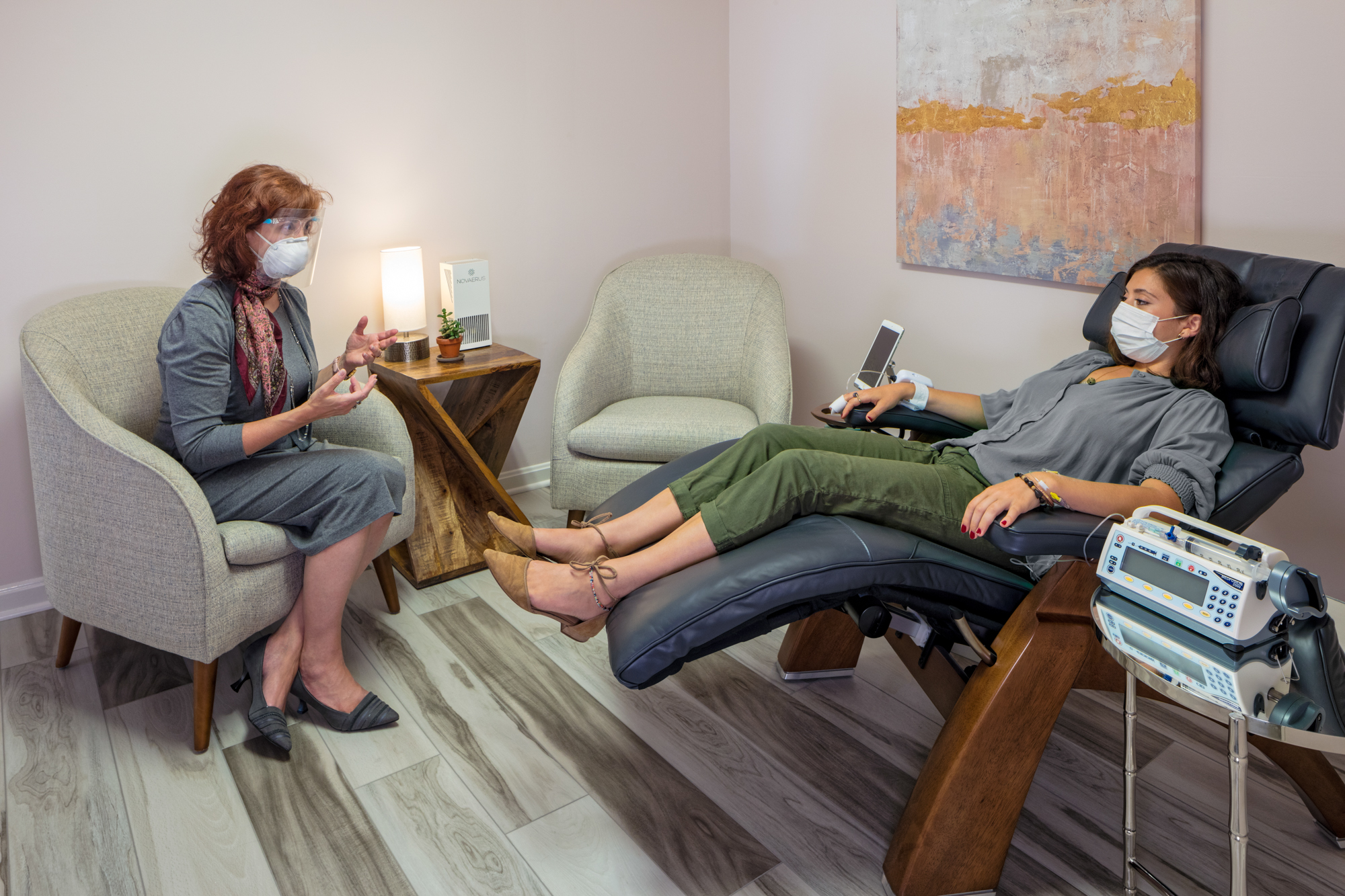
We’re always on the leading edge. And we’ve taken your safety a step further as we lead the way in providing the safest possible clinical setting for ketamine treatments: IV, IM, IN, and ketamine-assisted psychotherapy. We’ve talked about the safety of IV and IM ketamine treatment. We’ve also talked about the ways we’re taking precautions to keep you safe during this pandemic when you come in for ketamine treatment. What you maybe didn’t know is that behind the scenes, we’ve been continually scrubbing the air you breathe to destroy viruses and bacteria, lifting pathogens from hard surfaces, and laying down protective microbarriers – with new plasma cell technology that destroys viruses. We’re innovators, always seeking the best possible solutions. So, true to form, we’re the first ketamine practice anywhere to offer this complete technological safety package for our patients. In fact, we’re leaps and bounds ahead because your safety and ours is of utmost importance.
So we stay up late, reading. And sometimes, like you, we’re up early, worrying. About how to stay safe. How to make it. How to make sure that you make it.
And we’re doing that with VB Enviro Care.
If you’re thinking about ketamine treatment, you should see a psychiatrist who is on the forefront of innovation — in every aspect of their work, including the space they’ve created to offer you treatment. We believe that, and we live and breathe it. So today we’re going to talk about that space — our incredibly lovely space — and the air you breathe when you’re with us.
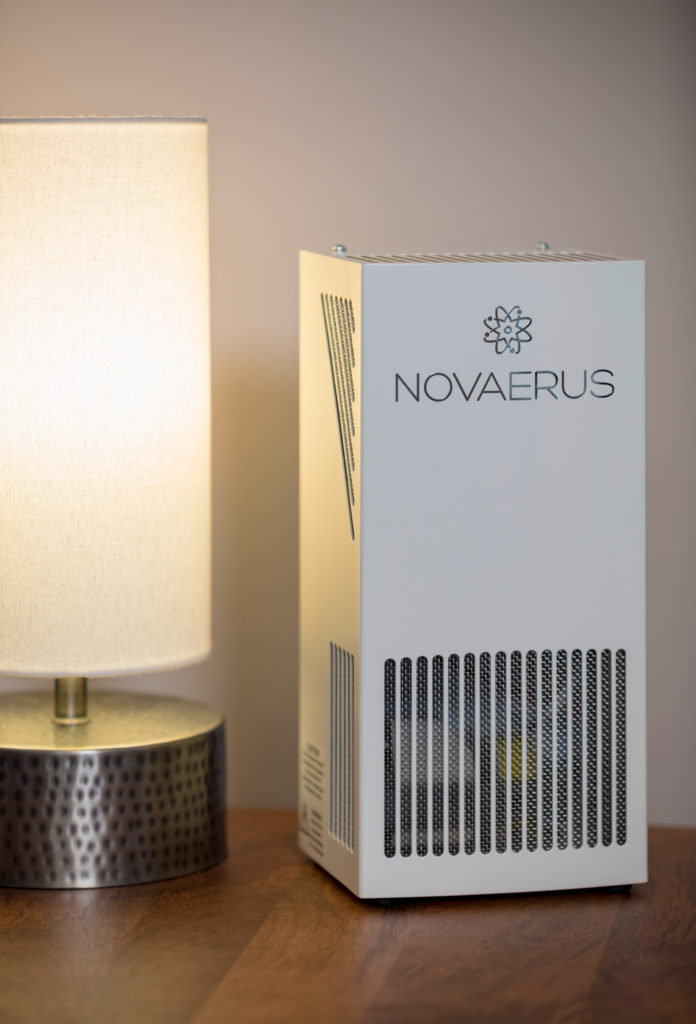
VB Enviro Care provides uswith the best technology that destroys viruses like coronavirus in our offices.
So we can all breathe easier. So we can be less fearful.
You shouldn’t have to worry about that breath of air when you’re in your doctor’s office.
We have plasma cell technology that was developed at MIT and NASA, prepared for a time when we might be faced with biological warfare. (OK… so I would say we’re facing the fight of our lives with this pandemic… it sure feels like that.)
It’s a plasma cell technology that not only removes but destroys viruses, bacteria, and mold from the air and the environment in a closed space. So it’s perfect for a doctor’s office. A ketamine clinic. An infusion center. Hospitals, ERs, walk-in clinics… you name it. In fact, it’s been rigorously tested in hospitals and ICUs around the world specifically against stubborn, highly-resistant infectious viruses and bacteria.
And we’ve got it here for you.
A symphony of technology, products, and procedures to clean, disinfect, sanitize and protect our air and every hard and soft surface in our office. (Yep, even the gorgeous ones.)
Lori Calabrese, MD
So let’s talk about surfaces first. The ones you touch and see. As you know, there is a difference between surface cleaning and sanitizing (removing pathogens). For instance, some surface cleaners remove 97% of all viruses and bacteria from a surface. Others remove 99%.
But in a pandemic, and in a doctor’s office, you deserve not just thorough but the most thorough sanitizing available. Technology that targets and removes pathogens like viruses, bacteria and mold not JUST from the air, but from all of the hard surfaces you see and touch. The Novaerus units and Steramist service we use through VB Enviro Care obliterates and erases those microorganisms from the air — and even lifts them from those surfaces — continually and regularly.
They do MISTING regularly to sanitize our surfaces and further sanitize our air.
(Sometimes it’s called fogging or electrostatic spraying. We like “misting.”)
MISTING DISINFECTS AND SANITIZES ALL HARD AND SOFT SURFACES AND LEAVES A PROTECTIVE COATING BEHIND TO REPEL VIRUSES AND BACTERIA FROM LANDING ON THOSE SURFACES. THIS TECHNOLOGY DESTROYS VIRUSES IN THE AIR AND ON EVERY SURFACE.
Our system–our symphony–destroys 99.99% viruses, bacteria, and mold from surfaces…like cabinets, counters, tables, chairs, equipment, handles, and knobs. Including coronavirus… and flu.
So we clean regularly, disinfect continuously (all day and all night) with Novaerus, and then have VB Enviro Care come in to mist with confidence and on schedule… which destroys virtually all of the organisms that can make you sick. Obliterates them. And leaves a protective barrier behind on every surface (even the soft ones).
Why Is This a Big Deal?
Because we live and work and see our doctors in enclosed spaces. We’re not talking about your back yard or the city park.
In the open, air can circulate constantly and replace the air that surrounds you. That constant circulation and diffusion thins out the concentration of any micro droplets of SARS-CoV-2 (the virus that causes COVID-19) — as long as people are distanced in open air areas. So coronavirus particles that waft your way are less concentrated.
Oh wait. Microdroplets. What are those? When we talk about micro droplets, we aren’t referring to big juicy drops or even little juicy drops. These are so tiny they’re suspended in the air. (That’s why they’re called aerosols.) In fact, they can remain suspended for up to 16 hours. So the more an infected person talks and exhales in the same closed space, the more concentrated those aerosolized droplets become. And the more likely to spread the virus.
Little side note here: This is also why we’ve been concerned that social distancing of 6 feet is not enough…because these particles can float 10 ft, 20 ft, even dozens of feet.
And you know those sneezes and coughs we’re all so worried about? Those emit big drops…that are heavy and fall to land. But, the tiny aerosolized ones that are simply breathed out? They’re floating all over… ready to be inhaled.
So what to do about them?
While it’s important to keep washing your hands, to clean them of big droplets and keep them away from your face, it’s just not enough. Even wearing a mask isn’t enough. All those floating contaminants hang suspended indoors, slowly diffusing. Every time someone enters or leaves a building, more of those particles enter.
Ok, so why not just boot up your laptop and order an air purifier?
Because those have filters, and even some highly sophisticated systems that use UV, ozone, or chemicals…can block and hold the pathogens that are killing us. And there they can colonize, multiply, and escape back into the atmosphere.
So think Plasma: It Destroys Infectious Organisms at the Molecular Level.
VB Enviro Care and Novaerus use plasma technology. It kills airborne pathogens at the molecular level. Plasma, known as the fourth state of matter, can create an ultra low-energy “force field.” When bacteria, fungi, or virus particles—no matter how microscopic—move across this field, they are instantaneously destroyed at the level of their DNA. Every single one. Obliterated.
Novaerus is used in hospitals worldwide to safely kill airborne superbugs like MRSA, C. diff, and Tuberculosis, and has been proven to even be able lift and destroy them from hard surfaces. It has been tested and proven by more than 50 laboratories and clinical research sites, including the NASA Ames Research Centre in California.
So, this system is designed both for rapid remediation and continuous treatment of a given space.
Our Novaerus units from VB Enviro Care perform with flying colors.They have been independently tested against MS2 Bacteriophage, a commonly used surrogate for SARS-CoV-2, and shown to reduce the virus by 99.99% in just 15 minutes.
Plus they’re gorgeous. (Always a good thing.)
A study published in June 2020, edited at Stanford University, highlighting the fact that COVID-19 is spread by sneezing or coughing has been corrected.
Listen up because this is really important.
The truth is that just exhaling and talking release micro droplets containing the virus. So someone who has no symptoms can release infected micro droplets.
The use of masks helps to manage these micro droplets. But only partially.
For this reason, it’s important to have the technology to destroy viruses in these infected micro droplets from the air you breathe.
We have that technology. (I’m so excited that I’m saying it again, just in case you missed it!) Novaerus units through VB Enviro Care use patented filter-free ultra-low energy plasma technology with a single speed fan. And we’ve installed one of these units in every room in our offices.
The result is that when you come in for ketamine infusions, the air you breathe is 99.99% free of coronavirus, influenza virus — and even the viruses that cause mild illnesses. It’s also free of bacteria and molds.
What else are we doing?
Locking our doors, keeping delivery folks outside, sanitizing what we bring in with ultraviolet lights. Washing our hands. Wearing masks, face shields, gloves. Cleaning with 70% alcohol throughout the day. Sanitizing each infusion room with with ultraviolet light after each infusion. Abiding by the rules, following quarantine guidelines, meticulously screening our patients and ourselves. We’re doing it all.
We have protocols for you to follow to keep yourself safe, and for the safety all of our ketamine patients (and ourselves). We’ll send these to you before you come in for the first time and go over them again on the phone. Ask us about them before you come in for a follow-up infusion or maintenance infusion.
These steps — combined with the best plasma cell technology and environmental care available that destroys viruses in our rooms — help you relax…and know you’re in safe hands. And in a safe place.
So you can breathe easy.
A symphony of care. Multiple layers of attention, time, and protection. You can have confidence when you’re with us.
It’s enough that you are dealing with everything else this pandemic has caused while suffering from symptoms of treatment-resistant depression, anxiety, trauma, or suicidal thoughts.
It’s ENOUGH.
When there is so much to deal with, so much to overcome, to hold together, at least you can come in for your appointment and relax during treatment, knowing we’ve got your back. And the air that you breathe. Covered.
We’ve talked often about how to screen a ketamine clinic. The 21st century technology that protects you when you are in that clinic is an important item to add to your list of requirements. For you, your family, and everyone you meet.
At Innovative Psychiatry, we want to help you get better. And we’re relieved to be able to offer these advances in our office environment, so you can focus on your treatment and recovery.
The medical journals these days talk about the increases in those who need psychiatric care during this pandemic — many who’ve never needed it before. Now, especially, you need to be not afraid to seek treatment for your symptoms.
You need to feel better to cope. And you need to feel safe while you receive that treatment to feel better.
Currently, with the growing use of IV or IM ketamine treatment for treatment resistant depression and bipolar depression, and years of clinical evidence to draw from, some people wonder if repeated use can cause adverse effects.
And while there is irrefutable evidence of serious adverse conditions among those who have used ketamine on the street in unmonitored doses, it’s time we learned more about the safety of repeated infusions of ketamine under a physician’s supervision. Thankfully, a prominent researcher has stepped up to the plate to give us answers to the question, “What is the safety of IV ketamine?” ~~
Jackie’s sister Janie knocked on the door of her apartment. No answer. Her sister’s depression made it hard for her to see people…so it was common for her to not answer the door. Janie slipped the key from under the mat, and let herself in quietly. She found her sister in a ball in her bed… something was wrong. “Jackie, what is it? What’s happened?”
Her 31-year-old sister was crying, and one look at her face told her she was more heartbroken than usual. She garbled through her tears, “I was so hoping ketamine treatment was going to help. I’d put all my hopes in it… that I’d get better, and be able to function, get a job and live like a normal person… But I was looking on the internet, and I found a site that said there are so many things that go can go wrong. I know it was just social media but I’m so afraid now…
“What is the safety of IV ketamine? I mean I really need to know. I so want my life to get better.”
Janie sat next to Jackie wrapped her arms around her… and held her while she cried. She reached for the box of tissues and gave her one.
“I have to tell you, Jackie, I’m not sure. But what I’ve read sounded good. My impression is that it’s safe, and effective…most of the time. Even though there are no guarantees…it sounds pretty transforming for most people.
“But I’m sure there are naysayers out there. So let’s research it together — now. Let’s find out. I feel pretty sure we can read more studies and doctors; reports, and figure out how true what you read is.”
She continued, “As it turns out, I did learn you may improve after the first infusion, but you may not. It may take a few. We won’t rush it, though. You suffered so many years from this depression, let’s give this treatment every chance to help you get truly, deeply better.
“My hope for you to get help is huge. I’m not an expert, but this is the best potential solution we’ve found anywhere. So let’s dig. Let’s find the best truth we can.”
Jackie had stopped crying…she was nodding. She sat up in bed and pulled her laptop into her lap. Together, they started with pubmed.gov and searched for studies about ketamine for depression.
Then, there are those who talk about psychotic breaks during treatment, and those who say they have severe bladder damage… and the list goes on. But does that happen?
Let’s face it, if you’ve never received ketamine treatment, you know how desperate you feel to get something that can alleviate your treatment resistant depression. But you read these reports that seem to be all over the internet … and you don’t want to be duped. You wonder if ketamine infusions are not as safe as you thought, and you don’t want to add other problems to your already horrific treatment resistant depression.
Don’t you just wish you could get help to empower you to live your life? This life. The only life you have. And fear says…What is the safety of IV ketamine treatment? You don’t want to jump from the frying pan into the fire, right?
Then, there are the reports of alarming hallucinations that are supposedly so terrifying some people are afraid to undergo this treatment. So much exaggeration.
A research team led by David Feifel, MD, whose reputation in studying ketamine for depression stands for itself, recently published a study about the safety of IV ketamine treatment.
His research team used a survey sent to 69 providers — most of whom were psychiatrists — originally. Since some didn’t complete the survey, and some surveys were incomplete that number for the survey reduced to 27 providers who reported on a total of 6630 patients who had received repeated ketamine treatment by IV or IM administration.
Their focus was to determine the amount of adverse events these patients experienced and reported to their doctors…and it was surprisingly low.
The patients were divided in the survey results by the number of treatments they received, the length of time they’d been receiving them, and how many discontinued their treatment due to adverse events.
Considering all the scuttlebutt and rumors that you can read about, it turned out that out of the 6630 patients, only 47 had to stop their treatment because of a side effect. (That’s means 0.7%.) Of those, 33 of the 47 had reported psychological distress during the treatment.
Sometimes that can happen with dissociation. People with complex histories, lots of losses, tremendous trauma, and incredible emotional pain can sometimes experience distress or fear during a ketamine treatment session.
With an IM treatment, absorption is quick and ketamine can peak quickly in the body — and it may be more challenging to manage distress. With IV treatment, the infusion can be stopped or slowed, or additional medication can be given rapidly to help quell the distress.
This is why it’s so important for patients to be appropriately selected for this treatment, prepared for it–for what they might experience. And why it is so important that distress be recognized and attended to in the best possible way.
In addition, Dr. Feifel reported that only 2 people experienced hypomania, which is 0.03%. No one became addicted to ketamine. No one suffered cognitive deficits as a result of the treatment. And only 1 person out of 6630 reported psychotic symptoms.
As far as bladder symptoms…there were 3, or 0.06%. Let’s remember that some of these patients received ketamine far more than 20 times.
And this may surprise you…
About a quarter of the 6630 patients had 5 or less treatments. But 42% received what’s considered the standard number of treatments: 6-10. And that left 1/3 of the 6630 who received over 10 treatments, with 7% of that 1/3 receiving over 20.
So this population was well distributed to reveal the adverse effects in a few vs. a larger number of treatments.
The researchers noted that a study in South Korea on ketamine treatment for chronic pain used ketamine doses of 1mg/kg — higher than most in this study. And that dose produced very few adverse events, with the treatment being considered very safe and tolerable.
All in all, the adverse events seen with repeat ketamine treatments given IV or IM are pretty low risk. Of course we still have to be aware of all of the possible risks, and of all that we still don’t know about long-term side effects, especially about the incidence and severity of bladder symptoms. We are learning all the time — from our patients, our colleagues, and researchers around the world.
And we learn from anecdotal experiences we read about of those who’ve used it on the street without medical supervision.
Dr. Feifel’s sorely needed report provides evidence about the safety of repeated parenteral (IV, IM) ketamine treatments. But even in those extremely rare situations where an adverse side effect occurred, we don’t know the particulars that may have contributed to it.
But for many people who suffer treatment resistant depression or bipolar depression... or PTSD… and who look at the risks and benefits of a series of IV ketamine, the potential benefits often outweigh the risk of an adverse effect.
Maybe that’s true for you, too.
You deserve to have the power to live and enjoy your life.
At Innovative Psychiatry, we’re uniquely equipped to keep you safe (and we’re working to do that even in the pandemic!). We welcome you into our treatment offices. Especially now you may need the freedom, relief, and extraordinary joy that ketamine infusions can provide.
And if you, or your family or friends, want to know about the risks of repeated infusions in real world patients and real world outpatient settings, the data speaks for itself.
And we’re always searching for more.
Don’t miss the opportunity to feel like yourself… even if you haven’t been yourself for so long you don’t remember. You’ll recognize the real you when depression lifts and you are yourself again.
Reaching Out for Help — and Treatment — Is the Bravest and Healthiest Way to Make Your Life Count
We’ve talked before about stigma, and the fear you can have of doing or saying anything that would attach a stigma to you.
Racism is in the news often in these times. It seems that being accused as a racist is one of the most dreaded accusations anyone can bear. And once that accusation is slung at someone, it’s hard to get out from under the the searing branding of it.
You don’t want to be a racist, and maybe even more, you don’t want to be SEEN as a racist.
In a similar way, there’s another label that gets slung around, and that’s “mentally ill” or “crazy” … right? Here’s worse: weak.
The stigma is painful. The label hurts. Those slinging those stones are not usually qualified to have any idea of its truth.
Just as the stigma of racism runs deep and its historical tendrils have insidiously reached all races, in all cities, and carried through generations, in a similar way the stigma of what people call “mental illness” has done the same.
Also, just as neuroscientists have discovered more and more about what actually happens in the cells in the brain that result in a disorder, there is more and more information to fight stigma.
Still, it exists. If you go to a psychiatrist to find out what can be done about the darkness, emptiness, despair you feel…will you lose your job? What about your family…Will they think you’reweak? How will your boss look at you…any differently? Will you have trouble getting insurance?
Which is why it’s so important that men seek help when they need it. It shows they know what’s important.
What are the risks?
But if you need an intervention to pull you back from the precipice of despair, from thoughts of suicide … does that mean you’re weak?Or simply that you need treatment to restore you to your full functioning self?
What about a celebrity athlete? Should a famous athlete be respectfully treated so he can move forward and perform, or should he be shamed and stigmatized as if he’s not worthy of his position?
But think about it. Truly independent, strong men seek help when they need it, whether to lift furniture, improve a skill, or check out something that doesn’t feel right. Like a pain in their heart. It’s as much about being a leader as it is about being well.
Dak Prescott has been in the news because of something besides his role as a Dallas Cowboys quarterback. After his mother’s death from colon cancer in 2013, during which his brother Jace was a present support and helplessly watched her suffering, Jace took his own life in April of this year.
Dak has begun opening up about these tragedies, and about his own struggles with depression and anxiety through the COVID-19 pandemic.
He spoke out in September about the importance of being vulnerable during difficult times, and reaching out for help, rather than trying to carry your pain silently inside.
He knows that doing that can be lifesaving.
Dak’s statements have opened up the dialogue again about men in masculine roles, and their difficulties in being honest and open to reach out for support and treatment.
This is an area of extra stigma not only for the athletes, but for their fans and their announcers.
The same can be said about other tough roles such as police and military.
And among the cultures in these careers, a true leader is too often believed to be one who doesn’t “allow” depression or panic. (As if we allow it, right?) And who certainly doesn’t need help … with anything. Or directions.
And yet, people of all walks of life can suffer with psychiatric disorders. Depression, anxiety, trauma, addiction. Hopelessness. They cut across all boundaries, all races, all cultures, all socioeconomic levels. They can creep in or hit you like a hurricane.
It has nothing to do with courage, energy, personal strength, or leadership ability.
It hits all of us. Ourselves, or someone we know.
Dak Prescott is joining with other male celebrities such as Dwayne Johnson, Michael Phelps, and Kevin Love, to encourage men to speak up, be honest and open about their struggles, talk about real things that matter, and embrace treatment when it’s needed.
They’re showing the world that strong men seek help when they need it, because that’s what leaders do.
And that’s a very productive effort toward reducing stigma, to letting all men be real, to feel what they feel — and to be honest and courageous to talk about it and reach out for support.
The beauty of it is that there is help to be found.
The era of taking antidepressants for months and years hoping they’ll eventually help even when they don’t… is outdated. Because we have more to offer. So if what you’re doing isn’t working to help, it may be time to reach out and see what else is out there.
At Innovative Psychiatry we see many men whose symptoms make them pretty miserable get back to their best selves after a few weeks of infusions…
And we’re set up to safely offer these infusions in the current COVID pandemic in our office in South Windsor, CT.
Dak Prescott is a brave man, who has owned up to his feelings, pain, and struggle…and has reached out for help.
He’s still a leader in his field. A leader who’s setting an example for health. A man seeks help. It’s a leadership thing…like a CEO, or an athlete, or a governor. Men seek help because they know they can’t do it all. So they choose their help wisely.
Do for yourself what Dak has done for himself. Connect with others who also struggle and seek support, and reach out for treatment here.
Stigma about taking hold of what you need to live well is so 20th century. This is a new dawn, a new world, with new solutions.
There is no weakness in reaching out to get what you need.
October is National Depression Awareness Month and October 8 is Depression Screening Day
40 million US adults struggle with depression and/or anxiety. But not everyone who struggles recognizes they even have an identifiable or treatable condition, or that they need treatment. That’s why there are tools that you can use to help identify the symptoms and figure out if you might want to consider seeking treatment. This week, participate with people you love so you can recognize and identify depression. It can be lifesaving. For so many, it’s both. And like pedals propel the chain on a bicycle, depression and anxiety can just keep aggravating and perpetuating each other until you feel like you’re losing your footing.
There was a time 20 years ago when society as a whole wasn’t aware of depression. There were all sorts of judgmental criticisms of those who suffered. So there is good reason to have a dedicated day — nationally — to draw attention to a condition that needs to be identified and treated.
Apparently, it’s working, right?
So let’s talk about screening.
It’s important to know if you’ve just had a tiring day…or if you’re actually bearing the weight of a condition. Depression can present itself as mild to severe and anywhere in between.
And while you may be able to get by with mild depression …in fact, you may be able to get through it with healthy activities, fresh air, good diet, and time to relax, severe depression probably is a sign you need treatment so you can function and recover.
To recognize and identify depression in yourself or those you love is so much better than ignoring symptoms and behaviors you don’t understand.
A screening tool measures – with your help – how you feelabout your daily routine, about your energy, your sleep, your ability to concentrate, and your feelings about your life and future.
You can google “depression assessment tool” and take the little test to give you a somewhat objective impression. These tools are designed after a tool doctors use to help assess the severity of depressive symptoms called a PHQ-9.
Of course, tools like this aren’t intended to take the place of your psychiatrist, but using the tool informally may alert you to consider making an appointment.
To take it the next step.
Some people –you, maybe– have been moderately to severely depressed for so long, that your mood can lighten and you find your feel some relief but the screening tool still shows you’re moderately or moderately severely depressed. And it could be that you were actually severely depressed before you felt a lightening.
But with moderately or moderately severe depression, you should be under the care of a psychiatrist, to help you avoid a dangerous condition.
Remember, those tools can help you recognize your symptoms, get an idea of how severe they are and help you make a decision to see your doctor. Your psychiatrist will use a variety of screen tools, evolution, interview assessments, medical history, and more.
So you need to know what to look for in adults, teens, and children, don’t you?
1. Do you feel empty? It may feel like sadness, or futility, too.
2. Do you feel irritable..? Do you find you’re just short tempered and easily agitated?
3. Do you find you’re getting too thin, or maybe you’re suddenly gaining weight like crazy?
4. Do you think about death, about dying, about yourself dying or someone else?
5. Is it hard to focus, concentrate, on your work, or a newspaper, or TV?
As we stop to think about awareness and education toward recognizing depression in others, and offering support, there are some points we can celebrate as being positives that seem to come from depression.
For example, you may not realize that people who have suffered from depression tend to have more capacity for treating others with compassion. They often find they are less judgmental and have more capacity for understanding in what other suffer in life, and this is interesting:
They tend to be more analytical.
So they can break down complex problems into smaller, more manageable parts than those who haven’t experienced depression, and they often actually perform better on certain tests.
Interesting, isn’t it?
Still, what’s far more interesting is to utilize ways to recognize and identify depression so you can do something about it. To find the treatment that will restore, refresh, and help you feel good again.
Antidepressants
While it’s true that 35-60% of the people who have been diagnosed with depression respond to the first or second trial of oral antidepressants, there are about 35% who don’t respond to anything.
These cases are often among the most severe, and many have considered their depression to be treatment resistant. (The depression is treatment-resistant — not the person!) You can imagine why many attempts to receive effective treatment over months, years, even decades can result in feelings of futility.
But in the last decade or so, IV ketamine treatment has become such a rapid and effective alternative treatment, that many have come to consider it their treatment of choice when nothing else has worked.
Let me be clear though, that no one treatment is the treatment of choice for all depressed patients.
Even so, even among that 35% who haven’t found help with other medicines or treatments, IV ketamine treatment can be effective.
“Effective” means that you could respond. Even better, “effective” means that you could REMIT.
Picture remission like this…energy to meet friends for lunch and really enjoy your time with them, resilience to perform well at work and excel in your job, to bounce back from disappointment, and to build strong healthy relationships.
And there’s more. Suicidal thinking is a life-threatening symptom of severe depression. IV Ketamine is also an extraordinary treatment to stop suicidal thoughts.
Our study on ketamine’s effectiveness to stop suicidal thinking in the office in our patients with depression demonstrates ketamine’s potential for this life threatening symptom in a real world population of real people with complicated histories and hard lives. It can prevent that trip to the ER. It can help avoid a hospitalization.
Our patients commonly go through ketamine treatment in our office over a couple weeks — and many emerge feeling wonderful. Ready to take on challenges, with the sparkle to be contribute, work with others, and be creative.
At Innovative Psychiatry, trying to do our best to help you and your family hasn’t stopped or slowed down because of the coronavirus pandemic. We continue to improve our protocols and technology for maintaining a safe environment for you.
If you struggle with depression and have not found effective treatment, call us.
Get with your loved ones and screen for depression this week. Reach out and take steps to recognize and identify depression in yourself or loved ones.
And if you’ve suffered from unimproved depression, or if you find you’re thoughts filled with death images or plans, call us.
The National Suicide Prevention Lifeline: 1-800-273-TALK (8255)
Sometimes the only person who can take care of you is you. Take care of yourself and reach out for help when you need it.
There really is hope available so you, your fulfillment, and your future.
We’re want to help you find relief from the emptiness, the despair, the futility, and instead experience the joy of living a rewarding life.
To the restoration of your best self,
We can all help prevent suicide. The National Suicide Prevention Lifeline provides 24/7, free and confidential support for people in distress, as well as prevention and crisis resources for you or your loved ones.
The National Suicide Prevention Lifeline 1-800-273-TALK (8255)
The Veterans Crisis Line and Military Crisis Line 1-800-273-8255 Press 1
If you suffer from mania, you’ve also experienced the transition that leads to it.
Someone identified that transition emotion over a thousand years ago. Surprising? Here we are in the 21st century, with all the technology and neuroscience we’ve discovered at our fingertips, and we still face that same emotion. And it often plays a strong role in bipolar mixed states.
What is it?
Anger.
So many in our current society speak of various psychiatric disorders as if they’re a product of modern contrivance. Sometimes in psychiatry, our role is not only to treat those suffering from a disorder, but to also defend them against the cruel cynicism of skeptics who discredit their struggle.
For someone who suffers from emotions that plunge so low, so dark, they don’t know how to hang on to a fiber of life… then without warning, those feelings change…shift…and become energized then agitated… with no reason….until they’re replaced by anger then rage….and more energy than can be managed….until they’ve reached a state of euphoria, unlimited possibility, and very high creative energy…. Someone like this knows the helplessness of erratic emotional states.
And if you’ve experienced these wide changes in emotions, you know it’s painful. When it’s happening inside you, it feels normal. It feels justified…because you don’t realize it’s happening because of malfunctioning signals in your brain.
If you feel anger…even rage… it just must be justified, right?
But many people with a disorder like this have to experience it for many years before they can identify those moments when their mood swings in a new direction. It’s hard. Really hard.
So let’s talk about this ancient philosopher and physician from the 12th century, Avicenna.
He saw this disorder, this syndrome… and described it. He talked about how it affected both the psyche and the body. Pretty profound for a guy who lived around the year 1100 AD. He called this condition “melancholia” and in present day mental health we might think of melancholia as depression.
But the syndrome he described included mania. And mania specifically identifies what we now know as bipolar disorder.
In his early descriptions, he divided this condition into two phases, the early phase and the chronic phase. Symptoms of the early phase were described as suspicions of evil, fear without cause, quick anger, involuntary muscle movements, dizziness, and ringing in the ears.
For the chronic phase of melancholia, he described moaning, suspicion, sadness, restlessness, and abnormal fear such as the “sky falling upon one’s head,” or “being swallowed by the earth.”
In our current environment, we would likely consider these last two as delusions, or psychotic features.
Not all people with bipolar disorder have delusions during manic or depressive episodes. But in some cases, it happens.
Avicenna also described some symptoms we might now see in “bipolar mixed states” such as increased libido, involuntary laughter, and acting as though one is king… which we’d now call “grandiosity.”
These can all be symptoms of the manic phase of bipolar disorder.
These are descriptions that are more than 1100 years old. But they describe a condition that we still see today, and work hard to identify and treat. What is so hard is identifying it first. An episode of anger does not mean you have bipolar disorder — not by a long shot. And even if you have bipolar disorder, getting angry could be just… getting angry. It may not mean you’re in a manic, hypomanic or even mixed state.
How to tell? Sometimes it’s difficult. It may take several episodes. Sometimes it can take years.
You don’t have to let it. The good news is that mixed mood states are treatable. If you’ve been ridiculed for the medicines you take, or the psychiatric treatment you participate in… if people around you don’t believe this is not only a valid and debilitating disorder, or think it’s something modern day doctors have dreamed up, here’s proof your struggle is valid.
People can be so… uninformed. You have to just shake your head in disbelief.
According to Avicenna, people have been suffering with this at least since the 1100’s. It’s still the real deal.
And he described bipolar mixed states without using the term itself: a combination of depressive and manic symptoms all tangled together at the same time. With a back drop of depression, and the addition of agitation, grandiosity, heightened sexual drive, anger, and emotions that are easily aroused, changed, that alter quickly.
There are doctors who attempt to diagnose bipolar disorder as specifically depression with at least one clear episode of mania or at least one clear episode of hypomania. But for a large population of patients, this is utterly frustrating. Because what they have–and what you may have–are mixed states, or mixed episodes.
If you’re one of them, you know.
You KNOW you’re not either black or white emotionally. You KNOW you’re not specifically depressed or manic.
While you may be depressed at times, and you may experience mania at other times, you know that you also have all sorts of combinations of emotions in between the two.
It can feel like you are a vertical accordian with shifting degrees of manic and depressive symptoms at the same time and with the ratio shifting throughout the day, or from day to day … over sometimes every few days. So many variations make it hard to identify, difficult to explain, and frustrating to report. Symptoms like grandiosity and anger can signal other disorders, as well.
And you know it’s real, though you may be told something different.
When you suffer like this, you first need validation that there are things happening inside you that you don’t cause.
This is a very difficult condition, and what you experience may be different than what someone with the same diagnosis experiences. But it’s real.
And it’s treatable.
Bipolar disorder can be challenging to treat effectively — and may need patience and determination for you and your doctor to tame — but hang on to hope.
We’ve only talked about bipolar mixed states and mania but there is also depression in bipolar disorder. And bipolar depression is also extremely difficult to endure. It can be terrible.
And these patients often talk about how much easier their condition is to manage since the depression is gone.
While bipolar depression can be tough to break, ketamine treatment can break it. Give yourself the opportunity to see how good you can feel, how productive life can be, without bipolar depression undermining you.
If bipolar depression interferes with your life, call us.
New study reveals extensive genetic links not only to alcohol use disorder, but also problematic drinking without physical dependence
Brandon caught his breath and stopped. He looked around him. Where am I … and how did I get here? He was surrounded in pitch blackness. Couldn’t see a street light, not even moonlight. He realized he’d been walking at a fast pace, but where from? And where was he going? He remembered nothing, knew nothing, except this very moment. He felt terrible, and realized with horror he was about to be sick… After retching up his insides, the odor of undigested alcohol wafted from the ground. Then it all made sense. He’d had a lot of alcohol, apparently. Again.Problematic drinking follows you around just waiting to trip you up, he thought. He gingerly tried to move forward on ground that was shifting like a rough sea to find his way home. He wondered how long he’d been gone, and whether he’d hurt anyone… or broken any laws. It was torture no knowing.
Creeping forward, slowly, reaching in front of him to find something to steady himself, his hand touched something cold and solid like concrete or stone. As he followed what felt like a long wall, Brandon eventually emerged into the open where there were street lights, and the moon was shining brightly.
He looked behind him and realized he’d been in some sort of tunnel. A police car drove by and he instinctively hid. He had no idea what he’d done — and whether they were looking for him. But it was the not knowing that made him afraid.
Shame, Humiliation, Fear
This was all too familiar. Finding himself lost. No memory of where he’d been. Staggering to find his way home.
Brandon woke up in an alley. His shame and self-loathing sucked all courage out of him. Self respect always eluded him. The sun was up and he could find out where he was and get home. But, what then? His wife would be so furious. Why was he like this?
Genetic Links When Problematic Drinking Follows You Around Like a Stray Cat
Neuroscientists have explored the genetic links to problematic alcohol use for many years. But more recently, a research team lead by Joel Gelemter, M.D., conducted a study published in Nature Neuroscience that included over 435,000 subjects (and of those, 200,000 came from MVP — the VA’s Million Veteran Program). Their paper found nearly 3 times the locations (they call them “loci”) in the human genome that seem to correlate to critically increased risk of problematic drinking.
As you know, we refer to the pathological use of alcohol as alcohol use disorder. These neuroscientists use the term “problematic alcohol use” in a similar context that includes those with alcohol use disorder, as well as those who are not physically depending on it or, as some say, addicted to it, but when they do use alcohol, it results in problems in their lives or those around them.
Both of these conditions interfere with your life, your work, and your relationships.
For generations, people like Brandon were judged “irresponsible” or “weak.” But the more we learn about your brain and your DNA, the more we come to understand how complex these conditions are.
Your genes determine the color of your eyes, your skin, your hair… they determine your height, your natural talents, whether you like chocolate or cilantro, the pitch and clarity of your voice.
They also lay a road map for the likelihood you’ll struggle with asthma, diabetes, depression, bipolar disorder…and yes, problematic alcohol use. Just as you would be cruel to criticize or judge a person by the color of a their skin or their eyes, it’s also cruel to judge their propensity for one of these disorders.
That’s why so much work is being done to better understand what people deal with regarding alcohol use. Problematic drinking can follow you and seem to never let go.
Research Reveals Links Between Problematic Drinking and Tobacco Use, Depression
Knowing the details of the links between DNA and problematic drinking doesn’t solve the problem, but it helps us know how to approach treatment.
For instance, this massive study revealed DNA connections with other related traits like tobacco-use disorder and substance abuse disorders. Since the human genome is 3 billions pairs of “letters”, they learned that even a single variation in one single “letter” impact these disorders.
Tough to wrap your head around it, isn’t it?
Long story short: problematic drinking can be related to tobacco use, schizophrenia, ADHD, and depression.
The study also revealed that about half your risk for problematic drinking is inherited, which can help us understand why willpower sometimes just isn’t enough to gain control of pathological drinking.
And while there is no panacea, no 100% perfect and effective treatment for all these disorders and conditions, there are things you can do, treatments you can reach out for, that can help restore your freedom.
Ketamine treatment, for instance, can slow down your drinking after just one infusion. And if depression or social anxiety is fueling your drinking, ketamine treatment can lift those symptoms so remarkably, you can achieve remission.
If problematic drinking follows you around, turning a social gathering into a nightmare for you, there’s hope. Maybe you don’t believe you have a disorder, maybe a 12 step program doesn’t seem like a good fit.
At Innovative Psychiatry, we see people who want balance in their lives, who want to restore their self respect and credibility. People who suffer from alcohol use disorder, and those who just have bouts of problematic drinking that strain the foundations they’ve worked hard to build.
And we see these people marvel at the benefits they’ve experienced from ketamine treatment. Some completely lose their desire to drink alcohol at all, others find their interest in a drink dissipates halfway through it. And if they also suffer from depression, PTSD, or even suicidal thoughts… they can leave our office after treatment feeling restored.
Do the struggles we’ve talked about sound familiar? Call us.
That problematic drinking with genetic links may be treatable. Reach out for help to get your life back in order.