Tag: Ketamine Treatment for Treatment-Resistant Depression in Adolescents

  • Prepare Your Family to Respond to the Risk of Adolescent Suicide

    Prepare Your Family to Respond to the Risk of Adolescent Suicide

    September is National Suicide Prevention Month And Adolescents Have the Highest Risk

    So let’s look at adolescent suicidal behavior. If you have an adolescent in your family, you may not be able to even imagine your child contemplating suicide. Or, if your child visits a psychiatrist regularly for a disorder, you may worry that he considers death or dying, and you may privately feel terrified about it. But, it’s ok to ask. Have you? This is not a taboo subject, and since risk of adolescent suicide is so much greater than it is for adults, it’s a subject to be discussed openly in every family.

    Did you know that about half of all teens who attempt suicide for the first time die? 50%! It’s so alarming. How can you prepare yourself, and more importantly, prepare your child, if you had no idea she was thinking about it?

    Brain and Behavior Research Foundation funds dedicated suicide researchers across the globe who seek to learn as much as possible about suicidal behavior in youths. And that gives you an edge over parents a generation ago. By studying teens who consider death, dying, and ending their own lives, these researchers have been learning ways to help you make your child at least somewhat safer.

    And of course we want to do those things that can interrupt a self-destructive plan…to make time for treatment, relief, and hope.

    Because one thing about adolescents is that they can be unpredictable, impulsive, impetuous, and lack emotional regulation — even when they’re healthy and having a normal day!

    But, when a teen is struggling with a disorder, when his or her emotions are all over the map and something has happened that seems irreparable to him, or when he finds himself in crisis and can see no way through it, he can make an irreversible decision that silences his options.

    Of course there are some teenagers who never consider self destruction.  Some whose sense of survival is strong and immovable.  And if you were that kind of youth yourself, you may not be able to grasp that your own teen could be different…might think there is no way out, might think that he has no other option.

    Did you know that the risk for suicidal behavior in an adolescent is about 100 times higher than it is for an adult?

    It’s true.

    And because of this, as a parent you can’t presume this risk doesn’t apply to your family. So it can be so helpful to have some ideas about what to look for. 

    You need to be informed and alert enough to watch for signs that your youth could be at risk for suicidal thoughts or behaviors. 

    There are screening programs for uncovering risks in your youth, more sophisticated programs than charts you fill out on paper. Machine learning has been developed that collect more detailed information. 

    These researchers have learned that 10.7% of those who die by suicide visited the Emergency Department within the last 2 weeks. 

    And this will surprise you…  

    Their reason for the ED visit is not about suicidal thoughts…but other complaints, like chronic medical illness like diabetes or asthma, aches and pains in their body, assault, head injury, alcohol or drug intoxication, or because they are using the ED as a primary care clinic.

    This is so important

    It’s important because it’s during these visits for physical maladies that patients can be screened for suicidal behavior risk. 

    Just think about it… when someone you love attempts suicide or dies by suicide, and you realize they visited the ED 10 days earlier, how could you not want to throw your hands up? 

    As parents, keep this aspect of your adolescent front of mind for all medical treatment, and if you have concern that your child may be considering dying, ask for help. 

    Parents do the best we know, but do reach out for medical help, psychiatric evaluation, and diagnosis. 

    More thoughts that may surprise you:

    These conditions may predispose your youth for suicidal behavior:

    If they’ve attempted suicide before

    (And remember, 50% of teens who attempt suicide die on the first try)

    If they have problems sleeping
    Or, if there is marital conflict in the home
    If they have a tattoo  

    (Remember, not everyone who has a tattoo is at risk for suicide, but a large percentage of those who consider or attempt suicide DO have tattoos. So consider that if your child wants a tattoo that it’s not unreasonable to explore whether he may have pain he hasn’t talked about.)

    Also, if they have been imprisoned (again, a source of pain)
    Of course, if they have a mood disorder
    And pay attention if they use negative words commonly that are associated with death, dying, evil, darkness, self-hatred, etc. Because this is also a risk factor.

    Use of positive words like happy, joy, sunny, sunshine are not typically part of the vocabulary of a teen at high risk for suicidal behaviors.

    Risk of adolescent suicide drives us to prevent it using a Safety Plan.

    Create a Safety Plan

    Finally, when you do have risk of adolescent suicide in your family, participate with your youth’s healthcare team, therapist, and psychiatrist to create with your child a Safety Plan together. Identify those triggers that can increase distress and work together to find those things that can decrease it. 

    The effectiveness of the plan you form relies on the involvement of all involved, and your child’s willingness to help and respond.

    And then, in the case of an unexpected suicidal young person, for whom you have no prepared plan, you can start by helping him or her call:

    The National Suicide Prevention Lifeline: 1-800-273-TALK (8255)

    With all that said, remember there is an option available as a part of your safety plan that can intervene without hospitalization or a trip to the Emergency Department.

    Ketamine treatment can has been so remarkable in its ability to stop suicidal thoughts in a few hours or less. It can stop them. Erase them. 

    And when that happens, it gives you the freedom to work on getting better. Because the crisis can pass.

    This is so extraordinary that I conducted and published a retrospective chart review on a patients I’ve treated — with complicated stories, real life issues, lots of different symptoms, and the suffering that happens when treatment doesn’t work, with such promising results that I’ve had the opportunity to share what I learned with colleagues across the US and in the UK.
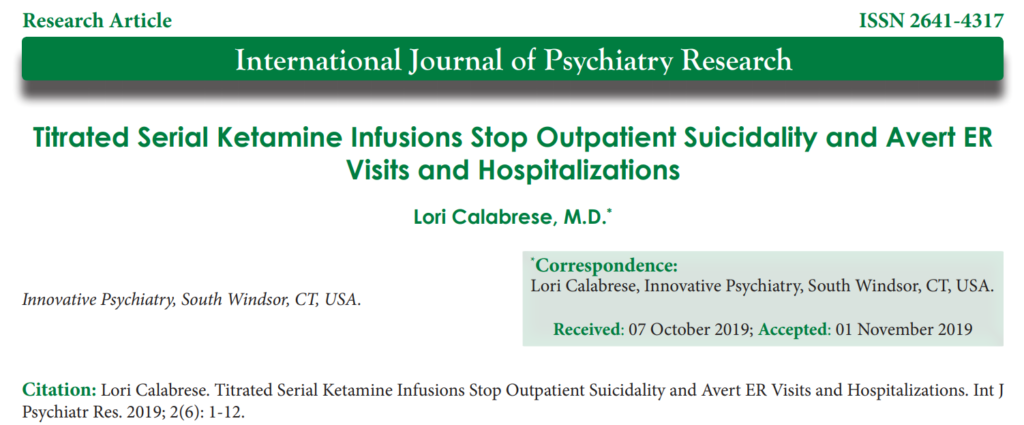
    Ketamine Suicidality

    Ketamine treatment can rapidly replace thoughts of death and dying with hope to give you the opportunity to work toward getting better, and even remission.
    Risk of adolescent suicide is frightening, but prevention gives a child her life to live.

    At Innovative Psychiatry, we offer ketamine treatment to people as young as 14, in a safe environment during this pandemic. We see teens and adults improve dramatically every week. Not all—some teens and adults don’t respond—but many experience complete remission from their symptoms.

    Risk of adolescent suicide is high. It’s the second leading cause of death in persons age 15-24.

    If you or your teen suffers from symptoms of depression or suicidal thoughts or behaviors, reach out or text one of the support hotlines, or call us if you would like to consider ketamine treatment to stop those thoughts.

    We understand all too well how these symptoms can not only disrupt — but endanger — your life, and we want to help. Seeing you experience relief from your pain, torment, and suffering is why we get up in the morning.

    Your desire to pursue a fulfilling and rewarding life is your fundamental human need, and we want to help that happen for you.

    Reach out for remission.
    Lori Calabrese, M.D. is on the front end of the race to stop PTSD in its tracks using IV ketamine treatment.

    To the restoration of your best self,
    We can all help prevent suicide. The National Suicide Prevention Lifeline provides 24/7, free and confidential support for people in distress, as well as prevention and crisis resources for you or your loved ones.

    The National Suicide Prevention Lifeline 1-800-273-TALK (8255)

    The Veterans Crisis Line and Military Crisis Line 1-800-273-8255 Press 1

    Crisis Text Line: 741-741 Free text hotline 24/7

  • Don’t Be Shy – Talk to Someone Suicidal Because You Might Save a Life

    Don’t Be Shy – Talk to Someone Suicidal Because You Might Save a Life

    This is National Suicide Prevention Awareness Week — Be aware and reach out.

    And while you may never have talked with someone who’s considering suicide, it’s likely you will at some point. Just as we need to refresh our CPR skills periodically, it’s important to refresh skills to talk to someone suicidal. It’s easy to brush off the risk as something dramatic like someone preparing to jump off a bridge. But the truth is, the guy in the next cubicle or the doctor you work with or a lady you see crying in the restroom — any of them could be struggling with suicidal thoughts.

    How often have you heard people say, “he had everything to live for,” or “he seemed like such a happy guy” or “she was so much fun.” Everyone’s baffled. And yet, obviously, it wasn’t all what it seemed. But maybe nobody asked.

    Most of the time, when someone reaches the point of considering suicide, it happens somewhat quietly. Thoughts of death and dying begin to creep into and then crowd their thoughts, but if you don’t ask, they may carry through on their thoughts without giving away their plans.

    You have to ask.

    Because, truth be told, we want to prevent suicide, don’t we? I know there are those who say that a person has the right to decide when he wants his life to end. But it’s a fallacy to assume that. Because those who have the clarity to make such a decision rationally, are the exception — not the rule.

    In most cases, suicide attempts and completed suicides are the result of a desperate desire to “not live like this anymore.”  It’s the result of desolate misery and finding no other option. 

    But there ARE options. For most people, if you can give them a way to live that’s joyful, productive, and rewarding without the incessant pain they endure, they would opt-out of death and choose a life that’s enjoyable and full of hope.

    And it’s for that reason we want to prevent suicide. 

    To give this suffering person a chance to live well. In a moment we’ll talk more about that. But for now, let’s focus on how to prevent a useless tragedy.

    So what can you do?

    Be AWARE that there are hurting people around you.  We all have busy lives and plenty of pressures, and it’s easy to be absorbed in our own pressures and worries and completely miss the guy we talk to every day who has actually reached the end of his endurance.

    So develop the habit of asking.

    Ask the people in your world how they’re doing, and listen to their response. Pay attention and show them that it really matters to you. This is paramount and is the primary way to find out if someone who crosses your path needs your help. Convey that you mean it.

    “How you doing, Jack?  No…I mean really.  How are you doing?”

    When you show that you’re not impatiently trying to give the expected greeting so they’ll disappear, but that you do truly care deeply how they are, you’re more likely to get real answers.

    And little by little, you’ll become known as someone who really cares, and someone a person could actually talk to. Which is why you want to talk to someone suicidal, because your caring could possibly be life saving for them.

    Understand that a person who is this depressed, or this desperate, has probably become isolated. And that’s a very lonely place

    To break that isolation, reach into it and show you care. One of the most powerful things you can do to prevent suicide is to be a friend to someone who’s isolated. Listen to them, spend time with them. BREAK the isolation.

    Feeling utterly alone in the world is part and parcel to the anatomy of suicidal thoughts. And remember, you can be utterly alone in a crowded room.

    Make Them Safe

    So what do you do if you talk to someone suicidal..? Start  by removing weapons from their environment, if you can.  Remove knives from the kitchen, guns from their house, maybe even the car keys. And don’t leave them alone. Find a friend or relative they trust to stay with them. Help to make their living environment a safe place.

    Also, do all you can to remove medications and alcohol from their household. Your purpose is not to control their life, but to provide safety while you find a way to give them hope.

    Then tell someone. One of their friends or family. Someone you can trust who will be with them, help them feel understood and supported.

    And talk with them about treatment.  About someone who can help them weather this storm and find new hope and new options to help them live.

    This is why you talk to someone suicidal.

    Help them find it.  Give them some good ideas for professional therapists. Because their life is more important than their crisis. It really can get better.

    The National Suicide Prevention Lifeline: 1-800-273-TALK (8255)

    Especially with the help of ketamine. Know that ketamine treatment can erase suicidal thoughts in a few hours…or even less.  That those horrific thoughts and images can be eradicated with the astounding effects of ketamine treatment.

    And that amazing benefit can give them the chance at life they wish they had had before…and give them the opportunity to find relief, restoration, and remission from depression and suicidal thinking.

    So there may very well be a solution. But how will they know unless you talk to someone suicidal and tell them? Suicidal thoughts are not limited by age, income, or any demographic. Children are susceptible, doctors and nurses are, investors and teachers are, your co-workers are.

    There is an alarming increase in suicide among doctors. No one is immune. So reach out and talk. And listen.

    At Innovative Psychiatry, we take suicidal thoughts very seriously. We offer ketamine treatment for suicidal thoughts and are thrilled to see the freedom from torment ketamine can provide. Someone whose life is at risk — high risk — because their thoughts are bombarded with death, dying, and ending their own lives, can walk out of our office relieved, hopeful, and grateful that those thoughts are gone.

    Ketamine treatment can be transformative, not just for suicidal thinking but also for the symptoms of depression, despair, substance use disorders including alcohol, PTSD, and anxiety. We share the joy of our patients as they walk out with hope and in remission.

    Not always, of course, and not everyone. Ketamine treatment is not a cure-all for everyone. No treatment is.

    But is may be what helps you when nothing else has. It may be what finally puts your symptoms into remission. If you yearn for the benefits ketamine can provide, call us

    We want to see you enjoying your life with hope and freedom from torment. Life can be rewarding and productive for you. Relationships can be strong and fulfilling. 

    Reach out for hope. We’re here to help.

    Lori Calabrese, M.D. is on the front end of the race to stop PTSD in its tracks using IV ketamine treatment.

    To the restoration of your best self,
    We can all help prevent suicide. The National Suicide Prevention Lifeline provides 24/7, free and confidential support for people in distress, as well as prevention and crisis resources for you or your loved ones.

    The National Suicide Prevention Lifeline 1-800-273-TALK (8255)

    The Veterans Crisis Line and Military Crisis Line 1-800-273-8255 Press 1

    Crisis Text Line: 741-741 Free text hotline 24/7

  • COVID Hassles Annoying? Ketamine Can Help You Embrace Living Again

    COVID Hassles Annoying? Ketamine Can Help You Embrace Living Again

    COVID-19 – Growing number of people suffer from anxiety, depression, and suicidal thoughts who’ve never faced mental health issues before.

    We’ve talked about it before, but the numbers are growing. Quarantine, masks and gloves, working from home, kids schooling at home, social distancing, Zoom meetings. It’s not just the change in routine, it’s the feeling of isolation, of needing a break. Sometimes you just want to go out to eat on Friday night…right? But with businesses closed, you can’t. Cabin fever with tired parents, kids bouncing off the walls… where do you go to get refreshed? With COVID hassles annoying, ketamine can help you break through and enjoy your life again.

    You wanna hang out with the girls, paint a picture, drink wine, and chat till the cows come home. But you can’t.

    Or go to the gym every morning and work out your frustrations, break a sweat… and go home loose and ready for the day. But the gyms aren’t open.

    2020 has been a tough year. A year you won’t likely forget. 

    Of course, if you’ve gotten sick with this coronavirus, that’s its own battle. But for those who have dutifully worn their masks, stayed home and attended Zoom meetings all day without being infected, there is still a risk caused by the stress of confinement and isolation.

    And it’s serious enough that far too many people have succumbed and faced psychiatric disorders for the first time in their lives. 

    A poll by the Kaiser Family Foundation found that 45% of those who responded to the poll in April 2020 stated their mental health had suffered during COVID. That was 10% more than the previous month.

    COVID hassles annoying? Ketamine can erase suicidal thoughts.

    Social isolation in adolescents increases fear and worry,  which create their own type of stress, wearing down coping skills. Too often, those worry cycles plunge to suicidal thoughts, and the desire to escape the misery.

    Seniors are also at increased risk. Those who are shut-ins rely on loved ones for the stimulation, interaction, and camaraderie to keep their outlook bright. Without those regular visits, hopelessness can quickly wear down their purpose and resilience.

    Common Sense Says Isolation Takes a Toll

    This is not to BLAME the pandemic, but to recognize that people all around us need a lift these days.  Every bit of interaction is restorative for the speaker and for the listener… or both.

    It’s one thing to show compassion to those who have suffered from mental health disorders all their lives, because it’s certainly true that each of you need extra support through these times.

    But, isn’t it alarming to realize so many people have been so negatively impacted by the pandemic, with all its inconveniences and isolation, that they’ve used up their coping ability and have also succumbed to depression, anxiety, and suicidal thoughts?

    So let’s look at this more closely.

    True, this pandemic has caused annoying inconveniences, some more difficult to bear than others. But we can’t go back in time, can we?  We can’t undo the release of this virus, its spread around the world, the cost to families, the economy, and our general well-being.

    COVID Hassles Annoying – Ketamine Can Restore Resilience

    At the same time, we don’t have to break under its influence, right?

    In times like these, mastering the art of bending, adapting to circumstances, can keep you feeling like you actually ARE in control.

    That means if you’re accustomed to traveling on a whim, and you’re not so free to do that right now, you can shudder and fume at the frustration; or you can set travel aside for a better time and choose something new and accessible for your stimulation and reward now.

    Covid hassles annoying? Learn to draw and paint and enjoy yourself.

    An IT guy built his own igloo shaped pizza oven in his backyard. Never laid a brick in his life. But he invented a new interest and poured himself into it. And in so doing, kept anxiety and depression at bay.

    It was a whole new adventure for him… that began with a new and surprising thought. 

    A school bus driver had no students to drive on her bus since students were learning online from home. So she dove into art development tutorials, and mastered skills in drawing beautiful, life-like animals. 

    Pandemic? What pandemic??  She was having too much fun to notice.

    Adapting means changing course to accommodate changing circumstances.

    That’s not to say these responses are always successful. But they are, more often that not.

    On the other hand, warding off symptoms of anxiety and depression by inventing new stimulating interests, honing new skills, or finding new forms of entertainment, are sometimes not enough.

    There are those who know these principles, but in this atmosphere found symptoms of anxiety, depression, and despair creeped over them in spite of their efforts to escape.

    Sometimes that happens.

    Sometimes listlessness takes over, with severely reduced energy, a bleak outlook, hopelessness, and a lost sense of your own worth.

    Which can make way for thoughts of dying. Thoughts that there’s nowhere to go from here. Thoughts that you’ve spent all you have to give, you’re depleted, and your life is finished.

    And those thoughts can become dangerous for you.

    If you find that the thoughts of death, dying, and despair are prevalent for you, there is help.

    COVID hassles annoying – ketamine treatment can erase suicidal thoughts

    As much as we talk about ketamine treatment demonstrating extraordinary responses in those who are depressed, or suffer from PTSD, or substance abuse, or even anorexia nervosa, it’s also remarkable in its prowess for erasing suicidal thoughts.

    The National Suicide Prevention Lifeline 1-800-273-TALK (8255)

    Suicidal thoughts can be plaguing you to desperation, then an infusion of ketamine can make those thoughts disappear in a few hours. 

    Life saving.

    Astounding.

    It’s so dramatic that I published a retrospective chart review of my own patients in my large practice.

    Ketamine Suicidality

    This treatment can erase those thoughts without hospitalization or emergency department visits, and give you the freedom to safely get better and enjoy life again.

    At Innovative Psychiatry, we treat patients with ketamine treatment for depression, social anxiety, PTSD, alcohol use disorder, and substance use disorder. And we also treat suicidal thoughts for their own sake.

    COVID hassles annoying? Ketamine can erase suicidal thoughts.

    If keeping yourself diverted, seeking new stimulation and developing new interests to get through these times with healthy hope stops working… if you feel yourself sinking into a sense of loss, confusion, despair, call us.

    We can help you find joy again. Invigoration instead of despondency.

    And if you feel like you don’t want to live, please call us. 

    With ketamine treatment, you can be free of those thoughts and feelings, and find them replaced with hope and rewards in life.

    Lori Calabrese, M.D. is on the front end of the race to stop PTSD in its tracks using IV ketamine treatment.

    To the restoration of your best self,
    We can all help prevent suicide. The National Suicide Prevention Lifeline provides 24/7, free and confidential support for people in distress, as well as prevention and crisis resources for you or your loved ones.

    The National Suicide Prevention Lifeline 1-800-273-TALK (8255)

    The Veterans Crisis Line and Military Crisis Line 1-800-273-8255 Press 1

    Crisis Text Line: 741-741 Free text hotline 24/7

  • The New Molecular Masterclass Ketamine Conference – Online!

    The New Molecular Masterclass Ketamine Conference – Online!

    Ketamine continues to move forward.

    This NMDA receptor antagonist, ketamine, was studied in treatment of major psychiatric disorders during the first decade of 2020. Certainly, as these studies galvanized physicians to offer ketamine treatment in their offices, its use has become more and more widespread, the studies continue, and ketamine as a breakthrough treatment for psychiatric disorders and pain is gaining maturity. This online gathering is the first of its kind… a new Molecular Masterclass Ketamine Conference that explored the ketamine molecule inside and out.

    In 2018, we enjoyed the first meeting of the American Society of Ketamine Physicians. Plus, the year before, we enjoyed the burgeoning interest and excitement of KRIYA. Patients who suffer treatment resistant psychiatric disorders need what ketamine can do. So, physicians and researchers energetically work to learn all they can to meet that need.

    Organizer of Molecular Masterclass ketamine conference.

    This year, August 21 and 22, marked the first Ketamine Molecular Masterclass (what a cool title!). Organized by our friend and colleague in psychiatry, Jeffrey Becker, MD, CEO of Bexson Biomedical.

    The presence of this event on the calendar speaks to the advancements of ketamine treatment and its growing sophistication. The conference was sponsored by Bexson Biomedical and other cosponsors to show the potential benefits of ketamine in patient care, research, and investments.

    If you remember, we first talked about Dr. Becker at the International Conference on Ketamine for Psychiatric Disorders that took place in Oxford, England in 2018. He’s presented at KRIYA Conference several times and at ASKP 2018 and 2019 conferenc. He’s a player. A leader. And an innovator. He hit the trifecta!

    Leaders In Ketamine Science

    Experts in the field — clinicians, researchers, digital tech wizards, marketers and investors shared their perspective and experience for all to digest. Clearly, this conference made it clear ketamine treatment is no longer an experimental and untrusted anomaly.

    Happily, with two decades of studies and experience, innovators are moving it forward. This new molecular masterclass ketamine conference educated, enlightened, and inspired us. It piqued the curiosity of participants, and excited interested in furthering research and development in this new space.

    Ya shoulda been there!

    But if you weren’t able to zoom in on us, the MasterClass was recorded and you can access it through Microdose, the host.

    So let’s stay real. Ketamine treatment isn’t a panacea and it isn’t perfect, as we know. We haven’t found a treatment or medicine that is, actually. So, one of the goals of this conference was to present information about possibilities, pitfalls, medical concerns, delivery gaps, and medical/legal issues.

    From psychiatrists, anesthesiologists, and other practitioners, to neuroscientists, business men seeking new streams of revenue, and investors jumping in on new leads, the vibe on this online gathering was charged with excitement.

    For instance, speakers grouped into vibrant panels to explain one aspect or another of this budding industry.

    They talked about treating depression. Then compared the clinical dissociative and psychedelic effects of ketamine during treatment compared to the classical psychedelics associated with 5HT2a receptor responses. They elaborated on how music can shape and affect treatment…

    With each new panel, we saw a sort of fruit basket turnover. We were always hearing from a new group of experts, with the opportunity for chat on the side.

    Truly, with the social distancing of 2020 and all that has gone with it, an online molecular masterclass ketamine conference pumped us with a breath of fresh air. We were packed full of information, inspiration, and hope.

    A grand parade of highly respected and beloved leaders like David Feifel, M.D., PhD, Wes Ryan, M.D., and Will Van Derveer, M.D. were added to talk about the differences in bolus doses of IM ketamine and IV ketamine given over time. Furthermore, they also talked about whether the benefits of ketamine treatment are as rapid as people say…

    The Technical Side of Ketamine Innovations

    We heard from the founders of Osmind and Maya in a panel moderated by Steve Best, M.D., in combining ketamine with TMS and talked about what we need to do and discussed how data can drive change, and drive payors to pay for this treatment

    Ketamine Suicidality

    I had the opportunity to touch on my own data using ketamine to stop suicidal thoughts in the office and avoid ER visits and hospitalization. (Aetna, are you listening?)

    And I snuck in a reference to our most recent case report of a new sequenced treatment using a metabolic diet and IV ketamine. This produced rapid (and startling!) remission and recovery in a young woman with severe chronic anorexia.

    Next came Gregg Petersen, MOD, Daniel Richman, M.D., Nadiv Samimi, M.D., and Jennifer Winegarden, D.O. They talked about pain management with ketamine, and explained answers to a myriad of questions regarding pain management.

    A fine panel elaborated on the use of ketamine for PTSD. Brent Turnipseed, M.D., Tatiana Santini, Jesse Gould, Jon Wolfe, and Abid Nazeer, M.D.

    If you can imagine, there were more than 40 impressive speakers and thought leaders. They spoke on pharmacology issues, business related issues, the risks involved with ketamine, training programs, new developments using ketamine for post-operative pain and more.

    We’ve come a long way in our quest to develop the many therapies ketamine can provide. To see businessmen and investors stepping up to the plate along side physicians and therapists.

    Wow.

    Connecting the people who need the hope ketamine can provide with the treatment itself is just gratifying and thrilling. Just Wow.

    These are people who make things happen.

    And that comes back to helping you. Do you suffer from symptoms or a psychiatric disorder that medicines and treatments haven’t helped?

    At Innovative Psychiatry, we get up every morning to help people like you with this extraordinary treatment.

    And we assure you, we continue to use the safest protocols during this pandemic to protect you and our staff so you can receive the treatment you need. Just call us.

    Conferences only have value if we bring the knowledge home … if people can get better as a result, one person at a time.

    So, let this week be your week. You can feel better, function better, overflow with hope, joy, and fulfillment, living with gusto the rewarding life you have ached for.

    Let us help you get better.

    Lori Calabrese, M.D. is on the front end of the race to stop PTSD in its tracks using IV ketamine treatment.

    To the restoration of your best self,

  • School’s Starting: How’s Your Teen Now? Watch for Anger, Depression, Anxiety

    School’s Starting: How’s Your Teen Now? Watch for Anger, Depression, Anxiety

    School is starting for the 2020-21 school year, whether remotely or on campus. 

    Never before have these students started a new school year during a pandemic. It’s been over 100 years since the last one, and few of those students are still alive. But these students, yours and mine, are pioneers now.  School’s starting, how’s your teen coping with what lies ahead? They’re facing a new school year with social distancing, mask wearing, frequent hand washing… and they’re also facing new subjects, anxiety about whether the pressure will be too much, whether they’re up for the task… and they’re concerned about socializing.

    Some have already started.  The desks are six feet apart, they’re wearing masks.  And they feel uncertain. Shy… afraid they’ll do something wrong. Others are afraid of the long hours at their desks… Because those need movement and stimulation.  They’re afraid of consequences.

    Some of our students will take whatever changes they face in stride. Those are the adaptable ones. But others won’t.. because change causes them to suffer anxiety. 

    While, as a parent,  you may be eagerly awaiting school to start so you can get those kids back into school, since you may have had them home since March.

    But, make sure you’re in tune with them. Listen to their fears and don’t dismiss them. No matter how you feel about what’s happening in the world, your teen may not be equipped to handle the early adjustments of this new experience.

    Because here’s the thing… stress, especially long term continuous stress, can lead to circuitry damage in their brain cells…and that damage can result in depression. 

    Stress Damages. In Fact, It Can Kill.

    In a teen, depression doesn’t usually come with a label written across their forehead.  

    It may look like anger or rebellion. It may look like laziness. It may look like stubbornness.

    And symptoms like these are actually depression, PTSD, bipolar depression, substance abuse, social anxiety, suicidal thoughts…  and if it is, it may need treatment.

    Because these conditions create their own fallout, like poor grades, inappropriate behavior, non-compliance…

    Then, without proper and EFFECTIVE treatment, the condition can deteriorate to criminal behavior…or even suicide.

    Suicide is the 3rd cause of death among teens. 

    Did you know?

    If your teen talks about wanting to die, listen.

    Adolescents are emotional, their hormones rage, and they sometimes seem to be all over the map. 

    But listen to them with respect. 

    Because you need to watch… since school’s starting: How’s your teen doing?

    Parents of teens who have ended their own lives will be the first to say that dismissing these claims was a mistake. But in retrospect they realized their child had been crying for help for a long time.

    Is a “cry for help” really just manipulation?

    No…a cry for help is a plea for HELP. And what seems to you to be a solvable, transient struggle – or growing pains – to your teen may seem like the end of the world. 

    Don’t let it be. 

    Now, it can get tricky.

    If your adolescent has never been diagnosed with a disorder, you may not realize his disorder is escalating.  A fellow psychiatrist tells the story of seeing a 14 year-old he’d known since he was born as a family friend.

    During the intake evaluation, he finds out the boy has been deeply subdued, without joy, extremely shy, and having difficulty making himself participate in school work.  He looks at the parents and asks, Why am I just now hearing about this??

    Truth be told, if the boy’s parents had perceived psychiatric care in the same category as dental care, he would have. But, they’d never dealt with a disorder in the family before and didn’t know how to identify it. They tried more structure, more emotional support, more consequences… until one evening they found him in the fetal position in the shadows…and realized they needed help.

    Your heart goes out to that fellow. 

    And it goes out to his parents, too.

    Because they loved him and wanted him to be happy. They just didn’t recognize the signs.

    What about you?

    School's starting: how's your teen

     And what about your teen?

    Would you know the signs if your teen displayed the need for help?

    Are you sure?  His life may depend on it.  

    So think about this:

    Has your son or daughter suffered a severe loss like a crippling humiliation,  a lost relationship, or death of someone close…?

    What about substances like drugs or alcohol…?

    Has he or she been depressed for a long time? Has treatment helped?  Because if it hasn’t, it’s the same as no treatment at all.

    Has he or she ever been abused physically, emotionally, or verbally? Are you sure?

    Does he or she suffer from a dual diagnosis, like bipolar depression and substance use disorder, or depression and anxiety, or PTSD and alcohol use disorder..?

    Has there ever been a suicide attempt before?

    Has there been an arrest before?

    These are all risk factors for potential suicide attempt or completion.  Any of these indicate the need for special care.

    Further, if your teen talks about death, or feeling rotten inside, or hopeless, or worthless… is withdrawn, sullen, and talks about violence, or wanting to die, reach out for help.

    The National Suicide Prevention Lifeline 1-800-273-TALK (8255)

    At Innovative Psychiatry, we offer ketamine treatment every week. Specifically, if you’ve tried other antidepressant medication trials for at least a few months each, and have experienced no relief, ketamine treatment can help you achieve remission when other medicines didn’t come close.

    Ketamine Suicidality

    And if you endure suicidal thoughts and visuals, ketamine can erase those thoughts in a few short hours…maybe less.

    In this era of psychiatric treatment, you just don’t have to endure without treatment… or with treatment that doesn’t work.

    So… like I said, school’s starting: How’s your teen doing now?

    We treat adolescents and adults, age 14 and up with ketamine treatment when it’s appropriate, and celebrate with our patients as they complete treatment and walk out with the joy of a life of freedom of symptoms.

    While ketamine treatment doesn’t affect everyone this way, it does do this for most. And there are other ground breaking treatments you can try if you’re one of those rare people not transformed by ketamine.

    Thankfully, we no longer live in the Dark Ages even our grandparents did when it comes to psychiatric care. There is hope now. Wholeness. Remission.

    If you struggle with symptoms like we’ve talked about here, call us.

    We want to help you glide through the challenges ahead with resilience.

    Lori Calabrese, M.D. is on the front end of the race to stop PTSD in its tracks using IV ketamine treatment.

    To the restoration of your best self,
    We can all help prevent suicide. The National Suicide Prevention Lifeline provides 24/7, free and confidential support for people in distress, as well as prevention and crisis resources for you or your loved ones.

    The National Suicide Prevention Lifeline 1-800-273-TALK (8255)

    The Veterans Crisis Line and Military Crisis Line 1-800-273-8255 Press 1

    Crisis Text Line: 741-741 Free text hotline 24/7

  • Keto Plus Ketamine:  A New Approach for Anorexia?

    Keto Plus Ketamine: A New Approach for Anorexia?

    A ketogenic diet can be a first step toward managing symptoms of anorexia.

    If you know someone with anorexia nervosa, you know how chronic… dangerous… and life-threatening it can be. I bet you didn’t know it could go into full remission.

    This is the story of a novel idea, a brand new course of treatment, an innovative treatment procedure, and a protocol that was born out of love.

    It’s a heartbreaking disease. And as surprising as it may be, there has been no effective treatment for it, whether it be medicine or psychotherapy. Self-starvation, hyperactivity, anxiety, body dissatisfaction, and difficulty managing one’s emotions all accompany this horrific disorder.  A new approach for anorexia is desperately needed… a new procedure, a new sequenced treatment…something.

    There are 32 million people–of all ages, races, and genders–in the US with an eating disorder. And someone dies every 62 minutes here because of their eating disorder. Anorexia is the scariest. The death rate in women with anorexia is 10 times higher than for other women, and that’s because the self-starvation causes medical problems that can be critical…. and because desperation can lead to suicide. A new approach for anorexia is vital.

    A new approach for anorexia is a ketogenic diet and IV ketamine treatment.

    To understand the persistence of anorexia, you need to recognize it’s not just about not eating…or losing weight.  Those are actually the results of the most crucial symptom, which we call the “anorexia voice.”

    Some medication solutions and some psychotherapy approaches may claim up to 60% response… meaning 60% got better. But for how long?  A couple weeks…?  A month? These patients require something different, a new approach to anorexia treatment.

    What’s more, 40% of adolescents never gain their weight back, and of the 60% who do, only half of them restore emotionally. On top of that, treatment is expensive. Multiple hospitalizations, out-patient treatments… the average cost of treatment is $110,000. This is what you might call the “white knuckle” approach. Hard work… mediocre outcomes.

    And there are so many who never get better.

    This is because they try to treat the actions of abstaining from food or over-exercising, rather than the symptom that’s most stubborn to relieve… that voice in your head we call the anorexic voice.

    A new approach to anorexia is with a ketogenic diet and psychiatric supervision, anorexic symptoms can subside.

    That voice that tells you you’re fat when you weigh 96 lbs and look in the mirror. The voice that tells you to not eat because you’re getting fat. The voice that says you’re ugly… that you’re too tall, or too short; too fat or too skinny.

    Like I said, we need to see something new and different, some new approach for anorexia.

    This singular aspect of anorexia is the most difficult to manage.

    And this symptom must be erased if you’re to get well and stay that way.

    Anorexia Nervosa often emerges in adolescence, but it can go on and on…. 

    In fact, if it continues for 3 years, it’s considered chronic and enduring… even treatment resistant, as we often say referring to other disorders.

    To find an innovative sequence of treatment, a new approach, a different protocol….that would dissolve the symptoms of anorexia nervosa…where the symptoms subside and the lack of symptoms lasts, and that voice goes SILENT…well, it could be life saving for many, and life restoring for the rest.

    A new approach to anorexia is bringing freedom to anorexic symptoms through a ketogenic diet and ketamine treatment.

    And that’s where a new approach for anorexia can bring hope.

    You may remember that we talked about the use of ketamine treatment to treat eating disorders back in May of 2018. And we pointed out way back then that eating disorders were actually the first psychiatric disorder studied with ketamine treatment. I.H Mills and his team conducted this study in 1998. 22 years ago!

    Well, I’m delighted to talk about my most recent work with a team of experts and an extraordinary 29-year old woman, Caroline, who’s suffered from anorexia nervosa since she was 14.  

    I was privileged to work with a medical doctor specializing in internal medicine and addiction medicine with a brilliant and compelling idea about a new course of treatment (Barbara Scolnick, MD), a reknowned dietitian and keto specialist (Beth Zupec-Kania, RD), a brilliant neuroscientist (Chiye Aoki, MD), an expert in eating disorders (Tom Hildebrandt, MD) and an extraordinary young woman, Caroline.

    And we’ve published a case report on the effectiveness of it for her.

    Iv ketamine treatment combined with a special ketogenic diet is a new approach to anorexia treatment.

    Effective isn’t the word. Exhilarating is more like it. Remission. Unexpected, fully sustained, and shocking. It comes from a brilliant idea, and from just being willing to look at anorexia with a different lens, with an innovative treatment that was upending and surprising in its rapidity and its effectiveness.

    Get ready. It’s time to open your mind.

    To understand the novel course of treatment we used, you need to understand a little neurology and pathophysiology. So, here’s a quick crash course.

    Lipids, and Lions and Bears, Oh Me!!

    Getting back to neuroscience,  metabolism, and hibernation, some studies have examined how the root cause of anorexia may be related to lipid signaling and how chronic starvation may be connected to hibernation.

    A ketogenic diet and ketamine treatment can turn off the anorexic voice.

    As you know, hibernation is what bears do in the winter, and lots of other animals, too. To survive the winter, their body metabolism slows way down, along with their temperature, so they can survive for several months without food. 

    In patients with anorexia nervosa, their long term starvation signals their body through their fats (lipids are fats), to slow down to help them survive. For the patient to recover, those lipid signals must be returned to normal both in their metabolism and in their central nervous system. This is vital information in the search for a new approach for anorexia nervosa treatment.

    To get those signals back to normal requires fats be introduced, even if they are processed at a much higher rate. So, a medical keto diet was developed by the team for Caroline, to ensure she had enough healthy, wonderful fats to improve her brain health and restore her metabolism. And her mood.

    And her anorexia improved. But it didn’t completely stop. The voice was still there.

    Then she began treatment with IV ketamine. We planned 6 treatments, but she didn’t need them. She got only 4. Because her anorexia symptoms — the obsessive thoughts, obsessive behaviors, and the anorexia voice in her head — completely stopped. And they’ve been gone for more than 6 months.

    A diet rich in good fats can feed mitochondria ketones and treat anorexia symptoms.

    Long enough to call it remission. And to know for sure that it’s real. Long enough to write it up as a case report, submit it for publication, and get it published.

    It is real. It’s so real that it’s a little unreal. If you’re in the anorexia world, you know how wild this sounds. Keto? No way. Anorexia experts and dietitians alike hate the idea, don’t trust it, see it as dangerous….and might think it’s just plain wrong. Ridiculous. Risky.

    Ketamine infusions? In a patient whose metabolically compromised? Unknown. Untested. Too risky. Until we carefully weighed the risks and benefits — for her– created the right set and setting, and gave it our best shot. Medicine is a science. And an art.

    So this is the new treatment protocol, the new combined treatment, the new procedure, if you will, that we designed: it’s a duo. And it worked.

    IV ketamine treatment and a ketogenic diet can silence the anorexic voice.

    Let’s talk about Caroline for a moment. She’s real, riveting, and absolutely raw.

    Caroline is 29, and had suffered from anorexia nervosa since she was 14.  Over the years she had intermittently struggled with alcohol dependence from the age of 18. She had seen numerous specialists, had been in and out of treatment programs, and she received supportive therapy periodically.  She also attended Alcoholic Anonymous meetings at least once a month.

    Obviously, she needed someone to come up with a new idea. The usual treatments just weren’t working. She desperately needed a new approach for anorexia.

    And before beginning this new procedural treatment course, she had abstained from alcohol for 15 months, which was a major accomplishment. It’s also an example of how psychiatric disorders are often found in clusters. This girl wanted to be better…she worked so hard. But that voice…

    She experienced the kinds of restrictions not uncommon for someone with anorexia.

    Caroline preferred to eat alone, and used a napkin rather than a plate. She ate only ice cream or peanut m&ms for days at a time. And used low calorie sweeteners excessively. She had “safe” foods which consisted of Splenda, frozen yogurt, zucchini, eggplant, and coffee.

    In addition, she exercised compulsively every day, usually for 2 hours. She had managed to keep her weight around 125 lbs. Hospitalization had been required two separate times in her life to help her metabolism stabilize. The first time was following a grand mal seizure 12 months after she was diagnosed with anorexia nervosa. She weighed 96 lbs at admission, that time.

    Personalized and Medically Designed Ketogenic Diet Specifically for Caroline

    Not something you can google or YouTube… personally designed for her body and metabolism by a registered dietitian renowned for her expertise in developing ketogenic diets for neurologic disorders.

    Enjoy a rewarding life with a new approach to anorexia treatment.

    And when you watch this remarkable story you’ll hear us talk about how the keto diet seemed to help her head clear. Her body began to respond. Her true personality emerged. She felt better.

    But that pesky, ruthless voice just kept cracking the whip. Constantly …constantly… trying to force her to stop eating and keep exercising.

    …Combined with Ketamine Infusions – An Innovative New Approach for Anorexia Treatment

    Then, came the ketamine treatment… as it turned out in her case: 4 infusions. And the voice died. It just disappeared.

    And she was free. For the first time in 15 years, she was free to be herself, make her own decisions…and pursue her own happiness.

    A case report, of course, is just that. It’s a report of one person.

    It’s exciting preliminary work, though. The novel treatment procedure and the dramatic outcome that Caroline experienced–sustained remission and recovery–with a medically designed ketogenic diet followed by IV ketamine infusions deserves further study and more research.

    We may be on a new horizon.

    Lori Calabrese, M.D. is on the front end of the race to stop PTSD in its tracks using IV ketamine treatment.

    To the restoration of your best self,

  • Does Psychiatric Treatment Suffocate Creativity in the 21st Century?

    Does Psychiatric Treatment Suffocate Creativity in the 21st Century?

    Have you avoided treatment fearing it would subdue your talent?

    This is a very real concern for some intelligent, talented people who suffer from certain disorders. The idea that suffering yields brilliant satire, beautiful music, heartbreaking poetry, and dazzling art that enrich mankind. It’s been a subject of controversy for eons. But is it true? If your treatment suffocates creativity, you can do something about that.

    We speculate about the connection between artistic genius and depression or bipolar disorder. Theories emerged that Vincent Van Gogh’s severe depression. He suffered serious bouts of anxiety, and possibly suffered from bipolar disorder.

    He self-medicated with alcohol… Of course, no medical treatment was available for his symptoms. 

    Ludwig von Beethoven stands as another historic creative genius we celebrate who suffered from bipolar disorder. Were his enthralling symphonies created by his illness?  

    Franz Haydn, his teacher and fellow composer, had remarkable words for him as he was getting to know him. “”You will accomplish more than has ever been accomplished,” he said. “You’ll have thoughts that no other has had. You will never sacrifice a beautiful idea to a tyrannical rule, and in that you will be right…”

    He was brilliant…there’s no question. And some would argue that brilliance and bipolar disorder sometimes go together. And he grew deaf. A tragedy for a musical genius. His behaviors as reported by his peers may have been indicative of depression. Maybe bipolar disorder.

    Still can you imagine his frustration at not hearing his own music?

    We must remember that our belief in the presence of a diagnosis of these figures in history is conjecture. That we’re basing our views on what we read about them, what their contemporaries said about them. And we try to piece together the puzzle pieces.

    So, if you’ve experienced severe bipolar I disorder, you may relate to some of these recollections of tormented icons. Their symptoms may seem pretty familiar to you.

    Again, there was no effective treatment available to him at that time, so we can only wonder.

    To learn whether treatment suffocates creativity, we have to fast-forward to the most recent 30 years of psychiatric treatment…and even better, the last five.

    In the days when Prozac was such a breakthrough, and then Paxil, I remember someone describing the way she felt. She said it was like she was “coated in wax.” 

    The early SRIs, and later the SNRIs, provided so much help to depressed people that they were considered a breakthrough at the time. People would joke, “the city needs to add Prozac to the drinking water. It could quite possibly solve all of society’s problems!”

    With time, we learned that these medications made a dramatic difference in quality of life for about 33% of those who suffered, and with some tweaking, titrating, and blending, over time that number increased to 50-65%. 

    But, eventually, it turned out that these medications weren’t always as remarkable as they seemed.

    There were plenty of people who stopped taking the medications because of the side effects of weight gain, sexual dysfunction, and more.  Plenty of others continued to take them and gained the weight and lived with the reduced sexual drive for the sake of functioning in their lives.

    Of the creatives who took these medications, some claimed the medicine impeded their creativity, while others found that with a clear mind, they could create more effectively.

    Those with bipolar disorder often take a mood stabilizer like lithium or depakote, and may experience more stability. But many others need a variety of medications to yield a more stable mood. And many others with bipolar disorder don’t experience any real or lasting relief from these medications.

    Does Psychiatric Treatment Suffocate Creativity In All This?

    While it wasn’t uncommon to hear patients complain of dampened creativity while taking SRIs and SNRIs, that’s not the case across the board. 

    Some who are treated for severe depression are relieved to discover they are able to be creative again. Others, not so much. It varies between people and can also depend on the symptoms. 

    And creativity and bipolar disorder share some genetic links, as well as some deviations from typical ways of thinking. Creativity includes new thoughts, original ideas, and freshness in composition of art, music, construction, etc.

    Still, neuroscience research reveals that the most productive creativity in someone with bipolar disorder happens when that person is in a non-extreme state, or euthymic period, or a hypomanic period.

    So, what about the last 5 years?

    Ketamine Treatment Doesn’t Suffocate Creativity

    Not only is ketamine treatment effective in treating depression and bipolar depression in far more people than SRIs or SNRIs, but it can actually enhance creativity. It’s in a category all its own.

    Ketamine treatment’s extraordinarily rapid and robust effects can proliferate the brain cell connections and the communication between different parts of the brain. These benefits can expand so dramatically that you can, and likely will, find yourself in a remission that defies all logic. 

    A kind of remission that finds you catching up on all the chores you’ve avoided for the last several years, advancing your career in ways you’d never thought about before, building strong, healthy relationships, and having fun…I mean really having fun.

    You can wake up singing songs that may have followed you while you dreamed, dancing spontaneously while you get your coffee. You may find yourself immersed in joy.

    Of course, ketamine treatment doesn’t do all this for every single person treated with it, but these benefits are widespread and common. There are a handful of sufferers who don’t enjoy these outcomes, but the vast majority do.

    In this day and age, on the brink of life changing treatments for severe psychiatric suffering, you have the opportunity to enjoy singing, dancing, and loving. 

    Watch the Clouds Part and the Sun Radiate Into Your Life

    At Innovative Psychiatry, we celebrate with our patients as they taste of a brightness of life and a hope that had always alluded them before. We provide ketamine treatment in a pandemic-safe, cautious protocol that protects our patients and our staff. 

    With this exacerbated environment for increased depression related to the pandemic,  it’s more important than ever to give yourself the additional support of a treatment that can renew your emotional energy and your patience to cope. 

    Does psychiatric treatment suffocate creativity? No…it doesn’t have to.

    If you’ve feared treatment because you fear losing your creative edge, call us.

    We’re here to help you open your doors and windows to let the light of your gifts shine through.

    Lori Calabrese, M.D. is on the front end of the race to stop PTSD in its tracks using IV ketamine treatment.

    To the restoration of your best self,

  • Fallout From the Covid Pandemic May Not Be All Bad

    Fallout From the Covid Pandemic May Not Be All Bad

    As tough as these times have been, there have been some bright spots. 

    In fact, some people who have suffered terribly from symptoms of their disorders are actually stabilizing and improving. Feeling as though they’re less “disordered” and almost more normal than they’ve felt before. Can you imagine? In fact, as much as we’ve struggled with grief, loss, and frustration, as well as worsened conditions from disorders, fallout from the covid pandemic may not be all bad.

    It’s something of a phenomenon.

    On the other hand, it may just be common sense. For instance, for some who struggle with shame and increased anxiety because of social anxiety, to be allowed to remain at home, and visit with your doctor through telepsychiatry, the pressure to interact in a public setting among strangers is gone.

    On top of that, that telepsychiatry visit gives you a sense of closeness with your psychiatrist you may not feel in the office. Some people feel less intimidated, and are even more likely to ask the doctor how she’s doing.

    Some with agoraphobia may also feel more relaxed, since so many others they know are also safely locked up at home.  

    Even those under a dark cloud of depression, feel less like the “odd man out” because there are so many experiencing depression for the first time and are so alarmed, so baffled, and are looking for someone to talk to about it.

    On the other hand, for most of the rest of us, there are all sorts of ways the pandemic has affected us. And it’s been a burden.

    It might have been novel and interesting for the more optimistic the first month or two, but few still find it engaging now.

    The Difference Between Depression and Grief

    It’s important to understand that what you’re feeling may not be depression or anxiety at all. In fact, it may have nothing to do with any pathology, per se.

    The process you would naturally go through when you grieve the loss of what used to be… could be affecting you. You may be also grieving the loss of a loved one. But grief is a natural part of life, and it includes feelings that are painful and troubling. 

    Think of it like you’re adapting: a completely healthy way to adjust to new challenges. Feeling deep loss, then over time adjusting to that missing person or those elements in your life, and finding ways to live with it. 

    Because the fallout from the Covid pandemic may not be all bad at all…in spite of the things you miss.

    Do you miss eating at your favorite restaurant..?  The wonderful food, yes…but you can pick that up and take it home…no it’s the entire experience, isn’t it?  The way the wine tastes after they pour it, the wonderful service, the ambiance. Do you miss your children catching the bus each morning after breakfast, and the peace and quiet that settles over your home while you drink your coffee…? 

    It’s the little things.  And you miss them, and that’s ok.  While it’s not uncommon to get angry…(that’s the first stage of grieving, by the way)… it’s also not all that productive to get stuck there, is it? 

    So you look for ways to reduce the impact of it all by finding ways to help others, reaching out with kindness… and catching up on your reading. 

    We’re All In This Together and Fallout From the Covid Pandemic Can’t Keep Us from Getting Through To Brighter Days

    And it stands to reason—doesn’t it?—that you are experiencing different effects from the pandemic and its side effects than your neighbor, your co-worker, and your family members.

    If you’ve not been someone with a depressive disorder in the past, but you feel terrible right now, don’t panic. Because you’re walking your own path. You may be grieving the loss of life as you knew it up until December 2019… or…you may actually have been so devastated by these blows that you’ve developed a disorder and need treatment. 

    If you need it, you’ll get it. And if you need to try some experiences we’ve talked about before to nourish your resilience, strengthen your compassion, and improve your wellbeing…  well how much better is it if there really is something you can do yourself?

    On the other hand…

    But if you can’t lift your head above the din of stressors, then there are treatments like  ketamine treatment to  restore your resilience, so you in turn can show kindness and support to others.

    Which is why at Innovative Psychiatry we continue to be mask-wearing essential services for you, if you need us.

    If you find yourself despondent, hopeless, unable to see any way to function, call us.

    We provide ketamine treatment in a safe, protected environment so you can get a fresh breath of air, a sort of new lease on life, and the energy and initiative to make changes in your life you want to make.

    I hasten to say that ketamine treatment really doesn’t accomplish these things for absolutely everyone who receives it, simply because there isn’t any treatment that makes everyone well.

    Even so, its beneficial effects on most of those with treatment resistant depression is nothing short of extraordinary. So much so, that NO ONE should suffer indefinitely without remedy.

    There is hope.

    And joy.

    And the promise of a rewarding and fulfilling life.

    Let us help you take the next step to wellbeing and peace.

    Lori Calabrese, M.D. is on the front end of the race to stop PTSD in its tracks using IV ketamine treatment.

    To the restoration of your best self,

  • For Relief From Misery in These Difficult Times – Be Kind and… Compassionate

    For Relief From Misery in These Difficult Times – Be Kind and… Compassionate

    You see them everywhere… t-shirts proclaiming “In a world where you can be anything…be kind.” 

    Does that make you roll your eyes?  Or does it affirm to you to focus on the way of living that can help us all get through these difficult times? Because in times like these, with upheaval, disruption from a pandemic, and hurting people everywhere, there is a shortage of generosity, support, understanding. So be kind and compassionate to everyone you meet, show gratitude for the little things, and you may find the struggles shrinking and becoming more manageable.

    Kindness makes some people shy away.  They don’t like the word.  Makes them feel weak.  But kindness is actually rooted in courage—the courage to do the right thingand in strength to keep doing it even if your kindness is not acknowledged

    Did you grow up in a kind household — or one where you felt undervalued and roughly handled…?  It matters, you know. When you never see kindness, it’s not so easy to create it yourself, is it? 

    And yet, ask yourself: If you were surrounded by kindness, kind words, kind actions, and kind support, do you think you’d find that annoying…or would you possibly begin to bask in the safety and nourishing of it…? The fact is: we all need people in our lives to be kind and compassionate, and when they aren’t… we find ourselves lugging around a burden of isolation and neglect.

    Healthcare Workers Give All They Have to Give

    The world is in turmoil, and it doesn’t feel all that safe these days, but you do have the power to change it. One kind act at a time.

    Isn’t it amazing how hard it is for humans to experience change?  I heard someone complain that he liked to travel, and the forced quarantine was really causing him to chafe.

    In his case, he wasn’t sick, wasn’t laid off, wasn’t struggling financially …but there was a mountain of inconvenient changes in his plans. A nice guy, a wonderful person…. but enforced changes were pressing on his comfort and stirring up…what? Impatience? Irritation? Annoyance?

    So we have a world in turmoil, and it is forcing us to change our normal way of living.  Some are suffering severely right now, and they need us to care, to listen, to show patience. You don’t know who they are — with a few exceptions, maybe, in your circle — but that’s why you need to be kind and compassionate with everyone because it’s the best response to those you don’t know.

    Healthcare workers give all they have so be kind and compassionate to them.

    Healthcare workers in hospitals, for instance, infected patients fighting for their lives, or the families of those who have lost the fight. These brave and heartbroken ones need your kindness and support most of all.

    When you’re impatient because someone is standing at the checkout at the store too long…and you’re tempted to start throwing up your hands and saying, Move Along, Already!!

    Stop.

    Take a breath. She might have spent the last 14 hours with a mask on trying to save a patient’s life…only to watch him die. Be KIND.

    Job Loss and Income Reduction Is a Part of Life Right Now…

    Then there are those who suffer because of job loss, lack of sufficient income, and scads of difficulties caused by it. They need kindness and support, too.

    The Guy At the ATM Who Keeps Sticking in His Card

    …and you wait and wait.  

    Don’t HONK.

    It could be that the last funds are gone from his account because of his reduced income…and he’s trying to find a credit card to borrow from.

    Have compassion…he’s in a serious crisis. Because his family needs food, gas, and diapers.

    Remember to Care.

    But there are millions of us who are frustrated by the changes in our routine, changes in our access to stores and restaurants, changes in our lifestyles. Changes.

    Be kind and compassionate because you need others to be kind and compassionate with you.

    You can allow those changes to give you permission (or an EXCUSE) to treat others badly, or you can use those changes as fuel to empower you to lift the outlook of the people around you.

    So what can you do to ensure you have more kindness to give to others?  

    Start, by nurturing yourself. Do things for yourself that improve your own sense of fulfillment, your own stores of patience. Soothe away the day’s tensions in a hot shower or go all out in a hot bath. Go fishing and listen to the quiet sounds of nature. Spend time with someone who is important to you…

    It’s true that it’s terribly hard to offer patience, kindness, understanding when your own mind is raw with tensions, burdens, and mistreatment. So DO SOMETHING everyday that’s just for you.

    Then, when you mess up, make mistakes, even bad ones, give yourself patience, kindness, and forgiveness. Because it’s in practicing kindness toward yourself that you learn to cultivate kindness and patience toward others.

    Unhappy people often rail on themselves when they make mistakes, or fail in some way …. but truly, in order to be kind to others, you need to show yourself abundant kindness. (Abundant kindness, you’re thinking. What is that, even?)

    In a World Where You Can Be Anything, Be Kind.

    If you’re the first to respond to someone’s struggle, start with compassion. Show you care. Then, as you provide support, do it with kindness and patience.

    And you know what??

    To be kind and compassionate yourself brings more happiness to you…and to them.

    Have you heard of a “WIIFM”? …. No..?  So what’s a WIIFM?  It’s finding out “What’s in it for me???”

    When you are already happy, doing kindness for others, showing patience, doing something that adds to someone else’s happiness… these things make you happier too!

    This very idea was confirmed in a study by a team social researchers led by Keiko Otake. Their results showed that when happy people actually count the number of times each day they show kindness, it makes them even happier. In addition, they found that showing kindness increases their own sense of gratitude in the simple things of life.

    During this disruptive time, finding joy in simple things, and expressing gratitude for them, can be a path to peace and increasing joy in spite of circumstances. And it can be contagious. 

    Delivering kindness to those in your circle can spread gratitude and joy to them, who in turn may offer more kindness to their own circle. At the same time, offering generosity and kindness stokes the fires of happiness within you, too. So crank up happiness …be kind and compassionate every day. All day.

    It will transform you.

    And What If You’re Just Tired of the Struggle? What if You Can’t Muster Joy, Patience, or Even the Power to Care?

    Sometimes the prolonged stressors of times like this can wear down your resilience. Sometimes, no matter how deep you dig within yourself, you can find no joy, no hope, no energy to cope with anything.

    And sometimes, if you live with depression, if you’ve been bruised by trauma, not even your antidepressants can help anymore. In spite of your medications, listlessness takes you over. 

    When that happens, you can reach out for ketamine treatment. 

    Stress prunes the dendrites and dendritic spines that build the synapses in your brain. Those connections between the brain cells that communicate and help signals travel with speed and abundance. They become broken down, sparse, weakened. 

    But since ketamine turns on mRNA and switches the DNA to “ON” to produce brain derived neurotrophic factor (BDNF), all that new BDNF turbo boosts the replenishment of these connections, and triggers a cascade of changes. The result — for many people, though not all — is a rapid and robust improvement in your outlook, your hope, your energy for challenges, your motivation and initiative… and you can feel tremendously better. Like renewed. Pretty much well.  

    It can be extraordinary.  Life changing.

    Then, keep building that wellbeing with kindness, warmth, generosity…giving your best to lift and support those in your path.

    At Innovative Psychiatry, we continue to be an essential service, and are set up to provide you with ketamine treatment in a safe environment.

    While none of us knows how long the precautions and ups and downs of the pandemic will last, you can reach out for the help to be who you want to be, for yourself and everyone around you.

    You don’t have to be dragged down by the stressors of this pandemic. You can rise higher than the challenges, and sprinkle kindness in your wake.

    We’re here to help if you need us.

    Lori Calabrese, M.D. is on the front end of the race to stop PTSD in its tracks using IV ketamine treatment.

    To the restoration of your best self,
  • What If You’re Just Tired of Coronavirus??

    What If You’re Just Tired of Coronavirus??

    So… the pandemic continues…  

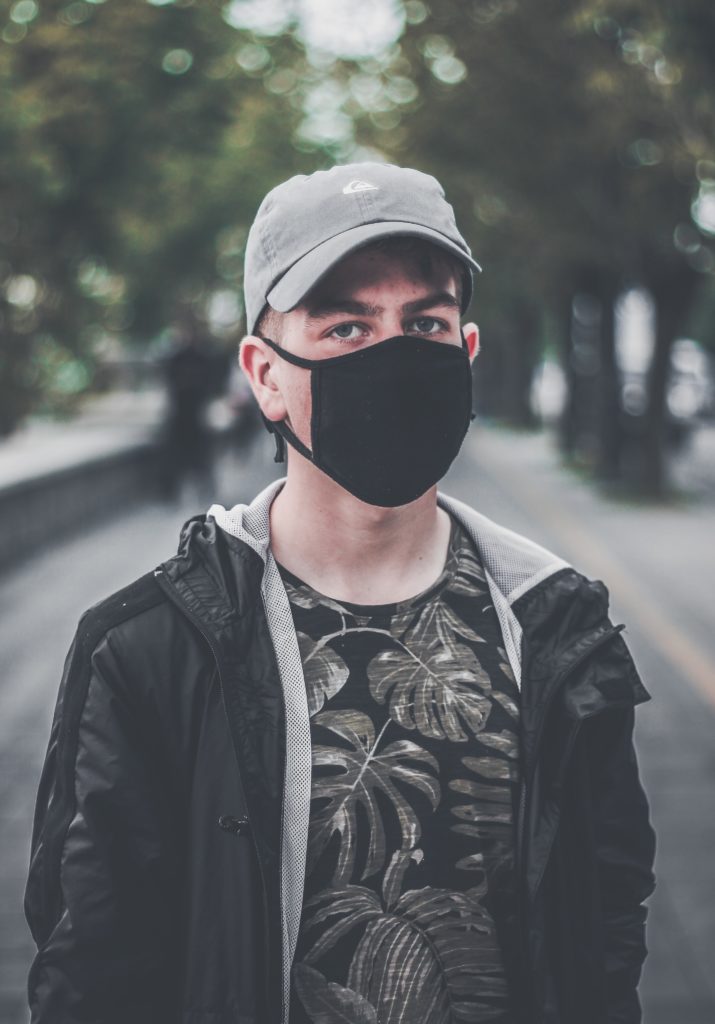
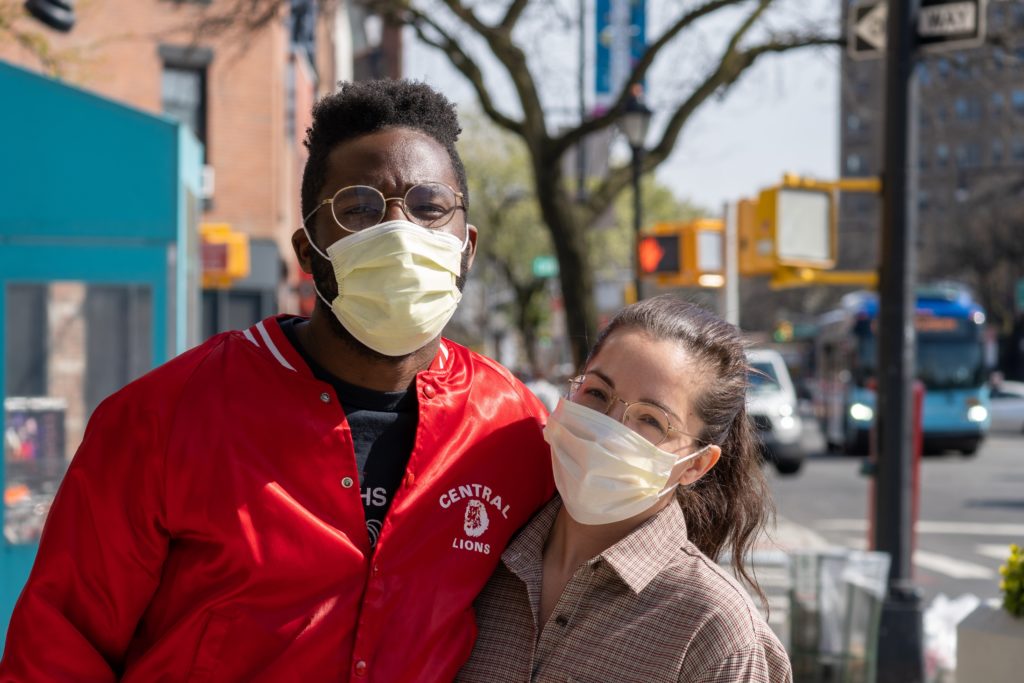
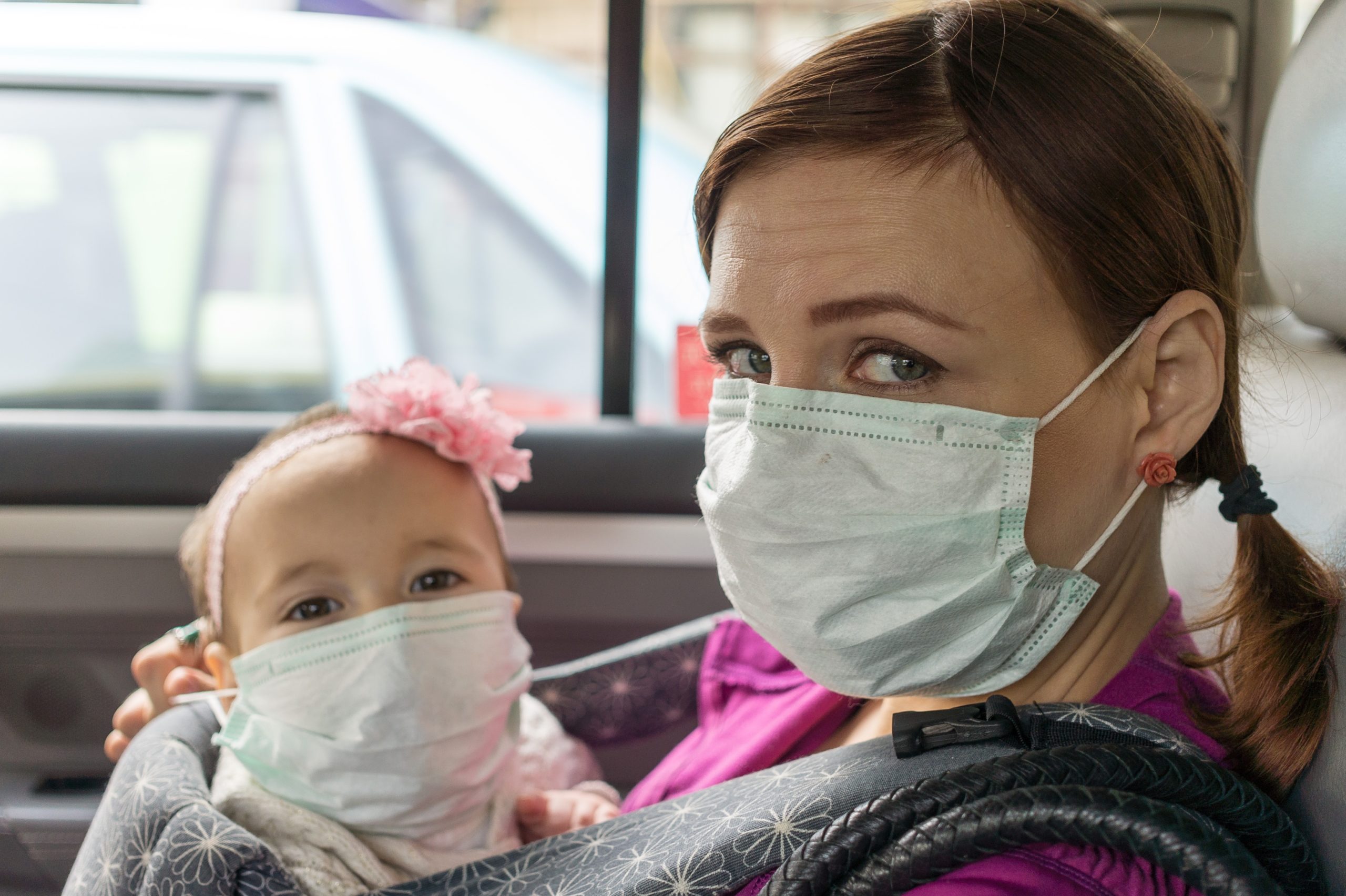
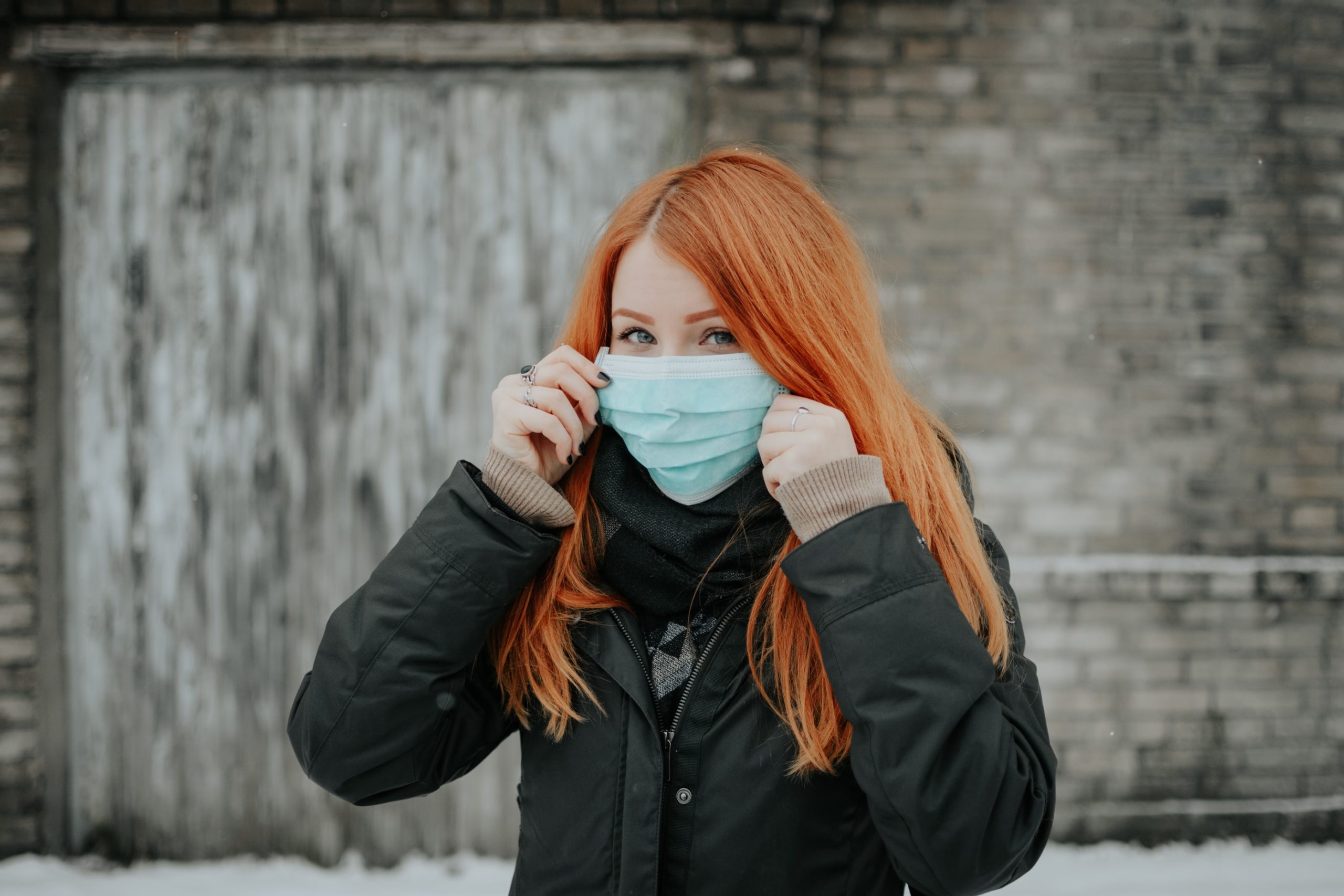
    Wearing a mask is adaptability in the pandemic and it's worth it for this woman.

    And millions of Americans are required to wear masks unless they’re at home with family. When you shop, there are yellow markers on the floor that show you where to stand in line to maintain social distancing… Certainly, this is a once-in-a-lifetime occurrence. Like the 100 year flood. We’ll never forget. Very few people in our midst have actually witnessed this before. Only those who lived during the Spanish flu in 1918 and are living today… and that’s about it. So, basically, only people older than 100. And as the conditions, precautions, and lockdowns become more restrictive, or less, or more again… you can find yourself disoriented, annoyed, and fearful. How do you cope? What if you’re just tired of coronavirus??

    Could you have imagined that 6 months ago, when news of the pandemic spread around the world, that by midsummer precautions would be reinstated again? 

    Well, you’re not alone. Most everyone shares your outlook. And by the way, some segments of this country has required masks outside of home since March.

    Keep reminding yourself…in the name of generosity and your own adaptability, that you’re not alone. Millions upon millions of people are in the same boat.

    So how do you do that…?  How do you maintain your sense of yourself, your identity, your good will and benevolence when you feel so worn down?

    Have you noticed in line at the grocery store, waiting 6 ft behind the person in front of you, how much more easily people around you seem to snap? To attack the poor girl at the register, who is dutifully wearing her mask? This girl didn’t create the pandemic, and yes she’s getting the brunt of everyone’s ill humor.

    So what can you do to nurture generosity and patience in this atmosphere?

    Honestly, what if you’re just tired of coronavirus?? Consider adaptability and resilience.

    Adaptability and Resilience in the Face of Hardship – Develops Your Patience and Confidence

    When faced with crises, you have choices. 

    You Can React and Let Your Tattered Emotions Lead…

    or you can respond from the resilience and patience you’ve cultivated in past crises.
    Adaptability in the pandemic or in nature can help you survive on a hike like this one.

    A tree that’s blown with hurricane force winds can bend and bend and bend.  If it snapped from the pressure, that would be the end of that tree. But by bending, the trunk of the tree is strengthened. It becomes stronger and more flexible.

    When you see a 200 year old oak tree, you can know that it’s seen lots of hardship, but it bends to the wind, it doesn’t allow itself to be drowned by flood or killed by drought. That tree has seen it all, yet it stands tall and strong, because it adapted.

    This tree has learned how to send its roots deep and wide to nourish its needs. It takes its challenges one at a time, tucks its chin and stands strong in the face of wind gusts and hurricanes, freezing temperatures, and blazing heat.

    Our beautiful oak doesn’t need to weather all the challenges that occur in ten years all it once. It stands, sways, bends, and replenishes itself, one challenge at a time.

    It uses its adaptability to be flexible in the face of hardship, then springs back to its normal state and prepares for the next one. Always standing strong and resilient. And with each season it grows a little stronger, a little more equipped to face harder assaults in the future.

    Adaptability means bending to accommodate the circumstances around you. And it’s vital because bending makes you stronger.

    These principles apply to countless crises, assaults, and hardships. Just like this beautiful old tree, you learn to nourish yourself, to put down roots deep and wide that will help you stand strong in the face of trouble, to reach for the sky with exercise and nutrition.

    You may be tired of coronavirus and all that goes with it, but if you think about it, things could be worse…a LOT worse. So nurture and nourish yourself, so you can give warmth and patience to others around you who are struggling too. Remember this isn’t permanent…it’s just right now.

    Simple, random acts of kindness and generosity can also beef up your own resilience and confidence.

    But to live to see another day can be a worthwhile goal in the thick of things.

    But What If I Can’t Think of a Creative Response? 

    What if I can’t imagine a better way to respond or feel?

    Just because you want to be calm, and respond wisely, doesn’t mean you have the power to do that. If you suffer from PTSD or depressive disorders the calm and wise response may be beyond reach.

    They say, “It’s not the strongest who survives, nor the most intelligent. But rather it’s the one who can best adapt to change.”

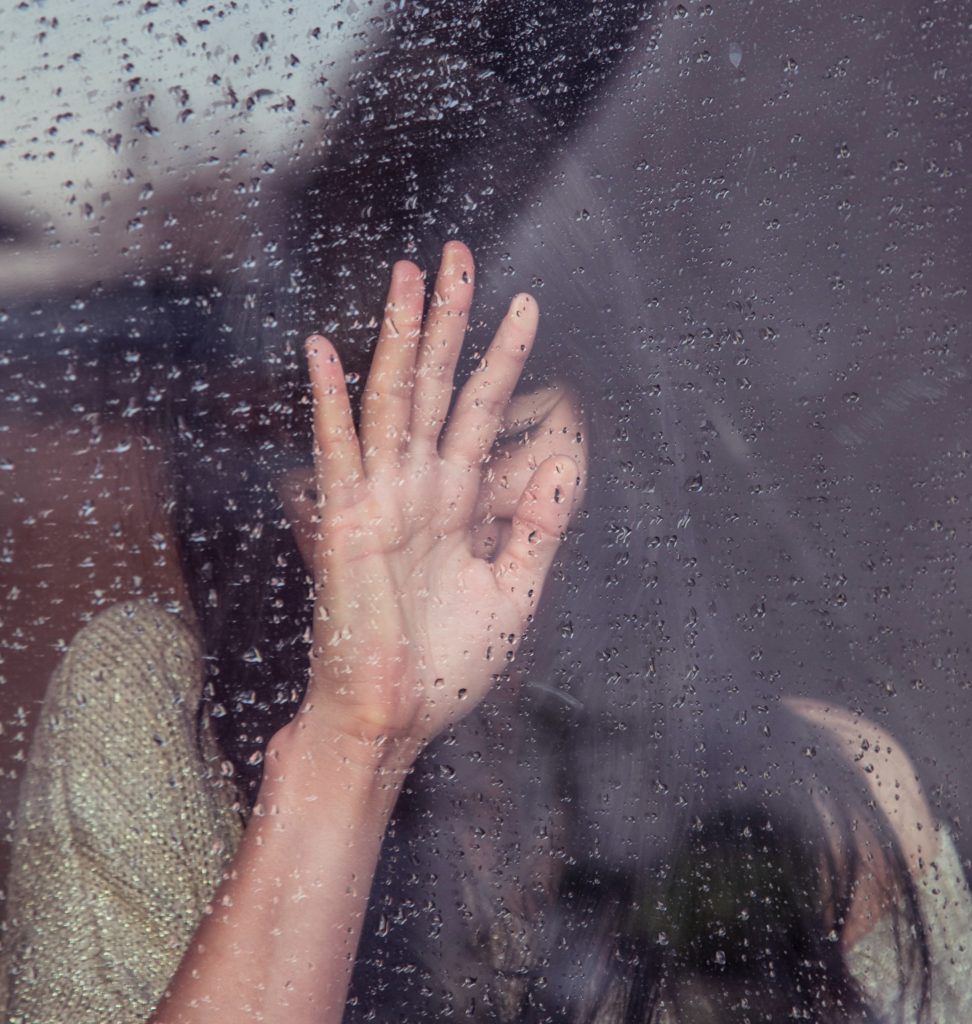
    To avoid the panic this woman feels, practice adaptability in the pandemic.

    And when you nurture resilience, and you’re flexible in the face of changing circumstances, you become stronger and you have more patience to offer the ones around you who are also tired of coronavirus.

    Which is where ketamine comes in.

    IV ketamine treatment can reduce stress and the damage it has caused in your synapses, in your hippocampus and amygdala. As the stress dissolves, and your synapses are rebuilt and become abundant and highly functional again, your ability to face a threat and make good decisions is remarkably improved.

    This new level of function reduces depression symptoms dramatically, to the point that you feel well. You have the needed energy to think of the needs of others and make decisions that benefit them. You have the creative thought to adapt in difficult circumstances, making them less distressing. In fact, you can enjoy the opportunities you find in the midst of them.

    And you can imagine…and enjoy.

    And if you have suicidal thoughts, or too many thoughts about dying, ketamine can stop those thoughts in a few hours. You could be an afternoon away from relief and hope.

    Ketamine Doesn’t Help Everyone – But It Can Transform Most People Who Reach Out for It

    At Innovative Psychiatry, every week we see people enjoy that relief, hope, and freedom because of their ketamine treatment. They marvel at the night and day change that replaces the depressive darkness and anxiety. 

    And as ketamine treatment restores their power to enjoy and imagine, they realize that instead of being tired of coronavirus, they have a renewed patience for taking it as it comes. And giving a leg-up to those around them.

    But, first, a word of caution: Ketamine treatment doesn’t have this robust effect on everyone who needs it. But no other treatment is currently available that relieves these symptoms so easily for as many. If you’re one of the ones whom ketamine doesn’t help, there are other treatments we can talk about. 

    Interestingly, ketamine treatment is often most effective on patients with the most severe symptoms. And that’s why we focus on patients who have not been helped by other medicines.

    Adaptability in the pandemic can allow you to maintain your joy in adversity like Carol here.

    So, if you struggle with anxiety disorders, PTSD, social anxiety, severe depression, substance use disorder, alcohol use disorder, or suicidal thoughts, and nothing else has helped, call us.

    Because letting ketamine improve your mood, your outlook, and your resilience also equips you with improved adaptability in other crises you face.

    We’re here to listen, and to help you find relief, even achieve remission, from these symptoms that impair your best life

    Ketamine can remove the obstacles that prevent you from pursuing happiness, building strong relationships, and investing motivation and initiative in your career. 

    You really can have a fruitful and rewarding life, and we’re here to help.

    Lori Calabrese, M.D. is on the front end of the race to stop PTSD in its tracks using IV ketamine treatment.

    To the restoration of your best self,

error: Content is protected !!