Tag: IV Ketamine for Alcohol Use Disorder

  • When Your Brain Won’t Work, Can Ketamine Improve Cognition?

    When Your Brain Won’t Work, Can Ketamine Improve Cognition?

    What can you do when cognitive function skids to a slow crawl… how can you restore it?

    Nelson clattered along the path that followed the lake. His shoes were loose and slapped the ground with each step. He could have stopped to tie them on more snugly, but who cared? He was frustrated and too tired to carry about his shoes. How to fix his situation? When your brain won’t work, can ketamine improve cognition?

    He’d been really down for months now, but life had to go on. School had to go on. What could he do — tell them he wouldn’t be coming for awhile because he was ‘downa’?  Sounded to him like a great way to get a bucket of zeros.

    But it was hard. He couldn’t think of answers to things he could normally answer or even figure out things he could usually figure out. He felt like a genuine nubster. Like gum you chew and chew and spit out, and there it is a sticky blob on the ground.  Like that. Useless. Unsightly. 

    What do you do when your brain won’t work? He talked to his doctor about it last time he had an appointment. She said this was not an unusual thing to happen when you’re depressed. Okayyyyyy…but NOT HELPFUL.

    Even if it was true, he needed a solution. Something that would get his mind working for him, rather than against him.

    He walked home with a guy, Roger, who also was seeing a doctor for depression. Nelson decided to talk to him about it and see if he could relate. Anyway, it was nice not having to pretend everything was fine. When they didn’t feel like talking, they didn’t.

    “Hey man.”

    “Hey man, what’s up?”

    “Is something up with school? …or I mean, it seems harder right? Maybe I’m off or something. Like… can you keep your grades up?  Because I’m having a harder time thinking than I did before this year…and my grades are dropping…”

    “Yeah… I’ve had a harder time than before. I talked to my doctor about it…it’s just one more thing to be depressed about, and to feel bad about. One more reason to feel like a failure. Anyway, my doctor talked to my parents and they started talking about IV ketamine treatment. I’m getting it now. Twice a week.  I can’t say the change is instant and magical, but I can say the depression is definitely getting better and the problem with thinking is improving, too.  I’ll let you know how it goes…”

    “IV ketamine. Hmmm. Maybe I’ll talk to my parents about it. This feeling that I’m not smart anymore is really kicking me in the gut. I already feel like a failure and this is making it so much worse.  Thanks man. Keep me up to date ok…?”

    “You bet. I should tell you that ketamine doesn’t just help the thinking problem. It can give you the feeling that you can accomplish what you want to accomplish…like you have confidence.  And hope…. Plus all those feelings of self-criticism, self-hatred, beating yourself up….? That stuff calms down and gets quiet. And it helps you want to get stuff done that you need to do.  Hard to describe, but it’s helping me. A lot. I have one more week of treatments left.”

    Ketamine.  IV ketamine.

    So here’s the thing. Major depressive disorder affects more than 16% of people in  their lifetime. And among those, nearly 40% of those patients have cognitive dysfunction. That means they experience impaired memory, decision making ability, and problem solving. 

    One weird word you don’t see much anymore — but is at the root of “cognizant” is — cognize. And that’s what you need to do, but it’s hard to do when you’re depressed. It’s hard to cognize… to grasp, fathom, pick up on things. You may be cognizant that you’re not keeping up. That you’re making mistakes. That problem solving and figuring things out has become harder and harder. Making decisions is harder and harder. But to be able to “cognize” effectively is important. And that’s where “cognitive” comes from.

    Cognitive function is the most impaired function as a result of depression, and it’s also the function most improved by ketamine. What a relief! There’s hope!

    A research team led by Anna Stippl used the Beck Depression Inventory – II, or BDI-II, to measure depression severity in a group of 47 participants just last year. The BDI-II is one of the most widely used tools used for this. They divided into three categories the elements of the inventory: Cognitive, Affective, and Somatic. 

    And it turns out that IV ketamine treatment can improve cognition. In fact, the largest reduction in symptom severity following IV ketamine treatment in those categories was in the area of cognition. 

    So, while IV ketamine treatment reduces Roger’s depression symptoms of lethargy, hopelessness, despair, and wanting to give up…. It also helps his cognition: ability to make decisions, problem solve, find solutions, and set priorities.  And it also relieves the body aches, listlessness, lethargy, and lost feeling that seemed to dominate Nelson.

    In fact, improved cognitive function has been reported after a single ketamine infusion — yep! — as well as following a series of ketamine infusions.

    What about ketamine causes the positive effect ketamine has on cognitive function? 

    While there is no easy fix for major depressive disorder, and the cognitive impairment that can go with it,  IV ketamine can provide dramatic change in cognition, outlook, behavior, and hope.
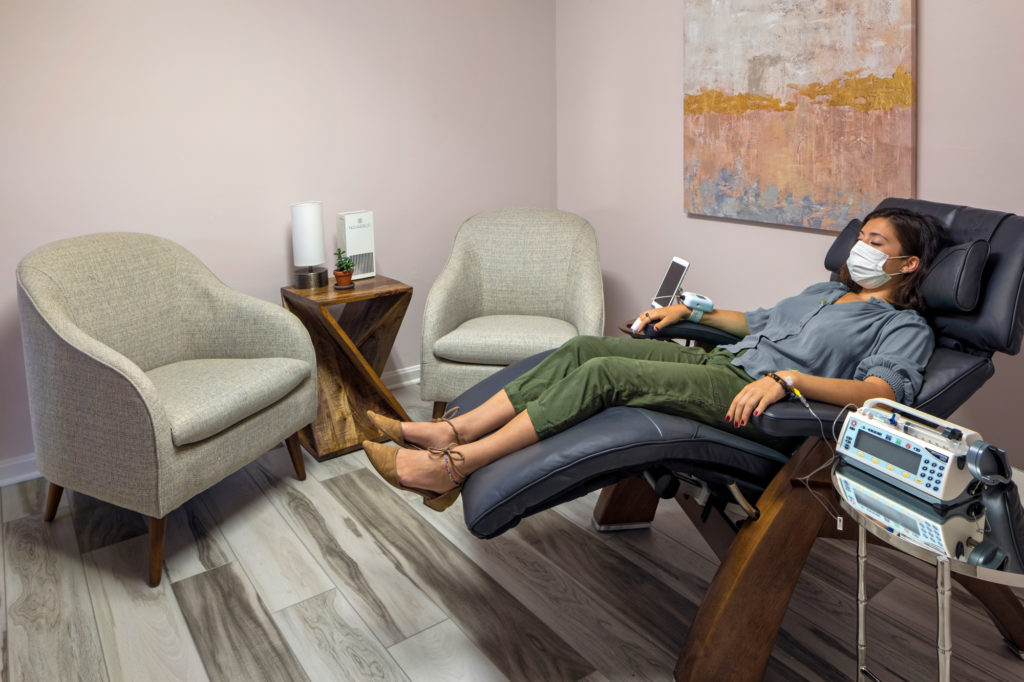
    When you come for ketamine treatment, you'll have a comfortable, quiet room to get the most from your treatment.

    You may think that the purpose of ketamine is to just help you feel better. And it is — though that’s an oversimplification. Because these areas of cognition, mood, behavior, and physical symptoms like body aches, all play a role in how you feel and function.  Ketamine helps so much more. It helps when your brain won’t work, ketamine can improve cognition…and make you better on many levels.

    IF you have symptoms like Roger or Nelson, and nothing you’ve tried has helped….call us.

    We live and work to help you experience relief from your symptoms, like cognitive function, sadness and despair, and listlessness, lack of energy and hopelessness.

    You can reach out for hope, better performance, and freedom to pursue the rewarding life you long for.

    Lori Calabrese, M.D. is on the front end of the race to stop PTSD in its tracks using IV ketamine treatment.

    To the restoration of your best self,
  • Navigating COVID Delta and Omicron As the New Year Dawns To 2022

    Navigating COVID Delta and Omicron As the New Year Dawns To 2022

    We’ve been doing COVID’s version of life on this planet for close to 2 years. We’ve done what we’re told, but this coronavirus just keeps dumping more on us. When will this be over?

    About the time we think we’re pushing the delta variant back, who should step up to bat but omicron? We hope you’ve enjoyed Christmas and the winter holidays. Now as we look to the New Year, so many are asking, “When will it end?” How long must we continue wearing masks, testing, avoiding crowds, and getting boosters? Navigating COVID delta and omicron requires tenacity and determination going forward.

    As we move into 2022, we face a new highly contagious variant: omicron. For example, omicron, has caused a startling surge in cases in New York City… and is so contagious that it’s expected to become the dominant strain of COVID in just weeks, compared to delta’s timetable of taking months to do the same thing.

    One epidemiologist, Dr. Jay Verma, warns that if lightning speed adjustments aren’t made now, the danger of omicron taking over with record-breaking hospitalizations and death is irrefutable.

    And that’s the risk with navigating COVID delta and omicron.

    Every few months we seem to hear about another variant of COVID-19, and are given new instructions. 

    We’re tired of it. But even so, you can’t get millions of people to comply with new instructions all that quickly… People as a whole tend to resist change. At first, COVID gave symptoms like cough, shortness of breath, and fever. Now a “loud” symptom to watch for is a scratchy throat.

    So what do we do?  We get a scratchy throat and worry.  And worry.  We go for testing.  At any other time in our lives, a scratchy throat meant a cold or flu (or maybe just allergies), was starting. We knew what to do with it. But, a scratchy throat now means “get a COVID test.”

    And unlike the past symptom alarms, it also means it can get worse and worse if you haven’t been fully vaccinated. (Fully vaccinated used to mean two shots, but now it means two “plus a mRNA-based booster.”)

    Will it EVER Stop? Will COVID be with us forever?

    And, by the way, what on earth is an mRNA – based booster?  Well, specifically, It’s a booster supplied by Moderna or Pfizer.

    We’re at war.

    As to the question of whether the pandemic will ever end, there is no answer yet. There are experts who question whether we’ll ever see the end of COVID-19, and get back to normal. More experts suggest we should accept that we’re at war with this virus, and accept the adjustments that are inevitably part of wartime.

    We keep assembling our “antiCOVID troops” and so far that includes 3 vaccinations, masks, hand washing…and social distancing. (Been to UPS to ship gifts recently? The social distancing pushes people right out the door! This is December. And it’s cold out there…)

    Yes, we’re hoping for things to get better. But some experts believe these variants will keep reproducing ad infinitum. We’ll see. But what about in the meantime?

    It’s tough to make adjustments in war time.

    Meanwhile, we don’t want to isolate. We want to get out, mix with friends, gather for weddings, and we want to enjoy ourselves. 

    While we sympathize — we’re all in the same boat, right?—to keep our families well, to keep our children in school uninterrupted, we have to participate in these latest requirements put forth last Tuesday.

    We have to just do it.

    If we don’t, omicron is going to spread faster than we can imagine. And those without all three vaccinations (including a booster), are likely to be the ones who get seriously sick in the coming year. Boosters offer additional protection against delta and omicron. They’re a necessary part of our arsenal.

    We’re told that those with all three vaccinations are less likely to get seriously sick if they’re infected. However, those without all three vaccines are most at risk for critical illness and death if they’re infected.

    So navigating COVID delta and omicron requires a few pointers for preparing for the new year and with it, the growing wave of omicron. 

    Are you playing tug o’war?

    Now let’s talk about you, and how this may affect you. Stress happens when you want a situation to be different than it is. Picture the rope in a tug-of-war. When someone’s stationed at each end, the tension in the rope is tight. Now picture yourself at one end of the rope and the COVID war at the other end. 

    As long as you pull on your end of the rope, and COVID pulls on the other, with the necessity of masks, hand washing, and social distancing that you may resent, stress is the result for you. That rope is tight. Your stress heightens, and anxiety takes hold …and maybe even depression.  

    But if you let go of the rope by deciding to accept that you can’t change the situation—by complying with the adjustments you’re asked to make in this war—your rope goes slack, and your stress is relieved over this issue.

    Over-simplified? Maybe. But clear.

    You could just stop tugging.

    You might want to evaluate your approach to the next leg of the pandemic that lies before us in the new year, navigating COVID delta and omicron. Your peace and emotional balance is worth more than your resistance… don’t you think?  

    And …if your anxiety and depression, or your substance and alcohol use, are already bad—and you can’t change your mind or make decisions that improve your frame of mind—then you may need treatment.

    If you’ve taken other medications and treatments that haven’t helped, IV ketamine treatment may be just the thing to not only relieve the symptoms of stress, but actually help you achieve remission.

    Imagine having your resilience restored, your outlook on life brightened, the strength and resolve to build meaningful, healthy relationships, the creativity and motivation to excel in your job. And the peace, freedom, and hope to build a rewarding life.

    Just Imagine.

    Ketamine isn’t for everyone. But odds are that you’re squarely in the middle of those whose lives can be transformed by this extraordinary treatment

    At Innovative Psychiatry, we work with people every day struggling with these same symptoms. They come in bearing up under the burden of these symptoms, and complete treatment with a new lease on life, new hope, new freedom from symptoms.

    IV ketamine treatment can reverse symptoms of these disorders, replace them with joy, motivation, initiative, and confidence.

    When you come for ketamine treatment, you'll have a comfortable, quiet room to get the most from your treatment.

    When you come in, you’ll find a comfy, heated recliner you can settle into, and relax. A little white box on the table will be quietly running, destroying (not filtering, but destroying) viruses and bacteria in the air. This little miracle worker uses plasma cell technology to destroy the DNA in the microbes in the air, making the air pure for you to breathe. And it’s efficient. It destroys 99.99% of all microbes in the air, including viruses like flu and COVID with all its variants like omicron and delta.

    We go the extra mile (in every way) to ensure you’re safe from infection and able to focus on getting the most from your treatment.

    IF you suffer from these symptoms and nothing else is helping, call us.

    What else has you in a tug of war? Depression? Apathy? Anxiety that doesn’t let up? Trauma? PTSD symptoms? Bipolar depression? Suicidal thoughts? Or worries about suicidal thoughts in someone you love?

    We’re here to help. With all the tugs. With all the wars you may be fighting…

    Lori Calabrese, M.D. is on the front end of the race to stop PTSD in its tracks using IV ketamine treatment.

    To the restoration of your best self,

  • Suicide at Christmas? Who would do such a thing? and WHY???

    Suicide at Christmas? Who would do such a thing? and WHY???

    People like your mom, your brother, your nephew, your grandfather, your aunt…your spouse or son or daughter. This time of year is a time of disappointments, when broken relationships or perceived failures are felt most deeply, and those loved ones who have died before are acutely missed.

    For some, it’s a logical time to find reasons to die. Suicide at Christmas is all too common, so we need to be tuned in to those around us for signs of grief, defeat, despair, or inappropriate cheer which can be a way of hiding disturbing thoughts.

    Monty was depressed, but it was hard for his family and friends to grasp how he sees this holiday season. When he arrived downcast, instead of with an air of celebration, it was easy for them to be impatient with his “downer” attitude.

    For his family, it was hard to wrap their heads around the idea that some people aren’t living in the moment of Christmas, excited about exchanging gifts and seeing friends and relatives they haven’t seen in forever.

    Rather, some, like Monty, may be suffering about things that happened in years past, and the holiday atmosphere brings the memory to life.                  

    Monty felt responsible for a tragedy long ago, and assumed everyone present was blaming him. He also resents some people who are present whom — he feels — carry some blame for the tragedy. 

    And sometimes, everyone’s cheer is more than he can bear. So he looked for a way to escape the noise and pressure. To find a private corner to be alone in his sorrow. He also thought a little bottle of spirits would be just the thing to help him forget.

    With all the festive chatter and cheer, it’s easy to miss a pending suicide at Christmas.

    What does the family see?  It’s likely they don’t see Monty suffering helplessly. Sadly, what they often see is the family screwup getting drunk instead of “contributing” to the family experience. They see selfishness. And they pour shame on this family member whose complicated life they don’t understand.

    But suffering isn’t necessarily selfish at all, is it? Sometimes it’s just misery. Despair. Hopelessness. 

    And when someone like Monty knows he’ll be judged for his suffering,  when he (or she) KNOWS he will find no compassion — only criticism — sometimes that alone is enough to push him deeper into his dark place. And in that place, he may make the decision to stop the misery by destroying himself.

    Let’s hope not.

    But it’s for these reasons–and many others–that the holidays is a time that some people take their lives. Sometimes privately, or in a clandestine way, and sometimes in a public way.

    There is no simple solution to the conflicts in a family gathering that includes someone who is susceptible to suicidal thoughts and/or actions.

    Every family has conflicts, whether spoken or unspoken… secret resentments or boisterous loud ones. Jealousies, insecurities, and differences of opinion. What’s the saying..?  “If we both think alike, one of us is superfluous.“

    Variety is the spice of life, but in a family, subtle differences can stimulate conflict. And that happens a lot.

    But for someone like Monty, whose mind makes him feel hurt more deeply, who has a fractured sense of himself, those differences can torment. Devastate.

    And those minor conflicts among family can highlight Monty’s insecurities and shame.

    So while you can’t save everyone all the time, you can offer a warm hug or handshake, a friendly and compassionate conversation. You can seek ways to set the suffering one at ease. A little effort and genuine support can prevent a suicide at Christmas.

    And who’s the suffering one?

    It’s the one who seems to always create a scene, gets into trouble when the family is trying to celebrate. It’s the one who sits alone looking down, awkward, or angry. Like Monty. Or maybe she looks like she’s going to cry. 

    You most likely know who it is in your family who tends to be the lightning rod. That family member you watched grow up… and he surprised you with his mistakes, problems, scrapes… just so many things. That loved one is possibly in pain and needs love and acceptance to get through this holiday. If he seems like a clown, he just may be laughing on the outside but crying on the inside…

    If THAT one disappears, find out where he is. He may have gone to the backyard to whittle on a stick. Or he may have left with plans to jump off a bridge. No, you’re not your brother’s keeper …but you are someone who can show compassion and caring if someone is in danger of serious injury. Your act of love can thwart a suicide at Christmas and that may give someone like Monty some much needed time.

    How hard is it to listen?

    If you have a family member like Monty, you likely know who it is.  And you may be weary of their shenanigans. But, maybe, just maybe, they can use acceptance, someone to listen. So ask them their story. And let them talk… and show you’re listening.

    IF…and that’s a big IF… but IF they’re contemplating suicide this is a good time to listen to them talk about it. Don’t be afraid to even ask, “Do you ever feel like hurting yourself?” and then, “What about now?” Opening the door of communication without judgment can be lifesaving. Call the Suicide Hotline at the bottom of this post.

    Many who are contemplating suicide at Christmas have been suffering from Seasonal Affective Disorder for months caused by the reduction of light in the fall months. Don’t think anytime of the year is devoid of suicide risk. Whatever cheers up one person, is just as likely to trigger suicidal thinking in another.

    In addition, the risk of suicide doesn’t end during the holiday season, but actually increases in January.

    Also, it’s good for you to be equipped with the knowledge that if he’s thinking about suicide, IV ketamine can stop those suicidal thoughts in an afternoon. So he can be free of the tortuous thoughts and mental images… and focus on getting better through therapy, medication, or IV ketamine treatment for depression.

    In fact, in our practice, we’re transparent about how we can help. We’ve looked at results, published them, and presented (nationally internationally) on the effect of IV Ketamine Infusions for Suicidal Thinking showing how they can prevent a trip to the Emergency Room, or a hospitalization.

    To be able to remove suicidal thoughts in a day is life changing, even life saving, for so many.

    At Touchpoints180™, we’re privileged to see people come in racked in the throes of suicidal thinking, and often see them at peace a few hours later. Stopping suicidal thoughts isn’t a cure-all. But it gives you time to seek treatment, participate in therapy, and overall pursue remission. It keeps you safe while you get better.

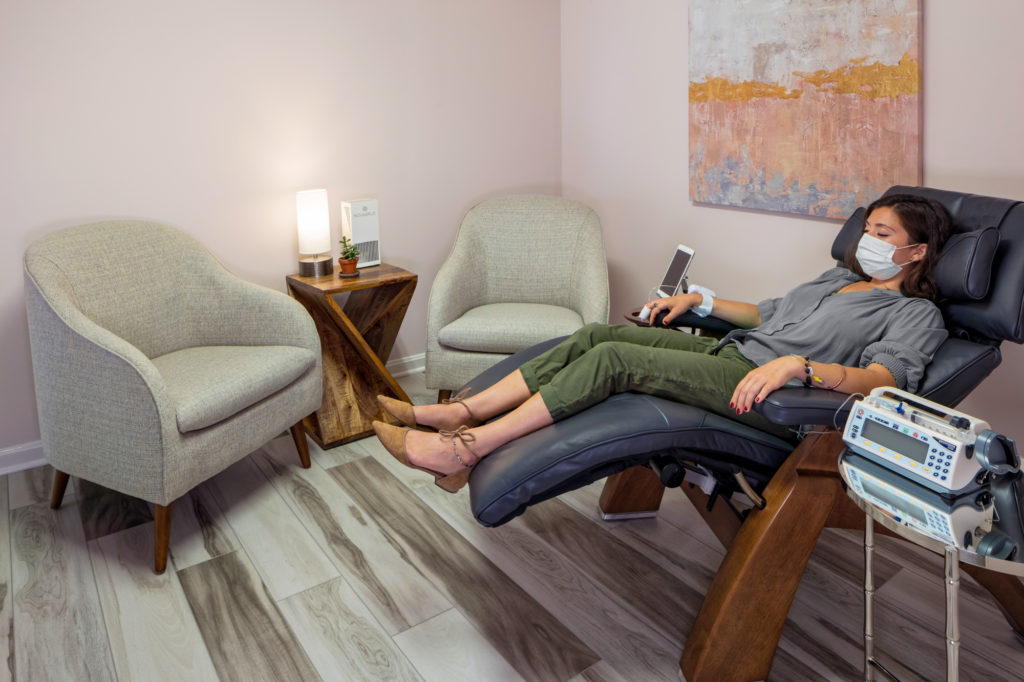
    Receive your ketamine treatment in a comfy recliner to erase memory triggers of alcohol use.

    When you come in for your infusions, you can just sink into your recliner, settle back and relax. That white box on the lamp table labeled Novaerus is a wonderful piece of advanced technology that destroys the DNA of viruses, bacteria, and mold spores in the air. This plasma cell technology was designed for the International Space Station, and is outstanding in removing 99.99% of all pathogens in the air and specific to the square footage of your infusion suite. So you’ll breathe pure, clean, safe air. Your mind can rest at ease knowing you’re safe from infection (including COVID-19 delta, lambda, and omicron) in this uncertain world.

    Don’t let suicidal thoughts rob you of your life. if you have symptoms of suicidal thoughts, call us.

    Also call if you have a loved one like Monty who’s been having suicidal ideas.

    Life can be so much better when your symptoms are out of the way. Imagine that…life without symptoms of despair, hopelessness. You deserve a life worth living and the power to live it. Let us help.

    Reach out for a life free of shame and despondency. Let us help.

    The Happiest of Holidays to you and yours.

    If you — or someone you know — is considering suicide, please contact the National Suicide Prevention Lifeline at 1-800-273-TALK (8255), text “home” to the Crisis Text Line at 741-741 or go to suicidepreventionlifeline.org.

    Lori Calabrese, M.D. is on the front end of the race to stop PTSD in its tracks using IV ketamine treatment.

    To the restoration of your best self,

  • Loss of a Loved One by Suicide is a Great Grief for Loved Ones

    Loss of a Loved One by Suicide is a Great Grief for Loved Ones

    On November 20, we observed International Survivors of Suicide Loss Day. While a single day dedicated to observe such loss is a meager effort, it’s not nearly enough.

    Few losses magnify the sense of powerlessness like the loss of a loved one by suicide. Many times the loss comes after an extended period, months or years, of suicidal attempts. Sometimes the family and friends are surprised by this event. When they are, it’s natural for denial to protect them for a time from the reality of the loss. What could I have done to prevent this? How could I have saved him? If only…

    Crystal, at 45, felt deeply spent. Since her son, Jake, was in first grade, she’d worried about him and how to help him find more joy in life. To experience the day to day routine with joy and contentment. To feel proud of his accomplishments. And to want to improve. 

    Instead, he was a loving, sweet child who seemed overwhelmed by life. He carried a massive weight of inferiority on his shoulders.

    In the early years, a child with a psychiatric disorder may show dramatic signs of it. Signs that make it easier to diagnose. Or he may have more subtle signs. He may feel heartbroken much of the time for reasons that are difficult to identify. 

    He may be often corrected by his teachers. And he may feel like the class dunce because he fails to win their favor. He may tell himself he’s fundamentally flawed and not worthy of approval. Such a philosophy about himself can be deeply damaging.

    Jake became increasingly symptomatic as he moved through his teens. He was admitted to psychiatric units multiple times, with complex diagnoses of comorbid conditions.

    With each hospitalization, Jake learned more about himself and his illness, and so did his mom.

    But once he was discharged from the facility, he might function more smoothly for awhile, then nosedive into another traumatic and painful episode of depression, anhedonia, and mixed states.

    He began to talk about dying in elementary school, but his first attempt happened in junior high.

    For the rest of his adolescence… his attempts and trips to the ED, multiplied. During his twenties the attempts became more frequent and more traumatic for him and for his mom.

    For some people, knowing someone who regularly attempts suicide is tiresome. They accuse their suicidal friend or family member of seeking attention. And when that person dies by suicide, their response is sometimes, “What a relief for the family.”

    This response lacks understanding of this person’s condition, and lacks compassion both for him and his family and friends.

    Loss of a loved one by suicide is heartbreaking. Devastating. Suffocating.

    While we want to focus today on Crystal, you can’t fully grasp her loss without understanding her son.

    Jake’s life was full of pain, desperation, and despair. He didn’t understand his pain, or why it lasted like it did. 

    By his late twenties, his suicide attempts were frequent and severe. He had resolved the only way he’d succeed in ending his life was to use sharp edges, so his family hid all the knives from him. Then he found arrowheads that were sharp and continued to mutilate his wrists. Still, someone always found him in time.

    When he finally ended his life at the age of 28, his mother was devastated. It seemed to her he’d had a heart attack… which was shocking at his young age. 

    That was heartbreaking enough. 

    But little by little, as time went by after his death, she kept reliving his last weeks, and remembered something his friend had told her. That Jake was using some manmade concoction that had been reported to give a high in small amounts but when overused, it caused death.

    Finally, Crystal had to face that he had been methodically trying to end his life; not out of rebellion, or rage, or revenge, but out of desperation to escape the misery he felt

    It wasn’t that he didn’t want to live, but he was certain he didn’t want to live like THAT any more. Without hope of peace, of building a life, of enjoying lasting relationships. He felt he was a prisoner in his own skin. A prison caused by his disordered mind.

    After all the struggles, all the pain, all the times he got in trouble, all his heartbreak, all his desperation…do you think Crystal was relieved when he died?

    No…nothing could be further from the truth.

    Crystal spent his life looking for the right doctor, the best treatment, some sort of hope that would help him live a quality of life that rewarded him for surviving all he’d endured. When she realized he had died, all she could think of was that they never found his peace. None of their efforts paid off. The latest treatment wasn’t given to him in time. 

    She felt sorrowful that their lifelong quest was never realized. She felt guilt that she hadn’t tried hard enough, although she had given it all she had.

    That she had to give up her quest to find help for him. It was hard to grasp that the search was over. That they never conquered the torment.

    Each person’s grief is his own, and each grieves for different reasons. Grief is so personal, but its impact is multiplied when the cause is suicide, and especially if the loved one was a child, a spouse, or the parent. 

    During the first month or two, friends of Crystal were sympathetic and offered her love and support. But as the months went by, they encouraged her to “move on.” Their well meaning “encouragement” only applied guilt and pressure Crystal didn’t need. She knew she couldn’t move on. She guessed that someday it might not hurt so much, but she had no interest in forcing herself to stuff her pain and memories to make others around her more comfortable.

    Unfortunately, Crystal began to withdraw from some of her friends, because she knew she needed space to grieve at her own rate. To come to terms with all her efforts to save her son and the fact that they failed.

    It was a LOT to swallow.

    She told herself that he knew she loved him, he knew she fought for him and his hope.  Crystal found hope and peace in knowing he KNEW he was loved deeply by her, in spite of his treatment by others. The more she let that knowledge sink deep into her heart and memories, it allowed her anguish to decrease.

    And Crystal learned that healing from the loss of a loved one by suicide, that her son’s life ended at his own hand, in a way that was indirect, required time. She needed time.

    Yes, while it’s true that some people grieve and never move forward to live rewarding lives again, Crystal knew instinctively that wouldn’t be her. She knew she needed to heal so she could enjoy life again at some point. So she guarded her heart, and her memories, and opened that part of herself only to those who had the capacity to understand and not pass judgment.

    On the first anniversary of his death, Crystal joined with her adult children and they reminisced about Jake and the things they loved about him. They shared an upbeat time together honoring Jake’s memory, and Crystal found she breathed easier in the days that followed.

    Eighteen months after Jake’s death, Crystal missed him terribly, but was beginning to feel a little gleam of life in her heart again from time to time.  The more she healed, the easier it was to talk with trusted family members about Jake, his illness, his beauty, and his mistakes. The more openly she talked about him with trusted loved ones, the freer she felt.

    She realized that healing was coming. She knew the loss of her son by suicide was not something she would ever get over or put behind her. Crystal knew she was forever altered by his death as anyone would be after the loss of a loved one by suicide. But she also knew she needed to heal from the shock and trauma and guilt she suffered, so she could live again.

    At Innovative Psychiatry, we conducted a study about the use of IV ketamine for suicidal thinking. We have found IV ketamine to be remarkably effective in stopping suicidal thoughts in as little as an afternoon. This allows you to work toward getting help while avoiding hospitalization or a trip to the E.D.

    With the tragic loss of life and suffocating grief of loved ones that suicide causes, to be able to stop suicidal thinking… is priceless. You can seek further treatment, counseling, and improve your quality of life with the valuable time ketamine can buy for you.

    When you come for ketamine treatment, you'll have a comfortable, quiet room to get the most from your treatment.

    When you come for treatment, you’ll be led to a private treatment room with a comfy recliner to receive your infusion. A pretty white box on the table will alert you to the safety of your environment. This box applies plasma cell technology to destroy all the viruses (including COVID variants Beta, Delta, lambda, and omicron), plus bacteria and mold, too. In fact, when we say all, we mean 99.99%.

    You can be assured you’re as safe as possible from infection while in our offices, so you can focus on getting the most from your treatment.

    If you suffer from suicidal thoughts, or know someone who does, reach out for the treatment that can stop them. IV ketamine treatment is lifesaving, and you deserve to be relieved of those awful thoughts and urges.

    There is an answer that can give you hope and peace.

    Lori Calabrese, M.D. is on the front end of the race to stop PTSD in its tracks using IV ketamine treatment.

    To the restoration of your best self,

  • Grieving Loss as the COVID Saga Drags On…

    Grieving Loss as the COVID Saga Drags On…

    If you’ve known someone who’s had COVID-19, you may have also known someone who died from this coronavirus. Hundreds of thousands have died since January 2020, but your loved one was not just “part of the crowd.” Death of your cherished love one is life changing for you. What do you do with the grief?

    Since nearly 750K people have died in the US alone from COVID, most of us have known someone who died. Some of us know several people who’ve died. And beyond COVID-19, many have died from heart disease, cancer, accidents, suicide, and scores of other causes. Starting in January 2020, few people are left who’ve been untouched by the loss of a loved one. The death of someone significant in your life leaves you empty, bereaved, even angry. And you’re left to do something with belongings, and find a way to move forward. Let’s talk about the grieving… grieving loss as the COVID saga drags on. Since death is part of life, grieving those we’ve lost is a very real part of living…

    Stephanie walked along the walkway, mask firmly in place. She was armed with hand sanitizer in her purse, and a spare mask. She and her family had complied with the protocols for protection from COVID-19 all along.  So much time alone in the house — so she’d learned to play music all the time so she wouldn’t feel so alone.  

    Text messages and phone calls filled in spaces through the day that would have otherwise felt like isolation, and overall, she was doing pretty well.

    Her husband, Dan, had worked from home, but his company had been transitioning workers back at a rate of a handful a week. Today was his first day back in the building. 

    But, he came home feeling bad… aching and exhausted. Fever was 102.3. Now that was alarming. 

    She got him settled in bed, gave him some Tylenol, and started thinking. This was his first day. The coronavirus would not have already shown symptoms if he got it at work that day.

    So where else had he been in the last week?

    Nowhere. He’d been home. Who was he exposed to?

    Oh wait. He’d gone across the street to borrow gas for the lawnmower. That took about 10 minutes. Surely not.  

    The more she thought about it, the more she realized she was right. He’d been at the neighbor’s house ten minutes. She decided to call over there to ask if anyone in the house is sick.

    So she did, and wouldn’t you know… their son had gotten COVID at school. She felt sick. He wore his mask, used hand sanitizer, but still got the virus from someone at school. So… he brought it home. And in a quick ten minute visit, Dan was exposed.

    Within 5 days, Dan’s breathing was alarmingly labored. Stephanie called 911 and Dan was rushed to the hospital. In ICU, he was quickly placed on a ventilator and IV medications were started. 

    For reasons that baffled Stephanie, her husband’s condition worsened fast. 

    Dan died 3 days after his admission.

    Stephanie and her son, Jacob, felt lost. In shock. Surely she would wake up and this would be a terrible dream.

    Shock and denial engulfed her.

    They went through the motions of moving Dan to the funeral home and making preparations. They arranged a memorial service over Zoom and let all Dan’s friends know when to tune in.

    She didn’t want to see anyone, but knew she was grieving the loss as the COVID saga drags on. She had to pull herself together to respond — to her son, to their family, to their friends.

    The tragedy was senseless. Heartbreaking. For a week or two, she felt like she was in a fog. She kept expecting Dan to walk through the door and tell her it was all a mistake. That he was fine.

    But he didn’t walk through the door. And Stephanie was angry.

    Eventually, as the reality sank in, Stephanie felt angry. Angry that Dan was gone, angry that he’d left her, angry she had to rear their son by herself. She found she was short tempered, irritable, quick to retaliate with clerks, the checkout person at the grocery store, her son, and her parents.

    The longer that went on, the more she blamed herself for making life hard for her son, and others. She loathed herself for being unpleasant with everyone. But she was just so mad.

    She felt guilty for snapping at those around her, and for Dan’s death. If only she’d been more helpful that day when he was mowing and ran out of gasoline.

    She found herself bargaining.

    How much better it would have been if she had taken the gas can in the car to the gas station and brought him home some gasoline. Then he would not have gone to the neighbor’s house. Maybe it would have saved his life…and they never would have even known he might have died. Their life would still be stable and good.

    Why didn’t she? If only she had!!!!!!

    She knew she was just grieving…grieving loss as the COVID saga continued…still it felt real. But so futile.

    Was she being lazy..?  What WAS she doing that day when Dan needed that gas?? If only she could bring him back. If only he was still alive….and life was normal.

    If only…

    Depression began to take hold

    Stephanie found she lost interest in being with her friends. She just wanted to nap. She took her son to school, then went home and went to sleep. Life had lost its luster. The appeal was gone.

    She had lived her life for Dan and Jacob. They were everything to her. All the things she used to enjoy — like watercolors, hiking, school board meetings…it was all so empty now. In fact, it was miserable. Anything that involved people made her feel like she was on display… the single mom, the woman whose husband died. She couldn’t bear being in that atmosphere so she didn’t go. 

    The days and weeks wore on. She tried to be cheerful for Jacob. She tried to talk to him and listen to him about his feelings of loss. But she didn’t feel she was very good at it because she felt so broken inside.

    So she called in pizza, or Uber Eats — she didn’t have the energy to face cooking — and they ate and talked some, or she put on a movie they could watch together.

    Grieving loss as the COVID pandemic continues… well, it takes its own path. Grief has a life of its own…

    After a couple months of this, Stephanie began to see her situation in a new light.

    Acceptance rises ….

    Her thinking became more realistic when she thought about Dan’s death…more logical.  And the more she looked at it all realistically, the better she felt. As if a lead blanket was lifting off her.

    She heard someone say that the answer to “Why me?” is Why not me? That life is made up of good times and hard times. And this pandemic has made millions of people sick. Not just Dan. 

    That hundreds of thousands of people have died in this country as a result. Including Dan. And just like her, hundreds of thousands of families are shattered because of loss. Not just Stephanie and Jacob. Of course, this was months after Dan died. It seemed that grief just had to take its course, but she felt she was beginning to see light between the clouds…

    She could see there was no shame in grief. But she could also see she must not stay tied up in grief forever. She could see she needed to rise up, shower, dress, and take Jacob somewhere up lifting.  

    As the days and weeks passed by, and Stephanie dove into all the tasks she needed to tend to, she found she could feel the sunshine again. She felt hope beginning to bubble up inside her.

    At times, a wave of grief would over take her and she had to excuse herself and sob over how much she missed Dan. But then it would subside, and she could function again, to some degree. 

    Have you lost a loved one during the pandemic? Do you find yourself in a swirl of confused emotion, and feeling guilty to boot?

    Since depression can creep in and take over during grief, how long should you let the depression continue without seeking treatment?

    You’ve probably guessed the answer… “It depends.”

    Grieving loss as the COVID pandemic continues takes courage. But it’s not permanent.

    If you find yourself stuck in grief that turns into depression for an extended period of time, say several months…and it’s not getting better… maybe you should consider IV ketamine treatment.

    At Innovative Psychiatry, there is no magic cure for grieving a loved one. It’s something we each go through after a terrible loss from death or divorce, for example. And while there there is no official time stamp that determines when your grief should be complete, it is possible for you to get stuck in anger…or depression…and feel helpless to continue moving forward.

    Receive your ketamine treatment in a comfy recliner to erase memory triggers of alcohol use.

    In addition, depression can become complicated with other problems like substance and alcohol misuse. IV ketamine can be a great help with those, and make it less difficult to move forward and reach the point of acceptance and peace with this loss.

    We offer IV ketamine treatment for those who are candidates and would like to give themselves the best opportunity to get better. When you come for treatment, we’ll meet you at the door and take you straight to your private beautiful room where you can get comfy in your zero gravity recliner. You’ll be monitored with state-of-the-art equipment to so we can ensure you’re at your best during the infusion.

    Feel free to bring a playlist (without words) that can run for about an hour and earbuds or headphones.

    You’ll notice an elegant white box labeled Novaerus on the table. This unassuming box is quite a hero in our offices. Developed by NASA and the Department of Defense, this plasma cell technology is busy working 24/7 to destroy and remove from the air all the viruses, bacteria, and mold. So the air you breathe is fresh and cleaned continuously, and your lungs are not exposed to pathogens that cause disease. (All COVID variants included.) You can feel safe from infection when you come for treatment, and you can focus on getting the most from your infusion.

    Grieving loss as the COVID saga drags on is challenging, but you will survive it.

    Grief can be complicated. In addition to the loss of your loved one, the loss may include major changes to your life that also must be managed. Isolation. Loneliness. Perhaps reduced income. To manage difficulties you were unprepared to face, it helps to have the benefit of remission giving you a clear mind to address all you need to.

    The loss of someone you care about can be devastating, but as you proceed with support through the stages of grief, and get treatment if you need it, you can recover, rise again, and move forward in your life.

    Lori Calabrese, M.D. is on the front end of the race to stop PTSD in its tracks using IV ketamine treatment.

    To the restoration of your best self,

  • Living with Bipolar 2 When It’s You Who’s Got It

    Living with Bipolar 2 When It’s You Who’s Got It

    Is it Bipolar II, or Bipolar 2? Hard to get it straight? (Bipolar 2 is what’s all over the net but Bipolar II is what’s in the journals.)

    Actually, if you suffer from bipolar II disorder, it’s no laughing matter. It’s a lot like bipolar I, except the highs are much less intense. So we call them hypomanic. Even so, they’re not nothing. Not even close. Living with bipolar 2 is no fun, but with support, medical treatment, and patience with yourself, it can be possible to live an enjoyable life. To be well.

    But first, you need to recognize it, then you need the best psychiatrist you can get…right?

    How else can you find some leveling out of the horrific ups and downs?

    So Charming…almost Irresistible

    Sometimes you’re a charmer, and you feel like you’re beautiful to other people, which is awkward when it’s the opposite sex you’re charming. Neither your spouse nor the spouse of the one you’re charming appreciates your beauty…you know?? You feel like you have such gifts to share — and honestly you do — but when hypomania sets in what seems like gifts you give to others, from your perspective, may actually be symptoms. Yep, you heard that right… not really charm or beauty but symptoms of the disorder.

    Disappointing, I know.  Still you’re a creative, intelligent, giving person when you’re in that in-between place we call “your fun self.” And you really are a lovely person everyone around you cherishes as a friend… and your friends get that you’re living with bipolar 2. They know it’s no piece of cake.

    So, what’s it like when your charming and gifted self disappears?  Are you sorry to see him go? You can feel so bad about yourself when you’re depressed, and you feel like you’re more likable when you’re charming. Makes sense, doesn’t it?

    So think back. How were you feeling a month or two ago?  Did you feel charming and gifted?  If not, maybe that was a time you weren’t dealing with hypomania…

    So let’s say it was four months ago. If you have had 4 or more bouts of hypomania within the last year…then you know you’re a rapid cycler. That means you have these hypomanic episodes more often than some people do with bipolar II. (Still, you’re certainly not competing with anybody!) Mostly it just helps to have a feel for how often this happens so you can recognize it and respond to it, and so those who love you can, too.

    And it can help to be in touch with your cycles so you can avoid “mishaps…”

    You might even say to your sister or your mom…do I seem hypomanic to you? Or am I just in a good mood?

    It’s often easier for the people closest to you to tell the difference than for you. Because for you it might just feel GREAT. Fantastic. Beautiful. Normal. And whether you’re in a great mood or hypomanic, just feeding into a good mood can trigger an episode of hypomania. You stay up later, go out more, get super charged….and before you know it, yikes! Try to put a lid on it, if you’re able to.

    In the process of living with bipolar 2, maybe you feel edgy and impatient when you’re energized like this.  Instead of feeling charming and gifted and full of energy, maybe you feel more irritable and agitated? This is one form of mixed states, and it’s not much fun, either. (To say the least.) For some people that agitated state lasts longer, but then still for others it can be much shorter. And what are you supposed to do with yourself ….with those irritable, edgy feelings when you have them?

    I guess it’s hard not to punch someone, but it’s super good you hold back from doing that. It’s your condition getting you riled up…not really the other person as much. (Although we have to agree that some people are pretty annoying!) It’s a fact of life. Still, it’s important not to punch anyone, right?

    What’s it like when that charming feeling goes away? You may feel like your average self. Or…you may feel irritable and edgy. Or you may feel desperately low, sinking down, dark, sad, and angry.

    You feel so terribly tired, so defeated, like you want to die...  When you’re feeling that way, it’s not so clear to you that the way you feel is a symptom, and it will pass.

    And you feel like that for…weeks?? Months??  Do you know what can be done to help you feel better and not feel so terrible for so long?

    IV ketamine treatment can make a huge difference when you’re living with bipolar 2 depression.

    It works for bipolar depression just as it works for treatment resistant depression ….Imagine what it would be like to have bipolar 2 with no depression?

    Oh…It turns out it’s really called bipolar II! Not 2? Yes, not you bipolar 2, even though that’s a quick cute shorthand. It should be Bipolar II.

    With IV ketamine treatment, you would get six or eight infusions, roughly, over 2-3 weeks, and you should start to feel better if you do it when you’re depressed. LOTS better. Most people do. Just like with major depression, the dendrites at the synapses become pruned and broken and thinned out from the stress of the disorder. Ketamine restores them, builds them back up using brain-derived-neurotrophic-factor(BDNF). Ketamine sails through your lateral habenula and tamps down the bursting cells that prevent you from enjoying pleasure. Those G proteins slide off the lipid rafts in the cell membrane and get the neurotransmitters moving so signals shoot around your brain again, making you feel good. Happy. Creative.

    Living with Bipolar 2 means you're usually depressed unless you have ketamine treatment.

    You know, ketamine can stop those thoughts…the suicidal ones. Very quickly in our hands and in our office. Treatment doesn’t affect your memory …and suicidal thoughts can stop within a few short hours.

    Maybe you should think about IV ketamine treatment if you start feeling down again. And there are now more ways to get financing to pay for medical treatments like this.

    If you’ve actually had suicidal thoughts and images in the past, you know how serious that can be. 

    Just remember that there’s ketamine treatment if you get that down again. It can be like hope in a jar.

    You shouldn’t have to live with terrible depression.

    At Innovative Psychiatry, we see patients with bipolar II every day, and ketamine infusions help them feel so much better so much of the time. Not all, of course. But most. We treat their hypomania and mixed states separately from the depression. We watch them transform from burdened and depressed to walking with a spring in their step and chatting with ease. IV ketamine can do that.

    If you struggle and suffer from Bipolar II disorder, the symptoms that can be lifted off you by relieving your depression will make your life so much easier to manage. There are medications that help with hypomania, too. So many people with bipolar II / bipolar 2 have enjoyed the freedom that comes from ketamine treatment.

    When you come for treatment, you’ll enjoy a gorgeous, private treatment room where you can lay back and relax to make the most of your treatment. And we’ve gone the extra mile to install plasma cell technology to protect you from infection. This technology, developed by the Department of Defense and NASA, is high tech enough that it destroys 99.999% of viral and bacterial DNA from our indoor air, so we’re as infection-free as you can get. You can feel safe safe, without fear of the delta or mu variant, and become a happier, more relaxed person… free to live and enjoy your life.

    Whatever your shorthand is — II or 2 – living with bipolar 2 can be tough. And when it is, remember that IV ketamine’s extraordinary ability to defeat depression could be just the thing to pull you out and help you enjoy a rewarding life.

    If you’ve suffered from these symptoms, call us.

    Let us help you turn the corner and live again.

    Lori Calabrese, M.D. is on the front end of the race to stop PTSD in its tracks using IV ketamine treatment.

    To the restoration of your best self,

  • Erase Alcohol Memory Triggers and Empower Your Control Over Drinking

    Erase Alcohol Memory Triggers and Empower Your Control Over Drinking

    Alcohol Use Disorder is the most common substance use disorder. It causes economic, psychosocial, medical, and personal burdens across the globe that nothing else compares to.

    During the pandemic, people who’ve lost jobs and income, or been hospitalized with COVID, or who’ve lost loved ones to the vicious virus, have clear and easy-to-identify reasons for depression. But the vast majority of people who haven’t experienced things like this still struggled with depression and anxiety — and didn’t understand why. For many, that anxiety led to heavier drinking and substance use than was typical for them. And so for them–and maybe for you–taking a second look at ketamine’s effectiveness in erasing alcohol memory triggers is even more relevant if they’re trying to reduce the heavier drinking they’ve been doing. People need to get jobs again, and need to reduce their use of alcohol and other substances they’ve been turning to to cope. They need to take action

    If this is you, maybe you need to take action. Jump in.

    We know that the rate of relapse for those attempting to achieve sobriety is very high. Unfortunately, with so many alternative and creative FDA approved treatments available, none has really demonstrated robust success. So, that leads to a closer look at ketamine treatment.

    While there are good outcomes with ketamine treatment for alcohol use disorder, this treatment calls for in-depth exploration through further studies.

    Two recent studies offered more information about these outcomes. (Still, more are needed. We know that and applaud our colleagues who continue to break ground in this field.)

    One study published in the American Journal of Psychiatry December 2019 right before COVID-19 began to grow in the US revealed plenty. The stress of COVID-19 might show a thwarted effect. The monumental stress so many experienced. And to which so many succumbed.  Thankfully, during this study, no one had heard of COVID.

    Elias Dakwar, M.D., led this study, then followed it with one focused on cocaine use. He’s Assistant Professor of Clinical Psychiatry at Columbia University. And he’s become intrigued with whether ketamine can reduce craving in addictive disorders. …Interesting, right?

    Motivational Enhancement Therapy targets a person’s motivation and determination to stop drinking alcohol. Ketamine can improve motivation and initiative… and motivational enhancement therapy can, too.

    So the synergy between the two can be remarkably effective.

    But wait…

    There is another way that ketamine helps empower an individual to stop drinking. It impacts your memories tied to drinking in the past by erasing alcohol memory triggers.

    In a study published in Nature, Ravi Das and his research team looked at whether ketamine could put the brakes on a phenomenon called maladaptive reward memories. They play a big role in substance abuse.

    The idea is that when you see a cocktail, or a cold beer, it triggers memories associated with drinking it in the past.

    (The same thing happens to sugar addicts. See a moist brownie, or a sundae dripping with hot fudge, and it triggers memories of the depth of enjoyment you experienced when you ate those before.)

    And you want more.

    Who can drink just one beer… or eat just one s’more?

    We say these are maladaptive reward memories, because that decadent taste and texture, or the good feeling you had when you drank that cocktail or ice cold beer, is the reward you received from it. It’s maladaptive because those rewards are not necessarily good for you. More of the chocolatey treat leads to weight gain… and all the ills associated with too much sugar. 

    By the same token, the desire to have more of that feeling you get with more beer or cocktails, can lead to intoxication, impaired driving… and, we all know, to a PROBLEM.

    So that’s where control comes in. To have one treat, or one alcoholic drink, then to stop and have no more. (We’re using the example of chocolate to make the problem more relatable for you if you don’t use alcohol. Hits a little closer to home, doesn’t it?)

    Back to this new study. The researchers displayed a glass of cold beer, along with photos of people drinking, laughing, having a good time. It was all about studying the effect of memories associated with drinking alcohol. Ketamine treatment blocks the memory formation associated with alcohol consumption. They believed it could erase the triggers in the environment that seem to spur you to drink.

    Their conclusion was that while ketamine can erase alcohol memory triggers, it is not a magic bullet all in itself—but rather it would be most effective when it’s combined with motivational enhancement therapy.

    So if you understand that you need to incorporate the two together, to get the most out of treatment… then your power to stop drinking, or even greatly reduce drinking alcohol can be dramatically increased.

    It’s like 1 + 1 = 3.6. (I love this kind of new math.)

    It’s interesting that ketamine’s ability to erase or rework memories has been considered by some as a negative. So let’s be really clear here: ketamine doesn’t erase memory. But it can and it does dampen and strips the thrill away from memory rewards.

    Innovative thinking and an innovative approach to alcohol—a problem that just about everyone thinks they have an answer for. We’re grateful to Drs. Dakwar and Das for giving us a whole new fresh idea for a substance use disorder that kills millions every year.

    Sometimes it takes a village.

    Sometimes it takes an innovator.

    At Innovative Psychiatry, we see so many people whose drinking has changed dramatically following IV ketamine treatment. Reduced cravings, renewed motivation, abstinence. They get their lives back, they get their jobs back, and they get their relationships on track. Since alcohol use disorder can be right in there along with depression, anxiety, PTSD and other substance use disorders, IV ketamine can address multiple disorders at the same time. Ketamine’s ability to rewrite those memories, to change your experience when you’re exposed to scenarios that had previously provided triggers for you, can bring such freedom, hope, and a sense of control over your life… that you’ll be thrilled to get to know your best self.

    We offer IV ketamine treatment in a soothing, relaxing, and private environment so you can settle in and get the most from your treatment.

    Receive your ketamine treatment in a comfy recliner to erase memory triggers of alcohol use.

    We also have prepared our offices for you by installing technology that destroys viruses, bacteria, and molds in the air and on surfaces. See the little white box in the photo? It’s amazing that such a small container can be so powerful. NASA and The Department of Defense designed our disinfecting technology. (We’ve learned we can’t be too safe, haven’t we?) So you can rest reassured when you come for IV ketamine treatment. You can rest. You can set an intention… create a mindset… that will allow you to move forward while ketamine goes to work.

    If you have found you don’t have the control you wish you did over alcohol, call us.

    It delights us to talk with you, and with your healthcare team, to coordinate treatment to help you enjoy more success as you build your life and relationships.

    Innovative Psychiatry is a full service psychiatric practice, and we offer IV ketamine treatment. If you find you drink more alcohol at a time than you wish, or more often than you intend, give yourself the benefit that ketamine can provide. Call us and let’s find out if you’re a candidate for this extraordinary treatment.

    Ketamine isn’t for everyone. But we can absolutely evaluate whether you’re a good candidate or not for this treatment. Since the percentage of those who don’t respond is low, chances are IV ketamine will give you the advantage you need to move forward in your life without the burden of excessive and harmful drinking.

    Cut yourself some slack.

    Lori Calabrese, M.D. is on the front end of the race to stop PTSD in its tracks using IV ketamine treatment.

    To the restoration of your best self,

  • How Do You Disrupt a Fearful Memory? Learn to Erase a Conditioned Fear Response

    How Do You Disrupt a Fearful Memory? Learn to Erase a Conditioned Fear Response

    We’ve been talking lately about how neuroscience researchers explore for possibilities for better medicines. 

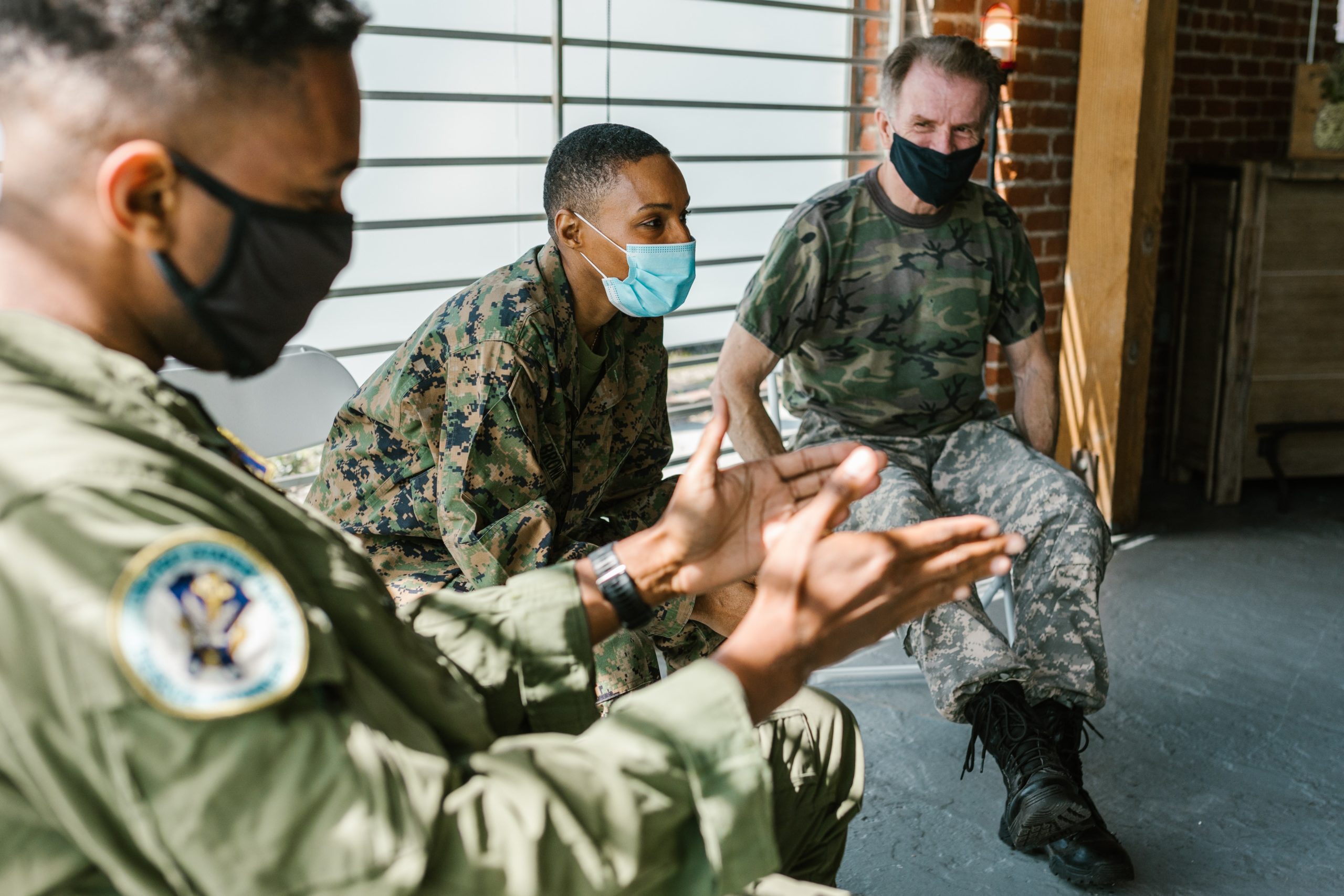
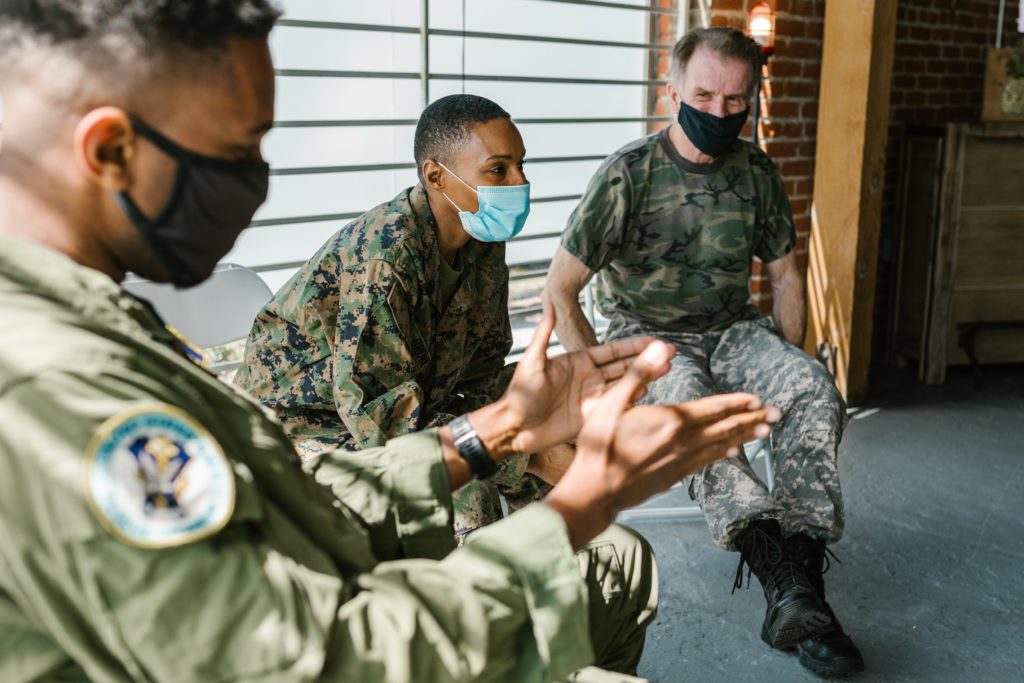
    Group therapy for combat veterans suffering from PTSD

    Lately, there’s been more work exploring fear and memories of fearful experiences, and how to erase those memories…or at least make the memories weaker. Those memories play a big role in anxiety, PTSD, and bipolar disorder. We talked about AKT. Now, a team of researchers at Texas A&M University led by Stephen Maren, Ph.D. recently published their work in Nature Neuroscience, and used prolonged exposure therapy in an effort to extinguish to erase or weaken conditioned fear response memories.

    These methods often work well for awhile…but in time about 50% of patients relapse and over the long-term the fear memories take hold with a vengeance.

    Briefly, the way these therapies work is to repeatedly expose you to situations, sounds, or other associations with the trauma, over and over and over… with the hope that, in time, the trauma is no longer triggered.

    But, unfortunately in many patients, remission from PTSD doesn’t last.

    So, knowing that these efforts don’t prevent relapses in some patients, Dr. Maren and his team have designed innovative experiments (in rodents) so they can test the possibility of disrupting the original fear memory… this is the memory that we think starts all the suffering in a person who develops PTSD. 

    How do you disrupt a memory?

    Because here’s the thing. The memory forms at the moment of the trauma…or in the 4-6 hour window that follows. This is a crucial time period.

    Keep in mind that the 4-6 hour period from the moment of trauma or shock is the period of memory consolidation, or when the memory forms.

    These skilled researchers sought to intervene during the period of time when memories are recalled due to a key stimulus …like a car backfiring… that might trigger a traumatic fear memory of assault, or combat…or a vehicle crash. This little window of time after a sound or other stimulus in the environment triggers the traumatic memory is called re-consolidation. The stimulus can result in reaction behavior… like hiding under a table… or striking someone nearby… or grabbing a weapon.

    Think of triggering memories by this method, like noises, as indirect retrieval. 

    Extinguish PTSD fear with erasing a conditioned fear response.

    But keep in mind that retrieving memories this way – by indirect retrieval – can help retrieve the traumatic memory but without an attempt to manipulate or otherwise change the original memory. The researchers’ intention is to retrieve that person’s response to it. To weaken or erase a conditioned fear response.

    …So back to the rodent experiment.

    Backward conditioning was a key intervention the team used.  It’s a unique and fresh method to get the rodents to retrieve their own trauma — a conditioned, context-dependent fear memory….without the subject being aware of the experience.

    Ok, so this is where it got reeeeeally interesting.

    With all this accomplished, they were facing 2 questions:

    1) Could they use neural tracing technology to identify basic circuits that were activated in this process?

    2) Could they intervene in such circuitry to see if they could alter the process of memory re-consolidation..to the extent they could alter or eliminate the fear memory and its potential to negatively impact behavior.

    Then, the team switched on cells in the hippocampal fear memory circuit, which caused the rodents to “freeze” because of prior conditioning to react with fear. 

    And, in the final stage of this experiment, the team used rapamycin to disrupt this particular circuit associated with conditioned fear memory. (Rapamycin is used to coat heart stents and to prevent rejection of transplanted organ tissue. Weird, huh? )

    Rapamycin interrupts the neuron’s ability to produce proteins that are necessary for the circuit to function. As a result, the inclination of the rodent to freeze in fear is weakened or erased altogether.

    And it worked. And they did succeed in associating fear memory reconsolidating with circuitry in the hippocampus. They did it!

    Basically, these researchers successfully interfered in a circuit to change an original fear memory… which is what begins and is key in trauma-related conditions like PTSD. By forcing the circuit to “forget” the fear, the “freezing” behavior can be weakened or erased completely.

    Like, gone.

    If you or someone you love suffers from PTSD… a painful fearful memory, that’s triggered by little noises, a sight or smell or other cues, this can be life-changing.

    Such an important step toward developing a new way to treat PTSD, or perhaps even substance or alcohol use disorders. Cues that trigger relapse might feasibly be interrupted in the circuit, to prevent it. 

    Heady, exciting stuff!

    Thankfully, as we watch this development unfold, we have IV ketamine treatment NOW. IV ketamine treatment that’s effective in treating PTSD, substance use disorder, alcohol use disorder, social anxiety… all cue-related conditions. And of course, it is robustly effective for treatment-resistant depression and bipolar depression, and there is new exciting evidence of how ketamine is effective in teenagers.

    It’s encouraging to see how research is exploding as we continue to seek treatments that can resolve devastating relapse and suffering.

    At Innovative Psychiatry, we are meticulous about our outcomes, present our data at scientific meetings, publish our own findings in peer-reviewed journals, and stay up nights and weekends reading. We are on the cutting edge for breakthroughs in psychiatry and neuroscience. You deserve to be treated by experts dedicated to excellence.

    If you suffer from any of these conditions, you would probably like some support, some help, and probably some treatment. We’ll schedule an appointment for you to come in and talk about your history, your current difficulties, and the possibility that you might be a candidate for IV ketamine treatment. We won’t be able to make a judgment about that until we talk.

    If you’re a candidate, you can come to our practice with confidence that you’re safe even in this ongoing pandemic. Our plasma cell technology for removes 99.99% all viruses, bacteria, and molds from our air and surfaces means you can relax and focus on your treatment… and getting better.

    Better days are ahead for you to live, dream, build, and hope.

    We really want that for you. And we’re ready to help.

    Lori Calabrese, M.D. is on the front end of the race to stop PTSD in its tracks using IV ketamine treatment.

    To the restoration of your best self,

  • Suffer from Postpartum PTSD?        Ketamine Can Bring Back Your Joy

    Suffer from Postpartum PTSD? Ketamine Can Bring Back Your Joy

    We say that childbirth is utterly natural. But the experience of giving birth doesn’t always go as planned. Sometimes there are surprises, disappointments, unexpected changes, fears, and excessive pain.

    A terribly painful labor or delivery can become a traumatic memory for a postpartum mom. Loss of the baby during the process can also create an unbearable trauma for the mom. Especially in situations where the infant doesn’t survive, the mom can be so deeply affected that the smell of baby powder or lotion can trigger a cascade of PTSD symptoms. Or the cry of a newborn baby. Mothers who suffer from postpartum PTSD can have severe reactions to triggers for months after delivery.

    Leanne has five children.  The first four of her deliveries were increasingly traumatic. In one case, the baby’s head was lodged at the side of the pelvis and after hours of pushing with no progress, she was moved to surgery for a C- section. This was the fourth delivery.  More about that one in a bit.

    With the first, she labored for 38 hours and when the baby was finally born, she tore through her rectum. Bonding with her baby didn’t go well, because she was in so much pain. Plus, she felt beat up, traumatized, exhausted, and unable to find any warm feelings for her newborn. (And too ashamed of this to say it out loud.) Eventually, over months, she began to improve.

    But within 7 months of that birth, she found out she was expecting again. She sat down and cried. She didn’t feel ready. The pain in her rectum had only recently subsided.

    Then, the circumstances of her second baby’s birth were also excessively painful. (We’ll leave out the details.) She began to feel like she just had terrible luck… or just wasn’t supposed to be a mother.

    From that time, she cried anytime her husband tried to touch her.  She couldn’t separate the suffering of the two births from amorous times with her husband. Leanne couldn’t face the risk of another childbirth. One day she was so angry, she slammed the dishwasher door hard over and over, then sat down and cried.

    Leanne’s husband quietly slipped out of the house and bought a new set of dishes.

    Leanne talked with her doctor, and he said that she suffered from Postpartum PTSD.

    Then, one day Leanne and her husband went to visit friends for a backyard cookout. They took the babies with them and really had a wonderful day. That night, they were both relaxed, and enjoyed cuddling. One thing led to another…

    And soon enough, Leanne was pregnant with her third child. She’d been in therapy for 2 years at that point, so she was guardedly optimistic…but on shaky ground.

    This time, unfortunately, the crisis was placenta previa… specifically the placenta was overlapping the opening of the womb to the birth canal.  Once she began to dilate, portions of the placenta broke free, causing a rush of blood loss. She started to hemorrhage.  She panicked, called her husband, called her doctor, called her mom. ( If only she had called 911…but she was too shaken to think clearly.)  Of course, her husband was on his way, and told her to call 911 NOW.  She called 911 then called a neighbor to come stay with her little toddlers. She was rushed to the hospital, unconscious when she arrived. Doctors went to work hoping beyond hope they could save both mother and child.

    Thankfully both mother and child survived, but again, Leanne was exhausted, shaken, and shut down. She just couldn’t relate to the baby.  She was overwhelmed with guilt that her mistakes had come so close to causing the baby’s death. 

    Even though Leanne and her husband were committed to living a natural lifestyle, and had never used birth control, she just felt she couldn’t go through this again.  But he stood strong about not using birth control. So she used the best form of preventing pregnancy she could think of. Anytime her husband touched her or was affectionate, she pushed him away…or sometimes she just fell to the floor in a heap, weeping her heart out.

    She had times when she just began to tremble and couldn’t stop. One day she dropped a jug of milk that spilled and splattered all over the kitchen. Then she had to pull herself together to clean it up. Who else would?

    By this point, she tried to be a good mom to her innocent babies, but so much of the time she felt vacant. Other times she felt angry. Then, there were times when she had such anxiety that she didn’t dare drive, even to the grocery store.

    If you suffer from postpartum PTSD, ketamine treatment can help.

    She managed to avoid pregnancy for two years. Her marriage had become volatile. She just couldn’t be calm to communicate with her husband. Everything was falling apart.

    Her husband suggested they let the 3 kids stay with Grandma and Grandpa, so they could take vacation to somewhere peaceful. They took a week in Jamaica. It was wonderful with swimming, great food, walks on the beach, and local music. (And those drinks with umbrellas! She loved them!) So many sites, smells, and friendly people. They both believed this was just what the doctor ordered.

    On their 5th night, they danced to local music, and drank more umbrella drinks than they realized…  They found their way to their room and collapsed in bed. The next day neither of them remembered how they got there. In their inebriated state, their celebration led to baby-producing activity. So rare for them, at this point.

    You guessed it…baby #4 was on the way.

    Leanne home-schooled her children, so by now she was doing lessons with babies #1 and #2.

    At least on the days she was functioning. But her anxiety was pretty high.  How could she take care of these children when she was so shaky?  A few times during the pregnancy she experienced a panic attack. Her therapist was working with her to help her work through the anxiety.

    Bless her heart. This was the delivery we mentioned earlier. The baby’s head seemed to be stuck to the side in her pelvis and they couldn’t get the baby to move into the birth canal. It was the last straw for Leanne. She had a full out panic attack during the latter portion of her labor. She was standing up in her bed and screaming and crying. No one could calm her. She just wasn’t rational. She was terrified. So they did an emergency C-section after putting her sleep.

    When she emerged from the anesthetic, she was disoriented, surprised to learn her 4th baby was born and doing well in the nursery.  Her doctor encouraged her to rest before they brought the baby to see her. But she just withdrew.

    Leanne had had dreams of being such a natural “earth mom” …she’d started out wanting to give birth to her children at home. But each childbirth had been too risky to continue at home. She felt cheated. Angry. Beaten. Each labor and delivery was a nightmare.

    All her plans for meaningful home births had been vanquished. She knew she suffered not just from postpartum depression but from postpartum PTSD … and she just didn’t know what to do about it.

    Her doctor had advised Leanne and her husband to consider a tubal ligation during this C-section but she had been far too distraught for a decision like that. So he encouraged them to consider it later, to give her a chance to  recover.

    While they were “thinking” about it, she got pregnant once again. She told her doctor she definitely wanted the tubal ligation done during her final C-section. As it happened, this 5th birth went smoothly as a C-section, and the tubal ligation was completed in the same procedure.

    She was able to bond with her new baby peacefully, and she enjoyed him so much. 

    A wonderful, simple, easy, planned C-section — with no crash carts, hemorrhages, horrible images, horrible fears, horrible pain. Why couldn’t it replace all those awful memories? Why did they shake her up during the day, and infiltrate her dreams at night? And why did every little thing seem to be a trigger? The kids were healthy, right? They were OK, right? She was OK, right? Well on that one, no…she was really not ok. She still suffered from postpartum PTSD symptoms — and all the treatment she had had over the years hadn’t made a dent in it.

    So when a friend encouraged her to consider IV ketamine treatment, Leanne grabbed her phone, and started trying to learn what ketamine can do for postpartum depression and postpartum PTSD. She made the call.

    Scheduled her appointment. And left the children with a babysitter. 

    After the first infusion, she felt no different. Same after the second. After the third she decided to cook a new recipe for supper. Such a little thing, right? But it was such a big deal—she hadn’t done that for months. (Ketamine can restore initiative and motivation.) After the fourth, she could feel rays of hope inside her. Almost like rays of sunshine, she said.  By the time she went for the 5th infusion, she was calmer. No longer shaking. And although there was still anxiety, she was becoming hopeful. She had good days and bad days. But there was improvement. She could feel it. She just wasn’t there yet.

    So she went for a 7th infusion…and then an 8th. By this time she went for her 8th infusion, she had joy. She felt free of the fear and anxiety.  And as the days passed, she felt more resilient all the time.

    She became her old self over the next several weeks — felt happy, calm, fun-loving. (Oh wow, when was the last she she’d felt that?) She had patience with her children, she had creativity in home schooling them, she enjoyed socializing. She also had the initiative and motivation to clean up the house and invite another couple with kids over for dinner — outside, on the patio. 

    Leanne hadn’t felt this good since her first baby was born.  

    If you suffer from postpartum PTSD, try ketamine treatment. This mom found her joy again after she did.

    She also found the patience, wisdom, and determination to work with her children in family therapy in hopes of improving their security with her and building the bonds that suffered with these pregnancies and deliveries. 

    And she was thankful that her husband was still at home so they could work together with a marriage counselor to strengthen their relationship.

    IV ketamine treatment has developed a track record for helping women who suffer from postpartum PTSD to achieve remission. Choosing to seek out this treatment was a wise move for Leanne to make. At the same time, it’s important that you understand that ketamine is not for everyone. (There isn’t anything that works for 100% of people 100% of the time.) But ketamine can be transformative for most people who are suffering from severe postpartum PTSD, depression, social anxiety, bipolar depression, postpartum depression, and more.

    Innovative Psychiatry provides IV ketamine treatment for postpartum PTSD.

    At Innovative Psychiatry, we’re experts in psychiatry, in postpartum disorders, and in all the treatments available for them—including IV ketamine—and we work with you to map out the best course of treatment for you. We have the protocols and — incredibly important — the technology to protect you from viruses including COVID-19, bacteria, and molds, so you can come for your treatment with peace of mind. You can breathe easy…even if you haven’t for months.

    If you suffer from postpartum PTSD, don’t keep toughing it out. Call us.

    We’ll set up an appointment to talk about your history and current symptoms and all the things we need to know to determine if you’re a candidate for IV ketamine treatment. You deserve the care of a specialist.

    Don’t hesitate to call. Get your hope back. And the power to enjoy your family.

    We want to help.

    Lori Calabrese, M.D. is on the front end of the race to stop PTSD in its tracks using IV ketamine treatment.

    To the restoration of your best self,

  • Postpartum Stress Is Vicious: Reach Out for Support…It Takes a Village

    Postpartum Stress Is Vicious: Reach Out for Support…It Takes a Village

    Do you have a COVID baby?  If so, you’ve had compounded stress.

    Most moms are familiar with the exhaustion (and the overwhelm!) that often takes over when your newborn comes home from the hospital. It isn’t as though you were sleeping great before you went into labor.  Then contractions started and progressed to active serious labor. Then the hard pushing. Bottom line, giving birth is hard, hard work. You think you just can’t wait till the baby is OUT of your body so you can finally sleep.  WAKE UP CALL!!! Actually, once baby is outside your body, she’s adjusting too.  So she cries.  And cries. What can you do but nurse her till she drops off to sleep… until 30 mins later she wakes up in your arms crying again. So you put her back on the breast. And then it starts. And a challenging pattern emerges. Baby feels warm, secure, and happy when she’s nursing. Then, bereaved when the nursing stops. And you? Stressed to the max. Postpartum stress can be persistent if you’ve had a COVID baby…and even if your baby was born before COVID.

    The trouble with that is that anxiety can shoot up when baby nurses, wakes, and nurses some more. Because you want some sleep… you NEED sleep.

    And when anxiety rises, it’s hard to go to sleep. Your mind just keeps racing.

    So what do you do?  You call your mom, your sister, or your best friend to come and walk baby while you get some rest. And that’s not all it’s cracked up to be either, because you lay on the bed, wide awake….staring at the ceiling…worrying about the baby. 

    This is especially true for first time moms who so want to be perfect moms in every way but hadn’t counted on exhaustion and stress making you miserable. In fact, postpartum stress can be especially brutal for moms who try to be perfect.

    Try to relax and let go. Perfect moms don’t exist. Cut yourself lots of slack and call in help when you feel like you’re at the end of your rope. Don’t keep pushing. Because you just have to break the stress cycle periodically.

    And kick guilt to the curb!

    This is also true for moms with a baby/toddler and other children…. it can be so hard to cover all the bases of everyone’s needs. Plus laundry, cooking, baths, keeping the house picked up after you’ve been up all night with the baby.

    And You Wonder…Where Can You Find Postpartum Stress SOLUTIONS?

    Parenting books are full of advice about how to manage your baby AND your other children when there’s no one to help. (Ha! is what I said when I read them, on baby #4.) But, when you try to put their advice to work…well it’s not as easy as it sounds.

    Postpartum stress is that midlevel and escalating stress that occurs after the baby blues but before postpartum depression takes over.

    If relief isn’t found, postpartum depression can settle in.

    FAST FOWARD 10 months…

    You finally got the baby into a schedule where she sleeps several hours each night and you depend on that chance to rest.  Then you go on vacation. (Ha! they say it’s a vacation….) The changed vacation schedule disrupts baby’s schedule and she starts wanting to find comfort in constant nursing again.

    By the time you get home from your trip, you’re exhausted again. And not sleeping. And you’re crying more than baby. Sound familiar?

    Stress plus exhaustion is a devastating combination.

    First, understand that babies are individuals with temperaments unique to them. Some are easy going, relatively relaxed, and honestly, some seem almost self contained. Moms with babies like this have no idea why you’re so stressed. So ignore what those moms say. Right??

    Some babies are “high need” and may require lots of patience.  This type of baby may also be colicky, and as the saying goes, it takes a village. To walk her, to soothe her, and to give you a break to rest and breathe.

    You always hear that childbirth is a natural part of life…and it is. But it’s still a huge strain on your body and emotions. If you don’t have support, it can be difficult to recover.

    And women who don’t receive support during childbirth have a harder time recovering from it. They can continue to struggle for weeks or longer. In fact, a study by researchers led by CT Beck found 18% of American moms reported symptoms of PTSD. We call that postpartum post-traumatic-stress-disorder –really!–and we’ll be talking about that, soon.

    What is postpartum stress anyway?

    It’s like this…when something goes on that sets you on edge, but it doesn’t happen just once…or twice. It happens all the time, all the time. Like a baby crying incessantly…or children screaming because they’re mad, The longer this cacophony goes on the more it strips your patience…your ability to cope…to endure. And it goes on and on, day and night, week after week after month. It goes from acute stress to chronic stress… postpartum stress.

    When this happens, think of it as wearing down the synapses — those connection between neurons in the brain that help messages go from one part of the brain to the other. Those synapses can break down. The dendrites and dendritic spines also break away. You can think of it as pruning, like you do to a tree. But in terms of synapses, this is not a good thing. As those synapses break down, the connections between neurons are lost. And what’s left is a depressed mood. Anxiety. Misery.

    Postpartum Stress Needs to be Relieved

    Whether by natural means of relief and support, or by a remarkable treatment. Because left untreated it can easily advance to postpartum depression, a more dangerous condition.

    What it comes down to is that you need all the synapses you can get in the right parts of your brain so you can be resilient and not defeated. So you can embrace challenges as they arise.

    This is why it takes a village. Because you must have support from grandparents, friends, family, and as your baby grows older and is easier to manage, you can help another young mom.  

    But what if postpartum stress has resulted in damage too extensive for you to find the relief and resilience you need just by taking a nap, or walking and relaxing while someone else cares for baby?

    Well maybe that’s where IV ketamine treatment comes in.

    Nothing restores resilience like IV ketamine treatment. Nothing restores those synapses as thoroughly or as fast as IV ketamine treatment. For so many. Because ketamine restores resilience by restoring those synapses, by causing mRNA to flip on DNA to turbo boost brain-derived-neurotrophic-factors. By moving those G proteins off the lipid rafts to get those neurotransmitters revved up to do their job. By stopping the cell bursting in the lateral habenula… all these things working together to help you feel up to the tasks before you… Full of initiative, the motivation to do what needs to be done, and the hope for making your life rewarding again.

    Postpartum Stress Disorder can be overwhelming so reach out for help.

    At Innovative Psychiatry we’re in place to meet you here when you arrive for ketamine treatment. Because if you want to rise above the hopeless and dark listlessness that is overshadowing your time with your baby, we’re here to help. And for the safety of you and your baby, and the confidence it brings, we’ve outfitted our offices with a space station technology developed by NASA to remove 99.99% of the viruses, bacteria, mold, and pollen from the air and surfaces in our office.

    We keep the door locked so that only those who have been scheduled to be there will be there. You can feel safe here.

    We’re here to help you get better, feel better, and have the power to enjoy your baby, and your family. To have the power to face the challenges with resilience.

    Take affirmative steps to find out if you’re a candidate for IV ketamine treatment. Call us.

    We’re here to help.

    Lori Calabrese, M.D. is on the front end of the race to stop PTSD in its tracks using IV ketamine treatment.

    To the restoration of your best self,

error: Content is protected !!