
Tag: IV Ketamine for Alcohol Use Disorder

  • Why Are Young Girls Turning to Suicide?

    Why Are Young Girls Turning to Suicide?

    Why are young girls turning to suicide?

    It’s a heart-shattering tragedy when a child dies.

    How do you bear such tragedy?  …such loss? The waste of a beautiful life…it defies our logic to find reason in it, or to try to make sense of it. But what about when that young child kills herself? Why are young girls turning to suicide?

    It’s impossible to grasp. You’re left with the most engulfing sense of powerlessness. And loss…

    And it’s heartbreaking to say this horrific tragedy hasn’t happened just once. The numbers are growing.  And all too fast.

    It’s always been more common for boys to commit suicide than girls, but the number of girls who end their lives is rapidly rising to close the gap. But let’s be real…any child’s suicide is devastating. And any suicide is, too. We’re talking about suicide in little girls, teen girls, and young women.

    You wonder why.

    Why Are Young Girls Turning to Suicide?

    The specific reasons haven’t been studied yet, but Christine Moutier, Chief Medical Officer at the  American Foundation for Suicide Prevention, stresses that multiple factors play a role in suicide. Still, she suggests that a significant contributor may be social media.

    And more specifically, cyberbullying on social media.

    So even though we know that friendships are a high priority to young teens, and the way children and teens socialize is largely centered in social media, it’s also a source of isolation, cruelty, and bullying.

    At the age of 10 or 11, many children just aren’t prepared to withstand the verbal and emotional assaults they experience there.

    Now, let’s take it a step further.

    Since an ounce of prevention is worth a pound of cure, how can these painful social media experiences be prevented for young girls? Let’s think about that.

    Maybe there’s wisdom in postponing children’s online presence..?

    Why are many young girls turning to suicide.

    A study presented at the American Pediatric Association in 2017 focused on cell phone ownership and cyberbullying in 8-11 year olds. Researchers collected data from surveys with 4584 children of this age group between 2014 and 2016.

    They found that 9.5 % of these children who own cell phones had been cyber-bullied.

    Nearly 50% of the children surveyed reported owning a cell phone. Throughout this age group, there were more children who owned cell phones who also participated in cyber bullying than those who didn’t own a cell phone.

    So, again, while cyberbullying is not the only factor influencing the rising incidence of suicide among young girls, it’s an important factor…and one parents can do something about. 

    Extensive lessons on the responsibility and etiquette of owning a phone might be the obvious first step. Teaching morality and ethics to your child around the use of the phone should be an imperative about treating others with dignity and respect — whether face-to-face or online.

    Two world leaders of technology held a healthy respect for the power of online presence, as well as its dangers. The late Steve Jobs limited his own kids’ use of screen technology, and would not allow them to use an iPad when it came out.  

    Bill Gates and his wife did not allow their children to have cell phones until they reached the age of 14. 

    You may not realize the problems your daughter faces can drive her to consider suicide, but they can. So ask her often.

    Michael Cheng, a Canadian child and family psychiatrist, says that smart phone use at a very young age is damaging to developing brains. Damaging. The constant stimulation from the screen draws dopamine hits easily. This short-cuts the reward center and sets the stage for addiction to those rewards. 

    How much easier is it to stay online, play games, text back and forth for those rewarding bumps of dopamine, than to go outside, play ball, go fishing, ride bikes … to get the same amount of reward. Why work for that reward if you can get it without leaving your chair?

    Dr. Cheng also points out that children learn social skills face-to-face in real life settings. They learn how to read expressions and develop empathy, how to respect friendships and respect themselves. 

    If their social interaction takes place digitally, they miss learning the nuances of human interaction, while learning to rely too heavily on the acceptance of others online. 

    They need fresh air and sunshine, imagination and play, camaraderie and boundaries so that their brains develop well.

    So, with that said, let’s consider children who end their lives. Children who are bullied at school and online.

    Why ARE Young Girls Turning to Suicide…? And What Can Be Done?

    Suicide is the second leading cause of death in people between the ages of 10 and 34. Suicides have replaced homicides as the second leading cause of death in teenagers. While more boys than girls end their lives, more girls describe thinking about suicide, considering it, and attempt it.  

    You may be familiar with the story of 9-year-old McKensie Adams who hung herself after enduring a year of bullying by other students…  After reporting this abuse to parents, teachers, and a vice principal, she found a tragic solution. At 9.

    Or maybe you heard about 10-year-old Ashawnty Davis, who defended herself in a physical brawl on school grounds as part of an extended bullying campaign. Someone videoed the altercation, and the video went viral. Two weeks later Ashawnty hung herself in her closet.

    Or 10-year-old Kevin Reese, Jr., who hung himself in a closet when he reached his limit of bullying at school.

    These are just the stories in the news. Stories that have received wide attention. As well they should. But there are so many more that are the grief of a school and a family wherever they happen.

    Watch for the Signs

    Here are some warning signs to watch for: Is your child feeling overwhelmed with school work? Is she experiencing cyberbullying? In fact, if she’s spending much time on social media she may be increasing her risks… Are there problems within the family? And is she faced with bullying? (or is she being a bully?)

    It turns out that some children who have been bullied become a bully themselves. Either behavior adds to their suicidal risk.

    Why are young girls turning to suicide?

    You, her parent, need daily input from your child, including really listening and responding. They must know they have your support. Isolation can be a killer.

    These girls reported they were subjected to bullying for long periods of time — but maybe they felt they had to be strong and endure it when nothing changed..? 

    When people in authority didn’t intervene or make them feel safe, these girls —who were happy at home — made a plan and died. Some left notes for their parents, some didn’t. So maybe this is a part of the answer to that question, “why are young girls turning to suicide?” Maybe they thought it was the only solution left.

    These Children and Teens Need to Be Reminded We Have Their Back

    This is an age when bullying has become the norm. Children are bullied for their race, their faith, their name, their clothes, their friends, their car, their food, and their health.

    In most cases, the children doing the bullying are often releasing tension from their own private lives. And are quick to say they never intended for their victim to want to die.

    So it’s the parents and teachers who are their best advocates. Be sure there is a record of your report when you inform the school of any bullying you hear about from your child. Prepare yourself for mediation with the other child’s parents so that child’s parents can participate in resolving the problem, as well as teachers, counselors and maybe even a principal.

    Be aware that the problem of bullying is rampant. And the rise in suicides, especially among girls, is nearing epidemic proportions, so we just mustn’t assume all is well.

    Pay close attention to your child and her/his responses to what happens at school or in the neighborhood. Be aware that children do look for escapes from their pain if they can’t find a solution to their situation on their own or by reporting to people in authority. 

    Get Ahead of the Potential for Problems

    Do be proactive…Don’t assume that things are taken care of at their school. In many cases where a child died, the school had no report of bullying on file. You’re the best advocate your child has. Be involved, engaged, and stay in touch to ensure there are remedies put in place for the bullying. 

    The most important thing you can do is to encourage open discussions every day with your child about what she’s facing. So you’ll always know when something is going wrong. 

    As we said before, this applies to both boys and girls. There are still more boys ending their lives than girls, and all children need to feel safe.

    So why are young girls turning to suicide? Maybe sometimes it’s because of what’s happening to them.

    Suicidal Thinking Can Be Treated Before It’s Too Late

    Here at Innovative Psychiatry, we treat teens who who are plagued by suicidal thinking with IV ketamine treatment when they’re as young as 14. You should seek the care of a child psychiatrist for your child who’s younger than 14 and who’s struggling with these thoughts.

    IV ketamine can stop suicidal thoughts or plans within a few hours. Sometimes much faster.  It’s a way to keep your teen safe from suicide while you have the time to help him or her sort out whatever is going wrong at school or at home or inside.

    When a child feels safe she grows to a teen who feels safe, then grows to a happy woman, because of her parents' support.

    Even though we don’t treat children in this practice, the bully/suicide trend in children is alarming and heartbreaking. We need to be aware that children are facing things now that earlier generations didn’t. This is even being called “bullycide” in some communities. 

    If you (or your family member) suffers from the torment of suicidal thoughts, call us. Let’s work together to help you find peace from those thoughts, a renewed hope, and give you the opportunity set order in place in your life. 

    You can feel safe again, and experience joy again, and find the motivation and initiative to build the life you want to live.

    Lori Calabrese, MD offers innovative psychiatric treatment like IV Ketamine

    To the release of your best self,

    Lori Calabrese, MD


  • A Bit of Bipolar Science and a Dab On Schizophrenia, Too

    A Bit of Bipolar Science and a Dab On Schizophrenia, Too

    Like other disorders of the brain and mind, bipolar disorder is complicated. 

    With all the movies and cartoons made at the expense of people who suffer from disorders like this, we want to help more people know more about some of the facts with a bit of bipolar science.

    It’s different for each person. The length and intensity of manic episodes, the distribution of time from one end of the spectrum to the other. How hallucinations and delusions fit into the mix. These symptoms are individual.

    It’s physical. It can shake and shatter your body, through intense and sudden swings from one extreme to another. 

    Plus, it can cause such unexpected assaults on your emotions that your body is exhausted. Those swings can feel almost like a convulsion at times.

    It can also create sensations. Some people with this disorder complain of feeling like they have fire ants on their brain. Of course, there are no insects involved. But the disordered circuitry creates a sensation in some cases.

    And it’s mental. It changes your perceptions of what you see and hear. By coloring the way you interpret what happens, it tattoos that impression deeply in your memory. It can distort your view of yourself, and marinate your thoughts in shame. Then it can turn on the firehose of pain and rage, until you’ve experienced such extremity of horror, you can feel like you sweat blood.

    But, that’s not all. Bipolar disorder also seems spiritual, sometimes pulling you into its dungeons of horror until you lose all connection to your own spirit. Righteous indignation can morph to revenge. A little anxiety can billow until it’s a life-threatening terror.

    And yet, this disorder can be all of these things, or it can be none of them. OR… you can begin with these experiences, then medication can help them melt away. OR… there may be no medication that mitigates them at all.

    What you can’t know when all that is happening, is that specific changes in your brain cells are translated to the violent swings and misery you face in your daily life. You may find yourself craving a bit of bipolar science to try to gain perspective about what’s happening to you.

    To help reduce the stigma surrounding bipolar disorder, and the behaviors of people who suffer so deeply from it, let’s look at a tidbit of breakthrough science related to the spectrum of “bipolar disorders.”

    A Bit of Bipolar Science…

    You’ve heard of the blood-brain barrier, right? Relatively few people outside the medical field have any remote idea what that is. So if you’ve heard of it, consider yourself “in the know.” Kudos!  

    OK. There are two types of blood barriers in the brain. One is the blood-brain barrier, or BBB. The other is the blood-CSF barrier. And that’s the one we’re going to talk about now.

    So the blood-CSF barrier keeps the blood and whatever is in it separate from your cerebral spinal fluid (CSF). Since the CSF is constantly washing the brain tissues, it needs to be free of contaminants, toxins, or components that are harmful to the brain’s delicate circuitry and structures.

    The CSF performs a couple of primary functions.  One is to cushion and protect that most vital organ – your brain – that keeps everything else humming along. And the other is to keep the toxins in your brain and spinal cord flushed out.  

    CSF and the Choriod Plexus

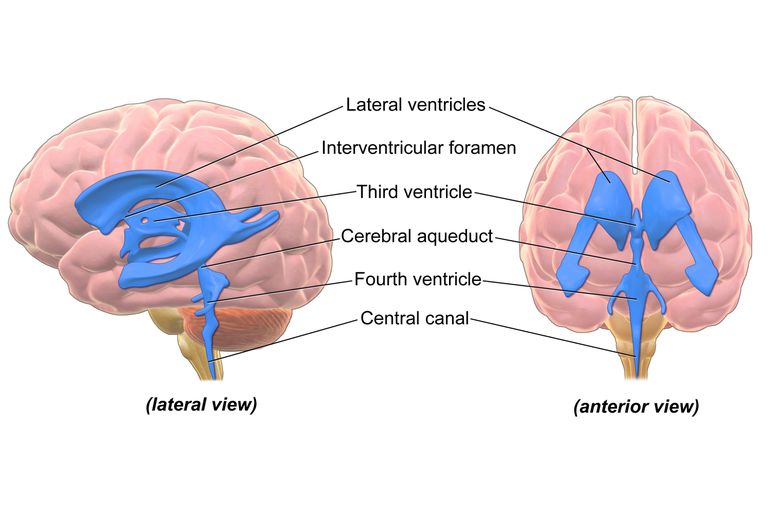
    But…Where does the CSF come from?

    BruceBlaus Wikipedia Commons

    So glad you asked. The choroid plexus produces this most vital and beneficial fluid. There are special cells that secrete it, and other tissues absorb it.

    Because the ventricles of your brain can handle 150ml of CSF at a time, but the choroid plexus actually makes 450ml a day!  Clearly, as it circulates, it also is absorbed or drained off and replaced by more. 

    This keeps your brain cushioned and protected by fresh CSF at all times.

    If the choroid plexus makes too much CSF, and if the pathway for draining off excess become blocked, then the amount of CSF in the brain can increase dangerously, increasing pressure in the brain. And a condition known as hydrocephalus can develop, along with the risk of brain damage.

    By the same token, if the choroid plexus makes too little CSF, the brain cannot function. And the cushion it provides to help it remain buoyant within the bony chamber of the skull is inadequate.

    So there’s a need for balance between the CSF, the cavities in the brain, and the circulation of it.

    About Psychosis

    So let’s talk about how the choroid plexus relates to schizophrenia and bipolar disorder with a bit of bipolar science.

    There are four cavities in the middle of the brain called the ventricles. The CSF washes and cushions the brain all around, and is produced and distributed from choroid plexuses in these ventricles.

    New Research

    Newly published research sponsored by Brain and Behavior Research Foundation (BRRF) has directly linked the size of the ventricles with psychosis. While the size of ventricles is not specifically correlated to schizophrenia and bipolar disorder, the volume of the choroid plexus is significantly larger in subjects with psychosis.

    In addition, these researchers found that the volume of the choroid plexus in siblings, parents, and children of those with psychosis was less than the affected individual but still significantly larger than those unaffected by psychosis in their family. This demonstrated that the volume of the choroid plexus is something one inherits to a large degree.

    But here’s the big news.

    They found that when a subject had a larger choroid plexus, they also tended to have lower cognition, less grey matter, a smaller amygdala, larger ventricles, and fewer connections between neurons. 

    All of these things can be connected to the pathological processes that cause psychosis. 

    Now that’s news.

    But there’s more.

    That increased size in the choroid plexus in subjects with psychosis was also associated with increased levels of interleukin 6 (IL-6). IL-6 is a signaling cell in the immune system. 

    So here’s the rub.

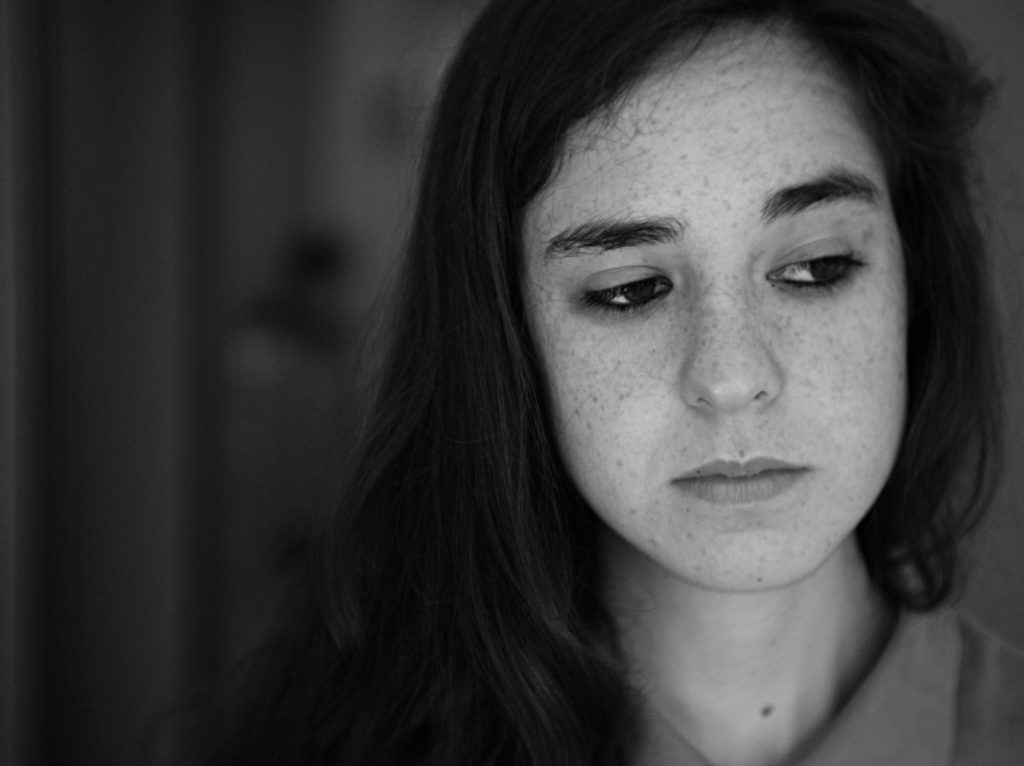
    A bit of bipolar science helps this woman understand her terrible depression at least a little.
    IL-6 can penetrate and seep through the protective barriers between the brain, blood, and CSF.  Since researchers know that IL-6 is a strong suspect connected to bipolar disorder and schizophrenia, the identity of the gang of thieves behind psychosis – you might say – seems to be emerging. Add to that the connection between IL-6 and the reduced amount of grey matter in the cerebral cortex, and the case just grows stronger.

    “Our findings suggest the involvement of the choroid plexus across the psychosis spectrum, with a potential mechanism involving the neuro-immune system, which functions in regulating the brain and interacting with the body’s immune and inflammatory systems,” the team concluded.

    If you struggle with bipolar disorder, schizophrenia, or episodes of psychosis, you may appreciate the work of these researchers that sheds more light on what happens in the brain causing these difficult episodes.

    Neuroscience researchers are making great strides in learning more than has ever been known before about the symptoms of these disorders. And the more we understand, combined with a bit of bipolar science, the more research will lead to better treatments.

    No matter what your difficulty, whether you struggle with bipolar disorder, PTSD, social anxiety, severe depression, or even thoughts of suicide, we may be able to help. IV ketamine treatment is emerging as a dramatic game changer for people who suffer from specific types of symptoms. And happily, the types of symptoms keep growing in number.

    But if you think you’d like to know if IV ketamine treatment might help you, please call us. We’ll help you find out if you might be a candidate for ketamine…because some people aren’t. But if ketamine is for you, you can experience a transformation in your own life.  

    While ketamine isn’t showing promise for psychosis, it can bring remarkable relief to your depression symptoms. Every little bit helps, doesn’t it?

    Since bipolar depression can be the most debilitating symptom for many patients, resolving the depression in your illness can make your life so much more manageable.

    As research learns more, we’ll be right there using it to help our patients. Our whole purpose is a better life, and more hope, for you.

    Lori Calabrese, MD explains esketamine FDA approval and what it involves.

    To the restoration of your best self, 

    Lori Calabrese, M.D.

  • CT doctors using new nasal spray to treat severely depressed patients

    CT doctors using new nasal spray to treat severely depressed patients

    By Peggy McCarthy, Conn. Health I-Team Writer Published 11:51 am EDT, Tuesday, August 13, 2019

    Some Connecticut hospitals and doctors and a clinic are starting to treat severely depressed patients with a new nasal spray called Spravato, touted as the most significant federally approved depression medication since Prozac was approved in 1987.

    Spravato, which received Food and Drug Administration (FDA) approval in March, has raised hopes for preventing suicides and relieving depression after other treatments have failed. But there are concerns about possible side effects, including drug abuse, elevated blood pressure and heart rate, sedation, and hypersensitivity to surroundings.

    The nasal spray is prescribed for treatment-resistant depression after at least two other antidepressants haven’t worked and is given with an oral antidepressant. It is only administered in restrictive clinical settings to reduce potential for abuse and side effects.

    Nationally, of the 17.3 million adults with depression, one-third are treatment-resistant, increasing their risk of suicide.

    Yale New Haven Hospital, the Institute of LivingUConn Health John Dempsey Hospital, Wheeler ClinicVA Connecticut Healthcare, and Dr. Lori Calabrese in South Windsor report that they have either started or are planning to offer the fast-acting medication whose chemical name is esketamine. It is designed to show results in hours and days compared to the weeks and months it takes for traditional antidepressants to work.

    Dr. Jayesh Kamath, director of the mood and anxiety disorders program at UConn Health, has conducted esketamine studies for Janssen, its manufacturer. “I want to make sure people hear the positives and the negatives of this medication,” he said.

    While he said that “it is changing how we treat depression” and shows promise for enabling severely depressed people to function, he added that “the results are concerning about side effects.”

    Janssen, a Johnson & Johnson subsidiary, is charging $590 to $885 for the medicine, depending on dosage. This does not include costs charged by providers for administering it. Veterans who receive it at the VA will not be charged. Medicaid and Husky will cover it, according to the state Department of Social Services.

    A Janssen spokesperson said insurance companies are starting to cover it and Janssen is providing help, such as co-pay coupons.

    Janssen refused to provide a list of Spravato-certified treatment centers and applicants in Connecticut but said that nationally about 1,600 sites have been certified. Restrictions imposed on Spravato sites include: prohibiting it from being sent home with patients; requiring patients to remain at the site for at least two hours and not drive for another day; and specifications for dosages, screening and monitoring patients, and labeling and handling of the medication.

    Dr. Michael Twist, Wheeler Clinic’s medical director, said Spravato can be a replacement for electric convulsive therapy. “This is going to be a way of getting someone much better much quicker,” he said. “It’s huge.”

    Esketamine: A derivative of ketamine

    Esketamine is a derivative of ketamine, an anesthetic that has been abused as a party drug called Special K. Yale School of Medicine pioneered research on ketamine for depression starting in 1995. It has not been approved by the FDA to treat depression because as a generic drug, it doesn’t have the profit-making potential to attract research funding, several doctors said.

    Ketamine is FDA-approved as an anesthetic administered intravenously or by intramuscular injections. The chemical difference between the two drugs is that ketamine is comprised of two mirror-image molecules and esketamine (Spravato) is comprised of one of those molecules.

    Some doctors, including Calabrese, provide it intravenously “off label” for depression treatment, a legal use of a non-approved medication that is usually not covered by insurance.

    Calabrese, a psychiatrist, said she will continue to offer intravenous ketamine in addition to Spravato. She said an analysis of 144 of her suicidal patients showed 68 percent no longer had suicidal thoughts after ketamine treatment and 82 percent had diminished suicidal thoughts. She said there were no suicide attempts, emergency room visits, or hospitalizations from the time of treatment through follow-up four weeks later. She charges patients $502 for ketamine.

    Dr. Vincent Carlesi, an anesthesiologist and pain management specialist in Stamford and Ridgefield, is among other physicians who offer intravenous ketamine. Patients with depression are referred by psychiatrists, said Robin Asken, the practice’s manager. She wouldn’t provide numbers, but reported seeing “a marked improvement in quite a few of the patients.” The charge is $850 per infusion, which is typically not reimbursed by insurance, Asken said.

    Dr. John Krystal, psychiatry chairman of the Yale School of Medicine, said that “it is very moving to hear the stories of people who have been depressed for many years, who have tried multiple treatments without success, and then to hear how they had their first good clinical response to ketamine, often within 24 hours of their first doses.”

    He said people have told him it saved their lives.

    Yale medical school’s first ketamine study was at a clinic it ran at the Connecticut VA in 1995 and 1996. Five years ago, it established a ketamine clinic at Yale New Haven Hospital and last year, it opened a new ketamine program at the VA, Krystal said.

    This story was reported under a partnership with the Connecticut Health I-Team, a nonprofit news organization dedicated to health reporting.

    [Read the Original Post Here]

  • Nasal spray Spravato, offering fresh hope for severely depressed patients, arrives in Connecticut

    Nasal spray Spravato, offering fresh hope for severely depressed patients, arrives in Connecticut

    Spravato, which received Food and Drug Administration (FDA) approval in March, has raised hopes for preventing suicides and relieving depression after other treatments have failed. But there are concerns about possible side effects, including drug abuse, elevated blood pressure and heart rate, sedation, and hypersensitivity to surroundings.

    The nasal spray is prescribed for treatment-resistant depression after at least two other antidepressants haven’t worked and is given with an oral antidepressant. It is only administered in restrictive clinical settings to reduce potential for abuse and side effects.

    Nationally, of the 17.3 million adults with depression, one-third are treatment-resistant, increasing their risk of suicide.

    Yale New Haven Hospital, the Institute of LivingUConn Health John Dempsey Hospital, Wheeler ClinicVA Connecticut Healthcare, and Dr. Lori Calabrese in South Windsor report that they have either started or are planning to offer the fast-acting medication whose chemical name is esketamine. It is designed to show results in hours and days compared to the weeks and months it takes for traditional antidepressants to work.

    Positives and negatives

    Dr. Jayesh Kamath, director of the mood and anxiety disorders program at UConn Health, has conducted esketamine studies for Janssen, its manufacturer. “I want to make sure people hear the positives and the negatives of this medication,” he said.

    While he said that “it is changing how we treat depression” and shows promise for enabling severely depressed people to function, he added that “the results are concerning about side effects.”

    Janssen, a Johnson & Johnson subsidiary, is charging $590 to $885 per dose for the medicine. This does not include costs charged by providers for administering it. Veterans who receive it at the VA will not be charged. Medicaid and Husky will cover it, according to the state Department of Social Services.

    A Janssen spokesperson said insurance companies are starting to cover it and Janssen is providing help, such as co-pay coupons.[Health] State’s first pediatric dialysis center will open soon at Connecticut Children’s »

    Janssen refused to provide a list of Spravato-certified treatment centers and applicants in Connecticut but said that nationally about 1,600 sites have been certified. Restrictions imposed on Spravato sites include: prohibiting it from being sent home with patients; requiring patients to remain at the site for at least two hours and not drive for another day; and specifications for dosages, screening and monitoring patients, and labeling and handling of the medication.

    Dr. Michael Twist, Wheeler Clinic’s medical director, said Spravato can be a replacement for electric convulsive therapy. “This is going to be a way of getting someone much better much quicker,” he said. “It’s huge.”

    Diminished suicidal thoughts

    Esketamine is a derivative of ketamine, an anesthetic that has been abused as a party drug called Special K. Yale School of Medicine pioneered research on ketamine for depression starting in 1995. It has not been approved by the FDA to treat depression because as a generic drug, it doesn’t have the profit-making potential to attract research funding, several doctors said.

    Ketamine is FDA-approved as an anesthetic administered intravenously or by intramuscular injections. The chemical difference between the two drugs is that ketamine is comprised of two mirror-image molecules and esketamine (Spravato) is comprised of one of those molecules.

    Dr. John Krystal, psychiatry chair of the Yale School of Medicine.
    Dr. John Krystal, psychiatry chair of the Yale School of Medicine.

    Some doctors, including Calabrese, provide it intravenously “off label” for depression treatment, a legal use of a non-approved medication that is usually not covered by insurance.[Health] Bristol Hospital opens emergency center for patients in mental health crises »

    Calabrese, a psychiatrist, said she will continue to offer intravenous ketamine in addition to Spravato. She said an analysis of 144 of her suicidal patients showed 68 percent no longer had suicidal thoughts after ketamine treatment and 82 percent had diminished suicidal thoughts. She said there were no suicide attempts, emergency room visits, or hospitalizations from the time of treatment through follow-up four weeks later. She charges patients $502 for ketamine.

    Dr. Vincent Carlesi, an anesthesiologist and pain management specialist in Stamford and Ridgefield, is among other physicians who offer intravenous ketamine. Patients with depression are referred by psychiatrists, said Robin Asken, the practice’s manager. She wouldn’t provide numbers, but reported seeing “a marked improvement in quite a few of the patients.” The charge is $850 per infusion, which is typically not reimbursed by insurance, Asken said.

    , said that “it is very moving to hear the stories of people who have been depressed for many years, who have tried multiple treatments without success, and then to hear how they had their first good clinical response to ketamine, often within 24 hours of their first doses.”

    He said people have told him it saved their lives.

    Yale medical school’s first ketamine study was at a clinic it ran at the Connecticut VA in 1995 and 1996. Five years ago, it established a ketamine clinic at Yale New Haven Hospital and last year, it opened a new ketamine program at the VA, Krystal said.

    This story was reported under a partnership with the Connecticut Health I-Team, a nonprofit news organization dedicated to health reporting. (c-hit.org)

    [Read the Original Article Here]

error: Content is protected !!