Tag: IV Ketamine for Alcohol Use Disorder

  • Does Hopelessness Accompany Suicidal Thoughts or Cause Them?

    Does Hopelessness Accompany Suicidal Thoughts or Cause Them?

    Tim dragged himself into the school cafeteria where the photographers had set up equipment to take school pictures.

    He felt angry, bitter, sullen, and hopeless. What purpose could there be in school pictures? What’s the point? he thought. Tim hated being at school. He felt like he would self-destruct if he didn’t get out of there. Then it was his turn for his portrait. He stared at the camera. The photographer said, “Smile!” (Does hopelessness accompany suicidal thoughts…or cause them?)

    He just stared straight ahead. Enduring. He knew if he smiled it would make him look like a horror-movie character. Click. Flash. And it was over.

    Tim got up, and dragged himself out of the cafeteria and out the back door of the school.  He shuffled home. He couldn’t stand being there any longer. 

    Right behind Tim in the line a pretty girl waited her turn. Emily smiled for the camera. She didn’t want to. But she tried to do the right thing. Her sad eyes gave away her despair. Emily lived in a neighborhood where everyone knew each other, got together, barbecued, and enjoyed the community.

    The problem with that is that one of her neighbors offered to spend time helping her with her music lessons. Her parents encouraged her to take advantage of the expertise of this “nice man.” Luis was 41, college educated, and very musical.

    Emily didn’t know how to tell her parents that every time she went to his house, he had other ideas in mind. She felt ashamed. Troubled. Scared. Dirty.

    She tried to be responsible and do everything expected of her. Her parents just knew she was a good student, kind, and obedient. Does hopelessness accompany suicidal thoughts…or cause them?

    Once when Emily tried to tell her mom about Luis, her mom corrected her before she could get it out. She told her to be sure to be respectful toward him when she was at his house.

    Emily clammed up.

    But she was reaching the breaking point. After two years, she didn’t think she could take this any longer. She didn’t know how to stop it. She was feeling more and more hopeless that there would ever be an end to it. And Luis threatened that if she told anyone he would hurt her family.

    So Does Hopelessness Accompany Suicidal Thoughts or Cause Them?

    Both Tim and Emily were losing their strength to hang on. Of the two, Tim was the most likely to be identified by teachers as one who might need to see a psychiatrist. His facial expressions, attitude, and disposition made him a likely candidate for that kind of help.

    Emily, on the other hand, seemed quiet, compliant, and responsible to the school staff. Her teachers guessed she must come from a very nice family.  Emily’s depression wasn’t easy to notice because she didn’t let it show. Her goal was to please those in authority in her life.

    Tim’s doctor, on the other hand, diagnosed him with bipolar II disorder. He prescribed medication, but Tim did not feel much better.

    Tim directed his anger at his dad. Because he felt his dad lacked understanding for his condition. He resented his dad expecting him to function when he felt so bad. He wished he could crawl into a hole and hide from the world.

    Emily felt completely alone in the world because she couldn’t talk to anyone about what she was going through. And though her parents were good people, they had no idea she continuously faced such a horror.

    We can look at Tim and Emily and draw our own conclusions. But you have to ask yourself does hopelessness accompany suicidal thoughts…or does it cause them?

    Tim’s problem wasn’t his dad so much as the symptoms of his illness that weren’t relieved by his medicine. And Tim didn’t know how to approach his dad in a way to help him see what he was going through. His dad just felt he needed to discipline his belligerent son.

    In Emily’s case, it seemed that her problems could be resolved by simply blowing the whistle on Luis. That message is plastered on the walls of the school… “Tell someone!”

    She’d heard that message all her life.  She could go to the school nurse, or a teacher she trusted, or even a police officer. But she didn’t.  When she would think about it, all she could think of was how hurt her parents would be that she talked to a stranger instead of keeping their business in the family. 

    She was also afraid her dad might do something crazy to Luis that would get him arrested, then  what would her mom and brothers do?

    Every time she thought about talking to someone she hit a wall of all the reasons why she couldn’t…

    Then, in a two week period, two students in the high school took their own lives.

    Everyone wondered why. 

    No one dreamed Emily was sad or had any reason to do such a thing. Except her heartbroken parents… because Emily left a note. And Luis was arrested.

    Tim’s dad was devastated. He’d been doing his best to help Tim get the treatment he needed, but each new medication required several weeks –sometimes months — to see if it helped him feel better. Talk therapy takes time, everyone said. And he hadn’t heard of a treatment like IV ketamine. He just assumed Tim’s doctor would do what was best for his son.

    It was so hard to know the difference between his son’s bipolar symptoms and just a bad rebellious attitude. He worried about it all the time. Just not knowing how to respond to Tim’s responses.  He wished he had a guide book. But now it was too late. He just didn’t realize how severe it was.

    These two deaths stunned and rocked the school they both attended. Two very different students who didn’t know each other, but who both could have been helped…if only…

    Does hopelessness accompany suicidal thoughts…or does it cause them?

    If you knew Tim or Emily, you’d likely have been grief stricken by their deaths. Probably baffled.  And for good reason. Because hopelessness and despair come in different forms. And you probably wish you could have helped them.
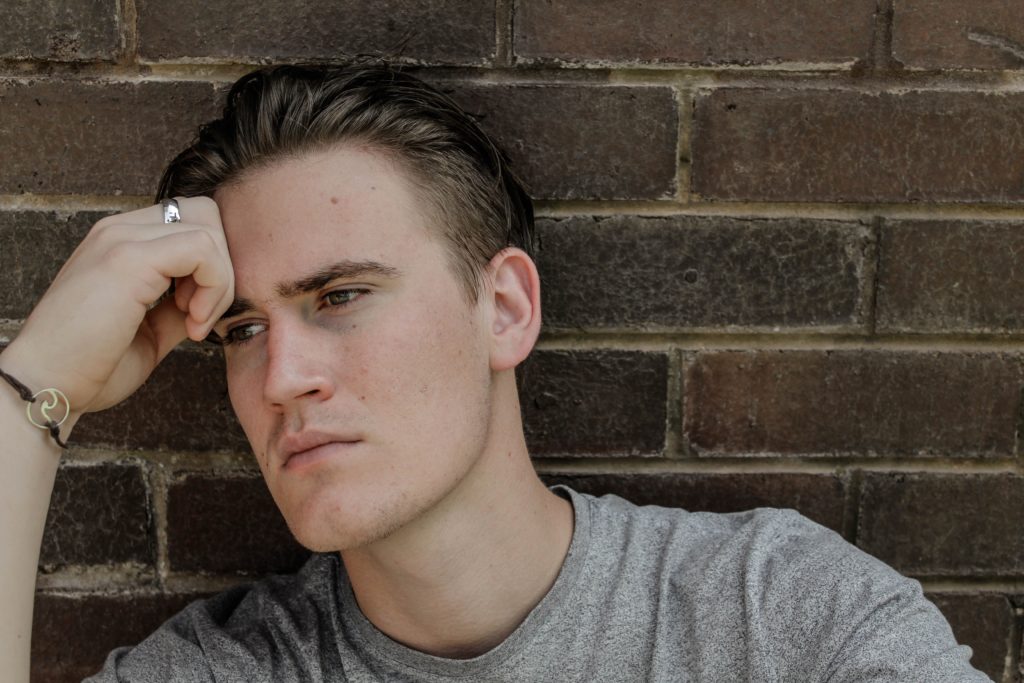
    Tim’s hopelessness was within him, as a symptom of a severe and difficult-to-treat illness.

    Tim probably spent most of his time in the throes of bipolar depression. When your mind and outlook are so dark so much of the time, you can desperately need a break from it. 

    But if you know of no medicine that will supply that break for you…  if your doctor knows of no medicine that will help without trying one after another… you get your hopes up over and over…only to experience a new type of grim despair. Hopelessness grows after years of this…and it may dawn on you there’s nothing that can help.

    And you don’t know where to look for hope.

    Emily’s hopelessness was internal, too. She felt trapped by an external force. If that external force could have been removed from her life, she probably could have recovered. Unless conditions like PTSD or severe depression complicated her condition. But even those conditions can be relieved with a novel and advanced treatment like IV ketamine.

    Children and teens should be able to live healthy, active, trusting lives in a perfect world. But it’s not a perfect world.

    When they’re assaulted, and wounded, they may need special care with a skilled therapist, support from friends and family, and treatment to help them heal. Sometimes that can be treatment with a novel, advanced treatment like IV ketamine.

    A group of researchers led by Ilya Baryshnikov, M.D., asked whether the hopelessness people with depressive disorders experience is a crucial predictor of suicidal thoughts and plans.

    They guessed that hopelessness was the sign that a person would be having suicidal thoughts, so they conducted an in-depth study which was just published this month in the Journal of Clinical Psychiatry.   

    They followed 406 people for 10 years, and used diagnostic tools to determine what role hopelessness played, as well as what role the severity of the depression played, in each person’s experience with suicidal thoughts.

    Standard tools like Scale for Suicidal Ideation, Beck Depression Inventory, Beck Hopelessness Scale, Beck Anxiety Inventory, Perceived Social Support Scale – Revised, and Eysenck Personality Inventory helped them evaluate the state of mind as well as personality traits of their subjects. 

    They found that hopelessness served to explain the suicidal thoughts, but wasn’t so much a crucial prerequisite… and that it’s actually the severity of the depression that leads to suicidal thoughts.

    In the cases of Tim and Emily, both needed intervention. For Tim, IV ketamine could have possibly changed his whole world. By helping him to achieve remission, and restoring his energy and hope, his world — and his relationship with his dad — could have been transformed. 

    It’s likely his dad, like so many, had no idea that IV ketamine was an option. Much less understanding about what it could do for his son.

    For Emily, it is possible the long term stress of abuse wore down her resilience, undermining her resolve to protect herself and report Luis. To trust her parents and make them listen, so they could help.

    In her case, too, IV ketamine could have helped restore her emotional strength to do what was needed to make herself and other girls in her neighborhood safe …to speak up.

    At Innovative Psychiatry, we see teens like Tim and Emily — and find the transformative effects of IV ketamine treatment can bring restoration not only to their outlook, but to many aspects of their lives. Relationships grow stronger, energy for school improves their performance, and their hope and joy billow. Not for everyone, certainly, but for most,
    If you, or your teen, have been depressed from major depressive disorder or from bipolar depression, and oral antidepressants aren’t working, call us. Let’s talk about whether you’re a candidate for IV ketamine treatment.

    If you’ve suffered from a major trauma that other treatments haven’t helped, call us. IV ketamine treatment can restore you if PTSD has impaired your function in life.

    IV ketamine can be dramatically effective also with severe social anxiety, alcohol abuse disorder, substance abuse disorder, and can stop suicidal thinking in an afternoon.

    We want you, and your teen, to be restored to the best you ever, and have a rewarding a fulfilling life with your own joy… and hope… abounding. 
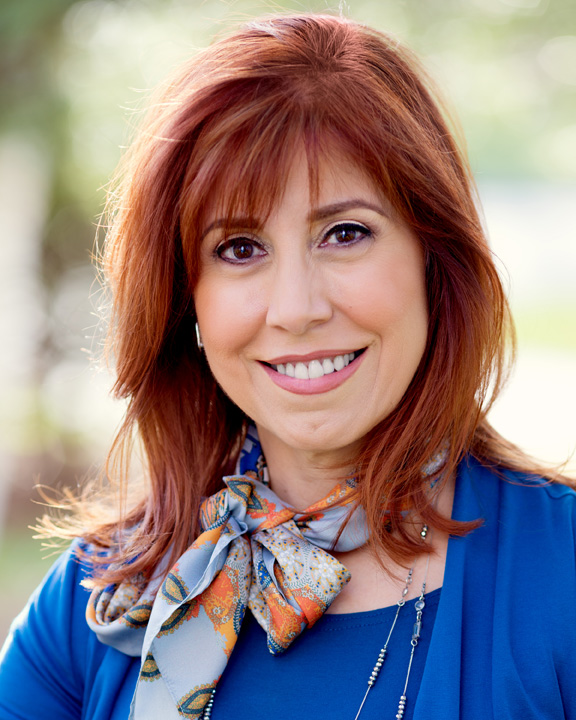
    Lori Calabrese, M.D. is on the front end of the race to stop PTSD in its tracks using IV ketamine treatment.

    To the restoration of your best self,
  • Spravato: Esketamine Nasal Spray Controversy Storms Ahead

    Spravato: Esketamine Nasal Spray Controversy Storms Ahead

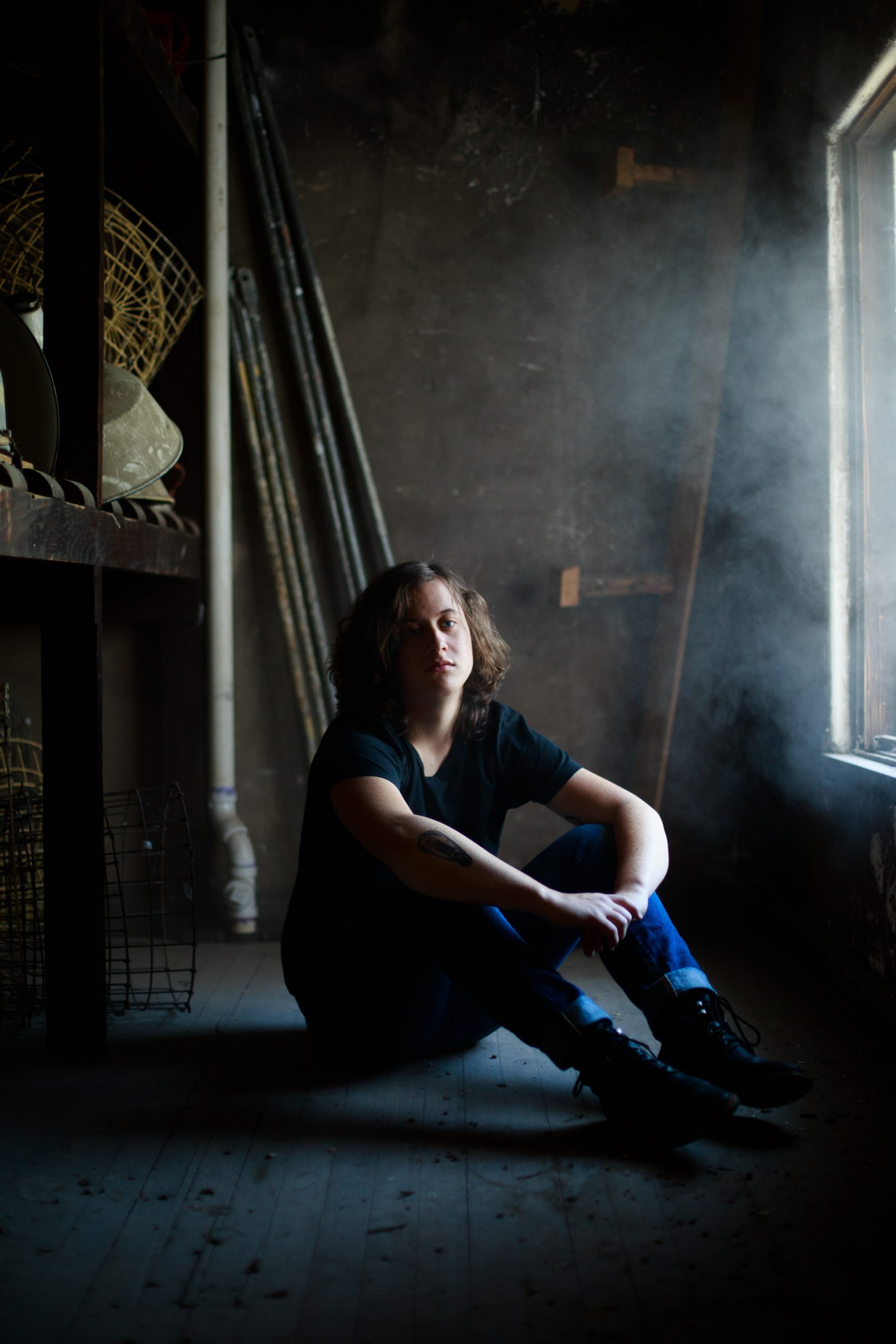
    This man is happy following treatment in spite of esketamine nasal spray controversy.

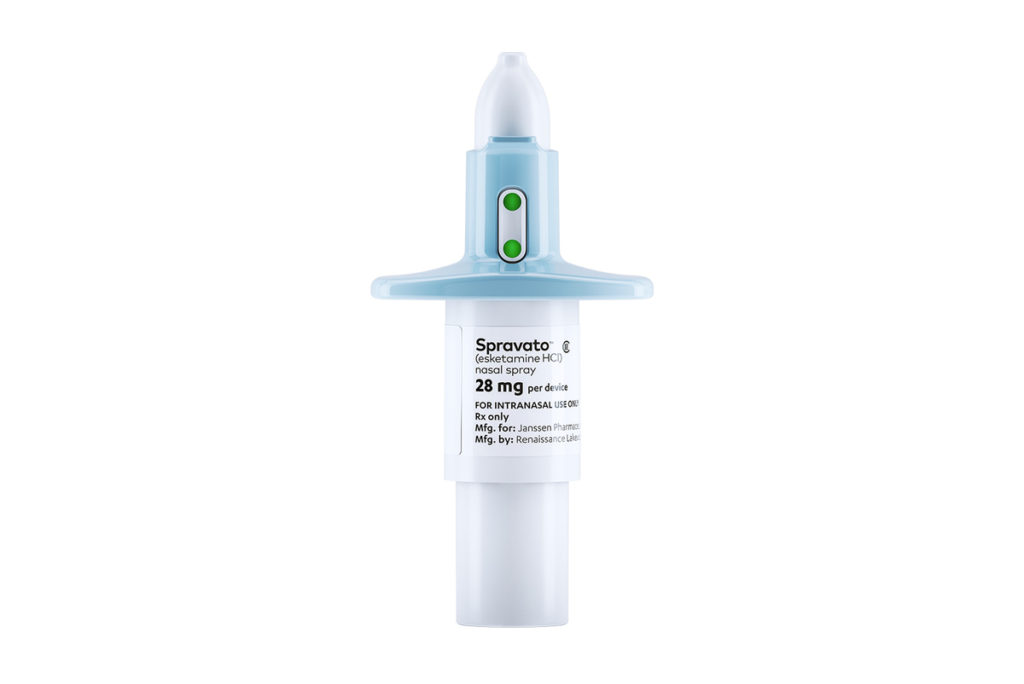
    Have you tried Spravato?

    Periodically, we’ve added our two cents to the discussion. Since its approval by the FDA in March of last year, we’ve seen a variety of protests from psychiatrists about its value for treating treatment resistant and severe depression. A recent article published in The Lancet provides an overview of the back and forth discussion. A group of physicians wrote a series of editorials published in The Lancet in October 2019, challenging Spravato’s value when weighed against its dangers and modest effectiveness. And the esketamine nasal spray controversy surges forward.

    A significant benefit for Spravato is supposed to be that because the FDA approved it, some insurances cover the cost of the medication and the cost of the doctor’s 2-hour office visit to administer it. (Stay with us–more on this later!) That’s a substantial benefit in the eyes of some patients.

    There have not yet been head-to-head controlled trials comparing racemic ketamine infusions to Spravato. But there are plenty of physicians around the country who have used both in their offices with patients. And when you compare Spravato with the effectiveness of IV ketamine treatment, Spravato’s benefit is less dramatic, and rather than occurring rapidly and robustly — it seems much milder and more gradual.

    Spravato esketamine nasal spray controversy is hot on The Lancet.

    In addition,  FDA approval requires the use of an antidepressant at the same time as Spravato.

    (It’s like Spravato is an adjunctive treatment to an antidepressant you’re starting at the same time, or an add-on to an antidepressant that’s on board but not completely effective.) Hmm. When you think about it, it may be harder and harder to know what the FDA trials really showed.

    So let’s look at the objections of these doctors, and the response from a team led by Ella Daly, M.D., associated with Janssen, the maker of Spravato.

    A Former FDA Recruiter Expresses Misgivings about Spravato’s Trials

    One of the critics of Spravato’s FDA approval was a former FDA reviewer himself. Erik Turner, MD, of Oregon Health and Science University in Portland, OR, made a point in his editorial.

    He said that some physicians who had heard that Spravato was a “game-changer” were likely to feel disappointed when they found out that  81% of the response to this medicine was experienced by those who were given the placebo!  

    Dr. Erik Turner challenges FDA approval of Spravato esketamine nasal spray.
    Erik Turner, M.D.

    As a former reviewer himself, he expressed his concern that esketamine nasal spray was basically approved on only two positive trials, in spite of the failed ones. 

    In a short-term trial to show effectiveness, the response of reduced symptoms was not maintained for even 24 hours. It’s not hard to see why that wasn’t satisfactory. 

    In the FDA trials, Janssen used the Montgomery-Asberg Depression Rating Scale (MADRS) to rate change in mood in the subjects who were taking esketamine spray. Surprisingly, there was only a mean 4 point improvement on that scale which has a possible score of 60. 

    It’s only fair to note that 69% of subjects who were taking the active drug vs. placebo technically responded. However, when we consider that they deemed only 2 points on the MADRS as “clinically significant,” practicing psychiatrists might not see it the same way when evaluating their own patients.

    Still, 52% of the placebo group scored 50% or higher improvement on their MADRS rating. So research team labeled them “responders,” (meaning the nasal spray they were testing had made them feel 50% better). But…the nasal spray that the placebo group was using was a placebo….

    You can see why Dr. Turner had some misgivings about the accuracy of the conclusions.

    Maintenance Trial Findings Distorted..?

    Dr. Turner also challenged whether the maintenance trial’s findings were up to par because a single site in Poland was the basis for those results. Trouble was that 100% of participants in the placebo group there relapsed. Which most researchers consider a red flag.

    The Janssen team defended their findings, and pointed out that the FDA didn’t see the need to eliminate data from the Polish site. In this recent response published by Dr. Daly and her colleagues, they produced another analysis which eliminated the Polish data. They used updated estimates and concluded they maintained the statistical significance.

    Dr. Turner came up with his own calculation based on information openly accessible to the public. His conclusion was that there was a “non-significant difference.” So he made the appeal “in the spirit of open science” that Janssen would provide an unbiased researcher with the patient-level data to hopefully resolve this conflict and try to replicate Janssen’s findings.

    Then …there is the issue that 6 people died during FDA trials. Of the six, 3 were suicides. The suicides occurred on the 4th day, the 12th day, and the 20th day after the last dose of esketamine.

    Esketamine nasal spray controversy is about Spravato not helping people like the FDA implied it would.
    There were no deaths with the placebo.

    Again …troubling. And confusing for a lot of people.

    Right now, the FDA says that Spravato can only be administered in offices, clinics, or hospitals registered with the Spravato Risk Evaluation and Mitigation Strategy  (Spravato REMS). Patients must remain in the office for monitoring for 2 hours after each dose.

    Another Editorial by Two Experts Fuels the Esketamine Nasal Spray Controversy

    Ioana Cristea, Ph.D., of the University of Pavia in Italy, also published one of the editorials in October in The Lancet with Florian Naudet, M.D., Ph.D., of Universitaire de Rennes in France.

    Dr. Cristea pointed out that the mild benefits of Spravato should be weighed against its potential for harm.

    She also holds that since Spravato is so expensive, has high potential for abuse, and has a troublesome history for safety, the bar for FDA approval for antidepressants should be raised.

    And she has a point.

    In the real world, our patients suffer severe and complex disorders, and the need for robust and rapid solutions for them has been gaping for 30 years. 

    Mild benefits that build gradually are only effective in select patients. 

    At Innovative Psychiatry we do use Spravato for select patients — but we use IV ketamine much more often. 

    Why?

    Because IV ketamine treatment can yield such rapid and robust benefits. And many patients need a treatment that’s both rapid and robust. It’s often life-saving. And we’ve published our results using IV ketamine infusions to stop suicidal thinking in real-world patients and presented our ongoing data at several conferences.

    For some patients, the insurance coverage that makes Spravato more accessible to them is well worth the risk of a less robust outcome. And we’re pleased to help them access the treatment best suited to them.

    With that said, since Spravato is made with the left-side enantiomer of the racemic ketamine molecule, it’s lacking the attributes of the right-side enantiomer. This is a subject that’s been side-stepped. We need more data about the right-side enantiomer.

    Esketamine Nasal Spray Controversy – Was Spravato the Only Alternative to IV Ketamine?

    And another thought. Janssen’s stance in developing the esketamine nasal spray was that ketamine was only available in IV form. But was that a real concern? Long before Spravato was approved, compounding pharmacies were already creating nasal sprays for ketamine, so it’s clear that a nasal spray using the full racemic ketamine molecule was a viable consideration. Some doctors have been prescribing that, and oral lozenges (called troches).

    Spravato esketamine nasal spray provides only a mild and gradual benefit in some people.

    So was it really because ketamine was only available in IV form? Or was it because ketamine’s patent had expired? (Hint: The big money is in the patent.)

    Is it possible that safety and effectiveness were sacrificed in lieu of monster profits?

    There is no pharmaceutical company sponsoring controlled studies of racemic ketamine.

    But there are real-world physicians with complicated patients around the country willing to carefully and diligently report what they see in their day-to-day offices. These are retrospective studies of their protocols, their patients, and their patients’ responses. Submitted for peer-review. And published.

    We know because we’re one of them. (We’re actually the first one of them. With the largest numbers, and with extraordinary responses to treatment.)

    Why do we do this?

    Because we know that once insurance companies realize that IV ketamine treatment in the office can rapidly stop suicidal thoughts and plans in patients with treatment-resistant depressioneven those who’ve made attempts before, been hospitalized, been failed by ECT, failed by TMS — those insurance companies are going to be pressured to stand up and listen.

    If we can turn these patients around (you? someone you love? someone you know?) so that they don’t have to go to the ER, and don’t have to be psychiatrically hospitalized…. WOW! What insurance company wouldn’t jump at paying for IV ketamine infusions instead of ambulances, ERs, and hospital days??

    That’s what I advocate for. Every day. Safe, effective, rapid treatment. Hope. Better lives for my patients.

    Imagine that.

    Imagine the goodwill gesture — such a small gesture, and such a small cost –for your insurance company to just simply approve payment for the codes we use everyday for office-based IV ketamine infusions for depression.

    What a concept. Radical. Life-saving.

    Read the paper. See for yourself.

    IV ketamine treatment stands as the most rapid, effective treatment against severe and treatment-resistant depression, as well as suicidal thinking, that we’ve ever seen. In the office, in an evening. In less than an hour.

    Which insurance company will step up and pay for IV ketamine to save a life?

    A girl can dream …and that goes for psychiatrists and their patients, too.

    If you believe Spravato can work for you, call us. We’re happy to provide this treatment for you. Don’t let the esketamine nasal spray controversy discourage you. In some people it works very well.

    Esketamine nasal spray controversy didn't stop this man from responding to treatment.

    If you’ve tried Spravato and you were disappointed with the results, call us and let’s talk about what IV ketamine might do that Spravato can’t.

    We’ll help you understand the differences in the fixed doses available with Spravato and compare them to what is available when ketamine is used IV.

    And if you suffer from severe depression or bipolar depression, PTSD, social anxiety, alcohol use disorder, or another substance use disorder, and have been failed by other treatments, call us, too.

    Because you can feel good again.

    You can rebuild your life with the motivation, initiative, and energy that’s been missing with restored hope … and joy. What’s more, creativity can return and grow as you invest in your career, your relationships, and your hobbies.

    We’re all about seeing you restored, fulfilled, rewarded.

    Give yourself the opportunity to live well again.

    Lori Calabrese, M.D. is on the front end of the race to stop PTSD in its tracks using IV ketamine treatment.

    To the restoration of your best self,

  • Relieve the Heartbreak of Elderly Depression with IV Ketamine

    Relieve the Heartbreak of Elderly Depression with IV Ketamine

    Ruby’s daughter let herself in with her key at the back door.

    When she walked in, the house was dark. Strange…she thought. Her mom was usually home on Saturdays.  She quietly stepped through the house looking for some sign of her mom.  A grave sense of dread came over her as the house continued to be silent…what was she going to find…? She stepped into her mom’s bedroom, and saw her form lying in bed. Joan stopped and caught her breath. Joan had been worried about her mom lately, and the heartbreak of elderly depression, since her husband died 11 months ago.

    Then a weak voice said, “Hi honey…”

    Joan exhaled. What a relief.

    “Hi Mom! The house was dark and quiet…  I was concerned.  You rarely leave the house on Saturday…”

    Joan stopped short of voicing what she’d feared.

    “Are you feeling ok? Why are you in bed..? It’s really dark in here…”

    “What day is it?” Ruby quietly asked.

    “It’s Saturday, Mom. How long have you been in bed..?”

    “Well, I remember watching the weather on Tuesday…I was wondering if I needed to wrap the pipes.”

    “Ok.  That was Tuesday…  Do you remember what happened Wednesday?”

    “I guess I’ve just been sleeping…”

    “Mom?  Since Tuesday?”

    “I don’t know…maybe? I got up and went to the bathroom at times then just felt tired and went back to bed…”

    “Do you remember if you ate anything..?”

    “No…not really.”

    Joan was alarmed.  Her mom hadn’t eaten since Tuesday.  No wonder she was weak. And she’d gone four days without her medicines. 

    Four Days without Her Medication

    Joan headed to the kitchen to make her mom some soup.  She wanted to go easy and see how she digested soup before solid food.  After opening the can of soup and dumping it in the pan, she looked at her mom’s medicines.

    Well, that confirmed it. The pills were still in the Wednesday, Thursday, and Friday compartments.

    Joan was shaken to think if she hadn’t dropped by, and another week had gone by, what could have happened.

    Joan brought her mom the bowl of soup with some crackers and a glass of milk on a tray.  She helped her 84 year-old mom sit up and propped her with pillows, then set the tray in front of her.  Slowly, her mom nibbled on a cracker, sipped the milk and finally scooped a spoonful of hot chicken noodle soup.  She closed her eyes as she swallowed.

    “Ok mom?”

    “ Yes, it tastes good.”

    Joan talked about trivial things to try to lighten the mood. Ruby had looked after everyone all her life, but since Joan’s dad, her mom had seemed less and less engaged in her own life.

    Maybe listless was the word. 

    She’d withdrawn from her bridge friends. She’d said it didn’t seem as fun anymore. Her grandkids were all grown with families of their own. Cleaning house and cooking was a chore without Charles to do it for.

    She just got tired of the struggle. What was the point?

    She felt tired all the time, and found herself taking more and more naps.  

    How do you find purpose in life after the companion who’s been there for 62 years is suddenly gone?

    The Heartbreak of Elderly Depression

    The more questions Joan asked, the clearer it became that her mom wasn’t fighting the flu, she was depressed. At least she seemed to be.

    Joan wondered how long she’d been depressed. And whether she’d thought about ending her life… It had really shaken her to walk through that dark silent house.

    She asked her mom more questions. Ruby was matter-of-fact. “Yes, the doctor told me I was depressed a couple years before your dad died. He prescribed some pills for me, and I took them, but they didn’t do anything. I think they must have been those sugar pills you hear people talk about. I finally stopped taking them.  There was no point.”

    “Joan,” Ruby said, “I miss your dad. Charles and I talked about everything. Without him, life is flat. It’s just so empty. I have you and your sister, and I love you both, and all the grandkids and their families. But I feel so empty.”

    “Mom, I can only try to imagine how much loss you feel with Dad gone. We all miss him, but he was your constant companion and love for 62 years. I ache for you… and I can’t help but feel that even though grief has made you feel empty, that does’t mean your time on earth is finished. Maybe something can be done to help you feel better, you know? Would you be ok with me making an appointment to see Dr. McShane? We can go together.. Ok?”

    The Heartbreak of Elderly Depression – How Can We Help?

    Here’s the thing. Our parents (and grandparents) do look after everyone else all their lives. Then, they slow down, and the the rest of the family can easily forget to touch base. Why? Because life is busy. We all live with packed schedules, and a week can go by without our even noticing it.

    Our elderly loved ones can find themselves withdrawing, slowing down, and feeling somewhat useless. It’s not that unusual for depression to follow. 

    In many cases, prescribed antidepressants help. But in some, they don’t help in spite of trying more than one. When the disorder doesn’t respond to multiple treatments, something more advanced is needed.

    IV Ketamine Treatment Can Reverse Elderly Depression

    IV ketamine for treatment resistant depression may just be the treatment of choice, to restore your parent’s brain circuity. By turning on mRNA which switches DNA to “ON” your brain-derived-neurotrophic-factor (BDNF) turbo boosts the prolific and rapid production of dendrites and dendritic spines to sweep through the important parts of the brain with connections to send signals at the speed of light.

    Depression lifts, joy surges, creative thought grows, and Grandma gets that sparkle back in her eye,  and has the energy to play bridge with the girls again… and make cookies for children in the neighborhood.

    At Innovative Psychiatry we love treating grandparents and watching them get a new lease on life. Of course, if they’re grieving losses, they can grieve while still enjoying life. 

    Ketamine treatment doesn’t prevent grief, which is a part of life.  But ketamine can help them think through the grief in a healthy, healing way. And meanwhile, they can also enjoy their friends, family, and grandchildren.

    Your Loved One Can Recover from the Heartbreak of Elderly Depression, and So Can You

    Do you have a parent or grandparent who seems to have lost their joy for living? Maybe they’ve tried antidepressants but still seem serious, irritable, edgy… or bland, shut down, and without energy. Maybe you notice they don’t bathe very often anymore, and have lost interest in their appearance, or in things they normally love to do. 

    If this sounds familiar, and you have loved ones you hope can be helped by IV ketamine treatment, call us. 

    In fact, if this describes you, please call us and let us help you find your joy again.

    IV ketamine treatment rapidly proliferates your brain circuits with an abundance of new synapse connections that make the way for restored creativity, emotion like joy, happiness, love…and hope. You want to do things you enjoy again.

    Amazingly, this proliferation also increases emotional energy that can translate to more physical energy, too. Initiative and motivation increase, and joie de vivre abounds. Few phrases express what ketamine can do like this French phrase, which means “a cheerful enjoyment of life and exultation of spirit.” 

    If you have lost the song in your heart, you can have that restored. Some of our patients report waking up in the mornings singing. 

    How about you?  Have you lost your song? IV ketamine treatment can restore it, and give you that, “Oh what a beautiful morning!” feeling. 

    It’s amazing to realize that people with joy and a song in their heart are that way because they have a LOT more synapses than others, isn’t it? 

    Let us help you and your mom find your songs again.

    Lori Calabrese, M.D. is on the front end of the race to stop PTSD in its tracks using IV ketamine treatment.

    To the restoration of your best self,

  • Reach Out for Ketamine… to Get Better… and Make 2020 Your Best Year Yet

    Reach Out for Ketamine… to Get Better… and Make 2020 Your Best Year Yet

    This is the first Monday of the New Year…so how do you start a new year?

    With resolutions? A diet?  Maybe more exercise? Lots of people do. But what about you? What if you don’t have an appetite…?  Might be hard to stick to a diet more than a couple days… and what if you haven’t slept in days…and you’re exhausted… who cares about the new year and any good intentions? When you feel crummy, the beginning of the year seems like just more of the same ol’ misery. Maybe you wonder, why try? You’ve been so depressed, with so much anxiety, and have felt so alone, so vacant, for so looong, it seems futile to try something new…  BUT. What if there really IS an answer that could sweep away your misery and you could finally feel like the best you you’ve ever been…?  I know, you probably think that sounds impossible. But wait a sec…this is the 21st century, my friend. Treatments have improved. Or a better way to put it, there’s now a treatment that’s a game changer. But it won’t come to you.  You’ll have to reach out for ketamine so you can get better now. You’ll have to do something…because this treatment won’t magically show up in your living room. So why not do it now?

    IV Ketamine Treatment – The Game Changer for Psychiatric Disorders

    Of course, I’m talking about the treatment that came out of the woodwork the last decade. The one that started as a trusted anesthesia medicine listed on the World Health Organization (WHO) List of Essential Medicines. The one that’s been so safe for 50 years that it’s been used in surgical settings for people of all ages across the globe, and also in surgical settings for pets of all sizes. 

    Like most exceptional medicines that are designed for sedation and/or pain relief, it’s been abused by people on the street and in the club scene for its dissociative side effects. As a result, it’s sometimes been misunderstood as a result.

    But under psychiatric supervision, it’s nothing less than extraordinary in its effect on people whose disorder has not responded to traditional medications. Which is one of its many endearing charms.

    Why wait any longer? Why not reach out for ketamine now and start this new decade on far better footing..? Stick your neck out and make the call for treatment now because you deserve the chance to live a fulfilling life, free of symptoms that keep your life shackled.

    Ketamine Treatment Relieves a Broad Variety of Disorder Symptoms

    It happened last week, and it shocked me. Someone asked me about the best treatments for depression, anxiety, and PTSD. As I began to talk about treatments, I saw a blank look on his face when I mentioned ketamine infusions. He’d never heard about them…! And I realized that though this medicine is always in my radar, there are countless people who know nothing about what it can do.

    Someone who suffers from unrelenting and severe depression, bipolar depression, PTSD, OCD, social anxiety, substance use disorder, alcohol use disorders – and sometimes eating disorders like Anorexia Nervosa – can achieve remission with IV ketamine treatment.

    IV ketamine treatment can be a bit tepid in relieving symptoms for those with milder cases. But, let me quickly say that when you feel bad, it doesn’t feel mild. And that’s why we have criteria to help us measure the severity of each case.

    Just knowing how severe it is – or not – can guide us in how to treat it. When we see someone who has suffered with symptoms for years in spite of multiple medication trials, in spite of other treatments, who has also been hospitalized for symptoms, and may have attempted suicide multiple times, we realize this patient has suffered severely for a very long time. And patients like this usually experience a dramatic remission after IV ketamine treatment.

    Not always. But usually…

    IV ketamine treatment doesn’t work like this for everyone… sadly, not even for everyone who’s severely ill. But it has a remarkably fast and vigorously thorough effect on a very high percentage of patients… higher than any other office treatment for these disorders.

    And that’s not all.

    Freedom from the Doldrums

    You know how it is with depression that hangs over you…month after month and year after year… even if you have a few days that are a bit better…and you can actually smile some…as soon as someone says something that hits a nerve – you plunge again…back into the pits. It’s like you have nothing to fight with, like a tightrope performer with no net. So even a lighter feeling for a few days is temporary and you know it. You can feel how fragile it is.

    But with IV ketamine treatment, that fragile-ness seems to evaporate. You get offended by the guy at the party who ALWAYS has his foot in his mouth, and it burns you up. But the nosedive you expect floats away, as you think through that guy’s words and realize your peace is too important to jeopardize… and ::::poof!:::: you move on. And it’s forgotten.

    One reason may be the resilience ketamine builds. You’re able to adapt and quickly recover from the offenses that happen and you have the power to just snap back and be ok. It’s amazing…in fact, it’s priceless.

    So, reaching out may require that you talk to yourself. Maybe you’ll need to “psych yourself up,” but when you do whatever you need to do, and reach out for ketamine treatment, you’ll find yourself surprised at all that happens for you.

    Neuroplasticity + Psychotherapy = Peace & Joy in life

    Then, to point out yet another talent of this treatment, researchers and therapists have learned that because of the neuroplasticity ketamine creates in your brain circuitry, psychotherapy can be much more effective about 24 hours after an infusion.

    At Innovative Psychiatry, we love working with your psychiatrist and therapist to help make that benefit available to you with scheduled infusions coordinated with your therapy appointment 24 hours later.

    But, the fact is, that none of this can be available to you unless you reach out. It requires that you call us. Let us coordinate with your healthcare team.

    You’re probably thinking, How Can I Do THAT?  I Can’t Seem to Get Out of Bed??!!

    And there’s the rub.

    There is more help available for your tormentous symptoms than has ever been seen by your parents or grandparents or great grandparents… 

    But the biggest obstacle between you and having a healthy, balanced, rewarding life is actually a characteristic of your illness. To get to that rewarding life (you may have all but given up on,) you have to do something you may not think you can do. And here it is…

    PUSH through.

    …and make the call.

    And you know how you can do that..? 

    By grabbing on to HOPE. 

    The drowning man has to take hold of the rope. If he’s passive and tries nothing, he’ll drown.

    The mountain climber who loses his footing and careens over the cliff has to reach out and GRAB – something. A rock…a rope…a bush…?

    Once you reach out, it gets easier. We step in. You’ll still have to show up, but each time it will probably get easier and easier. And as ketamine goes to work in your brain cells – the systems and circuits and structures – surging hope and strength and resilience will billow from within you.  

    It doesn’t happen all at once the very first minute…

    Maybe it just trickles at first, but then the trickles become waves, and the joy and initiative surges, and you find you’re CAPABLE of doing things you want to do, that you’d all but forgotten about.

    For some it’s during the first infusion…for some it’s after the second one. For others it’s after the third… and in some cases it’s even after the fourth.

    Your family may notice the changes in you before you do. You may show unexpected initiative before you FEEL all that much better. (Miranda, are you actually folding clothes? Unbelievable!)

    Reach Out for Ketamine!

    More than likely, you’ve heard of ketamine treatment. Maybe you dismissed it, because you’ve heard of it as “Special K” or thought it was just a horse tranquilizer. You think it all sounds bizarre, or the creepy kind of experimental treatment that happens in somebody’s garage.

    If so, maybe it’s time you do your own homework? The National Institute of Health funds extensive research about ketamine treatment because it’s so extraordinary.

    Esteemed neuroscience researchers around the world submit their research to peer-reviewed medical journals. Conferences of psychiatrists, neurologists, neuroscientists, and physicians in other fields are hosted in major cities like Oxford (UK), NYC, Austin, San Francisco, and more. And this has been going on for years.

    IV ketamine treatment is the most effective medicine for psychiatric disorders we’ve ever seen. It’s not FDA approved because no one wants to pay for FDA trials if they can’t make a profit off a patent. And..ketamine is too old…there’s no patent to be had.

    So, we lobby for it to be covered by insurance companies, anyway. And until then, you have to pay for this treatment out-of-pocket. However, there is medical financing available everywhere. And your resurrected life, your ability to pursue your dreams, build strong, healthy relationships, and enjoy your hobbies on your terms…isn’t all that worth a small loan?  To be able to live again?

    Reach Out for Ketamine and Get Better for 2020

    This is a new year, and a new decade. Right now, this week, is the perfect time to turn the tables on misery, take hold of your hope, and reach out to get better.

    Tell yourself that it’s your turn to get better. And that you’re not going to give in to excuses. That you want to live better, healthier, and more balanced. That you want your life to BE better. Give Hope the benefit of the doubt.

    This step can turn your entire life around for the better. But you’re the one who has to take it.

    Because it’s not right for everyone. We need to be sure you’re a candidate. And we’ll evaluate that first. 

    So…you may say, What if it doesn’t work for me?

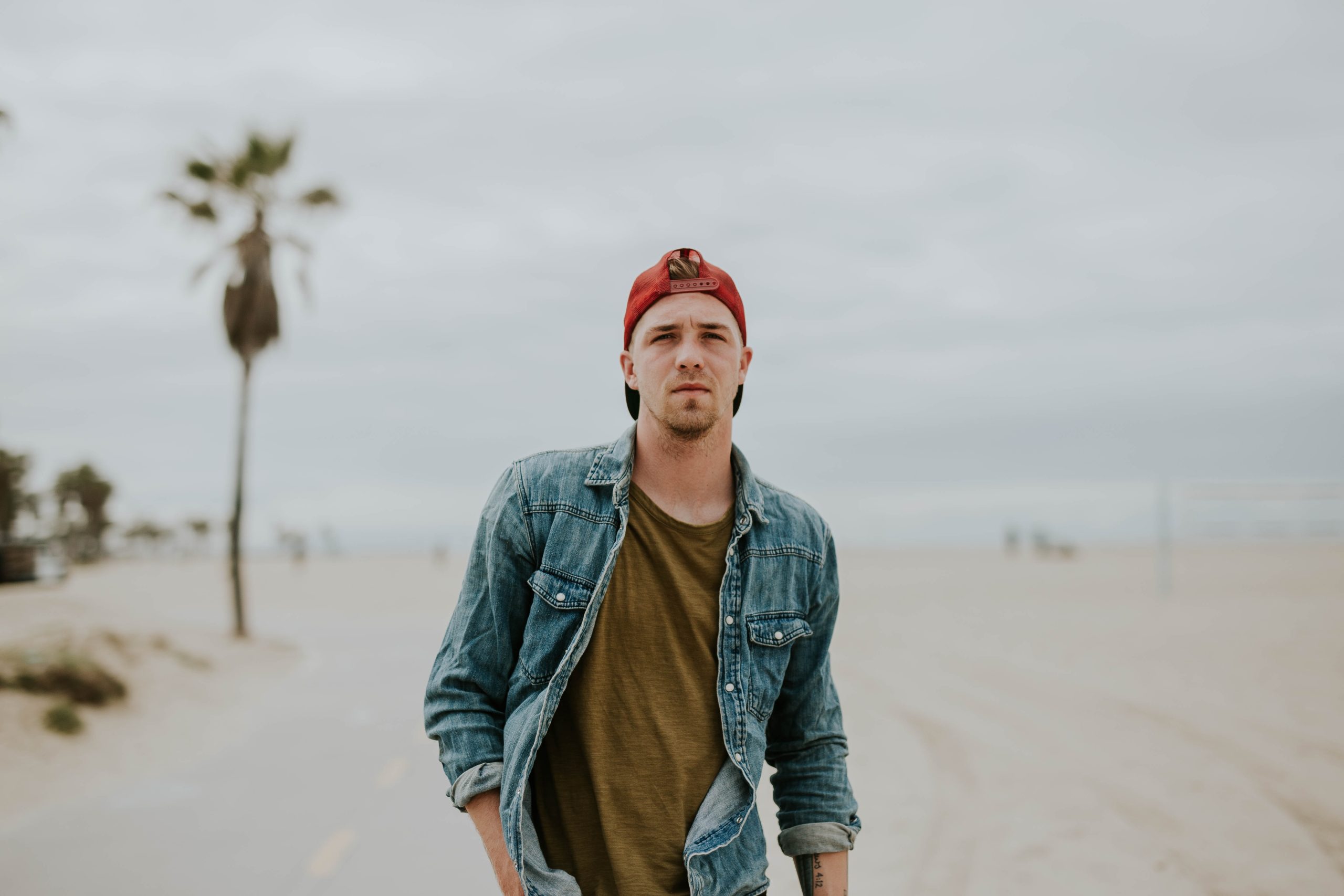
    This young woman chose to reach out for ketamine and it changed everything about her life.

    Well…we say, What if it does??

    The likelihood it will transform your life is much stronger than the likelihood it won’t work for you.  Much stronger.

    Do you really want another decade to crawl by while you’re trapped in the misery and despair of this disorder?

    Reach out for Hope and for a better life in 2020 and beyond. 

    We’ll walk you through the process, answer your questions, and make it as easy for you as we possibly can. We’re here waiting for you to call us because we want to see you enjoying a full life.

    Reach out for ketamine and grab onto HOPE.

    Lori Calabrese, M.D. is on the front end of the race to stop PTSD in its tracks using IV ketamine treatment.

    To the restoration of your best self,
  • Your Generosity’s Impact on Depression

    Your Generosity’s Impact on Depression

    Your generosity's impact on depression is remarkable.

    This is a time of year when we do lots of giving, don’t we? 

    And for the most part, we receive the giving of others, too. While it’s fun to receive and get stuff, receiving doesn’t have the impact on our brain, our outlook, our health and immunity, as well as our sense of well-being, that giving does. In fact, when we really give of ourselves, give a piece of ourselves, hoping it will truly help or benefit the person we give to, something wonderful begins to happen. I guess most of us feel a certain amount of obligation this time of year to make sure we have a gift for each person in our world… family, co-workers, neighbors, friends and those in all our other circles. But there’s an important distinction between obligated giving and true generosity from the heart. So let’s talk about one of the most important results: your generosity’s impact on depression.

    It turns out that when you give out of obligation, it doesn’t really trigger any magical benefits in your brain. You still feel bad and you suffer a smaller balance in your checkbook. Plus you know…you still don’t know how to make things better.  

    Giving the Best of Yourself

    But when you give of yourself – from your heart – something amazing happens. It can be a check you write from the money you’ve worked hard for. It can be giving your time and support to someone who needs something you specifically can provide.  

    No matter what you give, when you really want that person to deeply benefit from it, that’s when it helps you, too. Well, at that point things start clicking in your brain in a way that turns up the heat in your immunity protection. It also turns up the connections in the signals moving in your brain, and – no small thing – it turns your attention from yourself and how bad you feel to someone else and how you helped them feel great. You may have even given them hope.

    Generosity is so Good for Your Depression

    So why is giving so valuable, and your generosity’s impact on depression so life changing?

    Good question!!

    Generosity's Impact on depression helps to release joy during the holidays.

    It starts in the mesolimbic pathway in the brain. Weird word, I know. But this strange phrase refers to a circuit in the brain that takes advantage of the neurotransmitter dopamine to link your behavior with a feeling of pleasure. You may have heard it called the “reward pathway.” 

    (It probably won’t surprise you to know that because of that, this area is studied by researchers seeking understanding and solutions for addiction.)

    So, when you’re a giver, a series of events takes place triggered by a special set of chemicals like dopamine and its mesolimbic activity, endorphins that give you almost a sense of euphoria, and oxytocin.

    Oxytocin is associated with tranquility and inner peace, as well as a sense of belonging, cuddliness, and connection. It’s the same hormone secreted when a mother nurses her baby….it causes the bonding between mother and child.

    Stress is a Destroyer

    Now when you’re spread too thin, or disasters are happening around you, both natural and figurative, that stress prunes and breaks down the synaptic connections in your brain. 

    Stress tells your body to prepare to fight or take flight. When your body keeps going into this state, believing you’re facing life or death, it wears it down. It depletes neurotransmitters, prunes the synapse structures and connections that allow for signals to be delivered, and increases cortisol. And when cortisol increases, these neurotransmitters stop producing.

    But, it turns out, that even if you do experience a lot of stress, something as simple as giving of yourself, volunteering, and helping and supporting others can combat the destructive effects of stress… and prolong your life.

    Generosity’s Impact on Depression and Mortality

    A study led by Michael Poulin published in the American Journal of Public Health, 2013, found that a stressful life did not predict the mortality rate in those who provided help to others. However, in those who did not provide help to others, stress did predict their mortality.

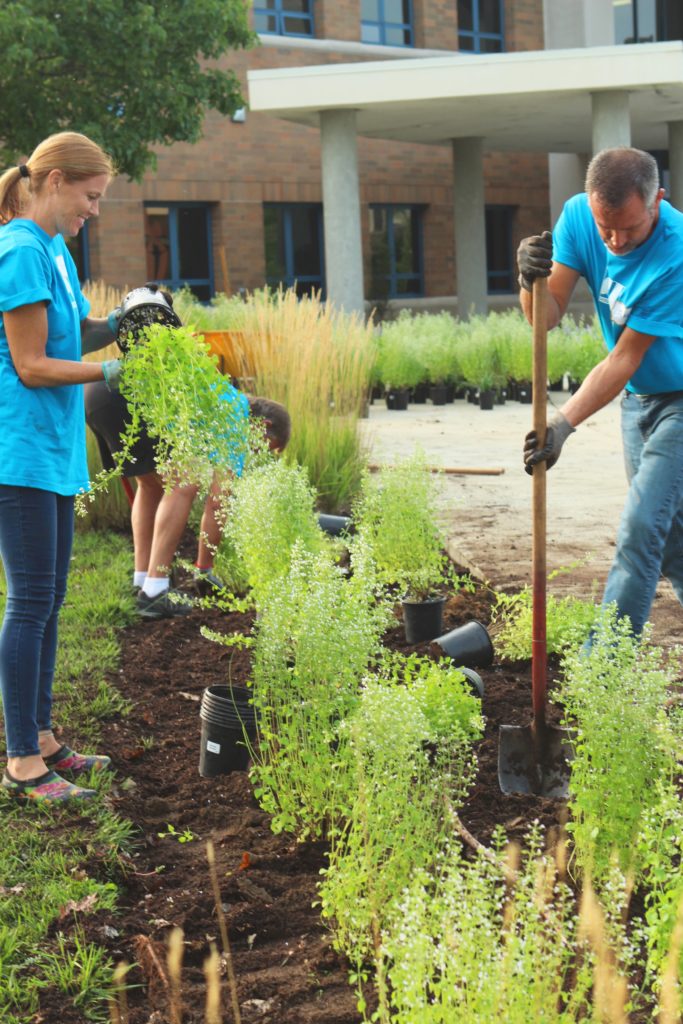
    Generosity's impact on depression is increased by the mutual support and fresh air and exercise of these volunteers as they give of themselves.

    A study published in the Journal of Health Psychology that focused on volunteering found that volunteering reduced mortality rates in a group of 2000 people more than exercising 4 times a week and regularly attending church. 

    Get this: it found that of the 2000, those who volunteered for 2 or more causes enjoyed a 63% reduction in mortality in contrast to those who didn’t volunteer at all.

    Volunteering is a Category All Its Own

    One thing about volunteering is that you have to really give of yourself. Your time, your energy, your comfort zone.  And you probably believe in the cause and truly want to help the recipients. So with volunteering, you’re probably meeting the criteria for health benefits. And yet…that’s not why you do it, is it?  

    You do it because you really do want to help, to make a difference.

    And it’s that heartfelt commitment to make a difference for someone and that deep desire to help, that triggers this cascade of neurotransmitter reward. Someone called it the “giver’s glow.” 

    It’s your generosity’s impact on depression in your life. It can help you go from shutdown…to glowing…!

    What it does do is to reduce the effects of stress in your life and improve your immunity, while flooding you with a warm sense of connection, and belonging, and soul satisfaction.

    These studies found that when someone is helpful regularly for a prolonged period of time, the benefits to their health and outlook compound, and carry on for a prolonged period of time.

    Which is why it’s not only better for the organization to know they can rely on you every Tuesday for a year, but it’s much better for your wellbeing and longevity.

    May Your Giving Season Be Your New Beginning of a Generosity Approach to Life

    And, so here we are. It’s the Giving Season. We’ve had Giving Tuesday which helped to organize donations all around, and… which helps you with a tax write-off. But let that be only the start. Because if you donated for the tax write-off, that’s your benefit. 

    Still, if you make this the beginning of a new year of reading to the elderly, or teaching English as a second language, or literacy support, or anything that can help make another life or many lives better, healthier, and with more hope, then you may very well be on your way to a ripe and healthy old age.

    Giving from the heart…giving unselfishly, giving of yourself in your own creative way, and giving your hard earned money to make life better for someone… can improve your outlook, your energy, and your sense of purpose. It can increase the neurotransmitters that move signals around in your brain, and improve your immunity.

    This man offers another a helping hand because generosity's impact on depression is unmistakeable when you help someone outside yourself.

    What a truckload of benefits for you from giving of yourself.

    And, if we at Innovative Psychiatry can help you with symptoms you can’t resolve yourself, please call us. IV ketamine treatment can give you the transformative restoration so you really can give your best self to others.

    We want to help you find the power to live, and give, and bloom. To be satisfied and fulfilled with your life, your work, your relationships…all of it.

    Have a Wonderful and Fulfilling Holiday Season!

    Lori Calabrese, M.D. is on the front end of the race to stop PTSD in its tracks using IV ketamine treatment.

    To the restoration of your best self,
  • IV Ketamine Can Create Resilience For You This Season

    IV Ketamine Can Create Resilience For You This Season

    Even during the holidays you can find yourself alone when everyone else is having a  good time, but ketamine can help you enjoy being with people again.

    This time of year conjures up visions of sugarplums, elves, and Christmas trees guarding piles of gifts.

    There are carolers singing on the corner, and menorahs and dreidels and flickering candle light. Families come together, and friends are invited to share in the celebrations. A manger with a Baby surrounded by angels, shepherds, and wise men. Oh the wonders of this time of year. And oh the suffering for those who find it difficult to cope. But, IV ketamine can create resilience for you… Some suffer because of painful losses and deaths brought to mind again by both treasured or painful memories. Others suffer because of disorders that make it difficult for them to blend at family gatherings, whose symptoms impose so much pain and heartache, even chaos, they’re unable to enjoy any of it. 

    It’s for these loved ones we write today. The ones who’ve suffered for years – even decades – because their symptoms of depression, anxiety, phobias, addiction, eating disorders, PTSD, OCD, and the suicidal thoughts that eventually often show up and threaten have not been helped by the medicines prescribed for them.

    Dreading a gathering can disappear because ketamine can create resilience.

    Dreading the family gathering, or finding something else to do so they can justify missing it, they’re often ostrasized for “creating a scene and making the holiday about them.” Cruel judgments and short-sighted disapproval abound. But few realize how very much these dear ones wish they could seamlessly fit in.  

    Their “scenes” may very likely be due to untreated symptoms. 

    This is the time when IV ketamine treatment can make all the difference. And it’s not just for this holiday season. It’s for all the holiday seasons that will come in the future.  For all the school days, business days, birthdays, and everydays that lie ahead. Ketamine can create resilience for facing whatever life brings…

    And let’s be clear about something.

    IV Ketamine Treatment is NOT Esketamine Nasal Spray

    The ketamine molecule is racemic, which means it is made up of two sides, or enantiomers, which are mirror images of each other. This has caused some confusion. Because they’re NOT identical. Each one possesses its own traits, it’s own strengths and weaknesses. It’s own benefits. 

    Esketamine nasal spray is the left mirror image. We call each side an enantiomer. Esketamine is the left enantiomer. It has strengths and weaknesses, but it’s not the complete ketamine molecule. This is often misunderstood. It’s also a great deal more expensive than ketamine.

    However, esketamine nasal spray is “covered” by some insurances, at least partly. (It’s very expensive and eats up most of your high deductible very quickly.) But having the medication pad for may be a benefit that may make it worth trying for you. The office visits required for administration are another fee–and they are very poorly covered by insurance companies.

    Ketamine infusions on the other hand, are not usually covered.

    We’re joining with others in psychiatry promoting the idea that IV ketamine treatment should be covered by insurance. It should be. Ketamine is the complete compound with all the benefits. When it’s administered properly, it can be — and often IS — transformative.

    IV ketamine treatment can liberate you from the symptoms that make the holidays so painful. Those things that make it nearly impossible for you to enjoy family gatherings. 

    IV ketamine helps build something to make life so much easier, even holiday gatherings.

    Ketamine Can Create Resilience: And It Empowers You to Enjoy

    It’s resilience. Depression, alcohol use disorder, anxiety, PTSD, OCD, opioid use disorder, social anxiety, bipolar depression…all of these conditions have symptoms that are sometimes hard to treat. You might say “treatment resistant.” And when the symptoms go on and on, they wear down circuitry in your brain in certain regions. 

    Enjoy the giving season - ketamine can create resilience for you.

    When the circuits are worn down, the dendrites and synaptic connections between neurons are pruned back and the signals are hard pressed to make much progress getting from one area to another. So you feel vacant…numb…dull…and dark.

    But ketamine treatment restores those circuits. It stimulates mRNA to turn on DNA to turbo boost your brain-derived-neurotrophic-factor. When that happens it’s as if a rich compost infuses fast prolific growth into those dendrites, and dendritic spines…and your synapses multiply like gangbusters. Suddenly, your brain comes alive with a wealth of signals darting at the speed of light to help you think, create, plan, accomplish…and to bring you joy…and hope.

    Then, there are those G proteins floating along on their lipid rafts. Ketamine shoves them off those rafts and puts them back to work, which gets signals moving really fast, too.

    That’s where the resilience comes from. Your active brain communication transforms your outlook and cognitive function. And if something comes along to knock you down, you finally have the resilience to think it through, get back up, and snap back. You have energy to face difficulty, energy to be around difficult people. Energy to contribute, and to rebuild strong, healthy relationships.

    Ketamine does that. Ketamine can create resilience by working in so many parts of the brain and it works fast.

    Think about it like you’ve rebuilt your car’s engine and you have the capacity now to take on difficult terrain, climb mountains, pull trailers, and get the job done. (I sound like a truck commercial but you see what I mean.)

    Restoration for the Holidays – Is There a Better Gift?

    If you enjoy this time of year, that’s wonderful. It’s supposed to be a wonderful time of year.  Enjoy it. Savor every moment.

    But if you don’t …if you can’t… call us. Let us help you find the resilience you wish you had. The resilience to rise above the struggles, and the ability to actually enjoy people you care about. 

    See how relaxed and joyful this woman is because ketamine creates resilience?

    IV Ketamine treatment may seem expensive at first blush, but when you consider how it can transform your life, and give you hope and resilience for the future, it’s worth finding a way. There are opportunities for financing your treatment through medical financing services. We also see families helping financially to get their loved one a chance to recover.

    Feeling better changes everything.  Everything.

    When you’ve felt like this so, so long, it’s hard to imagine what feeling good would be like. No worries. You’ll definitely know it when you see it. And your family may detect the changes in you before you even notice them yourself. 

    Reach for brighter days, healthier relationships, better performance in your career. Reach out for resilience.

    Lori Calabrese, M.D. is on the front end of the race to stop PTSD in its tracks using IV ketamine treatment.

    To the restoration of your best self,

  • How What You’re Eating Affects Your Depression

    How What You’re Eating Affects Your Depression

    This guy is laughing because he knows your eating affects depression.

    We’ve talked before about how your diet affects your microbiome, and how your microbiome affects your mood.

    We’ve also talked about how eating foods rich in fatty acids helps your brain function. Since we know that your eating affects your depression—we know that… and you know that—let’s talk today about how other foods impact your mood, to either fight depression or invite it.

    While we all know that sugar isn’t that healthy for you, do you know why?  Do you know what it does to your frame of mind and emotions?

    Inflammation 

    We’ve talked about inflammation before, and how it contributes to depression, and even suicidal thinking. Sounds like a dull subject? Well, look at it this way. Self indulgences like desserts, soft drinks…even the unsweetened ones…and blueberry muffins with your coffee, are making you more depressed.

    This stressed lady needs to eat healthier because eating affects your depression.

    Is that close enough to home?

    Did you know that sugar contributes to inflammation? And if you think you’re avoiding inflammation by reaching for a diet drink, think again. Artificial sweeteners also contribute to inflammation. 

    Sugar and Sugar Substitutes Increase Risk of Depression

    A meta-analysis by Xiaoming Bian, et al., published in Frontiers in Physiology in July 2017, showed that long term use of sucralose, which is the most widely used artificial sweetener, alters the bacteria in the microbiome. For the microbiome to function in support of your mental health, the “good” bacteria needs to be strong enough to hold the “bad bacteria” in balance.

    Your eating affects your depression. And when you use Splenda, you’re actually fueling the mechanism that makes you depressed, or makes your depression worse.

    And there’s more.

    Sugar and sugar substitutes also increase your likelihood of developing schizophrenia. In 2004, the well-known British psychiatric researcher Malcolm Peet discovered two mechanisms where refined sugar can potentially have a toxic impact on mental health.

    Sugar Interferes with Production of BDNF

    To begin with, sugar stifles the activity of an extremely important growth factor in the brain, the brain-derived-neurotrophic-factor (BDNF). Now we know from our discussions of ketamine treatment that BDNF stimulates the growth of synaptic connections in the brain, which improves communication signals. And the more connections there are, the sharper your mind, the richer your associations, the brighter your mood.

    However, if you’re eating a lot of sugar, the production of BDNF is reduced, which in turn reduces the growth of synapse connections, dendrites, and dendritic spines, which causes the information highway in your brain to grow darker and darker…then the signaling slows down…and your mood tanks.

    We know that in depression and in schizophrenia, the BDNF level is very low. When the BDNF level remains low for an extended period of time, important brain regions begin to shrink. So it’s not too hard to connect the dots and see how you can eat a lot of sugar as a habit, and find yourself more and more depressed.

    There’s a vicious cycle there. It may be tempting when you’re feeling low to eat chocolate, or cookies, or cake to cheer yourself up. But after the initial jolt of increased blood sugar, you find yourself feeling worse and worse emotionally. At which point you may be inclined to repeat the sweet treats.

    Then add to that the effect of crackers and bread. These are simple starches, which saliva breaks down to sugar. And you experience the same deteriorating mood you did with all that sugar, because it’s just more of the same.

    Your Eating Affects Your Depression: Sugar Consumption Stimulates a Chemical Domino Effect

    Cookies can worsen depression because what your eating affects your depression.

    In addition, when you eat lots of sugar..and in the western world the majority of us do…a domino effect of chemical reactions is instigated that leads to chronic inflammation.  And that brings us full circle to the destructive force of chronic inflammation in our bodies and our minds. 

    If you have a history of depression or anxiety, it can be remarkably helpful to keep your microbiome balanced and strong, and to keep inflammation under control. Because you know that once symptoms emerge and increase, it can be so difficult to find the energy and initiative to take the necessary steps to get these components under control again.

    And this includes processed meats. Because they’re also packed with sugar and chemicals that trigger inflammation. The safest food for strengthening your microbiome and holding inflammation at bay is to eat whole food as it’s grown naturally.

    Ideally?  No More Sugar Than 25 Grams/Day.

    Sounds crazy?  It’s so doable. 

    But Rome wasn’t built in a day. Baby steps. Every week, you could reduce your daily sugar intake by 1 teaspoon. Little by little. But try to be consistent.  You may be flabbergasted six months from now by the difference you’ve made in the way you feel.

    A study in London led by Anika Knuppel focused on 5000 men over five years who consumed over 67 gm/day of sugar. They found that these men were 1/5th more likely to develop anxiety and depression than their counterparts who consumed less than 39.5 gm/day.

    So even though we all know that consuming too much sugar increases our risk for obesity, Type 2 diabetes, and cancer, it also increases our risk for psychiatric disorders, too.

    More than you know, your eating affects your depression and overall wellbeing.

    Nutrient Deficiencies Can Lead to Depression, Too

    Things like omega 3 fatty acids, B vitamins, magnesium, and Vitamin D are all needed to maintain well being. Certainly, there are multiple factors that contribute to symptoms of disorders, including genetics, environmental factors, stress, and more. So there is not much you can do to completely prevent depression and other disorders. 

    But there are foods you can eat to improve your chances of staying healthier, reducing symptoms, or possibly avoiding them altogether.

    This man is happy because he learned that your eating affects your depression.

    The Bees

    Well, ok, not the bees, or the bees knees.  But rather the vitamin Bs, like B1, B2, B3, B6, B9, and B12. When your diet is low in folate (which is a B vitamin), it can increase your risk of depression and other disorders by a whopping 304%! 

    In 2017, a study was conducted in suicidal teens, and it happened that most of them were deficient in cerebral folate. And listen to this: all of them improved when they were treated with folinic acid.

    You brain needs B vitamins. So make them part of your daily regimen to improve your mood and outlook. Because your eating affects your depression and other disorders. It just does.

    Omega-3 Fatty Acids

    When you eat salmon, you feel better emotionally because strategic eating affects your depression.

    Another thing you brain needs is omega-3s. Get it from eating wild caught Alaskan salmon,  sardines, herring, mackerel, and anchovies. If you can, request an omega-3 index test to find out where you stand. In general terms, you’d like that to show 8% or higher.

    Magnesium

    To keep your thinking clear, your memory sharp, and your outlook bright, include a magnesium supplement that crosses the blood brain barrier. Magnesium is good for your whole body. So eating walnuts, avocados, legumes, dark chocolate, tofu, and seeds can help keep your whole body in better working order. But symptoms of depression need magnesium L-threonate. Some neuroscientists at MIT and Stanford developed that one, and it’s far more effective for your brain than nuts and chocolate.

    Vitamin D 

    Walking in the sunshine improves your absorption of vitamin D.

    This one is needed for most chemical reactions throughout your body. In fact, vitamin D3 is especially in demand. And while you can take supplements for it, your best source for vitamin D is regular, sensible exposure to sunshine. Thirty minutes a day during mid-morning can be an effective way to build your vitamin D stores.

    A double-blind randomized trial published in Y 2008 stated in conclusion that supplementing with high doses of vitamin D seems to “ameliorate symptoms indicating a causal relationship.” 

    It’s wise to request a vitamin D test twice a year to make sure you’re vitamin D level is 60-80 ng/ml. Tell your doctor that you know your eating affects your depression and you want to stay on top of the details.

    For decades, our western society has dismissed the vital role nutrients play in our physical and mental wellbeing. At the same time, processed foods have played a larger and larger role in our overall diet primary for the sake of convenience. 

    But it hasn’t been without a high price. Depression has sky-rocketed in prevalence. Obesity and diabetes have almost become the norm. Only you can recover your dietary fuel by eating whole foods and paying close attention to including foods we’ve listed here, and avoiding processed foods, sugar, sugar substitutes, and fatty meats.

    A Thought…

    Think about this:  What if treatment resistance is related to diet?  Just think how much better you might feel by fueling your brain with what it needs!

    At Innovative Psychiatry, we encourage our patients to give their brain the best possible opportunities to improve. With nutrients, rest, exercise, relationships, and doing things they enjoy. 

    eating affects your depression

    And if medicines aren’t helping, if nutrients and exercise don’t help enough, we consider whether a patient is a candidate for IV ketamine treatment. Ketamine treatment isn’t for everyone, but it is effective for the majority of patients who need it. And it’s so remarkable, it can reverse their suicidal thoughts in a few hours, restore their energy for relationships, for investing in their jobs, and enjoying their hobbies. It can replace despair with hope in a big way.

    If you feel like you’ve done all you know to do, including a couple or more antidepressant prescriptions for at least 3-4 months each, then call us. You just might be a candidate for ketamine infusions. And if you are, chances are that this treatment can turn your life around and set you on a path of joy. 

    IV ketamine treatment isn’t magic, but it can restore you to the best you remember ever being.

    That’s why we’re here. Because seeing people like you get better is the whole point.

    Lori Calabrese, M.D. is on the front end of the race to stop PTSD in its tracks using IV ketamine treatment.

    To the restoration of your best self,
  • Side effects mild, brief with single antidepressant dose of intravenous ketamine

    Safety data analyzed from five NIH inpatient clinical trials.

    National Institutes of Health researchers found that a single, low-dose ketamine infusion was relatively free of side effects for patients with treatment-resistant depression. Elia Acevedo-Diaz, M.D., Carlos Zarate, M.D., and colleagues at the NIH’s National Institute of Mental Health (NIMH) report their findings in the Journal of Affective Disorders.

    Studies have shown that a single, subanesthetic-dose (a lower dose than would cause anesthesia) ketamine infusion can often rapidly relieve depressive symptoms within hours in people who have not responded to conventional antidepressants, which typically take weeks or months to work. However, widespread off-label use of intravenous subanesthetic-dose ketamine for treatment-resistant depression has raised concerns about side effects, especially given its history as a drug of abuse.

    “The most common short-term side effect was feeling strange or loopy,” said Acevedo-Diaz, of the Section on the Neurobiology and Treatment of Mood Disorders, part of the NIMH Intramural Research Program (IRP) in Bethesda, Maryland. “Most side effects peaked within an hour of ketamine administration and were gone within two hours. We did not see any serious, drug-related adverse events or increased ketamine cravings with a single-administration.”

    The researchers compiled data on side effects from 163 patients with major depressive disorder or bipolar disorder and 25 healthy controls who participated in one of five placebo-controlled clinical trials conducted at the NIH Clinical Center over 13 years. While past studies have been based mostly on passive monitoring, the NIMH IRP assessment involved active and structured surveillance of emerging side effects in an inpatient setting and used both a standard rating scale and clinician interviews. In addition to dissociative (disconnected, unreal) symptoms, the NIMH IRP assessment examined other potential side effects — including headaches, dizziness, and sleepiness. The study did not address the side effects associated with repeated infusions or long-term use.

    Out of 120 possible side effects evaluated, 34 were found to be significantly associated with the treatment. Eight occurred in at least half of the participants: feeling strange, weird, or bizarre; feeling spacey; feeling woozy/loopy; dissociation; floating; visual distortions; difficulty speaking; and numbness. None persisted for more than four hours. No drug-related serious adverse events, cravings, propensity for recreational use, or significant cognitive or memory deficits were seen during a three-month follow-up.

    To overcome the limitations associated with side effects and intravenous delivery, ongoing research efforts seek to develop a more practical rapid-acting antidepressant that works in the brain similarly to ketamine. These NIMH researchers, in collaboration with the National Institute on Aging, and the National Center for Advancing Translational Science, are planning a clinical trial of a ketamine metabolite that showed promise as a potentially more specific-acting treatment in pre-clinical studies. Meanwhile, the U.S. Food and Drug Administration earlier this year approved an intranasal form of ketamine called esketamine, which can be administered to adults with treatment-resistant depression in a certified doctor’s office or clinic.

    About the National Institute of Mental Health (NIMH): The mission of the NIMH is to transform the understanding and treatment of mental illnesses through basic and clinical research, paving the way for prevention, recovery and cure. For more information, visit the NIMH website.

    About the National Institutes of Health (NIH): NIH, the nation’s medical research agency, includes 27 Institutes and Centers and is a component of the U.S. Department of Health and Human Services. NIH is the primary federal agency conducting and supporting basic, clinical, and translational medical research, and is investigating the causes, treatments, and cures for both common and rare diseases. For more information about NIH and its programs, visit www.nih.gov.

    NIH…Turning Discovery Into Health®

    Reference

    Comprehensive assessment of side effects associated with a single dose of ketamine in treatment-resistant depression. Acevedo-Diaz EE, Cavanaugh GW, Greenstein D, Kraus C, Kadriu B, Zarate CA Jr, Park LT. https://doi.org/10.1016/j.jad.2019.11.028, Nov. 10, 2019, Journal of Affective Disorders.

  • KRIYA Conference 2019: The Flexibility of Ketamine

    KRIYA Conference 2019: The Flexibility of Ketamine

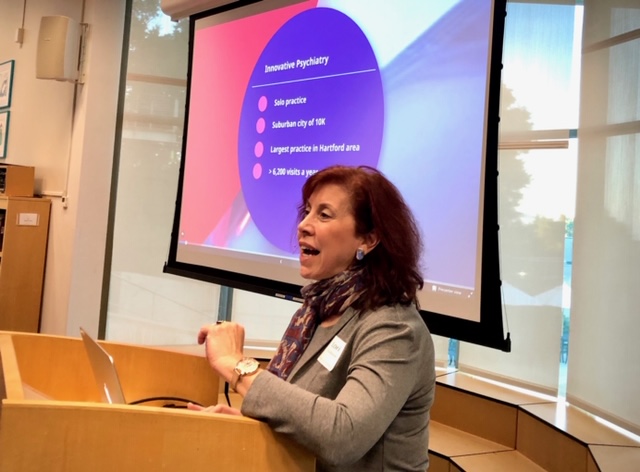
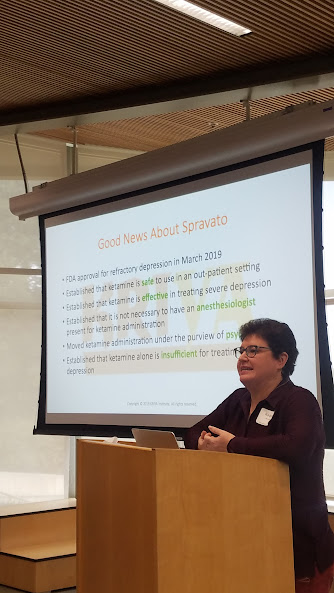
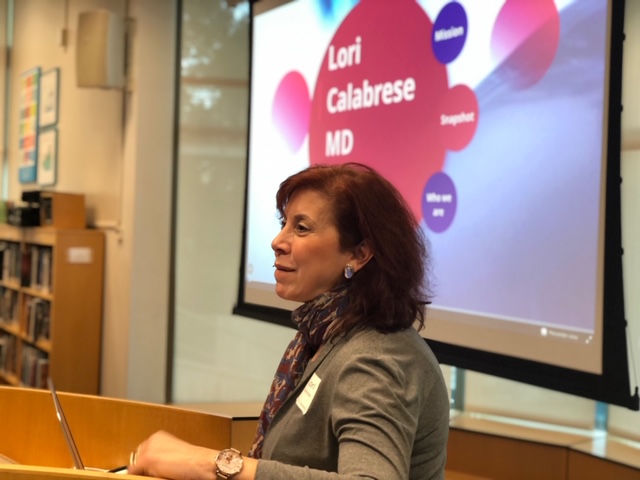
    Dr. Lori Calabrese speaks at KRIYA and applies the flexibility of ketamine.

    We’ve come so far in ketamine treatment for depression, and we still have so far to go.

    KRIYA held the first conference on ketamine treatment for depression in 2015. Now, 5 years later, there are several medical conferences that support the exchange of information in this field. Raquel Bennett, the founder of KRIYA – The Ketamine Research Institute –  says that ketamine is a flexible tool and should be used with freedom and skill. She urges clinicians to make the most of the flexibility of ketamine.

    This is the last conference by KRIYA that will be held in this format, according to Dr. Bennett. She plans to possibly shift to an online format next year to accommodate the huge numbers of clinicians who wish to be included.

    What’s more, KRIYA has supported, from the beginning, the use of ketamine by different routes and for varied conditions, and encourages participation from providers across the gamut of ketamine applications. So we’re a wonderfully diverse crew who come together for these conferences. As for me, I know that I’ve learned so many things and forged new friendships and collaborations from KRIYA conferences. 

    And…my own contributions have been so warmly received. As far as the educational gathering, there are psychiatrists, psychologists, therapists, ER physicians, pharmacists, anesthesiologists, neuroscientists, nurses, and experts in consciousness medicine. 

    Raquel Bennet, Psy.D. Stepped Up as a Leader in the Field of Ketamine for Depression

    Dr. Bennett reminds us she has created a “tasting menu,” if you will… from

    all corners of the field. At this conference, she opted for breadth vs depth to make us privy to all that’s happening in the field of working with ketamine. And she emphasizes that speakers are working from different paradigms. So, she urges us to listen for the paradigm they report from….and learn.

    And she’s right when she says that ketamine is a flexible tool that contributes to a variety of needs.  When a patient is too depressed to talk, ketamine lightens depression so they can participate in talk therapy. To help manage severe pain and the depression that goes with it. It can help the patient go deeper into therapy, and explore their traumatic experiences gently. It can treat acute suicidal thoughts and prevent hospitalization. And she says, it can induce mystical visions for existential exploration.

    Raquel had much, much more to say, but I want to mention some of the other speakers.

    Brent Turnipseed, MD and Lindsey Slater, LPC, from Austin, TX talked about their use of EMDR in ketamine-assisted therapy.

    Brent Turnipseed speaks about the flexibility of ketamine.

    In PTSD, the body’s own reaction to a patient’s traumatic memories activates adrenaline , which prevents their ability to process their trauma. Ketamine can calm the body enough that they can process the trauma without the distraction of adrenaline. As a result, it can help relieve their fears. 

    EMDR works by helping the patient desensitize by brief exposures to the trauma, then by redirecting the patient’s attention, EMDR induces a relaxed neurological state similar to rapid eye movement (REM).

    Elias Dakwar, M.D., psychiatrist and the addiction researcher we’ve often talked about before, gave a wonderful presentation. 

    He presented a thought -provoking talk on meditation and mindfulness as it relates to ketamine in treating addiction.

    The field of ketamine for psychiatric disorders, including  addiction treatment, continues to wrangle with how to take ketamine into psychiatry but that’s because our paradigms are problematic. Mainstream psychiatry has tried to cut ketamine down to size instead of using this extraordinary medicine as a DISRUPTOR.

    Dr. Dakwar entered addiction research after a long time practice of meditation and with great compassion for the patients he sees.

    He described his previous and current work in detail–look for it in the journals.

    Ian Mitchell, M.D., Emergency Medicine in British Columbia,

    spoke about the uses for ketamine in the emergency department. He spoke about its use for sedation during an emergency procedure, such as setting bones, repairing wounds, or the removal of foreign bodies, pediatric sedation for the same types of procedures, sub-dissociative dosing for pain management, especially for neuropathic pain, to prepare a patient for intubation, sedation for the out of control, prehospital pain relief, and to manage an overstimulated patient.

    In British Columbia, ambulances are equipped with intranasal ketamine for prehospital pain management as a result of the PAIN-K trial. More of ketamine’s flexibility.

    Wesley Ryan, M.D., psychiatrist from Marina del Ray, CA,  Parria Zarrinnegar, M.D., psychiatrist in Portland, OR, and Daniel Barton, M.D., psychiatrist from Nashville, TN all presented riveting case reports.

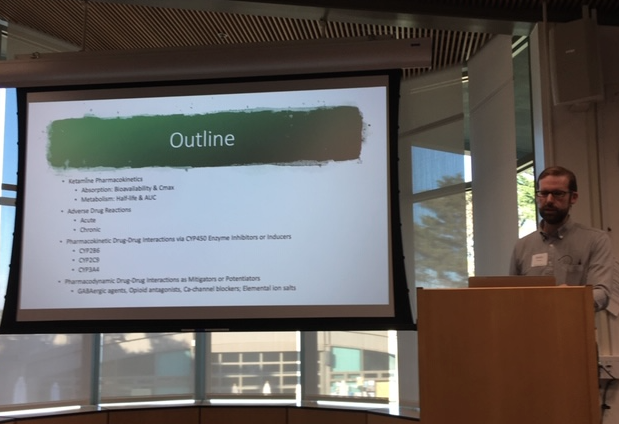
    Kelan Thomas, Pharm.D,

    spoke about adverse reactions and drug-to-drug interactions that have been documented with ketamine. So important and so well-done.

    Annie Oak, a journalist from the Bay area, spoke on the use of ketamine outside the medical setting.

    Gita Vaid, M.D., psychiatrist and psychoanalyst, spoke on using ketamine in psychoanalytic psychotherapy in very long session. She talked about how she has witnessed ketamine help patients relax and defenses soften so they can have freedom to talk. The psychotherapist builds relationship with the patient and it can be transformational.

    Jason Wallach, Ph.D., is a pharmacologist and neuroscience researcher whose energy and depth of knowledge captivates us every time he speaks. He spoke about the neuroscience and  pharmacology of ketamine. Gave an update on some of the other dissociative drugs he’s tested. (I think he’s tested them all!) He made the point that ketamine has been called a dirty drug because of the receptors it hits ex-vivo and in animal models — but that’s not true. It’s really one of the more selective drugs of this class at the doses used in people.

    Jessica Katzman, Ph.D., and Harvey Schwartz, Ph.D., spoke about bumps in the road they’ve discovered with ketamine assisted psychotherapy and in the integration work that follows treatment… What is integration? It comes from a latin word that means “to make whole” or “to begin again.” Bring your clinical compass, but don’t forget your humanity. A beautiful duo talk with lots of clinical examples.

    Eli Kolp, M.D., a pioneer in ketamine treatment, gave a beautiful talk on the phenomenology of ketamine-induced dissociative states.

    There were so many other speakers and so much to absorb–my computer battery kept dying down, so between Surface notes, handwritten notes, and photos, I can’t do justice to the breadth of expertise in the room, and the excitement.

    Greg Wells, Ph.D.  Sylver Quevedo, M.D., Veronika Gold, M.F.T.Eric Sienknecht, Psy.D. presented as a panel on their model of coordination of care between prescriber and psychotherapist. Peter Koshland, Pharm.D. talked about how to work with a compounding pharmacy for varied compounded preparations of racemic ketamine. Nate Schmidt, A.R.N.P spoke about scheduling and billing logistics.

    Sunday was a treasure with a very special presentation by Francoise Bourzat on the Use of Sacred Medicines in the Age of Technology and Medicalization. It was a delight to meet her. She captivated the audience, and her new book, Consciousness Medicine, is a wonderful synthesis of her life’s work.

    Kelley O’Donnell, M.D. and Christian Yavorsky, Ph.D. are doing yeoman’s work with KRIYA and presented an excellent (and not dry!) talk on Measuring Clinical Outcomes: Scales and Assessment Tools. And in addition to the training for Ketamine Assisted Psychotherapy that Raquel Bennett presented and discussed earlier in the conference, Jennifer Dore, MD presented a model of training for Ketamine Assisted Psychotherapy developed by Phil Wolfson, MD and Julane Andrews, that they have used around the country.

    IV Ketamine can STOP suicidal thoughts fast…Now that’s flexibility of ketamine!

    On the last day, and as the next to the last speaker, I took the podium to share my data in working with patients in my own practice, and showing how IV ketamine infusions can stop suicidal thinking, and save patients from having to go to the ER or be hospitalized.  

    Lori Calabrese. MD understands the flexibility of ketamine.

    With heartfelt gratitude. These are my people–the clinicians and many of the greats in the field (who were in the audience) who launched my interest, encouraged my work, supported my writing–and showed me how to apply for an IRB. It’s amazing how much can happen in a year. So I saved the newest data and my newest results (using a new protocol and a new rating scale) for my colleagues and my friends here at KRIYA. I wanted them to hear it first.

    I wanted to give back to those who have sparked my imagination, nurtured my interests, given wind to my sails.

    It gives me such joy to share how this remarkable medicine that can do so much, can also save a life in a short time. And to see clinicians in practice eager to take this information home.

    And that’s the beauty of meeting together at KRIYA and swapping stories and describing outcomes and victories that have restored the lives of people we work with.

    Looking Back…and Reaching Forward – Preserving the Flexibility of Ketamine

    It’s been such a busy fall with travel and speaking engagements each month… along with treating patients. (I’m sure my colleagues are as tired as I am. We need a vacation. Seriously.) But it’s gratifying to look back and know all this information that’s been shared will improve the lives of people we each cross paths with after KRIYA and all the other conferences.

    I know these reports “from the front” can seem science-y and vague, but I want you to see how hard clinicians, neuroscientists, and practitioners of all types are constantly working to learn the breadth and depth of what ketamine can do to help people live better, improved lives. That’s really what it’s about. Ketamine’s flexibility allows for treatment that can turn your life around.

    And if you’ve been reading along, and wondering if there is help for you, call us. In spite of all the travel and bustle, we’re still in all this to help you get better, live better, and have the ability to build a truly fulfilling life.

    You owe it to yourself to try, if you’ve not found a medicine that works for you. It’s not that ketamine is a cure-all for everyone, but it works in so many areas of your brain, that it can restore areas damaged by stress and trauma in most people who are treated with it.

    As the holidays approach, give yourself the best chance you can to enjoy the time ahead and the new year that follows.

    Lori Calabrese, M.D. is on the front end of the race to stop PTSD in its tracks using IV ketamine treatment.

    To the restoration of your best self,
  • Gratitude, Suicide Research Scientists, and the AFSP

    Gratitude, Suicide Research Scientists, and the AFSP

    Welcome to November… this is the month each year we dedicate to thankfulness and gratitude. 

    I’m going to share with you some experiences I’ve had this week with gratitude, suicide research scientists, and the AFSP. No matter where you are in life, no matter your circumstances…if you think about it..look around you…there is most likely something you can be grateful for. 

    It may be something fundamental…like clean air or clean water…if your circumstances seem too dire to redeem. But start where you can. And acknowledge gratitude. Because when you do, something happens inside you.  Something happens in your brain. It’s almost as though a barely perceptible fragrance emerges.  Something that soothes your circuitry… and a partial drop of wellbeing falls into the pool of your spirit.

    We’ll be talking more about this as the weeks go by. But think about it. Try to think of something…anything… each day that you can be grateful for.

    I attended an inspiring conference last week. It was a gathering of over 400 scientific researchers from all over the world who gathered to exchange their findings and present their work on suicide research.

    These are the highest level super scientists, who perform the purist research with the tightest controls and the most elegant statistics to reliably measure their results. And it’s their work that feeds the world’s understanding of suicidality. What is it? And what causes it?  When does the risk spike? In whom? And what can we do to prevent it? Without these bright and dedicated men and women, we’d still be in the dark ages with our response as a society to suicidal thoughts and behaviors. Yes, I’m grateful.

    And we’d also be in the dark ages about how to respond or help.

    In terms of suicide research, these are the finest minds who’ve worked together and separately, tenaciously analyzing their data …and collaborating for decades.

    Gratitude, suicide research scientists, and the AFSP have filled up my week and it has me spinning in it all.

    An Invitation to Speak

    Much to my surprise, I was invited to speak to this stunning gathering. It humbled me, and I felt so privileged that I could contribute to this body body of hard-won knowledge. 

    I presented my findings from my own retrospective chart review taken from the population of my own practice. Mine wasn’t a prospective randomized placebo-controlled trial. It was a gathering of data about IV ketamine’s impact on suicidal thoughts. Its ability to stop them. To prevent injury or death… or hospitalization — or trips to the ER.  

    It’s not my intent to make a name for myself as a research scientist… that ship sailed a couple decades ago. I just want to share my experiences treating my own patients in truth…honestly...inviting peer review.

    This group received me well, as well as my presentation. I met some wonderful people. And it all got me thinking about what my place is in this universe of psychiatric treatment. Research. And ketamine administration for psychiatric disorders. 

    Where I Fit

    I’m not a researcher. I don’t carefully tease apart large data sets, or curate a cohort to remove mitigating factors or symptoms that could taint the results.  

    Quite the opposite, actually. I’m a practitioner, caring for my patients, and always seeking ways to help each one get better so they might have access to a fulfilling life. My heart is in helping patients enjoy improved lives…and in healing.
    Gratitude, suicide research scientists, and the AFSP work together to help a man like this one have joy again.

    From the earliest part of my training all those years ago, my heart was to find answers, methods, diets, nutrients, medicines… anything that could play a role in restoring these broken-hearted people, one patient at a time. 

    And that’s what motivates me still. To see sick people get well.  To see suffering people get better. For those who can’t function to function again. With all their complicated, intricately confusing pieces to their personal puzzles… to see those pieces relax…integrate…and thrive together in a restored and hopeful person.

    So this is all the more reason why I was so honored to be received by this exclusive group of scientists. I felt so privileged that my own work contributed to the body of knowledge on suicide prevention.

    My Gratitude, Suicide Research Scientists, and the AFSP

    I want to talk about the organization that fuels so much of this research with their funding. The American Foundation for Suicide Prevention (AFSP) was founded in 1987 by beloved actress Mariette Hartley because of her own personal and family struggle with suicide and suicidal thinking.

    Her intent was to bring hope and intervention to those who suffer in silence and die alone.

    Image result for Mariette Hartley

    Now, nearly 33 years later, AFSP has local chapters in all 50 states, and offices in NYC and Washington, DC.

    They’re busy at work to create a culture that’s informed and prepared to “be smart” about mental health, and the potential for suicide. They teach society in general, and the family and friends of those at risk in particular, constructive methods for finding those with suicidal thinking, and helping them get treatment. To keep them safe.

    Gratitude, Suicide Research Scientists, and the AFSP

    AFSP maintains a presence in Washington, DC to influence policies geared to save lives, and educate people in all walks of life about suicide intervention and  prevention.

    International Survivors of Suicide Loss Day is an annual event when people who’ve been impacted by suicide and loss can come together at events around the world to find support, healing, understanding…and to give back.

    Thanks to AFSP, when your loved one dies by suicide, you don’t have to bear the pain in withdrawn silence. And if you’re having suicidal thoughts, AFSP provides extensive resources to help you get better and live a healthier and happier life.

    As I attended this conference, I realized how far reaching the funding AFSP provides is.  How much research they fund.  The resources they offer to survivors to help bring healing and restoration. Like the online memory quilt, where survivors can create a “quilting square” to remember and celebrate their loved one’s life, through photos, videos, prose, and poetry.

    AFSB also created and supports the National Suicide Prevention Lifeline at 1(800)-800-273-TALK (8255) and the  Crisis Text Line reached by texting TALK to 741741.

    Carry It Forward this Holiday Season

    As the holidays lie ahead over the next two months, be aware that this time of year is not only a difficult time for so many, but also a dangerous one. Let’s be tuned in to identify those around us who may be in need of a listening ear, support, or intervention. Research has shown that you won’t put someone at higher risk if you ask them directly whether they’ve considered hurting themselves or of wanting to die. 

    Being direct, it turns out, actually saves lives. People who are suffering need hope. And they need to feel included. And that they matter. 

    Because you DO matter. Your pain matters.  You’re not invisible. 

    If you have thoughts of suicide, or the thought that you don’t want to live LIKE THIS anymore, reach out.

    And if you’d like to see if IV ketamine infusions can help, call us

    IV ketamine treatment can erase those thoughts in an afternoon, and leave hopeful thoughts in their place. It can help you want to build your life. It can increase your energy so that you can. 

    You can feel amazed. Astounded at the change and new hope.

    Does it do this for everyone?  Well, no.  Nothing does.  But it does this for most people who have not been helped by medicines before. The more severe your symptoms, the more effectively it seems to work. It does it for far more than any other medicine has.

    And there’s financing if you need it.

    Let us help you find your life again. 

    Lori Calabrese, MD offers innovative psychiatric treatment like IV Ketamine

    To the restoration of your best self,
    Lori Calabrese, M.D.

error: Content is protected !!