Tag: IV Ketamine for Depression

  • Can’t Think, Remember, or Make Decisions? What to Do About Brain Fog

    Can’t Think, Remember, or Make Decisions? What to Do About Brain Fog

    Thanks to the Delta variant, the pandemic is not over… yet. Impaired cognition has reached a crisis point for many throughout the world.
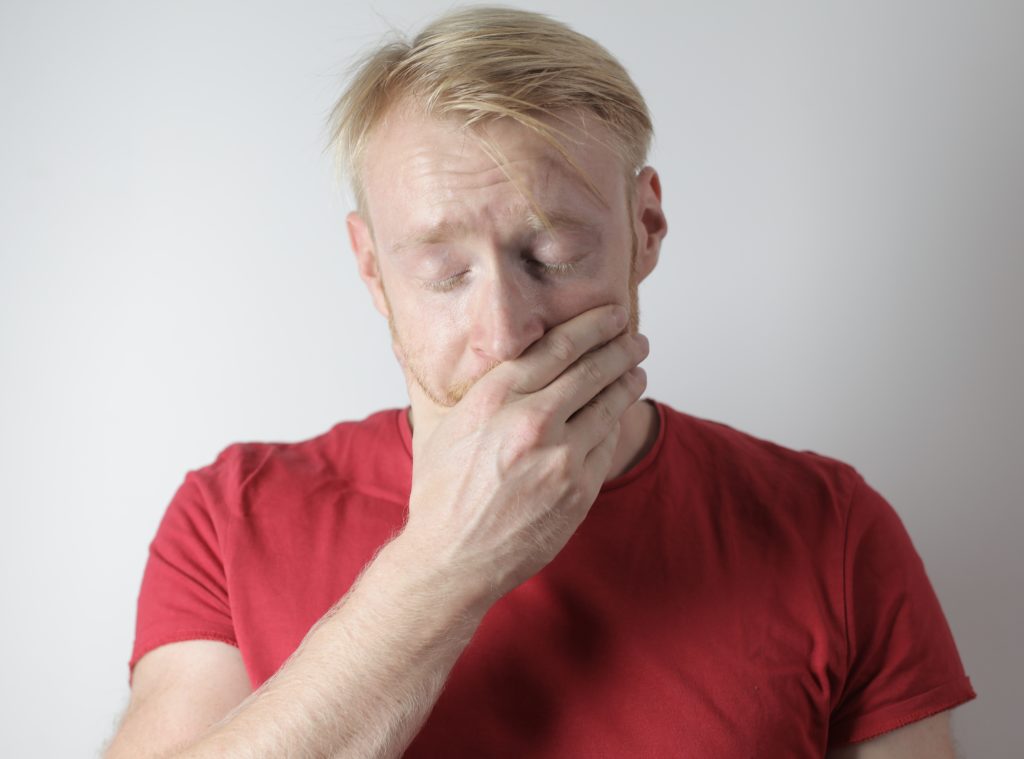
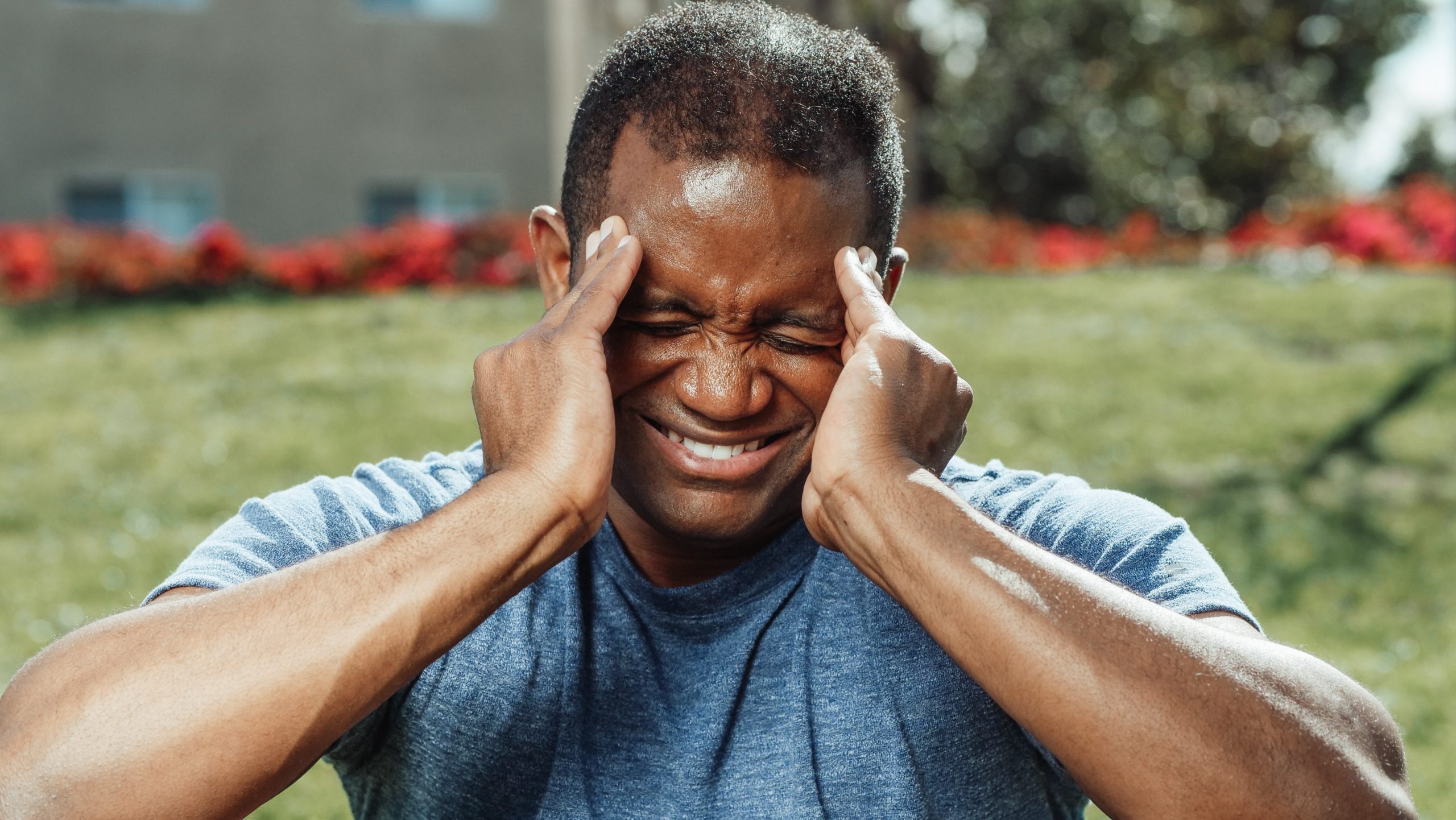
    Elanna walked into the kitchen and laid her hands on the counter top. Why was she here? She looked for her phone, but she was holding it. Well, that was good, at least. She looked around for a hint…water was OFF at the sink. Well, that was good. Finally she remembered her bill she needed to pay by check. So she hurried to her desk to write the check and mail it. What had her son told her to read about…? What to do about brain fog? What was it?

    The next morning she found the envelope to pay the bill on her desk. Oh NO!!!  That needed to be mailed yesterday!!!  So she slipped it into her purse to take it to the post office.

    Then her phone rang. It was the box store to schedule delivery for her refrigerator. “Tuesday, between 3pm and 5pm? Yes,I’ll be here.”

    Next, she brought in the mail, and felt relieved that at least her bill payment had gone out today, even if it was a day late. A special envelope caught her attention. She pulled at it to free it from the rest of the stack. She recognized the handwriting and eagerly opened it. 

    A wedding shower for her closest friend’s daughter!  On Tuesday at 3:30pm. Wonderful! 

    She called immediately to RSVP and assured her friend she’d be there with bells on! 

    Remember Elanna’s bill payment in her purse…?  She doesn’t….

    The following day she grabbed her purse, stuffing an apple in it on her way out the door in case she got hungry. She made several stops to find just the right gift. It wasn’t easy, because she found herself distracted repeatedly by all the appealing things on display that had nothing to do with a wedding shower.

    The weekend was a whirlwind of activity, and finally Tuesday morning arrived. She wrapped her gift, dressed enthusiastically, then rushed out the door for the shower.  She had great fun with her friends and their daughters, everyone twittering about Hannah’s wedding.

    She asked around, super casually, what they knew about brain fog… and if brain fog was a thing. One of the young women said, “It’s a mental fuzziness, an inability to think clearly, make decisions clearly, that kind of thing.”

    After helping with cleanup, Elanna got home at dusk and saw a note on her door. She pulled it off and set it on the kitchen counter.

    She was tired, so she picked up her laptop, and sat in the recliner with her feet up.

    After a long exhale, and relief in her throbbing feet (heels are such a pain!), she noticed the laptop stilll folded closed in her lap. What was I going to do? She closed her eyes…and drifted off to sleep…then the phone rang. “Hello, I’m calling for Elanna. Would you like to reschedule the delivery of your refrigerator?”  Oh no.  That was today…..ugghh.

    What To Do About Brain Fog… It Affects So Many Aspects of Life

    The customer service agent explained she owed another $79.00  for the repeat delivery.  (Yikes!).  She also encouraged her to go to their website and make a note of the new delivery order number.

    Elanna thought, I don’t want to go to their website..!  “Can you just give it to me now?”

    “No ma’am. My department delivers the appliance. The scheduling department assigns the delivery order numbers. And keep in mind that this number is different than the order number itself. This is about the second delivery. You’ll need this to give to the delivery person so you can be sure you get the correct appliance.”

    Elanna looked up the website…then thought, where?? Where do I go?  How do I get there?  She looked at the menu and there was nothing about deliveries or delivery order numbers.  Where do I go???

    The phone rang again… this time it was the creditor she thought she had paid. She was sure she mailed it. Then again…

    Brain fog can lead to mistakes: what to do about brain fog?

    Confusion, scatterbrained mistakes, a feeling of helplessness…can be costly.

    Elanna searched her purse, and there, under the stuffed apple, was a crumpled envelope.  Oh no….

    “I’m sorry. I forgot it was in my purse.”

    “ Yes ma’am…be sure to add $25.00 to that check as a late charge.”

    Frustration! What Can You Do about Brain Fog??

    Elanna was so frustrated she didn’t know whether to cry or scream. But she still hadn’t written that email. She would do that right now. Write to Ben, Write to Ben, Write to Ben, she murmured to herself so she wouldn’t forget by the time she got into her email. So many unread new messages! So much junk that needed clearing out. After a quick hello, telling him about a couple of events of the week, she transitioned to her real reason for writing. 

    But.. her mind was blank. And she felt blank. She didn’t remember what she had meant to say very clearly…it was all mottled and tangled in her mind…like a wisp of dust floating away. She finally wrote that there was just so much going on…and closed out the email.  It was quick, insubstantial, and pretty meaningless.

    How frustrating!

    What in the world was wrong with her? She pushed the laptop aside, and went to the kitchen for ice cream.  Elanna needed a BREAK!!!

    And what about you? Have you noticed your mind is foggier than it used to be?  Do you think less quickly, calculate more slowly…or have trouble with creative problem solving?  When you write that cover letter or that email, is it clunky and poorly composed?  

    Oh to be able to think again! 

    Actually, neuroscientists have found that this reduced cognition — what we’re calling brain fog here — is a widespread problem for people in all walks of life.  

    There seems to be no question that the pandemic plays a huge role. All the depression, anxiety, and PTSD, not to mention alcohol use and substance use can blur cognition for so many.

    In addition, there’s a surge of concern among physicians and neurologists that we’re actually in a global cognitive crisis.

    Listen up.

    We now know that 50% of people who recover from the COVID-19 infection suffer from brain fog and fatigue. 50%! Many experience ongoing difficulties in executive function, cognitive control and just overall decreases in cognition that lead to disability and impaired functioning and sometimes, disability. 

    An over arching fear among health experts is that these deficiencies could go on and on — for years.

    The cognitive skills we’re talking about include the ability to focus attention, to perceive, register information, lay down memory and retrieve it, as well as difficulties with word finding, language and reasoning.

    Besides being potential long-haul symptoms of COVID-19, impairments in many of these skills are also common (but poorly recognized) features of depression, anxiety, autism, PTSD, dyslexia, OCD, bipolar disorder, substance use disorders, as well as being found in ADHD and dementia.

    Add to this, the fact that the world population is aging … and that will heighten this cognition crisis. Experts say that by 2060, the number of people 65 and older is expected to double. 

    Makes you stop and think. And gulp.

    Who’ll take care of them all… errr…I mean all of us?

    What to do about brain fog? This man will try a keto diet.

    85% -94% of people with acute depression suffer cognitive impairment. Brain fog.

    So what can YOU do about brain fog?

    The Role of Psychiatric Conditions in This Cognitive Decline

    Look at depression, and you’re looking at over 264 million people across the globe who suffer from it. Depression not only lowers mood and zest for life, but it also impairs cognition, attention focus, memory, information processing, decision making skills, cognitive flexibility, and executive functioning.

    The fact is that 85%-94% of people with acute depression experience cognitive impairment. Once you reach remission from depression, you can still suffer cognitive impairment. 40-45% of people who achieve remission report cognitive impairment in at least one area.

    This is huge.

    And so pressing that neurologists are working hard to develop forms of cognition remediation therapy.

    So far, cognitive remediation therapy shows promising. Combining holistic approaches to diet and health, exercise, cognitive training, antidepressant therapy, and neuromodulation seems to help.

    And of course, if your treatment for depression, PTSD, drinking isn’t working for you, IV ketamine treatment could be just the ticket.

    Bottom line, we want remission for you. Restoration of resilience and cognitive restoration.

    How cool would that be??

    A Ketogenic Diet May be a Promising Option for Improved Cognition and Clearing Brain Fog

    It could feel so good to have the fog clear.

    Using a ketogenic diet and treating disorders just might help brain fog.

    We work with ketogenic diets in many of our patients. (One of the many ways we’re at the forefront in our field – and why we get such good results.)

    Of course, some find that overwhelming, unappealing, or inconvenient. But we educate, empower, and motivate our patients to consider all their options so they can surge forward and reclaim their best selves.

    We can help you leverage your gut microbiome with food rather than too many probiotics, flavonoids for improved cognitive functioning, and your own ketones as a fantastic energy source for the mitochondria in your brain (and throughout your body) — without the brain fog or food coma that can accompany carb and sugar surges.

    Mitochondria are tiny organelles in the cell that produce the energy needed to power that cell.

    It’s a brilliant concept, and a novel treatment approach for mood and anxiety disorders (and in our hands even in chronic anorexia!) but you rarely hear psychiatrists talk about it

    But we will. Lots more to come.

    Meanwhile, one option is to treat the disorder that may be contributing to brain fog with IV ketamine treatment. While we’re not portraying that IV ketamine kills brain fog, we know that brain fog that happens with some psychiatric disorders can improve when the disorder is treated.

    A few studies, between 2015 and as recently as 2020, have reported sone improvement in brain fog with IV ketamine treatment. So that’s promising, too.
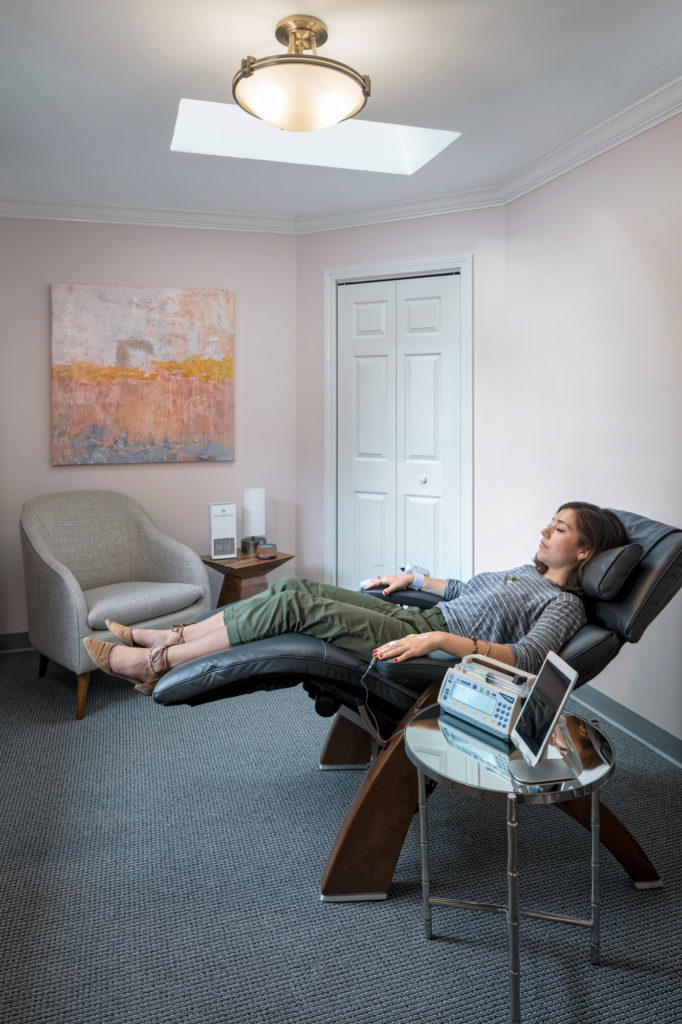
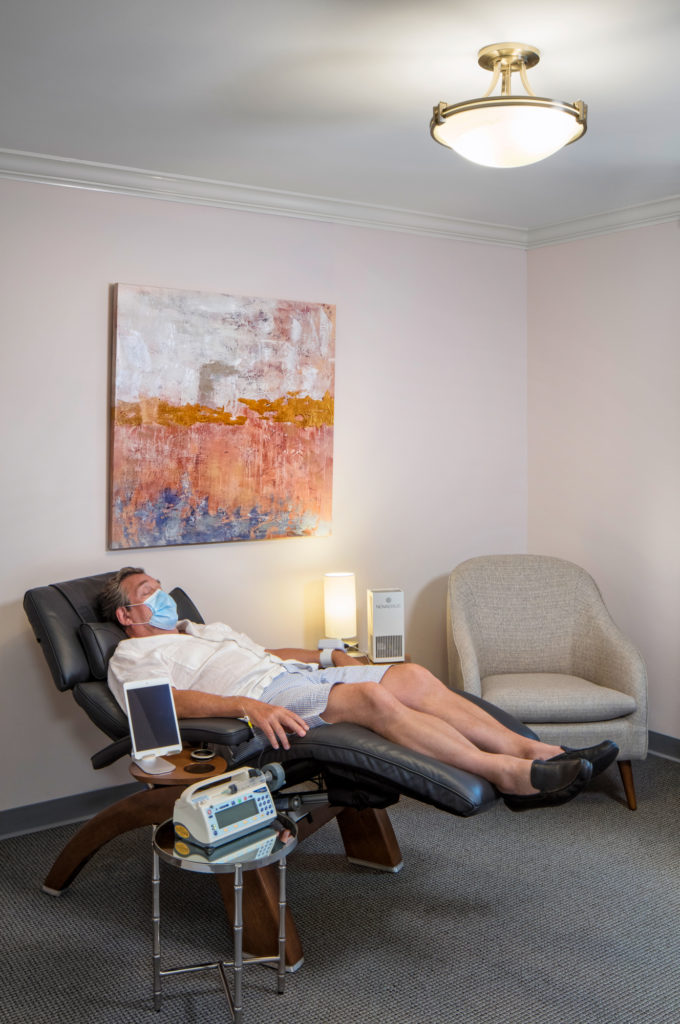
    You’ll be able to relax in a quiet and soothing treatment room to make the most of your ketamine treatment.

    At Innovative Psychiatry, many patients ask what to do about brain fog. Of course, everyone is different and the kind of brain fog and the reasons behind it are different. The work-up, the recommendations for exercise, ketogenic and metabolic diets, the lifestyle changes — are specific to you, and to your ongoing struggle with anxiety, trauma, or mood. All of these things together can make a noticeable difference.

    If there is enough difference that you can write a knockout piece of copy, complete assignments and projects, draft a quick email, pick up the house — then that’s going to improve your life. And that may be just the beginning.

    Do you find you have brain fog, in addition to anxiety, depression, or trauma that just lingers? If so, call us.

    Let’s talk about options that can help.

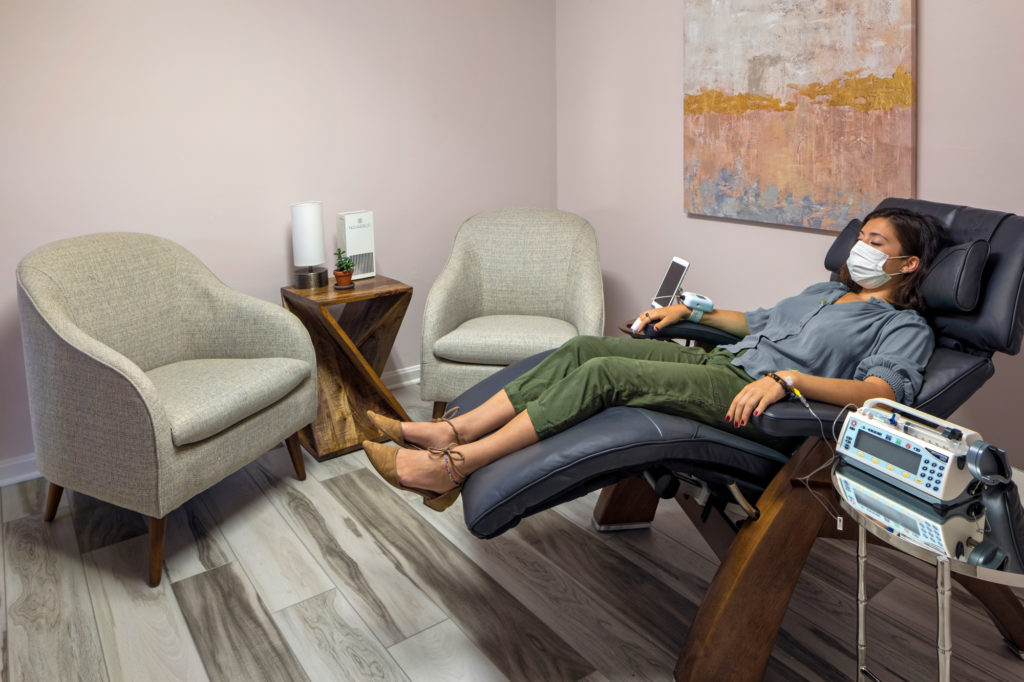
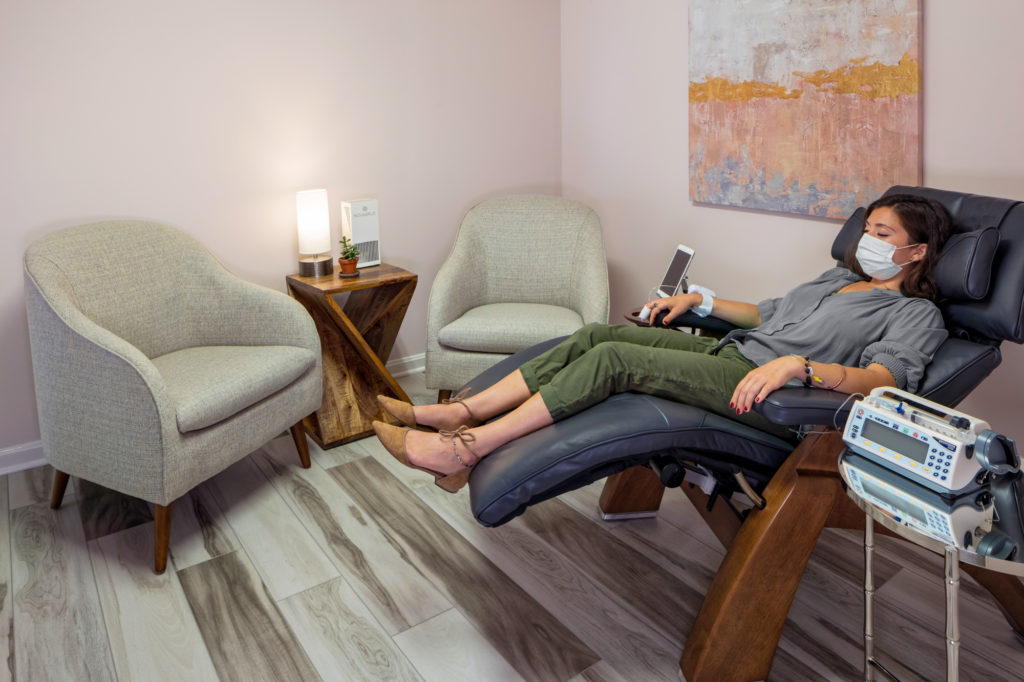
    When you come for treatment, you’ll find a lovely, relaxing private room with a heated zero-gravity recliner to help you get the most from your treatment. Don’t let the gorgeousness fool you. We’ve installed hospital-grade plasma cell technology to remove all viruses, bacteria, and mold from the air and hard and soft surfaces…yes, including the Delta variant! So you can rest assured knowing you’re safe from infection in our offices.

    Sometimes the symptoms attached to a disorder make the disorder so much more unbearable.

    We look forward to meeting you and working together with you to help you know hope.

    Lori Calabrese, M.D. is on the front end of the race to stop PTSD in its tracks using IV ketamine treatment.

    To the restoration of your best self,
  • Erase Alcohol Memory Triggers and Empower Your Control Over Drinking

    Erase Alcohol Memory Triggers and Empower Your Control Over Drinking

    Alcohol Use Disorder is the most common substance use disorder. It causes economic, psychosocial, medical, and personal burdens across the globe that nothing else compares to.

    During the pandemic, people who’ve lost jobs and income, or been hospitalized with COVID, or who’ve lost loved ones to the vicious virus, have clear and easy-to-identify reasons for depression. But the vast majority of people who haven’t experienced things like this still struggled with depression and anxiety — and didn’t understand why. For many, that anxiety led to heavier drinking and substance use than was typical for them. And so for them–and maybe for you–taking a second look at ketamine’s effectiveness in erasing alcohol memory triggers is even more relevant if they’re trying to reduce the heavier drinking they’ve been doing. People need to get jobs again, and need to reduce their use of alcohol and other substances they’ve been turning to to cope. They need to take action

    If this is you, maybe you need to take action. Jump in.

    We know that the rate of relapse for those attempting to achieve sobriety is very high. Unfortunately, with so many alternative and creative FDA approved treatments available, none has really demonstrated robust success. So, that leads to a closer look at ketamine treatment.

    While there are good outcomes with ketamine treatment for alcohol use disorder, this treatment calls for in-depth exploration through further studies.

    Two recent studies offered more information about these outcomes. (Still, more are needed. We know that and applaud our colleagues who continue to break ground in this field.)

    One study published in the American Journal of Psychiatry December 2019 right before COVID-19 began to grow in the US revealed plenty. The stress of COVID-19 might show a thwarted effect. The monumental stress so many experienced. And to which so many succumbed.  Thankfully, during this study, no one had heard of COVID.

    Elias Dakwar, M.D., led this study, then followed it with one focused on cocaine use. He’s Assistant Professor of Clinical Psychiatry at Columbia University. And he’s become intrigued with whether ketamine can reduce craving in addictive disorders. …Interesting, right?

    Motivational Enhancement Therapy targets a person’s motivation and determination to stop drinking alcohol. Ketamine can improve motivation and initiative… and motivational enhancement therapy can, too.

    So the synergy between the two can be remarkably effective.

    But wait…

    There is another way that ketamine helps empower an individual to stop drinking. It impacts your memories tied to drinking in the past by erasing alcohol memory triggers.

    In a study published in Nature, Ravi Das and his research team looked at whether ketamine could put the brakes on a phenomenon called maladaptive reward memories. They play a big role in substance abuse.

    The idea is that when you see a cocktail, or a cold beer, it triggers memories associated with drinking it in the past.

    (The same thing happens to sugar addicts. See a moist brownie, or a sundae dripping with hot fudge, and it triggers memories of the depth of enjoyment you experienced when you ate those before.)

    And you want more.

    Who can drink just one beer… or eat just one s’more?

    We say these are maladaptive reward memories, because that decadent taste and texture, or the good feeling you had when you drank that cocktail or ice cold beer, is the reward you received from it. It’s maladaptive because those rewards are not necessarily good for you. More of the chocolatey treat leads to weight gain… and all the ills associated with too much sugar. 

    By the same token, the desire to have more of that feeling you get with more beer or cocktails, can lead to intoxication, impaired driving… and, we all know, to a PROBLEM.

    So that’s where control comes in. To have one treat, or one alcoholic drink, then to stop and have no more. (We’re using the example of chocolate to make the problem more relatable for you if you don’t use alcohol. Hits a little closer to home, doesn’t it?)

    Back to this new study. The researchers displayed a glass of cold beer, along with photos of people drinking, laughing, having a good time. It was all about studying the effect of memories associated with drinking alcohol. Ketamine treatment blocks the memory formation associated with alcohol consumption. They believed it could erase the triggers in the environment that seem to spur you to drink.

    Their conclusion was that while ketamine can erase alcohol memory triggers, it is not a magic bullet all in itself—but rather it would be most effective when it’s combined with motivational enhancement therapy.

    So if you understand that you need to incorporate the two together, to get the most out of treatment… then your power to stop drinking, or even greatly reduce drinking alcohol can be dramatically increased.

    It’s like 1 + 1 = 3.6. (I love this kind of new math.)

    It’s interesting that ketamine’s ability to erase or rework memories has been considered by some as a negative. So let’s be really clear here: ketamine doesn’t erase memory. But it can and it does dampen and strips the thrill away from memory rewards.

    Innovative thinking and an innovative approach to alcohol—a problem that just about everyone thinks they have an answer for. We’re grateful to Drs. Dakwar and Das for giving us a whole new fresh idea for a substance use disorder that kills millions every year.

    Sometimes it takes a village.

    Sometimes it takes an innovator.

    At Innovative Psychiatry, we see so many people whose drinking has changed dramatically following IV ketamine treatment. Reduced cravings, renewed motivation, abstinence. They get their lives back, they get their jobs back, and they get their relationships on track. Since alcohol use disorder can be right in there along with depression, anxiety, PTSD and other substance use disorders, IV ketamine can address multiple disorders at the same time. Ketamine’s ability to rewrite those memories, to change your experience when you’re exposed to scenarios that had previously provided triggers for you, can bring such freedom, hope, and a sense of control over your life… that you’ll be thrilled to get to know your best self.

    We offer IV ketamine treatment in a soothing, relaxing, and private environment so you can settle in and get the most from your treatment.

    Receive your ketamine treatment in a comfy recliner to erase memory triggers of alcohol use.

    We also have prepared our offices for you by installing technology that destroys viruses, bacteria, and molds in the air and on surfaces. See the little white box in the photo? It’s amazing that such a small container can be so powerful. NASA and The Department of Defense designed our disinfecting technology. (We’ve learned we can’t be too safe, haven’t we?) So you can rest reassured when you come for IV ketamine treatment. You can rest. You can set an intention… create a mindset… that will allow you to move forward while ketamine goes to work.

    If you have found you don’t have the control you wish you did over alcohol, call us.

    It delights us to talk with you, and with your healthcare team, to coordinate treatment to help you enjoy more success as you build your life and relationships.

    Innovative Psychiatry is a full service psychiatric practice, and we offer IV ketamine treatment. If you find you drink more alcohol at a time than you wish, or more often than you intend, give yourself the benefit that ketamine can provide. Call us and let’s find out if you’re a candidate for this extraordinary treatment.

    Ketamine isn’t for everyone. But we can absolutely evaluate whether you’re a good candidate or not for this treatment. Since the percentage of those who don’t respond is low, chances are IV ketamine will give you the advantage you need to move forward in your life without the burden of excessive and harmful drinking.

    Cut yourself some slack.

    Lori Calabrese, M.D. is on the front end of the race to stop PTSD in its tracks using IV ketamine treatment.

    To the restoration of your best self,

  • The Connection Between a Man’s Violence and His Anxiety: How to Help

    The Connection Between a Man’s Violence and His Anxiety: How to Help

    When a man's violence is fueled by anxiety, people around him can be hurt.

    Know any men who can flip from mild annoyance to a violent rage in a short minute? Know any women who are wounded and intimidated by a man’s anger?  Now if that anger is violent then it’s likely lots of women and children as well are wounded and intimidated by it. Let’s talk about the connection between a man’s violence and his anxiety.

    Anxiety/alarm. 

    A good book written by Russell Kennedy, M.D., titled RX Anxiety, is full of great advice for men whose anxiety is expressed in violence. Dr. Kennedy explains that anxiety is experienced both emotionally …in his mind…and physically, in his body. Anxiety is produced in the mind, and alarm is the result that is experienced in his body…physically.

    So it should be no surprise that since a man feels this emotion in mind and body, that it would be expressed in both his mind and his body. 

    But in his body… how?

    One of the human physiology’s way of calming this anxiety/alarm, is crying. When we cry it rewires the brain. But what if, as a boy, they taught you to not cry?

    Tom was edgy, irritable. He woke up in an ambulance, which caught him off guard. They said he had a blackout. Once at the hospital, ER staff rushed to apply leads to all the right spots on his chest and legs for an EKGs. And then another one.  After a variety of tests, they moved him to a cardiac unit in the hospital.

    Tom felt fine. What was all the fuss? Then they handed him a pitcher that looked like it would hold a quart of milk with a wide open top. The nurse instructed him to “pee” into the pitcher !?!

    He blushed, grumbled, let out a few curse words and said he couldn’t “go” in that sitting position.

    From that point on, everything made him madder. Madder and madder. More and more irritated.

    When a lunch tray was delivered to him, he cleared it from his bedside table with one angry sweep of his arm. Food, cutlery, his plate and glass, all flew to the side of the room, hitting the chair and wall in a big mess.

    His nostrils flared. “Get all this away from me!”  

    In his most secret place of shame, Tom felt like crying. But that was unthinkable. So he had just lashed out…

    A man’s violence and his anxiety are so closely connected. A cardiac event can cause unbearable anxiety in a man, and it’s not unusual for a violent expression to follow.

    A man's violence can be connected to his anxiety.

    “Anxiety is an early warning system to help you survive… It’s not there to harm you, but in its constant warnings, it makes you feel unsafe.” -Anxiety RX

    Tom may have felt angry and irritable, and may have behaved with a lack of control. But what was really going on?

    Anxiety. There is very little in a man’s life to ignite anxiety like a cardiac event. Anxiety was eating Tom up inside.

    The “Straw” of Caring for Others Before Yourself Can Break the Camel’s Back

    This is such a common situation for men. Men who marry young, for instance, before they’re really equipped to be providers for themselves or a family. Maybe a young pregnant wife, or the perceived need to rescue a girlfriend from an abusive family. Crises like this can seem obvious and necessary, but can lead to a man’s overload.

    Or maybe parents whose special needs require unexpected and exorbitant care and financial support. 

    There are endless possibilities of circumstances that could add the breaking straw to a man’s back resulting in constant worry — like where will I get the money to pay all these bills? and when will I find the time to care for everyone who needs me? And fear of the fallout if he fails…

    You’d think true masculinity was just calm and collected happiness. So alpha male that it needs not or worries not. But typically masculine characters are always fighting, and most violence comes from some agitated level of fear and anxiety.”

    –Liev Schreiber

    Add to that, the belief that a man might unwittingly hold that being a caregiver gives his life power and purpose, a sense that he matters. However, he may not grasp at all that the burden that gives his life power and purpose may also break him under the load of anxiety and violence.

    Reducing a man's anxiety can reduce his violence.

    A Man’s Violent Release can Easily Follow the Anxiety that Accompanies His Responsibilities

    As we mentioned earlier, all these things can happen to a woman, too. But we’re focusing on men today because they’ve so often been taught to avoid showing their feelings, and to not cry because it’s a sign of weakness. (You know men like this. Maybe you are one. Or maybe you’re a woman who has seen this, over and over) And that can have dangerous results

    So when the pressure builds from a mountain of responsibilities they fear they cannot fulfill, instead of crying or panicking, that man can snap and become violent.

    So our goal is to help him find ways to lower the pressure far in advance of the melting point.

    To help him learn to take care of himself, give himself time to release pressure through enjoyable activities, and to spend time with the people who love him most.

    Sons Need to Learn Self Care from Childhood to Equip Themselves to Respond to Stress Because there’s often a Connection Between a Man’s Violence and His Anxiety-Depression

    And optimally, we need to train our sons to seek these releases as children and young men, before their responsibilities have so much power.

    Our quiet, private treatment rooms allow you to relax to receive your IV ketamine treatment.

    Each individual treatment room provides privacy and quiet, as well as an incredibly comfortable zero-gravity heated leather recliner — so you can be monitored during treatment, and relax deeply for the best possible infusion experience.

    At Innovative Psychiatry, we’re here for you, and for the men in your life. And we love to work with and complement your your healthcare team to offer treatments that can help you or the people you love. When the anxiety is seated in PTSD or social anxiety, IV ketamine treatment can be a remarkable aid. And we can schedule your treatments so that you can to get the most benefit from the neuroplasticity ketamine offers to do the best possible work in therapy.

    Above and Beyond

    We have a devoted program for administering IV ketamine treatment, and have installed space-age equipment to remove viruses, bacteria, and molds from the air and surfaces. When you come for treatment, you can feel safe from risks–because we go above and beyond to keep you safe! So you can focus on getting better. The environment-purifying technology designed by NASA and the Department of Defense keeps the environmental air and surfaces free of pathogens. There is nothing else even close. We’ve taken the best steps available to ensure your wellbeing when you’re here.

    When a man takes time to meet his own needs, he has less anxiety for his responsibilities and reduces his risk of violent thoughts.

    Taking care of yourself, giving yourself what you need, can equip you to take care of all those responsibilities more effectively… and keep the anxiety and depression from overwhelming you.

    Anxiety is not something to be ashamed of. It’s not weakness. But, like so many other things, it requires your attention to manage it, seek treatment, and be the best you can be for yourself and those around you.

    Anxiety can take on a life of its own, and drive you to do things you would never normally do. If anxiety and/or depression has tried to drive you to violence before, you can kick it to the curb.

    Please call us if we can help.

    We look forward to working with you.

    Lori Calabrese, M.D. is on the front end of the race to stop PTSD in its tracks using IV ketamine treatment.

    To the restoration of your best self,

  • Interesting Times: How They Help You Overcome and Help Others, Too

    Interesting Times: How They Help You Overcome and Help Others, Too

    Ask yourself…”Do you prefer good times…or interesting times…?”

    We’ve talked about how to recover after a crisis or trauma so you can get back up. Let’s take another step. Let’s talk about making use of your experiences so you can — and will — move forward. First and foremost, like letting go of the memories of falling short in the past. A failed grade, a missed touchdown, the end of a relationship, a project that didn’t impress your boss… or all those times you were late in picking up the kids… or forgot the cupcakes for the classroom on your child’s birthday. Or those painful devastating memories when you over-reacted to your child’s mistake and left her heartbroken. These are the interesting times: how they help you and others depends on how closely tuned in you are to the lessons to be gained and put into practice.

    If you continue to revisit these moments of moral failure and apologize for them over and over, you’ll likely find yourself stuck in shame, remorse, and regret. These feelings can be so crippling. And you can find yourself immersed in interesting times… how to recover..?

    Move forward and build a rewarding life. To do that, you just must find the way within yourself to LET GO of the past. Only then can you invest in the present and the future, as well.

    Let go of the pain, too. A broken relationship, the memories of dysfunction, conflicts, betrayal, harsh, vicious words. All of these create scars, and scars can hold you back, tether you to those experiences and hold you in the past.

    So, you have to let those memories go, release them, and embrace your experiences of today. Allow yourself to enjoy the new developments in your life.

    Without these crippling memories and the pain…which tend to become the more interesting times that can help you eventually… without them you can’t learn how to exit them. To rise above them. To build your own good times with the insight that you have learned how to navigate another corner of life… because of the challenges, pain, and obstacles you worked to overcome.

    Another thing to think about…and apply… is that when someone says something that annoys you, and you allow yourself to react, you’ll be the one who suffers. A big step toward letting go and moving forward is to let go of the need to have the last word, to punish the speaker with your anger, and to lash out.

    It’s far more liberating to step back, put on your “logic filter” and run their comment through that. Leave your emotions locked in the closet until you have seen the situation logically, calmly, and with compassion toward yourself and the one who is speaking. Be the presence of peace in the conversation.

    Build your sense of optimism on a pragmatic foundation. Rather than thinking of optimism as a DisneyWorld sort of reality, with streamers and balloons and fireworks and cartoon characters skipping around, think in terms of what has happened and the good outcomes that can emerge along with the bad ones.

    Dig in to find treasures in your life. Ways you can make the world a better place for others, or just for one person. But watch for those opportunities. Watch for interesting times, how they can help you and others make better decisions on this go round.

    Putting Trauma in Its Place

    To move forward, there are certainly things that you can do to invite a more hopeful frame of mind. But there are also traumas and pain that have to heal and be put behind you so the “overcoming” efforts can bear fruit for you.

    If you’re like most people, there were painful events, confusion, and even trauma and loss that emerged this last year. 2020 is a year we’ll not forget. Odds are, you acquired some trauma and sorrow in the process.

    Avoid wallowing. Grief must be faced, then suffered, and put away soon so you have the room in your mind and heart to embrace the good that’s emerging…along with the bad.

    The pandemic was …interesting. Not good times. And yet…good things happened. Babies were born, learned to walk and talk, some companies did well. Some employees excelled, and so did some students.

    Look back at your resilient moments. What did you learn? Can you take it with you to next year and the year after?

    Careers Have Been INTERESTING, TOO Lately… And oh yes…RELATIONSHIPS!

    It’s not at all uncommon to enter a career path, and advice comes from everywhere telling you to stick it out, have tenacity and perseverance.

    That’s just great advice for lots of things. But how do you know when it’s time to let go? 

    Well, no one can determine that but you. Whether it’s about a career path, or a relationship, or the city you live in… We know we can miss so much if we cut bait and leave before giving the current situation a chance. (At the same time, when you can see you’re going down with the ship, it may be time to swim for shore before it’s too late.)

    Your heart may not want to let go, but your experience says that this is not going to recover and you need to save yourself…to try again another day. Interesting times and how they help you gather the tools you need to move forward, giving your room for more good times to enjoy your life.

    Some principles apply to multiple types of situations… like relationships, jobs, projects…Here are some questions you can ask yourself as you work through your decision:

    • Do you sense a lack of respect for you in your environment or relationship?
    • And maybe most of the time you’re giving more than you take?
    • Do you find that you think more about the past than the present?  Are you in a good ol’ days mentality?
    • Are you crying more than laughing far too often?
    • And what about anger?  Is it more commonly the way you feel…or is love, contentment, and peace the way you usually feel?
    • Is the passion and joy gone?

    Do you find you feel “less than others,” because of others’ attitudes toward you?

    Do you feel physically and mentally exhausted…most of the time??

    If you know what it is to be appreciated, supported to grow and excel, and you’ve been stuck in a situation for a prolonged period of time, it’s possible you are ready to let go.  And move forward.

    And as you embrace that purpose, you begin to gain from not only the experience, but what you did with it. Purpose, direction, and hope can build and grow in you as a result. And with hope, strength and resilience.

    You don’t have all the answers, and neither do we. We’re all seeking to learn from our experiences so we can move forward in life. Because life isn’t perfect for anyone, is it? Fostering resilience is a great place to start.

    At Innovative Psychiatry, we wish like you do for the good times…but keep learning that it’s the interesting times that give us more to help you.

    It’s also true that sometimes choosing to face the obstacle of interesting times and push through it is overwhelming. Sometimes to face those interesting times you need depression, anxiety, and trauma treated effectively. That’s where IV ketamine treatment can come in.

    Pandemic anxiety depletes bandwidth for coping with COVID, but you'll not be exposed to viruses in our office. You're safe here.

    IV ketamine can do things other medicines haven’t … and it can do so rapidly. That’s why we opened a separate arm of my practice that’s specifically equipped to provide IV ketamine treatment. Ketamine treatment has demonstrated repeatedly its unique ability to smash depression symptoms, sweep away anxiety, and stop suicidal thoughts in their tracks.

    Because making this remarkable treatment available to whoever is a candidate for it is so important, we encourage communication from your healthcare team.

    We want you to have hope.

    And, because the pandemic is still making people sick, we have equipped our offices with technology designed by NASA and the Department of Defense, to clean viruses, bacteria, and molds from the air to help you stay well. We’ve taken every precaution to protect you from infection when you’re with us.

    The result is peace of mind so you can focus on getting better.

    We invite you to reach out for a treatment that works rapidly in most people, even in interesting times, to restore your motivation, initiative, hope…and creativity. You should have a rewarding and fulfilling life.

    Lori Calabrese, M.D.
    To the restoration and fulfillment of your best self,

    Lori Calabrese, M.D.

  • Some Wounds ARE Invisible… But There’s HELP… IV Ketamine Treatment Can Crush PTSD. FAST.

    Some Wounds ARE Invisible… But There’s HELP… IV Ketamine Treatment Can Crush PTSD. FAST.

    June has been National PTSD Awareness Month. And June is nearly over. But PTSD awareness shouldn’t end with June. If you have PTSD, it can go on day after day…after day.

    During flashbacks, Harry suffers from traumatic memories

    Something terrible happened. Over time, it seemed you slowly got past it. You hardly thought about it anymore. Then, in a split second, you’re there again. Something happens that triggers the memory, and you’re fighting all of the sickening feelings that just well up inside. You’re determined to break free and run. Turns out a friend is hugging you…. And you come back to yourself and feel embarrassed about your “over-reaction.” Some wounds appear invisible. But they run deep, and wide. And when they do, PTSD can be crippling, and it can take you captive in a moment.

    National PTSD Awareness Month gives us an opportunity to realize that PTSD exists — more often than you imagine, and in people you’d never suspect… that it’s sometimes surprising in the way it’s triggered… and (so importantly!) that those who suffer from it have experienced severe trauma. While it’s true that two people can suffer the same kind of car crash or the same horrible domestic violence, and only one of the two develops PTSD, that doesn’t mean one is weaker than the other. The impact of PTSD has NOTHING to do with how tough someone is. There are a lot of factors that come together to predispose you to PTSD. Genetics can play a big role. And one huge new mind-blowingly transformative treatment — IV ketamine — can be exceedingly effective.

    It’s important for you and for the people you know and love to learn the signs and symptoms of PTSD — for your own health and wellbeing, and to help others who suffer from it. Because since some wounds are invisible, so also the symptoms are sometimes only visible to those closest to the person suffering from them.

    You may have symptoms of depression, anger, rage, irritability, suddenly becoming startled… or feeling numb and disconnected. There may be flashbacks or nightmares, or you may just find yourself reliving the terrible experience over and over. You also may have increasingly aroused emotions and mental thoughts, which can make it tough to sleep.

    Ok, but there’s more to think about and watch for. Like the types of PTSD. Because all PTSD cases aren’t alike. 

    PTSD doesn’t accumulate traumas like depression can accumulate “reasons to be depressed.”

    Comorbid  PTSD – symptoms of trauma combined with symptoms of other disorders.

    It’s not at all uncommon for people with comorbid PTSD to also have substance use issues. Because most people who suffer from PTSD typically suffer with more than one disorder, comorbid PTSD is probably the most common form of PTSD. Some disorders that often occur with PTSD are panic disorder and depression.

    Normal Stress Response – This occurs during and following an experience that’s traumatic and stressful but before PTSD begins.

    Not all people who experience a normal stress response advance to PTSD. 

    Acute Stress Response – Typically, someone experiences an acute stress response after a huge stress, like being frightened by a perceived predator, a near miss auto accident

    …or even a frightening accident where all parties survived. But if acute stress symptoms keep coming back for a month or more, they may be transitioning to PTSD.  Symptoms of acute stress response may include headache, sweating, chest pains, palpitations, nausea, and stomach pain. Acute Stress Disorder can be treated using support groups or therapy …and medication. IV ketamine treatment has shown great promise in treatment.

    Complex PTSD – This describes a condition associated with more than one traumatic event.

    A cluster of events, each driving its own response. And the responses can interfere with each other, drive each other, and complicate each other. Because some wounds are invisible… but still present and exhibiting deep trauma, which causes more of its own.

    So… how can you know if you have PTSD?  Maybe you feel anxious in the moment, or sudden sounds cause you to jump.  Is that PTSD?

    When most people go through a shocking or traumatic experience, they feel shaken, and off balance for awhile, but in time and with the kind of self care that helps them feeling their own pain and loss, they usually move on. Certainly they keep a memory that never leaves, but they don’t experience the torment and flashbacks of PTSD. 

    The memories of that terrible day crash down upon Sarah, because some wounds are invisible.

    However, some people are deeply injured by a terrible experience, and may not improve without intensive treatment. As we’ve said before, while we don’t understand all the intricacies to explain why one person suffers so much more extensively than another, we do know there is a genetic link to this process.

    If it happened to someone you love, or even to you, would you recognize the symptoms and know what to say in support?  If you’re not informed and prepared in advance, you may be tempted to be irritable, dismissive, or annoyed.

    First, of course, there has to have been a traumatic event. Something has happened that terrified you, you felt threatened to the point of death, and what you saw in the process was shattering.

    Symptoms may emerge within a month…or they may not erupt for years. But once they emerge, they can cause severe problems socially, at work, and in relationships. Because PTSD symptoms show. Whether it’s a sudden panic attack in front of others, and you’re far too disrupted to explain, or in some other way, they make it close to impossible to go about your daily routine. Basic tasks can be impossible.

    These symptoms fall into roughly 4 groups:

    Intrusive memories, avoidance, negative changes in thinking …or mood, and changes in your physical and/or emotional reactions.

    The symptoms you suffer may vary in intensity. With time, they may seem to disappear, then out of the blue you may be confronted with a moment that mimics that first trauma, and suddenly you’re in it. You’re terrified.  You’re fighting for your life. Except that nothing dangerous or life threatening is happening. It just “feels” like it’s the same.

    You can see how these moments could be upsetting to friends or co-workers.  And eventually embarrassing for you.

    The image of Sarah's abuser hitting her returns over and over in her mind, because some wounds are invisible.

    You may wonder if you need to see a doctor. If these disturbing moments have been happening for more than a month since the original incident, then it is wise to see a psychiatrist. He or she can be very useful in directing your treatment, or referring you to additional treatment. Your psychiatrist is a specialist. Some wounds are invisible but he or she knows how to find them and treat them, to help you find your way back to a rewarding life.

    If you should have suicidal thoughts, call a friend, family member, or a neighbor to spend time with you. Call your doctor to reveal the severity of your symptoms. In a crisis, call the National Suicide Prevention Lifeline (800) 237-TALK or text CONNECT to 741741, or call 911. Remember this has nothing to do with your mental strength or courage. The fact that you reach out for help is a great step of bravery for you to protect your well-being.

    And if the thoughts are persistent, know that IV ketamine treatment can be dramatically fast working and can stop those thoughts in an afternoon. That reprieve will give you time to seek out more treatments.

    IV ketamine treatment can relieve PTSD symptoms quickly.

    At Innovative Psychiatry, we have seen IV ketamine treatment provide a wonderful lifting of symptoms and relief from PTSD to many patients. It’s nothing short of remarkable to see what this treatment can do for someone caught in the throes of trauma. Many patients find talk therapy and other forms distinctly more liberating after ketamine infusions. We like to work with your healthcare team to learn how we can help the process of restoration in your life.

    IV ketamine treatment ferrets out the painful memories and thoughts and can dramatically relieve them. Just because some wounds are invisible doesn’t mean they can’t be healed.

    Since we know that new strains of COVID are still emerging (and because frankly, we’re a health care office!) we wear masks, and have installed of the top plasma cell air disinfection at a level designed by NASA to remove viruses, bacteria, molds, and pollen from the air in our offices. So you can feel safe when you’re here, and you can focus on receiving treatment and getting better.

    You’ll have a zero-gravity, soft leather recliner to make your experience feel well supported and secure, and heat at the touch of a button. We want you to get better, and want to help that happen any way we can.

    To the restoration of your best self,

    Lori Calabrese, M.D.

  • How to Stay Resilient When Life Changes Knock You Down – Bounce Back!!

    How to Stay Resilient When Life Changes Knock You Down – Bounce Back!!

    Resilience – The power to bounce back emotionally after a major disappointment or event.

    Here we are. COVID cases have dropped dramatically…right along with COVID deaths. We’re slowly transitioning from the pandemic to what we hope will be post-pandemic. Slowly over time. It won’t be a one day change, but an advancing progressive adjustment to a less restrictive environment. Some people have stopped wearing masks. However, many of us still do. The CDC says fully vaccinated people can go without wearing masks, especially around others who are fully vaccinated. But this doesn’t apply to those who are unvaccinated. This is one of a thousand frustrations all around you. So you’ll want to stay resilient when life changes–and we’ll give you some ideas how to do that.

    A crowd of employers have begun calling employees back to work. Most employers of office workers have moved their employees home to avoid spread of illness, and all those employees are beginning to go back to work little by little. It’s not that they’ve not been working, but they haven’t had a commute as they work and meet on Zoom at home.

    Many others, if not most, will wait yet awhile. It does still seem early.

    But do you know what we’ve seen?

    People struggling with fear, worried whether it’s safe to re-enter company buildings. People who succumbed to depression, PTSD, and anxiety during the worst of COVID-19 and haven’t yet recovered.

    So this is not as simple as it may seem.

    Of course, our role is NOT to tell you when you should return to work in your company facility. Or when the kids should be back in school.

    We just want to help you make the transitions ahead, embrace the adjustment within yourself that will allow you to make this change when the time is right. To help you navigate your concerns or anxiety if you face it.

    You may have lost a loved one over the past year. Maybe you had to watch the funeral of a loved one over Zoom or Facetime. That must have been difficult for you. So many incidents and events were shocking. For so many people.

    You may have had a baby over the last year. Did you have a COVID baby? We’ve learned that the birth of a baby during all the isolation, social distancing, and mask wearing has created such intense loneliness for some new mothers that postpartum depression has been more widespread and support has been hard to come by for many isolated moms.

    One first time mom, who was weeping in frustration and overwhelmed, said, “I’ve always heard it takes a village to raise a child. So WHERE’S MY VILLAGE???” If you’re one of those parents, you will have to find your own transition and recovery. Make sure you’re fully vaccinated so you’re free to seek out friends and family to get their support, and improve your own resilience.

    Then there are the children. Children who’ve been involved in distance/remote learning have displayed behavior outbursts and other forms of acting out. But on the other hand, some children thrived from the closer nurturing they felt while being home. And as they move into summer, and then repopulate schools in the fall (or whenever that will happen!) they may need guidance to help them adapt smoothly, re-socialize, and integrate in their school’s routine.

    Maybe you’ve asked “Why me?” through the crises and losses the last year and a half. But when you think that way it nurtures self pity…which can be suffocating. Better to ask yourself in that instance…”Why NOT me?” Because if you’re alive in this world you’re going to have struggles, difficulties, and losses.

    And you may be tempted to want to run. But resilience comes when you plant your feet, square your shoulders, and get through it. You can be resilient when life changes.

    When my friend heard there was a pandemic wrapping around the world, her first thought was to get on a plane and escape it. Then she looked at the charts and maps on the internet and saw that this infection covered the globe, and there was nowhere to run. What a shock that felt like.

    But by staying where we are, using personal protective equipment, and isolating ourselves, using social distancing when in public, we as a nation and as a planet have survived together.

    Many say, “Failure is not an option”…but actually failure is a requirement for resilience. And in terms of the pandemic, as well as working at home, learning at home, there have been countless efforts that failed and required we try again and again to get whatever the need was to work. Stronger internet connections, getting food to people who needed it, keeping online services up and functioning well.

    Here are some strategies for building resilience now:

    Recognize that difficulties, losses, and inconveniences are part of life. Realize right off that all these things are not a sign of unfair punishment of you or me, but just part of life. And realize that you’ll find your way through it.

    Make the serenity prayer a part of you…to accept things you cannot change. To change those things you can (or change the things you cannot accept.) And hold onto the wisdom to know the difference. So focus on where to put your attention… changing the things you CAN change. And choosing peace about the rest.
    Choose Life. Choose what is good for you. Walk away from things that aren’t good for you. (Yep, we said walk away. Seriously walk away…) Then be patient and compassionate with yourself.

    Here’s a challenge for you: Every day, list 3 things you’re grateful for. It will help you maintain peace and the strength to face new challenges…because you know that challenges are part of being alive too, right?

    And… you know? every time there is a failure, or disappointment, or loss… once you’ve responded to it and moved forward, ask yourself, what you might learn from it… or whether someone was help from the natural fallout of it, etc. There is meaning all around you, and when you’re stressed with difficulty, it’s easy to miss it. So make a point to focus on the meaning you find in all those challenges… that will deepen those roots of resilience, too.

    Stay Resilient When Life Changes — If you fall, you can snap right back up on your feet

    Of course, not everyone can effectively build their own treasure chest of resilience. A disorder can make that very difficult. So we do offer IV ketamine treatment to help restore your resilience. To help your brain restore it’s own synapse connections, to take the G proteins off those rafts in the cell membrane and put them back to work. To slow down the bursting cells in the lateral habenula. And to generally help your hippocampus and amygdala function better, so YOU can function better.

    Sometimes it takes more than well-intended exercises. Sometimes it takes an intervention. And even though IV ketamine treatment doesn’t work for everyone, it can be transformative for the vast majority who have treatment resistant depression, PTSD, bipolar depression, social anxiety, substance use and alcohol use disorders, and suicidal thoughts. It can replace those miseries with resilience, motivation, confidence, initiative, and especially hope.

    So Reach Out for Resilience and the Life You Long to Build

    At Innovative Psychiatry, we have the privilege of seeing people who have achieved remission from these disorders every week. Remission means you have energy to support others, to build your own life and healthy strong relationships, and to face difficulties with strength. Remission means you once again feel like the very best self you’ve ever experienced. It means you stay resilient when life changes and can snap back in the face of difficulties.

    And while we’re transitioning from active pandemic to a post-COVID world, we’re not there yet. And we want you to have the confidence that in our office you’re completely safe from infection caused by any virus, bacteria, or mold. Our plasma cell technology that continually scrubs the air you breathe to keep you safe from viruses, bacteria, and molds while you’re receiving treatment with us.

    Reach out for resilience. If you struggle with the disorders we talked about, reach out for the hope of remission.

    We want that for you and we can help.

    Lori Calabrese, M.D. is on the front end of the race to stop PTSD in its tracks using IV ketamine treatment.

    To the restoration of your best self,
  • Postpartum Stress Is Vicious: Reach Out for Support…It Takes a Village

    Postpartum Stress Is Vicious: Reach Out for Support…It Takes a Village

    Do you have a COVID baby?  If so, you’ve had compounded stress.

    Most moms are familiar with the exhaustion (and the overwhelm!) that often takes over when your newborn comes home from the hospital. It isn’t as though you were sleeping great before you went into labor.  Then contractions started and progressed to active serious labor. Then the hard pushing. Bottom line, giving birth is hard, hard work. You think you just can’t wait till the baby is OUT of your body so you can finally sleep.  WAKE UP CALL!!! Actually, once baby is outside your body, she’s adjusting too.  So she cries.  And cries. What can you do but nurse her till she drops off to sleep… until 30 mins later she wakes up in your arms crying again. So you put her back on the breast. And then it starts. And a challenging pattern emerges. Baby feels warm, secure, and happy when she’s nursing. Then, bereaved when the nursing stops. And you? Stressed to the max. Postpartum stress can be persistent if you’ve had a COVID baby…and even if your baby was born before COVID.

    The trouble with that is that anxiety can shoot up when baby nurses, wakes, and nurses some more. Because you want some sleep… you NEED sleep.

    And when anxiety rises, it’s hard to go to sleep. Your mind just keeps racing.

    So what do you do?  You call your mom, your sister, or your best friend to come and walk baby while you get some rest. And that’s not all it’s cracked up to be either, because you lay on the bed, wide awake….staring at the ceiling…worrying about the baby. 

    This is especially true for first time moms who so want to be perfect moms in every way but hadn’t counted on exhaustion and stress making you miserable. In fact, postpartum stress can be especially brutal for moms who try to be perfect.

    Try to relax and let go. Perfect moms don’t exist. Cut yourself lots of slack and call in help when you feel like you’re at the end of your rope. Don’t keep pushing. Because you just have to break the stress cycle periodically.

    And kick guilt to the curb!

    This is also true for moms with a baby/toddler and other children…. it can be so hard to cover all the bases of everyone’s needs. Plus laundry, cooking, baths, keeping the house picked up after you’ve been up all night with the baby.

    And You Wonder…Where Can You Find Postpartum Stress SOLUTIONS?

    Parenting books are full of advice about how to manage your baby AND your other children when there’s no one to help. (Ha! is what I said when I read them, on baby #4.) But, when you try to put their advice to work…well it’s not as easy as it sounds.

    Postpartum stress is that midlevel and escalating stress that occurs after the baby blues but before postpartum depression takes over.

    If relief isn’t found, postpartum depression can settle in.

    FAST FOWARD 10 months…

    You finally got the baby into a schedule where she sleeps several hours each night and you depend on that chance to rest.  Then you go on vacation. (Ha! they say it’s a vacation….) The changed vacation schedule disrupts baby’s schedule and she starts wanting to find comfort in constant nursing again.

    By the time you get home from your trip, you’re exhausted again. And not sleeping. And you’re crying more than baby. Sound familiar?

    Stress plus exhaustion is a devastating combination.

    First, understand that babies are individuals with temperaments unique to them. Some are easy going, relatively relaxed, and honestly, some seem almost self contained. Moms with babies like this have no idea why you’re so stressed. So ignore what those moms say. Right??

    Some babies are “high need” and may require lots of patience.  This type of baby may also be colicky, and as the saying goes, it takes a village. To walk her, to soothe her, and to give you a break to rest and breathe.

    You always hear that childbirth is a natural part of life…and it is. But it’s still a huge strain on your body and emotions. If you don’t have support, it can be difficult to recover.

    And women who don’t receive support during childbirth have a harder time recovering from it. They can continue to struggle for weeks or longer. In fact, a study by researchers led by CT Beck found 18% of American moms reported symptoms of PTSD. We call that postpartum post-traumatic-stress-disorder –really!–and we’ll be talking about that, soon.

    What is postpartum stress anyway?

    It’s like this…when something goes on that sets you on edge, but it doesn’t happen just once…or twice. It happens all the time, all the time. Like a baby crying incessantly…or children screaming because they’re mad, The longer this cacophony goes on the more it strips your patience…your ability to cope…to endure. And it goes on and on, day and night, week after week after month. It goes from acute stress to chronic stress… postpartum stress.

    When this happens, think of it as wearing down the synapses — those connection between neurons in the brain that help messages go from one part of the brain to the other. Those synapses can break down. The dendrites and dendritic spines also break away. You can think of it as pruning, like you do to a tree. But in terms of synapses, this is not a good thing. As those synapses break down, the connections between neurons are lost. And what’s left is a depressed mood. Anxiety. Misery.

    Postpartum Stress Needs to be Relieved

    Whether by natural means of relief and support, or by a remarkable treatment. Because left untreated it can easily advance to postpartum depression, a more dangerous condition.

    What it comes down to is that you need all the synapses you can get in the right parts of your brain so you can be resilient and not defeated. So you can embrace challenges as they arise.

    This is why it takes a village. Because you must have support from grandparents, friends, family, and as your baby grows older and is easier to manage, you can help another young mom.  

    But what if postpartum stress has resulted in damage too extensive for you to find the relief and resilience you need just by taking a nap, or walking and relaxing while someone else cares for baby?

    Well maybe that’s where IV ketamine treatment comes in.

    Nothing restores resilience like IV ketamine treatment. Nothing restores those synapses as thoroughly or as fast as IV ketamine treatment. For so many. Because ketamine restores resilience by restoring those synapses, by causing mRNA to flip on DNA to turbo boost brain-derived-neurotrophic-factors. By moving those G proteins off the lipid rafts to get those neurotransmitters revved up to do their job. By stopping the cell bursting in the lateral habenula… all these things working together to help you feel up to the tasks before you… Full of initiative, the motivation to do what needs to be done, and the hope for making your life rewarding again.

    Postpartum Stress Disorder can be overwhelming so reach out for help.

    At Innovative Psychiatry we’re in place to meet you here when you arrive for ketamine treatment. Because if you want to rise above the hopeless and dark listlessness that is overshadowing your time with your baby, we’re here to help. And for the safety of you and your baby, and the confidence it brings, we’ve outfitted our offices with a space station technology developed by NASA to remove 99.99% of the viruses, bacteria, mold, and pollen from the air and surfaces in our office.

    We keep the door locked so that only those who have been scheduled to be there will be there. You can feel safe here.

    We’re here to help you get better, feel better, and have the power to enjoy your baby, and your family. To have the power to face the challenges with resilience.

    Take affirmative steps to find out if you’re a candidate for IV ketamine treatment. Call us.

    We’re here to help.

    Lori Calabrese, M.D. is on the front end of the race to stop PTSD in its tracks using IV ketamine treatment.

    To the restoration of your best self,

  • Do You Suffer From Pandemic-Induced Social Anxiety?

    Do You Suffer From Pandemic-Induced Social Anxiety?

    When you think about going to a gathering, walking into a room full of people, how do you feel? Tense…nervous…?

    People are getting vaccinated.  It’s highly likely, if you’ve had both vaccine injections, that you may be invited to an July 4th gathering of friends and family who’ve also been vaccinated. Can you imagine? How long has it been since you were invited to a backyard barbecue? Would you feel excited to go? Or would you find yourself feeling a bit nervous about it? You may have struggled with social anxiety for years, or you may be one of the new breed who never felt socially uncomfortable until the COVID-19 pandemic kept you socially distanced for a year and a half. Pandemic-induced social anxiety is an emerging real problem for so many.

    A study recently published in Lancet Psychiatry found that about 1/3 of COVID-19 survivors suffer from long term brain disorders. They looked at 236,000 who were diagnosed with the coronavirus over a six month period. Turns out that 34% display neurological or psychiatric disorders. Of those, 13% had never suffered from these before.

    They found that those who had survived the COVID infection were at increased risk for brain disorders. Psychiatric disorders. Neurological disorders.

    So you have to ask yourself…should that be a surprise?  Over a year of keeping to yourself, seeing no one in person except for your own household. If you live alone, that’s a long time to be isolated. And when you’re around strangers, at the grocery store, for example… Everyone is wearing a mask and you can’t tell if anyone is smiling or not. The world can become a drab place.

    At the very best, the last 14 months have been disruptive, challenging, and alarming. Routines have been tossed out the window, normal interactions with friends, family, acquaintances, and co-workers have all but stopped. Major conferences, gatherings, and events were cancelled. 

    In short, we’ve all adapted to a different way of living. And little by little, life is going to change again. And eventually, we’ll be changing to a world with lower risk. But not yet.

    For now: do you suffer from pandemic-induced social anxiety?

    It comes in all sorts of forms. We ask ourselves, has he been wearing a mask consistently?  Does she practice social distancing? And we still need support.

    That’s quite a jump from the way it used to be, when we’d say, “Of course we’ll be there! What can I bring?”

    There are also those who have dealt with social anxiety for years, so this isolation was easier to adjust to. Until it got old. While theirs isn’t pandemic-induced social anxiety, theirs has likely been exacerbated by the pandemic.

    Because on some level, we humans need some social interaction. Until the pandemic, we naturally chose the amount of interaction — and the type — that fit most comfortably.

    But now it’s harder. Scarier. And the stakes are higher. Add to that the nagging feeling that people around you are probably judging you… harshly. 

    If you already struggled with social anxiety before the pandemic ever happened, you know that feeling. It’s awful. That horrid sense that you just know the people around you are so put off by you… that they’re talking about you.  About you!  When in truth, they’re likely talking about where they’re going Friday night…or what they thought of the latest blockbuster movie.

    If you never tasted social anxiety before now, you probably had no idea what it’s like. But now, people who have developed social anxiety from the restraints, isolation, and precautions of the pandemic are experiencing that horrid feeling themselves for the first time. And, that feeling feels real. 

    When you’re in the throes of it, you are acknowledging as truth the FACT that everyone in the room is appalled by your appearance or behavior and they’re ALL judging you and verbalizing it to the person next to them. You believe that feeling.

    You know what?  

    This is an early stage of post-COVID reaction, specifically post-COVID social anxiety.

    And just like social anxiety probably didn’t go away on its own when there was no pandemic… it may not go away on its own now

    It may be that you can slowly help yourself adjust to the new reality and give yourself time to resolve it, or you may have to take intentional steps.  

    By treating yourself with compassion, you may find you can identify the scenarios that stir up anxiety for you, and not force yourself to do too much too soon. Determine to be your own best friend. Give yourself credit for baby steps. Maybe coffee with a friend, or taking a walk with a neighbor. As you find yourself comfortable in these smaller situations, then you can increase your exposure as you feel ready.  Lunch with two friends. Dinner with a friend, relative, or co-worker you really like!

    Because, if you’re paying attention to what pumps up anxiety for you, then you probably realize that dinner with someone you don’t like is unnecessary stress this early in your recovery … or maybe we should say …this early in your re-entry.

    And that really is what it comes down to, isn’t it? Everyone is re-entering society over this next year. And that means some will be re-entering in spite of pandemic-induced social anxiety. After you’ve had both your vaccines. After most others have had both of theirs, too.

    We can all expect to see people jumping into public places, parties, dinners, ball games, just as soon as it’s possible, but that doesn’t mean you should do the same.

    A friend who lives in Texas where restrictions have been lifted, stopped in a popular restaurant recently to get takeout for her family.  She expected the restaurant to be practically empty, but to her surprise it was packed, with a full waiting room! 

    She knew that ALL those people weren’t vaccinated. And most weren’t even wearing masks.

    This illustrates how much the general public may be chomping at the bit to get out and about again,  whether it’s wise or not.

    That being said, there are probably plenty of people pressuring friends to go with them to public places. And those pressured invitations may be just one more way this re-entry environment stirs up anxiety for you.

    Don’t put yourself through that. BE PATIENT with yourself, and stand up for yourself when others are moving ahead faster than you’re comfortable.

    Take it slow and do what’s best for YOU.

    By limiting your face-to-face interaction to only vaccinated people, you’ll automatically reduce your own anxiety to some degree because you know you’re safe.  Pandemic-induced social anxiety may be daunting, but you choose what you’re ready for day by day.

    And if these outings continue to be difficult, talk to someone you trust.  Whether it’s a family member, or a close friend, or a therapist, it can just help you to relax about the issue to say it out loud. It can help  you feel more normal. And will possibly help reduce anxiety, too.

    Finally, we have to address the question, “What if this anxiety doesn’t get better? What can I do?”

    If you’ve found you’re gripped inside every time you go out, and it never seems to get better in spite of all you’ve tried, you may be a candidate for IV ketamine treatment.

    Ketamine is that mild-mannered anesthesia medicine that wears a cape and leaps tall buildings in a single bound when it’s applied to treatment resistant depression, social anxiety, PTSD, bipolar depression, substance use disorders, and suicidal thinking.

    (I just couldn’t resist.)

    It has helped many of those who have received it to achieve remission. Because IV ketamine treatment is not one of those meds that just, you know, takes the edge off symptoms. Rather, it either doesn’t help someone… or it transforms them to a joyful, hopeful person with a new lease on life.

    And while ketamine treatment isn’t for everyone, it helps such a large percentage of the patients we treat that chances are good it will transform your life, too.

    At Innovative Psychiatry, we want to make your IV ketamine treatment give you the best it’s got. So we’ve worked out methods and protocols to give you the most personalized titrated dose and rate available. 

    We also have invested in a state-of-the-art system for destroying viruses, bacteria, and molds in the air and on hard and soft surfaces to protect you and keep you safe from infection like COVID, influenza, and even pollen. Your focus needs to be squarely aimed at getting better, without the worry of contagious disease. We want you to feel safe.  

    With that said, if you’re still sitting squarely in the midst of your anxiety, call us.

    Everything we do all boils down to our primary focus of seeing you get better, and live well with joy and purpose.

    Our patients each represent a wonderful story of restoration and resilience. We want to see your story join theirs.

    With only one life you get to live, it’s worth the effort to find the path for your best life.

    We’re here and look forward to hearing from you.

    Lori Calabrese, M.D. is on the front end of the race to stop PTSD in its tracks using IV ketamine treatment.

    To the restoration of your best self,

  • Why Are Anxiety and Depression so Prominent in This COVID Pandemic?

    Why Are Anxiety and Depression so Prominent in This COVID Pandemic?

    What makes it so hard?

    Anxiety and depression are so prominent in a pandemic.

    Devon tuned into his department meeting. Another Zoom meeting. He was so tired of online meetings…the technical lapses, interruptions…  you can read people so much easier face to face. At the same time, he could sit in an easy chair for the meetings, so that wasn’t so bad. But no one seemed like themselves. Anxiety and depression are so prominent and have clearly taken their toll on his colleagues.

    Still, maybe there’s also a palpable energy in face-to-face meetings. He wasn’t sure if that was the problem or not, but Devon found it more and more difficult to focus, and to think creatively for his job. As the year had passed, he felt less and less capable and more like dead weight. 

    He kept asking himself what was wrong with him? Where were the sparks that flew when he dove into a problem?  Rather than sparks, Devon felt more like a dud.

    Then, he got the phone call about his next door neighbor’s son. Just like Devon’s family, his neighbor’s son was taking his high school classes at home, and online. At first, the young man Stewart, had stopped logging in to classes. Devon had heard this was becoming more and more of a problem in his community. 

    But, apparently Stewart was becoming more and more depressed. Devon just learned yesterday the boy had ended his life…right there at home.

    The grief settled over Devon like a black fog. This on top of the recent deaths from COVID-19 of two of his friends, 10 days apart. But Stewart was 15. His whole life was ahead of him. It was all too tragic.

    COVID Tragedies Can Trigger Anxiety and Depression

    He’d watched the boy grow up, playing with his own kids over the years. And it stirred up more worry about Devon’s own family. He and his wife had tried to keep a close eye on their children to be sure they logged in to school and did their work.

    But, they couldn’t be everywhere and they both worked online. But they tried. Still, life was becoming increasingly overwhelming. His heart went out to Stewart’s family. And he felt a low, sinister rumble of trepidation within himself. The dangers of the pandemic went far beyond the risk of getting sick with the virus. 

    The fear of becoming too depressed to function, or of his family succumbing to it, rose inside him till his  ears were buzzing.

    All in all, Devon knew he had to keep functioning, and presenting a solid, unified front with his wife. He also knew the danger of drowning in it all. When his meeting ended, he called a highly recommended psychiatrist for a consultation appointment. He wanted to be proactive, before it was too late to think straight.

    There’s just something about a pandemic that can make happy people depressed or relaxed people overwhelmed with anxiety.

    We’ve talked about it before. In the early months of COVID-19, that the circumstances that accompany a widespread environment like this can lead to your symptoms worsening. It can also lead to symptoms you never suffered before. Anxiety and depression are so prominent these days.

    Well, at this point, this global state of affairs has been causing stressors that aren’t new anymore. But they do go on and on and on….and on…

    And periodically, we need to stop and take a breath and ask how you’re doing?

    At this point, there have been 99,195,630 COVID-19 cases globally, with 2.1 million deaths. In the US, 25.2 million cases, and over 419 thousand deaths. The numbers are staggering. And the scale of this pandemic is difficult to grasp.

    These are people. Our teachers, our friends, our neighbors, our families. Grandparents. Parents. Our children.

    And…since we are a species with both mind and body, it stands to reason— doesn’t it? —that both our minds and our bodies are impacted by this. With anxiety about sickness, anxiety about isolation, anxiety about lifestyle change and lack of spontaneous freedom, it does stand to reason that the problems and stress factors would pile up and also lead to depression. Anxiety and depression are so prominent these days…and they often go together.

    We’ve watched a 1st wave of COVID spread, then a 2nd wave, then a 3rd…and it’s not over. The virus changes, mutates, and different strains have varying impacts. Some cause milder symptoms, some spread much faster, some cause more severe symptoms. It goes without saying that all this has affected you…and all of us,

    Most of us know people who have had the COVID-19 virus, and many of us have seen our friends and loved ones die because of it. This is a traumatic time that none of us will forget.

    Research Helps Us Understand the Impact of a Tragic and Stressful Experience

    A group of Danish researchers in Copenhagen and Aarhus, Denmark led by Søren Østergaard conducted a survey during each of those 3 waves to better understand the variation in psychological well-being regarding symptoms of anxiety and depression during this pandemic, among participants in Denmark. 

    Their results were relevant to the global community, even though severity of the disease hasn’t been equal everywhere.

    They reported results of the survey for wave 1 (March 31st to April 6th), wave 2 (April 22 – April 30th), and wave 3 (November 20 – December 8 … just last month.)

    The 1554 respondents were an average age of 49.5.

    There was a statistically significant decline in psychological well being from wave 2 to wave 3, especially with men. And during wave 3, worry, anxiety, and hopelessness decreased over those levels in wave 2, but feelings of guilt increased.

    Anxiety and depression have been prominent in Denmark, too.

    In a nutshell, these researchers ended the paper with the statement that by late November to early December, the psychological well being of the Danish population had fallen again to the level of March/April, when it had been at its lowest.

    Overall, they found that when COVID cases are high, and the measures to reduce the spread of the virus like quarantine, isolation, social distancing, and major lockdowns are the most widespread, there is a significant impairment of psychological wellbeing.

    What Can You Do with This Information?

    Setting aside the particulars of a study in Denmark, and focusing on right here in the US, we need to find ways to intervene in your own state of mind. Your own wellbeing.

    Gather online with friends and family to interact for online chess. Talk and laugh together. Watch your grand babies blow bubbles.  Share a spaghetti dinner, complete with candles, where each participant cooks at home then all connect and chat while eating.

    Social interaction is fundamental to your well being. When you share a meal on Zoom, you don’t have to wear a mask!

    Even so, if this ongoing pandemic seems to be having a serious impact with depression, social anxiety, hopelessness, even suicidal thinking, ketamine infusions may be able to turn that around and refresh your resilience. There is still hope.

    Anxiety and depression so prevalent during pandemic

    At Innovative Psychiatry,  we’re all about helping you get a leg-up to manage these challenging times, and meet the frustrations in your life with flexibility and peace. We offer IV ketamine treatment — after a thorough screening and evaluation — to those whom we determine are good candidates for ketamine’s extraordinary benefits. Ketamine treatment is not for everyone, because circumstances as well as the medical and psychiatric history of some patients indicate ketamine is not the right choice. However, it can be so helpful to so many…it can be transformative.

    We provide a safe place for treatment. We now test our staff at least once each week to verify they are COVID free… We can also refer our patients to a local DNA lab that will do same day PCR testing for those patients who wish it. In addition, we installed technology that destroys the coronavirus and all viruses and bacteria in the air and on all surfaces fast.

    Our goal is to help you get better and to keep you safe.

    You have struggled, tried to break through, tried to carry the anxious and depressive symptoms that have weighed you down for a long, long time. We want to help you put that struggle in your past. So you can feel restored. So that you can be your best self. To have the energy, freedom, and hope to build your life again with creativity and joy…and to have the resilience to move from day to day and week to week.

    You needn’t postpone it any longer. Call us.

    We can answer your questions and sort out the possibilities together.

    Lori Calabrese, M.D. is on the front end of the race to stop PTSD in its tracks using IV ketamine treatment.

    To the restoration of your best self,

  • Explore: Method to Differentiate Bipolar Depression vs Unipolar Depression

    Explore: Method to Differentiate Bipolar Depression vs Unipolar Depression

    As you may know, May is mental health month.

    IV ketamine can restore her joy whether it's bipolar depression vs unipolar depression.

    And as such, it’s a good time to talk about symptoms of mental health disorders, don’t you think? We want to increase understanding and dispel stigma which will help people who suffer gain better access to the help they need. Stigma is steeped in ignorance about something someone doesn’t understand. In addition, the global circumstances of these last few months have impacted the mental health status of so many. So let’s use this month to broaden understanding and better equip us to respond to ourselves and those around us. So here’s something to talk about: A new way to differentiate bipolar depression vs. unipolar depression may be emerging.

    Leading Cause of Disability

    The leading cause of disability in the world today is not heart disease or cancer…it’s depression. Depression is that common. We talk about severe depression and we talk about bipolar depression. When you see someone with either of these conditions, they may look rather similar from your vantage point, but they’re actually two distinctly different conditions.

    When we diagnose someone in this depressed state, it can be difficult to determine whether they suffer from major depression or bipolar depression, unless they have a history of mania or hypomania to determine the difference.

    Unipolar depression and bipolar depression don’t feel the same…but they do sort of look the same.

    Which is why a doctor asks whether you’ve had times when your mood was elevated, you felt energetic, hyperactive, maybe irritable, angry… and overly confident…all at the same time?

    For this reason, so many with bipolar disorder are first diagnosed with major depression, especially those with bipolar II disorder, since their symptoms include far more depression than hypomania.

    When you first see a psychiatrist about your depression, it’s important to be patient. Because some of your symptoms may not have emerged yet…and you may appear to have unipolar depression. Then later, mania or hypomania emerges, and your doctor may change your diagnosis to bipolar disorder, along with your prescriptions.

    Because of the challenge of diagnosing someone accurately who has a low mood, researchers have been seeking a means of using some sort of biological markers to determine scientifically the proper diagnosis and character of the depressive symptoms.

    This man is in pain but doesn't know if it's bipolar depression vs unipolar depression.

    Something that would differ in patients with unipolar depression from those with bipolar depression. Possibly brain activity. Or maybe proteins in the blood? Possibly genetics?

    Exploring Bipolar Depression vs Unipolar Depression

    An interesting study conducted by Brain and Behavior Foundation researchers, led by Mary Phillips, Ph.D., performed with a relatively small group of subjects, suggests a way your doctor might differentiate the two disorders clinically to aid in accurate diagnosis.

    Using functional magnetic resonance imaging (fMRI), full brain scans were conducted on a group that included 18 bipolar patients who were in bipolar depression, 23 depressed patients who’d been diagnosed with major depressive disorder (MDD), and another 23 who were healthy without a diagnosed disorder.

    It’s unfortunate that their study involved so few, and also that 90% of those with bipolar disorder were diagnosed with bipolar II disorder, leaving only 10% who had bipolar I disorder. A more evenly distributed group might have told us more.

    Even so, they did make some significant observations.

    The working memory system is used by the brain to maintain, manipulate, and update information that is associated with tasks that are presently at hand. When the networks of nerves in this system are damaged, learning – reasoning – and decision- making ability can be disabled.

    This is particularly true in those with mood disorders, like depression.

    So, the researchers gave each participant an easy task and a difficult one, while the participant was undergoing an fMRI brain scan. The design of the tests was to highlight that people form expectations about a task before they fulfill it.

    Bipolar depression vs unipolar depression can both be treated effectively with IV ketamine treatment.

    A person might feel the task will be easy, so there’s little stress in performing it. But if he expects the task to be difficult, his stress increases before he begins.

    It turned out, that there were patterns of neural (brain cell) activation in the medial and lateral areas of the prefrontal cortex, that were related to how easy or difficult a task would be.

    Mechanism Defends the Person with Bipolar Depression From Emotional Pain

    The researchers reported that people with bipolar disorder may actually block anticipation of a negative experience to avoid experiencing negative emotion while performing a task. That basically people with bipolar disorder seem to have a built in defensive mechanism to help protect them from negative emotions.

    So enlightening. People with unipolar depression don’t do this. They feel what they feel. But those with bipolar experience such damage from their negative emotions.

    As I said earlier, unipolar depression and bipolar depression may look similar to someone observing people suffering from these. But they feel different.

    Let’s add to that, that both of these disorders can often end in suicide, unfortunately. Even so, it’s more common in bipolar disorder.

    There are traditional medicines for people with these disorders. And those medicines do help a lot of people.

    But not all.

    For that reason it’s important to seek help until you find treatment that helps you feel better, function better, and live a rewarding life.

    IV Ketamine Doesn’t Differentiate Between Bipolar Depression vs Unipolar Depression – It’s an Extraordinary and Robust Depression Treatment

    At Innovative Psychiatry, we offer IV ketamine treatment to help you experience relief from severe depression that prescriptions haven’t helped…. And for bipolar depression that is unrelenting in spite of prescription medications.

    Bipolar depression vs unipolar depression for this woman is still crushing.

    IV ketamine treatment isn’t effective with mania or hypomania. But the mania or hypomania is easier to manage and treat without bipolar depression. This treatment can be exceptionally effective for both unipolar and bipolar depression. In fact, it can be utterly life-changing.

    And… in regard to the risks of suicidal thoughts, IV ketamine treatment can erase those thoughts in an afternoon. A few hours. And if you’re not plagued by thoughts of death and dying, you’re a great deal freer to work toward healing, restoration, and joy.

    In this current global crisis, suicides have been increasing, among those with disorders, healthcare workers, physicians, and more.

    IV ketamine can save lives by removing thoughts that lead to suicide.

    IV ketamine has given her joy instead of depression.

    If you suffer from bipolar depression or unipolar depression, and medications haven’t helped, call us.

    Let us help you find your joy again, and your hope. The current global crisis is temporary, but it has affected the outlook of millions. The good news is that joy can be restored, and hope can return. You can feel resilient, and equipped for what life has in store.

    We’re here for you, and we’re working within a safety protocol so you can be treated without fear.

    Better days are ahead.

    To the restoration of your best self,

    signature of Lori Calabrese, M.D.

    Lori Calabrese, M.D.

error: Content is protected !!