
Tag: IV Ketamine for Psychiatric Mood Disorders

  • Cerebral Folate Deficiency and Its Impact on Treatment-Resistance

    Cerebral Folate Deficiency and Its Impact on Treatment-Resistance

    Man thinks alone on cold silent shore may have cerebral folate deficiency.

    “If I see far, it’s that I stand on the shoulders of giants.”

    If you find yourself feeling alone and forgotten in your symptoms, feeling that there’s no one who really cares, please let me emphasize that there are hundreds, even thousands, of neuroscience researchers, medical doctors with PhDs, biochemists, psychopharmacologists, and psychiatrists who have been painstakingly searching for the answers you need for your suffering for generations, and millennia. You can feel alone, but there’s a host of people who have your back.

    After eons of exploration, and hundreds of generations have suffered without remedy, we are living in an amazing time when solutions are emerging. 

    Treating cerebral folate deficiency empowers you to enjoy the people you love.

    We’ve learned that the mild-mannered anesthesia medicine, ketamine hydrochloride, has been hiding in plain sight for nearly five decades, all along carrying within it the power to potentially transform your crippling depression, PTSD, and social anxiety into resilience, remission, fulfillment…and a rewarding life.

    It was right under our noses, but we were missing it…

    What else is lurking in plain sight that may hold the secret to relief for millions of people?

    More to Learn to Relieve Psychiatric Disorders

    While the vast majority of severely ill patients has been enjoying a life they’d not been capable of enjoying until they were treated with IV ketamine,  there were still those who seemed to be unaffected and un-helped by it. We haven’t known why.

    And even some of those who seemed unaffected and un-helped by ketamine treatment, began to improve in a slowly spreading glow until they too achieved remission months later.

    And we learned about genetic alleles for BDNF that may indicate an individual’s responsiveness to treatment, and clinical indicators associated with treatment response.

    Now we’ve been learning even more.  About deficiencies of nutrients that can cause depression and other disorders. One of these deficiencies has been exposed as a key factor in autism. And when the deficiency was treated with high doses, the symptoms of autism diminished!

    Who knew?

    Right under our noses.  Sometimes it takes generations of exploration passed down through generations of researchers to find the answers we’re looking for … which were lurking in plain sight.

    We’ve talked about how a deficiency in testosterone can be a culprit blocking remission from depression. 

    Another BIG player is cerebral folate. 

    Cerebral Folate Deficiency
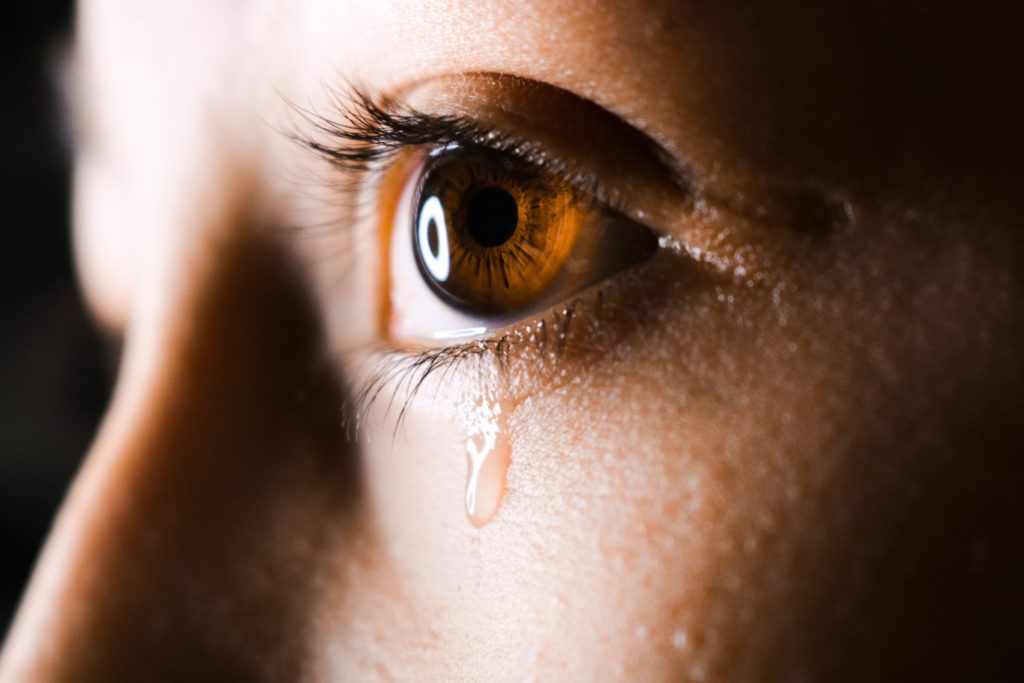
    Cerebral folate deficiency is the cause of treatment-resistant depression in many people, and is easily treated.

    Folate is vitamin B-9, and provides important services throughout the body. In the brain, it plays an important role in neurotransmitter production. So when it’s deficient, the neurotransmitters tend to be produced more slowly.

    You can read the label on your breakfast cereal box and see that it contains folic acid.  But folic acid can’t cross the blood-brain barrier, which is there to protect the the brain from fluctuations that can interfere with its function.

    Only in the form of folinic acid or methylfolate can folate reach the brain. And to do that it has to have a transport, called the folate receptor alpha, to take it there.

    So to get B-9 into your brain to do its part in the neurotransmitter factory, it has to be in a certain form that can get through the security gate of the brain, known as the blood-brain barrier. Plus, it has to hitch a ride on a specific type of truck, and that truck has to be a specific model – the “low affinity folate transporter.”

    It’s not hard to picture that a brain can get low on this stuff. So many hoops to jump through! 

    How Cerebral Folate Deficiency Can Affect You

    And interestingly, most of the research  about this has involved infants and children. In fact, the story of folate in the brain has a gripping history. It involves autistic children and infants with severe neurological disorders..but as those discoveries made their way into adult psychiatry.

    Well, we’re talking about it now because it turns out that adults have deficiencies too…and this is a deficiency that may contribute to why your depression seems treatment-resistant — but the problem is not that hard to treat. Which is good news…really good news.

    Cerebral folate deficiency may cause this man treatment-resistant depression.

    In fact, if we find you’re treatment- resistant because of folate deficiency, we can prescribe folinic acid or l-methylfolate to treat the deficiency. Then, you may find you’re not treatment-resistant any more. Sound like a plan?

    This is BIG news.

    What this means is that some people who don’t get better with ketamine treatment, may just need their folate deficiency restored so their neurotransmitter factory can crank up again and turn out those much needed neurotransmitters.

    Then, ketamine has what it needs on hand to help you get dramatically better. 

    Isn’t that amazing??

    Researchers Paved the Way

    In 2005, Dr. VT Ramaeker defined cerebral folate deficiency as “any neuropsychiatric disorder involving problems getting enough folate into the brain.” He was referring to the infants he treated. They had severe neurological illness, and happily, many of them responded to high doses of folinic acid.

    Then, in 2013, Dr. Richard Frye studied 93 pediatric patients with autism and found that 75.3% had cerebral folate deficiency. He also found that those patients who had a cerebral folate deficiency also had antibodies to the folate receptor alpha — that specialized transport truck that takes the folate into the brain.

    Treating cerebral folate deficiency can transform depression to joy.

    The following year, we’re back to Dr. Ramaeker, who measured cerebral folate in 18 patients with treatment-resistant schizophrenia…and you guessed it! 15 of them had cerebral folate deficiency. He treated 8 of them with high doses of folinic acid and 7of them got better.

    Now, I should explain that finding the level of folic acid in the brain is a bit more involved than lab work. It requires a lumbar puncture so the folic acid in the cerebrospinal fluid can be measured. The measure of folic acid found in the cerebrospinal fluid is then multiplied by 1.5 to find the level in the brain.

    Then, in 2017, Dr. Lisa Pan measured folic acid in 33 patients with treatment-resistant unipolar depression. 12 of these had cerebral folate deficiency and 10 out of those 12 responded after high doses of folinic acid.

    Google’s Take on Folate and Cerebral Folate

    When you google “folate,” you get all sorts of links about how folate is needed in your body. It helps make red and white blood cells in the bone marrow, convert carbohydrates into energy, and manufacture RNA and DNA.

    (Hmmmm, makes you stop and think about BDNF. How it turns on mRNA to switch on DNA so the synapses proliferate and rebuild circuitry in the brain…  interesting…)

    But when you google “cerebral folate,” you find yourself reading about autism, and about treating it with folinic acid.

    Cerebral Folate Deficiency Causes Tragedies

    Cerebral folate is so important in the brain, that the lack of it causes all sorts of tragic results…. in infants, neural tube defects, spina bifida, cleft palate…

    To think that autism, schizophrenia, and depression show links to cerebral folate deficiency — in at least some people — pushes us and the psychiatric and neuroscience research community to learn more about the central role that l-methylfolate and folinic acid play in the the central nervous system and in the genesis of psychiatric disorders.

    These early important studies should prompt more extensive clinical studies. And they should prompt more interest in testing our patients with treatment-resistant disorders for this deficiency so that we can treat it sooner rather than later, don’t you think?

    Unfortunately, that’s not as easy as it sounds. But it’s a start for us to realize this B vitamin is essential to our health and wellbeing. And just might be the key to your treatment-resistant disorder.

    Treating Deficiencies in Vital Nutrients Helps You Thrive

    At Innovative Psychiatry we test for cerebral folate deficiency when we suspect it could be a cause of treatment-resistance. We prescribe treatment for it to help improve your response to your treatment, including ketamine, and in turn, potentially improve your resilience and remission.

    Remission gives the power to enjoy, which you can experience after treating cerebral folate deficiency.

    If you suffer from treatment-resistant depression, and think you might be a candidate for ketamine treatment, call us. We’ll do an evaluation to learn more about you and your illness. We can also order testing to help ensure your best outcome with IV ketamine treatment.

    With so many who have gone before us, shining the light brighter so we can better see the obstacles to your joy, we’re here to help you find the life you ache to live.


    Ketamine KRIYA Conference 2018
  • Low T in Men Causing Your Treatment Resistant Depression..?

    Low T in Men Causing Your Treatment Resistant Depression..?

    Low T in men can be overlooked as the cause of depression.

    Since low testosterone in men has long been presumed to accompany aging, it can be overlooked as a cause of TRD in young men.

    John had gained 75 lbs (!) through the stressful and exhausting project at work. He’d come to hate the way he looked.

    Co-workers had turned on each other, undercutting rather than supporting each other as a team. John was a team player, and while his skill was beyond the skill of others on the team, he could feel himself slipping into depression…again. And his skills were slipping, too.

    Because he was losing his edge, it was getting harder and harder to think through to solutions, much less articulate them to the others. He knew he was doomed. As long as his mind worked he could maintain his position in the department, but as depression returned, he became sluggish, he felt dense, and hopelessness rose like water in a submerged car.

    To add insult to injury, his girlfriend was complaining that they never went out anymore, and that she felt he’d lost interest in her. He knew he hadn’t lost interest in her any more than anything else…he just didn’t have the energy to face restaurant crowds…or even show her what she meant to him. In fact, he hardly had the energy to get out of bed on lots of days.

    And to make matters worse, his sex drive was shot. He just didn’t care about anything, but also felt like a failure as a man.

    Before the project began, he had a few suicidal thoughts at night…  But through the tormented road at work this year, the suicidal thoughts were cramming into each hour of the day at about 40/hour. He winced to himself… almost sounds like the speed of a car rather than an obsession to die.

    This had been going on most of his adult life. Why couldn’t it be fixed? Why oh why did he keep trying…going to work…diving into the hopelessness again and again day after day? Why not just get off…?

    What was wrong with him? Where could he find a doctor who could help him..??

    Treatment Resistant Depression

    Major Depressive Disorder (MDD) is complicated by a discouraging rate of relapse, even with those who achieve remission at some point. Studies of long duration have shown that patients who have residual symptoms after treatment have a worse prognosis. Which is why we do all we can to help our patients achieve remission, if possible.

    Low T in men has similar symptoms as treatment resistant depression, so it may be the low T needs to be treated to improve depression.

    Treatment resistant depression (TRD) causes immeasurable suffering. Because the symptoms don’t improve with traditional medicines, the ongoing struggle to find relief only seems to worsen symptoms. And untreated depressive symptoms that go on in spite of treatments can be debilitating and costly.

    Treatment resistance occurs in 45% of depressed patients. These are patients whose symptoms have not improved after at least 2 medicine trials… or some combination…for 12-16 weeks each. This condition increases risks because of higher prevalence of suicidal thoughts, attempts, and tragically, death. Nearly a third of treatment resistant patients attempt suicide in their lifetime.

    For years, most people thought that there were far more depressed women than men. That women are more prone to depression because they are more expressive of their emotions. But it turns out that isn’t true.

    Depressed Men Don’t Act Like Depressed Women

    When men are depressed they may show it with anger, irritability or aggression.

    However, studies emerged revealing that many men display different depression symptoms than women, and as a result their depression can be overlooked. Rather than sadness, they sometimes exhibit anger, irritability, and aggression. As such, those around them may pull away, rather than recognizing their loved one is actually depressed.

    Another factor is that men are less likely to talk about how they’re feeling or seek help. So that creates the idea there aren’t as many depressed men as women, because their families can’t read their minds, right?

    So a man who’s irritable and autocratic may actually be depressed, rather than just a difficult guy. (Surprising, sometimes.) This is good news for those friends and family members who love them. Because, if he is, he needs treatment… but he may not ask for it. Even if he does, there is a strong chance the treatment won’t help, or at least, not much.

    If we’re to know what to do for him, we have to consider other things first.

    So what causes depression in men

    Low T in Men

    Honestly, the same things that cause depression in women, for the most part. Chronic stress, genetic factors, environmental factors, biological events like heart attack, stroke, chronic pain, or amputation, and other illnesses like diabetes, Parkinson’s, heart disease, or cancer.

    But, there’s another condition that’s often overlooked. Low testosterone, or low T, is seen with hypogonadism. 

    The testes produce most testosterone (90-95%). But a small portion is produced in the adrenal gland. And studies have established that testosterone treatment can help men feel better emotionally, so a deficiency of testosterone can erode their mood and outlook.

    Some men receive the diagnosis of hypogonadism. This is a condition that causes their bodies to produce too little testosterone.

    Low T in men is sometimes seen in young men who have treatment resistant depression symptoms.

    It’s been said that hypogonadism, or low T, is a malady of elderly men. But, that’s a generalization that doesn’t take into account the many men between ages 18-40 whose testosterone level is below 10.4 nmol/L and who have treatment resistant depression. 

    Low T in YOUNG Men

    Low testosterone is a leading cause of treatment resistant depression in older men, but many overlook that it’s a big cause of treatment resistant depression in younger (age 18-40) men, too.

    Stanley Korenman, M.D., and his team published their work about the link between low T in young men (ages 18-40) and depression in a paper published November 2018 in the Journal of the Endocrine Society.

    They studied 186 young men who made visits to a university medical center for any reason between the years 2013-2015. These men had symptoms of treatment resistant depression.

    The prevalence of hypogonadism was present in 22.6% of these men.

    The authors called for more research to determine if the hypogonadism causes the treatment resistant depression or if the treatment resistant depression causes the hypogonadism…maybe both?

    Because to neglect this connection may be to ignore a condition that’s reversible. One that turns treatment resistant depression into treatable depression. And treatable depression can be transformed to remission.

    We Strive to Treat YOU in YOUR Own Uniqueness

    Our approach at Innovative Psychiatry is to treat each underlying condition and its own symptoms, then watch to see how the /improvements in function combine toward resilience and remission.  It can be a tedious process but it’s all worth it when your symptoms finally dissipate.

    A key component of your recovery may include IV ketamine treatment, if you have a treatment resistant disorder. Ketamine does its best work in patients with the most complex treatment resistant illnesses. But for ketamine to do its best work in restoring your brain cell connections prolifically, you need to treat other conditions like low T that may get in the way.

    For this reason, we also may encourage you to see a specialist as we work on the process of treating your depression. We always love to work with your specialized health care team to help you get the most personalized care so you can feel really good again.

    Low T in men can be treated it can also help to relieve treatment resistant depression.
    There is no one-size-fits-all remedy for everyone and every complexity of illnesses. But we  must work together, exhaustively, and explore your disorders, your nutrient imbalances, your social and work life, your family life, your exercise, your diet…every aspect of your health…to tease apart those elements that may be contributing to the way you feel.

    And while it may require an investment of time, effort, treatments, and re-evaluations for awhile, it will all be worth it when you look in the mirror and love the person you see there.  Better days are ahead.

    You will never hear me say, “There’s nothing more we can do.”  Those days are over in psychiatry, I hope… but you will hear me ask, “What was the very best YOU you’ve ever been…? That’s the you we’re going to help you find again – together.”

    To the restoration of your best self, 

    Lori Calabrese, MD offers innovative psychiatric treatment like IV Ketamine
    Lori Calabrese, M.D.
  • Ketamine May Relieve Depression By Repairing Damaged Brain Circuits

    Ketamine May Relieve Depression By Repairing Damaged Brain Circuits

    NPR Logo

    Ketamine appears to restore faulty connections between brain cells, according to research performed in mice.

    The anesthetic ketamine can relieve depression in hours and keep it at bay for a week or more.

    Now scientists have found hints about how ketamine works in the brain.

    In mice, the drug appears to quickly improve the functioning of certain brain circuits involved in mood, an international team reported Thursday in the journal Science. Then, hours later, it begins to restore faulty connections between cells in these circuits.

    The finding comes after the Food and Drug Administration in March approved Spravato, a nasal spray that is the first antidepressant based on ketamine.

    The anesthetic version of ketamine has already been used to treat thousands of people with depression. But scientists have known relatively little about how ketamine and similar drugs affect brain circuits.

    The study offers “a substantial breakthrough” in scientists’ understanding, says Anna Beyeler, a neuroscientist at INSERM, the French equivalent of the National Institutes of Health, who wasn’t involved in the research. But there are still many remaining questions, she says.

    Previous research has found evidence that ketamine was creating new synapses, the connections between brain cells. But the new study appears to add important details about how and when these new synapses affect brain circuits, says Ronald Duman, a professor of psychiatry and neuroscience at Yale University.

    Studying ketamine’s antidepressant effects in mice presented a challenge. “There’s probably no such thing as a depressed mouse,” says Dr. Conor Liston, a neuroscientist and psychiatrist at Weill Cornell Medicine in New York and an author of the Sciencepaper.

    FDA Approves Esketamine Nasal Spray For Hard-To-Treat Depression

    So Liston and a team of scientists from the U.S. and Japan gave mice a stress hormone that caused them to act depressed. For example, the animals lost interest in favorite activities like eating sugar and exploring a maze.

    Then the team used a special laser microscope to study the animals’ brains. The researchers were looking for changes to synapses.

    “Stress is associated with a loss of synapses in this region of the brain that we think is important in depression,” Liston says. And sure enough, the stressed-out mice lost a lot of synapses.

    Next, the scientists gave the animals a dose of ketamine. And Liston says that’s when they noticed something surprising. “Ketamine was actually restoring many of the exact same synapses in their exact same configuration that existed before the animal was exposed to chronic stress,” he says.

    In other words, the drug seemed to be repairing brain circuits that had been damaged by stress.

    That finding suggested one way that ketamine could be relieving depression in people. But it didn’t explain how ketamine could work so quickly.

    Was the drug really creating all these new synapses in just a couple of hours?

    To find out, the team used a technology that makes living brain cells glow under a microscope. “You can kind of imagine Van Gogh’s Starry Night,” Liston says. “The brain cells light up when they become active and become dimmer when they become inactive.”

    That allowed the team to identify brain circuits by looking for groups of brain cells that lit up together.

    And that’s when the scientists got another surprise.

    After the mice got ketamine, it took less than six hours for the brain circuits damaged by stress to begin working better. The mice also stopped acting depressed in this time period.

    But both of these changes took place long before the drug was able to restore many synapses.

    “It wasn’t until 12 hours after ketamine treatment that we really saw a big increase in the formation of new connections between neurons,” Liston says.

    The research suggests that ketamine triggers a two-step process that relieves depression.

    First, the drug somehow coaxes faulty brain circuits to function better temporarily. Then it provides a longer-term fix by restoring the synaptic connections between cells in a circuit.

    One possibility is that the synapses are restored spontaneously once the cells in a circuit begin firing in a synchronized fashion, says INSERM’S Beyeler, who wrote a commentary accompanying the study.

    The new study suggests not only how ketamine works but also why its effects typically wear off after a few days or weeks, she says. “What we can imagine is that ketamine always has this short-term antidepressant effect, but then if the synaptic changes are not maintained, you will have relapse,” Beyeler says.

    If that’s true, she says, scientists’ next challenge is to find a way to maintain the brain circuits that ketamine has restored.

    [Read the Original Post Here]

  • Weekly Ketamine Infusions Show Initial, Repeated Depression Benefits

    Weekly Ketamine Infusions Show Initial, Repeated Depression Benefits

    A new study shows that weekly ketamine infusions are associated with continued and maintained reductions in depressive symptoms among patients with treatment-resistant depression.

    The findings, which are considered novel among studies assessing ketamine administration for patients with treatment-resistant depression, evidence the promising role the controversial drug could play in psychiatric care.

    A team of investigators, led by Jennifer L. Phillips, PhD, an associate scientist in the Mood Disorders Research Unit at The Royal’s Institute of Mental Health Research, conducted a randomized, double-blind crossover comparison of single ketamine infusion versus active placebo control midazolam. The assessment, held with 41 participants with treatment-resistant depression at single treatment center, observed patients receive 6 open-label ketamine infusions 3 times per week over 2 once patients had a relapse of depressive symptoms.

    Patients who reported a decrease of at least 50% in the Montgomery-Åsberg Depression Rating Scale (MADRS) received another 4 additional infusions once weekly in a maintenance phase.

    Those administered a single ketamine infusion reported significantly reduced depressive symptoms at the primary efficacy endpoint of 24 hours post-care versus those treated with midazolam. The therapy showed cumulative antidepressant effects over repeated infusions, as well a doubling of antidepressant response rate in patients, according to linear mixed models.

    Investigators found that 59% of patients met the response criteria following repeated infusions, with 3 infusions serving as the median dosage required to reach achieved response. In patients receiving weekly maintenance infusions, no further improvement in MADRS scores were reported.

    The first-of-its-kind findings come just 1 month following the US Food and Drug Administration (FDA) approval of esketamine nasal spray (Spravato) for the treatment of patients with treatment-resistant depression. At the time, the therapy made history as the first novel treatment indicated for depression in 30 years—and headlines as one of the first hallucinogenic drugs to reach indication for a common condition.

    Dennis Charney, MD, Dean of Icahn School of Medicine at Mount Sinai and a member of the Yale University team that led pioneering antidepressant ketamine trials in the 1990s, told MD Magazine® that microdosing or implementing controversial therapies for psychiatric care require what any other trial requires: control, safety, and a carefully-assessed standard for efficacy.

    “No matter what treatment is being assessed, you have to follow those scientific approaches,” Charney said. “For conditions that don’t have effective treatments available, there should be an open mind.”

    Adversely, Dan Iosifescu, MD, associate professor of Psychiatry at NYU School of Medicine, director of Clinical Research at Nathan S. Kline Institute for Psychiatric Research, and prominent ketamine investigator, told MD Mag that—among other reasons—ketamine will never reach at-home therapy use due to its prominent abuse as street drug Special-K. He anticipated the marketed therapy will be costly, and prescribed as long-term therapy for only a small depression patient population.

    “For the majority of individuals that benefit from it, it will be essentially buying them time for other treatments—be them pharmacotherapies or device-based treatment, or psychotherapies, because those are beginning to work much more slower than ketamine does,” he said.

    Whatever its marketed use entails, Phillips and colleagues concluded positively that ketamine showed both initial and repeated benefits for antidepressant effects as a once-weekly infusion.

    “These findings provide novel data on efficacious administration strategies for ketamine in patients with treatment-resistant depression,” they wrote. “Future studies should further expand on optimizing administration to better translate the use of ketamine into clinical settings.”

    The study, “Single, Repeated, and Maintenance Ketamine Infusions for Treatment-Resistant Depression: A Randomized Controlled Trial,” was published online in The American Journal of Psychiatry.

    [Read the Original Article Here]

  • RESILIENCE! It’s the New Buzzword Among People with Mood and Anxiety Disorders

    RESILIENCE! It’s the New Buzzword Among People with Mood and Anxiety Disorders

    Reslience! it's the buzzword that people with psychiatric disorders are talking about.

    Too much screen time? Let yourself have 2 more minutes of it right now: because if you’ve been tooling around reading anything related to mood disorders or anxiety disorders, IV ketamine, and other advanced treatments, you’ve probably noticed that there’s buzz about resilience.

    Because of the world that has opened up since IV ketamine began treating depressed patients with its ability to create new branches and connections, the expectations of these patients have soared.

    No longer are patients satisfied to have a little relief from their depression. They’ve learned they can feel good. Feel “normal.” Enjoy participating in life the way others do.

    So now the question you hear on the internet isn’t this: “Will any medicine help me feel at least a little bit better…?”  No.. now it’s this: “Will this medicine help me feel resilient again?” Or “What can I do during this treatment to help it work… improve my chances of remission… develop more resilience?”

    Now before we go on, I want to clarify that no doctor can promise or guarantee remission of symptoms from disorders like depression, bipolar disorder, PTSD, addiction,social anxiety, or to promise or guarantee that suicidal thinking will go away. There just isn’t any medicine in psychiatry that helps 100% of people get well.

    Resilience! It's the Buzzword.
    But, even so, there are many people who’ve suffered for years, even decades, with these disorders who are now living lives they never dreamed possible. They’re painting, excelling at work, meeting the loves of their lives, enjoying their families, and contributing to their important relationships. They’re investing in hobbies, socializing with friends and family, and feeling good about themselves and their accomplishments.

    This doesn’t happen overnight, but resilience has freed them to invest in their lives, and provides the energy for things they could never do before.

    Resilience Protects You From Falling in the Ditch

    And when hard times come along, they have the resilience to grieve a bit, then brush themselves off and keep moving forward. This may be the most remarkable change of all.

    Resilience is the ability to adapt when a crisis comes along… to adapt to whatever the situation may be. To bounce back, recover, and move forward after an onslaught of difficulty.

    Since psychiatric mood and anxiety disorders often develop as a response to some degree, to something environmental or an upsetting/traumatic event, if you can adapt to that event or force in your environment, you can remove that response from your psyche.

    Adaptation is the way organisms throughout your world survive. When there’s a strong wind, if trees don’t bend under the wind they’ll be splintered and destroyed. But their ability to bend is their means of survival and the way they develop resilience.

    The same is true of you.

    If you have a continuous source of stress in your world, one that assaults your senses, emotions, or body, you can eventually be beaten down and weakened or destroyed by those assaults.

    But if you can find a way to bend like a tree does, to adjust yourself to accommodate those assaults, hurts, and winds of fury without being damaged, it will help you avoid being traumatized. And that’s how you’ll develop resilience.

    This brings up the story of a friend of mine. 

    Resilience! It's the new buzzword with patients who have been depressed.

    Jillian grew up in a small town in the midwest, and was a faithful member of a tiny congregation there. The pastor had served in her church for 40 years, and unwittingly preached a serious sermon every Sunday that reflected the smallness of his own tiny world in that tiny town.

    Jillian, like the rest of the church members, worked hard to live up to the expectations her pastor laid out in his sermons. Her town was small, her world was small, and those expectations left her view of life small, too.

    Culture Shock – From Small Town to Big City

    As she approached her thirtieth birthday, her husband broke the news to her. He’d been transferred to Chicago. 

    So they packed up their belongings, and moved into a pretty little apartment in that big, new city.  Her birthday was anything but a celebration. The traffic overwhelmed her … the variety of people she saw at the grocery store, the post office, and everywhere else were just so different than any she’d ever seen before.

    Hairstyles, clothing styles, and the way people just talked made her feel more like she was on another planet than just in a different city. She felt afraid to meet people or make friends. She was afraid she looked like a fool and she couldn’t imagine how you could trust anyone.

    This sad woman lacks resilience to bounce back after hardship.

    The more time she spent alone, the more isolated she felt. And the sadder she became. She was lonely. She missed the comfort of her home town.

    Her husband asked her often if she was making any friends. But she just told him that the people she ran into on the street weren’t “her kind of people” — and she felt safer alone.

    One day he arrived home from work and announced they’d been invited to dinner by one of his co-workers. She was excited to meet this co-worker and his wife. Surely they’d be a good match socially, too.

    The following Friday, Jillian and her husband drove to the address her husband pulled from his pocket. The front yard was alive with a variety of blooms that reminded her of English gardens she’d seen in books at the library. It was just beautiful.

    Jillian Adapts and Learns Resilience

    They knocked on the door — and it was opened by the strangest-lookingpeople she’d ever seen. She immediately wanted to go home, but her husband held her hand firmly as he warmly greeted the couple.

    Her husband’s co-worker had jet black hair that was shaved on the sides with a narrow path of hair from his forehead to his crown, pulled into a ponytail.  His wife had bright pink hair with spikes on top enhanced by a shag that softly fell on the left side of her head; the right side was shaved from her temple to her ear.

    Jillian’s alarm choked her. Then Cass, the pink-haired woman, spoke up and told her how glad she was to meet her. That most of her co-workers were middle- aged or nearing retirement, and she ached for friends her own age.

    When she spoke, Jillian began to relax. What a warm and genuine person, she thought. 

    “May I help you in the kitchen?”

    “Yes, I’d love the help!”

    So the two of them disappeared into the kitchen to finish up with dinner, and their husbands settled in to talk shop and about their hobbies outside of work.

    Jillian and Cass had so much more in common than she could have dreamed — and by the time they called the guys to sit down and eat, she had forgotten about the “strange” hairstyles.  She realized that her perspective of the world in her small town had apparently been pretty sheltered. And she was thankful she had found someone who could be a true friend.

    Resilience is Adapting to Your Situation, Which Helps You Bounce Back After Surprises, Disappointments, and Hardships

    The point is, that Jillian adapted. She was experiencing a stressful situation, and it was affecting her emotionally. Sadness was growing as well as isolation and loneliness. If she’d remained unwilling to bend, she might have eventually plunged into depression.

    Resilience gives this woman peace in the face of difficulty.
    But, after exposure to a stressor that felt threatening to her, she was instead willing to look beyond her distaste, and read the heart of a person who was ready and able to offer her real friendship. And many great adventures lay ahead as a result.

    Resilience! It’s the new buzzword for a reason. Beyond reduced depression symptoms, resilience protects your life from being interrupted by a trauma or disappointment.

    While this is an oversimplified example, it shows you how important it is to bend, rather than break. To change the way you think in a stressful situation so you can bounce back from disillusionment, disappointment, or betrayal.

    Resilience! It’s the New Buzzword for Adapting and Growing Stronger

    But, here’s the thing. Sometimes you face stressors that feel threatening to you when you don’t feel equipped to respond with resilience. In fact, sometimes you may not feel resilient at all.

    Sound familiar?

    Times when you’re drowning in depression or terrorized with PTSD. When you don’t have the energy to get out of bed, much less “bend with the wind.” What do you do then?

    Ketamine Treatment Enhances Resilience

    Well, that’s when you may need treatment. You need to get the help of your psychiatrist to get those symptoms under control. To empower resilience. And if the medications that have been prescribed for you haven’t helped, then you may need something more targeted, more potent.

    One medicine we use at Innovative Psychiatry for exactly this is IV ketamine treatment. We’re experts in ketamine treatment and we’ve offered it for years–way before most doctors–and most people–ever even heard about it.

    Resilience. It's the new buzzword among people who were depressed and now live in joy.

    You may need something like that to help you enjoy resilience and to make it stronger. Because from its vantage point, ketamine has a list of actions that can help you develop the resilience that will see you through stressors and losses that may come along in the future.

    Neuroplasticity Helps You Build Resilience

    Ketamine stimulates neuroplasticity, which is the ability of the cells in the brain to change and adapt. That neuroplasticity can enhance your psychotherapy, especially when your therapy is 24 hours after your infusion.

    It can also help you change your perspective of life and people. In doing that, it can help you learn how to “bend with the wind,” or whatever crosses your path. You can create and build up a level of resilience that empowers you to roll with the punches in life.

    Numerous studies have shown that the more often you adapt to small stressors in your life, the stronger you’ll be at adapting to big calamities. And the more you change your thinking to adapt to difficulty, the stronger your resilience can be.

    So, you can do things to strengthen your resilience…by choosing adaptive behaviors in smaller crises day by day.

    For example, you don’t have to succumb to the same old habits when something frustrates you, or makes you angry. With the help of ketamine stimulating your neuroplasticity, you can choose to think a different thought. Then practice it.

    I’m never going to get out of this job or this company. I’m doomed to a future of misery and mediocrity…

    You have the choice to accept that thought…or to grab the wheel and change its direction, like so:

    I’m not going to succumb to that thinking. I WILL excel at this job because I’m working hard to perform well. And I will be rewarded with promotions that will give me the resume that will promote me when I apply to new jobs. Bottom line, I’m not giving up..!

    You have choices when thoughts come to you, and when your choice is empowered by the neuroplasticity of IV ketamine treatment, you CAN overcome.

    Resilience helps you build a stronger remission of your symptoms... In fact, resilience is the reason so many people can undergo tremendous stressors, and bounce back.

    Resilience gives this woman peace in the face of difficulty.

    People like you, and those you love. Because resilience isn’t something you’re born with or NOT born with. Resilience is something you can develop with practice, determination, and persistence.

    That’s so important that I want to say it again: resilience is something that can be developed. You can develop it. And we can help you.

    We want you to live as the best YOU, you can be. And you can with the ability to adapt, and to apply resilience.

    Ketamine KRIYA Conference 2018
  • PTSD in Trauma Survivors: Let’s Prevent More Suicide

    PTSD in Trauma Survivors: Let’s Prevent More Suicide

    PTSD in trauma survivors can lead to suicide.

    Two survivors of the Parkland high school shooting on Valentine’s Day 2018 took their own lives a couple weeks ago.

    Sydney Aiello, a senior and cheerleader at Marjory Stoneman Douglas High School, struggled to restore normalcy in her life after the terrifying experience.

    Her trauma, of course, included the loss of friends who were killed in the shooting. She enrolled in college classes in the fall, but found it almost insurmountable to attend them, because of the terror she felt sitting in a classroom.

    Sydney was diagnosed with Post Traumatic Stress Disorder (PTSD) in the months that followed that massacre, and struggled with guilt that she had survived the shootings, when friends like her close friend Meadow Pollack, had died.

    This “survivor’s guilt” is a devastating symptom that makes survival after such a traumatic experience terribly painful. Sydney never reached out for help with her struggle, but suffered silently. On March 17, 2019…just a couple weeks ago…Sydney took her life.

    A Second Suicide from PTSD in Trauma Survivors in Parkland, FL

    This young man is suffering in silence following traumatic experience, and is at risk for suicide.

    Only 6 days later, Calvin Desir — a 16 year-old boy from the same high school — took his life. Calvin was a sophomore, and had also struggled silently… until that day. Little is known publicly about his story, but we can know those who are left to mourn his loss are as numerous and heartbroken as any of us would be after such a terrible loss.

    Some of the students vented their terror, grief, and rage after the shooting by speaking out and forming March for Our Lives, that drew hundreds of thousands of protestors to Washington, DC and around the world.

    It gave them a place to channel their energy, to at least try to prevent more shootings in the future.

    But, far more students than those who participated in the protest, struggled with their pain, terror, grief, rage, and guilt in silence and isolation.

    As time goes by, and they relive the memories of that terrible day, the fear of being found and shot, the horror of hearing their school mates scream…well, the stress of the memory can wear away at their confidence, their sense of safety, and their stability.

    Don’t you wonder if PTSD in trauma survivors of the shooting could have been identified and whether these suicides might have been prevented? And most importantly now, is it possible to prevent any more?

    Tragedies following Traumatic Events – Let’s Prevent More Suicides

    While 3 of the 17 victims of the Parkland high school shootings were adult teachers, the other 14 were teenagers. How do teenagers, with their limited life experience and coping skills, resolve such fear, confusion, ill-founded guilt, anxiety, and pain?

    PTSD in trauma survivors must be treated to prevent suicide
    Layer upon layer of tragedy, loss, and sorrow…eating at their security. The more time they spend alone, the more the memories loom, and the harder it is to break free of them. Anxiety and the stress of it all can drive their thoughts to despair and then sometimes desperation.

    But… these students who grieve for their friends… they’re intelligent, resourceful people, right? Kind, smart, connected, well-spoken, artistic, athletic, healthy. Going places. So why didn’t these kids ask for help if they were becoming depressed, despondent, and so isolated and alone in that frame of mind?

    But that’s the thing. When someone is traumatized, they may not show it like you would expect. The trauma of it all… in their thoughts… may be trapped in a cloak of private torment.

    They may not have wanted to draw attention to themselves. They may have convinced themselves that they don’t “deserve” to live. If we don’t talk with them…listen to them…we can’t know what their thoughts were.

    And that’s why it’s so important to engage the people you know who have been exposed to trauma — to the “big T” traumas and to the “little t” traumas…talk to them and listen. Help them open up about what they’re thinking and feeling — because more than likely, it’s not what you or I think they might be thinking and feeling.

    Airing dark or haunting feelings just might be enough to lessen their torment and divert dangerous decisions.

    Unbearable Guilt over Living Through the Event

    For one thing, survivor’s guilt added to the suffocating, unrelenting grief, and elusiveness of relief. “I don’t deserve to live, if they had to die…Why wasn’t I shot? The pain of the loss I feel is so much worse than death…I wish I’d been shot, too!”

    These are complex feelings, without clearly defined solutions. And though possibly not logical, they’re far too weighty for an adolescent mind and heart to untangle. 

    Let's prevent more suicide with PTSD trauma survivors like this haunted young man.

    In short, these kids carried a load too large to manage. While it seems likely many of their parents got them into a psychiatrist’s care, that may not have helped enough soon enough.

    We can’t conjecture on the parts of these two who’ve left us, but we can look for ways to prevent more suicides going forward by recognizing signs of PTSD in trauma survivors and helping them get treatment.

    Because the chances are, all 3300 of the students at that high school were traumatized by the experiences of that day. 

    And they’re at risk. Not just in Parkland, FL, but in every high school across the country. Students are in pain, and are traumatized by events they hear on television or the internet, plus events that happen in their personal lives or the lives of others near them.

    Helping Them Vent Their Private Pain

    One thing to consider is that anyone who has undergone such a great shocking loss, probably needs to talk about it. To unload the confusion and uncertainties to a listening ear … and to do that, they probably need to be invited to do so.

    It can be so difficult for a teenager to voice fears and dark secrets, especially if they include thoughts of suicide. They don’t know how the listener might respond.

    If the listener is a peer, they may fear ridicule or betrayal of confidence.

    If an adult, then maybe fear of anger, punishment, dismissal or hysterics.

    PTSD trauma survivors like this boy, are at high risk for suicide.
    No matter what they fear, it may seem easier to brood in silence about their thoughts, as well as possible plans.

    The risk of divulging private thoughts also can move the thoughts from fantasy or vague consideration to full throttle.  A move they may not want to feel rushed about.

    So it’s important to ask. Just ASK.

    “How have you been feeling lately? It would be easy to imagine that you’d struggle over your friend’s death…  I’d like to listen when you feel like talking…”

    “Do you ever think it would be a solution if you didn’t have to have worries like this anymore…?”

    “Do you ever have any thoughts of ending your life, or hurting yourself in some way?”

    “Have you thought of how or made any plans to end your life?”

    Just ask.

    What to Do with Their Answers

    These questions can help give a direct, clear opportunity for conversation and expression of pain, loss, anger…

    And their responses can clue you as to the next steps. If they have thought about it, or mention feeling less hope about the future, or less purpose…or increased rage, or wrecklessness… don’t leave them alone.

    You can say, “let’s get help.” If you see or hear them express increased substance abuse, this can also be a sign of high risk. Again, seek help.

    At the very least, write down this phone number for them. 

    National Suicide Prevention Lifeline

    1-800-273-8255

    But that’s just the first step.

    How to Respond to PTSD in Trauma Survivors

    Next, what can be done to relieve them of these tormenting thoughts, and protect them from an irreversible decision?

    Ketamine treatment can erase suicidal thoughts in an hour.

    In my practice, the safest, most effective treatment of choice for serious suicidal risk is IV ketamine treatment. This can erase suicidal thoughts in as little as an hour and return someone who’s struggling with thoughts of suicide or thoughts of death as a relief to a state that’s safe for further treatment of depression, PTSD, and other psychiatric conditions.

    But, no matter what, seek immediate psychiatric care. With parents, teachers, and friends of traumatized students on the alert for signs of suicidal thinking, we can all work together to avert tragedies and save lives.

    Because of the limited life experience an adolescent has to draw from, as well as the impulsiveness that goes with a brain that’s not fully developed, irreversible decisions can be rampant during crisis.

    The finality of death is difficult for these young people to grasp, and protecting them from making such decisions is paramount.

    We can help protect them from these dangers.

    It all starts with conversation. And trust.

    To the highest hopes of your best self,

    Lori Calabrese, MD offers innovative psychiatric treatment like IV Ketamine
    Lori Calabrese, M.D.
  • Misinformation about Esketamine (Spravato) and IV Ketamine

    Misinformation about Esketamine (Spravato) and IV Ketamine

    Misinformation about esketamine (Spravato) discourages patients from receiving treatment.

    They’re different, but each can bring relief to those who suffer.

    As word gets out that esketamine intranasal spray has been approved by the FDA, the internet is rippling with articles, posts, interviews, newsclips and press releases about ketamine — IV ketamine, esketamine, and ketamine nasal spray. And — online forums and meeting places are awash with misinformation on all counts. 

    We published a couple of articles here to lay the groundwork about the composition of esketamine compared to its relative ketamine — and about the requirements for esketamine use — to help to dispel misunderstanding.

    But not everyone has read our posts, of course! And… some medical professionals have also stepped up to the mic to shed what we’ll call a tainted light on these medicines. It’s only been a couple weeks since the news broke, but things have already gotten a bit muddy in social media…

    So let’s clean the windshield, and clear up some misunderstandings surrounding the news about these novel treatments, and the ground they stand on. Sound good?

    Esketamine intranasal spray

    First of all, esketamine intranasal spray (Spravato) is not ketamine intranasal spray. Esketamine is the left-facing enantiomer in the ketamine racemic moleduce, and as such possesses some of ketamine’s beneficial characteristics, but not nearly all.

    (There’s a right-facing enantiomer, arketamine, that we’ll ignore for today. Together, both esketamine and arketamine make up what we refer to as “ketamine”–which we also refer to as racemic ketamine.)

    The neuroscientists who developed esketamine for the pharmaceutical company Janssen (owned by Johnson & Johnson) worked with engineers to create a remarkable nasal sprayer to dispense it that gives a specific and controlled dose of esketamine with each spray. 

    Each dose of esketamine nasal spray comes in a box about the size of an iphone. The beginning dose is 56 mg, divided into two 28 mg sprayers. Each sprayer dispenses 2 sprays, one for each nostril to equal 28 mg. Then you open the second sprayer box 5 minutes later and use another sprayer that holds another 2 doses: one for each nostril.

    So: one spray in each nostril, wait 5 minutes, and do it again. In your doctor’s office. With monitoring. For 2 hours. And then you can go home.

    That’s for the starting dose of 56 mg.

    If the dose is increased to 84 mg, you use 3 sprayers instead of 2.

    While we all hope that esketamine intranasal spray is effective we won’t really know just how much it can do to relieve stuck depression until it’s been in use awhile and data emerges about the full extent of its effectiveness. Fingers crossed.

    Insurance Coverage for the First FDA-Approved Novel and Advanced Depression Treatment

    Misinformation about esketamine (Spravato) can discourage someone who needs treatment when treatment can remit her symptoms.

    But here’s the thing. Insurance companies are scrambling to determine their own company’s coverage position.

    They’re waiting to announce if they will cover esketamine (Spravato) right away, how much of the cost they will pay for, and if and how much they will pay for two hours of administration, clinical care and medical monitoring time. The sooner we know the answers to these questions for this FDA-approved medicine, the better.

    So while we’re waiting, as confusing as it may seem to all of us, we can’t accurately refer to esketamine intranasal spray and ketamine intranasal spray interchangeably. They’re different. 

    Ketamine nasal spray has been around for a long time. (Bet you didn’t know that.) It was and is still the full racemic compound, and it has to be made up or “compounded” specially for individual patients by specialty compounding pharmacies.

    A doctor can’t just write a simple prescription for it.

    But there’s been no standardization in the compounding of it. The doses are individual and patient-specific, the dilutions can all be different, and there are literally dozens of sprayers a compounding pharmacy can choose to put it in. Testing to make sure that the exact dose needed is actually what is sprayed is, well, ….. ?

    Racemic ketamine (the left and right molecules together) as a nasal spray can be less effective than IV ketamine because the nasal route isn’t as reliable as IV access, and the medication is not as bioavailable as it is when given IV.

    One of the first psychiatrists who used ketamine intranasal spray in children is Dr. Demitri Papolos who has worked with children afflicted with the Fear of Harm phenotype of bipolar disorder.  He reports striking results in these children consumed by fear when they are treated with ketamine nasal spray.

    Racemic ketamine nasal spray has been offered by some doctors instead of IV ketamine, in addition to IV ketamine, after IV ketamine. And racemic ketamine has been used IM (intramuscularly) as an injection instead of IV ketamine, when IV access isn’t available, and for ketamine-assisted psychotherapy.

    How to make sense of all of it?

    IV Ketamine Treatment and its Side Effects

    In general terms, IV ketamine treatment is a robust and rapid-acting antidepressant that can lift depressive symptoms even when all else has failed, and often helps patients achieve remission from their symptoms. Even if they’ve been symptomatic for years.

    If you talk to an expert neuroscientist or physician who administers it to patients, you’ll often hear this medicine is the most extraordinary, remarkable medicine they’ve ever seen in psychiatry.

    It just needs to be administered so its best benefits are maximized.

    Of course, we’re learning more every day — and every week — about how to achieve the very best outcomes and help patients achieve remission. 

    And yet, there are times when it doesn’t seem to be effective in some people. We can’t explain that, but keep trying to learn more about why.

    But it’s remarkably transforming in most people whose ketamine treatment is administered with wisdom, insight, and skill.

    Woman twirling in relief from remission of depression.
    We can say that in recent years as we learn, our ability to work with ketamine and finely tune our patients’ responses has been growing, and more and more patients are achieving full remission.

    Esketamine is the New Kid on the Block

    This is one reason why it’s important that esketamine and ketamine mustn’t be considered interchangeable. Because esketamine intranasal spray has not had time to demonstrate what it can do. At least not yet.

    Since esketamine (Spravato) has just been released, time is needed for psychiatrists to provide it to their patients, just as they provide IV ketamine, and compare the two. They need real life experience with both treatments to adequately speak about them from experience.

    There has been no study published –yet– that compares racemic IV ketamine and esketamine intranasal spray head to head. So we’re hopeful … but we have to wait and see how well esketamine performs.

    As far as IV ketamine treatment, the IV route gives us a very broad dose range, the ability to adjust the dose from moment to moment, to slow it or stop it immediately if a patient is fearful, to micromanage side effects like nausea, to extend the dissociative experience if necessary.  It is completely customizable.

    Nasal esketamine is not. It will be available in a very controlled, directed way without that type of flexibility, and only as a 28 mg 2-dose sprayer; you would use 2 or 3 spayers to equal 56 or 84 mg.  No matter what you weigh. That means your dose is a standard, 2 sizes fit all. NOT calculated according to your weight.

    The Issue of “Side Effects”

    Misinformation about esketamine (Spravato) and IV ketamine's side effects cause confusion.

    There are some side effects that have been reported with ketamine treatment, though they’re not widespread. Things like dizzyness, nausea, and blood pressure as well as heart rate elevations. All of these can be managed to keep you safe and comfortable during an infusion.

    When the infusion ends, these transient effects tend to dissipate.

    But there’s another effect that’s important to the work ketamine accomplishes, and rather than treating it, we want it to have full freedom to express itself.

    That effect is dissociation.

    Because the intensity of dissociation during an infusion is directly related to the improvement and remission of symptoms.

    So write that down. When you see medical authorities who don’t know ketamine first-hand make statements about dissociation being a side effect to be avoided, remember that we not only don’t want to avoid it, but rather, we do give it the full stage. Because it’s associated with response.

    Another case of misinformation about esketamine (Spravato) and IV ketamine.

    Dissociation is one sign that ketamine is at work restoring those delicate brain systems that make you who you are.

    And…the Naysayers

    As surprising as it is at this point, there are still plenty of professors, psychiatrists, and other physicians who have read some negative reports about ketamine and stopped there. Those reports have turned out to be anomalies, rather than true evaluations of ketamine’s abilities to restore and transform.

    Misinformation about esketamine (Spravato) and IV ketamine has been rampant the last few weeks.

    So, surprising as it is, there are still those medical professionals who stand up and speak of their perception of ketamine, and declare it’s effects “patchy, spotty, or unreliable” when they don’t necessarily have the hands-on experience to understand what they’re referring to.

    And so, with due respect intended, I encourage those who make statements like this to learn with us what we’ve learned in the last several years…

    Because nothing could be further from the truth.

    Each of those professionals who proclaim ketamine’s “placebo effect at best” need to shore up their courage, and interview the thousands who have been far more than relieved of severe symptoms.

    Man with guitar soaking up peace after IV ketamine treatment.

    So many have found themselves transformed, living in joy, and utterly free of the depression symptoms that have held them back for so many years.

    People who think these treatments are bogus really should make the effort to talk to the thousands whose lives are working again.

    Esketamine is building its track record now.

    Since esketamine intranasal spray is new on the market, we’ll have to wait and see what it can do. We’re hoping it will be transforming, too. But when we speak of IV ketamine treatment, we’re not also referring to esketamine… at least not yet.

    But so much has emerged about racemic ketamine treatment in the last few years. While we use it primarily at Innovative Psychiatry in a series of IV infusions to achieve remission, it’s being widely used in IM injections by psychiatric professionals across the country and internationally for ketamine-assisted psychotherapy with outstanding results, and as a compounded intranasal spray, and a compounded oral lozenge (or troche).

    Are the effects temporary?  Those who are lucky enough to find a doctor who understands the goals (remission) in ketamine treatment, may go for very long period without a maintenance treatment. Others find they need one or two at the 3-4 month and maybe the 7-8 month points …or at some other interval.

    So no, when the treatment is administered properly, we’re not looking for temporary results. Some patients achieve remission easily, and others require a little more effort, or a few more infusions, to get there. But remission is remission. And the difference between depression and remission is…well everything.

    Everyone is different. There is a wide variety of responses to ketamine, and some seem to need a maintenance or booster infusions every couple of months. And in their cases, they’re thankful that with those infusions they’re living again.

    Not EVERYONE Responds to IV Ketamine Treatment the Same Way

    It doesn’t work the same for everyone, because every brain is different and every life is different. Some lives are more laden with daily stress.

    But it does result in remission for most. And you should hope and expect it to go the best way for you. And then you work to make it last.

    Work on your infrastructure. Maintaining remission for the long term may require that you adjust and improve your personal infrastructure. Learn how to cope with major stressors and nurture peace in your life.

    Is it possible the ones who go for extended periods in remission will reach a point they need a maintenance dose?  Well sure… we can’t know until each person finds that the need arises down the road.  Did their treatment fail??

    NO!  A thousand times no. Ask those patients how THEY feel about it. A full 18 months without a ketamine booster, living in joy, creativity, and hope…?  Then a death in the family or a lost job or a divorce comes along, and they feel the need for another treatment. Because they want to maintain the solid creative life they’ve been enjoying.

    Wonderful!  Isn’t that wonderful???

    And those very patients will likely move forward for another 2-3 years – or more – till they need another infusion. If ever.

    Misinformation About Esketamine (Spravato) and IV Ketamine… And Moving Forward in the Latest Administration Methods is a Responsibility of The Physician in This Grassroots Field
    We’re learning in this “ketamine for depression field” together. We don’t have the luxury of simply reading the pamphlet compiled by the pharmaceutical company who provides a medicine. Nor do we get to be lazy. We must keep learning, moving forward, exchanging data and experiences, and improving this treatment for our patients.

    So you see, the method of administration matters. 

    The 0.5mg/kg doses we began with turns out to possibly be on the low end of average for therapeutic dosage. In our real-world practices, we must keep learning better ways to use IV ketamine treatment to help our patients achieve remission, one patient at a time.

    Ketamine Dosage Just Can’t Be One-Size-Fits-All

    This man is grateful for hope after esketamine (Spravato) and IV ketamine infusion.

    Turns out there is no one-size-fits-all dose. It was a good place to start, but that was only the beginning. And doctors who are administering ketamine using that original set dosage, without watching for signs of dissociation then titrating the dose according to the patient’s response, may not be giving their patients the best chance for remission.

    You may find someone in your town who can administer IV ketamine treatment in such an effective way that you enjoy remission for a long, long time.  And when you do, you also want to send your friends to that doctor. The one that gets it.

    The one that goes to the effort to titrate the dose, the rate, and the duration of the infusion. Who gets you scheduled for appointments no more than a few days apart. 

    With that doctor you achieved remission. You know you experienced deep and intense dissociation during every infusion. And now you know you’re better than you’ve been in a long, long time.

    That’s the doctor you want to send your friends to,…right?

    And you should.

    Is Antidepressant Therapy Necessary During IV Ketamine Treatment?

    That’s a good question, and another point of confusion these days. Antidepressant use while undergoing IV ketamine treatment is not necessary but is acceptable and in no way interferes with IV ketamine’s effectiveness. One of the beautiful things about ketamine (this doesn’t apply to esketamine…because it’s a different medicine, right?)  is that it has its own actions.

    If you’ve been taking an antidepressant, that’s no problem at all.  Continue on your familiar medication, and move forward with a consult about IV ketamine treatment. Your medication and ketamine have different actions and won’t get in each other’s way.

    At the same time, if you’ve stopped taking antidepressants because they didn’t help you at all, there is no need to start on a new one when you go for IV ketamine treatment.

    Ketamine’s action is independent of traditional antidepressants and doesn’t require their actions to do its job. It’s a fast-acting, robust treatment that can restore and transform on its own.

    This is unlike esketamine. Esketamine was FDA-approved with the condition that it be administered along with a new antidepressant that you have to start at the same time. Again, two different medicines.

    Ketamine’s actions in the BDNF, prolific synapse formation, synaptic plasticity, the lateral habenula, and G cells on the lipid rafts of cell membranes, are fast and thorough.

    This is no placebo, as some “experts” on the internet would have you believe. It’s transformative reconstruction in the brain.

    One professional came forward and was interviewed. His knowledge about ketamine treatment was not first hand. He expressed that only 1 out of 9 subjects who were treated with ketamine for depression experienced any positive effects. And it was a very mild positive result. From his perspective, this was proof that ketamine had a placebo effect, at best.

    To the untrained reader, it sounds like a dud, right?

    Passing Judgment On a New Treatment Without Studying Its Use

    There is more to this story we don’t know. Things like possibly improper administration of ketamine, or a poor understanding of medicines that interfere with its effects. Benzodiazepines or other medications, for example. Something was preventing those 9 patients from receiving ketamine’s benefits, and it could have been “user error,” as my computer says when I goof.

    Bottom line, there is still so much we don’t know – but want to know – about IV ketamine treatment. But we do know a lot more than we did ten years ago.

    And, authoritative comments made by people who aren’t themselves in the trenches with psychiatric patients and using ketamine as a psychiatric treatment, only create confusion for those seeking information.

    We look forward to all we’ll learn about esketamine intranasal spray as we use it in the years to come, and watch what it can do for the lives of our patients and their families.

    Misinformation about esketamine (Spravato) and IV ketamine can confuse patients who suffer.

    We’ve entered a new world in psychiatry — and with the help of ketamine and its derivatives, we’re closing the gap on the suffering from ineffective treatment of these disorders. We’re seeing patients who’ve been hopeless all their lives enjoy resilience and true remission.

    This is amazing to see. We never take it for granted.

    Innovative Psychiatry is pleased to provide esketamine (Spravato) intranasal spray and IV ketamine treatment for depression, suicidal thoughts, and other disorders.

    If you suffer from symptoms that haven’t responded to treatment, call us. We can help you get the best treatment for your needs. There is hope ahead.

    To the blooming of your best self this Spring,

    Lori Calabrese, MD offers innovative psychiatric treatment like IV Ketamine
    Lori Calabrese, M.D.
  • Ketamine: Dissociation Quality Determines Remission

    Ketamine: Dissociation Quality Determines Remission

    Dissociation quality determines remission for this man.

    Transformative remission is inextricably linked to the quality, depth, and degree of dissociation during ketamine infusions.

    Christopher trudged through the day, listless. He felt dead inside. Just couldn’t work up a care about what happened at the job interview. But practicality — the bills were piling up — drove him to go anyway.

    He did his best in the interview, then got in the car to hurry home where he could retreat into his dark bedroom and sleep. He thought about death…about ways of ending his life… of making a plan that would work, before he could be interrupted. He knew he wouldn’t do it. But he’d been living with these thoughts all his life, and in the bad times it was the only way he could calm his mind and maybe fall asleep.

    After months of research with studies she found online, his wife had been talking to him about ketamine treatment, and how it could not only wash away the suicidal thoughts but could help him feel good again, and find the energy to live. To care.

    He wasn’t buying it. Just another antidepressant. They don’t work and never have. One more way to throw away money. A waste.

    Still, she insisted, and he resigned himself to be a “guinea pig.”

    How Dissociation Quality Determines Remission Lasting Power

    The first two infusions were pleasant. Relaxing. Sort of “billowy.” But once each one ended he was back in the real world –, irritable, edgy, resigned. He thought to himself that surely his wife will now accept there’s nothing that will work, and leave him alone about it.

    Dissociation is key to transformative remission so be like this woman, and get treatment.

    His wife, however, was determined. If ketamine could help others achieve remission, then it could help her husband.

    When the doctor came in, she told him in no uncertain terms that nothing good was happening to Chris that she could see. She pressed the doctor to change something so this would not be a waste of money…and hope… Because his hope was gone. He needed success.

    Increasing the Dose and Duration

    The doctor agreed and increased the dose and extended the duration of the infusion to try to find that sweet spot between relaxation and overstimulation. Christopher’s “relaxing” experience was quite different this time.

    Little by little, he lost his awareness of his chair, his presence in the room, and of his wife sitting nearby. He felt himself floating into another room…then another place…and then he lost awareness of himself and just let his mind float, and fly, and feel freedom. He didn’t care what was happening. Christopher thoroughly enjoyed the respite and relief of this vacation from his pain.

    After his treatment ended, Chris felt a tinge of renewal. Of refreshing. Just a tinge…but it was unmistakable from the previous infusions where he soon returned to the same despair.

    Now I get it, he thought. I see where this is trying to go. He set about googling and reading to find out how to prepare himself for the next infusion, to give it its best chance. He also picked back up a low stress hobby he’d enjoyed in the past and found he was enjoying it again. Did he feel happy?  No. But there was something different.

    Just a tinge of hope.

    Christopher talked to the doctor about the first two infusions, who suggested that they keep doing infusions for awhile to make up for the lost ones. The doctor was willing to see where it took Chris, since he admitted he was learning what ketamine could do, too…

    Dissociation quality determines remission power, like with this man singing in a field.

    The 4th, 5th, 6th, 7th, and 8th infusions each enfolded Christopher in a deeper, more intense, and longer lasting dissociative experience then the one before.

    By the end of the 8th infusion and for the weeks that followed, Christopher discovered life with a fresh new perspective.

    He saw everything through more hopeful, optimistic goggles, and found more energy to create wondrous software programs in his work, enjoyed his wife like he never had before, and took up painting sunsets in a quest to truly capture the intensity of colors he saw.

    Christopher has been enjoying his life and living it with gusto for the last 13 months since his ketamine treatment. He still looks back with gratitude on that day when his wife pressed him to let the doctor raise the dose, and the transformation with ketamine began…

    In another blog, we discussed the role dissociation plays in remission from depression symptoms.

    Let’s talk more about what that dissociation can be like.

    Dissociation Quality Determines Remission Power

    Since this last article about dissociation was written last fall, the field of ketamine for treatment resistant depression and other psychiatric disorders has grown by leaps and bounds. You can sample some of the reasons why here, here, and here.

    Physicians, researchers, pharmacologists, and biochemists are in high gear exploring, testing, adapting, and learning at such a clip it’s hard to keep up.

    But with so many brilliant neuroscientists constantly studying ketamine treatment — and so many dedicated physicians learning more and applying the new information to their patients’ treatments — growth was bound to happen.

    So in the six months since our last blog on dissociation, we’ve learned that the standard dose of 0.5 mg/kg of ketamine is on the low end of average in effective antidepressant treatment. In our practice, a higher dose is needed in most patients before they experience deeper dissociation and remission of their hopelessness and depressive symptoms.

    We’ve also learned that by clinging to the originally tested 0.5mg/kg for the full series of six or more infusions, many patients fall short of remission. So we’ve adopted flexible dosing and adapted infusions to the individual.

    Wife helps her husband find out that dissociation quality determines remission power.

    Because remember, as we keep saying, in a private real-world practice (as opposed to a research laboratory) our goal is to help each patient achieve remission from their symptoms. That means we remain open-minded to those things that may help our patients reach their goals.

    We do what it takes.

    And we’ve just submitted a paper for peer review describing this.

    How Does Dose, Rate, and Duration of the Infusion Affect Remission?

    So with that in mind, we seek to administer the ketamine infusions with remission as the target goal, and therefore adapt dosage, rate, and duration of the infusion based on each patient’s response to this medicine in each infusion.

    Remember… 15 years ago, remission from treatment resistant disorders was pretty much unheard of. We’re exploring this frontier to find the best results for each patient.

    This is the most personalized form of medical treatment available, and it’s vital for taking a long term illness from debilitation to remission.

    So let’s go a little deeper.

    What is dissociation and what isn’t..?  Does it matter what happens in a patient’s brain during the infusion, as long as ketamine is infused into his or her body?  Isn’t this medicine delivered through the IV based on the person’s weight, like most medicines?

    These are great questions, so let’s take them one by one. The answer to the last question is NO.

    Apparently, according to some studies between 2015 and 2018, the dissociative experience is explicitly connected to reduction in depressive symptoms. Which means dissociation helps you get well.
    Dissociation determines remission quality and endurance.

    So it turns out that just infusing the body with ketamine isn’t enough. Something more is needed. Intense dissociation gives your brain what it needs to reboot… and feel joy.

    In addition, that dissociative experience is not triggered by ketamine delivered in a standard dose based on body weight. It varies between individuals and needs to be titrated according to that individual’s response.

    We see this first hand, every day. We know it.

    Now, as far as dissociation, it’s the sense of being detached from yourself, or your body. We’re not talking about a disorder here, but rather a sense, or feeling, that occurs during the ketamine infusion.

    Dissociation may includes feelings of waves splashing around you.

    You may experience a lovely floaty dreamy feeling, one where it’s like you’re daydreaming and relaxed. You may feel as if waves are splashing around you, but more in a metaphorical sense. But at the same time, you’re aware you’re sitting peacefully relaxed in a chair or recliner, but you’re not focusing on that. If someone speaks to you, you can easily respond. You’re aware of yourself, but not focused on yourself.

    This isn’t dissociation, though it may be leading to it.

    So What IS Dissociation?

    Dissociation may be hard to describe but you’ll know it when you experience it. For lack of a better term, it’s a feeling of being separate from your body or yourself while still feeling relaxed. It may seem as though you’ve left your body and are floating above it, or in another place. It’s not an unpleasant or frightening feeling, but rather a relaxed sense of freedom… and it’s often accompanied by billowing relief.

    In other cases, it may be a deep dive into your “inner workings,” your outlook and motives, your biases and self-imposed limitations… all in a flexible atmosphere where you can change the attitudes you want to change.

    In still others, it may be more spiritual in nature, a transformative, almost metaphysical experience, focused on your spiritual self.

    Remember, this is your brain. And your experience during dissociation will be uniquely yours.

    No matter what the format of your dissociation, the importance of this is that it’s a direct sign that ketamine is at work in that moment repairing the signaling structures in your brain and all the damage that stress and depression have done. It doesn’t all happen at once, but the process does start right then.

    For this reason, when you feel that “floating above your body” feeling or however it happens with you, we know it’s important that what you’re experiencing is sustained awhile.

    This crucial time sees the repair work initiated and carried out and you may begin to feel a bit better within the hour. You may even find that you feel better and better through the next day and the day after that.

    When your brain is functioning at full capacity, all the neurons are happily buzzing along carrying billions of signals all around your brain as you think about things, feel emotions, make decisions, sort through offenses, and figure out solutions.

    Each neuron brandishes branches of buds that burst into connections with other neurons forming a dense and complex network.

    You think the internet is complex? Ha! It’s a child’s toy compared to this. Every thought you form requires signals dashing around your brain pulling memory and feelings from the hippocampus and amygdala, managing impulses in the prefrontal cortex, and around and around it goes until your thought is formed.

    And the beauty of it is that it can do that at the speed of light, while you memorize volumes of scientific theory, write a speech for a women’s conference, and compose music for your recital.

    But when trauma or overwhelming stressors shove you into depression,  those signaling pathways slow down, break apart, and thin out. Then, you find yourself left with something about as sophisticated as a string suspended between two tin cans. Remember those “telephones” when you were a child? Primitive. Impaired. Ineffective.


    (You can hear some buzzing when someone talks to you but it’s hard to make sense of it. You can say something simple and try to make it heard by your friend in the tree house, but it won’t likely be the Gettysburg address.)

    Your energy to try drains away. Your ability to think complex thoughts seems to all but disappear. The ability to perform becomes so “last year.”
    Dissociation during ketamine infusions may cause strange visual images, like this melting building.

    You need a way to overcome this, but all the things they tell you to do just don’t help much at all.

    It all seems futile, and you’re too weighed down to even try much anymore.

    And then you hear about ketamine treatment and you go for your first infusion… (as in…how soon can you see me??)

    What Happens During Your Ketamine Treatment

    There is something significant that happened when Chris moved past the relaxed floaty feeling and advanced to “another room then another place…” and “let his mind float, and fly, and feel freedom.”  That sensation is the outward signal that ketamine is repairing and restoring. 

    It triggers massive production of turbo-boosted brain-derived-neurotrophic-factor (BDNF) which causes the synapses to explode into branching and proliferating connections that spread across the brain in a sort of fast motion animation.

    It happens at high speed and results in these sensations and impressions like floating then flying and swirling around.

    Dissociation quality determines remission durability. And you want your remission to last and to be resilient, right? So be sure your doctor helps you experience intense and extended dissociation.

    It seems possible – even likely – that some of those who are receiving the flat dosage of 0.5mg/kg without titration aren’t achieving sustained remission… Could it be this is why some of those are needing to return for maintenance doses every month or two?

    We have studies that show that dosing below 0.5mg/kg doesn’t work well to decrease depression symptoms. And it might be that this dose decreases depression symptoms, but is not enough to bring on actual remission.

    Is there a magic dose that always results in remission for everyone? Unfortunately, no …(wouldn’t that make things simpler?)

    Is it possible that by titrating the dose, raising it a bit higher — according to a patient’s response — it could help a patient achieve remission? Well, it’s safe to say his or her chances are much better. What do you think? I’d love to read your comments!

    With the new esketamine intranasal spray approved by the FDA, and with ketamine treatment becoming increasingly effective as we learn what it’s teaching us, hope is growing. People are getting well.

    Dissociation quality detemines remission strength, like tulips rising to the sun.

    We’re learning. All of us are learning together. The field of ketamine for psychiatric disorders didn’t come with a manual, but we’re reading, and comparing notes, exchanging experiences, and watching our patients respond. And the more we learn, the more people get well.

    Options are improving.

    Watch for word from your own insurance company in coming months about their stance with esketamine. We expect to see more and more insurers get on board with esketamine intranasal spray.

    But if you want treatment now, and you seriously seek remission, call us. And let’s work together to help you experience full and deep dissociation to the end that you may achieve remission. So you can build your life and your relationships. And work toward your dreams.

    To the joy of life as your best self,

    Lori Calabrese, MD offers innovative psychiatric treatment like IV Ketamine
    Lori Calabrese, M.D.
  • The FDA accepted a brand new ketamine melancholy drug — right here’s what’s subsequent

    The FDA accepted a brand new ketamine melancholy drug — right here’s what’s subsequent

    esketamine nasal spray

    For years, ketamine clinics across the country have offered intravenous infusions as a fast-acting treatment for severe depression. But last week, the US Food and Drug Administration approved a version of ketamine, called esketamine, to do the same thing — so what’s the difference and what will this mean for newly interested patients?

    Ketamine, sometimes known as the party drug Special K, is a compound made of two mirror-image molecules. It has long been approved as an anesthetic, isn’t covered by a patent, and is widely used — meaning it’s not going to make much money for a pharmaceutical company. So, Janssen patented the left part of the molecule, esketamine, and sent it through the FDA approval system as a potential cash cow called Spravato, legitimizing the use of ketamine for depression in the process.

    “We deliver an off-label treatment that has the baggage of being known as a club drug,” says Steve Levine, the founder of Actify Neurotherapies, which runs 10 ketamine clinics around the country. “Now we’ve moved from ‘we deliver horse tranquilizer off-label’ to ‘we deliver FDA-approved Spravato’ and it’s just easier to talk to people about that.”

    Still, FDA approval of esketamine for treating depression comes with plenty of caveats. The drug must be administered as a nasal spray, patients must be taking another antidepressant at the same time, and it can only be given to patients who have (unsuccessfully) tried two antidepressants before. Most notably, people won’t able to pick up Spravato at the local Rite Aid. Spravato will only be available in certified clinics.

    Though Janssen, the maker of Spravato, has yet to officially announce what “certification” means, some psychiatrists have a head start on the process. Lori Calabrese, a psychiatrist who offers ketamine treatments at her clinic in Connecticut, is already certified because she contacted Janssen as soon as news of the approval went through. She had to go through a risk evaluation and mitigation strategy (REMS) program, which meant providing verification of all her medical licenses and showing that her clinic has been approved by the Drug Enforcement Administration for dispensing controlled substances. The next day, Calabrese was notified that she is cleared to administer Spravato. (A representative from Janssen was not available for comment.)

    Doctors must order medication for a particular patient and pick it up at a specialty pharmacy. The patient will self-administer the nasal spray in the doctor’s office, stay in the office for two hours of monitoring, and then be taken home. The Spravato never leaves the facility. “It’s a very different kind of treatment model than anything we’ve seen in psychiatry before,” Calabrese adds. Janssen has told her that the first shipments of Spravato will be sent out on March 18th.

    Plenty of excitement has greeted the Spravato news, but physicians caution that the requirement that it be taken nasally — instead of through IV, which is the typical method in clinics — may make it less effective. With an IV, all of the medicine is absorbed and the delivery is far more controlled, says Levine of Actify Neurotherapies. Though the nasal spray will help people who can’t (or don’t want to) take an IV, the process might be a little clunkier, especially because some of the drug might drift down people’s throats and it’s harder to control how much someone will get. There is also some evidence that nasal ketamine will be less effective than IV ketamine. Some studies have shown that more than 70 percent of those who try IV ketamine feel better; that number is closer to 45 percent for nasal ketamine.

    It’s not cheap, either. Ketamine treatments usually cost a few hundred dollars per infusion, but the expense comes not from the generic drug, which is cheap, but from the doctors’ time and the clinic space. In contrast, just the Spravato drug alone can cost almost $900 per session, which would bring a monthly cost — at the recommended two sessions a week — to nearly $7,000, according to Stat News. The good news is that Spravato will be reimbursed at least partly by insurance, which will greatly increase access, says Bryan Clifton, chief medical officer of Kalypso Wellness Centers, another ketamine clinic. But as Calabrese points out, it’s going to be a challenge to figure out how much of the time and labor costs insurance will cover when the treatment alone is more expensive than the alternative, which already has those costs factored in.

    For some, the approval of Spravato is more a story about the failures of the medical industry than great news about an exciting new treatment. “We’re very happy to see ketamine mainstream, but I’m distressed that this commodity medicine that’s so freely available got no interest until somebody could find a way to make more money from it,” says Steven Mandel, who runs Ketamine Clinics of Los Angeles. “It’s so thrilling to see this treatment endorsed publicly by mainstream institutions, but it’s one of the worst aspects of our medical system that this drug was scorned by all the big companies until they could find a way to get a piece of the action.”

    Erik Messamore, a professor of psychiatry at Northeast Ohio Medical University, agrees. Messamore — who used to work with patients with treatment-resistant depression — wanted to administer ketamine for a patient, but was told that his insurance carrier would not protect him from liability because the drug was not FDA approved. We didn’t need esketamine, he argues. We needed channels for regular ketamine to be accepted in clinical practice. He maintains that instead of waiting for Janssen’s clinical trials, it would have been more helpful if the American Psychiatric Association, the National Institutes of Health, or another official board released guidelines that encouraged the use of ketamine for this kind of treatment.

    That said, Messamore adds that if he were still working with severely depressed patients, he would absolutely offer Spravato. “I would be pressing my administration to get it offered to people as quickly as possible,” he says.

    [Read the Original Post]

  • The FDA approved a new ketamine depression drug — here’s what’s next

    The FDA approved a new ketamine depression drug — here’s what’s next

    The newly approved drug, esketamine, is one half of the ketamine compound.

    By Angela Chen@chengela  Mar 11, 2019, 3:45pm EDTIllustration by Alex Castro/The Verge

    For years, ketamine clinics across the country have offered intravenous infusions as a fast-acting treatment for severe depression. But last week, the US Food and Drug Administration approved a version of ketamine, called esketamine, to do the same thing — so what’s the difference and what will this mean for newly interested patients?

    Ketamine, sometimes known as the party drug Special K, is a compound made of two mirror-image molecules. It has long been approved as an anesthetic, isn’t covered by a patent, and is widely used — meaning it’s not going to make much money for a pharmaceutical company. So, Janssen patented the left part of the molecule, esketamine, and sent it through the FDA approval system as a potential cash cow called Spravato, legitimizing the use of ketamine for depression in the process.

    “We deliver an off-label treatment that has the baggage of being known as a club drug,” says Steve Levine, the founder of Actify Neurotherapies, which runs 10 ketamine clinics around the country. “Now we’ve moved from ‘we deliver horse tranquilizer off-label’ to ‘we deliver FDA-approved Spravato’ and it’s just easier to talk to people about that.”“THIS DRUG WAS SCORNED BY ALL THE BIG COMPANIES UNTIL THEY COULD FIND A WAY TO GET A PIECE OF THE ACTION”

    Still, FDA approval of esketamine for treating depression comes with plenty of caveats. The drug must be administered as a nasal spray, patients must be taking another antidepressant at the same time, and it can only be given to patients who have (unsuccessfully) tried two antidepressants before. Most notably, people won’t able to pick up Spravato at the local Rite Aid. Spravato will only be available in certified clinics.

    Though Janssen, the maker of Spravato, has yet to officially announce what “certification” means, some psychiatrists have a head start on the process. Lori Calabrese, a psychiatrist who offers ketamine treatments at her clinic in Connecticut, is already certified because she contacted Janssen as soon as news of the approval went through. She had to go through a risk evaluation and mitigation strategy (REMS) program, which meant providing verification of all her medical licenses and showing that her clinic has been approved by the Drug Enforcement Administration for dispensing controlled substances. The next day, Calabrese was notified that she is cleared to administer Spravato. (A representative from Janssen was not available for comment.)

    Doctors must order medication for a particular patient and pick it up at a specialty pharmacy. The patient will self-administer the nasal spray in the doctor’s office, stay in the office for two hours of monitoring, and then be taken home. The Spravato never leaves the facility. “It’s a very different kind of treatment model than anything we’ve seen in psychiatry before,” Calabrese adds. Janssen has told her that the first shipments of Spravato will be sent out on March 18th.

    Plenty of excitement has greeted the Spravato news, but physicians caution that the requirement that it be taken nasally — instead of through IV, which is the typical method in clinics — may make it less effective. With an IV, all of the medicine is absorbed and the delivery is far more controlled, says Levine of Actify Neurotherapies. Though the nasal spray will help people who can’t (or don’t want to) take an IV, the process might be a little clunkier, especially because some of the drug might drift down people’s throats and it’s harder to control how much someone will get. There is also some evidence that nasal ketamine will be less effective than IV ketamine. Some studies have shown that more than 70 percent of those who try IV ketamine feel better; that number is closer to 45 percent for nasal ketamine.

    It’s not cheap, either. Ketamine treatments usually cost a few hundred dollars per infusion, but the expense comes not from the generic drug, which is cheap, but from the doctors’ time and the clinic space. In contrast, just the Spravato drug alone can cost almost $900 per session, which would bring a monthly cost — at the recommended two sessions a week —to nearly $7,000, according to Stat News. The good news is that Spravato will be reimbursed at least partly by insurance, which will greatly increase access, says Bryan Clifton, chief medical officer of Kalypso Wellness Centers, another ketamine clinic. But as Calabrese points out, it’s going to be a challenge to figure out how much of the time and labor costs insurance will cover when the treatment alone is more expensive than the alternative, which already has those costs factored in.

    For some, the approval of Spravato is more a story about the failures of the medical industry than great news about an exciting new treatment. “We’re very happy to see ketamine mainstream, but I’m distressed that this commodity medicine that’s so freely available got no interest until somebody could find a way to make more money from it,” says Steven Mandel, who runs Ketamine Clinics of Los Angeles. “It’s so thrilling to see this treatment endorsed publicly by mainstream institutions, but it’s one of the worst aspects of our medical system that this drug was scorned by all the big companies until they could find a way to get a piece of the action.”

    Erik Messamore, a professor of psychiatry at Northeast Ohio Medical University, agrees. Messamore — who used to work with patients with treatment-resistant depression — wanted to administer ketamine for a patient, but was told that his insurance carrier would not protect him from liability because the drug was not FDA approved. We didn’t need esketamine, he argues. We needed channels for regular ketamine to be accepted in clinical practice. He maintains that instead of waiting for Janssen’s clinical trials, it would have been more helpful if the American Psychiatric Association, the National Institutes of Health, or another official board released guidelines that encouraged the use of ketamine for this kind of treatment.

    That said, Messamore adds that if he were still working with severely depressed patients, he would absolutely offer Spravato. “I would be pressing my administration to get it offered to people as quickly as possible,” he says.

    [Read the Original Article]

error: Content is protected !!