Tag: IV Ketamine for Suicidal Thoughts

  • Will Cannabis Harm Your Teenage Brain?

    Will Cannabis Harm Your Teenage Brain?

    Luke and Sam walk home from school. Luke says, “Hey man, I’ve got some weed, wanna share a joint?”

    Sam looks up, pleased at the prospect. “I have a better idea. Let’s call Dom. She’s throwing a party with brownies and cookies, too. Brownies are such a fun way to get high…” As you watch Luke and Sam, do you wonder…will cannabis harm a teenage brain..?

    Lukes smiles. “M’kay…I’m game. I’ll text her.”

    Luke says, “You know my dad gave me another talk. He insists weed is hurting my brain and my future. But how could it?  It just makes me feel mellow, man. And it grows from the ground. It’s a plant. It’s not some poisonous chemical. I don’t get why they’re so uptight about it.”

    Sam shakes his head and says, “It’s not logical, man. They’re trying explain but they don’t understand. They’re afraid of something that’s been made legal? The government wouldn’t have made it legal if it wasn’t safe…”

    Will cannabis harm your teenage brain?

    Talk about an age old controversy. This is one of the oldest and most intense.

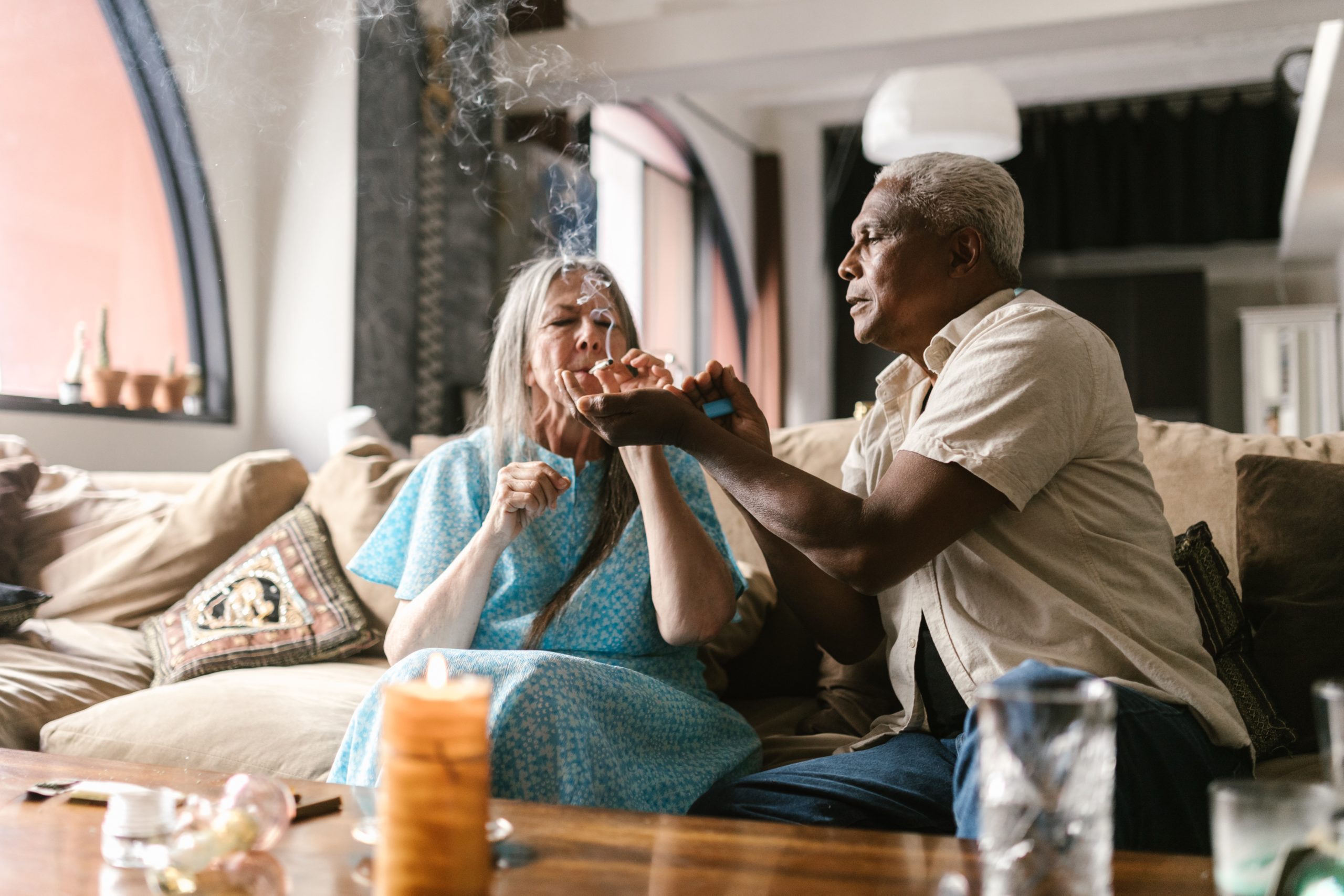
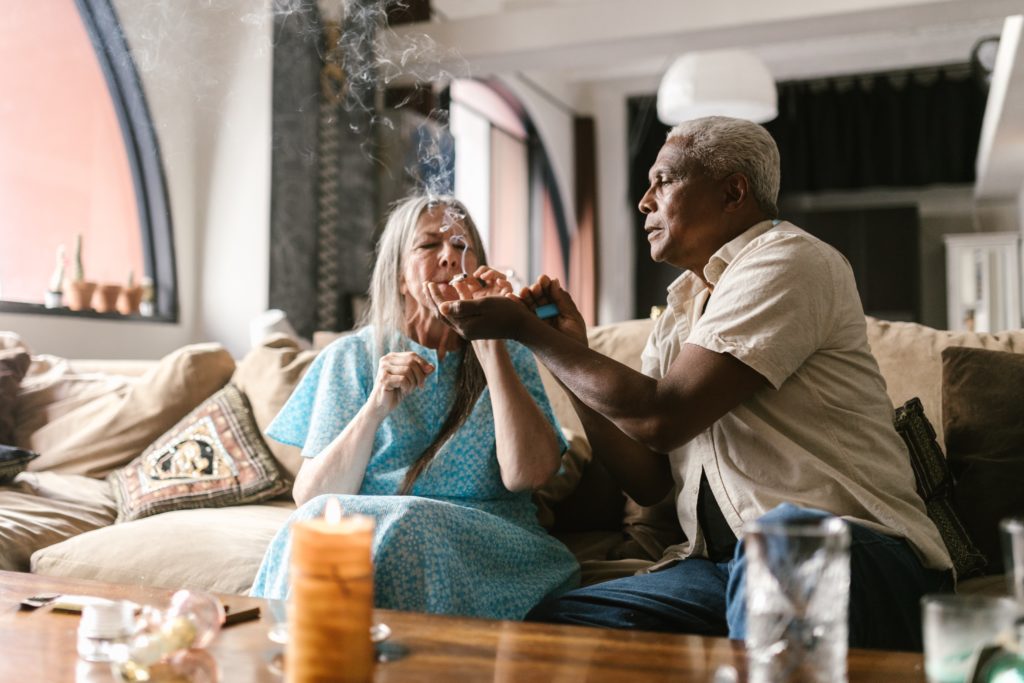
    Cannabis is marijuana, and can be smoked, mixed into edibles like brownies and cookies. It’s natural…grows out of the ground…so obviously it’s healthy and good for you, right? Maybe? Or maybe not…

    Cannabis can harm your teenage brain…

    It often starts during adolescence78% of people using cannabis for the first time are between the ages of 12 and 20. But cannabis is used at every age. It may not be too bad for adults in midlife, but that’s a discussion for another time. What about teens?

    Today, let’s talk about whether it’s beneficial in adolescence.

    A landmark study just published in the JAMA Psychiatry (credible, right?) took a look at the long term effects of cannabis use by teenagers.

    The researchers behind this incredibly important long-term study point out that even though there has been more and more legalization of cannabis, there have been few longitudinal imaging studies to show the impact of its use during this formative time of life. When they speak of longitudinal studies they’re talking about following the subjects over a period of time.

    To understand more, Matthew D. Albaugh, Ph.D., and his research team began imaging studies gathering MRI information for 799 European participants ages 14 and up, then again at the end of the study five years later.

    The researchers found some surprising results at the five year mark. For instance, in teens who reported moderate to heavy cannabis use, there was a reduced thickness in the prefrontal cortex, both left and right.

    This means there was altered development of the neurons in the left and right prefrontal cortex regions.

    Now, maybe you’ve heard people say that a young person should avoid major decisions before the age of 25…. Why? Because before that the prefrontal cortex isn’t fully developed. Or maybe to avoid marrying before that age for the same reason. Or maybe they used it to explain poor judgment, and impulsivity.

    The prefrontal cortex is important. It empowers us to plan, make decisions, memorize and remember, and learn. Plus manage time and organize. 

    Think about it. What if you couldn’t do any of those things? Or do them well. How would it affect your life? Will cannabis harm your teenage brain..? Let’s not put our heads in the sand about it.

    You might not be able to organize school work, or organize your job responsibilities when you’re older. You might always be kind of confused and behind, because of your inability to organize and manage time. Imagine that.

    You might not learn to drive — well.

    You might not feel like studying or learning… you might not be able to do all the things you could have when your parents and teachers said you ”had so much potential.”

    You Coulda Been a Contender.

    In fact, you might not do a good job planning your senior graduation party. Or where to go to college. 

    Basically, you might just forget college, or a job using your mind. You might have to be told what to do and when to do it. Over and over. Picture that.

    The researchers also learned that the amount of cannabis adolescents used was directly related to the amount of thinning. Those who used it heavily had the most severe thinning in the prefrontal cortex regions.

    And it gets more alarming.

    Since the prefrontal cortex in a teen is less developed, this underdeveloped portion of the brain caused greater amounts of impulsiveness.

    The right cerebral cortex, as well as the left, are both densely populated with cannabinoid 1 receptors. They undergo their greatest age- related change in mid-to-late adolescence. Research with lab animals has shown that teens are most vulnerable during this time to the impact of tetrahydrocannabinol (which is THC, the psychoactive chemical in cannabis) on their brain structures and function.

    So these effects on the brain related to cannabis use, according to this study, link teen cannabis use with a variety of negative outcomes, including psychiatric symptoms in adults.

    Ok, now the logic. You’re a teenager from age 12 to age 20. Eight years of your 75 year life span are taken up by adolescence, but the decisions you make during those 8 years can alter the course of the next 55 years, more or less. Cannabis: will it harm the teenage brain?

    Be Logical

    Just think, if you got through adolescence without using cannabis, the risks of psychiatric disorders that are often increased by cannabis use are removed from your future. Those risks are gone. Plus, the impulse control that’s lost as a result…that can lead to arrest and imprisonment, or impulsive decisions like ending your life? Those risks are gone too, if you never use it.

    If you stop and think about it, you need all the impulse control you can get, you know?

    Studies have been lining up for years, showing that cannabis changes important parts of the brain, especially in the prefrontal cortex. And to be at our best, to have access to the best we can do, we need to stay away from those things that damage brain systems.

    To develop yourself for the future, whether through college or art or creative endeavors or learning a trade, it’s all education…and you need it to enjoy a rewarding life. You need all your faculties. You need to protect your brain.

    So while we can’t fix what cannabis damaged in the past, we can offer a healing experience with IV ketamine treatment that can restore the damage depression, anxiety, and stress cause. It can also help with alcohol and substance misuse.

    At Innovative Psychiatry, we work with people everyday who’ve used cannabis, and report impairments they’ve become aware of. In addition, many are depressed and/or anxious. While we can’t erase the years of cannabis use, we can treat the depression and anxiety that never seems to let up. Especially if they’ve already tried other medicines and treatments.
    We specialize in treatment resistant depression and anxiety, as well as substance and alcohol use disorders, bipolar depression, and PTSD…and have seen IV ketamine treatment do wonderful things for them. IV ketamine puts 100% of ketamine right where it’s needed, on the brain tissue that’s showing impairment from the pruning caused by stress.

    The result is restorative, transformative, and fast. Rather than you having to wait for weeks or months to experience improvement like you do with oral antidepressants, ketamine flows into your brain systems and switches on the light.

    That’s not to say that we think ketamine heals the damage cannabis can cause — but we are saying that it can be wonderful at restoring your outlook from dismal, dark, and dreary to happy, hopeful, and expecting good things.

    If you feel you’ve lost your initiative, motivation, and hope, if you’ve tried antidepressants that haven’t helped, IV ketamine treatment may be just what you need to get on track again.

    Ketamine isn’t for everyone, but it is for most.  The percentage of those who are helped is so high that chances are you’ll be set on higher ground by this treatment.
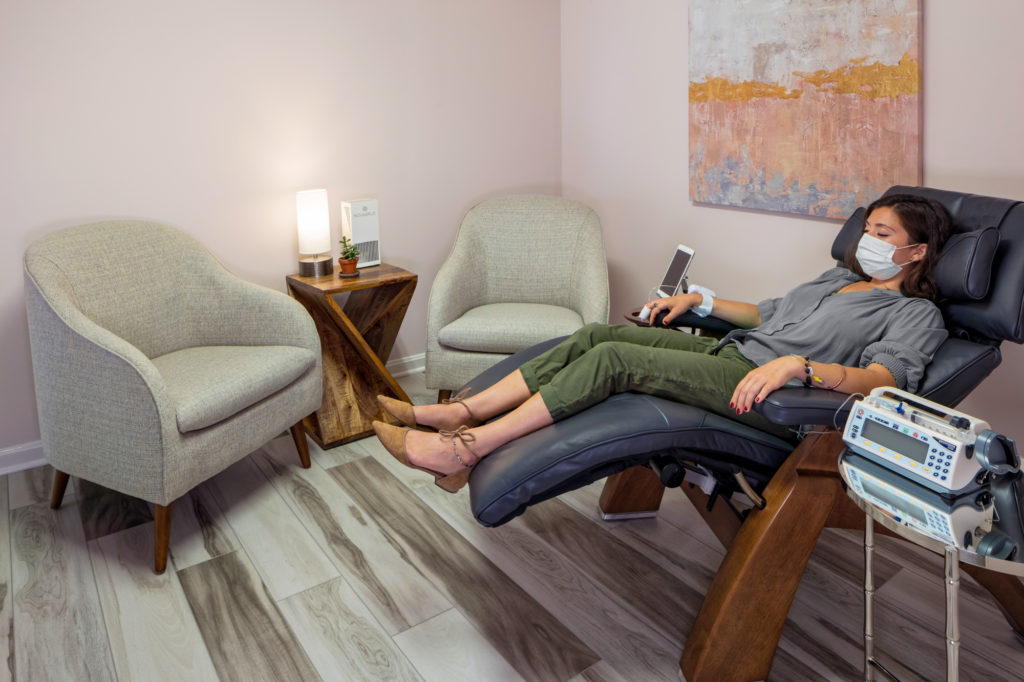
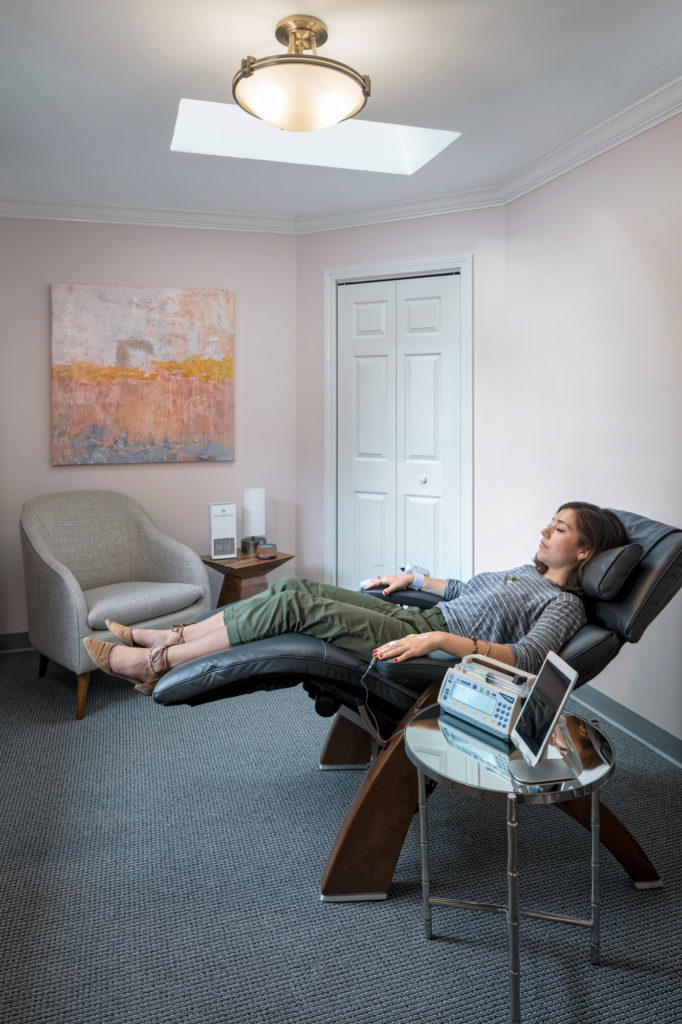
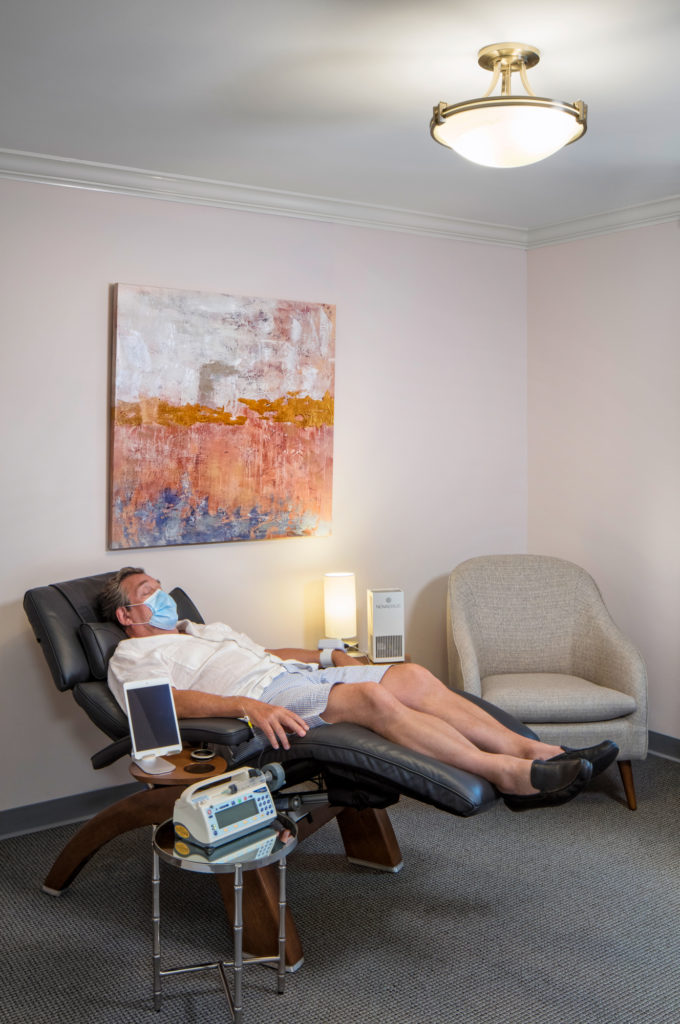
    Receive your ketamine treatment in a comfy recliner to erase memory triggers of alcohol use.

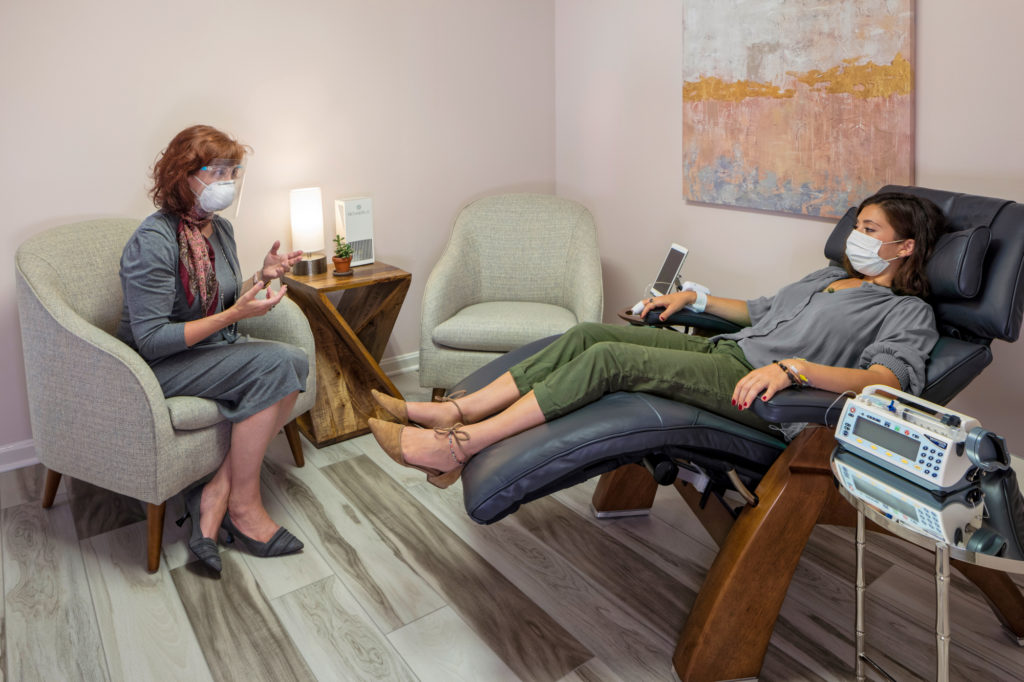
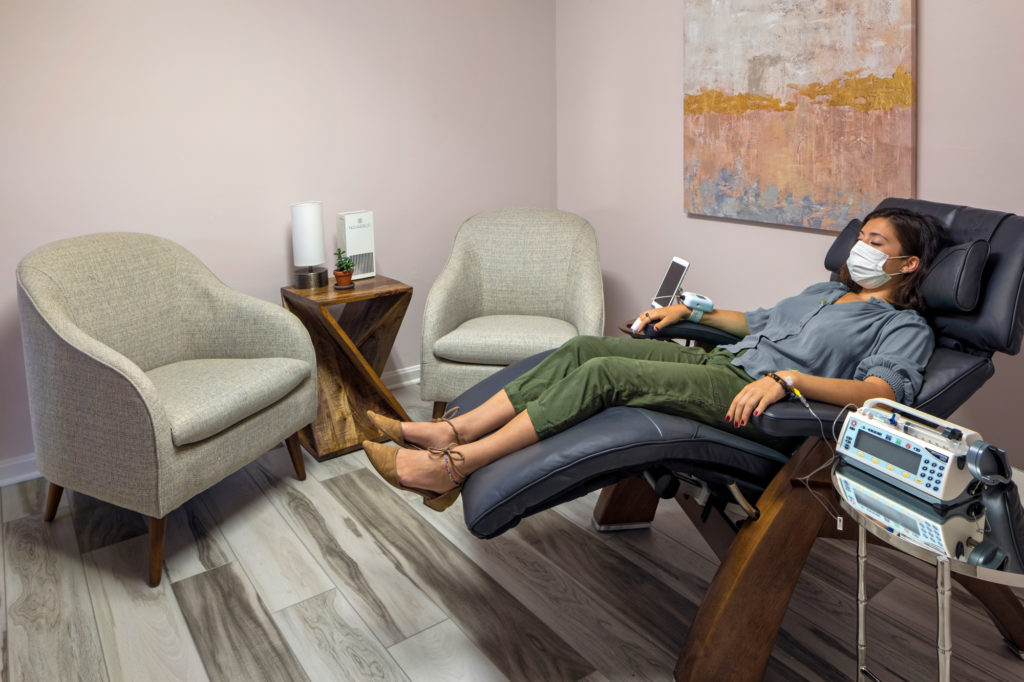
    When you come in for treatment, forget about waiting rooms—we’ll meet you at the door and take you straight to your treatment room. (And what a room it is! Skylights, windows, treetops, dimmable lighting—we’ve got it all.) You’ll find yourself in a beautiful environment, and a zero-gravity heated recliner…and you’ll have privacy to make the most of your treatment. You can be at ease because we took a preemptive step and installed plasma cell technology to destroy all airborne viruses, including COVID and its variants, plus bacteria and molds. And they’re destroyed, not caught on a nasty little filter. 99.999%.

    So, while we can’t fix what cannabis damaged in the past, we can offer the kind of healing and repair with IV ketamine treatment that can restore the damage depression, anxiety, and stress cause. It can also help with alcohol use disorder and substance use disorder.

    September has been National Suicide Awareness Month, and we’ve tried to confront suicidal thoughts each week. They can come from a variety of disordered thinking, or even from sheer desperation. But these thoughts are dangerous. And it’s important to get them to subside….which is ketamine’s specialty.

    So whatever has led to suicidal thoughts, IV ketamine can erase those thoughts in a few hours, or an afternoon. It can save your life. So you’ll have more life to live and recover in.

    The National Suicide Prevention Lifeline:  1-800-273-TALK (8255)

    You’ve been through a lot. You’ve suffered. And you want to feel better and function better.

    Believe that your life can be better. 

    Or at least, give yourself the opportunity to see what improvement can feel like. What remission feels like.

    Lori Calabrese, M.D. is on the front end of the race to stop PTSD in its tracks using IV ketamine treatment.

    To the restoration of your best self,
  • Live with Someone with Bipolar 2 in the Family? It’s Not Easy, Is It?

    Live with Someone with Bipolar 2 in the Family? It’s Not Easy, Is It?

    We talked about the difference between living with bipolar 2 and bipolar II disorder.

    Have you ever lived with someone in your family who’s so ill that the rest of the family just hangs on and survives? Someone who’s so ill that the parents’ attention is all sucked up by that one’s needs..?  Maybe your sister needs help with math, or your brother needs support for his science project. Maybe you need to give your speech tonight to someone who will listen before you give it for a grade tomorrow.

    There are lots of types of illnesses. Some families have a person who’s fighting cancer, or heart disease. Others have a family member who is in a wheelchair, or in chronic pain, or is losing their memory. All of these families are challenged, and everyone has to make sacrifices.

    Trauma Can Occur When You Live With Someone With Bipolar 2

    But in a family that’s living with bipolar 2, there’s another atmosphere. It’s like walking on eggshells. The sacrifices are somewhat different. They can even be somewhat traumatic.

    For someone with bipolar 2, the pain is not in their feet, or their back…it’s in their emotions. Think about what your home would be like if one person in your family was as angry as you’ve been when you were your angriest. Or as sad as you’ve been when you were your saddest. Or even sadder. And they feel like that…not for a day or a week but almost all the time.

    Then, think about the happiest moment you’ve ever had, multiply it by ten, or 50, and that’s how happy this family member is sometimes …until he gets ANGRY. (Or until he becomes sad.) Like too happy…too jovial. Scary happy.

    It can be overwhelming for him — and also for you.

    Because someone living with bipolar 2 can change from one extreme of emotion to another in a short time. (If he changes from happy and energetic to depressed and sluggish and hopeless (and back again) at least four times in a year, he’s got rapid cycling. And some rapid cyclers make that swift change in a day. Talk about a roller coaster…) 

    Some people with bipolar 2 may be depressed for a year or more before they come out of the depression and feel energetic and joyful again. The depressions are long, awful… terrible, really. But a family member who is always down, as bad as you feel for him, is hard to be around. 

    That’s just the hard truth.

    At the same time, someone who is always upbeat, acting silly, making jokes, talking over everyone else, can also be tiring to be around… eventually.

    And again, your parents are often absorbed with that same family member, giving all they know to give… and too drained and tired to listen to your speech, or help with the science fair, when things finally calm down at 3 am.

    If you’re the parent living with bipolar 2 in the family, you have a heavier load than you ever dreamed you would. Because you live with the weight of all the bills, the dishwasher that needs repair, the yard that’s becoming overgrown, and the letter from the Homeowners’ Association threatening to fine you if you don’t get your house painted…. while you’re stumbling around without having slept. Exhausted isn’t even the word.

    You have to work, but during your work day, you get a call from the school that your child with bipolar 2 has had a meltdown in class because a student made a cutting remark. You KNOW you need to help one child with his science fair project, and help another with her math, while you also try to soothe the child with bipolar 2 and help him face natural consequences.

    Trouble is, he’s so sensitive. His sense of worth is in the toilet and it’s so tough to help build it back up. To help him accomplish things he can be proud of. He’s so capable and intelligent, but sabotages himself without realizing it. 

    And one of his worst triggers? Being put down by a friend.

    Oh, and there’s still that science fair. So at 1am, your middle son’s helping you help your youngest put together his science fair project. Right. Your brother waited patiently for three days for help, but it wasn’t possible. So the family pitches in to be sure he has something to show.

    When you live with bipolar 2 in the family, you’re not trying to help your little brother win, you’re all just trying to spare him of the humiliation of having nothing, getting a zero, and standing out like a sore thumb.

    Then you get up in the morning to get ready for school. And your older brother just lays there, staring at the wall. When mom wakes everyone up, he doesn’t move. He just says, “I can’t.”  

    And then, when you get home from school, and you’re eager to tell mom about your speech, you can hear her speaking softly to your big brother in his bedroom. And your brother is yelling. About how he can’t face school. And how tired he is of feeling this way. And how he wants to die.

    To DIE??? Your brother wants to die?? You go to your room and sit on your bed…remembering when grandpa died. When you went to the funeral home. And saw him in his coffin. 

    You DON’T want your brother to die!! And you worry what will happen if he does.   

    The National Suicide Prevention Lifeline: 1-800-273-TALK (8255)

    There are traumatic moments, days, and weeks when you live with someone with bipolar 2.

    But there are also good moments, and good days, and good weeks. He’s the most kind and caring person you know. So caring, so tuned in to your needs, that he’s your best friend. You appreciate him so much. 

    …Until he begins to change and become agitated. And he talks of his frustration in a clipped, pressured way — as though he can’t get the words out fast enough. You can feel kind of betrayed, but you remember him doing this before, and your gut instinct says this is part of his illness.

    He’s sick of it. You’re sick of it, too. (We get it.)

    And something you learned when you were much younger was to never argue with him when he’s like this. You know better. So you listen and listen and listen to his heartbreaking diatribe. And you worry what will bring it to an end. Will he maybe just calm down? Or will try to kill himself again..?  If only he’d go to sleep and wake up relaxed and at peace…

    The good news is that IV ketamine treatment can be a wonderful treatment to relieve the long painful bouts of depression that your loved one with bipolar 2 experiences.

    And the toll that it takes on the other family members who live with someone with bipolar 2. That toll can turn into treatment resistant depression, especially if you’re in the same family. (Does anyone ever talk about this?)

    IV ketamine treatment can relieve that treatment resistant depression in family members, too. We often make the point that ketamine treatment isn’t for everyone, and it’s not. But it works extraordinarily well in most people with treatment resistant depression. In fact, it can relieve a whole family who has suffering from the stressors of living with someone with bipolar 2 disorder.

    When you live with someone who’s not well, sometimes you get sick, too.

    IV ketamine can relieve the depression for someone living with bipolar 2.

    At Innovative Psychiatry, we’ve seen people who suffer with long, protracted periods of depression get better, enjoy motivation and initiative, and the relief when their mood is restored to joy.

    And the same relief and restoration can happen for you. We’re set up to greet you at the door and bring you right in — no sitting in a waiting room! What’s more, we’ve gone the extra mile and equipped our offices and treatment rooms with plasma cell technology that continually destroys viruses, bacteria, and mold in the air and on all the surfaces—it doesn’t trap them on a filter. So you can come in for treatment with complete confidence and peace of mind that the air you breathe in our gorgeous space is 99.999% free and clean. Because we know you need peace of mind.

    And most important for you: if you have someone with bipolar 2 in your family, be sure that you’re taking time for yourselves, and each other, as you help your loved one find the treatment they need.

    Bipolar Disorder is a family illness. Everyone may need to get well. We’re here to help get you and your loved ones get the care you need.

    Don’t try to face it all alone.

    Lori Calabrese, M.D. is on the front end of the race to stop PTSD in its tracks using IV ketamine treatment.

    To the restoration of your best self,

  • Living with Bipolar 2 When It’s You Who’s Got It

    Living with Bipolar 2 When It’s You Who’s Got It

    Is it Bipolar II, or Bipolar 2? Hard to get it straight? (Bipolar 2 is what’s all over the net but Bipolar II is what’s in the journals.)

    Actually, if you suffer from bipolar II disorder, it’s no laughing matter. It’s a lot like bipolar I, except the highs are much less intense. So we call them hypomanic. Even so, they’re not nothing. Not even close. Living with bipolar 2 is no fun, but with support, medical treatment, and patience with yourself, it can be possible to live an enjoyable life. To be well.

    But first, you need to recognize it, then you need the best psychiatrist you can get…right?

    How else can you find some leveling out of the horrific ups and downs?

    So Charming…almost Irresistible

    Sometimes you’re a charmer, and you feel like you’re beautiful to other people, which is awkward when it’s the opposite sex you’re charming. Neither your spouse nor the spouse of the one you’re charming appreciates your beauty…you know?? You feel like you have such gifts to share — and honestly you do — but when hypomania sets in what seems like gifts you give to others, from your perspective, may actually be symptoms. Yep, you heard that right… not really charm or beauty but symptoms of the disorder.

    Disappointing, I know.  Still you’re a creative, intelligent, giving person when you’re in that in-between place we call “your fun self.” And you really are a lovely person everyone around you cherishes as a friend… and your friends get that you’re living with bipolar 2. They know it’s no piece of cake.

    So, what’s it like when your charming and gifted self disappears?  Are you sorry to see him go? You can feel so bad about yourself when you’re depressed, and you feel like you’re more likable when you’re charming. Makes sense, doesn’t it?

    So think back. How were you feeling a month or two ago?  Did you feel charming and gifted?  If not, maybe that was a time you weren’t dealing with hypomania…

    So let’s say it was four months ago. If you have had 4 or more bouts of hypomania within the last year…then you know you’re a rapid cycler. That means you have these hypomanic episodes more often than some people do with bipolar II. (Still, you’re certainly not competing with anybody!) Mostly it just helps to have a feel for how often this happens so you can recognize it and respond to it, and so those who love you can, too.

    And it can help to be in touch with your cycles so you can avoid “mishaps…”

    You might even say to your sister or your mom…do I seem hypomanic to you? Or am I just in a good mood?

    It’s often easier for the people closest to you to tell the difference than for you. Because for you it might just feel GREAT. Fantastic. Beautiful. Normal. And whether you’re in a great mood or hypomanic, just feeding into a good mood can trigger an episode of hypomania. You stay up later, go out more, get super charged….and before you know it, yikes! Try to put a lid on it, if you’re able to.

    In the process of living with bipolar 2, maybe you feel edgy and impatient when you’re energized like this.  Instead of feeling charming and gifted and full of energy, maybe you feel more irritable and agitated? This is one form of mixed states, and it’s not much fun, either. (To say the least.) For some people that agitated state lasts longer, but then still for others it can be much shorter. And what are you supposed to do with yourself ….with those irritable, edgy feelings when you have them?

    I guess it’s hard not to punch someone, but it’s super good you hold back from doing that. It’s your condition getting you riled up…not really the other person as much. (Although we have to agree that some people are pretty annoying!) It’s a fact of life. Still, it’s important not to punch anyone, right?

    What’s it like when that charming feeling goes away? You may feel like your average self. Or…you may feel irritable and edgy. Or you may feel desperately low, sinking down, dark, sad, and angry.

    You feel so terribly tired, so defeated, like you want to die...  When you’re feeling that way, it’s not so clear to you that the way you feel is a symptom, and it will pass.

    And you feel like that for…weeks?? Months??  Do you know what can be done to help you feel better and not feel so terrible for so long?

    IV ketamine treatment can make a huge difference when you’re living with bipolar 2 depression.

    It works for bipolar depression just as it works for treatment resistant depression ….Imagine what it would be like to have bipolar 2 with no depression?

    Oh…It turns out it’s really called bipolar II! Not 2? Yes, not you bipolar 2, even though that’s a quick cute shorthand. It should be Bipolar II.

    With IV ketamine treatment, you would get six or eight infusions, roughly, over 2-3 weeks, and you should start to feel better if you do it when you’re depressed. LOTS better. Most people do. Just like with major depression, the dendrites at the synapses become pruned and broken and thinned out from the stress of the disorder. Ketamine restores them, builds them back up using brain-derived-neurotrophic-factor(BDNF). Ketamine sails through your lateral habenula and tamps down the bursting cells that prevent you from enjoying pleasure. Those G proteins slide off the lipid rafts in the cell membrane and get the neurotransmitters moving so signals shoot around your brain again, making you feel good. Happy. Creative.

    Living with Bipolar 2 means you're usually depressed unless you have ketamine treatment.

    You know, ketamine can stop those thoughts…the suicidal ones. Very quickly in our hands and in our office. Treatment doesn’t affect your memory …and suicidal thoughts can stop within a few short hours.

    Maybe you should think about IV ketamine treatment if you start feeling down again. And there are now more ways to get financing to pay for medical treatments like this.

    If you’ve actually had suicidal thoughts and images in the past, you know how serious that can be. 

    Just remember that there’s ketamine treatment if you get that down again. It can be like hope in a jar.

    You shouldn’t have to live with terrible depression.

    At Innovative Psychiatry, we see patients with bipolar II every day, and ketamine infusions help them feel so much better so much of the time. Not all, of course. But most. We treat their hypomania and mixed states separately from the depression. We watch them transform from burdened and depressed to walking with a spring in their step and chatting with ease. IV ketamine can do that.

    If you struggle and suffer from Bipolar II disorder, the symptoms that can be lifted off you by relieving your depression will make your life so much easier to manage. There are medications that help with hypomania, too. So many people with bipolar II / bipolar 2 have enjoyed the freedom that comes from ketamine treatment.

    When you come for treatment, you’ll enjoy a gorgeous, private treatment room where you can lay back and relax to make the most of your treatment. And we’ve gone the extra mile to install plasma cell technology to protect you from infection. This technology, developed by the Department of Defense and NASA, is high tech enough that it destroys 99.999% of viral and bacterial DNA from our indoor air, so we’re as infection-free as you can get. You can feel safe safe, without fear of the delta or mu variant, and become a happier, more relaxed person… free to live and enjoy your life.

    Whatever your shorthand is — II or 2 – living with bipolar 2 can be tough. And when it is, remember that IV ketamine’s extraordinary ability to defeat depression could be just the thing to pull you out and help you enjoy a rewarding life.

    If you’ve suffered from these symptoms, call us.

    Let us help you turn the corner and live again.

    Lori Calabrese, M.D. is on the front end of the race to stop PTSD in its tracks using IV ketamine treatment.

    To the restoration of your best self,

  • Can Cannabis Make You Suicidal?                       It Depends…

    Can Cannabis Make You Suicidal? It Depends…

    There are so many sides to this controversy. Marijuana’s good for what ails you – right? For cancer pain, anxiety, depression…for putting your body back in order… Or is it??

    There has long been a belief that cannabis, another name for marijuana, was associated with suicidality.  Not a popular belief, but one supported by neuroscience. What do I mean by suicidality?  I mean thinking about suicide, planning it, setting it up…and following through. Trying to kill yourself. Or actually killing yourself. Can cannabis make you suicidal? Is cannabis responsible?

    So is it? 

    Is cannabis use directly linked to the process of planning and completing suicide?

    Meet Isaac:

    Isaac walked along the boardwalk, feeling alone. Isolated. Bored. And the more bored he felt the more depressed he felt. He had few friends, and the ones he had he was never able to see. He didn’t have a car to go visit them, and most of them were also without transportation.

    His insides seemed hollow. He felt empty. His mom had died from cancer last summer, and there was nothing left but for him to kill time until his dad got home. But that wasn’t much better. Dad was also hollow and empty, looking for ways to fill the void his mom’s death had left.

    Soon after his mom’s funeral, some friends offered him pot for the pain and heartache. It helped. For a little while. So he got more to keep the heartache from defeating him completely. And it felt good.

    If only the effects lasted longer. He NEEDED it to last longer.

    Within a few months, Isaac was smoking with at least one friend at a time just about every day. He had graduated from high school, but his mom’s illness — then her death, the funeral, and all the grief… he just didn’t have the gumption to drag himself off to a few places to submit applications. Whether for college or even just a part-time job. So he’d sleep late, then get up and meet his friends and share some weed. By the time they were finished, his dad was home from work and in bed…so he’d find some food, then go to bed too. End of another identical day.

    How do you inject meaning into a day..? Can cannabis do it? No..? What can..?

    And if there’s no meaning to be found, can cannabis make you suicidal? Keep reading…

    Time passed. It was meaningless. But he was coping… sort of.

    Still, the days ran together like the colors in an amateur watercolor painting…until the blues, greens, pinks, reds, and oranges of life all puddled together to make a blackness. And the same ol’ same ol’ was no longer tolerable but rather unbearable. 

    Isaac missed his mom. She’d been his best friend. She encouraged him to be more and do more. To have hope for his future. Without her here, life was a vacuum. A void. And smoking weed no longer comforted him…. Instead it seemed to drag him further and further down. He didn’t know when it happened, but at some point he had begun to realize he didn’t want to live anymore. Not feeling like this anyway. 

    And where was a solution? His mom was gone. She’d always been the solution until she got sick. His poor little brother never knew her like that. He wished he could fill in the gaps for his brother, but he couldn’t even keep his own head above water.

    Can cannabis make you suicidal? Can it??

    The bridge over the river that ran through downtown always captured his attention. He could just jump. If he wanted to. He pictured the drop from the bridge … it would be like flying….he pictured the water swooshing and swirling around him as he plunged into it…covering his head…sinking as the sun seemed to pull away…he knew the water would be cold…

    Isaac shook his head to break away from the whole idea.

    Drowning would be a nasty experience… or would it? What if he just inhaled the water…?

    Later that day, he saw his friend Josh on a street corner, ready to cross. 

    “Hey Josh…” They crossed the street together…two young men, bored, empty, hopeless. Depressed.

    “What’s up, Isaac?”

    “A whole lotta nothin’…”

    “I have some medical weed…”

    “Where’d you get it..?”

    “I got a medical card for it. It helps with the pain in my leg from the cancer…”

    “Is it better than pain pills? Why use weed?”

    Josh took a breath, surprised Isaac would ask about something so obvious. “It’s natural, man. It’s organic. Not some chemical that’s created in a laboratory. It’s good for you.”

    “Well, I’m down for it. And I don’t even have any leg pain!” So they headed over to Josh’s car where they could just sit and smoke.

    Where do you go when the meaning runs out?

    What do you do if cannabis makes you suicidal?

    Three days later Josh heard sirens. Didn’t think much of it until he heard on the news that Isaac’s body had been found near the downtown bridge… Josh was sick. Devastated. 

    He had had no idea Isaac was on the verge of suicide. The loss. The waste. Maybe he could have done something for Isaac if he’d known. He knew Isaac’s family and knew they must be heartbroken. It was too tragic, and he’d had no idea. The medical marijuana should have helped soothe him. Baffling. Sickening…

    Let’s take a look at this. As cannabis becomes more widely used — because of legalization for medical and recreational use in more and more states — let’s look at just how good it is for our loved ones …and even ourselves for that matter.

    We’re talking about the use of cannabis, and Cannabis Use Disorder, known as CUD.

    A group of medical researchers from the National Institute on Drug Abuse at the National Institutes of Health set out to learn more about the impact of cannabis use on young adults.

    They chose 281,650 subjects between the ages of 18 and 34 years of age, who had participated in face-to-face National Surveys on Drug Use and Health between 2008 through 2019. These 281,650 people used cannabis daily or almost daily, at least 300 days per year, OR they had a diagnosis of cannabis use disorder plus a major depressive episode.

    The primary focus was to figure out the prevalence of suicidal thinking, planning, and attempts within the last year and whether it was related to cannabis use. More than 281 thousand people. Out of all those people, what did they learn?

    They learned that cannabis use and cannabis use disorder (CUD) were more strongly associated with suicidal thoughts, planning, and attempted suicide and that the risk of suicidality was higher in women than in men. And that was with or without depression.

    Did you know that among people between ages 15 and 54, 60% of first suicide attempts occurred within a year of the first thoughts about it? And get this alarming fact: Suicide attempt is the single most serious clinical predictor of death by suicide.

    Did you know that? When someone makes an attempt, it’s a mistake to claim they’re seeking attention. Never make that deadly mistake. Always take suicide attempts seriously, and offer help and treatment.

    Can cannabis make you suicidal? Yes, if you use it often enough.

    They also found that women with both CUD and depression were more likely to plan and attempt suicide than men with the same circumstances.

    But more importantly, even though women were more likely to think about, plan, and attempt or complete suicide than men if they did use cannabis frequently and had a depressive disorder… they were only equally as likely as men to think about and attempt suicide… if no cannabis was used.

    That’s the shock of it.

    That the more you smoke weed, the more likely you are to think about, plan, and attempt suicide.

    (Data. Fact. Not just me sayin’…..)

    You wonder…was it the increasing amounts of cannabis causing the suicidality, or was it the conditions and circumstances that led to the smoking…?

    We know that a large group of people seeks comfort in cannabis — now more than ever — since cannabis has been legalized in so many states. And the pandemic has increased anxiety in people everywhere.

    But what’s the fallout of that …?

    If you are between 18 and 34 and you use cannabis, you have a greater chance of developing thoughts of suicide, or worse, death by suicide. Regardless of whether or not you have depression. And the chances of becoming suicidal are higher if you’re a woman than if you’re a man. The association is strong and the likelihood seems to be steadily increasing, according to this 11-year study.

    Those are the facts. Those are the risks. And although we need more studies and more information to determine exactly what is causing what, right now today this is information that you should share with everyone you know and love who uses cannabis.

    At Innovative Psychiatry, we hear our patients’ stories of anxiety every day. Depression. Hopelessness. It seems like it’s everywhere. Let us help you with it.

    People have been smoking cannabis, eating it in brownies, including it in their favorite cake recipes for decades, maybe even centuries. But no matter how you introduce it into your body, if you do it often and a lot, suicide is a risk you may not be able to control or talk yourself out of. It’s a serious and severe risk, from what many consider a seemingly harmless plant.

    Can cannabis make you suicidal? Well, cannabis really may be a wolf in sheep’s clothing, if you use it enough to cross the proverbial line into suicidal thinking.

    To more effectively treat depression that medications have not helped, anxiety and trauma, and substance use disorders, IV ketamine treatment may be the best option available. It’s not for everyone, and for reasons that remain elusive, it just doesn’t impact some people in the same remarkable way it does most.

    But those exceptions are in the dwindling minority. More likely than not, it will be the best introduction to peace you’ve ever imagined. From PTSD to social anxiety, and from major depressive disorder to bipolar depression to postpartum depression and even anorexia.

    When you come for treatment, you’ll find a relaxed and beautiful environment, optimized by technology that removes viruses and bacteria from the air and the surfaces. Developed by NASA and the Department of Defense, this plasma cell technology was developed for the space station, and is truly other worldly in its effect. When you come for treatment, you’ll be comfortable and safe. Secure and in privacy. So you can focus on making the most of this IV ketamine treatment.

    If you have suffered PTSD, depression, social anxiety or other conditions we’ve talked about here, call us.

    We’re eager to meet you and work with you to help you rise above the symptoms that have held you back. It’s time to move ahead in your life.

    Lori Calabrese, M.D. is on the front end of the race to stop PTSD in its tracks using IV ketamine treatment.

    To the restoration of your best self,

  • Clean Out the Cobwebs in Your Life and Go Forward with Joyful Resilience

    Clean Out the Cobwebs in Your Life and Go Forward with Joyful Resilience

    Engage with family and friends. Exercise and move. Get your juices flowing. Remember to take time for you…snuggle with your cat…play with your dog. Use your brain, exert yourself mentally and physically. Build yourself up to prepare for the world after the Delta variant subsides.

    After all this time with isolation and social distancing, it may have been simplest to just tumble onto the path of least resistance and watch TV, stay alone, play online games. But you need people. You need your pets. Relationships are a function of the human organism and they’re extremely important to your wellbeing. They help you to move forward with joyful resilience.

    We offered a blog about brain fog recently…. You know it’s not that surprising so many have developed brain fog in our current situation where we don’t talk as much about our challenges, seek the support of friends and family, or spend as much time outside as we did before.

    That Delta Variant Just Had to Jump in and Spoil Our Re-Entry 

    Wouldn’t you know it? Just as the pandemic seemed to be subsiding with the advent of so many people vaccinated, here comes the Delta variant stirring up more trouble.

    But let’s take heart. No one expects this variant to last that long. Use fresh air to your advantage. Meet with friends in the fresh air until the virus status shifts. We just need to be patient a little longer, get vaccinated, wear our masks, use hand sanitizer… and hold a steady position against an infection that’s been so widespread that our global response has resulted in changes in our culture like we have never seen before.

    Even though Delta is severe, contagious, and deadly for people without vaccinations, for most vaccinated people who contract it, it’s like a summer cold. So the easy solution? Just get vaccinated. Like we did with polio, we’re conquering this terrible virus and we’re close to getting life as we knew it, back. Or at least something close to it.

    Global Changes Altered What Looks Normal

    So yes, we’ve seen major changes in our lifestyle and surroundings. Social distancing patches on the floor in businesses. A huge part of the workforce has been working remotely (at home) for the last year. Restaurants only serving for drive through and pick up. Changes we never could have imagined, right? We never could have. And now it’s routine.

    And that’s ok, as long as those changes are helpful to us. Like remote working can be good — but don’t let it separate you from human interaction. Whether you meet with others online or behind a mask, do meet. Go forward with joyful resilience.

    Don’t let the changes caused by this pandemic make you forget how to engage. Don’t let your interactions become flippant, superficial, or without connection. 

    Volunteer in person with a mask or online and by phone without one. But do connect.

    You need to connect!

    And others need to connect with you. How do you dig deep and intertwine with others?  How do you get past listening passively, to empathizing, caring, and helping?  It’s interactions on this level that make your life richer and more resilient. 

    Which brings up another discussion. Managing relationships as they bloom again can be a little tricky, if you remember. So think about this:

    Rule of thumb: when their actions infringe on your values that keep you feeling safe, they’ve crossed a boundary.

    Dr. Henry Clout, who wrote the book Boundaries, said it like this:  Boundaries show you where someone else ends and you begin. You may have a parent or sibling or friend who feels they need you to prop them up. But if it happens too often, you begin to feel like you’re in a cell. That you’re controlled by someone other than yourself.

    Those boundaries can exist between you and your parents, you and your children, you and your friends, you and your relatives.

    Relationships, to be meaningful, need to be balanced. You need to know your decisions are yours, that you are not manipulated to make others comfortable. 

    And you need to know that when you feed those relationships, to strengthen your bonds of friendship, each person involved comes away with helpful, supportive, and happy feelings. 

    If your friendships aren’t providing this type of relaxed support, give and take, and respect, maybe you’ll be happier with better friends…you know?

    Because of boundaries, you get to choose what sort of friends you embrace. Then you can go forward with joyful resilience intact, feeling safe, and spreading yourself around to more people.

    So exercise that power.

    And you can push forward with joyful resilience to a life that fulfills you.

    Kick frustration to the curb.

    After 17 months in the throes of the pandemic, complicated by depression, anxiety, trauma, as well as increased alcohol use and substance use…you now can get down to the cobwebs and clean out your life of people and activities that aren’t helping you become stronger or more resilient, and replace them with people and activities that are.

    Move forward with joyful resilience when you exert your emotions and your energy.

    Has your use of alcohol or substances increased during the pandemic? Kick ’em to the curb with IV ketamine treatment.

    Another look at Alcohol and Substance Use

    You might ask yourself whether the incidence of alcohol use and substance use increased for you in the last 17 months.  If they didn’t, that’s great. But for many people, the boredom, the worry, the fear, the loneliness, all contributed to more use of alcohol and substances.

    And if that’s the case, take a close look at whether your friendships contribute to that or not.  Because engagement, fulfilling friendships, family relationships, and having healthy activities includes people who also have healthy lives. People who can do their part in keeping a relationship with you rewarding.

    Consider using this shift in the pandemic to conduct your own house cleaning in your life. Start fresh with a new outlook. You can be free to move forward with joyful resilience after IV ketamine treatment.

    And…if relationships don’t work, or substances get in the way, or depression makes it too hard to exercise, remember that IV ketamine treatment can possibly offer hope for for challenges like these, and help you get a firmer footing for what lies ahead.

    Innovative Psychiatry provides IV ketamine treatment for postpartum PTSD.

    A welcoming place for restoration when you need IV ketamine treatment.

    At Innovative Psychiatry, our patients sometimes express their fears about being able to function well once the pandemic ends. We encourage everyone to exert themselves in their lives… reach out to friends and family online or with masks, use safety protocols but engage with others. Even engage with your pets!

    When you come in for treatment, you’ll be led to a private, comfy room to help you get the most from your treatment. You’ll find the air in the offices is clean and pure, because we’ve installed technology that removes all viruses, bacteria, and mold from the air and surfaces in every room. Plasma cell technology, designed by NASA and the Department of Defense, works around the clock to keep the air and surfaces clean. We want you to relax, settle in for your treatment, and know that you’re safe from infection when you’re here.

    And if you find too many obstacles to your moving forward, like substances, social anxiety, trauma, depression symptoms, and you can’t seem to get around them…then call us.

    Let’s put our heads together and consider IV ketamine treatment and whether you might be a candidate. If so, we can make an appointment for you within just a few days to get your treatment started.

    Meanwhile, practice good relationship skills. And good living skills.

    And expect your life to get better and better and better. Joyful resilience better.

    Lori Calabrese, M.D. is on the front end of the race to stop PTSD in its tracks using IV ketamine treatment.

    To the restoration of your best self,

  • Can’t Think, Remember, or Make Decisions? What to Do About Brain Fog

    Can’t Think, Remember, or Make Decisions? What to Do About Brain Fog

    Thanks to the Delta variant, the pandemic is not over… yet. Impaired cognition has reached a crisis point for many throughout the world.

    Elanna walked into the kitchen and laid her hands on the counter top. Why was she here? She looked for her phone, but she was holding it. Well, that was good, at least. She looked around for a hint…water was OFF at the sink. Well, that was good. Finally she remembered her bill she needed to pay by check. So she hurried to her desk to write the check and mail it. What had her son told her to read about…? What to do about brain fog? What was it?

    The next morning she found the envelope to pay the bill on her desk. Oh NO!!!  That needed to be mailed yesterday!!!  So she slipped it into her purse to take it to the post office.

    Then her phone rang. It was the box store to schedule delivery for her refrigerator. “Tuesday, between 3pm and 5pm? Yes,I’ll be here.”

    Next, she brought in the mail, and felt relieved that at least her bill payment had gone out today, even if it was a day late. A special envelope caught her attention. She pulled at it to free it from the rest of the stack. She recognized the handwriting and eagerly opened it. 

    A wedding shower for her closest friend’s daughter!  On Tuesday at 3:30pm. Wonderful! 

    She called immediately to RSVP and assured her friend she’d be there with bells on! 

    Remember Elanna’s bill payment in her purse…?  She doesn’t….

    The following day she grabbed her purse, stuffing an apple in it on her way out the door in case she got hungry. She made several stops to find just the right gift. It wasn’t easy, because she found herself distracted repeatedly by all the appealing things on display that had nothing to do with a wedding shower.

    The weekend was a whirlwind of activity, and finally Tuesday morning arrived. She wrapped her gift, dressed enthusiastically, then rushed out the door for the shower.  She had great fun with her friends and their daughters, everyone twittering about Hannah’s wedding.

    She asked around, super casually, what they knew about brain fog… and if brain fog was a thing. One of the young women said, “It’s a mental fuzziness, an inability to think clearly, make decisions clearly, that kind of thing.”

    After helping with cleanup, Elanna got home at dusk and saw a note on her door. She pulled it off and set it on the kitchen counter.

    She was tired, so she picked up her laptop, and sat in the recliner with her feet up.

    After a long exhale, and relief in her throbbing feet (heels are such a pain!), she noticed the laptop stilll folded closed in her lap. What was I going to do? She closed her eyes…and drifted off to sleep…then the phone rang. “Hello, I’m calling for Elanna. Would you like to reschedule the delivery of your refrigerator?”  Oh no.  That was today…..ugghh.

    What To Do About Brain Fog… It Affects So Many Aspects of Life

    The customer service agent explained she owed another $79.00  for the repeat delivery.  (Yikes!).  She also encouraged her to go to their website and make a note of the new delivery order number.

    Elanna thought, I don’t want to go to their website..!  “Can you just give it to me now?”

    “No ma’am. My department delivers the appliance. The scheduling department assigns the delivery order numbers. And keep in mind that this number is different than the order number itself. This is about the second delivery. You’ll need this to give to the delivery person so you can be sure you get the correct appliance.”

    Elanna looked up the website…then thought, where?? Where do I go?  How do I get there?  She looked at the menu and there was nothing about deliveries or delivery order numbers.  Where do I go???

    The phone rang again… this time it was the creditor she thought she had paid. She was sure she mailed it. Then again…

    Brain fog can lead to mistakes: what to do about brain fog?

    Confusion, scatterbrained mistakes, a feeling of helplessness…can be costly.

    Elanna searched her purse, and there, under the stuffed apple, was a crumpled envelope.  Oh no….

    “I’m sorry. I forgot it was in my purse.”

    “ Yes ma’am…be sure to add $25.00 to that check as a late charge.”

    Frustration! What Can You Do about Brain Fog??

    Elanna was so frustrated she didn’t know whether to cry or scream. But she still hadn’t written that email. She would do that right now. Write to Ben, Write to Ben, Write to Ben, she murmured to herself so she wouldn’t forget by the time she got into her email. So many unread new messages! So much junk that needed clearing out. After a quick hello, telling him about a couple of events of the week, she transitioned to her real reason for writing. 

    But.. her mind was blank. And she felt blank. She didn’t remember what she had meant to say very clearly…it was all mottled and tangled in her mind…like a wisp of dust floating away. She finally wrote that there was just so much going on…and closed out the email.  It was quick, insubstantial, and pretty meaningless.

    How frustrating!

    What in the world was wrong with her? She pushed the laptop aside, and went to the kitchen for ice cream.  Elanna needed a BREAK!!!

    And what about you? Have you noticed your mind is foggier than it used to be?  Do you think less quickly, calculate more slowly…or have trouble with creative problem solving?  When you write that cover letter or that email, is it clunky and poorly composed?  

    Oh to be able to think again! 

    Actually, neuroscientists have found that this reduced cognition — what we’re calling brain fog here — is a widespread problem for people in all walks of life.  

    There seems to be no question that the pandemic plays a huge role. All the depression, anxiety, and PTSD, not to mention alcohol use and substance use can blur cognition for so many.

    In addition, there’s a surge of concern among physicians and neurologists that we’re actually in a global cognitive crisis.

    Listen up.

    We now know that 50% of people who recover from the COVID-19 infection suffer from brain fog and fatigue. 50%! Many experience ongoing difficulties in executive function, cognitive control and just overall decreases in cognition that lead to disability and impaired functioning and sometimes, disability. 

    An over arching fear among health experts is that these deficiencies could go on and on — for years.

    The cognitive skills we’re talking about include the ability to focus attention, to perceive, register information, lay down memory and retrieve it, as well as difficulties with word finding, language and reasoning.

    Besides being potential long-haul symptoms of COVID-19, impairments in many of these skills are also common (but poorly recognized) features of depression, anxiety, autism, PTSD, dyslexia, OCD, bipolar disorder, substance use disorders, as well as being found in ADHD and dementia.

    Add to this, the fact that the world population is aging … and that will heighten this cognition crisis. Experts say that by 2060, the number of people 65 and older is expected to double. 

    Makes you stop and think. And gulp.

    Who’ll take care of them all… errr…I mean all of us?

    What to do about brain fog? This man will try a keto diet.

    85% -94% of people with acute depression suffer cognitive impairment. Brain fog.

    So what can YOU do about brain fog?

    The Role of Psychiatric Conditions in This Cognitive Decline

    Look at depression, and you’re looking at over 264 million people across the globe who suffer from it. Depression not only lowers mood and zest for life, but it also impairs cognition, attention focus, memory, information processing, decision making skills, cognitive flexibility, and executive functioning.

    The fact is that 85%-94% of people with acute depression experience cognitive impairment. Once you reach remission from depression, you can still suffer cognitive impairment. 40-45% of people who achieve remission report cognitive impairment in at least one area.

    This is huge.

    And so pressing that neurologists are working hard to develop forms of cognition remediation therapy.

    So far, cognitive remediation therapy shows promising. Combining holistic approaches to diet and health, exercise, cognitive training, antidepressant therapy, and neuromodulation seems to help.

    And of course, if your treatment for depression, PTSD, drinking isn’t working for you, IV ketamine treatment could be just the ticket.

    Bottom line, we want remission for you. Restoration of resilience and cognitive restoration.

    How cool would that be??

    A Ketogenic Diet May be a Promising Option for Improved Cognition and Clearing Brain Fog

    It could feel so good to have the fog clear.

    Using a ketogenic diet and treating disorders just might help brain fog.

    We work with ketogenic diets in many of our patients. (One of the many ways we’re at the forefront in our field – and why we get such good results.)

    Of course, some find that overwhelming, unappealing, or inconvenient. But we educate, empower, and motivate our patients to consider all their options so they can surge forward and reclaim their best selves.

    We can help you leverage your gut microbiome with food rather than too many probiotics, flavonoids for improved cognitive functioning, and your own ketones as a fantastic energy source for the mitochondria in your brain (and throughout your body) — without the brain fog or food coma that can accompany carb and sugar surges.

    Mitochondria are tiny organelles in the cell that produce the energy needed to power that cell.

    It’s a brilliant concept, and a novel treatment approach for mood and anxiety disorders (and in our hands even in chronic anorexia!) but you rarely hear psychiatrists talk about it

    But we will. Lots more to come.

    Meanwhile, one option is to treat the disorder that may be contributing to brain fog with IV ketamine treatment. While we’re not portraying that IV ketamine kills brain fog, we know that brain fog that happens with some psychiatric disorders can improve when the disorder is treated.

    A few studies, between 2015 and as recently as 2020, have reported sone improvement in brain fog with IV ketamine treatment. So that’s promising, too.

    You’ll be able to relax in a quiet and soothing treatment room to make the most of your ketamine treatment.

    At Innovative Psychiatry, many patients ask what to do about brain fog. Of course, everyone is different and the kind of brain fog and the reasons behind it are different. The work-up, the recommendations for exercise, ketogenic and metabolic diets, the lifestyle changes — are specific to you, and to your ongoing struggle with anxiety, trauma, or mood. All of these things together can make a noticeable difference.

    If there is enough difference that you can write a knockout piece of copy, complete assignments and projects, draft a quick email, pick up the house — then that’s going to improve your life. And that may be just the beginning.

    Do you find you have brain fog, in addition to anxiety, depression, or trauma that just lingers? If so, call us.

    Let’s talk about options that can help.

    When you come for treatment, you’ll find a lovely, relaxing private room with a heated zero-gravity recliner to help you get the most from your treatment. Don’t let the gorgeousness fool you. We’ve installed hospital-grade plasma cell technology to remove all viruses, bacteria, and mold from the air and hard and soft surfaces…yes, including the Delta variant! So you can rest assured knowing you’re safe from infection in our offices.

    Sometimes the symptoms attached to a disorder make the disorder so much more unbearable.

    We look forward to meeting you and working together with you to help you know hope.

    Lori Calabrese, M.D. is on the front end of the race to stop PTSD in its tracks using IV ketamine treatment.

    To the restoration of your best self,
  • The Connection Between a Man’s Violence and His Anxiety: How to Help

    The Connection Between a Man’s Violence and His Anxiety: How to Help

    When a man's violence is fueled by anxiety, people around him can be hurt.

    Know any men who can flip from mild annoyance to a violent rage in a short minute? Know any women who are wounded and intimidated by a man’s anger?  Now if that anger is violent then it’s likely lots of women and children as well are wounded and intimidated by it. Let’s talk about the connection between a man’s violence and his anxiety.

    Anxiety/alarm. 

    A good book written by Russell Kennedy, M.D., titled RX Anxiety, is full of great advice for men whose anxiety is expressed in violence. Dr. Kennedy explains that anxiety is experienced both emotionally …in his mind…and physically, in his body. Anxiety is produced in the mind, and alarm is the result that is experienced in his body…physically.

    So it should be no surprise that since a man feels this emotion in mind and body, that it would be expressed in both his mind and his body. 

    But in his body… how?

    One of the human physiology’s way of calming this anxiety/alarm, is crying. When we cry it rewires the brain. But what if, as a boy, they taught you to not cry?

    Tom was edgy, irritable. He woke up in an ambulance, which caught him off guard. They said he had a blackout. Once at the hospital, ER staff rushed to apply leads to all the right spots on his chest and legs for an EKGs. And then another one.  After a variety of tests, they moved him to a cardiac unit in the hospital.

    Tom felt fine. What was all the fuss? Then they handed him a pitcher that looked like it would hold a quart of milk with a wide open top. The nurse instructed him to “pee” into the pitcher !?!

    He blushed, grumbled, let out a few curse words and said he couldn’t “go” in that sitting position.

    From that point on, everything made him madder. Madder and madder. More and more irritated.

    When a lunch tray was delivered to him, he cleared it from his bedside table with one angry sweep of his arm. Food, cutlery, his plate and glass, all flew to the side of the room, hitting the chair and wall in a big mess.

    His nostrils flared. “Get all this away from me!”  

    In his most secret place of shame, Tom felt like crying. But that was unthinkable. So he had just lashed out…

    A man’s violence and his anxiety are so closely connected. A cardiac event can cause unbearable anxiety in a man, and it’s not unusual for a violent expression to follow.

    A man's violence can be connected to his anxiety.

    “Anxiety is an early warning system to help you survive… It’s not there to harm you, but in its constant warnings, it makes you feel unsafe.” -Anxiety RX

    Tom may have felt angry and irritable, and may have behaved with a lack of control. But what was really going on?

    Anxiety. There is very little in a man’s life to ignite anxiety like a cardiac event. Anxiety was eating Tom up inside.

    The “Straw” of Caring for Others Before Yourself Can Break the Camel’s Back

    This is such a common situation for men. Men who marry young, for instance, before they’re really equipped to be providers for themselves or a family. Maybe a young pregnant wife, or the perceived need to rescue a girlfriend from an abusive family. Crises like this can seem obvious and necessary, but can lead to a man’s overload.

    Or maybe parents whose special needs require unexpected and exorbitant care and financial support. 

    There are endless possibilities of circumstances that could add the breaking straw to a man’s back resulting in constant worry — like where will I get the money to pay all these bills? and when will I find the time to care for everyone who needs me? And fear of the fallout if he fails…

    You’d think true masculinity was just calm and collected happiness. So alpha male that it needs not or worries not. But typically masculine characters are always fighting, and most violence comes from some agitated level of fear and anxiety.”

    –Liev Schreiber

    Add to that, the belief that a man might unwittingly hold that being a caregiver gives his life power and purpose, a sense that he matters. However, he may not grasp at all that the burden that gives his life power and purpose may also break him under the load of anxiety and violence.

    Reducing a man's anxiety can reduce his violence.

    A Man’s Violent Release can Easily Follow the Anxiety that Accompanies His Responsibilities

    As we mentioned earlier, all these things can happen to a woman, too. But we’re focusing on men today because they’ve so often been taught to avoid showing their feelings, and to not cry because it’s a sign of weakness. (You know men like this. Maybe you are one. Or maybe you’re a woman who has seen this, over and over) And that can have dangerous results

    So when the pressure builds from a mountain of responsibilities they fear they cannot fulfill, instead of crying or panicking, that man can snap and become violent.

    So our goal is to help him find ways to lower the pressure far in advance of the melting point.

    To help him learn to take care of himself, give himself time to release pressure through enjoyable activities, and to spend time with the people who love him most.

    Sons Need to Learn Self Care from Childhood to Equip Themselves to Respond to Stress Because there’s often a Connection Between a Man’s Violence and His Anxiety-Depression

    And optimally, we need to train our sons to seek these releases as children and young men, before their responsibilities have so much power.

    Our quiet, private treatment rooms allow you to relax to receive your IV ketamine treatment.

    Each individual treatment room provides privacy and quiet, as well as an incredibly comfortable zero-gravity heated leather recliner — so you can be monitored during treatment, and relax deeply for the best possible infusion experience.

    At Innovative Psychiatry, we’re here for you, and for the men in your life. And we love to work with and complement your your healthcare team to offer treatments that can help you or the people you love. When the anxiety is seated in PTSD or social anxiety, IV ketamine treatment can be a remarkable aid. And we can schedule your treatments so that you can to get the most benefit from the neuroplasticity ketamine offers to do the best possible work in therapy.

    Above and Beyond

    We have a devoted program for administering IV ketamine treatment, and have installed space-age equipment to remove viruses, bacteria, and molds from the air and surfaces. When you come for treatment, you can feel safe from risks–because we go above and beyond to keep you safe! So you can focus on getting better. The environment-purifying technology designed by NASA and the Department of Defense keeps the environmental air and surfaces free of pathogens. There is nothing else even close. We’ve taken the best steps available to ensure your wellbeing when you’re here.

    When a man takes time to meet his own needs, he has less anxiety for his responsibilities and reduces his risk of violent thoughts.

    Taking care of yourself, giving yourself what you need, can equip you to take care of all those responsibilities more effectively… and keep the anxiety and depression from overwhelming you.

    Anxiety is not something to be ashamed of. It’s not weakness. But, like so many other things, it requires your attention to manage it, seek treatment, and be the best you can be for yourself and those around you.

    Anxiety can take on a life of its own, and drive you to do things you would never normally do. If anxiety and/or depression has tried to drive you to violence before, you can kick it to the curb.

    Please call us if we can help.

    We look forward to working with you.

    Lori Calabrese, M.D. is on the front end of the race to stop PTSD in its tracks using IV ketamine treatment.

    To the restoration of your best self,

  • Interesting Times: How They Help You Overcome and Help Others, Too

    Interesting Times: How They Help You Overcome and Help Others, Too

    Ask yourself…”Do you prefer good times…or interesting times…?”

    We’ve talked about how to recover after a crisis or trauma so you can get back up. Let’s take another step. Let’s talk about making use of your experiences so you can — and will — move forward. First and foremost, like letting go of the memories of falling short in the past. A failed grade, a missed touchdown, the end of a relationship, a project that didn’t impress your boss… or all those times you were late in picking up the kids… or forgot the cupcakes for the classroom on your child’s birthday. Or those painful devastating memories when you over-reacted to your child’s mistake and left her heartbroken. These are the interesting times: how they help you and others depends on how closely tuned in you are to the lessons to be gained and put into practice.

    If you continue to revisit these moments of moral failure and apologize for them over and over, you’ll likely find yourself stuck in shame, remorse, and regret. These feelings can be so crippling. And you can find yourself immersed in interesting times… how to recover..?

    Move forward and build a rewarding life. To do that, you just must find the way within yourself to LET GO of the past. Only then can you invest in the present and the future, as well.

    Let go of the pain, too. A broken relationship, the memories of dysfunction, conflicts, betrayal, harsh, vicious words. All of these create scars, and scars can hold you back, tether you to those experiences and hold you in the past.

    So, you have to let those memories go, release them, and embrace your experiences of today. Allow yourself to enjoy the new developments in your life.

    Without these crippling memories and the pain…which tend to become the more interesting times that can help you eventually… without them you can’t learn how to exit them. To rise above them. To build your own good times with the insight that you have learned how to navigate another corner of life… because of the challenges, pain, and obstacles you worked to overcome.

    Another thing to think about…and apply… is that when someone says something that annoys you, and you allow yourself to react, you’ll be the one who suffers. A big step toward letting go and moving forward is to let go of the need to have the last word, to punish the speaker with your anger, and to lash out.

    It’s far more liberating to step back, put on your “logic filter” and run their comment through that. Leave your emotions locked in the closet until you have seen the situation logically, calmly, and with compassion toward yourself and the one who is speaking. Be the presence of peace in the conversation.

    Build your sense of optimism on a pragmatic foundation. Rather than thinking of optimism as a DisneyWorld sort of reality, with streamers and balloons and fireworks and cartoon characters skipping around, think in terms of what has happened and the good outcomes that can emerge along with the bad ones.

    Dig in to find treasures in your life. Ways you can make the world a better place for others, or just for one person. But watch for those opportunities. Watch for interesting times, how they can help you and others make better decisions on this go round.

    Putting Trauma in Its Place

    To move forward, there are certainly things that you can do to invite a more hopeful frame of mind. But there are also traumas and pain that have to heal and be put behind you so the “overcoming” efforts can bear fruit for you.

    If you’re like most people, there were painful events, confusion, and even trauma and loss that emerged this last year. 2020 is a year we’ll not forget. Odds are, you acquired some trauma and sorrow in the process.

    Avoid wallowing. Grief must be faced, then suffered, and put away soon so you have the room in your mind and heart to embrace the good that’s emerging…along with the bad.

    The pandemic was …interesting. Not good times. And yet…good things happened. Babies were born, learned to walk and talk, some companies did well. Some employees excelled, and so did some students.

    Look back at your resilient moments. What did you learn? Can you take it with you to next year and the year after?

    Careers Have Been INTERESTING, TOO Lately… And oh yes…RELATIONSHIPS!

    It’s not at all uncommon to enter a career path, and advice comes from everywhere telling you to stick it out, have tenacity and perseverance.

    That’s just great advice for lots of things. But how do you know when it’s time to let go? 

    Well, no one can determine that but you. Whether it’s about a career path, or a relationship, or the city you live in… We know we can miss so much if we cut bait and leave before giving the current situation a chance. (At the same time, when you can see you’re going down with the ship, it may be time to swim for shore before it’s too late.)

    Your heart may not want to let go, but your experience says that this is not going to recover and you need to save yourself…to try again another day. Interesting times and how they help you gather the tools you need to move forward, giving your room for more good times to enjoy your life.

    Some principles apply to multiple types of situations… like relationships, jobs, projects…Here are some questions you can ask yourself as you work through your decision:

    • Do you sense a lack of respect for you in your environment or relationship?
    • And maybe most of the time you’re giving more than you take?
    • Do you find that you think more about the past than the present?  Are you in a good ol’ days mentality?
    • Are you crying more than laughing far too often?
    • And what about anger?  Is it more commonly the way you feel…or is love, contentment, and peace the way you usually feel?
    • Is the passion and joy gone?

    Do you find you feel “less than others,” because of others’ attitudes toward you?

    Do you feel physically and mentally exhausted…most of the time??

    If you know what it is to be appreciated, supported to grow and excel, and you’ve been stuck in a situation for a prolonged period of time, it’s possible you are ready to let go.  And move forward.

    And as you embrace that purpose, you begin to gain from not only the experience, but what you did with it. Purpose, direction, and hope can build and grow in you as a result. And with hope, strength and resilience.

    You don’t have all the answers, and neither do we. We’re all seeking to learn from our experiences so we can move forward in life. Because life isn’t perfect for anyone, is it? Fostering resilience is a great place to start.

    At Innovative Psychiatry, we wish like you do for the good times…but keep learning that it’s the interesting times that give us more to help you.

    It’s also true that sometimes choosing to face the obstacle of interesting times and push through it is overwhelming. Sometimes to face those interesting times you need depression, anxiety, and trauma treated effectively. That’s where IV ketamine treatment can come in.

    Pandemic anxiety depletes bandwidth for coping with COVID, but you'll not be exposed to viruses in our office. You're safe here.

    IV ketamine can do things other medicines haven’t … and it can do so rapidly. That’s why we opened a separate arm of my practice that’s specifically equipped to provide IV ketamine treatment. Ketamine treatment has demonstrated repeatedly its unique ability to smash depression symptoms, sweep away anxiety, and stop suicidal thoughts in their tracks.

    Because making this remarkable treatment available to whoever is a candidate for it is so important, we encourage communication from your healthcare team.

    We want you to have hope.

    And, because the pandemic is still making people sick, we have equipped our offices with technology designed by NASA and the Department of Defense, to clean viruses, bacteria, and molds from the air to help you stay well. We’ve taken every precaution to protect you from infection when you’re with us.

    The result is peace of mind so you can focus on getting better.

    We invite you to reach out for a treatment that works rapidly in most people, even in interesting times, to restore your motivation, initiative, hope…and creativity. You should have a rewarding and fulfilling life.

    Lori Calabrese, M.D.
    To the restoration and fulfillment of your best self,

    Lori Calabrese, M.D.

  • Some Wounds ARE Invisible… But There’s HELP… IV Ketamine Treatment Can Crush PTSD. FAST.

    Some Wounds ARE Invisible… But There’s HELP… IV Ketamine Treatment Can Crush PTSD. FAST.

    June has been National PTSD Awareness Month. And June is nearly over. But PTSD awareness shouldn’t end with June. If you have PTSD, it can go on day after day…after day.

    During flashbacks, Harry suffers from traumatic memories

    Something terrible happened. Over time, it seemed you slowly got past it. You hardly thought about it anymore. Then, in a split second, you’re there again. Something happens that triggers the memory, and you’re fighting all of the sickening feelings that just well up inside. You’re determined to break free and run. Turns out a friend is hugging you…. And you come back to yourself and feel embarrassed about your “over-reaction.” Some wounds appear invisible. But they run deep, and wide. And when they do, PTSD can be crippling, and it can take you captive in a moment.

    National PTSD Awareness Month gives us an opportunity to realize that PTSD exists — more often than you imagine, and in people you’d never suspect… that it’s sometimes surprising in the way it’s triggered… and (so importantly!) that those who suffer from it have experienced severe trauma. While it’s true that two people can suffer the same kind of car crash or the same horrible domestic violence, and only one of the two develops PTSD, that doesn’t mean one is weaker than the other. The impact of PTSD has NOTHING to do with how tough someone is. There are a lot of factors that come together to predispose you to PTSD. Genetics can play a big role. And one huge new mind-blowingly transformative treatment — IV ketamine — can be exceedingly effective.

    It’s important for you and for the people you know and love to learn the signs and symptoms of PTSD — for your own health and wellbeing, and to help others who suffer from it. Because since some wounds are invisible, so also the symptoms are sometimes only visible to those closest to the person suffering from them.

    You may have symptoms of depression, anger, rage, irritability, suddenly becoming startled… or feeling numb and disconnected. There may be flashbacks or nightmares, or you may just find yourself reliving the terrible experience over and over. You also may have increasingly aroused emotions and mental thoughts, which can make it tough to sleep.

    Ok, but there’s more to think about and watch for. Like the types of PTSD. Because all PTSD cases aren’t alike. 

    PTSD doesn’t accumulate traumas like depression can accumulate “reasons to be depressed.”

    Comorbid  PTSD – symptoms of trauma combined with symptoms of other disorders.

    It’s not at all uncommon for people with comorbid PTSD to also have substance use issues. Because most people who suffer from PTSD typically suffer with more than one disorder, comorbid PTSD is probably the most common form of PTSD. Some disorders that often occur with PTSD are panic disorder and depression.

    Normal Stress Response – This occurs during and following an experience that’s traumatic and stressful but before PTSD begins.

    Not all people who experience a normal stress response advance to PTSD. 

    Acute Stress Response – Typically, someone experiences an acute stress response after a huge stress, like being frightened by a perceived predator, a near miss auto accident

    …or even a frightening accident where all parties survived. But if acute stress symptoms keep coming back for a month or more, they may be transitioning to PTSD.  Symptoms of acute stress response may include headache, sweating, chest pains, palpitations, nausea, and stomach pain. Acute Stress Disorder can be treated using support groups or therapy …and medication. IV ketamine treatment has shown great promise in treatment.

    Complex PTSD – This describes a condition associated with more than one traumatic event.

    A cluster of events, each driving its own response. And the responses can interfere with each other, drive each other, and complicate each other. Because some wounds are invisible… but still present and exhibiting deep trauma, which causes more of its own.

    So… how can you know if you have PTSD?  Maybe you feel anxious in the moment, or sudden sounds cause you to jump.  Is that PTSD?

    When most people go through a shocking or traumatic experience, they feel shaken, and off balance for awhile, but in time and with the kind of self care that helps them feeling their own pain and loss, they usually move on. Certainly they keep a memory that never leaves, but they don’t experience the torment and flashbacks of PTSD. 

    The memories of that terrible day crash down upon Sarah, because some wounds are invisible.

    However, some people are deeply injured by a terrible experience, and may not improve without intensive treatment. As we’ve said before, while we don’t understand all the intricacies to explain why one person suffers so much more extensively than another, we do know there is a genetic link to this process.

    If it happened to someone you love, or even to you, would you recognize the symptoms and know what to say in support?  If you’re not informed and prepared in advance, you may be tempted to be irritable, dismissive, or annoyed.

    First, of course, there has to have been a traumatic event. Something has happened that terrified you, you felt threatened to the point of death, and what you saw in the process was shattering.

    Symptoms may emerge within a month…or they may not erupt for years. But once they emerge, they can cause severe problems socially, at work, and in relationships. Because PTSD symptoms show. Whether it’s a sudden panic attack in front of others, and you’re far too disrupted to explain, or in some other way, they make it close to impossible to go about your daily routine. Basic tasks can be impossible.

    These symptoms fall into roughly 4 groups:

    Intrusive memories, avoidance, negative changes in thinking …or mood, and changes in your physical and/or emotional reactions.

    The symptoms you suffer may vary in intensity. With time, they may seem to disappear, then out of the blue you may be confronted with a moment that mimics that first trauma, and suddenly you’re in it. You’re terrified.  You’re fighting for your life. Except that nothing dangerous or life threatening is happening. It just “feels” like it’s the same.

    You can see how these moments could be upsetting to friends or co-workers.  And eventually embarrassing for you.

    The image of Sarah's abuser hitting her returns over and over in her mind, because some wounds are invisible.

    You may wonder if you need to see a doctor. If these disturbing moments have been happening for more than a month since the original incident, then it is wise to see a psychiatrist. He or she can be very useful in directing your treatment, or referring you to additional treatment. Your psychiatrist is a specialist. Some wounds are invisible but he or she knows how to find them and treat them, to help you find your way back to a rewarding life.

    If you should have suicidal thoughts, call a friend, family member, or a neighbor to spend time with you. Call your doctor to reveal the severity of your symptoms. In a crisis, call the National Suicide Prevention Lifeline (800) 237-TALK or text CONNECT to 741741, or call 911. Remember this has nothing to do with your mental strength or courage. The fact that you reach out for help is a great step of bravery for you to protect your well-being.

    And if the thoughts are persistent, know that IV ketamine treatment can be dramatically fast working and can stop those thoughts in an afternoon. That reprieve will give you time to seek out more treatments.

    IV ketamine treatment can relieve PTSD symptoms quickly.

    At Innovative Psychiatry, we have seen IV ketamine treatment provide a wonderful lifting of symptoms and relief from PTSD to many patients. It’s nothing short of remarkable to see what this treatment can do for someone caught in the throes of trauma. Many patients find talk therapy and other forms distinctly more liberating after ketamine infusions. We like to work with your healthcare team to learn how we can help the process of restoration in your life.

    IV ketamine treatment ferrets out the painful memories and thoughts and can dramatically relieve them. Just because some wounds are invisible doesn’t mean they can’t be healed.

    Since we know that new strains of COVID are still emerging (and because frankly, we’re a health care office!) we wear masks, and have installed of the top plasma cell air disinfection at a level designed by NASA to remove viruses, bacteria, molds, and pollen from the air in our offices. So you can feel safe when you’re here, and you can focus on receiving treatment and getting better.

    You’ll have a zero-gravity, soft leather recliner to make your experience feel well supported and secure, and heat at the touch of a button. We want you to get better, and want to help that happen any way we can.

    To the restoration of your best self,
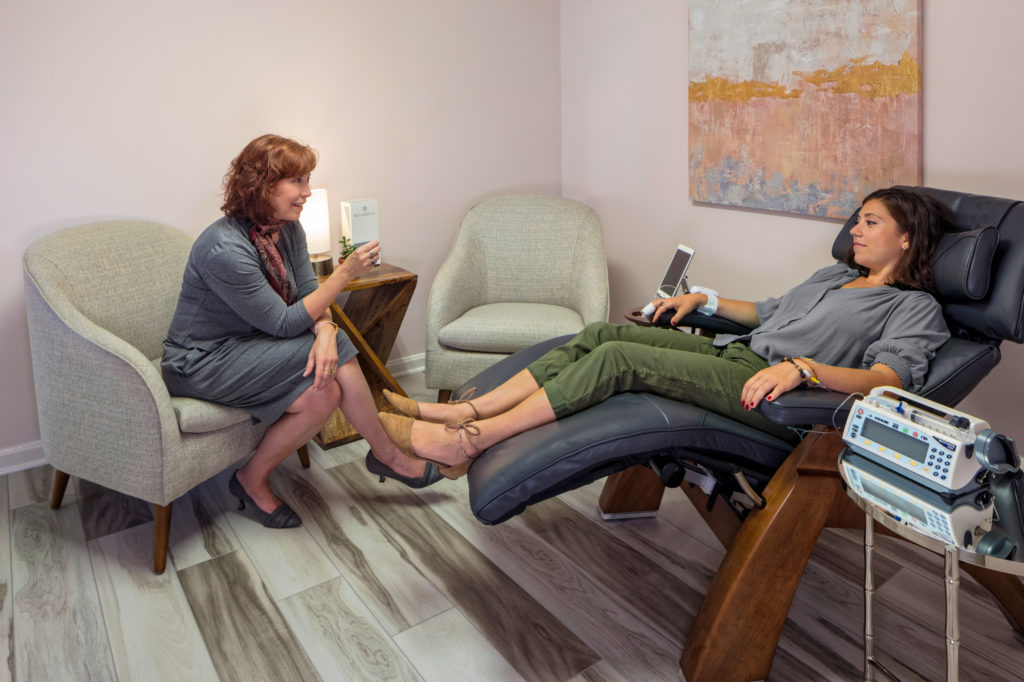
    Lori Calabrese, M.D.

  • How to Stay Resilient When Life Changes Knock You Down – Bounce Back!!

    How to Stay Resilient When Life Changes Knock You Down – Bounce Back!!

    Resilience – The power to bounce back emotionally after a major disappointment or event.

    Here we are. COVID cases have dropped dramatically…right along with COVID deaths. We’re slowly transitioning from the pandemic to what we hope will be post-pandemic. Slowly over time. It won’t be a one day change, but an advancing progressive adjustment to a less restrictive environment. Some people have stopped wearing masks. However, many of us still do. The CDC says fully vaccinated people can go without wearing masks, especially around others who are fully vaccinated. But this doesn’t apply to those who are unvaccinated. This is one of a thousand frustrations all around you. So you’ll want to stay resilient when life changes–and we’ll give you some ideas how to do that.

    A crowd of employers have begun calling employees back to work. Most employers of office workers have moved their employees home to avoid spread of illness, and all those employees are beginning to go back to work little by little. It’s not that they’ve not been working, but they haven’t had a commute as they work and meet on Zoom at home.

    Many others, if not most, will wait yet awhile. It does still seem early.

    But do you know what we’ve seen?

    People struggling with fear, worried whether it’s safe to re-enter company buildings. People who succumbed to depression, PTSD, and anxiety during the worst of COVID-19 and haven’t yet recovered.

    So this is not as simple as it may seem.

    Of course, our role is NOT to tell you when you should return to work in your company facility. Or when the kids should be back in school.

    We just want to help you make the transitions ahead, embrace the adjustment within yourself that will allow you to make this change when the time is right. To help you navigate your concerns or anxiety if you face it.

    You may have lost a loved one over the past year. Maybe you had to watch the funeral of a loved one over Zoom or Facetime. That must have been difficult for you. So many incidents and events were shocking. For so many people.

    You may have had a baby over the last year. Did you have a COVID baby? We’ve learned that the birth of a baby during all the isolation, social distancing, and mask wearing has created such intense loneliness for some new mothers that postpartum depression has been more widespread and support has been hard to come by for many isolated moms.

    One first time mom, who was weeping in frustration and overwhelmed, said, “I’ve always heard it takes a village to raise a child. So WHERE’S MY VILLAGE???” If you’re one of those parents, you will have to find your own transition and recovery. Make sure you’re fully vaccinated so you’re free to seek out friends and family to get their support, and improve your own resilience.

    Then there are the children. Children who’ve been involved in distance/remote learning have displayed behavior outbursts and other forms of acting out. But on the other hand, some children thrived from the closer nurturing they felt while being home. And as they move into summer, and then repopulate schools in the fall (or whenever that will happen!) they may need guidance to help them adapt smoothly, re-socialize, and integrate in their school’s routine.

    Maybe you’ve asked “Why me?” through the crises and losses the last year and a half. But when you think that way it nurtures self pity…which can be suffocating. Better to ask yourself in that instance…”Why NOT me?” Because if you’re alive in this world you’re going to have struggles, difficulties, and losses.

    And you may be tempted to want to run. But resilience comes when you plant your feet, square your shoulders, and get through it. You can be resilient when life changes.

    When my friend heard there was a pandemic wrapping around the world, her first thought was to get on a plane and escape it. Then she looked at the charts and maps on the internet and saw that this infection covered the globe, and there was nowhere to run. What a shock that felt like.

    But by staying where we are, using personal protective equipment, and isolating ourselves, using social distancing when in public, we as a nation and as a planet have survived together.

    Many say, “Failure is not an option”…but actually failure is a requirement for resilience. And in terms of the pandemic, as well as working at home, learning at home, there have been countless efforts that failed and required we try again and again to get whatever the need was to work. Stronger internet connections, getting food to people who needed it, keeping online services up and functioning well.

    Here are some strategies for building resilience now:

    Recognize that difficulties, losses, and inconveniences are part of life. Realize right off that all these things are not a sign of unfair punishment of you or me, but just part of life. And realize that you’ll find your way through it.

    Make the serenity prayer a part of you…to accept things you cannot change. To change those things you can (or change the things you cannot accept.) And hold onto the wisdom to know the difference. So focus on where to put your attention… changing the things you CAN change. And choosing peace about the rest.
    Choose Life. Choose what is good for you. Walk away from things that aren’t good for you. (Yep, we said walk away. Seriously walk away…) Then be patient and compassionate with yourself.

    Here’s a challenge for you: Every day, list 3 things you’re grateful for. It will help you maintain peace and the strength to face new challenges…because you know that challenges are part of being alive too, right?

    And… you know? every time there is a failure, or disappointment, or loss… once you’ve responded to it and moved forward, ask yourself, what you might learn from it… or whether someone was help from the natural fallout of it, etc. There is meaning all around you, and when you’re stressed with difficulty, it’s easy to miss it. So make a point to focus on the meaning you find in all those challenges… that will deepen those roots of resilience, too.

    Stay Resilient When Life Changes — If you fall, you can snap right back up on your feet

    Of course, not everyone can effectively build their own treasure chest of resilience. A disorder can make that very difficult. So we do offer IV ketamine treatment to help restore your resilience. To help your brain restore it’s own synapse connections, to take the G proteins off those rafts in the cell membrane and put them back to work. To slow down the bursting cells in the lateral habenula. And to generally help your hippocampus and amygdala function better, so YOU can function better.

    Sometimes it takes more than well-intended exercises. Sometimes it takes an intervention. And even though IV ketamine treatment doesn’t work for everyone, it can be transformative for the vast majority who have treatment resistant depression, PTSD, bipolar depression, social anxiety, substance use and alcohol use disorders, and suicidal thoughts. It can replace those miseries with resilience, motivation, confidence, initiative, and especially hope.

    So Reach Out for Resilience and the Life You Long to Build

    At Innovative Psychiatry, we have the privilege of seeing people who have achieved remission from these disorders every week. Remission means you have energy to support others, to build your own life and healthy strong relationships, and to face difficulties with strength. Remission means you once again feel like the very best self you’ve ever experienced. It means you stay resilient when life changes and can snap back in the face of difficulties.

    And while we’re transitioning from active pandemic to a post-COVID world, we’re not there yet. And we want you to have the confidence that in our office you’re completely safe from infection caused by any virus, bacteria, or mold. Our plasma cell technology that continually scrubs the air you breathe to keep you safe from viruses, bacteria, and molds while you’re receiving treatment with us.

    Reach out for resilience. If you struggle with the disorders we talked about, reach out for the hope of remission.

    We want that for you and we can help.

    Lori Calabrese, M.D. is on the front end of the race to stop PTSD in its tracks using IV ketamine treatment.

    To the restoration of your best self,

error: Content is protected !!