Tag: IV Ketamine Treatment for Depression

  • Pandemic Anxiety Depletes Bandwidth You Need to Cope With Stress of Living

    Pandemic Anxiety Depletes Bandwidth You Need to Cope With Stress of Living

    We’re all weary of hearing about COVID and mask wearing precautions. Aren’t we?

    About the negative impact of isolation. And while we see improvement on the horizon through wide spread vaccinations, there are still imminent risks, and new cases as well as deaths every day. Those risks add to your daily stress in ways you may not realize. Pandemic anxiety depletes your bandwidth for coping with daily living. The story of Carolee and Jacob illuminates the kinds of stressors that can go on behind closed doors…

    Carolee and Jacob walked the two blocks to the grocery story to pick up food for dinner. They were discussing a news story they’d read on the internet about how some states are lifting mandates for COVID precautions, like wearing masks, social distancing, and use of hand sanitizer. They liked walking to their neighborhood store when they could, just for fresh air and exercise.

    Since they passed a number of people on the sidewalk as they walked, they always wore masks, even when they were outside.

    Carolee expressed her frustration that those particular states were lifting the requirements, in spite of the fact that each governor had strongly encouraged citizens to continue to use precautions on their own.  

    Of course, there will be those who step up and “discipline themselves” and maintain the precautions. But she knew there would be so many… so so many…who would not. Her frustration and disgust exploded.

    “WHY?????  Why would they drop this requirement before we’re ready for it?  People aren’t going to do the right thing. They’re going to just be glad to be rid of it all and do what they want to do for fun!  And the cases will start growing…and more will die… and….”

    You Can’t Control Everyone… Just Yourself, Right?

    Jacob squeezed her hand and tried to soothe her. “Carolee, you know there are already so many who don’t follow the rules. But you and I can only do what’s best for us…Don’t you think it’s futile to struggle about everyone else, when it’s something we have no control over?  It’s really not worth you getting wound up and shaken about something you can’t control…is it?

    “It’s about bandwidth, Carolee. The amount of information your brain can receive…like per second. We’re flooded with so much more to consider about every detail of life than we’ve ever had to. This pandemic anxiety depletes the bandwidth we need just to get through every minute, every hour. We have to find ways to tamp down our own response to things, so we have more energy for everything else.”

    Jacob knew that Carolee hadn’t been sleeping well lately. She seemed to wake up frequently, sometimes walking through the house wringing her hands.  Sometimes just pacing. Staring out the window. Standing out on the patio.

    They’d talked several times about how the COVID-19 variants were spreading, asking questions about whether the new vaccines would be effective with the variants… About how long they were waiting on the list to get their own vaccines. Each time they talked, they agreed to let it go, for their own peace of mind.

    But that was easier said than done.

    To make matters worse, Jacob was feeling more and more worn down by the stress of the pandemic, his work responsibilities, and Carolee’s meltdowns.  He knew she would get past them, but he found himself worrying about her more and more. He needed to find a way to relax. In addition to Carolee, Jacob sure needed some relief.

    Worry. Worry. Then worry some more.

    Life was already full when COVID-19 came along. People were already stressed with daily responsibilities to job, family, faith organizations, maintenance of home and car, children and their struggles.

    When the pandemic appeared on the horizon like a vast dark cloud of pestilence, it pervaded everything.  Those aspects of life that were so routine and required little attention, came to require acute attention often overloaded with a sense of panic with fear of doing it wrong. 

    A psychiatrist wrote in Psychiatric Times about the fear and guilt she experienced when she stopped by the bank for cash only to find the drive-through banking not yet open. So she wrestled with herself about whether to go inside the lobby or park and wait  an hour for the drive-through to open. She went inside, but worried about whether she had been exposed to COVID-19 and  who she might expose through the day as a result. She worried about it all far more than she normally would have.

    Kate Murphy, a NYT journalist, made the point that your brain is overburdened by this pandemic. That things you normally relegate to your brain’s autopilot now require serious thought and risk analysis. And…as a result, you have less bandwidth for higher order thinking.  

    Less bandwidth.

    Isn’t it true?

    And those pandemic anxiety reactions eat up bandwidth.

    If you’ve depleted yourself through a panicky reaction to forgetting your mask when you MUST buy groceries, or driving through for a meal but your hand sanitizer is empty…how can you eat without sanitizing your hands?? Or you’re trying to cope with working from home and the kids are jumping out of their skins from cabin fever??

    What do you do when you keep hitting your thumb with a hammer?

    Those bandwidth-eating reactions are similar to hitting your thumb with a hammer, over and over and over…  because more and more damage is done. You can hardly cope with everything else when your thumb is screaming in pain, you know? You just have to step away from the hammer!!

    Then, if you’ve already been taking medication for anxiety, and the exponential expansion of anxiety caused by the pandemic sends your worry and panic through the roof, well, you have difficulties you hardly know how to manage.

    There was a time before the pandemic was anticipated, that worrying about little things blew up into worrying about disasters in your mind, and as your  grandma would say, “Honey, you’re borrowing trouble and making a mountain out of a molehill.”

    But now, the ongoing stream of changes and increased risks you face everyday can result in outright panic for some, and on a lesser scale, confusion and exhaustion…and dread. This pandemic anxiety just depletes your bandwidth for life.

    You probably know people who have contracted COVID-19. You may have seen some who experienced extremely mild symptoms, if any at all. Still, you may also know someone who experienced serious or extremely severe symptoms. Maybe you know people who have died.

    If you’ve known more than 1 person who has died, your anxiety about death may have filled you with alarm. Alarm about masks, about social distancing, about making sure OTHERS are doing what they’re supposed to be doing.

    And what’s more upsetting than people who won’t comply?? You just have to step away from that hammer…

    The more traumatic your experience has been, the more anxiety you may feel about the risks. On the other hand, if you have not known anyone who was hospitalized from COVID-19, exposure may not seem like a great risk to you at all.

    Unique Pandemic Trauma and Loss Requires More Bandwidth

    Either way, you need to be grounded. To let the world take care of the big solutions while you manage the challenges of your daily life. To help with that, take daily walks – wearing your mask! — but get out in the fresh air and sunshine. Take a friend or family member along and talk. Take care of YOU. Then look after your family.

    Pandemic anxiety depletes your bandwidth for your own life. Right now, you need all the energy and mental clarity you can get just to get through life, day by day.

    Because YOUR life needs to go on.

    Still, if your medications and fresh air and exercise don’t help at all, then you may need help getting your symptoms of depression, bipolar depression, PTSD, and suicidal thoughts under control. Then maybe… you should consider IV ketamine infusions.

    Since IV ketamine treatment is at the front lines transforming people when nothing else has helped, it may be an obvious next step for you. And receiving these infusions is a relaxing and comfortable experience. With your remission as our goal, your dose will be titrated according to your individual response during each infusion.
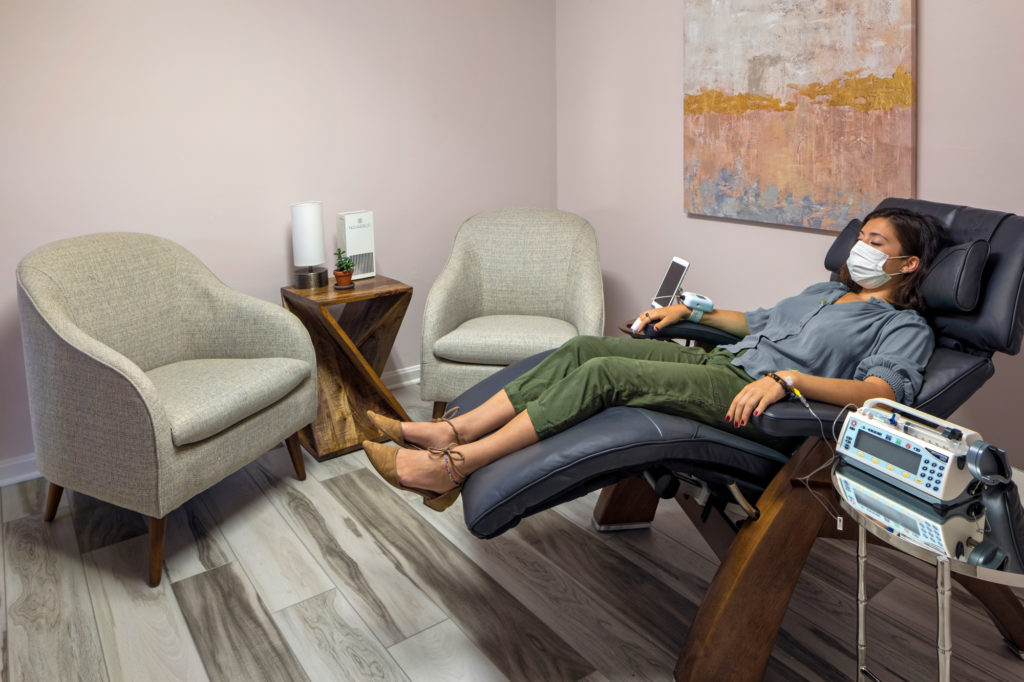
    Pandemic anxiety depletes bandwidth for coping with COVID, but you'll not be exposed to viruses in our office. You're safe here.

    At Innovative Psychiatry, we’re working every day to respond to the call for helping people who are against the wall in this pandemic. If your own bandwidth for coping with the demands of COVID on top of the demands of your life is growing slim, you’re not alone. A vast mob of stressed out, overwhelmed, exhausted, and depressed people surround you. You have to decide what to do about it, if your efforts toward exercise, fresh air, and medication have become futile.

    In that process, it could be that the results of stress have depleted your ability to cope anymore. You may need to reboot. You may need a remodeling project in your synapses to increase your synaptic plasticity. To relieve your symptoms of depression, PTSD, or suicidal thinking. To give you fresh bandwidth.

    For your safety, we’ve installed state-of-the-art technology that utterly removes and destroys COVID-19 and viruses and pathogens from the air and surfaces. So you don’t have to spend bandwidth on your safety, when getting treated is so important for you. Just one more thing to lighten your load. You have enough on your mind.

    If this sounds like you, and you’d like to discuss IV ketamine treatment, call us.

    This pandemic has been hard for everyone. You’re not alone. And we’re here to help.

    We look forward to talking with you and working together for your relief.
    Lori Calabrese, M.D. is on the front end of the race to stop PTSD in its tracks using IV ketamine treatment.

    To the restoration of your best self,
  • Keep Your Eyes on AKT: It Might Explain How We Learn and Forget Fear

    Keep Your Eyes on AKT: It Might Explain How We Learn and Forget Fear

    You may hear people say, “Antidepressants and other psych meds just don’t do anything…”

    Some people say, “…placebos work better…” Oh please. But why do they say that?  Maybe their own experience with prescribed medicines was disappointing. So — of course — they’re disillusioned about these medicines. We get it. And we know that any given medicine that works for some people won’t help some others at all, or might even make them worse. Sooo… what’s up with that? Well, the answer isn’t simple. We do know that antidepressants,when first prescribed, only help about 30% of depressed people. We know that psych drugs help some people but not others and that men and women can experience depression and anxiety and fear differently. It’s a tangle to unravel it all. That’s why we’re so excited about new developments. We want to keep your eyes on AKT because it might explain how we learn and forget fear.

    Meet Jill and Greg to see how differences affect their well being and livelihood:

    Jill and Greg own a coffee shop together and are partners in life as well. They have a great balance of power, in the tasks they divide between them and the strengths they each bring. Greg is a people person, creative, funny, and efficient at both designing new drinks and training staff to make them just right. Jill is a numbers person, and sometimes comes off a little stiff and awkward, because she just doesn’t have Greg’s gift for setting people at ease. She also has some social anxiety going on.

    She does ordering from suppliers, closes out the books every night, and keeps a close eye on profit and loss. They’re a perfectly matched pair and love working together. That is, as long as they’re both at their best. With Greg building relationships with customers and vendors, and Jill keeping the financial end sound, they really do provide strength for the weakness of the other.
    Unfortunately, they both suffer from disorders that periodically causes some lost time at the shop. When that happens, the one who is doing OK ends up carrying a double load. And both of them struggle with anxiety… or basically fear on some level.

    Greg was diagnosed with bipolar II disorder when he was a teenager. Jill was diagnosed with depression in college. She’s a worrier. He just explodes sometimes—and refuses to call it anxiety. Greg takes medication for mood stability that also has an antidepressant effect. Jill takes an antidepressant that only sort of works. They probably both need medicines that reduce anxiety.

    In a perfect world…

    Since their coffee shop venture requires all hands on deck to run smoothly, Jill and Greg are eager to find the right meds for both of them to help stay in the game. They need to be able to go in to work—they can’t afford not to. It seems to Greg that since his medication helps him as much as it does, Jill should ask her doctor to prescribe the same for her. She’s a nervous wreck! However, she knows enough about changing meds that she can’t just jump on another medication just because it works for Greg. She’s tried that before. It didn’t work.

    At this point, Jill has tried five different antidepressants over the past few years, and has researched enough about IV ketamine treatment that she wants to talk to her doctor about whether she’s a candidate for it.

    Considering something new takes a little bit of courage. She wasn’t sure what her psychiatrist would say. A visit with her psychiatrist surprised her–he was cautious but supported her trying something that might help. Jill decided to pay for it out of savings, because her bouts of severe depression were taking a toll on the shop and their income.

    She arranged for treatment and began infusions. When the treatment was complete, she had received 8 infusions over about 3 weeks, and she felt like she had a new lease on life. Her ketamine infusions seemed to wake up her brain. And that got better and better day by day — even after she completed treatment. She found she enjoyed singing and dancing, and painting became her new passion. When they had a problem in the shop, she had so many more ideas for solving it. Working on the book work was no longer a drudgery–she enjoyed it and got more accomplished in a shorter time.

    Jill and Greg’s life became so much better at work and at play. Greg still had slumps when his meds weren’t quite holding him, but their life was so much better overall. They had read that ketamine treatment could help bipolar depression, too. Maybe the next time he went through a bad bout of that, Greg would talk to his doctor about it. To see if it was right for him—not just to copy Jill.

    Finding the right medicine for you is sometimes a long search. And medicine that works for you may not work for your sister…or your son. But it’s well worth the work researchers do to better understand why.

    A research study at the University of Colorado Boulder offers one fascinating revelation about why those differences between people and genders might exist.

    It has to do with a key protein kinase in the brain called AKT…which functions differently between males and females.

    They found presence of a certain form of AKT (called an isoform) in male mice can help the male let go of fear from a past painful experience–and form a new adaptive response to get around the old fear. Wait, what? Doesn’t that remind you of the way synaptic plasticity helps you adapt?

    Ok, you’re right…mice aren’t people and it doesn’t work quite that way…. but AKT is remarkably similar across mice and humans and this kind of translational research can begin to give us specific information to make our medicines and medical care more specific. Potentially even gender specific.

    So you’ll do well to keep your eye on AKT because so much is being learned about how we learn and how we forget fear.

    By figuring out the very complicated cascades involved in creating synaptic plasticity, we may be on the verge of figuring out how to shape and foster the neuroplasticity–for the better.

    We may be able to personalize medication therapies so that they don’t just broadly address a disease state, but so that they can be specific for the man or woman who needs them. 

    Charles Hoeffer, the principal investigator of this study, said it like this: “We need to stop hitting every ‘disorder’ with the same hammer.”  Well said! (Wish I had said that!)

    We’re always talking about personalizing treatment. About how important it is to provide treatment that fits the individual. Just as that’s true with all of the fine details involved in ketamine treatment, it’s also true with all of the medicines we prescribe.

    So… about AKT. 

    It turns out AKT plays a lead role in synaptic plasticity. We’ve talked about that too…  The idea that the connections between cells in the brain can change and adapt. They can change and adapt as a result of an experience. (This is why trauma can change us.) But — so importantly — these connections can also grow, change, and adapt as a result of the deeply emotional experiences, like the incredibly deep and awe-filled experiences you can have during a ketamine infusion. So many of our patients do. We’ve talked about how taking advantage of that process by scheduling psychotherapy 24 hours after a ketamine infusion can enhance the effectiveness of the infusion. 

    Why? Because therapy helps you think differently about something…and synaptic plasticity empowers those changes in thought. Many of our patients also find that journalling, creative writing, meditation and other activities help to integrate those experiences into their lives, find meaning in the experience, and move forward. Keep your eyes on AKT… there’s so much more to learn.

    AKT helps you create memories. Like a child touching his hand to a hot stove. To encode that memory so that he will be cautious in the future around hot burners, his brain needs to activate protein kinases like AKT.

    In fact, AKT is one of the first proteins to present itself to form a memory like that.

    There are 3 main variants, or isoforms, of AKT and they do different things and affect people in different ways (More on that in a sec!)

    AKT1 is important in encoding new experiences and allowing you to forget the old.

    AKT2 is often found in the astroglia…which are star-shaped brain cells.

    AKT3 seems to be important in brain growth and development. This one plays a positive role in mental health and wellbeing. 

    And when AKT1 and AKT2 are working together in the prefrontal cortex, they’re vital for learning, for memory … for dynamic change.

    Maybe like the kind of dynamic change that you want for yourself. So yes. So many different forms, working singly and sometimes together, in ways we are only now just beginning to understand for people suffering with psychiatric disorders.

    Now. To add another twist to this picture. In this study, researchers found a dramatic difference between genders regarding AKT. 

    They found that male laboratory animals whose AKT1 was functioning well, had far more ability to replace unwanted memories with new ones…than those who were missing AKT1. 
    Draw that out for a moment now…. and imagine men who’ve experienced the trauma of illness, or assault, or combat… and imagine for a moment that they’re given the opportunity to experience something new — maybe hopeful, blissful, awe-filled, like they might during a ketamine infusion — and then the excitement of realizing that a tiny little protein kinase like AKT1 may play a part in helping to encode that new feeling. Turn it into a new memory. Make the old traumas fade. (That’s called extinction learning.) Teeny little AKT1 helps with this. In males. 

    Incredible.

    There are endless little nuances in your brain that translate your experiences, encode them, and shape your synapses…and your individual functioning. And maybe your future possibilities.

    AKT is one to keep your eyes on for sure.

    We keep learning, keep researching, and keep doing all we can to help you get better.

    (Let’s just say we read all this stuff for fun–at nights, on the weekends, and at 5 am with a double shot of espresso.)

    And at this point, serial titrated IV ketamine infusions still do the best job we’ve seen in bringing relief to more people with treatment-resistant depression and anxiety than just about anything else available today.

    But ketamine treatment doesn’t work for absolutely everyone. Is it because of AKT or something different? We don’t know. Not yet. Researchers like the ones at Boulder are still searching to understand the nuances of dendritic growth and synaptic plasticity in order to refine our treatments–and discover better ones.

    At Innovative Psychiatry, ketamine treatment is provided in a virus-free environment.

    At Innovative Psychiatry, we personalize treatment to fit you — all the complexity and all the wonderfulness of you! And we aim for remission. Not just response. That’s the reason we titrate your dose, duration of the infusion, and the number of infusions you need to help you discover — once again — your best self.

    When you struggle and suffer from the symptoms of disorders that can be tormenting and exhausting, getting treatment is paramount. And feeling safe is critical — so we have state-of-the-art technology that crushes 99.999% of all viruses and pathogens. During this pandemic we want to make things easy. We all need a little bit of easy.

    So now, reach out for IV ketamine treatment in a safe atmosphere where this treatment can help you live better, hope more, and enjoy the challenges and relationships in your life that give your life meaning.

    You can live a life of joy, fulfillment, accomplishment, and ongoing hope.

    If your meds have not been providing you relief from symptoms of depression, despair, PTSD, or suicidal thoughtscall us.

    Let’s talk about what you’ve tried that didn’t work. And if you’re a candidate for IV ketamine treatment, we can begin that.

    Even though ketamine treatment isn’t for everyone, it just might be a good fit for you.

    We’re here to help.

    Lori Calabrese, M.D. is on the front end of the race to stop PTSD in its tracks using IV ketamine treatment.

    To the restoration of your best self,

  • Repeated Ketamine Infusions Relieve PTSD Symptoms – New Study

    Repeated Ketamine Infusions Relieve PTSD Symptoms – New Study

    New study demonstrates that with repeated doses of IV ketamine, relief can last up to several weeks.

    A deep unfamiliar voice behind Sarah made her jump. In a flash, she turned and bolted down the stairs she’d been climbing, turned left, then left again, knocking into people in her path as she scrambled for a place to hide. A mad dash took her into the restroom, where she locked the door and turned off the lights to hide in the dark. Screams sounded as darkness enveloped the room. Her heart was pounding, sweat pouring from her scalp, down her face, her torso…her armpits. She willed her breathing to slow…so the man pursuing her would not hear her panting gasps. (Poor Sarah. She’s suffering… if only she knew what repeated ketamine infusions relieve…)

    Three women exploded out of their stalls complaining about the lights and searching for the switch. Sarah pushed past them to an empty stall and stood on the toilet seat with the door locked so her feet couldn’t be seen below the door.

    Sarah’s vision blurred as sweat poured into her eyes. With a quick swipe, she wiped the moisture from her eyes and forehead. And waited. Silently.

    By her watch, she saw time passing. She heard women come and go from the restroom…heard their quiet conversation…  but she waited, hands trembling.

    After 45 minutes crouched with feet on the toilet seat…Sarah began to feel calmer. It washed over her that she’d been hiding in a public restroom for close to an hour… and now she was late to work. 

    PTSD is Not Only Terrifying, It Seriously Interferes with Daily Living

    Again.

    Oh noooo.

    Reality settled in. After washing her hands without incident, she cautiously opened the door and saw nothing unusual outside the door. She began to realize that it had happened again. Like countless other times. The sound of that voice triggered her memory of the assault…and it was so real. Except it wasn’t. 

    She was surrounded in the trauma again. 

    And that was the problem. Yet again, she would clock in late and be reprimanded for it. There must be help to conquer the PTSD symptoms that had emerged after she was assaulted 2 years ago. She had to find peace. Sarah wanted her life back.
    Desperately.

    Repeated Ketamine Infusions Relieve PTSD Under Controlled Conditions

    PTSD can be so entrenched that it is very difficult to relieve — even with therapy, special trauma-based therapies, SRI’s, or a combination of approaches. Very early work with ketamine–and the brilliant neuroscientists behind those studies–showed ketamine could reduce PTSD symptoms.

    A recent study from the Icahn School of Medicine at Mt. Sinai published January 5, 2021 has made splashing news among ketamine researchers and clinicians as the first randomized, double blind, placebo-controlled trial of repeated ketamine infusions for chronic PTSD. Adriana Feder and her team deserve applause and admiration, and have just set the bar higher for ketamine clinical trials.

    It was brilliantly conceived, elegantly executed. Well done.

    Patients with chronic PTSD that had gone on for years, from a variety of traumas, were separated into two groups. One group received 6 ketamine infusions (3 times a week over 2 weeks); the other group received an infusion of midazolam, which was the “placebo” in the trial, but it is was an active placebo–it made them feel something but it wasn’t ketamine.

    Ok, now this is important: if you have PTSD, or if someone you love has PTSD, you want it to stop. That would be remission, and that would be ideal. But in the world of PTSD clinical research studies, researchers look for response, and response means a 30% decrease in your symptoms.

    That’s how response is defined, and that’s how it was defined for this study: 30% improvement. It doesn’t seem like a lot of improvement, does it? Unless your life is a nightmare. Then a 30% reduction is a lot of improvement.

    As it happened, 67% of those in the ketamine group responded after 6 infusions …  compared to only 20% of those getting the placebo study drug.

    A significant difference.

    And possibly even more exciting than that 67%, those who received ketamine infusions experienced significant improvements across 3 of the 4 PTSD symptom clusters: intrusions, avoidance, and negative alterations in cognitions and mood.

    So, Repeated Ketamine Infusions Relieve PTSD

    Dr. Feder and her team — and all of us, truly — are encouraged by this kind of outcome, and of course, call for more infusion studies using more infusions as well as trials using ketamine infusions combined with trauma-focused therapy. In fact, we can and are imagining all kinds of studies we’d like to see for PTSD — different infusion parameters, different infusion doses, titrated infusions, new medications, new therapies. The GREAT news is that relief for PTSD is under investigation and more effective treatment is on the horizon.

    Formal Studies Help to Establish Credibility

    Now, it’s important to note that for a study to be replicable, it’s required to use clear protocols and consistent dosing. In real world practice, we have the duty and the responsibility to treat each patient as an individual for the best possible outcome. Sometimes that means using a teeny, tiny dose, tinier that you would imagine; sometimes it means titrating the dose to get a better response.

    Medicine is a science and an art.

    Since we’ve learned that effective depression relief requires different treatment for different patients, and effective ketamine treatment often requires different ketamine doses for different patients (and different conditions), we might expect the same to be true for PTSD.

    The ketamine dose for each of the 6 infusions dose in this study was 0.5 mg/kg — the same dose used in the single-dose and early repeat-dose studies of treatment resistant depression.

    But we find clinically, and from our own published work, many patients with depression need higher doses to stop suicidal thoughts, to achieve remission, and to restore hope.

    By the way, notice that in the trial above, 67% of participants benefitted from ketamine infusions: they experienced a 30% drop in their symptoms. Ketamine is wonderful for those it helps — when it helps — but for reasons we don’t fully understand yet, it doesn’t help everyone. And it didn’t benefit everyone in the study. Ketamine is not a treatment that works for everyone. There isn’t anything that works for everyone.

    In real life practice, we can titrate. By that I mean that we use our expertise, in addition to evidence-based scientific results, to adjust the infusion dose during treatment (within certain parameters) to try to bring forth the most effective results for you.

    Because your treatment, of course, is about you. It’s all about you.

    New Studies, like this one with a Series of Ketamine Infusions for PTSD, build our Brain Trust about Ketamine so that We Can Provide More Relief to More People Who Need It

    One size may fit many, but not most, and one size never fits all.

    At Innovative Psychiatry, we treat PTSD with repeated titrated IV ketamine treatment. And we use our deep expertise with ketamine in psychiatry and in the treatment of trauma to give you the best possible results. We’re thrilled that randomized, controlled trials are now investigating this so carefully. Research underscores safety, efficacy, and credibility. The more researchers learn, the more we can help you.  

    If you’ve suffered with PTSD and other treatments and medications have not helped, repeated ketamine infusions may help remarkably. 

    And remember, until the COVID-19 pandemic has moved to another solar system (just kidding! — but wouldn’t that be great?),  we’re prepared to keep you safe when you’re here with us. We have the technology to keep the SARS-CoV-2 out of the air, and off of the surfaces in our office. We’re vaccinated, we’re tested regularly, we screen everyone. (And we keep the front door locked!) When you come for treatment, you can breathe easy. 

    We want you safe, and we want you relieved of PTSD and other symptoms.

    Because, like Sarah, you need a life that is free to develop. A life that’s not interrupted with unmanaged symptoms.

    And we want that life for you.

    So you can follow your own dreams, and build the life you want to build.

    If you suffer from PTSD and nothing has helped, call us.

    In fact, if you suffer from treatment resistant depression, bipolar depression, anxiety, suicidal thinking and nothing has helped, call us.

    Let us work with you to help you transform and enjoy your life.

    Lori Calabrese, M.D. is on the front end of the race to stop PTSD in its tracks using IV ketamine treatment.

    To the restoration of your best self,

  • Does Mine Look Like His?? How Disorders Look Different in Different People

    Does Mine Look Like His?? How Disorders Look Different in Different People

    It can be alarming to see you brother try to navigate his way through a challenging diagnosis like depression or bipolar disorder. His symptoms may be alarming for you, and while you’re trying to be supportive, he may feel the world is crashing in. His dramatic reactions can be overwhelming, especially when you had a friend with bipolar disorder who had a volatile temper, it seemed, and seemed hypersexed, but she didn’t act like your brother is acting now. Surely they got his diagnosis wrong. But the doctor says that disorders look different in different people…at different times and under different circumstances.

    And it’s good to know.

    Charlotte might be a good example.

    Charlotte first began to show signs of less confidence and depression around the age of 6. She tried so hard to have a stiff upper lip, to invest her effort and perform well at school to please her parents, and to be industrious. Her parents were always so proud of her. But they didn’t recognize depression in herbecause she tried so hard.

    Now, Charlotte’s family already showed signs of psychiatric disorders in other members. Her mom had suffered from depression since childhood, her oldest brother had suffered from depression since he was 4. Plus, her other brother received a diagnosis of bipolar disorder. He had actually displayed symptoms since he was a young child. See the similarities?

    In addition, Charlotte’s uncle struggled with Narcissistic Personality Disorder. So did her grandfather.

    So much going on in Charlotte’s extended family. In fact, so much woven through the whole family.

    But in her case, her primary diagnosis turned out to be severe treatment-resistant bipolar disorder. Plus alcohol use disorder, social anxiety, and some phobias.  

    Happily, her bipolar depression, social anxiety, and alcohol use disorder, eventually improved dramatically. Some aspects reached remission after IV ketamine treatment.

    Sometimes depression or bipolar depression expresses itself as anger… even rage. Sometimes it can look like alcohol use disorder. In one person it may look like sadness and despair. In someone else, it may show up as disrespect for others. One person with bipolar disorder may seemed quiet, full of sorrow, and hopeless a lot of the time, but another might feel angry, disillusioned, and seeking revenge. How is it that the same disorder can present so differently? It can look different in different people and with different circumstances.

    Lots of people wonder about the same thing. Why does one person with depression act so angry?  Then someone else with depression suffers from quiet despair..? One eats carbohydrates in large amounts, and gains weight steadily. While another has no appetite and loses weight at an alarming rate?

    Which came first?  The chicken or the egg?  Disorders have a way of emerging and creating more difficulties. Depression can give way to phobias, weight gain, social anxiety

    Bipolar depression may show up as raging anger at times, unrestrained sexuality at times, and terrible despair in one person. Then, in another person, it may look like self-harming, unlawful behavior, and substance use.

    One reason? It’s not uncommon for someone with depression or bipolar depression to also experience anxiety, phobias, hypersexuality, or substance use disorder, alongside the original diagnosis. As a result, you may have a friend or relative who displays a certain cluster of behaviors, and you form the idea that this is what bipolar looks like.

    Then, someone else you know is given the same diagnosis, and while they display erratic behavior, it’s nothing like the behavior of your friend.

    The same disorder can look really different in different people.

    So now you can meet Grayson.

    He was first diagnosed with ADHD, then bipolar depression, and finally obesity. 

    It would be natural to assume that his depression, bipolar depression, and ADHD were all linked to each other. Since some people who exhibit ADHD symptoms as school age children, are later diagnosed with bipolar disorder. And depending on the type of depression you have, you may find you eat high carbs, or you may find out you eat very little. 

    Here’s Grayson’s experience:

    In Grayson’s case, ADHD emerged first when he was a child. About 6 years later, bipolar disorder became a more pressing concern, which SEEMED to lead to obesity. When Grayson is experiencing bipolar depression he tends to eat more, sleep lots, and feel listless and without energy.

    Disorders look different in different people.  

    In Grayson’s family, his own son was diagnosed with ADHD at the age of 7. Then, as he grew he was diagnosed with severe depression.  Grayson’s grandmother has suffered from depression all her life. His uncle has struggled with ADHD but learned to manage it in adulthood. 

    So.

    We know that depression, and many other psychiatric disorders, run in families. And these family connections call for us to show compassion for our family members who suffer from their own individual disorders. 

    If you suffer from depression along with other disorders, and if your current treatment isn’t working, feel free to call us.  Or ask your health care team to call us.

    We welcome the opportunity to work in conjunction with your healthcare team to help you get better.

    At Innovative Psychiatry, it’s true that we see multiple family members who each live with diagnoses and co-morbidities, and it’s true they may sometimes share the same diagnosis … or they may not. Although your symptoms need not necessarily be labeled, they do need to be evaluated as part of your overall self. And then they can be addressed, as needed, with appropriate treatment.

    While IV ketamine treatment is not the appropriate treatment for all of the symptoms you experience, we can work with your health care team to try to help you experience your best self.

    Does IV ketamine treatment help everyone who tries it? Unfortunately, no. But it does help many achieve remission and build fulfilling lives.

    So do try to avoid stressful situations or tasks during this season.

    Do make decisions that are productive for your own health and the health of your family.

    And do call us if we can help you get better with better with IV ketamine treatment. Give yourself the best opportunity for a fulfilled 2021.

    Lori Calabrese, M.D. is on the front end of the race to stop PTSD in its tracks using IV ketamine treatment.

    To the restoration of your best self,

  • Fight the Effects of Isolation Depression By Reaching Out to Help Someone

    Fight the Effects of Isolation Depression By Reaching Out to Help Someone

    Cameron pulled back the drape to look out into the empty street. No cars were moving, but an endless row of them lined each side of the street. A recent rain left the pavement dark and glistening. He let the curtain drop and walked into the kitchen for some herbal tea. The house was dark. Quiet. He had to admit to himself, it was lonely, too. Ok there. He said it. He felt lonely…as in alone. The effects of isolation depression were getting to him.

    Cam woke up each day wondering what his purpose in life could possibly be. There was no point in this endless endurance. He didn’t have the energy or motivation to do much at all. He’d been to the doctor a few times, only to take medicine that didn’t change anything except make him gain weight.

    The more he thought about it the more he wanted to die. His mind focused on how he could help that happen.

    He’d been fighting off this wretched despair for weeks … trying as hard as he could to rise above the gloomy, empty feeling that had been trying to drown him. Even though he’d tried cooking, he got bored with that pretty quickly. He’d tried reading. But the constant silence stifled his outlook.

    They’d been told on the news to stay home. Some sort of pandemic. But Cam didn’t care …he never went out much anyway. 

    He kept the blinds closed, the drapes pulled, and the door locked. The idea of seeing someone, or anyone, peering into his apartment made his heart race and the hair stand up on the back of his neck.

    To pay his bills, he offered accounting work for people online. You might say a virtual assistant, of sorts. He could work on his own timetable…when he could function. Office hours never had worked for him.

    The effrects of isolation depression are making this senior citizen want to give up hope.

    Then, he saw a post on social media. Something about how to reduce your own anxiety and depression. 

    That caught his attention.

    It said to find a way to help someone. Offer to do a favor for a friend or a stranger. That by doing that, it could help lift your own mood.

    Cam thought about it a moment. Hmm. The idea seemed far-fetched, even ludicrous. (Like, really ludicrous.) People who feel crummy, who have no energy, and who are miserable around others…have got to be the worst possible candidates for acts of kindness and helpfulness. People with energy should do those things.

    Right..??

    After digging around in the fridge, he came up with some frozen potato fries and put a generous pile of them on a baking sheet in the oven. He checked for ketchup, confirmed there was half a bottle, and returned to his desk.

    While he worked on a customer account, that message about generosity and kindness ran laps around his mind.

    Finally, he turned around in his chair and stretched.

    Could it be? Is it possible that a melancholy loner could actually do anything that would benefit someone else?

    Thoughtfully, he laced his fingers behind his head.

    Good grief, he thought. We’re not supposed to leave our homes. How on earth could someone like him do anyone any sort of favor?

    Aaaacccckkk!  Forget about it. It’s a crazy thought and it’s not happening.

    He reluctantly turned back to his work, then the timer sounded. 

    After serving the hot, steamy potatoes up on a plate, he decided they smelled sort of good. He poured himself a glass of iced tea, and munched away. It was unusual for him to have an appetite at all. 

    He studied the fried potato in his hand…rolling it to examine it top and bottom distractedly. 

    Finally, he dipped it in ketchup, put it in his mouth, and then it hit him.

    Numbers! That’s something I have to give, he thought. Something I understand. And all the kids are schooling at home. I wonder if they need math tutoring!  

    Maybe it was a little thing, but for someone who had found no purpose for his life, it was a world-changing revelation for Cam.

    He realized he could fight the effects of isolation depression with his own skill with numbers.

    Before self doubt had a chance to suffocate his idea, Cam got on the neighborhood social app, and announced that if there were any children or teens needing math tutoring, he would be happy to offer it online. For free.

    He pushed send, then his heart sank.

    What had he done???

    He couldn’t face people he didn’t know. He didn’t feel like they’d like him, and his way of explaining math probably wouldn’t  help at all.  The effects of isolation depression had intensified his social anxiety… but could he push through ?

    After all, he was weird… he knew he was.

    Just thinking about someone contacting him for math help — then failing at it — made him die a thousand deaths. He just didn’t need any more failure.

    An hour later, he heard the familiar :::BING:::  It was a message.  Someone in his building had a 12 year-old struggling with math. They were happy to pay him but just didn’t know how to help their son themselves. 

    Doing his best to sound like he was taking it in stride, he arranged a time the next day to talk with their son.

    His heart was beating pretty fast …but it wasn’t as much anxiety, he thought, but maybe more excitement.

    And he had discovered something he’d been missing.

    PURPOSE.

    Suddenly he had the purpose to help a preteen boy develop stronger math skills.

    The next morning, he woke up, got his coffee, and sat down at his desk. There were five more messages. People whose kids needed tutoring…ranging in age from 11 to 17.

    Oh yikes.

    He didn’t know if he should try to work with all of them. What if he had a bad day and couldn’t function?  That happened pretty often.

    What if he got sick ?

    The responsibility for all these kids loomed over him.

    But finally, he made himself calm down.  He decided he would try to do this a day at a time, and if it got to be too much he’d call his doctor.  Or he could quit.  

    But for the first time in a very long time, he wanted to try.

    Cameron isn’t alone, is he? You may be in a position a lot like his. Feeling cooped up, dragging from day to day, seeing no purpose in life, and wondering how long you can endure the days.

    The Effects of Isolation Depression

    If you live in a city that’s been “locked down” it can be hard to fight the isolated feeling of aloneness and despair.

    It may be that finding a way to reach out and help someone in a small way could give you a lift, too.

    IV Ketamine Serial Infusions Can Help You Fight The Effects Of Isolation Depression

    Or, it may be too much to try without some help.

    If that’s the case for you,…if you’ve tried prescriptions for many months that just never did help… and you would like to see what
    can do for you, we have good news. We’re offering this treatment at our office. Still.
    The effects of isolation depression are eased by family.
    Because it’s essential. Because it can be life-saving. 

    We’re sympathetic to your situation, and in this climate of lockdowns, isolation, and uncertainty, we want to help you with the equipping to not only face the days, but to enjoy them. To have the initiative and hope to find ways to help others, and to enjoy the reward of it.

    This public virus situation is temporary, but for now you need all the help you can get weathering the uncomfortable circumstances that arise, and to have the resilience to help others manage them, too.

    Give yourself the chance to rise above these difficulties. Give yourself the strength of resilience. We’re here to help.

    Lori Calabrese, M.D. is on the front end of the race to stop PTSD in its tracks using IV ketamine treatment.

    To the restoration of your best self,
  • KRIYA Conference 2019: The Flexibility of Ketamine

    KRIYA Conference 2019: The Flexibility of Ketamine

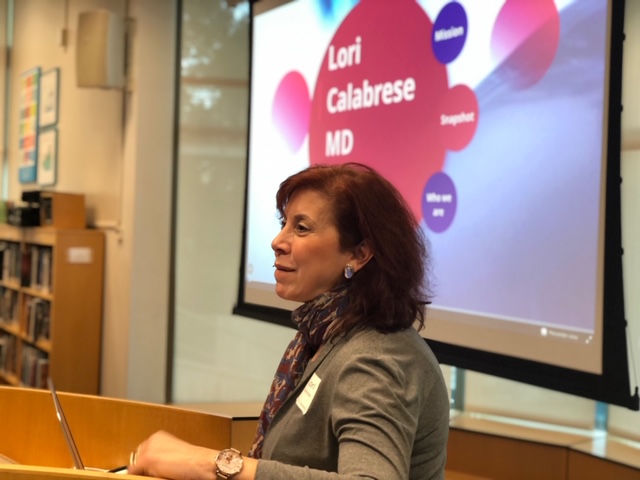
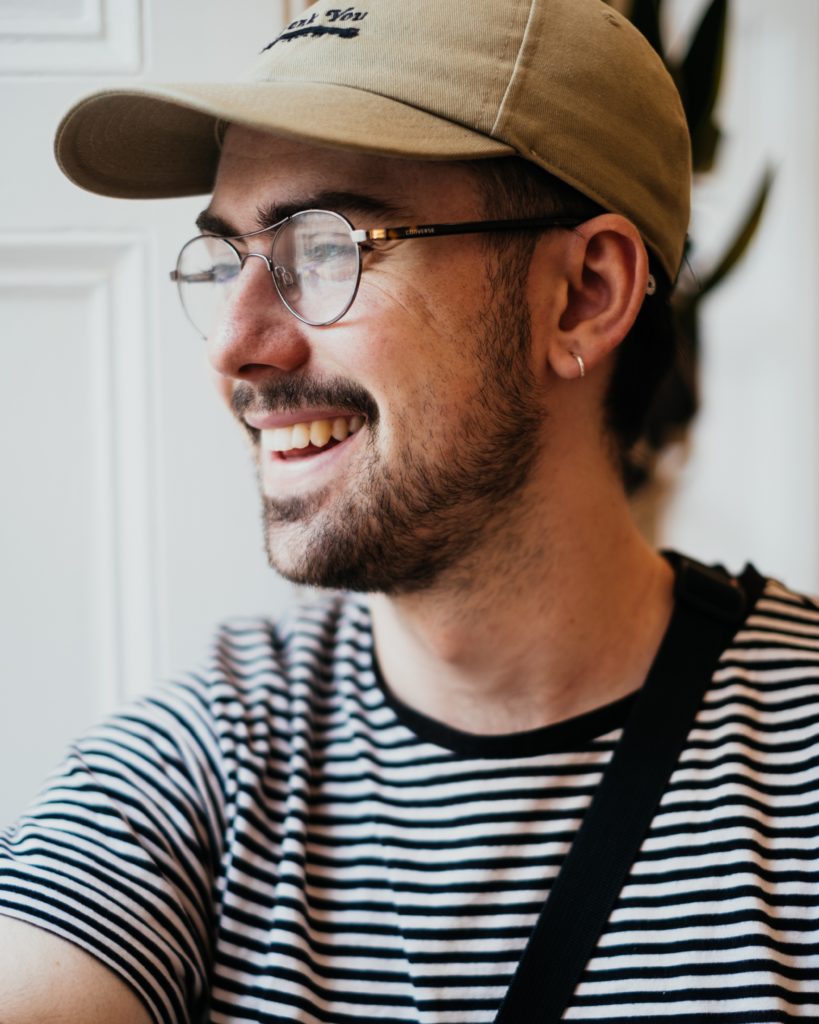
    Dr. Lori Calabrese speaks at KRIYA and applies the flexibility of ketamine.

    We’ve come so far in ketamine treatment for depression, and we still have so far to go.

    KRIYA held the first conference on ketamine treatment for depression in 2015. Now, 5 years later, there are several medical conferences that support the exchange of information in this field. Raquel Bennett, the founder of KRIYA – The Ketamine Research Institute –  says that ketamine is a flexible tool and should be used with freedom and skill. She urges clinicians to make the most of the flexibility of ketamine.

    This is the last conference by KRIYA that will be held in this format, according to Dr. Bennett. She plans to possibly shift to an online format next year to accommodate the huge numbers of clinicians who wish to be included.

    What’s more, KRIYA has supported, from the beginning, the use of ketamine by different routes and for varied conditions, and encourages participation from providers across the gamut of ketamine applications. So we’re a wonderfully diverse crew who come together for these conferences. As for me, I know that I’ve learned so many things and forged new friendships and collaborations from KRIYA conferences. 

    And…my own contributions have been so warmly received. As far as the educational gathering, there are psychiatrists, psychologists, therapists, ER physicians, pharmacists, anesthesiologists, neuroscientists, nurses, and experts in consciousness medicine. 

    Raquel Bennet, Psy.D. Stepped Up as a Leader in the Field of Ketamine for Depression

    Dr. Bennett reminds us she has created a “tasting menu,” if you will… from

    all corners of the field. At this conference, she opted for breadth vs depth to make us privy to all that’s happening in the field of working with ketamine. And she emphasizes that speakers are working from different paradigms. So, she urges us to listen for the paradigm they report from….and learn.

    And she’s right when she says that ketamine is a flexible tool that contributes to a variety of needs.  When a patient is too depressed to talk, ketamine lightens depression so they can participate in talk therapy. To help manage severe pain and the depression that goes with it. It can help the patient go deeper into therapy, and explore their traumatic experiences gently. It can treat acute suicidal thoughts and prevent hospitalization. And she says, it can induce mystical visions for existential exploration.

    Raquel had much, much more to say, but I want to mention some of the other speakers.

    Brent Turnipseed, MD and Lindsey Slater, LPC, from Austin, TX talked about their use of EMDR in ketamine-assisted therapy.

    Brent Turnipseed speaks about the flexibility of ketamine.

    In PTSD, the body’s own reaction to a patient’s traumatic memories activates adrenaline , which prevents their ability to process their trauma. Ketamine can calm the body enough that they can process the trauma without the distraction of adrenaline. As a result, it can help relieve their fears. 

    EMDR works by helping the patient desensitize by brief exposures to the trauma, then by redirecting the patient’s attention, EMDR induces a relaxed neurological state similar to rapid eye movement (REM).

    Elias Dakwar, M.D., psychiatrist and the addiction researcher we’ve often talked about before, gave a wonderful presentation. 

    He presented a thought -provoking talk on meditation and mindfulness as it relates to ketamine in treating addiction.

    The field of ketamine for psychiatric disorders, including  addiction treatment, continues to wrangle with how to take ketamine into psychiatry but that’s because our paradigms are problematic. Mainstream psychiatry has tried to cut ketamine down to size instead of using this extraordinary medicine as a DISRUPTOR.

    Dr. Dakwar entered addiction research after a long time practice of meditation and with great compassion for the patients he sees.

    He described his previous and current work in detail–look for it in the journals.

    Ian Mitchell, M.D., Emergency Medicine in British Columbia,

    spoke about the uses for ketamine in the emergency department. He spoke about its use for sedation during an emergency procedure, such as setting bones, repairing wounds, or the removal of foreign bodies, pediatric sedation for the same types of procedures, sub-dissociative dosing for pain management, especially for neuropathic pain, to prepare a patient for intubation, sedation for the out of control, prehospital pain relief, and to manage an overstimulated patient.

    In British Columbia, ambulances are equipped with intranasal ketamine for prehospital pain management as a result of the PAIN-K trial. More of ketamine’s flexibility.

    Wesley Ryan, M.D., psychiatrist from Marina del Ray, CA,  Parria Zarrinnegar, M.D., psychiatrist in Portland, OR, and Daniel Barton, M.D., psychiatrist from Nashville, TN all presented riveting case reports.

    Kelan Thomas, Pharm.D,

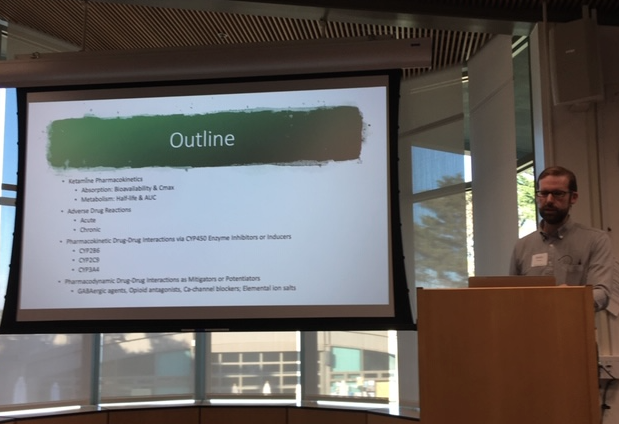
    spoke about adverse reactions and drug-to-drug interactions that have been documented with ketamine. So important and so well-done.

    Annie Oak, a journalist from the Bay area, spoke on the use of ketamine outside the medical setting.

    Gita Vaid, M.D., psychiatrist and psychoanalyst, spoke on using ketamine in psychoanalytic psychotherapy in very long session. She talked about how she has witnessed ketamine help patients relax and defenses soften so they can have freedom to talk. The psychotherapist builds relationship with the patient and it can be transformational.

    Jason Wallach, Ph.D., is a pharmacologist and neuroscience researcher whose energy and depth of knowledge captivates us every time he speaks. He spoke about the neuroscience and  pharmacology of ketamine. Gave an update on some of the other dissociative drugs he’s tested. (I think he’s tested them all!) He made the point that ketamine has been called a dirty drug because of the receptors it hits ex-vivo and in animal models — but that’s not true. It’s really one of the more selective drugs of this class at the doses used in people.

    Jessica Katzman, Ph.D., and Harvey Schwartz, Ph.D., spoke about bumps in the road they’ve discovered with ketamine assisted psychotherapy and in the integration work that follows treatment… What is integration? It comes from a latin word that means “to make whole” or “to begin again.” Bring your clinical compass, but don’t forget your humanity. A beautiful duo talk with lots of clinical examples.

    Eli Kolp, M.D., a pioneer in ketamine treatment, gave a beautiful talk on the phenomenology of ketamine-induced dissociative states.

    There were so many other speakers and so much to absorb–my computer battery kept dying down, so between Surface notes, handwritten notes, and photos, I can’t do justice to the breadth of expertise in the room, and the excitement.

    Greg Wells, Ph.D.  Sylver Quevedo, M.D., Veronika Gold, M.F.T.Eric Sienknecht, Psy.D. presented as a panel on their model of coordination of care between prescriber and psychotherapist. Peter Koshland, Pharm.D. talked about how to work with a compounding pharmacy for varied compounded preparations of racemic ketamine. Nate Schmidt, A.R.N.P spoke about scheduling and billing logistics.

    Sunday was a treasure with a very special presentation by Francoise Bourzat on the Use of Sacred Medicines in the Age of Technology and Medicalization. It was a delight to meet her. She captivated the audience, and her new book, Consciousness Medicine, is a wonderful synthesis of her life’s work.

    Kelley O’Donnell, M.D. and Christian Yavorsky, Ph.D. are doing yeoman’s work with KRIYA and presented an excellent (and not dry!) talk on Measuring Clinical Outcomes: Scales and Assessment Tools. And in addition to the training for Ketamine Assisted Psychotherapy that Raquel Bennett presented and discussed earlier in the conference, Jennifer Dore, MD presented a model of training for Ketamine Assisted Psychotherapy developed by Phil Wolfson, MD and Julane Andrews, that they have used around the country.

    IV Ketamine can STOP suicidal thoughts fast…Now that’s flexibility of ketamine!

    On the last day, and as the next to the last speaker, I took the podium to share my data in working with patients in my own practice, and showing how IV ketamine infusions can stop suicidal thinking, and save patients from having to go to the ER or be hospitalized.  

    Lori Calabrese. MD understands the flexibility of ketamine.

    With heartfelt gratitude. These are my people–the clinicians and many of the greats in the field (who were in the audience) who launched my interest, encouraged my work, supported my writing–and showed me how to apply for an IRB. It’s amazing how much can happen in a year. So I saved the newest data and my newest results (using a new protocol and a new rating scale) for my colleagues and my friends here at KRIYA. I wanted them to hear it first.

    I wanted to give back to those who have sparked my imagination, nurtured my interests, given wind to my sails.

    It gives me such joy to share how this remarkable medicine that can do so much, can also save a life in a short time. And to see clinicians in practice eager to take this information home.

    And that’s the beauty of meeting together at KRIYA and swapping stories and describing outcomes and victories that have restored the lives of people we work with.

    Looking Back…and Reaching Forward – Preserving the Flexibility of Ketamine

    It’s been such a busy fall with travel and speaking engagements each month… along with treating patients. (I’m sure my colleagues are as tired as I am. We need a vacation. Seriously.) But it’s gratifying to look back and know all this information that’s been shared will improve the lives of people we each cross paths with after KRIYA and all the other conferences.

    I know these reports “from the front” can seem science-y and vague, but I want you to see how hard clinicians, neuroscientists, and practitioners of all types are constantly working to learn the breadth and depth of what ketamine can do to help people live better, improved lives. That’s really what it’s about. Ketamine’s flexibility allows for treatment that can turn your life around.

    And if you’ve been reading along, and wondering if there is help for you, call us. In spite of all the travel and bustle, we’re still in all this to help you get better, live better, and have the ability to build a truly fulfilling life.

    You owe it to yourself to try, if you’ve not found a medicine that works for you. It’s not that ketamine is a cure-all for everyone, but it works in so many areas of your brain, that it can restore areas damaged by stress and trauma in most people who are treated with it.

    As the holidays approach, give yourself the best chance you can to enjoy the time ahead and the new year that follows.

    Lori Calabrese, M.D. is on the front end of the race to stop PTSD in its tracks using IV ketamine treatment.

    To the restoration of your best self,

  • Get Your PUFAs Straight and Watch Your Mood Lift

    Get Your PUFAs Straight and Watch Your Mood Lift

    Neuroscience research yields breakthroughs for this young man whose depression is in remission.

    We’re smack in the middle of a couple weeks focused on the quest for improved treatments for depression and anxiety. 

    This past Thursday was World Mental Health Day, dedicated to raising awareness for mental health …and this year’s efforts were focused on “40 seconds of action” to help reduce the risk of suicide. Because every 40 seconds, worldwide, we lose someone to suicide. And right on the heels of #WorldMentalHealthDay, we’re jumping into #OCDAwarenessWeek, which is promoted internationally each year by the International OCD Foundation during the second week of October. It’s an opportunity to LEARN about Obsessive-Compulsive Disorder and find ways to support those who live with it every day. And every discovery that researchers find lays the groundwork for improved wellbeing and fact-based treatment regimens. Like polyunsaturated fatty acids (PUFAs) in your brain. Let’s talk about how you can get your PUFAs straight and reduce the symptoms of depression.

    BBRF Researchers Help You Get Your PUFAs Straight

    The Brain and Behavior Research Foundation (BBRF) just released information about a new study that may explain why some people have more severe depression than others.

    Led by M. Elizabeth Sublette, M.D., Ph.D., and J. John Mann, M.D., and published in the Journal of Affective Disorders, the study identified a relationship between polyunsaturated fatty acids (PUFAs), specialized proteins that transport serotonin (SERTs), and the severity of, as well as vulnerability to, depression.

    This is a short excursion into only ONE aspect of the complexities of major depression and bipolar depression. But it’s important, and may give us something that we can do — actively, ourselves … every day — by modifying our diet. It’s back again–the importance of what we feed our brain. Not just diversifying our microbiome, ensuring we take in micronutrients, but choosing the best lipids to feed our brain health. Getting our fatty acids right.

    See what you think of this…

    BBRF Researchers Find New Discovery About Reducing Your Vulnerability to Depression

    For this despondent woman, neuroscience research yields breakthroughs that can restore her joy and purpose.

    Using PET scans, researchers have found an intriguing relationship between certain types of polyunsaturated fatty acids (PUFAs) and the specialized protein transporters that move serotonin (SERT) to where it needs to be to do its job to reduce anxiety and improve your mood. 

    These are both ordinary, commonly seen components in the brain, but together, they seem to play a role in either causing depression… or at least causing you to be more vulnerable to it.

    This study discovered a significant relationship tied to a certain PUFA known as arachidonic acid (AA). They identified a relationship between PUFAs and levels of that serotonin transporter, SERT, in the 6 most important areas of the brain. Plus, it showed how these two factors may influence the severity of depression.

    The relationship is U-shaped, and inverted. It’s nonlinear. And that’s important.

    Sounds complicated, I know. But here’s how they discovered this connection.

    Study Subjects Stopped Their Medications for At Least 2 Weeks

    The research team invited 21 adults, who were each in a full episode of major depression, to participate in the study.  Each of these participants had refrained from any medication that affects serotonin levels or the biochemical system that produces arachidonic acid for at least 2 weeks.

    A number of weeks before the PET scans, the team evaluated plasma levels of each participant for three specific PUFAs. DHA and EPA are both omega-3 fatty acids, and AA is an omega-6 fatty acid.

    Measuring these three levels in six specific and key regions of the brain demonstrated their significance in depression.

    Now get this:

    Neuroscience research yields breakthroughs to restore your function to the healthy function of an innocent joyous child like this boy.
    In a healthy brain, SERTs are widely available in abundance throughout the brain so they can remove and recirculate those serotonin molecules from spaces where they can’t function.

    For example, when they get stuck in spaces between the sending and receiving neurons after a signal has been sent. This is what happens: The SERTs take up the serotonin and return it to the sending cell. So it’s ready for the next message that needs to go out. Easy.

    Now that’s what happens in a healthy brain.

    However, a number of peer-reviewed studies have found that there’s a low availability of SERT in the brain of someone suffering from depression…or bipolar depression. The most commonly prescribed antidepressants, (SRIs), block the SERTs so the SERTs can’t move the serotonin out of those spaces where they’re stuck. This keeps serotonin available in the synapses between the neuron cells which promotes more signaling.

    But In A Depressed Brain…Well, You Need to Get Your PUFAs Straight

    However, this team of researchers discovered something about those three PUFA levels they analyzed before the scans. Only AA actually affected the availability of SERTs across those six brain regions they viewed with PET scans.

    Neuroscience research yields breakthroughs for you just like the joy this woman has.
    In fact, they found that the lower the AA level a person had when evaluated before the scans, the greater that person’s SERT transporter level they saw in the PET scan.

    Reduced AA level = More Transporters; and Therefore Improved Mood…?

    This is so revealing. We need to get our PUFAs straight.

    Because depression and bipolar depression are complex and are each affected by so many factors.  We’ve learned so much about depression through observing ketamine’s actions in the brain. And while we no longer believe the key to depression treatment is as simple as increasing level of serotonin (or any other neurotransmitter), we do know that serotonin binding plays a strong role in freedom from depression or conversely, a vulnerability to it.

    Of course, our BBRF research team called for more studies to verify these findings. They asked that other researchers carry them a few steps farther. We need more information about the science behind polyunsaturated fatty acid supplements in depression. How do we work with complex, inverted, U-shaped relationships?

    Hopefully, we’ll be hearing more about the effect AA has on depression and vulnerability to it.

    This may sound like a little thing …a small finding from a ton of research. But it’s a breakthrough. And when you add up all the individual breakthroughs, together they can result in your changed and improved life.

    Get Your PUFAs Straight and Bring Depression To Its Knees

    This couple's IV ketamine treatment has helped them restore their

    At Innovative Psychiatry we rejoice with our patients whose symptoms lift after IV ketamine treatment. These patients didn’t responded to traditional medications. We continue to use a myriad of medicines, treatments, and regimens to relieve symptoms. And we bring the latest research findings to our practice. But for most patients, nothing compares to IV ketamine’s restoration of resilience, creativity, and initiative. The results bring fresh perspective, fresh hope, and renewed relationships as people rebuild their lives with enthusiasm and clarity.

    Let’s keep spreading the word that remission of symptoms can happen. It’s no longer a pipe dream.

    If you… or maybe someone you love… aches for relief from trauma or depressive symptoms, call us.

    We know others who suffered from the same kind of pain, vacant-ness, and despondency you do. We can help.

    Lori Calabrese, MD offers innovative psychiatric treatment like IV Ketamine

    To the restoration of your best self,

    Lori Calabrese, M.D.

  • Cost of Ketamine Treatment: Is it Worth It?

    Cost of Ketamine Treatment: Is it Worth It?

    The cost of ketamine treatment was worth it for James- his life is blooming.

    “IV Ketamine treatment…?  I can’t afford that.” 

    “Sure, I want to feel better.  I’ve tried so many medicines and treatments. I don’t even know what it’s like to enjoy something, anything…or to feel happy. I don’t have the energy to even get out of bed half the time, much less get anything done. But…the cost of ketamine treatment is way out of reach for me. I don’t even know if it’s worth it?” That’s Ann Marie, out loud.

    “When I go to work, my mind is plagued with images of people dying… or me dying. Dark, hopeless thoughts and pictures in my head. Sometimes gruesome…

    The cost of ketamine is a worthwhile investment.

    “But we all know IV ketamine treatment is for people who’ve got money….   right?”

    ……….

    This is what people say to themselves, and to their family…comments like this, or others similar…

    And since IV ketamine treatment can restore your hope, your motivation, and initiative, you’re likely to be far more able to make those payments after you’ve benefitted from the treatment.

    So, maybe they aren’t seeing the big picture…  in fact, maybe you aren’t seeing it either. It’s something to think about. 

    Because, you know, you don’t have to have the free cash to pull the payment out of your wallet on the spot. You know that, right? Countless companies offer medical financing to pay for medicines and procedures over time. Advance Care Credit, United Medical Credit, and M-Lend are a few.

    For example, have you thought about the benefits of investing in IV ketamine treatment ? Yes, there’s an initial investment, but have you thought about this..?

    Discontinue Medications and Save $$

    For one thing, you’ve likely been taking medications for your depression or other disorder for years…haven’t you? And even though they haven’t helped, you may still be taking them.

    But, the beauty of ketamine is that it works independently of SRIs, SNRIs, anxiolytics, etc. So by investing in as few as 6 ketamine infusions, or a few more as needed, you may find you’re well enough to think about eventually tapering some of the add-ons that didn’t add anything.

    IV ketamine treatment may make it possible for you to wean off expensive medications that don't help, so the cost of ketamine treatment may be reduced by savings.

    Some of your medicines may not be expensive, but some may be pretty pricey.  In some cases, people have found that IV ketamine treatment paid for itself in 3-6 months. Even when you have insurance, your treatment costs can be exorbitant. Now it seems like everyone has a huge deductible to pay before insurance even kicks in. How much money would you save if you were able to stop taking those …. add-ons that maybe aren’t adding anything? Well, that money could go toward paying for your IV ketamine infusions.

    Then, there are those calls for extra appointments with your doctor when your symptoms flares.

    Fewer Doctor Visits

    If you’re not having symptoms, you may find you don’t need to see your doctor as often as you were when your symptoms were so persistent and so severe. What a relief that would be–if you didn’t need to call to be fit in for extra appointments when you took a dive, didn’t have to reach out to an answering service on the weekend. You’d probably prefer to spend that time and money doing things you enjoy, right?

    Why pay for a parking garage and sit in a waiting room when you’d rather be hiking in the woods, or playing tennis, or shopping? When ketamine goes to work on your brain systems, and restores the circuitry there, you regain the power to enjoy. And if you’re enjoying yourself, it’s likely you may not feel the need to check in with your doctor nearly so often. 

    Add to that the expense and the hassle of lab work. Some medications require that regular lab work be done to monitor your liver, or your kidneys, or your blood sugar and your cholesterol.

    To spend more of your time enjoying your life, your work, your hobbies, and your relationships is a far more fulfilling way to spend your time than having blood drawn in a lab on a Saturday…don’t you think? 

    Cost of ketamine treatment can be offset by fewer meds and doctor visits so you can do things you enjoy, like picnics.

    And money spent on co-pays and fuel, as well as wages lost from missed work and days you take under your FMLA for symptom flares and doctors’ visits…well, those funds have such better uses when you feel really well.  Baseball tickets, funnel cake, or…a picnic in the park!

    Cost of Ketamine Treatment Improves the Quality of Your Life

    But most of all, it’s the quality of your life. While the costs can be reclaimed in countless ways by a happier, healthier you as time goes on, can you put a price on your improved, deeply rewarding, utterly fulfilling new life?

    James comes to mind. A patient of mine who couldn’t remember ever feeling happy, or having fun, or enjoying those little moments in his life. Ketamine worked for him. And now, he enjoys a fragrance he notices in the air, the way the meat responds to the fire when he’s cooking, the clear blue of a mountain spring.

    Things he never noticed before because of the dark gray cloud that hung over him, suffocating him. He arranged financing for his treatment, and that monthly payment feels easy, because he lives every day the life he had wished for as long as he could remember.

    And his life has bloomed, because he has the energy to step out and live. He has a family that’s growing and his mind is on his family’s future…in fact, he realizes his whole life is ahead of him. He invested himself and the cost of ketamine treatment was part of that.

    Then, there’s Lisa. She grew up in a home where she never felt understood.  She was sensitive, intelligent, and meticulous. Her parents were hard working, confident, and not so tuned-in. Not really understanding their daughter’s sensitive nature, they made a plan for her from earliest childhood. She would be a doctor, and would make them proud. 

    But Lisa’s heart turned to music, and she sang like an angel. From the time she was losing her front teeth, she could feel her parents’ pressure to be who they wanted her to be. She wanted so much for them to appreciate her for who she really was.

    Lifelong Depression Wears Down Brain Circuity

    Innocent child waits in the darkness for her parents.

    By her 6th birthday, she would arrive at home after she got off the bus, and enter the dark house frightened, alone, and shaken. The anxiety from those long afternoons alone in a dark house grew to a dread that followed her wherever she went.

    Depression drained her energy, and her hope in life. Adolescence turned out to be a cruel time, and she felt she didn’t fit in anywhere. College was a chance to excel. Getting married was a no-brainer. And though she had transient reprieves from the trudging existence she endured, the dark hopelessness and choking despair always returned.

    Pregnancy after pregnancy…she could conceive, but had no energy to care for the children, and would just go back to bed. The kids spent a lot of time at their friends’ houses while she slept on the couch. They learned how to make their own mac and cheese.

    Hospitalizations didn’t make much difference. Medicines her doctors prescribed brought no relief. The kids raised themselves.

    The Cost of Ketamine Treatment

    But finally, when her first grandchild was on the way, and Lisa wanted the ability to build a relationship with this child, she heard about what ketamine treatment was doing.  She learned that she would need at least 6 infusions, so she needed to be prepared to pay for them. 

    Those who knew her and loved her wanted to help. Eventually, a friend offered to help her pay for the treatment.

    For Lisa, it got unreal right then. There was an unreal-ness about suddenly having a way to get real help…to maybe have an opportunity to feel good for the first time in her memory.

    And as she’d hoped, within a week she was improving. Little beams of hope penetrated her cold damp tomb of anxious despondency …one little beam at a time. It was slow. She started taking walks, just because. Then she started reading books and meeting friends for lunch. 

    A friend’s help made the cost of ketamine treatment manageable.

    A joyful grandma is grateful she had the cost of ketamine treatment so help her get well and happy.

    Now, Lisa is a rosy-cheeked, very active grandmother. She takes her granddaughter on picnics and to the zoo, for ice cream, and to play in the park and feed the ducks. Her grown children watch in disbelief–where was she when they were little?–but they’re relieved that she is finally functioning, happy, productive, and interested.

    She has the energy to share all kinds of experiences with her grandkids…both the physical as well as emotional energy. They play games and she teaches them about good sportsmanship and the competitiveness to win, too.

    Lisa made little payments to her friend for three years to repay the loan that gave her back her life. She says that loan was the greatest gift she’s ever received. She has the power to love again. To dance and sing and play ball with her family.

    Ketamine Treatment Must Be Available to Those Who Need It

    Is there anything more important than the power to live your life well? Happily, generously, joyously?

    When people ask me how they can afford to pay for this treatment, I wonder. A lot.

    I wonder how we can afford to stand by while our sisters, our friends, our kids, and our husbands slowly shut down.

    I wonder how we justify the days lost, the jobs lost, the unpaid FMLA’s, the lost opportunities. The kids’ games that we missed, the holidays we suffered through, the long agony of a weekend that was empty.

    I wonder how our insurance companies so readily deny payment for an infusion that could stop suicidal thinking and save a life –but quickly fork over $1300 for an ambulance ride to the ER and another $1500 for the night spent on a gurney, waiting to see if the crisis worker will hospitalize you or send you home?

    Insurance will pay for that, and refuse to cover ketamine infusions? The procedure exists, the billing code is there, the diagnosis is clear …the results speak for themselves.

    I wonder, sometimes, not about affording ketamine, but about how we can afford this: to live like this, day after day. What’s it costing us? What’s it costing our kids?

    In the light of the transformative effect of ketamine at its best, you owe it to yourself to find a way to give yourself an opportunity to live – and live well. To enjoy your life, to invest in it, to learn and grow, to stop the suicidal thoughts, to get rid of the depressive symptoms. To be happy.

    Cost of ketamine treatment brings great returns on investment through joyful living and loving.

    It’s true that IV ketamine treatment can’t offer a 100% response rate, but no medicine can do that. The cost of ketamine is an investment… But there are few investments available to us with the return that comes from this extraordinary treatment.

    James made this comment, “Instead of spending all my energy trying to figure out how to survive the week and how to ignore the suicidal thoughts that are always there, I’m excited about figuring out my next step, and I’m looking forward to good things happening. I’ve never experienced anything like that before.”

    Everyone should have the opportunity to live free of symptoms, and to have the energy and hope to invest in the things you believe in.

    At Innovative Psychiatry, we’re investing in you and your future. If you’ve suffered and treatments haven’t helped, call us. The cost of ketamine treatment? We think it’s worth it. It can make real living, fulfilling engagement, rewarding relationships, available to you.

    To the unveiling of your best self,

    Lori Calabrese, M.D.

  • Suicide Prevention: #Bethe1to Save a Life

    Suicide Prevention: #Bethe1to Save a Life

    Suicide prevention: #Bethe1to ask how they're doing, to connect with them and listen.

    Today marks the beginning of National Suicide Prevention Week 2019, and tomorrow, September 10, is World Suicide Prevention Day.

    More than just observing a day or week like this, let’s use the opportunity to learn what we can actually do to make a real difference in the life of someone who suffers from suicidal thoughts. The National Suicide Prevention Lifeline has created the hashtag #BeThe1To to pull together people interested in learning what you can do to help.

    Suicide Prevention: #Bethe1to Intervene

    Approximately 1 million people die by suicide each year, according to the World Health Organization. That’s about 3000 people per day, or one death by suicide every 40 seconds. In the US, over 47 thousand people died by suicide in 2017. As such, suicide is the 10th leading cause of death in the US alone. But those are the ones who died.  1.4 million attempted suicide. 

    When someone experiences suicidal thoughts, it doesn’t mean they’ll necessarily make an attempt to end their life. So if there were 1.4 million people who attempted to die, can you imagine how many suffer in silence from the torment of suicidal thoughts?

    And here’s the thing…

    You don’t really know whether a particular person who’s experiencing suicidal thoughts will try to stop living, even if you do know they’re having suicidal thoughts. 

    And that’s why it’s so important to know what you can do, and learn how to get comfortable doing it.

    Suicide Prevention: #Bethe1to Make the Effort

    Suicide prevention: #bethe1to reach out and ask how she's doing.

    So let’s talk today about how YOU can intervene and help protect people in your circle from making an irreversible decision. National organizations dedicated to suicide prevention, like Suicide Prevention Lifeline and the American Foundation for Suicide Research cannot ferret out everyone at risk. To reach all of those suffering requires your help, engagement, and willingness to reach out.

    Most people do care about the number of people dying by suicide, but the majority of those who care, don’t really know what they can do to make a difference. And that’s why these organizations exist. 

    #Bethe1to highlights what you CAN do. YOU CAN be the one to listen. To reach out. There’s an abundance of myths and misunderstandings surrounding suicide, and more importantly, suicidal thinking.  When someone is having suicidal thoughts, those thoughts often begin as an intrusion into their mind in most cases, rather than a decision. In most cases, the thoughts are a symptom of an underlying condition.

    Think there’s nothing you can do? That’s a myth.

    Just be genuine. Sincere. Caring.

    The longer the thoughts go on, the more they can torment. And possibly influence the person experiencing them. So you can #Bethe1to interrupt the cycle, distract this friend or loved one from the influence of the thoughts, and counteract the thought’s impact.

    So WHAT CAN YOU DO?

    #Bethe1to  ASK

    Suicide prevention: #bethe1to be there for him.

    Start with developing a new habit, a new aspect to your interactions. Check on the people around you at work, at school, and at home. Ask questions. Inquire about their wellbeing. Show them that they matter to you. 

    “Are you Okay?”  

    Simply asking the people who are in your world if they’re okay can give you a more accurate idea about their wellbeing. Your question doesn’t need to be intrusive, but rather just a simple way of showing that you care about how they’re feeling, rather than just focusing on what they can do for you, your business, or your family. 

    “How are you feeling these days..?”

    The more you ask, the more comfortable you’ll get with asking the questions, and with the conversations that ensue. At the same time, it can set your friend at ease if you talk about your own mental health and experiences so he knows you can relate to his struggles. But avoid dominating the conversation by focusing on yourself. The goal is to get him talking.

    “You know, you have seemed kind of quiet lately, and I don’t notice you hanging out with the people you usually do. I just wondered how everything’s going for you..?”

    It’s true that much of the time, that person will say something like, “Sure, I’m great! How are you?” To which you can respond that you’re great, too, and smile and move on. But when someone is suicidal, they tend to isolate themselves… or may have been isolated from others. That aloneness leaves them without connections to others … and without feedback or support.

    The more isolated a suicidal person is, and continues to be, the more likely they may be at risk of imminent death. 

    So let them know you’re here… to listen. Resist the temptation to tell them why they shouldn’t hurt themselves…or how hurt people who love them would be.

    That isn’t productive. Ask them reasons why they want to die, and accept what they say without judgment. Then ask them reasons they might want to live. Focus on their reasons for living or dying…not your own.

    Studies show that by replacing their isolation with interaction, caring, support, and connections, you can help them move away from the risk of suicide and see value and purpose in their life again.

    Once they tell you they’ve thought about how much easier it would be if they died, you know they’re having suicidal thoughts. And you can say that the fact that they’re having these thoughts is likely an indication that something’s going on with them…

    #Bethe1to  Keep Them Safe

    Suicide prevention: #Bethe1to ask questions and listen, and show them you take them seriously to keep them safe.

    The next step is to keep them safe. If someone tells you they’ve been thinking about dying, or that their loved ones would be better off without them, they’ve admitted to you that they’re having suicidal thoughts.

    Begin your response with reassurance that they’ve taken a good step by talking about it. People can be overwhelmed by feeling vulnerable after revealing something so intensely personal. They may withdraw from fear of judgment.

    Your reassurance is invaluable at this point.

    To keep them safe, ask more questions and stay connected. Ask them if they’ve ever tried to hurt themselves, to see how concrete these thoughts are to them.  Ask them if they’ve thought about how they might do it…?  If they have a plan and if they’ve taken any steps toward that plan. It’s also important to find out if they’ve considered the timing yet… when do they plan to do this?

    While it may sound uncomfortable to talk about these details, this is where life-saving begins. Further, many people are reluctant to discuss these details because of the fear that they’re planting the idea of suicide in this person’s mind. And maybe they fear they’d feel responsible if the suffering person took action. But this is not the case. 

    Suicide Prevention: #Bethe1to Reach Out and Reverse Their Isolation

    Studies have shown that engaging this person in conversation and connecting with her about her plans, helps her air these thoughts…consider the realities and consequences. Most importantly, discussions like this promote connection, and dispel isolation. The very conversation itself establishes human connection and communicates the value of her life. Or of his life.

    In addition, the information you gather through this discussion helps you evaluate whether you need to take action. The more details they have thought through, the greater the risk and more imminent the danger they’ll complete their plan.

    Plus, if the method they plan to use is a method that’s likely to cause a final irreversible result, such as a firearm, and if they have access to that method readily available, then you may realize you need to do something to protect them.

    Perhaps drive them to the hospital, or call for help, if necessary, to protect them.

    Research has revealed that if you can put time and space between this person and his suicidal plan, he is likely to rethink the plan.

    How often have you heard, “If they’re determined to die, you can take the weapon away from them and they’ll just find something else…”  

    This is not actually true. In most cases, removing the method and keeping them safe for awhile gives them time to rethink their plan.  With support, they’re more likely to see value in their life and relationships and they tend to move away from the imminent threat.

    #Bethe1to  Be There for Them

    Suicide prevention: #Bethe1to listen, and care.

    Do the best you can to be there physically, if at all possible. At the very least, be on the phone with them. Talk with them about others in their life they trust and would like to have nearby. It’s important that you not commit to be there with them if you know you won’t follow through. Remember, protecting them from isolation is life-saving. Keep them connected to you and to others who will help them remember the good in their lives. 

    Someone with suicidal thoughts is likely isolated, and feels they don’t belong. Ask them about the people in their lives they like or trust and would like to have nearby.

    #Bethe1to  Help Them Connect

    Suicide prevention: #bethe1to listen, really listen, and show someone who feels isolated that you care.

    At this point, help them reconnect with those they’d like to have nearby. Help them connect to other resources where they can build more connections with people who understand and will listen. Online organizations or local organizations in the community will give them more to plug into. And a place to reach out.

    Ask them if they’ve considered a therapist, if they have insurance to help with that…what their feelings might be about it.

    This can give them the safety net of a place and people to turn to if there is a future crisis like this one.

    An excellent resource is to contact the Suicide Prevention Lifeline: 800-273-8255 for talking, more resources, and advice.

    There is also a MY3 app they can put on their phone for safety, crisis, and other resources. Through the app they can make connections for support, too.

    A study conducted by Gould et al. on the impact of Applied Suicide Intervention Skills Training (A.S.I.S.T.) used on the Suicide Prevention Lifeline showed that calling the Lifeline reduces the likelihood of death, and individuals were found to be less depressed, less overwhelmed, less suicidal, after talking with the trained counselors trained by Applied Suicide Intervention Skills Training.

    In other words, persons who call this crisis hotline actually feel better after the call because of the degree of insightful and targeted training the volunteers have had.

    #Bethe1to  Follow Up

    Suicide prevention; #bethe1to make them feel they belong.

    Once they’ve been released from the hospital or crisis center, give them a call, send text messages, drop them a post card – or all of the above – over time.

    This helps to remind them they’re valuable, that their life is valuable, and that they do belong. Combined with psychiatric care and community mental health support, your effort to maintain connectedness can help protect them from falling back into the “suicidal thinking” frame of mind.

    Supportive ongoing contact can help them move forward on a path toward restoration.

    When you talk with them, listen. What they say is far more important than all the things you may want to say. You’ll learn about where they are in terms of life-threatening decisions. And, since they’ve been so isolated, being heard and feeling cared about are vital tools for restoring their desire to live.

    And… don’t tell them “everything is going to be alright.” It can sound to them like you haven’t listened at all. Listen to how they’d like their life to be. Support their own view of the future. Their own reason to live. Not your own. 

    And one more thing: talking over a meal can also raise their blood sugar, and improve their mood. Deeply depressed individuals sometimes don’t eat well. The simple experience of eating nutritious food can boost their outlook in small increments, while combining the food with friendship can have a significant effect on their hope… at least temporarily.

    At Innovative Psychiatry we use innovative treatments to arrest suicidal thoughts:

    IV Ketamine Treatment Can Stop Suicidal Thinking in an Afternoon

    Suicide prevention: #bethe1to help them belong.

    Once you’ve helped your friend or loved one put some time and distance between them and their method and plan, they can consider IV ketamine treatment for suicidal thoughts. IV ketamine has proven to be remarkably effective for removing suicidal thoughts in most cases.

    That’s in addition to severe depression, bipolar depression, social anxiety, PTSD, addiction, panic disorder, and OCD. With a different mechanism used to relieve other symptoms, ketamine can erase those thoughts and images of death and suicide within just a few hours.

    By doing this, it can erase the tormenting images and thoughts, so you can feel better, sooner. And at the same time, you can turn your focus to building a better outlook to maintain remission through all of the things that help keep you well.

    IV ketamine treatment can lift the burden of suicidal thoughts and images, and can also transform your life with new initiative, motivation, fresh perspective…and hope. It can give you the energy to rebuild your relationships and your career.

    You can be free of suicidal thoughts, despair, and that awful feeling that you don’t belong or fit in.

    You can live a full and rewarding life, and IV ketamine treatment can help.

    Lori Calabrese, MD offers innovative psychiatric treatment like IV Ketamine

    To the restoration of your best self,

    Lori Calabrese, M.D.

  • A Bit of Bipolar Science and a Dab On Schizophrenia, Too

    A Bit of Bipolar Science and a Dab On Schizophrenia, Too

    Like other disorders of the brain and mind, bipolar disorder is complicated. 

    With all the movies and cartoons made at the expense of people who suffer from disorders like this, we want to help more people know more about some of the facts with a bit of bipolar science.

    It’s different for each person. The length and intensity of manic episodes, the distribution of time from one end of the spectrum to the other. How hallucinations and delusions fit into the mix. These symptoms are individual.

    It’s physical. It can shake and shatter your body, through intense and sudden swings from one extreme to another. 

    Plus, it can cause such unexpected assaults on your emotions that your body is exhausted. Those swings can feel almost like a convulsion at times.

    It can also create sensations. Some people with this disorder complain of feeling like they have fire ants on their brain. Of course, there are no insects involved. But the disordered circuitry creates a sensation in some cases.

    And it’s mental. It changes your perceptions of what you see and hear. By coloring the way you interpret what happens, it tattoos that impression deeply in your memory. It can distort your view of yourself, and marinate your thoughts in shame. Then it can turn on the firehose of pain and rage, until you’ve experienced such extremity of horror, you can feel like you sweat blood.

    But, that’s not all. Bipolar disorder also seems spiritual, sometimes pulling you into its dungeons of horror until you lose all connection to your own spirit. Righteous indignation can morph to revenge. A little anxiety can billow until it’s a life-threatening terror.

    And yet, this disorder can be all of these things, or it can be none of them. OR… you can begin with these experiences, then medication can help them melt away. OR… there may be no medication that mitigates them at all.

    What you can’t know when all that is happening, is that specific changes in your brain cells are translated to the violent swings and misery you face in your daily life. You may find yourself craving a bit of bipolar science to try to gain perspective about what’s happening to you.

    To help reduce the stigma surrounding bipolar disorder, and the behaviors of people who suffer so deeply from it, let’s look at a tidbit of breakthrough science related to the spectrum of “bipolar disorders.”

    A Bit of Bipolar Science…

    You’ve heard of the blood-brain barrier, right? Relatively few people outside the medical field have any remote idea what that is. So if you’ve heard of it, consider yourself “in the know.” Kudos!  

    OK. There are two types of blood barriers in the brain. One is the blood-brain barrier, or BBB. The other is the blood-CSF barrier. And that’s the one we’re going to talk about now.

    So the blood-CSF barrier keeps the blood and whatever is in it separate from your cerebral spinal fluid (CSF). Since the CSF is constantly washing the brain tissues, it needs to be free of contaminants, toxins, or components that are harmful to the brain’s delicate circuitry and structures.

    The CSF performs a couple of primary functions.  One is to cushion and protect that most vital organ – your brain – that keeps everything else humming along. And the other is to keep the toxins in your brain and spinal cord flushed out.  

    CSF and the Choriod Plexus

    But…Where does the CSF come from?

    BruceBlaus Wikipedia Commons

    So glad you asked. The choroid plexus produces this most vital and beneficial fluid. There are special cells that secrete it, and other tissues absorb it.

    Because the ventricles of your brain can handle 150ml of CSF at a time, but the choroid plexus actually makes 450ml a day!  Clearly, as it circulates, it also is absorbed or drained off and replaced by more. 

    This keeps your brain cushioned and protected by fresh CSF at all times.

    If the choroid plexus makes too much CSF, and if the pathway for draining off excess become blocked, then the amount of CSF in the brain can increase dangerously, increasing pressure in the brain. And a condition known as hydrocephalus can develop, along with the risk of brain damage.

    By the same token, if the choroid plexus makes too little CSF, the brain cannot function. And the cushion it provides to help it remain buoyant within the bony chamber of the skull is inadequate.

    So there’s a need for balance between the CSF, the cavities in the brain, and the circulation of it.

    About Psychosis

    So let’s talk about how the choroid plexus relates to schizophrenia and bipolar disorder with a bit of bipolar science.

    There are four cavities in the middle of the brain called the ventricles. The CSF washes and cushions the brain all around, and is produced and distributed from choroid plexuses in these ventricles.

    New Research

    Newly published research sponsored by Brain and Behavior Research Foundation (BRRF) has directly linked the size of the ventricles with psychosis. While the size of ventricles is not specifically correlated to schizophrenia and bipolar disorder, the volume of the choroid plexus is significantly larger in subjects with psychosis.

    In addition, these researchers found that the volume of the choroid plexus in siblings, parents, and children of those with psychosis was less than the affected individual but still significantly larger than those unaffected by psychosis in their family. This demonstrated that the volume of the choroid plexus is something one inherits to a large degree.

    But here’s the big news.

    They found that when a subject had a larger choroid plexus, they also tended to have lower cognition, less grey matter, a smaller amygdala, larger ventricles, and fewer connections between neurons. 

    All of these things can be connected to the pathological processes that cause psychosis. 

    Now that’s news.

    But there’s more.

    That increased size in the choroid plexus in subjects with psychosis was also associated with increased levels of interleukin 6 (IL-6). IL-6 is a signaling cell in the immune system. 

    So here’s the rub.

    A bit of bipolar science helps this woman understand her terrible depression at least a little.
    IL-6 can penetrate and seep through the protective barriers between the brain, blood, and CSF.  Since researchers know that IL-6 is a strong suspect connected to bipolar disorder and schizophrenia, the identity of the gang of thieves behind psychosis – you might say – seems to be emerging. Add to that the connection between IL-6 and the reduced amount of grey matter in the cerebral cortex, and the case just grows stronger.

    “Our findings suggest the involvement of the choroid plexus across the psychosis spectrum, with a potential mechanism involving the neuro-immune system, which functions in regulating the brain and interacting with the body’s immune and inflammatory systems,” the team concluded.

    If you struggle with bipolar disorder, schizophrenia, or episodes of psychosis, you may appreciate the work of these researchers that sheds more light on what happens in the brain causing these difficult episodes.

    Neuroscience researchers are making great strides in learning more than has ever been known before about the symptoms of these disorders. And the more we understand, combined with a bit of bipolar science, the more research will lead to better treatments.

    No matter what your difficulty, whether you struggle with bipolar disorder, PTSD, social anxiety, severe depression, or even thoughts of suicide, we may be able to help. IV ketamine treatment is emerging as a dramatic game changer for people who suffer from specific types of symptoms. And happily, the types of symptoms keep growing in number.

    But if you think you’d like to know if IV ketamine treatment might help you, please call us. We’ll help you find out if you might be a candidate for ketamine…because some people aren’t. But if ketamine is for you, you can experience a transformation in your own life.  

    While ketamine isn’t showing promise for psychosis, it can bring remarkable relief to your depression symptoms. Every little bit helps, doesn’t it?

    Since bipolar depression can be the most debilitating symptom for many patients, resolving the depression in your illness can make your life so much more manageable.

    As research learns more, we’ll be right there using it to help our patients. Our whole purpose is a better life, and more hope, for you.

    Lori Calabrese, MD explains esketamine FDA approval and what it involves.

    To the restoration of your best self, 
    Lori Calabrese, M.D.

error: Content is protected !!