
Tag: IV Ketamine Treatment for Depression

  • Marti’s Story: How Ketamine Smashes Treatment-Resistant Depression

    Marti’s Story: How Ketamine Smashes Treatment-Resistant Depression

    Ketamine smashes treatment-resistant depression.Ketamine Can Eradicate Severe Depression

    Do you know anyone who’s severely depressed?

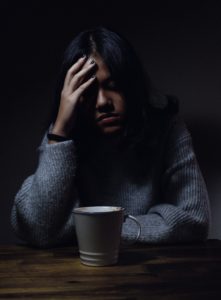
    I want you to meet Marti. If you’ve never experienced severe depression yourself, learning about Marti’s journey may give you a glimpse into what it’s like. And if you have…well…I hope Marti’s story helps you feel less alone…and helps you find hope for your future, too.

    Marti was a sparkling preschooler, obviously intelligent, and full of charm and spunk. But the spark disappeared when she was about six years old. She was also diagnosed with Type 1 diabetes that same year…which only increased the stress in her young life.

    In spite of the depression, she pushed through the best she could Ketamine smashes treatment-resistant depression.and performed well in school…receiving all sorts of academic awards.  School was her refuge and solace. Even so, her immunity to infection was reduced by the diabetes and she seemed to get sick with every bug that floated through. That made things worse…and pushed her stress higher.

    Family Crises Can Trigger Greater Severity in Symptoms

    Then, when she was in 8th grade, her dad collapsed and had to go to the hospital by ambulance.  Long QT syndrome they called it… basically a heart attack but he survived. However, he was in the hospital for 2 weeks…and because she was sick she couldn’t visit him. The helplessness of the diabetes, the constant double workload at school, her brothers’ illnesses, and her dad’s near death event, became the final straw.

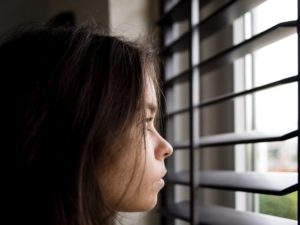
    A darkness began to build inside her beyond anything she’d known before. Her mind seemed to become numb…vacant… she seemed unable to think. Things like motivation, initiative…or even the energy to do anything… had disappeared. She felt lost, but that wasn’t all.

    There were new fears. Fears of people, places, leaving the house, Ketamine smashes treatment-resistant depression.answering the telephone. School became an insurmountable mountain to climb. She began to hide under her bed for the school day so no one would know she didn’t go. She couldn’t go. 

    That was on the worst days. On the days she could muster the courage to get on the bus, she sat silently in class…looking at her desk. Holding onto her chair with all her might to keep herself from running out.

    Classmates would watch her behavior and assume she was using drugs. They’d ask her…and she’d tell them no, horrified that she gave that impression.

    Academics Suffer When Medications Fail

    Her parents took her to regular visits with an acclaimed psychiatrist. After 18 months he was amazed she wasn’t doing any better. Concerned their intelligent and awarded student would not graduate from high school without close support, her parents took her out of school and homeschooled her during her senior year. She was able to make up the credits she’d lost and graduate, mostly due to the decreased stress of the public school atmosphere.

    But…her condition worsened. She registered in a university hoping the new routine would help her improve. But it wasn’t that simple.

    She had intermittent periods of working at school and making top grades, then falling back into the abyss of darkness that had become her  constant prison. A good semester then a terrible semester. Ketamine smashes treatment-resistant depression.Finally, she was placed on academic suspension for a semester… and eventually dropped out.

    Her doctor continued to increase her dosage, and change her medicines. But nothing really worked. She slogged along in the proverbial mud, losing her hope, her self respect, and adopting a new outlook that was angry, bitter, and critical… an outlook she called “realistic.”

    These changes in her view of herself and others resulted in friendships with others who were also angry and despondent. The motivated and emotionally-healthy friends she’d had during her childhood and early teens all but disappeared.

    Treatment-Resistant Depression Spreads DOOM

    Marti wore “toughness” like an overcoat, and functioned well enough to be sullen and angry with her friends. Her social circle was a tough lot, but she tried her best to fit in with them.

    Then she met “him.”  He was handsome, weathered, and wore chains and black leather. Her epic bad boy.

    Within 2 weeks, they’d had their first big fight.

    Shattered by his dirty and cruel tactics, Marti realized she was in over her head. But she was determined to live up to the challenge. Ketamine smashes treatment-resistant depression.The verbal abuse and horrific scenes deteriorated to physical abuse, but just reminded her that she knew what it was to suffer. And he’d been alone without support, so she was determined to be that support and “help him heal.”

    This pattern continued, with periodic breakups, apologies, and a patched-up relationship for two or three years. Marti’s depressed condition deprived her of the energy, the judgment, or the initiative to improve her situation. And she told herself magical stories about how her love and loyalty – no matter what he did – could heal his wounds…and they’d enjoy a happy life together forever.

    So she trudged.

    A Disordered Brain Obsesses on Death

    And there were suicidal attempts. And interventions that saved her life. But if you know anything about depression, you know that suicidal thinking or attempting doesn’t stop because you want it to. Your disordered brain creates images of death and darkness…and compulsions… It’s the very opposite of a healthy, imaginative  brain that creates beauty and joy.

    Marti’s nightmares became a constant torment. Waking up in a cold sweat over and over in the same night, with visions of cruel and terrifying demons destroying her… and as soon as she fell asleep again they were back.

    Insomnia kept her awake for 5 or 6 days at a time…she’d feel brittle, reactive, hysterical at the smallest provocation. Screaming and cursing when the dog barked or the doorbell rang. Her coordination was also brittle, so she’d accidentally break a glass or stub her toe and fly into a screaming, cursing rage.

    The phobias increased. Marti loved photography and was given an all expense-paid trip to Thailand with a professional photography group who would help her learn more artistic techniques for her craft.

    An Opportunity Becomes a Crisis

    She’d acquired outstanding equipment for her photography business, but the depression made it nearly impossible for her to follow through on opportunities.

    Meeting with clients, doing a shoot or a sitting, became too difficult to manage, as social anxiety, fear of failure, and agoraphobia stripped her of the confidence to follow through.

    She boarded the plane to Thailand with her gear, and on a layover inKetamine smashes treatment-resistant depression. Bangkok she suffered a gargantuan panic attack. She couldn’t think to find her luggage, her gear, or her phone. Finally, she called her family collect and asked them to help her get home. Knowing her fragile state, they readily complied.

    Once home she slept for days as she recovered.

    Her Own Worst Critic

    Then the shame set in. How could she squander such a life-changing opportunity? How irresponsible could she be? She’d always hated herself, but now she LOATHED herself. How could she bear the disgust she felt for her inept failure?

    You know, when you’re struggling, you need a best friend… and if no one else…you need to be your own best friend. But sadly, whenever life got hard, Marti would use that moment to beat herself down into a shriveled nub.

    And that’s how it goes, isn’t it? When we feel awful, we tend to make it worse. And we usually need an intervention from outside ourselves to turn the disastrous tide.

    A final year with “him” was packed with physical abuse and cruel unspeakable torment that resulted in injury for Marti in her spine, her pelvis, and her neck.

    From Abuse of Herself to Assault by Someone Else

    The stress of her life led to muscle cramping in her neck and Ketamine smashes treatment-resistant depression.shoulders that left her left shoulder 3 inches shorter than her right one. She was unable to move her upper body without extensive treatment.

    But those wounds were just physical. It would be years before physical therapists and chiropractors could help her body recover from the damage.

    Still, the worst was the emotional damage. The silent scars that held her in a vice of fear.

    Chronic hospitalizations plagued her life as the multitude of terrible stressors triggered vomiting spells that lasted for days at a time. Every 5-10 minutes…around the clock.

    And those vomiting spells threw her body’s pH out of whack…and triggered diabetic ketoacidosis…a potentially fatal condition that won’t correct itself without emergency medical intervention in an ICU.

    Over. And over. And over.

    Then, it got worse. The repeated diabetic ketoacidosis and the high blood sugars that accompanied it, caused damage to the nerves in her stomach.

    Gastroparesis… a condition where the stomach’s ability to empty itself is paralyzed… led to deteriorating nutritional absorption. Basically, she was starving because her body couldn’t absorb nutrients.

    Depression Can Kill and Must Be Stopped

    It all began with depression. But depression is just the beginning… and when it’s severe, it can trigger a cascade of circumstances that can suffocate life.

    One day late in the summer, on one of many days when “he” tried to kill her, she grabbed her shoes and keys and fled.

    And she never went back.

    In the aftermath of that day, she spent more and more time in the hospital intensive care unit. A year and a half later, she was transported to the ICU so often, she was in the hospital more than she was home. A lot more. And she knew she was dying…

    She also knew she was losing her ability to see. What began as foggy-out-of-focus  moments in the early fall, progressed to full blindness by Christmas.

    A retina specialist was called in and she went for surgery the day Ketamine smashes treatment-resistant depression.she got out of the hospital.  Within two days she was back in ICU…but the surgery had succeeded in repairing the retina in her right eye. Her left eye was not reparable. But it was a start.
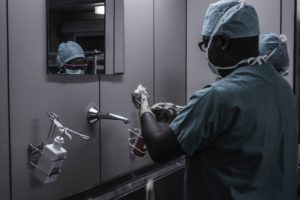
    Then, her doctors recommended she undergo surgery for a feeding tube placement in her intestine, and formula was pumped into her body through that tube 24/7. After another week in the hospital, she was beginning to improve. The vomiting stopped. And she began to feel a little stronger.

    A Mysterious Joy Begins to Bubble Up

    But there was something else. She was feeling better. In barely perceptible ways at first. But little by little, joy was growing. In spite of her intestinal feeding tube. In spite of her blindness. She had hope. And she didn’t know why.

    She would wake in the morning, remember she was blind…and cry. She grieved the loss of her eyesight. And facing that each day was so difficult.

    But then she would launch into the day with a spring in her step.  Initiative to move past this disability and build a new life. She had not had initiative since she was in 8th grade. She’d not felt joy since she was in kindergarten. What was causing this?

    Ketamine Smashes Treatment-Resistant Depression

    She heard about ketamine treatment… and someone suggested she check her surgery record to see what anesthesia she’d been given in surgery… so she did.

    When the surgery record arrived in the mail 10 days later, she was astounded to find out she’d been given ketamine as an anesthesia in surgery. Could that be why she was feeling so much better??

    Marti danced across the room just to consider that ketamine might be the reason she was coping so much better, and enjoying so much again. She set out to learn all she could.

    That first IV ketamine infusion in surgery restored her wellbeing for 7 Ketamine smashes treatment-resistant depression.months. Then she began to feel the old depression returning, the critical thoughts, the anger, the hopelessness…but for the first time since she was a little girl…she didn’t want to die anymore. 

    6 IV Ketamine Infusions + A Couple Booster Infusions

    So she set out to find a way to pay for a series of 6 infusions, as she’d learned that stacking infusions would produce more lasting results.

    Within a couple weeks, her parents were able to help her with the money for a treatment of 6 infusions over 2 weeks. She’d heard that ketamine was available IV, IM, or intranasally...but she’d been convinced that IV was the best route for ketamine’s full benefits.

    After the first infusion she felt no better…but that night her mother noticed she was folding clothes…for the first time in four years. Initiative.

    Then, after the second infusion she thought she had a glimmer of hope. A lifting of pressure…of the weight that had been crushing her. Decreasing anxiety and diminishing sadness…she could tell she felt a bit lighter.

    After the third infusion, she laughed a little, and talked a bit more freely… And from there her outlook grew better and brighter day by day through the last 3 infusions and over the next few weeks.

    A few months later she’d been hospitalized more times (and with  the intense stress of severe illness) she started “sinking” again…and called her doctor for a booster infusion of ketamine. She’d heard that sometimes that’s necessary. And she was glad she got it… it helped.

    But four months later she needed yet another. Even so, that infusion of IV ketamine has held her remission steady for a long time.

    She’s learning Braille, training to work, and excited about the life that’s ahead. She’s 32, in love with a wonderful guy who stood by Ketamine smashes treatment -resistant depression.her through the illnesses and surgeries, and life is working for her now on an exciting new level.

    Marti believes in herself now and in her potential. And she’s eager to contribute to the lives of others. She’s joined the board of a non-profit blindness advocacy group. She has new friends who also have bright outlooks on life. Who are also productive and contribute to the community and to each other.

    By the way, remember those terrifying nightmares that plagued her? They’re gone. Her dreams are bright and beautiful now…or at worst a little frustrating. The terrors that beat her up through all her nights for so many years are gone.

    It All Began With Depression

    And a co-existing illness. But treating the illness didn’t resolve the depression. Ketamine treatment did.

    Marti feels transformed. Her family says she’s finally the person she was when she was 3 years old, before the assault of life hit. Her cleverness, wit, spunk, and joy for life has returned.

    Marti is one of those people for whom the 6-infusion ketamine protocol wasn’t enough. She had researched extensively to understand how ketamine treatment ought to work and what to watch for. She also understood that to stay better required building a stronger infrastructure that would support her remission from depression. 

    And she actively worked to put that in place, through friendships, attitudes, and improved health. Active cooperation with her team of doctors, and doing the work in her outlook about her career and her relationships all helped strengthen that infrastructure.

    And today, she’s in full remission. She sings every morning, dances a jig of her own design when she thinks no one is looking.  Her life is full of promise.

    She’s attracted to upbeat, healthy-minded people, and she loves herself. She enjoys life in a way she’s never been able to, and marvels at the frame of mind that held her captive 25 years.

    Severe Depression Affects Every Aspect of Life

    For those who have never experienced major depressive disorder in its severity, the fallout in Marti’s life may seem outlandish.

    But Marti’s story demonstrates how all-encompassing and Ketamine smashes treatment-resistant depression.dangerous depression can be.

    And why ketamine treatment is the golden child in psychiatric treatment these days. There’s no other treatment available that is as effective, potent, and all-encompassing for restoring life, hope, motivation, initiative, and a bright outlook to this degree.

    At Innovative Psychiatry we’ve watched thousands of patients with treatment-resistant disorders follow the path Marti has in full remission.

    Relief from social anxiety, depression, panic disorderPTSD, OCD, bipolar disorder, addiction, substance use disorder, and suicidal thinking.

    (Did I mention ketamine can stop suicidal thinking in 4 hours or less?)

    If you suffer from severe depression that other treatments haven’t helped, call us. We can help you rediscover the life you’ve lost, just like Marti did. You, too, can enjoy remission from the crippling throes of mood disorders.

    Give yourself the opportunity to live again, or even for the first time, and develop a fulfilling and productive life. Because you can.

    Lori Calabrese, MD offers innovative psychiatric treatment like IV KetamineTo the restoration of your best self,

    Lori Calabrese, MD

  • Rapid-Acting Antidepressants Help You Get Better FAST

    Rapid-Acting Antidepressants Help You Get Better FAST

    Rapid-acting antidepressants like ketamine can restore dark emptiness to joy.Smash Treatment-Resistant Mood Disorders with Rapid-Acting Antidepressants: Like Ketamine Treatment

    We’ve talked before about the line to the throne where ketamine treatment now reigns. Formulators in a lab were seeking to create a new anesthesia, and they thought they’d found one.  They called it Sernyl—but the unpredictable side effects, hallucinations, and sometimes violent behavior, drove the pharmaceutical company to take it off the shelves.

    It was not the kind of medicine doctors wanted to give their patients. Rapid-acting antidepressants help you get better fast. Through a series of leaks and improprieties however, it began to drift onto the streets as an illegal substance. The drug was phencyclidine, or PCP. Remember during the ’70’s and ’80’s? If so, you know the havoc that PCP – or angel dust – wreaked on the street crowd.

    Rapid-acting Antidepressants

    But those researchers weren’t willing to give up. They kept working and developed another safer anesthesia that had some of the dissociative properties Sernyl had, but less in side effects when used at therapeutic doses.

    They coined it a “dissociative anesthesia” and it became internationally popular in the surgical suite, in the emergency department, and in war zones around the world.

    That medicine was ketamine hydrochloride. And testing for treating depression began forty years after ketamine was developed and widely used as an anesthetic. 

    And we’re now seeing outstanding results, as in remission of depression and other mood disorders, in both research studies and the clinical setting.

    So it’s not surprising, is it? That ketamine treatment has become the role model for emerging new medicines that treat mood disorders. 

    Still, knowing what ketamine treatment can do for major depression, Rapid-acting antidepressants like ketamine treatment restore inner joy.postpartum depression, social anxiety, bipolar disorder, PTSD, OCD, and suicidal thinking isn’t enough for neuroscience researchers.

    They want more.

    If ketamine does great work treating patients with treatment-resistant mood disorders, there must be more medicines that will also work as well.

    Or so they hope..?

    Antidepressants that Work as Well as Ketamine Treatment

    So the search is on to find other rapid-acting antidepressants that eradicate major depression, PTSD, bipolar disorder, OCD, social anxiety… and stop suicidal thinking in four hours…or less, like ketamine treatment does.

    It’s a tall order, but it’s the quest of the hour.

    Conventional antidepressants improve symptoms by increasing levels of neurotransmitters like serotonin and norepinephrine.

    But it takes 9-12 weeks or more for someone to experience that improvement. So the loud and strong need for rapid-acting antidepressants shouts its demand for these solutions.

    Why? Because when patients with severe disorders are inundated Rapid-acting antidepressants like ketamine treatment bring relief to despair.with thoughts of suicide, if those thoughts can’t be eradicated quickly, the risk of death is high.

    In addition, lost work time as well as abandonment of  the medication regimen, is more likely to happen. In short?  Patient safety is compromised.

    Seeking Ketamine Wannabes

    So, there’s a strong focus on compounds that CAN bring fast relief. They include ketamine, scopolamine, and “mechanistically-related” compounds. We’ll get to those in another blog post.

    But researchers added some newer ones to this list in the surge to find more rapid-acting medicines.

    Compounds like:

    • Antagonists of metabotropic (mGlu) 2/3 receptors
    • Negative allosteric modulators of α5-containing GABA A receptors
    • Psychedelic compounds like psilocybin

    I know…I know… sounds like Greek.

    How about this?

    These compounds need to demonstrate their effectiveness in large groups of people. Most importantly, when medications fail to help people get better, these compounds need prove they can be effective.

    And…as always…the biggest challenge is finding ways to make the positive effects last.

    Rapid-Acting Antidepressants Help You Get Better Fast

    Since the use of ketamine for depression began, the path of discovery started when ketamine first caused remarkable relief for depressed patients, but that relief didn’t last more than a few days or a week.

    Researchers tested a variety of methods, and discovered an effective regimen was 6 ketamine infusions given every few days over 2 weeks.

    By doing this, it seemed to bypass the short term beneficial effects Rapid-acting antidepressants deliver relief and peace to those who suffer with treatment-resistant mood disorders.and instead prolong them. As we’ve moved forward in clinical practice, we’ve found that increasing the number of infusions in some cases can ensure remission. That is, if the initial six fell short of that goal. And we’ve worked with different infusion protocols over 2-3 weeks.

    Like all aspects of psychiatry, personalizing the treatment to fit the patient’s needs yields the most effective outcomes.

    Review of Literature Clarifies the Search

    A brand new review was published in Current Pharmaceutical Design July 29 focused on these specific compounds and their potential. The team, led by Jeffrey M. Witkin, reviewed the current literature on compounds that produce immediate symptom relief.

    They determined that a foremost system for producing rapid effects is by amplifying excitatory neurotransmission (by glutamate) while activating AMPA receptors.

    These drugs cause glutamate to flow out of the cells which provide what researchers hypothesize is a triggering mechanism to increase the amplitude of AMPA receptors. 

    They concluded that the focus in pharmaceuticals these days is rapid-acting antidepressant compounds like ketamine, scopolamine, and psilocybin. All of these need extensive study. And they pointed out that two medicines, rapastinel and esketamine are in the last stages of FDA trials.

    So let’s look again at the up and coming compounds and medicines in the running to potentially supply the benefits that ketamine is now providing:

    • Ketamine — still at the top
    • Esketamine (developed by Jansen, a division of Johnson & Johnson)
    • Rapastinel (developed by Allergan)

    It’s probably fair to say that in the next few years we’ll be bombardedRapid-acting antidepressants bring hope in darkness for those with treatment-resistant mood disorders. with many new medicines that operate quickly to treat mood disorders. But that’s the way of progress.

    Even though esketamine is only half the ketamine molecule — with its own challenges and problems — it’s generating anticipation despite the problems that can come with an intranasal medication.

    Keep in mind that FDA approval doesn’t guarantee a medicine is superior to others. But it’s a sign we’re in a new era of better, faster, and more effective medicines for psychiatric disorders.

    Ketamine still reigns supreme. And physicians will likely need to combine esketamine with traditional antidepressants and mood stabilizers. Even so, mood disorder treatment is better than it used to be. Remember before ketamine treatment?

    Back then, it was necessary to wait for weeks or months to enjoy the benefit of a medicine.

    Times are changing and suffering is declining.

    At Innovative Psychiatry, we’re celebrating the onward development of pharmaceutical progress, while also providing the outstanding benefits that ketamine can offer to our patients with treatment-resistant illnesses.

    Our specialty is treating disorders that haven’t gotten better with other treatments. We’re here because we want to help you experience life like you were meant to live it.

    Lori Calabrese, MD offers innovative psychiatric treatment like IV KetamineTo the restoration of your best self,

    Lori Calabrese, MD

     

  • Ketamine Boost Infusions: When You Feel Better-ish, But Not Better Enough

    Ketamine Boost Infusions: When You Feel Better-ish, But Not Better Enough

    Ketamine Boost Infusions Combined with Infrastructure Changes May Help You Sustain Remission

    What do you do when the symptoms return?

    You spent years in that condition. The sadness, the hopelessness…the numbness.  That terrible shame. Unable to participate. Shut down. Withdrawn.

    Or, maybe the symptoms were reactions to sudden noises…smellsdarkness… or touch.

    They may even have been obsessive thoughts…and compulsive actions that follow. 

    Or the old dreaded cravings…and relapse close behind.

    You even wondered if you could go on much longer.

    Then, you heard about ketamine treatment, and you found a way to pay for the treatment series of 6+ infusions. Afterwards, you came alive and felt so much better.

    For once, you had hope, motivation, initiative. There was energy to live, invest Ketamine boost infusions bring back the joy like these colorful balloons floating in the sky.your effort, build healthy relationships. You enjoyed your job and began to really excel. You actually felt happy. It was exhilarating to not just barely hang on.

    Then it happened. …out of nowhere…those old symptoms began to return.

    Maybe your job performance led to more responsibility. And the higher level of stress began wearing down your synapses…those connections between the cells in your brain. It’s possible that after awhile those cells in your lateral habenula began bursting too much and too often.

    Plus all those G proteins that had slid off the lipid rafts in your cell membranes may have started piling back up on those rafts. The numbness that had gone away, came back.

    Why?

    Could it be because your wife’s cousin is living with you, taking advantage of your hospitality, rather than trying to find a job or her own place. And you keep stuffing your feelings…you don’t want to upset your wife.

    Or maybe your boss takes credit for every innovation your create. But you? You keep working long hours and your husband is fed up that you’re never home.

    Stress.Ketamine boost infusions can calm the storm once again.

    You’re so mad at yourself for not accomplishing more, so you carry your feelings on your sleeve, and jump down the throat of anyone who crosses you.  You KNOW they don’t deserve this treatment…but you’re too ashamed to apologize.

    Or, perhaps you got a little cocky with your sobriety, and began hanging out with friends who still use the substances you’ve broken away from… ? Any type of hard and stressful situation can make you think back to the old days…

    It also might even be that this disorder is in your genes…that your whole family fights depression and it’s like a heavy gray blanket covering everyone around you. It could be to get better you might have to purposefully surround yourself with more positive, uplifting people …?

    Or separate yourself from obligatory situations

    Sometimes we can’t see the nose on our proverbial face. We need someone to point it out and help us see specifics like these in our own complicated lives.

    And we need to take action.
    Tell your spouse what you really feel. Stand up to your boss even at the risk of getting fired. Because your self respect is too important to just silently bow to his abuse and dismissal of your value. That might reduce your stress.

    Sometimes it doesn’t take much…just a step… to stand for what’s right. But when you do, the chains fall off.

    And your own personal infrastructure – the things that make your life yours – is freed up to support your well-being.

    So back to the causes. All of the mechanisms associated with stress can go into play, and undo some of the work the ketamine treatment had accomplished.

    This is why it’s important to find ways to improve the “infrastructure” in your life,Ketamine boost infusions help you rebuild the infrastructure in your life and lay groundwork for peace. to reduce stressors that wear down your resilience.

    Without making healthy changes in the areas most critical to your wellbeing, the same stressors that caused you to need ketamine treatment in the first place may cause you to need it again.

    But…let’s be clear: there are no published studies about “booster” infusions

    Can you believe that?

    None.

    But in all fairness, it can take years to gather data on recurrence of symptoms and how to best treat them.

    Still. We need research!

    Meanwhile, what do we do? The best we know to do is to use our clinical judgment if symptoms try to creep back in. We collaborate with you, and your treatment team, about the best way to proceed.

    Lifestyle changes? Any improvement in the stressors in your life that you can make…well, that can be a big help.

    A medication change perhaps? Some people continue their medications while receiving ketamine infusions. A change in medication might help…

    Or is an additional ketamine boost infusion what’s called for? Perhaps so. If nothing has ever worked for you before to control your symptoms, you may know that ketamine infusions are your “go-to” solution.

    Those of us in clinical practice have learned that additional infusions down the road can help refresh the work ketamine began.

    Many patients…and their doctors…take a shortcut straight to ketamine because of their experience that it worked so beautifully after all those failed rounds of Ketamine boost infusions are the beacon in darkness for those who have recurring symptoms.antidepressants and other treatments.

    But we still don’t have research to show us in those cases how often we should prescribe a booster infusion or whether maintenance is inevitable for the foreseeable future.

    My experience says that ongoing maintenance doses really aren’t required in many, if not most, cases. There is no research to guide us at this point. I do wonder why? …and hope that changes soon.

    For now, I think it’s premature to make a blanket recommendation for ongoing maintenance “booster” infusions every few months indefinitely.

    There are too many cases of patients who only need one or two or three after the initial series… then no more for a year or more. Psychiatrists need to work with their patients and the health care team to guide the best recourse for each individual patient.

    But remission is the goal. Helping you feel truly good and able to live productively.

    One or two ketamine boost infusions at a time can support and sustain remission. Especially if the patient’s infrastructure is in place and strong.

    So…maybe you still feel better than you did before you knew about ketamine…but you don’t feel as good as you did a few weeks ago.

    What do you do?

    When you feel better, but not better enough, you may need a ketamine boost infusion to get your brain working well again and get you back on track.

    Kick It Up a Notch!Ketamine boost infusions kick up your resilience a notch.

    Every brain is different, just as every person is different. Dosage and frequency can vary.

    Another point… for the purpose of rebuilding and strengthening your personal “infrastructure,” you might benefit from therapy with a skilled therapist after each of your ketamine infusions.

    This is when the neuroplasticity in your brain is very high, and it’s easiest to consider new ways of thinking, of reacting, of decisions…that make your life more functional, less stressful, and more rewarding.

    Some people don’t need additional infusions at all. When you feel better, really so much better you’re empowered to build the life you want, there’s no need for boosters. And there’s no need to schedule them in advance.

    But when you feel better but not better enough, you need to take action and find ways to get completely better. Start with another ketamine infusion.  And take an inventory of your daily life. What do you need to change to make it better?

    It might be taking action to change something. Or it might be taking action to change your attitude about something. But use those extra ketamine infusions to explore your life, your heart, your attitudes. And with the help of your therapist, make some solid decisions that renew hope in your life.

    Renew your wellbeing.

    Slash that powerless feeling and remove it…put yourself back in control.

    It may require additional infusions every few months for awhile to get your life on track, your infrastructure in line with your purpose, and to create a life you enjoy. But it’s worth the effort.

    And by the way, there’s no shame in additional ketamine boost infusions. No one but you knows what’s working for you. This is not a competition.

    The goal is for you to live life as your best self, rather than a shadow of that. That you can enjoy your work, your hobbies, your relationships, and your purpose.

    At Innovative Psychiatry we work closely with you and your health care team to help you find the most productive and fulfilled you.  Call us.

    Lori Calabrese, MD offers innovative psychiatric treatment like IV KetamineTo the emerging of your very best self,

    Lori Calabrese, M.D.

  • Mental Health Issues in College Students — Prepare Early

    Mental Health Issues in College Students — Prepare Early

    mental health issues in college students.Does Your College Student Know Where to Find Mental Health Support?

    Jonathan stood at the curb, watching his parents drive till they were out of sight. He felt lost. Vulnerable. Tired. He didn’t know much about mental health issues in college students … or even first graders, for that matter.

    Jonathan had been depressed most of his life. His parents noticed the pain in his eyes from the time he was a preschooler, and tried to help in every way they could. He was their first child, and they didn’t recognize he needed professional help.

    His sadness and social anxiety held him back in countless situations.  He was very bright and did well in school, but socially he was isolated much of the time. He searched early, and visited colleges with his parents. But contributed very little to the decision.

    They chose a small private college, where student/faculty ratio was intimate and friendly. And when it was time to go, they packed him up and drove the 4 hours to the campus. He followed as they carried his belongings to his dorm room. Afterwards, they all went to dinner, then back to the dorm. Hugs all around with words of encouragement. And they left.

    Jonathan had no idea what he would do. As time moved on, he tried very hard to do well in his classes. But his energy for it eventually faded. And after a year he told his parents he wanted to leave school. He withdrew, packed up his belongings, and drove away.

    Treating Mental Health Issues in College Students – A BIG Problem

    A rising problem in the US education system is the minimal attention given to the mental health of students — especially college students.

    Since 80% of incoming freshmen are 18, some 17 or younger, and others 19 or older, most of Mental health issues in college students can be relieved by ketamine treatment.these students are still very much adolescent. Add to that the fact that 75% of psychiatric disorders are diagnosed before the age of 24, and you can see that the college years are predisposed to turmoil for many kids.

    And if you don’t really believe your student is susceptible to mental health issues, think about this: 45% of parents say their child has been diagnosed or treated for a psychiatric disorder. Add to that: those who need help but haven’t sought it. Those who are afraid … of stigma, cost, and the rumors they’ve heard about psychotropic medications. Or children of parents who are misinformed. 

    Do the math, and you’ll see that your daughter or son has more than a 50/50 chance of needing psychiatric treatment in the years ahead.

    Yikes.

    How Common are Psychiatric Symptoms in Teens?

    A survey was conducted with 712 parents of children in grades 9-12 and first year of college this past fall.  The question asked if their child had been diagnosed or treated for anxiety disorders, stress, mood disorders, learning disabilities, self injury or suicide attempts, and more.

    A full 20% reported anxiety disorders, 18% reported stress, 17% reported mood disorders, and Mental Health issues in college Students.17% reported learning disabilities. These are parents whose children have been diagnosed or treated. 

    Of the same group of parents, 54% said their children had not been diagnosed or treated for a psychiatric illness.

    Not because they hadn’t seen symptoms. But because they had not sought treatment. Some percentage of that 54% includes families with psychiatric suffering that they’re not recognizing or acknowledging.

    Some People Don’t Believe in Psychiatric Illness…Still

    There are still factions of society in this 21st century world who still don’t believe in the validity of psychiatric illness.

    So, if they’re faced with it in a child, they consider these disordered behaviors as a lack of discipline, or misbehavior, or rebellion. So they apply more discipline to the situation. Consequences maybe. But nothing that treats the very real symptoms in the brain.

    When teens from that kind of home environment enter the university environment, we see symptoms emerge that often require attention. The stress, the social pressure, and exhaustion from disordered sleep patterns sometimes lead to a crisis … sometimes even a need for hospitalization.

    And again, by the way, the years a student spends in college coincide with the years the largest number of people in the 15-24 age group are diagnosed with a psychiatric disorder. Is there any wonder why…?

    The Need for Diagnosis and Treatment in College is Steadily Rising

    The Center for Collegiate Mental Health reported in 2017 that the demand for mental health services on college campuses has increased continuously over the last seven years. Hands down, the most often repeated request is for counseling for anxiety and depression.

    Parents who were surveyed listed their top criteria in choosing a university with their child. Those criteria included things like affordability, distance from home, academic reputation … but mental health services weren’t included on that list.

    While it may not be all that unreasonable that parents don’t automatically explore availability of mental health services in the colleges they consider, you probably should place these services high on your list. It’s just smart.

    Get Your Student in Touch with Mental Health Services Near His Campus

    If your son or daughter is already seeing a counselor or psychiatrist, continuing treatment or finding mental health professionals they can trust on campus or nearby could make the difference in their academic success or failure. Cradling the idea that he or she can just “wing it” is not a recipe for satisfactory outcomes.

    On the other hand, if your child has shown no signs of psychiatric stress or disorder, just be awareMental Health Issues in College Students can be relieved by ketamine treatment., and stay informed.  The student with the highest performance in high school can still develop depression, anxiety, or bipolar disorder in college. That’s not to say your child will fail. Not by a long shot. 

    But in far too many cases, parents are caught by surprise when a child with excellent performance falls into severe depression … and just withdraws and shuts down.

    High Performance Students May Suffer Burnout

    Sarafina was voted Most Likely to Succeed in high school, along with Class President, Homecoming Queen, and president of the honor society. She was hard working and disciplined, and maintained a 4.0 GPA even with a part-time job.  When she started college, she got a work-study job on campus from the very beginning, and secured loans for her tuition.

    She worked tirelessly toward her goal of acceptance into medical school.

    But during her third year, something began to go wrong. Stressors that included unstable family members, a volatile political environment on campus, and the pressures of school and work finally capsized her ability to function. She had to withdraw from classes to seek psychiatric treatment for bipolar disorder, complicated by way too much drinking.

    She just couldn’t do it any longer.Mental health issues in college students can be relieved by ketamine treatment.

    This is not an uncommon scenario with high achieving students. In some cases, the years of strain to get ahead, the sacrifices… and the pressure, culminate in an overwhelmingly bad place.

    There Is Effective Treatment Available Now

    If your child struggles with psychiatric mood disorders like depression, anxiety, bipolar disorder, social anxiety, PTSD or OCD, there is treatment that can help – therapy, and medications like SRIs.

    And…even if they don’t, there is IV ketamine treatment.

    Ketamine Treatment..?

    Ketamine treatment for psychiatric mood disorders uses a tiny dose compared to the small amount used for anesthesia. We give these doses 3 times a week for a 2-3 weeks, depending on your individual needs.

    Ketamine turns on mRNA to switch on DNA that turbo boosts the Brain Derived Neurotrophic Factor (BDNF). BDNF is like a rich compost…that infuses dendrites and stokes neuronal (brain cell) connections, called synapses.

    These dendrites branch out in fast motion to create dense dendritic spines, causing the signaling system in your brain to bloom like tomatoes at the county fair. When that happens, the signals start flying around in your brain connecting your thoughts, emotions, and well-being and bringing healthy, alert stimulation and balance.

    At the same time, ketamine can erase suicidal thinking. Why is that important? Because there is no medication besides ketamine that has been shown to stop suicidal thinking in 4 hours or less. This is life-saving for someone in crisis, intent on suicide.

    Your son? Your daughter?   …You?   

    The second highest cause of death in college-age students?  Suicide. 

    This is serious, and can mean life or death for the child you love. The best protection for your child is prevention. And after that, treatment. Ketamine treatment can prevent suicide now.

    Innovative Psychiatry Treats Your High School or College Student

    And, if you do have a teen who exhibits signs or symptoms of anxiety, depression, social anxiety, panic disorder, bipolar disorder, PTSD, OCD, or thoughts of suicide, call us. The earlier they receive effective treatment, the higher their prospects of recovery.

    At Innovative Psychiatry, we see 80% of treatment-resistant psychiatric mood disorder cases Mental health issues in college students can be relieved by ketamine treatment.achieve remission with IV ketamine treatment. Eighty Percent!  

    There’s never been such an amazing medication for depression and anxiety before.

    Let us help you and your family restore, rejuvenate, and rebuild on solid, healthy ground.

    Lori Calabrese, MD offers innovative psychiatric treatment like IV KetamineTo the restoration of your best, happy self,

    Lori Calabrese, MD

error: Content is protected !!