
Tag: IV Ketamine Treatment for Depression

  • Ketamine: Dissociation Quality Determines Remission

    Ketamine: Dissociation Quality Determines Remission

    Dissociation quality determines remission for this man.

    Transformative remission is inextricably linked to the quality, depth, and degree of dissociation during ketamine infusions.

    Christopher trudged through the day, listless. He felt dead inside. Just couldn’t work up a care about what happened at the job interview. But practicality — the bills were piling up — drove him to go anyway.

    He did his best in the interview, then got in the car to hurry home where he could retreat into his dark bedroom and sleep. He thought about death…about ways of ending his life… of making a plan that would work, before he could be interrupted. He knew he wouldn’t do it. But he’d been living with these thoughts all his life, and in the bad times it was the only way he could calm his mind and maybe fall asleep.

    After months of research with studies she found online, his wife had been talking to him about ketamine treatment, and how it could not only wash away the suicidal thoughts but could help him feel good again, and find the energy to live. To care.

    He wasn’t buying it. Just another antidepressant. They don’t work and never have. One more way to throw away money. A waste.

    Still, she insisted, and he resigned himself to be a “guinea pig.”

    How Dissociation Quality Determines Remission Lasting Power

    The first two infusions were pleasant. Relaxing. Sort of “billowy.” But once each one ended he was back in the real world –, irritable, edgy, resigned. He thought to himself that surely his wife will now accept there’s nothing that will work, and leave him alone about it.

    Dissociation is key to transformative remission so be like this woman, and get treatment.

    His wife, however, was determined. If ketamine could help others achieve remission, then it could help her husband.

    When the doctor came in, she told him in no uncertain terms that nothing good was happening to Chris that she could see. She pressed the doctor to change something so this would not be a waste of money…and hope… Because his hope was gone. He needed success.

    Increasing the Dose and Duration

    The doctor agreed and increased the dose and extended the duration of the infusion to try to find that sweet spot between relaxation and overstimulation. Christopher’s “relaxing” experience was quite different this time.

    Little by little, he lost his awareness of his chair, his presence in the room, and of his wife sitting nearby. He felt himself floating into another room…then another place…and then he lost awareness of himself and just let his mind float, and fly, and feel freedom. He didn’t care what was happening. Christopher thoroughly enjoyed the respite and relief of this vacation from his pain.

    After his treatment ended, Chris felt a tinge of renewal. Of refreshing. Just a tinge…but it was unmistakable from the previous infusions where he soon returned to the same despair.

    Now I get it, he thought. I see where this is trying to go. He set about googling and reading to find out how to prepare himself for the next infusion, to give it its best chance. He also picked back up a low stress hobby he’d enjoyed in the past and found he was enjoying it again. Did he feel happy?  No. But there was something different.

    Just a tinge of hope.

    Christopher talked to the doctor about the first two infusions, who suggested that they keep doing infusions for awhile to make up for the lost ones. The doctor was willing to see where it took Chris, since he admitted he was learning what ketamine could do, too…

    Dissociation quality determines remission power, like with this man singing in a field.

    The 4th, 5th, 6th, 7th, and 8th infusions each enfolded Christopher in a deeper, more intense, and longer lasting dissociative experience then the one before.

    By the end of the 8th infusion and for the weeks that followed, Christopher discovered life with a fresh new perspective.

    He saw everything through more hopeful, optimistic goggles, and found more energy to create wondrous software programs in his work, enjoyed his wife like he never had before, and took up painting sunsets in a quest to truly capture the intensity of colors he saw.

    Christopher has been enjoying his life and living it with gusto for the last 13 months since his ketamine treatment. He still looks back with gratitude on that day when his wife pressed him to let the doctor raise the dose, and the transformation with ketamine began…

    In another blog, we discussed the role dissociation plays in remission from depression symptoms.

    Let’s talk more about what that dissociation can be like.

    Dissociation Quality Determines Remission Power

    Since this last article about dissociation was written last fall, the field of ketamine for treatment resistant depression and other psychiatric disorders has grown by leaps and bounds. You can sample some of the reasons why here, here, and here.

    Physicians, researchers, pharmacologists, and biochemists are in high gear exploring, testing, adapting, and learning at such a clip it’s hard to keep up.

    But with so many brilliant neuroscientists constantly studying ketamine treatment — and so many dedicated physicians learning more and applying the new information to their patients’ treatments — growth was bound to happen.

    So in the six months since our last blog on dissociation, we’ve learned that the standard dose of 0.5 mg/kg of ketamine is on the low end of average in effective antidepressant treatment. In our practice, a higher dose is needed in most patients before they experience deeper dissociation and remission of their hopelessness and depressive symptoms.

    We’ve also learned that by clinging to the originally tested 0.5mg/kg for the full series of six or more infusions, many patients fall short of remission. So we’ve adopted flexible dosing and adapted infusions to the individual.

    Wife helps her husband find out that dissociation quality determines remission power.

    Because remember, as we keep saying, in a private real-world practice (as opposed to a research laboratory) our goal is to help each patient achieve remission from their symptoms. That means we remain open-minded to those things that may help our patients reach their goals.

    We do what it takes.

    And we’ve just submitted a paper for peer review describing this.

    How Does Dose, Rate, and Duration of the Infusion Affect Remission?

    So with that in mind, we seek to administer the ketamine infusions with remission as the target goal, and therefore adapt dosage, rate, and duration of the infusion based on each patient’s response to this medicine in each infusion.

    Remember… 15 years ago, remission from treatment resistant disorders was pretty much unheard of. We’re exploring this frontier to find the best results for each patient.

    This is the most personalized form of medical treatment available, and it’s vital for taking a long term illness from debilitation to remission.

    So let’s go a little deeper.

    What is dissociation and what isn’t..?  Does it matter what happens in a patient’s brain during the infusion, as long as ketamine is infused into his or her body?  Isn’t this medicine delivered through the IV based on the person’s weight, like most medicines?

    These are great questions, so let’s take them one by one. The answer to the last question is NO.

    Apparently, according to some studies between 2015 and 2018, the dissociative experience is explicitly connected to reduction in depressive symptoms. Which means dissociation helps you get well.

    Dissociation determines remission quality and endurance.

    So it turns out that just infusing the body with ketamine isn’t enough. Something more is needed. Intense dissociation gives your brain what it needs to reboot… and feel joy.

    In addition, that dissociative experience is not triggered by ketamine delivered in a standard dose based on body weight. It varies between individuals and needs to be titrated according to that individual’s response.

    We see this first hand, every day. We know it.

    Now, as far as dissociation, it’s the sense of being detached from yourself, or your body. We’re not talking about a disorder here, but rather a sense, or feeling, that occurs during the ketamine infusion.

    Dissociation may includes feelings of waves splashing around you.

    You may experience a lovely floaty dreamy feeling, one where it’s like you’re daydreaming and relaxed. You may feel as if waves are splashing around you, but more in a metaphorical sense. But at the same time, you’re aware you’re sitting peacefully relaxed in a chair or recliner, but you’re not focusing on that. If someone speaks to you, you can easily respond. You’re aware of yourself, but not focused on yourself.

    This isn’t dissociation, though it may be leading to it.

    So What IS Dissociation?

    Dissociation may be hard to describe but you’ll know it when you experience it. For lack of a better term, it’s a feeling of being separate from your body or yourself while still feeling relaxed. It may seem as though you’ve left your body and are floating above it, or in another place. It’s not an unpleasant or frightening feeling, but rather a relaxed sense of freedom… and it’s often accompanied by billowing relief.

    In other cases, it may be a deep dive into your “inner workings,” your outlook and motives, your biases and self-imposed limitations… all in a flexible atmosphere where you can change the attitudes you want to change.

    In still others, it may be more spiritual in nature, a transformative, almost metaphysical experience, focused on your spiritual self.

    Remember, this is your brain. And your experience during dissociation will be uniquely yours.

    No matter what the format of your dissociation, the importance of this is that it’s a direct sign that ketamine is at work in that moment repairing the signaling structures in your brain and all the damage that stress and depression have done. It doesn’t all happen at once, but the process does start right then.

    For this reason, when you feel that “floating above your body” feeling or however it happens with you, we know it’s important that what you’re experiencing is sustained awhile.

    This crucial time sees the repair work initiated and carried out and you may begin to feel a bit better within the hour. You may even find that you feel better and better through the next day and the day after that.

    When your brain is functioning at full capacity, all the neurons are happily buzzing along carrying billions of signals all around your brain as you think about things, feel emotions, make decisions, sort through offenses, and figure out solutions.

    Each neuron brandishes branches of buds that burst into connections with other neurons forming a dense and complex network.

    You think the internet is complex? Ha! It’s a child’s toy compared to this. Every thought you form requires signals dashing around your brain pulling memory and feelings from the hippocampus and amygdala, managing impulses in the prefrontal cortex, and around and around it goes until your thought is formed.

    And the beauty of it is that it can do that at the speed of light, while you memorize volumes of scientific theory, write a speech for a women’s conference, and compose music for your recital.

    But when trauma or overwhelming stressors shove you into depression,  those signaling pathways slow down, break apart, and thin out. Then, you find yourself left with something about as sophisticated as a string suspended between two tin cans. Remember those “telephones” when you were a child? Primitive. Impaired. Ineffective.

    (You can hear some buzzing when someone talks to you but it’s hard to make sense of it. You can say something simple and try to make it heard by your friend in the tree house, but it won’t likely be the Gettysburg address.)

    Your energy to try drains away. Your ability to think complex thoughts seems to all but disappear. The ability to perform becomes so “last year.”

    Dissociation during ketamine infusions may cause strange visual images, like this melting building.

    You need a way to overcome this, but all the things they tell you to do just don’t help much at all.

    It all seems futile, and you’re too weighed down to even try much anymore.

    And then you hear about ketamine treatment and you go for your first infusion… (as in…how soon can you see me??)

    What Happens During Your Ketamine Treatment

    There is something significant that happened when Chris moved past the relaxed floaty feeling and advanced to “another room then another place…” and “let his mind float, and fly, and feel freedom.”  That sensation is the outward signal that ketamine is repairing and restoring. 

    It triggers massive production of turbo-boosted brain-derived-neurotrophic-factor (BDNF) which causes the synapses to explode into branching and proliferating connections that spread across the brain in a sort of fast motion animation.

    It happens at high speed and results in these sensations and impressions like floating then flying and swirling around.

    Dissociation quality determines remission durability. And you want your remission to last and to be resilient, right? So be sure your doctor helps you experience intense and extended dissociation.

    It seems possible – even likely – that some of those who are receiving the flat dosage of 0.5mg/kg without titration aren’t achieving sustained remission… Could it be this is why some of those are needing to return for maintenance doses every month or two?

    We have studies that show that dosing below 0.5mg/kg doesn’t work well to decrease depression symptoms. And it might be that this dose decreases depression symptoms, but is not enough to bring on actual remission.

    Is there a magic dose that always results in remission for everyone? Unfortunately, no …(wouldn’t that make things simpler?)

    Is it possible that by titrating the dose, raising it a bit higher — according to a patient’s response — it could help a patient achieve remission? Well, it’s safe to say his or her chances are much better. What do you think? I’d love to read your comments!

    With the new esketamine intranasal spray approved by the FDA, and with ketamine treatment becoming increasingly effective as we learn what it’s teaching us, hope is growing. People are getting well.

    Dissociation quality detemines remission strength, like tulips rising to the sun.

    We’re learning. All of us are learning together. The field of ketamine for psychiatric disorders didn’t come with a manual, but we’re reading, and comparing notes, exchanging experiences, and watching our patients respond. And the more we learn, the more people get well.

    Options are improving.

    Watch for word from your own insurance company in coming months about their stance with esketamine. We expect to see more and more insurers get on board with esketamine intranasal spray.

    But if you want treatment now, and you seriously seek remission, call us. And let’s work together to help you experience full and deep dissociation to the end that you may achieve remission. So you can build your life and your relationships. And work toward your dreams.

    To the joy of life as your best self,

    Lori Calabrese, MD offers innovative psychiatric treatment like IV Ketamine
    Lori Calabrese, M.D.
  • The FDA accepted a brand new ketamine melancholy drug — right here’s what’s subsequent

    The FDA accepted a brand new ketamine melancholy drug — right here’s what’s subsequent

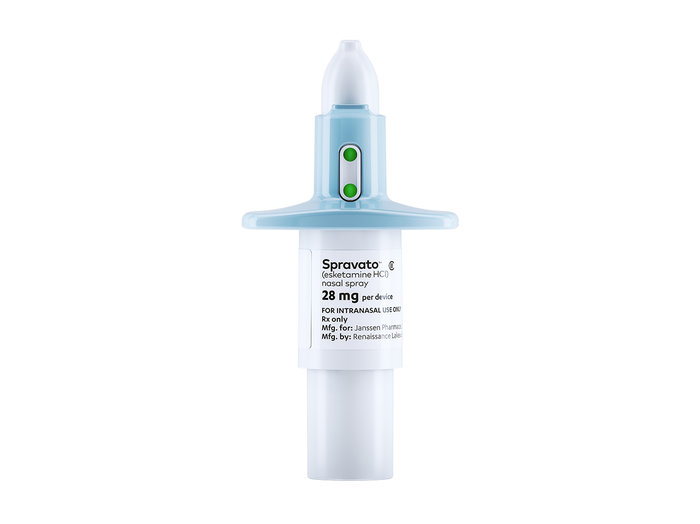
    esketamine nasal spray

    For years, ketamine clinics across the country have offered intravenous infusions as a fast-acting treatment for severe depression. But last week, the US Food and Drug Administration approved a version of ketamine, called esketamine, to do the same thing — so what’s the difference and what will this mean for newly interested patients?

    Ketamine, sometimes known as the party drug Special K, is a compound made of two mirror-image molecules. It has long been approved as an anesthetic, isn’t covered by a patent, and is widely used — meaning it’s not going to make much money for a pharmaceutical company. So, Janssen patented the left part of the molecule, esketamine, and sent it through the FDA approval system as a potential cash cow called Spravato, legitimizing the use of ketamine for depression in the process.

    “We deliver an off-label treatment that has the baggage of being known as a club drug,” says Steve Levine, the founder of Actify Neurotherapies, which runs 10 ketamine clinics around the country. “Now we’ve moved from ‘we deliver horse tranquilizer off-label’ to ‘we deliver FDA-approved Spravato’ and it’s just easier to talk to people about that.”

    Still, FDA approval of esketamine for treating depression comes with plenty of caveats. The drug must be administered as a nasal spray, patients must be taking another antidepressant at the same time, and it can only be given to patients who have (unsuccessfully) tried two antidepressants before. Most notably, people won’t able to pick up Spravato at the local Rite Aid. Spravato will only be available in certified clinics.

    Though Janssen, the maker of Spravato, has yet to officially announce what “certification” means, some psychiatrists have a head start on the process. Lori Calabrese, a psychiatrist who offers ketamine treatments at her clinic in Connecticut, is already certified because she contacted Janssen as soon as news of the approval went through. She had to go through a risk evaluation and mitigation strategy (REMS) program, which meant providing verification of all her medical licenses and showing that her clinic has been approved by the Drug Enforcement Administration for dispensing controlled substances. The next day, Calabrese was notified that she is cleared to administer Spravato. (A representative from Janssen was not available for comment.)

    Doctors must order medication for a particular patient and pick it up at a specialty pharmacy. The patient will self-administer the nasal spray in the doctor’s office, stay in the office for two hours of monitoring, and then be taken home. The Spravato never leaves the facility. “It’s a very different kind of treatment model than anything we’ve seen in psychiatry before,” Calabrese adds. Janssen has told her that the first shipments of Spravato will be sent out on March 18th.

    Plenty of excitement has greeted the Spravato news, but physicians caution that the requirement that it be taken nasally — instead of through IV, which is the typical method in clinics — may make it less effective. With an IV, all of the medicine is absorbed and the delivery is far more controlled, says Levine of Actify Neurotherapies. Though the nasal spray will help people who can’t (or don’t want to) take an IV, the process might be a little clunkier, especially because some of the drug might drift down people’s throats and it’s harder to control how much someone will get. There is also some evidence that nasal ketamine will be less effective than IV ketamine. Some studies have shown that more than 70 percent of those who try IV ketamine feel better; that number is closer to 45 percent for nasal ketamine.

    It’s not cheap, either. Ketamine treatments usually cost a few hundred dollars per infusion, but the expense comes not from the generic drug, which is cheap, but from the doctors’ time and the clinic space. In contrast, just the Spravato drug alone can cost almost $900 per session, which would bring a monthly cost — at the recommended two sessions a week — to nearly $7,000, according to Stat News. The good news is that Spravato will be reimbursed at least partly by insurance, which will greatly increase access, says Bryan Clifton, chief medical officer of Kalypso Wellness Centers, another ketamine clinic. But as Calabrese points out, it’s going to be a challenge to figure out how much of the time and labor costs insurance will cover when the treatment alone is more expensive than the alternative, which already has those costs factored in.

    For some, the approval of Spravato is more a story about the failures of the medical industry than great news about an exciting new treatment. “We’re very happy to see ketamine mainstream, but I’m distressed that this commodity medicine that’s so freely available got no interest until somebody could find a way to make more money from it,” says Steven Mandel, who runs Ketamine Clinics of Los Angeles. “It’s so thrilling to see this treatment endorsed publicly by mainstream institutions, but it’s one of the worst aspects of our medical system that this drug was scorned by all the big companies until they could find a way to get a piece of the action.”

    Erik Messamore, a professor of psychiatry at Northeast Ohio Medical University, agrees. Messamore — who used to work with patients with treatment-resistant depression — wanted to administer ketamine for a patient, but was told that his insurance carrier would not protect him from liability because the drug was not FDA approved. We didn’t need esketamine, he argues. We needed channels for regular ketamine to be accepted in clinical practice. He maintains that instead of waiting for Janssen’s clinical trials, it would have been more helpful if the American Psychiatric Association, the National Institutes of Health, or another official board released guidelines that encouraged the use of ketamine for this kind of treatment.

    That said, Messamore adds that if he were still working with severely depressed patients, he would absolutely offer Spravato. “I would be pressing my administration to get it offered to people as quickly as possible,” he says.

    [Read the Original Post]

  • The FDA approved a new ketamine depression drug — here’s what’s next

    The FDA approved a new ketamine depression drug — here’s what’s next

    The newly approved drug, esketamine, is one half of the ketamine compound.

    By Angela Chen@chengela  Mar 11, 2019, 3:45pm EDTIllustration by Alex Castro/The Verge

    For years, ketamine clinics across the country have offered intravenous infusions as a fast-acting treatment for severe depression. But last week, the US Food and Drug Administration approved a version of ketamine, called esketamine, to do the same thing — so what’s the difference and what will this mean for newly interested patients?

    Ketamine, sometimes known as the party drug Special K, is a compound made of two mirror-image molecules. It has long been approved as an anesthetic, isn’t covered by a patent, and is widely used — meaning it’s not going to make much money for a pharmaceutical company. So, Janssen patented the left part of the molecule, esketamine, and sent it through the FDA approval system as a potential cash cow called Spravato, legitimizing the use of ketamine for depression in the process.

    “We deliver an off-label treatment that has the baggage of being known as a club drug,” says Steve Levine, the founder of Actify Neurotherapies, which runs 10 ketamine clinics around the country. “Now we’ve moved from ‘we deliver horse tranquilizer off-label’ to ‘we deliver FDA-approved Spravato’ and it’s just easier to talk to people about that.”“THIS DRUG WAS SCORNED BY ALL THE BIG COMPANIES UNTIL THEY COULD FIND A WAY TO GET A PIECE OF THE ACTION”

    Still, FDA approval of esketamine for treating depression comes with plenty of caveats. The drug must be administered as a nasal spray, patients must be taking another antidepressant at the same time, and it can only be given to patients who have (unsuccessfully) tried two antidepressants before. Most notably, people won’t able to pick up Spravato at the local Rite Aid. Spravato will only be available in certified clinics.

    Though Janssen, the maker of Spravato, has yet to officially announce what “certification” means, some psychiatrists have a head start on the process. Lori Calabrese, a psychiatrist who offers ketamine treatments at her clinic in Connecticut, is already certified because she contacted Janssen as soon as news of the approval went through. She had to go through a risk evaluation and mitigation strategy (REMS) program, which meant providing verification of all her medical licenses and showing that her clinic has been approved by the Drug Enforcement Administration for dispensing controlled substances. The next day, Calabrese was notified that she is cleared to administer Spravato. (A representative from Janssen was not available for comment.)

    Doctors must order medication for a particular patient and pick it up at a specialty pharmacy. The patient will self-administer the nasal spray in the doctor’s office, stay in the office for two hours of monitoring, and then be taken home. The Spravato never leaves the facility. “It’s a very different kind of treatment model than anything we’ve seen in psychiatry before,” Calabrese adds. Janssen has told her that the first shipments of Spravato will be sent out on March 18th.

    Plenty of excitement has greeted the Spravato news, but physicians caution that the requirement that it be taken nasally — instead of through IV, which is the typical method in clinics — may make it less effective. With an IV, all of the medicine is absorbed and the delivery is far more controlled, says Levine of Actify Neurotherapies. Though the nasal spray will help people who can’t (or don’t want to) take an IV, the process might be a little clunkier, especially because some of the drug might drift down people’s throats and it’s harder to control how much someone will get. There is also some evidence that nasal ketamine will be less effective than IV ketamine. Some studies have shown that more than 70 percent of those who try IV ketamine feel better; that number is closer to 45 percent for nasal ketamine.

    It’s not cheap, either. Ketamine treatments usually cost a few hundred dollars per infusion, but the expense comes not from the generic drug, which is cheap, but from the doctors’ time and the clinic space. In contrast, just the Spravato drug alone can cost almost $900 per session, which would bring a monthly cost — at the recommended two sessions a week —to nearly $7,000, according to Stat News. The good news is that Spravato will be reimbursed at least partly by insurance, which will greatly increase access, says Bryan Clifton, chief medical officer of Kalypso Wellness Centers, another ketamine clinic. But as Calabrese points out, it’s going to be a challenge to figure out how much of the time and labor costs insurance will cover when the treatment alone is more expensive than the alternative, which already has those costs factored in.

    For some, the approval of Spravato is more a story about the failures of the medical industry than great news about an exciting new treatment. “We’re very happy to see ketamine mainstream, but I’m distressed that this commodity medicine that’s so freely available got no interest until somebody could find a way to make more money from it,” says Steven Mandel, who runs Ketamine Clinics of Los Angeles. “It’s so thrilling to see this treatment endorsed publicly by mainstream institutions, but it’s one of the worst aspects of our medical system that this drug was scorned by all the big companies until they could find a way to get a piece of the action.”

    Erik Messamore, a professor of psychiatry at Northeast Ohio Medical University, agrees. Messamore — who used to work with patients with treatment-resistant depression — wanted to administer ketamine for a patient, but was told that his insurance carrier would not protect him from liability because the drug was not FDA approved. We didn’t need esketamine, he argues. We needed channels for regular ketamine to be accepted in clinical practice. He maintains that instead of waiting for Janssen’s clinical trials, it would have been more helpful if the American Psychiatric Association, the National Institutes of Health, or another official board released guidelines that encouraged the use of ketamine for this kind of treatment.

    That said, Messamore adds that if he were still working with severely depressed patients, he would absolutely offer Spravato. “I would be pressing my administration to get it offered to people as quickly as possible,” he says.

    [Read the Original Article]

  • Esketamine FDA Approval Marks a New Era in Psychiatric Medicine

    Esketamine FDA Approval Marks a New Era in Psychiatric Medicine

    Esketamine FDA approval ushers in a new era in psychiatric medicine.

    Have you heard? In the “ketamine for depression” world we’re all a-buzz.

    Esketamine nasal spray’s been added to our arsenal to fight refractory depression.

    This is the first psychiatric medicine of its kind to win FDA approval. A medicine developed in a new brand new direction — glutamate modulation — to stimulate production of BDNF and to proliferate neurosynaptic branching and connection. It doesn’t just do some trivial thing. It repairs, and improves…and enriches.

    Esketamine is the left-sided mirror image molecule — which in addition to the right-sided one makes up ketamine — and it may provide many of the same remarkable benefits of its parent, ketamine.

    So why work with something that isn’t ketamine?

    History of Esketamine’s Father

    Because ketamine was approved by the FDA 50 years ago as a dissociative anesthetic, it’s generic, and not likely to be re-approved by the FDA for any other indication — like treatment resistant depression.

    There was just no one to put the money into the expensive trials it takes to show efficacy and safety, despite the hundreds of scientific papers published about using ketamine for depression and other psychiatric conditions.

    In 2006 (yes, 2006!), an important study revealed that ketamine was effective in treating depression.

    And since then, a grass-roots movement by researchers and psychiatrists around the world swelled to study ketamine’s significant impact on depression, bipolar depression, PTSD, suicidal thoughts, social anxiety, OCD, and addiction.

    Then, a few years ago, further research revealed that the temporary nature of ketamine’s antidepressant benefits could be extended by providing additional infusions.

    And there were some doctors who began working with that data, and offered short series IV ketamine infusions over 2-3 weeks to help patients achieve, maintain, and extend their response and remission to ketamine. I was one of them.

    Fast and Strong Antidepressant Medication

    Esketamine FDA approval means you can enjoy things you used to enjoy.

    As revelations of IV ketamine’s rapid and robust antidepressant properties spread through journals, news outlets, and face-to -face discussions, a number of pharmaceutical companies set out to develop medicines that could act like ketamine and bring relief to more people… as well as win FDA approval. 

    Esketamine is the first medicine to accomplish this.

    And there will be more to follow, for sure.

    The days of relying on a monoamine hypothesis, and selective serotonin reuptake inhibitors (SRIs) and selective norepinephrine reuptake inhibitors (SNRIs) are behind us.

    This is not to say these medicines are obsolete. Roughly 30-60% of people who suffer from depression are effectively treated by the oral antidepressants that are already available.

    But for the rest who haven’t been helped –many of whom have become increasingly hopeless or suicidal — a medicine has been needed that does work. One that’s covered by insurance to help more people.

    So researchers in pharmaceutical companies got to work to find compounds that would fit the bill.

    There are several medicines that continue to be tested, but esketamine nasal spray (Spravato) is the first out of the gate.

    Esketamine FDA Approval Will Lead to More Effective Medicines for Mood Relief

    Instead, we’re enjoying the widespread, rapid, and robust effectiveness glutamate modulators can give. You know, the ones that dampen activity in the lateral habenula, dramatically proliferate signaling structures, and move G proteins off their lipid rafts in cell membranes to enhance communication across the brain.

    Esketamine FDA approval means more people can be treated for depression with the help of insurance.
    Janssen Pharmaceuticals
    The happy news is that esketamine is expected to be covered by insurance, and insurance companies have already begun negotiating with Janssen to provide this coverage.

    Here’s what this means for you: the medicine will be covered by insurance, and the doctor’s office visit to provide it should also be covered by insurance. Given that it’s a 2 hour office visit, we expect the insurance reimbursement for that will make a dramatic difference for people and allow more people to come in for treatment.

    Considering Aetna provided some of the funding for esketamine (Spravato) FDA trials, it seems likely they’ll be one of the companies that provides coverage for esketamine treatment. (Aetna, are you listening?) Blue Cross and Blue Shield as well as United Healthcare seem to be already involved and negotiating coverage, too.

    We think all of them should get on board, and quickly and generously cover the drug and the physician expertise required for the office administration and monitoring.

    Treatment resistant depression is extensive, leads to disability and life years lost, and can lead to suicide. Insurance companies need to step up quickly.

    They can and should do better for you and for your family.

    Since esketamine FDA approval only took place less than a week ago, it’ll take few weeks for us to get it — Janssen and their partners are working to produce, package and ship it, working out the certification, registration, and patient safety monitoring details.

    And it may take up to 6 months for some insurance companies to decide what and how much of the cost of the drug and the office visit they’ll cover.

    So we’re in a holding pattern.  Watching, waiting, and preparing.

    The Particulars of Esketamine FDA Approval

    Now — let’s talk about what esketamine is, and what it isn’t.

    The popular belief that esketamine nasal spray is ketamine runs rampant. It’s a relative of ketamine, but it isn’t ketamine.

    As we’ve talked about before, ketamine is a racemic compound consisting of 2 mirror image molecules, like holding your two palms together: one on the right and one on the left. R-ketamine. And S-ketamine. In the world of science, many terms have Latin origins.  The word for “left” in Latin is sinistra. Hence, the left-side mirror image molecule is called S-ketamine.

    Esketamine FDA approval means you can get relief from depression with insurance support.

    So these molecules are now often called by the phonetic spelling of their prefix: arketamine (R-ketamine) and esketamine (S-ketamine.)

    This is important in understanding a little bit about this treatment. Each molecule in the ketamine compound contains different properties, and they share some as well. For instance, we think the left is the more psychoactive molecule — and many think it is a better antidepressant than the right; other researchers disagree or say they don’t know.

    We know how robust the combination is, because we see it in IV ketamine treatment.

    But we’ll all learn together what esketamine nasal spray will be like in the real world with real patients.

    Esketamine nasal spray has not yet undergone a head-to-head comparison with IV ketamine in any published study. But with time, we’ll see how it performs to help you get better.

    Esketamine FDA Approval: Requirements For Treatment 

    You need to know that you can’t just be prescribed esketamine.

    When esketamine nasal spray is prescribed for you for treatment resistant depression, you need to show you’ve taken two antidepressants that have failed. In both cases, you must have taken the medicine for an adequate time at an adequate dose. And you will have start taking a new antidepressant when you start esketamine. (No ifs, ands, or buts about it. )

    First, your doctor will register you with a special patient safety monitoring program.

    Second, esketamine must stay in your doctor’s office. You’ll have to have your treatment in your doctor’s office, biweekly at first, then weekly, and then every 1-2 weeks for maintenance treatment.

    Third, plan to stay in the office for 2 hours following treatment — for monitoring, and to ensure the side effects have subsided. In addition, you won’t be permitted to drive until the next day after a full and restful sleep.

    Esketamine Side Effects

    The FDA warns us about the side effects possible with esketamine. While they’re concerned with seeing proof that a medicine works, their greater concern is safety.

    Esketamine FDA approval can help you enjoy life again.

    So, even though we don’t anticipate a serious safety hazard with esketamine, to protect your safety, the FDA warns of the potential for short-term cognitive impairment, and stresses that you not drive a car or operate machinery the day of your treatment, and also that you avoid making major decisions. They say the side effects may impair your attention, judgment, thinking, reaction speed, and motor skills. So — be cautious.

    Esketamine nasal spray is not for pregnant and nursing women.

    There’s been no testing at this point for esketamine’s effects on fetuses in the womb or infants.

    The esketamine FDA approval has ushered in a new era of depression and anxiety medicines. Watch for updates about other ketamine-related medicines. We’ll be talking about them more as they begin to emerge.

    To learn more about receiving esketamine (Spravato) treatment, please contact us here, and we’ll add you to our waiting list. We’ll contact you to come in for a consult to see if this is for you as soon as we’re able to begin ordering it from our specialty pharmacy, and we’ll work with your current doctors and therapist to ensure you get the most out of your treatment.

    We’re on the cutting edge of treatment, to give you an edge over depression and suicidal thoughts. 

    We offer both IV ketamine treatment and esketamine nasal spray. And that means there’s help ahead for you.

    Lori Calabrese, MD explains esketamine  FDA approval and what it involves.

    To the emerging of your very best self,

    Lori Calabrese, M.D.

  • FDA approves new nasal spray medication for treatment-resistant depression; available only at a certified doctor’s office or clinic

    For Immediate Release

    March 5, 2019

    Release

    The U.S. Food and Drug Administration today approved Spravato (esketamine) nasal spray, in conjunction with an oral antidepressant, for the treatment of depression in adults who have tried other antidepressant medicines but have not benefited from them (treatment-resistant depression). Because of the risk of serious adverse outcomes resulting from sedation and dissociation caused by Spravato administration, and the potential for abuse and misuse of the drug, it is only available through a restricted distribution system, under a Risk Evaluation and Mitigation Strategy (REMS).

    “There has been a long-standing need for additional effective treatments for treatment-resistant depression, a serious and life-threatening condition,” said Tiffany Farchione, M.D., acting director of the Division of Psychiatry Products in the FDA’s Center for Drug Evaluation and Research. “Controlled clinical trials that studied the safety and efficacy of this drug, along with careful review through the FDA’s drug approval process including a robust discussion with our external advisory committees, were important to our decision to approve this treatment. Because of safey concerns, the drug will only be available through a restricted distribution system and it must be administered in a certified medical office where the health care provider can monitor the patient.”

    Patients with major depressive disorder who, despite trying at least two antidepressant treatments given at adequate doses for an adequate duration in the current episode, have not responded to treatment are considered to have treatment-resistant depression.

    The Spravato labeling contains a Boxed Warning that cautions that patients are at risk for sedation and difficulty with attention, judgment and thinking (dissociation), abuse and misuse, and suicidal thoughts and behaviors after administration of the drug. Because of the risk of sedation and dissociation, patients must be monitored by a health care provider for at least two hours after receiving their Spravato dose. The REMS requires the prescriber and the patient to both sign a Patient Enrollment Form that clearly states that the patient understands they should make arrangements to safely leave the health care setting to get home and that the patient should not drive or use heavy machinery for the rest of the day on which they receved the drug. Additionally, Spravato must be dispensed with a patient Medication Guide that outlines the drug’s uses and risks. 
    The patient self-administers Spravato nasal spray under the supervision of a health care provider in a certified doctor’s office or clinic, and the spray cannot be taken home. The health care provider will instruct the patient on how to operate the nasal spray device. During and after each use of the nasal spray device, the health care provider will check the patient and determine when the patient is ready to leave.

    The efficacy of Spravato was evaluated in three short-term (four-week) clinical trials and one longer-term maintenance-of-effect trial. In the three short-term studies, patients were randomized to receive Spravato or a placebo nasal spray. In light of the serious nature of treatment-resistant depresison and the need for patients to receive some form of treatment, all patients in these studies started a new oral antidepressant at the time of randomization and the new antidepressant was continued throughout the trials. The primary efficacy measure was the change from baseline on a scale used to assess the severity of depressive symptoms. In one of the short-term studies, Spravato nasal spray demonstrated statistically significant effect compared to placebo on the severity of depression, and some effect was seen within two days. The two other short-term trials did not meet the pre-specified statistical tests for demonstrating effectiveness. In the longer-term maintenance-of-effect trial, patients in stable remission or with stable response who continued treatment with Spravato plus an oral antidepressant experienced a statistically significantly longer time to relapse of depressive symptoms than patients on placebo nasal spray plus an oral antidepressant.

    The most common side effects experienced by patients treated with Spravato in the clinical trials were disassociation, dizziness, nausea, sedation, vertigo, decreased feeling or sensitivity (hypoesthesia), anxiety, lethargy, increased blood pressure, vomiting and feeling drunk.

    Patients with unstable or poorly controlled hypertension or pre-existing aneurysmal vascular disorders may be at increased risk for adverse cardiovascular or cerebrovascular effects. Spravato may impair attention, judgment, thinking, reaction speed and motor skills. Patients should not drive or operate machinery until the next day after a restful sleep. Spravato may cause fetal harm and women of reproductive potential should consider pregnancy planning and prevention; women should not breastfeed while being treated.

    Esketamine is the s-enantiomer of ketamine. Ketamine is a mixture of two enantiomers (mirror image molecules). This is the first FDA approval of esketamine for any use. The FDA approved ketamine (Ketalar) in 1970.

    The FDA granted this application Fast Track and Breakthrough Therapydesignations.

    The FDA granted the approval of Spravato to Janssen Pharmaceuticals, Inc.

    The FDA, an agency within the U.S. Department of Health and Human Services, protects the public health by assuring the safety, effectiveness, and security of human and veterinary drugs, vaccines and other biological products for human use, and medical devices. The agency also is responsible for the safety and security of our nation’s food supply, cosmetics, dietary supplements, products that give off electronic radiation, and for regulating tobacco products.

    [Read the Official FDA Release Here]

  • Insomnia and Suicide: Will Treating One Prevent the Other?

    Insomnia and Suicide: Will Treating One Prevent the Other?

    This woman fell asleep at work from exhaustion, a sign of insomnia  and suicide.

    A cause and affect relationship that’s a recipe for profound misery…is there hope?

    Jarrod turned over. The room was dark except for the light of the clock. 3:45AM glowed brightly in the darkness. Jarrod sighed heavily. It had been 5 hours since he turned off the light. Exhaustion weighed him down like lead.

    He hadn’t slept more than an hour all week. Why does it have to be so hard to just get some rest?? Rage was growing in a slow boil in his chest… He was afraid of what he might do if something didn’t break this maddening cycle. Sometimes he wanted to explode from the frustration. Sometimes he wanted to give up and die.

    Much of the time, just after he dropped off, an alarm of sorts sounded inside his head and woke him wide awake again…

    What is life if it has to be spent like this?  

    Months. Years. A lifetime.

    None of his medicines worked. None. He felt defeated just thinking about it.

    He tried to count sheep.  His mind wandered fretfully slamming him with accusations, fears, uncertainty…hopelessness. Despair.  

    Buuuuzzzzzzz !!! 

    5:30AM. His alarm.  He only slept maybe an hour and a half.

    There was no choice but to drag himself out of bed and force himself to face another day… he knew he just couldn’t go on like this much longer… in fact, he wouldn’t.

    Life-Threatening Misery

    Man stepping off skyscraper from despair of insomnia and suicide.

    It’s not hard to connect the dots between insomnia and suicide. If you’ve suffered from chronic insomnia, you know the wretchedness of staring at the ceiling and watching the hours tick by.

    And the longer it goes on, the more you worry about how you’ll get through the next day on 4 hours of sleep…or three hours… then 2 hours. Well, an hour and a half.

    Have you ever experienced unrelenting insomnia for several nights in a row?  If you have, you know that just as you’re getting sleepy, hoping you’ll drop off, suddenly you wake with a start and realize you had fallen asleep and woke up only 3 minutes later! It makes you want to chew nails.

    In fact, it’s so terrible that prisoners of war are forcibly prevented from sleep as a torture to break down their resolve.

    It’s not hard to see that prolonged insomnia can lead someone to want to die. Nor is it far-fetched to consider that having a desire to stop living could keep you from sleeping.

    So which comes first?  Well, it’s hard to know.

    Sleep Disturbance is Treatable

    Researchers have found that insomnia is an independent risk factor for suicidal thoughts, but a factor that’s not etched in stone. Because this is something that can be changed. And when it is, it relieves its influence on suicidal behaviors.

    Genetics can’t be changed. Environment is hard to change. But insomnia..? It can usually be treated.

    In addition, research has shown that insomnia is a risk factor and predictor for depression.

    This young woman dozing next to a bed may suffer from insomnia and suicide.

    Over 65% of adults with major depressive disorder report sleep problems. More than 90% of adolescents with depression seek treatment for disturbed sleep.

    And among both adolescents and adults, those who seek treatment for problems with sleep experience more severe forms of depression than those who are depressed without sleep disturbance.

    Insomnia Is An Independent Culprit

    Traditionally, there has been an assumption that insomnia was a symptom of depression, but further research shows that sleep disturbance symptoms are experienced most often before the onset of depression, and continue longer after depression symptoms are relieved.

    So is it the first symptom of depression that shows up long before other symptoms..? And the last to go after depression is resolved? Or is it a separate disorder that commonly accompanies other disorders?

    You and I both know that when you go without sleep, or without enough sleep, 2-3 days in a row, it’s natural to find you’re more irritable and less able to control your mood. 

    When someone goes without sleep 5 days…or 8 days… their mental state becomes impaired, as well as coordination, cognition, and judgment. Often, at some point, they’ll finally sleep. Maybe for a few hours, maybe longer. And once they’re able to fall asleep once and remain asleep a few hours, they may have more success for the next few nights with more restful sleep.

    Then the cycle begins again.

    The Link Between Insomnia and Suicide Can Lead to Death

    One recent study found that dysfunctional neuroplasticity may be to blame for insomnia. And that dysfunction can drive not only insomnia but other severe symptoms that are truly unbearable for you.

    The theory is that neuroplasticity is a major mechanism in the cause of depression.

    Neuroplasticity is the way the brain adapts to changes in the environment and to various stimuli.

    Since sleep promotes synaptic neuroplasticity and a healthy ability to adapt and change, the lack of sleep reduces your ability to do that. Synaptic plasticity is also reduced in major depressive disorder.

    Now think about this:
    Insomnia and suicide often follow the inability to fall asleep.

    As many as 50% of people diagnosed with psychiatric disorders are never helped by medicines or therapies. Because of this, there’s been a need for a novel and advanced treatment to bring relief to their symptoms, as well as to their suicidal thoughts.

    Ketamine, a glutamate modulator, restores neuroplasticity, and the adaptive ability that goes with it.

    So it stands to reason that ketamine treatment can relieve both depression and insomnia.  In fact, in a separate action, it can also erase suicidal thoughts in an hour or so.

    Insomnia and Suicide

    Stubborn long-term insomnia that doesn’t respond to medicines or therapy is not uncommon at all. But it contributes to your illness in ways that are so dangerous, it’s important to find effective treatment.

    Suicidal thoughts are also life-threatening, and the longer they continue, the greater the risk to your survival.

    If medicines and therapies haven’t relieved these symptoms, you may be a candidate for ketamine treatment. Ketamine treatment can restore your neuroplasticity and erase suicidal thoughts within 4 hours or less. Then, after that, you may find you can finally sleep.

    At Innovative Psychiatry, patients walk out restored every week. They find they can do things they couldn’t do before, work through inner turmoil that they were unable to before, build relationships they lacked the energy and resilience to build before. 

    They can build rewarding lives and relationships.

    And you can enjoy these breakthroughs, too. 

    Call us. You owe it to yourself to give your life and yourself the best advantage.

    Lori Calabrese, MD offers innovative psychiatric treatment like IV Ketamine

    To the emerging of your very best self,

    Lori Calabrese, M.D.

  • PTSD in Parents: If Your Child is Diagnosed with a Life-Threatening Illness

    PTSD in Parents: If Your Child is Diagnosed with a Life-Threatening Illness

    PTSD in parents after their child is diagnosed with a critical illness can be healed with ketamine treatment.

    Your child. Devastating diagnosis. Potentially fatal.

    The very thought runs chills down your spine. Takes your breath away. You’re paralyzed.

    We’ve talked in the past about PTSD, and how there are varied events that can cause it. The best known cause is active combat. But many different kinds of traumatic events can lead to post-traumatic-stress-disorder (PTSD). And PTSD in parents can have an enormous impact on every family member.

    No way! She’s fine! She just has a cold!! She was running and playing just last week! There must be some mistake. A mixup in the lab? Are these people wrong? This can’t be real.

    PTSD. Because of things like domestic abuse, fire, or assault, to name a few. But something we haven’t discussed is the trauma parents experience when their child is suddenly diagnosed with a catastrophic or life-threatening illness.

    We’ve talked about the trauma when it’s you being diagnosed with a catastrophic illness. But we haven’t talked about the impact on parents.

    PTSD in Parents

    In fact, parents who endure this traumatic and often long-term struggle are often all but ignored in lieu of the more pressing issues. And their suffering, though hidden, may lead to a larger and wider disorder of their own.

    In the case of an auto collision, both the parents and the children involved have been subjected to trauma. If a child is critically injured, the parent’s trauma doubles . And as victims themselves, the parents are likely to be recognized as people who are in need of special support as they heal and cope with their child’s injuries and prognosis.

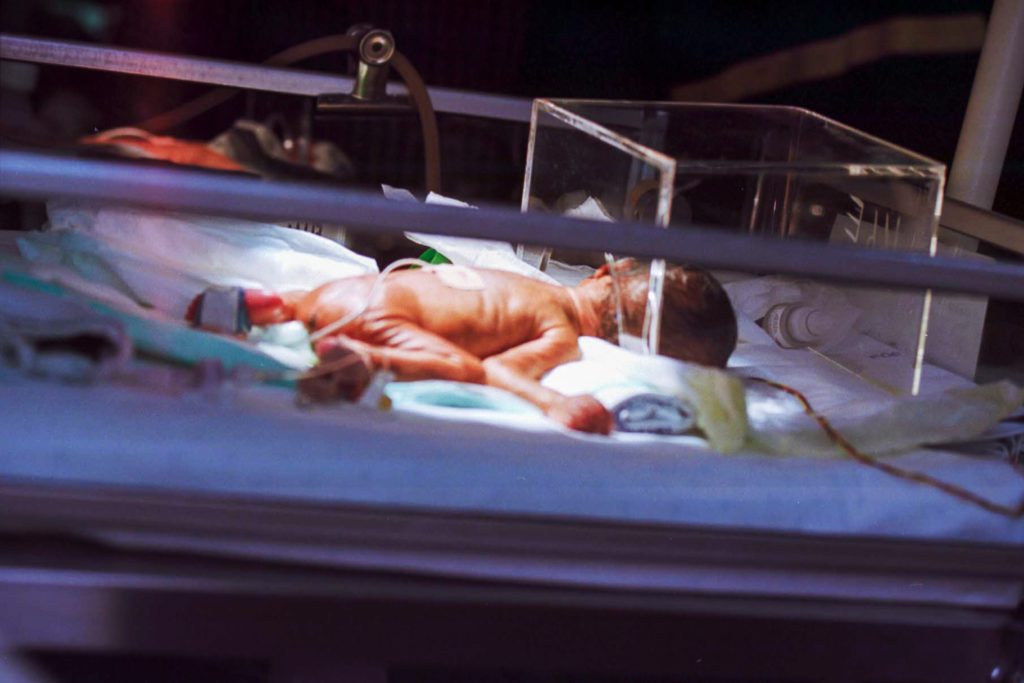
    When a preemie is born so early that he needs to have care in NICU, the stress and trauma can cause PTSD in parents.
    But in the case of the sudden diagnosis of a life-threatening illness, the focus is on the ill child. And the parent is left to try to cope with shock, fear, anxiety… maybe depression…and probably denial, too.

    PTSD in parents can be crippling.

    Studies conducted about this type of situation have shown that the parents have certain needs above all others. 

    If Your Child is Diagnosed with a Life-Threatening Illness

    First, you need to have clear and accurate information about your child’s condition and prognosis. You may or may not be ready to grasp what the doctor tells you the first time you hear it. For this reason you need to have the opportunity to see the doctor at least once a day if your child is in the hospital (or at least very frequently if he or she is not). If the prognosis is poor, you probably need several visits each day. There is just so much to take in.

    Second, you need to have privacy to hear this information, to discuss decisions, ask questions, and to grieve.

    Third, you need emotional support. You need your child’s doctor to be compassionate, to listen for a few minutes. You also probably need a specific staff member — a doctor, nurse, social worker, or someone else who really knows — help you consider options, and show they care.

    Fourth, and this is specific to situations where the child dies, you need to be able to hold and comfort your child in the final hours of his or her life. There comes a point when heroics need to be set aside to make way for grief, comfort, and goodbyes.

    By reading articles like this one, you can gain a clearer idea of parents’ needs if you or a loved one ever faces such a situation like this. And by becoming familiar with what those needs are, you can help another parent — or you will understand better what you need to ask for yourself.

    A number of studies have followed parents at the bedside of a critically-ill child to learn more about their needs, as well as their psychological reactions to their child facing this scenario. 

    And it turns out that these parents are so deeply affected by this threat to their child’s life that they often suffer symptoms that are in line with the symptoms of PTSD. 

    PTSD in parents after a traumatic illness in their child can lead to PTSD

    So let’s say your child nearly drowned, or was badly burned, or developed meningitis, or was in ICU with the new diagnosis of Type 1 diabetes, your reactions would be similar in all these scenarios… intense and difficult to relieve.

    Faced with the heartbreaking gravity of your child’s condition, you may be plunged into shock. Numbness. Dread.

    It may be difficult for hospital staff or family to effectively communicate with you because of your state of mind. You may have to ask several times for your child’s doctor to reiterate the current status of your child’s condition…until you “get it.”

    Because it’s not uncommon for a doctor to explain a poor prognosis for a child, and the parent to respond by saying, “So you’re saying she’ll be OK when she goes home?”

    Why does this happen?

    Because you’re in shock, and with it, denial. You’re human and “reality” as you know it has taken a sudden left turn. It may even have come to a crashing halt. You need time, support, privacy, and patience to catch up with what’s going on.

    At the same time, while you’re going through all this, your child is also suffering. Your instincts are telling you that she needs you. That she needs your comfort. And you want to provide that with everything in your being.

    PTSD in parents can cause them great anxiety and even panic attacks.

    But the accumulation of the astounding turn of events, the devastating prognosis, the enormous amount of information you’re trying to sort through and grasp…well all of it together can be tremendously overwhelming.

    You may find the doctors will repeat the same things to you each time they see you — to be sure you grasp it all and can move forward with decisions.

    Many parents in this situation may begin to show symptoms of post-traumatic-stress-disorder weeks or months after their child has recovered and is discharged from the hospital…or …after their child has died.

    These may include things like numbness, as we mentioned before, as well as denial. You might find yourself going over and over in your mind the string of events that led to this. 

    They may also find they avoid being near places that remind them of their child’s traumatic illness, or speaking of anything that might remind them of the pain their child suffered.

    And the nightmares. Reliving the experience in your sleep, trying to do something to prevent it. Or reliving it to the worst possible outcome.

    The misery, the trembling, the weeping…the headaches, stomach upset, even ulcers. And anxiety that escalates to panic, with such a pounding, fast heart rate, you wonder if you’re going to die.

    The initial shock of the diagnosis, and the intrusive medical treatments that follow — all may serve to drive you into a state of real PTSD.

    How You Can Increase Your Resilience

    PTSD in parents can reduce resilience in their child, but resilience in parents models it for their children.

    Can you prepare for a crisis like this? As a parent, you probably would like to so you can be sure to function at your best in such a difficult time.

    But, as we’ve talked about before, the impact all these stressors have on you is more determined by your own personal resilience, and less about your educational preparation for crisis in general.

    So how do you develop resilience? 

    By adapting.  

    How do you look at crises? Do you feel the very fact that you’re faced with a crisis is traumatic? Do you perceive yourself as a victim who’s been singled out to suffer? Are you overwhelmed with the unfairness of it all?

    This is important: There’s no wrong answer to these questions…only your answer. And what you learn from it.

    When you look at life as a series of mountains to be climbed, and you’re ready for the challenge, you’re less likely to be overwhelmed by crises when they come. When a crisis brings out your toolbox of problem-solving methods, you’re most likely to adapt and resolve the crisis.

    On the other hand…if you face each crisis you encounter in life as another problem to be resolved… Then you go into each crisis with a little extra strength, a bit more armor against the attack. 

    But if you view yourself as an innocent victim who didn’t deserve this difficulty, you’re more likely to be crushed by the situation. The key is in the way you think about yourself and the situation around you.

    So while you can’t prepare yourself for every inevitability, you can train yourself to adapt and seek solutions to every obstacle in life. You can train yourself to recognize that life is full of challenges for everyone, and obstacles can be taken in stride.

    Doing so over time may not make you immune to trauma during a life-threatening illness in your child, because a crisis of that magnitude can be overwhelming to anyone.

    But it can help you feel more equipped to navigate those waters until the seas calm again.

    Still, if you work on your attitude and outlook and still find yourself experiencing PTSD symptoms, that could be because of your genetic vulnerability if you are traumatized.

    We have patients at Innovative Psychiatry who fall into this category. And sometimes, the PTSD is stubborn, and difficult to relieve. PTSD in parents magnifies a family’s calamity.

    In fact, some patients who’ve been un-helped by medication and therapy for PTSD, consider ketamine treatment and enjoy remarkable relief.

    So understand that PTSD is not a failure to be resilient…or a failure of attitude. That’s just not the case. But sometimes those who work to remove the “victim” mentality from their outlook are less affected by a terrible life crisis than someone who has not done the same work in their thinking through therapy.

    When the crisis is past, and you can relax from the emergency, seek counseling since PTSD in parents can cause more problems for you in the future.

    Our hope is that you’ll be as healthy and resilient as you can be, and that your life will be an ongoing opportunity to learn about yourself, and the world around you. Seek out the lessons in each experience. This will help you become adaptable and strong.

    Because adaptability gives rise to the strength of resilience.

    Lori Calabrese, MD offers innovative psychiatric treatment like IV Ketamine

    To the emerging of your best self,
    Lori Calabrese, M.D.

  • Ketamine Treatment and the Science of Joy

    Ketamine Treatment and the Science of Joy

    Science of joy resonates with your remission.

    Do you trudge or dance ?

    Trudging through life isn’t reserved for only the sick, the suffering, and the poverty-stricken.  On some level, trudging is part of the routine of daily living for many. Certainly, it isn’t the sentence for every human. But why? Could the reason be hidden in the science of joy…?

    Or is it because those privileged with wealth and fame are spared the drudgery of a mundane routine, bad weather, or a car that won’t start?

    Let’s talk about the differences between those who trudge and those who dance through life. Is joy the result of near-perfect surroundings?  Is it an abundance of happiness? 

    Beautiful flowers blooming.

    Or is joy the result of nurturing a garden in your psyche and soul that pays off in dividends of fragrance, beauty, patience, and the aromatic blossoming of inner joy?

    For the last 4 weeks, we talked about ways to remodel the infrastructure of your mindset, your outlook, and your attitude. Our purpose has been to show you the potential for developing an atmosphere in your thought life that nurtures your remission after ketamine treatment, and gives you the rich soil you need to grow a healthy and peace-cultivating way of thinking.

    Letting Go, Then Facing Your Truth, Sets You Free

    When you let go of those things that you’ve held onto that have been obstacles to your wellbeing, you give yourself the gift of freedom from addictions, freedom from bitterness, freedom from rage that drives reactions inside you that can enslave you. You give yourself the gift of new options as you move forward in life.

    Sometimes in the process of letting go of those things that have been destructive to your wellbeing, you find yourself against a wall that you don’t know how to penetrate. We talked about facing the truth about situations you haven’t wanted to face. You may have been defending yourself in your mind, and running active arguments through your mind to defend that thing you haven’t faced.  

    A beautiful bloom like this one is fragrant and  amazing.
    Then you can open yourself to the possibility that maybe you were actually wrong, or that you share the responsibility, and you can face and accept that. Telling that person you’ve been in conflict with that you know you were wrong, and asking forgiveness, can lift such a burden of shame and blame off you, and let you enjoy peace within yourself, and with others. 

    It doesn’t matter that you know their actions were terribly wrong and caused damage. That’s their responsibility. But you’ve evicted that guilt, resentment, and denial from your mind and heart. And the place it occupied is now filled with peace.

    “Persisting” Leads to a Life of Peace and Kindness

    Once you know you have nothing to prove, and you enjoy the relief and freedom that brings, you’re equipped to face the next item in your life that surfaces and go through that same process to find peace, once again.

    You then learn that this is a way of life, and you can grow in peace and freedom by persisting in this process with each issue that arises within you. 

    You’re on a mission to set yourself free. And it’s working.

    Then LOVE follows. Your process, your system for recovery, leads you to treat yourself with love, and that flows to others in kindness. Your former short-tempered, impatient, self-focused self becomes more focused on others and helping them find peace, too. And your personality begins to mold around the kindness that dominates in your interactions with others.

    This process repeated over and over, reduces  your stress and strengthens your resilience … and all those gut knots that had been your constant companions in life relax and dissipate…  

    The Science of joy shows you how to make your heart explode with hope.

    And you begin to notice that joy bubbles up from within. 

    So let’s talk about the anatomy of that joy.

    What Is the Science of Joy?

    Is it about happiness? Well, joy can make you smile like happiness can, but it’s based on different things. 

    Happiness is centered on “happenstance” …or basically when circumstances align with what you want. Maybe you’ve worked hard for that job, and maybe you got the promotion. Or maybe you were able to buy a car, after having to rely on the bus for the last 3 years.  And just maybe… that gorgeous woman you met online finally agreed to meet you for coffee.

    Science of joy helps you to be stable through tough times.

    All of these things are good. And they present themselves as solutions to one problem or another. But the problem with happiness is that it is limited to your circumstances being a certain way that pleases you.

    Now, the problem with life is that circumstances may line up with your desires from time to time, but then they change, don’t they? Happenstance, as such, is fickle. One day everything is just like you want it, and the next, well your world has been turned upside down. 

    You got passed up for the promotion after all. Someone ran a stop sign and your new car is wrecked. That gorgeous woman turned out to be a liar and a witch.

    If that upsets your happy outlook, then you’re only happy when things go your way.

    So there has to be something that comes from a deeper place—something that remains stable no matter which way the wind blows or the direction your boat floats.

    It needs to be something that emerges from deep inside you, even when times are hard, and tells you everything is going to be alright. Something that fuels optimism in a storm.

    It’s joy. Joy transcends circumstances. And it’s not based on you getting what you want.

    Hmmm……you’re saying. What’s this?

    Joy In Your Heart In Tough Times

    Remember how we talked about giving of ourselves and the kindness that naturally follows? Well, this is also where joy comes in. While happiness is based on circumstances, joy flourishes as a product of transcending those circumstances. 

    Let’s say that again:

    The Science of Joy teaches you that joy flourishes as a product of transcending your circumstances.

    In fact, joy comes from giving to someone to the point of your own personal sacrifice, and from seeing that person gain freedom and joy, too.  

    Joy also arises from your gratitude. 

    Researchers have found that humans tend to focus more on negative experiences than positive ones. Even though we may have many times more positive experiences in a given 24 hour period, it’s the negative one that can ruin our day. That is, if we let it.

    One thing people tend to do is to miss the chance to focus on the things that are good in their lives. And … after awhile … they don’t notice them at all.  

    The science of joy helps people find meaning in their lives.

    This is where the attitude of gratitude comes in. A compelling component in the science of joy. One study showed that people who make a list each morning of all the things they’re grateful for, are healthier physically and psychologically, more successful, and happier. They’re less materialistic and envious, and more generous in giving to others.

    Happiness vs. Joy

    What is the opposite of happiness?  Unhappiness. 

    Hmmm.

    What is the opposite of joy?  Depression.

    This girl is jumping for joy!

    And what is a telltale sign that you’re in remission after ketamine treatment?  Joy. And HOPE.

    So it stands to reason that to maintain a joyous heart is to build a sort of insurance policy against depression. To rise in your aspirations higher than material gain, personal pleasure, or the attention that comes from achievement…well, it’s liberating. Then, to transcend your own desires, and rather reach beyond yourself to help someone else find fulfillment — that results in joy.

    And because that joy is not dependent on you having what you want, it lasts. 

    And fuels your mind and heart with passion that motivates you to make the world a better place, one person at a time.

    Mother Teresa and Your Family

    Science of Joy fills you with light as you care for others who need help.

    Mother Teresa knew all about joy. She said, “Help one person at a time and start with the person nearest you…”  and “..If you want to change the world, go home and love your family.”

    For the most part, it’s safe to say that what you need is to be freed from making yourself  happy. The science of joy, in a nutshell.

    It might be interesting to write down all the things you think you want, and the stressors subtly associated with each one. 

    Like, the car payment you’d have to make every month, keeping it clean, paying for gasoline, changing the oil, paying for new tires, and the list goes on…

    Then, think about the needs you see around you. Your parents? Maybe your spouse? Certainly your children…and maybe your neighbor or co-worker. Sometimes your presence is the greatest gift of all.

    The science of joy includes simplifying your life. To free up your time and resources for a more rewarding way to live.

    Sharing Your Joy

    A researcher at Brigham Young University, Nathaniel Lambert, conducted a recent study that showed that when you share your positive experiences and the things you’re grateful for, it leads to heightened wellbeing, more energy, and better overall satisfaction in life.

    Isn’t that amazing?? Practicing the very thing that supercharges your joy makes your life BETTER!!

    The science of joy is the outpouring from rebuilding your personal infrastructure.

    When you take a step back and really think about all these aspects of joy, you gotta start to wonder if we all just need to make a major shift in what motivates us.  Because when you’re motivated to please yourself, it leads to all sorts of obstacles to your peace.

    But when you follow the path of joy, everything seems to fall into place.

    And that’s the science of joy.

    These are the keys to building an infrastructure to help your remission thrive…  but if you haven’t received ketamine treatment yet, you may want to talk about it with us.

    Ketamine treatment is particularly effective if you’ve had depression but haven’t been helped by at least two different medications. Ketamine is effective even with the most severe cases of depression, bipolar depression, suicidal thinking, and PTSD. There is new and exciting work on its effectiveness with addictions, OCD, and social anxiety. There is early work that studied it in eating disorders.

    But the most exciting work with ketamine centers on using it to stop suicidal ideation. To stop suicidal thinking. And to avoid going to the ER. To avoid getting hospitalized. Put simply, to stop the suffering.

    What a game changer.

    And the remarkable thing about suicidal thinking is that ketamine can erase those thoughts fast – in less than an hour.

    The science of joy teaches us to focus on helping others to cultivate joy in ourselves.

    Reach out to us, or have your doctor get in touch with us. We love working with the doctors who already know you and take care of you so that we can create your best outcome.

    If you think ketamine treatment might be right for you, call us.  Let’s talk about whether you’re a candidate for ketamine treatment.

    No other medication has offered such extraordinary outcomes to so many people. Our joy is helping you get better…  really better. 

    Lori Calabrese, MD offers innovative psychiatric treatment like IV Ketamine

    To the healing and restoration of your best self,

    Lori Calabrese, MD

  • Johnson & Johnson’s nasal spray for depression wins FDA panel backing

    Johnson & Johnson’s nasal spray for depression wins FDA panel backing

    (Reuters) – An advisory panel to the U.S. Food and Drug Administration on Tuesday voted in favor of Johnson & Johnson’s experimental nasal spray, which has a compound similar to often-abused ketamine, bringing the drug closer to approval.

    The panel voted 14-2 in favor of the drug esketamine, developed to treat major depression in patients who have not benefited from at least two different therapies, saying its benefits outweighed the risks. One panel member abstained from voting.

    Esketamine is a chemical mirror image of anesthetic ketamine, which is also abused as a recreational party drug and goes by the street nickname “Special K”.

    “I think esketamine has the potential to be a game-changer in the treatment of depression … I use the term potential because the issues of cost and patient accessibility need to be addressed,” said Walter Dunn, who voted in favor of approval.

    However, the panel members echoed concerns raised by FDA staffers on Friday regarding the increased risk of sedation, dissociation and higher blood pressure observed in the study.

    The FDA recommended implementing a risk evaluation and mitigation strategy (REMS) program which included ensuring esketamine is only dispensed and administered under supervision.

    “Ketamine is a nasty drug … should (J&J’s) drug get approved, I think a strong effort has to be given as part of REMS … so that patients really know what they are getting themselves into,” said Steven Meisel, another member who voted ‘yes’.

    Major depressive disorder affects over 300 million people globally. About 30 percent to 40 percent of these patients fail to respond to first-line treatments such as antidepressants, most of which take at least four weeks to show effect.

    However, depression is a tricky area of development. Patients in clinical trials often show a big placebo response, masking the efficacy of the drug being tested.

    Currently, Eli Lilly and Co’s Symbyax is the only FDA-approved drug for treatment-resistant depression.

    “There is a lot of potential for people that just want that quick fix. I really would be cautious,” said Kim Witczak, a panel member who voted ‘no’.

    J&J’s esketamine, used in combination with a newly prescribed antidepressant, works by restoring the nerve cell connections in the brain, leading to an improvement in depression symptoms.

    The FDA, although not mandated to follow the panel’s recommendation, is expected to announce its decision on esketamine by March 4.

  • Building Infrastructure: Love Heals – and Kindness Matters – as You Make a Difference in This World

    Building Infrastructure: Love Heals – and Kindness Matters – as You Make a Difference in This World

    Building infrastructure: love heals and kindness matters.

    Live your life in a way that creates inspiration – and leave a legacy of restoration in your wake.

    We’ve been talking about how ketamine treatment can help you reach remission, and how your frame of mind, attitude, and the way you react to frustration and hurt can either support your new-found remission, or sabotage it. Remission gives you the opportunity to build change in yourself, to build stronger relationships, and to reduce strain. As you build upon the principles we’ve already talked about, you might consider adding this key secret to your edifice of peaceful strength: When you’re building your infrastructure, love heals and kindness matters.

    And learning how to apply these powerful elements to your life will not only help you heal and help you love yourself, but it will help you leave a legacy of hope for others and make a real difference in the world, too.

    Some of these changes in attitude and reactions are ways to lower your own inner stress and make your own peace.

    We’re talking about your recovery after you’ve received your ketamine treatment. And… We’re talking about building the infrastructure in your mind and life that will enhance your peace and support your new remission.

    Which brings up another point. If you have not had ketamine treatment, or if you’re deep in the throes of depression, fatigue, despair, and anxiety, please don’t think that our statements about love and its healing dismiss your suffering. We know suffering. And we don’t judge.

    Illness is illness. And you need effective treatment. We’ve said this before … that no matter how much treatment you’ve received, if you don’t feel better it’s the same as if you were untreated. And you need to keep seeking solutions.

    So, if you’re not receiving effective treatment, getting it is the first step. That’s where improvement begins and how remission gets a jump-start.

    There are novel and advanced options that can help you really begin to recover from this illness. Ketamine treatment, transcranial magnetic stimulation (TMS), and other treatments here and in the pipeline. Don’t expect so much from yourself that an article like this one seems insurmountable and overwhelming to you.

    Give yourself a break…ok? And focus on getting well with one of the advanced treatments available like a ketamine infusion series.

    We want to help you get better. Until then, your wellbeing remains the goal.

    But after you’ve received effective treatment, and you’re experiencing joy and motivation…even hope (I know, right?)… for the first time in years, then your next step is to intentionally work to build your personal infrastructure. That underpinning that helps your life move forward smoothly and with peace.

    And if you’ve achieved remission, and want to do the work to build that framework of peace and calm, love and kindness… then follow the advice in the last four of our most recent blog articles to get you started. We’re on a roll to help you.

    Because you likely were not building warmth and love while you were ill. It takes a lot of energy to do that, and you may not have had the energy to give to others while you were suffering yourself. In fact, you may have been withdrawn and a bit irritable. Why? Because you felt so crummy.

    Depression and anxiety can lead to a short temper, impatience, intolerance, and harshness. However, when you use the neuroplasticity ketamine gives to work with your therapist… and look at yourself to make the changes you want to make, you can generate a serene outlook and reverse the tension we all tend to create by hiding conflicts from ourselves and others.

    Everybody needs a group of trusted friends.

    Building infrastructure: love heals and kindness matters for living in peace after ketamine treatment.

    Everyone needs a hearth, a home, some sort of sanctuary where you can trust the people there to love you as you are and inspire you to live as your best self. Where you know you’re loved, and where your love is received and appreciated.  Where you can trust the truthful feedback and use it to grow. Home is supposed to be like this…  but too often, it’s not. 

    Don’t worry if you don’t have family and friends like this now. You may be amazed how your world changes as you change. Be a friend to those who are in your life, and you may be amazed at the deeply caring, valuable friends who are drawn to you. The kind you can trust with your deepest secret who will listen and support you no matter what onslaughts may come your way.

    Building Infrastructure? Love Heals… and Kindness Matters, too

    For you, it might be one or two friends who know you well. And love you. And know your fallibility as well as their own. People who are exquisitely grateful for the friendship the three of you share, and treat it with reverence and respect.

    Building infrastructure: love heals and kindness matters.

    Friends like these can help you heal, help you let go, lovingly hold you accountable to persistence in your walk of better living… spirit, soul, and body.

    And you’ll help them heal, hold them accountable, and keep them wrapped in love, too.

    The fact is it’s hard to heal without love. Whether the love you receive is face-to-face with family or friend, on a commuter train, at the checkout when you buy groceries… at church, or with co-workers… even on facebook….

    But here’s what’s important. Not only do you need to be wrapped in an atmosphere of love, so does everyone else. And especially those who’ve been shattered, abused, wounded, and damaged.  Those who feel lost and broken.

    As you experience the relief ketamine treatment provides, you’ll have the opportunity to find ways to give back. Just as you’ve been loved, supported, and helped, you can offer love, support, and help to others who are not as whole as you are yet.

    Building infrastructure: love heals and kindness matters for creating peace.

    You can be the one to listen, to embrace, to help find solutions; to work to get the solutions to more of those who need them. 

    And when you do, don’t be surprised when love for those who are suffering swells in you. Because love is not only the most powerful force in the universe, it’s a communicable force. You can catch it, and others can catch it from you. Every time you give it away, more of it explodes inside you. And around you.

    Becca Stevens was a child who was forced into sexual abuse at the age of 5, after the death of her father. With her family in crisis over his death, her mom desperately lonely, an unseemly man came into Becca’s young life. He continued using her, abusing her, for four years. She hated it, but didn’t know what to say or who to talk to. She was overwhelmed. And she endured. She was a young child.

    After she grew up, she studied for the Episcopal priesthood at Vanderbilt Divinity School. Once she became a priest, she sought to help other women who have been used, abused, and damaged by others. This ministry came to be known as Thistle Farms.

    Fast forward twenty years to now, and there are Thistle Farms outposts in five countries and across the US. It consists of women who have been damaged, abused, mistreated, and addicted, who need a safe place to heal, grow, and rebuild their lives.

    Since many have been convicted of felonies, Thistle Farms also markets handmade bath and body products, as well as candles, that they sell through 500 stores. These products help these women to get on their feet, pay off debt, buy a car or a home, and find purpose in their lives. 

    There are no authority figures in these homes. Only the women themselves who recover and grow, then mentor those who come behind them.

    Becca’s story is an example of healing, recovering, then finding purpose in giving back. 

    And you can, too.

    In partnership with the loving and healing is the kindness that automatically takes root in your life. As you feel more whole, and experience the almost miraculous remission and recovery that follows, plus the hope and energy to live again, you will have experience and love to give to others who need it like you once did. 

    Kindness Matters

    Letting go of the sick and broken self, and embracing your more whole self, will likely give you the energy to be patient. To love and help restore the next person you meet. And as you do that…putting their need over and above your convenience… a seed of love sprouts inside you. Each time you give, it grows bigger and fuller. As you fill with love, you have more love to give, and the more you give the more patient and kind you can be. 

    Building infrastructure: love heals and kindness matters.
    And in generously giving away patience, kindness, support, and help, you find you like who you’re becoming. That impatient hurting person who snapped heads off before is now kinder, warmer, and more understanding.

    Does this nurture your remission? Absolutely!  Will it positively prevent relapse?  Nothing can do that at this point. But your chances of maintaining your remission go much higher when you let go of stress and replace it with love and kindness.

    And guess what?  Other things that are driven by stress like high blood pressure, asthma, heart disease… well, reducing your stress radically may reduce your symptoms of these other conditions, too.

    So ask yourself… when you go to the grocery store, does the clerk’s kindness matter to you ?  If you’re anything like me, it matters a lot. So would you guess that your kindness matters to her, too?  Of course it does.

    Love Heals and Kindness Matters… So Don’t Give Up

    Apply both in your life and to the lives of those you care about – as well as those who cross your path. Just as others may have been harsh with you when you were so ill for so long, so now those you meet may be ill, too. You have the power to make their day a bit better now.

    A friend of mine used to say that she dumped darkness on anyone in her path during her 8 year depression. Since her ketamine treatment she now says it’s her turn to spread light on everyone she meets. And she can smile from ear to ear! How dazzling to see her face light up!

    You never know what someone has been through right before you make contact with them. So treat everyone with kindness to make their day easier, and to make you stronger. 

    And like Becca Stevens, the day just may come when you find yourself the leader in bringing joy and love into the lives of others in your world. And you may help them change their world, too.

    Maybe You Haven’t Received Ketamine Treatment Yet…

    If you’re thinking you might be interested in ketamine treatment, and that you’d like the chance to experience remission and recovery… it probably means you’ve endured many trials with medicines that didn’t help.

    We know how hard that is… to keep swallowing pills day after day for weeks or months without getting any benefits at all. In doing so you’ve certainly shown your determination. You need your hope to be rewarded.

    We’d like to help with that.

    Building infrastructure: love heals and kindness matters to create peace within.

    We see people walk out of our office every week after ketamine treatment. We see them rejuvenated, hopeful, and relieved. Read the other blog articles linked here to help you understand more about how this treatment works, then call us.

    Ketamine doesn’t make everyone well, but it’s extraordinary in its effects in most cases.  Find out how you can enjoy life in wonderful ways you may have forgotten about.

    To the rebuilding of your best self, 

    Lori Calabrese, MD offers innovative psychiatric treatment like IV Ketamine

    Lori Calabrese, M.D.

error: Content is protected !!