Tag: Ketamine Treatment for Suicidal Thoughts

  • Ketamine In A Pandemic: New Depression and Anxiety Can Strike Anyone

    Ketamine In A Pandemic: New Depression and Anxiety Can Strike Anyone

    The sky grew darker as clouds morphed from white to gray, and created a solid ceiling over the city.

    It had rained off and on for days, and thunderstorms had filled the night skies with a threatening latticework of lightening. In an aggressive assault on the grayness, Evie stepped back from the window and decided to turn all the lights on. The quiet in her bungalow, the gray skies, and the silence felt like a blanket that she couldn’t seem to shake off. She turned on music and tried to dance around the living room, but that didn’t last. There had to be a way to ward off this expanding gloom. She’d heard about ketamine in a pandemic, because these symptoms can strike anyone…even if they’d never had them before. Could that be what’s going on?

    Dread crept up inside her, and she couldn’t understand why. Where was this coming from? She didn’t object to this isolation. It had given her the excuse to read more, which she’d salivated to do for years. She enjoyed her own company.

    So where was the dread coming from?

    It was as if things she normally would do as part of her routine just seemed too hard to do lately.

    A heaviness grew darker and heavier in her chest..?  Her stomach…?  What was it?
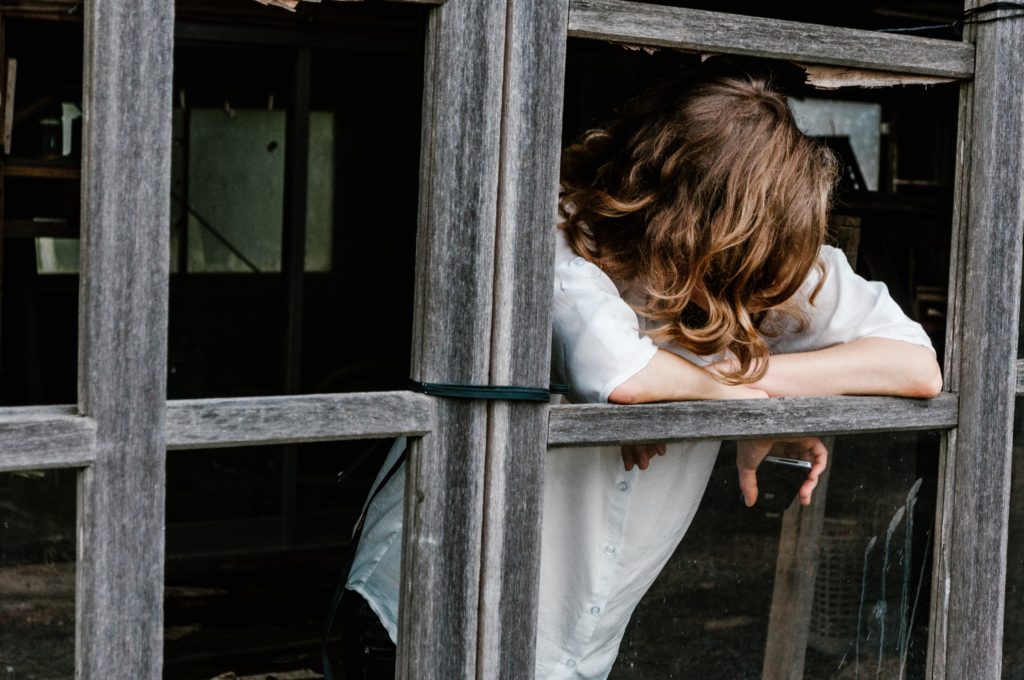
    Evie had always prided herself in her ability to snap back from disappointment, to face fearful situations and push through them. She just lived with her sleeves rolled up, ready to take on whatever life tossed her way.

    Her younger brother had never been so resilient. And unfortunately, she hadn’t been very supportive.  She just had never understood why he wouldn’t just shake it off. Call a friend, pitch in and help someone in need, walk in the sunshine…and get over it! 

    Now…she was eating her words.

    Isolation and Even Social Distancing Take a Toll on Your Emotions

    She strained her brain to understand what was causing this. Internet articles pointed out that being cooped up this for weeks or months was affecting people in a negative way. 

    But Evie liked being alone. She loved the quiet. The uninterrupted freedom to do what she enjoyed.

    And these articles also talked about fear. People were afraid. Sales of guns had skyrocketed, and ammo was sold out and on back order, as people have bought up more and more.

    She had to admit to herself…that THAT was scary. All sorts of people armed against unknown dangers…

    But seriously. She wasn’t afraid of looters or invasions.

    It seemed clear to her that it was just a matter of waiting this out.

    Ketamine in a Pandemic Can Relieve Anxiety and Depression in Someone Who’s Never Had It Before

    So what was wrong with her?? Why was she lying in bed and reading all day every day? Things had piled up. Her garden needed weeding. But the idea of doing it was overwhelming.

    Motivation, initiative… it seemed to have drained out of some proverbial hole in her bucket.

    When a knock came on her door…Evie didn’t answer it. She just stayed quiet and waited for whoever it was to go away. The same with her phone. She didn’t want to talk…not to anyone. 

    She remembered a few months ago, when she saw a map of the world that depicted the incidence of this COVID-19 virus in countries around the world. She was stunned to see how every country seemed to be red. The entire world!

    So if she had thought she could just get out of town and wait for this to blow over, she was fooling herself. There was no escape on the planet.

    Maybe that shock started this…this feeling of dread…

    Large Scale Change Increases Stress

    Then they closed the schools and restaurants and businesses. Then required mask wearing.

    You know that feeling that “it will never happen to me”…?  But this thing has happened to everyone. Everywhere.

    So was the dread from feeling trapped?  Evie thought about that. It might be the case with some people, but how could she feel trapped all snugged up in our home she loved doing things she enjoyed?

    She didn’t know what was wrong with her or what specifically caused it. She did know that she wasn’t herself. There had to be some serious thinking about her brother and so many others who suffer from symptoms like this. Who really couldn’t shake it off, like she couldn’t now.

    And she acknowledged it was a difficult place to be. That her brother had been very brave all these years to keep fighting to function when medication and therapy didn’t work for him. 

    She’d read enough to know that many people were being affected by these circumstances. Some, like Evie, had never felt this way before. 

    She promised herself she’d call a doctor to see if she could get treatment — as soon as she could scrape up the initiative to do it.

    Evie’s not alone, is she? 

    And this is why telepsychiatry has been so vital through these months. A new flood of people who never needed psychiatric treatment before have emerged…and need treatment.

    Ketamine in a Pandemic: Depression and Anxiety Can Strike Anyone in These Circumstances

    Then, there are those who’ve been receiving treatment with prescriptions that now don’t seem to be working anymore. And in isolation, these people are at higher risk because they’re alone, and feeling all the things Evie feels, but often the symptoms of suicidal thoughts have been added to the mix.
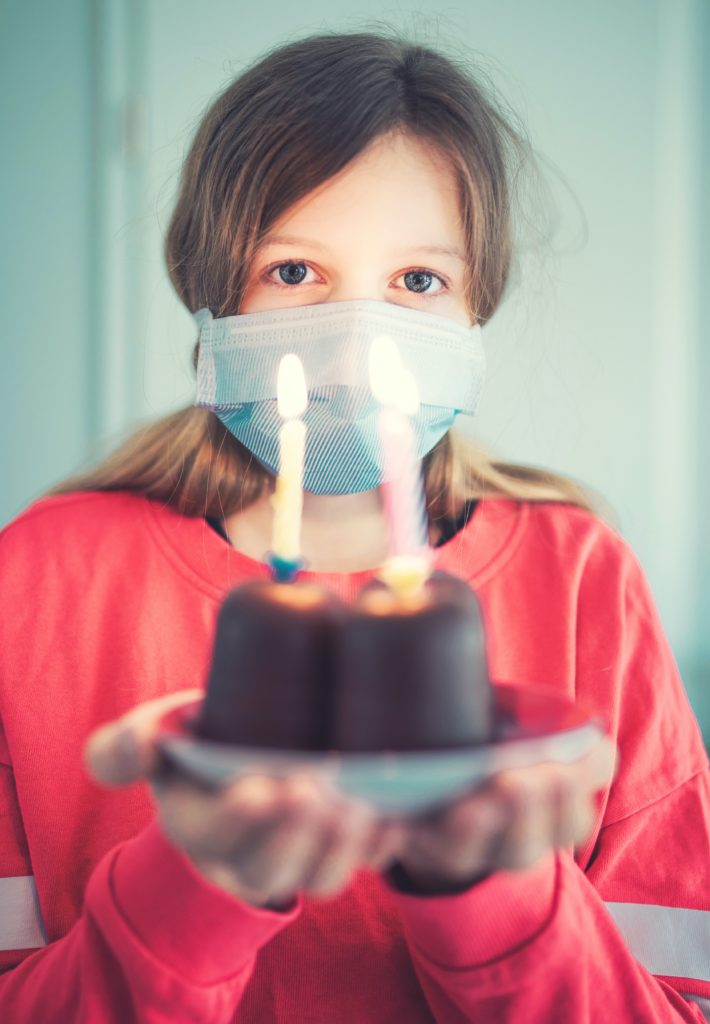
    Ketamine in a Pandemic for Depression and Anxiety Can Be A Lifesaver

    A team of medical researchers set out to try to  evaluate the psychiatric effects this global pandemic — and the restrictions that have been part of it — to better understand its impact on mental health in individuals around the world.

    They published the results of their survey.  One of the most remarkable outcomes was that 41% of adults showed they were more concerned about their increasing anxiety, than they were about their financial problems. That’s 2 in 5 adults.

    Two out of 5 in line at the grocery store. Two out of 5 in line at the gas station.

    Think about it.

    Also, 2/3 said they feel like they’ve lost control of their lives. Sound familiar?  And 56% say they find it difficult to manage their responsibilities amid this pandemic.

    So, yes.  You’re not alone. If you’ve been struggling with these things too, just recognize you’re not alone. You’re part of the “new normal.”

    Except that it doesn’t feel normal.  

    And it doesn’t mean you should keep struggling with these feelings of uncertainty, anxiety, and depression.

    Do call your doctor and talk about what you’re going through.

    And…if you’ve been taking prescription medicines, and find they aren’t helping, don’t lose hope.

    Reach out for ketamine treatment, which can restore your resilience in the face of all this. It can restore your initiative and motivation. Aren’t you glad that there is something that can help in times like these? Ketamine in a pandemic can bring remarkable relief for depression and anxiety that’s triggered by these restrictions.

    At Innovative Psychiatry, we’re providing ketamine treatment here in our office every week. We’ve instigated safety protocols that allow us to provide you the essential treatment you need to help you get through this stressful time.

    While the process of recovery from a global pandemic is more complicated and time consuming than we wish, you don’t have to live in misery. Ketamine treatment can restore your hope, your resilience, your initiative, and your confidence.

    And if hopelessness has been rising up inside you, stripping away your belief that things will ever get better, that’s a symptom. It’s not reality. And ketamine treatment can relieve those thoughts, and help you get your momentum back.

    We specialize in treating suicidal thoughts. In fact, we’ve done research which shows ketamine’s remarkable effectiveness with this symptom.

    If you suffer from the symptoms we’re talking about, call us.

    We’re here to help you find your best self again. We want you to enjoy your life and live well.

    You aren’t alone. You really aren’t.

    Reach out for help. Your best days could be just around the corner.

    To the rejuvenation of your best self,

    signature of Lori Calabrese, M.D.

    Lori Calabrese, M.D.

  • For the Depressed Mom:  Ketamine Can Restore Your Joy

    For the Depressed Mom: Ketamine Can Restore Your Joy

    “Motherhood is a choice you make everyday, to put someone else’s happiness and well-being ahead of your own, to teach the hard lessons, to do the right thing even when you’re not sure what the right thing is…and to forgive yourself, over and over again, for doing everything wrong.” – Donna Ball, author of At Home on Ladybug Farm

    Let’s talk about moms.

    Yesterday was Mother’s Day, and if you were a mom yesterday, chances are, you’re still a mom today. We could talk about all the idealistic and billowing praises that are bestowed upon moms in greeting cards, but let’s don’t. Let’s talk about what it’s really like to be one. And if you’re a depressed mom, ketamine can restore your hope, your joy, and your stamina to help your children grow. More about that in a bit.

    Motherhood Is a Handful.

    With the best of intentions, you gather your kids together and tell them you’re all going on a camping trip. Together! But….there is so much to be done before you can all load the car. So in the spirit of pitching in and working for the common good, you assign each one a task that will help shorten the prep time.

    Then you focus on your own tasks which include packing food for meals. While you’re busy in the kitchen, you hear an unusual noise.

    Closer inspection reveals that your 10 year-old son is in the bathroom (which he was supposed to be cleaning) after putting his sleeping bag  by the front door, and has filled the sink with water.

    He’s floating a little boat on the water with his pet hamster in the boat which immediately jumps out of the boat, over to the counter and jumps down under the cabinet and disappears.

    Oh dear.  

    Now there’s a loose rodent in the house. Aaaarrrgghhhhh!!

    Feel your resilience waning..? If you find out you’re a depressed mom, ketamine can restore. Keep reading…

    Your son, who got bored cleaning the bathroom, had gotten distracted with his hamster. Now how to find the hamster?

    Kids are just kids. Full of surprises. It takes a sense of humor…

    When It Rains It Pours

    Meanwhile, you stop in the boys’ room and find your 7 year-old, who was supposed to clean his room after delivering his sleeping bag to the front door,  sitting among a pile of Little Golden books. Reading. (What joy!) But apparently he had to go through the entire bookshelf of 43 Little Golden  books to find the one he wanted to read. His floor is covered with books he’s tossed.

    After sternly instructing him to pick up all his books PRONTO! you realize you better check on your 21 month-old daughter. Distractions can pile up when you’re focusing on packing 3 meals a day for 4 days and you have a houseful of active children…you didn’t notice she wandered off.

    Turns out she’s in your bedroom. At first sight, you panic. Is that blood?  Her face is covered! What happened?? 

    Upon closer inspection after snatching her up in your arms, you see that it’s not blood. It’s lipstick. Her face is so covered with the stain of it, you know she’ll be raw by the time you get it even partially off.

    Then you look at your feet.  Your favorite white leather summer bag, and your butter soft cream-colored pumps, have both been painted with lipstick to match.  

    How thoughtful. Sigh.

    The fact that that was a brand new tube of lipstick is now beside the point.

    Calamities, Crises, and Catastrophes

    Then…sniff, sniff… what is that smell…?

    You head for the kitchen, baby girl on your hip, and the kitchen and living area are in a cloud of smoke…then BEEEEEEEEEEEEEP!!!!!!    The smoke alarms.

    Run to the stove. OH NO!! The eggs you put on to boil for sandwiches have boiled dry and are burning!!! 

    Move the pan off the burner. Turn off the burner. Open windows. Gather kids and go outside for fresh air.

    You collapse into a lawn chair and watch the kids playing happily in the yard. The classic comic escapades of Calvin and Hobbes comes to mind…

    Maybe you’ll just get chicken at the drive-through…?

    Add to all of this the challenges of quarantine in a global pandemic!  There aren’t words. But you do what you have to do, don’t you?

    Motherhood is providing a listening ear, helping with Cub Scouts and Brownies, fighting fevers in the wee hours, encouraging the discouraged, instilling hope, tutoring when homework overwhelms, instructing, providing structure, instilling values, creating celebrations, stretching the budget, inspiring creativity, keeping idle hands occupied, teaching self-reliance, comforting broken hearts, and so much more.

    And this is when you’re healthy, resilient, and stable.

    But what about when you’re not?

    What about when anxiety makes it impossible for you to participate in sports with your child, or Cub Scouts, Brownies, or Blue Birds? 

    The sheer dread you feel about leaving the house to take your child to these activities and interact with the parents makes it so difficult that you may make it a time or two, but eventually the energy required to push through all that dread and fear leads to missing meetings and practices…if not abandoning it altogether.

    To the Depressed Mom: Ketamine Can Restore Your Hope

    Then there’s the guilt you feel for failing to give your child every advantage.

    What about when PTSD creates such traumatic responses in you that you just can’t leave the house, and find your reactions are terrorizing your children…but you can’t make it stop..?  

    If you’re a mom with PTSD…or a depressed mom… ketamine can restore your resilience and your hope.

    A simple pat on the back when you attend a gathering, or a loud noise in the kitchen…even the deep voice of a stranger… can send you into such terror, sweating, and reactions that, you know, you just feel safer at home.

    Or when you just can’t get out of bed… so you get the children to watch TV, because you know at least they’re safe, but it nags at you because you know this isn’t a healthy, carefree way to spend childhood.

    But it’s the best you can do. 

    If you struggle with symptoms like these, and they interfere with the mom you want to be…and if the medicines prescribed by your doctor haven’t helped…  there’s hope.

    When you’re a depressed mom, ketamine can restore your joy.

    Ketamine treatment consists of 6 infusions, give or take, over the course of 2-3 weeks. It’s, hands down, the most effective, innovative treatment for severe depression, social anxiety, PTSD, bipolar depression, and alcohol use disorder.

    If you’ve been seeing your doctor and the medicines she’s prescribed have worked to reduce your symptoms, then you’re all set. 

    But did you know that at least a third of people who have these symptoms are not helped at all by prescription medicines?

    That’s where ketamine treatment comes in. It works in the brain in ways these prescribed medications don’t. And its remarkable, even extraordinary, and robust relief is transformative for most of those who receive it.

    Ketamine works in multiple ways and in multiple areas in the brain. And it’s fast. So, instead of having to wait weeks or months for a prescription to help you feel better, with ketamine treatment you can feel better in hours or days.

    Ketamine turns on mRNA so it will turn on DNA to turboboost BDNF — brain derived neurotrophic factor — that works like a rich compost to trigger the rapid and prolific growth of dendrites and dendritic spines in the neurons in your brain.

    This multiplies the synapse connections fast to send signals across your brain, and wake up your emotions. Creativity blooms, quick thinking, solid decision making, initiative, motivation, hope…and joy all come to life and transform your outlook and your productivity.

    And you can love life again. 

    You Don’t Have to Endure Suicidal Thoughts…You Really Don’t

    In addition, if you’ve been plagued by suicidal thoughts, it can stop those thoughts in a few hours. Then you can be free to invest in restoring your life, rebuilding your thoughts and infrastructure, and restructuring and strengthening your relationships.

    It may sound too good to be true…but if you’re a depressed mom, ketamine can restore the real you, the person who has dreams for yourself and your children, and wants to have the resilience to help them fulfill their dreams.

    At Innovative Psychiatry, we enjoy the privilege of watching people walk out with fresh joy and hope every week.

    If you’ve struggled with the kinds of symptoms we’ve talked about here, and medicines haven’t helped, call us.

    We’re here to help you live well again, to find your joy in life again.

    Ketamine doesn’t do this for every single person who receives it –of course not!– because there isn’t any medicine or treatment that helps everyone. But it does amazing things for most. There’s no other treatment currently available that brings relief and restoration so quickly for so many who are so symptomatic — in the privacy of a beautiful office, beginning that afternoon . . .

    Discouraged, Depressed Mom? Ketamine Can Restore Your Resilience

    You can sing again, experience joy welling up inside you, laugh with your children, and all the things you have wished you could do.

    Give yourself the opportunity to feel truly better. Spend this year enjoying your life and your family. We can help you get there.

    To the blooming of your best self, 

    signature of Lori Calabrese, M.D.

    Lori Calabrese, M.D.

  • Coping with Anticipatory Grief in the Covid-19 Crisis

    Coping with Anticipatory Grief in the Covid-19 Crisis

    Jocelyn and her friends missed their interaction on Friday nights after a week of work.

    They’d meet somewhere and have dinner and talk about work, their plans for the weekend, the people they knew, and their hopes for the future. But since the COVID-19 crisis, they worked from home and Friday was just another day.  So they decided to have a meet-up online. Jack set up a zoom meeting so they could all see each other, and it commenced Friday night at 7pm like they’d always done before. They ate their dinner in front of their laptops and chatted about this and that, vented about isolation, about technical problems when all work had to take place online, and family frustrations. And they talked about the horrid emotions they felt. The idea that millions were expected to get sick and die. Scott, a therapist, mentioned ways of coping with anticipatory grief. Someone else said, “Wha..??” Jack said, “What the heck is anticipatory grief??”

    Scott went on to explain that horrid feeling they all described, the dread they felt about all the sickness and death, the fear that their friends or family members would likely be among the dead…that this all falls under the category of anticipatory grief: Grieving about losses that haven’t happened yet, but might. 

    He also said that when you read all the articles that come out every day about the potential damage the COVID-19 virus can do, that dread increases day by day. Then you hear about someone’s co-worker or family member who tested positive for the virus, it gets a bit closer to home, and your dread and fear of loss increases.

    When Fear and Grief Hit Home

    Next, you get word that your own relative or co-worker dies… or the relative or coworker of someone close to you dies, then you feel the loss up close.  It becomes your own loss.  And it hangs on you, weighing you down, long after…because it goes so deep. 

    Celia hesitated, then spoke up. “My aunt died. It’s been so sad I haven’t wanted to talk about it. But she lives in New York City, and tested positive. She tried to recover at home…then her breathing got really bad one night and they had to take her to the ER. She was in the ICU with a ventilator for 17 days. Just about the time she seemed to be getting better, she suddenly got bad again…and died that day.”

    Everyone told Celia how sorry they were. How terrible it was to lose someone you love over a virus.

    Nick spoke up. He had a sadness about him most of them had noticed.  He said, “ A friend of our family…someone I grew up with…started feeling bad, and called the doctor. The doctor told her to go for a test at a drive through testing center. She tested positive and her cough was so intense, her breathing so bad, they admitted her to the hospital, too. Within 3 days she was gone.  She was my age! It’s so hard to make sense of it.

    “I hear about people protesting the lock down…or throwing COVID parties…and I want to scream. So many people don’t get it. I wondered myself in the beginning. But as I saw the numbers increase around the world, I realized this is real. I wish each one of those people who went to one of those parties could see how it feels to lose someone you care about. And who knows who’s next?? It could be one of us!”

    Celia jumped in and said, “Yes…or to see what’s it like to be sick with this. Sure there are people who aren’t having symptoms, but talk to the ones who are! My friend got sick and had to let someone take care of her child while she convalesced.  She said it was the worst thing she ever experienced.”

    Scott then pointed out how THIS is anticipatory grief. Realizing that someone you care about could get sick. Could die. And worrying about it. 

    “And,” he said, “there are things you and I can do to help us get through this.”

    Study: 40% Say Anticipatory Grief Is The Worst

    “A Swedish study,” he went on,” found that no matter how much you grieve before you experience the loss, it doesn’t reduce your grief after the loss really happens. And that 40% of the people studied felt the grief you experience when you anticipate loss is far more stressful than the grief you experience afterward.”

    Jocelyn asked, “If that’s the case, then it sounds as though I’d be much better off waiting until someone dies to grieve, than grieving about everyone in advance. But I do feel fearful…I have anxiety all day and especially at night…On top of that, I’m drinking more than I ever have. Just to try to relax and not think about what could happen.”  

    Scott agreed. “But how do you wait until you have someone’s death to actually grieve??? Coping with anticipatory grief is so much harder than we could have expected!”

    Celia finally blurted out, “My husband is beside himself. He’s so angry, filled with doom and gloom. Constantly rehearsing the latest statistic in illnesses and deaths in every country around the world. His rage is so hard to be around, even though I know it’s just how he’s coping. But it all makes me all the more lonely…

    Symptoms of Anticipatory Grief

    “Ok let’s all look at this, guys…” Scott was talking in a softer voice now. “We have Nick, who’s been so sad, and has lost a lifelong friend, and Celia’s husband who is irritable and furious about what’s happening…and likely struggling with feeling out of control…which he is… and Jocelyn who feels fear, anxiety, and uncertainty… and Celia who’s sad about her aunt, stressed about her husband, and lonely.  
    “You know what?  All of these things are symptoms of anticipatory grief. So what can you do, what can WE do, to cope right now…and get through this?

    Coping With Anticipatory Grief – We Need Each Other

    Nick, Celia, and Jack all said at the same time: “Keep getting together like this!”

    Scott and Jocelyn laughed…and heartily agreed.

    Nick admitted that meeting and talking, opening up and feeling understood were all amazing for him. He could see that spending time together was great medicine.

    So they agreed that the lockdown would no longer interfere with their mutual support. And they would continue their Friday night @ 7 gathering online, until they could meet in person again.

    Grief is a looming and saturating condition for many, if not most, of us during this COVID-19 crisis. Grieving over the death of someone we care about is a form of grief that’s inescapable when we lose someone, no matter the circumstances. 

    But anticipatory grief is another form that can cause anxiety, depression, and overwhelm. In trying to prepare for loss, it magnifies the suffering of loss itself, and can continue to cause more pain months or more after that loss occurs. Right now, news from government and medical experts can ignite enough fear to trigger anticipatory grief. 

    How long will I be out of work?  Will we lose the house?  How will we feed the family?  What if one of us dies?  Who will take care of the children?…And that suffering intensifies the actual suffering from this global crisis. Coping with anticipatory grief includes finding ways to stop the cycle of fear in our thinking.

    Like these friends, fear of what might happen, fear of losing loved ones or other things in life you hold dear, can overwhelm your outlook, and drown your perspective.

    But if you have friends like these, people who care about you and with whom you can discuss your feelings and listen to theirs, you may be able to restore balance to the way you look at life.

    But What if You’re NOT Coping with Anticipatory Grief? And Friends Don’t Help?

    Unfortunately, sometimes talking, listening, and caring isn’t enough. Sometimes you realize you don’t have many friends. Sometimes you need help. If the stressors of life, and of this period of isolation, have worn you down, stripped your resilience, and damaged your hope, then you may need the help of a treatment that can make a real difference in everything for you.

    At Innovative Psychiatry, we know that the COVID-19 crisis, and the enforced isolation that has been necessary because of it, can drain your hope, your energy, and your motivation.

    You may find you’re drinking more than you mean to, or that you’re using other substances and it’s getting out of hand.

    It can make it almost impossible to just keep being brave, and willing, and steadfast. It can make you feel like you’re afloat at sea, all alone, without hope or remedy.

    But as we’ve talked about so many times before, this is caused by the pruning and wearing down of synapses in your brain. That’s what stress does. But ketamine treatment gets your brain-derived-neurotrophic-factor (BDNF) going…burgeoning…which works like a rich compost to produce…no — more than that…to PROLIFERATE… the dendrites and dendritic spines that create those synaptic connection between the neurons in your brain.

    And when that happens, your outlook brightens like the sunrise, your thoughts begin to flash through your mind, your creativity starts blooming, and your joy and hope are restored.

    That same dose of ketamine can also help reduce your drinking, and your use of substances.

    With all that going on, believe it or not, you can be resilient whether you’re isolated or not.

    Ketamine Treatment Can Erase Suicidal Thoughts, Too

    That’s the beauty of ketamine treatment. And what’s more? It’s so effective.

    And remember. The kind of discouragement, depression, and fear we’ve been talking about can make some people want to stop living. If you have struggled with those thoughts, if you’re not coping well with anticipatory grief, we want to help. Because ketamine treatment can stop suicidal thoughts in an afternoon.

    This is why we’re open when everything else is closed. Because taking care of you is essential. And that’s what we’re here to do.

    If you’ve struggled with some of the feelings Jocelyn, Nick, Jack, Celia, and Scott were talking about, call us.

    We’re here and still providing ketamine treatment right now with safety protocols to protect you and to protect our staff. Just call us, and we’ll talk you through the process.

    You don’t have to suffer alone. We’re here to help you get through this confusing time, and to help you experience the joy and hope that will see you through.

    Lori Calabrese, M.D. is on the front end of the race to stop PTSD in its tracks using IV ketamine treatment.

    To the restoration of your best self,

  • Resilience During Social Distancing in the Pandemic

    Resilience During Social Distancing in the Pandemic

    “May you have interesting times always…” the asian proverb says.

    Annie's resilience during social distancing helps her to enjoy the moments wherever she is.

    Well, these are interesting times. Some of us might think a little too interesting…!  And I guess most of us are eagerly looking toward the time when we’ll have times that are less interesting and more peaceful and predictable. Who could blame us?  Still, for now, these interesting times require most to be shut-in in the name of social distancing, to “flatten the curve.” And prolonged periods of missing our routines, our friends, our gatherings, and enjoyable habits can really take a toll. Many otherwise healthy people are experiencing anger..even rage…, depression, feelings of anxiety, and grieving over the loss of friends or family members, as well as the loss of what makes life feel “normal.” But it’s actually possible to experience resilience during social distancing, believe it or not.

    Even the basic loss of freedom to do what you want when you want to is devastating for some. And even though we know in our heads that this is temporary, that doesn’t necessarily help as much as you think it should. 

    And while there’s no right or wrong way to feel through this challenging time, there are some things you can do to improve your own resilience.

    For Some, Resilience is Second Nature

    Take Annie, for instance. 

    Annie is a single, middle-aged woman who lives alone with her orange tabby cat. She has always been upbeat, generous, and helpful, while taking care of her responsibilities. The one who bakes cookies as a gift when a new neighbor moves in, pitches in after the garbage collectors come by returning her neighbors’ receptacles to their garage doors, and offers a bright smile to whomever she meets.

    When the COVID-19 pandemic emerged, she was dutiful in washing her hands often, and being careful during trips to the grocery store. Then the social distancing order meant she stayed in her house or garden at all times. She was fine for the first few weeks, enjoying contact with her friends and family online.

    Resilience During Social Distancing May Not Be as Easy as Expected

    But, after awhile, she noticed a dark wave of melancholy creeping over her. She was surprised by it, and discouraged. What was the matter with her…? She didn’t object to staying home awhile, to help stop the spread of the virus, and prevent more people getting sick.  

    Why did she feel this way?

    Day after day, the gloom grew darker, and more overwhelming. Then she even found it was hard to get out of bed.  

    Why??

    Where was this coming from???

    She tried to fight it, to drag herself out of bed, clean and disinfect the house, and sweep the porch and sidewalk. She tried to pull weeds from her flowerbeds…but after 2 or 3 weeds, she just lost interest. And went back to bed with a book.

    For a week, she forced herself to be productive, hoping this weight that was getting heavier would dissolve. 

    Resilience during social distancing helps Annie to maintain hope.
    Eventually, she stopped sleeping. Laying in bed in the dark all night long, watching the sun come up then dozing a little while.  Night after night. She grew more and more tired, and anxiety wound her up till her thoughts raced all night long.

    She had a prescription the doctor had given her for sleep in case she needed it about 6 months ago. So she took the prescribed dosage, and it made no difference. All night long — wide awake.

    Who would have thought that the lack of resilience during social distancing could interfere with sleep?

    Finally, she decided to stop fighting it. She could do nothing about the social distancing, or about the weight of gloom. But she could just take the time to take care of herself and see what happened.

    So Annie gave some thought to her dietary habits. For one thing, she decided to be careful to eat what was good for her, as she had avocados, walnuts, salmon, and chicken from her last trip to the store. She stayed away from the  chips and cookies in the cabinet and tried to eat foods that actually benefitted her brain and body.

    And she gave herself the next week off. No cleaning or gardening unless she wanted to. Why not?? She was home every day anyway.

    It was an experiment, and the world wouldn’t end if she didn’t clean for a week. She hoped that by taking pressure off, and taking care of herself, resilience during social distancing would become strong again.

    Since news of the pandemic began, Annie had searched the internet throughout the days looking for information about hospital capacities, testing availability, and masks and gloves up till now. So she decided to stay off the internet for the coming week, too.

    “They’ll have to figure it out without me I guess…” and she laughed to herself at the absurdity.

    And she chose books to read that had hope in their message. Fiction with happy endings, non-fiction with a message of hope. About that time, a trusted friend sent her an email to see how she was doing. 

    It seemed like a good idea to get some of this off her chest. So she told her friend how she’d been feeling, and how baffling it was.

    A Friend Can Divide the Burden

    Her friend, Carrie, was so understanding. Carrie said, “Annie!  You’re not alone! I’ve been having some bad days, too. I think lots of people have. When you look on facebook, it’s everywhere!”

    Resilience during social distancing is important for Carrie.

    Carrie went on, “Some people are angry, others are whining and complaining, others are criticizing the government or other countries or whoever they can find to blame. I think that these changes, along with worry about whether we will get it, or someone we love will die, along with the uncomfortable reality that we’re out of control, just takes a greater toll than we realize. I think we all need to be patient with ourselves. This pandemic is going to end. It’s not permanent.”

    Nothing Carrie said was a surprise, but somehow talking about all this, and hearing her support, seemed to help a little.

    When Resilience is Natural for You, It’s Easier to Restore

    So Annie embarked on her “week off” and just did what she felt like doing and what she enjoyed. She read books, relaxed, drank coffee in the mornings, and San Pellegrino at night with her healthy foods. 

    After 3 days of this, Annie woke up and realized she had slept all night. That was a breakthrough. The next day she went for a walk on her street. 

    Then, the next day, she worked in her flowerbed, and pulled out weeds and turned the soil. Her heart was getting lighter, she could tell. A few days later, she was ready to clean her house, a little at a time. Most importantly, she sensed hope emerging inside her again. A little exercise, reduced pressure, good food, and sunshine…as well as avoiding depressing news sources …and Annie was almost as good as new.

    Resilience during social distancing helps Annie find productive ways to enjoy each day.

    You may find that Annie’s remedy can help you, too. It’s helped lots of people going through these “interesting” times.

    When You Aren’t Naturally Resilient, There’s Still Hope…

    But, if you’ve been depressed, anxious, overwhelmed since long before the pandemic began, Annie’s remedy may not be strong enough to make the difference you need. And if that’s the case, don’t worry. 

    There’s no shame in a condition that saps your energy and darkens your outlook. It just might mean that you need treatment to help you find the hope Annie did.

    Because hope is something every human needs to live well.  And resilience is a product of hope. You need both.

    Ketamine Treatment Restores Resilience

    We have a treatment that can restore hope, joy, and resilience for you if you’ve lost them.  It’s not a temporary or artificial “fix” like some people seek in shadowy places. Ketamine treatment goes into your brain cells and stimulates the growth of essential elements that are missing.

    Things like brain derived neurotrophic factor (BDNF) that proliferates the production of synaptic connections that brighten the communication of thoughts and creative signals in your brain.

    It’s more like ketamine sets your brain cells in optimum working condition, like they should be. 

    And when that happens, your mind can function to provide you with a sense of wellbeing, so you feel hopeful, joyful, and resilient.

    At Innovative Psychiatry, we’re an essential service in this crisis, present and ready with a full safety protocol for treating patients who need to be treated during this difficult and challenging time of social distancing. 

    The coronavirus hasn’t reduced the need for treatment of depression, PTSD, anxiety, suicidal thinking, and other conditions, but has actually increased it. And we’re here to help you get through this uncertain time with treatment that can reduces, or even eradicate your symptoms.

    Resilience during social distancing due to the pandemic is important, and can be restored in you.

    Resilience during social distancing helps you find joy in the midst of the pandemic.

    We understand the difficulty of social distancing, of feeling isolated, and of coping with symptoms that traditional medicines aren’t helping. 

    If you believe ketamine treatment can help you, call us.

    We’ll talk about whether ketamine treatment might be a good fit for you and talk you through the process of treatment.

    There really is a way to function and feel up for the challenges of life during this time. You really can have joy again, and hope.
    Lori Calabrese, M.D. is on the front end of the race to stop PTSD in its tracks using IV ketamine treatment.

    To the restoration of your best self,

  • When You’re Tormented by Fear, PTSD, and Panic in Isolation

    When You’re Tormented by Fear, PTSD, and Panic in Isolation

    Shannon awoke, looked around the room hoping the new day would reveal it had all been a nightmare, and that life was back to normal.

    But when she saw the the shattered mirror – cracks spreading out from a broken center – she remembered hitting it with her fist last night and realized nothing had changed. She looked at her hand…to  see if it was cut. It was no surprise to see the cuts on the heel of her hand, the dried blood. It looked like the damage was minor and it would heal on its own. Why do fear, PTSD, and panic strike so hard at night?

    The nights were hard.

    Stay Safe, Stay Home the governor had said…

    But for someone like Shannon, these instructions were costly. She understood it was important. But the silence, the darkness, the feeling that the walls were closing in turned her apartment into a house of horrors at times. Those sounds she couldn’t identify that made the hair stand up on the back of her neck and her heart race. 

    She’d grab the 18” long flashlight she kept in bed with her, to defend herself if an intruder broke in. The baseball bat was just under her bed if she needed it.

    Last night she couldn’t see anyone, but the sounds started reverberating around her, and she finally exploded through the house ready to fight. She screamed, she cried, and she finally sank to the floor sobbing.

    She’d wanted to die. She wondered how she could escape her life and her terrifying thoughts.

    The mirror happened at some point during that experience and she wished she had never woken up again. But she did.

    Right now she was calm. Why did she get so wound up by the dark?  

    Fear, PTSD, and Panic Attacks Seem to Get Worse at Night

    All day she tried to manage herself. Her doctor had reminded her to try to avoid news broadcasts and news websites. Just reading about all the evolving changes in the city and country every day was overwhelming and depressing. Her doctor had pointed out that the sheer volume of information was too much for anyone to digest.

    Instead she encouraged Shannon to find people online she could encourage. Or to offer to pick up groceries for people in the apartment  complex who were at greater risk for the COVID-19 virus. 

    She’d said that doing things to help others can give her more peace and good feelings. And can help her stay balanced.

    But it was hard.

    Even though Shannon had followed her doctor’s advice, even interacting with friends on social media was becoming more challenging as more and more people were spewing anger, rage, and blame.

    Sometimes it seemed as though fear attracted fear. And she wondered how to attract optimism, instead.

    Listening to the rants of her friends stirred up her anger, too.  But more than anger was the fear that their fears ignited.

    And when you have a disorder, fear can present its own danger.

    Counting her pills helped her verify she had been taking her meds on schedule. Of all times, this weird time shut in her apartment was not the time to miss her meds.  She needed all the help she could get and she knew it.

    Shannon decided she better request an online meeting with her doctor on the secure server. She thought she better tell her what happened last night.  She didn’t want to.

    It was embarrassing, but she was learning that facing her symptoms in all their “glory” gave the doctor the information needed to make sure her meds were at the best dosage. 

    She’d only been coming clean with her doctor for a couple years. Before that, she’d always tried to protect herself with a clean and respectable image and then everything would fall apart. She guessed she’d learned that her condition wasn’t something she should be ashamed of, but rather a condition with symptoms she and her doctor worked together to manage. 

    It had lifted a load off her to finally accept the condition rather than hide it. She wondered…if she did die here, how long would it be before they found her body…?

    Shannon forced herself to stop thinking that way. She just had to not think like that…but how could she make the thoughts go away?

    The Relief Ketamine Treatment Can Bring

    Next door, Sam woke up after the night of bumping, pounding, broken glass, screaming, and crying that kept him awake last night, wondering how he could face the day. He thought he might have dozed for an hour or two in all.

    One of the hard things about working at home was the desire to crawl back into bed or doze on the couch when he was tired.  

    Nevertheless, he showered, got his coffee, and sat at his computer at 8:30am right on schedule.

    Fear, PTSD, and Panic Attacks Can Affect People Near You, Too

    As his day began, he was distracted thinking about all the noise from next door. It wasn’t the first time. He wondered if the person who lived there was being mistreated by someone or if she was there alone.

    If she was there alone, he sure could understand this social distancing getting to her. It seemed to him that social distancing is great for happy introverts who want to quietly read books or something but it had to be hard for people who draw their energy from spending time with other people.

    As for himself, he was just so relieved that he had as much self control in these circumstances as he did. 

    For years, PTSD had kept him so torn up, so terrified at times, that his wife and children were afraid of him. Being shut in like this would have been really really hard.

    But he was lucky.

    He’d learned about a treatment that helped him find a calm, a feeling of well-being, and  a peace he didn’t know was possible.

    His buddies from Afghanistan had talked about all kinds of special treatments. There were camps people went to that were so expensive, he didn’t have the means to try them.  

    One of his friends came back doing somewhat better, but still had the awful flashbacks at times. A couple others didn’t get much out of it…after all that money.

    There were counseling programs, outpatient medicines, and more.

    But one guy told him about ketamine treatment. And this guy seemed almost well. Hard to believe but he did.  They became good friends and talked more and more often. He said that fear, PTSD, and panic were much more rare now.

    Turned out the guy went for 6 treatments at his psychiatrist’s office… and he just kept feeling more and more normal.

    So Sam looked into it. He found out he could get special financing from a medical loan service, so he went for it.

    That was a year and a half ago, and he was just so glad for his calmer frame of mind during this lockdown. He could only imagine what this period of time would be like otherwise. Fear, PTSD, and panic would have been the fabric of his existence. But…

    By eating healthy, working out in his living room over lunch hour, and looking for ways to help people around him, he felt a bit more like a hero to some of the older people in his complex, and less like someone who came home from the war broken. 

    He did attend an online meeting for people with PTSD once a week,  and tried to apply everything the therapist suggested. But he also felt like he had things he could contribute, too. This treatment almost seemed to increase his insight into the trauma he experienced, so the more meetings he attended, the less victimized he felt.

    Sam wished he could help the girl next door.  He wished he had something to offer. He needed to think about that more. Maybe he could come up with something to cheer her up without having actual contact with her.

    He felt so privileged to be living this well. It was as if he’d been to hell and back…and he just wanted to give something somehow to those who hadn’t found the freedom he had.

    Weathering The Coronavirus Crisis

    As you get through the days in your home, you look around you, and there are people in all the other homes and apartments you see. Some are coping fine, though they may be getting cabin fever. Others are working hard, with some tension building as they work because of the conditions in the world.

    But some are suffering. Fear, PTSD, and panic attacks along with severe depression threaten the health and wellbeing and sometimes the lives of some. From ailments that make life alone at home a lot harder. And those whose symptoms are intensified by the isolation they feel may be suffering more than you can imagine.

    Here at Innovative Psychiatry, we’re seeing patients every day.  Our psychopharmacology patients we see by telemedicine. It’s important for all of us to avoid face to face contact, but it’s also important to take care of our patients.

    And those patients who need ketamine treatment? We’re carefully treating you here at the office. Using a safety protocol that protects you, and protects us, too.

    We’ll screen you for exposure to COVID-19 to protect your safety and ours, as well.

    Ketamine treatment can help ease your symptoms, improving the neuroplasticity in your brain cells, so you can change the way you see things, and respond to them.

    And …often even separately from your symptom improvement, it can erase suicidal thoughts in a few hours. If you’re isolated, and the suicidal thoughts have become overwhelming, call us.

    And if you suffer with PTSD, severe depression, severe bipolar depression, with symptoms that medication doesn’t relieve, schedule a consult to see if ketamine treatment could be right for you.

    For suicidal thoughts, you’ll be amazed at what ketamine treatment can do to give you peace from those.

    Stay Safe, Stay Home. But if you find it too hard to get through the days and nights right now, and if the terror and despair overwhelm you, call us.

    We’re here to help you achieve a healthier, more balanced frame of mind to see you through the current crisis and beyond.

    You can get through this, with help. We’re all in it together.

    Lori Calabrese, M.D. is on the front end of the race to stop PTSD in its tracks using IV ketamine treatment.

    To the restoration of your best self,

  • Insomnia and Suicide: Will Treating One Prevent the Other?

    Insomnia and Suicide: Will Treating One Prevent the Other?

    This woman fell asleep at work from exhaustion, a sign of insomnia  and suicide.

    A cause and affect relationship that’s a recipe for profound misery…is there hope?

    Jarrod turned over. The room was dark except for the light of the clock. 3:45AM glowed brightly in the darkness. Jarrod sighed heavily. It had been 5 hours since he turned off the light. Exhaustion weighed him down like lead.

    He hadn’t slept more than an hour all week. Why does it have to be so hard to just get some rest?? Rage was growing in a slow boil in his chest… He was afraid of what he might do if something didn’t break this maddening cycle. Sometimes he wanted to explode from the frustration. Sometimes he wanted to give up and die.

    Much of the time, just after he dropped off, an alarm of sorts sounded inside his head and woke him wide awake again…

    What is life if it has to be spent like this?  

    Months. Years. A lifetime.

    None of his medicines worked. None. He felt defeated just thinking about it.

    He tried to count sheep.  His mind wandered fretfully slamming him with accusations, fears, uncertainty…hopelessness. Despair.  

    Buuuuzzzzzzz !!! 

    5:30AM. His alarm.  He only slept maybe an hour and a half.

    There was no choice but to drag himself out of bed and force himself to face another day… he knew he just couldn’t go on like this much longer… in fact, he wouldn’t.

    Life-Threatening Misery

    Man stepping off skyscraper from despair of insomnia and suicide.

    It’s not hard to connect the dots between insomnia and suicide. If you’ve suffered from chronic insomnia, you know the wretchedness of staring at the ceiling and watching the hours tick by.

    And the longer it goes on, the more you worry about how you’ll get through the next day on 4 hours of sleep…or three hours… then 2 hours. Well, an hour and a half.

    Have you ever experienced unrelenting insomnia for several nights in a row?  If you have, you know that just as you’re getting sleepy, hoping you’ll drop off, suddenly you wake with a start and realize you had fallen asleep and woke up only 3 minutes later! It makes you want to chew nails.

    In fact, it’s so terrible that prisoners of war are forcibly prevented from sleep as a torture to break down their resolve.

    It’s not hard to see that prolonged insomnia can lead someone to want to die. Nor is it far-fetched to consider that having a desire to stop living could keep you from sleeping.

    So which comes first?  Well, it’s hard to know.

    Sleep Disturbance is Treatable

    Researchers have found that insomnia is an independent risk factor for suicidal thoughts, but a factor that’s not etched in stone. Because this is something that can be changed. And when it is, it relieves its influence on suicidal behaviors.

    Genetics can’t be changed. Environment is hard to change. But insomnia..? It can usually be treated.

    In addition, research has shown that insomnia is a risk factor and predictor for depression.

    This young woman dozing next to a bed may suffer from insomnia and suicide.

    Over 65% of adults with major depressive disorder report sleep problems. More than 90% of adolescents with depression seek treatment for disturbed sleep.

    And among both adolescents and adults, those who seek treatment for problems with sleep experience more severe forms of depression than those who are depressed without sleep disturbance.

    Insomnia Is An Independent Culprit

    Traditionally, there has been an assumption that insomnia was a symptom of depression, but further research shows that sleep disturbance symptoms are experienced most often before the onset of depression, and continue longer after depression symptoms are relieved.

    So is it the first symptom of depression that shows up long before other symptoms..? And the last to go after depression is resolved? Or is it a separate disorder that commonly accompanies other disorders?

    You and I both know that when you go without sleep, or without enough sleep, 2-3 days in a row, it’s natural to find you’re more irritable and less able to control your mood. 

    When someone goes without sleep 5 days…or 8 days… their mental state becomes impaired, as well as coordination, cognition, and judgment. Often, at some point, they’ll finally sleep. Maybe for a few hours, maybe longer. And once they’re able to fall asleep once and remain asleep a few hours, they may have more success for the next few nights with more restful sleep.

    Then the cycle begins again.

    The Link Between Insomnia and Suicide Can Lead to Death

    One recent study found that dysfunctional neuroplasticity may be to blame for insomnia. And that dysfunction can drive not only insomnia but other severe symptoms that are truly unbearable for you.

    The theory is that neuroplasticity is a major mechanism in the cause of depression.

    Neuroplasticity is the way the brain adapts to changes in the environment and to various stimuli.

    Since sleep promotes synaptic neuroplasticity and a healthy ability to adapt and change, the lack of sleep reduces your ability to do that. Synaptic plasticity is also reduced in major depressive disorder.

    Now think about this:
    Insomnia and suicide often follow the inability to fall asleep.

    As many as 50% of people diagnosed with psychiatric disorders are never helped by medicines or therapies. Because of this, there’s been a need for a novel and advanced treatment to bring relief to their symptoms, as well as to their suicidal thoughts.

    Ketamine, a glutamate modulator, restores neuroplasticity, and the adaptive ability that goes with it.

    So it stands to reason that ketamine treatment can relieve both depression and insomnia.  In fact, in a separate action, it can also erase suicidal thoughts in an hour or so.

    Insomnia and Suicide

    Stubborn long-term insomnia that doesn’t respond to medicines or therapy is not uncommon at all. But it contributes to your illness in ways that are so dangerous, it’s important to find effective treatment.

    Suicidal thoughts are also life-threatening, and the longer they continue, the greater the risk to your survival.

    If medicines and therapies haven’t relieved these symptoms, you may be a candidate for ketamine treatment. Ketamine treatment can restore your neuroplasticity and erase suicidal thoughts within 4 hours or less. Then, after that, you may find you can finally sleep.

    At Innovative Psychiatry, patients walk out restored every week. They find they can do things they couldn’t do before, work through inner turmoil that they were unable to before, build relationships they lacked the energy and resilience to build before. 

    They can build rewarding lives and relationships.

    And you can enjoy these breakthroughs, too. 

    Call us. You owe it to yourself to give your life and yourself the best advantage.

    Lori Calabrese, MD offers innovative psychiatric treatment like IV Ketamine

    To the emerging of your very best self,

    Lori Calabrese, M.D.

  • PTSD in Parents: If Your Child is Diagnosed with a Life-Threatening Illness

    PTSD in Parents: If Your Child is Diagnosed with a Life-Threatening Illness

    PTSD in parents after their child is diagnosed with a critical illness can be healed with ketamine treatment.

    Your child. Devastating diagnosis. Potentially fatal.

    The very thought runs chills down your spine. Takes your breath away. You’re paralyzed.

    We’ve talked in the past about PTSD, and how there are varied events that can cause it. The best known cause is active combat. But many different kinds of traumatic events can lead to post-traumatic-stress-disorder (PTSD). And PTSD in parents can have an enormous impact on every family member.

    No way! She’s fine! She just has a cold!! She was running and playing just last week! There must be some mistake. A mixup in the lab? Are these people wrong? This can’t be real.

    PTSD. Because of things like domestic abuse, fire, or assault, to name a few. But something we haven’t discussed is the trauma parents experience when their child is suddenly diagnosed with a catastrophic or life-threatening illness.

    We’ve talked about the trauma when it’s you being diagnosed with a catastrophic illness. But we haven’t talked about the impact on parents.

    PTSD in Parents

    In fact, parents who endure this traumatic and often long-term struggle are often all but ignored in lieu of the more pressing issues. And their suffering, though hidden, may lead to a larger and wider disorder of their own.

    In the case of an auto collision, both the parents and the children involved have been subjected to trauma. If a child is critically injured, the parent’s trauma doubles . And as victims themselves, the parents are likely to be recognized as people who are in need of special support as they heal and cope with their child’s injuries and prognosis.

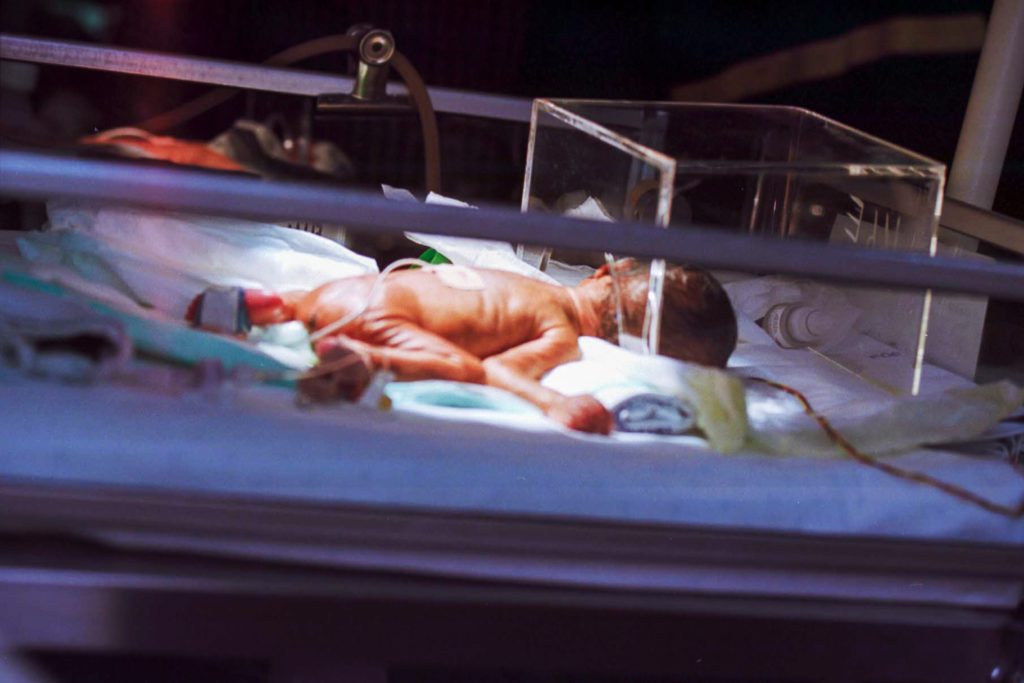
    When a preemie is born so early that he needs to have care in NICU, the stress and trauma can cause PTSD in parents.
    But in the case of the sudden diagnosis of a life-threatening illness, the focus is on the ill child. And the parent is left to try to cope with shock, fear, anxiety… maybe depression…and probably denial, too.

    PTSD in parents can be crippling.

    Studies conducted about this type of situation have shown that the parents have certain needs above all others. 

    If Your Child is Diagnosed with a Life-Threatening Illness

    First, you need to have clear and accurate information about your child’s condition and prognosis. You may or may not be ready to grasp what the doctor tells you the first time you hear it. For this reason you need to have the opportunity to see the doctor at least once a day if your child is in the hospital (or at least very frequently if he or she is not). If the prognosis is poor, you probably need several visits each day. There is just so much to take in.

    Second, you need to have privacy to hear this information, to discuss decisions, ask questions, and to grieve.

    Third, you need emotional support. You need your child’s doctor to be compassionate, to listen for a few minutes. You also probably need a specific staff member — a doctor, nurse, social worker, or someone else who really knows — help you consider options, and show they care.

    Fourth, and this is specific to situations where the child dies, you need to be able to hold and comfort your child in the final hours of his or her life. There comes a point when heroics need to be set aside to make way for grief, comfort, and goodbyes.

    By reading articles like this one, you can gain a clearer idea of parents’ needs if you or a loved one ever faces such a situation like this. And by becoming familiar with what those needs are, you can help another parent — or you will understand better what you need to ask for yourself.

    A number of studies have followed parents at the bedside of a critically-ill child to learn more about their needs, as well as their psychological reactions to their child facing this scenario. 

    And it turns out that these parents are so deeply affected by this threat to their child’s life that they often suffer symptoms that are in line with the symptoms of PTSD. 

    PTSD in parents after a traumatic illness in their child can lead to PTSD

    So let’s say your child nearly drowned, or was badly burned, or developed meningitis, or was in ICU with the new diagnosis of Type 1 diabetes, your reactions would be similar in all these scenarios… intense and difficult to relieve.

    Faced with the heartbreaking gravity of your child’s condition, you may be plunged into shock. Numbness. Dread.

    It may be difficult for hospital staff or family to effectively communicate with you because of your state of mind. You may have to ask several times for your child’s doctor to reiterate the current status of your child’s condition…until you “get it.”

    Because it’s not uncommon for a doctor to explain a poor prognosis for a child, and the parent to respond by saying, “So you’re saying she’ll be OK when she goes home?”

    Why does this happen?

    Because you’re in shock, and with it, denial. You’re human and “reality” as you know it has taken a sudden left turn. It may even have come to a crashing halt. You need time, support, privacy, and patience to catch up with what’s going on.

    At the same time, while you’re going through all this, your child is also suffering. Your instincts are telling you that she needs you. That she needs your comfort. And you want to provide that with everything in your being.

    PTSD in parents can cause them great anxiety and even panic attacks.

    But the accumulation of the astounding turn of events, the devastating prognosis, the enormous amount of information you’re trying to sort through and grasp…well all of it together can be tremendously overwhelming.

    You may find the doctors will repeat the same things to you each time they see you — to be sure you grasp it all and can move forward with decisions.

    Many parents in this situation may begin to show symptoms of post-traumatic-stress-disorder weeks or months after their child has recovered and is discharged from the hospital…or …after their child has died.

    These may include things like numbness, as we mentioned before, as well as denial. You might find yourself going over and over in your mind the string of events that led to this. 

    They may also find they avoid being near places that remind them of their child’s traumatic illness, or speaking of anything that might remind them of the pain their child suffered.

    And the nightmares. Reliving the experience in your sleep, trying to do something to prevent it. Or reliving it to the worst possible outcome.

    The misery, the trembling, the weeping…the headaches, stomach upset, even ulcers. And anxiety that escalates to panic, with such a pounding, fast heart rate, you wonder if you’re going to die.

    The initial shock of the diagnosis, and the intrusive medical treatments that follow — all may serve to drive you into a state of real PTSD.

    How You Can Increase Your Resilience

    PTSD in parents can reduce resilience in their child, but resilience in parents models it for their children.

    Can you prepare for a crisis like this? As a parent, you probably would like to so you can be sure to function at your best in such a difficult time.

    But, as we’ve talked about before, the impact all these stressors have on you is more determined by your own personal resilience, and less about your educational preparation for crisis in general.

    So how do you develop resilience? 

    By adapting.  

    How do you look at crises? Do you feel the very fact that you’re faced with a crisis is traumatic? Do you perceive yourself as a victim who’s been singled out to suffer? Are you overwhelmed with the unfairness of it all?

    This is important: There’s no wrong answer to these questions…only your answer. And what you learn from it.

    When you look at life as a series of mountains to be climbed, and you’re ready for the challenge, you’re less likely to be overwhelmed by crises when they come. When a crisis brings out your toolbox of problem-solving methods, you’re most likely to adapt and resolve the crisis.

    On the other hand…if you face each crisis you encounter in life as another problem to be resolved… Then you go into each crisis with a little extra strength, a bit more armor against the attack. 

    But if you view yourself as an innocent victim who didn’t deserve this difficulty, you’re more likely to be crushed by the situation. The key is in the way you think about yourself and the situation around you.

    So while you can’t prepare yourself for every inevitability, you can train yourself to adapt and seek solutions to every obstacle in life. You can train yourself to recognize that life is full of challenges for everyone, and obstacles can be taken in stride.

    Doing so over time may not make you immune to trauma during a life-threatening illness in your child, because a crisis of that magnitude can be overwhelming to anyone.

    But it can help you feel more equipped to navigate those waters until the seas calm again.

    Still, if you work on your attitude and outlook and still find yourself experiencing PTSD symptoms, that could be because of your genetic vulnerability if you are traumatized.

    We have patients at Innovative Psychiatry who fall into this category. And sometimes, the PTSD is stubborn, and difficult to relieve. PTSD in parents magnifies a family’s calamity.

    In fact, some patients who’ve been un-helped by medication and therapy for PTSD, consider ketamine treatment and enjoy remarkable relief.

    So understand that PTSD is not a failure to be resilient…or a failure of attitude. That’s just not the case. But sometimes those who work to remove the “victim” mentality from their outlook are less affected by a terrible life crisis than someone who has not done the same work in their thinking through therapy.

    When the crisis is past, and you can relax from the emergency, seek counseling since PTSD in parents can cause more problems for you in the future.

    Our hope is that you’ll be as healthy and resilient as you can be, and that your life will be an ongoing opportunity to learn about yourself, and the world around you. Seek out the lessons in each experience. This will help you become adaptable and strong.

    Because adaptability gives rise to the strength of resilience.

    Lori Calabrese, MD offers innovative psychiatric treatment like IV Ketamine

    To the emerging of your best self,

    Lori Calabrese, M.D.

  • Ketamine Treatment and the Science of Joy

    Ketamine Treatment and the Science of Joy

    Science of joy resonates with your remission.

    Do you trudge or dance ?

    Trudging through life isn’t reserved for only the sick, the suffering, and the poverty-stricken.  On some level, trudging is part of the routine of daily living for many. Certainly, it isn’t the sentence for every human. But why? Could the reason be hidden in the science of joy…?

    Or is it because those privileged with wealth and fame are spared the drudgery of a mundane routine, bad weather, or a car that won’t start?

    Let’s talk about the differences between those who trudge and those who dance through life. Is joy the result of near-perfect surroundings?  Is it an abundance of happiness? 

    Beautiful flowers blooming.

    Or is joy the result of nurturing a garden in your psyche and soul that pays off in dividends of fragrance, beauty, patience, and the aromatic blossoming of inner joy?

    For the last 4 weeks, we talked about ways to remodel the infrastructure of your mindset, your outlook, and your attitude. Our purpose has been to show you the potential for developing an atmosphere in your thought life that nurtures your remission after ketamine treatment, and gives you the rich soil you need to grow a healthy and peace-cultivating way of thinking.

    Letting Go, Then Facing Your Truth, Sets You Free

    When you let go of those things that you’ve held onto that have been obstacles to your wellbeing, you give yourself the gift of freedom from addictions, freedom from bitterness, freedom from rage that drives reactions inside you that can enslave you. You give yourself the gift of new options as you move forward in life.

    Sometimes in the process of letting go of those things that have been destructive to your wellbeing, you find yourself against a wall that you don’t know how to penetrate. We talked about facing the truth about situations you haven’t wanted to face. You may have been defending yourself in your mind, and running active arguments through your mind to defend that thing you haven’t faced.  

    A beautiful bloom like this one is fragrant and  amazing.
    Then you can open yourself to the possibility that maybe you were actually wrong, or that you share the responsibility, and you can face and accept that. Telling that person you’ve been in conflict with that you know you were wrong, and asking forgiveness, can lift such a burden of shame and blame off you, and let you enjoy peace within yourself, and with others. 

    It doesn’t matter that you know their actions were terribly wrong and caused damage. That’s their responsibility. But you’ve evicted that guilt, resentment, and denial from your mind and heart. And the place it occupied is now filled with peace.

    “Persisting” Leads to a Life of Peace and Kindness

    Once you know you have nothing to prove, and you enjoy the relief and freedom that brings, you’re equipped to face the next item in your life that surfaces and go through that same process to find peace, once again.

    You then learn that this is a way of life, and you can grow in peace and freedom by persisting in this process with each issue that arises within you. 

    You’re on a mission to set yourself free. And it’s working.

    Then LOVE follows. Your process, your system for recovery, leads you to treat yourself with love, and that flows to others in kindness. Your former short-tempered, impatient, self-focused self becomes more focused on others and helping them find peace, too. And your personality begins to mold around the kindness that dominates in your interactions with others.

    This process repeated over and over, reduces  your stress and strengthens your resilience … and all those gut knots that had been your constant companions in life relax and dissipate…  

    The Science of joy shows you how to make your heart explode with hope.

    And you begin to notice that joy bubbles up from within. 

    So let’s talk about the anatomy of that joy.

    What Is the Science of Joy?

    Is it about happiness? Well, joy can make you smile like happiness can, but it’s based on different things. 

    Happiness is centered on “happenstance” …or basically when circumstances align with what you want. Maybe you’ve worked hard for that job, and maybe you got the promotion. Or maybe you were able to buy a car, after having to rely on the bus for the last 3 years.  And just maybe… that gorgeous woman you met online finally agreed to meet you for coffee.

    Science of joy helps you to be stable through tough times.

    All of these things are good. And they present themselves as solutions to one problem or another. But the problem with happiness is that it is limited to your circumstances being a certain way that pleases you.

    Now, the problem with life is that circumstances may line up with your desires from time to time, but then they change, don’t they? Happenstance, as such, is fickle. One day everything is just like you want it, and the next, well your world has been turned upside down. 

    You got passed up for the promotion after all. Someone ran a stop sign and your new car is wrecked. That gorgeous woman turned out to be a liar and a witch.

    If that upsets your happy outlook, then you’re only happy when things go your way.

    So there has to be something that comes from a deeper place—something that remains stable no matter which way the wind blows or the direction your boat floats.

    It needs to be something that emerges from deep inside you, even when times are hard, and tells you everything is going to be alright. Something that fuels optimism in a storm.

    It’s joy. Joy transcends circumstances. And it’s not based on you getting what you want.

    Hmmm……you’re saying. What’s this?

    Joy In Your Heart In Tough Times

    Remember how we talked about giving of ourselves and the kindness that naturally follows? Well, this is also where joy comes in. While happiness is based on circumstances, joy flourishes as a product of transcending those circumstances. 

    Let’s say that again:

    The Science of Joy teaches you that joy flourishes as a product of transcending your circumstances.

    In fact, joy comes from giving to someone to the point of your own personal sacrifice, and from seeing that person gain freedom and joy, too.  

    Joy also arises from your gratitude. 

    Researchers have found that humans tend to focus more on negative experiences than positive ones. Even though we may have many times more positive experiences in a given 24 hour period, it’s the negative one that can ruin our day. That is, if we let it.

    One thing people tend to do is to miss the chance to focus on the things that are good in their lives. And … after awhile … they don’t notice them at all.  

    The science of joy helps people find meaning in their lives.

    This is where the attitude of gratitude comes in. A compelling component in the science of joy. One study showed that people who make a list each morning of all the things they’re grateful for, are healthier physically and psychologically, more successful, and happier. They’re less materialistic and envious, and more generous in giving to others.

    Happiness vs. Joy

    What is the opposite of happiness?  Unhappiness. 

    Hmmm.

    What is the opposite of joy?  Depression.

    This girl is jumping for joy!

    And what is a telltale sign that you’re in remission after ketamine treatment?  Joy. And HOPE.

    So it stands to reason that to maintain a joyous heart is to build a sort of insurance policy against depression. To rise in your aspirations higher than material gain, personal pleasure, or the attention that comes from achievement…well, it’s liberating. Then, to transcend your own desires, and rather reach beyond yourself to help someone else find fulfillment — that results in joy.

    And because that joy is not dependent on you having what you want, it lasts. 

    And fuels your mind and heart with passion that motivates you to make the world a better place, one person at a time.

    Mother Teresa and Your Family

    Science of Joy fills you with light as you care for others who need help.

    Mother Teresa knew all about joy. She said, “Help one person at a time and start with the person nearest you…”  and “..If you want to change the world, go home and love your family.”

    For the most part, it’s safe to say that what you need is to be freed from making yourself  happy. The science of joy, in a nutshell.

    It might be interesting to write down all the things you think you want, and the stressors subtly associated with each one. 

    Like, the car payment you’d have to make every month, keeping it clean, paying for gasoline, changing the oil, paying for new tires, and the list goes on…

    Then, think about the needs you see around you. Your parents? Maybe your spouse? Certainly your children…and maybe your neighbor or co-worker. Sometimes your presence is the greatest gift of all.

    The science of joy includes simplifying your life. To free up your time and resources for a more rewarding way to live.

    Sharing Your Joy

    A researcher at Brigham Young University, Nathaniel Lambert, conducted a recent study that showed that when you share your positive experiences and the things you’re grateful for, it leads to heightened wellbeing, more energy, and better overall satisfaction in life.

    Isn’t that amazing?? Practicing the very thing that supercharges your joy makes your life BETTER!!

    The science of joy is the outpouring from rebuilding your personal infrastructure.

    When you take a step back and really think about all these aspects of joy, you gotta start to wonder if we all just need to make a major shift in what motivates us.  Because when you’re motivated to please yourself, it leads to all sorts of obstacles to your peace.

    But when you follow the path of joy, everything seems to fall into place.

    And that’s the science of joy.

    These are the keys to building an infrastructure to help your remission thrive…  but if you haven’t received ketamine treatment yet, you may want to talk about it with us.

    Ketamine treatment is particularly effective if you’ve had depression but haven’t been helped by at least two different medications. Ketamine is effective even with the most severe cases of depression, bipolar depression, suicidal thinking, and PTSD. There is new and exciting work on its effectiveness with addictions, OCD, and social anxiety. There is early work that studied it in eating disorders.

    But the most exciting work with ketamine centers on using it to stop suicidal ideation. To stop suicidal thinking. And to avoid going to the ER. To avoid getting hospitalized. Put simply, to stop the suffering.

    What a game changer.

    And the remarkable thing about suicidal thinking is that ketamine can erase those thoughts fast – in less than an hour.

    The science of joy teaches us to focus on helping others to cultivate joy in ourselves.

    Reach out to us, or have your doctor get in touch with us. We love working with the doctors who already know you and take care of you so that we can create your best outcome.

    If you think ketamine treatment might be right for you, call us.  Let’s talk about whether you’re a candidate for ketamine treatment.

    No other medication has offered such extraordinary outcomes to so many people. Our joy is helping you get better…  really better. 

    Lori Calabrese, MD offers innovative psychiatric treatment like IV Ketamine

    To the healing and restoration of your best self,

    Lori Calabrese, MD

  • Johnson & Johnson’s nasal spray for depression wins FDA panel backing

    Johnson & Johnson’s nasal spray for depression wins FDA panel backing

    (Reuters) – An advisory panel to the U.S. Food and Drug Administration on Tuesday voted in favor of Johnson & Johnson’s experimental nasal spray, which has a compound similar to often-abused ketamine, bringing the drug closer to approval.

    The panel voted 14-2 in favor of the drug esketamine, developed to treat major depression in patients who have not benefited from at least two different therapies, saying its benefits outweighed the risks. One panel member abstained from voting.

    Esketamine is a chemical mirror image of anesthetic ketamine, which is also abused as a recreational party drug and goes by the street nickname “Special K”.

    “I think esketamine has the potential to be a game-changer in the treatment of depression … I use the term potential because the issues of cost and patient accessibility need to be addressed,” said Walter Dunn, who voted in favor of approval.

    However, the panel members echoed concerns raised by FDA staffers on Friday regarding the increased risk of sedation, dissociation and higher blood pressure observed in the study.

    The FDA recommended implementing a risk evaluation and mitigation strategy (REMS) program which included ensuring esketamine is only dispensed and administered under supervision.

    “Ketamine is a nasty drug … should (J&J’s) drug get approved, I think a strong effort has to be given as part of REMS … so that patients really know what they are getting themselves into,” said Steven Meisel, another member who voted ‘yes’.

    Major depressive disorder affects over 300 million people globally. About 30 percent to 40 percent of these patients fail to respond to first-line treatments such as antidepressants, most of which take at least four weeks to show effect.

    However, depression is a tricky area of development. Patients in clinical trials often show a big placebo response, masking the efficacy of the drug being tested.

    Currently, Eli Lilly and Co’s Symbyax is the only FDA-approved drug for treatment-resistant depression.

    “There is a lot of potential for people that just want that quick fix. I really would be cautious,” said Kim Witczak, a panel member who voted ‘no’.

    J&J’s esketamine, used in combination with a newly prescribed antidepressant, works by restoring the nerve cell connections in the brain, leading to an improvement in depression symptoms.

    The FDA, although not mandated to follow the panel’s recommendation, is expected to announce its decision on esketamine by March 4.

  • Building Infrastructure: Love Heals – and Kindness Matters – as You Make a Difference in This World

    Building Infrastructure: Love Heals – and Kindness Matters – as You Make a Difference in This World

    Building infrastructure: love heals and kindness matters.

    Live your life in a way that creates inspiration – and leave a legacy of restoration in your wake.

    We’ve been talking about how ketamine treatment can help you reach remission, and how your frame of mind, attitude, and the way you react to frustration and hurt can either support your new-found remission, or sabotage it. Remission gives you the opportunity to build change in yourself, to build stronger relationships, and to reduce strain. As you build upon the principles we’ve already talked about, you might consider adding this key secret to your edifice of peaceful strength: When you’re building your infrastructure, love heals and kindness matters.

    And learning how to apply these powerful elements to your life will not only help you heal and help you love yourself, but it will help you leave a legacy of hope for others and make a real difference in the world, too.

    Some of these changes in attitude and reactions are ways to lower your own inner stress and make your own peace.

    We’re talking about your recovery after you’ve received your ketamine treatment. And… We’re talking about building the infrastructure in your mind and life that will enhance your peace and support your new remission.

    Which brings up another point. If you have not had ketamine treatment, or if you’re deep in the throes of depression, fatigue, despair, and anxiety, please don’t think that our statements about love and its healing dismiss your suffering. We know suffering. And we don’t judge.

    Illness is illness. And you need effective treatment. We’ve said this before … that no matter how much treatment you’ve received, if you don’t feel better it’s the same as if you were untreated. And you need to keep seeking solutions.

    So, if you’re not receiving effective treatment, getting it is the first step. That’s where improvement begins and how remission gets a jump-start.

    There are novel and advanced options that can help you really begin to recover from this illness. Ketamine treatment, transcranial magnetic stimulation (TMS), and other treatments here and in the pipeline. Don’t expect so much from yourself that an article like this one seems insurmountable and overwhelming to you.

    Give yourself a break…ok? And focus on getting well with one of the advanced treatments available like a ketamine infusion series.

    We want to help you get better. Until then, your wellbeing remains the goal.

    But after you’ve received effective treatment, and you’re experiencing joy and motivation…even hope (I know, right?)… for the first time in years, then your next step is to intentionally work to build your personal infrastructure. That underpinning that helps your life move forward smoothly and with peace.

    And if you’ve achieved remission, and want to do the work to build that framework of peace and calm, love and kindness… then follow the advice in the last four of our most recent blog articles to get you started. We’re on a roll to help you.

    Because you likely were not building warmth and love while you were ill. It takes a lot of energy to do that, and you may not have had the energy to give to others while you were suffering yourself. In fact, you may have been withdrawn and a bit irritable. Why? Because you felt so crummy.

    Depression and anxiety can lead to a short temper, impatience, intolerance, and harshness. However, when you use the neuroplasticity ketamine gives to work with your therapist… and look at yourself to make the changes you want to make, you can generate a serene outlook and reverse the tension we all tend to create by hiding conflicts from ourselves and others.

    Everybody needs a group of trusted friends.

    Building infrastructure: love heals and kindness matters for living in peace after ketamine treatment.

    Everyone needs a hearth, a home, some sort of sanctuary where you can trust the people there to love you as you are and inspire you to live as your best self. Where you know you’re loved, and where your love is received and appreciated.  Where you can trust the truthful feedback and use it to grow. Home is supposed to be like this…  but too often, it’s not. 

    Don’t worry if you don’t have family and friends like this now. You may be amazed how your world changes as you change. Be a friend to those who are in your life, and you may be amazed at the deeply caring, valuable friends who are drawn to you. The kind you can trust with your deepest secret who will listen and support you no matter what onslaughts may come your way.

    Building Infrastructure? Love Heals… and Kindness Matters, too

    For you, it might be one or two friends who know you well. And love you. And know your fallibility as well as their own. People who are exquisitely grateful for the friendship the three of you share, and treat it with reverence and respect.

    Building infrastructure: love heals and kindness matters.

    Friends like these can help you heal, help you let go, lovingly hold you accountable to persistence in your walk of better living… spirit, soul, and body.

    And you’ll help them heal, hold them accountable, and keep them wrapped in love, too.

    The fact is it’s hard to heal without love. Whether the love you receive is face-to-face with family or friend, on a commuter train, at the checkout when you buy groceries… at church, or with co-workers… even on facebook….

    But here’s what’s important. Not only do you need to be wrapped in an atmosphere of love, so does everyone else. And especially those who’ve been shattered, abused, wounded, and damaged.  Those who feel lost and broken.

    As you experience the relief ketamine treatment provides, you’ll have the opportunity to find ways to give back. Just as you’ve been loved, supported, and helped, you can offer love, support, and help to others who are not as whole as you are yet.

    Building infrastructure: love heals and kindness matters for creating peace.

    You can be the one to listen, to embrace, to help find solutions; to work to get the solutions to more of those who need them. 

    And when you do, don’t be surprised when love for those who are suffering swells in you. Because love is not only the most powerful force in the universe, it’s a communicable force. You can catch it, and others can catch it from you. Every time you give it away, more of it explodes inside you. And around you.

    Becca Stevens was a child who was forced into sexual abuse at the age of 5, after the death of her father. With her family in crisis over his death, her mom desperately lonely, an unseemly man came into Becca’s young life. He continued using her, abusing her, for four years. She hated it, but didn’t know what to say or who to talk to. She was overwhelmed. And she endured. She was a young child.

    After she grew up, she studied for the Episcopal priesthood at Vanderbilt Divinity School. Once she became a priest, she sought to help other women who have been used, abused, and damaged by others. This ministry came to be known as Thistle Farms.

    Fast forward twenty years to now, and there are Thistle Farms outposts in five countries and across the US. It consists of women who have been damaged, abused, mistreated, and addicted, who need a safe place to heal, grow, and rebuild their lives.

    Since many have been convicted of felonies, Thistle Farms also markets handmade bath and body products, as well as candles, that they sell through 500 stores. These products help these women to get on their feet, pay off debt, buy a car or a home, and find purpose in their lives. 

    There are no authority figures in these homes. Only the women themselves who recover and grow, then mentor those who come behind them.

    Becca’s story is an example of healing, recovering, then finding purpose in giving back. 

    And you can, too.

    In partnership with the loving and healing is the kindness that automatically takes root in your life. As you feel more whole, and experience the almost miraculous remission and recovery that follows, plus the hope and energy to live again, you will have experience and love to give to others who need it like you once did. 

    Kindness Matters

    Letting go of the sick and broken self, and embracing your more whole self, will likely give you the energy to be patient. To love and help restore the next person you meet. And as you do that…putting their need over and above your convenience… a seed of love sprouts inside you. Each time you give, it grows bigger and fuller. As you fill with love, you have more love to give, and the more you give the more patient and kind you can be. 

    Building infrastructure: love heals and kindness matters.
    And in generously giving away patience, kindness, support, and help, you find you like who you’re becoming. That impatient hurting person who snapped heads off before is now kinder, warmer, and more understanding.

    Does this nurture your remission? Absolutely!  Will it positively prevent relapse?  Nothing can do that at this point. But your chances of maintaining your remission go much higher when you let go of stress and replace it with love and kindness.

    And guess what?  Other things that are driven by stress like high blood pressure, asthma, heart disease… well, reducing your stress radically may reduce your symptoms of these other conditions, too.

    So ask yourself… when you go to the grocery store, does the clerk’s kindness matter to you ?  If you’re anything like me, it matters a lot. So would you guess that your kindness matters to her, too?  Of course it does.

    Love Heals and Kindness Matters… So Don’t Give Up

    Apply both in your life and to the lives of those you care about – as well as those who cross your path. Just as others may have been harsh with you when you were so ill for so long, so now those you meet may be ill, too. You have the power to make their day a bit better now.

    A friend of mine used to say that she dumped darkness on anyone in her path during her 8 year depression. Since her ketamine treatment she now says it’s her turn to spread light on everyone she meets. And she can smile from ear to ear! How dazzling to see her face light up!

    You never know what someone has been through right before you make contact with them. So treat everyone with kindness to make their day easier, and to make you stronger. 

    And like Becca Stevens, the day just may come when you find yourself the leader in bringing joy and love into the lives of others in your world. And you may help them change their world, too.

    Maybe You Haven’t Received Ketamine Treatment Yet…

    If you’re thinking you might be interested in ketamine treatment, and that you’d like the chance to experience remission and recovery… it probably means you’ve endured many trials with medicines that didn’t help.

    We know how hard that is… to keep swallowing pills day after day for weeks or months without getting any benefits at all. In doing so you’ve certainly shown your determination. You need your hope to be rewarded.

    We’d like to help with that.

    Building infrastructure: love heals and kindness matters to create peace within.

    We see people walk out of our office every week after ketamine treatment. We see them rejuvenated, hopeful, and relieved. Read the other blog articles linked here to help you understand more about how this treatment works, then call us.

    Ketamine doesn’t make everyone well, but it’s extraordinary in its effects in most cases.  Find out how you can enjoy life in wonderful ways you may have forgotten about.

    To the rebuilding of your best self, 

    Lori Calabrese, MD offers innovative psychiatric treatment like IV Ketamine
    Lori Calabrese, M.D.
error: Content is protected !!