Author: Lori Calabrese, M.D.

  • Ketamine gaining popularity as a treatment for the severely depressed

    Ketamine gaining popularity as a treatment for the severely depressed

    Anne Stallings says she has been battling severe depression for most of her life. She tried anti-depressants and even electroconvulsive therapy, but nothing worked until she went to a Potomac, Maryland, clinic and tried ketamine, reports CBS News correspondent Paula Reid.

    “It was like the fifth treatment in and I had come home from the grocery store and I was putting away the groceries and I was like, ‘Wow, this is how you don’t feel depressed.’ It was like from turning on a black and white TV to a color TV,” Stallings said.

    Ketamine was approved by the FDA in the 1970s to sedate patients during medical procedures. It is more commonly known as an animal tranquilizer and in powder form as “Special K,” a club drug used to get high.

    Today, ketamine is being provided legally off-label to treat depression at an estimated 250 clinics across the U.S.

    ctm-saturday-clean-feed-20180203-cr470c-0700-0900-01-frame-72699.jpg

    Anne Stallings

     CBS NEWS

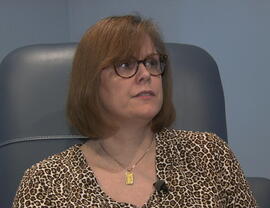
    Dr. Steve Levine offers intravenous ketamine infusions at several clinics around the country as an alternative to common anti-depressants. He says he treats about 70-80 patients across all the offices on any given day.

    “Everything for the past 50 years has been based on the chemical imbalance theory of depression which has never held water,” Levine said. “So all these medicines, while they do help a lot of people, are based upon a flawed theory. And that is probably one of the reasons why they do take so long to work. They all take weeks to months to work so here is a medicine that people can take infrequently that is based upon a theory of the brain that makes a lot more sense and it works almost immediately.”

    Stallings didn’t have time to wait. She had an especially hard time over the holidays and when her father got sick, she thought about taking her own life.

    “I actually had suicidal ideations and the one thing about ketamine was that I was able to get in here emergently because I knew what was going on and when I left here my suicidal thoughts were gone,” Stallings said.

    That is in line with what Columbia University discovered in one of the largest studies yet on ketamine. Researchers found the drug was significantly more effective than a commonly used sedative in reducing suicidal thoughts in depressed patients. The effects lasted up to six weeks.

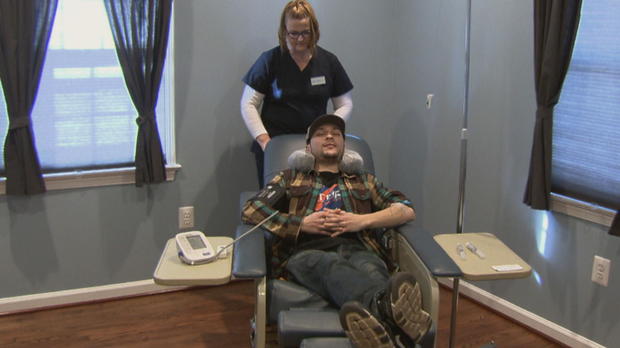
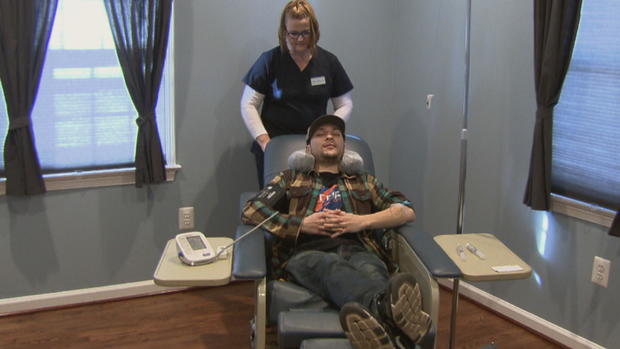
    Twenty-two-year-old Marc Nelson ditched his antidepressants for ketamine and talk therapy. He says he now feels more like himself, but it came at a cost. He has spent more than $10,000 on treatments.

    “So many different drugs that I am now off of all of them, which you know, the side effects were just not tolerable to me. They make me a zombie. I was not happy,” Nelson said.

    But these infusions can have their own pitfalls. Ketamine can cause people to feel detached from their bodies.

    ctm-saturday-clean-feed-20180203-cr470c-0700-0900-01-frame-74486.jpg

    Marc Nelson receives a ketamine treatment

     CBS NEWS

    “The 45-minute period of very floatiness, I sometimes get nauseous,” Nelson said. “It’s a very interesting process. … I just lost my train of thought.”

    Once the treatment was finished, Nelson said he felt “clear, cognizant” and “definitely able to pronounce” his words again.

    Asked to address critics who say he’s making money by giving people the opportunity to get high, Levine said, “I would say that if you ask any of our patients none of them feel that they are getting high.”

    “People tend to focus on the party use of ketamine, because it is more exciting, it’s sexier in some way. It does it a disservice because that’s a very small fraction of its use,” Levine added. “And as far as the money making aspect of this, if you were doing things in the right way you’re not gonna make a lot of money.”

    Ketamine has piqued the interest of some major pharmaceutical companies. There are half a dozen drugs in development that mimic the way ketamine works, with some undergoing FDA clinical trials for approval as antidepressants.

    For decades, Dr. Gerry Sanacora has been studying ketamine at Yale.

    ctm-saturday-clean-feed-20180203-cr470c-0700-0900-01-frame-71369.jpg

    Dr. Steve Levine

     CBS NEWS

    “What we’re trying to understand is what does it change in the brain that allows that sustained anti-depressant like response?” Sanacora said.

    He says the drug is not addictive in the way opioids are, but could still be harmful in the long run.

    “There is at least evidence in animal models that these type of medications can actually cause some structural damage in the brain. That’s usually at higher doses, that’s usually at longer term exposure but we don’t know where that level is,” Sanacora said.

    Dr. Levine said he monitors patients closely.

    “In our population even people who have been having ketamine on a maintenance basis for up to six years now we haven’t seen any sign of that,” Levine said.

    But for Anne Stallings, despite the unknowns, she’s content with a chance to feel normal.

    “If I can live a quality, happy life, and be productive, be able to go to work, to be able to have my family, to enjoy life – not walk through life but enjoy life – then it’s worth it.”

    [Read the Original Article]

  • 4 Subtypes of Depression Target More Effective Treatment for You

    4 Subtypes of Depression Target More Effective Treatment for You

    4 subtypes of depression show us that half are focused on low energy, and weight gain, and some are focused on anxiety and agitation.Depression’s the Worst!

    It drains your energy, robs you of enjoyment of ANYTHING, isolates you and makes you feel like no one in the entire world cares. Makes you feel like you’re a burden on the people you know. Makes you feel achey and lethargic.

    Shuts down your brain so you can’t think. You can’t do your job. Can’t take care of responsibilities. Can’t function. You just can’t do. Or care.

    What you do feel is worthless, hopeless, burdensome, guilty. It can even make you want to stop existing. To disappear. To die.

    If all this sounds like you, you’re not alone. Not by a long shot.

    Disability Plagues Depressed People

    Did you know depression is the #1 cause of disability in this country? Ahead of arthritis, stroke, substance abuse, and COPD.  4 Subtypes of depression make it easier to find effective treatment.Does that surprise you?

    It should.

    Because treatment hasn’t been as effective as we wish. But more about that later.

    This is why so much you hear from psychiatrists, drug companies … and why social media refers to the epidemic of depression.

    Well, in the interest of learning more about depression to find more effective treatment, a team of researchers set out on a quest.

    Their idea was to find out how to “define” depression. To tease it into types based on the connections between various brain cell (neuron) clusters and how they behaved. Up till now, psychiatrists, psychologists, and neuroscientists have used the DSM V criteria to diagnose various subtypes of depression.

    While this has been a great help, it doesn’t address brain changes and characteristics for various psychiatric disorders. But, neuroscientists need specific physiologic details that can be measured by machines rather than by subjective symptom reports and observation.

    Brain Circuit Study about Depression

    The study, funded by Brain and Behavior Research Foundation and the National Institute of Mental Health, used brain scans to study connections in the brain in a variety of both depressed and healthy subjects. 

    The study, led by Connor Liston, MD, PhD, included neuroscience research teams from five prominent universities.

    To rethink the general approach to diagnosis and treatment, they set out to identify new subtypes of depression. These were based on 4 subtypes of depression will help determine best medications.dysfunction in mood-related brain circuits. If they could understand more about the neuronal connections in the brain during various types of depression, maybe they could learn more about what type of treatment would be successful in each type.

    This could potentially eliminate the “trial and error” approach that has plagued psychiatric treatment the last fifty years. Patients wouldn’t have to take a medication for 8-12 weeks to find out if it helps.

    They made use of brain scans of these subjects periodically, and studied the differences in their scans. They also interviewed them each to correlate the symptoms of a given patient with that patient’s brain scan.

    What they discovered in simple terms, is that these brain scan images fell into four different categories. With four different clusters of symptoms… and of those four there were two primary differences.

    Anhedonia vs. Anxiety

    Two of the four were dominated by severe anxiety, and the other two were dominated by anhedonia, or loss of interest or pleasure in things they previously enjoyed.

    Those in the severe anxiety segment also tended to lose weight, and reported difficulty sleeping.  While those two in the anhedonia 4 subtypes of depression can help improve treatment.segment tended to gain weight and crave carbohydrates, as well as slept long hours, such as 19 hours at a time.

    You can see that though all four groups were diagnosed with depression, that the two groups of subtypes had almost opposite symptoms.

    Two subtypes

    To be certain they’d derived these four groupings correctly, they did the same scans and interviews with another set of people in a different city with different scanners, and different interviewers.

    The results verified their findings. 4 groups. 2 main categories: one dominated by anxiety and the other by anhedonia.

    If any of this is sounding familiar to you, there’s good reason.

    4 Subtypes of Depression

    Even the DSM V defines depression as a patient reporting 5 out of 9 symptoms that include extreme opposites. Such as 4 subtypes of depression will help with effective treatment.weight gain or weight loss.  Insomnia or hypersomnia (excessive sleepiness or sleeping). Psychomotor agitation or psychomotor retardation (restlessness or slowed movement).

    You may have a little anhedonia, but are plagued by severe anxiety in many situations. You may feel restless and agitated. Along with that, you likely find it impossible to get much sleep at night, if any. And you worry and worry. In addition, you may notice you’re dropping weight.

    On the other hand, if that doesn’t describe your symptoms, you may have minimal anxiety but have no feelings of pleasure, or enjoyment. And you may just want to go to bed and stay there. In fact, once you do, it may feel impossible to get out of bed again the next day. Plus, your waist is ballooning causing you to wear larger clothes.

    We call it all depression. But the symptoms aren’t the same.

    Liston and his team identified areas of the brain affected that led to this disparity in symptoms and named them Subtype 1, 2, 3, and 4.

    Depression Subtypes Treated with TMS

    The last significant step in the study required identifying which subtypes were improved by Transcranial Magnetic Stimulation 4 subtypes of depression can lead to more effective treatment.(TMS) and which weren’t. Learn more about TMS here.

    In their tests, they placed the magnetic coil over the dorsomedial portion of the brain, as opposed to the often-used left dorsolateral prefrontal cortex.

    They discovered the most receptive subtypes of depression to TMS treatment were subtype 1 and subtype 3. Most dramatically, subtype 1.

    They also learned that use of the clinical subtypes and connectivity symptoms as criteria for TMS treatment was 96% effective. But choosing TMS treatment based on symptoms alone was only 63% effective. And connectivity alone is only78% effective.

    The use of clinical symptoms combined with subtype diagnosis yields a dramatic improvement in predicting the best treatment for each subtype of depression.

    The Future in Diagnosing Depression by Subtype

    So … clearly, the first diagnosis is the one that determines you’re depressed and need treatment. But this approach to diagnosis will advance from the laboratory to the psychiatrist’s office. This ability to determine what type of depression you have will empower psychiatrists to get you better, more effective treatment, faster.

    There is lots more research needed, such as trying the same study with antidepressants, anxiolytics, and IV ketamine using this 4 subtypes of depression can help future treatment.same model.

    And of course, software will be developed to help us use these tools.

    The good news is that treatment for psychiatric mood disorders is advancing fast on many levels. The hopelessness that pervaded no less than a third of all depressed patients, when no medication seemed to help, is dissipating.

    At Innovative Psychiatry, in South Windsor, CT, we offer TMS. TMS has demonstrated improvement for most who have anxiety related disorders. 75% of patients in our office who are treated with TMS experience dramatic relief and improvement.

    We also provide IV ketamine treatment, and consistently see 80% of of our patients dramatically respond to treatment — even when everything else has failed them. A small percentage return for a follow-u or booster infusion periodically — if they need it or if a huge stressor occurs in their lives and sets off the first subtle signs of depression again.

    And of the 20% that don’t immediately respond to ketamine in our practice, another 7% reach remission a few months later.

    What’s more, IV ketamine treatment can erase suicidal thoughts in minutes or an afternoon. Ketamine can be life-saving

    If you have endured depression symptoms for a long time, and other treatments haven’t helped, call us. We’ve been working to find new ways to relieve treatment-resistant mood disorders for many years. We want to help you get your life back.  Or …maybe build it for the first time. Schedule an appointment here, or just call. Your life can be so much better, in fact, you can be the best you ever.

    To the emergence of your best self ever,

    Lori Calabrese, M.D.

    Lori Calabrese, MD offers innovative psychiatric treatment like IV Ketamine


    signature of Lori Calabrese, M.D.

  • From Now to Forever: Quality Friendship Promotes Lifelong Happiness

    From Now to Forever: Quality Friendship Promotes Lifelong Happiness

    Quality friendship promotes lifelong happiness.
    “My best friend is the one who brings out the best in me.”  – Henry Ford

    Is there someone you’re really close to, someone you trust, and with whom you feel you can share anything? Maybe this someone is your spouse, or a long-time friend. Or maybe, if you’re really fortunate, you have both. But think about it … have you ever thought about how true, quality friendship promotes lifelong happiness?

    It turns out that recent studies have revealed that rich, caring, geniuine, and supportive friendships are not only emotionally fulfilling, but physiologically beneficial, too.

    There are different kinds of friendships.

    When you’re recovering from surgery, or from an accident, and all those many people step up to the plate to show their support… They bring food, send caring cards, offer to help with the kids. The support of your friends, or your acquaintances with big hearts, is worth its weight in gold at a time like that.

    Maybe you have 696 friends on Facebook, and wouldn’t recognize half of them if they stepped on your toe at the grocery store.

    But there’s a type of friend you know well … that you trust, and even if you see them only occasionally, you can pick right up where you left off without taking time to “catch up.”

    Studies Examine the Health and Happiness Benefits of Friendships

    Quality friendships promote lifelong happiness.

    Neuroscience researchers study the effects and benefits of this type of friendship and have for years. Close friendships have been correlated to healthier behavior, a lower occurrence of chronic illness, greater happiness, and lower death rates in older individuals.

    But, no one had studied the benefits of friendships in young adults, middle-aged adults, and older adults at the same time.

    Then came William Chopik.

    William Chopik, at Michigan State University, studied 280,000 people (how’s that for a huge group?) to learn about their lives. He found that friendship possesses growing importance for health and well-being throughout a person’s life. And he emphasized that friendships often are even more important than family for health and well-being in older adults.

    To gather information for his first study, Chopik sent a survey to over 271,000 people in 100 countries. He asked questions about their relationships, their health, and their life satisfaction.

    In his second study, he sent surveys to nearly 7500 older adults in the US.

    From the first study, he found that relationships with both family and friends seemed to contribute to a healthier and happier life, across the board.Makes sense.

    But also found that only friendships could signal health, well-being, and contentment at advanced stages of life.
    Quality friendships promote lifelong happiness.

    Friendships are Predictors of Well-being in the Long Haul

    Then the second study added insight. Turns out that as we age, friendships have more impact than during the earlier years. For instance, if friends proved to be a source of strain, his subjects reported more chronic illnesses, aches and pains.

    By the same token, when friends were supportive and enjoyable, participants in the study reported more well-being and happiness. While family relationships are important too, for older adults, they can at times involve negative or monotonous interactions. In short, family relationships tend to have more baggage.

    In general terms, Chopik found that friendships are predictors of happiness and contentment in our daily lives, as well as in how long we’ll live.

    And they have more influence over your health than your family or even your relationship with your spouse.  

    This is HUGE.

    Sometimes as parents we cringe at the way our teens surround themselves with friends as almost a fortress, but the friendships of children and adolescents help our children learn important skills for contributing to and maintaining healthy relationships.  And as the years go on, strong friendships will become more and more important to their well being, too.

    SuperAgers – Friendships Preserve Cognition

    Quality friendships promote lifelong happiness

    Just to carry this a step further, a study at Northwestern University took a close look at a group of people they call SuperAgers. That refers to people over 80 who have the mental clarity of people in their 50’s or 60’s.

    These special people say they have rich, high quality, mutually-caring and -supportive relationships.

    Their peers who have average cognition are missing that element.

    In the past, research about SuperAgers focused on biological things. For instance, turns out that these special people have a larger brain cortex than their peers. Their diet, lifestyle habits, and exercise were also examined.

    But, in this study the magnifying glass was on the social connections of SuperAgers.

    They were given a survey – Ryff Psychological Well-Being Scale – that examined 6 areas of life that are believed to affect well-being:

    • autonomy
    • positive relationships with others
    • environmental mastery
    • personal growth
    • purpose in life
    • self-acceptance

    The results? The SuperAgers scored an average of 40 in positive relationships questions, and the peers with average cognition scored a 36. This difference made a significant statement.

    Researchers found this study particularly thrilling, just to realize the power of rich social relationships for preserving cognition. And excellent cognition is certainly important for enjoying life.

    Fundamentally ENJOYING Life Forever

    Now, let’s take it yet another step. What do you need in your life as the years go on, that will make living it a pleasure?

    When the children are grown, and maybe your spouse has passed on, and you’re just left with you. What do you need to invest in now to keep life rich and meaningful till your last days?

    While you think about that, consider this.

    Until recently, there’s been very limited research about the part close friends play in building resilience to difficulty and hardship. But hard times come to everyone. No one gets a free skate through life without some tough stuff.

    Resilience is a Life-Saver

    For some, hardship is the downfall that marks the end of their productive life. For others, resilience rises to the task and sees them through the storm to emerge and thrive.

    Dr. Rebecca Graber at the University of Brighton has been the first to provide a long-term look at the vast benefits of close friends toward strengthening resilience.

    After recruiting 185 people online, and asking they fill out surveys, 75 responded and agreed. The questions on the survey involved assessments of the participant’s psychological resilience, the quality of their best friendships, how they cope when things are hard, and their self-esteem.

    Then, a year later, she asked them to each respond to the same questions again so she could analyze how the quality of their best friendships affected their resilience in the past year.

    She proudly announced this long-term study provided statistical evidence for the first time that shows what these valuable most trusted friends contributed to resilience in the participant’s life.

    Your Friendships: Will They Last?

    Young women hope that quality friendship promotes lifelong happiness.

    So with that said, how about you? Do you have friendships you believe in…that have the quality, sensitivity, integrity, and trust that you’d consider worthy of your investment to last a lifetime?

    If you do, you’re fortunate. Sometimes sorority sisters or fraternity brothers maintain their close friendships through retirement. Always nurturing and investing, strengthening, and protecting those friendships that see them through the end of life.

    For others, friendships come and go. And come and go. Maybe because you’ve made friends with the wrong people, or maybe because you haven’t learned yet how to be a really good friend. Maybe because you’ve moved. Been busy. 

    But, just as saving for retirement is a necessity of life, so is investing in friendships. When you find someone of good character, loyalty, and who carries a big broad heart to stand by the likes of you, you just may have found someone worth giving your time and kindness to.

    Sometimes death interferes.

    For many, those very special friends who are a beautiful match with who you are, just reveal themselves after children are living their own lives, and you have the time and energy to pay attention.

    Resilience – and cognition – are elements in a fulfilling life. Not the focus of it, but more of a by-product. And the path to keeping those two elements running like a fine machine can be found along the path shared with a best friend or two.

    Think about it.

    If you’re lonely, and have trouble making friends, you may suffer from a condition that impairs that ability. There is no cure-all for loneliness, but there may be ways we can help you restore your ability to make friends and strengthen those friendships over time. 

    Social anxiety … depression …. can make it tough to make new friends, but IV ketamine treatment can lift symptoms that have been in your way. 80% of our patients at Innovative Psychiatry respond dramatically. They’re flourishing.

    Call us and let’s talk about treatment possibilities to improve the quality of your life.

    Lori Calabrese, MD offers innovative psychiatric treatment like IV Ketamine

    To your best self as life blooms for you,

    Lori Calabrese, MD


  • Ketamine could prove useful in treatment of severe social anxiety

    Ketamine could prove useful in treatment of severe social anxiety

    By ERIC W. DOLAN January 24, 2018

    The first placebo-controlled study of ketamine’s effect on social anxiety disorder has provides more evidence that the anesthetic could be helpful in severe cases.

    “Many patients with anxiety continue to have impairing symptoms despite the first-line talk therapy (cognitive behavioral therapy) and first-line medications (selective serotonin reuptake inhibitors),” said study authors Jerome H. Taylor of the University of Pennsylvania and Michael H. Bloch of Yale University.

    “Therefore, our research group thought it was important to find potential new treatments for anxiety. We chose to investigate ketamine because several studies have found it to be helpful for anxiety symptoms in treatment-resistant depression.”

    A previous study on 12 adults with general anxiety disorder or social anxiety disorder, which was published in 2017, found that ketamine reduced their symptoms. But this study was not placebo-controlled.

    The new double-blind, placebo-controlled trial tested the effects of intravenous ketamine on 18 adults with social anxiety disorder. Ketamine alleviated symptoms of social anxiety as measured by the Liebowitz Social Anxiety Scale but not as measured by the self-reported Visual Analogue Scale for Anxiety.

    Participants also reported increased social engagement in the days following ketamine treatment, but this was not systematically tracked.

    “Our study provided proof-of-concept that ketamine-like agents may be useful for anxiety,” Taylor and Bloch told PsyPost. “Many pharmaceutical companies are working on developing medications that act like ketamine without the abuse potential as a treatment for depression, PTSD and suicidality. Our research suggests these medications may also prove useful for anxiety.”

    The findings were published in the journal Neuropsychopharmacology.

    Previous research has found that ketamine produces a strong and rapid antidepressant effect in patients with treatment-resistant major depressive disorder. But ketamine did not significantly improve depressive symptoms in Taylor and Bloch’s study.

    This was “likely due the fact that in our study most patients had mild to moderate depression as opposed to the more severe treatment-resistant major depression studied in ketamine clinical trials,” the researchers wrote in their study

    Ketamine works by inhibiting NMDA (N-methyl-d-aspartate) glutamate receptors in the brain. The drug also has euphoric and dissociative effects, making it a potential drug of abuse.

    “Ketamine needs more data to show efficacy in anxiety, and even if effective probably should only be reserved for refractory and debilitating cases that have failed medication and CBT – for instance, adults homebound from agoraphobia, kids refusing to attend school due to anxiety etc,” the researchers explained.

    “Ketamine is a drug that can abused when given at higher doses over shorter periods of time than used in this study. As such, we consider that ketamine should only be used in research studies related to anxiety at this time. If used for clinical purposes it should be restricted to hospital-like settings where the abuse potential is much lower.”

    The study, “Ketamine for Social Anxiety Disorder: A Randomized, Placebo-Controlled Crossover Trial“, was also co-authored by Angeli Landeros-Weisenberger, Catherine Coughlin, Jilian Mulqueen, Jessica A Johnson, Daniel Gabriel, Margot O Reed, and Ewgeni Jakubovski.

    [Read the Original Article Here]

  • When Your Loved One Plans to Die: How to Prevent Imminent Suicide

    When Your Loved One Plans to Die: How to Prevent Imminent Suicide

    Depressed lady floating in water needs to know ketamine treatment erases suicidal thoughts.

    Suicidal Thoughts…?

    “Nah, she’s not going to kill herself. She’s too afraid of pain.”

    “He’ll never follow through…he just keeps threatening… he’s just looking for attention…”

    …“I’m so shocked he did this.  I had no idea he was thinking about suicide… I feel so bad…”

    If you’re depressed, or you know someone who is, your heart may break when you hear people say things like this. Or…maybe you say these things yourself. 

    Let’s talk about how depression leads to thinking about suicide… and how thinking about suicide may lead to attempting it – or worse dying.

    If you ever think about suicide yourself, I hope this discussion will give you new hope and you’ll reach out for help.

    And if you love someone who thinks about suicide, I hope we can help you help them.

    Suicide is the 10th leading cause of death, according to the National Center for Health Statistics, and it’s rising.  If you love someone who’s depressed, and has spoken of death or wanting to not live, you and your loved one have both suffered from this epidemic.

    The higher the statistics climb, the greater urgency we all feel to find ways to stop these tragedies. But to do it, we must understand how to recognize the signs and help those caught in suicide’s web to break free, and live… really live.

    Clearly this is a multi-faceted quest for everyone in healthcare, as well as families and friends of people at risk.

    So, how do we know that someone near us is at risk..? 

    That in itself is complicated.  Because there are those with suicidal ideation, and there are those who progress from ideation, or thinking about suicide …toWoman in despair needs treatment because ketamine treatment erases suicidal thoughts. doing it. 

    How can we know when someone is thinking about death and suicide…and how can we tell if they’ve moved on to planning to take action…?

    How can you even know who’s really at risk?

    Risk Factors for Depression that Lead to Suicidal Ideation

    If someone has these risk factors in place, you can know they’re at risk for eventually thinking about suicide unless something changes.

    So risk factors signal a possibility of danger for this person within the coming months or years. The danger to their life isn’t imminent at this point. 

    Risk factors for suicidal thoughts include depression, hopelessness, the presence of nearly any psychiatric disorder, and impulsiveness.

    These risk factors certainly herald the likelihood of someone thinking about death and suicide. However, they’re no help in differentiating between someone who just thinks about it, and the person who will follow through. Of course, it’s possible that any person who thinks about death and suicide, who wishes for an escape from their pain, may advance beyond the thinking stage to taking action…tragic action.

    So how do we identify that person?  How can we get them help before it’s too late…?

    Suicidal Ideation vs. Intent

    What’s suicidal ideation? “Ideation” is a weird word, and no one really uses it, to speak of. Except in psychiatry. It means the “formation of ideas or concepts.” So it means that thoughts about suicide begin to form where they didn’t exist before. And over time those thoughts may continue to evolve.

    As they unfold, sometimes they progress to more dangerous ideas and concepts, like how to commit suicide… and even when.  So it’s vital to learn to recognize the difference between when someone you love has passive thoughts of death as a relief (like if I didn’t wake up … was killed in an accident…or had a heart attack, it wouldn’t be a relief), or active and intrusive thoughts about suicide, or has active, increasingly frequent, intrusive thoughts about suicide with a detailed plan or date. Someone who has added purpose and decision to those thoughts.

    As a friend or family member, hearing someone you care about talk about such terrible things can be unsettling… shocking… alarming. But it’s important to recognize these signs, pay attention to them. Give them the credibility they deserve, because shocking or not, they’re real.

    E. David Klonsky and his research team published a review of the recent research about warning signs for someone likely to attempt suicide soon.  These are warning signs in someone who has the risk factors we talked about. Depression, other psychiatric disorders, hopelessness, and impulsiveness.

    This focus is to go a step – or maybe two – deeper. And it’s laid out like this. Does he or she:

    1. Think about death and suicide, or about hurting himself

    2. Seem isolated, withdrawn, disconnected from important relationships

    3. See no purpose or meaning for his life

    4. Seem obsessed with death, and writes about it 

    5. Display sudden changes in his personality, his sleeping patterns, his eating patterns

    6. Use an increased amount of substances

    7. Struggle with guilt feelings

    8. Show loss of interest in academics or work

    9. Exhibit paranoia and irritability

    10. Feel trapped

    Capability for Suicidal Action

    Klonsky makes an important distinction about determining if the suicidal person is in imminent danger of taking deadly action. In addition to the warning signs above, does this person have the capability to take a decisive action to end his life or to end her life, such as: 
    • High tolerance for pain

    • Diminished fear of pain

    • Increased fearlessness about pain

    • Persistence through pain and distress

    • Knowledge of and access to a lethal means of committing suicide

    • Experience with self-inflicted injury

    Pay attention, because this is huge. These traits and features, when paired with all the other risk factors we’ve talked about, indicate not only the serious warning of imminent deadly action, but also the capability to follow through. This is the person who sees no reason to live and is equipped to end his life when he decides to. Within minutes. Or hours. Or possibly days.

    Now is the time to intervene.

    But…how?

    Start with calling 911 if the situation calls for it.

    If calling 911 seems like an over reaction, think about the items on the lists above. If he seems isolated, withdrawn, if she seems disconnected from important relationships, step up and engage them in conversation. Look for ways to connect with him, show him he’s loved and that he matters.

    If he has access to a method for ending his life, find ways to remove items that he might think of using. Reduce his capability.

    At the very least, encourage him to get help. Immediately. And encourage him to not give up. If needed, encourage him to allow himself to be treated through admission to a psychiatric hospital unit to help him stay safe and stabilize on treatment.

    As long as he stays alive there is hope.

    So let’s talk more about that hope.

    But first… there’s another element you might need to consider.

    Rethink Your Trite Empty Words

    What do you say to him once you intervene?  What hope can you offer?  If she’s been depressed, tormented, troubled…even agitated…for a long time, you’ve probably told her before that this situation will pass.  That their symptoms will eventually subside. That life is worth living.

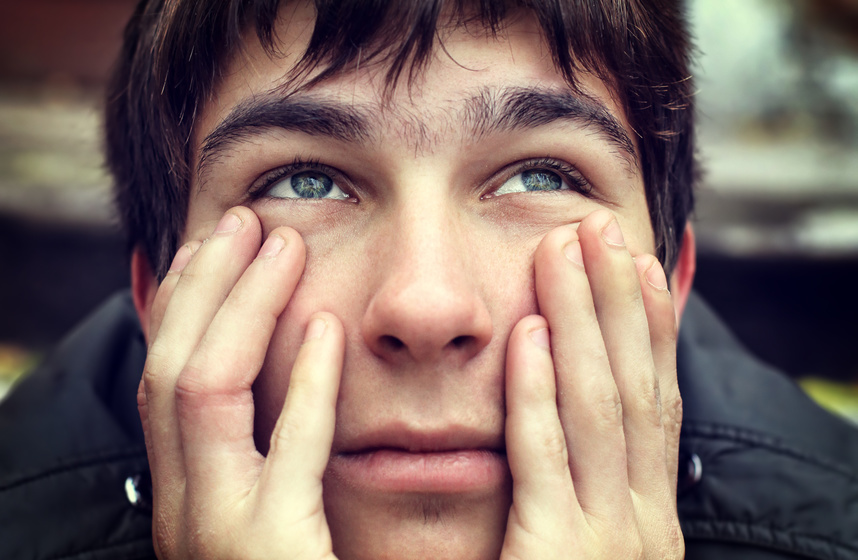
    He may not believe that at all anymore. At this point he may have become resigned to the belief that there is just no hope.This young man contemplates jumping and needs to know IV Ketamine treatment erases suicidal thoughts.

    And quite honestly…for some there really was NO HOPE. They couldn’t see it.

    But the horizon for people who battle severe depression, intractable bipolar disorder, crippling PTSD, and terrifying panic disorder… has changed.  There is new hope now.

    IV Ketamine Prevents Imminent Suicide

    IV ketamine treatment erases suicidal thoughts. Now that’s some HOPE for you!  It’s a 50-year-old anesthesia medicine that has all kinds of history in operating rooms, war zones, and emergency rooms around the world. This remarkable medication still hasn’t tapped all its talents.

    In the last 15 years it’s been at the center of great victories and outstanding therapy for treating psychiatric mood and anxiety disorders in all ages. By applying different actions in the brain, it rejuvenates and restores synapse connections throughout the brain and helps rebuild the very structure of brain cells themselves — called dendrites and dendritic spines — prolifically branching a dense communication system between nerve cells to turbo boost the signals that make the brain function and come alive.

    For children with the Fear of Harm form of Bipolar Disorder, ketamine treatment has dramatically reduced symptoms and allowed these children to feel joy, happiness, love. To have the ability to do their homework and contribute at school without torment. Some of these children feel happiness and joy for the first time with the help of ketamine. It’s like a child who’s been blind seeing for the first time.

    In men and women with PTSD, it has calmed the fear, restored peace, balance, and in enjoyment in life.

    For those deeply depressed, it has restored their energy, creativity, initiative, and hope.

    And for those with suicidal thoughts or imminent suicidal plans, it has erased suicidal thinking fast. In minutes or a few short hours. Once those thoughts disappear, treatment can proceed to relieve depression.

    No medication has been shown to erase suicidal ideation in less than 4 hours.  Well, nothing except IV ketamine. IV ketamine prevents imminent suicide so you can pause, catch your breath, and work on treatment and recovery.

    IV ketamine stops suicidal thoughts.

    When you help your loved one stop suicidal thoughts, there’s hope for relieving the depression, too. If he’s been taking ketamine erases suicidal thoughtsantidepressants that haven’t helped, he’s likely a candidate for IV ketamine treatment.
    No longer do you have to say, “It’s going to get better someday, I promise…somehow…”

    You can say, “Dr. Calabrese has advanced treatment options. You’re going to feel so much better very soon.

    And what about you?

    Suicidal Thoughts vs. Intent to Act

    Do you have thoughts about death…suicidal thoughts… or even a strong plan for suicide?

    Do you think about death, or about yourself dying…?

    These thoughts…these images… are a sign of severe depression and your need for treatment.

    IV ketamine treatment provides relief, restoration, and relaxation for 80% of patients with treatment-resistant depression at Innovative Psychiatry. We see it every day.

    We know that the literature speaks of 70-75% positive outcomes with IV ketamine treatment. But keep in mind those are studies conducted to learn about ketamine using strict protocols. Research protocols don’t allow for the many adjustments we make to fit your need like we can as your doctor.

    Our goal is to achieve the best outcome for each patient — taking into account all of the complexity that comes with your history, your biology, and your previous treatments. And we’ve learned that some patients need varied adjustments in dose, or perhaps a slightly longer infusion time or longer infusion series in order to achieve remission. For these reasons, some private practices are able to achieve better outcomes than larger published studies. We consistently see excellent outcomes, relief, restoration, and enjoyment of life in 80% of our patients, even when nothing else has worked.

    There are the naysayers.

    Who believe IV ketamine treatment is a “passing fad” or has too many “side effects.” (There is no weight gain, no sexual problems — or other side effects antidepressants are known for.) That we should wait. That it hasn’t been studied enough. And some who say that using it is premature.

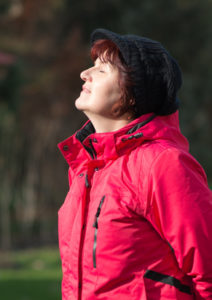
    Here’s what’s premature: dying before your time.This happy lady in the snow knows that ketamine treatment erases suicidal thoughts.

    IV Ketamine Treatment – A New Frontier

    IV ketamine treatment is a new frontier in psychiatric treatment.

    We’re also learning that some of the 20% who aren’t helped immediately by ketamine treatment can get better over time. Weeks or months later, ketamine seems to take hold and they emerge better than ever.  We have some theories working as to why that happens.

    So there’s still so much to learn, and that’s why it’s important that you communicate with us during and long after your infusion treatments are over, so we know how you’re doing. It helps us learn more about how IV ketamine treatment works for you. We offer state-of-the-art daily mood monitoring tools to make it easy. To keep you well. So you feel safe. And connected. 

    If you experience visual images of death or of yourself dying, if you think about it, if you find yourself planning it…there is hope, and a way out without harming yourself. Hang on. Find safety. And call us.

    IV ketamine treatment can give you relief and erase those thoughts from your mind. You can have an opportunity to redirect your life and your treatment.

    We offer innovative treatment options for those with treatment-resistant mood and anxiety disorders like depression, panic disorder, bipolar disorder, PTSD, social anxiety, and OCD. If you’d like to see if IV ketamine treatment can pull you up out of despair, schedule an appointment and let’s work together to help you get better.

    We’re eager to work with you and your doctors to help you achieve a healthy, balanced, restored life, and the desire to live it. 

    To the healing of your best self in 2018,
    Lori Calabrese, MD offers innovative psychiatric treatment like IV Ketamine


    signature of Lori Calabrese, M.D.


    Lori Calabrese, M.D.

  • IV Ketamine Treatment for the Saddest Day of the Year…?   Maybe so, if it’s SAD – Seasonal Affective Disorder Treatment

    IV Ketamine Treatment for the Saddest Day of the Year…? Maybe so, if it’s SAD – Seasonal Affective Disorder Treatment

    Seasonal Affective Disorder Treatment is available in IV ketamine treatment.So maybe you’ve heard of Blue Monday…?  January 15, the saddest day of the year. This 13 year old hoax needs a little straightening out. See if you agree. Blue Monday? What does that have to do with psychiatry?

    Pretty much nothing … but let me explain.

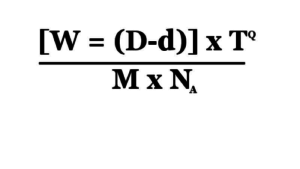
    In 2005, a guy named Dr. Cliff Arnall in Wales devised a formula for determining the single saddest, most depressing day of the year.

    Was he a neurologist? No. A psychiatrist? Not even close.

    He was actually working to help a travel agency determine the most likely day that people would book a tropical holiday. The “psychology” behind it measured up to this: When you feel the worst, you want to escape. Get away. So what’s the next best thing…? A vacation on the beach! Once you’ve set up the get-away, you have something to look forward to, and you feel excited about it, and life gets easier. At least that’s the theory.

    The “Gloominess” Calculation

    And what did he base his calculations on to determine when you’ll feel the worst?

    Of course, it had to land on a Monday…who likes Mondays..?  Plus, it had to be after the long stretch of holiday excitement from Thanksgiving, Christmas, and New Years was past.

    And it needed to be far enough past Christmas shopping that you’d have received the bills and wish you’d spent less. And far enough past January 1st to have broken your New Year’s resolutions.

    Then…add to that the gloomy winter weather, the overcast skies… remember he didn’t live in Southern California, but in Wales…the cold and snow and rain, and the short days and long nights at that time of year.

    seasonal affective disorder treatment

    So in Arnall’s equation to the right, W=weather, D=debt, d=monthly salary, T=time since Christmas, Q=time since failing new year’s resolutions, M=low motivational levels and Na=the feeling for a need to take action.

    Now, rather than taking the time to disprove his equation, let’s just be real. Arnall was quite pleased that he was paid for his clever equation, which earned him 1650 British Pounds, or about $2265.93 in US dollars. A drop in the bucket compared to the revenue gained by the travel agency who hired him. For them, it was a great ROI.

    Internet Advertising … Is It Always True?

    But the fact is, there is no truth to the idea that January 15 is the saddest day of the year. Just as there is no truth to Audi’s “Truth in Engineering” slogan, since we all know they cheated on the emissions tests with about half a million cars. Not as truthful as they claim, are they?

    Audi’s slogan is part of a PR marketing campaign intended to sell cars, and Arnall’s formula was part of a PR campaign intended to drive business to a travel agency. Neither one was a scam, but rather a marketing gimmick.

    And the fact remains, he just made it up!

    There is NO saddest day of the year. And if this time of the year is hard for you, that may be a seasonal problem. And we can help with treatment, if you need it.

    So, my suggestion is that social media participants stop aiding and abetting this 2005 advertising gimmick, so that we can talk about things like sadness, moodiness, and depression in real and helpful ways.

    Sound good?

    SAD – Seasonal Affective Disorder Treatment

    This time of year can be difficult for those who are sensitive to light, or the lack of it. While some are unaffected by these short, overcast days, you may be one who is deeply affected by the cloud cover, the cold, the gloominess…SAD Seasonal Affective Disorder Treatment IV ketamine treatment beats SAD.

    And if that happens, it’s great to do something to brighten your mood. Go to a movie, or get your hair done, maybe shop for a new shirt. If that helps you feel a lighter mood, then you’ve accomplished a worthwhile goal.

    Some people know that this mood slide begins early in the fall, every year. And you might find that light therapy helps. The idea is to use a 10,000 LUX light box or lamp for about 30 minutes very early in the morning to replace the light you’re missing in your environment. There are some variables to this depending on you, related to how far the light is placed from your eyes, and how much you can tolerate the brightness.

    One of the ways around this to to use a visor with a 10K lux light on the inner brim.  They are so versatile and easy to wear that you can walk around, make a cup of coffee, make the bed, get ready for your day, all while wearing the visor.  You’re not stuck sitting still in front of a light on a table.

    For some people this can really help. For others with seasonal affective disorder (SAD), even light therapy might not be enough. SAD is also called winter depression and it can occur episodically, just when fall strikes, and last through spring. Sometimes, people who have depression chronically or who have frequent episodes always seem to have a seasonal exacerbation — a winter worsening. And an antidepressant along with light therapy may bring you relief.

    However, some people suffer so severely from depression when it occurs as seasonal affective disorder, winter after winter, that they have periods when they can’t function at all.  And just like any form of severe depression, seasonal affective disorder can be crippling, even devastating.

    Where you’re too sluggish to function, and you feel hopeless, helpless, fatigued, and gloomy. And gloominess advances to despondency… Despondency may even progress to thoughts of ending your life.

    If this sounds familiar…if you’re feeling this way and having thoughts you haven’t admitted to anyone yet, there is hope.

    In fact, there’s more than HOPE. There’s a SOLUTION.

    IV Ketamine Treatment Beats SAD – Seasonal Affective Disorder

    Until the last several years, only a third of depressed patients were helped by antidepressants. Which has been wonderful for those patients, but what about those who didn’t improve?

    Well for those, another 1/3 felt some improvement with a second try using another antidepressant, or a combination of medications.

    And for those who did find help, life had hope again. They could return to work, resume their lives and relationships.

    But what about the 1/3 who were left in the pits of depression and despair…?  What about them?Woman relaxed by fire due to IV ketamine treatment beats SAD seasonal affective disorder.

    There’s now another form of treatment for severe depression, and it is as effective for severe seasonal affective disorder, or severe winter depression, as it is for depression any time of the year. It’s called IV ketamine treatment, and it’s not just 33% effective. IV ketamine treatment is effective in treating 80% of treatment-resistant cases of depression at Innovative Psychiatry in South Windsor, CT.

    That means that if you’ve tried medications and treatments that haven’t helped, you may be a good candidate for IV ketamine treatment.

    IV Ketamine Treatment Operates Like a S.W.A.T. Team Against Depression

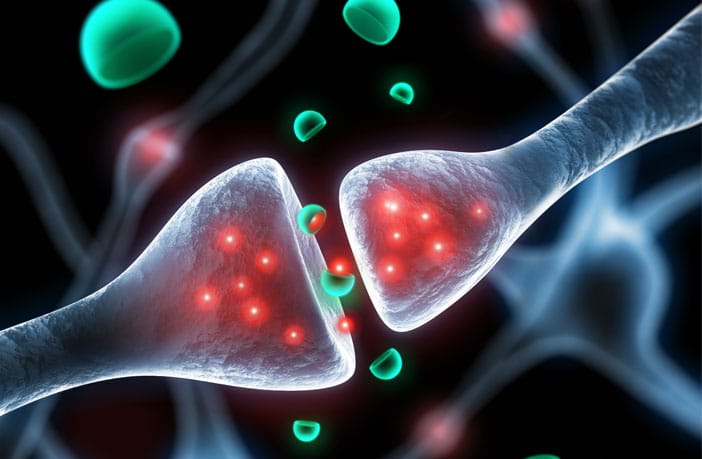
    Ketamine acts on different aspects of the brain than traditional antidepressants. Rather than affecting serotonin or dopamine receptors, it works on rebuilding the synapse branches that connect nerve cells in the brain to each other. 

    Let’s pretend you’re in the old west. And you need to get a message to your family in Boston that you’ve arrived safely in San Francisco. You want to send a message by telegraph. So you go to the telegraph office, and they tell you that the lines have gone down between San Francisco and Boston due to tornadoes and fires. There’s no connection.

    And you can’t reach anyone until all those lines are repaired.

    IV Ketamine Treatment at Work

    The synapse connections from signaling cells to more signaling cells in your brain have been broken down, weakened, or destroyed by the stress of depression. This is what depression does to your brain, and these connections have to be repaired and restored so you can get the information signals moving fast around your brain. When that happens, you’ll feel upbeat again.

    IV ketamine treatment helps clear away the old broken branches, called dendrites and dendritic spines, to make way for new ones. Then it goes to work fast to rebuild new healthy, resilient connections that proliferate throughout your brain. 

    The result? Your sad, dark, depressed brain comes alive and lights up like Times Square on New Year’s Eve!

    All that activity and signaling lightens your mood brighter and brighter, restores your motivation, your hope, your energy, and your IV Ketamine treatment beats SAD seasonal affective disorder.creativity…and you feel better.  So much better, it may be the best you ever remember feeling.

    IV ketamine treatment also stimulates mRNA to switch on DNA to turbo boost brain-derived-neurotrophic-factors (BDNA). BDNA is like a rich compost in the brain that helps to stimulate prolific and rampant growth of dendrites and dendritic spines in the synapse connections.

    Another of ketamine’s talents involves moving lazy G proteins off their lipid rafts and back to work to enhance the signaling communication.

    Now let’s be clear…IV ketamine treatment isn’t for everyone. But more than likely, it’s just what you need to recover, to find your best self again, and to revel in your life.

    So don’t let the gloominess of the skies at this time of year drain your hope. At Innovative Psychiatry, we’re innovative and we offer solutions — even more than we’ve talked about here.

    If your winters are too hard to bear, call us. Let’s talk about options that just may be available for you.  And you can dance on your way to work, and twinkle about the joy of building a warm fire to sit by when you get home at the end of the day.

    Winter can be about popcorn, hot chocolate, fuzzy sweaters, and crackling fires. Discover how you can enjoy the beauty of winter through advanced treatment options like IV ketamine treatment

    There’s hope for your winters.

    Lori Calabrese, MD offers innovative psychiatric treatment like IV KetamineTo the liberation of your best self,

    Lori Calabrese, MD

  • IV Ketamine Treatment Can Prevent a Medical Leave of Absence from College

    IV Ketamine Treatment Can Prevent a Medical Leave of Absence from College

     Ketamine treatment can prevent medical leave of absence from college for you.Are You a Depressed College Student?

    Who sometimes just can’t go to class?  … or do your work? Sometimes you can’t bring yourself to write the paper … or even do the reading. If last semester was awful, you hope this one will be better.

    That you’ll get up. Get cleaned up. Eat some decent food.

    It’s so hard to do when you don’t feel like doing anything. When you’re trying to pretend everything’s OK. When you don’t want anyone to know how bad it is, or how bad you feel.

    College is supposed to be the best time of your life, right? And it feels like you’re screwing it all up. Maybe you’re wondering if you can even do it.

    Should you withdraw? Take a medical leave …?

    If you’re a parent, you may have agonized over what to do if you think your college student is depressed. Encourage them to stay? See a doctor on campus? Bring them home?

    Too often … too late … the college or university decides what happens when you can’t function: they send you home on a medical leave of absence.

    College Student Depression

    Sometimes a young person graduates from high school and makes plans for college. Sometimes he’s excited about it. And that’s great!

    But, sometimes he makes those plans because it’s expected. And he’s not up for the challenge. Depression or anxiety may have taken over his brain, and he’s just not functioning very well. Does that sound anything like you?

    You may even pack up in Fall and move into the dorm. Your parents hope you’ll snap out of the subdued condition you’ve been in, and so do you. Your lack of energy, your sullenness, your tendency to stay by yourself all the time. And you just don’t feel like being around people, much less smiling.  …How long has it been?  I mean, since you smiled, or better yet, belly laughed?

    Maybe you’ve been depressed for years…maybe you struggled in high school with anxiety or panic…It’s also possible you’ve seen a psychiatrist but the medication just hasn’t helped … like, at all.

    Or … maybe you were fine until you got to the university and the heavy course load, the adjustment to roommates, dorm life and extracurricular Ketamine treatment can prevent medical leave of absence from college for you.activities, the overwhelming work… drove you into a corner that just got darker and darker…

    If you’re depressed, or you’ve developed significant anxiety about school, social activities, grades, expectations, or maybe just trying to get caught up…you may have a tough time getting on your feet and moving forward without treatment.

    Maybe, like some kids and teens, your symptoms started in childhood and you’ve had depression or bipolar disorder, or social anxiety, PTSD, OCD, and suicidal thinking from early in your childhood. Maybe you’ve tried not to wish you were dead, tried hard to push away suicidal thoughts without letting anyone really know. And maybe traditional treatments haven’t helped.

    You may have been like this so long, your parents don’t understand and don’t know how to help.  On the other hand, sometimes parents do all they can find to do but still… nothing helps or changes.

    One thing is sure: depression and anxiety undermine your success in college. Without effective treatment, you’re set up to fail, to establish doomed academic habits, and even to cope in self-destructive ways.

    William’s Story

    A friend of mine, Bob Pollack, M.D. in Florida, recently published the story of a young college student who was the son of a Yale classmate back in his school days. This young man, named William, remembers loneliness and despair filling his childhood, rather than fun activities, friends, and sports.

    He was reprimanded by teachers for being “out of control,” isolated from making friends, felt misunderstood by students, and generally alone.

    He moved from school to school, because of a family move, or because the environment didn’t foster his best performance.

    William was always alone when his depression was the worst.  And lonely. He wasn’t one to speak to anyone.

    Eventually, his dad contacted Dr. Pollack about IV ketamine treatment for William. Father and son flew to Florida for the series of infusions. The first day he felt woozy…until he ate some dinner, then felt better. Not a lot of change.  But by the third infusion, he walked in, shook Dr. Pollack’s hand, and said, “Good morning.”

    That’s when Dr. Pollack saw the treatment was taking hold.

    Two weeks after the first treatment, William says he was “far less harsh” on himself and far less miserable. And it just got better from there.

    William is back in college, and close to completing his degree. And so grateful for the treatment that gave him his life back. He now Ketamine treatment can prevent medical leave of absence from college for you.says with conviction that brighter days are ahead for those in darkness. He now knows there is hope for the future.

    At Innovative Psychiatry, we have lots of Williams. Lots of Susans. Lots of Caseys. We hope you won’t hesitate to reach out to us.  We really get what you’re going through.

    What Do You Do When You’re a Depressed College Student?

    You need to get better. Fast. You need something to work.

    Before you lose more time, lose credit, miss out on an internship, or put off taking the LSAT or the GRE.

    Because not doing well heaps guilt on you, intensifies hopelessness, and tears down your confidence on top of depression. If treatment hasn’t worked or if what you’re doing now isn’t working, reach out for help.

    IV Ketamine Treatment  treats depression, anxiety, bipolar depression, social anxiety PTSD, and OCD — and it’s extraordinarily effective even when nothing else has worked. It can stop your suicidal thinking in an afternoon. If you’re depressed, you’ve got an 80% chance that it will work — and there are genetic and clinical factors that can boost that chance even higher. Eighty percent.

    Better odds than anything else we’ve got.

    We’ve never had anything like this in your lifetime.

    Ketamine Treatment Can Prevent Medical Leave of Absence from College 

    Ketamine was developed in the late ’60’s as an anesthesia medicine used in surgery, emergency rooms, and war zones. It’s been used safely for more than 50 years among  all ages, from the very young to the very old. But is it a safe treatment to offer to college students? Because of course, people know it — and have abused it in massive doses — as “Special K” on the street.

    When we use IV ketamine treatment for IV ketamine treatment can prevent medical leave of absence from college.depression, a much tinier dose is used than is ever required for anesthesia. We administer it with a state-of-the-art infusion pump to ensure precision delivery to the delicate brain systems involved in mood regulation.

    Very quickly, the synapses and dendrites in the connections of your brain cells begin to grow, flourish, branch, and become healthy and abundant. When that happens, signals begin traveling through your brain in higher numbers and at faster rates.  

    And that brings your brain to life. You can concentrate. (Which means you can go to class, read, study for exams.) You feel optimistic, motivated, hopeful, with new initiative and resilience. Creativity blooms again. Your ability to enjoy your relationships, your studies, and your life grows like a blue ribbon garden.

    Ketamine treatment can prevent you from having to take a medical leave of absence from college — or help you come back from a medical leave — if you suffer from treatment-resistant depression, anxiety, bipolar disorder, PTSD, OCD, and suicidal thinking. It can help you restore and have the resilience to continue toward your goals. Because it works fast. A special task force of the American Psychiatry Association called it rapid and robust.

    If you’re a college student who’s suffering from suicidal thoughts, or worse … if you’re making a deadly plan no one knows about … IV ketamine treatment can stop those thoughts in minutes or hours. And you’ll feel relieved. Hopeful.

    Traditional antidepressants take weeks or months. Time is precious when you’re desperate.

    We’re dedicated to treating the sickest of the sick, those suffering the most from psychiatric mood disorders like severe depression, crippling anxiety, the worst cases of bipolar disorder, disabling PTSD, shackle-laden OCD, and critical life-threatening suicidal thinking. We provide IV ketamine treatment, TMS, nutritional guidance using curcumin and microbiome support, among others.

    Please understand that IV ketamine treatment isn’t for everyone. We will evaluate you carefully to determine if you’re a candidate for ketamine treatment or another advanced treatment option — and if you are, we won’t waste time.
    We have a special place in our hearts for college students.

    And we’ll work with your doctor and therapist so that when you’re done with treatment, you can launch your life.

    You can experience relief, restoration, remission.Ketamine treatment can prevent medical leave of absence from college for you and improve social and academic performance.

    When getting well matters, and you don’t have time… or a semester… to lose … if you’re struggling with depression, anxiety, bipolar disorder, PTSD, OCD, or suicidal thinking, and you haven’t been helped by traditional antidepressant treatments, call us.

    At Innovative Psychiatry, we’re here to help you with expertly administered, advanced treatment options by a seasoned psychiatrist with deep expertise from Wellesley, Hopkins, Harvard, and Yale.  We get college. We know how important it is. 

    And we’re here to help you flourish there. 

    Lori Calabrese, MD offers innovative psychiatric treatment like IV KetamineTo the restoration of your best self,

    Lori Calabrese, MD

  • Forbes Magazine: Ketamine May Reduce Depression, Suicidal Thoughts Within Hours

    Forbes Magazine: Ketamine May Reduce Depression, Suicidal Thoughts Within Hours

    Ketamine, known mostly as a party drug, has assumed a new identity in recent years—as a promising antidepressant. And, though research is still under way, it seems to reduce symptoms of depression very quickly, and in people who haven’t been helped by traditional antidepressants. Now, a study published in the American Journal of Psychiatry finds that for depressed people who have suicidal thoughts, it may also help alleviate these thoughts much faster than anything that exists currently—within hours.

    The study, carried out at the Columbia University Medical Center and the New York State Psychiatric Institute, looked at 80 patients with clinical depression. They all had suicidal thoughts that were intrusive enough to fall into the category of clinical suicidal ideation. The participants were randomized to receive a low-dose infusion of either ketamine or midazolam, a sedative; they were followed for six weeks, during which time the participants all received usual psychiatric care. To measure their depressive symptoms and suicidal ideation (thoughts or urges), the participants filled out questionnaires, like the Scale for Suicidal Ideation and the Beck Depression Inventory.

    Within 24 hours, the participants who’d received ketamine reported significant changes in symptoms compared to those receiving midazolam. They had a reduction in suicidal thoughts, depressive symptoms, and fatigue. In fact, the participants who didn’t respond to midazolam were later given ketamine, and they showed the same improvements.

    And these changes seemed to last for up to six weeks. The side-effects, which were mainly dissociation—a sense of detachment—and increased blood pressure, resolved within minutes or hours after the ketamine injection.

    When the researchers teased apart the variables, they found that the reduction in depressive symptoms accounted for only a third of the reduction in suicidal thoughts, which suggests that ketamine’s effects on suicidality comes from more than just a reduction in depression. What that might be still needs to be explored.

    “Adjunctive ketamine demonstrated a greater reduction in clinically significant suicidal ideation in depressed patients within 24 hours compared with midazolam, partially independently of antidepressant effect,” the authors write.

    Suicide rates in the U.S. have risen a lot in recent years—according to the CDC, they’ve increased by almost 27% percent between 1999 and 2015. It’s particularly concerning since young adults and teens—especially girls—represent an especially large part of the rise.

    The study builds on a growing body of literature suggesting that ketamine may be a real player in depression treatment, which hasn’t changed much over the years. As most people know, the usual antidepressants can be ineffective for some people; and for those for whom they work, it can take many months to find the right one, since they can take several weeks to kick in. For people who are suicidal, it’s especially critical to find faster and more effective treatments.

    “There is a critical window in which depressed patients who are suicidal need rapid relief to prevent self-harm,” said study author Michael Grunebaum in a statement. “Currently available antidepressants can be effective in reducing suicidal thoughts in patients with depression, but they can take weeks to have an effect. Suicidal, depressed patients need treatments that are rapidly effective in reducing suicidal thoughts when they are at highest risk.”

    More work will need to be done to understand ketamine dosing, especially over the long-term, as well as long-term side-effects that may develop. Some doctors are already offering ketamine infusions for people with treatment-resistant depression, although it’s not approved by the FDA for this purpose. (And people should not be self-administering ketamine, since at the wrong dose it can be harmful, addictive, or fatal.)

    So far the results are encouraging, and it will be exciting to watch the developments as they come in. “Additional research to evaluate ketamine’s antidepressant and anti-suicidal effects,” said Grunebaum, “may pave the way for the development of new antidepressant medications that are faster acting and have the potential to help individuals who do not respond to currently available treatments.”

    [Read the Original Article on Forbes.com]

  • 2018: Neuroscience Breakthroughs like IV Ketamine Treatment Mean Breakthroughs for YOU

    2018: Neuroscience Breakthroughs like IV Ketamine Treatment Mean Breakthroughs for YOU

    Neuroscience breakthroughs with IV ketamine treatment make the future look bright. Neuroscience breakthroughs like…IV ketamine treatment..?

    Exactly.

    2018 lies before us, like a valley that spreads to the horizon. And while it’s impossible to access the future, you can move forward knowing that each “today” you live has promise that was unheard of until recently.

    Especially if you suffer from untreated or treatment-resistant depression, anxiety, bipolar disorder, PTSD, or anxietysocial anxietyOCD or phobias.

    Neuroscience researchers have been discovering more and more about treating psychiatric mood disorders that has transformed our approach to treatment — and the outcomes, as well. 

    The 21st century breakthrough of IV ketamine treatment for depression is transforming psychiatric medicine. Studying the effects of this treatment has revealed that depression and other mood disorders wear away at the signaling structures in the brain, leaving synapses, dendrites and dendritic spines broken, weakened, and sparse.

    Neuroscience breakthroughs like IV ketamine treatment can bring breakthroughs to you … to your life.

    The clearing away of those broken down structures, and the rebuilding of new ones in a denser, more prolific, forestation turns out to be key to treating depression. The old theory that depression was caused by levels of serotonin or dopamine that were too low … well they’re ancient history now.

    Neuroscience Breakthroughs like IV Ketamine Treatment means Breakthroughs for You

    Actually, so far we know of four ways ketamine clears away depression and erases suicidal thinking so quickly. And we’re watching Neuroscience breakthroughs with IV ketamine treatment mean breakthroughs for you.with anticipation to see if research this year will reveal even more.

    So another intervention ketamine performs is related to the G proteins that are piled on lipid rafts in the cell membranes of the neuron cells in the brain.  Depressed people have these G proteins piled up on lipid rafts, where they can’t do their job to enhance signaling from synapse to synapse.

    For those who are helped by traditional antidepressants, it takes several hours for those G proteins to slide off the rafts and become productive.

    This is one reason it takes so long for traditional antidepressants to work for those they help. But when ketamine is given, they slide off the rafts within minutes. Remarkable. 

    Yet another healing action of ketamine is its effect on DNA. Turns out it also switches on mRNA which in turn flips the DNA switch to “ON” and that fire hoses BDNF across the synapse network.

    BDNF is a growth factor like the richest of composts, and it empowers the dendrites and dendritic spines to burst into blooming branches like a giant oak tree.  When the BDNF is fueled by ketamine, it turbo boosts that prolific branching of synapse structures, and your brain lights up like New York City. Unprecedented.

    A well-lit brain is a happy brain.

    Quoting from our earlier post entitled, “Breaking News: Another Way IV Ketamine Smashes Depression,”Neuroscience breakthroughs like IV ketamine treatment mean breakthroughs for you.

    As new synaptic connections are built, and greater communication between brain cells develops, the brain gains the ability to see things in a different perspective, and your outlook becomes brighter and healthier.

    IV ketamine can jump start that process. Wait. No. It can turbo-charge it.

    Extraordinary.

    And the fourth action IV ketamine treatment performs is increasing glutamate levels to equip synapses to send more and faster signals across the brain, which traditional antidepressants don’t touch. Brilliant.

    APA Task Force Issued a Consensus Statement in May 2017

    What a year it’s been!

    Four actions of ketamine we know about so far. The outcome is so extraordinary, so successful in such a large number of treatment-resistant cases, the American Psychiatry Association assigned a task force to issue a statement about the use of ketamine, this anesthesia medicine, off-label for treating depression.

    Their statement was one of the most momentous and widely read articles of the year. In fact, it’s listed as #3 on JAMA Psychiatry’s “Most Talked About Articles of 2017.” Suffice it to say that those who were on the task force are true experts in our field. They’d seen ketamine’s power to lift depression right out of the water.

    So they offered guidelines and cautions, and expressed theirNeuroscience breakthroughs like IV ketamine mean breakthroughs for you. elation when interviewed that such a thing has happened in their lifetime.

    They also specify that ketamine should be administered under a psychiatrist’s supervision.

    TheHealthSite.com featured a list of the 6 best medical achievements of 2017 that everyone should know about…. Ketamine for depression stood strong on that list.

    Of course, we know ketamine’s discovery didn’t happen this year.  Many years of studies and clinical trials laid the groundwork for ketamine’s popularity now.

    Thousands of patients have experienced the relief, the return of joy, initiative, creativity, and energy without side effects that ketamine provides.

    Never before has there been such a medicine that treats so many disorders in such a huge percentage of the population as ketamine.

    Ketamine has delivered HOPE.

    At Innovative Psychiatry, we see 80% of patients who’ve suffered for years with treatment-resistant depression, crippling panic attacks, suicidal thoughts that won’t stop, severe bipolar disorder, PTSD, social anxiety, and OCD experience relief, restoration, and relaxation after treatment.

    Another neuroscience breakthrough that means breakthroughs for you is Transcranial Magnetic Stimulation or TMS. It uses a coil to create a focused magnetic field over the front left side of your head. Specifically the left dorsolateral prefrontal cortex region.

    Then it sends tiny repetitive pulses deep into the brain to the emotion-regulation region. This stimulates the nerve cells and wakes them up. When they wake up, they begin to function again and give you better emotional regulation and function.

    With TMS treatment, you sit quietly for anywhere from 16 to 37 minutes, five days a week for 6-8 weeks. About halfway through the series of treatments, depression begins to lift, and you begin to feel better and better. Again, faster than Neuroscience breakthroughs like IV ketamine treatment mean breakthroughs for you.traditional antidepressants, and without any of the weight gain, sexual dysfunction, fatigue, or GI side effects they can cause.
    The sophisticated technology of TMS continues to develop. Even 5 years ago TMS seemed experimental and wasn’t widely available. But, like ketamine,TMS built a strong reputation for effectiveness. 

    In general terms, clinicians and hospitals report 60-75% success with TMS around the US. We see 75% of our patients consistently respond — and often remit — at Innovative Psychiatry. 

    Again, HOPE.

    Curcumin has gained an ever stronger reputation for its use as an adjunct in treating depression. Plus the connection between the brain, mood, and the strengthening of the microbiome is growing and gives us more and more opportunities to work with your diet and lifestyle to improve your mood.

    No known treatment lifts depression, anxiety, bipolar disorder, PTSD, or OCD in 100% of cases at this point. But these innovative treatment options prove successful for 75 – 80% of people who suffer in spite of traditional treatments. Obviously, hope soars for you if suffer with depression.

    If you suffer from suicidal thoughtsdepression, bipolar disorder, PTSD, social anxiety, OCD, you can feel better. The age of despair for sufferers is quickly dissipating. This has never been the case before. You really can feel better….lots better….as in really good.

    If you’d like to start 2018 on a brighter, fuller, more functional, and happy path, call us. We live one day at a time, because “now” is all we really have. But live well. Live as the best you you can be.

    Lori Calabrese, MD offers innovative psychiatric treatment like IV KetamineTo your very best self in 2018,

    Lori Calabrese, MD

  • JAMA: A Consensus Statement on the Use of Ketamine in the Treatment of Mood Disorders

    JAMA: A Consensus Statement on the Use of Ketamine in the Treatment of Mood Disorders

    Importance  Several studies now provide evidence of ketamine hydrochloride’s ability to produce rapid and robust antidepressant effects in patients with mood and anxiety disorders that were previously resistant to treatment. Despite the relatively small sample sizes, lack of longer-term data on efficacy, and limited data on safety provided by these studies, they have led to increased use of ketamine as an off-label treatment for mood and other psychiatric disorders.

    Observations  This review and consensus statement provides a general overview of the data on the use of ketamine for the treatment of mood disorders and highlights the limitations of the existing knowledge. While ketamine may be beneficial to some patients with mood disorders, it is important to consider the limitations of the available data and the potential risk associated with the drug when considering the treatment option.

    Conclusions and Relevance  The suggestions provided are intended to facilitate clinical decision making and encourage an evidence-based approach to using ketamine in the treatment of psychiatric disorders considering the limited information that is currently available. This article provides information on potentially important issues related to the off-label treatment approach that should be considered to help ensure patient safety.

    [Read the Full Research Article Here]

error: Content is protected !!