Tag: IV Ketamine Treatment for Bipolar Depression

  • Why Are Anxiety and Depression so Prominent in This COVID Pandemic?

    Why Are Anxiety and Depression so Prominent in This COVID Pandemic?

    What makes it so hard?
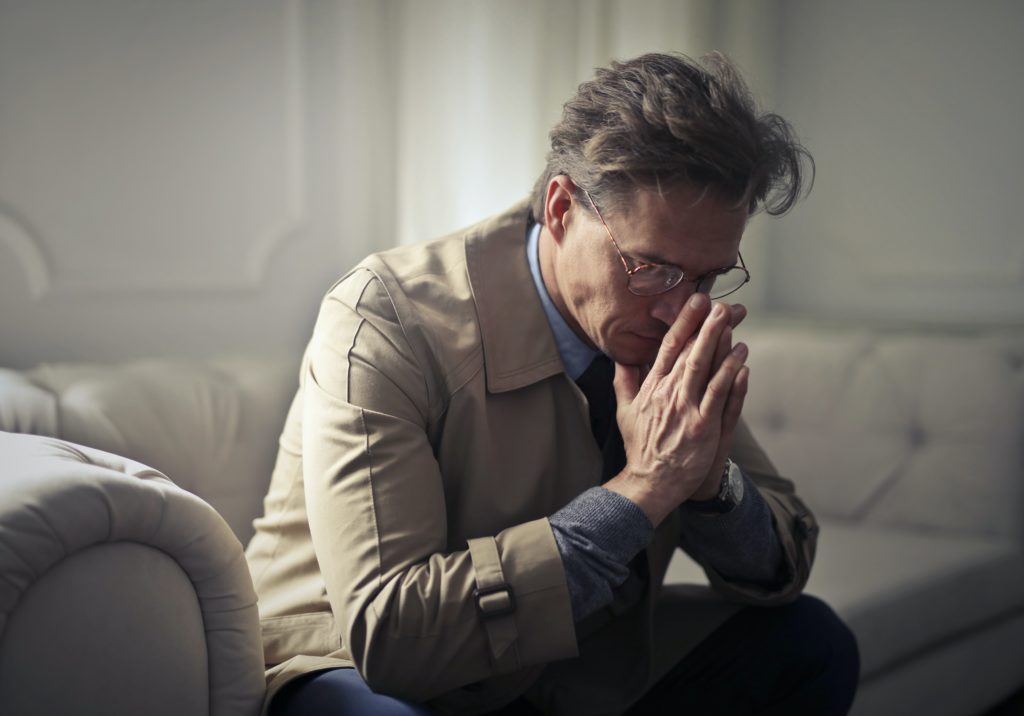
    Anxiety and depression are so prominent in a pandemic.

    Devon tuned into his department meeting. Another Zoom meeting. He was so tired of online meetings…the technical lapses, interruptions…  you can read people so much easier face to face. At the same time, he could sit in an easy chair for the meetings, so that wasn’t so bad. But no one seemed like themselves. Anxiety and depression are so prominent and have clearly taken their toll on his colleagues.

    Still, maybe there’s also a palpable energy in face-to-face meetings. He wasn’t sure if that was the problem or not, but Devon found it more and more difficult to focus, and to think creatively for his job. As the year had passed, he felt less and less capable and more like dead weight. 

    He kept asking himself what was wrong with him? Where were the sparks that flew when he dove into a problem?  Rather than sparks, Devon felt more like a dud.

    Then, he got the phone call about his next door neighbor’s son. Just like Devon’s family, his neighbor’s son was taking his high school classes at home, and online. At first, the young man Stewart, had stopped logging in to classes. Devon had heard this was becoming more and more of a problem in his community. 

    But, apparently Stewart was becoming more and more depressed. Devon just learned yesterday the boy had ended his life…right there at home.

    The grief settled over Devon like a black fog. This on top of the recent deaths from COVID-19 of two of his friends, 10 days apart. But Stewart was 15. His whole life was ahead of him. It was all too tragic.

    COVID Tragedies Can Trigger Anxiety and Depression

    He’d watched the boy grow up, playing with his own kids over the years. And it stirred up more worry about Devon’s own family. He and his wife had tried to keep a close eye on their children to be sure they logged in to school and did their work.

    But, they couldn’t be everywhere and they both worked online. But they tried. Still, life was becoming increasingly overwhelming. His heart went out to Stewart’s family. And he felt a low, sinister rumble of trepidation within himself. The dangers of the pandemic went far beyond the risk of getting sick with the virus. 

    The fear of becoming too depressed to function, or of his family succumbing to it, rose inside him till his  ears were buzzing.

    All in all, Devon knew he had to keep functioning, and presenting a solid, unified front with his wife. He also knew the danger of drowning in it all. When his meeting ended, he called a highly recommended psychiatrist for a consultation appointment. He wanted to be proactive, before it was too late to think straight.

    There’s just something about a pandemic that can make happy people depressed or relaxed people overwhelmed with anxiety.

    We’ve talked about it before. In the early months of COVID-19, that the circumstances that accompany a widespread environment like this can lead to your symptoms worsening. It can also lead to symptoms you never suffered before. Anxiety and depression are so prominent these days.

    Well, at this point, this global state of affairs has been causing stressors that aren’t new anymore. But they do go on and on and on….and on…

    And periodically, we need to stop and take a breath and ask how you’re doing?

    At this point, there have been 99,195,630 COVID-19 cases globally, with 2.1 million deaths. In the US, 25.2 million cases, and over 419 thousand deaths. The numbers are staggering. And the scale of this pandemic is difficult to grasp.

    These are people. Our teachers, our friends, our neighbors, our families. Grandparents. Parents. Our children.

    And…since we are a species with both mind and body, it stands to reason— doesn’t it? —that both our minds and our bodies are impacted by this. With anxiety about sickness, anxiety about isolation, anxiety about lifestyle change and lack of spontaneous freedom, it does stand to reason that the problems and stress factors would pile up and also lead to depression. Anxiety and depression are so prominent these days…and they often go together.

    We’ve watched a 1st wave of COVID spread, then a 2nd wave, then a 3rd…and it’s not over. The virus changes, mutates, and different strains have varying impacts. Some cause milder symptoms, some spread much faster, some cause more severe symptoms. It goes without saying that all this has affected you…and all of us,

    Most of us know people who have had the COVID-19 virus, and many of us have seen our friends and loved ones die because of it. This is a traumatic time that none of us will forget.

    Research Helps Us Understand the Impact of a Tragic and Stressful Experience

    A group of Danish researchers in Copenhagen and Aarhus, Denmark led by Søren Østergaard conducted a survey during each of those 3 waves to better understand the variation in psychological well-being regarding symptoms of anxiety and depression during this pandemic, among participants in Denmark. 

    Their results were relevant to the global community, even though severity of the disease hasn’t been equal everywhere.

    They reported results of the survey for wave 1 (March 31st to April 6th), wave 2 (April 22 – April 30th), and wave 3 (November 20 – December 8 … just last month.)

    The 1554 respondents were an average age of 49.5.

    There was a statistically significant decline in psychological well being from wave 2 to wave 3, especially with men. And during wave 3, worry, anxiety, and hopelessness decreased over those levels in wave 2, but feelings of guilt increased.

    Anxiety and depression have been prominent in Denmark, too.

    In a nutshell, these researchers ended the paper with the statement that by late November to early December, the psychological well being of the Danish population had fallen again to the level of March/April, when it had been at its lowest.

    Overall, they found that when COVID cases are high, and the measures to reduce the spread of the virus like quarantine, isolation, social distancing, and major lockdowns are the most widespread, there is a significant impairment of psychological wellbeing.

    What Can You Do with This Information?

    Setting aside the particulars of a study in Denmark, and focusing on right here in the US, we need to find ways to intervene in your own state of mind. Your own wellbeing.

    Gather online with friends and family to interact for online chess. Talk and laugh together. Watch your grand babies blow bubbles.  Share a spaghetti dinner, complete with candles, where each participant cooks at home then all connect and chat while eating.

    Social interaction is fundamental to your well being. When you share a meal on Zoom, you don’t have to wear a mask!

    Even so, if this ongoing pandemic seems to be having a serious impact with depression, social anxiety, hopelessness, even suicidal thinking, ketamine infusions may be able to turn that around and refresh your resilience. There is still hope.

    Anxiety and depression so prevalent during pandemic

    At Innovative Psychiatry,  we’re all about helping you get a leg-up to manage these challenging times, and meet the frustrations in your life with flexibility and peace. We offer IV ketamine treatment — after a thorough screening and evaluation — to those whom we determine are good candidates for ketamine’s extraordinary benefits. Ketamine treatment is not for everyone, because circumstances as well as the medical and psychiatric history of some patients indicate ketamine is not the right choice. However, it can be so helpful to so many…it can be transformative.

    We provide a safe place for treatment. We now test our staff at least once each week to verify they are COVID free… We can also refer our patients to a local DNA lab that will do same day PCR testing for those patients who wish it. In addition, we installed technology that destroys the coronavirus and all viruses and bacteria in the air and on all surfaces fast.

    Our goal is to help you get better and to keep you safe.

    You have struggled, tried to break through, tried to carry the anxious and depressive symptoms that have weighed you down for a long, long time. We want to help you put that struggle in your past. So you can feel restored. So that you can be your best self. To have the energy, freedom, and hope to build your life again with creativity and joy…and to have the resilience to move from day to day and week to week.

    You needn’t postpone it any longer. Call us.

    We can answer your questions and sort out the possibilities together.
    Lori Calabrese, M.D. is on the front end of the race to stop PTSD in its tracks using IV ketamine treatment.

    To the restoration of your best self,
  • Repeated Ketamine Infusions Relieve PTSD Symptoms – New Study

    Repeated Ketamine Infusions Relieve PTSD Symptoms – New Study

    New study demonstrates that with repeated doses of IV ketamine, relief can last up to several weeks.

    A deep unfamiliar voice behind Sarah made her jump. In a flash, she turned and bolted down the stairs she’d been climbing, turned left, then left again, knocking into people in her path as she scrambled for a place to hide. A mad dash took her into the restroom, where she locked the door and turned off the lights to hide in the dark. Screams sounded as darkness enveloped the room. Her heart was pounding, sweat pouring from her scalp, down her face, her torso…her armpits. She willed her breathing to slow…so the man pursuing her would not hear her panting gasps. (Poor Sarah. She’s suffering… if only she knew what repeated ketamine infusions relieve…)

    Three women exploded out of their stalls complaining about the lights and searching for the switch. Sarah pushed past them to an empty stall and stood on the toilet seat with the door locked so her feet couldn’t be seen below the door.

    Sarah’s vision blurred as sweat poured into her eyes. With a quick swipe, she wiped the moisture from her eyes and forehead. And waited. Silently.

    By her watch, she saw time passing. She heard women come and go from the restroom…heard their quiet conversation…  but she waited, hands trembling.

    After 45 minutes crouched with feet on the toilet seat…Sarah began to feel calmer. It washed over her that she’d been hiding in a public restroom for close to an hour… and now she was late to work. 

    PTSD is Not Only Terrifying, It Seriously Interferes with Daily Living

    Again.

    Oh noooo.

    Reality settled in. After washing her hands without incident, she cautiously opened the door and saw nothing unusual outside the door. She began to realize that it had happened again. Like countless other times. The sound of that voice triggered her memory of the assault…and it was so real. Except it wasn’t. 

    She was surrounded in the trauma again. 

    And that was the problem. Yet again, she would clock in late and be reprimanded for it. There must be help to conquer the PTSD symptoms that had emerged after she was assaulted 2 years ago. She had to find peace. Sarah wanted her life back.
    Desperately.

    Repeated Ketamine Infusions Relieve PTSD Under Controlled Conditions

    PTSD can be so entrenched that it is very difficult to relieve — even with therapy, special trauma-based therapies, SRI’s, or a combination of approaches. Very early work with ketamine–and the brilliant neuroscientists behind those studies–showed ketamine could reduce PTSD symptoms.

    A recent study from the Icahn School of Medicine at Mt. Sinai published January 5, 2021 has made splashing news among ketamine researchers and clinicians as the first randomized, double blind, placebo-controlled trial of repeated ketamine infusions for chronic PTSD. Adriana Feder and her team deserve applause and admiration, and have just set the bar higher for ketamine clinical trials.

    It was brilliantly conceived, elegantly executed. Well done.

    Patients with chronic PTSD that had gone on for years, from a variety of traumas, were separated into two groups. One group received 6 ketamine infusions (3 times a week over 2 weeks); the other group received an infusion of midazolam, which was the “placebo” in the trial, but it is was an active placebo–it made them feel something but it wasn’t ketamine.

    Ok, now this is important: if you have PTSD, or if someone you love has PTSD, you want it to stop. That would be remission, and that would be ideal. But in the world of PTSD clinical research studies, researchers look for response, and response means a 30% decrease in your symptoms.

    That’s how response is defined, and that’s how it was defined for this study: 30% improvement. It doesn’t seem like a lot of improvement, does it? Unless your life is a nightmare. Then a 30% reduction is a lot of improvement.

    As it happened, 67% of those in the ketamine group responded after 6 infusions …  compared to only 20% of those getting the placebo study drug.

    A significant difference.

    And possibly even more exciting than that 67%, those who received ketamine infusions experienced significant improvements across 3 of the 4 PTSD symptom clusters: intrusions, avoidance, and negative alterations in cognitions and mood.

    So, Repeated Ketamine Infusions Relieve PTSD

    Dr. Feder and her team — and all of us, truly — are encouraged by this kind of outcome, and of course, call for more infusion studies using more infusions as well as trials using ketamine infusions combined with trauma-focused therapy. In fact, we can and are imagining all kinds of studies we’d like to see for PTSD — different infusion parameters, different infusion doses, titrated infusions, new medications, new therapies. The GREAT news is that relief for PTSD is under investigation and more effective treatment is on the horizon.

    Formal Studies Help to Establish Credibility

    Now, it’s important to note that for a study to be replicable, it’s required to use clear protocols and consistent dosing. In real world practice, we have the duty and the responsibility to treat each patient as an individual for the best possible outcome. Sometimes that means using a teeny, tiny dose, tinier that you would imagine; sometimes it means titrating the dose to get a better response.

    Medicine is a science and an art.

    Since we’ve learned that effective depression relief requires different treatment for different patients, and effective ketamine treatment often requires different ketamine doses for different patients (and different conditions), we might expect the same to be true for PTSD.

    The ketamine dose for each of the 6 infusions dose in this study was 0.5 mg/kg — the same dose used in the single-dose and early repeat-dose studies of treatment resistant depression.

    But we find clinically, and from our own published work, many patients with depression need higher doses to stop suicidal thoughts, to achieve remission, and to restore hope.

    By the way, notice that in the trial above, 67% of participants benefitted from ketamine infusions: they experienced a 30% drop in their symptoms. Ketamine is wonderful for those it helps — when it helps — but for reasons we don’t fully understand yet, it doesn’t help everyone. And it didn’t benefit everyone in the study. Ketamine is not a treatment that works for everyone. There isn’t anything that works for everyone.

    In real life practice, we can titrate. By that I mean that we use our expertise, in addition to evidence-based scientific results, to adjust the infusion dose during treatment (within certain parameters) to try to bring forth the most effective results for you.

    Because your treatment, of course, is about you. It’s all about you.

    New Studies, like this one with a Series of Ketamine Infusions for PTSD, build our Brain Trust about Ketamine so that We Can Provide More Relief to More People Who Need It

    One size may fit many, but not most, and one size never fits all.

    At Innovative Psychiatry, we treat PTSD with repeated titrated IV ketamine treatment. And we use our deep expertise with ketamine in psychiatry and in the treatment of trauma to give you the best possible results. We’re thrilled that randomized, controlled trials are now investigating this so carefully. Research underscores safety, efficacy, and credibility. The more researchers learn, the more we can help you.  

    If you’ve suffered with PTSD and other treatments and medications have not helped, repeated ketamine infusions may help remarkably. 

    And remember, until the COVID-19 pandemic has moved to another solar system (just kidding! — but wouldn’t that be great?),  we’re prepared to keep you safe when you’re here with us. We have the technology to keep the SARS-CoV-2 out of the air, and off of the surfaces in our office. We’re vaccinated, we’re tested regularly, we screen everyone. (And we keep the front door locked!) When you come for treatment, you can breathe easy. 

    We want you safe, and we want you relieved of PTSD and other symptoms.

    Because, like Sarah, you need a life that is free to develop. A life that’s not interrupted with unmanaged symptoms.

    And we want that life for you.

    So you can follow your own dreams, and build the life you want to build.

    If you suffer from PTSD and nothing has helped, call us.

    In fact, if you suffer from treatment resistant depression, bipolar depression, anxiety, suicidal thinking and nothing has helped, call us.

    Let us work with you to help you transform and enjoy your life.

    Lori Calabrese, M.D. is on the front end of the race to stop PTSD in its tracks using IV ketamine treatment.

    To the restoration of your best self,

  • Strong Support System Can Protect You From COVID-Related Depression

    Strong Support System Can Protect You From COVID-Related Depression

    HAPPY NEW YEAR! Here’s our hope for you that you’ll find ways to make 2021 a more fulfilling and rewarding year for you and your family.

    Let’s talk about the difference in between  isolation, solace, and quarantine. People need people, and the pandemic has created an atmosphere where it’s hard to tell if you’re just enjoying solace, or if your isolating yourself and pulling back from socializing in a way that builds the habit of avoiding social interaction. And there there is quarantine, where you isolate yourself to avoid spread of COVID-19 after being exposed to it. But a strong support system can protect you from depression symptoms caused by isolation.

    In the hustle bustle world of daily activity in a non-pandemic world, it can be difficult to find peace and quiet for an hour. That works fine for some people, who soak up quiet and refuel in a quiet atmosphere of solace.

    You know who you are. Lovely quiet periods help you refuel, and give you energy to get back out there.

    There are also people who draw their energy from being with people, listening to and absorbing their energy. If you’re one of those, it can be really difficult to be stuck at home in silence all the time. Without outside stimulation, your battery can run down dead and flat. Both in your personality and your emotions.

    This is true even when there is no pandemic to deal with.

    However, in a pandemic it can get more complicated and put more people at risk for depression.

    We want to get a handle on what can make life better while we see the pandemic through to its resolution. Right?  We do!!

    Quarantine can cause isolation if it goes on too long, can’t it?

    When a family of 5 is exposed to the COVID-19 virus, and all test positive, they need to quarantine until they’ve been symptom free, according to CDC guidelines. But what can be done to help prevent the isolation that can lead to depression…?  Interaction is a big and important step.

    Online friendships are lifesavers during this time of isolation and quarantine. Family and friends in your support system can help protect you when discouragement threatens to cause depression.

    Here are two stories…about two different friends and how their outcomes compared in isolation vs. quarantine with online support.

    First meet Tamara. She’s 19 and was attending community college for her first semester when the COVID-19 pandemic emerged. 

    About 2 months into the semester, her school was closed and all classes were switched to remote online learning from home. Tamara was relieved at this because it’s natural for her to enjoy solitude, and looked forward to the peace and quiet and the chance to read voraciously without interruption.

    But there were some unexpected obstacles for Tamara. For one thing, as much as she loved to read, she struggled with algebra and chemistry. Quite honestly, in those subjects she’d always tried to get involved with study groups to help her grasp what she couldn’t seem to wrap her head around on her own.

    While study groups were available online, she didn’t benefit as much. However, she tried, and kept reaching out to various people in the group for help to understand the mysteries of those classes.

    So… she put in her time, worked on her assignments, and spent most of her free time reading books she enjoyed. 

    For the first 3 months, her freedom to enjoy the quiet and read one book after another was an indescribable luxury.

    However, because her mom had passed away a few years before this, she didn’t have her to talk to anymore. And talking to her dad didn’t go that smoothly. So she didn’t really have a true support group. Her only sibling was a brother who was in the Air Force, and his life was full.  She rarely heard from him.

    Long story short, Tamara was alone. Quite alone. 

    And the natural social interactions that had happened on campus before the pandemic weren’t available anymore.

    By the fourth month of the pandemic, she noticed she was losing her desire to have contact with anyone.  Online or in person.  She wore her mask and used hand sanitizer when she went to the pharmacy or grocery store…  But avoided eye contact.

    As Tamara moved into the summer months, she found she had far less energy she had before.  She didn’t want to leave her apartment. It became harder and harder to go to the mailbox. And she wasn’t really keeping up with friends anymore on facebook, text, or email.  

    Then someone stopped by and realized Tamara didn’t appear to be cleaning up her place — or even showering. She seemed shut down.

    Tamara was embarrassed, but honestly didn’t have the energy to do more than she was doing.  She was managing to keep her grades up in most of her classes, though Chemistry seemed a lost cause.

    Finally, her dad came by to see her.  He wore a mask and so did she, and they sat across the living room and tried to talk. Seeing her like this alarmed him. Dishes piled high in the sink, her own hygiene seemed to have lapsed…this wasn’t the Tamara he knew.  

    And he realized she was missing the support system that can protect against the threats of isolation and depression.

    So he asked her to let him help by getting her a telepsychiatry appointment.  That was actually a good solution, so she wouldn’t have to see anyone face to face…

    Now, meet Carolina. Carolina is 20, and knew Tamara in high school. They’d ended up at the same community college, but had not run into each other before classes closed for COVID-19. 

    Even though Carolina also enjoys solace, she has a nice group of friends to study with, and talk on her phone and text with. So even though she, too, has been home with remote online learning since a couple months after the semester started, she also has friends she talks to. 

    She doesn’t see them face to face, but they talk on FaceTime and Skype, as well as Marco Polo just so they can have live interaction. Carolina also lives at home with her family. Her parents are both working remotely from home, and her sister and three brothers are all learning remotely online.

    So, in spite of not seeing much of friends or relatives face to face, they meet up on Zoom, have a party, talk about their friends and their classes, music and the food they have delivered to their houses.  What’s tasty and what isn’t.

    If one of them is exposed to COVID-19 and then tests positive,  they all gather online to encourage and offer suggestions for managing it.

    The truth of it is that Carolina and her friends really haven’t struggled that much with feelings of depression. Maybe because they keep each other so engaged in daily living.  Somebody in the group always has a story to tell. All in all they offer each other a strong support system can protect against the damage that comes from too much isolation.

    Maybe it’s because their long term friendships have kept them all feeling more supported, resilient, and less vulnerable.

    It’s true that too much isolation can lead to depression symptoms in some people. And as we move into 2021, it’s a good idea to embrace the new year with a willingness to reach out to those who seem to lack support.  

    A really good idea.

    Everyone around you needs a support system right now. Some have it, others don’t really. But you can help with that online. 

    And there are also those who have been suffering under the weight of depression for a long time, and nothing has helped. Those who are sick and tired of feeling so hopeless, despondent, alienated, and drained.

    IV Ketamine Treatment Opens Doors of Hope

    For those, there is further hope in IV ketamine treatment. A series of 6 or maybe 8 infusions spread over a few short weeks, and expertly titrated to ensure you get the dose that’s right for you. Ketamine has blown the doors off depression treatment in the last ten years and especially the last 5. It’s reputation has grown from skeptical to celebrated in that time. Why?

    Because ketamine treatment does so much. In the brain-derived-neurotrophic-factor, the lateral habenula, the synapses, the G proteins heaped up on lipid rafts, the AMPA receptors and signals flying at high speed around your brain. For so many, ketamine can work so much better than the medications, therapy and treatments they have tried. It targets areas that were otherwise ignored before this.

    IV ketamine treatment can be extraordinary in its effectiveness to help you achieve remission.

    At Innovative Psychiatry, we’ve been so encouraged by the help ketamine offers that we’ve dedicated a section of our office for treating those who need to receive this breakthrough treatment. We’ve also responded to the concerns caused by COVID-19 by installing and using specialized technology that keeps the air and surfaces free of the virus that causes COVID-19, as well as the other viruses, bacteria, and molds that can threaten your health.

    While we’re not attempting to conquer the entire pandemic we are busily at work to help you get better, free of depression symptoms, in an environment where you feel — and are — safe.

    In spite of all the other challenges in the world, you can take them in hand best if you’re at your best. It helps so much if you’re strong, functioning, and creative to embrace today’s challenges. You need to be the best you, you can be. And a strong support system can protect you and help you build the resilience you need.

    We’re here to help with that, and to get you off to a much better start for the year.

    If you’ve been suffering, trudging, and feeling overwhelmed by daily living… if nothing much has helped, call us.

    We believe in what you can accomplish without depression symptoms holding you back.

    Lori Calabrese, M.D. is on the front end of the race to stop PTSD in its tracks using IV ketamine treatment.

    To the restoration of your best self,

  • Wake up and Dream Your Most Heartfelt Dreams This Holiday Season

    Wake up and Dream Your Most Heartfelt Dreams This Holiday Season

    A dream is a wish your heart makes, when you’re fast asleep…

    At least that’s what Cinderella sang, in Disney’s classic animated movie. But… the kind of dreams you have when you’re fast asleep are actually different than the dreams your heart makes. This is the week of Christmas, which has filled children’s dreams with sugar plum fairies and their favorite toys for centuries. It’s also the Christmas of the pandemic of 2020, which has had its own impact on dreaming. We’re living history right now; yet we’re also building our futures. So maybe we should all wake up and dream to make our lives better.

    But you’re not Cinderella or her Prince Charming. You’re you…and you live in the real world. And in a global pandemic, no less.

    You may know Jaxon. He’s been struggling to get his feet on the ground as long as he can remember. He’s tried one job after another, year after year. But during the COVID pandemic with its lack of job security, he’s realized he’s sick and tired of feeling he has no control in his life. So he’s decided to wake up and dream. He plans to take his uncle up on the offer to pay for his training as an airline mechanic. Jaxon is good with engines, and has been studying jet engines.  So as soon as the pandemic eases, he’s going to enroll in training. It will improve his life, and the life of his family. And he’s chomping at the bit to realize his dream.

    Then there’s Cheryl. She’s always dreamed of furthering her education so she can be a nurse practitioner or Advanced Practice nurse. She’s already a registered nurse with a Bachelor of Science degree. It will be a long road to earn the Advance Practice status, or Nurse Practitioner degree. But she wants more out of life. So she decided to not give up but wake up and dream. And the exhaustion of the COVID pandemic has shown her she wants to specialize and do her best work, as well as improve her income for her family’s sake. Her dream is to specialize in pediatrics. So she has begun taking online courses now to move toward that goal.

    After 10 months of COVID-19 this year, many have become discouraged and lost the pluck it takes to visualize life beyond this. Dreams of what we want to accomplish, or create…or overcome.  These are the dreams that are a wish your heart makes….

    “I want to own my own business…”

    “My wish is for a promotion..”

    “Wishing for a spouse and family…”

    “Someday, I’ll have my own daycare center.”

    “My dream is to be a doctor.”

    “I’m hoping to manage my symptoms so I can feel others respect me and I can build a life I’m proud of.”

    A dream is a wish your heart makes… it’s something you don’t have now, but wish you did. Something that you’re willing to wait for…and to work for… that you believe would improve your life.

    Your dream is the shape and color scheme of your hope. Hope says, “Life will get better.”

    Your dream determines HOW it will get better.

    A book published this year called Dream Big, written by the New York Times best selling author Bob Goff, is so timely for the pandemic and the stress you may feel. Actually, it’s called Dream Big: Know What You Want, Why You Want It, and What You’re Going To Do About It.

    Of course, it may not be that easy to know what you want. What you wish. What your big dream is. But it’s worth it to dig deep and figure it out.  You have to figure out what that dream is to figure out if it’s worth it to you to fight for it. 

    And figuring out why it matters is a good step toward putting down roots for the future you dream of. 

    Then, you’ll start taking steps. Because that dream is your lifeblood and fuel.

    It’s timely that this book was published this year — 2020 because so many have been so overwhelmed by the status quo of the pandemic, world economics, and politics, that they’ve given up the fight.  Their energy is drained, along with their determination and strength to move forward.

    But right now, in 2020, is the time to DREAM.  Not hide, not go to sleep. And certainly not give up. But since COVID has seeped into daily life, it may seem to you that it’s too late to fight.

    But you can stretch beyond the limitations you see around you in the pandemic. Reach far. Seek new possibilities. Dream big.

    It’s never too late to fight for YOU.

    Think of the time you have now to reevaluate and restructure your life plan. This is the time to decide if you want your life to continue, business-as-usual, or do you want to find ways to enjoy more, love more, help more.

    Right now is the time to make those decisions. The ones that pursue your dreams.  Because as the COVID vaccinations reach more people and the presence of this illness is reduced, and society becomes able to move around again… you’ll need to already be in your stride with your new plans, your new life style.

    But there’s another facet. And that’s the fact that symptoms prevent some hard working people from pursuing their dreams. In fact, severe symptoms of anxiety or depression can muddle a person’s ability to even form his own dream.

    When that happens, that person may need the treatment to get his symptoms under control so he can move forward toward his own fulfilling life.

    Depression and bipolar depression are two more disorders that can interfere with your power to pursue your dream.  Social anxiety can do that, too.

    PTSD is an example of a disorder that can severely block progress toward the fulfillment of a dream…or even forming one to pursue.

    IV ketamine treatment has well documented evidence for treating and relieving the symptoms of these disorders. It turns on mRNA which switches DNA to “ON” to turbo boost brain-derived-neurotrophic-factors which go to work proliferating the synapses (connections between brain cells) throughout your brain.

    Your brain wakes up, and signals light up your brain as they carry messages everywhere at high speed. You feel joy, you feel creative, you have a renewed ability to invest in your work and healthy relationships. You can wake up and dream because you have hope.

    At Innovative Psychiatry, we’re gratified to watch people come alive with hope and purpose after IV ketamine treatment. We offer this remarkable life-changing treatment in a safe atmosphere where we’ve invested in VB Enviro Care’s plasma cell technology that removes all COVID virus particles (in fact all viruses, bacteria, and mold) from the air and the surfaces in our offices.

    I know it sounds a little sci-fi and actually… it is. This technology was developed at MIT and NASA to fight biological warfare, and it’s extremely effective. You’re safe here and you can be treated without fear.

    We understand that the pandemic has taken a toll both emotionally and physically on so many and we want to help you restore, and achieve remission from your symptoms. So you can wake up and dream, and invest in the life you want to live.

    Ketamine doesn’t work for everyone. No treatment or medicine does. But it is so effective for the majority of patients who suffer from severe symptoms. It can be extraordinarily effective when everything else has failed.

    If you suffer from symptoms of severe depression, bipolar depression, PTSD, social anxiety, alcohol use disorder, substance use disorder, or suicidal thinking, call us.

    You can schedule appointments for IV ketamine treatment without a long wait…usually just a few days.

    Start 2021 hopeful, and empowered to live your life as your best self.

    We’re here to help so you can live a truly rewarding life.

    Lori Calabrese, M.D. is on the front end of the race to stop PTSD in its tracks using IV ketamine treatment.

    To the restoration of your best self,
  • Reduce Stress and Stay Safe This Holiday Season

    Reduce Stress and Stay Safe This Holiday Season

    Although some things are easier said than done…

    Cecilia and Ben have been working remotely since March 2020, so they both work in their home. They’ve faced the challenge of setting up work spaces in their home so they both have privacy for their online meetings. It took some doing, moving furniture, opening up areas and storing what they could when they’d rather be relaxing on the weekend. It’s all been about reduced stress and staying safe and healthy.

    So they’ve adapted. And have designed their lives around working remotely in their own spaces. For their own wellbeing and for everyone else.

    They’re very careful about avoiding exposure to SARS-CoV-2, the virus that causes COVID-19. Twice a month trips to grocery store with gloves and masks. Very cautious. 

    Cecilia also has concerns about managing her bipolar disorder. With the help of medication, she manages fairly well. But she and Ben are careful about avoiding stressful situations to help with her stability.

    They were invited to share Thanksgiving with Jake and Robin, Cecilia’s brother and sister-in-law…so they discussed–again, at length–how careful Jake and Robin were about isolation and precautions, and were assured they were extremely cautious. Both couples agreed to a COVID test the week before the holiday.  All four tests came back negative.

    Halfway through the day on Thanksgiving, they were enjoying a quiet time together chatting as they prepared the meal.

    Suddenly, the doorbell rang.  Jake and Robin looked at each other puzzled as if to say, Are you expecting anyone?  No… are you?

    When they answered the door, a jovial group of 8 more people roared Happy Thanksgiving!!! and charged through the door. The eight people included the Robin’s cousin, his wife, their 5 children, and Cecilia’s elderly mother.

    Jake and Robin stepped out of the way, baffled, shocked, and horrified; Ben and Cecilia were equally horrified. Grandma came in with her walker. Four children ran through the house, and a baby in a carseat wailed from her position on the floor.

    After quick greetings, and well-intended but strained smiles, Jake asked the parents of the wild offspring if they’d had recent COVID tests and they laughed and said, “No, of COURSE not!!  Don’t you believe that whole COVID propaganda, Jake!! Relax! It’s Thanksgiving and it’s time for family!!!”

    The new arrivals then commenced to talk about a party at another cousin’s house a few days before and what a great time they had.

    A party?  How many were there?”

    They held their breath.

    “Aww, I don’t know… 30 or so. You should see Tom’s oldest. She is really grown up!”

    So Robin said, “You know what? We love you guys and it’s great to see you…but we take this pandemic pretty seriously. We each got a COVID test last week to be sure we didn’t have the virus to expose to each other.

    “We don’t want to hurt your feelings but until this COVID thing is resolved, we’re not letting anyone be here in the house who isn’t carefully isolating, using precautions, and can show a negative test result. We’re really concerned about Mom, too, because she’s high risk–she’s vulnerable to the virus and all kinds of complications. And she’s being exposed to you guys today. You’ve been with at least 30 people who may or may not have COVID, so now she has been exposed to those 30 people, too.

    “To tell you the truth, you should all put on masks, and you should take her home. We can see that you don’t feel as cautious as we do, but we just have to protect our health and others the best we can.”

    With bruised feelings, the cousins and Grandma all accepted masks to wear and loaded back into the car. They weren’t happy about being sent away without welcome. To say they took it personally would be an understatement.

    The following week, Callie got a phone call from her mom.  Her mom had not been feeling well for a couple days, so she went to the ER. With a history of heart trouble and asthma, she was worried. The hospital COVID test was positive, and Grandma was admitted to the ICU. Within 4 days, her breathing had deteriorated, and become very difficult, so her diagnosis was upgraded to COVID and pneumonia. Doctors said it was grave.

    About the same time, Ben started feeling symptoms of severe fatigue, shortness of breath, and intestinal cramping. Cecilia drove him to a drive through testing center for another test. It came back in two days — positive.

    Ben was the sickest he’d ever been. So weak he could barely walk to the bathroom. Cecilia tried to keep him quarantined in the bedroom. And she wore a mask and gloves and washed her hands often. After about 16 days, Ben began to improve. And Cecilia was weary and discouraged.

    Cecilia’s daily calls to the hospital to check on her mom were frightening. Heartbreaking. Her mom was now on a ventilator. And her cousin’s wife was also sick with COVID.

    After taking every precaution, Ben and Cecilia still found themselves exposed to COVID and were facing the possible loss of her mother. Their fear and grief were only surpassed by their profound frustration and powerlessness. They really thought they could reduce stress and stay safe for Thanksgiving.

    You just never know, do you?

    But all the more difficult, Cecilia’s bipolar depression symptoms were rearing up in the face of the deep frustration she felt. First frustration, then anger, then rage…at her cousin who ignored all the warnings and put her mom and everyone else at risk. 

    She could feel her mood moving from neutral to a dark melancholy… bipolar depression was looming… she could feel it coming on.

    Oh no. How would she get through this and when her mom was in ICU? What if her mom died? It was all just too much. Her hope was dwindling. She felt both agitated and defeated… Even though she didn’t contract COVID, those around her who did played a role in her own condition worsening.

    Reduce Stress and Stay Safe at the SAME Time

    We’ve talked about how stress has become a traditional element of the holiday season, as we’ve allowed our traditions to become obligations. And how the stress that results from all those insurmountable obligations actually creates misery, sickness, and destructive conditions like depression and anxiety symptoms. So that to reduce that stress we need to make some hard decisions that put relationships and our own peace before the race to “get it all done.”

    We’ve also talked about how this holiday season 2020 is unique because COVID cases are increasing so fast that we’ve been asked not to travel, and to limit the gathering in our homes to those who live there–and possibly one or two who’ve tested for COVID and received a negative result, and who are extremely careful about isolation and protection.

    Of course, this appeal ricocheted around the internet and news media before Thanksgiving, and some heeded it.  Many others ignored it. 

    Aside from the precautions for limiting spread of the virus that is causing the COVID pandemic, there is another issue that deserves attention. That’s the tension, anxiety, and depression symptoms that can be relegated to the ongoing news about the virus and the damage it can cause. 

    Add to that the conflict that arises when individuals hold opposing opinions about their decisions for celebrating the holiday… and the disagreements that erupt. Yikes.

    This time of year is celebrated as a time of giving and receiving love and connection with friends and family. To worship true to your conscience, and hopefully be refreshed. Don’t you agree?

    So what can you do when friends and family stir up conflict?

    We all know someone who stirs up conflict wherever they go. The Button Pusher.  
    Then there are those who find their fuel by subtly inflicting guilt. We love them but we hate the guilt trips. 
    And every group has someone looking to push the crowd into doing something they don’t want to do…

    Yours isn’t the only family with these delightful people. 

    Aren’t you glad?

    The Good News. Disconnect your buttons before you have contact with the Button Pushers… Turn off your guilt switch and let the guilt purveyors buzz away while you walk away. And those Mr. Pushy types?  Just say NO.

    This is a year to consider fewer gifts and more emails, cards, letters, especially those cards with pictures enclosed or attached. Share your news without exposing yourself, your family, or the vulnerable family members to potential illness.

    Let the pandemic die down.  Give the vaccinations some months to do their job.  And let’s save Winter 2021 to hopefully move around the country and spend time with those we love.

    Reduce Stress and Stay Safe — Enjoy the Holidays and Enter 2021 Healthy and Happy

    And… if your efforts to reduce stress and stay safe are undermined like Cecilia’s and Ben’s were, you have options. They may be as simple as isolating and watching Christmas movies together, with popcorn and mugs of hot chocolate. But if you symptoms rise and intensify, if your medications aren’t effective in managing your symptoms of depression, bipolar depression, PTSD, alcohol use disorder, substance use disorderIV ketamine treatment may be a very real and lasting help for you. It doesn’t work for everyone — because nothing works for everyone — but it can be extraordinarily effective even when everything else has failed.

    With a series of titrated ketamine infusions personalized specifically for you and your response, you can feel like your best self again. Think back to the last time in your life when you were at your best self for a good stretch. Ketamine treatment can help you feel like that again.

    It can be amazing, and has a remarkable effect on the structures in your brain. You can feel restored, with the energy to give your best on your job and in your relationships, with improved creativity. And hope.

    At Innovative Psychiatry, people with these conditions and more come through every week. We have an atmosphere we keep safe from the spread of COVID due to 21st century plasma cell technology we’ve installed that destroys the COVID virus in the air and on surfaces. With the technology available anywhere to keep our air and surfaces COVID-free, and meticulous procedures in our office, you can come for treatment with confidence, and relax in a quiet private treatment room with reduced stress where you can stay safe.

    Above all, take very good care of yourself, your health, your outlook, and the wellbeing of your family.

    We care about you, and we’re here to help you experience relief of symptoms and the power to enjoy this time of year by enjoying what you love and those dear to you.

    If you want to see what IV ketamine treatment can do for you, call us.

    We understand and can help.

    Lori Calabrese, M.D. is on the front end of the race to stop PTSD in its tracks using IV ketamine treatment.

    To the restoration of your best self,

  • Does Mine Look Like His?? How Disorders Look Different in Different People

    Does Mine Look Like His?? How Disorders Look Different in Different People

    It can be alarming to see you brother try to navigate his way through a challenging diagnosis like depression or bipolar disorder. His symptoms may be alarming for you, and while you’re trying to be supportive, he may feel the world is crashing in. His dramatic reactions can be overwhelming, especially when you had a friend with bipolar disorder who had a volatile temper, it seemed, and seemed hypersexed, but she didn’t act like your brother is acting now. Surely they got his diagnosis wrong. But the doctor says that disorders look different in different people…at different times and under different circumstances.

    And it’s good to know.

    Charlotte might be a good example.

    Charlotte first began to show signs of less confidence and depression around the age of 6. She tried so hard to have a stiff upper lip, to invest her effort and perform well at school to please her parents, and to be industrious. Her parents were always so proud of her. But they didn’t recognize depression in herbecause she tried so hard.

    Now, Charlotte’s family already showed signs of psychiatric disorders in other members. Her mom had suffered from depression since childhood, her oldest brother had suffered from depression since he was 4. Plus, her other brother received a diagnosis of bipolar disorder. He had actually displayed symptoms since he was a young child. See the similarities?

    In addition, Charlotte’s uncle struggled with Narcissistic Personality Disorder. So did her grandfather.

    So much going on in Charlotte’s extended family. In fact, so much woven through the whole family.

    But in her case, her primary diagnosis turned out to be severe treatment-resistant bipolar disorder. Plus alcohol use disorder, social anxiety, and some phobias.  

    Happily, her bipolar depression, social anxiety, and alcohol use disorder, eventually improved dramatically. Some aspects reached remission after IV ketamine treatment.

    Sometimes depression or bipolar depression expresses itself as anger… even rage. Sometimes it can look like alcohol use disorder. In one person it may look like sadness and despair. In someone else, it may show up as disrespect for others. One person with bipolar disorder may seemed quiet, full of sorrow, and hopeless a lot of the time, but another might feel angry, disillusioned, and seeking revenge. How is it that the same disorder can present so differently? It can look different in different people and with different circumstances.

    Lots of people wonder about the same thing. Why does one person with depression act so angry?  Then someone else with depression suffers from quiet despair..? One eats carbohydrates in large amounts, and gains weight steadily. While another has no appetite and loses weight at an alarming rate?

    Which came first?  The chicken or the egg?  Disorders have a way of emerging and creating more difficulties. Depression can give way to phobias, weight gain, social anxiety

    Bipolar depression may show up as raging anger at times, unrestrained sexuality at times, and terrible despair in one person. Then, in another person, it may look like self-harming, unlawful behavior, and substance use.

    One reason? It’s not uncommon for someone with depression or bipolar depression to also experience anxiety, phobias, hypersexuality, or substance use disorder, alongside the original diagnosis. As a result, you may have a friend or relative who displays a certain cluster of behaviors, and you form the idea that this is what bipolar looks like.

    Then, someone else you know is given the same diagnosis, and while they display erratic behavior, it’s nothing like the behavior of your friend.

    The same disorder can look really different in different people.

    So now you can meet Grayson.

    He was first diagnosed with ADHD, then bipolar depression, and finally obesity. 

    It would be natural to assume that his depression, bipolar depression, and ADHD were all linked to each other. Since some people who exhibit ADHD symptoms as school age children, are later diagnosed with bipolar disorder. And depending on the type of depression you have, you may find you eat high carbs, or you may find out you eat very little. 

    Here’s Grayson’s experience:

    In Grayson’s case, ADHD emerged first when he was a child. About 6 years later, bipolar disorder became a more pressing concern, which SEEMED to lead to obesity. When Grayson is experiencing bipolar depression he tends to eat more, sleep lots, and feel listless and without energy.

    Disorders look different in different people.  

    In Grayson’s family, his own son was diagnosed with ADHD at the age of 7. Then, as he grew he was diagnosed with severe depression.  Grayson’s grandmother has suffered from depression all her life. His uncle has struggled with ADHD but learned to manage it in adulthood. 

    So.

    We know that depression, and many other psychiatric disorders, run in families. And these family connections call for us to show compassion for our family members who suffer from their own individual disorders. 

    If you suffer from depression along with other disorders, and if your current treatment isn’t working, feel free to call us.  Or ask your health care team to call us.

    We welcome the opportunity to work in conjunction with your healthcare team to help you get better.

    At Innovative Psychiatry, it’s true that we see multiple family members who each live with diagnoses and co-morbidities, and it’s true they may sometimes share the same diagnosis … or they may not. Although your symptoms need not necessarily be labeled, they do need to be evaluated as part of your overall self. And then they can be addressed, as needed, with appropriate treatment.

    While IV ketamine treatment is not the appropriate treatment for all of the symptoms you experience, we can work with your health care team to try to help you experience your best self.

    Does IV ketamine treatment help everyone who tries it? Unfortunately, no. But it does help many achieve remission and build fulfilling lives.

    So do try to avoid stressful situations or tasks during this season.

    Do make decisions that are productive for your own health and the health of your family.

    And do call us if we can help you get better with better with IV ketamine treatment. Give yourself the best opportunity for a fulfilled 2021.

    Lori Calabrese, M.D. is on the front end of the race to stop PTSD in its tracks using IV ketamine treatment.

    To the restoration of your best self,
  • Fight the Effects of Isolation Depression By Reaching Out to Help Someone

    Fight the Effects of Isolation Depression By Reaching Out to Help Someone

    Cameron pulled back the drape to look out into the empty street. No cars were moving, but an endless row of them lined each side of the street. A recent rain left the pavement dark and glistening. He let the curtain drop and walked into the kitchen for some herbal tea. The house was dark. Quiet. He had to admit to himself, it was lonely, too. Ok there. He said it. He felt lonely…as in alone. The effects of isolation depression were getting to him.

    Cam woke up each day wondering what his purpose in life could possibly be. There was no point in this endless endurance. He didn’t have the energy or motivation to do much at all. He’d been to the doctor a few times, only to take medicine that didn’t change anything except make him gain weight.

    The more he thought about it the more he wanted to die. His mind focused on how he could help that happen.

    He’d been fighting off this wretched despair for weeks … trying as hard as he could to rise above the gloomy, empty feeling that had been trying to drown him. Even though he’d tried cooking, he got bored with that pretty quickly. He’d tried reading. But the constant silence stifled his outlook.

    They’d been told on the news to stay home. Some sort of pandemic. But Cam didn’t care …he never went out much anyway. 

    He kept the blinds closed, the drapes pulled, and the door locked. The idea of seeing someone, or anyone, peering into his apartment made his heart race and the hair stand up on the back of his neck.

    To pay his bills, he offered accounting work for people online. You might say a virtual assistant, of sorts. He could work on his own timetable…when he could function. Office hours never had worked for him.

    The effrects of isolation depression are making this senior citizen want to give up hope.

    Then, he saw a post on social media. Something about how to reduce your own anxiety and depression. 

    That caught his attention.

    It said to find a way to help someone. Offer to do a favor for a friend or a stranger. That by doing that, it could help lift your own mood.

    Cam thought about it a moment. Hmm. The idea seemed far-fetched, even ludicrous. (Like, really ludicrous.) People who feel crummy, who have no energy, and who are miserable around others…have got to be the worst possible candidates for acts of kindness and helpfulness. People with energy should do those things.

    Right..??

    After digging around in the fridge, he came up with some frozen potato fries and put a generous pile of them on a baking sheet in the oven. He checked for ketchup, confirmed there was half a bottle, and returned to his desk.

    While he worked on a customer account, that message about generosity and kindness ran laps around his mind.

    Finally, he turned around in his chair and stretched.

    Could it be? Is it possible that a melancholy loner could actually do anything that would benefit someone else?

    Thoughtfully, he laced his fingers behind his head.

    Good grief, he thought. We’re not supposed to leave our homes. How on earth could someone like him do anyone any sort of favor?

    Aaaacccckkk!  Forget about it. It’s a crazy thought and it’s not happening.

    He reluctantly turned back to his work, then the timer sounded. 

    After serving the hot, steamy potatoes up on a plate, he decided they smelled sort of good. He poured himself a glass of iced tea, and munched away. It was unusual for him to have an appetite at all. 

    He studied the fried potato in his hand…rolling it to examine it top and bottom distractedly. 

    Finally, he dipped it in ketchup, put it in his mouth, and then it hit him.

    Numbers! That’s something I have to give, he thought. Something I understand. And all the kids are schooling at home. I wonder if they need math tutoring!  

    Maybe it was a little thing, but for someone who had found no purpose for his life, it was a world-changing revelation for Cam.

    He realized he could fight the effects of isolation depression with his own skill with numbers.

    Before self doubt had a chance to suffocate his idea, Cam got on the neighborhood social app, and announced that if there were any children or teens needing math tutoring, he would be happy to offer it online. For free.

    He pushed send, then his heart sank.

    What had he done???

    He couldn’t face people he didn’t know. He didn’t feel like they’d like him, and his way of explaining math probably wouldn’t  help at all.  The effects of isolation depression had intensified his social anxiety… but could he push through ?

    After all, he was weird… he knew he was.

    Just thinking about someone contacting him for math help — then failing at it — made him die a thousand deaths. He just didn’t need any more failure.

    An hour later, he heard the familiar :::BING:::  It was a message.  Someone in his building had a 12 year-old struggling with math. They were happy to pay him but just didn’t know how to help their son themselves. 

    Doing his best to sound like he was taking it in stride, he arranged a time the next day to talk with their son.

    His heart was beating pretty fast …but it wasn’t as much anxiety, he thought, but maybe more excitement.

    And he had discovered something he’d been missing.

    PURPOSE.

    Suddenly he had the purpose to help a preteen boy develop stronger math skills.

    The next morning, he woke up, got his coffee, and sat down at his desk. There were five more messages. People whose kids needed tutoring…ranging in age from 11 to 17.

    Oh yikes.

    He didn’t know if he should try to work with all of them. What if he had a bad day and couldn’t function?  That happened pretty often.

    What if he got sick ?

    The responsibility for all these kids loomed over him.

    But finally, he made himself calm down.  He decided he would try to do this a day at a time, and if it got to be too much he’d call his doctor.  Or he could quit.  

    But for the first time in a very long time, he wanted to try.

    Cameron isn’t alone, is he? You may be in a position a lot like his. Feeling cooped up, dragging from day to day, seeing no purpose in life, and wondering how long you can endure the days.

    The Effects of Isolation Depression

    If you live in a city that’s been “locked down” it can be hard to fight the isolated feeling of aloneness and despair.

    It may be that finding a way to reach out and help someone in a small way could give you a lift, too.

    IV Ketamine Serial Infusions Can Help You Fight The Effects Of Isolation Depression

    Or, it may be too much to try without some help.

    If that’s the case for you,…if you’ve tried prescriptions for many months that just never did help… and you would like to see what
    can do for you, we have good news. We’re offering this treatment at our office. Still.
    The effects of isolation depression are eased by family.
    Because it’s essential. Because it can be life-saving. 

    We’re sympathetic to your situation, and in this climate of lockdowns, isolation, and uncertainty, we want to help you with the equipping to not only face the days, but to enjoy them. To have the initiative and hope to find ways to help others, and to enjoy the reward of it.

    This public virus situation is temporary, but for now you need all the help you can get weathering the uncomfortable circumstances that arise, and to have the resilience to help others manage them, too.

    Give yourself the chance to rise above these difficulties. Give yourself the strength of resilience. We’re here to help.

    Lori Calabrese, M.D. is on the front end of the race to stop PTSD in its tracks using IV ketamine treatment.

    To the restoration of your best self,
  • COVID-19 Anxiety Has Gone Viral – How You Can Weather The Uncertainty

    COVID-19 Anxiety Has Gone Viral – How You Can Weather The Uncertainty

    Covid 19 anxiety has gone viral, and fear of catching the virus results in isolation.

    The President has declared a national emergency.

    Schools have been closed and gatherings cancelled. Your plans for Spring 2020 have been turned upside down. The news is filled with the increasing numbers of cases of this strange virus, and everywhere you turn, conversations focus on discussing the dangers and risks. What do you do with this information overload? COVID-19 anxiety has gone viral – How do you weather the uncertainty?

    Thousands Self-Quarantine

    Lilyanne, a mother of five, returned from a spring break trip to the northwest. It was a chance to see grandparents, aunts, uncles, and cousins. They were able to get outside and camp, and take in the beauty of the rugged Oregon coast. After she and her children arrived back in their small rural town in Oklahoma, she didn’t feel right. She checked her temperature and it was 102. No wonder!

    Before long she was coughing…hard. It was a dry cough but it hurt. Her preschooler was wheezing, and with her daughter’s asthma history she thought it best to take her to the doctor. The doctor prescribed Tamiflu for both Lilyanne and her little girl. 

    Her daughter Bessie started feeling better quickly but Lilyanne felt no improvement. She asked the doctor for a COVID-19 test, and the doctor said he wasn’t sure yet how to test for that.

    A couple days went by, and Lilyanne decided to go to an urgent care. She worried that she might get too sick to care for her children, and also wanted to know if she should isolate herself away from them. The urgent care had no idea how to do the testing either. 

    So Lilyanne went to the ER. She hated to expose others there but tried to be very careful. She needed to know if she’d been infected in Oregon or in the plane…or somewhere else.
    Covid 19 has gone viral with shortage of testing kits.

    The ER doctor tested her for other infections, but explained that she didn’t meet criteria for a COVID-19 test.

    “I don’t meet criteria?? Why not??” She felt overwhelmed.

    Covid 19 anxiety has gone viral, and she wished she knew what to do…

    The best thing she knew to do was to quarantine herself and her five children in the house. But to do that…she needed groceries so they could eat.

    Again, she tried to be really careful, using hand sanitizer every few minutes at the store. She quickly filled her cart with necessities since they’d been out of town 9 days. Then, she chose frozen meats, veggies, and snacks, along with milk, juice, pasta, and produce. 

    She paid without touching the cashier, wiped down the terminal where she inserted her card, and hurried out of the store.

    Once home, the kids helped with unloading groceries, and she took off her clothes, put on her nightgown, and crawled under the covers.  Before long, her oldest son, Colton, brought her a steaming mug of herbal tea.

    So far, none of her children showed symptoms, but how was this going to go? Her two oldest kids could handle meals, but how long could they manage the young ones? The laundry? Keeping the peace..?  How bad would this get?

    Could she trust all 5 of them to stay in the house, when she was in bed?

    Her temperature had risen higher. 102.9. The coughing was hard to control and painful. Her lungs hurt.  

    She called the CDC to ask them what to do…

    Anxiety is a natural response to a situation with an unknown outcome. 

    And just because the outcome is unknown, it doesn’t mean you’re facing doom. That’s the thing about anxiety. It feels foreboding. Scary. Threatening. 

    But if you can decide to think about it differently, you just might find a way to relax a little…and patiently see what happens next.

    For instance…

    Covid 19 anxiety has gone viral but you can take a walk in the fresh air like this puppy.
    If you’ve been watching the news or reading articles on the internet and you feel your heart rate increasing, turn off the TV for awhile, walk away from your computer, and take a short walk in the fresh air, do a little gardening, or go in the kitchen and cook something. 

    That heart rate rises to give you more energy to fight or run in a crisis, so put that energy to work for something productive and enjoyable.

    An unsolicited act of kindness, no matter how small, can help you redirect your energy and focus, and the smile you bring to the recipient will give you good feelings that help you feel a little better, too.

    Facetime or Skype a friend, and talk and laugh. Just because you’re isolated doesn’t mean you can’t continue to nurture your friendships, and show others you care. Keeping the connections in your life strong will gird up your own resilience to get through this challenge.

    There are also apps for your phone like Marco Polo, where you can talk back and forth and see each other’s faces. Just being able to talk face-to-face can help you relax, feel connected, and encouraged.

    Because COVID-19 anxiety has gone viral, and the people you care about are comforted hearing from you.

    And remember that by isolating yourself at home, you’re taking care of others. Odds are that you’re likely to recover fine if you’re infected with the COVID-19 but you quarantine yourself for the sake of those who might not recover as easily.

    When you isolate yourself, it’s an act of kindness toward all of those people whose paths you would cross.

    We’re all surrounded with people who have compromised immune systems, or underlying conditions, and we don’t even realize it. A colleague who suffers from Crohn’s Disease, Type 1 Diabetes, leukemia, or any other immunocompromised condition could be made critically ill by contact with you.

    And any of the people you see at the grocery store, on the train, in an airplane, or on an elevator are protected because you chose to isolate yourself until you’re no longer contagious.

    Now, even though we talk about productive things to do with the anxiety you might feel, sometimes you just can’t manage it. 

    Sometimes you need help.

    And just as we’ve used IV ketamine treatment for depression, it’s also shown significant efficacy for anxiety. We know that anxiety and depression often go hand in hand, don’t we?

    We know that that breakdown for treatment effectiveness goes something like this:

    About a third of patients with depression improve with their first trial of antidepressants, and another one third or so respond well to a second trial of a different antidepressant or combination. That leaves about 1/3 who aren’t helped by that method of treatment. The ones we might call treatment resistant.

    Still it’s not so much that those patients are treatment resistant, it’s that traditional antidepressants are the wrong treatment for those patients.

    But that group of patients shows wonderful response to IV ketamine treatment, with 80% responding remarkably well.

    At Innovative Psychiatry, we’re seeing patients every week who walk out with their heads high, a spring in their step, and full of anticipation and joy about what lies ahead.

    And the resilience these patients can enjoy that IV ketamine can supply, can give them the flexibility and resilience to bounce back in the atmosphere we’re challenged with right now in this country and the world.

    What’s more, IV ketamine infusions can stop suicidal thoughts in an afternoon.

    It’s so good to know you don’t need a hospital stay to receive this extraordinary treatment. You can come to the office, relax in a private area, and after your infusion, slip out quickly and head home with a ride.

    Covid 19 anxiety has gone viral but you can be happy and at peace through it all.

    Don’t let our current challenges tear down your confidence in your ability to manage your life. COVID-19 anxiety has gone viral, but it doesn’t have to affect you.

    If you’re part of that last 1/3 and need relief, call us.

    We’re here to help you safely receive treatment, so you can emerge with a new outlook on your life, new energy and resilience to face these challenges, and new hope and joy to build your future.

    Lori Calabrese, M.D. is on the front end of the race to stop PTSD in its tracks using IV ketamine treatment.

    To the restoration of your best self,
  • Ketamine Restoration in the Amygdala Repairs Social Connections

    Ketamine Restoration in the Amygdala Repairs Social Connections

    Nick walked in after school, slamming the door behind him.

    His mom looked up, startled by the noise. “What’s that dirty look about..?? You’re so judgmental!!” Nick was fuming, and with that he headed upstairs. His mom followed him upstairs and spoke softly, knowing her son was apparently volatile. She didn’t realize that what just happened could be repaired by ketamine restoration in the amygdala.

    “Nicholas, I’m sorry my face looked judgmental. I wasn’t feeling judgmental…I was startled by the noise the door made, and concerned that you seemed so upset. Did something happen..?”

    Nick crumbled. 

    He didn’t know why he misread his mom, or why he was so angry. Nick hated himself for being hateful. He just felt so angry so much of the time, and when he wasn’t angry, he just wanted to cry… what was wrong with him?

    “Sorry, mom.  I thought you were mad about me slamming the door. I have a lot of homework and I just don’t want to do it. It all seems pointless.”

    Nick’s mom knew he’d been under a cloud since the last school year. He was seeing a psychiatrist, which he always dreaded. The medications didn’t seem to be helping, in spite of the fact he was on his third different medicine.

    He’d all but refused to see the therapist any more. As his mom, she just wanted him to feel better and enjoy his adolescent life, but she was hitting a wall. All she knew to do was to encourage him to keep trying and to provide a little comfort where she could.

    “Why don’t you come downstairs, and I’ll make you a sandwich. Eating something might help your homework seem a little easier to face.”

    Ketamine Restoration in the Amygdala

    While Nick ate, he decided to mention to his mom what his buddy in History had told him.

    “Mom, you know Zach? He’s been down for a long time…even longer than me. He told me today that he’s getting IV ketamine treatment. He said he took pills for a year and they didn’t help, no matter what brand the doctor ordered. Anyway, his dad read about this treatment, and Zach says it’s already helping.”

    “Really Nicholas? Does his doctor give him the treatment?”

    “No, he said his dad is taking him to a different psychiatrist who does it. He says his own doctor is all for it. He’ll go for two or three weeks and he’ll be done. So far, he’s finished the first week.  I can tell he’s doing better. He smiles and laughs. It’s weird. But I also envy him…”

    “I tell you what, Nicholas. You go work on homework, and I’ll see what I can find out about this treatment. IV ketamine you say? We’re going to find help, honey.”

    Three months later, Nick walked in the door, smiling ear to ear.  

    “Hi Mom. Since it’s Friday, is it ok for me to go to a movie tonight with Zach and Tim?  Oh and by the way, Chelsea said she’ll go to prom with me.”

    Nick beamed.

    “Oh that’s fantastic, Nicholas! I’m so glad she said yes. She’ll be on the arm of the nicest and best looking guy at school!  And sure, the movie’s fine. Zach and Tim are great guys.”

    IV ketamine restoration in the amygdala can make all the difference.

    Depression Can Impair the Amygdala’s Ability to Process Faces

    To the casual observer, this may all sound a little too easy. And for some people, it might be. Everyone’s different. But for most people like Zach and Nicholas, their misery is reversed by a series of 6 IV ketamine infusions, sometimes a few more.

    And in some cases supplements are needed to address low blood levels of certain hormones or nutrients first. But, when you consider the comparison of that to years of traditional antidepressants that aren’t working, it’s an easy choice.

    On top of that, the prospect of joy – and hope – in place of the damaged relationships caused by a short temper, a hopeless outlook, and absent motivation, is again…an easy choice.

    Humans like to feel good. When you don’t, you’re not very pleasant to be around, you know? Is there anything that makes you feel worse than severe, unrelenting depression complicated by anxiety and phobias?  It’s misery.

    And the thing is, it colors the way you see everything. You can be looking in someone’s face who’s just preoccupied, and interpret their expression as angry, critical, irritable… then you snap at them about it, and they feel attacked from out of nowhere.

    Guess what?  There’s a scientific reason you do that. It’s not just your imagination. And the good news is that IV ketamine treatment actually changes something deep in your brain to help you interpret their facial expression for what it’s intended to be.

    To understand this, we need to talk about the a wonderful structure in the brain called the amygdala.

    Ketamine Restoration in the Amygdala

    The amygdala consists of 2 almond shaped structures deep in the sides of the brain at the temporal lobe. It’s one part of the limbic system which processes emotion, records emotional memories, influences behavior, motivation, and the sense of smell, as well. 

    One key job the amygdala performs is helping you to look at facial expressions in others and determine their emotion. For instance, if you see someone frowning, with their face tense and lips tight, do you assume they’re happy? Of course not. It’s your amygdala that sees their expression and determines they may be angry.

    Well, when someone is suffering from a disorder like severe depression or bipolar depression, their amygdala may be malfunctioning.

    Study Explores Ketamine’s Effect on Amygdala Function

    So recently, a team of researchers led by Joana R.A. Loureiro in Los Angeles and Chicago set out to study what effect two rapid acting depression treatments have on the amygdala’s ability to accurately process facial expressions. Using functional MRIs (fMRI) they tested 44 adults who were all experiencing an episode of severe depression.

    They divided the group into two parts: 17 subjects were given an individualized number of treatments of ECT and 27 were given IV ketamine infusions 2 or 3 times a week until they had received 4 infusions. 

    This was an interesting approach because both forms of treatment affect brain function and emotional processing, so they wanted to see if it worked at the level of the brain cells. 

    Since interpreting the facial expressions of others is such an important part of social functioning, they focused on the subjects’ ability to accurately do that. The subjects were tested by the task of matching emotional faces on a screen. If the face at the top of the screen was smiling, they needed to match the face at the bottom of the screen that was also smiling.

    They found that both modes of treatment improved the accuracy of the subjects’ amygdala function.

    When Depression Impairs – Ketamine Repairs

    Now, about the type of scenario that Nicholas and his mom experienced. At the moment he walked in the door he believed he saw criticism and judgment in her facial expression, when her look was actually surprise and concern.

    When someone is severely depressed, it’s as though they have an affinity for negative feelings and beliefs. So, when they see a facial expression that appears negative to them, it goes to the bone. They feel it so deeply and lightening fast.

    It’s easy to see that this type of misinterpretation and reaction only further damages relationships that are already fragile when someone is severely depressed.

    And even though both ECT and ketamine improved the amygdala’s function, ECT is a treatment that carries some bias and even stigma for its side effects and history.

    We also know that ketamine not only blocks the NMDA receptors but it also activates AMPA receptors and an array of other actions that can make you feel remarkably better.

    And there’s another life-changing benefit ketamine can provide:

    IV ketamine can stop suicidal thoughts in a few hours.

    This in-depth study shows yet another way that depression impairs your function, and how ketamine treatment can restore it better than ever.

    Reach Out for Ketamine Restoration in the Amygdala – And Get Your Joy Back

    At Innovative Psychiatry, want to help you feel a lot better than just “less depressed.” We want you to experience joy, a song in your heart, hope for the future, and energized motivation to build the life you want, with healthy and strong relationships.

    It’s almost like using a car jack to crank up your life and replace the pain and loss with new ideas, new projects, new joy in relationships.

    If you can relate to Nick, and you want to feel joyful and able to care about others as you put your best foot forward, call us.

    We want to work with you and your healthcare team to help you experience extraordinary relief. 

    Reach out now for hope.

    Lori Calabrese, M.D. is on the front end of the race to stop PTSD in its tracks using IV ketamine treatment.

    To the restoration of your best self,

  • Does Hopelessness Accompany Suicidal Thoughts or Cause Them?

    Does Hopelessness Accompany Suicidal Thoughts or Cause Them?

    Tim dragged himself into the school cafeteria where the photographers had set up equipment to take school pictures.

    He felt angry, bitter, sullen, and hopeless. What purpose could there be in school pictures? What’s the point? he thought. Tim hated being at school. He felt like he would self-destruct if he didn’t get out of there. Then it was his turn for his portrait. He stared at the camera. The photographer said, “Smile!” (Does hopelessness accompany suicidal thoughts…or cause them?)

    He just stared straight ahead. Enduring. He knew if he smiled it would make him look like a horror-movie character. Click. Flash. And it was over.

    Tim got up, and dragged himself out of the cafeteria and out the back door of the school.  He shuffled home. He couldn’t stand being there any longer. 

    Right behind Tim in the line a pretty girl waited her turn. Emily smiled for the camera. She didn’t want to. But she tried to do the right thing. Her sad eyes gave away her despair. Emily lived in a neighborhood where everyone knew each other, got together, barbecued, and enjoyed the community.

    The problem with that is that one of her neighbors offered to spend time helping her with her music lessons. Her parents encouraged her to take advantage of the expertise of this “nice man.” Luis was 41, college educated, and very musical.

    Emily didn’t know how to tell her parents that every time she went to his house, he had other ideas in mind. She felt ashamed. Troubled. Scared. Dirty.

    She tried to be responsible and do everything expected of her. Her parents just knew she was a good student, kind, and obedient. Does hopelessness accompany suicidal thoughts…or cause them?

    Once when Emily tried to tell her mom about Luis, her mom corrected her before she could get it out. She told her to be sure to be respectful toward him when she was at his house.

    Emily clammed up.

    But she was reaching the breaking point. After two years, she didn’t think she could take this any longer. She didn’t know how to stop it. She was feeling more and more hopeless that there would ever be an end to it. And Luis threatened that if she told anyone he would hurt her family.

    So Does Hopelessness Accompany Suicidal Thoughts or Cause Them?

    Both Tim and Emily were losing their strength to hang on. Of the two, Tim was the most likely to be identified by teachers as one who might need to see a psychiatrist. His facial expressions, attitude, and disposition made him a likely candidate for that kind of help.

    Emily, on the other hand, seemed quiet, compliant, and responsible to the school staff. Her teachers guessed she must come from a very nice family.  Emily’s depression wasn’t easy to notice because she didn’t let it show. Her goal was to please those in authority in her life.

    Tim’s doctor, on the other hand, diagnosed him with bipolar II disorder. He prescribed medication, but Tim did not feel much better.

    Tim directed his anger at his dad. Because he felt his dad lacked understanding for his condition. He resented his dad expecting him to function when he felt so bad. He wished he could crawl into a hole and hide from the world.

    Emily felt completely alone in the world because she couldn’t talk to anyone about what she was going through. And though her parents were good people, they had no idea she continuously faced such a horror.

    We can look at Tim and Emily and draw our own conclusions. But you have to ask yourself does hopelessness accompany suicidal thoughts…or does it cause them?

    Tim’s problem wasn’t his dad so much as the symptoms of his illness that weren’t relieved by his medicine. And Tim didn’t know how to approach his dad in a way to help him see what he was going through. His dad just felt he needed to discipline his belligerent son.

    In Emily’s case, it seemed that her problems could be resolved by simply blowing the whistle on Luis. That message is plastered on the walls of the school… “Tell someone!”

    She’d heard that message all her life.  She could go to the school nurse, or a teacher she trusted, or even a police officer. But she didn’t.  When she would think about it, all she could think of was how hurt her parents would be that she talked to a stranger instead of keeping their business in the family. 

    She was also afraid her dad might do something crazy to Luis that would get him arrested, then  what would her mom and brothers do?

    Every time she thought about talking to someone she hit a wall of all the reasons why she couldn’t…

    Then, in a two week period, two students in the high school took their own lives.

    Everyone wondered why. 

    No one dreamed Emily was sad or had any reason to do such a thing. Except her heartbroken parents… because Emily left a note. And Luis was arrested.

    Tim’s dad was devastated. He’d been doing his best to help Tim get the treatment he needed, but each new medication required several weeks –sometimes months — to see if it helped him feel better. Talk therapy takes time, everyone said. And he hadn’t heard of a treatment like IV ketamine. He just assumed Tim’s doctor would do what was best for his son.

    It was so hard to know the difference between his son’s bipolar symptoms and just a bad rebellious attitude. He worried about it all the time. Just not knowing how to respond to Tim’s responses.  He wished he had a guide book. But now it was too late. He just didn’t realize how severe it was.

    These two deaths stunned and rocked the school they both attended. Two very different students who didn’t know each other, but who both could have been helped…if only…

    Does hopelessness accompany suicidal thoughts…or does it cause them?

    If you knew Tim or Emily, you’d likely have been grief stricken by their deaths. Probably baffled.  And for good reason. Because hopelessness and despair come in different forms. And you probably wish you could have helped them.

    Tim’s hopelessness was within him, as a symptom of a severe and difficult-to-treat illness.

    Tim probably spent most of his time in the throes of bipolar depression. When your mind and outlook are so dark so much of the time, you can desperately need a break from it. 

    But if you know of no medicine that will supply that break for you…  if your doctor knows of no medicine that will help without trying one after another… you get your hopes up over and over…only to experience a new type of grim despair. Hopelessness grows after years of this…and it may dawn on you there’s nothing that can help.

    And you don’t know where to look for hope.

    Emily’s hopelessness was internal, too. She felt trapped by an external force. If that external force could have been removed from her life, she probably could have recovered. Unless conditions like PTSD or severe depression complicated her condition. But even those conditions can be relieved with a novel and advanced treatment like IV ketamine.

    Children and teens should be able to live healthy, active, trusting lives in a perfect world. But it’s not a perfect world.

    When they’re assaulted, and wounded, they may need special care with a skilled therapist, support from friends and family, and treatment to help them heal. Sometimes that can be treatment with a novel, advanced treatment like IV ketamine.

    A group of researchers led by Ilya Baryshnikov, M.D., asked whether the hopelessness people with depressive disorders experience is a crucial predictor of suicidal thoughts and plans.

    They guessed that hopelessness was the sign that a person would be having suicidal thoughts, so they conducted an in-depth study which was just published this month in the Journal of Clinical Psychiatry.   

    They followed 406 people for 10 years, and used diagnostic tools to determine what role hopelessness played, as well as what role the severity of the depression played, in each person’s experience with suicidal thoughts.

    Standard tools like Scale for Suicidal Ideation, Beck Depression Inventory, Beck Hopelessness Scale, Beck Anxiety Inventory, Perceived Social Support Scale – Revised, and Eysenck Personality Inventory helped them evaluate the state of mind as well as personality traits of their subjects. 

    They found that hopelessness served to explain the suicidal thoughts, but wasn’t so much a crucial prerequisite… and that it’s actually the severity of the depression that leads to suicidal thoughts.

    In the cases of Tim and Emily, both needed intervention. For Tim, IV ketamine could have possibly changed his whole world. By helping him to achieve remission, and restoring his energy and hope, his world — and his relationship with his dad — could have been transformed. 

    It’s likely his dad, like so many, had no idea that IV ketamine was an option. Much less understanding about what it could do for his son.

    For Emily, it is possible the long term stress of abuse wore down her resilience, undermining her resolve to protect herself and report Luis. To trust her parents and make them listen, so they could help.

    In her case, too, IV ketamine could have helped restore her emotional strength to do what was needed to make herself and other girls in her neighborhood safe …to speak up.

    At Innovative Psychiatry, we see teens like Tim and Emily — and find the transformative effects of IV ketamine treatment can bring restoration not only to their outlook, but to many aspects of their lives. Relationships grow stronger, energy for school improves their performance, and their hope and joy billow. Not for everyone, certainly, but for most,

    If you, or your teen, have been depressed from major depressive disorder or from bipolar depression, and oral antidepressants aren’t working, call us. Let’s talk about whether you’re a candidate for IV ketamine treatment.

    If you’ve suffered from a major trauma that other treatments haven’t helped, call us. IV ketamine treatment can restore you if PTSD has impaired your function in life.

    IV ketamine can be dramatically effective also with severe social anxiety, alcohol abuse disorder, substance abuse disorder, and can stop suicidal thinking in an afternoon.

    We want you, and your teen, to be restored to the best you ever, and have a rewarding a fulfilling life with your own joy… and hope… abounding. 

    Lori Calabrese, M.D. is on the front end of the race to stop PTSD in its tracks using IV ketamine treatment.

    To the restoration of your best self,

error: Content is protected !!