
Tag: IV Ketamine Treatment for Bipolar Depression

  • Spravato: Esketamine Nasal Spray Controversy Storms Ahead

    Spravato: Esketamine Nasal Spray Controversy Storms Ahead

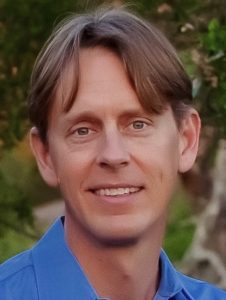
    This man is happy following treatment in spite of esketamine nasal spray controversy.

    Have you tried Spravato?

    Periodically, we’ve added our two cents to the discussion. Since its approval by the FDA in March of last year, we’ve seen a variety of protests from psychiatrists about its value for treating treatment resistant and severe depression. A recent article published in The Lancet provides an overview of the back and forth discussion. A group of physicians wrote a series of editorials published in The Lancet in October 2019, challenging Spravato’s value when weighed against its dangers and modest effectiveness. And the esketamine nasal spray controversy surges forward.

    A significant benefit for Spravato is supposed to be that because the FDA approved it, some insurances cover the cost of the medication and the cost of the doctor’s 2-hour office visit to administer it. (Stay with us–more on this later!) That’s a substantial benefit in the eyes of some patients.

    There have not yet been head-to-head controlled trials comparing racemic ketamine infusions to Spravato. But there are plenty of physicians around the country who have used both in their offices with patients. And when you compare Spravato with the effectiveness of IV ketamine treatment, Spravato’s benefit is less dramatic, and rather than occurring rapidly and robustly — it seems much milder and more gradual.
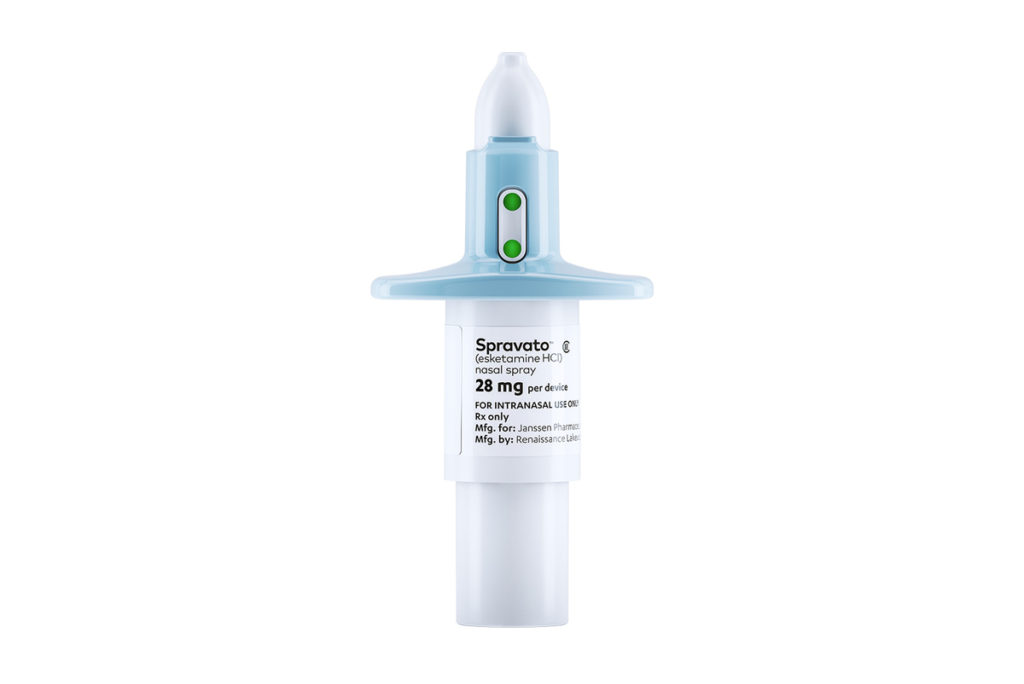
    Spravato esketamine nasal spray controversy is hot on The Lancet.

    In addition,  FDA approval requires the use of an antidepressant at the same time as Spravato.

    (It’s like Spravato is an adjunctive treatment to an antidepressant you’re starting at the same time, or an add-on to an antidepressant that’s on board but not completely effective.) Hmm. When you think about it, it may be harder and harder to know what the FDA trials really showed.

    So let’s look at the objections of these doctors, and the response from a team led by Ella Daly, M.D., associated with Janssen, the maker of Spravato.

    A Former FDA Recruiter Expresses Misgivings about Spravato’s Trials

    One of the critics of Spravato’s FDA approval was a former FDA reviewer himself. Erik Turner, MD, of Oregon Health and Science University in Portland, OR, made a point in his editorial.

    He said that some physicians who had heard that Spravato was a “game-changer” were likely to feel disappointed when they found out that  81% of the response to this medicine was experienced by those who were given the placebo!  

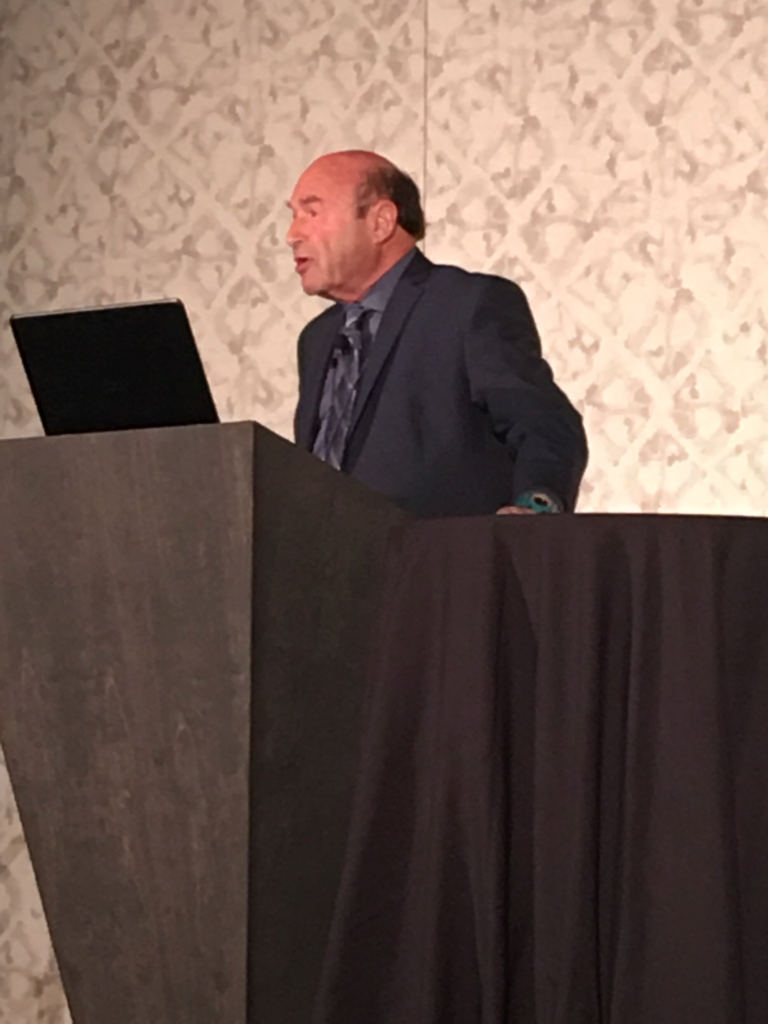
    Dr. Erik Turner challenges FDA approval of Spravato esketamine nasal spray.
    Erik Turner, M.D.

    As a former reviewer himself, he expressed his concern that esketamine nasal spray was basically approved on only two positive trials, in spite of the failed ones. 

    In a short-term trial to show effectiveness, the response of reduced symptoms was not maintained for even 24 hours. It’s not hard to see why that wasn’t satisfactory. 

    In the FDA trials, Janssen used the Montgomery-Asberg Depression Rating Scale (MADRS) to rate change in mood in the subjects who were taking esketamine spray. Surprisingly, there was only a mean 4 point improvement on that scale which has a possible score of 60. 

    It’s only fair to note that 69% of subjects who were taking the active drug vs. placebo technically responded. However, when we consider that they deemed only 2 points on the MADRS as “clinically significant,” practicing psychiatrists might not see it the same way when evaluating their own patients.

    Still, 52% of the placebo group scored 50% or higher improvement on their MADRS rating. So research team labeled them “responders,” (meaning the nasal spray they were testing had made them feel 50% better). But…the nasal spray that the placebo group was using was a placebo….

    You can see why Dr. Turner had some misgivings about the accuracy of the conclusions.

    Maintenance Trial Findings Distorted..?

    Dr. Turner also challenged whether the maintenance trial’s findings were up to par because a single site in Poland was the basis for those results. Trouble was that 100% of participants in the placebo group there relapsed. Which most researchers consider a red flag.

    The Janssen team defended their findings, and pointed out that the FDA didn’t see the need to eliminate data from the Polish site. In this recent response published by Dr. Daly and her colleagues, they produced another analysis which eliminated the Polish data. They used updated estimates and concluded they maintained the statistical significance.

    Dr. Turner came up with his own calculation based on information openly accessible to the public. His conclusion was that there was a “non-significant difference.” So he made the appeal “in the spirit of open science” that Janssen would provide an unbiased researcher with the patient-level data to hopefully resolve this conflict and try to replicate Janssen’s findings.

    Then …there is the issue that 6 people died during FDA trials. Of the six, 3 were suicides. The suicides occurred on the 4th day, the 12th day, and the 20th day after the last dose of esketamine.

    Esketamine nasal spray controversy is about Spravato not helping people like the FDA implied it would.
    There were no deaths with the placebo.

    Again …troubling. And confusing for a lot of people.

    Right now, the FDA says that Spravato can only be administered in offices, clinics, or hospitals registered with the Spravato Risk Evaluation and Mitigation Strategy  (Spravato REMS). Patients must remain in the office for monitoring for 2 hours after each dose.

    Another Editorial by Two Experts Fuels the Esketamine Nasal Spray Controversy

    Ioana Cristea, Ph.D., of the University of Pavia in Italy, also published one of the editorials in October in The Lancet with Florian Naudet, M.D., Ph.D., of Universitaire de Rennes in France.

    Dr. Cristea pointed out that the mild benefits of Spravato should be weighed against its potential for harm.

    She also holds that since Spravato is so expensive, has high potential for abuse, and has a troublesome history for safety, the bar for FDA approval for antidepressants should be raised.

    And she has a point.

    In the real world, our patients suffer severe and complex disorders, and the need for robust and rapid solutions for them has been gaping for 30 years. 

    Mild benefits that build gradually are only effective in select patients. 

    At Innovative Psychiatry we do use Spravato for select patients — but we use IV ketamine much more often. 

    Why?

    Because IV ketamine treatment can yield such rapid and robust benefits. And many patients need a treatment that’s both rapid and robust. It’s often life-saving. And we’ve published our results using IV ketamine infusions to stop suicidal thinking in real-world patients and presented our ongoing data at several conferences.

    For some patients, the insurance coverage that makes Spravato more accessible to them is well worth the risk of a less robust outcome. And we’re pleased to help them access the treatment best suited to them.

    With that said, since Spravato is made with the left-side enantiomer of the racemic ketamine molecule, it’s lacking the attributes of the right-side enantiomer. This is a subject that’s been side-stepped. We need more data about the right-side enantiomer.

    Esketamine Nasal Spray Controversy – Was Spravato the Only Alternative to IV Ketamine?

    And another thought. Janssen’s stance in developing the esketamine nasal spray was that ketamine was only available in IV form. But was that a real concern? Long before Spravato was approved, compounding pharmacies were already creating nasal sprays for ketamine, so it’s clear that a nasal spray using the full racemic ketamine molecule was a viable consideration. Some doctors have been prescribing that, and oral lozenges (called troches).

    Spravato esketamine nasal spray provides only a mild and gradual benefit in some people.

    So was it really because ketamine was only available in IV form? Or was it because ketamine’s patent had expired? (Hint: The big money is in the patent.)

    Is it possible that safety and effectiveness were sacrificed in lieu of monster profits?

    There is no pharmaceutical company sponsoring controlled studies of racemic ketamine.

    But there are real-world physicians with complicated patients around the country willing to carefully and diligently report what they see in their day-to-day offices. These are retrospective studies of their protocols, their patients, and their patients’ responses. Submitted for peer-review. And published.

    We know because we’re one of them. (We’re actually the first one of them. With the largest numbers, and with extraordinary responses to treatment.)

    Why do we do this?

    Because we know that once insurance companies realize that IV ketamine treatment in the office can rapidly stop suicidal thoughts and plans in patients with treatment-resistant depressioneven those who’ve made attempts before, been hospitalized, been failed by ECT, failed by TMS — those insurance companies are going to be pressured to stand up and listen.

    If we can turn these patients around (you? someone you love? someone you know?) so that they don’t have to go to the ER, and don’t have to be psychiatrically hospitalized…. WOW! What insurance company wouldn’t jump at paying for IV ketamine infusions instead of ambulances, ERs, and hospital days??

    That’s what I advocate for. Every day. Safe, effective, rapid treatment. Hope. Better lives for my patients.

    Imagine that.

    Imagine the goodwill gesture — such a small gesture, and such a small cost –for your insurance company to just simply approve payment for the codes we use everyday for office-based IV ketamine infusions for depression.

    What a concept. Radical. Life-saving.

    Read the paper. See for yourself.

    IV ketamine treatment stands as the most rapid, effective treatment against severe and treatment-resistant depression, as well as suicidal thinking, that we’ve ever seen. In the office, in an evening. In less than an hour.

    Which insurance company will step up and pay for IV ketamine to save a life?

    A girl can dream …and that goes for psychiatrists and their patients, too.

    If you believe Spravato can work for you, call us. We’re happy to provide this treatment for you. Don’t let the esketamine nasal spray controversy discourage you. In some people it works very well.

    Esketamine nasal spray controversy didn't stop this man from responding to treatment.

    If you’ve tried Spravato and you were disappointed with the results, call us and let’s talk about what IV ketamine might do that Spravato can’t.

    We’ll help you understand the differences in the fixed doses available with Spravato and compare them to what is available when ketamine is used IV.

    And if you suffer from severe depression or bipolar depression, PTSD, social anxiety, alcohol use disorder, or another substance use disorder, and have been failed by other treatments, call us, too.

    Because you can feel good again.

    You can rebuild your life with the motivation, initiative, and energy that’s been missing with restored hope … and joy. What’s more, creativity can return and grow as you invest in your career, your relationships, and your hobbies.

    We’re all about seeing you restored, fulfilled, rewarded.

    Give yourself the opportunity to live well again.
    Lori Calabrese, M.D. is on the front end of the race to stop PTSD in its tracks using IV ketamine treatment.

    To the restoration of your best self,
  • Student Need for Psychiatric Care on Campus Quadrupled

    Student Need for Psychiatric Care on Campus Quadrupled

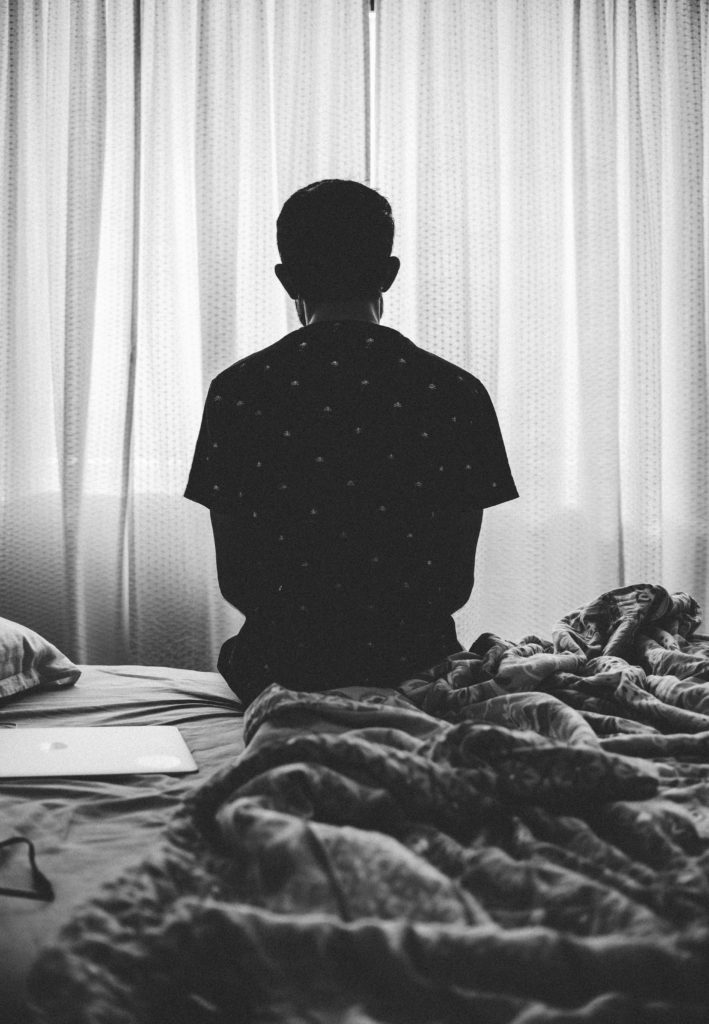
    Mason walked to the student union and plopped down to drink his coffee.

    Man, he just wasn’t feeling it. He went to class, but the studying and note taking, and researching all year was getting to him. He just wanted to go to bed and stay there. Just another example of student need for psychiatric care on campus. I’m a statistic, he thought to himself. Great.

    It was that time in the semester for another round of exams, and he was worried he couldn’t pass them. He tried to study but it just didn’t stick. He’d go over it and over it…but couldn’t seem to retain much at all. 

    It’s not like he was partying or anything…he wasn’t doing much of anything social. He didn’t feel like seeing anybody. Just wanted to be alone.  So he’d try to study then just lay his book down and turn over and go back to sleep. 

    Spiring Break was 3 weeks away.  Maybe that would help.  But he had to pass all his exams before then. What was he going to do?  His self-confidence was fading, and he was feeling more and more like a real loser. What was wrong with him?

    “Hey Mase! What’s up? Are you going to the campus movie night tonight?”

    “No man.  I’ve gotta study…”  Mason felt like he was lying, because he knew studying wouldn’t help anything. His brain was a lump of cold oatmeal.  Useless.

    “Oh really? You know we’ve got a study group going for Chemistry, right?  You wanna join us?”

    “Maybe, man.  Where do you meet…? “  He knew he wouldn’t go.  He couldn’t handle being around people right now…

    “We meet in Greg’s dorm room. At Stratton Hall.  327 Tomorrow after lunch.”

    “Thanks man. Maybe I will…”

    Depressed or Anxious Students Seek Solitude to Avoid Embarrassment

    Mason trudged off toward his dorm before someone else came along to strike up more conversation.  He felt like he was dumb as a rock. What had happened to him?  It used to be easy to learn. Mason’s self doubts were common for students suffering from disorders. Student need for psychiatric care was weighing down the healthcare system on campus.

    Once in his dorm, he sat at his desk and opened his economics book…determined to get something out of it. He opened to the page he was supposed to be reading and started reading.

    Then his mind wandered off to an online game he had played last year…  the action was really good in it. And it was challenging.  He had to really work at making points. There were some cool guys who played… Wonder why they…

    Aaackkk!!! Mason realized his mind was wondering again.  He put his eyes back on the beginning of that page and started reading again.  He read the first half of that page 4 times…and couldn’t recall what it said.  

    He slammed his book shut and dove into his bed and covered his head with his pillow. And that’s when his roommate walked in talking out loud. Mason pulled another pillow over his head.

    If only he could sleep. I mean really sleep. When was the last time he’d actually slept all night?  Laying there in the dark, his mind wandering…his worry about school choking him… listening to his roommate snore.  How does he do that??  He’s over there sleeping like he doesn’t have a care in the world. 
    Student need for psychiatric care is tripled what it used to be on campus and this young man needs treatment.

    He knew his parents would disown him if he didn’t make the grades. He was so tired…

    Student Need for Psychiatric Care on Campus Soars

    It’s true. Mason isn’t alone. The Center for Collegiate Mental Health (CCMH) at Pennsylvania State University released an annual report in 2018 that showed that student demand for mental health care on 550 university campuses increased by 30-40% between 2009-2015. The increase in enrollment was only 5%. 

    The primary complaints have been much the same as they’ve always been as students seek counseling for depression, anxiety, and relationship struggles. 

    And there’s a difference between relationship counseling and student need for psychiatric care due to depression, bipolar disorder, anxiety disorders, and PTSD.

    But, a recent article in Psychiatric News, a publication of the American Psychiatric Association, indicated that students carry more distress than they used to, and it’s more upsetting and worrisome to them.

    So they tend to take things harder, and if they never struggled before, they still are more likely to struggle in college.

    Social Media is Again at Fault

    Students now are also tormented by the belief that everyone else around them has a perfect life, and that they’re the only one struggling.

    This is largely related to the facade they see on social media. As they internalize these false beliefs, some students succumb to self-doubt and self-hatred, because of these comparisons.

    Suicide May Be a Consideration..?

    On top of that, suicide has become less implausible…more common place—at least from some students’ perspectives.  Obviously, this is a grave concern for campus counseling services. Through surveys, the CCMH has found that suicidal thoughts have increased among students every year for the 8th year in a row.

    Student need for psychiatric care on campus is overwhelming, and some students slip through the cracks.

    The reality of it has burdened these organizations to not only train their own staff for suicidal thoughts in students.

    They also must train everyone on campus to recognize signs and symptoms and take action… including campus police, professors, residential advisors, librarians, and anyone else whose job includes student contact.

    Some campuses focus on meeting the need in more minorities and male students, who tend to avoid mental health services. Other campus are including a counseling office in the campus clinic to make counseling more accessible with less stigma. 

    At any rate, while all these campuses scramble to provide services their students’ needs, the demand has risen so fast that they remain limited in resources for what they can do.

    Meanwhile, more intervention is needed. The demand overwhelms the system.

    Many of These Suffering Students Can Achieve Remission Off Campus

    Many of these students are diagnosed for the first time with depressive or anxiety disorders in college. But many more were diagnosed years earlier, and have been undergoing treatment before college. The increased pressure and demands of college often push them into more severe symptoms.

    For these who’re being treated before they enter college, or for whom treatment has become inadequate, a very real option can be IV ketamine treatment. When medicines are no longer helping, or never did, IV ketamine infusions can relieve symptoms dramatically. 

    The lack of energy, the struggle to learn, the despair, can be replaced by motivation, initiative, and the creativity to study and perform once again. 

    The restoration of brain circuitry, and proliferation of structures in the brain can rapidly build the resilience to embrace school again.

    On top of that, suicidal thoughts or behaviors can be eradicated in an afternoon with IV ketamine treatment. It’s a remarkable way to reverse suicidal thoughts, so a student can focus on getting better.

    IV Ketamine Can Transform Students and Reduce Student Need for Psychiatric Care on Campus

    At Innovative Psychiatry, we see students like this regain their joy and hope after IV ketamine treatment and walk out with confidence. IV ketamine treatment can lift your student’s outlook and energy. Despair can become hope, and listlessness can turn into purpose-driven initiative.

    These students are resilient and happily studying together because of IV ketamine treatment.

    That sullen student can wake up with new ideas, energy to socialize, and a song he’s singing. 

    This treatment can be transformative. And the more ill your child is, the more powerfully it seems to work.

    If your child sounds like Mason, or if his symptoms are even worse, call us

    And if you can relate to Mason’s story, and don’t know where to turn for help, call us… we want to help you rediscover your creativity, energy for work, relationships, and fun. We want to see your hope restored.

    Don’t let something like your education or your future fall by the wayside. You don’t have to because you do have options. 

    Let us help you live again with joy.

    Lori Calabrese, M.D. is on the front end of the race to stop PTSD in its tracks using IV ketamine treatment.

    To the restoration of your best self,

  • Relieve the Heartbreak of Elderly Depression with IV Ketamine

    Relieve the Heartbreak of Elderly Depression with IV Ketamine

    Ruby’s daughter let herself in with her key at the back door.

    When she walked in, the house was dark. Strange…she thought. Her mom was usually home on Saturdays.  She quietly stepped through the house looking for some sign of her mom.  A grave sense of dread came over her as the house continued to be silent…what was she going to find…? She stepped into her mom’s bedroom, and saw her form lying in bed. Joan stopped and caught her breath. Joan had been worried about her mom lately, and the heartbreak of elderly depression, since her husband died 11 months ago.

    Then a weak voice said, “Hi honey…”

    Joan exhaled. What a relief.

    “Hi Mom! The house was dark and quiet…  I was concerned.  You rarely leave the house on Saturday…”

    Joan stopped short of voicing what she’d feared.

    “Are you feeling ok? Why are you in bed..? It’s really dark in here…”

    “What day is it?” Ruby quietly asked.

    “It’s Saturday, Mom. How long have you been in bed..?”

    “Well, I remember watching the weather on Tuesday…I was wondering if I needed to wrap the pipes.”

    “Ok.  That was Tuesday…  Do you remember what happened Wednesday?”

    “I guess I’ve just been sleeping…”

    “Mom?  Since Tuesday?”

    “I don’t know…maybe? I got up and went to the bathroom at times then just felt tired and went back to bed…”

    “Do you remember if you ate anything..?”

    “No…not really.”

    Joan was alarmed.  Her mom hadn’t eaten since Tuesday.  No wonder she was weak. And she’d gone four days without her medicines. 

    Four Days without Her Medication

    Joan headed to the kitchen to make her mom some soup.  She wanted to go easy and see how she digested soup before solid food.  After opening the can of soup and dumping it in the pan, she looked at her mom’s medicines.

    Well, that confirmed it. The pills were still in the Wednesday, Thursday, and Friday compartments.

    Joan was shaken to think if she hadn’t dropped by, and another week had gone by, what could have happened.

    Joan brought her mom the bowl of soup with some crackers and a glass of milk on a tray.  She helped her 84 year-old mom sit up and propped her with pillows, then set the tray in front of her.  Slowly, her mom nibbled on a cracker, sipped the milk and finally scooped a spoonful of hot chicken noodle soup.  She closed her eyes as she swallowed.

    “Ok mom?”

    “ Yes, it tastes good.”

    Joan talked about trivial things to try to lighten the mood. Ruby had looked after everyone all her life, but since Joan’s dad, her mom had seemed less and less engaged in her own life.

    Maybe listless was the word. 

    She’d withdrawn from her bridge friends. She’d said it didn’t seem as fun anymore. Her grandkids were all grown with families of their own. Cleaning house and cooking was a chore without Charles to do it for.

    She just got tired of the struggle. What was the point?

    She felt tired all the time, and found herself taking more and more naps.  

    How do you find purpose in life after the companion who’s been there for 62 years is suddenly gone?

    The Heartbreak of Elderly Depression

    The more questions Joan asked, the clearer it became that her mom wasn’t fighting the flu, she was depressed. At least she seemed to be.

    Joan wondered how long she’d been depressed. And whether she’d thought about ending her life… It had really shaken her to walk through that dark silent house.

    She asked her mom more questions. Ruby was matter-of-fact. “Yes, the doctor told me I was depressed a couple years before your dad died. He prescribed some pills for me, and I took them, but they didn’t do anything. I think they must have been those sugar pills you hear people talk about. I finally stopped taking them.  There was no point.”

    “Joan,” Ruby said, “I miss your dad. Charles and I talked about everything. Without him, life is flat. It’s just so empty. I have you and your sister, and I love you both, and all the grandkids and their families. But I feel so empty.”

    “Mom, I can only try to imagine how much loss you feel with Dad gone. We all miss him, but he was your constant companion and love for 62 years. I ache for you… and I can’t help but feel that even though grief has made you feel empty, that does’t mean your time on earth is finished. Maybe something can be done to help you feel better, you know? Would you be ok with me making an appointment to see Dr. McShane? We can go together.. Ok?”

    The Heartbreak of Elderly Depression – How Can We Help?

    Here’s the thing. Our parents (and grandparents) do look after everyone else all their lives. Then, they slow down, and the the rest of the family can easily forget to touch base. Why? Because life is busy. We all live with packed schedules, and a week can go by without our even noticing it.

    Our elderly loved ones can find themselves withdrawing, slowing down, and feeling somewhat useless. It’s not that unusual for depression to follow. 

    In many cases, prescribed antidepressants help. But in some, they don’t help in spite of trying more than one. When the disorder doesn’t respond to multiple treatments, something more advanced is needed.

    IV Ketamine Treatment Can Reverse Elderly Depression

    IV ketamine for treatment resistant depression may just be the treatment of choice, to restore your parent’s brain circuity. By turning on mRNA which switches DNA to “ON” your brain-derived-neurotrophic-factor (BDNF) turbo boosts the prolific and rapid production of dendrites and dendritic spines to sweep through the important parts of the brain with connections to send signals at the speed of light.

    Depression lifts, joy surges, creative thought grows, and Grandma gets that sparkle back in her eye,  and has the energy to play bridge with the girls again… and make cookies for children in the neighborhood.

    At Innovative Psychiatry we love treating grandparents and watching them get a new lease on life. Of course, if they’re grieving losses, they can grieve while still enjoying life. 

    Ketamine treatment doesn’t prevent grief, which is a part of life.  But ketamine can help them think through the grief in a healthy, healing way. And meanwhile, they can also enjoy their friends, family, and grandchildren.

    Your Loved One Can Recover from the Heartbreak of Elderly Depression, and So Can You

    Do you have a parent or grandparent who seems to have lost their joy for living? Maybe they’ve tried antidepressants but still seem serious, irritable, edgy… or bland, shut down, and without energy. Maybe you notice they don’t bathe very often anymore, and have lost interest in their appearance, or in things they normally love to do. 

    If this sounds familiar, and you have loved ones you hope can be helped by IV ketamine treatment, call us. 

    In fact, if this describes you, please call us and let us help you find your joy again.

    IV ketamine treatment rapidly proliferates your brain circuits with an abundance of new synapse connections that make the way for restored creativity, emotion like joy, happiness, love…and hope. You want to do things you enjoy again.

    Amazingly, this proliferation also increases emotional energy that can translate to more physical energy, too. Initiative and motivation increase, and joie de vivre abounds. Few phrases express what ketamine can do like this French phrase, which means “a cheerful enjoyment of life and exultation of spirit.” 

    If you have lost the song in your heart, you can have that restored. Some of our patients report waking up in the mornings singing. 

    How about you?  Have you lost your song? IV ketamine treatment can restore it, and give you that, “Oh what a beautiful morning!” feeling. 

    It’s amazing to realize that people with joy and a song in their heart are that way because they have a LOT more synapses than others, isn’t it? 

    Let us help you and your mom find your songs again.

    Lori Calabrese, M.D. is on the front end of the race to stop PTSD in its tracks using IV ketamine treatment.

    To the restoration of your best self,

  • Can Use of Opioids Lead to PTSD? And If So, What Can You Do?

    Can Use of Opioids Lead to PTSD? And If So, What Can You Do?

    You know how a disorder – like bipolar disorder or PTSD – can make you so miserable…even make you want to self-medicate?  

    Doing so is rarely a good idea, though it may seem at the time that it helps.  But that’s for another post. Anyway, you know how self-medicating often accompanies these disorders, and we’ve assumed that the self-medicating is driven by the symptoms of the disorder: the ups, the downs, the agitation and rage, the misery… If the symptoms were to go away, there would be no need for self-medicating. Right? Doesn’t that seem logical? Well, a recent study says no…in fact, self-medicating with opioids… or even using prescribed opioids may lead to PTSD!

    Mood Swings in Bipolar Disorder Make You Want to Self-Medicate

    Take bipolar disorder, for example. You feel yourself swinging up, up, up until you’re confident, then agitated, shooting words like a machine gun, and feeling more energy than you can manage… you just want to feel normal, you know?  So you start drinking beers as fast as you can to slow down… and…well, it’s not an exact science.

    You end up drinking way too many until you’re frankly drunk…but there’s still energy you have to manage, somehow. You may want to jump in a car and head down the freeway… but thankfully, you can’t find your keys.

    OR… your mood starts plunging and plunging.  Way too fast… and before too long you want to scream and cry. You feel so hopeless, and disgust and self hatred take over your mind… and it feels like you have fire ants on your brain. 

    You need something to help you feel better. So you reach for something that helps you feel like you’re at a party. Then, after awhile, you’re a mixed up ball of horrific and frustrating feelings…and you decide to go for something different that will help you chill.

    This is a dangerous and destructive path, but it’s tragically common. This is self-medicating.

    And, unfortunately, you may not even realize that use of opioids may lead to PTSD.

    =============

    Meet Zach. He served two tours in Afghanistan. He wanted to go back for a third, but his family needed him at home. (At least that’s what he told himself.)

    Zach never talked about it, but he’d gotten high with friends off and on in high school. He had joined the Marines for the hard work and discipline, to get himself back on track.

    Now this.

    Anyway, he had rehab. Who was he kidding? There was no way he could go back. He figured he was nervous about going home after all that happened…

    The truth is, Zach got through the first tour fine. Then, on the second tour, he and some fellow marines were helping some children carry water to their homes.

    He and Rex were heading in the same direction when a little girl approached them with eyes as big as saucers. Rex naturally reached for the child and at that moment she detonated. The child had been wrapped in home-made explosives under her clothing.

    Rex blew apart, as did both children. Zach lost his right arm and his ear. Such an inhuman thing to do. The scene was tattooed in Zach’s memory and he couldn’t escape from it. Children’s body parts, his friend and marine brother’s hands, leg, organs, everywhere.

    Rage Begins… and Panic

    Rage burned within him that anyone would stoop to the evil of murdering children that way just to get rid of a marine or two.

    When he got home, he wasn’t the help to his family he wanted to be. He had trouble holding a job… any sudden startle stirred up the fight in him and sent him into a cold sweat at the same time. Like the wait staff dropping a dish. The clatter sounded like that explosion inside his head. His only thought in moments like that was to tear apart the reprobate who did this to these little kids. And stole his friend.

    Zach was seething all the time. Going through surgeries for his arm stump and ear reconstruction. Jumpy, easily provoked, irritable…and at times terrified. His marriage was deteriorating. His children afraid of him.

    He talked to a buddy about getting his hands on something to calm him down… he hated being like this.

    Something had to give…then his wife learned about a “new” treatment for PTSD…

    ============

    Researchers Asked, Can Use of Opioids Lead to PTSD?

    So…  it turns out this self-medicating road goes both ways. A new study released in December 2019 demonstrated that heavy opioid use over time before a traumatic event influences us to be traumatized by the event… basically it alerts us to be so fearful of that experience that we can develop PTSD as a result.

    We’re talking about Post Traumatic Stress Disorder, or PTSD. And like bipolar disorder, PTSD has an established reputation as a disorder that is quite often co-morbid (meaning you have more than one illness at the same time) with substance use disorder.

    In fact, 40% of people diagnosed with PTSD also struggle with substance use disorder (SUD) …meaning they may have addictions, or they may regularly use a substance that masks or combats the way they feel…until it doesn’t. 

    Now get this: almost 35% of people who struggle with an opioid use disorder also suffer from PTSD. Sound familiar?  

    PTSD <=> SUD

      40% <=> 35%

    A bit of a coincidence you think..? Maybe, but more likely this two way street of comorbidity with PTSD and substance use disorder does cause us to stop and think….can opioid use play a role in the development of PTSD?

    Laboratory Animals Develop PTSD after Opioid Use

    This study I mentioned was just published in Neuropsychopharmacology last month, by a team at UCLA led by Zachary T. Pennington. Their carefully planned study involved laboratory animals and demonstrated how the use of opioids during a time that preceded a trauma increased fear learning.  Or, to be more clear… use of opioids may lead to PTSD.  

    Interestingly, in cases where the opioid use occurred after the traumatic experience, there was no lasting fear or PTSD reaction.

    The team used an upsetting/frightening stimulus to create a traumatic experience for the animals and noted their reaction to it. Then after creating the condition of “withdrawal” from opioids using morphine and naltrexone (a medicine used to block the effects of opioids) they placed the animals in an environment where only a mild stimulus was used, and saw that the animals reacted strongly in fear — basically they froze in place — as though it was the original severe experience.

    Sounds a lot like PTSD, doesn’t it?

    Remember Zach? The guy who is a combat veteran with PTSD freezes when someone pats him cheerfully on the back to greet him. It’s all he can do to avoid turning and fighting that person to the ground. Why? Because it feels like he’s being assaulted, and all those horrific memories flood him as if they’re happening right now.

    Researchers also gave control animals (the ones who don’t receive opioids so they can be compared to the ones who do) saline injections instead of morphine, and then followed with the traumatic experience. Those animals experienced far less fear and anxiety reactions compared to the ones who had been given morphine prior to the traumatic experience.

    Stress Enhanced Fear Learning (SEFL)

    They call this approach “stress-enhanced-fear-learning” (SEFL) and it’s a model for us of PTSD and how it ca develop. 

    And this demonstration shows us that people who’ve used opioids, whether they were prescribed — or obtained illegally — could be vulnerable to PTSD from traumatic experiences in the future. The resilience necessary to quickly recover from trauma seems to be drastically reduced in those who are exposed to opioids.

    The media is full of the dangers of the opioid crisis, but this is one we didn’t see coming. Use of opioids at a particularly vulnerable time can lead to PTSD …or at least that’s what this study seems to tell us.

    Still, the researchers emphasize that there’s a difference between fear learning and fear expression. Fear learning is the process we go through where we’re frightened by something unpleasant that we don’t want to experience again…and by it we learn to be cautious and recognize danger.  (This is a good thing.) The amygdala is the primary place in the brain where fear is processed and stored. Some types of fears are then sent to the hippocampus for further storing.  But that’s not the point.

    Fear expression is what we do and how we look when we feel fear. Fighting or running are expressions of fear. Freezing can be an expression of fear, too.

    Fear expression is our response to the fear we feel.

    The way we express fear has nothing to do with the learning process we go through to establish a fearful memory. But the process we go through to learn the fear has a lot to do with whether we quickly recover from it, or whether it turns into a fearful memory that becomes traumatic every time we think of it…and that’s the story of PTSD.

    What we didn’t know before this study, is that using opioids may make you really vulnerable to PTSD, so avoiding them if you can is better for your overall wellbeing going forward. 

    Because use of opioids may lead to PTSD…

    Of course, since this is the first study that has identified the role opioids may play in the development of PTSD, there are lots more studies needed. We’d like to see studies that test the development of PTSD if the opioids were used 6 months ago, a year ago, 2 years ago…?  

    In this laboratory setting, with lab animals — not human beings — it had only been a week.

    And because this study focused on the reactions of lab animals, we don’t yet know how the results would look in human subjects. In addition, we can’t know without more research, what this means for people who already take opiates for pain.

    It’s certainly true that none of us knows when we might experience something traumatic. It can happen to anyone… at any time. An assault, a vehicle collision, a catastrophic illness, a vicious divorce.

    The study demonstrated this phenomenon only in cases where the animal had previously had the opioid before experiencing the trauma. When the opioid was administered after the trauma there was no PTSD reaction.

    So… of course we’d like to avoid opioids as much as possible for unexpected surgeries, accidents, and injuries just in case of trauma in the future…? At the same time, we don’t know enough yet to be alarmed.

    This is how it works with new discoveries. Tiny pieces of information eek out…one bit at a time. And so we look forward to what else can be learned about this PTSD – Opioid connection.

    Still, we’re excited about an effective treatment for PTSD if it does develop, and for certain substance use disorders, as well.

    IV ketamine treatment has demonstrated what it can do for both of those, both in studies and in real world practice.

    At Innovative Psychiatry, we use novel and advanced treatments for disorders that haven’t responded to traditional medicines and treatments. IV ketamine treatment reigns proudly at the top of that list. 

    And we’re always thrilled and amazed to see how effective ketamine can be in reversing a cluster of disorders all at once. By treating PTSD and depression with IV ketamine, we often see phobias disappear, too. By treating suicidal thoughts with ketamine, which can be utterly life-saving…we often see depression lift, and PTSD with it.

    There’s nothing magical about ketamine. It’s just a man-made molecule that happens to work in a surprising number of ways. But when you’ve been tormented by the traumatic flashbacks of PTSD, disrupting your life and your family, and then those terrifying visuals and experiences subside with ketamine infusions, it sure can seem like it’s magic. And it thrills your family just as much as it does you…when they see your new-found peace and resilience.
    If use of opioids leads to PTSD for you, IV ketamine treatment can help you achieve remission like this relaxed guy on the beach.

    If you suffer from fear and the fearful memories that disrupt you life, your career, and your relationships — or if you’ve been diagnosed with PTSD but treatments haven’t helped, you owe it to yourself and the people you love to reach out for the freedom you can enjoy after IV ketamine treatment.

    Your life can change through the extraordinary effects of IV ketamine treatment. 

    Expect around 6 -8 infusions or so… and be patient if you don’t immediately feel better after the first one. Give it a little time and a few more infusions…

    On average, it’s common for people to experience ketamine’s benefits after the 3rd infusion. But that’s an average and individual experiences vary.

    You do your part, we’ll do our part…and we’ll also eagerly embrace collaboration with the healthcare team who knows you well.

    You can have a better life. You really can. Find out how you can enjoy the resilience to snap back after something goes wrong. Reach out for help to get better with IV ketamine treatment. We’re here to walk you through it, and to help it go smoothly. You’ll be in a quiet, comfortable room, with lights turned low for your infusions. And you can bring soft music to play, if you like. A blanket to keep you warm and secure.

    This is your chance to emerge better, balanced, and joyful. This is your opportunity to restore hope.

    We look forward to talking with you. Call us.

    Lori Calabrese, M.D. is on the front end of the race to stop PTSD in its tracks using IV ketamine treatment.

    To the restoration of your best self,

  • Reach Out for Ketamine… to Get Better… and Make 2020 Your Best Year Yet

    Reach Out for Ketamine… to Get Better… and Make 2020 Your Best Year Yet

    This is the first Monday of the New Year…so how do you start a new year?

    With resolutions? A diet?  Maybe more exercise? Lots of people do. But what about you? What if you don’t have an appetite…?  Might be hard to stick to a diet more than a couple days… and what if you haven’t slept in days…and you’re exhausted… who cares about the new year and any good intentions? When you feel crummy, the beginning of the year seems like just more of the same ol’ misery. Maybe you wonder, why try? You’ve been so depressed, with so much anxiety, and have felt so alone, so vacant, for so looong, it seems futile to try something new…  BUT. What if there really IS an answer that could sweep away your misery and you could finally feel like the best you you’ve ever been…?  I know, you probably think that sounds impossible. But wait a sec…this is the 21st century, my friend. Treatments have improved. Or a better way to put it, there’s now a treatment that’s a game changer. But it won’t come to you.  You’ll have to reach out for ketamine so you can get better now. You’ll have to do something…because this treatment won’t magically show up in your living room. So why not do it now?

    IV Ketamine Treatment – The Game Changer for Psychiatric Disorders

    Of course, I’m talking about the treatment that came out of the woodwork the last decade. The one that started as a trusted anesthesia medicine listed on the World Health Organization (WHO) List of Essential Medicines. The one that’s been so safe for 50 years that it’s been used in surgical settings for people of all ages across the globe, and also in surgical settings for pets of all sizes. 

    Like most exceptional medicines that are designed for sedation and/or pain relief, it’s been abused by people on the street and in the club scene for its dissociative side effects. As a result, it’s sometimes been misunderstood as a result.

    But under psychiatric supervision, it’s nothing less than extraordinary in its effect on people whose disorder has not responded to traditional medications. Which is one of its many endearing charms.

    Why wait any longer? Why not reach out for ketamine now and start this new decade on far better footing..? Stick your neck out and make the call for treatment now because you deserve the chance to live a fulfilling life, free of symptoms that keep your life shackled.

    Ketamine Treatment Relieves a Broad Variety of Disorder Symptoms

    It happened last week, and it shocked me. Someone asked me about the best treatments for depression, anxiety, and PTSD. As I began to talk about treatments, I saw a blank look on his face when I mentioned ketamine infusions. He’d never heard about them…! And I realized that though this medicine is always in my radar, there are countless people who know nothing about what it can do.

    Someone who suffers from unrelenting and severe depression, bipolar depression, PTSD, OCD, social anxiety, substance use disorder, alcohol use disorders – and sometimes eating disorders like Anorexia Nervosa – can achieve remission with IV ketamine treatment.

    IV ketamine treatment can be a bit tepid in relieving symptoms for those with milder cases. But, let me quickly say that when you feel bad, it doesn’t feel mild. And that’s why we have criteria to help us measure the severity of each case.

    Just knowing how severe it is – or not – can guide us in how to treat it. When we see someone who has suffered with symptoms for years in spite of multiple medication trials, in spite of other treatments, who has also been hospitalized for symptoms, and may have attempted suicide multiple times, we realize this patient has suffered severely for a very long time. And patients like this usually experience a dramatic remission after IV ketamine treatment.

    Not always. But usually…

    IV ketamine treatment doesn’t work like this for everyone… sadly, not even for everyone who’s severely ill. But it has a remarkably fast and vigorously thorough effect on a very high percentage of patients… higher than any other office treatment for these disorders.

    And that’s not all.

    Freedom from the Doldrums

    You know how it is with depression that hangs over you…month after month and year after year… even if you have a few days that are a bit better…and you can actually smile some…as soon as someone says something that hits a nerve – you plunge again…back into the pits. It’s like you have nothing to fight with, like a tightrope performer with no net. So even a lighter feeling for a few days is temporary and you know it. You can feel how fragile it is.

    But with IV ketamine treatment, that fragile-ness seems to evaporate. You get offended by the guy at the party who ALWAYS has his foot in his mouth, and it burns you up. But the nosedive you expect floats away, as you think through that guy’s words and realize your peace is too important to jeopardize… and ::::poof!:::: you move on. And it’s forgotten.

    One reason may be the resilience ketamine builds. You’re able to adapt and quickly recover from the offenses that happen and you have the power to just snap back and be ok. It’s amazing…in fact, it’s priceless.

    So, reaching out may require that you talk to yourself. Maybe you’ll need to “psych yourself up,” but when you do whatever you need to do, and reach out for ketamine treatment, you’ll find yourself surprised at all that happens for you.

    Neuroplasticity + Psychotherapy = Peace & Joy in life

    Then, to point out yet another talent of this treatment, researchers and therapists have learned that because of the neuroplasticity ketamine creates in your brain circuitry, psychotherapy can be much more effective about 24 hours after an infusion.

    At Innovative Psychiatry, we love working with your psychiatrist and therapist to help make that benefit available to you with scheduled infusions coordinated with your therapy appointment 24 hours later.

    But, the fact is, that none of this can be available to you unless you reach out. It requires that you call us. Let us coordinate with your healthcare team.

    You’re probably thinking, How Can I Do THAT?  I Can’t Seem to Get Out of Bed??!!

    And there’s the rub.

    There is more help available for your tormentous symptoms than has ever been seen by your parents or grandparents or great grandparents… 

    But the biggest obstacle between you and having a healthy, balanced, rewarding life is actually a characteristic of your illness. To get to that rewarding life (you may have all but given up on,) you have to do something you may not think you can do. And here it is…

    PUSH through.

    …and make the call.

    And you know how you can do that..? 

    By grabbing on to HOPE. 

    The drowning man has to take hold of the rope. If he’s passive and tries nothing, he’ll drown.

    The mountain climber who loses his footing and careens over the cliff has to reach out and GRAB – something. A rock…a rope…a bush…?

    Once you reach out, it gets easier. We step in. You’ll still have to show up, but each time it will probably get easier and easier. And as ketamine goes to work in your brain cells – the systems and circuits and structures – surging hope and strength and resilience will billow from within you.  

    It doesn’t happen all at once the very first minute…

    Maybe it just trickles at first, but then the trickles become waves, and the joy and initiative surges, and you find you’re CAPABLE of doing things you want to do, that you’d all but forgotten about.

    For some it’s during the first infusion…for some it’s after the second one. For others it’s after the third… and in some cases it’s even after the fourth.

    Your family may notice the changes in you before you do. You may show unexpected initiative before you FEEL all that much better. (Miranda, are you actually folding clothes? Unbelievable!)

    Reach Out for Ketamine!

    More than likely, you’ve heard of ketamine treatment. Maybe you dismissed it, because you’ve heard of it as “Special K” or thought it was just a horse tranquilizer. You think it all sounds bizarre, or the creepy kind of experimental treatment that happens in somebody’s garage.

    If so, maybe it’s time you do your own homework? The National Institute of Health funds extensive research about ketamine treatment because it’s so extraordinary.

    Esteemed neuroscience researchers around the world submit their research to peer-reviewed medical journals. Conferences of psychiatrists, neurologists, neuroscientists, and physicians in other fields are hosted in major cities like Oxford (UK), NYC, Austin, San Francisco, and more. And this has been going on for years.

    IV ketamine treatment is the most effective medicine for psychiatric disorders we’ve ever seen. It’s not FDA approved because no one wants to pay for FDA trials if they can’t make a profit off a patent. And..ketamine is too old…there’s no patent to be had.

    So, we lobby for it to be covered by insurance companies, anyway. And until then, you have to pay for this treatment out-of-pocket. However, there is medical financing available everywhere. And your resurrected life, your ability to pursue your dreams, build strong, healthy relationships, and enjoy your hobbies on your terms…isn’t all that worth a small loan?  To be able to live again?

    Reach Out for Ketamine and Get Better for 2020

    This is a new year, and a new decade. Right now, this week, is the perfect time to turn the tables on misery, take hold of your hope, and reach out to get better.

    Tell yourself that it’s your turn to get better. And that you’re not going to give in to excuses. That you want to live better, healthier, and more balanced. That you want your life to BE better. Give Hope the benefit of the doubt.

    This step can turn your entire life around for the better. But you’re the one who has to take it.

    Because it’s not right for everyone. We need to be sure you’re a candidate. And we’ll evaluate that first. 

    So…you may say, What if it doesn’t work for me?

    This young woman chose to reach out for ketamine and it changed everything about her life.

    Well…we say, What if it does??

    The likelihood it will transform your life is much stronger than the likelihood it won’t work for you.  Much stronger.

    Do you really want another decade to crawl by while you’re trapped in the misery and despair of this disorder?

    Reach out for Hope and for a better life in 2020 and beyond. 

    We’ll walk you through the process, answer your questions, and make it as easy for you as we possibly can. We’re here waiting for you to call us because we want to see you enjoying a full life.

    Reach out for ketamine and grab onto HOPE.

    Lori Calabrese, M.D. is on the front end of the race to stop PTSD in its tracks using IV ketamine treatment.

    To the restoration of your best self,
  • IV Ketamine Can Create Resilience For You This Season

    IV Ketamine Can Create Resilience For You This Season

    Even during the holidays you can find yourself alone when everyone else is having a  good time, but ketamine can help you enjoy being with people again.

    This time of year conjures up visions of sugarplums, elves, and Christmas trees guarding piles of gifts.

    There are carolers singing on the corner, and menorahs and dreidels and flickering candle light. Families come together, and friends are invited to share in the celebrations. A manger with a Baby surrounded by angels, shepherds, and wise men. Oh the wonders of this time of year. And oh the suffering for those who find it difficult to cope. But, IV ketamine can create resilience for you… Some suffer because of painful losses and deaths brought to mind again by both treasured or painful memories. Others suffer because of disorders that make it difficult for them to blend at family gatherings, whose symptoms impose so much pain and heartache, even chaos, they’re unable to enjoy any of it. 

    It’s for these loved ones we write today. The ones who’ve suffered for years – even decades – because their symptoms of depression, anxiety, phobias, addiction, eating disorders, PTSD, OCD, and the suicidal thoughts that eventually often show up and threaten have not been helped by the medicines prescribed for them.

    Dreading a gathering can disappear because ketamine can create resilience.

    Dreading the family gathering, or finding something else to do so they can justify missing it, they’re often ostrasized for “creating a scene and making the holiday about them.” Cruel judgments and short-sighted disapproval abound. But few realize how very much these dear ones wish they could seamlessly fit in.  

    Their “scenes” may very likely be due to untreated symptoms. 

    This is the time when IV ketamine treatment can make all the difference. And it’s not just for this holiday season. It’s for all the holiday seasons that will come in the future.  For all the school days, business days, birthdays, and everydays that lie ahead. Ketamine can create resilience for facing whatever life brings…

    And let’s be clear about something.

    IV Ketamine Treatment is NOT Esketamine Nasal Spray

    The ketamine molecule is racemic, which means it is made up of two sides, or enantiomers, which are mirror images of each other. This has caused some confusion. Because they’re NOT identical. Each one possesses its own traits, it’s own strengths and weaknesses. It’s own benefits. 

    Esketamine nasal spray is the left mirror image. We call each side an enantiomer. Esketamine is the left enantiomer. It has strengths and weaknesses, but it’s not the complete ketamine molecule. This is often misunderstood. It’s also a great deal more expensive than ketamine.

    However, esketamine nasal spray is “covered” by some insurances, at least partly. (It’s very expensive and eats up most of your high deductible very quickly.) But having the medication pad for may be a benefit that may make it worth trying for you. The office visits required for administration are another fee–and they are very poorly covered by insurance companies.

    Ketamine infusions on the other hand, are not usually covered.

    We’re joining with others in psychiatry promoting the idea that IV ketamine treatment should be covered by insurance. It should be. Ketamine is the complete compound with all the benefits. When it’s administered properly, it can be — and often IS — transformative.

    IV ketamine treatment can liberate you from the symptoms that make the holidays so painful. Those things that make it nearly impossible for you to enjoy family gatherings. 

    IV ketamine helps build something to make life so much easier, even holiday gatherings.

    Ketamine Can Create Resilience: And It Empowers You to Enjoy

    It’s resilience. Depression, alcohol use disorder, anxiety, PTSD, OCD, opioid use disorder, social anxiety, bipolar depression…all of these conditions have symptoms that are sometimes hard to treat. You might say “treatment resistant.” And when the symptoms go on and on, they wear down circuitry in your brain in certain regions. 

    Enjoy the giving season - ketamine can create resilience for you.

    When the circuits are worn down, the dendrites and synaptic connections between neurons are pruned back and the signals are hard pressed to make much progress getting from one area to another. So you feel vacant…numb…dull…and dark.

    But ketamine treatment restores those circuits. It stimulates mRNA to turn on DNA to turbo boost your brain-derived-neurotrophic-factor. When that happens it’s as if a rich compost infuses fast prolific growth into those dendrites, and dendritic spines…and your synapses multiply like gangbusters. Suddenly, your brain comes alive with a wealth of signals darting at the speed of light to help you think, create, plan, accomplish…and to bring you joy…and hope.

    Then, there are those G proteins floating along on their lipid rafts. Ketamine shoves them off those rafts and puts them back to work, which gets signals moving really fast, too.

    That’s where the resilience comes from. Your active brain communication transforms your outlook and cognitive function. And if something comes along to knock you down, you finally have the resilience to think it through, get back up, and snap back. You have energy to face difficulty, energy to be around difficult people. Energy to contribute, and to rebuild strong, healthy relationships.

    Ketamine does that. Ketamine can create resilience by working in so many parts of the brain and it works fast.

    Think about it like you’ve rebuilt your car’s engine and you have the capacity now to take on difficult terrain, climb mountains, pull trailers, and get the job done. (I sound like a truck commercial but you see what I mean.)

    Restoration for the Holidays – Is There a Better Gift?

    If you enjoy this time of year, that’s wonderful. It’s supposed to be a wonderful time of year.  Enjoy it. Savor every moment.

    But if you don’t …if you can’t… call us. Let us help you find the resilience you wish you had. The resilience to rise above the struggles, and the ability to actually enjoy people you care about. 

    See how relaxed and joyful this woman is because ketamine creates resilience?

    IV Ketamine treatment may seem expensive at first blush, but when you consider how it can transform your life, and give you hope and resilience for the future, it’s worth finding a way. There are opportunities for financing your treatment through medical financing services. We also see families helping financially to get their loved one a chance to recover.

    Feeling better changes everything.  Everything.

    When you’ve felt like this so, so long, it’s hard to imagine what feeling good would be like. No worries. You’ll definitely know it when you see it. And your family may detect the changes in you before you even notice them yourself. 

    Reach for brighter days, healthier relationships, better performance in your career. Reach out for resilience.

    Lori Calabrese, M.D. is on the front end of the race to stop PTSD in its tracks using IV ketamine treatment.

    To the restoration of your best self,

  • KRIYA Conference 2019: The Flexibility of Ketamine

    KRIYA Conference 2019: The Flexibility of Ketamine

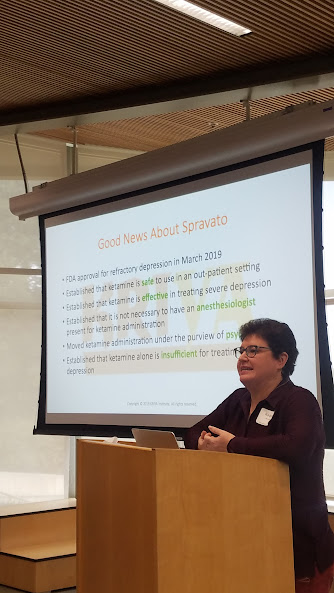
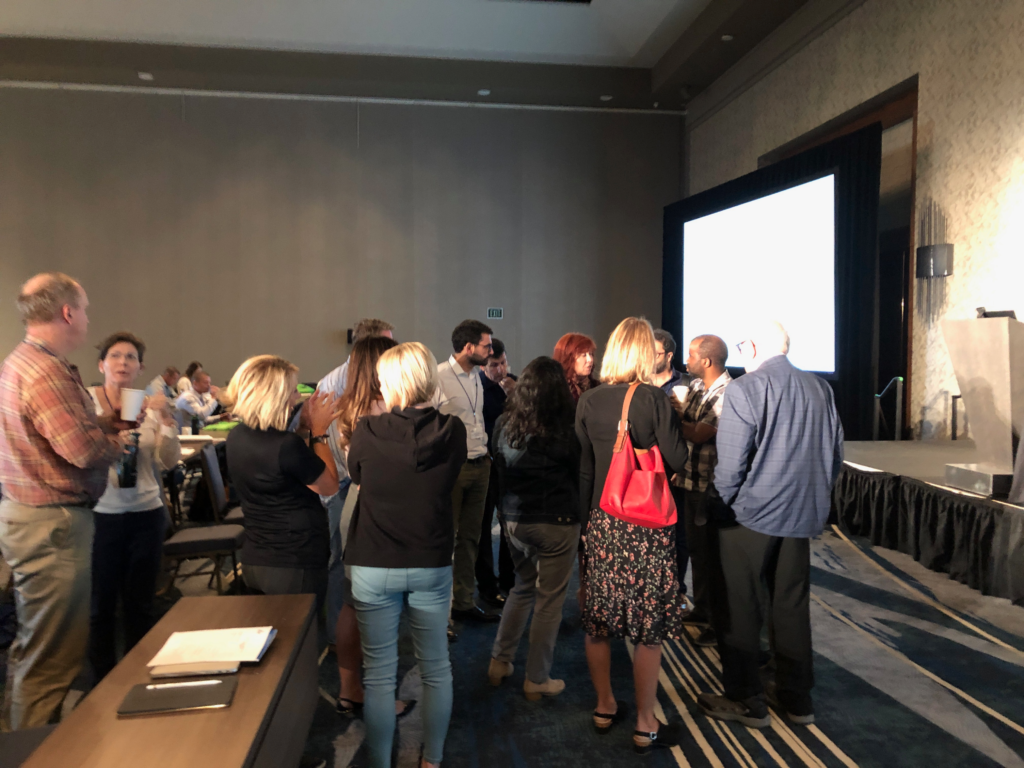
    Dr. Lori Calabrese speaks at KRIYA and applies the flexibility of ketamine.

    We’ve come so far in ketamine treatment for depression, and we still have so far to go.

    KRIYA held the first conference on ketamine treatment for depression in 2015. Now, 5 years later, there are several medical conferences that support the exchange of information in this field. Raquel Bennett, the founder of KRIYA – The Ketamine Research Institute –  says that ketamine is a flexible tool and should be used with freedom and skill. She urges clinicians to make the most of the flexibility of ketamine.

    This is the last conference by KRIYA that will be held in this format, according to Dr. Bennett. She plans to possibly shift to an online format next year to accommodate the huge numbers of clinicians who wish to be included.

    What’s more, KRIYA has supported, from the beginning, the use of ketamine by different routes and for varied conditions, and encourages participation from providers across the gamut of ketamine applications. So we’re a wonderfully diverse crew who come together for these conferences. As for me, I know that I’ve learned so many things and forged new friendships and collaborations from KRIYA conferences. 

    And…my own contributions have been so warmly received. As far as the educational gathering, there are psychiatrists, psychologists, therapists, ER physicians, pharmacists, anesthesiologists, neuroscientists, nurses, and experts in consciousness medicine. 

    Raquel Bennet, Psy.D. Stepped Up as a Leader in the Field of Ketamine for Depression

    Dr. Bennett reminds us she has created a “tasting menu,” if you will… from

    all corners of the field. At this conference, she opted for breadth vs depth to make us privy to all that’s happening in the field of working with ketamine. And she emphasizes that speakers are working from different paradigms. So, she urges us to listen for the paradigm they report from….and learn.

    And she’s right when she says that ketamine is a flexible tool that contributes to a variety of needs.  When a patient is too depressed to talk, ketamine lightens depression so they can participate in talk therapy. To help manage severe pain and the depression that goes with it. It can help the patient go deeper into therapy, and explore their traumatic experiences gently. It can treat acute suicidal thoughts and prevent hospitalization. And she says, it can induce mystical visions for existential exploration.

    Raquel had much, much more to say, but I want to mention some of the other speakers.

    Brent Turnipseed, MD and Lindsey Slater, LPC, from Austin, TX talked about their use of EMDR in ketamine-assisted therapy.

    Brent Turnipseed speaks about the flexibility of ketamine.

    In PTSD, the body’s own reaction to a patient’s traumatic memories activates adrenaline , which prevents their ability to process their trauma. Ketamine can calm the body enough that they can process the trauma without the distraction of adrenaline. As a result, it can help relieve their fears. 

    EMDR works by helping the patient desensitize by brief exposures to the trauma, then by redirecting the patient’s attention, EMDR induces a relaxed neurological state similar to rapid eye movement (REM).

    Elias Dakwar, M.D., psychiatrist and the addiction researcher we’ve often talked about before, gave a wonderful presentation. 

    He presented a thought -provoking talk on meditation and mindfulness as it relates to ketamine in treating addiction.

    The field of ketamine for psychiatric disorders, including  addiction treatment, continues to wrangle with how to take ketamine into psychiatry but that’s because our paradigms are problematic. Mainstream psychiatry has tried to cut ketamine down to size instead of using this extraordinary medicine as a DISRUPTOR.

    Dr. Dakwar entered addiction research after a long time practice of meditation and with great compassion for the patients he sees.

    He described his previous and current work in detail–look for it in the journals.

    Ian Mitchell, M.D., Emergency Medicine in British Columbia,

    spoke about the uses for ketamine in the emergency department. He spoke about its use for sedation during an emergency procedure, such as setting bones, repairing wounds, or the removal of foreign bodies, pediatric sedation for the same types of procedures, sub-dissociative dosing for pain management, especially for neuropathic pain, to prepare a patient for intubation, sedation for the out of control, prehospital pain relief, and to manage an overstimulated patient.

    In British Columbia, ambulances are equipped with intranasal ketamine for prehospital pain management as a result of the PAIN-K trial. More of ketamine’s flexibility.

    Wesley Ryan, M.D., psychiatrist from Marina del Ray, CA,  Parria Zarrinnegar, M.D., psychiatrist in Portland, OR, and Daniel Barton, M.D., psychiatrist from Nashville, TN all presented riveting case reports.

    Kelan Thomas, Pharm.D,

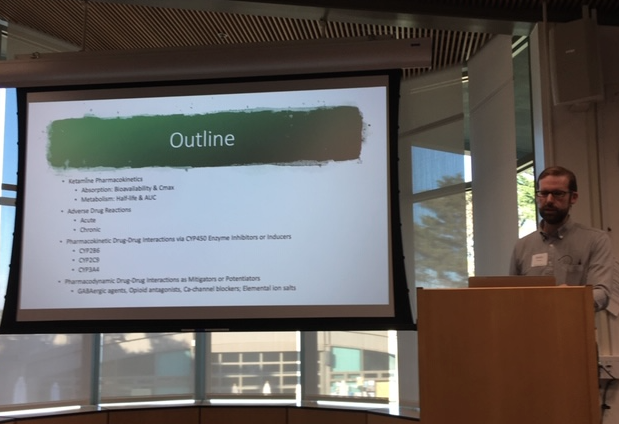
    spoke about adverse reactions and drug-to-drug interactions that have been documented with ketamine. So important and so well-done.

    Annie Oak, a journalist from the Bay area, spoke on the use of ketamine outside the medical setting.

    Gita Vaid, M.D., psychiatrist and psychoanalyst, spoke on using ketamine in psychoanalytic psychotherapy in very long session. She talked about how she has witnessed ketamine help patients relax and defenses soften so they can have freedom to talk. The psychotherapist builds relationship with the patient and it can be transformational.

    Jason Wallach, Ph.D., is a pharmacologist and neuroscience researcher whose energy and depth of knowledge captivates us every time he speaks. He spoke about the neuroscience and  pharmacology of ketamine. Gave an update on some of the other dissociative drugs he’s tested. (I think he’s tested them all!) He made the point that ketamine has been called a dirty drug because of the receptors it hits ex-vivo and in animal models — but that’s not true. It’s really one of the more selective drugs of this class at the doses used in people.

    Jessica Katzman, Ph.D., and Harvey Schwartz, Ph.D., spoke about bumps in the road they’ve discovered with ketamine assisted psychotherapy and in the integration work that follows treatment… What is integration? It comes from a latin word that means “to make whole” or “to begin again.” Bring your clinical compass, but don’t forget your humanity. A beautiful duo talk with lots of clinical examples.

    Eli Kolp, M.D., a pioneer in ketamine treatment, gave a beautiful talk on the phenomenology of ketamine-induced dissociative states.

    There were so many other speakers and so much to absorb–my computer battery kept dying down, so between Surface notes, handwritten notes, and photos, I can’t do justice to the breadth of expertise in the room, and the excitement.

    Greg Wells, Ph.D.  Sylver Quevedo, M.D., Veronika Gold, M.F.T.Eric Sienknecht, Psy.D. presented as a panel on their model of coordination of care between prescriber and psychotherapist. Peter Koshland, Pharm.D. talked about how to work with a compounding pharmacy for varied compounded preparations of racemic ketamine. Nate Schmidt, A.R.N.P spoke about scheduling and billing logistics.

    Sunday was a treasure with a very special presentation by Francoise Bourzat on the Use of Sacred Medicines in the Age of Technology and Medicalization. It was a delight to meet her. She captivated the audience, and her new book, Consciousness Medicine, is a wonderful synthesis of her life’s work.

    Kelley O’Donnell, M.D. and Christian Yavorsky, Ph.D. are doing yeoman’s work with KRIYA and presented an excellent (and not dry!) talk on Measuring Clinical Outcomes: Scales and Assessment Tools. And in addition to the training for Ketamine Assisted Psychotherapy that Raquel Bennett presented and discussed earlier in the conference, Jennifer Dore, MD presented a model of training for Ketamine Assisted Psychotherapy developed by Phil Wolfson, MD and Julane Andrews, that they have used around the country.

    IV Ketamine can STOP suicidal thoughts fast…Now that’s flexibility of ketamine!

    On the last day, and as the next to the last speaker, I took the podium to share my data in working with patients in my own practice, and showing how IV ketamine infusions can stop suicidal thinking, and save patients from having to go to the ER or be hospitalized.  

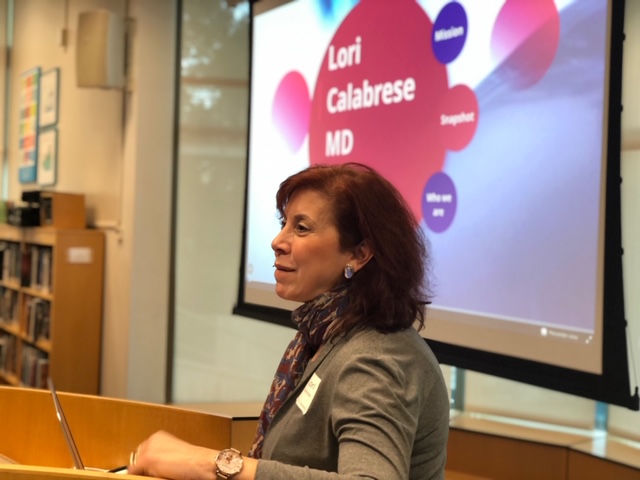
    Lori Calabrese. MD understands the flexibility of ketamine.

    With heartfelt gratitude. These are my people–the clinicians and many of the greats in the field (who were in the audience) who launched my interest, encouraged my work, supported my writing–and showed me how to apply for an IRB. It’s amazing how much can happen in a year. So I saved the newest data and my newest results (using a new protocol and a new rating scale) for my colleagues and my friends here at KRIYA. I wanted them to hear it first.

    I wanted to give back to those who have sparked my imagination, nurtured my interests, given wind to my sails.

    It gives me such joy to share how this remarkable medicine that can do so much, can also save a life in a short time. And to see clinicians in practice eager to take this information home.

    And that’s the beauty of meeting together at KRIYA and swapping stories and describing outcomes and victories that have restored the lives of people we work with.

    Looking Back…and Reaching Forward – Preserving the Flexibility of Ketamine

    It’s been such a busy fall with travel and speaking engagements each month… along with treating patients. (I’m sure my colleagues are as tired as I am. We need a vacation. Seriously.) But it’s gratifying to look back and know all this information that’s been shared will improve the lives of people we each cross paths with after KRIYA and all the other conferences.

    I know these reports “from the front” can seem science-y and vague, but I want you to see how hard clinicians, neuroscientists, and practitioners of all types are constantly working to learn the breadth and depth of what ketamine can do to help people live better, improved lives. That’s really what it’s about. Ketamine’s flexibility allows for treatment that can turn your life around.

    And if you’ve been reading along, and wondering if there is help for you, call us. In spite of all the travel and bustle, we’re still in all this to help you get better, live better, and have the ability to build a truly fulfilling life.

    You owe it to yourself to try, if you’ve not found a medicine that works for you. It’s not that ketamine is a cure-all for everyone, but it works in so many areas of your brain, that it can restore areas damaged by stress and trauma in most people who are treated with it.

    As the holidays approach, give yourself the best chance you can to enjoy the time ahead and the new year that follows.

    Lori Calabrese, M.D. is on the front end of the race to stop PTSD in its tracks using IV ketamine treatment.

    To the restoration of your best self,

  • Who’s Affected by Severe Chronic Depression?

    Who’s Affected by Severe Chronic Depression?

    Severe chronic depression makes this man despondent.

    Just think about it. How far reaching is this one condition?

    Sure people talk about being depressed with a casual tone. You get the feeling they feel crummy…but it seems to be their response to circumstances.  And when circumstances change, they seem to forget they felt bad. But when you think about who’s affected by severe chronic depression, you think of people who don’t have the energy to get up in the morning. You think about people who are trapped in substance abuse and have grown to hate themselves. You think about people who are just tired. Of everything.

    Let’s take a closer look at the people affected by severe chronic depression. Who are they?

    Gary is one. 

    Gary's angst is made worse by severe chronic depression.

    Gary worked hard his entire life. He worked tirelessly to help others improve their lives. He worked to inspire and comfort. But, when you’re in the business of helping people enjoy richer, more meaningful lives, there are always those few who spurn your efforts, and even come back to crush you, if they can. And sometimes it’s the one you believed in the most. 

    In Gary’s case, there were two of them. They robbed his house when he was away for the evening. Then, spread false stories attacking his integrity. And Gary was cut to the heart. After being robbed and betrayed, he was hurt, angry, disheartened.  In fact he was shattered. 

    Even though he’d always been optimistic, and bounced back after disappointments, this time he utterly lost his footing. Shock and devastation swarmed around and within him. He lost his bearings…and withdrew into the quiet safety of his house. 

    Gary sits on the railroad track with severe chronic depression.

    He found himself acting strangely, behaving in ways he never had before.

    Months went by. He ordered food from Amazon and avoided any human contact if at all possible. He didn’t answer the door, and friends gave up, one by one, and became absorbed with their own lives. 

    A relative helped him get in to see a doctor finally. He was diagnosed with Bipolar II Disorder. The doctor prescribed a medicine to help prevent the hypomanic episodes, but the depression and withdrawal didn’t improve much. Years went by and he settled into a routine of leaving the house maybe once a week. His warm, inviting personality became subdued and cautious.

    Something needed to give. To help free him from the box he’d built around himself.

    And thankfully something did …but we’ll get back to that in a moment.

    And Who ELSE?

    Dan is.

    A teen hand holds a beer and alcoholism is complicated by severe chronic depression.

    Dan had his first drink when he was 14, and was hanging out on a Saturday night with his brother’s friends. They were all 16 and 17, and after getting some six- and 12-packs of beer, they all went to the lake on a Saturday night and drank all they had. Some ended up vomiting, others passed out in the car.  Dan did both. But he liked the way the beer made him feel, and he knew he’d be up for drinking more when he had the chance.

    High school beer bashes led to frat party blow outs, and while he experimented with some other things when he had the chance, it was alcohol that became his “go-to” in good times and in bad. 

    At 42, he drank whenever he was free. He had managed to get through college with a degree and land a job that was steady, but nights and weekends were his time to reward himself — whether anyone was with him or not. He worked hard to earn the right to get smashed on Saturday night.

    After marrying in his 20s…hoping for happily ever after… he found himself alone and single again in his 30s. So many fights about his drinking. She was just beautiful, and he was so proud to be seen out with her, but she was so critical. 

    Alcohol Addiction and Depression… A Dangerous Combination

    Alcohol use disorder and lead to severe chronic depression, but IV ketamine treatment can help.
    Now in his 40s, Dan began to understand why.  And he realized he was likely to spend his life alone and drunk, if something didn’t change. He’d actually tried to stop drinking but something always happened and he was back at it. He felt pretty defeated. It seemed to be bigger than he was.

    Every day he dragged himself out of bed, and went to work. He was often hung over, but 25 years of this had helped him develop an armor that got him to work, helped him function well enough to not get fired, and then home again to repeat the habit of every other night of his life. He had come to hate his empty, dead-end life, and his empty, dead-end self. 

    Dan hadn’t enjoyed anything in his life in at least ten years.  He endured, and barely existed. He had no purpose. No joy. He was the chair person for the Dan Hatred Club. It was hard to see any reason to keep living. He wondered how to stop without it hurting too much. He was convinced no one would notice if he was gone.

    There’s more to Dan’s story.

    Severe chronic depression combined with alcohol can make the depression worse.

    And I want you to know what happened. A little later.

    While it’s so true that many people are very ill, even disabled in some cases, with severe chronic depression, you can see that many have other illnesses that are complicated by depression. 

    Some people suffer with a complex combination of disorders, and diagnosis and treatment can be complicated, too. We talked about Gary and his traumatic experience, the depression and phobias that followed and led to his eventual confusing behaviors, and a Bipolar 2 diagnosis. 

    We talked about Dan, his early introduction to alcohol and the long term impact it had on his brain…and his life. How his drinking gave way to poor social function, and the inability to give his best to his marriage. Eventually he found himself in a self-destructive rut and didn’t know how to turn it around. Then the suicidal thoughts began.

    So who else is devastated – and disrupted – by severe depression symptoms?  

    Cheryl is.

    Cheryl is 26. She’d finished college and was working on her masters degree in forensic psychology when she found herself pregnant. She and her husband wanted children, but they weren’t sure when. 

    Still, she felt like she was carrying a miracle within her, and the couple set about learning all they could about pregnancy, their baby’s development, and child rearing. They wanted this to go perfectly. She would find a way to complete her masters degree. But she was determined to celebrate their child’s life.

    Happy expectant couple walking together to keep a bright outlook.

    Her pregnancy was hard at first, with morning sickness that seemed unrelenting. But around the 13th or 14th week she thought she might be feeling a bit better. She began to browse in baby stores, looking at the tiny clothes and trying to imagine her baby wearing them. Her clothes were also getting tighter, and she shopped to find some pants that were looser and more comfortable. It was all beginning to feel amazing, just thinking about this little person who was safely cradled and growing out of sight….but under her heart.

    The weeks dragged by, and her excitement about her baby became almost too much at times. She and her husband began shopping for a bassinet, a crib…and a stroller.  She learned about support meetings for breastfeeding mothers and attended as often as she could. There was so much to learn!

    Weeks turned into months, and finally she was in her third trimester. Just 3 more months. Through her pregnancy her emotions were filled with excitement and joy. A sense of wonder seemed to give the whole world a glow. 

    Happy Times Preparing for Baby

    She and her husband attended childbirth classes and toured the hospital. They practiced exercises and breathing patterns at home to try to truly equip themselves for the adventure of labor and delivery.

    Then, when she was 41 weeks along, those Braxton-Hicks contractions everyone talked about began to get out of hand. Within a couple hours she was in the ER being checked out.

    Finally, she was in labor.

    Cheryl’s labor progressed normally the first 10 hours.  Then, in spite of hard and nearly constant contractions she was no longer progressing. Her doctor confirmed his suspicions: the baby’s head was lodged at an angle in the pelvic region and couldn’t move forward. He called for a C-section.

    Within 15 minutes she was wheeled into the operating room, and suddenly asleep. When she awoke, everything seemed strange. Then she remembered the labor, the baby, and oblivion. 

    Her husband was smiling and told her they have a beautiful baby girl. She felt too groggy to understand what he was saying. She blinked hard to try to clear her head. Her husband handed her a little bundle. She laid it in her lap. What was it?  

    As the fog cleared her head, her memory of the labor returned. Her new baby slept in her bundled blanket. And Cheryl put the pieces together.  She had had a baby. She was sleepy because of emergency surgery. The baby couldn’t get out… But where was that baby?

    Traumatic Birth Can Interfere with Bonding Between Mother and Child

    She asked her husband, and he told her their baby was in her lap. But the bundle in her lap didn’t look like anyone she knew. It just didn’t  feel real…somehow…

    Severe chronic depression postpartum interferes with bonding between mother and child.
    She felt no connection to this tiny human, in spite of her husband’s reassurance… She felt sure she would have recognized her own baby, right?

    Cheryl found herself detached, stunned, disconnected from feeling like a mother. Her strange behavior puzzled her husband.  Why didn’t she cuddle their beautiful baby girl?  The nurses tried to help her breastfeed, but the baby only cried. Almost as if this baby girl could sense her mom’s disconnect.

    Cheryl and her husband took their new baby home and named her Phoebe Mae. She desperately wanted to feel something good toward the baby.  But, she didn’t. She couldn’t. All that anticipation for 9 months, and this is it? Endless exhaustion and sleepless nights?  Where was the joy..?

    Her behavior worried (and angered) her husband. He just didn’t understand his wife’s coldness. Was this damaging Phoebe? What damaged Cheryl to cause this? 

    Months went by and Cheryl had long since taken up bottle feeding Phoebe formula. Besides, her husband could help more easily this way. 

    Then, Phoebe’s first smile was for her daddy.  And her first laugh, too. Cheryl felt a bit jealous that she stayed with her daughter all day and fed her and took her on walks, but she really only responded to her daddy. 

    “They’d both be better off if I was gone…”

    Postpartum depression. 

    It hurts the mom, it hurts the baby, and it hurts the dad. The severe chronic depression that can occur after the baby’s birth is heartbreaking and interrupts bonding between mother and child.. sometimes retarding a child’s development.

    Which brings up another point.

    Who Else is Affected… or should I say, Overwhelmed ?

    The family is.

    Children worry when parent is lost in severe chronic depression.

    Everyone who loves you. They worry, they try to help, they pitch in, they listen. 

    And try as they might, they’re helpless. And desperate for solutions. Your severe chronic depression breaks their hearts.

    These few examples give only a glimpse of the complex symptom clusters any one person might suffer. There are so many more. 

    But IF, and only IF, you can safely and effectively reduce or even eliminate, the symptoms of depression, you may be able to see your life restored and functioning again.

    Of course, traditional SRI and SNRI antidepressants play their role in helping people with depression feel better.  Roughly a third to half of them…maybe a bit more. For those people, antidepressants are enough.  

    But for the rest, those who continue to suffer no matter what pills they take, there seems to be a need for more than reuptake inhibitors. These people need restored circuitry, new connections, fast and prolific signaling deep into their brain. They need restoration.

    Maybe they need IV ketamine treatment. 

    Remember, there is no medicine for depression that is as fast working as ketamine. No other medicine is as widespread in its antidepressant benefits in the brain. And no other medicine helps as many people recover, even achieve remission, and build restored, rewarding and fulfilling lives like IV ketamine treatment can.

    Plus, it’s safe.  

    Ketamine doesn’t cause long lasting side effects. The notorious effects most antidepressants display, like sexual dysfunction and weight gain, don’t exist with IV ketamine. Ketamine doesn’t raise or lower the blood levels of other medicines you’re taking. It just goes to work. And, hopefully for you, it accomplishes the transformative restoration it’s so famous for.

    The World Health Organization includes ketamine on its List of Essential Medicines. Respected around the world in ORs, ERs, disaster areas, and war zones, ketamine isn’t new.

    Remission Often Replaces Severe Chronic Depression at Innovative Psychiatry

    Innovative Psychiatry in South Windsor, CT is the premier provider of safe, rapid, and effective IV ketamine treatment for depression and other psychiatric disorders in Connecticut. We were the first ketamine treatment center of Connecticut — in fact in our four state region. Because we treat the most severe cases of treatment resistant depression, bipolar depression, anxiety, PTSD, substance abuse disorders, and social anxiety. We were intent on finding treatment that turned these symptoms around.

    How did IV ketamine treatment impact Gary, Dan, and Cheryl? Did they recover from their own severe chronic depression symptoms?

    IV Ketamine Treatment Does Its Best Work When Symptoms of Severe Chronic Depression Seem Untreatable

    Remember Gary?
    IV ketamine treatment restored Gary from severe chronic depression.

    And his boxed-in anxiety-filled existence? The same friend who helped him go to the doctor, also helped him access IV ketamine treatment.

    After 7 infusions, Gary bloomed. The warm, outgoing, generous man who had served people in need all his life re-emerged. Gary’s confidence returned along with his energy to participate in the lives of people who needed his help.

    His life became rewarding again, filled with activity and relationships. You might say his best self was restored.

    Then there was Dan.

    Dan was suicidal when a friend told him about IV ketamine treatment. He learned that ketamine not only relieved depression, but could be effective in helping break addiction. And… that it could stop suicidal thoughts in a few hours. Dan wanted to see what it could do for him. He felt like this was his last ditch effort. He didn’t want to die, exactly. But he didn’t want to live like this any more.

    Well, he was not disappointed. The first half hour of the first infusion, those images of death and thoughts of dying disappeared. Almost like poof! gone. He emerged from the infusion smiling. That was a good start alright.

    That night, he found he had no interest in a drink, so he skipped it. How about that, he thought to himself.

    After the second infusion, he definitely felt less depressed. Improved. NOT great…but better. By the time he arrived for the 4th infusion he was feeling pretty good. Hopeful…motivated.

    It’s been six months since his 6th infusion now, and Gary feels like he’s living. He’s stopped drinking completely, sees a few friends, met a terrific woman. His future looks bright.

    And Cheryl…?

    Well, Cheryl’s husband heard about ketamine for depression from a friend at work. He encouraged her to talk to her doctor about it. Her doctor said that effectively treating the depression could reverse her struggle with bonding.

    When Phoebe was six months old, Cheryl received her first infusion. On the way home with her husband she could tell no difference. He encouraged her to keep an open mind. That he’d heard it could take awhile.

    By the 4th infusion he noticed she was taking initiative in the kitchen, preparing a new recipe. She hadn’t done that since Phoebe was born. Then the next day she was sitting with Phoebe playing patty cake… and that night rocked her, kissing her on the forehead as she drifted off.

    This mom kisses her baby after severe chronic depression is lifted by IV ketamine.

    She was expressing joy more and more and laughing with Phoebe. By the end of the 6th infusion she didn’t feel perfect but she did feel happy. The doctor said it would get better and better.

    Severe Stress Can Cause a Setback

    Then Phoebe got sick. At 8 months she caught her first cold. Cheryl was up all night comforting her, sitting with her near the humidifier to help her breathe. This continued for 4 days until Phoebe started feeling better.

    But the lack of sleep and strain took their toll. And Cheryl’s depression returned. Not as severe as it had been. But severe enough. A couple weeks later her husband asked her to call the doctor, who told her she may need another “booster” infusion. So she complied.

    She felt much better again after the infusion, and Phoebe stayed well all summer. They had daily walks in the sunshine, and Cheryl and Phoebe both had rosy cheeks and and a tan.

    The next time Phoebe got sick in the fall, the stress didn’t affect Cheryl adversely at all. She had the resilience to go without sleep as she cuddled her baby girl through the illness.

    Before long, Phoebe turned a year old. Cheryl and her husband threw a big party for all their friends. It was a celebration of their little girl’s milestone, and for the joy Cheryl and her husband were enjoying again.

    This Can Happen for You, Too

    These stories all have happy endings. But low dose IV ketamine isn’t for everyone. Is there any medicine that is? Nope…not a one. But the response rate to ketamine treatment is remarkably high.

    Still, that remarkably high response rate relies on skilled administration. Low dose IV ketamine treatment is not a one-size-fits-all treatment. It requires careful titration, identifying specific responses in the patient, and finding the sweet spot in dose and rate that yields the best outcome for each individual.

    Unfortunately, many providers of ketamine don’t understand this, and give the same dose at the same rate to every patient, then schedule them to come in for regular maintenance infusions, indefinitely.

    In other cases, they try a different dose with each successive infusion, because they don’t really understand how to achieve the therapeutic response.

    Find Restoration from Severe Chronic Depression

    Innovative Psychiatry is the premier provider of IV ketamine treatment in Connecticut for safe, effective treatment of depression and other psychiatric disorders. We offered the first ketamine treatment center of Connecticut for severe chronic depression and other disorders.

    Severe chronic depression is gone from this mom since IV ketamine treatment.

    Innovative Psychiatry offers you a most extraordinary psychiatric treatment, IV ketamine. Some people require booster infusions now and then for awhile, and others achieve remission with the initial six infusions.

    Every brain is different, just as every person is different.

    We can’t predict what it will be like for you, but we can promise to provide the most effective administration of this remarkable treatment that can be found anywhere.

    Can you relate to Gary, Dan, or Cheryl..? Or maybe to their loved ones? If you have similar symptoms or variations of your own, that have not responded to the treatments you’ve tried, call us.

    Like the people we’ve talked about here, you can have restored joy, renewed initiative and motivation, the energy to pursue your dreams, and to rebuild relationships.

    We’re here to help. Let’s work together to help you live a fulfilling and rewarding life.

    Lori Calabrese, MD offers innovative psychiatric treatment like IV Ketamine
    Lori Calabrese, M.D.

    To the reinvigoration of your best self,
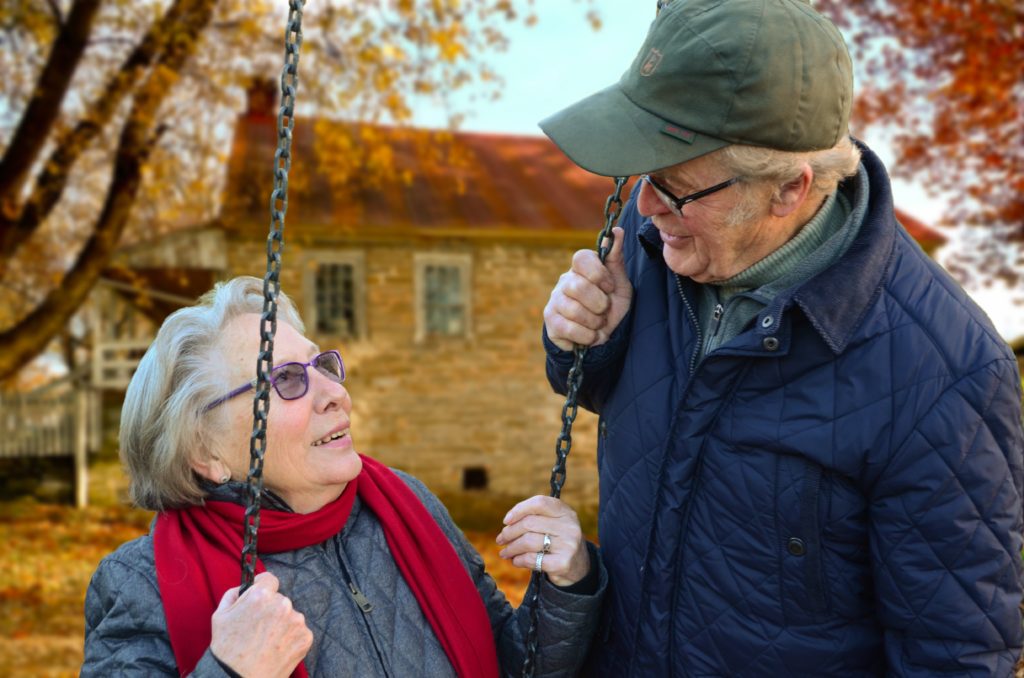
  • Cost of Ketamine Treatment: Is it Worth It?

    Cost of Ketamine Treatment: Is it Worth It?

    The cost of ketamine treatment was worth it for James- his life is blooming.

    “IV Ketamine treatment…?  I can’t afford that.” 

    “Sure, I want to feel better.  I’ve tried so many medicines and treatments. I don’t even know what it’s like to enjoy something, anything…or to feel happy. I don’t have the energy to even get out of bed half the time, much less get anything done. But…the cost of ketamine treatment is way out of reach for me. I don’t even know if it’s worth it?” That’s Ann Marie, out loud.

    “When I go to work, my mind is plagued with images of people dying… or me dying. Dark, hopeless thoughts and pictures in my head. Sometimes gruesome…

    The cost of ketamine is a worthwhile investment.

    “But we all know IV ketamine treatment is for people who’ve got money….   right?”

    ……….

    This is what people say to themselves, and to their family…comments like this, or others similar…

    And since IV ketamine treatment can restore your hope, your motivation, and initiative, you’re likely to be far more able to make those payments after you’ve benefitted from the treatment.

    So, maybe they aren’t seeing the big picture…  in fact, maybe you aren’t seeing it either. It’s something to think about. 

    Because, you know, you don’t have to have the free cash to pull the payment out of your wallet on the spot. You know that, right? Countless companies offer medical financing to pay for medicines and procedures over time. Advance Care Credit, United Medical Credit, and M-Lend are a few.

    For example, have you thought about the benefits of investing in IV ketamine treatment ? Yes, there’s an initial investment, but have you thought about this..?

    Discontinue Medications and Save $$

    For one thing, you’ve likely been taking medications for your depression or other disorder for years…haven’t you? And even though they haven’t helped, you may still be taking them.

    But, the beauty of ketamine is that it works independently of SRIs, SNRIs, anxiolytics, etc. So by investing in as few as 6 ketamine infusions, or a few more as needed, you may find you’re well enough to think about eventually tapering some of the add-ons that didn’t add anything.

    IV ketamine treatment may make it possible for you to wean off expensive medications that don't help, so the cost of ketamine treatment may be reduced by savings.

    Some of your medicines may not be expensive, but some may be pretty pricey.  In some cases, people have found that IV ketamine treatment paid for itself in 3-6 months. Even when you have insurance, your treatment costs can be exorbitant. Now it seems like everyone has a huge deductible to pay before insurance even kicks in. How much money would you save if you were able to stop taking those …. add-ons that maybe aren’t adding anything? Well, that money could go toward paying for your IV ketamine infusions.

    Then, there are those calls for extra appointments with your doctor when your symptoms flares.

    Fewer Doctor Visits

    If you’re not having symptoms, you may find you don’t need to see your doctor as often as you were when your symptoms were so persistent and so severe. What a relief that would be–if you didn’t need to call to be fit in for extra appointments when you took a dive, didn’t have to reach out to an answering service on the weekend. You’d probably prefer to spend that time and money doing things you enjoy, right?

    Why pay for a parking garage and sit in a waiting room when you’d rather be hiking in the woods, or playing tennis, or shopping? When ketamine goes to work on your brain systems, and restores the circuitry there, you regain the power to enjoy. And if you’re enjoying yourself, it’s likely you may not feel the need to check in with your doctor nearly so often. 

    Add to that the expense and the hassle of lab work. Some medications require that regular lab work be done to monitor your liver, or your kidneys, or your blood sugar and your cholesterol.

    To spend more of your time enjoying your life, your work, your hobbies, and your relationships is a far more fulfilling way to spend your time than having blood drawn in a lab on a Saturday…don’t you think? 

    Cost of ketamine treatment can be offset by fewer meds and doctor visits so you can do things you enjoy, like picnics.

    And money spent on co-pays and fuel, as well as wages lost from missed work and days you take under your FMLA for symptom flares and doctors’ visits…well, those funds have such better uses when you feel really well.  Baseball tickets, funnel cake, or…a picnic in the park!

    Cost of Ketamine Treatment Improves the Quality of Your Life

    But most of all, it’s the quality of your life. While the costs can be reclaimed in countless ways by a happier, healthier you as time goes on, can you put a price on your improved, deeply rewarding, utterly fulfilling new life?

    James comes to mind. A patient of mine who couldn’t remember ever feeling happy, or having fun, or enjoying those little moments in his life. Ketamine worked for him. And now, he enjoys a fragrance he notices in the air, the way the meat responds to the fire when he’s cooking, the clear blue of a mountain spring.

    Things he never noticed before because of the dark gray cloud that hung over him, suffocating him. He arranged financing for his treatment, and that monthly payment feels easy, because he lives every day the life he had wished for as long as he could remember.

    And his life has bloomed, because he has the energy to step out and live. He has a family that’s growing and his mind is on his family’s future…in fact, he realizes his whole life is ahead of him. He invested himself and the cost of ketamine treatment was part of that.

    Then, there’s Lisa. She grew up in a home where she never felt understood.  She was sensitive, intelligent, and meticulous. Her parents were hard working, confident, and not so tuned-in. Not really understanding their daughter’s sensitive nature, they made a plan for her from earliest childhood. She would be a doctor, and would make them proud. 

    But Lisa’s heart turned to music, and she sang like an angel. From the time she was losing her front teeth, she could feel her parents’ pressure to be who they wanted her to be. She wanted so much for them to appreciate her for who she really was.

    Lifelong Depression Wears Down Brain Circuity

    Innocent child waits in the darkness for her parents.

    By her 6th birthday, she would arrive at home after she got off the bus, and enter the dark house frightened, alone, and shaken. The anxiety from those long afternoons alone in a dark house grew to a dread that followed her wherever she went.

    Depression drained her energy, and her hope in life. Adolescence turned out to be a cruel time, and she felt she didn’t fit in anywhere. College was a chance to excel. Getting married was a no-brainer. And though she had transient reprieves from the trudging existence she endured, the dark hopelessness and choking despair always returned.

    Pregnancy after pregnancy…she could conceive, but had no energy to care for the children, and would just go back to bed. The kids spent a lot of time at their friends’ houses while she slept on the couch. They learned how to make their own mac and cheese.

    Hospitalizations didn’t make much difference. Medicines her doctors prescribed brought no relief. The kids raised themselves.

    The Cost of Ketamine Treatment

    But finally, when her first grandchild was on the way, and Lisa wanted the ability to build a relationship with this child, she heard about what ketamine treatment was doing.  She learned that she would need at least 6 infusions, so she needed to be prepared to pay for them. 

    Those who knew her and loved her wanted to help. Eventually, a friend offered to help her pay for the treatment.

    For Lisa, it got unreal right then. There was an unreal-ness about suddenly having a way to get real help…to maybe have an opportunity to feel good for the first time in her memory.

    And as she’d hoped, within a week she was improving. Little beams of hope penetrated her cold damp tomb of anxious despondency …one little beam at a time. It was slow. She started taking walks, just because. Then she started reading books and meeting friends for lunch. 

    A friend’s help made the cost of ketamine treatment manageable.

    A joyful grandma is grateful she had the cost of ketamine treatment so help her get well and happy.

    Now, Lisa is a rosy-cheeked, very active grandmother. She takes her granddaughter on picnics and to the zoo, for ice cream, and to play in the park and feed the ducks. Her grown children watch in disbelief–where was she when they were little?–but they’re relieved that she is finally functioning, happy, productive, and interested.

    She has the energy to share all kinds of experiences with her grandkids…both the physical as well as emotional energy. They play games and she teaches them about good sportsmanship and the competitiveness to win, too.

    Lisa made little payments to her friend for three years to repay the loan that gave her back her life. She says that loan was the greatest gift she’s ever received. She has the power to love again. To dance and sing and play ball with her family.

    Ketamine Treatment Must Be Available to Those Who Need It

    Is there anything more important than the power to live your life well? Happily, generously, joyously?

    When people ask me how they can afford to pay for this treatment, I wonder. A lot.

    I wonder how we can afford to stand by while our sisters, our friends, our kids, and our husbands slowly shut down.

    I wonder how we justify the days lost, the jobs lost, the unpaid FMLA’s, the lost opportunities. The kids’ games that we missed, the holidays we suffered through, the long agony of a weekend that was empty.

    I wonder how our insurance companies so readily deny payment for an infusion that could stop suicidal thinking and save a life –but quickly fork over $1300 for an ambulance ride to the ER and another $1500 for the night spent on a gurney, waiting to see if the crisis worker will hospitalize you or send you home?

    Insurance will pay for that, and refuse to cover ketamine infusions? The procedure exists, the billing code is there, the diagnosis is clear …the results speak for themselves.

    I wonder, sometimes, not about affording ketamine, but about how we can afford this: to live like this, day after day. What’s it costing us? What’s it costing our kids?

    In the light of the transformative effect of ketamine at its best, you owe it to yourself to find a way to give yourself an opportunity to live – and live well. To enjoy your life, to invest in it, to learn and grow, to stop the suicidal thoughts, to get rid of the depressive symptoms. To be happy.

    Cost of ketamine treatment brings great returns on investment through joyful living and loving.

    It’s true that IV ketamine treatment can’t offer a 100% response rate, but no medicine can do that. The cost of ketamine is an investment… But there are few investments available to us with the return that comes from this extraordinary treatment.

    James made this comment, “Instead of spending all my energy trying to figure out how to survive the week and how to ignore the suicidal thoughts that are always there, I’m excited about figuring out my next step, and I’m looking forward to good things happening. I’ve never experienced anything like that before.”

    Everyone should have the opportunity to live free of symptoms, and to have the energy and hope to invest in the things you believe in.

    At Innovative Psychiatry, we’re investing in you and your future. If you’ve suffered and treatments haven’t helped, call us. The cost of ketamine treatment? We think it’s worth it. It can make real living, fulfilling engagement, rewarding relationships, available to you.

    To the unveiling of your best self,
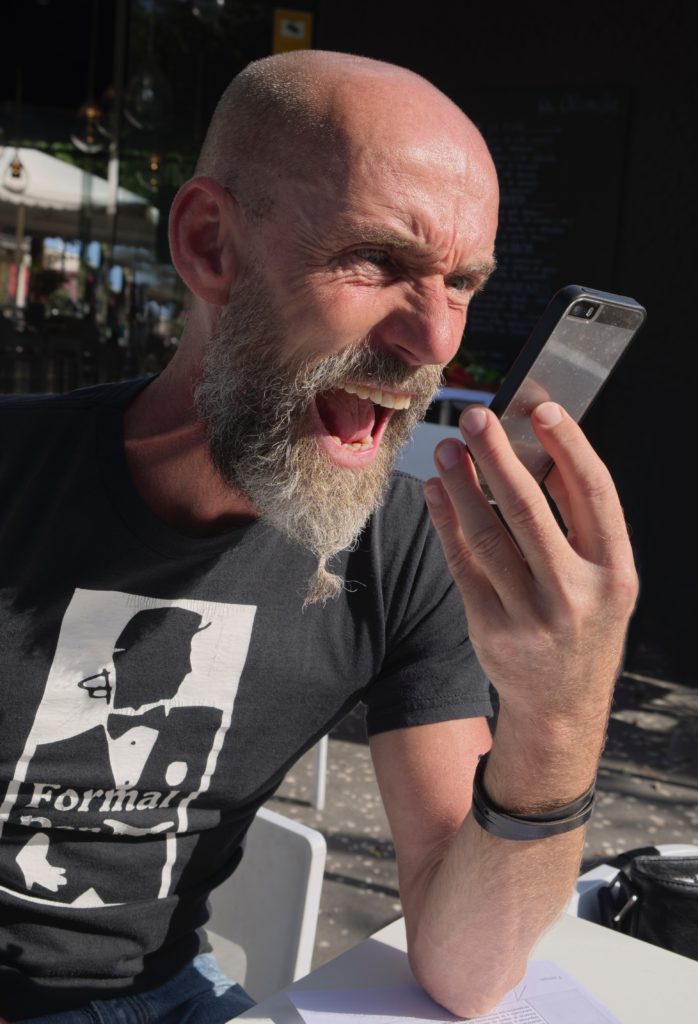
    Lori Calabrese, M.D.

  • ASKP Conference 2019: Celebrating the Response to Ketamine

    ASKP Conference 2019: Celebrating the Response to Ketamine

    A sullen, depressed teen girl is laughing and happy because she's fighting suicide with ketamine.

    The Importance of Meeting Together

    Every once in a while — sometimes only once or twice in a physician’s career — a medicine or treatment comes along that’s a game changer. Something that sets its own records, raises its own bar, and helps people so profoundly that their lives are better because of it. A treatment so remarkable, it establishes a turning point for them. Where life is divided by the “before” and “after” of that treatment. IV ketamine is such a treatment. And we’re celebrating the response to ketamine every day.

    In the field of psychiatry, ketamine’s use off-label has established that line: the misery of “before” and the wellbeing of “after” for growing masses of patients who suffered all their lives, lived at risk of suicide, and found life difficult to bear. The same people who now are enjoying their families, their friendships, their work, and their hobbies.

    And because ketamine is FDA-approved for anesthesia, it presents us with a double- edged sword. On the one hand, it has shown us how safe it is with patients in every age group for 50 years at very high doses as an anesthesia and in pain. And on the other hand, its rapidly growing use in psychiatric disorders is off-label — outside of its FDA labelling for anesthesia.

    Collaboration in a New Field: Ketamine Off-Label

    Neuroscience researchers, psychiatrists, anesthesiologists, emergency department physicians and more have been scrambling to understand this medicine and its effects for years as we navigate this new territory.  

    And the best way to do that?  

    To put our heads together and exchange information, experiences, ideas, and data; and learn all we can together to bring the safest, most effective treatment to our patients.

    Do we see it all the same way?  Of course not. But by coming together regularly we grow and expand our grasp of what ketamine can do for our patients.

    And we have something deeply in common. We’re all celebrating the response to ketamine we see at every turn.

    ASKP for Ketamine Treatment

    The American Society of Ketamine Physicians (ASKP) is about this very thing. We gathered a few days ago to learn from each other, grapple with difficult issues we face, and to expand our knowledge and expertise to better serve our patients.

    This was the second annual meeting of ASKP, and we’re inspired by how we’re growing in numbers and experience.

    As physicians we vow to first do no harm. And then of course, beyond that, we want to help. For more than 50 years, and in more than 19,000 scientific papers, brilliant minds around the world have dug deep and broad in their research — from their universities, their labs, their clinics, and their practices to understand the science and the nuances of ketamine.  All so ketamine can help people who suffer.

    Dr. Jennifer Winegarden, who spoke on the use of ketamine in refractory cancer pain,  put it like this: 

    We are really here because we want to relieve suffering, but coming up with a consensus for how exactly we’re going to do that is a lot of work; we are still in our infancy in discovering how we are going to do that.

    The Speakers

    Steve Mandel, M.D.

    ASKP conference where we were celebrating the response to ketamine.
    Steve Mandel, M.D.

    President of ASKP and one of its founding members, introduced the meeting with a call for collaboration.

    He quoted Stephen Hyde, MD, a pioneer in ketamine treatment in Australia, stating “Given the unacceptably high rates of suffering, disability, and premature death experienced by people with treatment-resistant depression and the surprisingly low rates of problems arising from the use of ketamine to treat the disorder, this is a therapy that all patients and their doctors should be discussing.”

    And the speakers? Well, to read the list is to begin to stroll through ketamine’s hall of fame in clinical psychiatry. It was inspiring to listen to speakers who’ve been blazing the trail in the field of ketamine for treatment resistant depression.

    Sanjay Mathew, M.D.

    Professor of Psychiatry and Behavioral Sciences at Baylor University Medical School Houston and a key player in ketamine research in psychiatry, addressed us with a comprehensive review of ketamine for treatment-resistant depression even though the Houston airport was under water! Fantastic.

    Gerard Sanacora, Ph.D., M.D.

    Director of Yale Depression Research Program, another major thought leader and key researcher in ketamine and esketamine for TRD — in fact, a leader every which way! — the lead author on the APA Council of Research Task Force on Novel Biomarkers and Treatments for the Consensus Statement in 2017 on the use of ketamine off-label for depression . . . I could go on and on. He summarized the new data on esketamine, the left-facing ketamine enantiomer from Phase 2 and 3 clinical trials.

    Amit Anand, M.D.

    Professor of Medicine at the Cleveland Clinic and Vice Chair for Research for the Center for Behavioral Health there, and an expert on brain imaging, psychopharmacology of mood disorders, and ketamine. He spoke on a new study of the comparative efficacy of ECT vs ketamine for treatment resistant depression (TRD) where they plan to enroll 200 patients–so exciting because it will be so large.

    David Sheehan, M.D.

    David Sheehan MD celebrates the response to ketamine at the ASKP conference.

    Of course, one of the true greats in our field. He is the father of anxiety research, and an expert in depression, suicide assessment and harm reduction…. and the list goes on. His clinical work and research career spans 50 years and more than 800 publications on anxiety, depression, and suicide. He has developed multiple rating scales in the field that are widely used in clinical research and presented a gripping talk on the assessment, documentation and pharmacologic management of suicidality. He is Distinguished University Health Professor Emeritus at the University of South Florida College of Medicine, and has mentored and collaborated with scores of the major researches in the field over his career.

    Rachel Dalthorp, M.D.

    ASKP Board member, clinical psychiatrist and specialist in reproductive psychiatry at Balance Women’s Health in Oklahoma City, OK, spoke about hormonal challenges in ketamine treatment, and how to work with them to ensure optimum response.

    Omid Naim, M.D.

    of Santa Monica, CA and La Maida, spoke about the importance of creating and building community in transformation and healing.

    ASKP conference, Jeff Becker, MD celebrating the response to ketamine in his brilliant presentation.
    Jeff Becker, M.D.

    Jeff Becker, M.D.

    a clinician with deep expertise in neurospychiatry funtional medicine and noetics, first researched ketamine in 1998, and has been using ketamine in his clinical since 2004. He spoke about fMRI findings in ketamine treatment, and the important roles of chandelier cells, pyramidal neurons, and basket cells during ketamine treatment. Jeff, as always, was brilliant.

    Daniel Richman, M.D.

    Attending Physician at the Hospital for Special Surgery and a Clinical Instructor in the Pain Management Ceneter at New York Presbyterian and Memorial Sloan Kettering, and an expert on the treatment of Complex Regional Pain Syndrome (CRPS), presented a review of the challenges and the success in using ketamine infusions in anesthesia for CRPS — extraordinary help for the worst pain imaginable.

    Jessica Katzmann, Psy.D.

    focuses on ketamine-assisted psychotherapy in her practice, Healing Realms, and she spoke about how to help patients experience wellness and process their improvement and their experiences after ketamine treatment.

    Jennifer Winegarden, D.O.

    an expert on hospice medicine and the Chief Medical Officer of The Medical Team Hospice in Michigan, spoke on end of life care in hospice treating intractable pain with ketamine.

    There were lightening abstract presentations which wrapped up the conference: ketamine infusions with concurrent TMS, (Cindy McKinzie, PsyD. and Melanie Dillon, LCPC of Chicago), a case report of ketamine use for PMDD (Cassandra Gentry, PA, of Balance Women’s Health, OK), and a a review of Ketamine for Anxiety (Michael Banov, MD of PsychAtlanta in Georgia).

    My Own Presentation

    I was honored to speak about my own work with ketamine. The talk was titled, “Real World Results: When Ketamine Stops Suicide” — pretty edgy, but thank goodness, I wasn’t the only one who spoke on suicidality. Suicide was discussed at so many different points throughout the conference, wherever we clustered, over coffee … and Dr. Sheehan’s superb talk on the assessment of suicidal ideation was a beautiful synthesis of clinical research, wisdom, and temperance. He drove home the important point that it is impossible to predict suicide for an individual.

    International Journal of Psychiatry Research celebrates the response to ketamine.

    My data on using IV ketamine in suicidal patients with treatment resistant depression was published recently in the International Journal of Psychiatry Research. As I said, we’re celebrating the response to ketamine at Innovative Psychiatry.

    I spoke about the real world results we’ve seen when we use ketamine for treatment resistant depression — and find that many of the people who come to us are suicidal, have made suicide attempts, have been hospitalized for suicidal thinking.

    Real Patients in the Real World

    Sometimes ketamine doesn't  work, and the sadness continues.

    They feel terrible, and want those terrible thoughts to stop. One of the striking findings in my practice is how quickly — and completely — ketamine stopped suicidal thinking in real patients.

    I say real patients because I really mean real people–with complicated lives, multiple stressors, multiple other psychiatric stuff going on at the same time — most had 3 other psychiatric diagnoses in addition to treatment-resistant depression. Most were on 4 or more psychiatric medications, and had failed multiple antidepressants in the past. Many had been hospitalized, many had made suicide attempts… or multiple attempts. Many had failed ECT. Some had failed TMS.

    Or….I should say, our available treatments had failed them.

    They were just doing the best that they could to hold on until a better treatment became available that could help them.

    A Holding Environment

    For many of them, that better treatment was a short series of IV ketamine infusions — with the dose increased (or “titrated”) along the way.

    We work to create a holding environment–to hold on to hope, to offer it to our patients when their hope is strung out pretty thin, to offer it to their families, to give them a chance and to buy a little time so that treatment of their underlying depression, anxiety and trauma can begin. So that the suffering can stop.

    Celebrating the response to ketamine after Lori Calabrese's presentation.

    There is palpable excitement in the room when suicidal thinking falls away. In the IV ketamine treatment room, in the patient’s living room, in a crowded lecture hall when you describe this to other doctors. (…That’s me answering questions on the floor after my talk.)

    Celebrating the Response to Ketamine – The Game Changer

    We're fighting suicide with ketamine to erase suicidal ideation and people are getting well.

    Ketamine infusions don’t always work. I have to emphasize that, because we have to be clear: of course they don’t. We’re trying desperately to understand what are the factors involved when they don’t work for some people.

    But when they do –and they often do — when suicidal thoughts just stop, when the veil lifts, when the ability to enjoy things again slowly creeps back in for someone who has been stuck for so long in such a bad place …. well, then, it’s a celebration.

    So today we’re celebrating the response to ketamine.

    We’re talking, we’re writing, we’re buzzing with hope for the future and for the future of our patients.

    And we have hope to offer them. Real data from hundreds of people that we’ve treated. So that we can say, in our hands, this is what we find, this is what we see, this is what you can expect.

    We need more research–the elegant, beautiful, randomized, placebo-controlled trials with carefully curated patient populations, and primary and secondary endpoints, and exhaustive data analysis.

    And we need more real-world results with real, lived experience. Live suffering. And, yes, the messiness that comes with the complex and devastating psychiatric disorders that we treat every day.

    So indeed, let’s work together.

    Let’s celebrate the response to ketamine, and talk.

    Let’s talk about serial, titrated ketamine infusions, and how they can stop suicidal thinking. How they can maybe turn around that trip to the ER because you might not need it. How they might keep you out of the hospital.

    Joyful girl is celebrating the response to ketamine that changed her depression to joy.

    Most definitely, let’s talk. While we celebrate (and let’s keep celebrating the response to ketamine). And let’s talk so that we can save lives.

    Let’s talk so that we get insurance to listen and to reimburse you for a treatment that can potentially save your life.

    Because an infusion is cheaper than an ambulance ride. Less expensive than a night on a gurney in the ER. Much less awful than days spent hospitalized on a psych ward.

    Oh yes, let’s do talk. Doctor to doctor. Doctor to patient. Mother to daughter. Friend to friend. Share the news:

    Lori Calabrese. Titrated Serial Ketamine Infusions Stop Outpatient Suicidality and Avert ER Visits and Hospitalizations. Int J Psychiatr Res. 2019; 2(5): 1-12.

    We’re working hard every day to help you find the resilience you wish for, the fulfillment of a rewarding life, the enrichment of strong, mutual relationships.

    To the reinvigorating of your best self,
    Lori Calabrese, MD offers innovative psychiatric treatment like IV Ketamine

    Lori Calabrese, MD

error: Content is protected !!