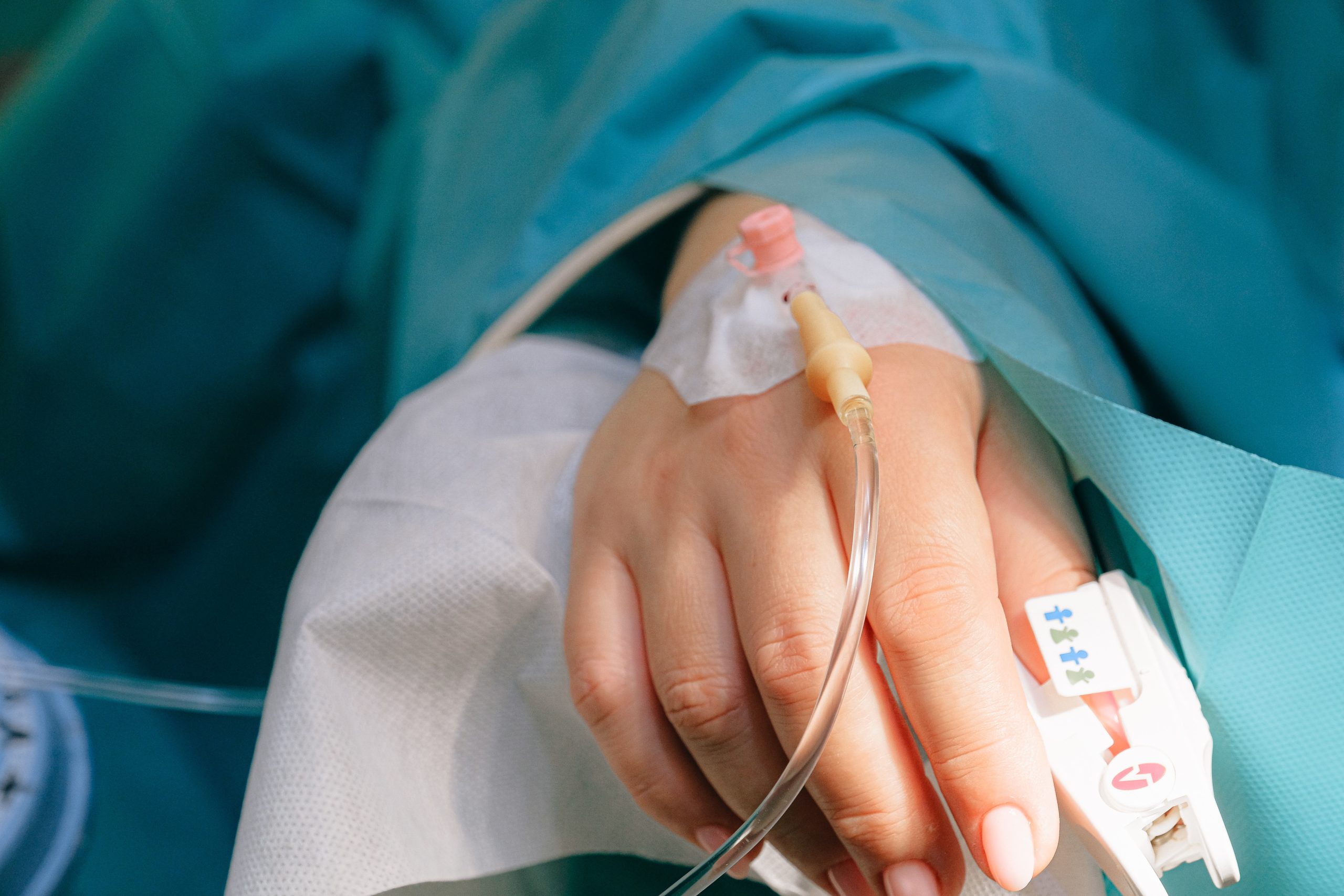
Category: Best Practices

Articles About Best Practices from Lori Calabrese, MD | The Ketamine Blog

Lori Calabrese, MD, provides these articles about best practices in psychiatric treatments to help you choose interventions best suited for you. We intend for these articles to help you learn about and choose practices that will help you the most. Because we want you to get better.

Choose Carefully

Ketamine treatment is a powerful, multi-faceted medicine.  And it can save your life. And your marriage. And your job.

It is an exquisite interventional treatment for psychiatric disorders that we are deeply experienced in offering. And we offer it within our scope of practice — not because we’re unhappy with the specialty we trained in, or because we are stepping out and doing a side gig — but because we love what we trained in, we love psychiatry, and we want the best for our patients and for our field.

Ketamine Treatment – IV or IM

There are a variety of approaches that psychiatrists use when they prescribe ketamine for psychiatric symptoms in a controlled office environment, including IV, IM or as an intranasal spray.

IV administration puts the medicine straight into the blood stream. It travels straight to the brain systems and structures where it’s needed. The dose and rate can be quickly increased or decreased according to the patient’s needs.

IM injections are more rapid, and slightly less bioavailable, so the dose needs to adjusted for this. The onset is more rapid, the experience of dissociation lasts about the same length of time, and the ending is cleaner.  No beeping of the pump, no waiting for the nurse.

Titrate Dose for Optimal Therapeutic Response

Different people demonstrate different responses at different doses. Some people may need a dose of 0.5 mg/kg  to achieve remission after 6 infusions.  In other cases, that’s not a high enough dose or high enough number of treatments.  Everyone is different, and we work hard to help our patients achieve remission.

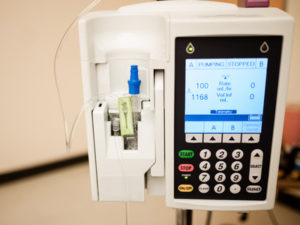
For this reason, we provide ketamine treatment using sophisticated pumps that measures precisely the amount of medicine that goes into the brain. And for infusions, we can adjust the dose and rate during each infusion. We want to get the best possible response and outcome for you. Because we’re striving for remission.

We also complete a thorough evaluation of each patient before the first infusion. This helps us better determine whether this patient is a good candidate for ketamine. During this session we also prepare him or her for the experience.

Additional infusions or “Boost Infusions”

In some cases, the benefits of ketamine treatment may decrease after weeks or months, especially in cases of extreme stress. In such instances, it can be helpful to receive another infusion to refresh the work the ketamine treatment had begun. Many times this additional infusion can revive the remission and restore the joy, hope, motivation, and energy that was lost.

These articles about best practices are provided to help you choose a practice and a method that will give you the best outcome for your treatment.

Enjoy…and we hope this is educational and shows you options for a symptom free life.

  • Our Response to “I Took Ketamine for Depression. Things Got Pretty Weird.”

    Our Response to “I Took Ketamine for Depression. Things Got Pretty Weird.”

    Why did it get weird? Is that an indisputable element of IV ketamine treatment for depression? We respond with a resounding NO!

    (article from The New York Times, 12/26/2022)
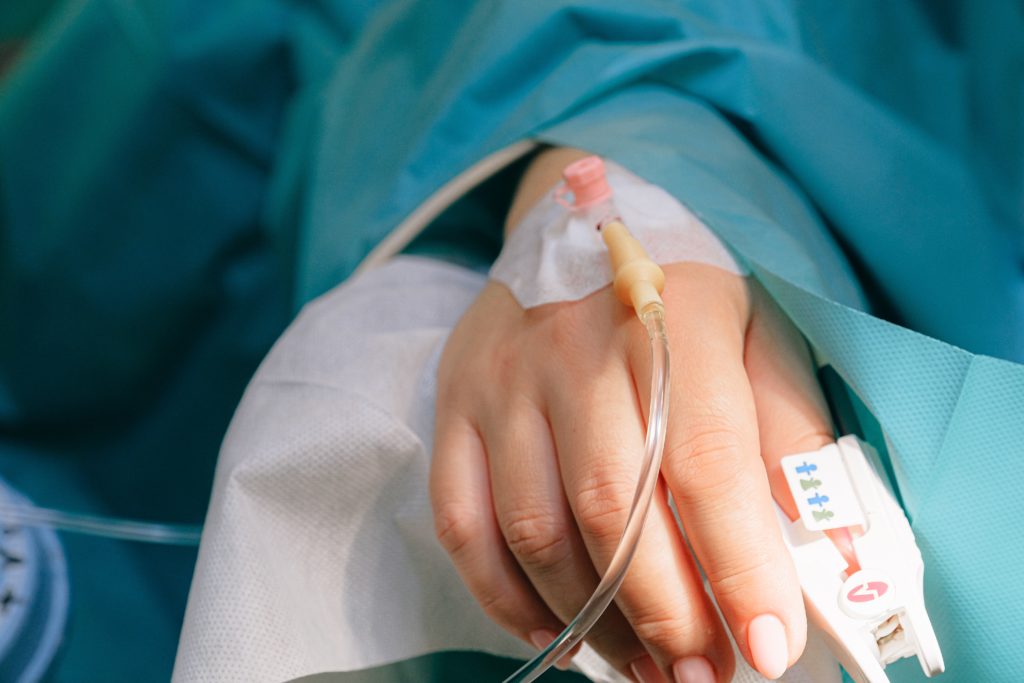
    Every once in awhile, someone publishes a first-hand account of their experience with ketamine as a treatment for depression. (And it goes viral because….well, it’s just so interesting to see what it’s like.) We wrote a blog responding to a first-hand account way back on July 30, 2017 (we’ve been blogging about ketamine for years!) and back then, we were responding to an article in TIME magazine.  Today, let’s chat about a piece in The New York Times (and we’ve done that, before, too!), from December 26, 2021, and the good, the bad, and the ugly experiences that can happen during ketamine infusions. Let’s really talk. Here’s our response to “I took ketamine for depression. Things got pretty weird.”

    In the New York Times article, “I Took Ketamine for Depression. Things Got Pretty Weird”, writer Vanessa Barbara describes her experience with IV ketamine treatment for her depression, which she received in Juiz de Fora, Brazil. 
    A splashy title like that draws a lot of attention — from those who are familiar with ketamine treatment, people who are just curious about it (because it’s all over the news), from doctors, medical experts, business people…. Just about everyone’s been hearing about and reading about the renaissance of psychedelic research exploding in the US and around the world for the treatment of depression, anxiety, trauma, and substance abuse.

    Many people reading first-person accounts of ketamine treatment for depression haven’t received it themselves. So they’re interested in learning all they can.

    The fact is that there’s such a wide variety of patient experiences when ketamine is used in treating psychiatric conditions because there are so many different settings in which it is currently offered, such varied approaches to it in terms of patients and the symptoms they hope it will help, so many ways to prepare for and integrate the treatment experience…. and such a wide range of administration.

    And a negative experience can have to do with the rate of the infusion, the size of the dose, the consistency of flow, the comfort or discomfort of the setting, and even your mindset as the infusion begins…

    There is so much more to the the treatment–and to the experience and your response to it–than just getting the medicine from an IV bag into your body.

    (More on that later because we don’t even use IV bags.)

    Ketamine is recognized as extraordinarily effective for severe depression that hasn’t responded to other treatments or medicines. But the way you might feel during the treatment itself can be hard to predict.

    Since Ms. Barbara’s description pertained to her experience with IV ketamine treatment, let’s focus on ketamine administered intravenously.

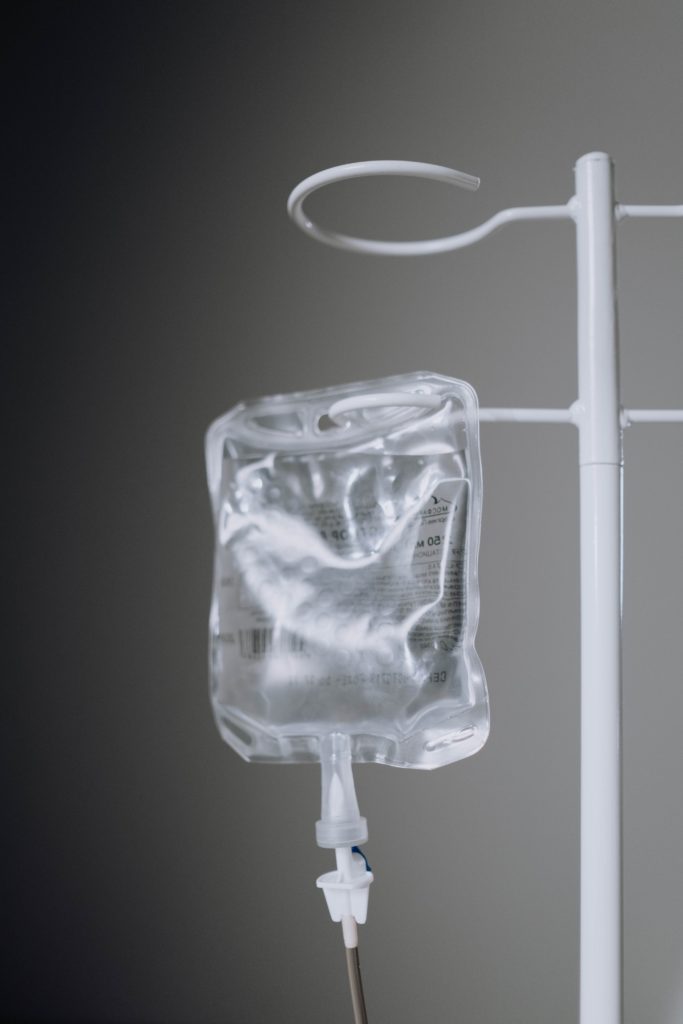
    Not all IV experiences with ketamine are equal. For example, just to start with mechanics, if the rate of the infusion is controlled by a precise intravenous pump, ketamine reaches the brain at an even, controlled rate. But if the infusion is monitored and controlled by hand, adjusting a wheel located on the tubing from a hanging bag, the flow of medicine may speed up too fast. And that can result in too much medicine too fast, yielding an upsetting acceleration of ketamine’s effects. 

    When the rate is determined by the thumb on a wheel, a patient can be overwrought. (….or if the cannula inside the vein changes position, the flow can slow.)  A precision pump can ensure a smooth, consistent flow of medicine, and enhance the experience. That’s good, right?

    But the ”right rate” for one person may be too fast for another.

    Or the starting dose for one person may be too much for someone else.

    And — so importantly — there are many ways your own mindset can influence your experience during ketamine treatments and during other psychedelic treatments coming down the road. The dissociation during an infusion can sometimes feel overwhelming because you’re anxious, sensitive, or afraid to experience a non-ordinary state of consciousness. Because it’s not going the way you expected or the way you’ve read about.

    Sometimes the dissociation you feel during an infusion is a little nebulous. Not clear. There’s not a story line. There’s no colors. Things feel strange and unreal but without a clear meaning that you can piece together. You feel gypped–how come everybody else gets blissed out and you don’t? Maybe you’re stuck obsessing and the one thing you need to get out of your life and away from is right there, front and center, during your infusion. (That can be so maddening.) Maybe you’re riled because you had a fight on the way in. (Which is so bad for you, by the way–try to avoid that!) Or maybe, the whole experience is just so strange that it seems like you don’t have any thoughts…. You might feel so out of your body that you’re not sure you’re even a person.

    And this is supposed to HELP you? Really??

    Really.

    Even someone who’s had a negative or challenging ketamine experience can get better and go into full remission. But they’re going to need a little help making sense of how and why it happened…. discerning the meaning and the message…. and integrating that experience so that they can come out on the other side of it and move forward.

    Positively, Creatively. With a new narrative.

    Then consider the problem Ms. Barbara experienced when her partner joked with her and she suddenly thought her daughter was 15 and not 3.

    Words spoken to you when you are deeply dissociated during a ketamine infusion may sound intense, or far away, or frightening because they interrupt you and pull you back into the room, and the dissonance can be…. jarring.

    Before and during your infusion, your mindset and the treatment setting itself help shape the experience.


    Ours is pretty gorgeous, by the way.

    We value the importance of set and setting. Preparing yourself emotionally for your treatment is critically important (and we’ll help you with that!). And making sure that the setting is private, soothing, safe, and that you feel like you have the time you need to come back into your body, and ground yourself at the end. We keep things safe, quiet, meticulously clean…. and soft, warm and inviting.

    During ketamine treatment, you are open and vulnerable.

    It’s easy to misinterpret a kind word or light humor…to think your 3 year old is suddenly 15 and you’ve missed her life.

    We don’t want anything to intrude that triggers stress for you — from disruptive conversation, to joking, to cell phone calls —because it can undermine what can be an extraordinary experience.

    Ms. Barbara spoke of pleasant music. And she was on to something important. We encourage you to bring in instrumental music to listen to during your treatment — music without words reaches you without engaging you cognitively to think about the words in the lyrics. The rhythm and flow of music that you find beautiful can help shape your experience. And we work with ketamine integration therapists who can provide special music tracks specifically for each infusion.

    And a final point. Ms. Barbara signed up for 6 infusions. But experience has taught us that 6 infusions sometimes aren’t enough. In others, it may take a few more. To make this decision requires evaluation of the whole patient and their response to treatment.

    Some people reach remission after just 4 infusions, like the lovely young woman we treated with severe anorexia. Her response was so dramatic, she made a video about it. Others need 8 or 9, and then they turn around dramatically. Imagine the disappointment she experienced when she was not better after 6 infusions if 8 might have done the job?  

    Sadly, there are severely depressed people in the US and around the world who received too few infusions and gave up. They believe ketamine didn’t work for them and won’t work for them in the future. And maybe it won’t. It doesn’t work for everyone.

    Ms. Barbara’s experience is a good example.

    It might be very different if you are given a different approach—preparation, attention, and integration of the infusion experience.

    Let’s be clear. Ketamine treatment is not for everyone. It truly doesn’t help everyone who tries it. But it does help a high percentage of those who need it. Still, for some people it just takes more to achieve the relief and joy they wish for and need. And Ms. Barbara — and thousands like her — has no way of knowing if ketamine is not for her, or if another couple of infusions might have helped her achieve remission and the joy that goes with it?

    There is so much more research we need.

    Our goal is to get you back to your best self, to see you thrive, connect with friends, bubble over with gratitude for the gifts you have in your life.

    We love that. We’ve seen it happen with people we treat. And we know to respect the medicine and the differences in individuals… to administer the medicine and titrate it to work.  

    This is not a one-size-fits-all medical treatment.

    You can find ketamine treatment in clinics, hospitals, and private practices. My private practice is Innovative Psychiatry, and we’ve worked for decades to use innovative methods to help people get better. We never stop learning. And we back everything we do with research and evidence-based outcomes.
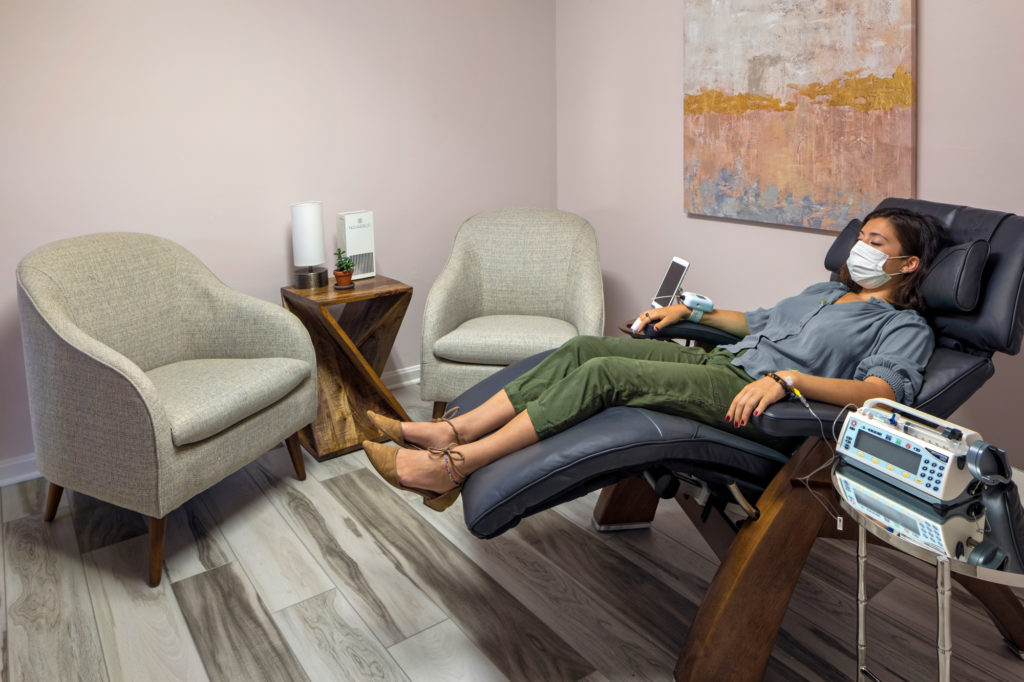
    When you come for ketamine treatment, you'll have a comfortable, quiet room to get the most from your treatment.

    When I learned what ketamine could do for my patients I began offering ketamine treatment several years ago for those who were candidates. And we’ve seen exceptional results from our work.

    We continue to go the extra mile, and bend over backwards, to care for our patients through the process.

    If you suffer from severe depression, PTSD, social anxiety, alcohol and substance use disorders, or suicidal thoughts, call us.

    Ketamine can make such a transformative difference in your life. 

    Give yourself the opportunity to find out what remission is like for you.

    Lori Calabrese, M.D. is on the front end of the race to stop PTSD in its tracks using IV ketamine treatment.

    To the restoration of your best self,
  • Buy Esketamine Online..? Get Real.

    Buy Esketamine Online..? Get Real.

    When you're in despair you may be tempted try to buy esketamine online. But seek a psychiatrist's care; he'll help you find the relief you need.

    The news outlets, journals, and lifestyle magazines have been chock-full of articles about ketamine treatment for depression the last few years, with sprinklings about esketamine from time to time…

    Then, this past March, esketamine received FDA approval for depression and suicidal ideation under the name Spravato. Developed by Janssen, owned by Johnson & Johnson, esketamine nasal spray won approval packaged in an innovative spray dispenser that metes out a precise dose in each spray. And literally — within just a few months — people are already looking to buy esketamine online.

    Unbelievable, right?

    Michael Thase, M.D., an investigator of intranasal esketamine during FDA trials, noted that “this treatment has addiction liability — it is a Schedule III controlled substance in the eyes of the Drug Enforcement [Administration]. It’s identical to the parent drug, ketamine.”

    When he said that esketamine is identical to its parent drug ketamine, he was referring to its controlled substance rating. Both drugs are Schedule III.

    And even though there were 3 suicides during the trials, Dr. Thase pointed out that during the follow-up phase of the study, no one experienced craving or abuse among the subjects who received esketamine.

    He continued that it’s important to have a 2-hour observation period in the office after each dose. And went on to say that esketamine nasal spray treatment is “administered twice a week in clinical practice.”

    As we now know, esketamine was FDA approved with stipulations that it must be provided with an antidepressant, in a doctor’s office (or medical setting like a hospital), and the patient must be monitored for 2 hours.

    So, during that 2-hour observation time, they monitor the patient’s blood pressure and watch for signs of sedation and dizziness or other adverse reactions. And, not surprisingly, sometimes patients need kind, warm support from someone to help them get through an unpleasant psychoactive experience.

    Clearly, it’s not an at-home medical treatment.

    So here’s something to think about.

    With all that said, more and more people are looking for ways to buy esketamine online...

    You're depressed and you want to buy esketamine online to get relief. But that's a dangerous idea. Your psychiatrist can help you get treatment.

    It’s not a good idea.

    Before we had internet, if you got sick, you went to the doctor. The doctor examined you, figured out what was wrong, and took care of it… maybe sent you home with a prescription.  If your pipe sprung a leak, you called a plumber who came out and fixed it.

    People depended on experts to fix their problems.  

    But since search engines took center stage, everybody’s a DIYer. Just google what you need to do, order what you need online, find a YouTube video that shows you exactly what to do, and — do it yourself. Everything from erecting a power pole and replacing spark plugs to folding sheets the right way to … treating your own maladies.

    And THAT MAY WORK FOR YOU as long as you stick to relatively low-risk problems. But when it comes to treating your own illnesses with medicines acquired from a questionable source, you can really set yourself up for a life-threatening – or fatal – disaster.

    Serious Consequences When You “Treat” Yourself, Like If You Buy Esketamine Online

    We talked in the past about the danger that arises when club goers use ketamine to get high, and try to “treat” their own depression in the process. There are substantial risks. When ketamine is used in high doses and way too often, addiction raises its ugly head. But beyond the risk of addiction lies the risk of serious damage to the bladder. 

    Someone who has been dosing himself with controlled substances for entertainment might consider himself an “expert” in using those substances.  

    This young woman is fighting despair and suicidal thoughts. She plans to ask her psychiatrist if esketamine nasal spray can help.

    However, a hazard looms with such practices. It works like this: during ketamine or esketamine treatment, some people experience a pleasant floating sensation as it’s working in the circuitry and structures of the brain. Others, however, experience a stronger sensation we call dissociation. A feeling that you’re detached from your body, or detached from yourself…or maybe even in another place. For some, this is a bit unpleasant. And it passes. But for others…and here’s where it can get slippery…this can be a very appealing experience.  And for those, it’s disappointing when the treatment ends, and those feelings dissipate. 

    But what happens if you have a bagful of ketamine on the table? Do you think you would just put it away? 

    Not likely.  Not likely at all.

    Because along with this experience, you’ve also lost a lion’s share of your inhibitions, too. So why not just dose up again?  Keep the good times rollin’, as they say?

    Someone who would have received 0.5 mg/kg or a bit more over 40 or 50 minutes under a doctor’s supervision might take 5 times, 10 times, 20 times, or more than that amount on his own.

    This is how addiction is born. And how bladders are destroyed.

    Then tomorrow, he’s ready to buy esketamine online, again.

    Controlled Substances Require a Physician’s Supervision for YOUR Safety

    Controlled substances are controlled to protect you from the dangers of over use, from side effects, adverse reactions, and from overdose. When you defy those safety measures, you put yourself at extreme risk.

    So let’s talk now about esketamine.  

    We don’t know a lot about esketamine so far. It hasn’t been widely used yet. But a wise person recognizes that since the FDA stipulated approval of esketamine in the presence of specific parameters, it’s a safe bet they need to be followed.

    Don't buy esketamine online.This woman sits in darkness and despair without hope. But she plans to see her psychiatrist and ask for esketamine nasal spray.

    First, it must be administered in a registered medical office or hospital/clinic under strict guidelines.

    Second, you must remain in the office for observation for a full 2 hours after administration, and a safety report has to be sent in to an oversight safety monitoring program every time you come into the office.

    It must be administered along with an antidepressant.

    And finally, esketamine nasal spray may not be taken home or out of the office.

    This assures that the medicine is not overused, or given to someone else. The medication from the pharmacy is pure — it hasn’t been tainted or adulterated with anything.

    What IF You COULD Buy Esketamine Online?  

    Would that be a DIY Solution or a DIY Tragedy?

    Hint: Some things should be left to the experts.

    Now, let’s picture what it would be like if you actually found an online source for esketamine. It might be produced in a developing country, or by a chemist prodigy with questionable integrity, and shipped out in a little baggie… and without FDA restrictions. 

    While we recognize the FDA isn’t a perfect institution, its requirements do set restrictions that help keep consumers safe.  Or at least saf-ER. Without that protection, you have no idea if the esketamine you might receive would destroy your organs, cause blindness, trigger psychosis… or worse. 

    Any chemical or pharmaceutical treatment for brain or behavior disorders has the power to incapacitate or disable you if it’s not pure, well tested, and administered with precision.

    So often we talk about the delicate brain systems and the precision and care necessary to treat disorders with a medication like ketamine — and we administer it IV because of the precision, flexibility and responsiveness that the IV route allows in psychiatric treatment. It’s just as critical when treating with esketamine. Just as vital that a psychiatrist is supervising the treatment — and your response to it — expertly. 

    Don't try to buy esketamine online. Relief. Release. The joy when depression lifts after esketamine treatment.

    It’s all about you, and your improved life.

    So you can experience a truly therapeutic dose that can help you feel more balanced and better, function better, and live a happier, more fulfilling life.

    There are no shortcuts to reaching that goal.

    No bargains.

    No fun “trips” killing two birds with one stone.

    And if you were able to find esketamine in bulk form, without that innovative sprayer..well you’re taking your life and your health in your hands. 

    DIY Brain Surgery

    So let me ask you this. Let’s say your PCP referred you to a brain surgeon. You call and make the appointment, then on the designated day you appear in his office. He looks at your x-rays and scans, and tells you he agrees with your PCP that you need surgery.  You meet with the scheduler to schedule it.

    Then a few days later, you get the call and find out the cost of the surgery…and the amount you’ll have to pay as a co-insurance payment.

    WHAAA???

    You could pay off your house for that!!

    All you can see is white. Shocked. Stunned. There is just no way. You’re not going to pay that.

    So you get to thinking.  You know… it can’t be that hard…  You start looking on YouTube for DIY brain surgery…   It’s hard to find much. So you keep trying different key words. Then you drive to the University Bookstore and ask for a textbook for neurosurgeons…  You know you can always close the incision with staples.  That’s what they use in the hospital right..?

    Ok, I’m pulling your leg.  Who would do that?  Ever?? Now, there are some unusually determined people out there who go over the line. All the time.

    But NO ONE would attempt surgery on his own brain.  Why?  Because it would more than likely cause brain damage, or worse. Because it would destroy your ability to think, to walk, to speak, to see. And that’s if you were lucky.

    It’s for this reason you need to leave treatment of brain and behavior disorders to an expert in brain and behavior disorders. To avail yourself of the expertise and experience required to effectively treat the most delicate and most central managing system of your very life.

    Brain Treatment is for the Experts

    If you’re looking for a shortcut to health and well-being, put your doctor’s appointment setter on speed-dial.  How’s that for a shortcut?

    Meanwhile, if you struggle with depression that hasn’t responded to treatment, symptoms that persist no matter what you do, suicidal thoughts that return again and again … if medicines aren’t helping, just call us. Give yourself the advantage of deep psychiatric expertise, patient and skillful dose titration (with IV ketamine), and quick response to reactions and needs.

    We offer comprehensive evaluations to determine if IV ketamine infusions or esketamine nasal spray could be an appropriate and effective treatment for you.

    Neither treatment can give you a sure-fire guarantee. No treatment can. But when ketamine is administered properly, our patients often enjoy an amazing improvement. For many, it’s fast, and it’s robust … with IV ketamine, the improvement can begin within just a few hours.

    A dDon't buy esketamine online. A joyful peace replaces despair with esketamine treatment.  Find an expert psychiatrist for your best outcome.

    Your life is too precious to wreck. Don’t search for ways to buy esketamine online… or ketamine either, for that matter. It can lead to a slippery slope of abuse, addiction, and worse. You’re just too valuable to miss the relief and wellbeing proper treatment can provide.

    Your life is yours to live, and we want to help you gain the opportunity to live it well. With joy, loving relationships, and accomplishments.

    You really can be the best you can be.

    Lori Calabrese, MD explains esketamine FDA approval and what it involves.

    To your best self in the months ahead, 

    signature of Lori Calabrese, M.D.

    Lori Calabrese, M.D.

  • Misinformation about Esketamine (Spravato) and IV Ketamine

    Misinformation about Esketamine (Spravato) and IV Ketamine

    Misinformation about esketamine (Spravato) discourages patients from receiving treatment.

    They’re different, but each can bring relief to those who suffer.

    As word gets out that esketamine intranasal spray has been approved by the FDA, the internet is rippling with articles, posts, interviews, newsclips and press releases about ketamine — IV ketamine, esketamine, and ketamine nasal spray. And — online forums and meeting places are awash with misinformation on all counts. 

    We published a couple of articles here to lay the groundwork about the composition of esketamine compared to its relative ketamine — and about the requirements for esketamine use — to help to dispel misunderstanding.

    But not everyone has read our posts, of course! And… some medical professionals have also stepped up to the mic to shed what we’ll call a tainted light on these medicines. It’s only been a couple weeks since the news broke, but things have already gotten a bit muddy in social media…

    So let’s clean the windshield, and clear up some misunderstandings surrounding the news about these novel treatments, and the ground they stand on. Sound good?

    Esketamine intranasal spray

    First of all, esketamine intranasal spray (Spravato) is not ketamine intranasal spray. Esketamine is the left-facing enantiomer in the ketamine racemic moleduce, and as such possesses some of ketamine’s beneficial characteristics, but not nearly all.

    (There’s a right-facing enantiomer, arketamine, that we’ll ignore for today. Together, both esketamine and arketamine make up what we refer to as “ketamine”–which we also refer to as racemic ketamine.)

    The neuroscientists who developed esketamine for the pharmaceutical company Janssen (owned by Johnson & Johnson) worked with engineers to create a remarkable nasal sprayer to dispense it that gives a specific and controlled dose of esketamine with each spray. 

    Each dose of esketamine nasal spray comes in a box about the size of an iphone. The beginning dose is 56 mg, divided into two 28 mg sprayers. Each sprayer dispenses 2 sprays, one for each nostril to equal 28 mg. Then you open the second sprayer box 5 minutes later and use another sprayer that holds another 2 doses: one for each nostril.

    So: one spray in each nostril, wait 5 minutes, and do it again. In your doctor’s office. With monitoring. For 2 hours. And then you can go home.

    That’s for the starting dose of 56 mg.

    If the dose is increased to 84 mg, you use 3 sprayers instead of 2.

    While we all hope that esketamine intranasal spray is effective we won’t really know just how much it can do to relieve stuck depression until it’s been in use awhile and data emerges about the full extent of its effectiveness. Fingers crossed.

    Insurance Coverage for the First FDA-Approved Novel and Advanced Depression Treatment

    Misinformation about esketamine (Spravato) can discourage someone who needs treatment when treatment can remit her symptoms.

    But here’s the thing. Insurance companies are scrambling to determine their own company’s coverage position.

    They’re waiting to announce if they will cover esketamine (Spravato) right away, how much of the cost they will pay for, and if and how much they will pay for two hours of administration, clinical care and medical monitoring time. The sooner we know the answers to these questions for this FDA-approved medicine, the better.

    So while we’re waiting, as confusing as it may seem to all of us, we can’t accurately refer to esketamine intranasal spray and ketamine intranasal spray interchangeably. They’re different. 

    Ketamine nasal spray has been around for a long time. (Bet you didn’t know that.) It was and is still the full racemic compound, and it has to be made up or “compounded” specially for individual patients by specialty compounding pharmacies.

    A doctor can’t just write a simple prescription for it.

    But there’s been no standardization in the compounding of it. The doses are individual and patient-specific, the dilutions can all be different, and there are literally dozens of sprayers a compounding pharmacy can choose to put it in. Testing to make sure that the exact dose needed is actually what is sprayed is, well, ….. ?

    Racemic ketamine (the left and right molecules together) as a nasal spray can be less effective than IV ketamine because the nasal route isn’t as reliable as IV access, and the medication is not as bioavailable as it is when given IV.

    One of the first psychiatrists who used ketamine intranasal spray in children is Dr. Demitri Papolos who has worked with children afflicted with the Fear of Harm phenotype of bipolar disorder.  He reports striking results in these children consumed by fear when they are treated with ketamine nasal spray.

    Racemic ketamine nasal spray has been offered by some doctors instead of IV ketamine, in addition to IV ketamine, after IV ketamine. And racemic ketamine has been used IM (intramuscularly) as an injection instead of IV ketamine, when IV access isn’t available, and for ketamine-assisted psychotherapy.

    How to make sense of all of it?

    IV Ketamine Treatment and its Side Effects

    In general terms, IV ketamine treatment is a robust and rapid-acting antidepressant that can lift depressive symptoms even when all else has failed, and often helps patients achieve remission from their symptoms. Even if they’ve been symptomatic for years.

    If you talk to an expert neuroscientist or physician who administers it to patients, you’ll often hear this medicine is the most extraordinary, remarkable medicine they’ve ever seen in psychiatry.

    It just needs to be administered so its best benefits are maximized.

    Of course, we’re learning more every day — and every week — about how to achieve the very best outcomes and help patients achieve remission. 

    And yet, there are times when it doesn’t seem to be effective in some people. We can’t explain that, but keep trying to learn more about why.

    But it’s remarkably transforming in most people whose ketamine treatment is administered with wisdom, insight, and skill.

    Woman twirling in relief from remission of depression.
    We can say that in recent years as we learn, our ability to work with ketamine and finely tune our patients’ responses has been growing, and more and more patients are achieving full remission.

    Esketamine is the New Kid on the Block

    This is one reason why it’s important that esketamine and ketamine mustn’t be considered interchangeable. Because esketamine intranasal spray has not had time to demonstrate what it can do. At least not yet.

    Since esketamine (Spravato) has just been released, time is needed for psychiatrists to provide it to their patients, just as they provide IV ketamine, and compare the two. They need real life experience with both treatments to adequately speak about them from experience.

    There has been no study published –yet– that compares racemic IV ketamine and esketamine intranasal spray head to head. So we’re hopeful … but we have to wait and see how well esketamine performs.

    As far as IV ketamine treatment, the IV route gives us a very broad dose range, the ability to adjust the dose from moment to moment, to slow it or stop it immediately if a patient is fearful, to micromanage side effects like nausea, to extend the dissociative experience if necessary.  It is completely customizable.

    Nasal esketamine is not. It will be available in a very controlled, directed way without that type of flexibility, and only as a 28 mg 2-dose sprayer; you would use 2 or 3 spayers to equal 56 or 84 mg.  No matter what you weigh. That means your dose is a standard, 2 sizes fit all. NOT calculated according to your weight.

    The Issue of “Side Effects”

    Misinformation about esketamine (Spravato) and IV ketamine's side effects cause confusion.

    There are some side effects that have been reported with ketamine treatment, though they’re not widespread. Things like dizzyness, nausea, and blood pressure as well as heart rate elevations. All of these can be managed to keep you safe and comfortable during an infusion.

    When the infusion ends, these transient effects tend to dissipate.

    But there’s another effect that’s important to the work ketamine accomplishes, and rather than treating it, we want it to have full freedom to express itself.

    That effect is dissociation.

    Because the intensity of dissociation during an infusion is directly related to the improvement and remission of symptoms.

    So write that down. When you see medical authorities who don’t know ketamine first-hand make statements about dissociation being a side effect to be avoided, remember that we not only don’t want to avoid it, but rather, we do give it the full stage. Because it’s associated with response.

    Another case of misinformation about esketamine (Spravato) and IV ketamine.

    Dissociation is one sign that ketamine is at work restoring those delicate brain systems that make you who you are.

    And…the Naysayers

    As surprising as it is at this point, there are still plenty of professors, psychiatrists, and other physicians who have read some negative reports about ketamine and stopped there. Those reports have turned out to be anomalies, rather than true evaluations of ketamine’s abilities to restore and transform.

    Misinformation about esketamine (Spravato) and IV ketamine has been rampant the last few weeks.

    So, surprising as it is, there are still those medical professionals who stand up and speak of their perception of ketamine, and declare it’s effects “patchy, spotty, or unreliable” when they don’t necessarily have the hands-on experience to understand what they’re referring to.

    And so, with due respect intended, I encourage those who make statements like this to learn with us what we’ve learned in the last several years…

    Because nothing could be further from the truth.

    Each of those professionals who proclaim ketamine’s “placebo effect at best” need to shore up their courage, and interview the thousands who have been far more than relieved of severe symptoms.

    Man with guitar soaking up peace after IV ketamine treatment.

    So many have found themselves transformed, living in joy, and utterly free of the depression symptoms that have held them back for so many years.

    People who think these treatments are bogus really should make the effort to talk to the thousands whose lives are working again.

    Esketamine is building its track record now.

    Since esketamine intranasal spray is new on the market, we’ll have to wait and see what it can do. We’re hoping it will be transforming, too. But when we speak of IV ketamine treatment, we’re not also referring to esketamine… at least not yet.

    But so much has emerged about racemic ketamine treatment in the last few years. While we use it primarily at Innovative Psychiatry in a series of IV infusions to achieve remission, it’s being widely used in IM injections by psychiatric professionals across the country and internationally for ketamine-assisted psychotherapy with outstanding results, and as a compounded intranasal spray, and a compounded oral lozenge (or troche).

    Are the effects temporary?  Those who are lucky enough to find a doctor who understands the goals (remission) in ketamine treatment, may go for very long period without a maintenance treatment. Others find they need one or two at the 3-4 month and maybe the 7-8 month points …or at some other interval.

    So no, when the treatment is administered properly, we’re not looking for temporary results. Some patients achieve remission easily, and others require a little more effort, or a few more infusions, to get there. But remission is remission. And the difference between depression and remission is…well everything.

    Everyone is different. There is a wide variety of responses to ketamine, and some seem to need a maintenance or booster infusions every couple of months. And in their cases, they’re thankful that with those infusions they’re living again.

    Not EVERYONE Responds to IV Ketamine Treatment the Same Way

    It doesn’t work the same for everyone, because every brain is different and every life is different. Some lives are more laden with daily stress.

    But it does result in remission for most. And you should hope and expect it to go the best way for you. And then you work to make it last.

    Work on your infrastructure. Maintaining remission for the long term may require that you adjust and improve your personal infrastructure. Learn how to cope with major stressors and nurture peace in your life.

    Is it possible the ones who go for extended periods in remission will reach a point they need a maintenance dose?  Well sure… we can’t know until each person finds that the need arises down the road.  Did their treatment fail??

    NO!  A thousand times no. Ask those patients how THEY feel about it. A full 18 months without a ketamine booster, living in joy, creativity, and hope…?  Then a death in the family or a lost job or a divorce comes along, and they feel the need for another treatment. Because they want to maintain the solid creative life they’ve been enjoying.

    Wonderful!  Isn’t that wonderful???

    And those very patients will likely move forward for another 2-3 years – or more – till they need another infusion. If ever.

    Misinformation About Esketamine (Spravato) and IV Ketamine… And Moving Forward in the Latest Administration Methods is a Responsibility of The Physician in This Grassroots Field
    We’re learning in this “ketamine for depression field” together. We don’t have the luxury of simply reading the pamphlet compiled by the pharmaceutical company who provides a medicine. Nor do we get to be lazy. We must keep learning, moving forward, exchanging data and experiences, and improving this treatment for our patients.

    So you see, the method of administration matters. 

    The 0.5mg/kg doses we began with turns out to possibly be on the low end of average for therapeutic dosage. In our real-world practices, we must keep learning better ways to use IV ketamine treatment to help our patients achieve remission, one patient at a time.

    Ketamine Dosage Just Can’t Be One-Size-Fits-All

    This man is grateful for hope after esketamine (Spravato) and IV ketamine infusion.

    Turns out there is no one-size-fits-all dose. It was a good place to start, but that was only the beginning. And doctors who are administering ketamine using that original set dosage, without watching for signs of dissociation then titrating the dose according to the patient’s response, may not be giving their patients the best chance for remission.

    You may find someone in your town who can administer IV ketamine treatment in such an effective way that you enjoy remission for a long, long time.  And when you do, you also want to send your friends to that doctor. The one that gets it.

    The one that goes to the effort to titrate the dose, the rate, and the duration of the infusion. Who gets you scheduled for appointments no more than a few days apart. 

    With that doctor you achieved remission. You know you experienced deep and intense dissociation during every infusion. And now you know you’re better than you’ve been in a long, long time.

    That’s the doctor you want to send your friends to,…right?

    And you should.

    Is Antidepressant Therapy Necessary During IV Ketamine Treatment?

    That’s a good question, and another point of confusion these days. Antidepressant use while undergoing IV ketamine treatment is not necessary but is acceptable and in no way interferes with IV ketamine’s effectiveness. One of the beautiful things about ketamine (this doesn’t apply to esketamine…because it’s a different medicine, right?)  is that it has its own actions.

    If you’ve been taking an antidepressant, that’s no problem at all.  Continue on your familiar medication, and move forward with a consult about IV ketamine treatment. Your medication and ketamine have different actions and won’t get in each other’s way.

    At the same time, if you’ve stopped taking antidepressants because they didn’t help you at all, there is no need to start on a new one when you go for IV ketamine treatment.

    Ketamine’s action is independent of traditional antidepressants and doesn’t require their actions to do its job. It’s a fast-acting, robust treatment that can restore and transform on its own.

    This is unlike esketamine. Esketamine was FDA-approved with the condition that it be administered along with a new antidepressant that you have to start at the same time. Again, two different medicines.

    Ketamine’s actions in the BDNF, prolific synapse formation, synaptic plasticity, the lateral habenula, and G cells on the lipid rafts of cell membranes, are fast and thorough.

    This is no placebo, as some “experts” on the internet would have you believe. It’s transformative reconstruction in the brain.

    One professional came forward and was interviewed. His knowledge about ketamine treatment was not first hand. He expressed that only 1 out of 9 subjects who were treated with ketamine for depression experienced any positive effects. And it was a very mild positive result. From his perspective, this was proof that ketamine had a placebo effect, at best.

    To the untrained reader, it sounds like a dud, right?

    Passing Judgment On a New Treatment Without Studying Its Use

    There is more to this story we don’t know. Things like possibly improper administration of ketamine, or a poor understanding of medicines that interfere with its effects. Benzodiazepines or other medications, for example. Something was preventing those 9 patients from receiving ketamine’s benefits, and it could have been “user error,” as my computer says when I goof.

    Bottom line, there is still so much we don’t know – but want to know – about IV ketamine treatment. But we do know a lot more than we did ten years ago.

    And, authoritative comments made by people who aren’t themselves in the trenches with psychiatric patients and using ketamine as a psychiatric treatment, only create confusion for those seeking information.

    We look forward to all we’ll learn about esketamine intranasal spray as we use it in the years to come, and watch what it can do for the lives of our patients and their families.

    Misinformation about esketamine (Spravato) and IV ketamine can confuse patients who suffer.

    We’ve entered a new world in psychiatry — and with the help of ketamine and its derivatives, we’re closing the gap on the suffering from ineffective treatment of these disorders. We’re seeing patients who’ve been hopeless all their lives enjoy resilience and true remission.

    This is amazing to see. We never take it for granted.

    Innovative Psychiatry is pleased to provide esketamine (Spravato) intranasal spray and IV ketamine treatment for depression, suicidal thoughts, and other disorders.

    If you suffer from symptoms that haven’t responded to treatment, call us. We can help you get the best treatment for your needs. There is hope ahead.

    To the blooming of your best self this Spring,

    Lori Calabrese, MD offers innovative psychiatric treatment like IV Ketamine
    Lori Calabrese, M.D.
  • Considering Ketamine for Depression? Here’s How to Screen a Ketamine Clinic

    Considering Ketamine for Depression? Here’s How to Screen a Ketamine Clinic

    Screen a ketamine clinic before receiving treatment. Your brain is complex with delicate systems.

    Maybe you’ve heard the buzz.

    Ketamine for depression is in the headlines, the journals, and the chatter at Starbucks. If you or someone you love wrestles with the exhausting symptoms of depression, you’ve likely heard about it.

    Or maybe you haven’t.

    Either way, it’s the biggest news in psychiatry these days, and seems to be high on the list for some entrepreneurs looking to make a profit. The result is clinics that have popped up all over the country — almost overnight– run by businessmen, anesthesiologists, psychiatrists, ER docs, ICU docs, and nurses.

    If you’re considering ketamine for depression, maybe you’ve looked for someone in your area who offers ketamine treatment?

    There may be more places to get treatment than you think. Or there may be fewer than you wish. Either way, your health, your brain, and your mind ought to be treated with care, caution, and best practices, for best outcomes as well as safety.

    Let’s talk about the ins and outs of these clinics and practices, so that you can be your own advocate. Scrutinize … and screen a ketamine clinic before you agree to treatment.

    Psychiatric Treatment as a Business..?

    Healthcare should not incorporate high pressure sales techniques. But there has been an explosion of ketamine clinics … pop-up clinics … and non-MD CEO-types setting up ketamine clinic franchises and making a nice profit from them. They work with anesthesiologists, emergency department physicians, family medicine docs, and other non-psychiatrists to run these clinics, and pocket a lot of the money.

    They operate as call centers or use centralized calling services to funnel and schedule appointments, collect your money … and bend over backwards to get you in the door. Some of the call centers or clinics are pretty aggressive in encouraging you to schedule followups for maintenance dosing or buy clinic “memberships”  so that you can get maintenance ketamine on a regular schedule.  Even though the whole question of maintenance hasn’t been well-studied. 

    This is a business model. Not a wellness model.

    And in our experience, most patients don’t need maintenance ketamine on a regular schedule.  (We need much more research to determine that.) 

    One Size Never Fits All in Psychiatric Treatment

    Just like the degree of response, the need for maintenance doses of ketamine is purely individual, and should be handled on a case by case basis. In short, ketamine treatment for mood and anxiety disorders should be given by psychiatrists who can evaluate each patient for their response to treatment, its effectiveness, and durability.

    So … if ketamine infusions are $500-800 each, you can see the business model in that — and the profits — in making sure everyone comes in once every month or two. Whether they need it or not…?  

    But psychiatric care, like all health care, demands personalized care.  Expect to be treated with what you need, not what someone’s wanting to sell.

    Screen a Ketamine Clinic Before Treatment

    There are lots of options for ketamine treatment. Lots of places all of a sudden. 

    Major academic and teaching centers which offer ketamine treatment during a study… if you qualify for one of their studies.

    Dedicated ketamine clinics which offer only ketamine treatment … for depression, or pain, or both.

    And individual psychiatrists in established practices on the forefront of medicine who offer ketamine treatment because they’re on the forefront of medicine … and as one of many treatment options they offer for their patients.

    If you have a severe mood or anxiety disorder, you need psychiatric care.  Not anesthesia care –  Not critical care – Not part-time care – And certainly not a business-type CEO or “closer” trying to get you to book a series of treatments before you know if they’re even appropriate for you.

    When your suffering comes from a mood disorder, you need a mood specialist.

    If you’re really sick, you want to go to the best person to figure it out. You’re probably already seeing an expert … or you’ve seen a lot of them.  And if the treatment you’ve had hasn’t helped and you’re considering ketamine, it’s crucial that your psychiatric care is individualized and personalized to fit you, your symptoms, your Seek a psychiatrist who carefully supervises each patient's ketamine treatment when you screen a ketamine clinic.responses, and your personal needs.

    For that to happen, you should be evaluated by a psychiatrist who will work with you — and everyone involved in your treatment — to determine if you’re a candidate for IV ketamine treatment, or if you would be better served by something else.

    You need a psychiatrist who has deep experience with ketamine treatment and its effects on psychiatric symptoms, disorders, and patients …. who is comfortable with medicine, on top of the technology, and knowledgable, skilled and responsive throughout the infusion experience to manage every aspect of it.

    And who is willing to coordinate this aspect of your psychiatric care with everyone else caring for you.

    And so, of course, it’s not the same for everyone. It’s personal. You’re unique. Your story could be filled with dashed hopes, trauma, and a lot of misery. Your history could be sprinkled with substance abuse and infused with shame.  Where you go with it, whom you trust … is critical. Sometimes, it’s a matter of life and death.

    Inferior Standard of Care?

    The early published studies using IV ketamine in treatment-resistant depression used a very small dose — called a subanesthetic dose — administered through an IV pump over a set amount of time.

    Many doctors use this protocol widely.  It’s a strong standard. This delivers a dose of ketamine at a speed that’s fast enough to elicit the therapeutic response we want to see — during the infusion itself and afterwards — but slow enough to keep any unpleasant side effects at a manageable level.

    A full course of treatment is considered to be 6 infusions typically given 3 times a week for two weeks.  Again, based on the early studies that dosed ketamine kind of like ECT is scheduled– every other day.

    Now, for many patients, this regimen is remarkably effective, but with real-world patients, with complex symptoms and complex histories … varied and complex medical issues … or because of a host of other medications they need, their genetic profiles, history of drug reactions medications, severe anxiety … the research-based infusion protocols need to be modified. 

    We can tell this even during the infusion itself based on how you respond during the infusion. Some need a different schedule of administration — and let’s be real — sometimes that’s just due to practical reasons like travel, work schedules, or the inability to get a ride home. We’ve used a variety of intervals between infusions. Just as an example, for patients traveling from out of state, we’ve modified the protocol and used 3 daily infusions and then another 3 the following week, and the results were remission. Sometimes we add additional infusion treatments beyond just 6 to get the best possible outcome.

    The researchers among you could say:  What?  It doesn’t follow the protocol.

    Life doesn’t follow a protocol.

    Neither does real-world psychiatric treatment.

    And the best psychiatrists among us are constantly evaluating and precisely adjusting medication as we work with the biologic, genetic, individual, and psychological factors for each of our patients.

    Especially when we work with IV ketamine as a medical treatment for severe depression and anxiety disorders.

    You should expect nothing less.

    Precision, by the way, is a big deal.  It’s best to use an infusion pump.  Infusion should be by infusion pump not a bag on a hook when you screen a ketamine clinic.Ketamine for depression is a safe drug but it’s a powerful drug for fragile patients with anxiety and mood disorders, and it should be administered with precision using a sophisticated infusion pump.  

    However, many clinics offer ketamine infusions from a bag that hangs on a hook with a little manual roller that adjusts the flow.

    The problem with this is the varying rate of the infusion. If it runs in too fast, you can have scary traumatic reactions or a scary spike in pulse and blood pressure — and if it’s too slow, it may not produce the therapeutic response during the infusion itself or the ultimate outcome we want to see.

    We can control the flow rate with an infusion pump — but without one, the flow rate could be adjusted or altered by anyone in the room. Not good.

    Routes of Administration

    If you suffer from treatment-resistant depression, ketamine treatment is the most advanced and effective treatment available. And it’s amazing to see ketamine at work in someone failed by traditional antidepressants.

    IV – Intravenous Precision

    But not all modes of administration are equal. IV delivery is the only route that allows you to receive exactly 100% of the dose you’re given. The only route.

    For ketamine to create the changes in the brain that relieve depression, you need to get the right dose, and your psychiatrist needs to know exactly how much ketamine your brain has seen in order to get that dose right … for you, for your next infusion, and for your overall treatment. Right dose, right rate, right length of time.

    IM – Intramuscular Gamble

    With IM administration of ketamine, you absorb about 93% of your dose … but not all the time, not every time, and not over the same period of time. What you get is a gamble. When you inject ketamine into muscle, you’re stuck. Literally. You can’t slow it down, you can’t turn it off, and you can’t decide to stop. Your right to discontinue treatment evaporates right there. If you suffer a reaction to ketamine, in the office (or hours later depending on how you absorb it), you have no recourse but to endure until it dissipates and the reaction ends.

    In fact, there’s nothing you can do but let it work its way through the tissues until the reaction subsides. “No” doesn’t work here.  “Um, I changed my mind” doesn’t work here. However, the psychiatrist can slow or stop IV ketamine immediately if you have an unexpected response … or if you just change your mind and say stop. Your psychiatrist can control the speed and intensity of the treatment. It’s just so much safer.   

    IN – Intranasal Roughshod and Random

    On top of that, if ketamine is given intranasally, it’s really poorly absorbed. You receive roughly 45% of the amount you spray. But, you only get that much if you’re lucky — if it doesn’t run down the back of your throat, or get trapped for a while in boggy sinuses. And since the right dose needs to reach your brain in order to work, what you’re doing with intranasal is just sort of sloppy. How could anyone really figure out what the right dose is for you, or what you actually got or absorbed, with all these variables?

    We’re not talking about treating allergies.

    We’re talking about suicide, trauma, severe intractable depression … anxiety that feels unbearable.

    And we’re dealing the brain and with structures — like neuronal dendrites — that have been altered physically and actually pruned, because of those experiences and symptoms … and the complex and delicate systems that operate there. Precise medication doses and rates can carefully change those systems and delicate balances for the better. And can get those dendrites to branch out again and connect.

    Intravenous infusion is the only way to be exact. Precise. Accurate.

    Checklist: What to Look For When You Screen a Ketamine Clinic

    Considering ketamine for depression?  Get a pen, or copy and paste this list.

    Satisfy yourself that all of your questions have been answered.  You want to know that if you undertake this treatment, it will be provided in the safest, most therapeutic and most effective way possible. You should know if your treatment is based on research protocols. Whether it’s standardized. If it’s personalized.

    1. Who is actually evaluating you and determining if this treatment is appropriate for you? Is it within their scope of practice to do the kind of comprehensive psychiatric evaluation you need? What do they base their evaluation on? How much time do they spend? Who do they talk to? How much information do they gather? How do they handle substance abuse?

    2. Is the doctor who does the evaluation the same one who provides treatment?

    3. Is the doctor who provides ketamine treatment specialized to be able to treat your condition itself? In other words, is your ketamine doctor a psychiatrist who specializes in treating severe mood and anxiety disorders?  You don’t need a technician here, you need a specialist.

    4. What is the extent of his or her ketamine infusion experience? Ask about numbers, outcomes, whether they keep a registry of their own patient data and results, how they follow outcomes both during a treatment course and afterwards, how they coordinate your care with everyone else who’s treating you.

    5. Is the route for administration of ketamine specifically IV?

    Infusion pump delivers precise dose of ketamine so screen a ketamine clinic if they use one.

    6. Is ketamine given with a computerized infusion pump? Is the dose adjusted during infusions or throughout the treatment course? How often? Is the adjustment standardized or does it vary?

    7. Is there a recommended frequency? What is their experience with the number of days between infusions? And with extending a course of treatment for a patient?

    8. How are you monitored psychologically during and after your treatment … or how is the treatment experience processed or integrated? Is there continuous monitoring of your vital signs?

    9. How do they work with the set and setting (your mindset and the treatment setting) to help you have the best possible outcome?

    10. What happens when it’s over?

    Delayed Response Doesn’t Mean Un-Responsive

    With all this said, the fact remains that ketamine doesn’t help everyone.  Or at least it doesn’t seem to help everyone. At least not within the typical infusion course. But … we’re learning more about these non-responders all the time and we’re learning about them in our offices … probably because we’re in the trenches.

    For instance, if you didn’t show a definite improvement within the first couple of infusions, we used to assume that ketamine was just not going to work for you.

    However, over time and with experience we’ve learned that some patients actually have a slow, delayed response to ketamine treatment. It may be weeks before they begin to experience the benefits of the ketamine treatment, but once it starts, it builds, and you can enjoy the same extraordinary benefits as patients who felt better after the first day.

    There are extraordinary individual stories where this has occurred (after they’ve left devastated that they didn’t respond!) … and we definitely need to learn much more about these treatment outliers and what turns the corner for them in the weeks or months following their treatment.

    For this reason, it’s important to stay in touch with your ketamine doctor and let them know how you are doing over time.

    Ketamine’s Not for Everyone…But It Could Be Just What You Need

    Ketamine isn’t for everyone, but 8 out of every 10 profoundly depressed patients we see whose previous treatment has failed them experience transformation from IV ketamine treatment.

    It’s fast and it’s powerful. For the sake of the rest of your life, your relationships, and your joy, give yourself the opportunity to turn your depression, suicidal thoughtsPTSD, severe anxiety, phobias, or OCD on its ear.

    Let’s talk and see if you’re a candidate for ketamine treatment. You can be free from the terrible weight and despair of depression, anxiety, and serious and compelling suicidal thoughts.

    At Innovative Psychiatry we’re available to offer you this extraordinary, life-changing medical treatment.

    Call us for an appointment to determine if you’re a candidate for ketamine treatment.

    You can feel good again. You can live a fulfilling life.

    To the emerging of your best self,
    Lori Calabrese, M.D.

    Lori Calabrese, MD offers innovative psychiatric treatment like IV Ketamine

error: Content is protected !!